Chapter 12: Modern Applications of Microbial Genetics
 Call Kai
 Learn
Learn Practice Test
 Spaced Repetition
 Match
Match Flashcards
 Knowt Play
1/41

There's no tags or description
Looks like no tags are added yet.
Name | Mastery | Learn | Test | Matching | Spaced | Call with Kai |
|---|
No analytics yet
Send a link to your students to track their progress
42 Terms
Replication
Dna to Dna x2
dna polymerase creates 2 dna molecules from 1
transcription
dna to mRNA
takes dna to make rna (still has that dna it used as well)
reverse transcription
rna to dna
only can happen in viruses
takes rna and uses it as a template to create dna (still has the rna)
reverse transcriptase does this
translation
mRNA to protein
takes mRNA and decodes it to create protein (still has that mRNA)
gene expression control
regulating when genes are expressed
in abscense of lactose, the lac repressor binds to the operator and transcription is blocked
in the presence of lactose, the lac repressor is released from the operator and transcription proceeds at a slow rate
why genetic engineering matters
scientists can manipulate biological processes “in-vitro” (in test tubes)
understanding these processes allows us to hack genetic machinery
applications: create transgenic organisms with new capabilities
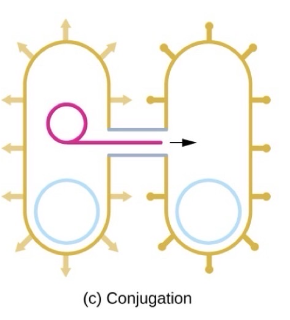
conjugation
transfer of dna through direct contact using a conjugationpilus
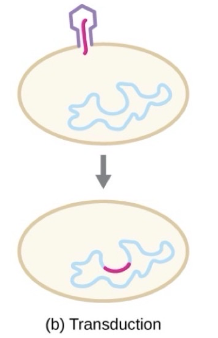
transduction
mechanism of horizontal gene transfer in bacteria in which genes are transferred through viral infection
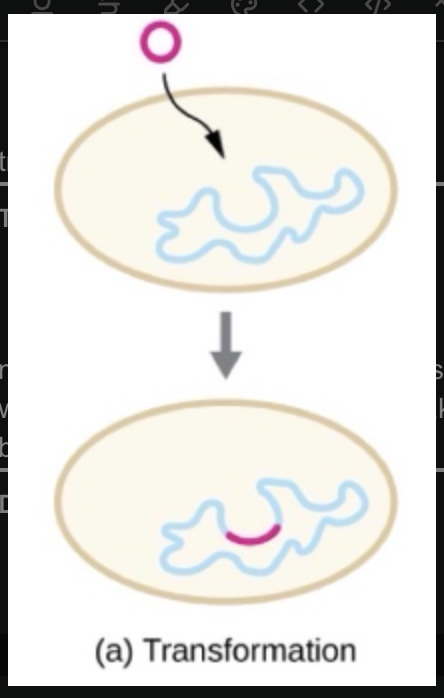
transformation
mechanism of horizontal gene transfer in bacteria in which naked enviromental dna is taken up by a bacterial cell
the naked enviromental dna gets taken up by a bacterial cell or prokaryote
this happens spontaneously but weve found ways to do it in the lab
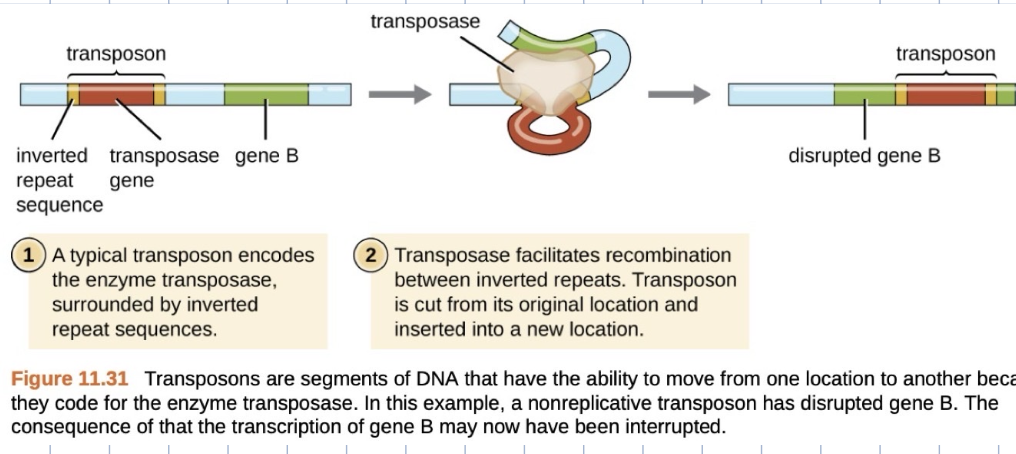
transposition
process whereby dna independently excises from one location in a dna molecule and integrates elsewhere
mechanisms of genetic diversity in prokaryotes
conjugation, transduction, transformation, transposition
using all of these we can stick in new genes to make a new outcome
using these methods we can stick new genes into cells and then these cell then produce the protein
genetic engineering
hacking the genetic and gene expression of an organism
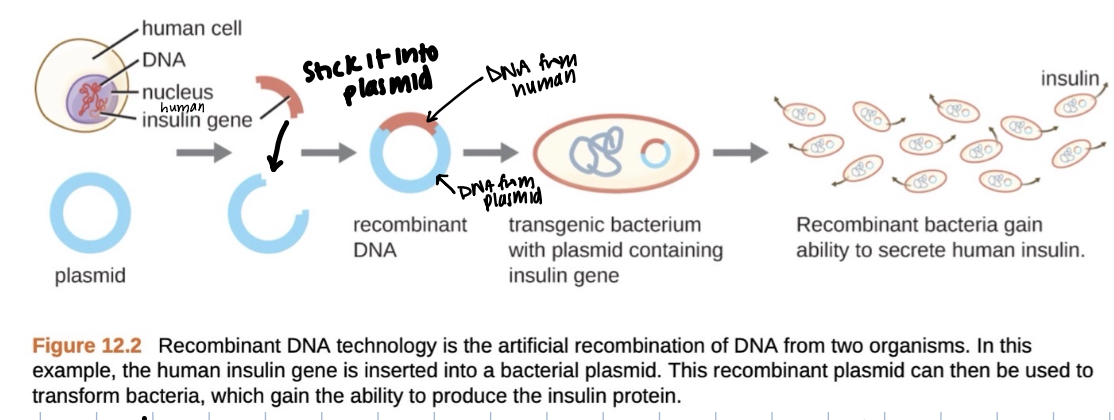
one way to do this is by putting in recombinant dna (cutting a portion of 1 dna out and putting in a new dna from another species to create something)
recombiant dna
dna from more than 1 organism; has more than 1 species of dna from this
can put this into an organism that makes it a transgenic organism bc it has genes from other organisms
genetic engineering insulin example
used to get insulin from pigs pancreases, so this is the other alternative to doing that so we dont have to kill lots of pigs
creates a lot of transgenic organisms bc it has recombinant DNA
due to the bacterium having the recombinant dna, the cell is now expressed as insulin
allows us to create more human insulin effectively.
how can we cut out a specific part of a gene?
do this using restriction enzymes, "restriction endonucleases," or “molecular scaplels””
they are a protein and they are endonucleases
these endonucleases tend to cut at palindrom sequences
endonucleases
cut inside a dna sequence
how do estriction endonucleases work?
any place it finds a specific recognition site (this is a specific dna sequence), it will cut exactly there)
has two ways it does this
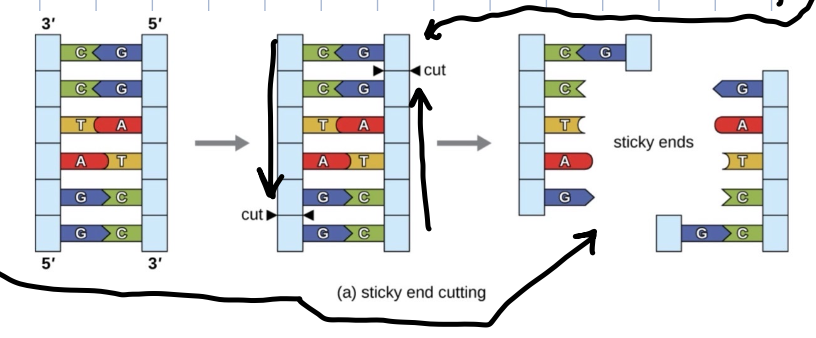
stick end cutting
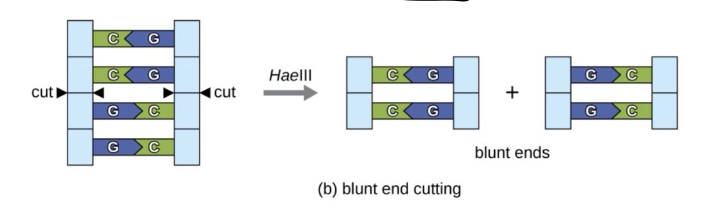
blunt end cutting
sticky end cutting
after these endonucleases cut the dna sequence they leave an overhang
this allows us to control exactly how the piece will fit back in
g only to Cs
As only to Ts
blunt end cutting
when the endonucleases cut a sequence they dont leave an overhang creating 2 pieces of dna
palindromic sequence
same forwards and backwards
expression vector
its something that carries stuff that were trying to express
it has a multicloning site (MCS)
the part right before where u can put ur gene of interest, it has something that they took from the lac operon allowing u to be able to add lactose or something that looks like lactose
causes the plasmid to start synthesizing and transcription will take place
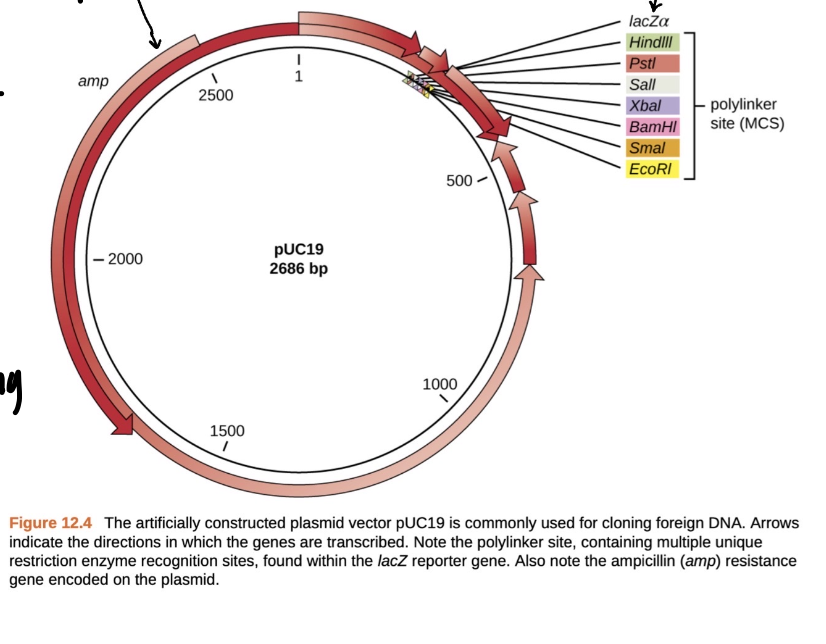
Multicloning site MCS
a short sequence containing multiple unique restriction enzyme recognition sites that r used for inserting dna into the plasmid
allows for u to cut a certian gene with its specific polylinker
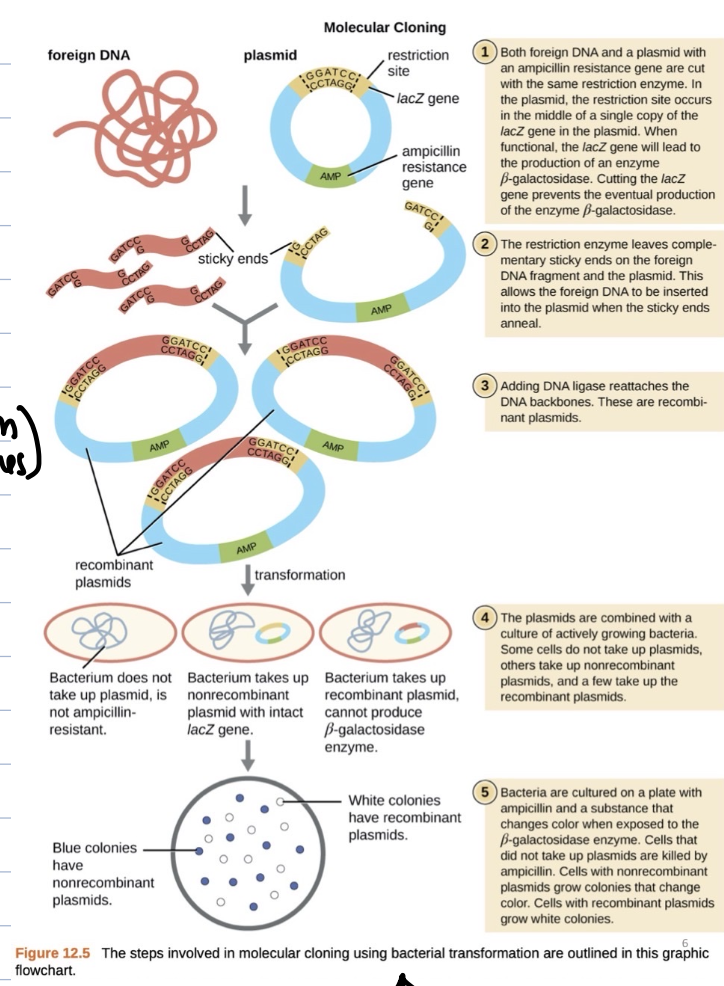
Molecular cloning
both foreign dna and a plasmid gene are cut with the same restriction enzyme. after they are cut, then they are left with these overhanging sticky ends
the sticky ends help us to ligate the foreign dna into the plasmid exactly into the right place
we often use dna ligases (a certian enzyme) to help when we ligate in this gene of interest into our plasmid
dna ligases: tie together 2 pieces of dna (do oppo of restriction enzyme)
after they have been ligated, we have recombinant plasmids and we have to get those into cells somehow
to get them into the cell we can do transformation
after we transform them we have to check which cells actually got transformed
we can do this by doing a smear plate
do this by seeing if the plasmid has amp resistance
once that plasmid goes through all this molecular cloning, it is then expressed as one of these bioengineering molecules because of the foreign dna that had been added
transfection
process by which you get the dna in a eukaryotic cell
found ways to do this in the lab (these ways are like the loterry, only sometimes it will work)
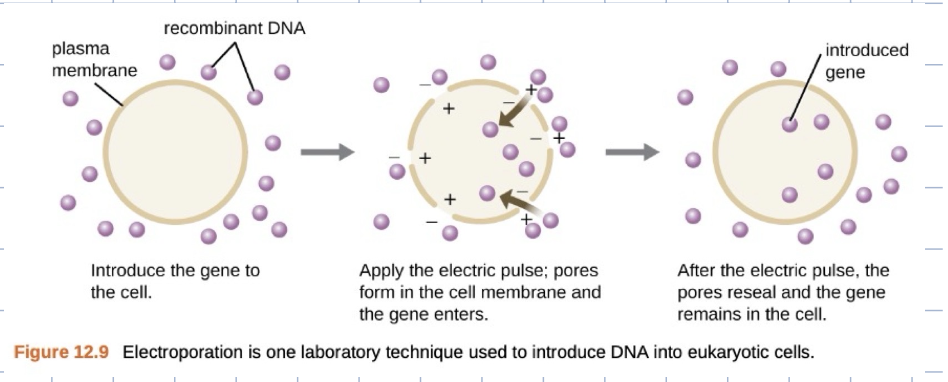
electroporation
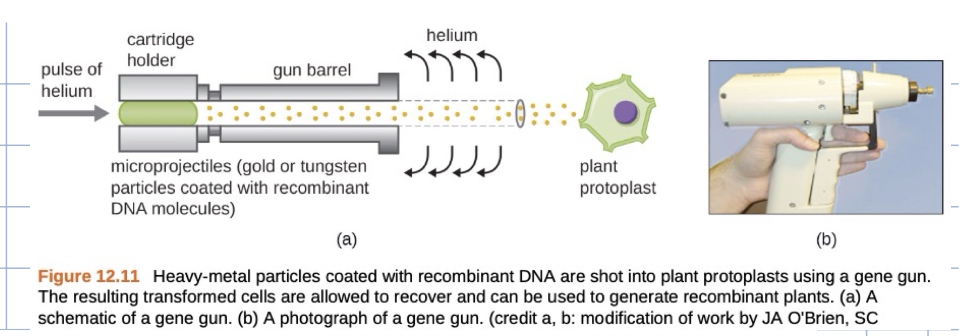
gene gun
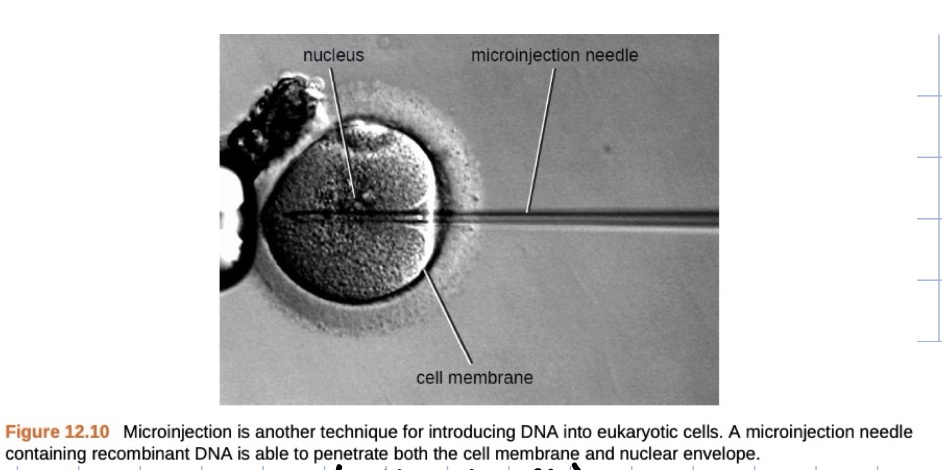
microinjection
electroporation
basically use electric shock to shock the cell which causes pores to form and the gene enters
sometimes dosent work well
gene gun
take gold beads coated in dna and shoot the beads using a gun into a plant cell and in a few cases get their dna inside the cell
microinjection
inject recombinant dna into a cell using a needle
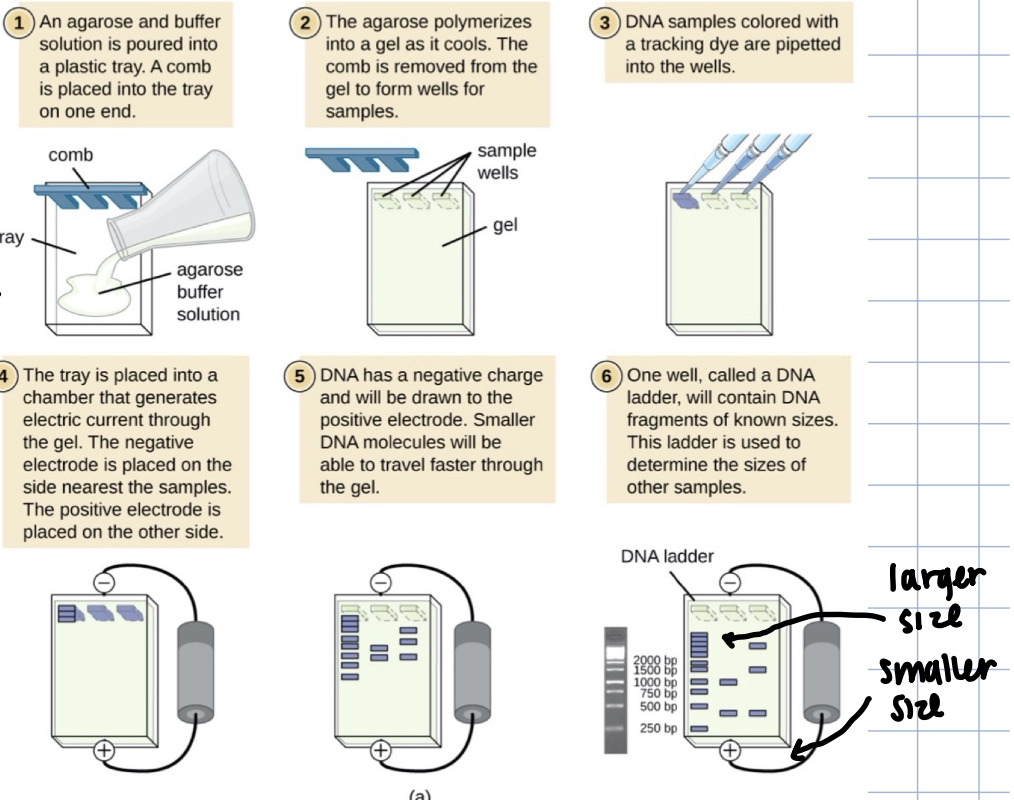
elecrophoresis
seperating dna, protein, etc using a semi solid media based on charge and size
Polymerase Chain Reaction (PCR)
INVITRO - inside a thermal cycler
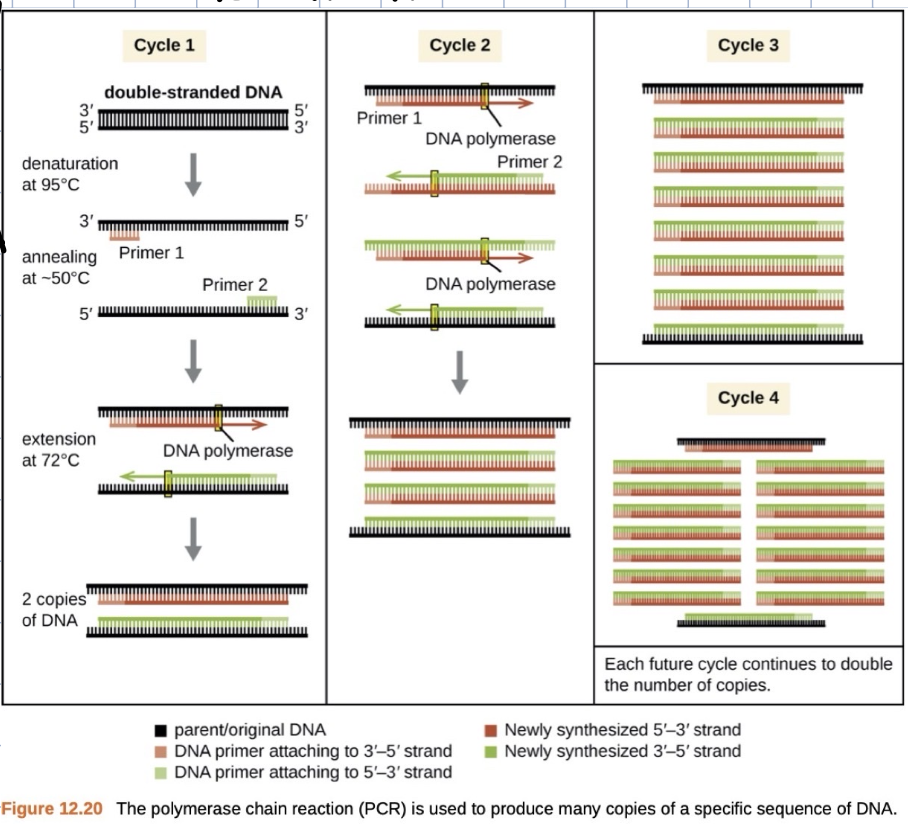
cycle 1: starts with 1 strand of ds DNA
1. denaturation: causes the strands to come apart
melting of the strands which is done by rasing the temp
2. annealing: thermal cycler cools down causing this to happen
inside thermal cycler tube is the template dna, some primers, dna polymerase, and atcg’s
in this phase the primers bond on to our 2 ss DNA
3. extension: dna polymerase does this
it starts adding on to the 3’ end. it synthesizes on 1 strand and on to the other strand going in the oppo direction and doing this gives us 2 copies of dna
after this cycle it does it again
cycle 2: starts with 2 ds DNA
same thing occurs from cycle 1 and now we have 4x as much from where we started
continues going making lots of dna
now with all of this dna u can do tests with them like electrophoresis, etc
primers
short segments of dna that help our dna polymerase to start copying
complementary to ssDNA and tell the dna polymerase where to start
PCR equation
Nf = Ni x 2^n
n = PCR cycles
TAQ polymerase
the dna polymerase that is used in PCR bc its able to withstand high heat
RT-PCR
reverse transcription - PCR; allows PCR of RNA
take RNA then do reverse transcription and then do PCR
RNA does RT to make RNA and DNA, that DNA is used for PCR to make many DNA’s
DNA sequencing
determining the order of nucleotides AGCT in DNA
older method: sanger dideoxy method
newer method: modern chain extention method
sanger dideoxy method
worked by performing chain elongation with dye
labled markers that stop dna replication
dna fragments were then seperated using gel electrophoresis, with smaller fragments moving out first
by reading colored dyes they could figure out the sequence
was done by hand
modern chain extention method
works by taking a photo of the flourecent signals, washing them off, and continuing to extend the dna chain
an automated machine performs this repetitive process allowing scientists to read the sequencing myst faster and more accurate
output and application of dna sequencing
the end result is converting physical dna molecule into a graphical output that can be interperted (agct)
this sequence info can then be used for various applications in genetic engineering such as
identifying henes, creating expression vectors, or developing treatments
gene therapy
direct gene therapy using viral vectors
xenotransplantation
future potential: direct genetic engineering of humans
direct gene therapy using viral vectors
how it works: a func gene is packaged into a virus and delivered to patient cells through transfection. the viral vector carries the theraputic gene into the patients cells allowing them to express the missing or defective protein
hasnt worked very well and viral delivery tends to cause inflamation and systemic side effects
xenotransplantation with genetically engineered pig organs
pigs have organs around the same size as humans, but the human immune system naturally rejects them because they lack certian surface proteins that humans have
many pigs carry viruses in their genome that cause problems, but scientists use genetic engineering to remove pig viruses and modify pig organ proteins making them moer like humans
this increases the transplant compatibility and rejection rate decreases
prommising method
direct gene engineering of humans
doing genetic engineering directly on humans and not from another animal

