AP European History Unit 3
 Studied by 0 people
 Call Kai
 Learn
Learn Practice Test
 Spaced Repetition
 Match
Match Flashcards
 Knowt Play
1/59

There's no tags or description
Looks like no tags are added yet.
Name | Mastery | Learn | Test | Matching | Spaced | Call with Kai |
|---|
No analytics yet
Send a link to your students to track their progress
60 Terms
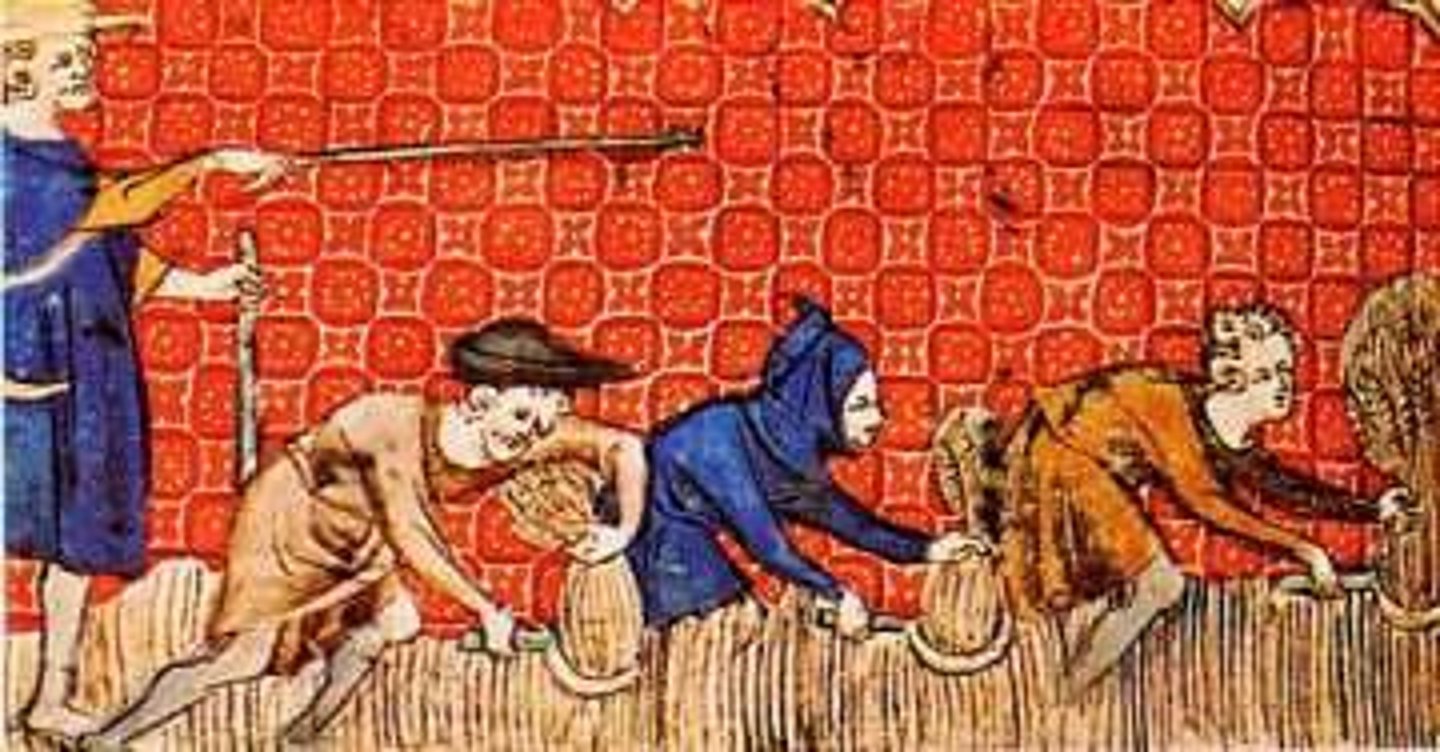
Serfdom
A type of labor commonly used in feudal systems in which the laborers work the land in return for protection but they are bound to the land and are not allowed to leave or to pursue a new occupation. This was common in early Medieval Europe as well as in Russia until the mid 19th century.
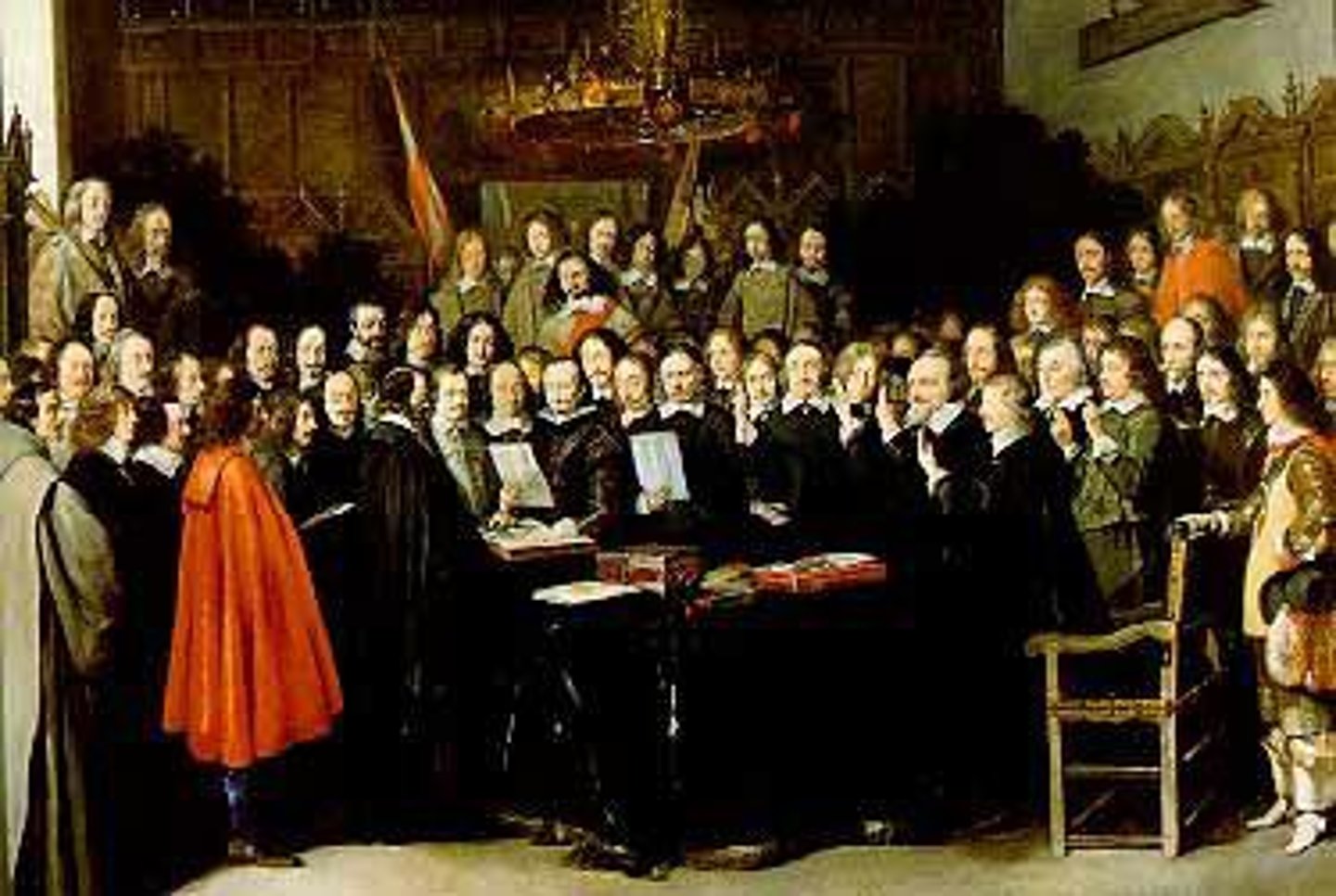
Peace of Westphalia (1648)
1. Ended the Thirty Years' War
2. Recognized Calvinism as a legally permissible faith
3. Recognized the sovereign independent authority of over 300 German states
4. Continued the political fragmentation of Germany
5. Granted Sweden additional territory, confirming its status as a major power
6. Acknowledged the independence of the United Provinces of the Netherlands
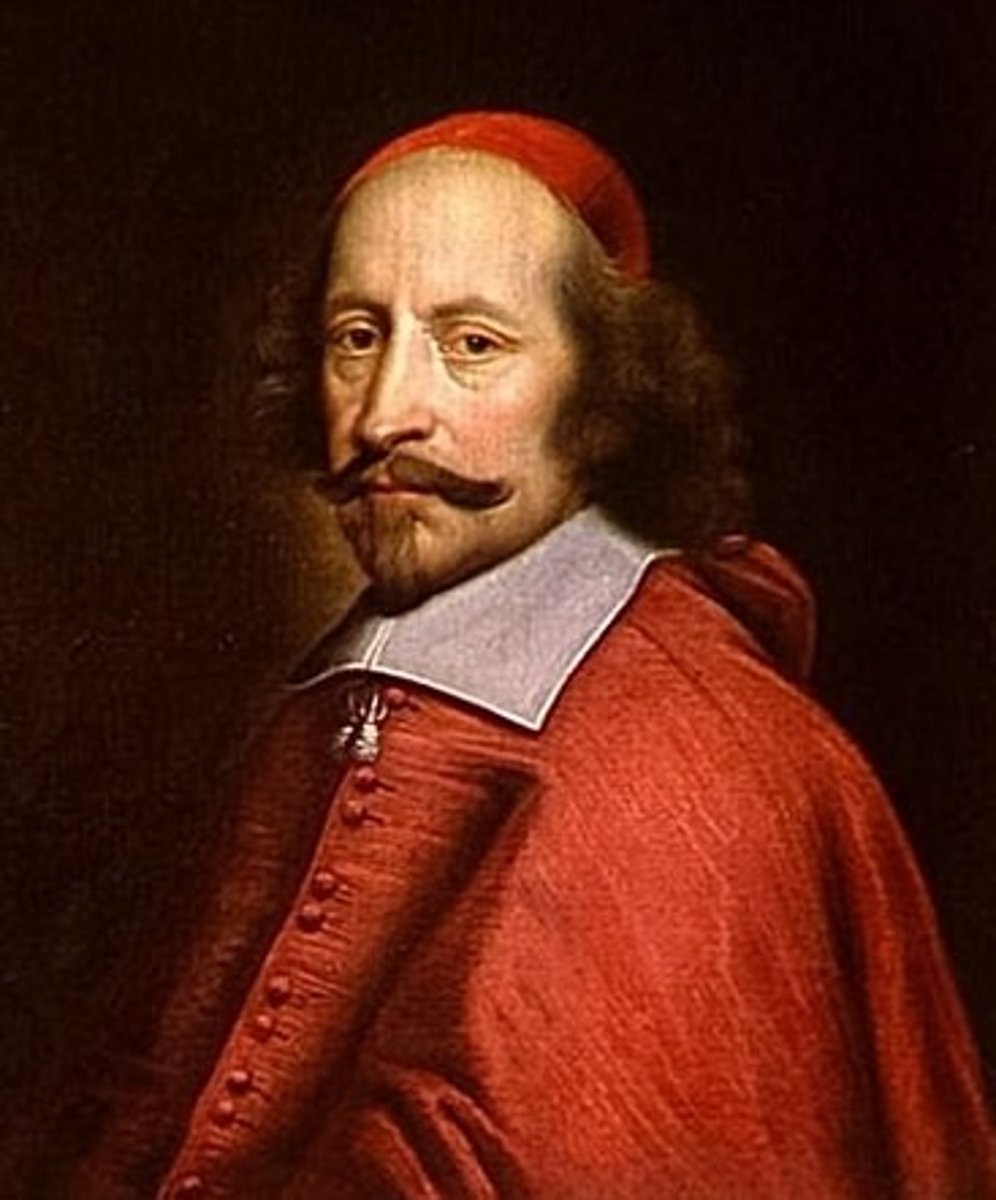
Cardinal Mazarin
(1602-1661), Successor of Cardinal Richelieu and his bad attempts to increase royal revenue and the state led to the Fronde; ran the government while Louis XIV was still a child
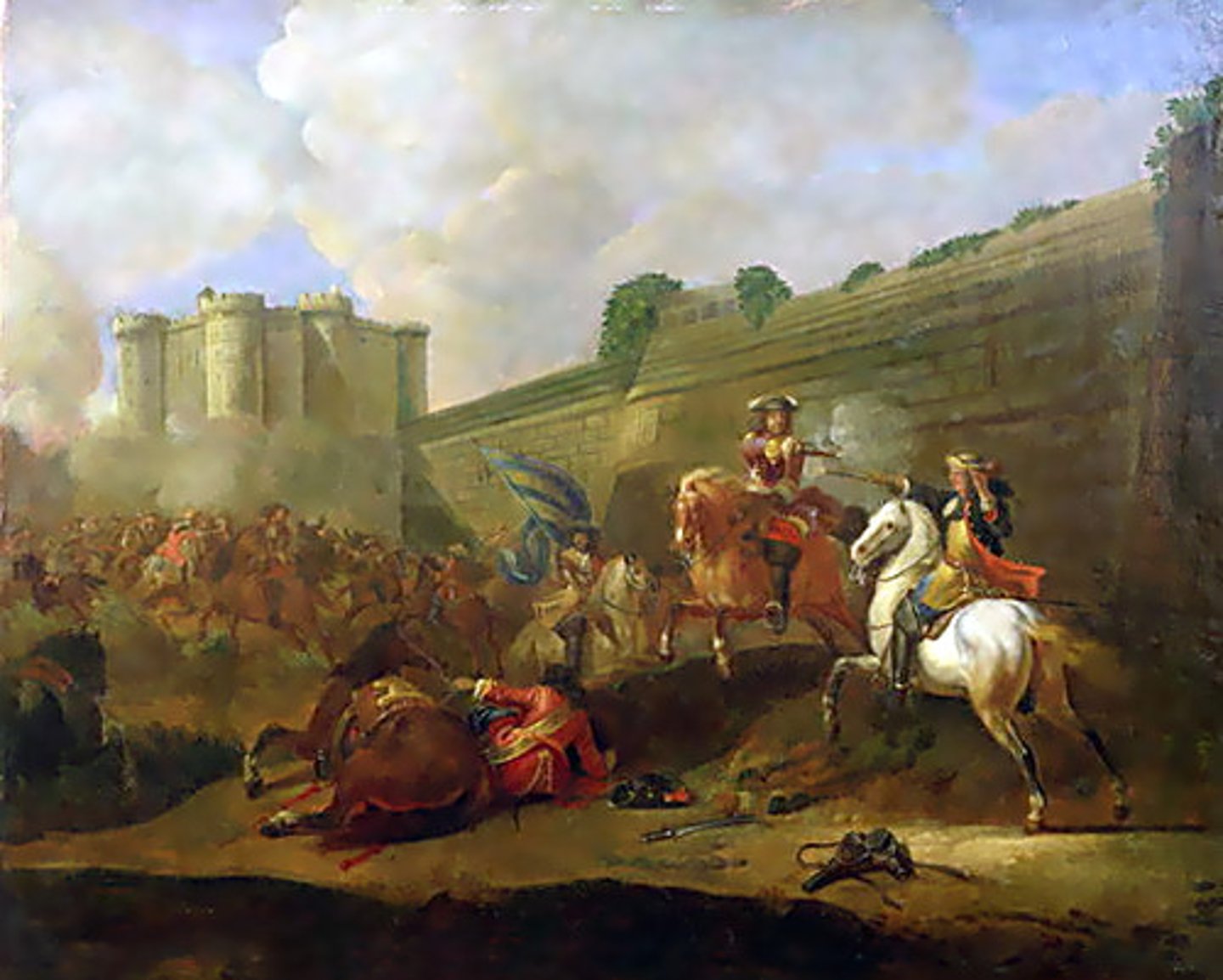
Fronde (1648-1653)
A series of violent uprisings during the early reign of Louis XIV triggered by growing royal control and increased taxation
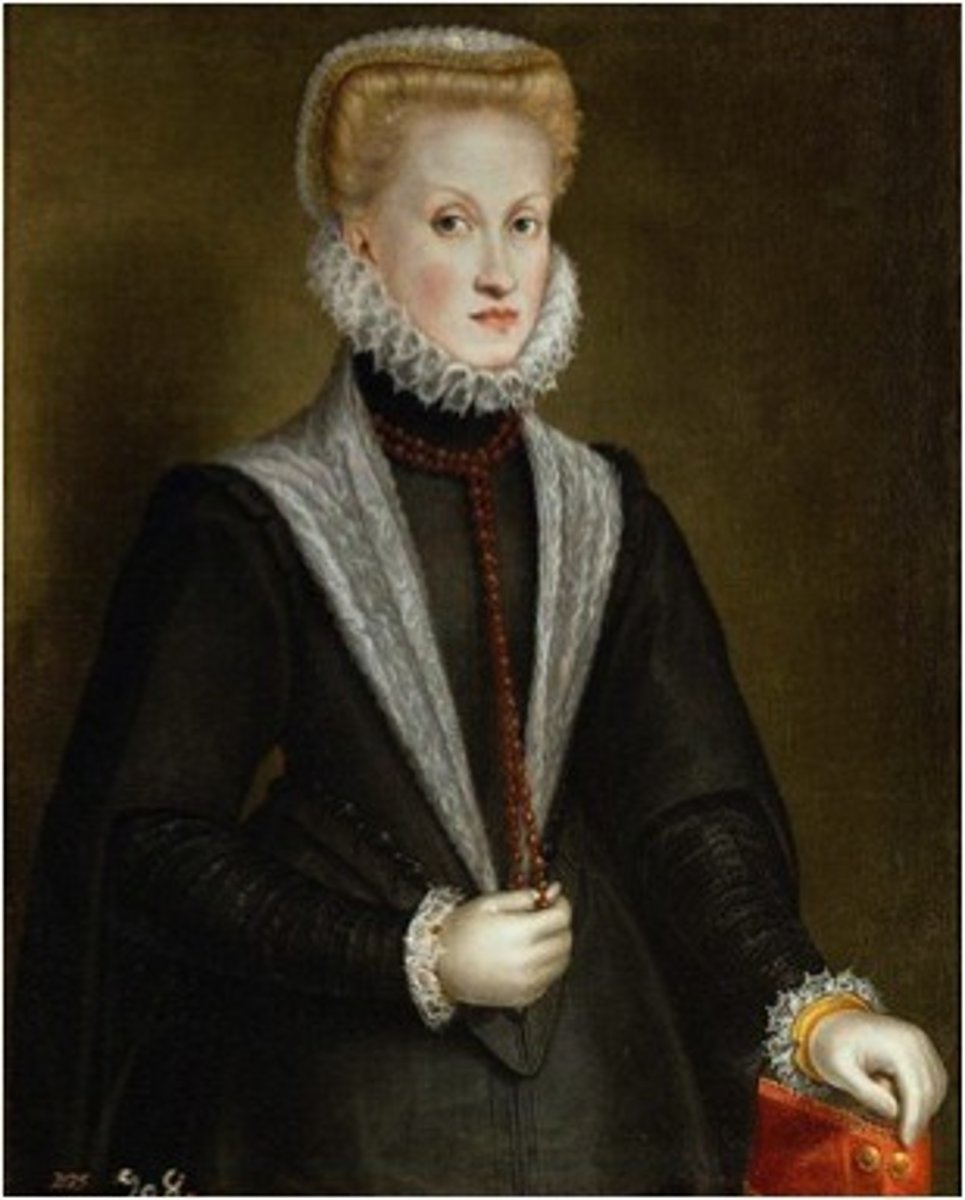
Anne of Austria
Mother of Louis XIV, her affection for Louis XIV was more public than what many aristocratic women did at the time.
Louis XIV of France
He ruled through absolutism and believed in divine right. He was the "Sun King" because he reigned from 1643-1715, the longest in European history. He restored the Palace of Versailles. He revoked the Edict of Nantes because he did like division within his realm. He carried out the expansionist policy to the full extent. He was at war 33 of his 54-year personal rule. Believed in absolute monarchy. He ruled absolutely. Controlled the nobles at his palace.

Louis XIV quote regarding his power
"I am the State"
Louis XIV policies summariezed
One King, One Law, One Faith; Un Roi, Une Loi, Une Foi
Edict of Fountainbleu (1685)
- revoked the Edict of Nantes
- Huguenots fled, diminishing the merchant class
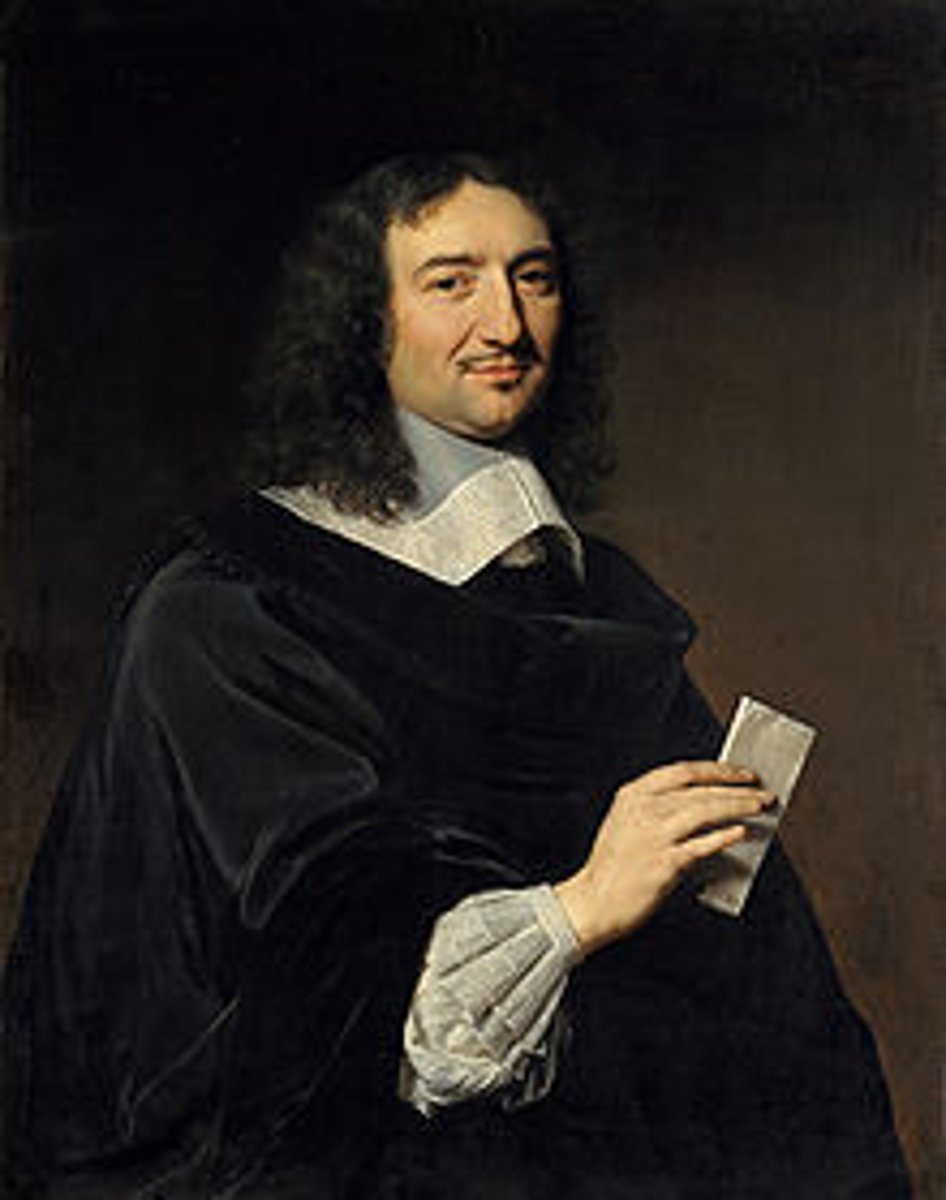
Jean Colbert
(1619-1683) Financial minister under the French king Louis XIV who promoted mercantilist policies.
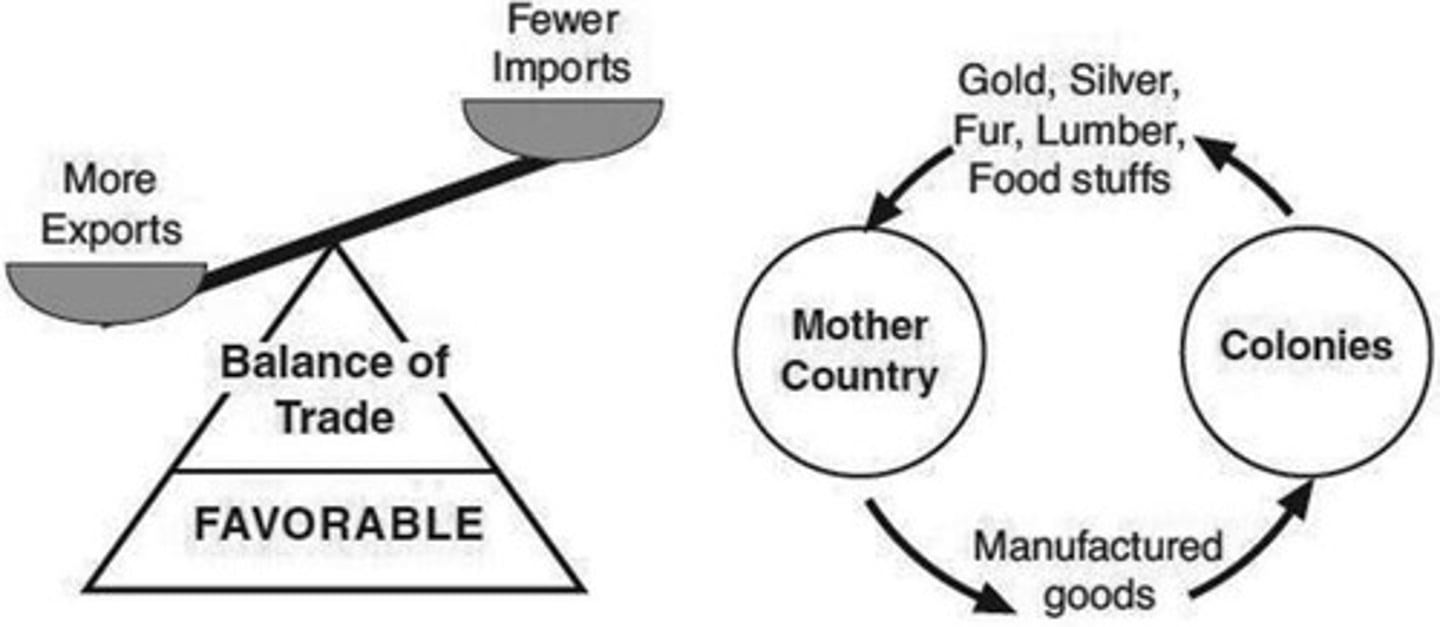
Mercantilism
An economic policy under which nations sought to increase their wealth and power by obtaining large amounts of gold and silver and by selling more goods than they bought
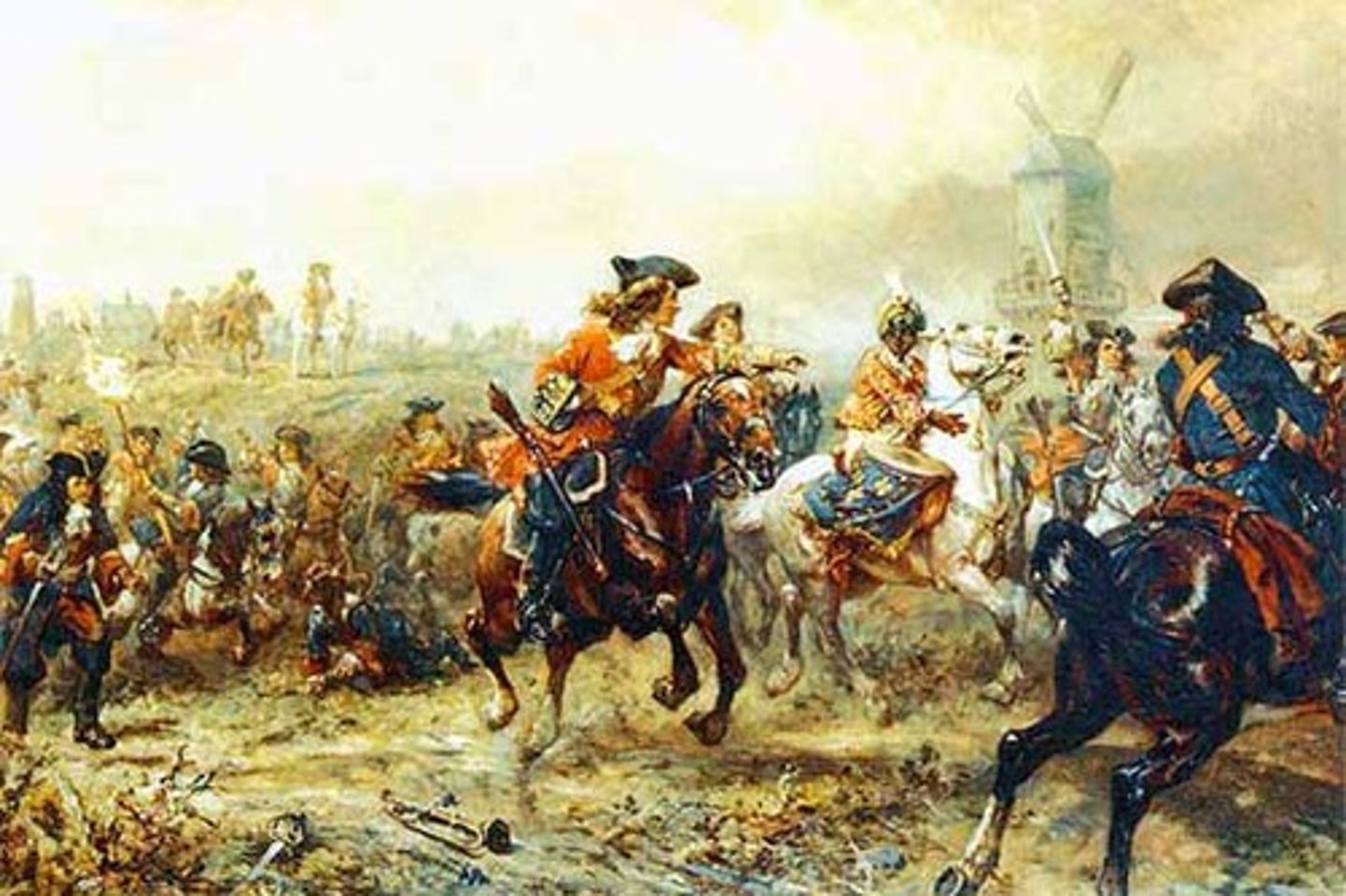
Louis XIV wars
Wanted to gain territory, weaken Hapsburgs, support absolutism, support catholicism, weaken economic power of Dutch and UK. Made his country gain a huge amount of debt.
Sword Nobles
Sword nobles are the old nobility of France. Often they resisted Louis XIV and when they fell out of favor, Louis XIV would either replace them with new nobles of his liking, Robe Nobility, or appoint so many new Robe Nobles that would overrule Sword noble's power.

Robe Nobles
The nobles whose nobility was either acquired by serving in the bureaucracy or had purchased them (thereby raising money to support Louis XIV's wars).
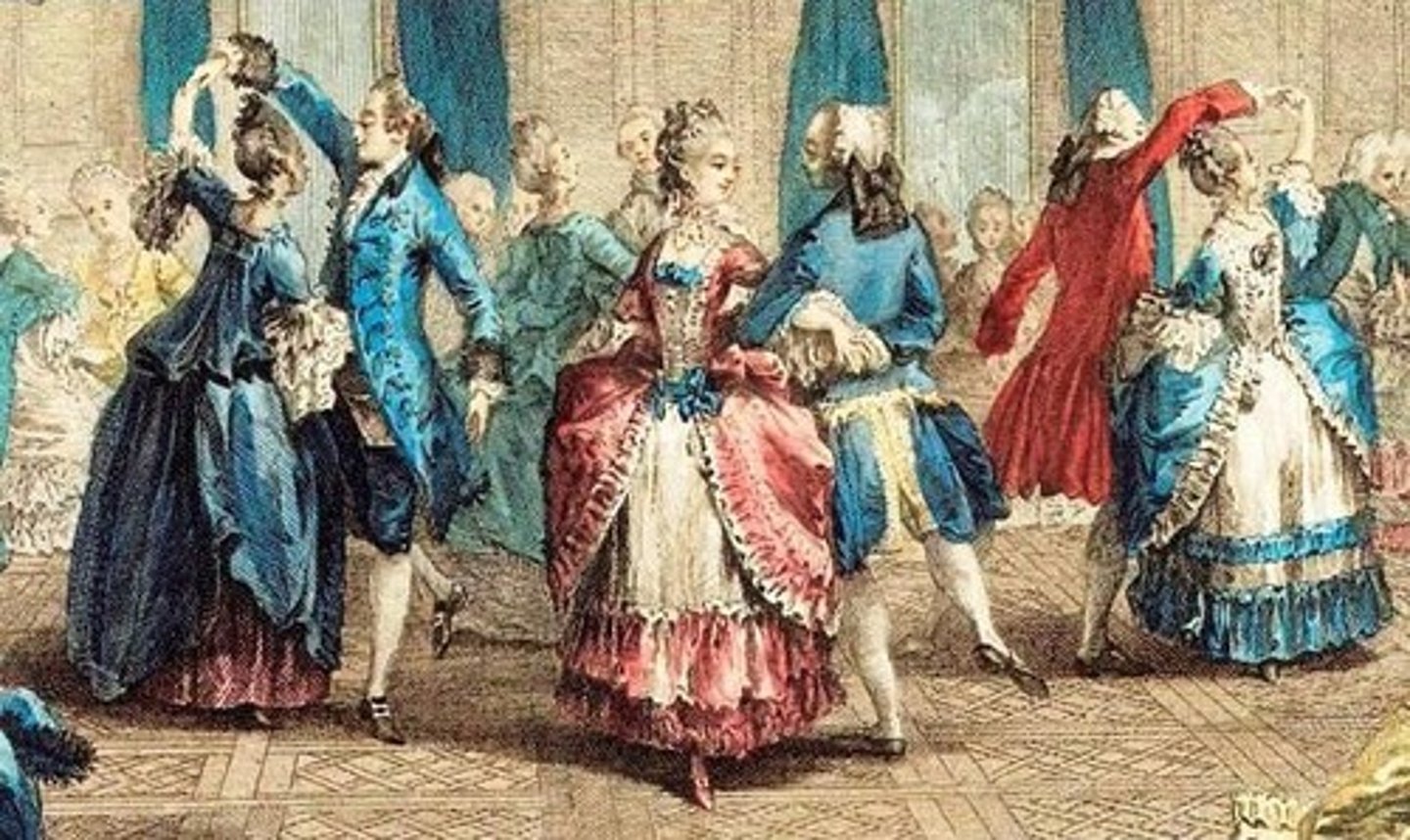
Estates General (Their relation to Louis XIV)
France's traditional national assembly with representatives of the three estates, or classes, in French society: the clergy, nobility, and commoners. During his reign, Louis XIV never called the Estates General to session.
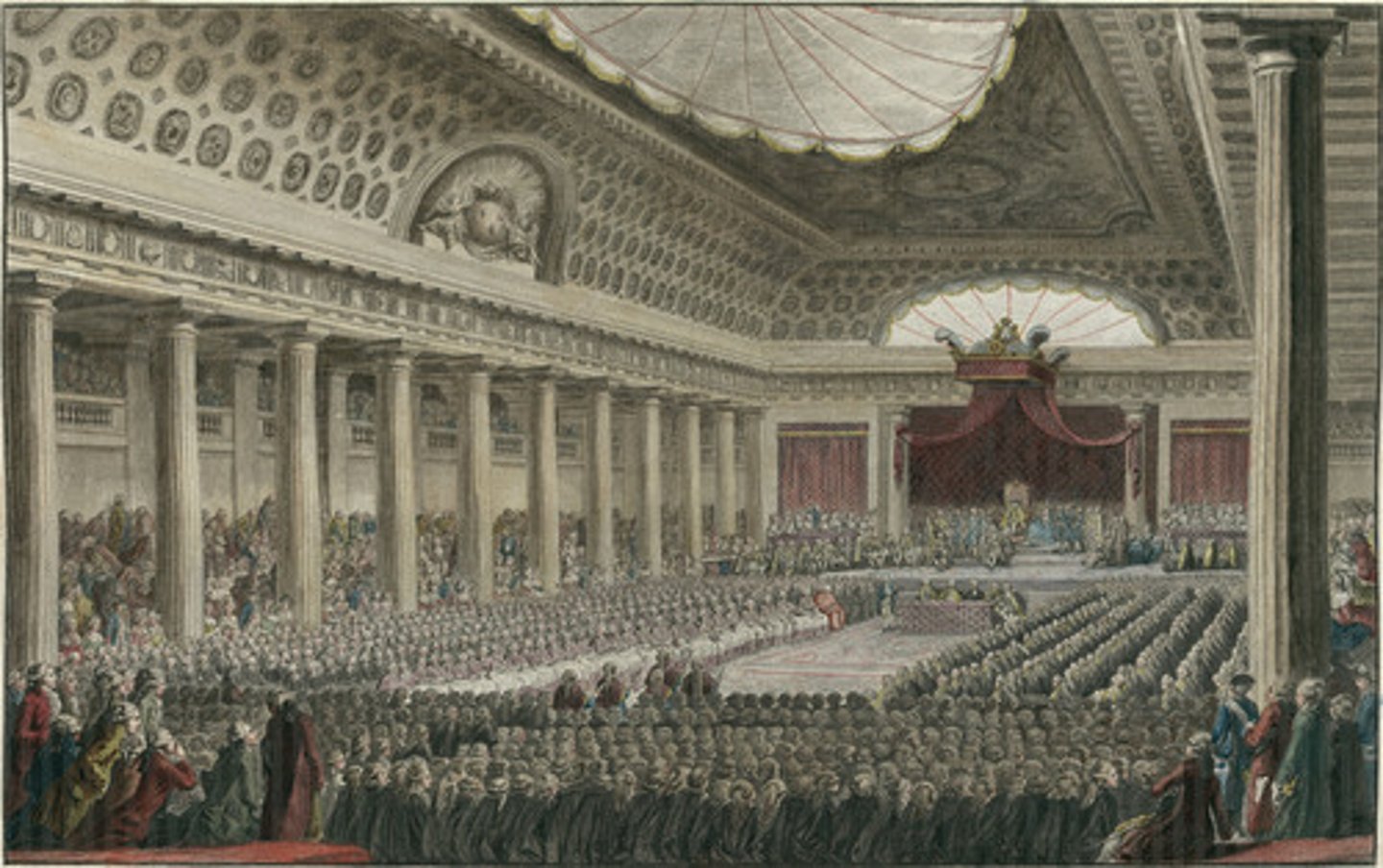
Code Louis
centralized, uniform code of law for all of France which had previously used regional laws. These laws did not provide any equity and continued the privilege of nobility.
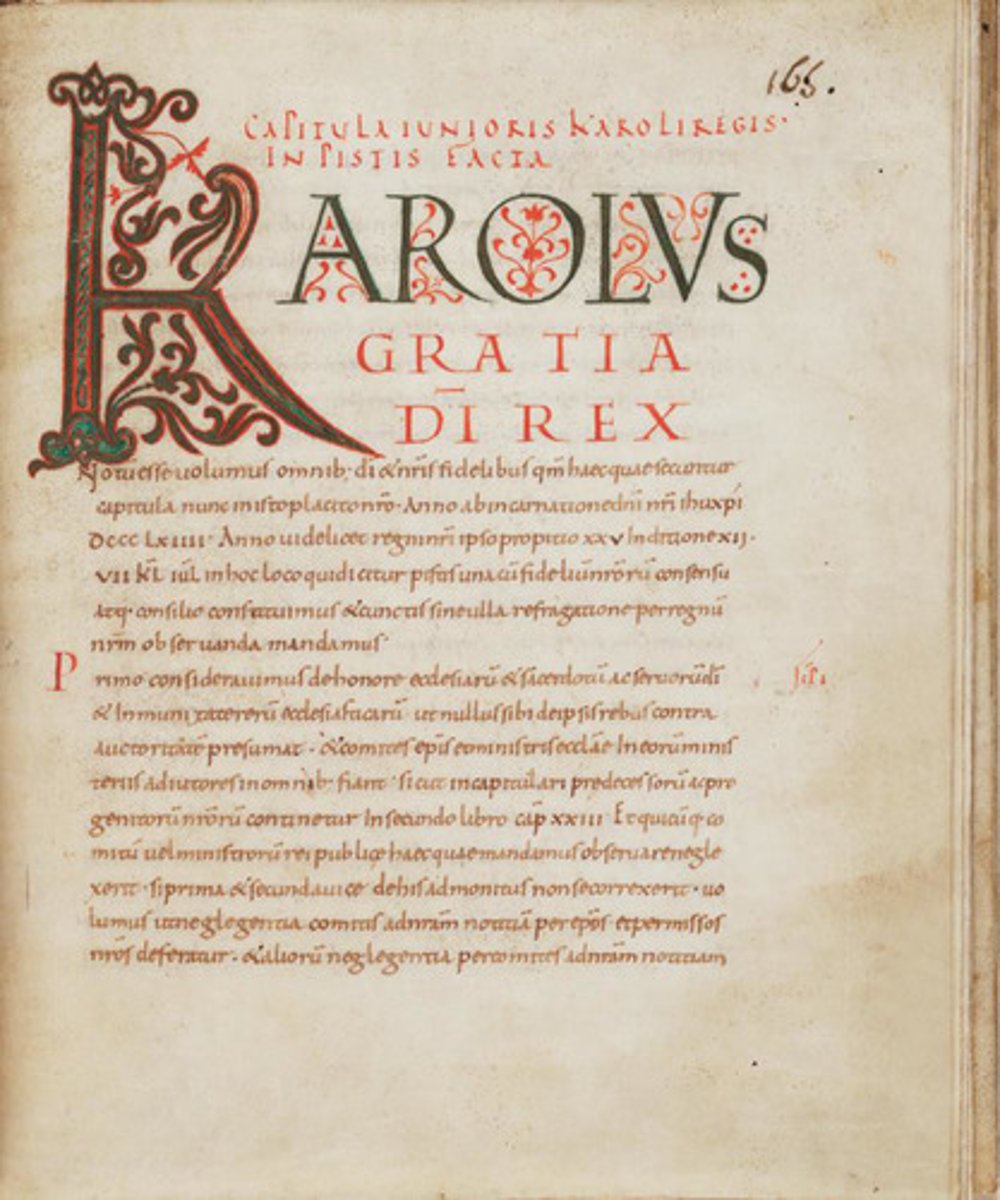
Gallacanism
The idea that French Roman Catholic clergy favored the restriction of papal control and the achievement by each nation of individual adminstrative authority (basically France controls it's clergy, NOT Rome or the Catholic church).
Life at Versailles
The king insisted that some of the most powerful nobles live at least part of the year at Versailles. These nobles became dependent on the king and turned into idle, corrupt flatterers, gamblers, and gossips. Small quarters.
War of the Spanish Succession (1701-1713)
A war fought over the Spanish throne. Louis XIV wanted it for his grandson and fought a war against the Dutch, English, and the Holy Roman Empire to gain the throne for France. The Peace of Utrecht ended the war.
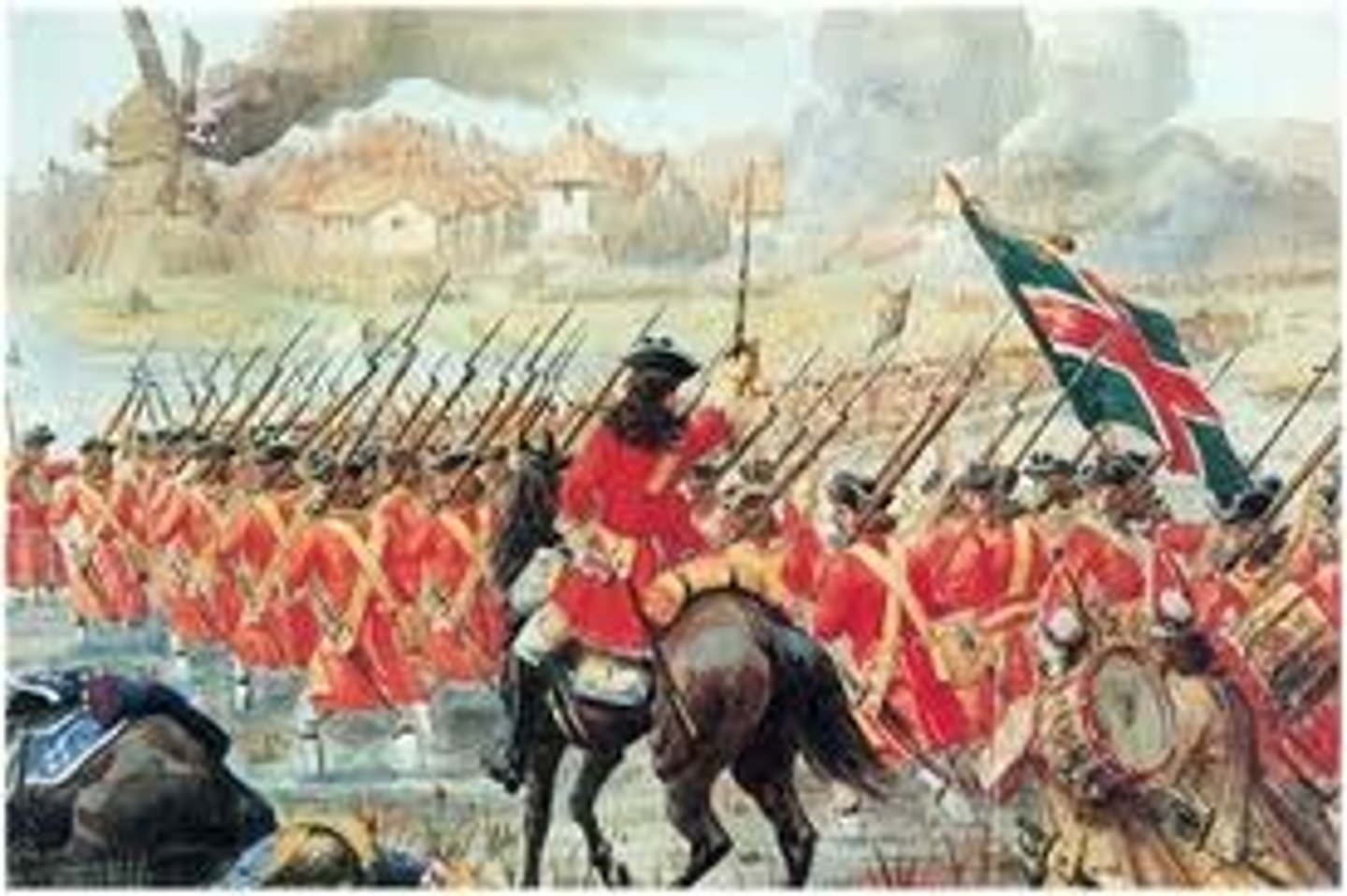
Peace of Utrecht (1713)
ended the war of the Spanish Succession and confirmed Philip V as Spanish ruler. Led a Spanish Bourbon dynasty but said that Spain and France's thrones were to be separate. The Spanish Netherlands, Milan and Naples were given to Austria. Prussia got some land and Britain got Gibraltar for their navy as well as French possessions of Newfoundland, Hudson Bay and Nova Scotia.
Reconquista of Spain
Christian efforts made following the Crusades to take over Muslim lands and drive them out of Spain.
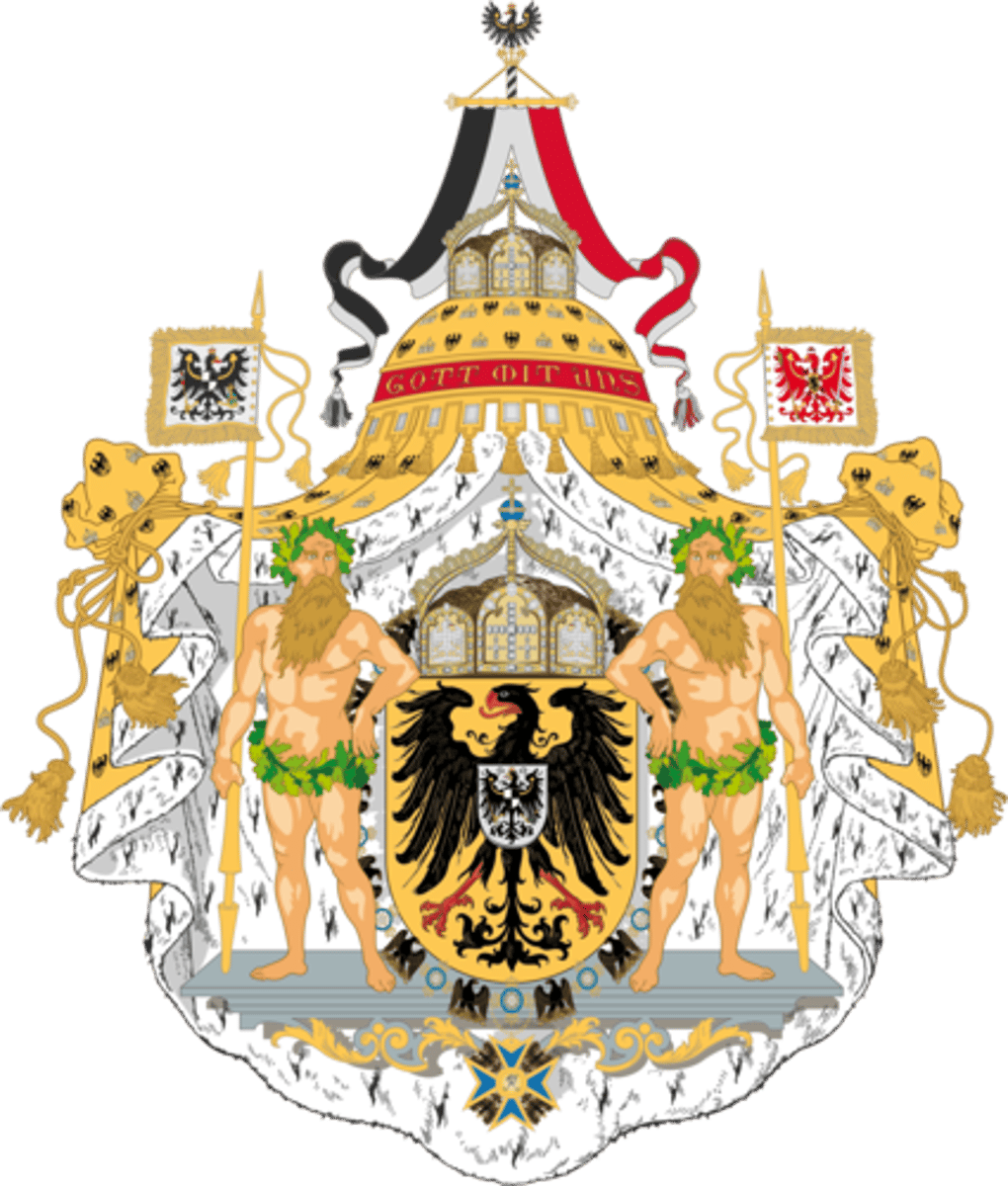
Hohenzollerns
This was the royal dynasty of electors in Prussia
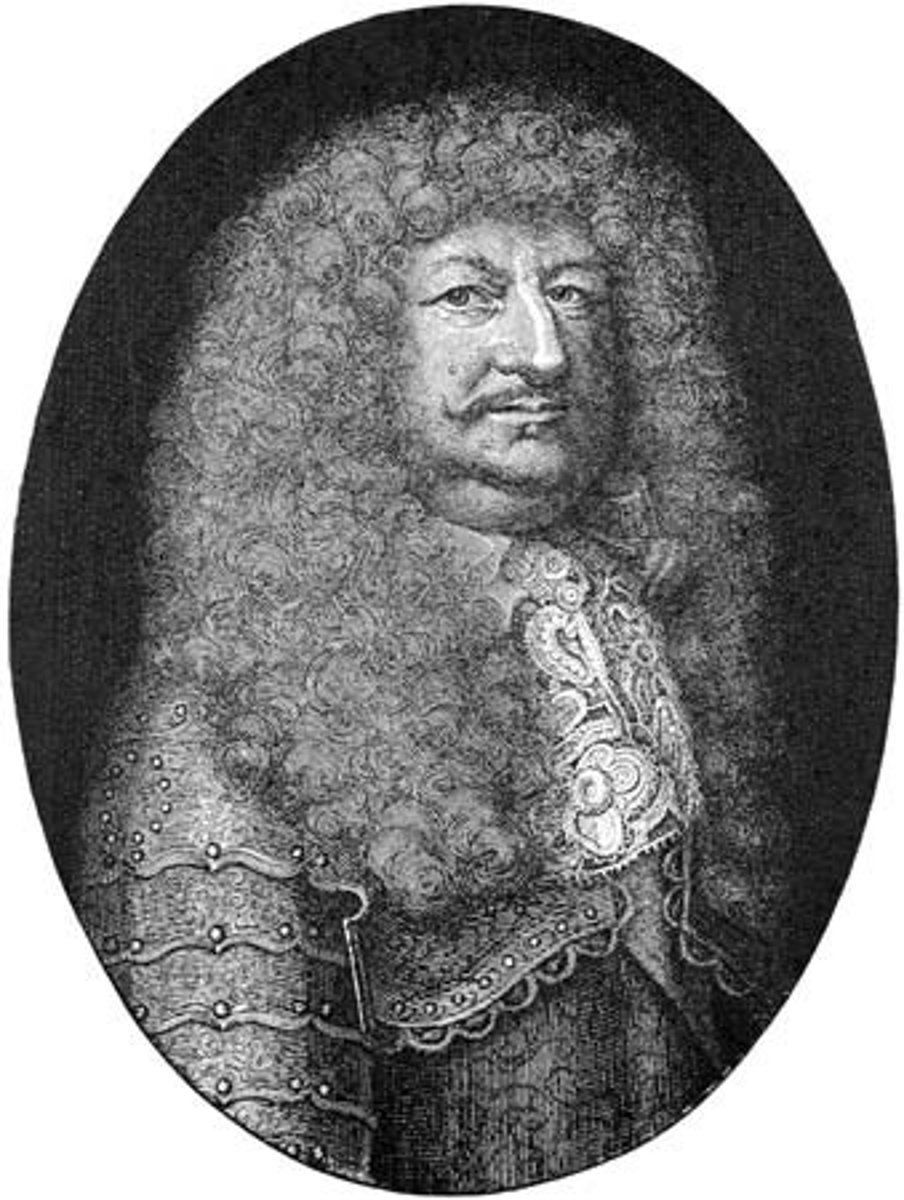
Frederick William the Great Elector
This was the man who starting absolutism in Prussia by uniting the three provinces of Prussia under one ruler
Junkers
Members of the Prussian landed aristocracy, a class formerly associated with political reaction and militarism.
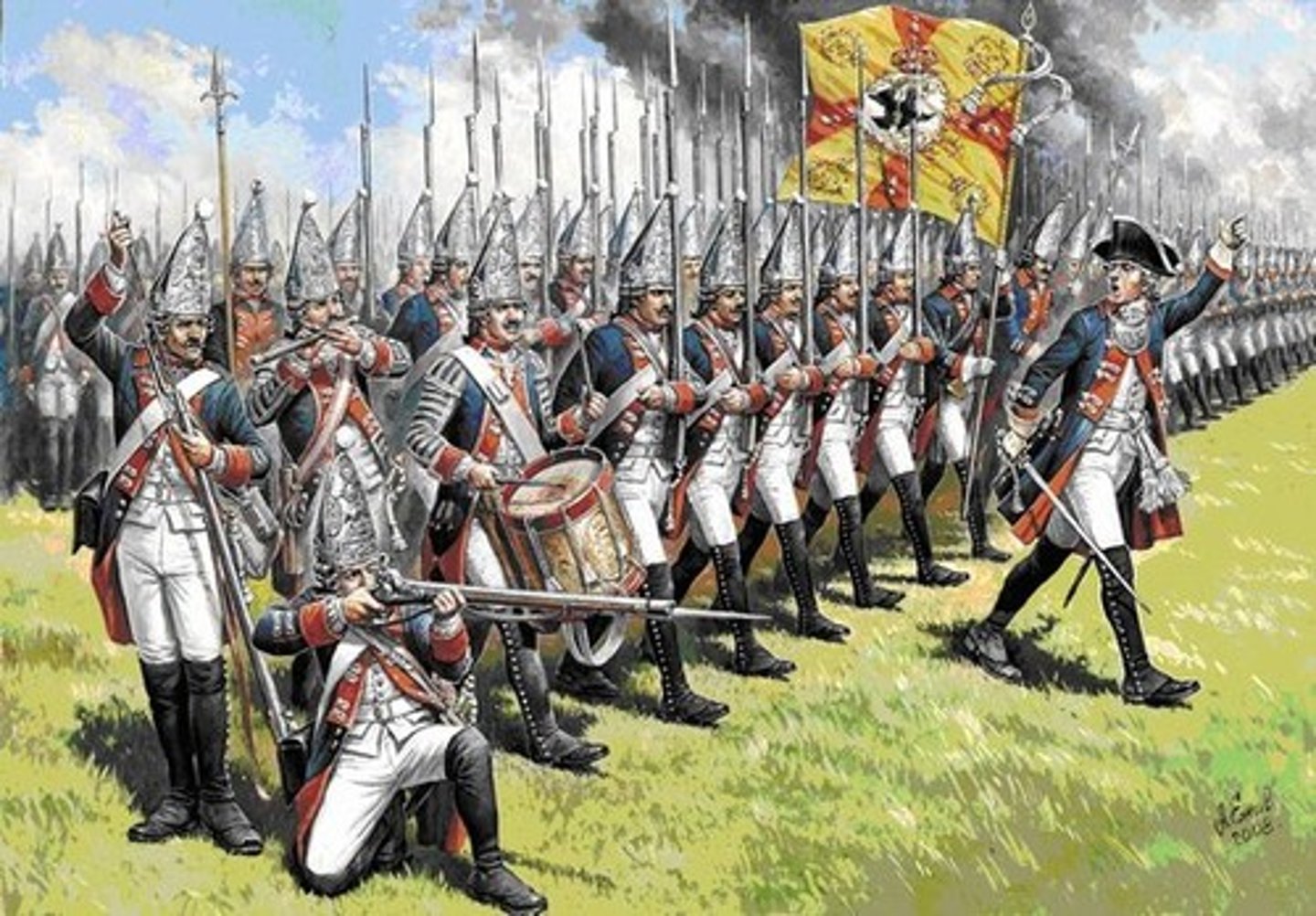
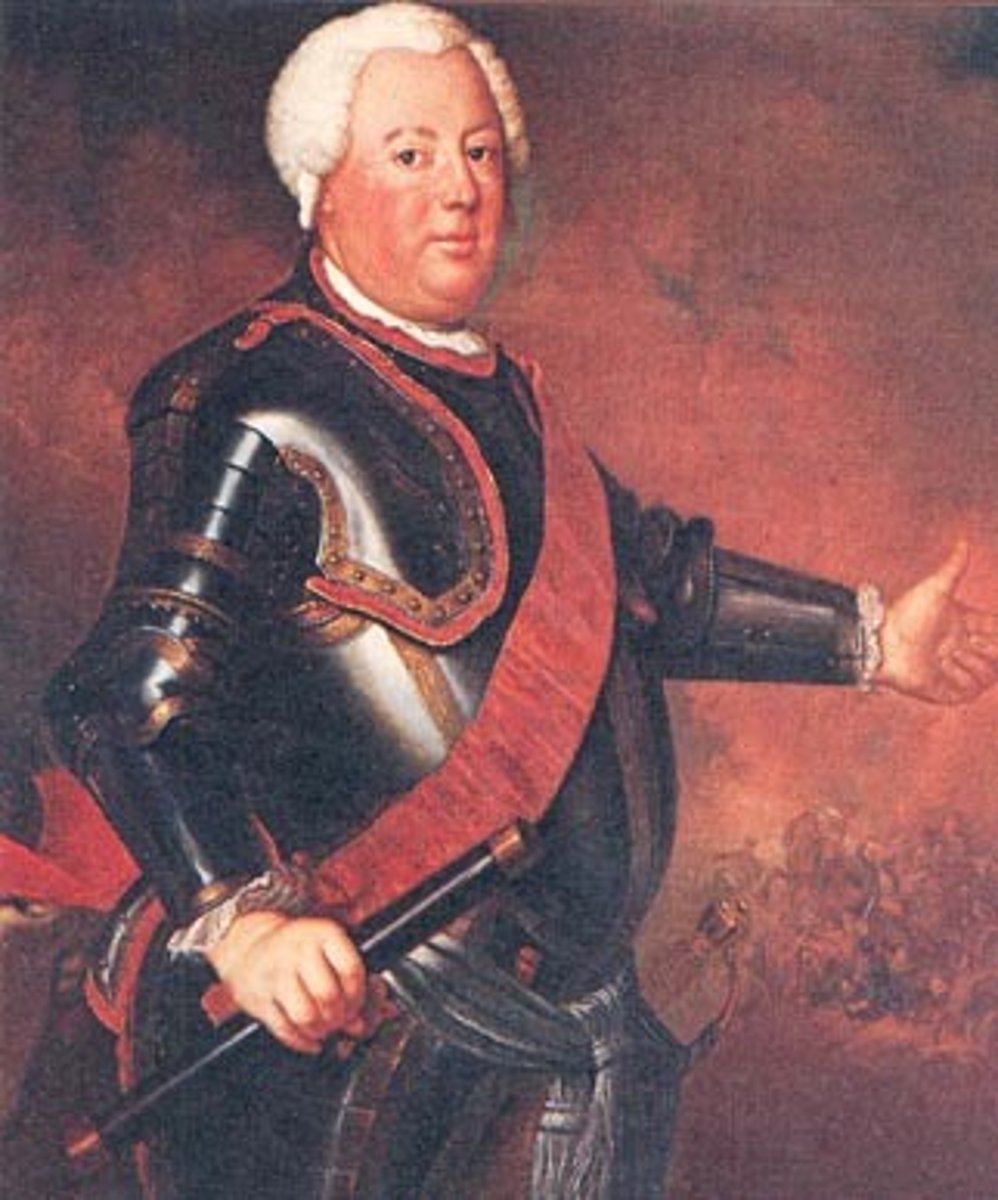
Frederick William I of Prussia
(r. 1713-1740) doubled the size of the Prussian army (though still smaller than those of his rivals, it was the best-trained and most up-to-date force in Europe); known as the "Sergeant King," was one of the first ruler to wear a military uniform as his everyday dress; subordinated the entire domestic administration to the army's needs; installed a system for recruiting soldiers by local district quotas; financed the army's growth by subjecting all the provinces to an excise tax on food, drink, and manufactured goods and by increasing rents on crown lands
Boyars
Russian landholding aristocrats; possessed less political power than their western European counterparts

Holy Russia
term given to Russia after Turks took over Constantinople. Russia considered itself inheritor of Eastern Christianity
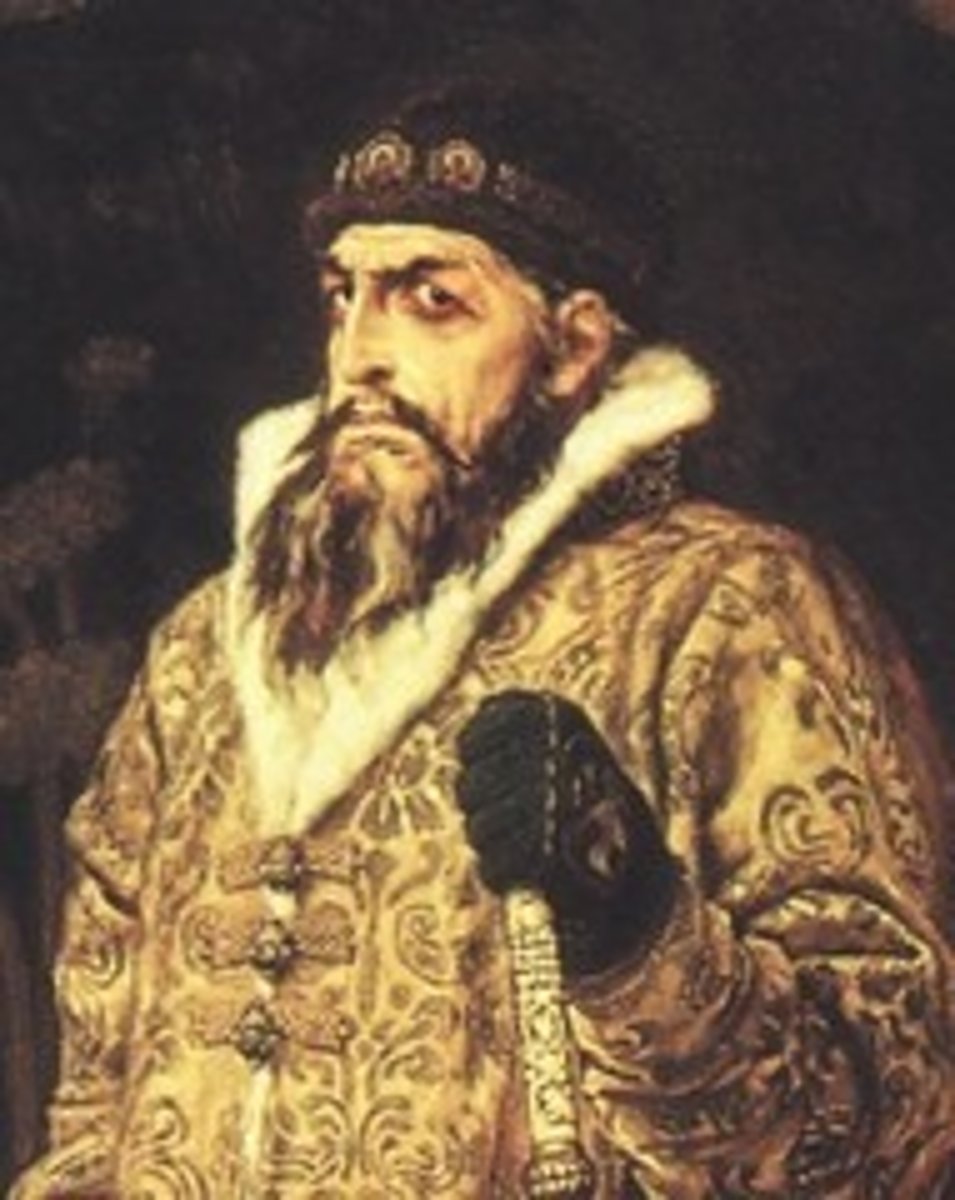
Ivan IV (the Terrible)
Confirmed power of tsarist autocracy by attacking the authority of the boyars; continued policy of expansion; established contacts with western European commerce and culture.
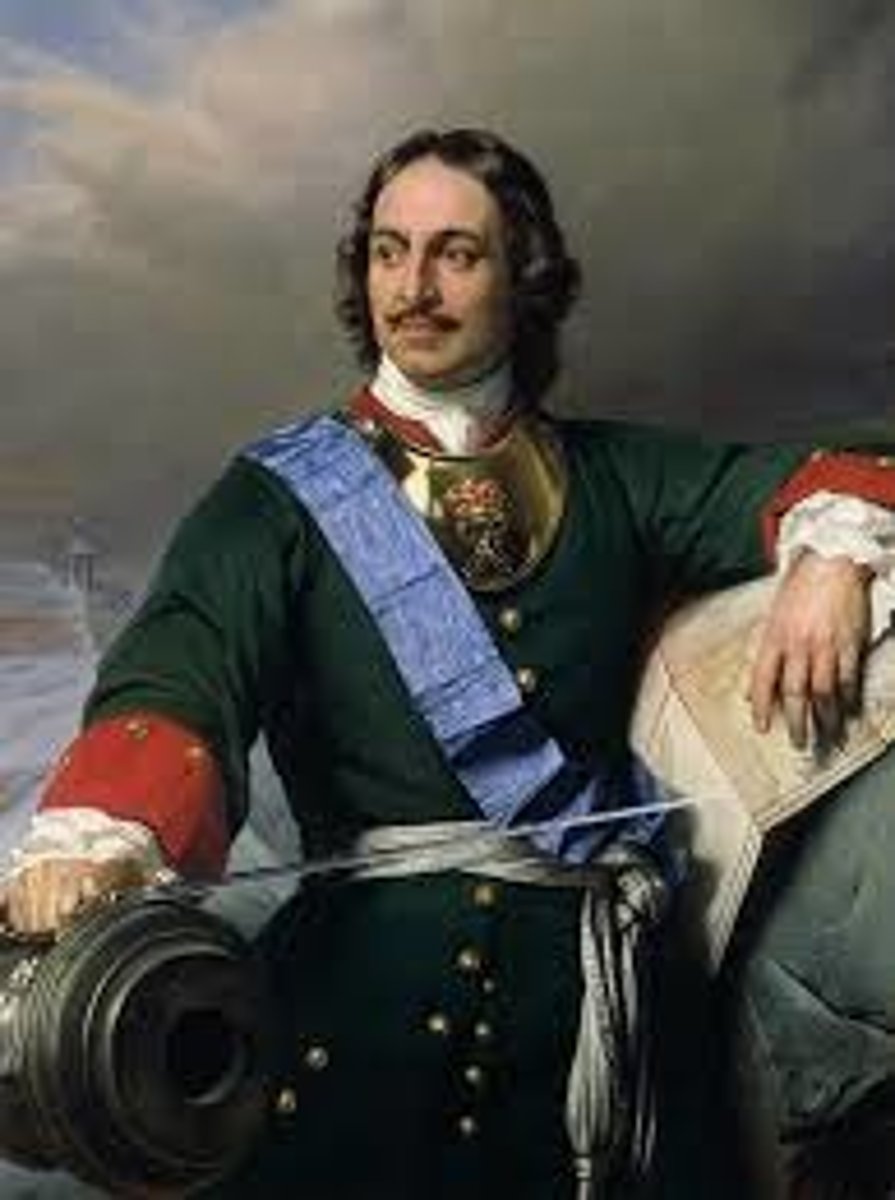
Peter the Great of Russia
part of the Romanov Dynasty; was an absolutist monarch who claimed the divine right to rule; he westernized & modernized Russia thus making it a great military power; created the first Russian Navy; divided Russia into provinces; and established St. Petersburg as the capital of Russia.
Peter the Great in Northwestern Europe
Worked as a shipbuilder posing as a "Russian VIP". This allowed Peter to learn hands-on about sailing vessels.
Streltsy Rebellion
Noble families rebel while Peter is in Europe. When he returns he brutally crushes the rebellion and hangs their corpses on display
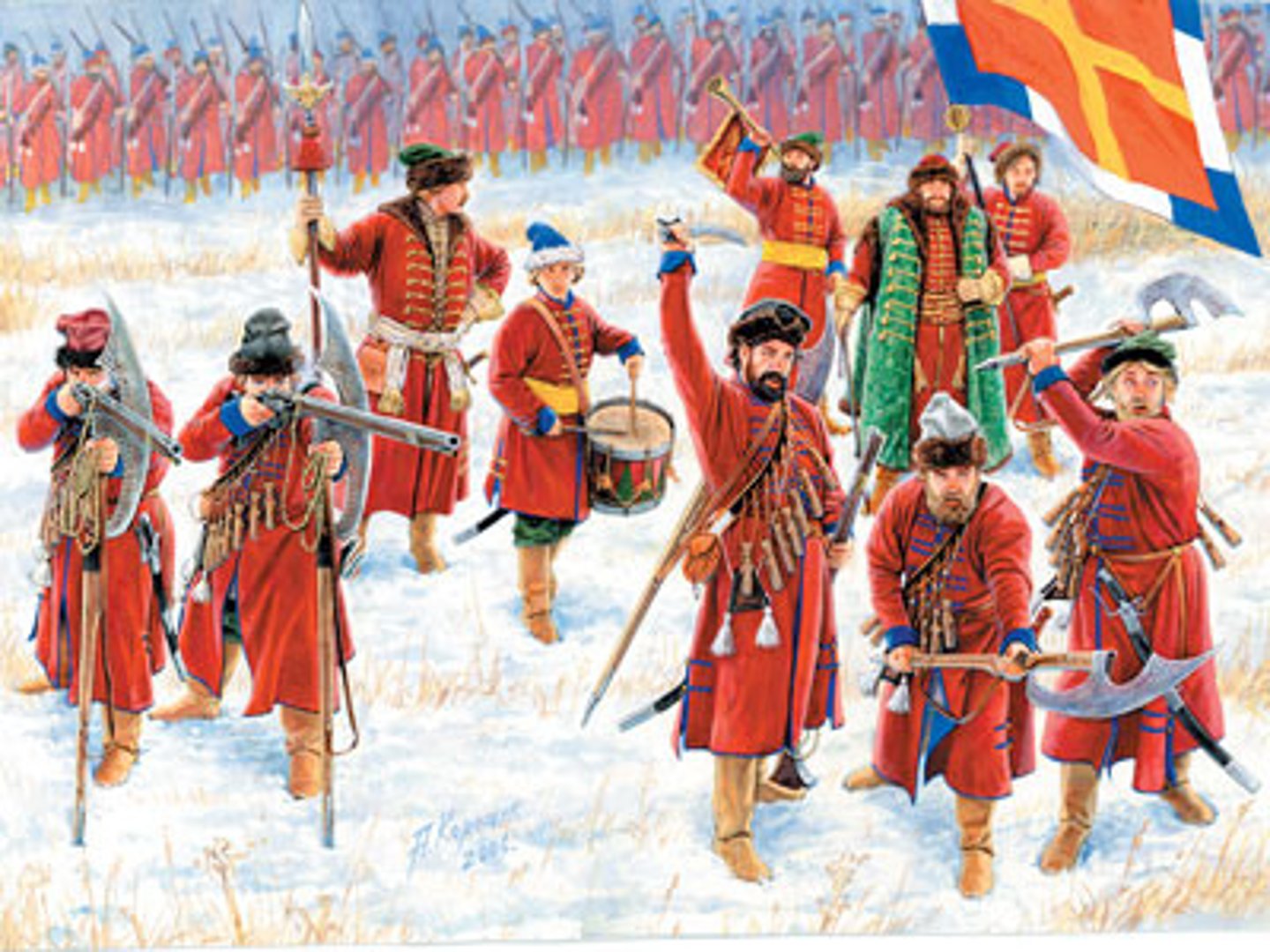
Beard Tax
A tax on those men in Russian who wore beards by Peter the Great as a method of Westernizing Russia. Those who had beards were required to carry a token stating that they had paid their beard tax.
Great Northern War
Russia vs. Sweden. Russia had Poland, Denmark and Saxony as allies. Treaty of Nystad is where Russia gained Latvia and Estonia and thus gained its Window on the West in the Baltic Sea

Reformed Russian Education under Peter
Peter sent many noble's children to study in Western Europe to set Russia's future on a modern course (likely because their parents would be slower to change).
Peter and the Orthodox Church
Because of their quarrels, Peter disbands the office of Patriarch in the Orthodox Church. and replaces it with a council of bishops called the Synod. This situation remains in place until the Russian Revolution.
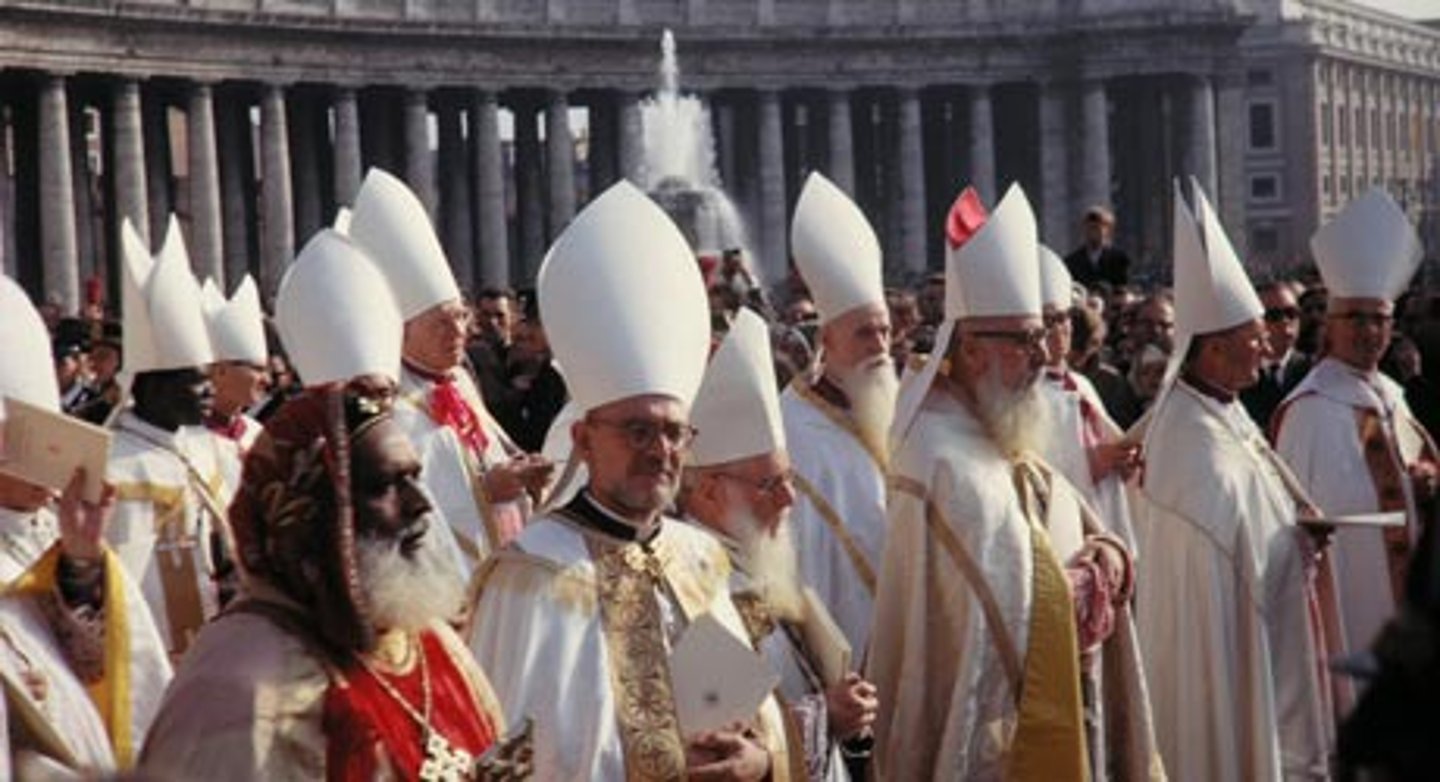
St. Petersburg
Built by Peter the Great of Russia to attract Europeans and to get warm water ports. He made it his capital

Meritocracy in Peter's Russia
Peter set up a system that (theoretically) allowed for promotion in the military based on education level and ability and not nobility.
Constitutionalism
The theory developed in early modern England and spread elsewhere that royal power should be subject to legal and legislative checks.
Republicanism
A philosophy of limited government with elected representatives serving at the will of the people. The government is based on consent of the governed.
James I of England
Divine right of kings, absolutist, Abandons the parliament, and alienates the puritans
Puritans
Protestant sect in England hoping to "purify" the Anglican church of Roman Catholic traces in practice and organization.
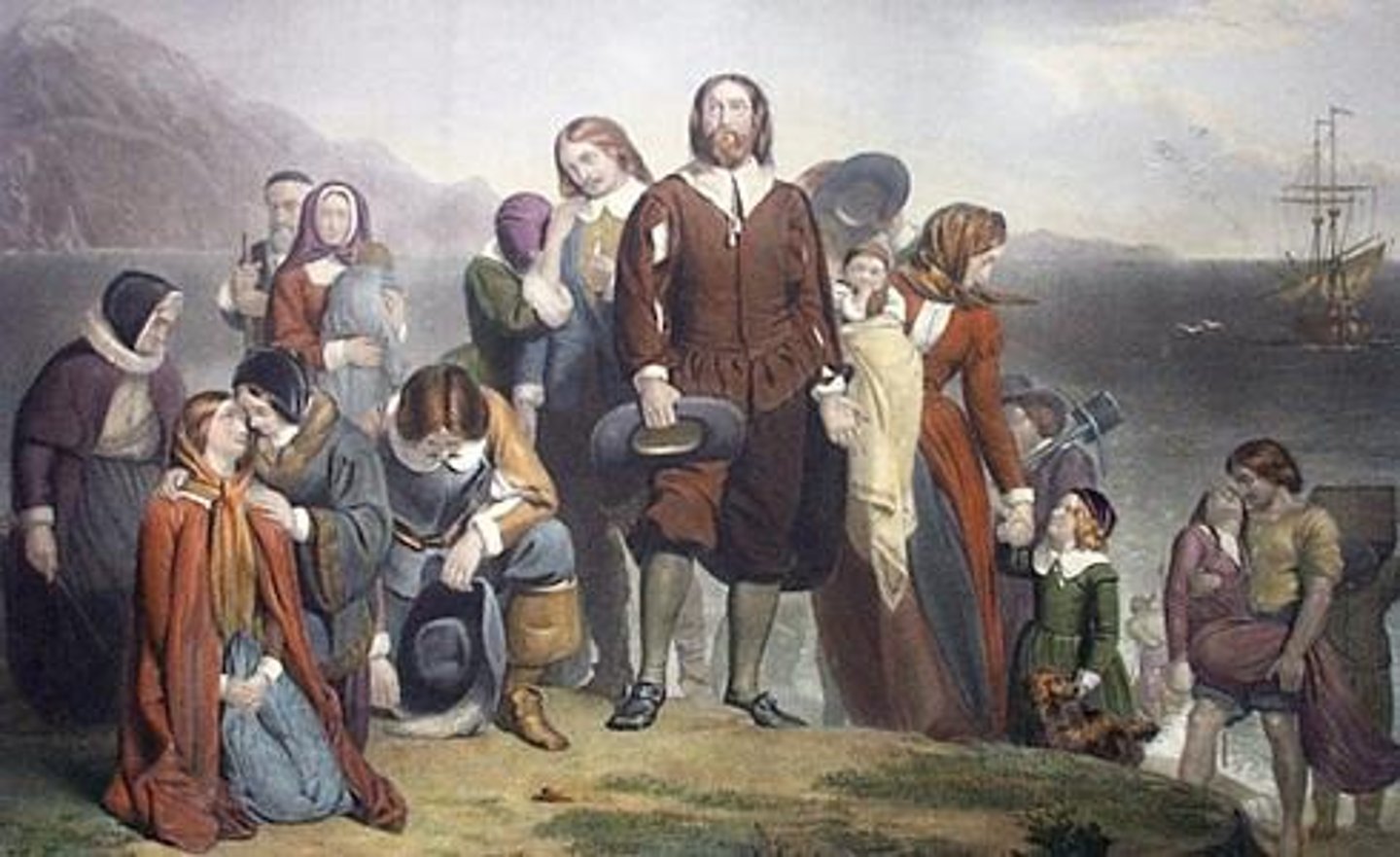
Charles I of England
1600-1649; King of England 1625-1649; numerous conflicts with Parliament; fought wars with France, Spain, and Scotland; eventually provoked Civil War, convicted of treason, and beheaded by Cromwell
Long Parliament (1640-1660)
Parliament who did not trust Charles I, a despotic king with an army, and resisted Charles's religious innovations. This Parliament enacted legislation that limited the power of the monarch and made government without Parliament impossible. It established that it could not be dissolved without its own consent. Parliament also had to meet a minimum of once every three years. Ship money was abolished. Leaders of persecution of Puritans had to be tried and executed. The Star Chamber was abolished. Common law courts were supreme to king's courts. It also refused funds to raise army to defeat Irish revolts. Puritans came to represent the majority in Parliament
English Civil War (1642-1649)
A conflict over royal versus parliamentary rights, caused by King Charles I's arrest of his parliamentary critics and ending with his execution. Its outcome checked the growth of royal absolutism and, with the Glorious Revolution of 1688 and the English Bill of Rights of 1689, ensured that England would be a constitutional monarchy.
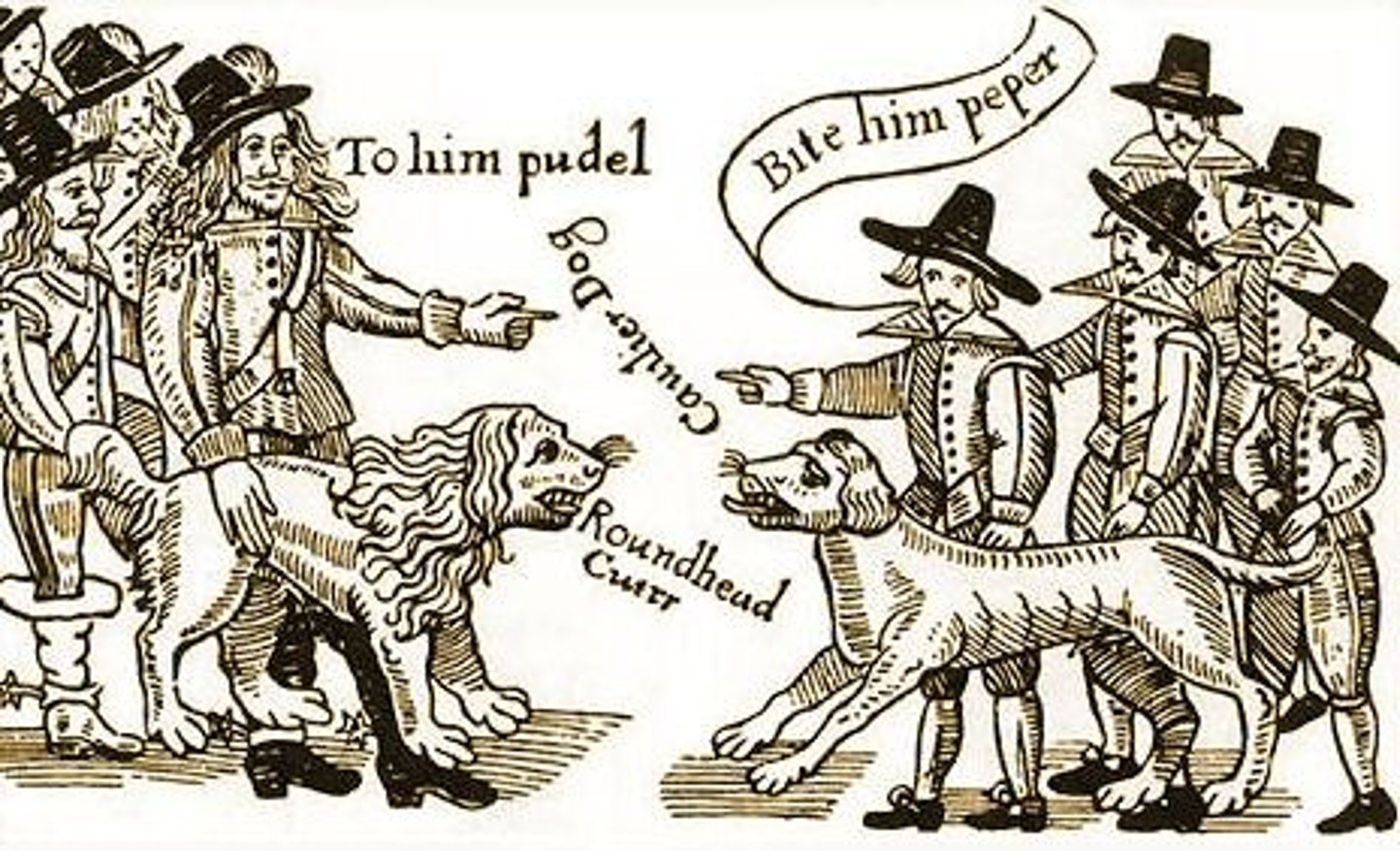
Oliver Cromwell
English military, political, and religious figure who led the Parliamentarian victory in the English Civil War (1642-1649) and called for the execution of Charles I. As lord protector of England (1653-1658) he ruled as a virtual dictator.
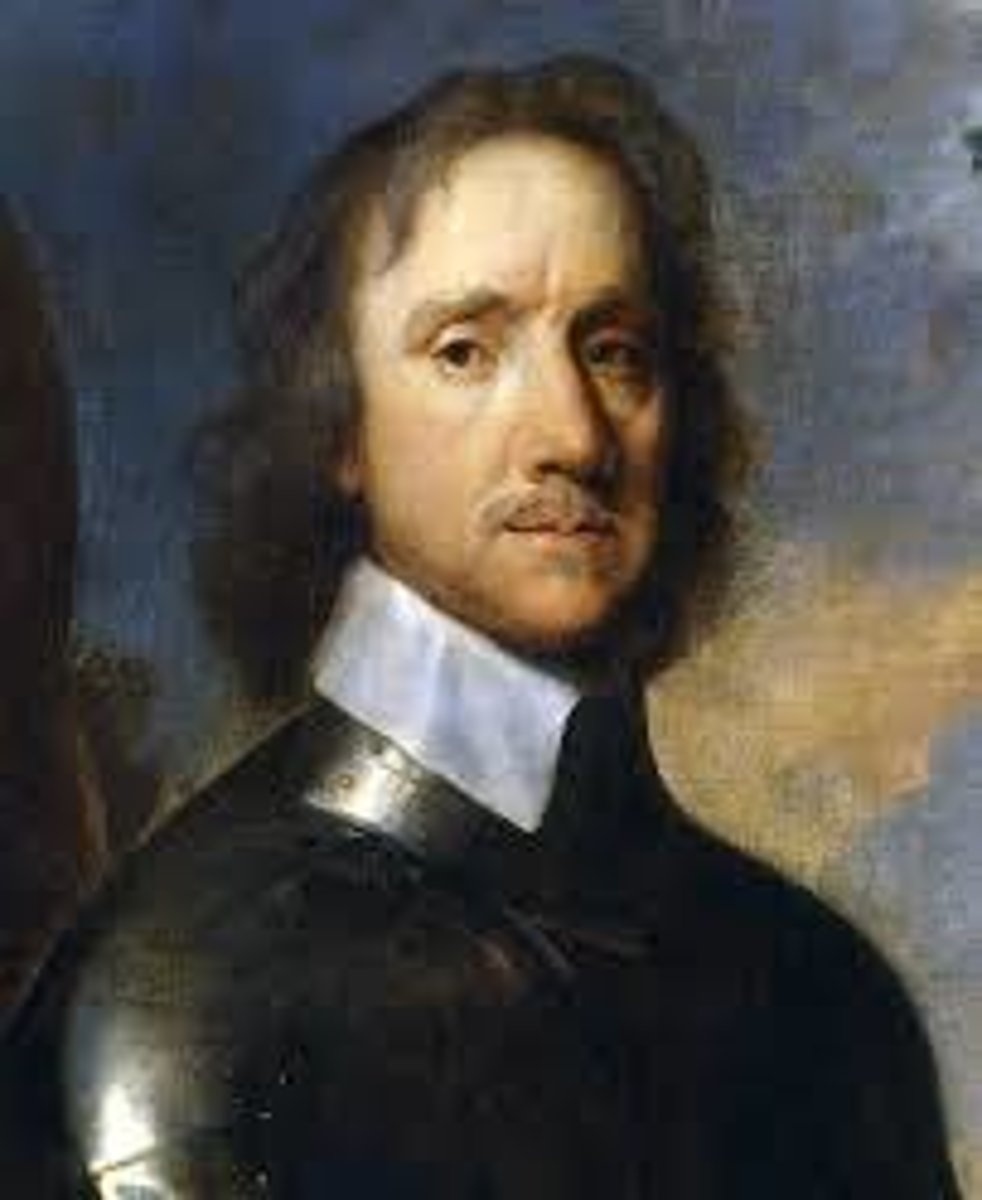
Protectorate (1653-1658)
The English military dictatorship (1653-1658) established by Oliver Cromwell following the execution of Charles I.
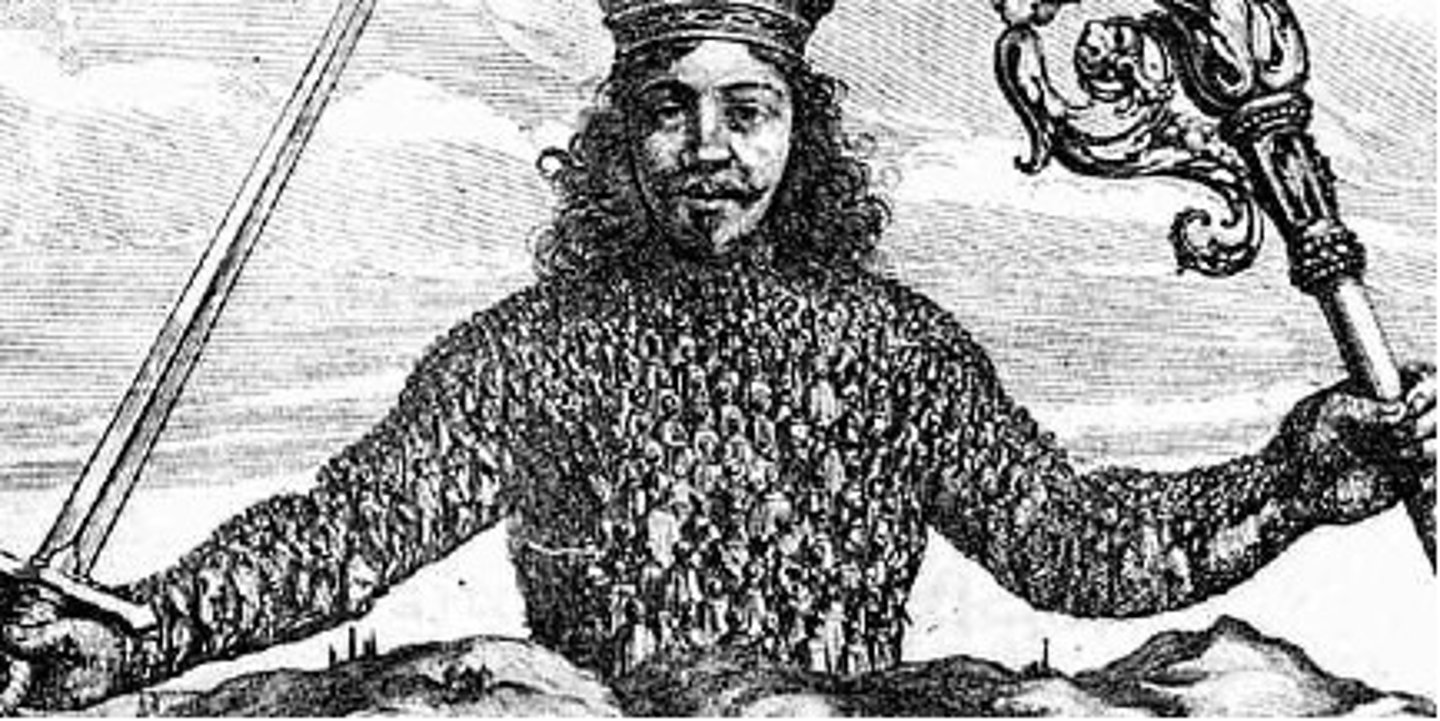
Thomas Hobbes, Leviathan
Believes that humans were naturally selfish and wicked, and governments were needed to keep order and rulers needs absolute power to keep citizens under control.
Charles II (1660-1685)
Stuart Restoration
- he learned the lessons of his predecessors (Don't mess with Parliament!)
- religious toleration, but leaned toward the Catholics.
- Test Act (1673).
- Habeas Corpus Act (1679).
- he launched bold new foreign policy ventures challenging the Dutch for the commercial leadership of Europe.

Test Act of 1673
Charles II's Parliament said that only Anglicans could hold military and civil offices
Habeus Corpus Act of 1679
Right to a speedy trial. Political parties start to form.
James II (1685-1688)
Final Stuart ruler who was Catholic and pushed for return to absolutism; he was forced to abdicate in favor of William and Mary, who agreed to the Bill of Rights, guaranteeing parliamentary supremacy.
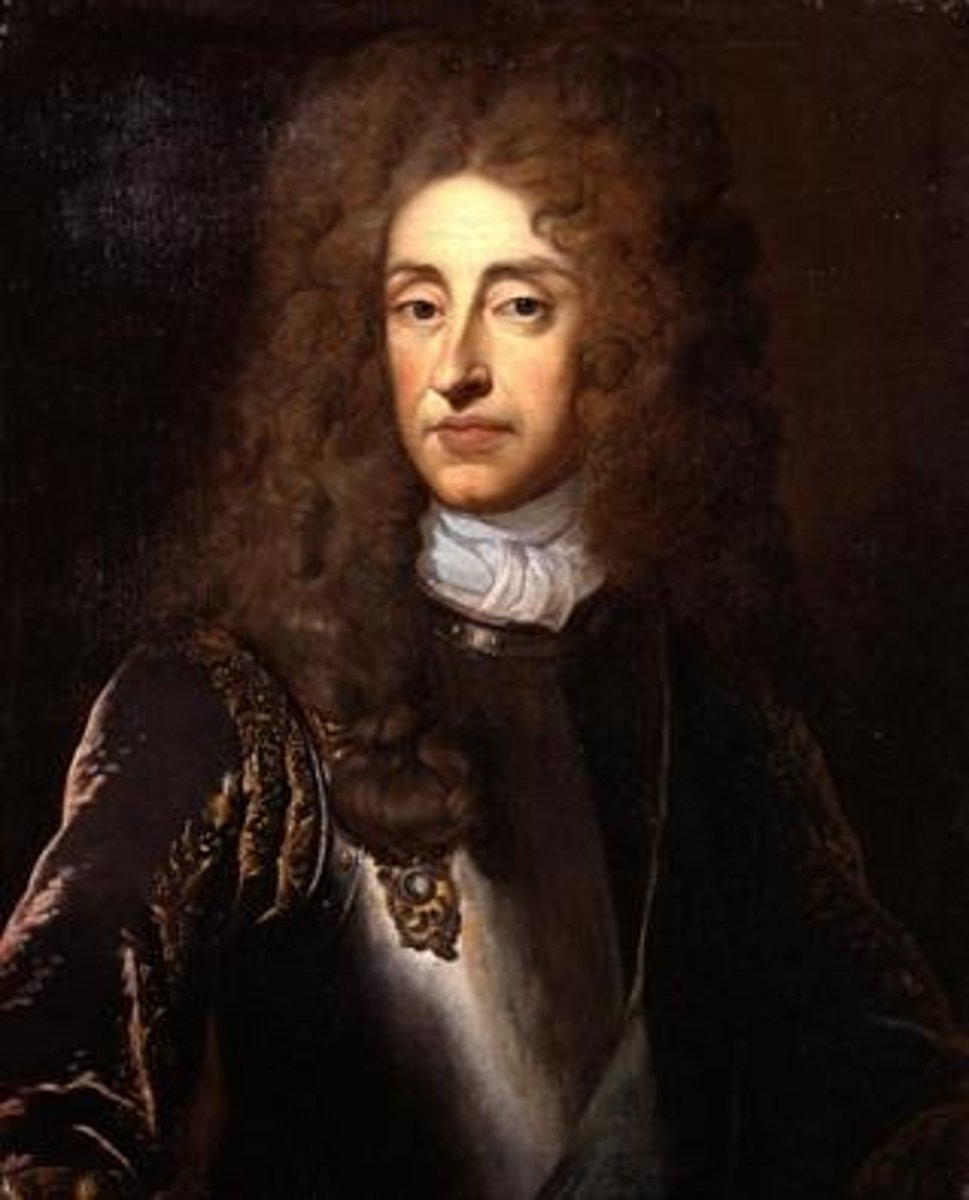
Glorious Revolution (1688)
The bloodless coup in 1688 in England when James II (a Catholic) gave up the throne and his daughter Mary and her husband William of Orange (of the Netherlands) - both Protestants - replaced James II to reign jointly. No Catholic monarch has reigned in England since.
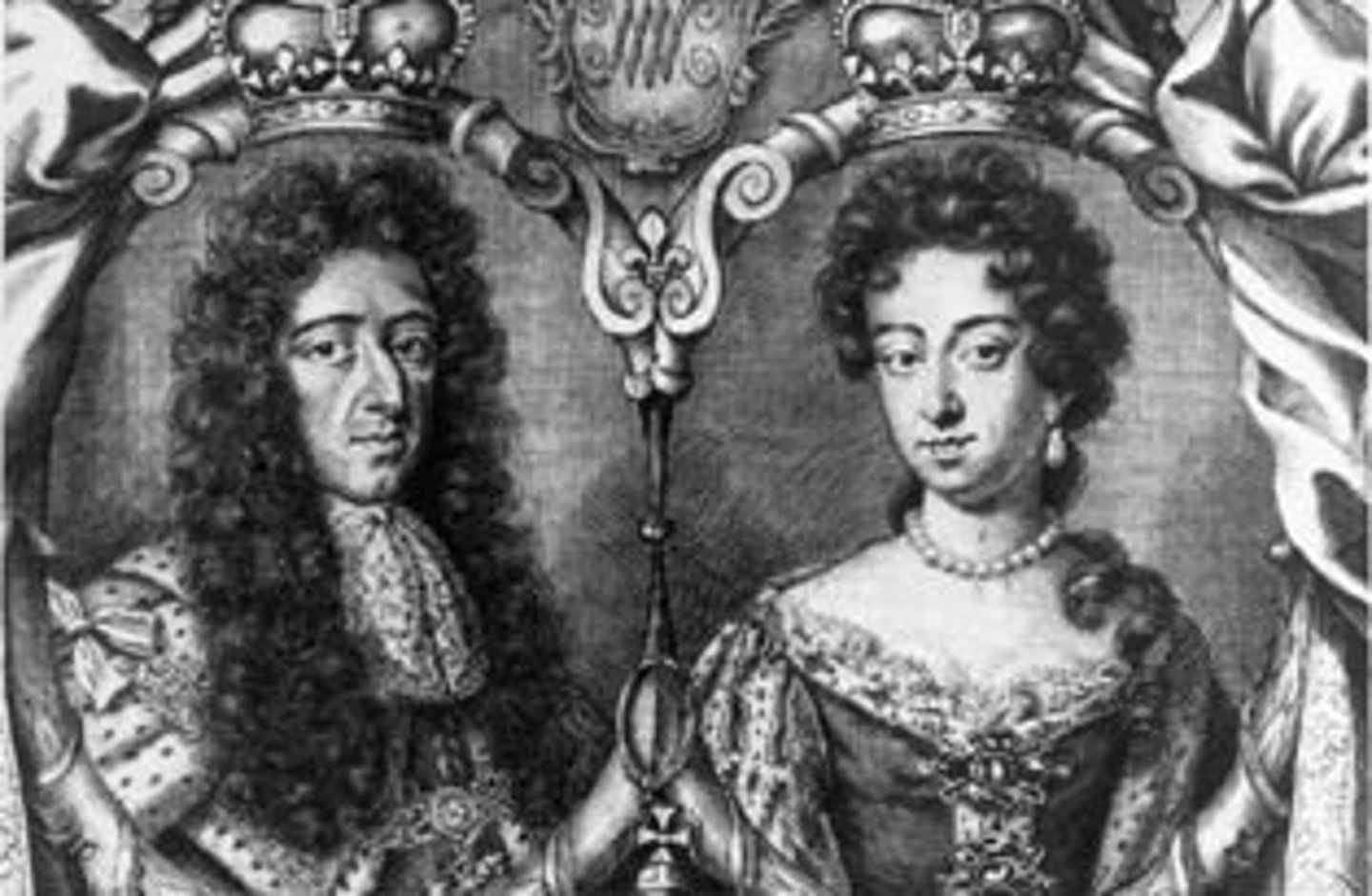
English Bill of Rights (1689)
King William and Queen Mary accepted this document. It guaranteed certain rights to English citizens and declared that elections for Parliament would happen frequently. By accepting this document, they supported a limited monarchy, a system in which they shared their power with Parliament and the people.
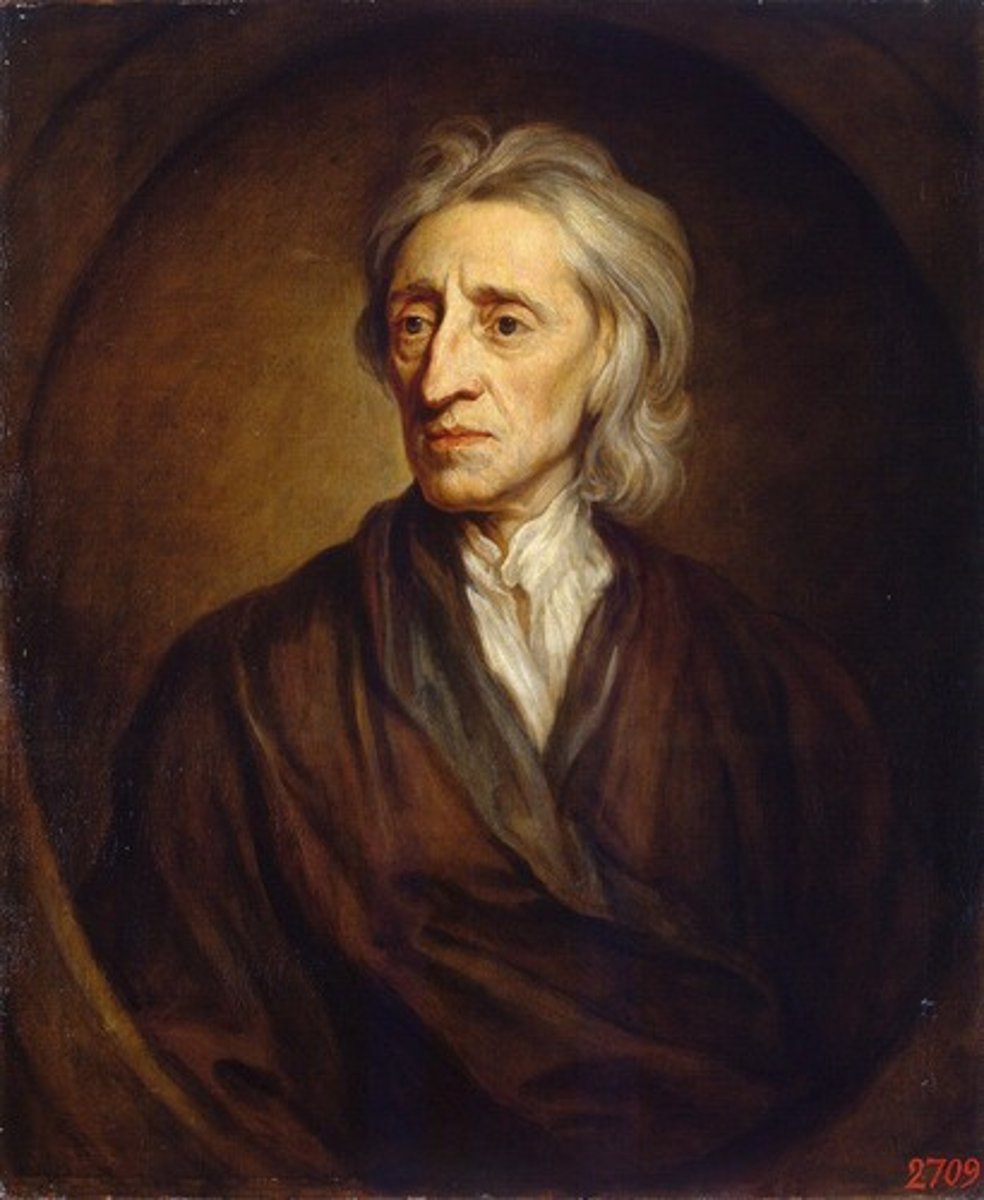
John Locke, Second Treatise of Government
Humans have the right to life, liberty and property and government was to protect those rights. Rejected "Divine Right" and believed in a social contract
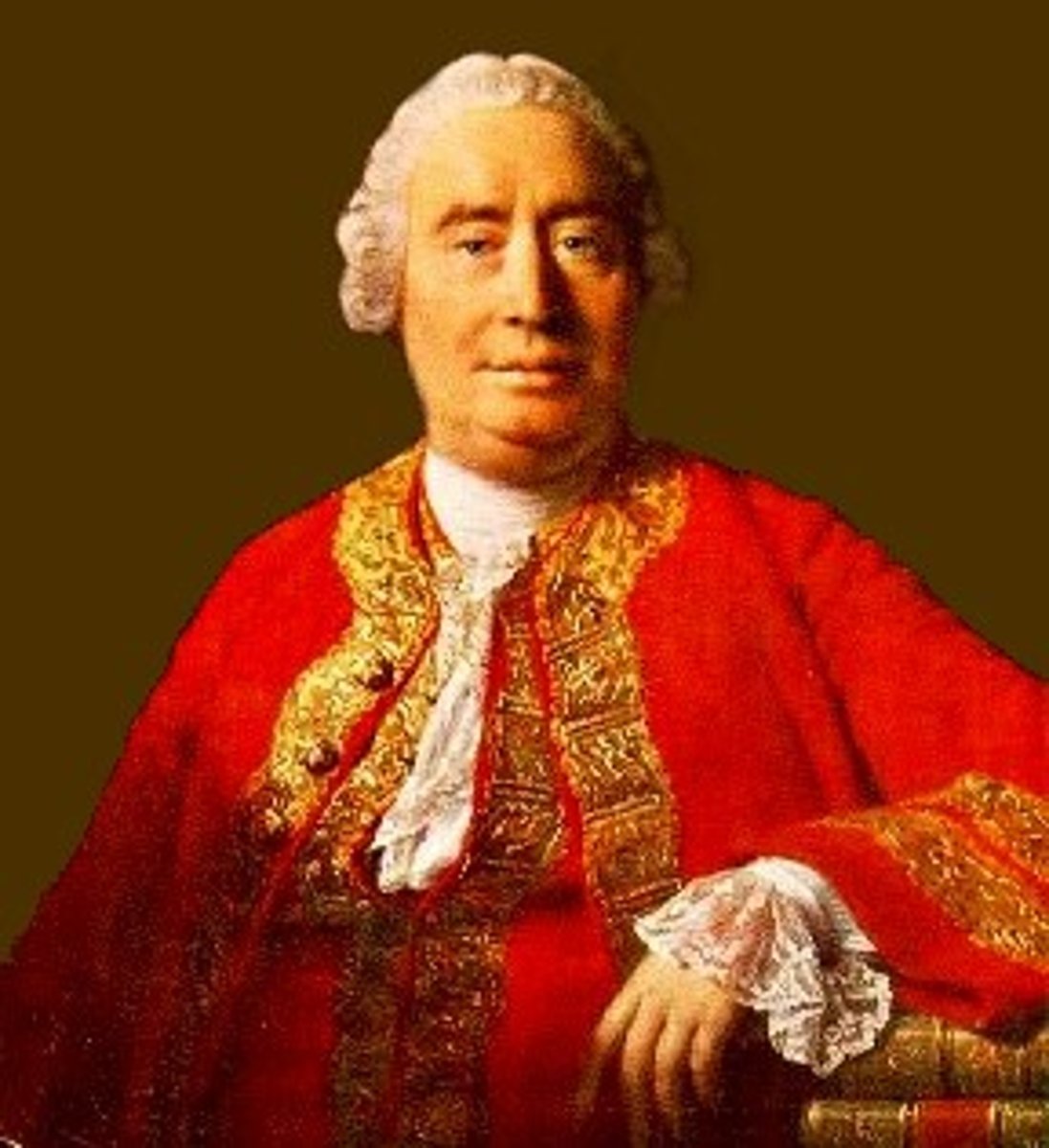
David Hume
Scottish philosopher whose sceptical philosophy restricted human knowledge to that which can be perceived by the senses (1711-1776)
The Golden Age of the Dutch Republic
early 1600s due to political stability, economic prosperity, and cultural achievements.

Stadholder
The executive officer in each of the United Provinces of the Netherlands, a position often held by the princes of Orange. (Effectively an elected ruler-though the leader of the House of Orange seems to always have held this position).
Dutch East India Company
A company founded by the Dutch in the early 17th century to establish and direct trade throughout Asia. Richer and more powerful than England's company, they drove out the English and Established dominance over the region. It ended up going bankrupt and being bought out by the British

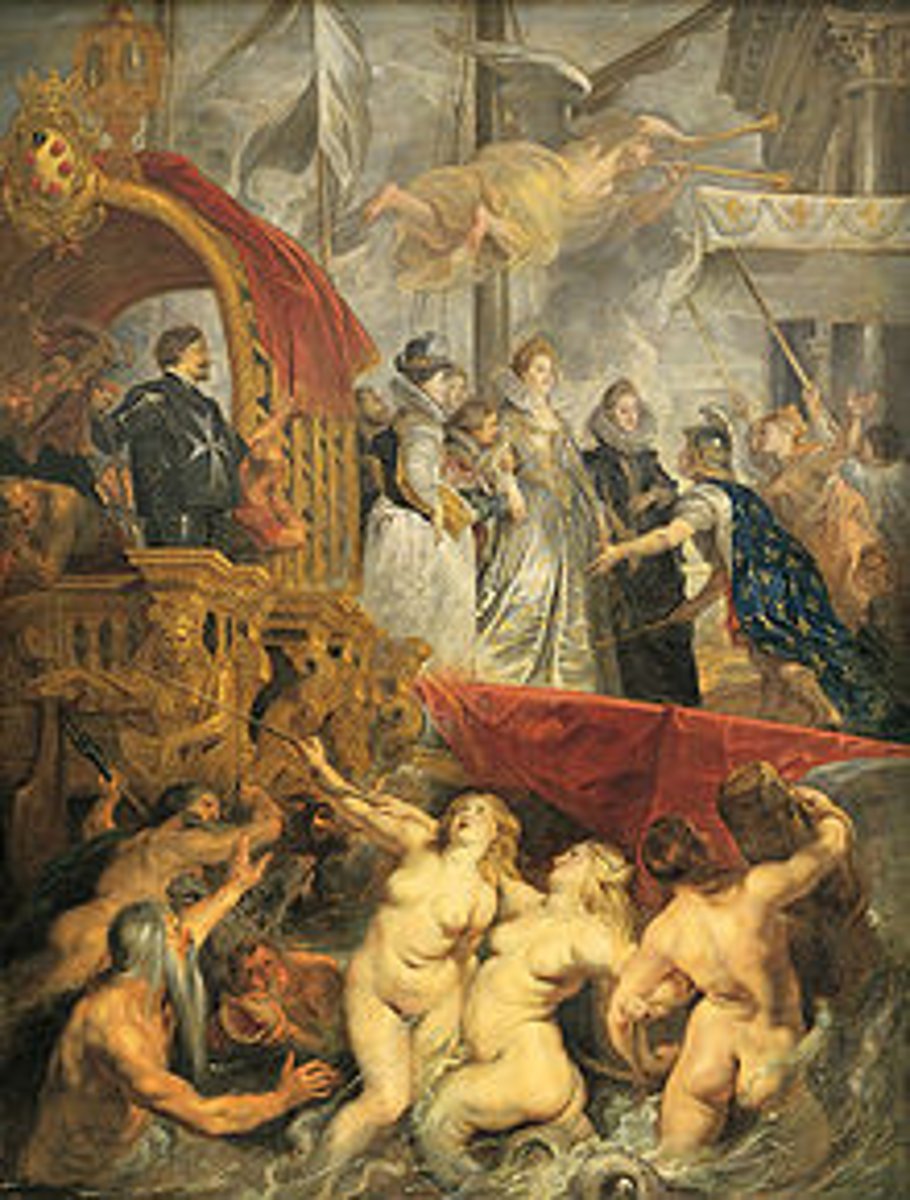
Peter Paul Rubens
is the most famous Baroque artist who studied Michelangelo in Italy and took that Renaissance style to the next level of drama, motion, color, religion and animation, which is portrayed in his paintings
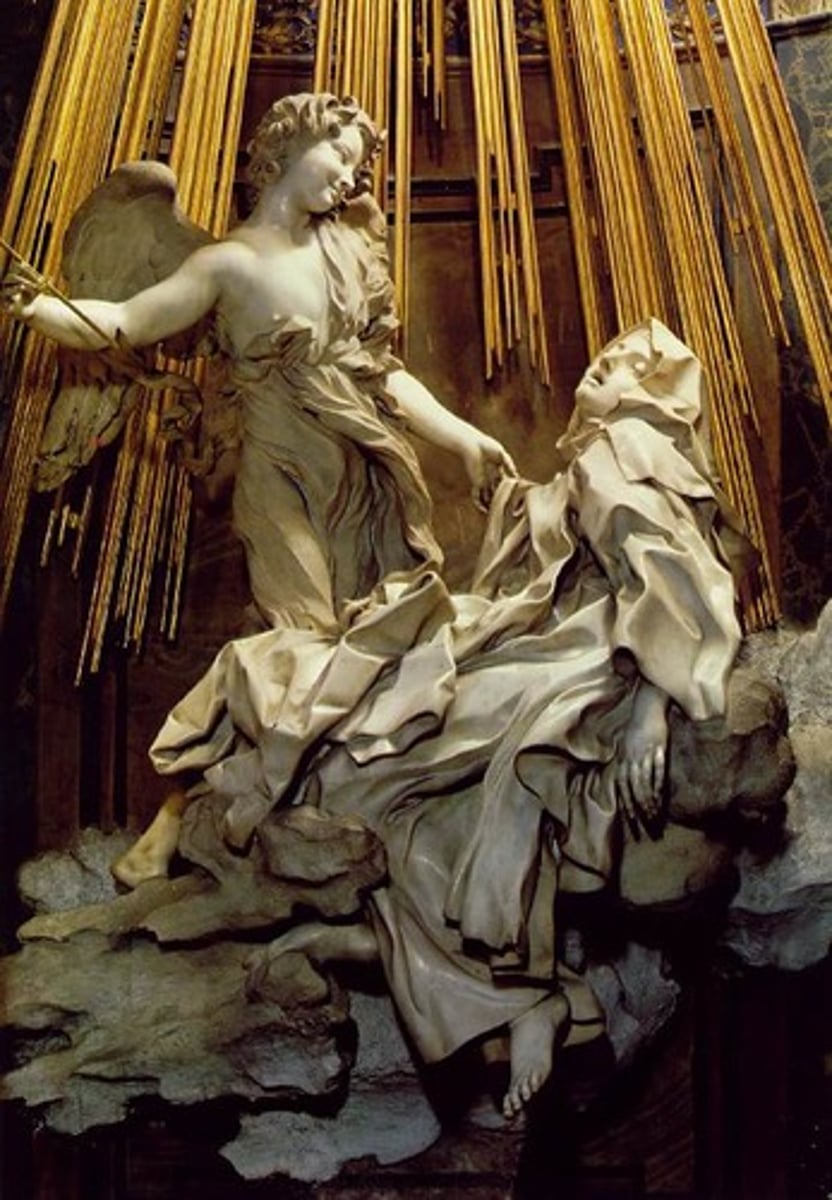
Baroque
An artistic style of the seventeenth century characterized by complex forms, bold ornamentation, and contrasting elements
 Note
Note  Flashcards (44)