The Nervous System and Related Disorders
 Studied by 0 people
 Call Kai
 Learn
Learn Practice Test
 Spaced Repetition
 Match
Match Flashcards
 Knowt Play
1/18

Earn XP
Description and Tags
These flashcards cover key vocabulary related to the nervous system, neurotransmitters, and anxiety disorders, based on lecture notes.
Name | Mastery | Learn | Test | Matching | Spaced | Call with Kai |
|---|
No analytics yet
Send a link to your students to track their progress
19 Terms
Cholinergic nerves
Nerves that release acetylcholine to transmit signals in the nervous system.
Anticholinergics
Drugs that inhibit the parasympathetic nervous system, producing effects opposite to cholinergic drugs.
Muscarinic receptors
Receptors that respond to acetylcholine and are involved in the parasympathetic nervous system.
Myasthenia gravis (MG)
A disease characterized by antibodies attacking nicotinic synapses on skeletal muscles, leading to muscle fatigue and weakness.
Catecholamines
Hormones such as norepinephrine, involved in neurotransmission and stress response.
Adrenergic antagonists
Drugs that block the effects of adrenaline and norepinephrine on target receptors.
Beta Blockers
Medications used to treat cardiovascular conditions by reducing heart rate and force of contraction.
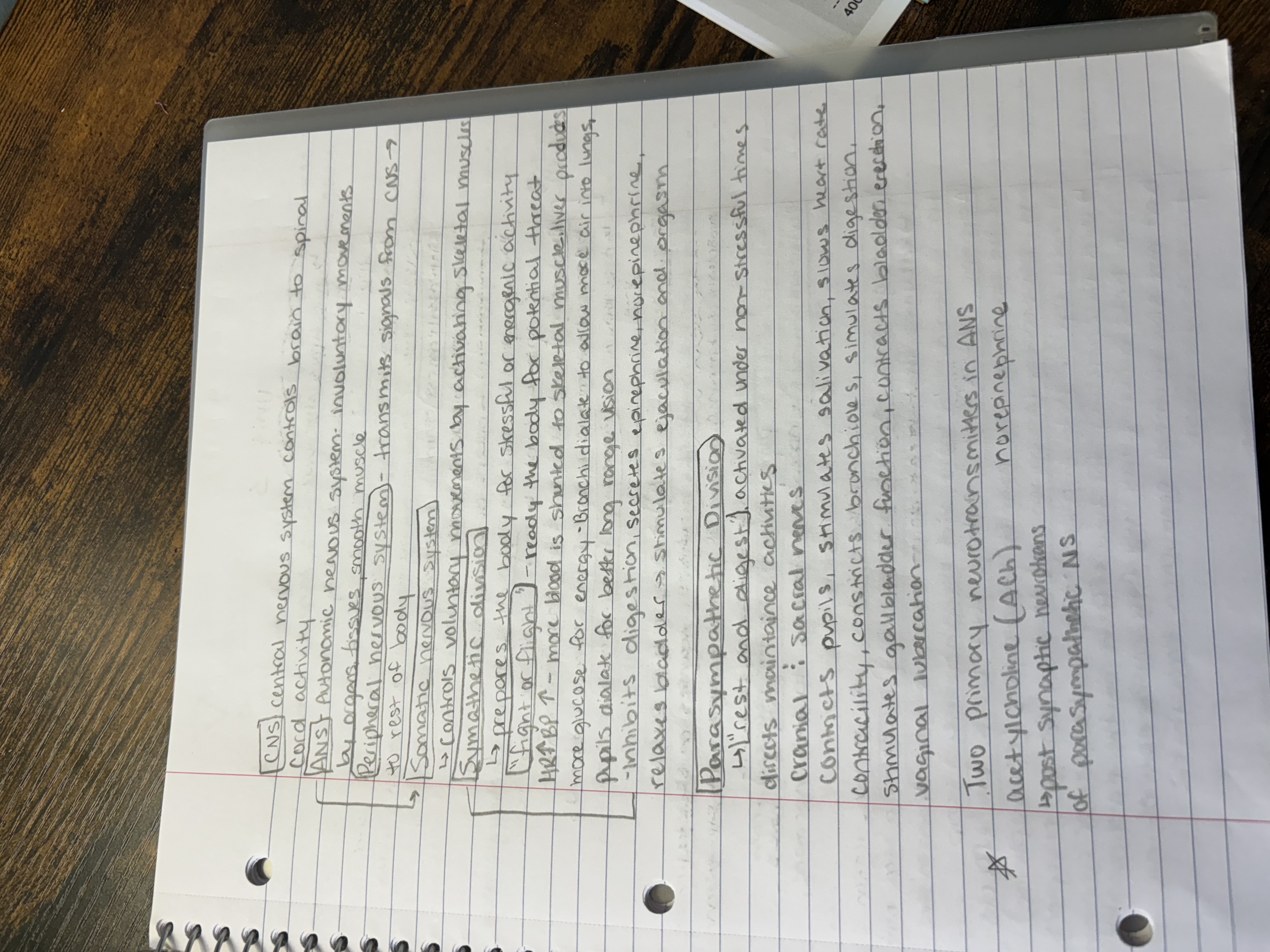
Sympathetic division
Part of the autonomic nervous system that prepares the body for 'fight or flight' response.
Parasympathetic Division
Part of the autonomic nervous system that directs 'rest and digest' activities.
Acetylcholine (Ach)
The primary neurotransmitter of the parasympathetic nervous system.
Insomnia
The inability to fall or stay asleep, the most common type of sleep disorder.
Anxiolytics
Drugs that reduce anxiety by altering neurotransmitter levels in the brain.
Selective Serotonin Reuptake Inhibitors (SSRIs)
Medications that improve mood and reduce anxiety by increasing serotonin levels in the brain.
Generalized anxiety disorder (GAD)
Excessive anxiety lasting 6 months or longer, characterized by restlessness and fatigue.
Panic disorder
Characterized by intense feelings of terror or impending doom, often accompanied by autonomic symptoms.
Obsessive-Compulsive Disorder (OCD)
Anxiety disorder involving recurrent intrusive thoughts and repetitive behaviors affecting daily living.
Post-Traumatic Stress Disorder (PTSD)
A condition triggered by experiencing or witnessing a traumatic event, leading to intense fear and anxiety.
Limbic System
Brain structures involved in emotional expression, learning, and memory, connected to the hypothalamus.
 Note
Note  Flashcards (35)