DNA Structure and Replication
 Studied by 1 person
 Call Kai
 Learn
Learn Practice Test
 Spaced Repetition
 Match
Match Flashcards
 Knowt Play
1/46

There's no tags or description
Looks like no tags are added yet.
Name | Mastery | Learn | Test | Matching | Spaced | Call with Kai |
|---|
No analytics yet
Send a link to your students to track their progress
47 Terms
What are nucleic acids responsible for?
The storage, expression, and transmission of genetic information
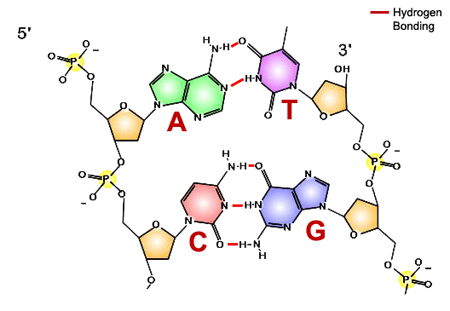
What are the 2 classes of nucleic acid?
DNA and RNA
What does DNA and RNA stand for?
Deoxyribonucleic acid
Ribonucleic acid
What does DNA store?
Genetic information coded in sequences of genes
RNA is involved in protein synthesis and controls what?
Gene expression
Bases in DNA
Purines vs Pyrimidines
Which bases are which?
What do each base pair to?
Purines (double ring): Adenine and guanine
Pyrimidines (single ring): Cytosine and thymine
A-T pairing
G-C pairing
What are DNA and RNA made up of?
Nucleotides
What are nucleotides made up of?
Phosphate
5C sugar
Base
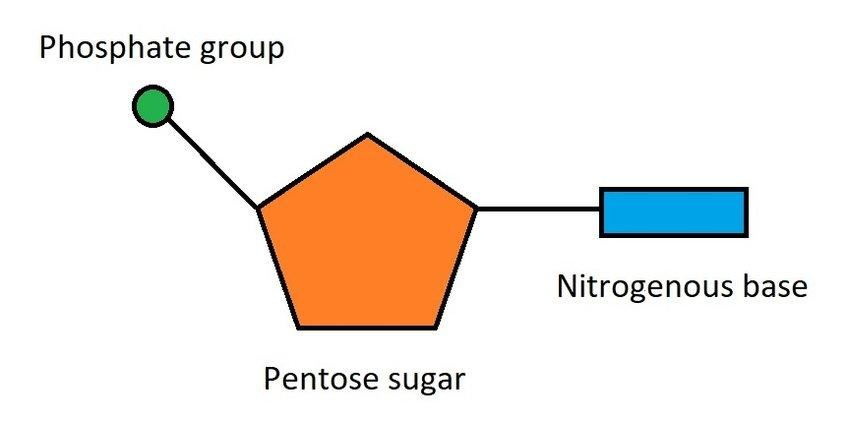
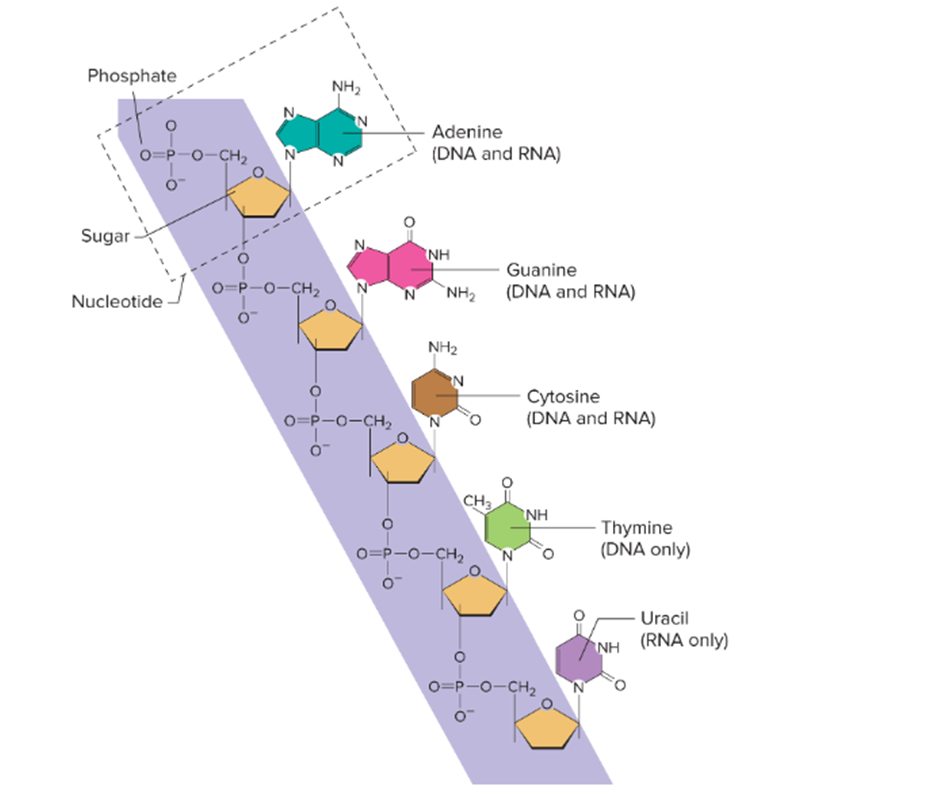
Draw the primary structure of Nucleic Acids:
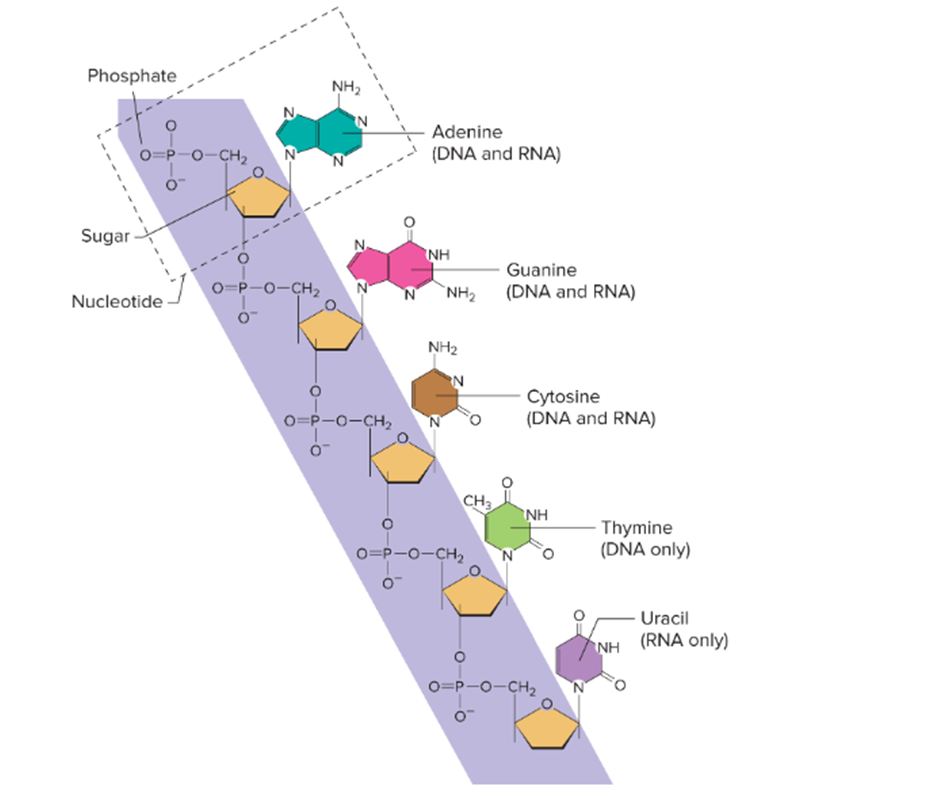
Polymerisation occurs via condensation reactions. What is polymerisation in nucleic acids?
The formation of phosphodiester bonds between C3 of one sugar, to C5 of the next sugar.
It forms the primary structure
Gives 5’ to 3’ directionality to single stranded nucleic acids

In 5’ to 3’ directionality, what is the 5’ end and what is the 3’ end?
5’ end = phosphate
3’ end = terminal sugar
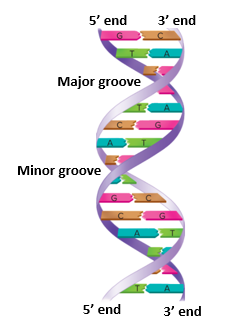
What is the secondary structure of DNA?
There are 2 antiparallel chains of nucleotides in a double helix.
Sugar-phosphate backbone
Hydrogen bonds
2 H bonds between A-T
3 H bonds between G-C
What is the genetic code?
The set of rules that translates DNA (mRNA) base sequences into amino acids.
3 nucleotides form a codon, each codon coding for a specific amino acid or stop signal.
What is the hierarchical organisation of genetic information in eukaryotic cells?
DNA
Sequence of nucleotides
Triplet code
Amino acids
Polypeptides
Genes
Genome
How is genetic information organised within the nucleus?
The nucleus contains DNA
DNA’s nucleotide sequence stores genetic information
3 nucleotides code for a specific amino acid. This is the triplet code
Many triplet codes will form a specific polypeptide chain
A DNA molecule contains many genes
All the genetic information in DNA is called the genome
What is the tertiary structure of DNA?
DNA in eukaryotes in the nucleus are compacted into chromosomes
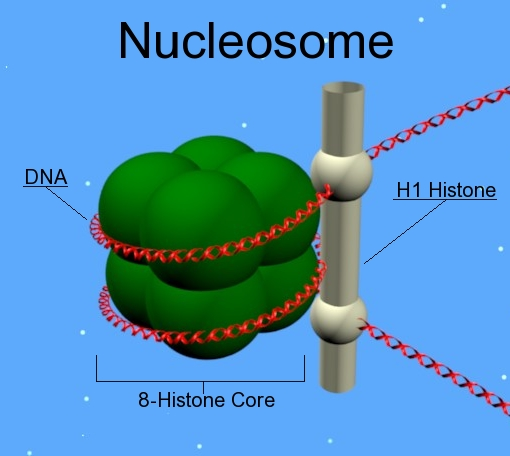
What are nucleosomes?
DNA is bound to histone proteins which form nucleosomes
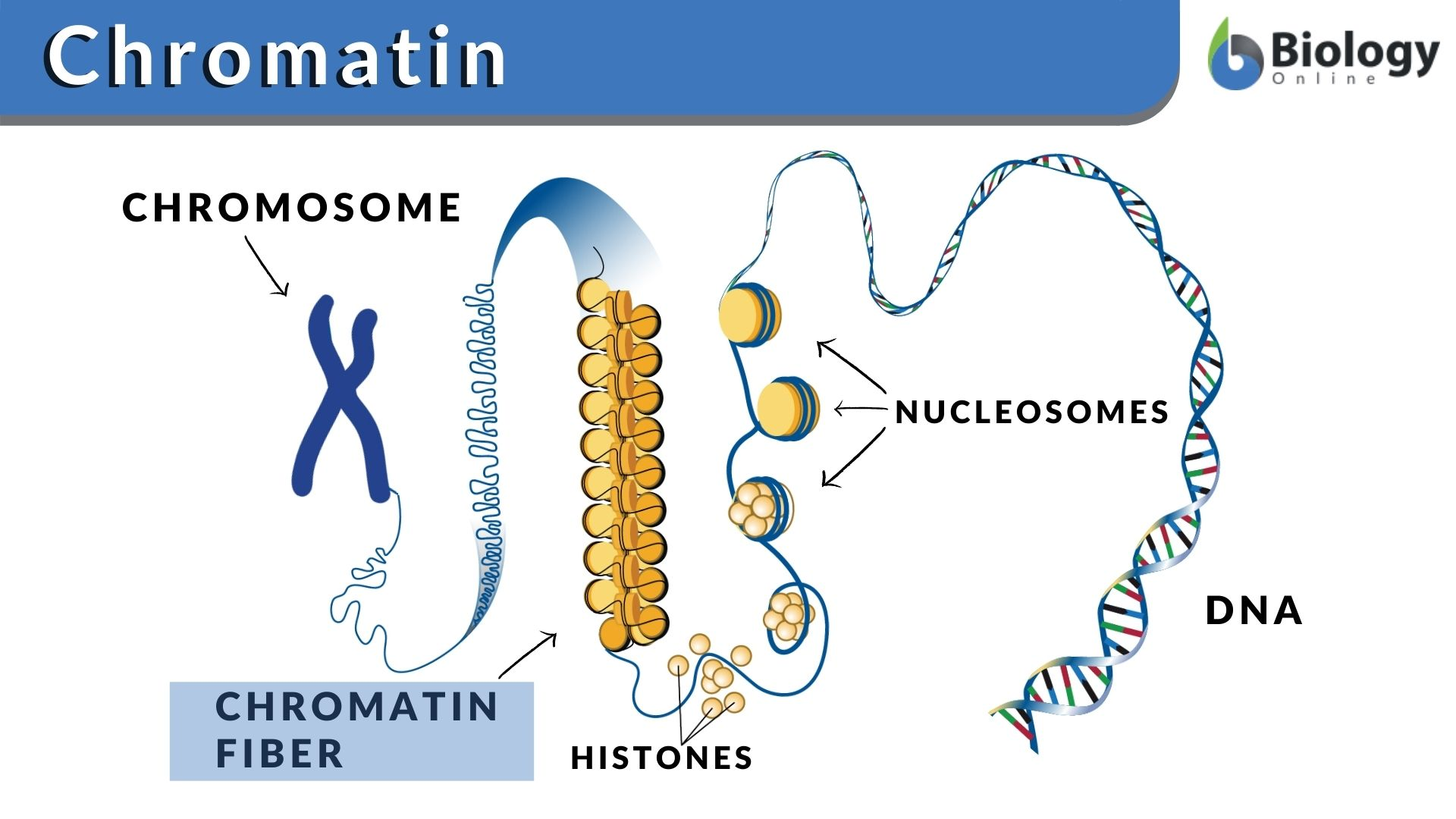
What forms chromosomes?
Nucleosomes associate with each other, forming more compact chromatin fibres
Chromatin fibres are supercoiled into loops and condensed into a chromosome
How many separate chromosomes are there in all human cells (except egg and sperm) that encode the whole of the genome?
46
DNA replication results in the exact duplication of DNA, producing 2 complete double helices. What are the 3 reasons as to why DNA replication required?
Reproduction
Cell growth
Cell repair
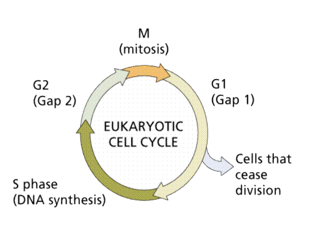
When does DNA replication occur in the cell cycle?
During the S phase in interphase, before the cell divides
Where does DNA replication occur in a eukaryotic cell?
In the nucleus
What type of DNA replication is in eukaryotic cells?
Semi-conservative
What is semi conservative replication?
The two strands of parent DNA separate and both strands acts as a template for a new strand.
There is one daughter (new) strand and one parent (old) strand in each new DNA molecule
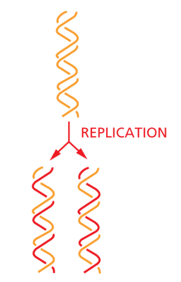
Name the stages of DNA replication
Initiation
Elongation
Termination
Initiation
DNA is very stable and tightly coiled together and compacted into chromosomes
Initiation
Initiator proteins are needed to pry open the 2 DNA strands
Initiation
This occurs at the replication origin
Initiation
Replication bubbles are formed
Prokaryotes have a single bubble, while eukaryotes have many bubbles.
In these bubbles, there are 2 Y-shaped replication forks

Name the initiator proteins involved DNA replication
Helicase
Topoisomerase
Single strand binding proteins
Primase
What does helicase do in DNA replication?
Unwinds and separates the two DNA strands by breaking the weak H-bonds using ATP energy
What does topoisomerase do in DNA replication?
Uncoils the supercoiled DNA and relieves stress of the DNA molecule as it separates
What do single-strand binding proteins do in DNA replication?
Attaches to each strand and keep them separated and untwisted
What does primase do in DNA replication?
Primase acts as a starting point for DNA polymerase
Primase is an RNA polymerase that synthesised RNA using DNA as a template
It does not synthesise DNA, but makes short length of RNA using the DNA strand as a template reading in 5’ to 3’ direction
Serves as an RNA primer for DNA synthesis, hence the name primase
Elongation
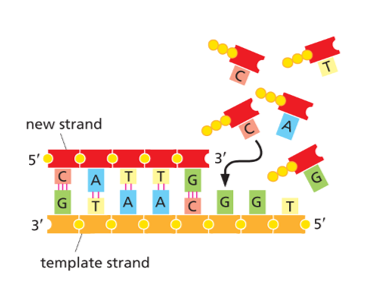
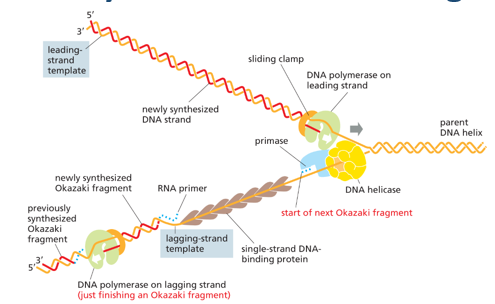
DNA polymerase binds to the RNA primer and moves along the replication fork and catalyses the addition of free nucleotides in the nucleus, binding via complementary base pairing and join via phosphodiester bonds
Elongation
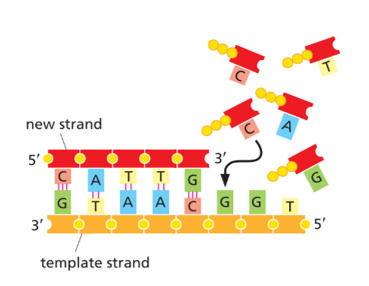
DNA polymerase uses the parent strand as a template and moves along it 3′ → 5′.
Because it can only add nucleotides to a free 3′-OH, the new DNA strand is synthesised 5′ → 3′.
The two strands are antiparallel.
Elongation
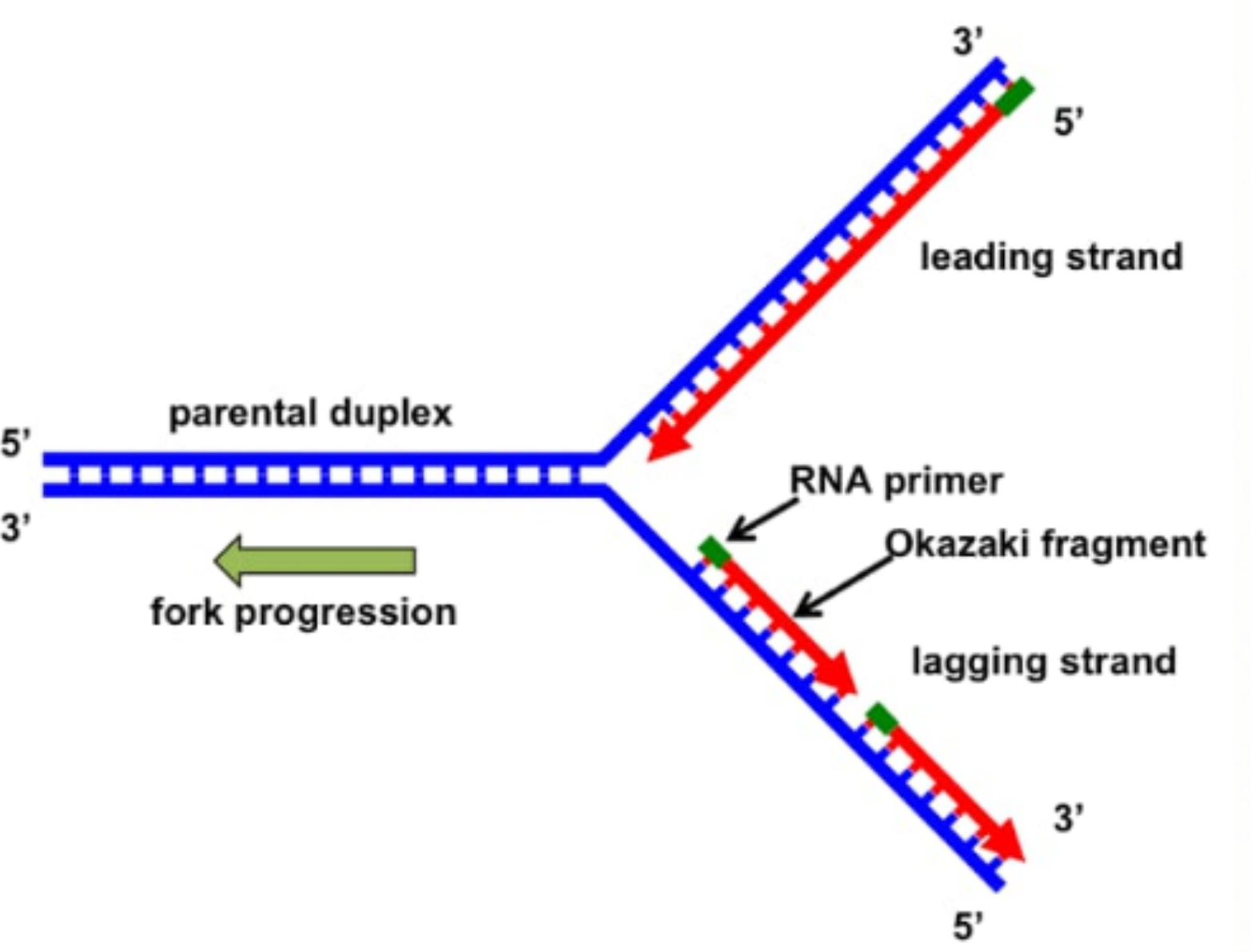
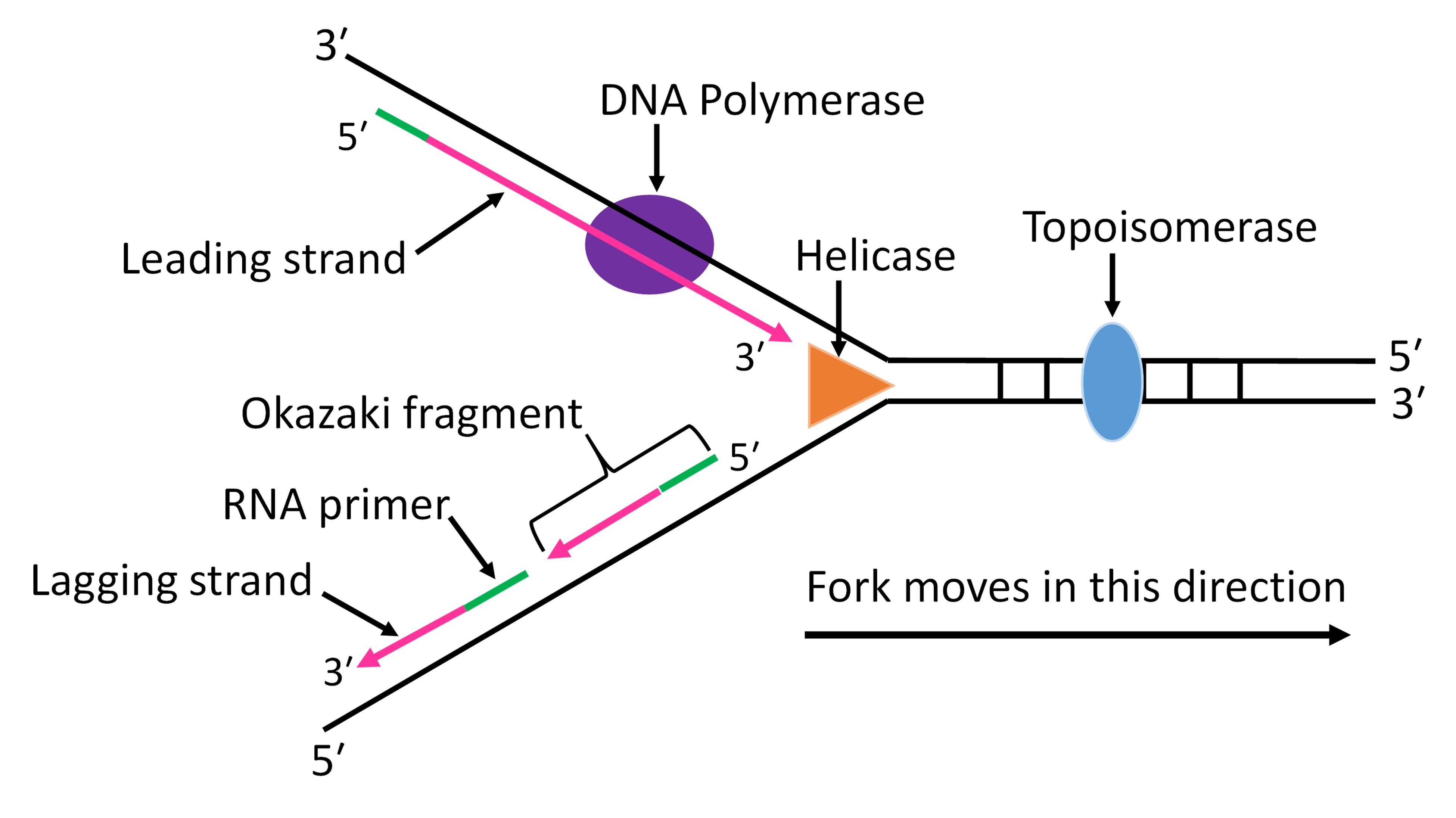
The DNA template strand being read from 3’ to 5’ is called the leading strand (leading strand is therefore 5’ to 3’).
The other DNA strand is the lagging strand.
Elongation
The lagging strand is synthesised discontinuously in short sections because DNA polymerase can only synthesise DNA in the 5′ → 3′ direction from a free 3′-OH. These short DNA sections are called Okazaki fragments.
Elongation
The leading strand will only need one RNA primer at the origin of replication.
The lagging strand will need several RNA primers to keep polymerisation going.
Elongation
These RNA primers are eventually removed by exonuclease.
Gaps are filled by DNA polymerase
Elongation
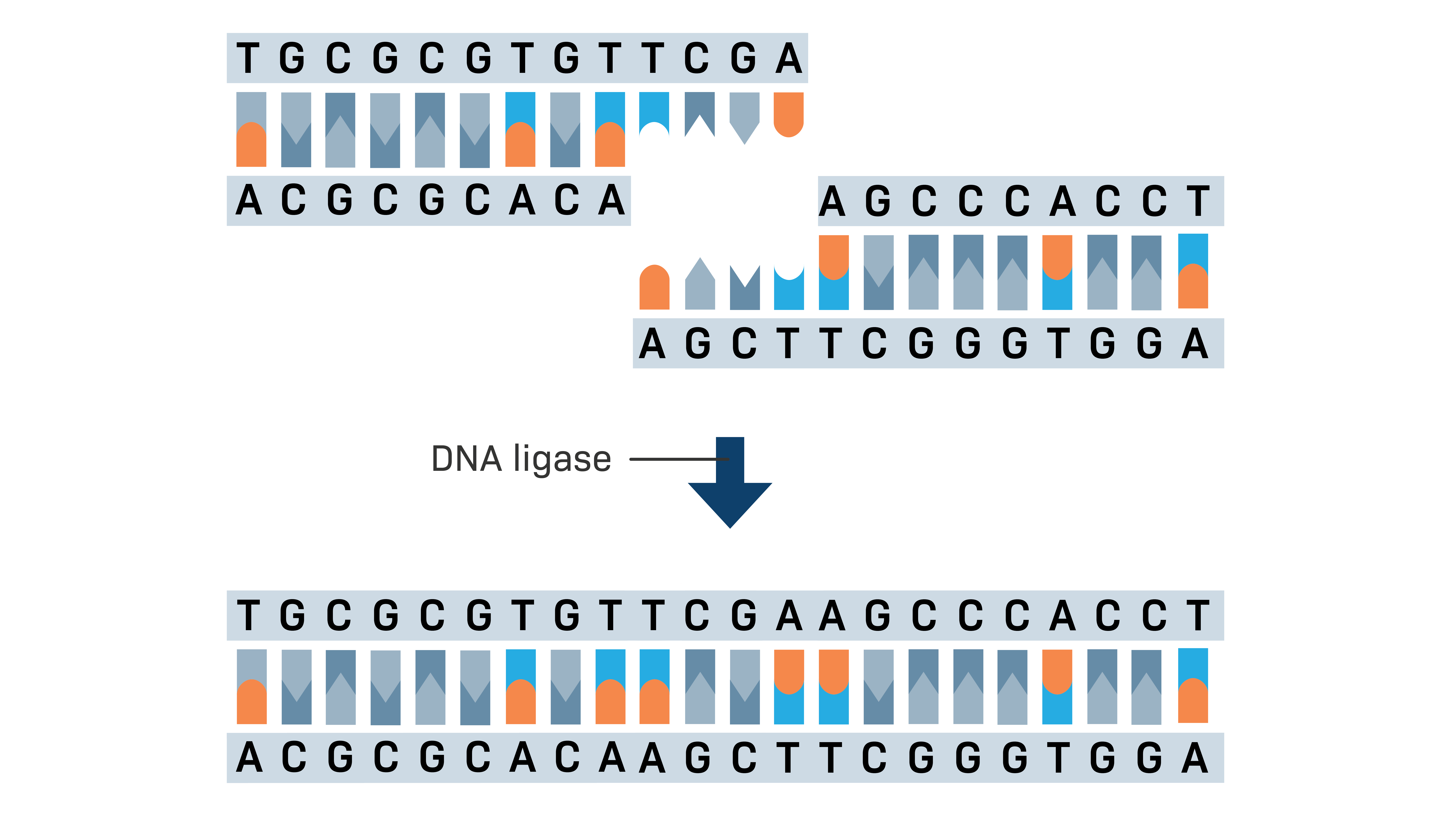
The Okazaki fragments on the lagging strand are then joined by DNA ligase to form a complete strand.
DNA polymerase is self correcting. What does that mean?
DNA polymerase carefully monitors the base-pairing; proofreading.
Before adding a new nucleotide in the 5’ to 3’ direction, it checks the previously added nucleotide.
If correct base-pairing it continues.
If incorrect, it cuts the phosphodiester bond, releasing the incorrect nucleotide and tries again!
Image depicting Initiation and Elongation:
Termination
The leading strand can be replicated right up to the end of the strand. The lagging strand cannot.
Termination
When the final RNA primer on the lagging strand is removed, there is no free 3′-OH for DNA polymerase to extend from, so the very end of the chromosome cannot be copied.
As a result, chromosomes would shorten after each round of replication (end-replication problem).
Termination
Telomeres are long, repetitive, non-coding DNA sequences at the ends of chromosomes that act as protective buffers.
Telomerase extends these telomeres by adding repeat sequences, preventing the loss of important genes.
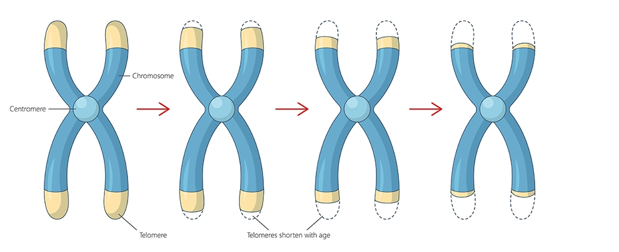
What is this image showing?
Telomeres shortening with age
 Note
Note  Flashcards (96)