Unit 6: Age of exploration, 9th grade world history
 Studied by 5 people
 Call Kai
 Learn
Learn Practice Test
 Spaced Repetition
 Match
Match Flashcards
 Knowt Play
1/26

There's no tags or description
Looks like no tags are added yet.
Name | Mastery | Learn | Test | Matching | Spaced | Call with Kai |
|---|
No analytics yet
Send a link to your students to track their progress
27 Terms
What were the primary motivations driving European exploration during the Age of Exploration in the 15th and 16th centuries.
God (spreading Christianity), Glory (achieving fame and status), and Gold (seeking wealth and resources)
Some facts about Prince Henry the Navigator
Portuguese leader who funded voyages and he (sort of) established a navigation school, but it was mostly his dad because he had all the money, not Henry.
*The navigation school was not only for navigation but also for Cartographers, shipbuilders, and explorers
Helped conquer a city in northern Africa
and laid the groundwork for the Age of Exploration by promoting maritime trade.
Bartolomeu Dias
Portuguese explorer; first to round the southern tip of Africa (Cape of Good Hope) in 1488.
He proved that ships could get to Asia by sailing around Africa.
Vasco da Gama
Portuguese explorer; first to sail directly to India by sea
Once he got back to Portugal, he had made 60 times what the voyage had cost, and this made him very rich.
He profited by trading valuable spices, silks, and gems.
*The crew got Scurvy, a disease caused by a lack of vitamin C; the effects were swollen and bleeding gums
Line of Demarcation
An imaginary line that went North to South that the Pope made to keep Spain and Portugal from fighting over land. Spain got everything to the west of the line (Most of North and South America just not Brazil) and Portugal got Brazil, spice islands, parts of Africa and India trading posts.
Treaty of Tordesillas (1494)
the piece of paper that made the line of demarcation official but also moved it a little west.
Why Europeans sought a sea route to Asia
The Ottoman Turks captured Constantinople in 1453 an if the Europeans went to Constantinople, hey would kill each other
3 Reasons why the Spanish won against the Aztecs
advanced Technology
The Spanish spread diseases
They had native allies
Mercantilism
"Economic theory where a nation's power depends on its wealth; goal was to export more than import. Colonies existed to provide raw materials and serve as a market.
Spain's Conquests information (Who was it funded by? Who was the explorer? and when and where did he land?)
It was funded by Queen Isabella and King Ferdinand
Christopher Columbus landed in the Caribbean Islands, but he thought that it was the Indies, in 1492. He made 4 voyages to the New World. He died unaware that he found new land.
French vs. British Colonies (Goals)
The French focused on the fur trade and smaller settlements. The British focused on large-scale settlement and agriculture
The French came to make money, but the British came to escape religious persecution from the mother country.
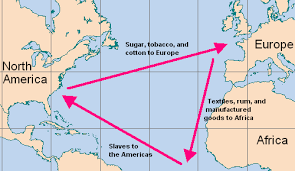
Triangle Trade (Leg 2)
The Middle Passage: Transported enslaved Africans from Africa to the Americas.
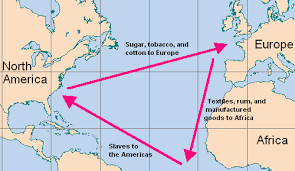
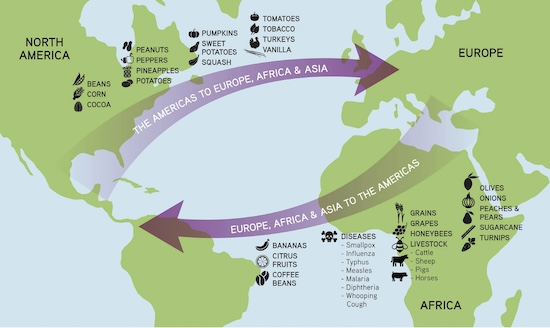
Columbian Exchange (Old World to New World)
Items moved to the Americas: Diseases (Smallpox) fruits, animals (cattle sheep pigs horses)
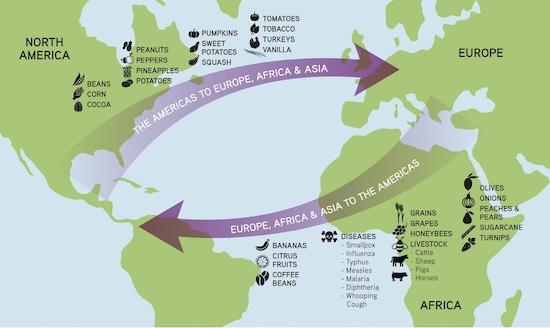

Columbian Exchange (New World to Old World)
"Items moved to Europe/Asia/Africa: Food Staples (Potatoes, corn, tobacco etc.)

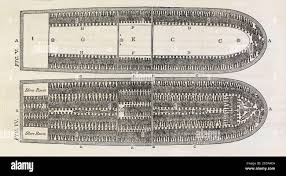
Middle Passage Journey
"The brutal journey of enslaved Africans across the Atlantic
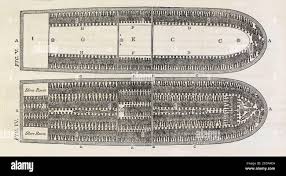
Chattel Slavery
A system where an enslaved person is treated as personal property (chattel) with no rights

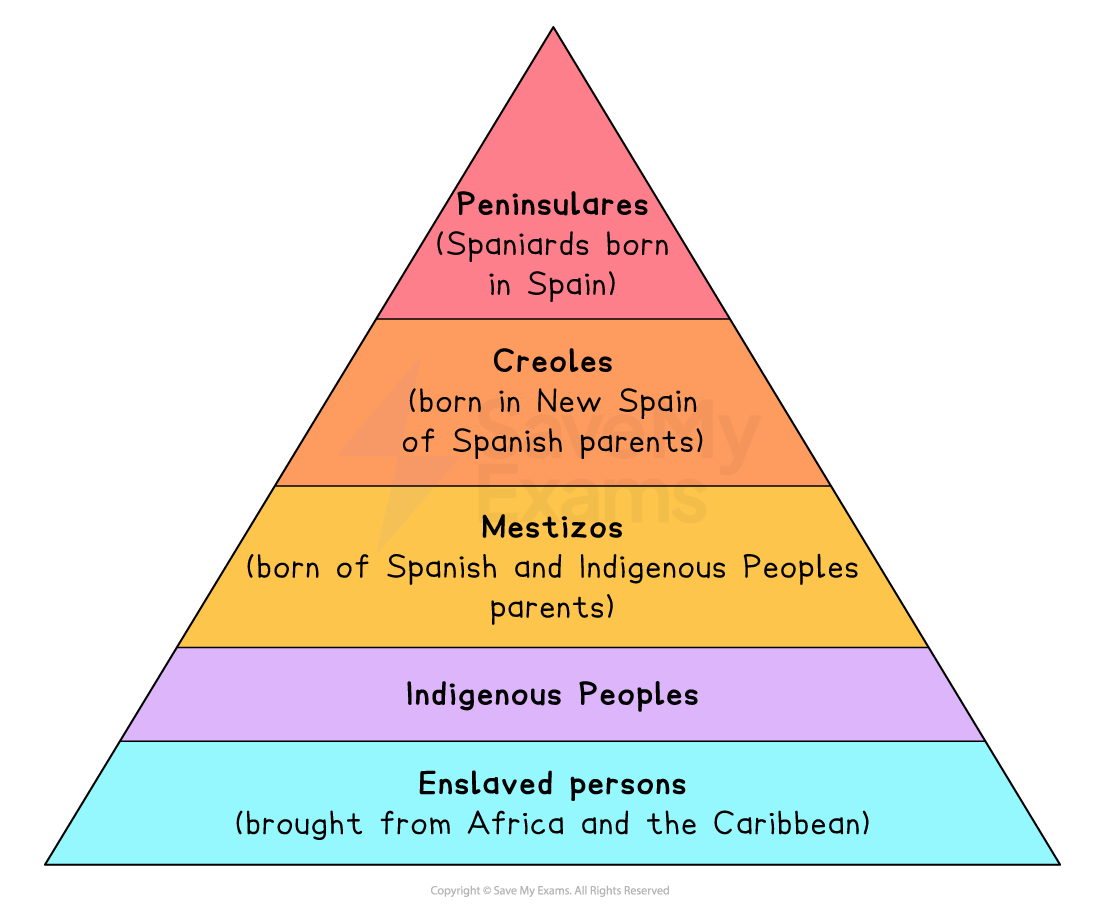
Peninsulares
"People born in Spain who lived in the colonies; held the highest social and governmental positions in the Spanish colonial hierarchy."
Scurvy
"A disease caused by Vitamin C deficiency; the effects were bloody and swollen gums
Circumnavigate
"To sail all the way around the world (first completed by Magellan's crew)."
1453
"Ottoman Turks capture Constantinople from the byzantine empire
1488
"Bartolomeu Dias rounds the southern tip of Africa (Cape of Good Hope)."
in 1488 Bartolomeu sailed to the cape
1492
"Christopher Columbus first lands in the Americas."
In 1492 Columbus sailed the ocean blue
1498
Vasco da Gama reaches India by sea.
“In 1498, da Gama sailed the sea to India’s gate
1521
"Hernán Cortés conquers the Aztec Empire.
“In 1521, Cortés beat the Aztec sun.”
1534
"Francisco Pizarro conquers the Inca Empire."
“In 1534, Pizarro came ashore and won the Inca war.
1607
The founding of Jamestown
“In 1607, settlers sailed to Jamestown and made it their heaven
What was mercantilism?
Mercantilism is when a country tries to get rich by selling more than it buys and using colonies for resources.
Colonies were important in mercantilism because they supplied raw materials and bought goods from the mother country, keeping wealth within the empire and boosting its power.
Colonies could usually only trade with the mother country, sending raw materials there and buying back finished goods, which kept wealth in the empire.
The M.C. put tariffs on the goods to make money from the colonies.
 Note
Note  Flashcards (20)