Electricity
 Call Kai
 Learn
Learn Practice Test
 Spaced Repetition
 Match
Match Flashcards
 Knowt Play
1/42

There's no tags or description
Looks like no tags are added yet.
Name | Mastery | Learn | Test | Matching | Spaced | Call with Kai |
|---|
No analytics yet
Send a link to your students to track their progress
43 Terms
what is insulation?
plastic around wire, doesn’t conduct so when you touch insulation your safe
what is double insulation?
mains sealed in plastic box so if it contains any electrical fault and you touch appliance, your safe
what is earthing?
earth wire connects mains in house with ground
if fault in appliance, earth wire provides low resistance route for current to travel to earth
what is a fuse?
thin wire in a box, if it gets too hot it melts and the circuit is broken
where are fuses?
in the plug
what do fuses protect?
protects house form fires + appliances
what are circuit breakers?
resettable fast cut off triggered by power surge
where are circuit breakers?
on entry to house
what do circuit breakers protect?
everything
why does current in a resistor cause a temperature increase?
collisions between electrons and metal ions transfers some energy to the thermal store of the metal
the extra energy makes the metal hot
how is the heating effect of current used in homes?
heaters or kettles
state the relationship between power, current and voltage
P = IV
what does P = IV allow us to calculate?
rate of energy supply to circuit (cells, batteries)
rate of energy use in circuit (bulbs, resistors)
state the relationship between power, energy, and time
P = E / t
state the relationship between energy transferred, current, voltage, and time
E = IVt

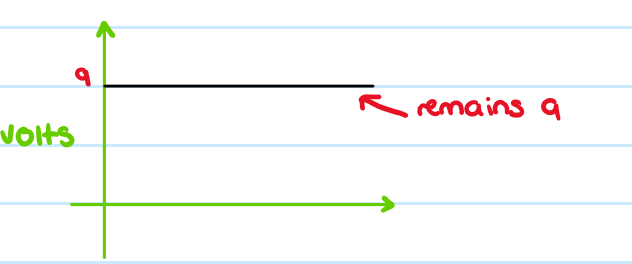
what is direct current?
current always flows in 1 direction
where do we get direct current from?
cells, batteries, solar panels
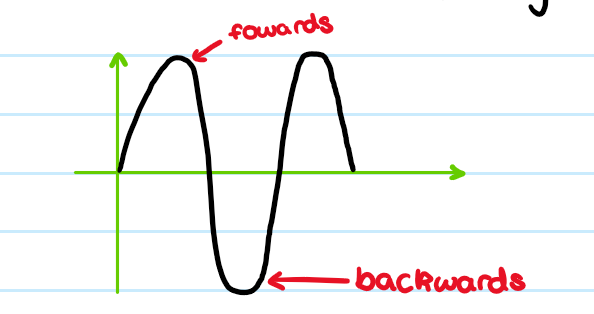
what is alternating current?
current direction constantly changing between forwards + backwards
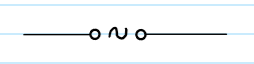
where do we get alternating current from?
main sockets and generators
describe the direct current graph
straight line (voltage doesn’t change)
describe the alternating current graph
wave
why are parallel circuits more appropriate for domestic lighting?
if series circuit breaks, whole circuit doesn’t work (all lights out)
if parallel circuit breaks, other branches still work (all other lights work)
what is the relationship between voltage and current?
voltage increases = current increases
what is the relationship between resistance and current? (refer to number of components)
more components = more resistance = current decreases
what is ohms law?
current + voltage are directly proportional
graph is straight line through origin
how does current and voltage vary in metal filament lamps (bulbs)?
as voltage increases, the filament heats up
hot filament → more resistance
current increases but slowly
how does current and voltage vary in diodes?
component that only lets current flow one way
non-ohmic
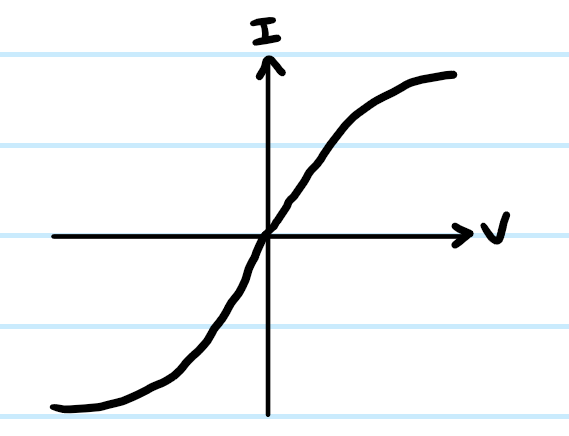
describe the patterns in a IV graph for metal filament lamps (bulbs)
non linear → not ohmic
steeper curve = lower resistance
shallow curve = higher resistance
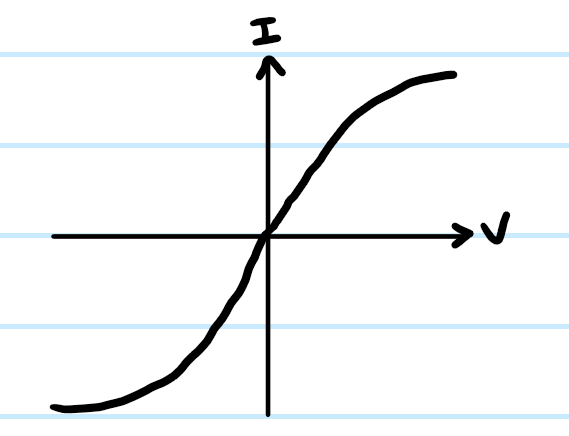
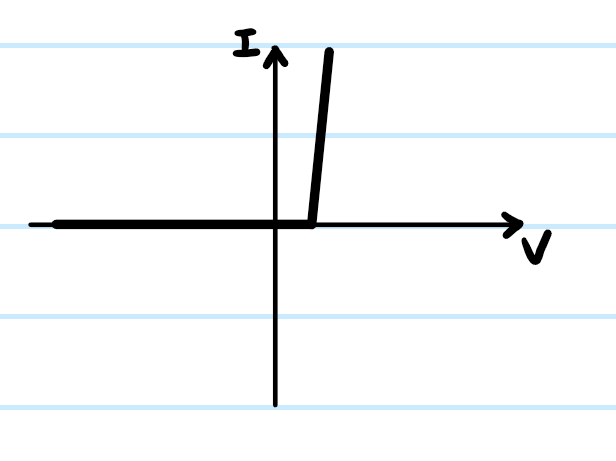
describe the patterns in a IV graph for diodes
non-ohmic
very steep = very low resistance
flat = massive resistance
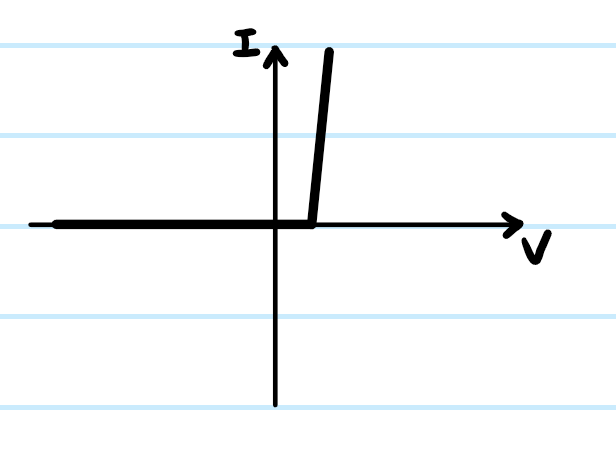
how to investigate how current and voltage vary in metal filament lamps (bulbs) and diodes experimentally?
set up circuit with cell, ammeter in series, voltmeter in parallel, variable resistor
change the voltage using the variable resistor
measure current and voltage each time
plot an I-V graph
relationship between current and resistance
resistance increases = current decreases
resistance decreases = current increases
relationship between resistance and light intensity in an LDR
resistance decreases with light intensity
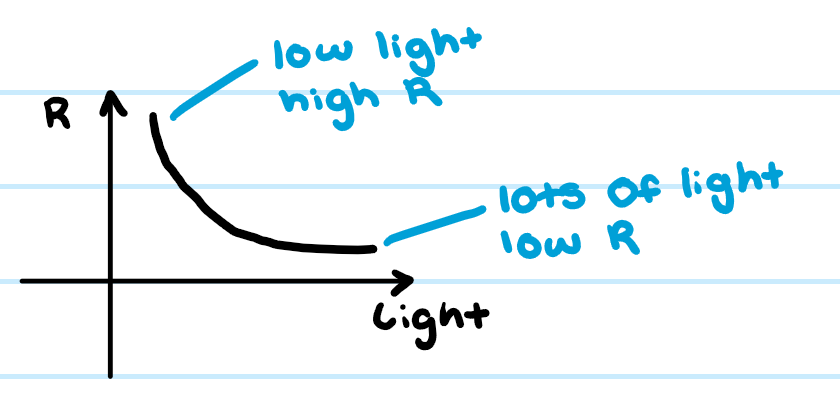
relationship between resistance and temperature in a thermistor
resistance decreases with temperature
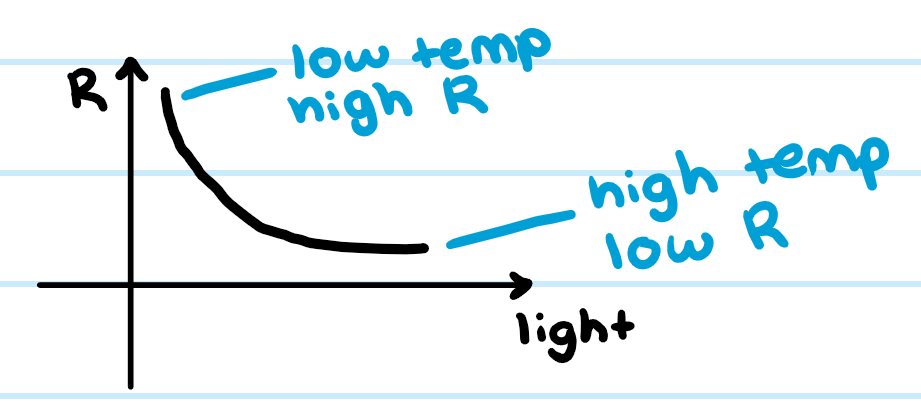
how do lamps and LEDs indicate a presence of current?
they show current flowing through a circuit because they light up
state the formula linking voltage, current and resistance
I = V/R
what is current?
current is the rate of flow of charge
state the formula linking charge, time and current
Q = It
what is electric current in solid metallic conductors?
electric current in solid metallic conductors is a flow of negatively charged electrons
(if confused see to notes page spec point 2.16)
why is current conserved at a junction in a circuit?
because charge is always conserved (electric charge can’t be created or destroyed)
fill in the blanks!
the voltage across 2 components connected in —— are ——
the voltage across 2 components connected in parallel are equal
how to calculate currents, voltages and resistances of two resistive components connected in a series circuit?
current in series is equal everywhere
voltage in series is split between components
calculate total resistance with formula, do answer subtract the resistance of one component = resistance of other component
what is voltage and what a volt is?
voltage is the energy transferred per unit charge passed (V = E/Q)
a volt is a joule per coulomb
state the formula linking energy transferred, charge and voltage
E = QV

