MODELS & DIES
 Studied by 0 people
 Call with Kai
 Learn
Learn Practice Test
 Spaced Repetition
 Match
Match Flashcards
 Knowt Play
1/42

There's no tags or description
Looks like no tags are added yet.
Name | Mastery | Learn | Test | Matching | Spaced | Call with Kai |
|---|
No study sessions yet.
43 Terms
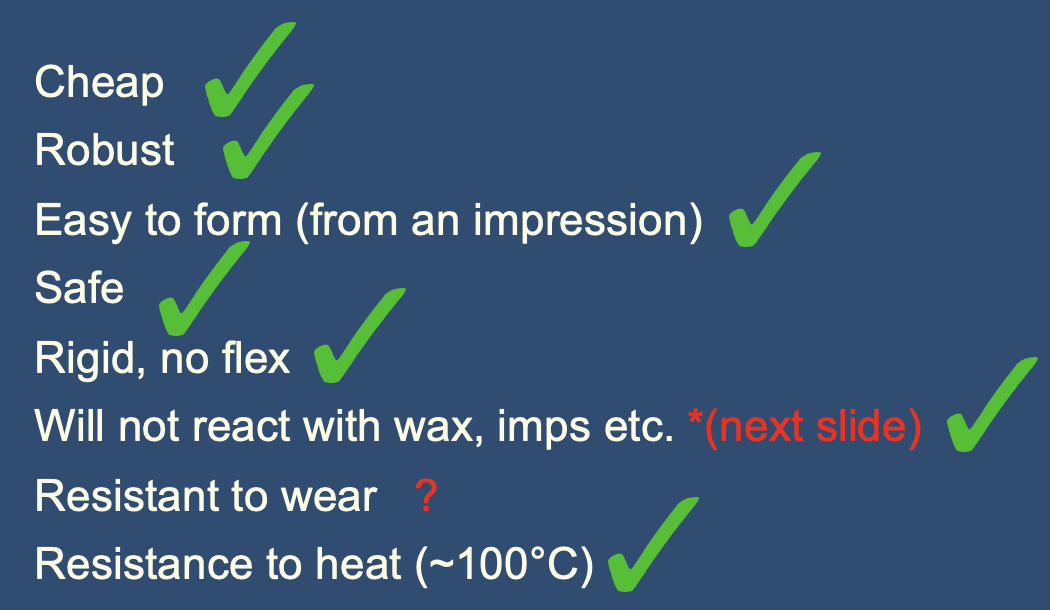
what properties/ characteristics would be required for a dental modelling material
cheap
easy to form (from an impression)
safe during handling and if swallowed
robust
rigid, no flexion or deformation
will not chemically react with water, wax, impressions etc.
resistant to wear (apppliances will be made to fit the model and will need to be repeatedly tried on)
resistant to heat (approx. 100°C)
what are the categories of modelling materials
plastics/ polymers
organic
clay
plaster (most common)
which criteria of ideal features of dental modelling materials does plaster of Paris/ Gypsum not meet
what material DOES react with plaster
agar
how can the reaction between agar and plaster be prevented
alum solution can be used as a barrier
what are the uses of plaster of Paris/ Gypsum
models and dies
impression material
moulds for denture construction
binder in refractory investments for casting

what is Plaster of Paris
gypsum is a natural mineral that is mined
quarries of Montmartre district of Paris produce burnt gypsum
this dehydrated gypsum became known as Plaster of Paris
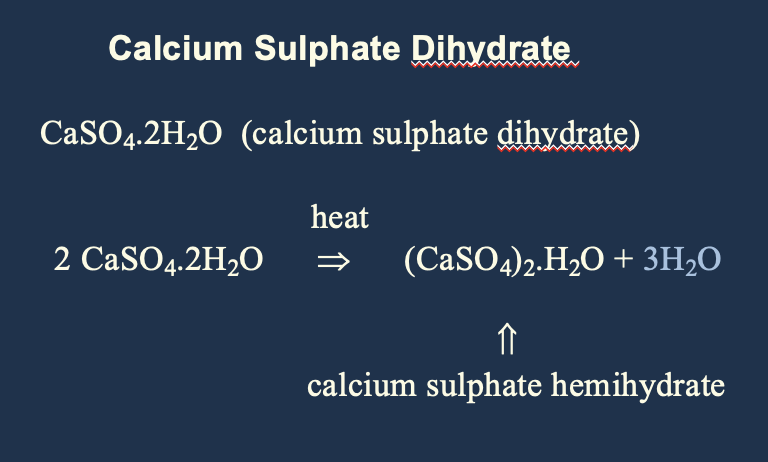
upon addition of water, plaster of Paris becomes regular gypsum (dihydrate) again, causing the material to harden or set
what pathways does gypsum from the ground go through to become dehydrated to form the end material
open kettle at 110-120°C
pressure vessel at approx. 125°C
in the presence of deflocculants (CaCl2 and MgCl)
outline open kettle at 110-120°C
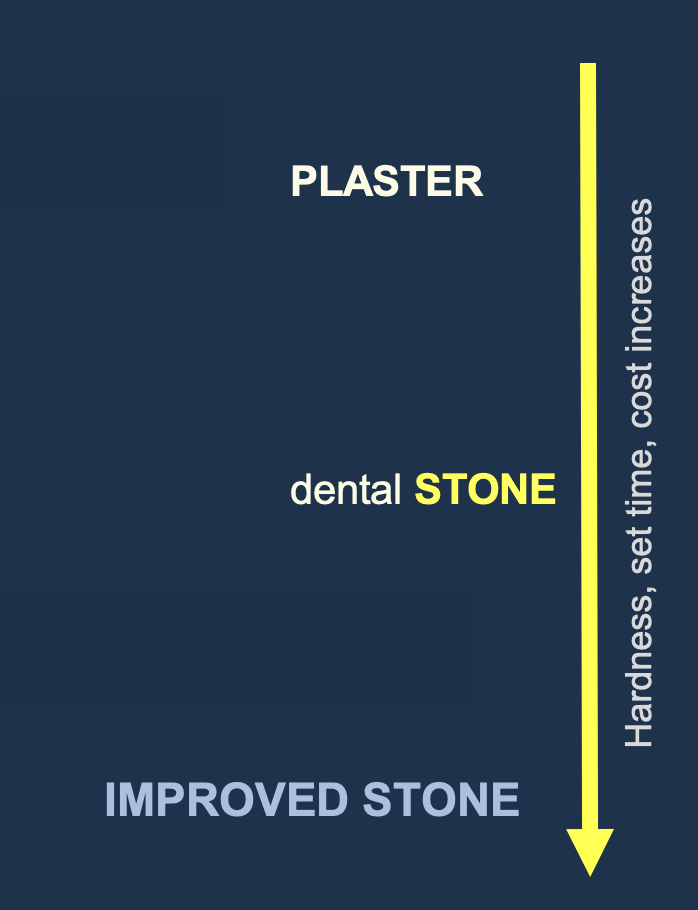
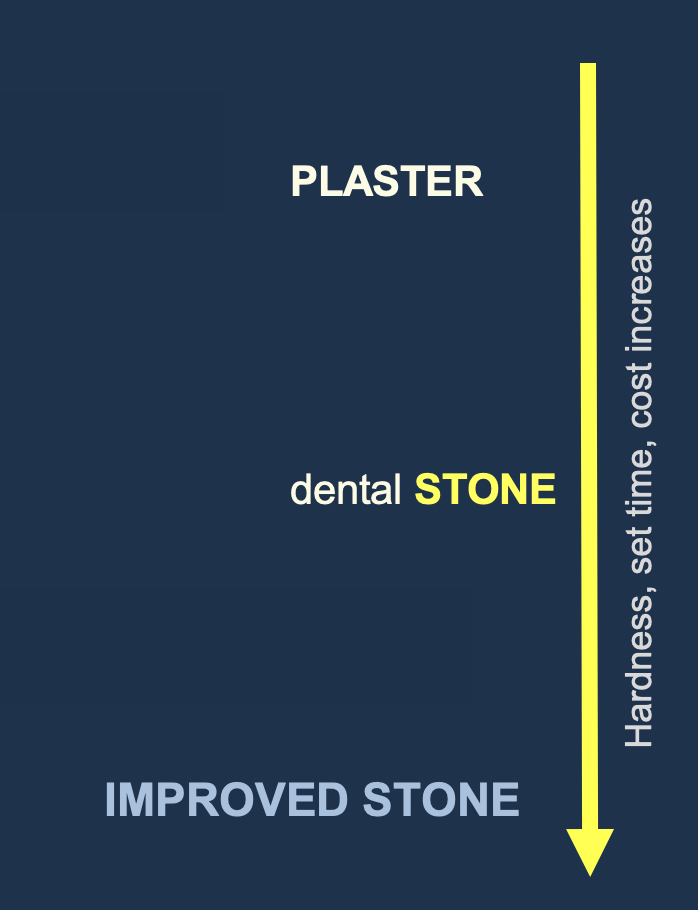
makes calcium sulphate beta-hemihydrate
beta hemi-hydrate produces large porous particles
» plaster of Paris
outline pressure vessel at approx. 125°C
calcium sulphate alpha-hemihydrate in pressure vessel - this drives more water out of the gypsum
produces small dense particles
» dental stone (buttery yellow colour)
outline in the presence of deflocculants (CaCl2 and MgCl)
calcium sulphate alpha-demihydrate
add deflocculants which allows material to flow over each other so the material does not clump up
produces very small dense particles
» improved stone (white colour)
what is improved stone used to make
crown and bridge
define model VS die
model: the whole mouth
die: a tooth (a section of the model), removable to be worked on
what are the types of Gypsum products
current ISO Standard for Dental Gypsum Products identifies 5 types of materials:
Type 1 Dental plaster for impression
Type 2 Dental plaster for model
Type 3 Dental stone, die, model
Type 4 Dental stone, die, high strength, low expansion
Type 5 Dental stone, die, high strength, high expansion
key information about dental plaster
cheapest
referred to as the ‘beta’ form
in the lab: white powder
working time = 3-4 mins
initial setting time = 5-10 mins
slight expansion on setting of 0.2-0.3%
exothermic setting reaction, cool once set
softest but quickest setting
rarely used on its own as a model (mostly mixed with dental stone)
used as denture moulds
what kind of behaviour does plaster display
thixotropic behaviour
key information about dental stone
referred to as the ‘alpha’ form
often called Kaffir-D but use stone or KD
in the lab: yellow powder
working time = 3-4 mins
initial setting time = 5-20 mins
slight expansion on setting of 0.08-0.1%
exothermic setting reaction, cool once set
stronger than Plaster of Paris
often used for ‘everyday’ dental models (mixed 50/50 with dental plaster to reduce cost and setting time)
what is the ratio of dental stone and water that is mixed
1:!
key information about improved stone
a lot more expensive
referred to as the ‘alpha-modified’ form
‘die-stone’
in the lab: coloured powder e.g. blue
finer, more regular particles
working time = 5 mins
initial setting time = 20+ mins
even less expansion on setting of 0.05-0.07%
it is harder than Plaster of Paris but takes longer to set
significantly higher cost
usually vacuum mixed
used where accuracy and wear resistance is critical e.g. crown and bridge models
chemistry of plaster
reversible reaction
setting process for plaster

what are the stages of the setting reaction of plaster
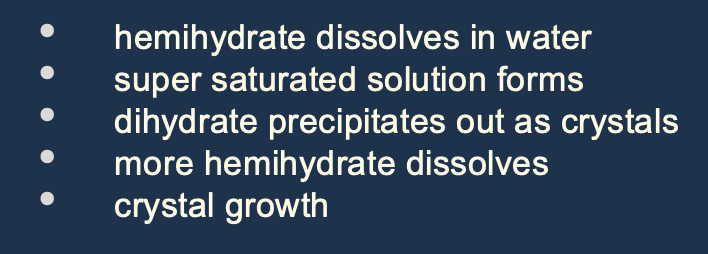
how does plaster harden into a solid
spherulites of gypsum crystals expand, aggregate and impinge during the exothermic reaction when plaster is mixed with water
how can the setting time of plaster be increased
if you need more time for plaster to set you mix it thinner
this means the crystals have further to grow to impinge on each other so the plaster takes longer to set
what is a disadvantage of mixing the plaster thinner
as the crystals get bigger they get more fragile
therefore material that takes longer to set is also softer
expansion of plaster percentages
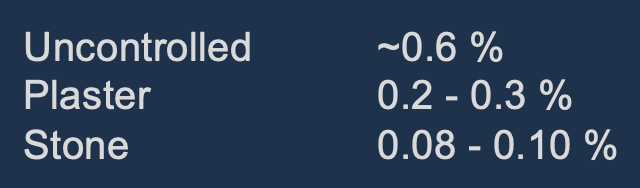
what can reduce the setting expansion of plaster
accelerators and retarders
anti-expansion agents
what are bonus properties of plaster
easy to trim or grind with a scalpel/ knife
can be coloured (appealing shades)
sticks to itself so models can be added to and modified
when making plaster moulds, how can you prevent plaster from bonding to itself
use an alginate-based separating liquid
paint it on the plaster and wait for it to dry
what is the water:powder ratio for plaster VS stone
plaster: 50ml water per 100g powder
stone: 20-35ml water per 100g powder
why does stone need less water than plaster
because the powder is ground finer than plaster
what does spatulation refer to and how does it affect setting time
spatulation: how long you are mixing for
over spatulating decreases setting time (sets faster) because you start to break the crystals that have started to form
this increases the nucleation sites so more crystals will form quicker
how does water temperature affect setting time
colder water = longer to set
give examples of retarders
borax
potassium citrate
sodium chloride (large amounts)
give examples of accelerators
potassium sulphate solution
gypsum powder (adds new centres of nucleation)
sodium chloride (small amounts, causes pink spots on material)
what is the typical composition of a dental plaster
powder:
calcium sulphate beta-hemihydrate (CaSO4)2·H2O
borax (slows the setting rate)
potassium sulphate (reduces expansion)
liquid:
water

what other tests would have shown a greater difference between plaster and stone
wear resistance test (scratching surface)
surface hardness (indentation test)
three-point bend
what are other model materials
‘Rhino Rock’ polymer
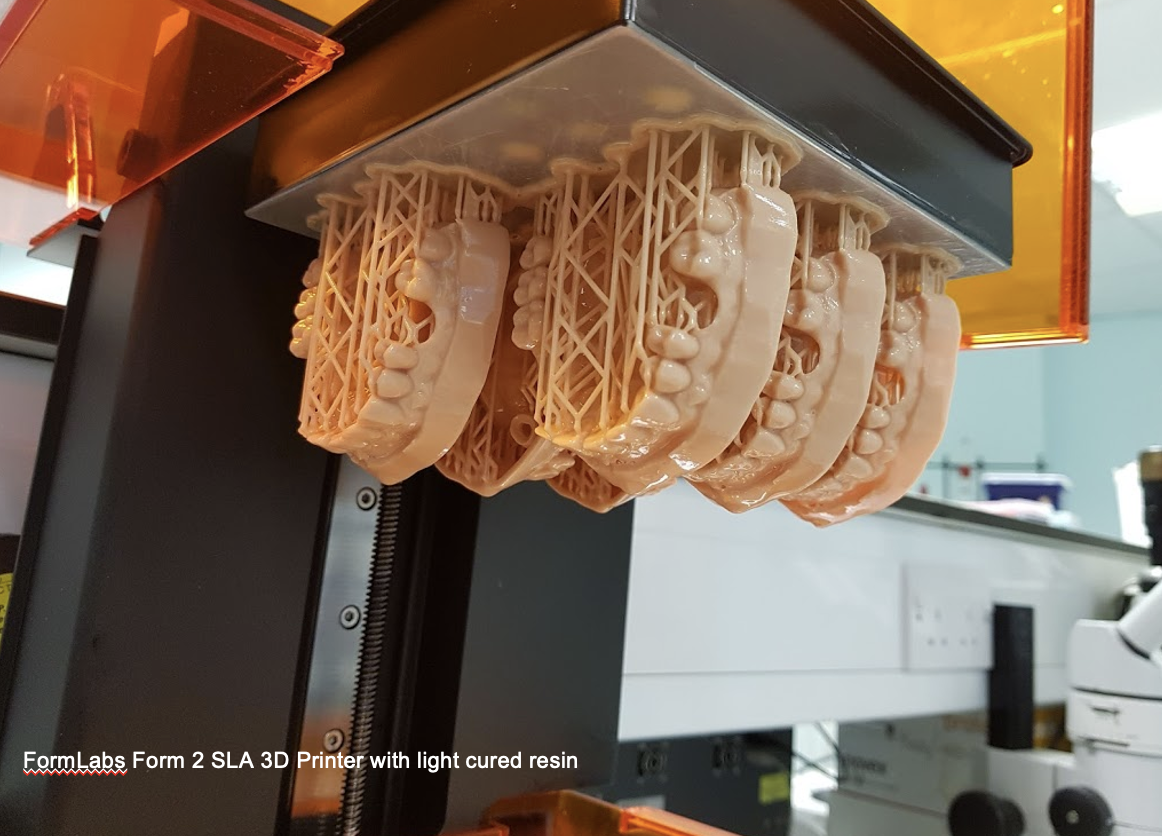
3D printed models
digital models
outline Rhino Rock
polymeric model material
cures within 30 mins
dimensionally stable
zero expansion
strong and impact resistant - will not chip
white, opaque
can be 3D scanned
what are disadvantages of Rhino Rock
expensive
dangerous to skin
outline digital models
intra-oral scanning offers the opportunity for digital capture, design and manufacture
no properties to work around
only a file to store
 Note
Note  Flashcards (62)