A2.2 Cell Structure
 Studied by 1 person
 Call with Kai
 Learn
Learn Practice Test
 Spaced Repetition
 Match
Match Flashcards
 Knowt Play
1/65

There's no tags or description
Looks like no tags are added yet.
Name | Mastery | Learn | Test | Matching | Spaced | Call with Kai |
|---|
No study sessions yet.
66 Terms
Cell theory
All living organisms are made up of one or more cells
Cells are the basic functional unit in living organisms
New cells are produced from pre-existing cells
Features of all cells
Surrounded by a membrane, contains genetic material, has chemical reactions occurring within the cell that are catalysed by enzymes
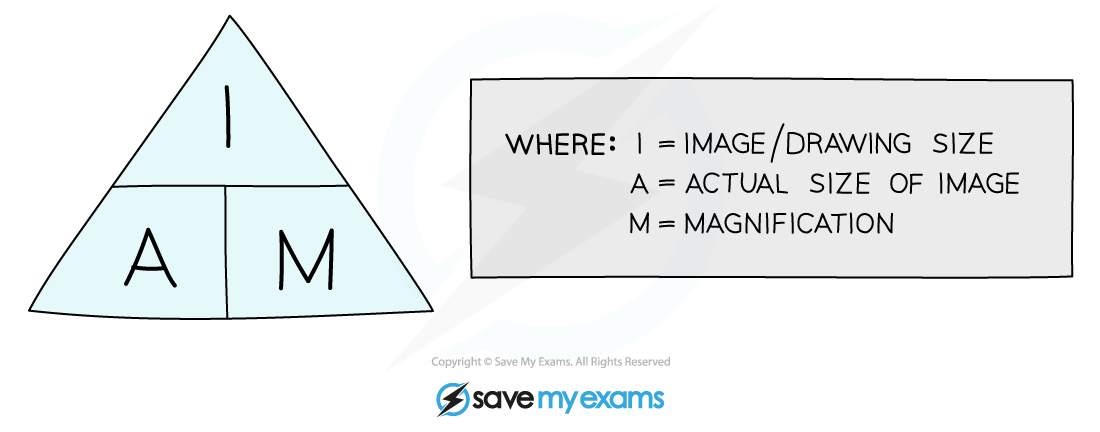
Magnification
How many times bigger the image of a specimen observed is in comparison to the actual size of the specimen
Calculating magnification
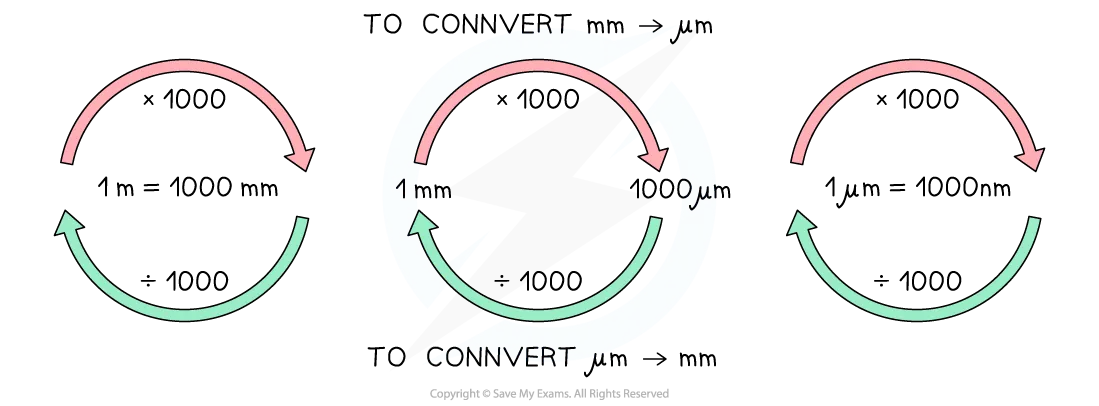
Conversion of m, mm, micrometers, and nanometers
Resolution
The ability to distinguish between objects that are close together
Two main types of microscopes
Optical and electron microscopes
Optical (light) microscopes
Uses light to form an image, limiting the resolution. Can be used to observe eukaryotic cells
Electron microscopes
Uses a beam of electrons to illuminate specimens and magnetic lenses to magnify images. High magnification and resolution
A general cell includes:
DNA as genetic material, cytoplasm, and a plasma membrane
DNA
All living cells contain some sort of DNA, which varies between eukaryotic and prokaryotic cells. DNA allows the reproduction of cells and controls the production of enzymes and proteins
Cytoplasm
Found within the boundary of a cell. Composed of mainly water with dissolved substances such as ions. The fluid is known as cytosol. Many important reactions occur here
Plasma membrane
Surrounds the cell and encloses all cell contents. The plasma membrane has two layers (bilayer), which consists of lipids. The membrane controls the interactions of the cell’s interior and exterior (materials required are transported into, waste is exported out). Membrane-bound proteins are responsible for cell recognition, communication, and transport
Prokaryotes
Have the simplest cell structure, being the first organisms to evolve on Earth. Classified into two domains, bacteria and archaea (found in extreme environments). They are small and lack a nucleus
Structure of prokaryotic cells
The cytoplasm is not divided into compartments, it lacks membrane-bound organelles. Structures common to most include: 70S ribosomes, DNA, cytoplasm, plasma membrane, a and cell wall
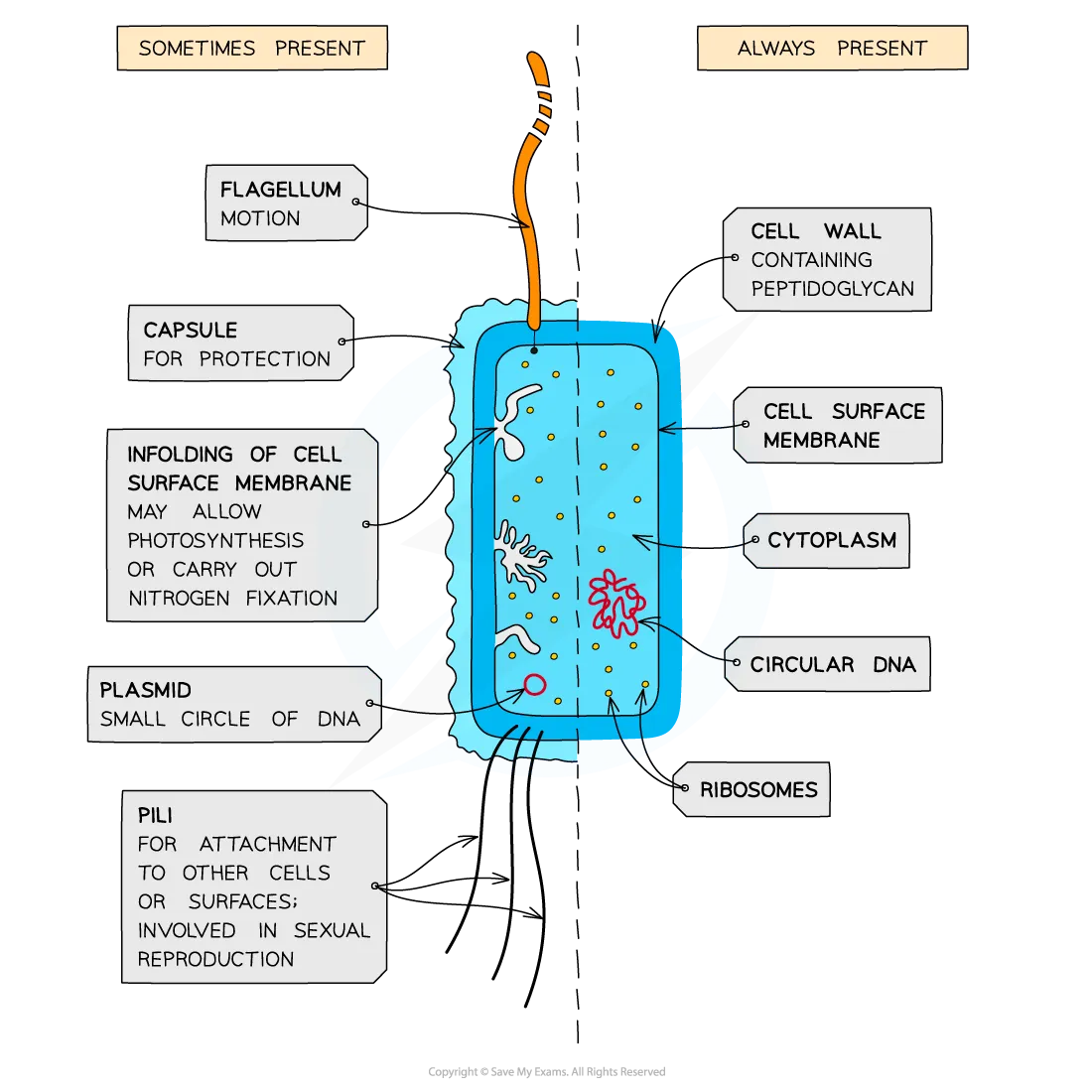
Prokaryotic cells - ribosomes
Structurally smaller (70S) in comparison to those in eukaryotic cells (80S). They bind to and read mRNA during translation to produce proteins
Prokaryotic cells - DNA
In the form of a naked, single, circular DNA molecule located in the nucleoid and in smaller loops called plasmids (contain genes that can be passed between prokaryotes)
Prokaryotic cells - cytoplasm
Contains gel-like cytosol, a water based solution containing ions, small molecules and macromolecules. It is the site of many cellular reactions
Prokaryotic cells - Cell membrane
Composed of a lipid bilayer. Archaea have their plasma membrane as a monolayer instead. Controls substances entering and exiting the cell
Prokaryotic cells - cell wall
Contains peptidoglycan (a glycoprotein). Acts as protection, maintaining the shape of the cell and preventing bursting.
Prokaryotic cells - capsule
A final outer layer surrounding some prokaryotes. It helps to protect bacteria from drying out and from attack by cells of the immune system of the host
Prokaryotic cells - flagellum
Long, tail-like structures that rotate, allowing the prokaryote to move
Prokaryotic cells - Pili
Shorter and thinner structures than flagella. They assist with movement, avoidance of attack, conjugation, and are used to allow bacteria to adhere to cell surfaces
Structure of eukaryotic cells
The cytoplasm is divided up into membrane-bound compartments called organelles. This allows enzymes/substrates to be available at higher concentrations, optimal conditions to be maintained for certain processes, and the numbers and locations of organelles to be altered depending on requirements
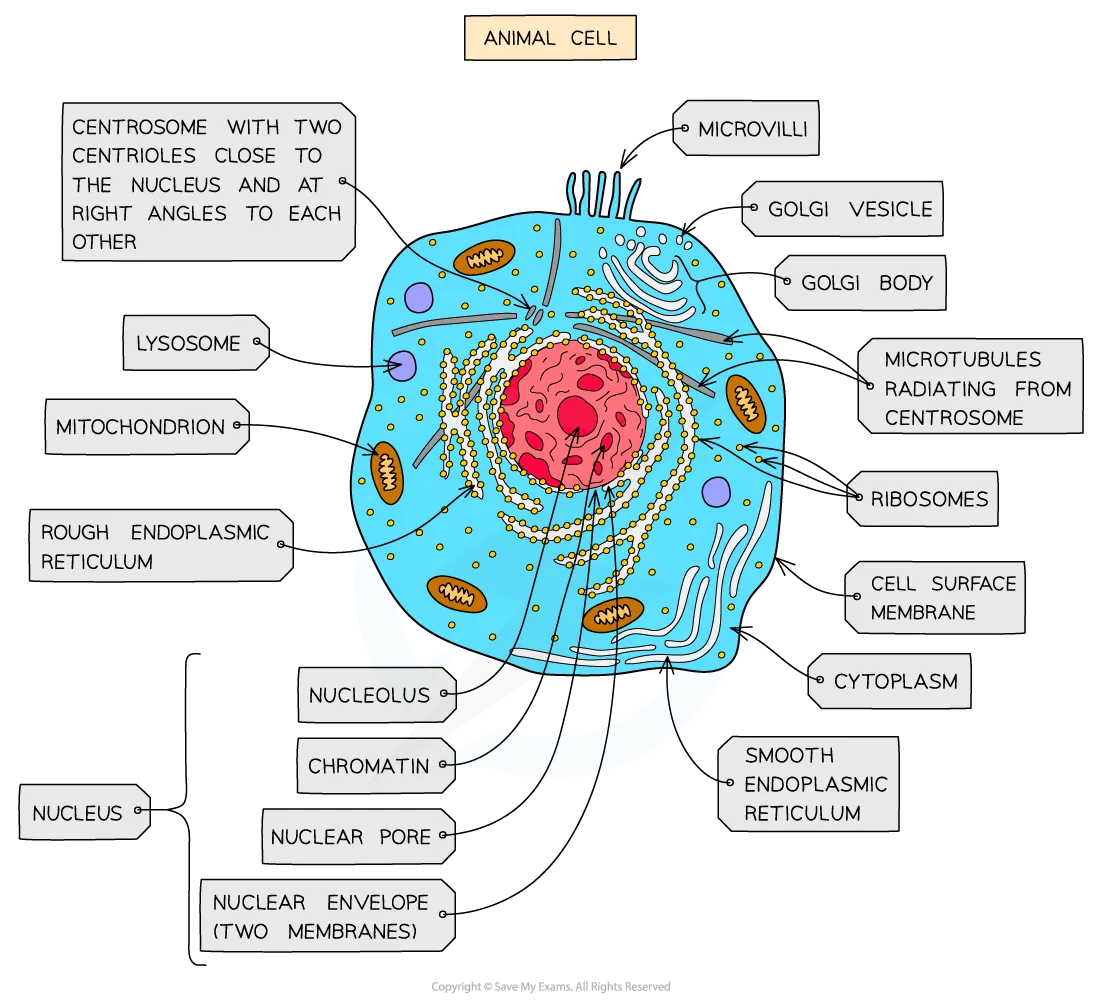
Animal cell
Plant cell
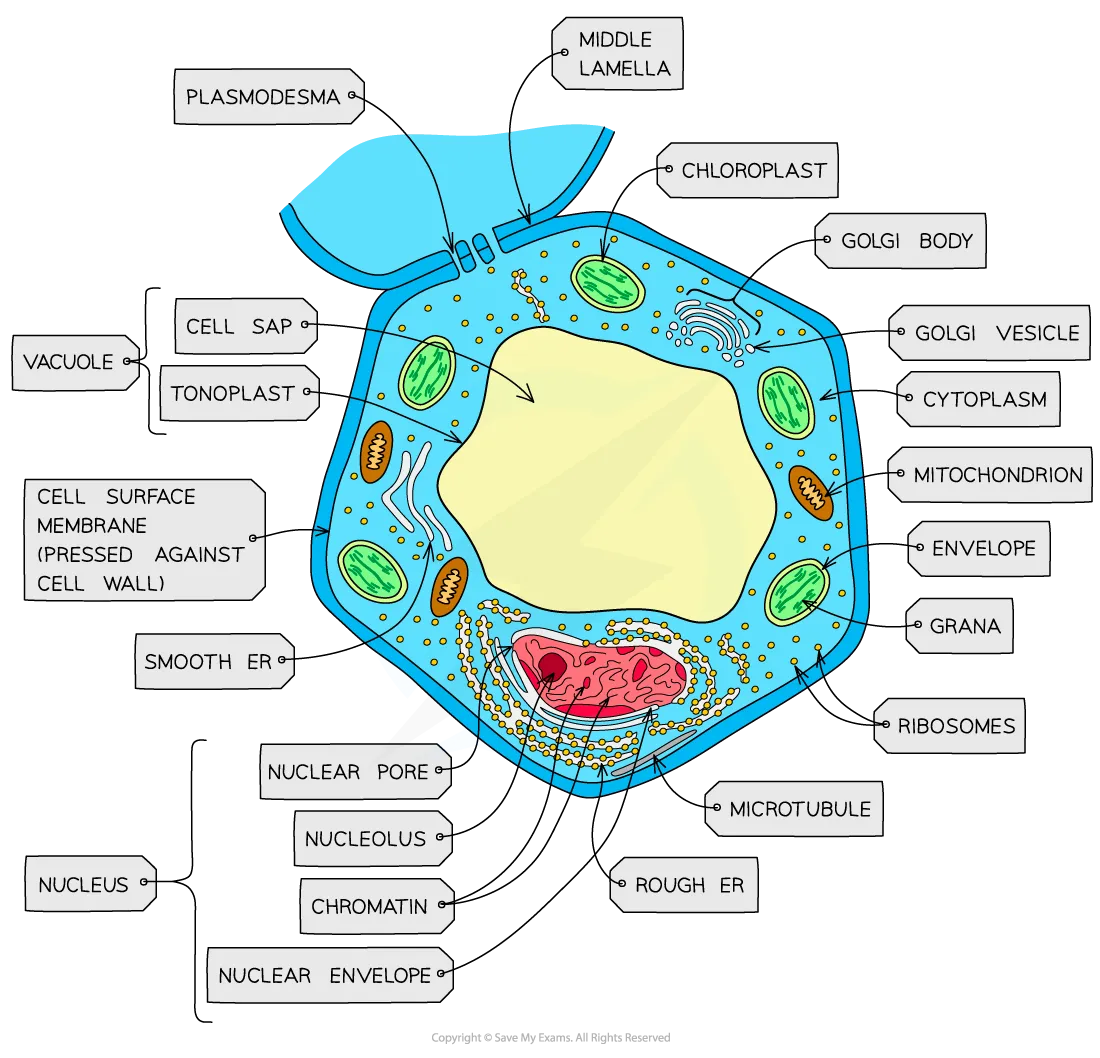
Eukaryotic cells - plasma membrane
Controls the exchange of materials between the internal and external environment. It is formed from a bilayer of phospholipids
Eukaryotic cells - nucleus
A large organelle separated from the cytoplasm by a double membrane (nuclear envelope) which has many pores. Pores allow mRNA and ribosomes to travel out of the nucleus, as well as allowing enzymes and signalling molecules to travel in.
Eukaryotic cells - Rough endoplasmic reticulum
Found in plant and animal cells. Formed from folds of membrane continuous with the nuclear envelope, these flattened membrane sacs are called cisternae. Its surface is covered in ribosomes. The proteins synthesised move to the cisternae and bud off into vesicles that carry proteins to the Golgi apparatus before being secreted out of the cell
Eukaryotic cells - ribosomes
80S ribosomes are found freely in the cytoplasm or as part of the rough endoplasmic reticulus
Eukaryotic cells - mitochondria
Site of aerobic respiration. Surrounded by a double-membrane with the inner membrane folded to form cristae. The matrix contains enzymes needed for aerobic respiration and small circular pieces of DNA
Eukaryotic cells - golgi apparatus
Flattened sacs of membrane called cisternae. Modifies proteins and lipids before packaging them into golgi vesicles. The vesicles transport them to their required destination
Eukaryotic cells - vesicles
Membrane-bound sacs for transport and storage. Lysosomes are specialised vesicles that contain hydrolytic enzymes. They break down waste materials
Eukaryotic cells - microtubules
Make up the cytoskeleton of the cell, which is used to provide support and movement to the cell. It is made of alpha and beta tubulin proteins combined to form dimers
Eukaryotic plant cells - chloroplasts
Surrounded by a double-membrane, are the sites of photosynthesis. Membrane-bound compartments called thylakoids containing chlorophyll stack to form grana. Chloroplasts also contain small circular DNA and ribosomes
Eukaryotic plant cells - large permanent vacuole
A sac in plant cells surrounded by the tonoplast, a selectively permeable membrane
Eukaryotic plant cells - cell wall
Formed outside of the cell membrane to provide structural support to the cell. This is provided by cellulose in plants. It is freely permeable to most substances
Functions of life (MRHGREN)
Metabolism, reproduction, homeostasis, growth, response, excretion, nutrition
Functions of life - metabolism
All the enzyme catalysed reactions occurring in a cell
Functions of life - reproduction
The production of offspring, can be asexual or sexual
Functions of life - homeostasis
The ability to maintain and regulate internal conditions within tolerable limits
Functions of life - growth
Permanent increase in size
Functions of life - response
The ability to respond to external or internal changes (stimuli) in their environment
Functions of life - excretion
The disposal of metabolic waste products
Functions of life - nutrition
The acquisition of energy and nutrients for growth and development, either by absorbing organic matter or synthesising organic molecules
Four kingdoms of eukaryotic cells
Animal, plant, fungal, protist
Differences in eukaryotic cell structure - cell walls
Animal cells do not have a cell wall, plant cell walls are composed of the polysaccharide cellulose, fungal cell walls are made up mainly of glucans, chitin, and glycoproteins
Differences in eukaryotic cell structure - vacuoles
Can be present in animal cells but tend to be small and temporary, plant cells have large permanent vacuoles for storage, and fungal cells are small and temporary like animal cells
Differences in eukaryotic cell structure - chloroplasts
Animal cells do not have chloroplasts, plant cells have many chloroplasts for photosynthesis, fungal cells do not have chloroplasts
Differences in eukaryotic cell structure - centrioles
Animal cells contain centrioles for mitosis, both plant and fungal cells do not possess centrioles
Differences in eukaryotic cell structure - cilia and flagella
Animal cells can have cilia and flagella, they are used for movement, both plant and fungal cells do not contain cilia or flagella
Other differences in eukaryotic cell structure
Animal and fungal cells store their carbohydrates as glycogen, plants store it as starch. Animal cells are flexible as they lack a rigid cell wall, plant cells have a fixed shape. Fungal cells can be flexible
Atypical cell structure - striated muscle fibres
They are longer than typical cells, have multiple nuclei surrounded by a single membrane. They are formed from multiple cells which have fused together, working together as a single unit. Challenges the concept that cells work independently
Atypical cell structure - Aseptate fungal hyphae
Aseptate fungal hyphae do not have septa, which are the end walls which separate cells in fungal hyphae. Thus they are multinucleated with continuous cytoplasm, they appear as one cell
Atypical cell structure - red blood cells
They are animal cells but do not contain a nucleus, enabling the cell to carry a large volume of haemoglobin
Atypical cell structure - phloem sieve tubes
They transport dissolved substances around the plant. They have no end cell wall and lack many organelles such as nuclei, mitochondria, and ribosomes. They can only survive by companion cells which maintain their cytoplasm
Endosymbiosis
Where one organism lives within another, occurs when one organism engulfed the other by endocytosis. If mutually beneficial, the engulfed organism is not digested
Endosymbiotic theory
Used to explain the origin of eukaryotic cells. The evidence comes from the structure of mitochondria and chloroplasts. It is believed that all eukaryotic cells evolved from a common unicellular ancestor that had a nucleus and reproduced sexually. Scientists suggest that these ancestral cells evolved into ancestral heterotrophic and autotrophic cells
Heterotrophic cells
To overcome a small surface area/volume ratio, ancestral prokaryote cells developed folds in their membrane. Organelles such as the nucleus and rough endoplasmic reticulum formed from these foldings. A larger anaerobically respiring cell engulfed a smaller aerobically respiring prokaryote, giving the larger cell a competitive advantage.The cell evolved into the heterotrophic eukaryotes with mitochondria that are present today
Autotrophic cells
At some stage in evolution, a heterotrophic eukaryotic cell engulfed a smaller photosynthetic prokaryote. This supplied the heterotrophic cell with an alternative source of energy, carbohydrates. Over time the photosynthetic prokaryote evolved into chloroplasts and the heterotrophic cells evolved into autotrophic eukaryotic cells
Evidence to support the endosymbiotic theory
Features that mitochondria and chloroplasts have in common with prokaryotes: both replicate by binary fission, both contain circular, non-membrane bound DNA, both transcribe mRNA from DNA, both have 70S ribosomes, both have double membranes
Cell specialisation
Cell specialisation enables the cells in a tissue to function more efficiently, as they develop specific adaptations for that role. The development of specialised cells occurs by differentiation
Differentiation
The process during development where cells become more specialised as they mature, as a result of certain genes being expressed
Cell differentiation and gene expression
During differentiation, certain genes are expressed. Whether a gene is expressed or not is triggered by changes in the environment
Multicellular organisms
Fungi and algae
Evolution of multicellularity
The first single celled organisms clumped together, forming specialised cells (reproductive cells). These groups of specialised cells began to fold to create tissues and become more complex to form organs
 Note
Note  Flashcards (124)