4.6 - American Democracy
 Call Kai
 Learn
Learn Practice Test
 Spaced Repetition
 Match
Match Flashcards
 Knowt Play
1/21

There's no tags or description
Looks like no tags are added yet.
Name | Mastery | Learn | Test | Matching | Spaced | Call with Kai |
|---|
No analytics yet
Send a link to your students to track their progress
22 Terms
important points
The US did not have a President for the first ten years because they were so worried about having a king. This is based on a deep mistrust of government overreaching its authority
Division of power favours the state, NOT the federal government
The first three articles of the Constitution lays out how power will be divided amongst the three branches so no one can dominate. Virtually everything is clearly and constitutionally defined
Checks and balances are meant to keep any level from being too powerful
Elections are everything
Each group has limited power and authority.
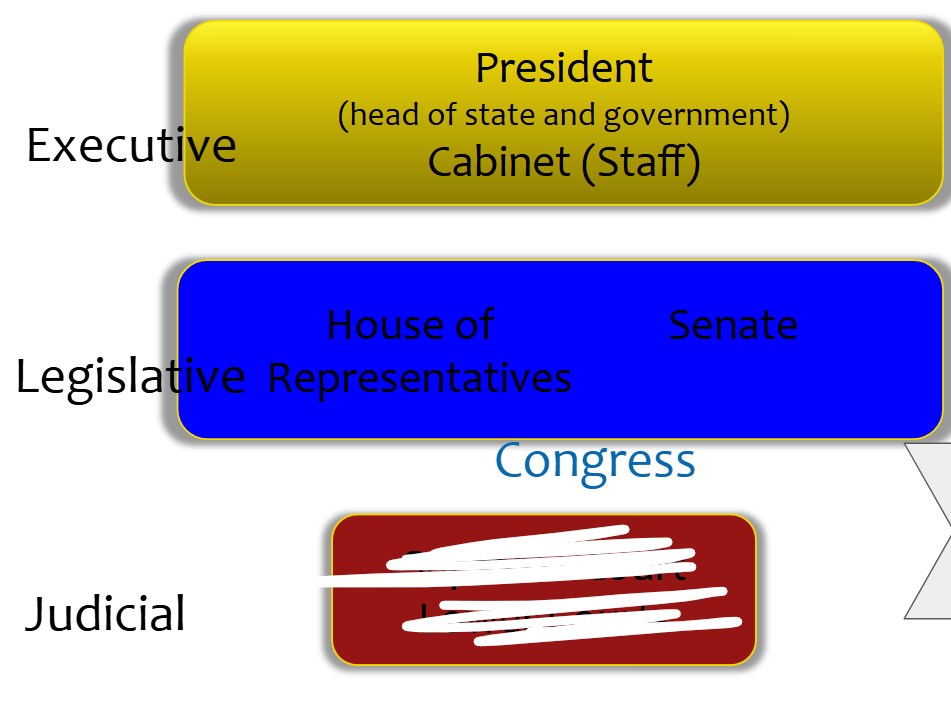
name that part of gov’t (US edition)
those are the supreme and lower courts (make up judicial branch)
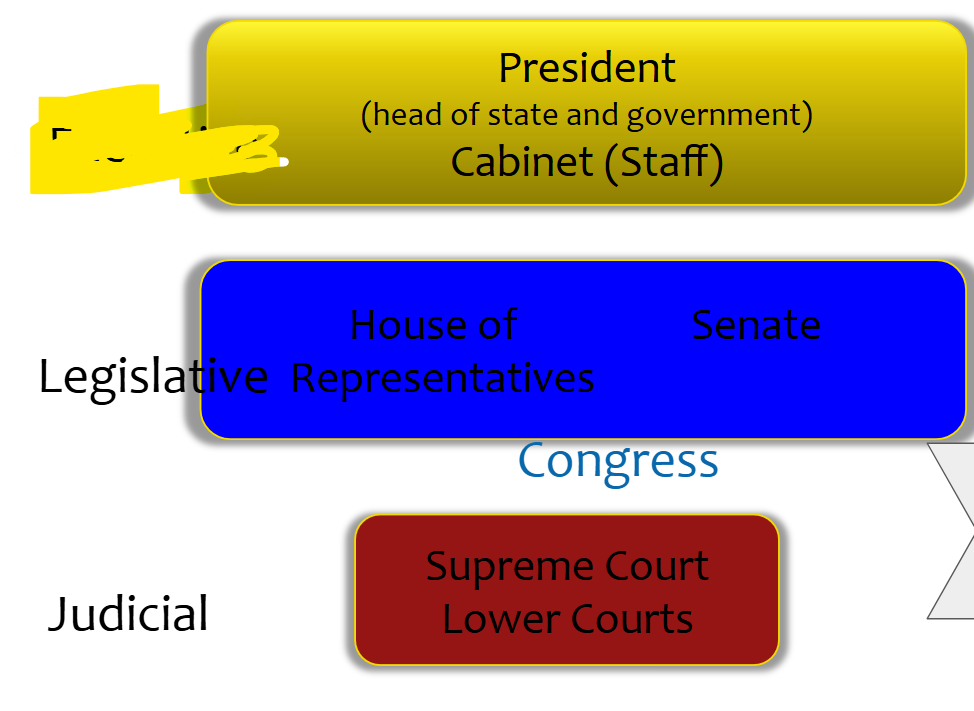
name that part of gov’t (US edition)
thats the executive branch, made up of the president (head of state and gov’t) and the cabinet
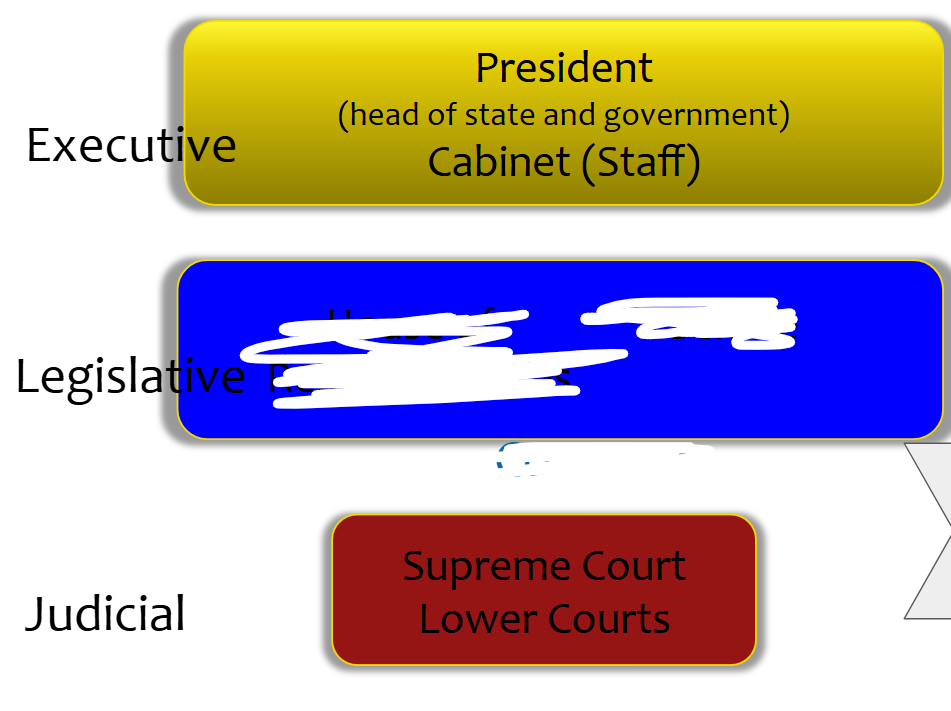
name that part of gov’t (US edition)
thats congress, the american version of our parliament. made up of the house of representatives, and the senate
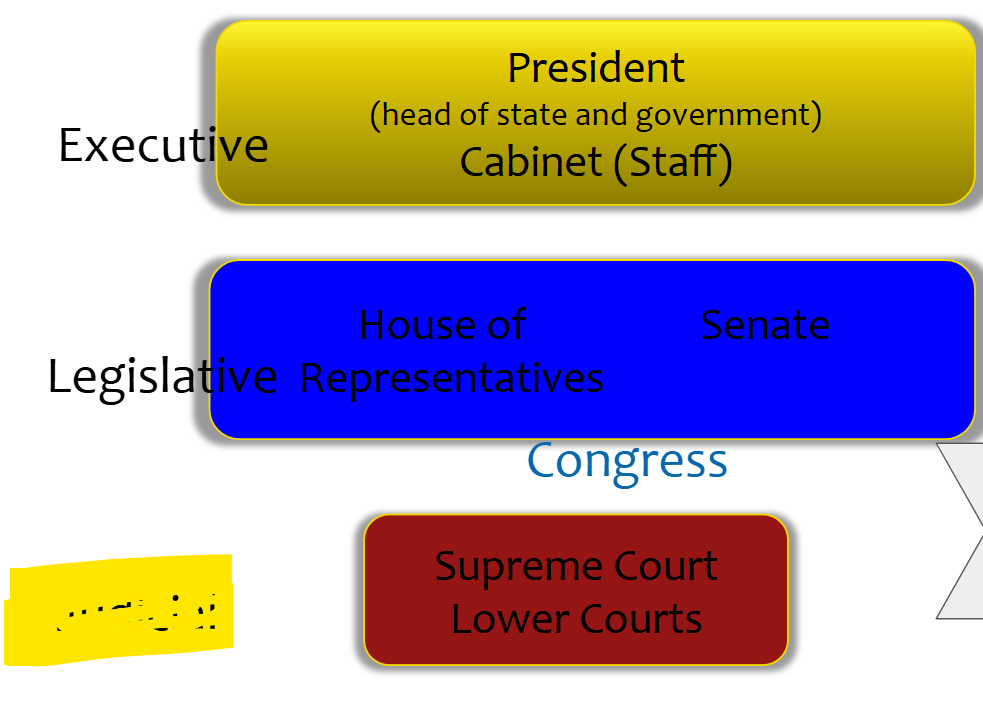
name that part of gov’t (US edition)
thats the judicial branch, made up of the supreme and lower courts
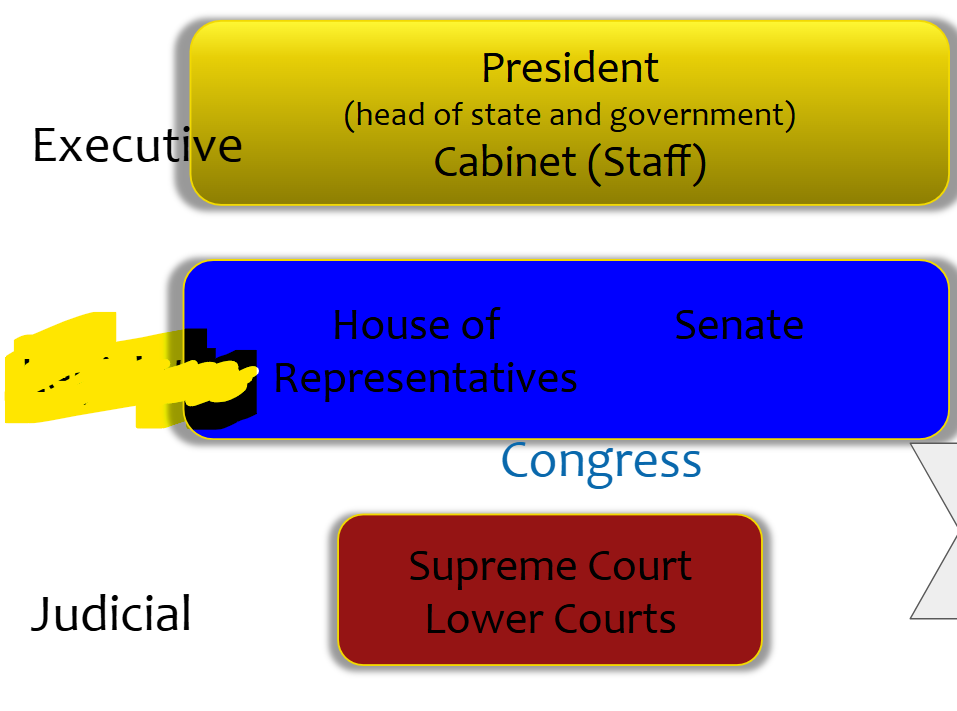
name that part of gov’t (US edition)
thats the legislative branch, made up of congress (house of reps and senate)
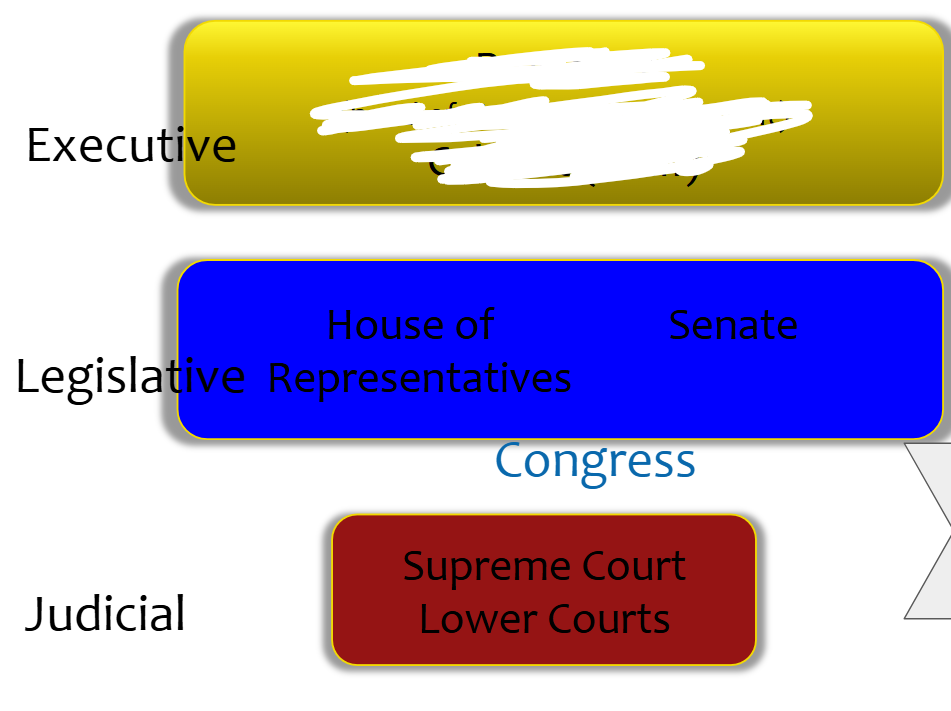
name that part of gov’t (US edition)
thats the president (the head of state) and the cabinet, who make up the executive branch
congressional
act of the House of Representative and the Senate combined
partisanship
act of following party policy
Bipartisan – two parties
Non-partisan – joint efforts, not political
separation of powers
having distinct powers for the different branches of government (legislative, executive, judicial) which act as a balance or control – to check the freedom of other groups
checks and balances
system designed to prevent any one group in government from controlling the state
veto
the ability to override a decision, the President can override a Congressional bill, and Congress can override that veto with a 2/3 vote
filibuster
deliberate delay of passage of bill through long speeches, etc. can talk about anything, just gotta hold the floor and keep talking
presidential democracy/republican democracy
An elected official, usually the president, has the constitutional power
President is the head of government, head of state
He/she is not a part of the legislative body (House of Representatives), not responsible to it (like in Canada)
He is elected separately
They can veto the actions of the House of Reps and/or Senate
President does not need the support of the House to maintain power
Two party system – essentially as it is extremely difficult for any other party to win
structure of government
Single Member Constituencies (for House of Representatives) – One person from each riding is elected based on having received the most votes
President (executive)
Elected every 4 years - can only serve 2 terms in government
Holds power even if his political party does not have the majority of Congress (House of Representatives and Senate)
Belief that the president is not a servant to congress – not responsible to it
Can be impeached
Power to appoint Supreme Court Justices
checks and balances
House of Representatives(Legislative)
The president recommends bills – do not have to be passed
Usually control making, negotiating and passing their own bills into law
Elected every 2 years can (with the senate) override the president’s veto if 2/3 of the vote is secured
Senate (legislative)
Right to approve/reject the president’s appointments of judges to the Supreme Court, ambassadors to foreign states, and all cabinet ministers, 2/3 of the senate must approve all treaties with other countries
2 senators are elected from each state for 6 year term
more checks and balances
If a law or executive order goes against the Constitution, the Supreme Court can rule it illegal (unconstitutional)
The Constitution cannot be changed by the President. That would require a ⅔ majority in Congress and ¾ of the state- obviously very difficult
The President swears an oath to protect the Constitution
making laws
The legislative process in the US is INTENTIONALLY full of friction so that no one can have too much power:
Only Congress can make laws
Laws can be vetoed by the President, but the veto can be overridden by a ⅔ majority in Congress
Congress controls spending
supreme courts
Top of the court system
Dual court system – federal courts for federal laws, state courts for state laws
Ex. Acts of terrorism – no matter where they occur are federal, murder etc. is a state law
Appointed by the president for life (senate approval)
whats the difference between parliamentary and congressional
parliamentary:
Executive branch is held accountable to the legislative branch
The head is almost always a member of the legislature
Very strong party loyalty and discipline
congressional:
Executive branch is separate from the legislative branch
The head of government is NOT a member of congress
Party discipline and loyalty are present, but much less important
both are part of legislative branch

