Lecture 7+8 quiz (end of 7)
 Call Kai
 Learn
Learn Practice Test
 Spaced Repetition
 Match
Match Flashcards
 Knowt Play
1/10

There's no tags or description
Looks like no tags are added yet.
Name | Mastery | Learn | Test | Matching | Spaced | Call with Kai |
|---|
No analytics yet
Send a link to your students to track their progress
11 Terms
Mandibulata
mouth parts → mandibles
from segmented appendages (3rd/4th head segments)
antennae
chemosensory
homologous to chelicerates
help mate and manipulate food
organisms
centipedes, millipedes, “crustaceans” and insects
Myriapoda
organisms
centipedes and millipedes
swinging tentorium (internal head structure)
movable, provides attachment site for muscles/mandibles/other mouth parts
Ultrabithorax gene
Hox gene that determines the gradients in body
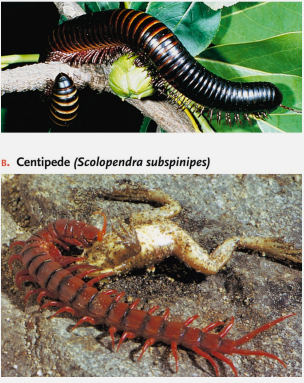
Myriapoda clades
diplopoda - millipedes
head (8 embryonic segments fused together) + trunk
1 segment is 2 fused together
herbivorous
chilopoda - centipedes
head + trunk
predatory → long legs for fast running
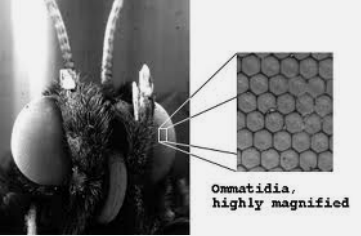
Pancrustacea (Crustacea and Insecta)
neuroanatomical features → for smell
strong molecular support
4 crystalline cone cells in ommatidia of compound eye
dense, shape and number important for vision
light has to hit right on
hexagonal shape → modification of simple eye
ommatidium → single unit
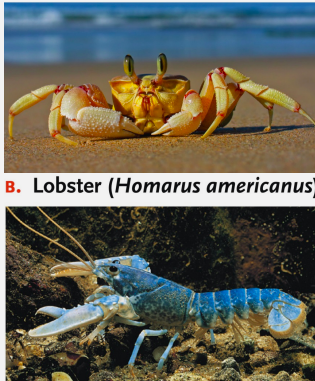
Crustacea
organisms
lobsters, crayfish, crab, krill, shrimp, isopods, barnacles
2 pairs of antennae
variable number of legs
compound eyes
gills
many with calcium deposition in exoskeleton
cephalothorax → sensory structures & walking legs
abdomen → other appendages (not for walking)
carapace: the sideward extension of the cephalothorax going down around the top part
Insecta
3 body regions
head → sensory material, antennae, eyes, mouth
thorax → 3 segments each with pairs of legs
abdomen → visceral function, reproductive organs, excretory
most with wings (Pterygota)
leg sclerites → expand and attached to tergum and sternum (whole thing is a solid box → distortion = flight
tergum → dorsal plate
sternum → ventral plate
ancestrally wingless: silverfish & kin
evolved from winged ancestors: ants, fleas, lice)
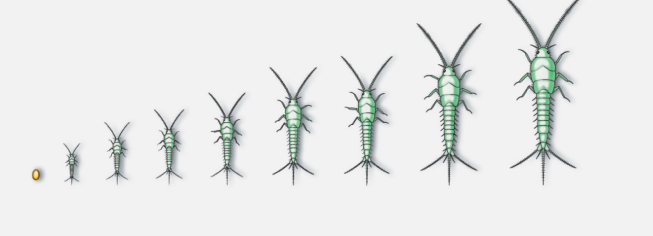
ametabolous
postembryonic development in insects
young → differ in proportions
looks like adult
only sexually immature
continues to molt after maturity
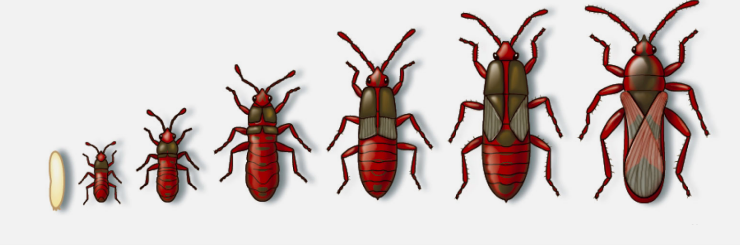
hemimetabolous
young resembles adult (lacking wings, external wing pads)
cease molting at maturity
immatures = nymphs (NOT larva)
ex.) grasshopper, cockroach, aphid
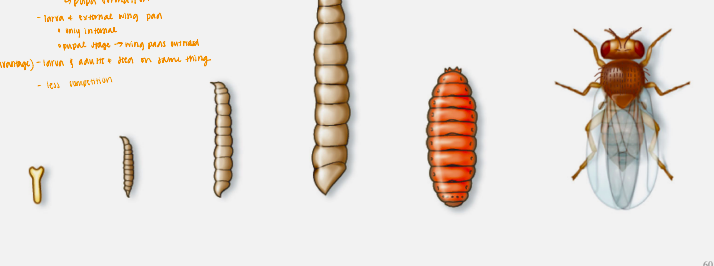
homometabolous
young quite different from adult
egg → larva → pupa → adult
pupal stage → wing pads outward
resting stage = last molt → pupa formation
e.g) mosquitoes, beetles, moths
advantage
lava and adults dont feed on the same thing → less competition
disease vectors
mosquitoes → malaria, yellow fever
anopheles mosquitoes → sleeping sickness
fleas → bubonic plague
nematodes → filarial diseases
beneficial impact of insects
biological control → integrated pest management
cottony cushion scale on citrus, vedalia beetle
maintains low populations of the scales
parasitoid wasps
Females have long needle-like structures where eggs will hatch into other insects
honey, silk (moths), food (locusts), pollination (butterflies/bees)

