Cell Cycle and Cancer Development
 Studied by 0 people
 Call Kai
 Learn
Learn Practice Test
 Spaced Repetition
 Match
Match Flashcards
 Knowt Play
1/25

Earn XP
Description and Tags
Name | Mastery | Learn | Test | Matching | Spaced | Call with Kai |
|---|
No analytics yet
Send a link to your students to track their progress
26 Terms
Cell Cycle Phases
Interphase, Mitosis, and Cytokinesis.
G1 phase
The cell grows and carries out normal functions.
S phase
DNA replication occurs.
G2 phase
The cell prepares for division.
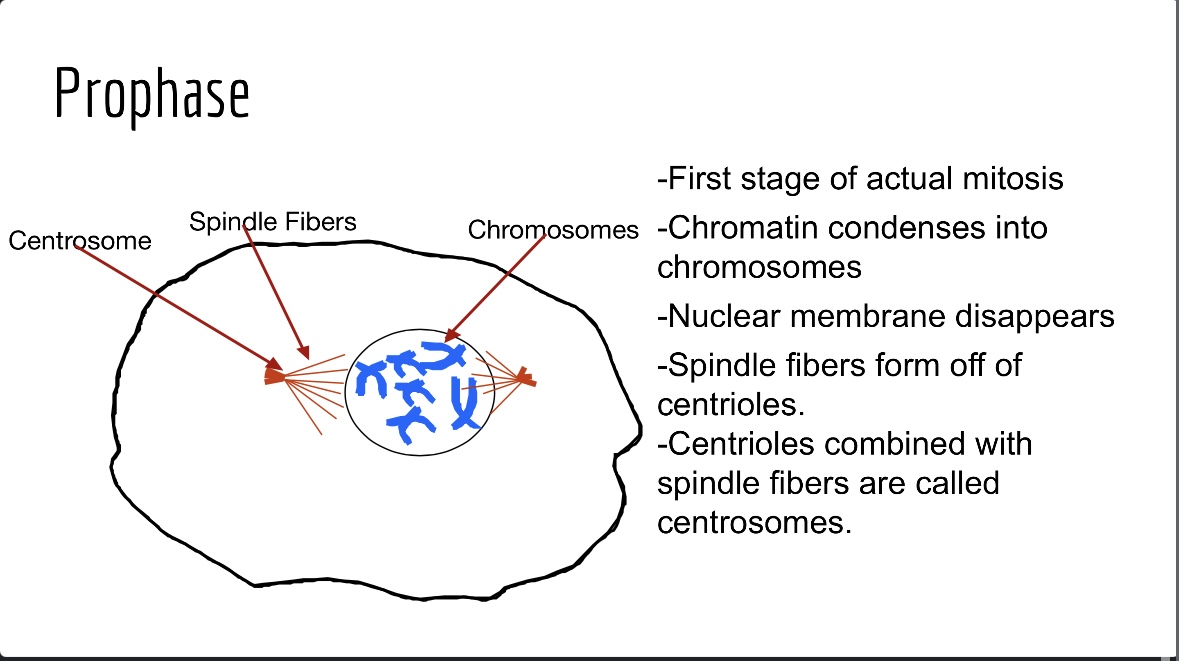
Prophase
Chromatin condenses into visible chromosomes, the nuclear membrane dissolves, and spindle fibers begin to form from centrioles. (2nd step)
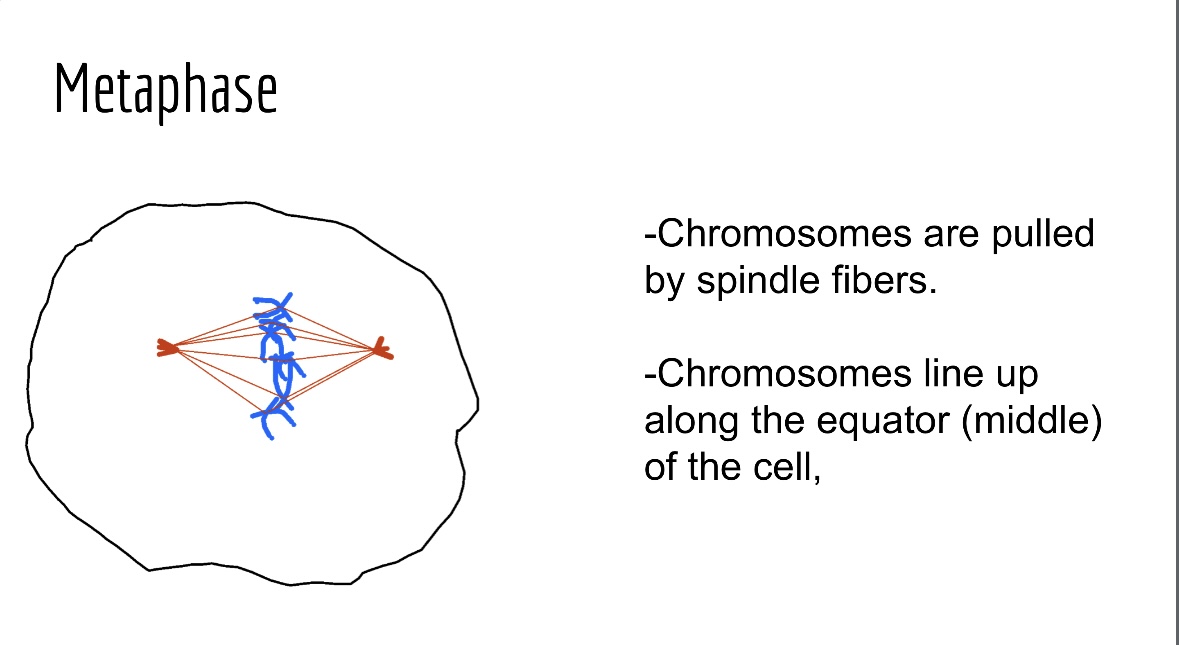
Metaphase
Chromosomes align along the cell's equatorial plane, attached to spindle fibers. (3rd step)
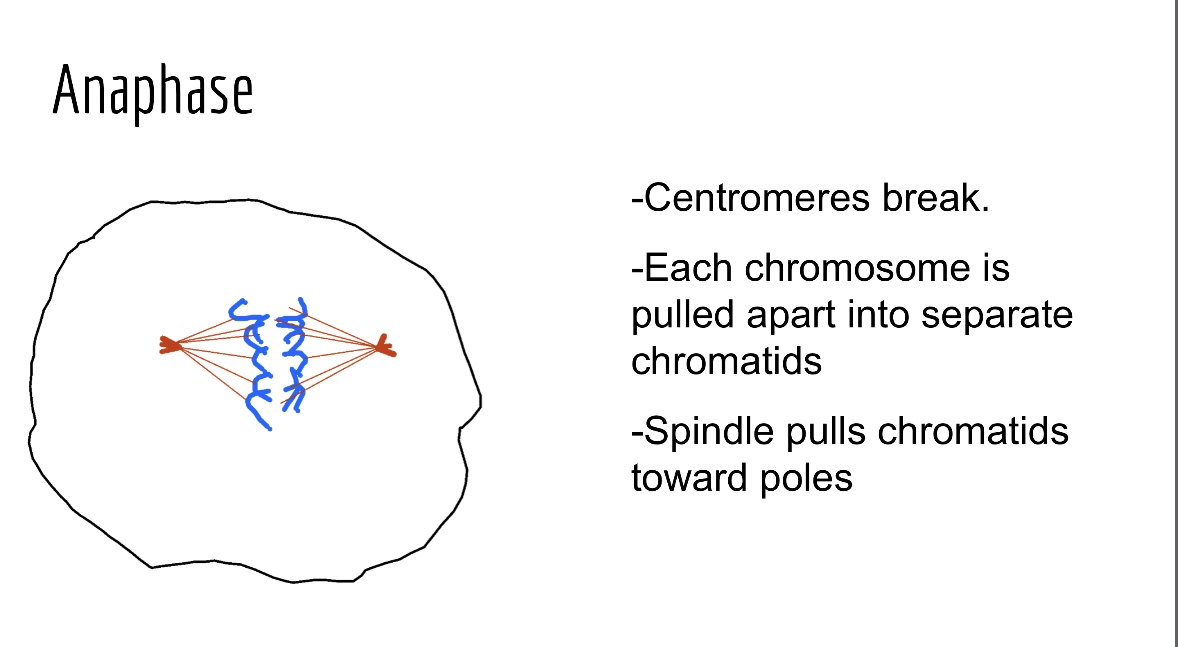
Anaphase
Centromeres split, and sister chromatids are pulled toward opposite poles of the cell. (4th step)
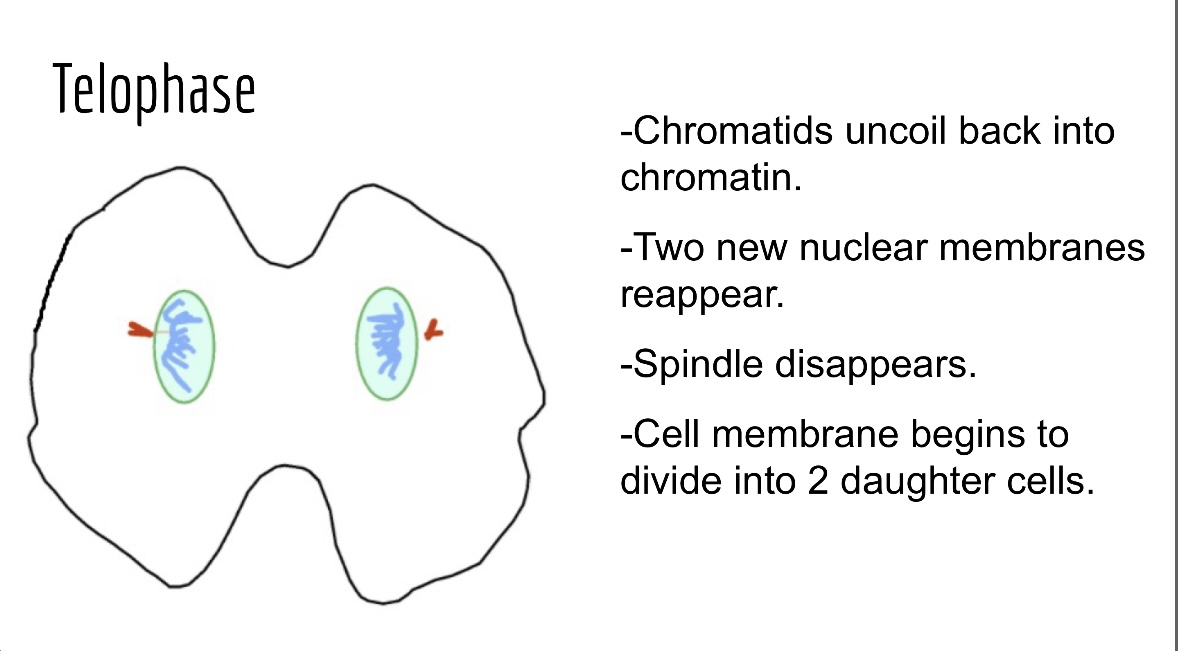
Telophase
Chromatids uncoil into chromatin, nuclear membranes reform around each set of chromosomes, and the spindle apparatus disassembles. (5th step)
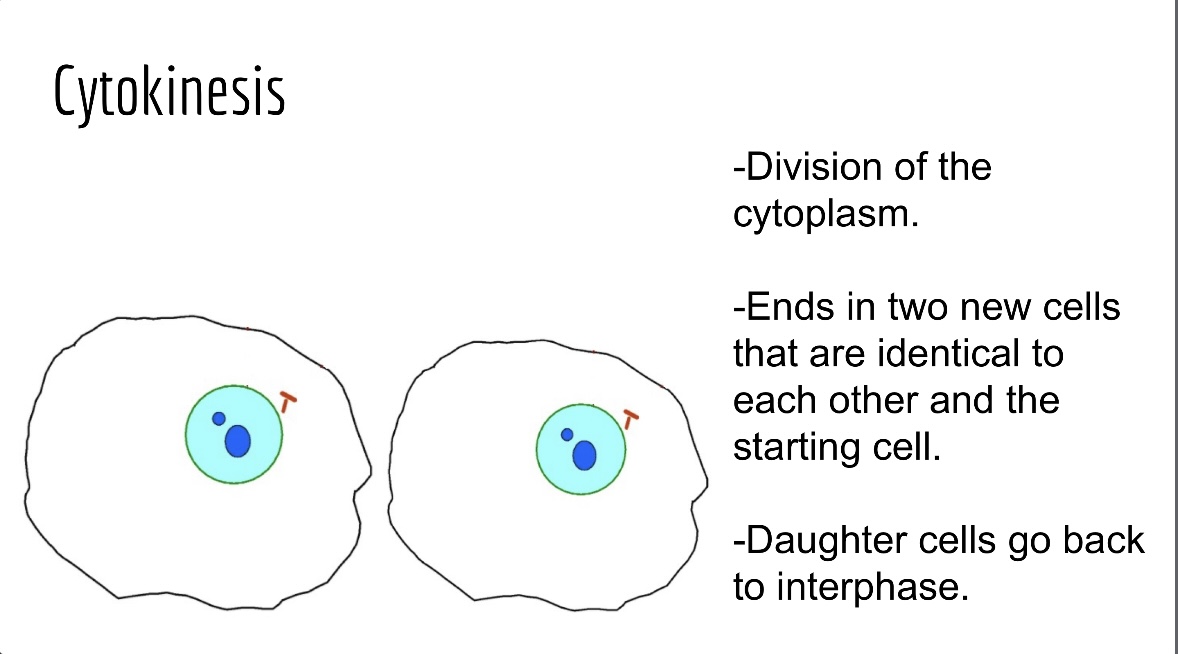
Cytokinesis
The division of the cell's cytoplasm, resulting in two identical daughter cells. (Last step)
Cell Cycle and Cancer
Mutations disrupting normal cell cycle regulation can lead to uncontrolled cell division, forming tumors and potentially resulting in cancer.
p53 gene
p53 is a tumor suppressor gene that detects DNA damage and can halt the cell cycle or initiate apoptosis to prevent the proliferation of damaged cells.
Mutations in p53
Mutations in p53 can prevent it from regulating the cell cycle and initiating apoptosis, allowing damaged cells to divide uncontrollably.
Cancer Risk Factors
Factors include genetic predisposition, age (older individuals have a higher risk), height (taller individuals may have a slightly increased risk), environmental exposures, and lifestyle choices.
Cell Cycle Checkpoints
Checkpoints (G1, G2, and M) ensure the cell is ready to progress to the next phase, preventing errors like DNA damage from being passed on during cell division.
Cancer Cells vs Normal Cells
Cancer cells often bypass normal cell cycle checkpoints, leading to uncontrolled proliferation.
Metastasis
The process by which cancer cells spread from the original tumor site to other parts of the body.
Cell Cycle and Cancer Treatments
Understanding the cell cycle can lead to targeted therapies that interrupt specific phases or malfunctioning checkpoints in cancer cells.
Cyclins and CDKs
Cyclins and CDKs regulate progression through the cell cycle by forming complexes that activate specific phases.
Oncogenes
Oncogenes are mutated forms of proto-oncogenes that drive excessive cell proliferation, leading to tumor formation.
Tumor Suppressor Genes
Tumor suppressor genes inhibit cell division, repair DNA errors, and initiate apoptosis; their inactivation can result in uncontrolled cell growth.
Checkpoint Control and Genetic Instability
Without proper checkpoint control, cells can accumulate mutations, leading to genomic instability and cancer progression.
G1 Checkpoint
The G1 checkpoint ensures the cell is ready for DNA synthesis; defects here can allow damaged cells to proliferate.
CDK Inhibitors
CDK inhibitors block the activity of cyclin-dependent kinases, halting cell cycle progression and suppressing tumor growth.
Apoptosis and Cancer
Impaired apoptosis allows damaged cells to survive and divide, contributing to tumor development.
HMGA1 Gene
Overactive HMGA1 can lead to uncontrolled stem cell gene expression and tumor development, increasing cancer risk.
Extrachromosomal DNA (ecDNA)
ecDNA carries oncogenes that promote tumor growth and resistance to therapy; targeting ecDNA may offer new treatment strategies.
 Note
Note  Flashcards (20)