CLS 365 UNIT 2 EXAM Compliance, Managerial Functions & Problem Solving
 Call Kai
 Learn
Learn Practice Test
 Spaced Repetition
 Match
Match Flashcards
 Knowt Play
1/108

There's no tags or description
Looks like no tags are added yet.
Name | Mastery | Learn | Test | Matching | Spaced | Call with Kai |
|---|
No analytics yet
Send a link to your students to track their progress
109 Terms
what does CLIA’88 regulate?
regulates all laboratory testing used for diagnosis, monitoring, prevention or treatment
what does CLIA’88 establish?
establishes quality standards for all laboratory testing to ensure accuracy, reliability and timeliness of patient test results
what does test site neutral mean regarding CLIA’88? (learning objective; ch.15)
same regulations apply regardless of the location of testing
what are the 7 things centers for medicare and medicaid services (CMS) is responsible for?
registering laboratories for CLIA certificates
all lab testing must be done under an appropriate CLIA certificate
fee collection
onsite inspection surveys
surveyor guidelines and training
approving proficiency testing providers
deeming professional accreditation organizations and exempting states
enforcement actions when needed
lab testing requirements are based on the complexity or difficulty to perform a test method
what are the three categories that CLIA regulations divide test methods into? (learning objective; ch.15)
waived
moderate complexity
provider performed microscopy procedures (PPMP)
high complexity
what are the 5 CLIA certificate? (learning objective; ch.15)
waiver
provider
registration (temp certification)
compliance
accreditation
test complexity will determine the type of CLIA certificate a lab will get
what is the waiver certificate? (learning objective; ch.15)
permits a site to perform only those tests methods identified as waived
what is the provider certificate? (learning objective; ch.15)
performed microscopy registration (PPMP) → certificate issued to a laboratory for physicians, midlevel practitioners, or dentists to perform PPM procedures or those tests on specimens collected during a physical examination and waived tests
what is the registration certificate? (learning objective; ch.15)
a certificate issued to enable laboratories to conduct waived, moderate, and/or high complexity laboratory testing and is a temporary certificate
what is a compliance certificate? (learning objective; ch.15)
obtained once the laboratory is inspected and judged → in compliance with the requirements, this temporary registration and is replaced with a permanent “compliance” certificate
what is an accreditation certificate? (learning objective; ch.15)
issued to those laboratories seeking accreditation from a CMS and is deemed professional organization when found in compliance with the accrediting organization’s requirements
how does CLIA defined “waived” as? (learning objective; ch.15)
test cleared by the FDA for home use
tests using such simple and accurate methodologies that the likelihood of erroneous results is negligible
pose no reasonable risk of harm to the patient if the test is performed incorrectly
what are the seven criteria that is used to grade the level of complexity for a specific laboratory test or methodology?
knowledge
training and experience
reagents and materials preparations
characteristics of operational steps
calibration, quality control, and proficiency testing materials
test system troubleshooting and equipment
interpretation and judgment
what are the four positions that have proper qualifications that must be on sites that perform moderate complexity training?
director
technical consultant
clinical consultant
testing personnel
what is the “director” and what are their qualifications regarding personnel for moderate complexity testing?
can range from a physician to an individual with a bachelor’s degree in medical technology/CLS or a degree in chemical, physical, or biological science AND has 2 years of lab training/experience AND has 2 years of lab supervisory experience
what does a “clinical consultant” do and what are their qualifications regarding personnel for moderate/high complexity testing?
serves as the liaison (close connection) between the lab and its customers and must be qualified to consult with clinicians and patients and give opinions concerning the diagnosis, treatment, and management of patient care
MUST BE a clinician, or have a doctorate in chemical, physical, biological, or CLS/MLS
what does a “technical consultant/technical supervisor” do and what are their qualifications regarding personnel of moderate/high complexity testing?
establishes the quality standards of the lab through selecting and monitoring the laboratory’s methods/instruments, and evaluating and documenting the competency of the personnel annually
range from clinician to an individual possessing a bachelor’s degree in chemical, physical, biological, or CLS/MLS AND one year of lab training or experience in the designates specialty of responsibility
in technical supervisor, the training and/or experience is specified
what are testing personnel responsible for in moderate complexity testing? what are their qualifications?
responsible for specimen processing, test performance, and reporting test results
minimum → high school education (or equivalent), plus appropriate director-approved training and ongoing competency assessment at least once per year
what are the five positions that have proper qualifications that must be on sites that perform high complexity training?
director
clinical consultant
technical supervisor
general supervisor
testing personnel
what does the “director” do and what are their qualifications regarding personnel for high complexity testing?
responsible for overall operation and administration of the laboratory
qualifications → licensed physician with lab training or experience or have a doctorate in chemical, physical, biological, or CLS/MLS
those who are hired after 02/24/03, the individual must have Health and Human services (HHS) approved board certification or be qualified as a direction or or before 02/28/92
what does the “general supervisor” do and what are their qualifications regarding personnel for high complexity testing?
provides day-to-day supervision of testing personnel and reporting of results
qualifications → range from individuals who qualify as a clinical to persons possessing an associate degree in CLS/MLS or and two years of laboratory training and experience
what are testing personnel qualifications for in high complexity testing?
at least possess an associate degree in CLS/MLS, or an education and training equivalent to an associate degree
what role does proficiency testing play in the lab under CLIA? (learning objective, ch.15)
evaluating test result quality for CLIA-regulated analytes in test sites performing moderate and/or high complexity testing
who published the quality systems for nonwaived testing and what does quality systems for nonwaived consist of? what path does it follow? (learning objective, ch.15)
published by CMS in the final rule to CLIA in 2003 and consists of most of the moderate and high complexity quality requirements into one set of requirements
quality requirements are organized to follow the path of patient specimens through the testing process → preanalytical, analytical, and postanalytical
what is method verification for unmodified, FDA-approved, nonwaived test methods?
collecting data that document the method’s performance in the test site by the site’s analysts
what are the performance characteristics that need to be evaluated in method verification?
accuracy, precision, reportable range, and identification of appropriate reference intervals
what is the lab responsible for regarding quality control for nonwaived testing?
responsible for having control procedures that monitor the accuracy and precision of the complete analytical process
what must the control procedures do regarding quality control for nonwaived testing?
detect immediate errors that occur due to test system failure, adverse environmental conditions, and operator performance
monitor overtime the accuracy and precision of test performance
CLIA requires test sites to analyze, for most analytes, at least two levels of external, liquid QC per test per day of testing
what does CLIA require for sites performing moderate and high complexity tests?
to be inspected every two years for compliance to the regulation and are unannounced and conducted while the lab’s CLIA certificate is still valid
what does CLIA regulations allow CMS to approve regarding voluntary accreditation?
allows CMS to approve nonprofit, professional organizations having laboratory testing and inspection standards that are essentially equivalent to, or more stringent than, those of CLIA
what is the Joint Commission? (learning objective; ch.15)
a voluntary organization that accredits more than 80% of US healthcare organization and their testing standards focus on quality improvement and designed to promote quality outcomes
inspection for compliance is conducted every two years
what does the laboratory accreditation program of the College of American Pathologists only do? (learning objective; ch.15)
accredits only laboratory testing sites and not the entire healthcare organization
all test sites must follow the lab general (GEN) and common (COM) checklists along with the specific checklists appropriate to the specialty of testing
what must labs follow regarding the laboratory accreditation program of the College of American Pathologists (LAP-CAP)? (learning objective; ch.15)
must follow specific QC, procedure manual, method performance specification validation, accuracy assessment, method correlation requirements specified in CAP checklists → many are similar or same to CLIA’88
LAP-CAP prefers to see pathologists as lab directors
how does COLA (formerly known as the commission of office lab accreditation) prepare labs for the accreditation process? (learning objective; ch.15)
provides sites with an initial, preinspection (self-inspection) checklist which the COLA inspector uses the same checklist during the on-site inspection
cola’s philosophy is one of education and problem solving
what is the U.S department of labor, under OSHA, responsible for?
responsible for regulations relating to general workplace safety and protecting the health of US workers
what is OSHA’s standard precautions? (learning objective; ch.15)
all blood, body fluids, tissue and other potentially infectious materials be treated as equally hazardous
what must facilities must have in place, develop, and implement regarding OSHA? (learning objective; ch.15)
must have in place a classification system for each job based on the level of exposure to blood-borne pathogens and must develop and implement procedures that are in compliance with OSHA regulations to protect workers and minimize the risk of exposure
upon employment, what must employees participate in regarding OSHA?
must participate in an on-the-job training program that minimally covers the facility’s exposure control plan, use of PPE, and procedures to be followed in the event of exposure to a blood-borne pathogen
what is the primary goal of HIPAA (health insurance focused legislation)? (learning objective; ch.15)
make it easier to detect and prosecute fraud and abuse, and enable workers of all professions, even those with pre-existing medical conditions, to change jobs without loss or interruption of health insurance protection
larger institutions are required to have a HIPAA privacy officer to provide information
what is the definition of problem solving? (learning objective; ch.4)
process of identifying and defining the problem, determining what happened to cause it, and what steps or possible solutions will be necessary to solve it
what is the definition of decision making? (learning objective; ch.4)
process of choosing among several alternatives and is a management function
what are the steps in problem solving?
problem identification
problem analysis
criteria establishment
alternative development and decision making
problem solution and feedback
what is the problem identification step?
process that emphasizes the detailed analysis of the problem before discussion of solutions and a systematic evaluation of alternatives
a problem exists when there is a discrepancy between what one would like to happen and what is actually happening
what is problem analysis step?
after evidence has been collected, the problem identified and defined, attention turns to analyzing the evidence more thoroughly, and looking for relevant data that may explain why the problem exists
in problem analysis, it is a matter of evaluating the data that has been collected in step one and the sources from which that data comes
what are the components in criteria establishment step?
what the decision has to accomplish
what minimum goals must be attained
what objectives the decision has to reach
what conditions it has to satisfy
what is alternative development and decision making step?
appropriate solutions and alternatives are developed and each alternative can be ranked based on its advantages and disadvantages, weaknesses and strengths, and how well it meets the objective
what is problem solution and feedback step?
converting the decision into action where an action plan must be written that details the steps that need to be taken to implement the solution and identify the resources required to do it
what is decision making the process of?
process by which managers respond to opportunities and threats by analyzing option and making decisions about goals and courses of action and is an important skill a leader can acquire
what are the 8 decision making traps?
anchoring trap
status-quo-trap
sunk-cost trap
confirming-evidence trap
framing trap
overconfidence trap
prudence trap
recallability trap
what is the anchoring trap? (learning objective; ch.4)
when information is given up front that later affects the decision that is made
when considering a decision, the mind gives disproportionate weight to the first information it receives
initial impressions, estimates, or other data anchor subsequent thoughts and judgments
what is the status-quo trap? (learning objective; ch.4)
decisions which involve the least change
individuals like what is the most familiar → become complacent and avoids rocking the boat
what is the sunk-cost trap? (learning objective; ch.4)
escalation of commitment because of an individual’s past decisions
ex = manager is on a certain course and does not want to turn back, even though goals may no longer be valid
what is the confirming-evidence trap? (learning objective; ch.4)
mental bias that leads managers to seek out information to support their existing point of view while avoiding information that contradicts it
people have a tendency to subconsciously decide what they want to do, before they figure out why they want to do it
what is the framing trap? (learning objective; ch.4)
how you view your choices or how you frame the questions around the problem → a frame can establish the status-quo, introduce an anchor, lead a manager to justify past actions, or highlight confirming evidence
what is the overconfidence trap? (learning objective; ch.4)
managers believe that they are better at making forecasts or estimates than they actually are → will set too narrow of a range of possibilities
what is the prudence trap? (learning objective; ch.4)
happens when managers are overly cautious or prudent in forecasting and will adjust forecasts or estimates “just to be on the safe side” → looking for the worst case scenario and making decisions based upon that scenario
can be just as damaging as being overconfident
what is the recallability trap? (learning objective; ch.4)
represents an association bias “well it worked before” mentality → managers will get caught up in the past and predict the future based upon past experiences which left a strong impression
what is group decision-making based on and what does it involve?
based on the concept that when people identify their personal goals with goals of an organization, they release an enormous amount of energy, creativity, and loyalty and involves other individuals and groups in the decision-making process
what is the autocratic decision making style?
decisions are made without consulting others
what is the consultative decision making style?
suggestions and ideas from the team members are obtained but the decision made may or may not reflect their input
what is the joint (also called democratic style) decision making style?
involves sharing the of decision making in an attempt to reach consensus on a decision
what is the delegation decision making style?
the decision or problem is turned over to the group without the involvement of the manager/leader
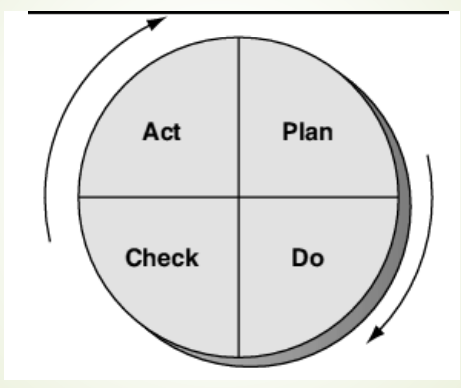
what is the shewhart cycle? describe the steps (learning objective; ch.4)
involves four steps: plan, do, check, act (PDCA)
plan = team identifies the real problem and spends time defining and analyzing the nature of the problem → how the problem is defined will affect the kinds of solutions that are seen
do = team will implement the improvement effort they planned using a small-scale test → essentially testing the hypothesis
check = data is collected and analyzed and the results are studied to see if the process was improved → team members can evaluate and examine any variables present in the process and collect new data and compare it against the old data
act = plan is implemented and monitored
what are the steps in plan?
describe the process
review existing information
identify customers
select appropriate strategies to gather meaningful data
interview customers
plot process using a flow chart
brainstorm problem and produce a fishbone diagram
fishbone diagram helps find the root cause of a problem by breaking the big problem into smaller possible causes
collect data on the process
analyze the data and develop a hypothesis or theory
what is the LEAN methodology?
continual process of improvement that when applied to the lab, its main objective is to “deliver quality patient laboratory results, at the lowest cost, within the shortest time frame while maintaining client satisfaction.”
standardized the way that a group works and eliminate waste → ex. non-value-added steps in the labs processes to improve efficiencies
what are the 5 LEAN techniques?
identify value
map the value stream
create flow
establish pull
seek perfection
what is identify value in lean methodology?
specify what creates value from the customer’s perspective
what is map the value stream in lean methodology?
identify all the steps along the process chain, eliminating, whenever possible, those steps that do not create value
what is create flow in lean methodology?
make the process flow so the product or service will flow smoothly toward the customer
what is establish pull in LEAN methodology?
introduce a continuous flow of events between all steps of the process where possible
what is seek perfection (continuous improvement) in LEAN methodology?
begin the process again and continue it until a state of perfection is reached in which perfect value is created with no waste
what are the tools that are used to remove waste and establish a LEAN laboratory?
value stream mapping
5S workplace organization
visual workplace
work cell specimen processing
what is value stream mapping?
direct observation of the lab process and identification of where waste is found in process → current process is examined and documented from start to finish and “future-state” maps are developed to show how the operation would look, IF ONLY staff did that which was necessary to complete the work based on high-quality standards
what is 5S workplace organization?
emphasizes the maintenance of an orderly workplace
what are the 5S’ in workplace organization? describe them
sort = proper arrangement of all items, storage, equipment, tools, inventory and traffic
set (or simply) = orderliness
ex. determine the best place to keep the items that are used regularly
shine = cleanliness
keep the work area clean
standardize = make things common and consistent
sustain (or self-discipline) = maintaining
what is visual workplace?
concept of creating a workplace that is entirely visually instructive
visual cues reduce the amount of wasted time that is spent searching, looking, and waiting
what is work cell specimen processing?
physical or logical layout of all testing and processing equipment, technicians, machines, and materials through which a specimen flows
work cell minimizes movement, reduces batch sizes, decreases set-up time for testing, improve lab safety, and standardize work processes with visual cues
what is six sigma DMAIC methodology? what is contained in it?
roadmap for problem solving and product/process improvement
define
measure
analyze
improve
control
what is define in six sigma DMAIC methodology?
defines who the customers are, what their requirements are for products and services, and what are their expectations; also defines project boundaries, the stop and start of the process
what is measure in six sigma DMAIC methodology?
measures the process to determine current performance which develops a data collection plan for the process, collecting data from many sources to determine types of defects and metrics, and comparing to customer survey results to determine shortfall
what is analyze in six sigma DMAIC methodology?
analyzes data collected and processes map to determine root causes of defects and opportunities for improvement
identifies gaps between current performance and goal performance
prioritizes opportunities to improve
identifies sources of variation
what is improve in six sigma DMAIC methodology?
process is improved by eliminating defects → uses creative solutions to fix and prevent problems, creating innovative solutions using technology and discipline, and developing and deploying an implementation plan to the targeted process
what is control in six sigma DMAIC methodology?
improvements are controlled to keep the process on the new course and to prevent reverting back to the “old way” and involves the development, documentation, and implementation of an ongoing monitoring plan
what are the 8 decision making strategies & tools?
benchmarking
brainstorming
scatter diagrams
pareto charts
PMI (plus/minus/interesting)
decision trees
fish bone/honeycomb cause and effect
cost-benefit analysis
what is the benchmark strategy?
an organization can determine a measure of its processes against those of recognized leaders in the field, and how it measures up to the standard set by those leaders
organizations usually establish performance indicators in four categories: cost effectiveness, staff productivity, process efficiency, and cycle time
what is the brainstorming strategy?
method for developing creative solutions to problems and the idea of it is to generate, clarify, and evaluate a sizable list of ideas, problems, or issues
what is the PMI strategy?
when faced with a difficult decision, a table is created with the categories: plus, minus, and interesting
whats a decision-making tree and when would it be used?
a graphical diagram consisting of nodes and branches
if there are certain alternative choices that are clear but consequences of the choices are readily apparent, a decision tree would be used
what is the fishbone/honeycomb cause and effect strategy?
fishbone diagram systematically analyzes cause and effect relationships and identifies potential root causes of a problem → used to display the relationships between a given effect and its potential causes
what is the cost-benefit analysis strategy?
refers to the several approaches for determining and comparing the forward looking, incremental costs, benefits, and values of solution alternatives → determines whether the results of a particular course of action are of sufficient benefit to justify the cost of taking the action
what is the management function, planning?
clarifies the process of attaining the desired goals of an organization and includes activities such as data gathering, assessment, calculation of risks, and determination of a strategy
what are the 5 major components of the planning function?
vision
mission
objectives
goals
tactics
what should the mission and vision statement be?
clear and conveys the direction of the organization
what is the mission statement as a major component of planning?
defines the organization’s purpose and primary objectives
what is vision statement as a major component of planning?
define the organization’s purpose, but in terms of the organization’s values
what is goals as a major component of planning?
helps institutions define its mission, control its destiny, motivate its employees, and ensure that everyone understands the purpose of the enterprise
what are objectives as a major component of planning?
tangible plans that are usually expressed as results to be achieved and may be expressed quantitatively or qualitatively
what are tactions as a major component of planning?
most specific plans that describe how, who, what, when, and where activities will take place to accomplish a goal
what are the steps in decision making?
defining the problem
analyzing the problem
developing alternative solutions
evaluating the alternatives
making a decision between the alternatives
follow-up assessment after the decision has been implemented
what is organizing as a management function?
process of determining the steps needed to implement a successful plan

