Bacterial Growth
 Call Kai
 Learn
Learn Practice Test
 Spaced Repetition
 Match
Match Flashcards
 Knowt Play
1/80

There's no tags or description
Looks like no tags are added yet.
Name | Mastery | Learn | Test | Matching | Spaced | Call with Kai |
|---|
No analytics yet
Send a link to your students to track their progress
81 Terms
How do bacteria grow in populations?
Individual cells
Cells grow in size,
DNA is replicated,
Then they divide by binary fission
Binary Fission
One cell makes 2 identical cells
Population Growth
Measured by measuring cell number of cell mass
Population Growth Equation
Nn=N0⋅2n
n stands for what
number of generations
N0
number of starting cells
Nn
number of cells after n generations (final cells)
Doubling Time
Time for the population to double in cell numbers (generation time)
Depends on the environment (certain factors)
Varies from bacterium to bacterium (species)
Finding generations formula
n=3.3⋅log(Nn/N0)
Growth rate formula
k=n/t
Doubling time formula
g=1/k
what does k stand for
growth rate (generations/hr) aka how fast they grow
What does t stand for
total time (hr)
What does g stand for
doubling time (hr)
Exponential growth
Curved graph = growth is exploding
Fast increase
Semi-log scale
Straight line = constant/same growth rate the whole time
Continuous increase
All bacteria are dividing at the same rate
How do we measure growth?
Total Cell Count
Viable Count
Cell Mass
Total Cell Count
Uses the Petroff-Houser chamber
Counts everything (live and dead cells)
Can’t tell the difference between the living or the dead cells
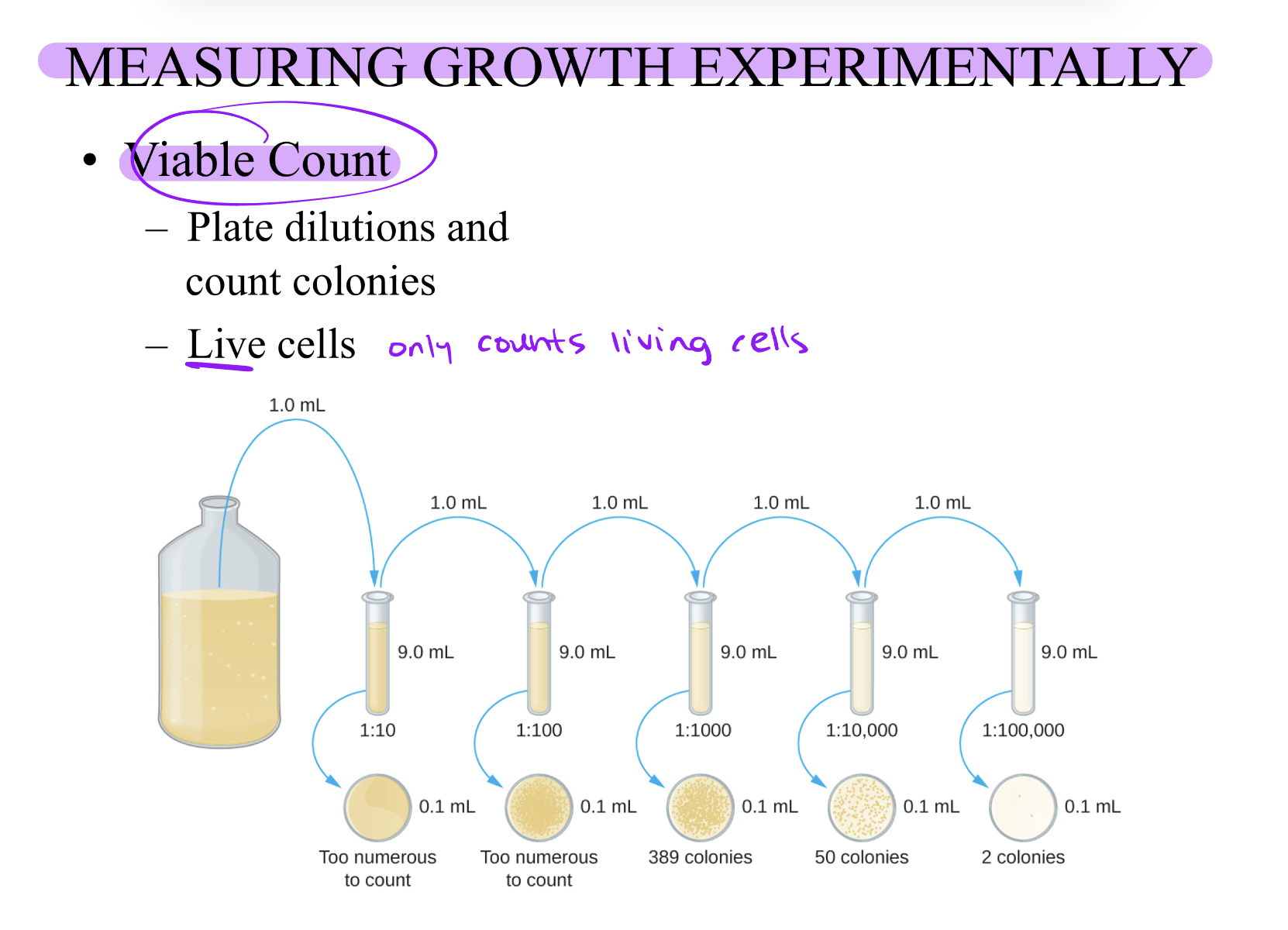
Viable Count
Plate dilutions and count colonies
ONLY counts living cells
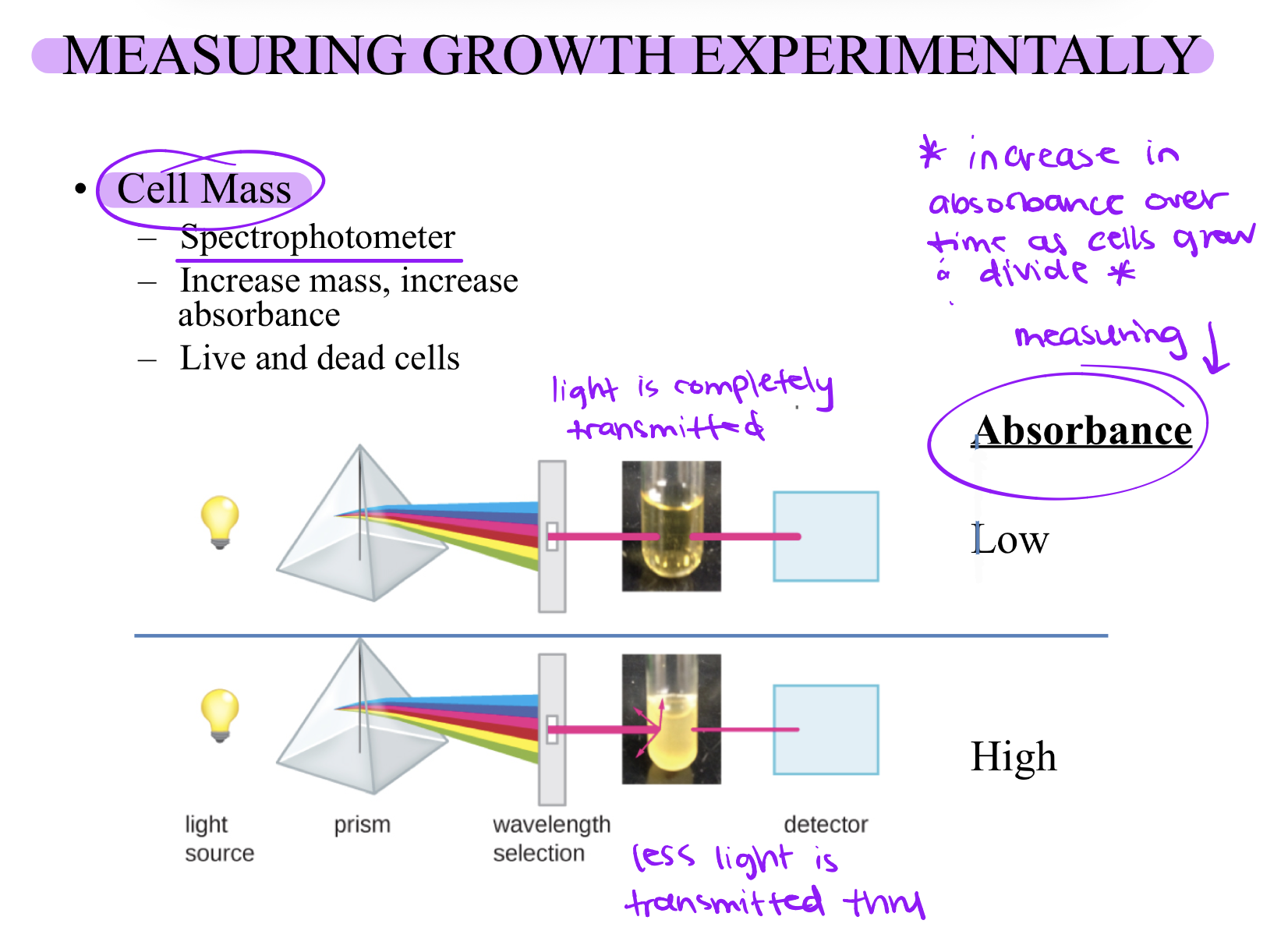
Cell Mass
Spectrophotometer
More cells/higher mass = higher absorbance
Counts live and dead cells
4 Phases of a Microbial Growth Curve
Lag phase
Exponential (Log) Phase
Stationary Phase
Death phase
Lag → Log → Stationary → Death
Lag Phase (adjusting phase)
Cells are adapting to their new environment to optimize their own growth
Making enzymes
NOT dividing yet, no increase in cell number
Exponential (Log) Phase
Cells are dividing at a constant, maximum rate
Population is doubling (2 → 4 → 8 → 16…)
Fastest growth phase
Straight line on log scale = constant growth rate
cells are healthiest here
Stationary Phase
Growth stops increasing
BUT cells are still active
Steady state where they divide at the same rate (population stays the same)
Why?
Nutrients run out
Waste builds up
Space is limited
Death Phase
Cells die faster than they can divide
Population decreases
Why?
No nutrients
Toxic waste
Harsh conditions
Decline in viable cells
Simplest way to remember Microbial Growth Curves
Lag = “getting ready”
Log = “growing like crazy”
Stationary = “balanced”
Death = “dying off”
Antibiotics work best in what phase?
Log phase bc cells are actively dividing
Stationary phase is like what?
A stress response, harder to kill
Factors that affect growth
Nutrient availability
Temperature
pH
Oxygen availability
Water availability
Major Elements for Nutrient Availability
CHNOPS
used for proteins, DNA, and membranes
Oligotrophic
Nutrients in Nature
Nutrients are limited (LOW)
Lots of competition
Slow growth
Caulobacter
Exists in low-nutrient environments
Makes a stalk composed of a membrane
-Stalk forms with more membrane so that nutrients can be transported
-Grows in tap water
Nutrients in the Laboratory
Chemically defined
Complex medium
Chemically defined
Exact amount of composition is known of each nutrient
Complex medium
The amount of the composition of each nutrient is unknown
More nutrients =
Faster growth AND shorter doubling time
Rich media → fastest growth
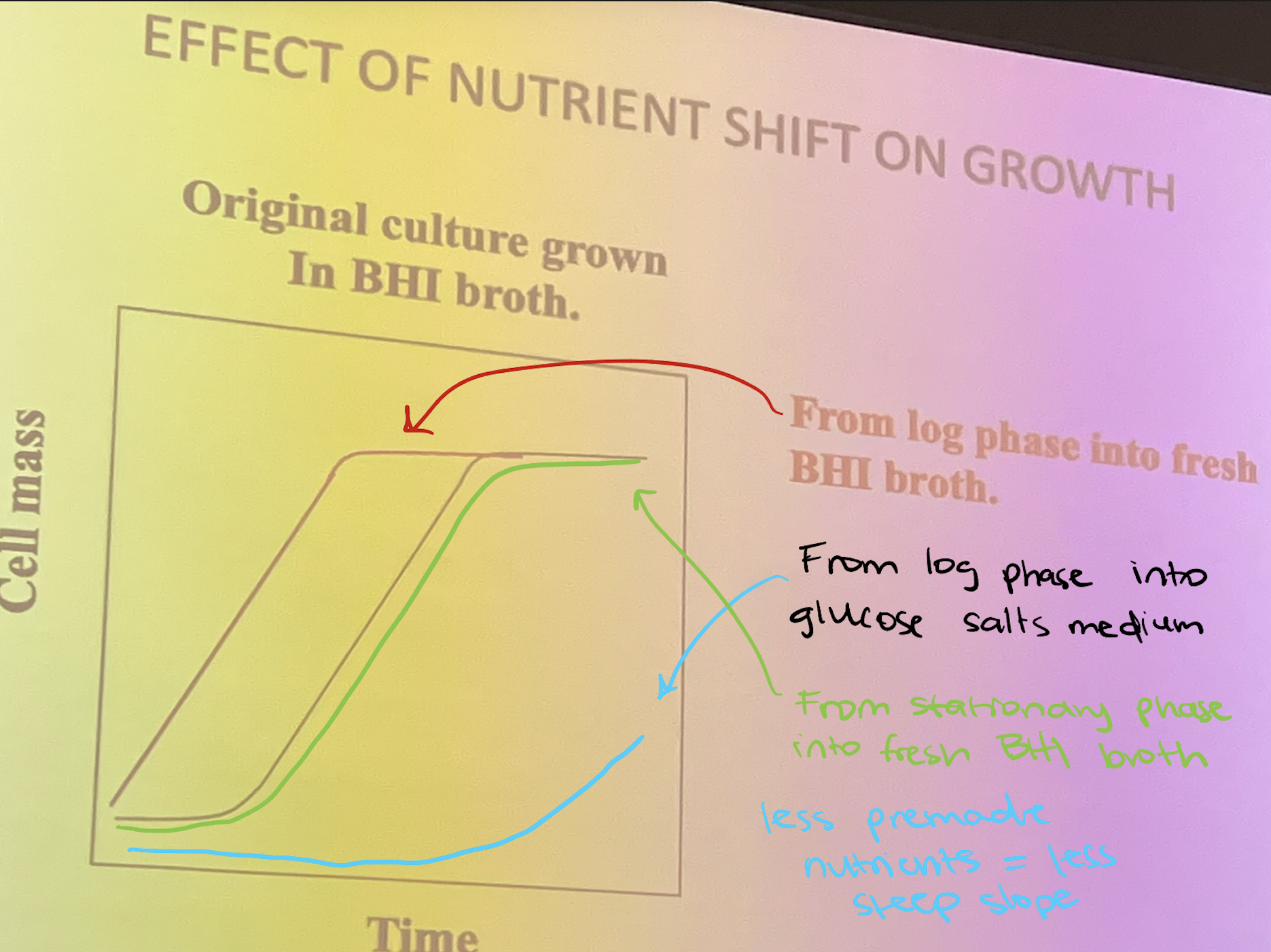
Effect of Nutrient Shift on Growth
Where the bacteria come from (their phase) + what medium you put them into = affects how fast they grow
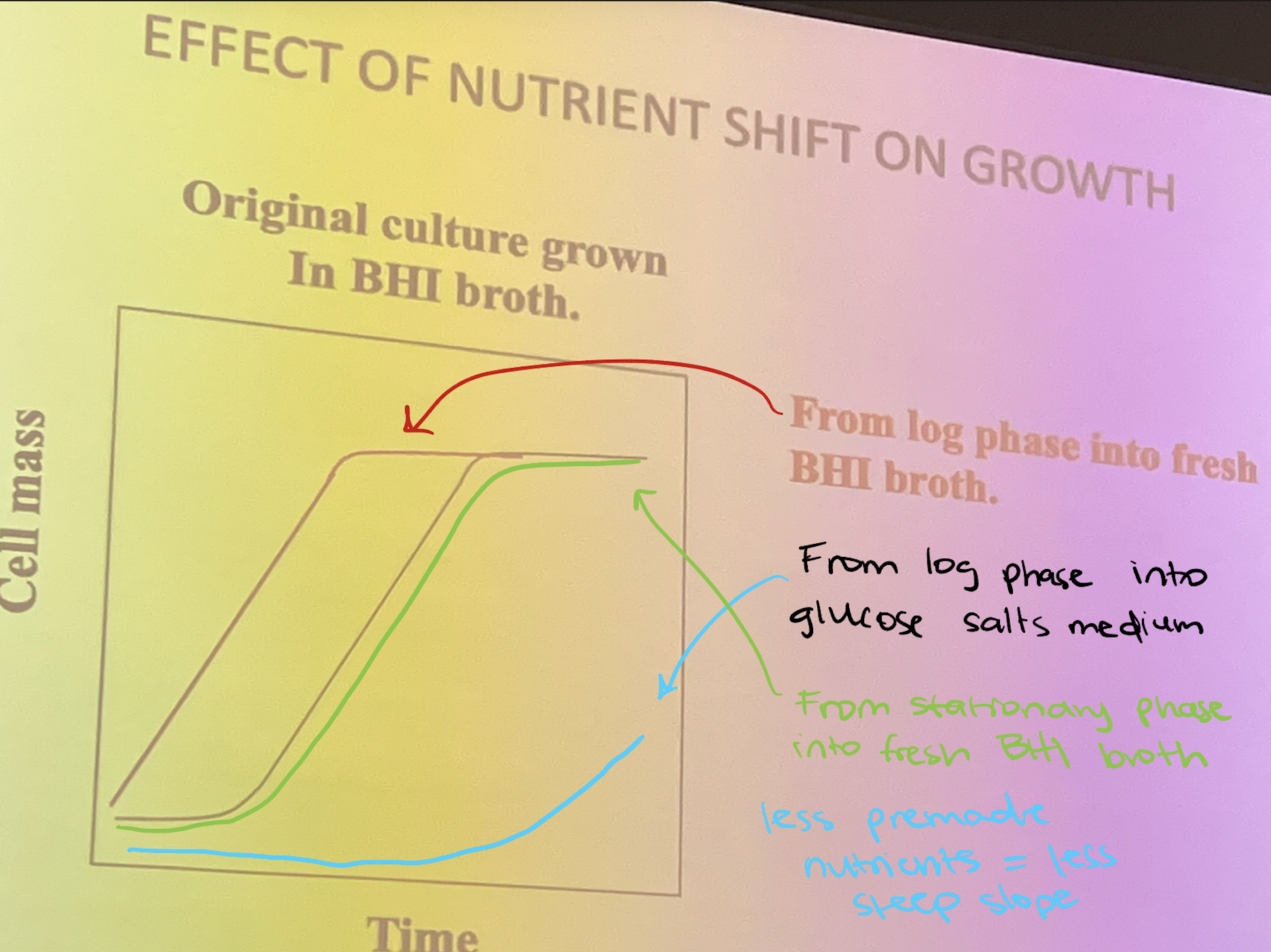
Red Line, From log phase into fresh BHI broth
Almost NO lag phase
Growth continues quickly
Why?
Cells are actively dividing, enzymes are already made, metabolism is ON
FASTEST GROWTH
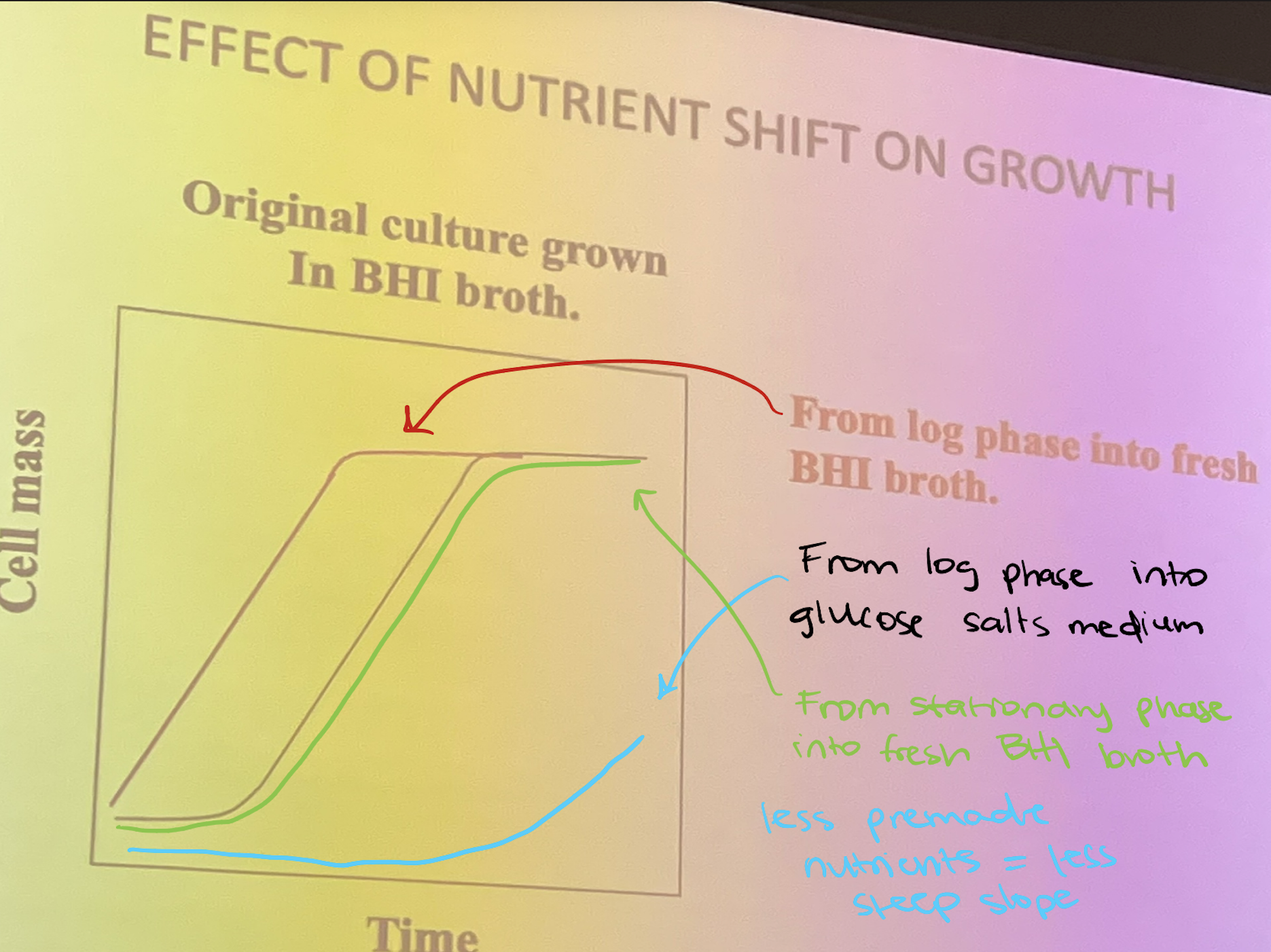
Green Line, From stationary phase to fresh BHI broth
Lag phase appears
THEN growth resumes
Why?
Cells were stressed, low nutrients and slower metabolism
Moderate growth (after delay)
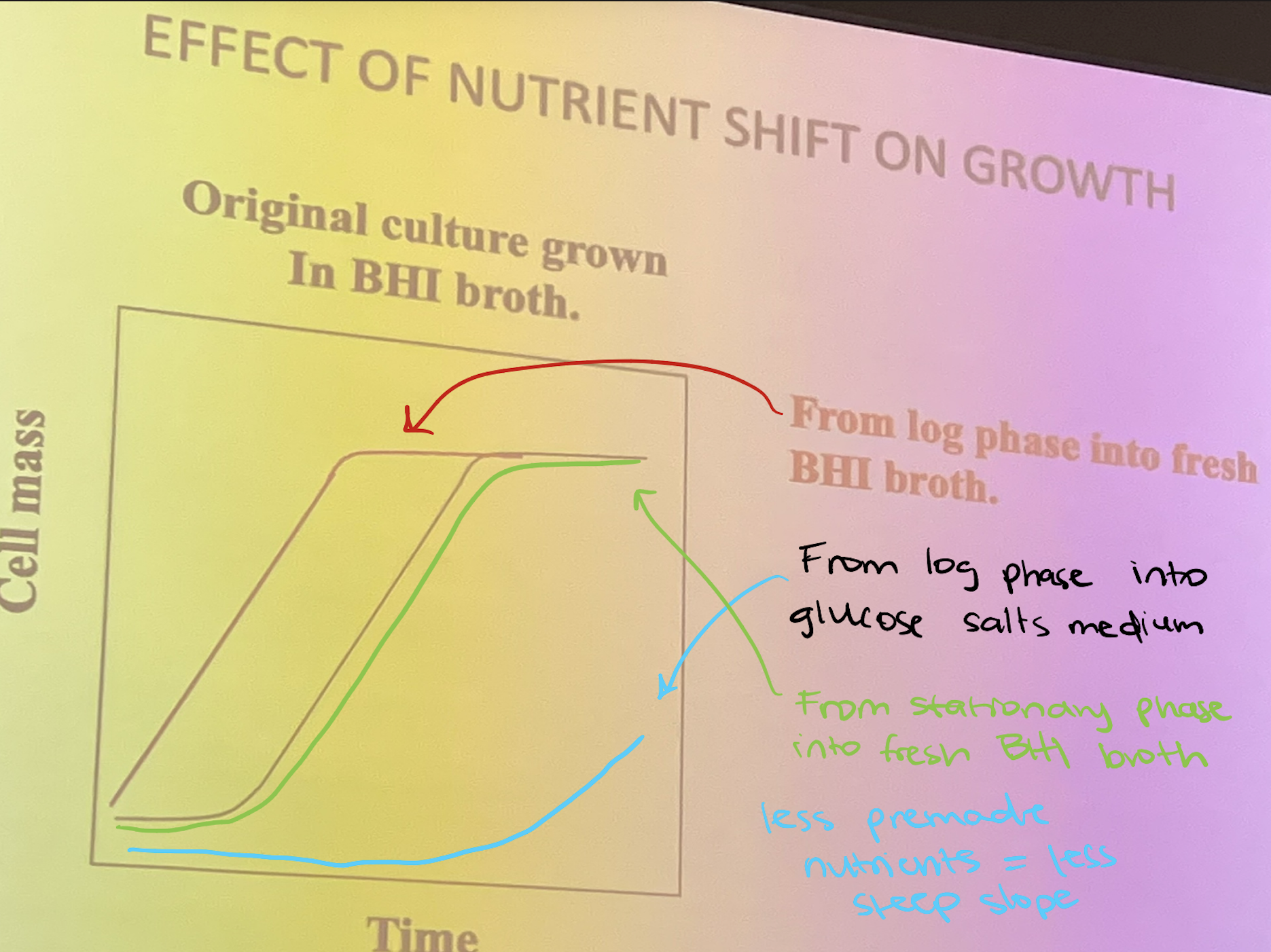
Blue Line, From log phase into glucose salts medium
Long lag phase
Slower growth (less premade nutrients = less steep slope)
Why?
Even though cells were active, the new medium has:
-fewer nutrients
-requires new enzymes
SO
Cells must adapt metabolically
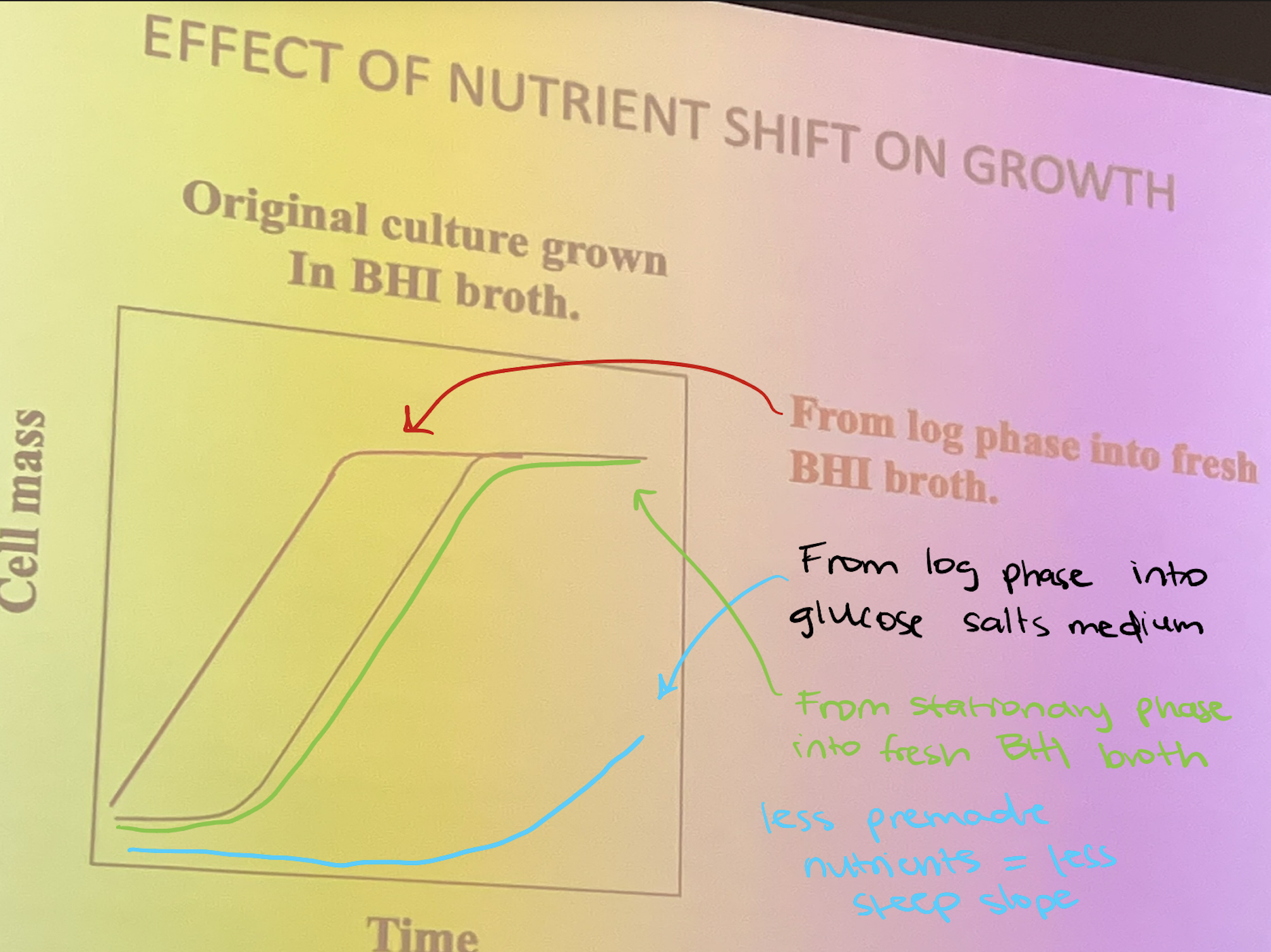
Black/purple line aka original culture in BHI
Normal growth curve in rich media
Used as a reference
Previous condition matters
Log phase cells = ready
Stationary phase cells = need recovery
New environment matters
Rich media (BHI) = fast growth
Minimal media = slow growth + adaptation
Lag phase = adaptation time
Making enzymes
Adjusting metabolism
Log with rich media →
No lag, then growth
Stationary with rich media →
lag, then growth
Log with poor media →
lag and slower growth
Temperature can also affect
Bacterial growth
Bacteria/prokaryotes can grow within a range of
-7°C to 120°C
Each organism has a NARROW growth temp range at
~30-40°C
Every bacterial group has different temps
Minimum
Optimal/optimum
Maximum
Minimum temp
Too cold → no growth
Optimum temp
Best growth!
Maximum temp
Too hot → proteins denature (lose structure therefore function) → death
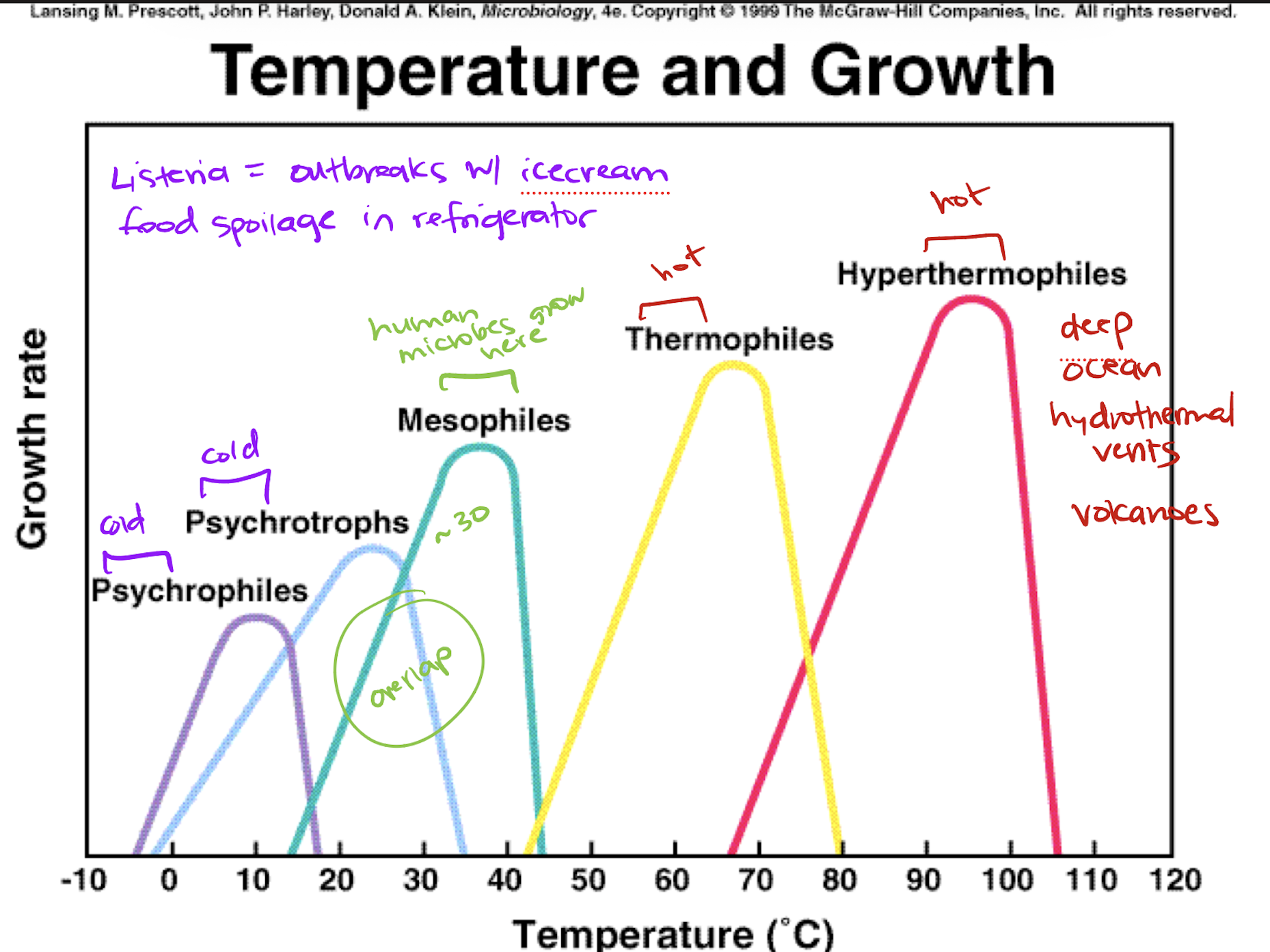
Psychrophiles
EXTREME TEMP
“Cold lovers”
Range: ~ -5°C to 15°C
more unsaturated fatty acids in membrane
Found in the Arctic, glaciers, and the deep ocean
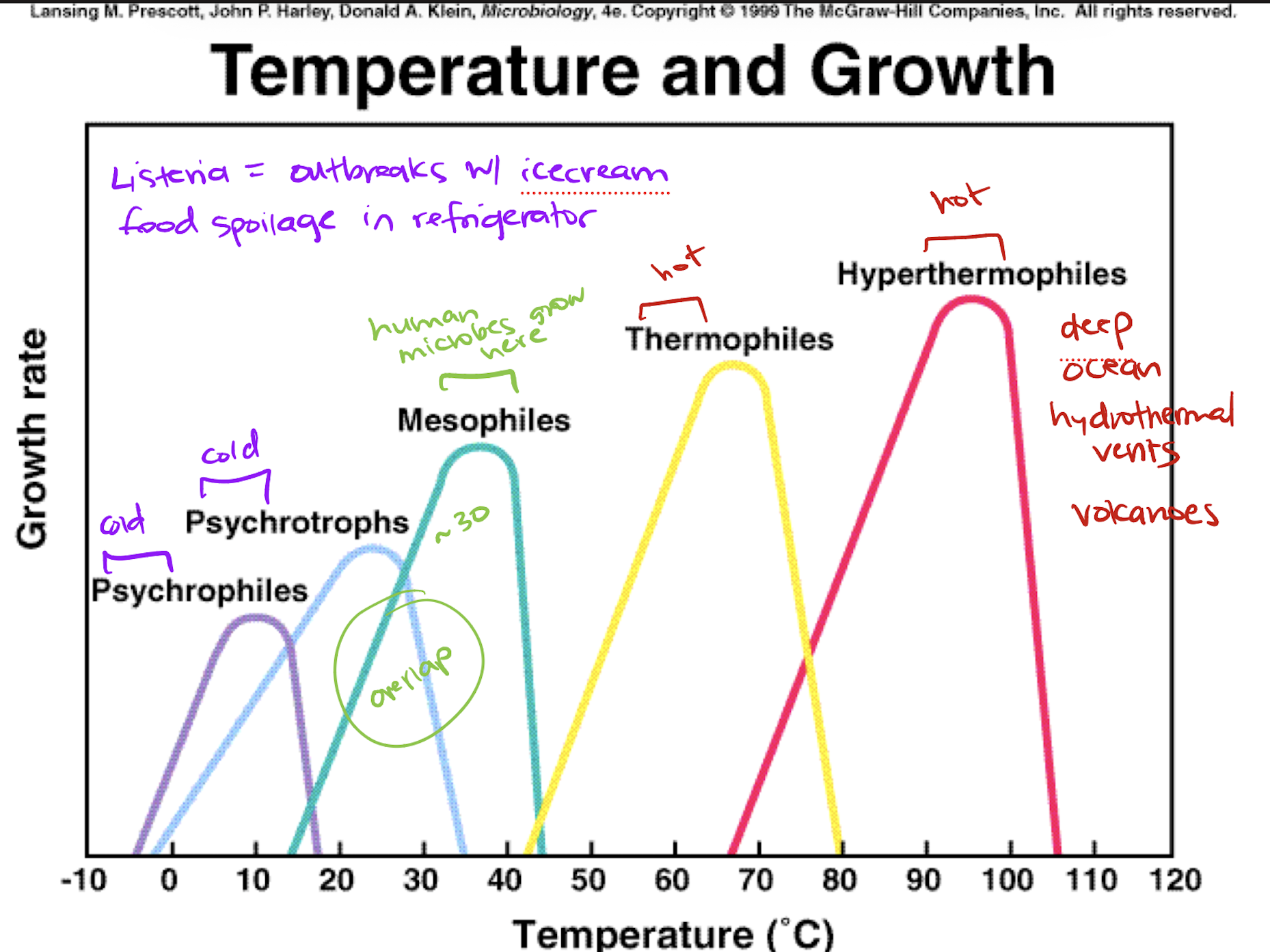
Psychrotrophs
Refrigerator bacteria
Grow in cold BUT prefer ~20–30°C
Causes food spoilage in the fridge (Listeria) aka these are why food goes bad
Mesophiles
Range is roughly (~20–45°C)
Optimal ≈ 37°C
Most human microbes/pathogens
Meso = middle = us
Thermophiles
EXTREME TEMP
“Heat lovers”
Range is ~50–80°C
more saturated fatty acids in the membrane
Found in hot springs, compost piles
Hyperthermophiles
Extreme heat
~80–110°C
Found in deep ocean vents, volcanoes
Bacterial growth can also be affected by what?
pH
Most bacteria grow around a neutral pH, these are called:
Neutralophiles, ph (5.5–8)
Buffers are needed to maintain a neutral pH of media
Fungi are more acid tolerant at what pH?
5
Some bacteria can grow outside of the neutral range
Acidophiles
Alkaliphiles
Neutralophiles
Neutral pH
Acidic outside and positively charged
The proton gradient is balanced
Acidophiles
“Acid-loving”
Acidic aka lots of H+
pH optimum 0-5.5; acid hot springs
Protons want to rush INTO the cell to make the inside acidic (BAD)
Solution:
Inside becomes positively charged and repels H+ from entering
ALSO brings in K+ to help create a positive interior
K+ affects charge, NOT pH
Alkaliphiles
“Alkaline-loving”
Basic
pH optimum 8.5-14; high carbonate soils and soda lakes
Not enough H+ available
Cell needs H+ to maintain pH and energy
Solution:
Use Na+/H+ antiporters to bring H+ INTO the cell and push Na+ OUT
neutralizes the effects of the protons
Bacteria keep internal pH neutral
No matter what the pH of the environment is
Even if outside is acidic/basic
Obligate aerobe
Grows at the top of the test tube with O2
Facultative anaerobe
Can grow in the test tube without O2 but prefer O2
Aerotolerant anaerobe
Bacterium is distributed throughout the test tube
Strict anaerobe
Grows at the bottom of the test tube without O2
Microaerophile
Only needs low amounts of O2 to grow
Why O2 can be toxic
Oxygen forms:
Superoxide (O2-)
Hydrogen peroxide (H2O2)
Hydroxyl Radical (OH-)
Which all of these damage cells
How do aerobic bacteria protect themselves from toxic O2 products?
They possess enzymes that can remove toxic O2 products like:
Catalase
Superoxide dismutase
NADH Peroxidase
Water activity (aw)
aw= relative humidity/100
aw of water = 1
Factors that can affect aw
Osmolarity
Evaporation
Osmolarity
As osmolarity increases, aw decreases
More solute (salt) → lower aw
Evaporation
As evaporation increases, aw decreases
Less water → less growth
Types of resistant bacertia in low aw environments
Halotolerant
Halophile
Halotolerant
S. aureus
Can tolerate high salt concentrations
Needs to increase the internal solute concentration
Produces compatible solutes inside the cell
Halophile
Halobacterium
Loves/ thrives in high salt concentration
Proteins and membranes adapted to high salt concentration
Cannot survive in low salt environments
Found in salt lakes!

