Conception, Prenatal Development, and Birth Flashcards
 Call Kai
 Learn
Learn Practice Test
 Spaced Repetition
 Match
Match Flashcards
 Knowt Play
1/42

There's no tags or description
Looks like no tags are added yet.
Name | Mastery | Learn | Test | Matching | Spaced | Call with Kai |
|---|
No analytics yet
Send a link to your students to track their progress
43 Terms
Teratogen
Factors that can cause abnormal prenatal development
e.g. 1) How long a fetus was exposed to a factor
e.g. 2) How intense the exposure to a factor was
Genotype
The sum total of all the genes a person inherits
Phenotype
Genetic features that are actually expressed
e.g.) Hair color, eye color, etc…
APGAR Test
Test used to check vitals of a baby when it’s first born
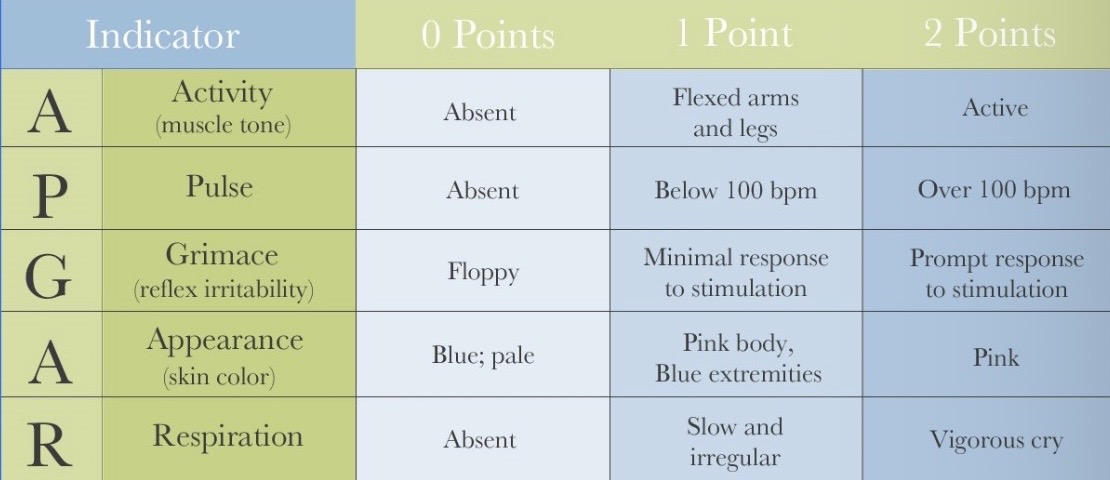
Activity, Pulse, Grimace, Appearance, Respiration
What APGAR stands for
Germinal Stage
First stage of prenatal development
Fertilization to 2 weeks
Embryonic Stage
Second stage of prenatal development
2 - 8 weeks
Fetal Stage
Third stage of prenatal development
8 weeks to birth
Fraternal Twins
_________ _____ happen when multiple eggs are released during fertilization, resulting in 50% genetic similarity between the two
Identical Twins
_________ _____ occur when a fertilized egg splits into two, resulting in 100% genetic similarity between the two twins.
Alleles
Corresponding genes from mother and father that can be expressed differently
Homozygous
Receiving the same version of a gene from both parents
e.g.) B = Brown eyes, b = Blue eyes
BB and bb are these types of alleles
Heterozygous
Receiving a different version of a gene from each parent
e.g.) B = Brown eyes, b = Blue eyes
Bb and bB are these types of alleles
Infertility
Inability to conceive after 12 to 18 months of trying
Causes of infertility
Low quantity & quality of sperm (e.g. slower sperm causing mobility issues, incorrectly shaped, etc…)
Low quantity of ova/eggs
Deterioration in quality of ova (due to age)
Blockage of the fallopian tubes (egg isn’t able to develop properly/sperm can’t get there)
In Vitro Fertilization (IVF)
Fertilization of sperm and ova in lab
May lead to multiple births (dizygotic twins) due to multiple eggs being fertilized to increase likelihood of implantation (more than one egg can attach)
These lab eggs are then placed back into a woman in hopes of implantation working
Dominant
Genes that are able to be expressed in the phenotype even when paired with different versions of the gene
e.g.) In eye color, brown are considered this
Recessive
Genes that only express themselves when paired with a similar version gene
e.g.) Blue eyes are considered this type of gene, as they can only be expressed when paired with another blue eyed gene (bb)
Blood Tests
Checking the mom’s blood if there are chances for any chromosomal disorders if they decide to have a kid
Can be done early on in a pregnancy
Gives you a rough estimate/range of any potential issues/possibilities
Not 100% accurate
Ultrasounds
Uses sound waves to give you a picture of your developing fetus
Can help figure out:
1. Physical abnormalities
2. Sex of the fetus
3. Any multiple births (twins, triplets, etc…)
Amniocentesis
Fetal cells are obtained from amniotic sac
Tests for the cells for any chromosomal disorders
Chorionic Villus Sampling
Fetal cells are obtained from placenta
Tests for chromosomal disorders
Chromosomal Disorder
When the number or structure of chromosome is affected
Down Syndrome
When someone inherits an extra 21st chromosome, creating physical & cognitive delays
Fragile X Syndrome
Additional copies of part of a chromosome
Causes cognitive delays, hyperactivity
More common in boys than girls
Fetal Alcohol Spectrum Disorder
One of the leading causes of intellectual disabilities in the U.S.
Cognitive Delays
Certain physical characteristics (e.g. wider spread of eyes)
Challenges children and parents can face w/ the disorder:
Higher levels of hyperactivity & emotionality
Can impact family dynamics
Cystic Fibrosis
Increased amount of mucus in lungs and digestive system
Sickle Cell Disease
Effects blood cells ability to move smoothly to organs
Causes anemia, strokes, damages to organs
Tay-Sachs Disease
Enzyme deficiency resulting in accumulating lipids within the nerves of cells inside within the brain
Leads to cells being damaged
Decreased cognitive & physical development
over time
Women are born with thousands of eggs that are stored in her ovaries, but they rapidly die out and begin to mature ____ ____
Ovum
One egg
Ova
Multiple eggs
Ovulation
Release of an egg from the ovaries into the fallopian tube. The egg stays in the fallopian tube and waits for any sperm to penetrate it
If there is no sperm waiting for the egg, the egg will travel through the fallopian tube into the uterus where the lining of the uterus will be shed, starting a woman’s period
3 to 5
Sperms can live in the fallopian tube from _ __ _ days
Fertilization
Sperm has fertilized the egg, egg is now referred to as a zygote.
One sperm, one egg
Sperm created a shell around itself to prevent any other sperms from penetrating it
blastocyst
Zygote proceeds to go through the meiosis-mitosis process (duplication). After 3-5 days, zygote becomes a __________
8
Blastocyst continues to grow. Around _ days after conception makes its way to the uterus and attempts to implant itself onto the uterine wall
20
__% of blastocysts actually implant themselves, majority of them are released w/ a woman’s period (fertilization occurs, but not implantation)
Implantation
Blastocyst has now IMPLANTED itself and is now called an embryo, germinal stage has ended, embryonic stage begins
Dilation of Cervix
First and LONGEST stage of childbirth
Cervix has to dilate large enough (5 in/10 cm) for the baby to be able to come out
Extremely painful
Have to time contractions in order to figure out if the baby is ready to be born
Usually indicated when contractions are happening every minute for an hour
Lasts from about 8-10 hours
Can reach 24-48 hours on rare occasions
Epidural
A shot that goes into the back of your spine that numbs you from the waist down
Makes contractions go away or feel less pressure
Works for some women and doesn’t work for others
Can have a point where you can’t get an epidural because you have to start pushing
Delivery
Second stage of child birth
Lasts from 20 to 40 mins
Rare occasions can be 1-2 hours
placenta
After pushing out the baby, the mother also has to push out the ________

