35. Digestive System of The Head and Neck
 Call Kai
 Learn
Learn Practice Test
 Spaced Repetition
 Match
Match Flashcards
 Knowt Play
1/37

There's no tags or description
Looks like no tags are added yet.
Name | Mastery | Learn | Test | Matching | Spaced | Call with Kai |
|---|
No analytics yet
Send a link to your students to track their progress
38 Terms
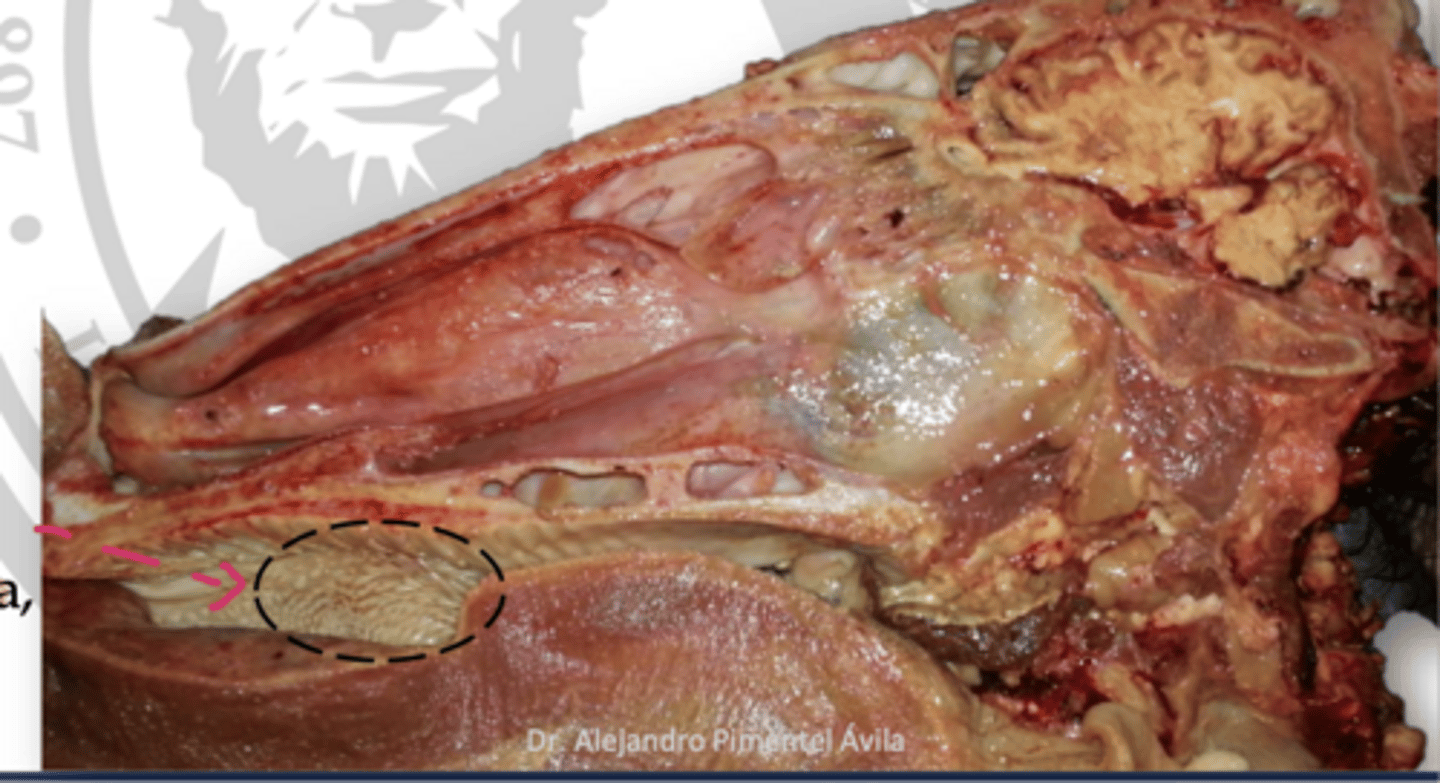
space within dental arcades
the proper oral cavity is considered....
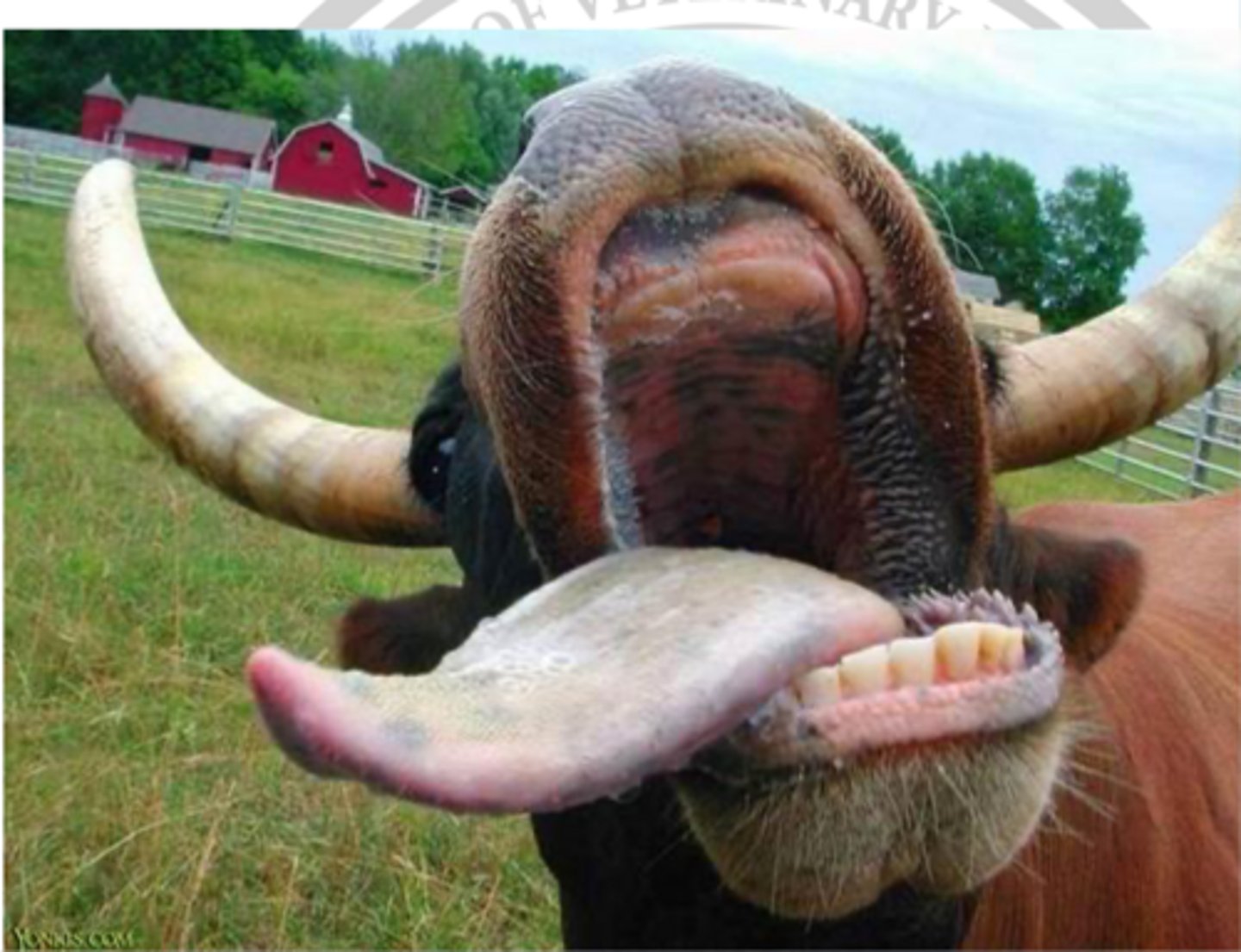
labial and buccal vestible
the oral vestibule is considered...
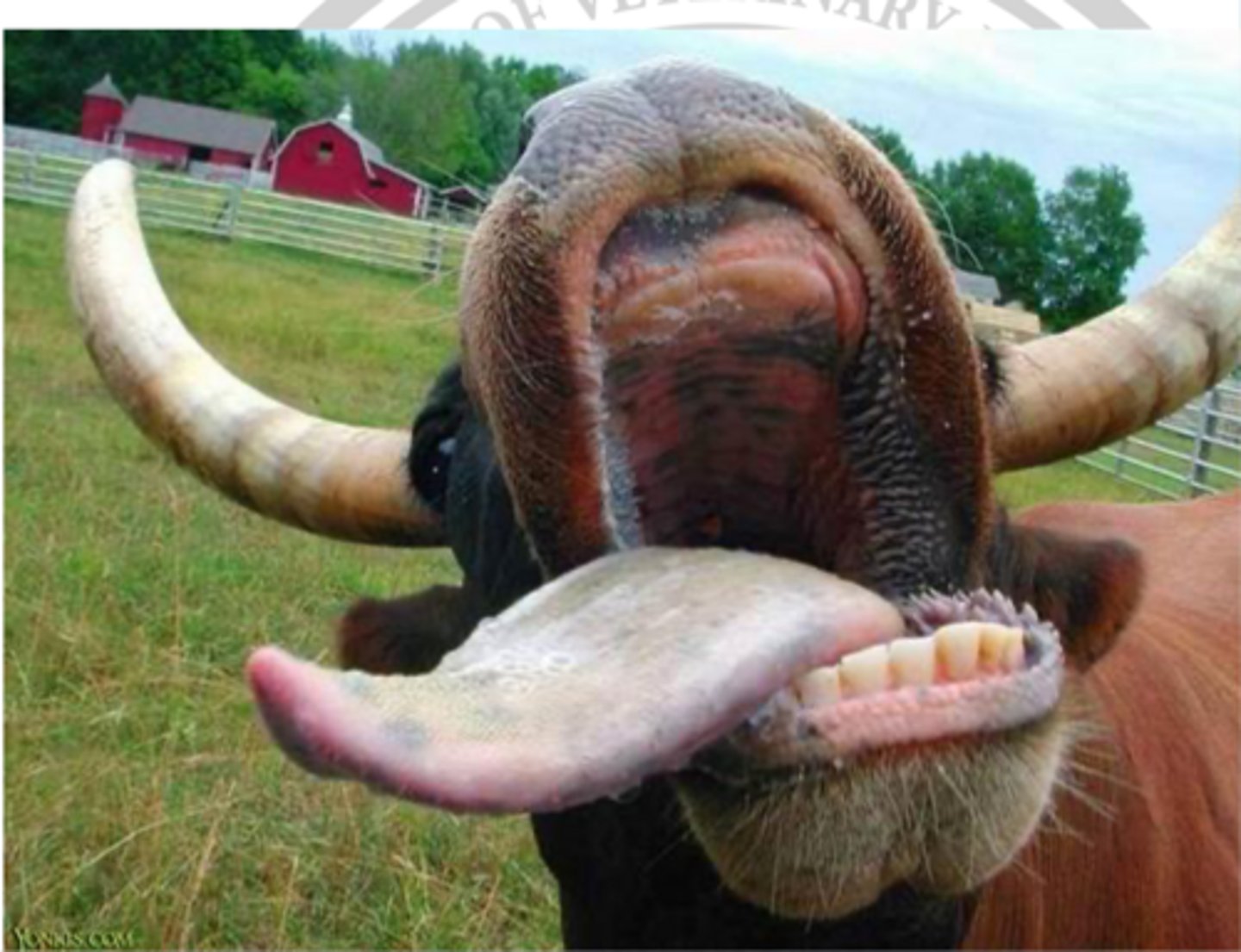
labial papillae
what is labeled (1) within the labial vestibule
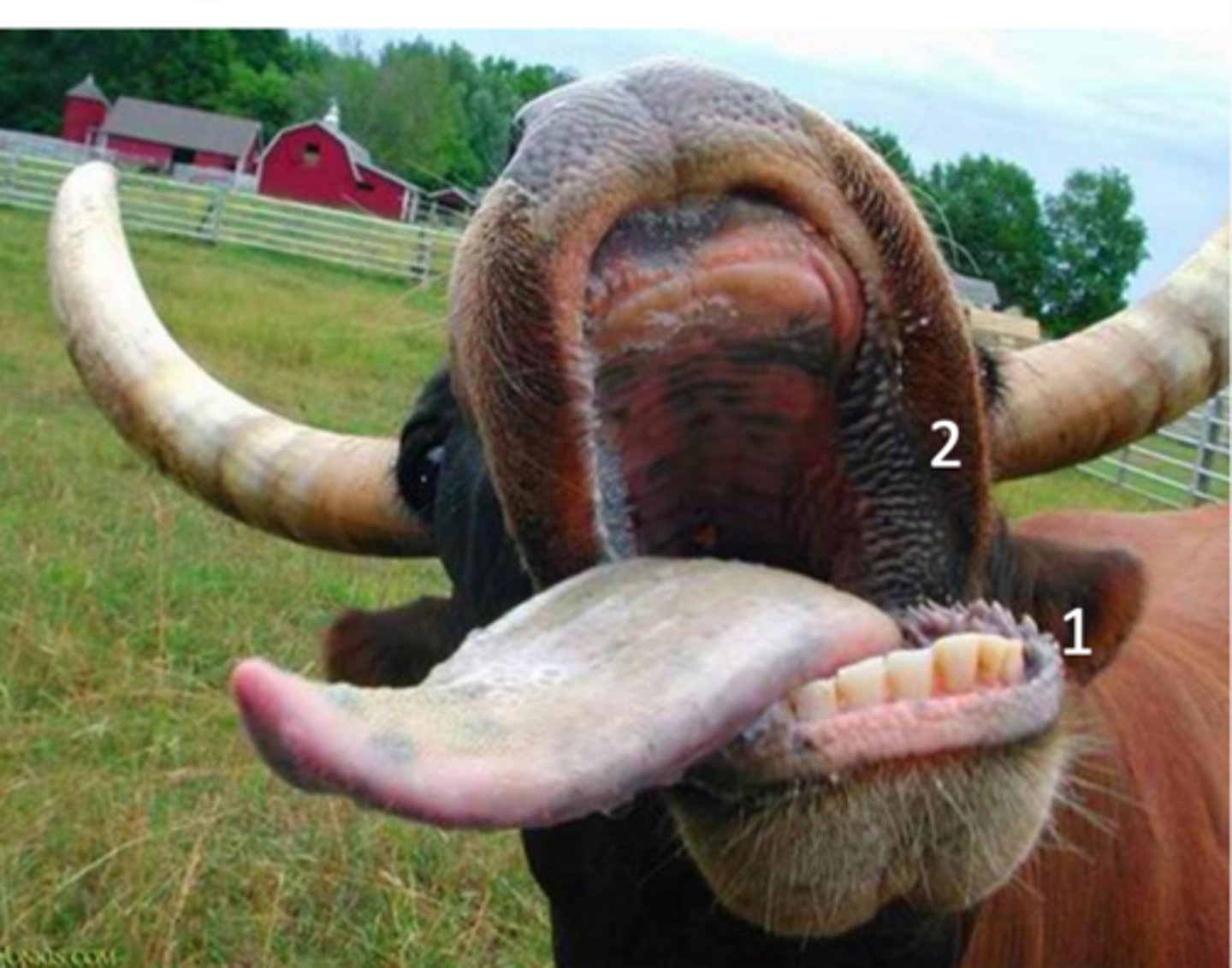
buccal papillae which project caudally and keep food inside mouth during rumination
what is circles in this image w/in the buccal vestible
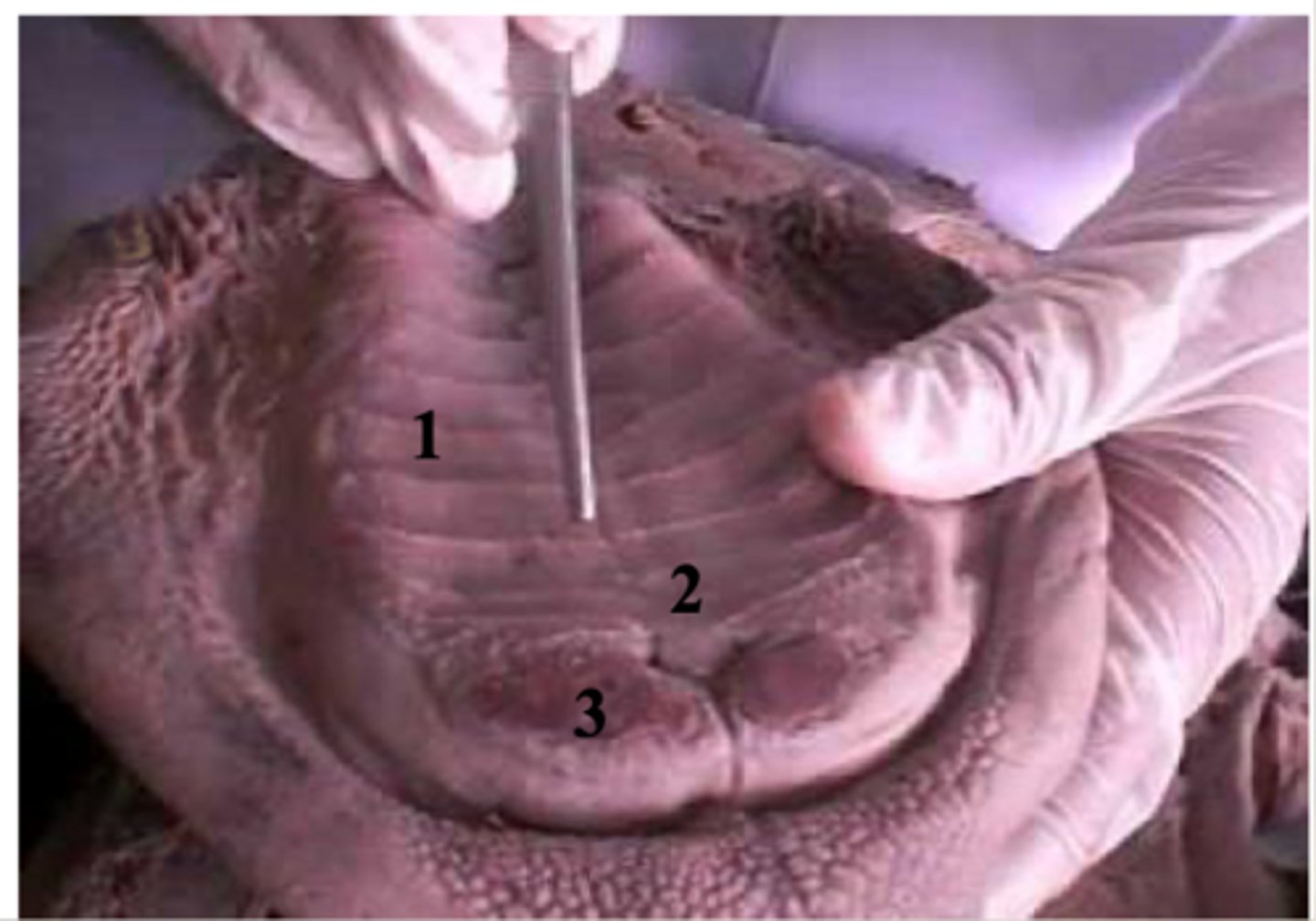
transverse ridges which carry papillae caudally to direct food
1
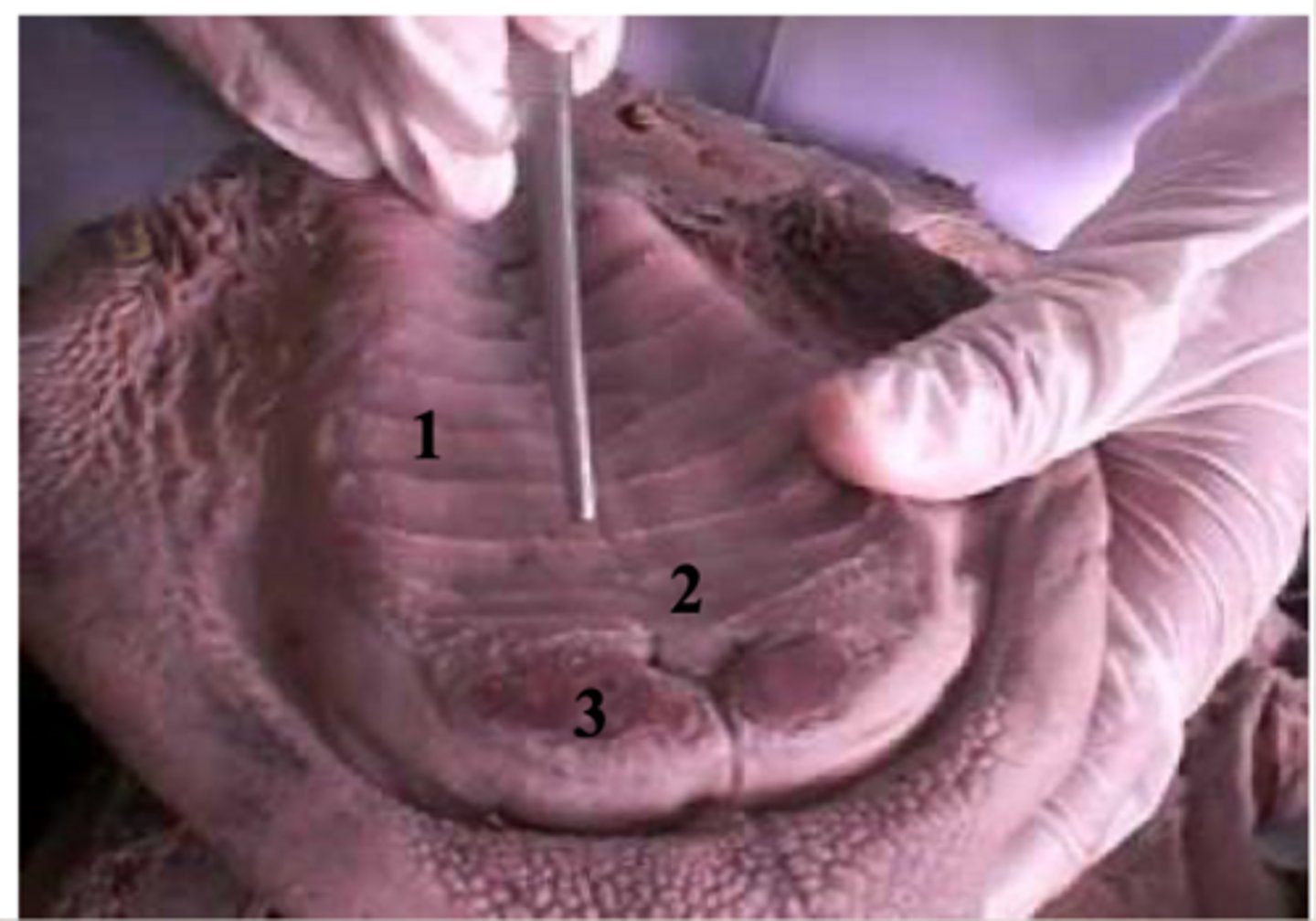
incisive papilla which is the opening of incisive duct leading into vomeronasal organ
2
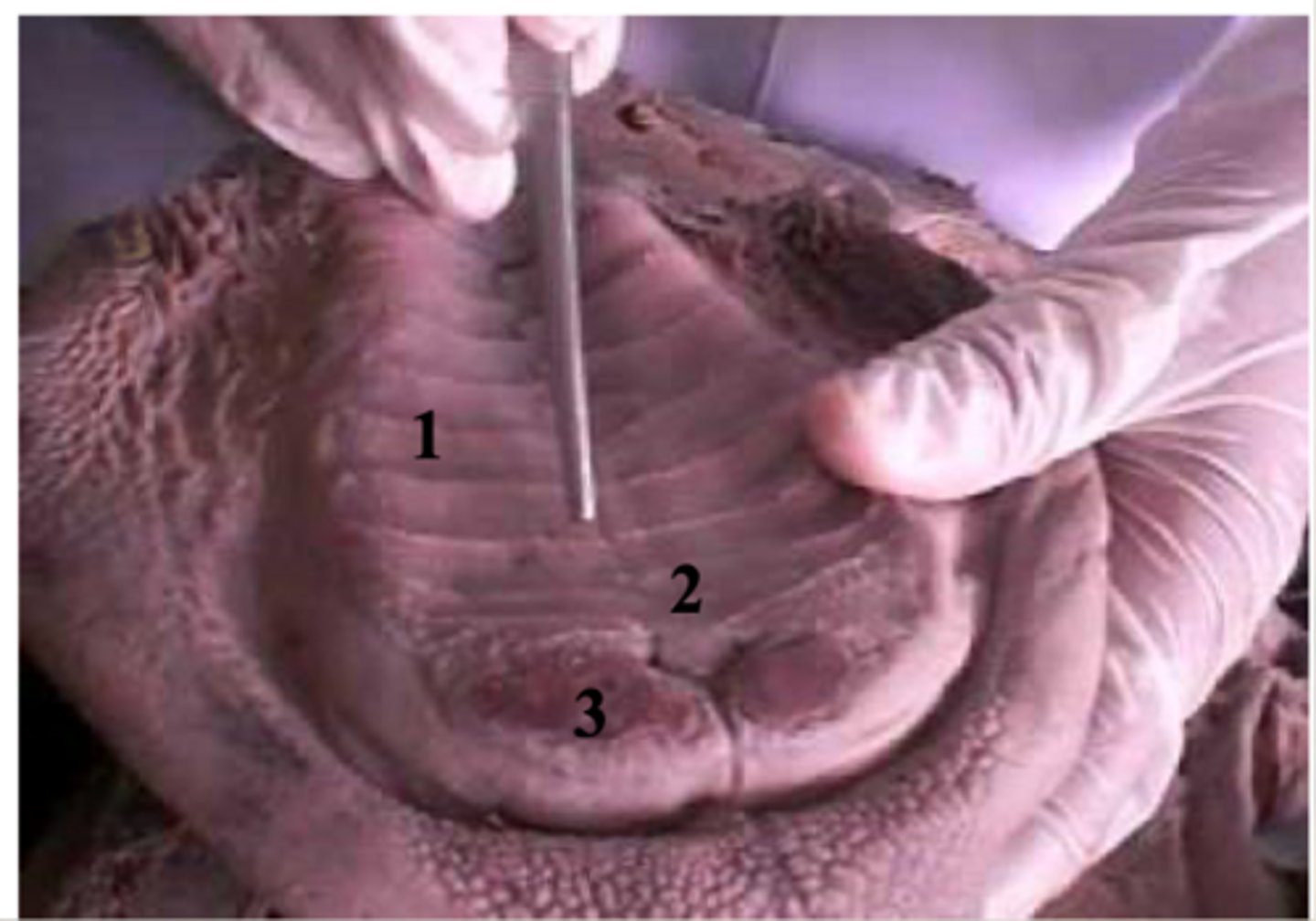
pulvinus dentalis/dental pad as the functional replacement of missing upper incisors
3
lentiform papillae
what is one additional gustatory papillae type on the ruminant tongue between the body and root of the tongue in the area indicated in the image
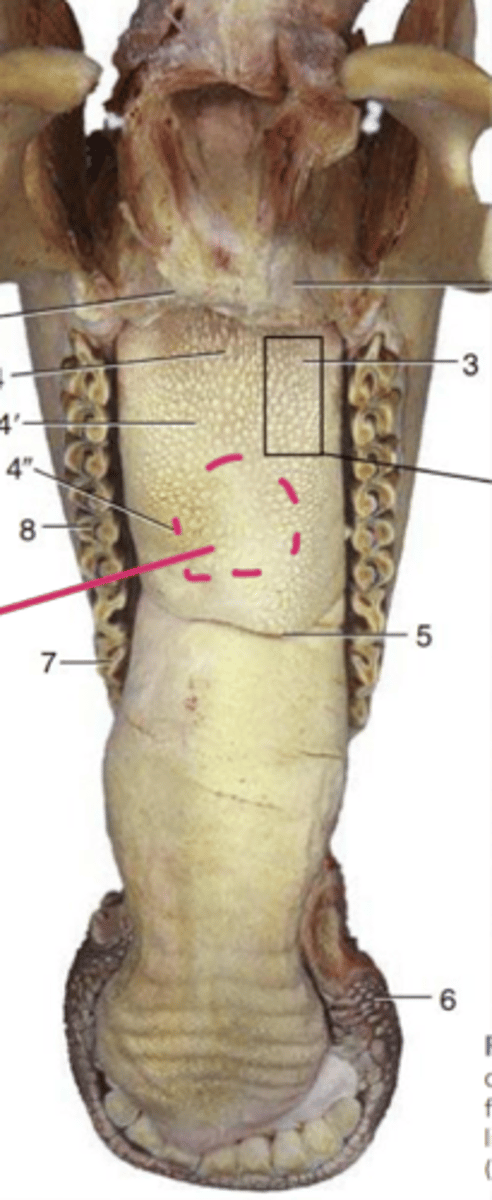
lingual fossa
what is labeled by the blue arrow
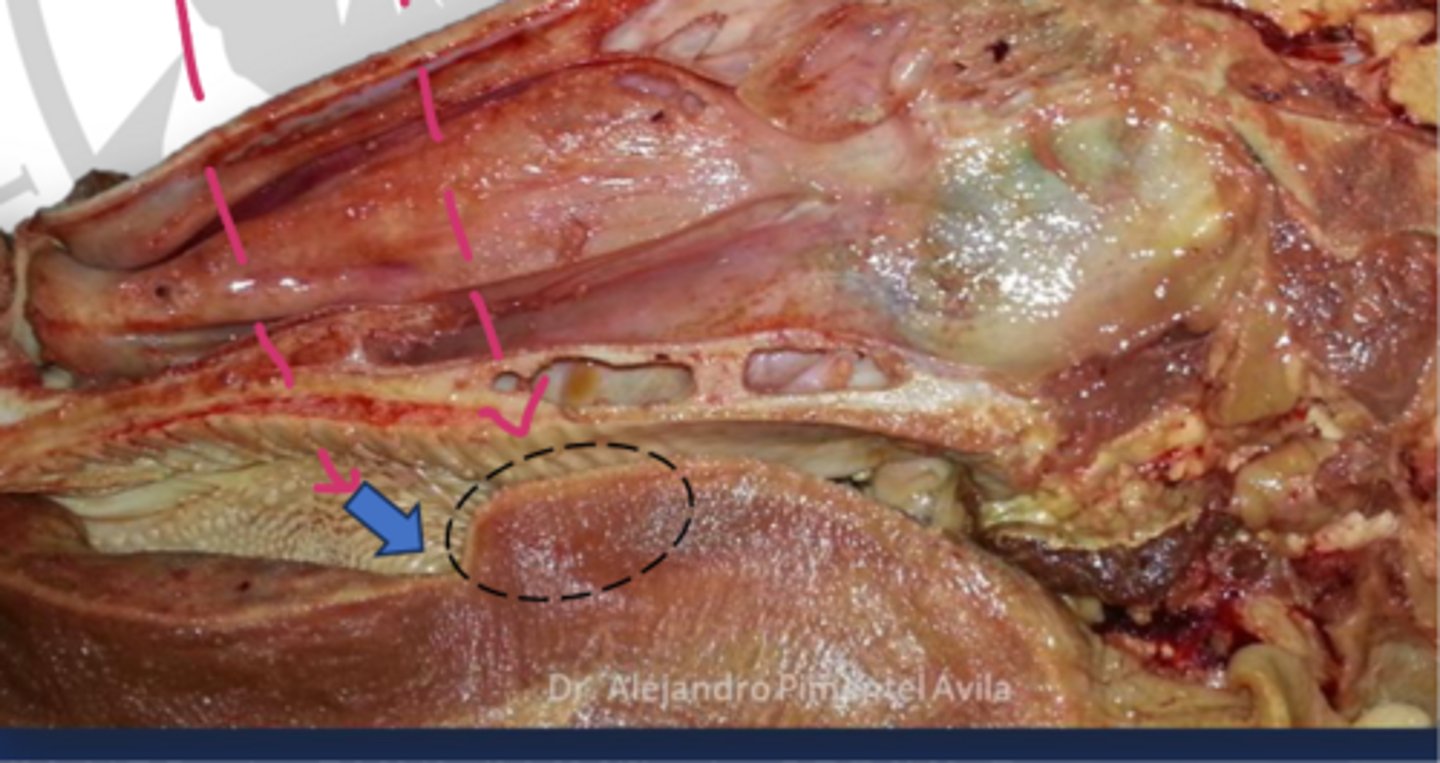
lingual torus
what is indicated by the circles structure
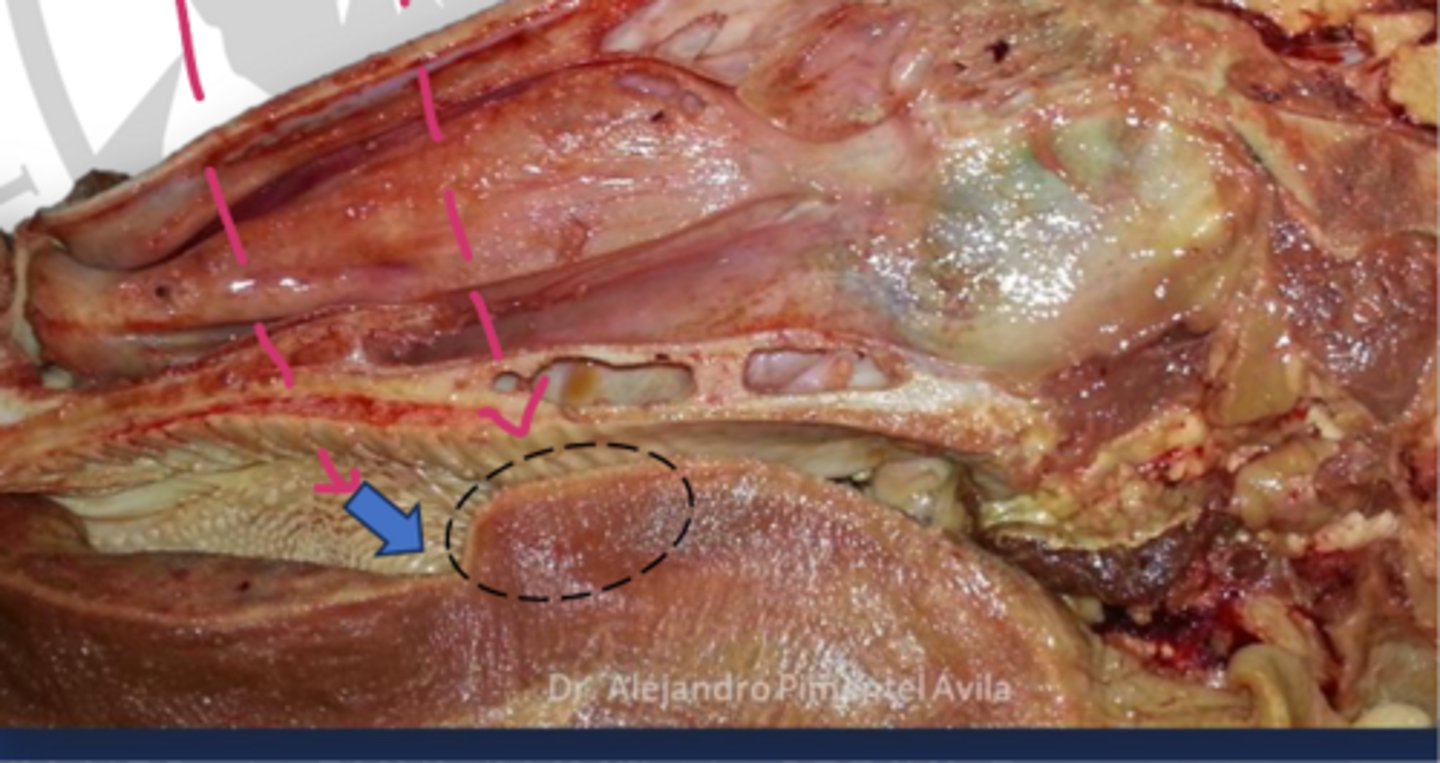
"joint" structure allowing additional movement needed in the apex of the tongue in order to grasp and tear forage
significance of the lingual torus and lingual fossa in ruminants
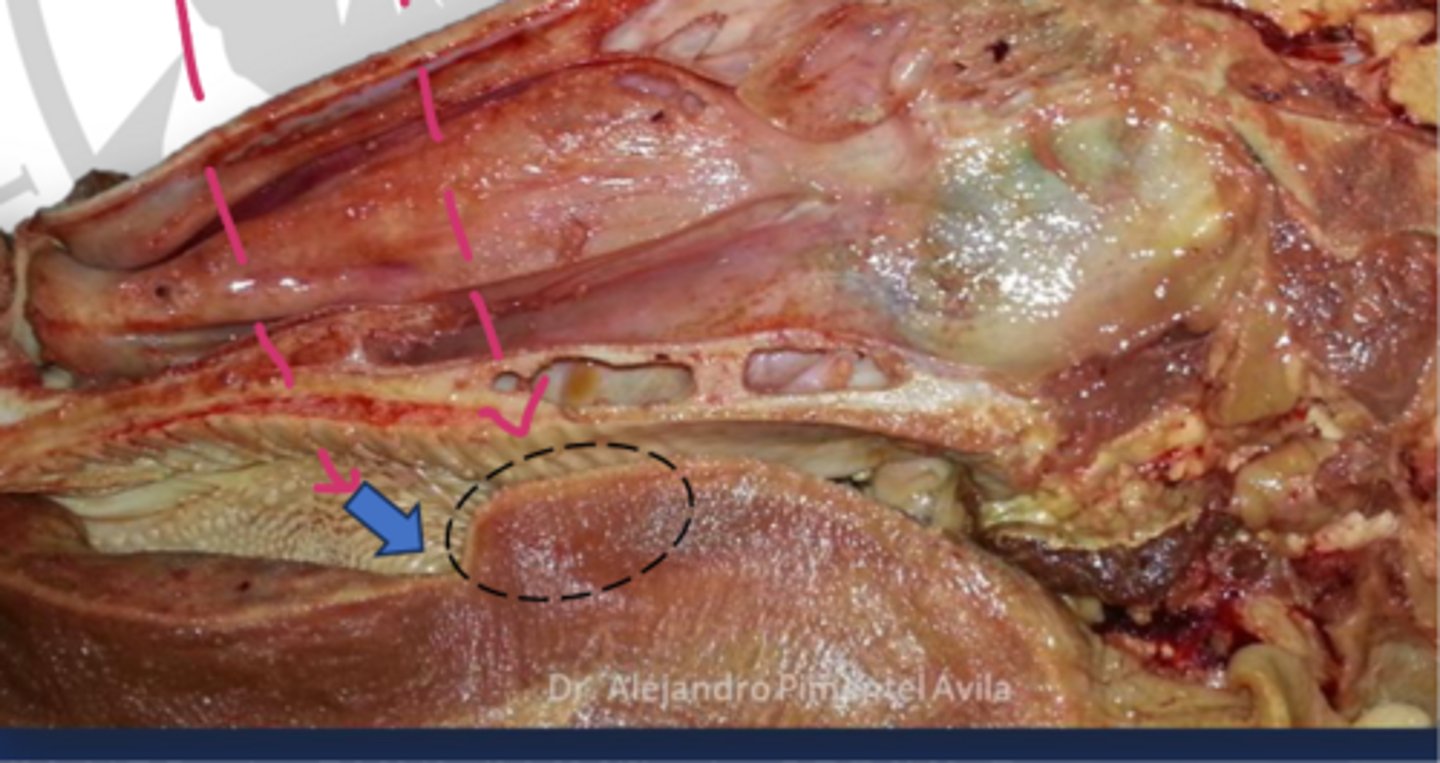
genioglossal mm. to move tongue out of mouth
significance of 1
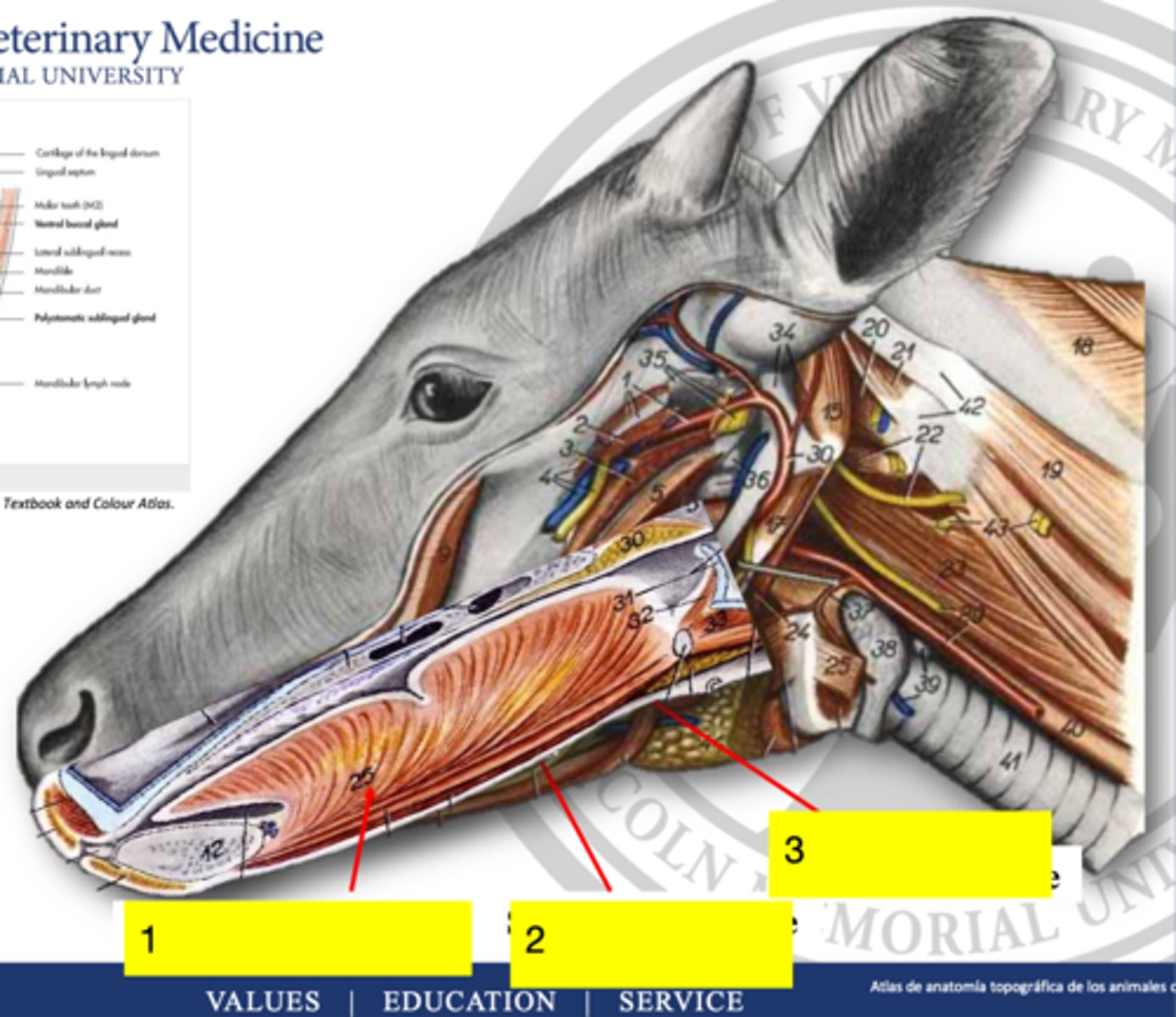
styloglossus mm. to move tongue laterally or assist with pulling it inside
significance of 2
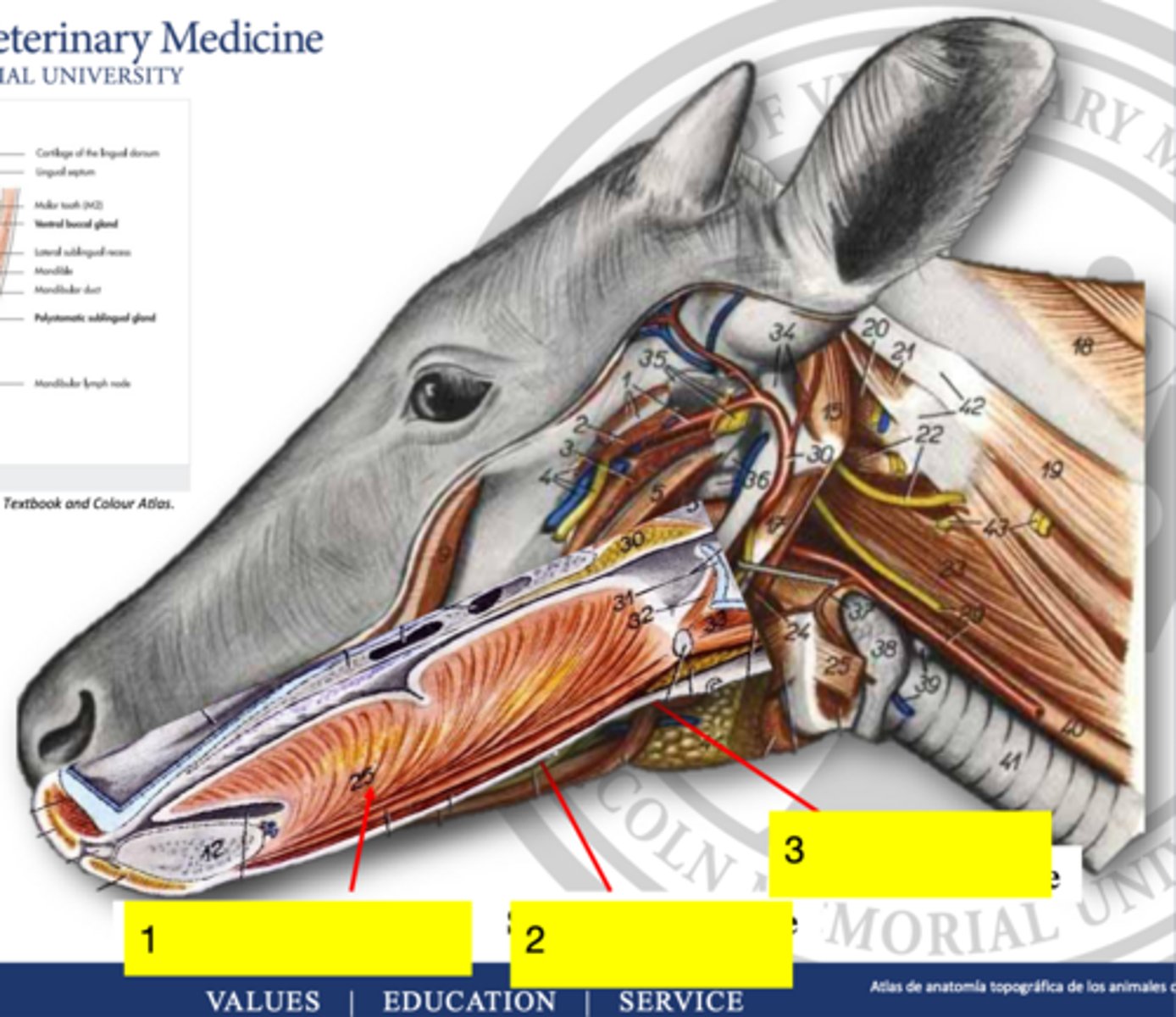
hypoglossal mm. to pull tongue inside mouth
significance of 3
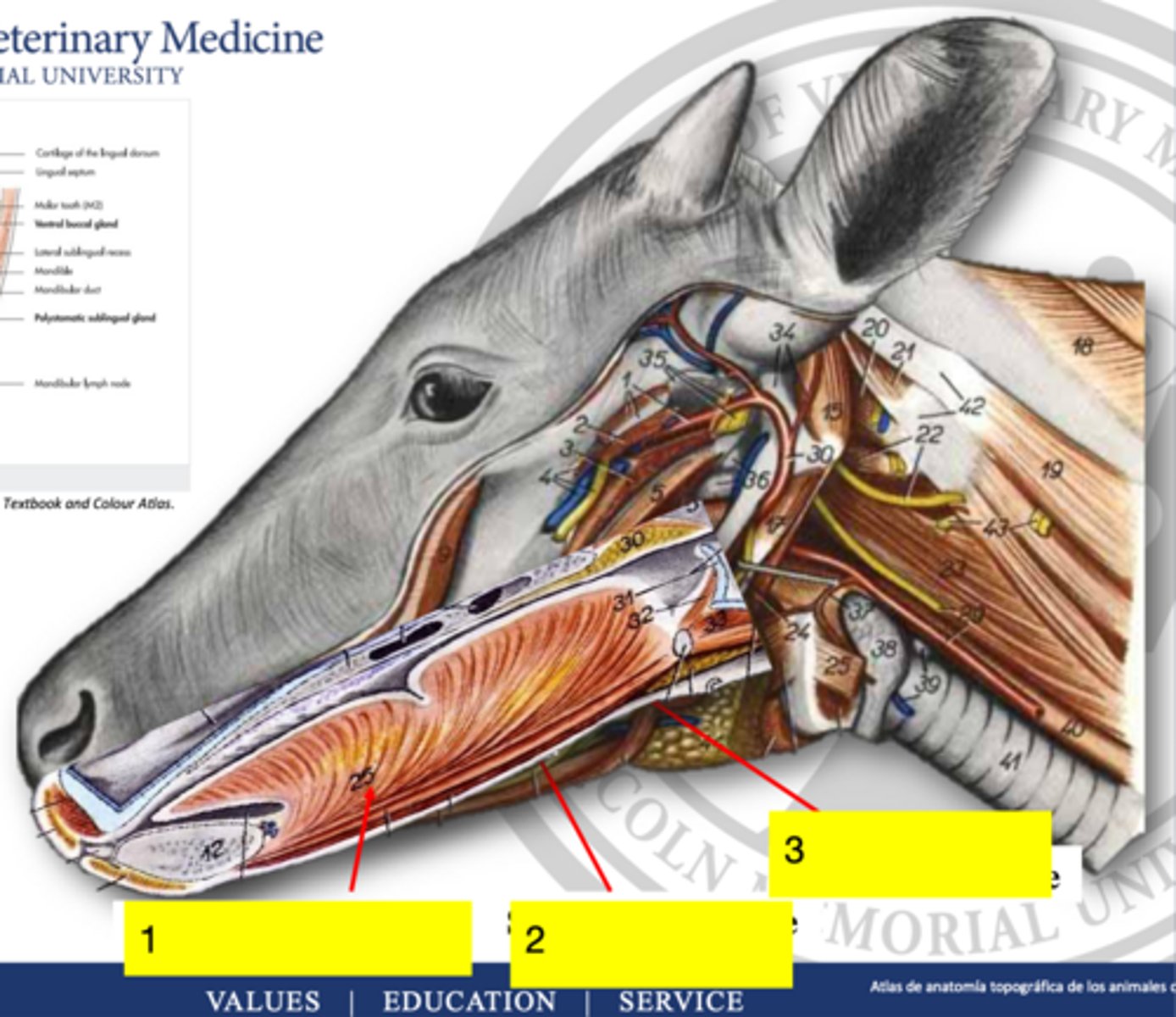
1. heterodont as they have diff types of teeth
2. difiodont as they have a deciduous and permanent set of teeth
3. haplodont as the incisors have a shovel shaped crown
4. braquiodont as some teeth have short crown which cannot be differentiated from the root
5. hipsodont as premolar and molars are long crown teeth
recongize classifications of ruminant teeth
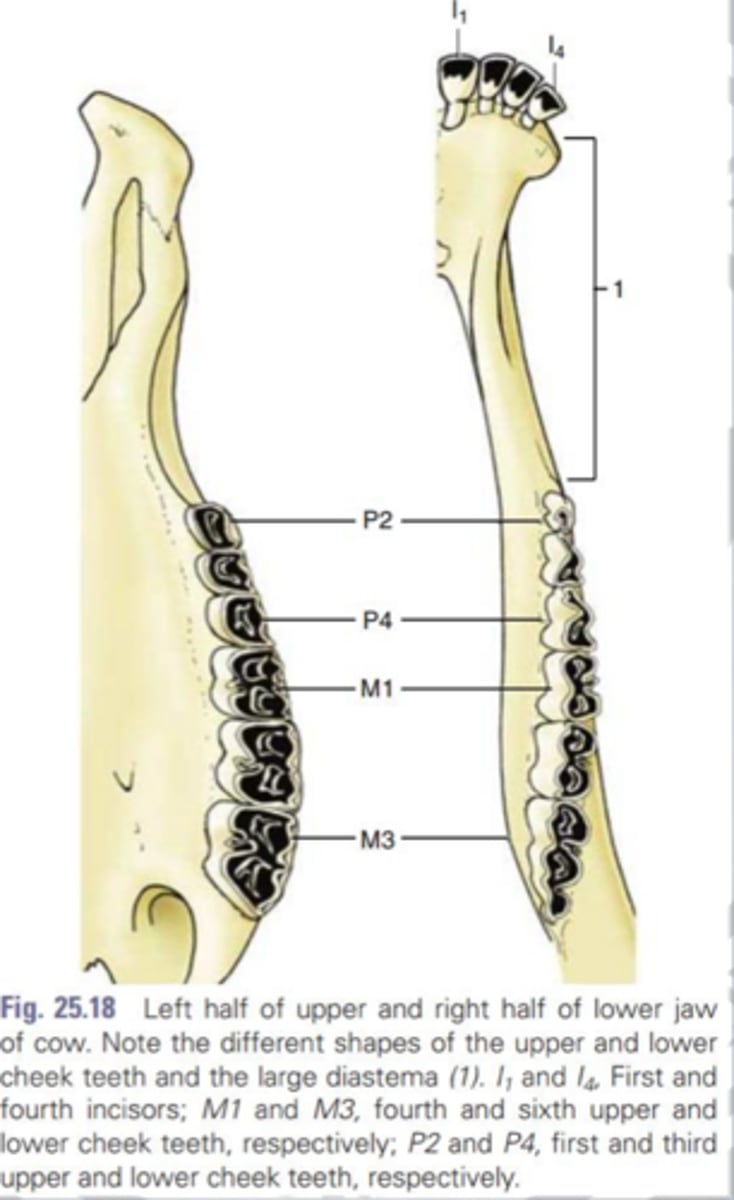
absence of upper incisors and canines in upper jaw
significant difference in teeth of ruminants
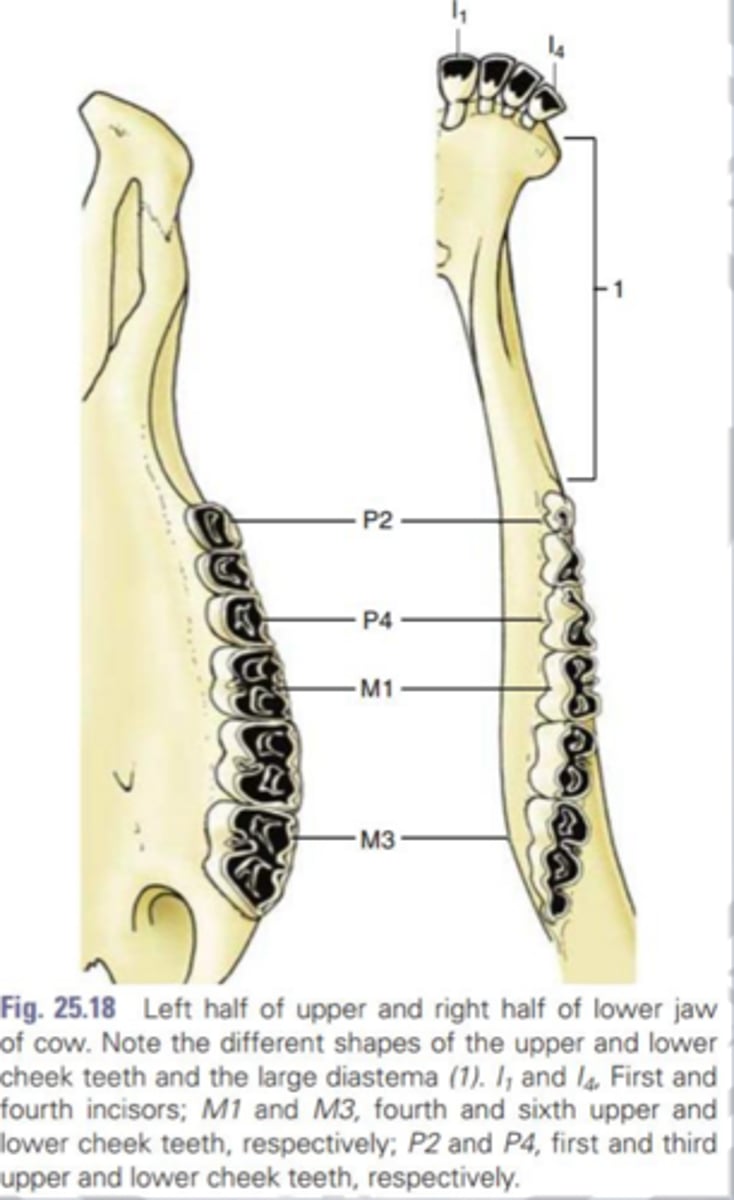
2 (I 0/4, C 0/0, P 3/3, M 3/3) = 32
permanent formula for ruminants
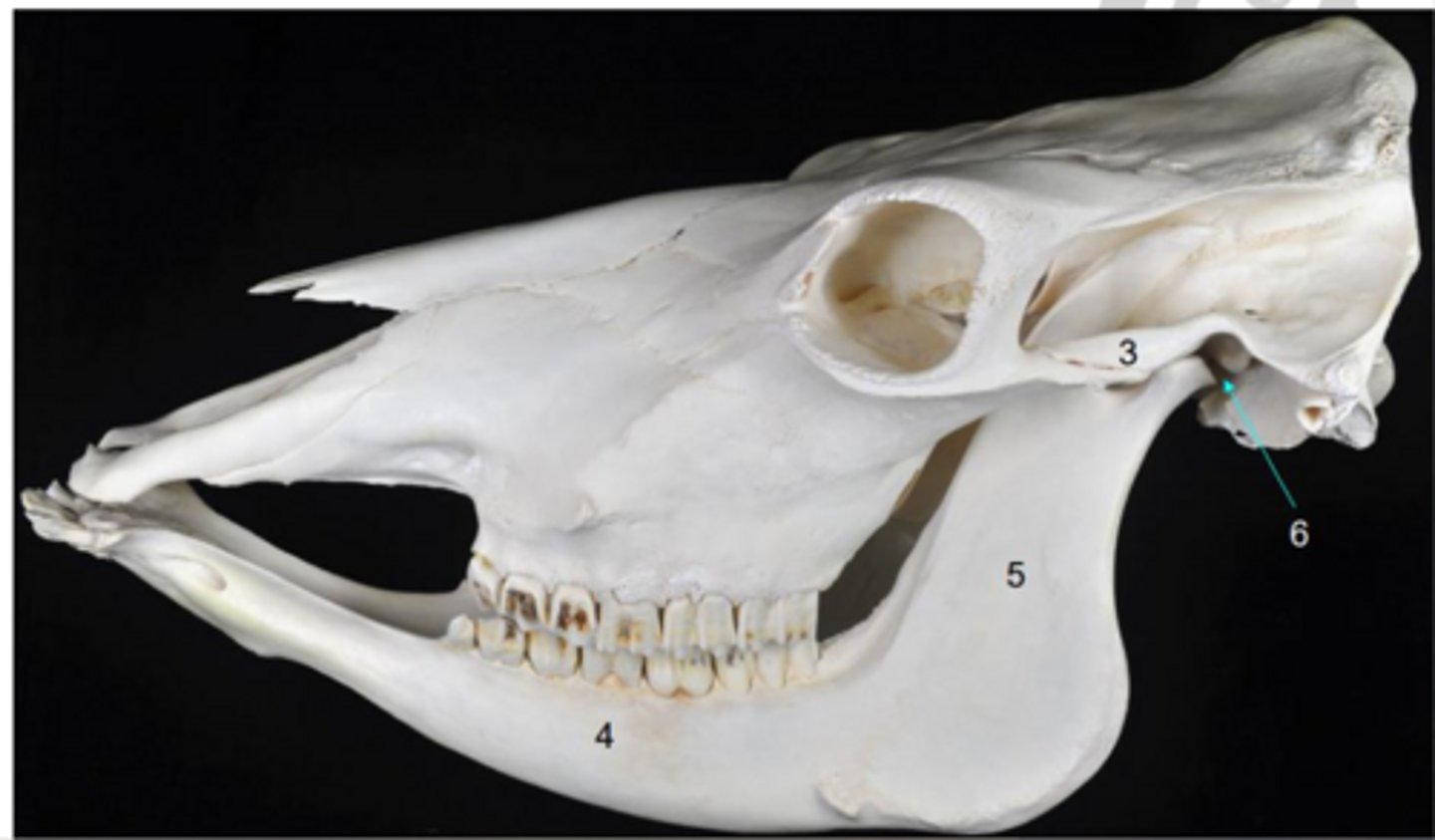
2 (I 0/4, C 0/0, PM 3/3)
deciduous formula for ruminants
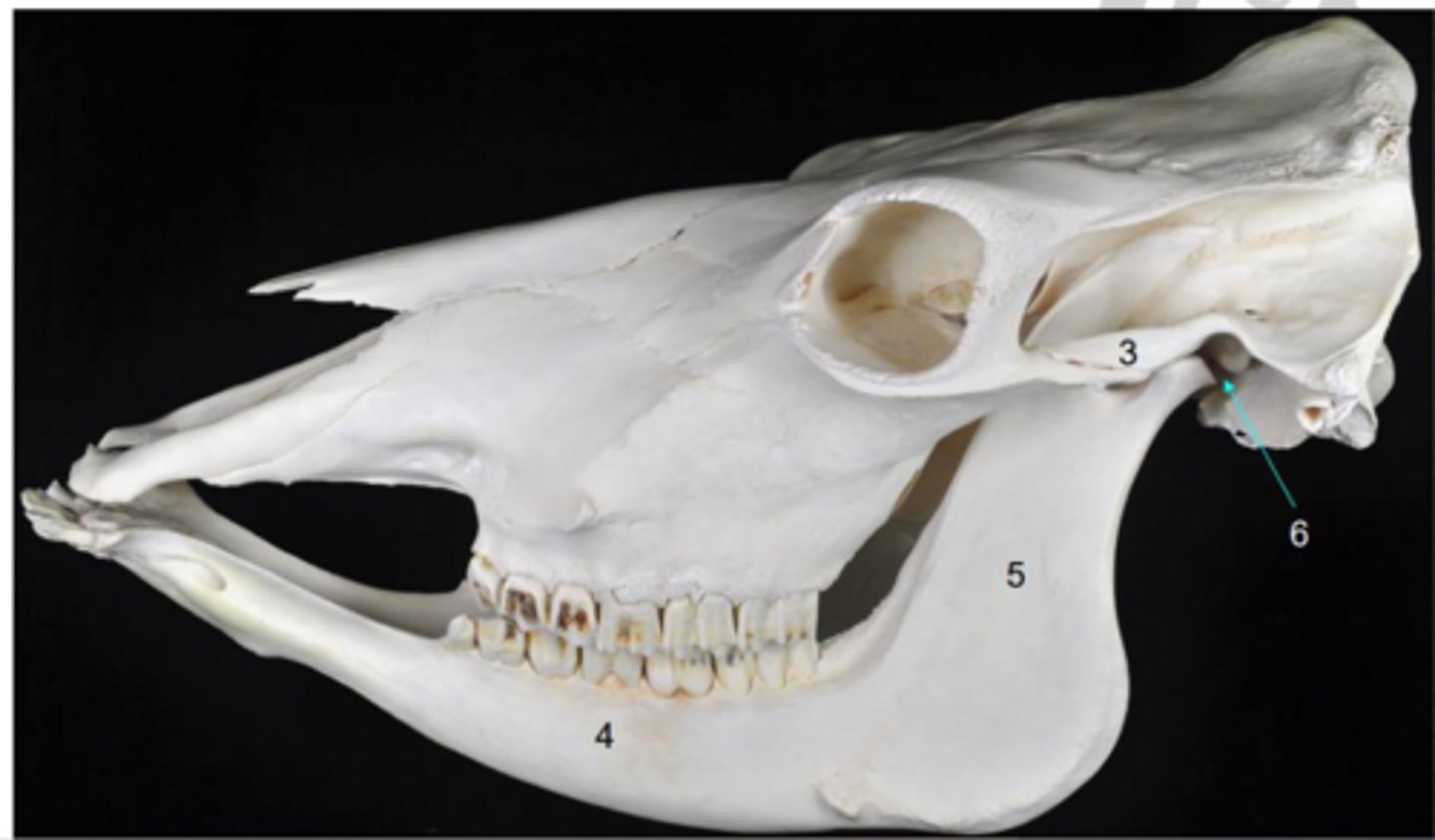
18-24months
when does the first incisor erupt in the ruminant
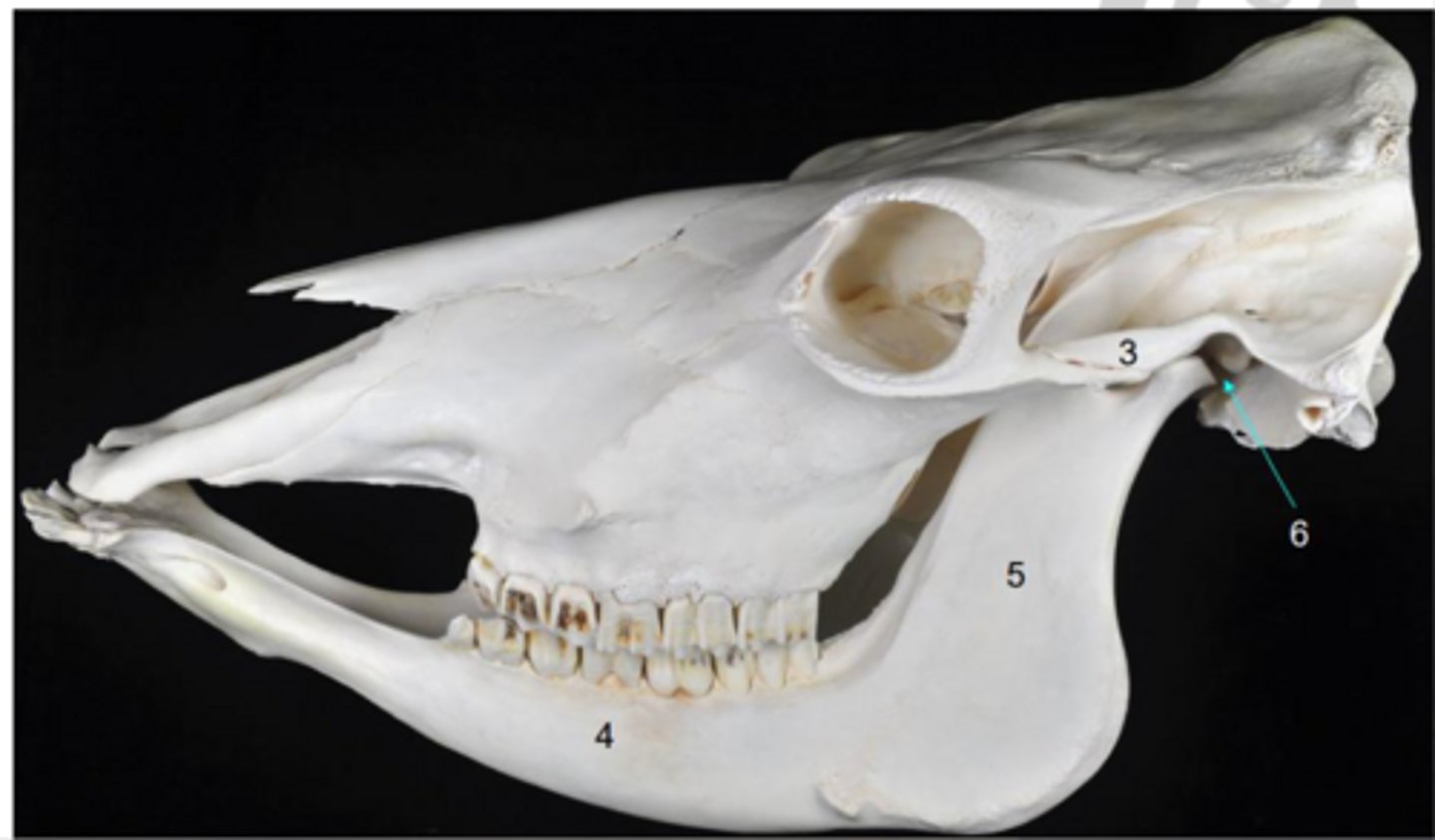
1.5 yr
when does the first incisor become permanent in ruminants
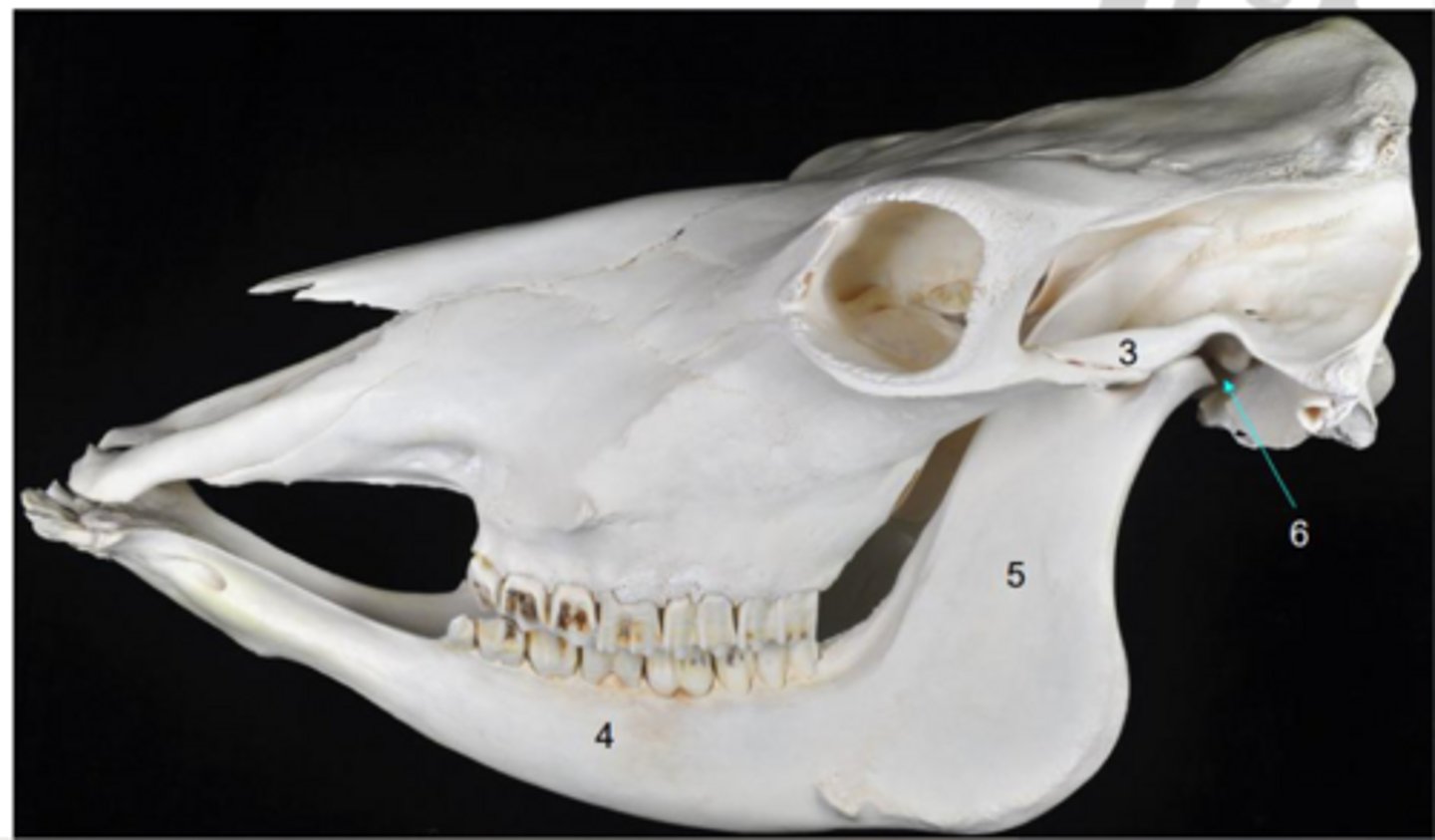
24-30 months
when does the second incisor erupt in ruminants
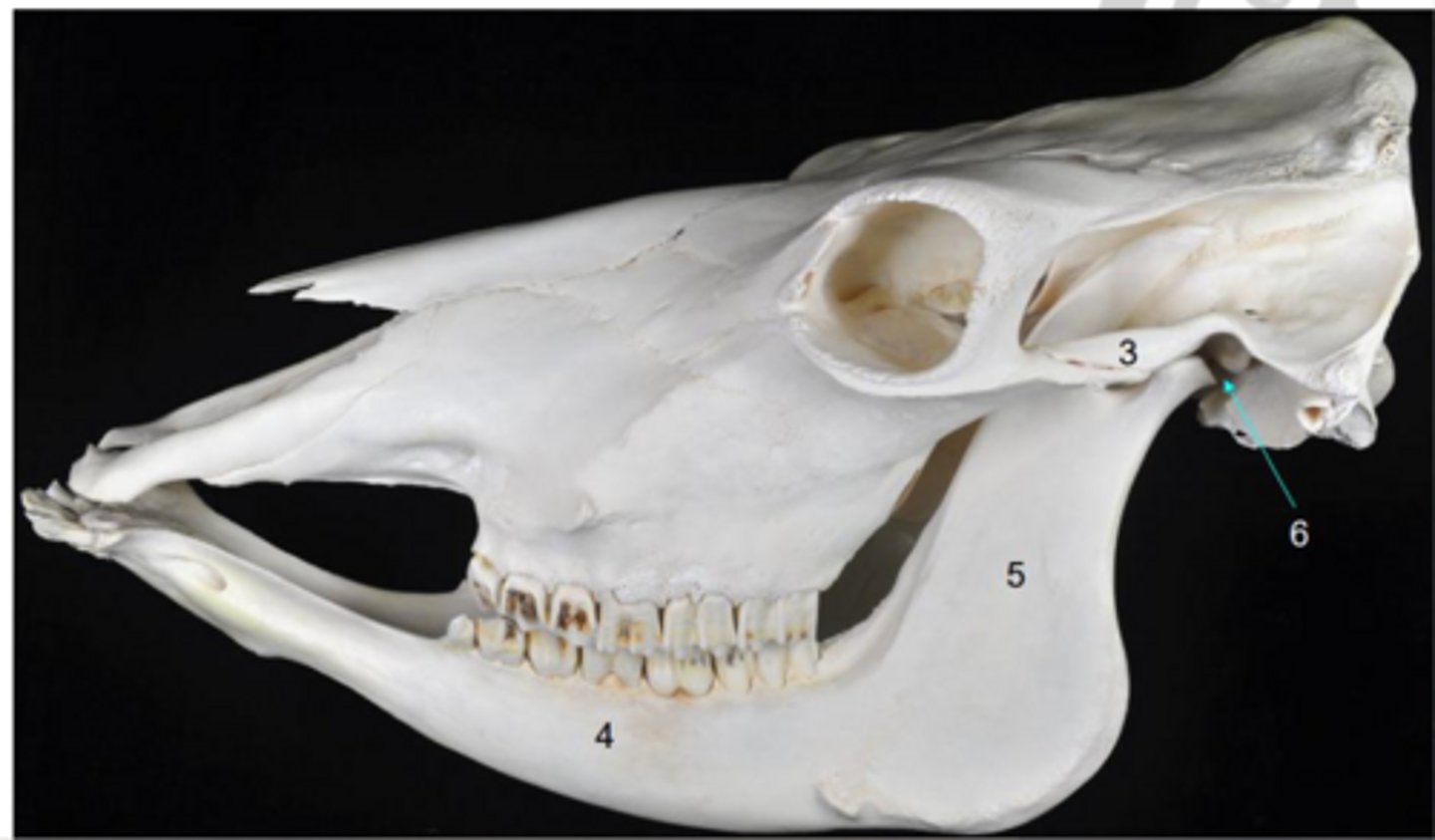
2 yrs
when does the second incisor become permanent in ruminants
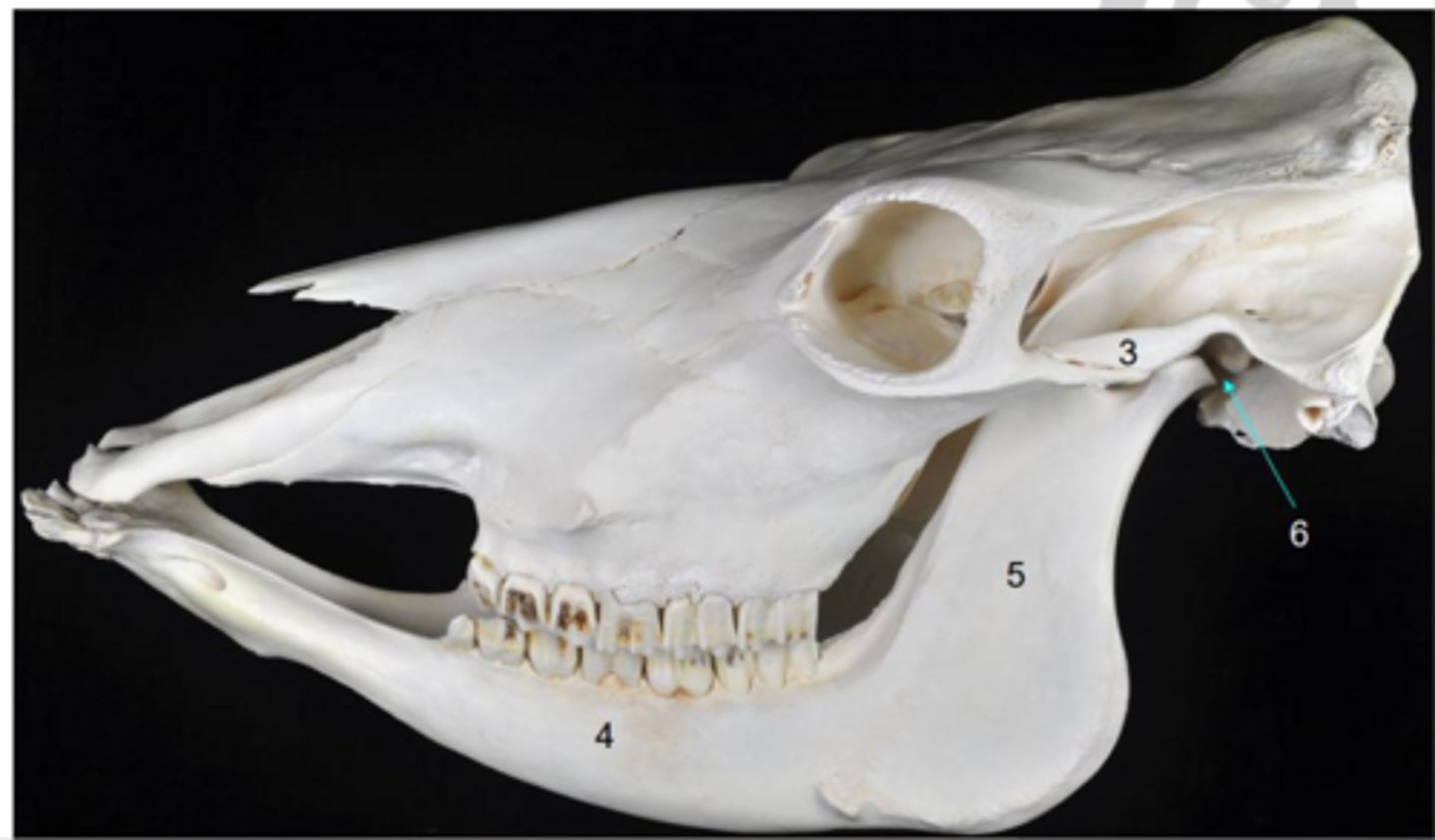
36 months
when does the third incisor erupt in ruminats
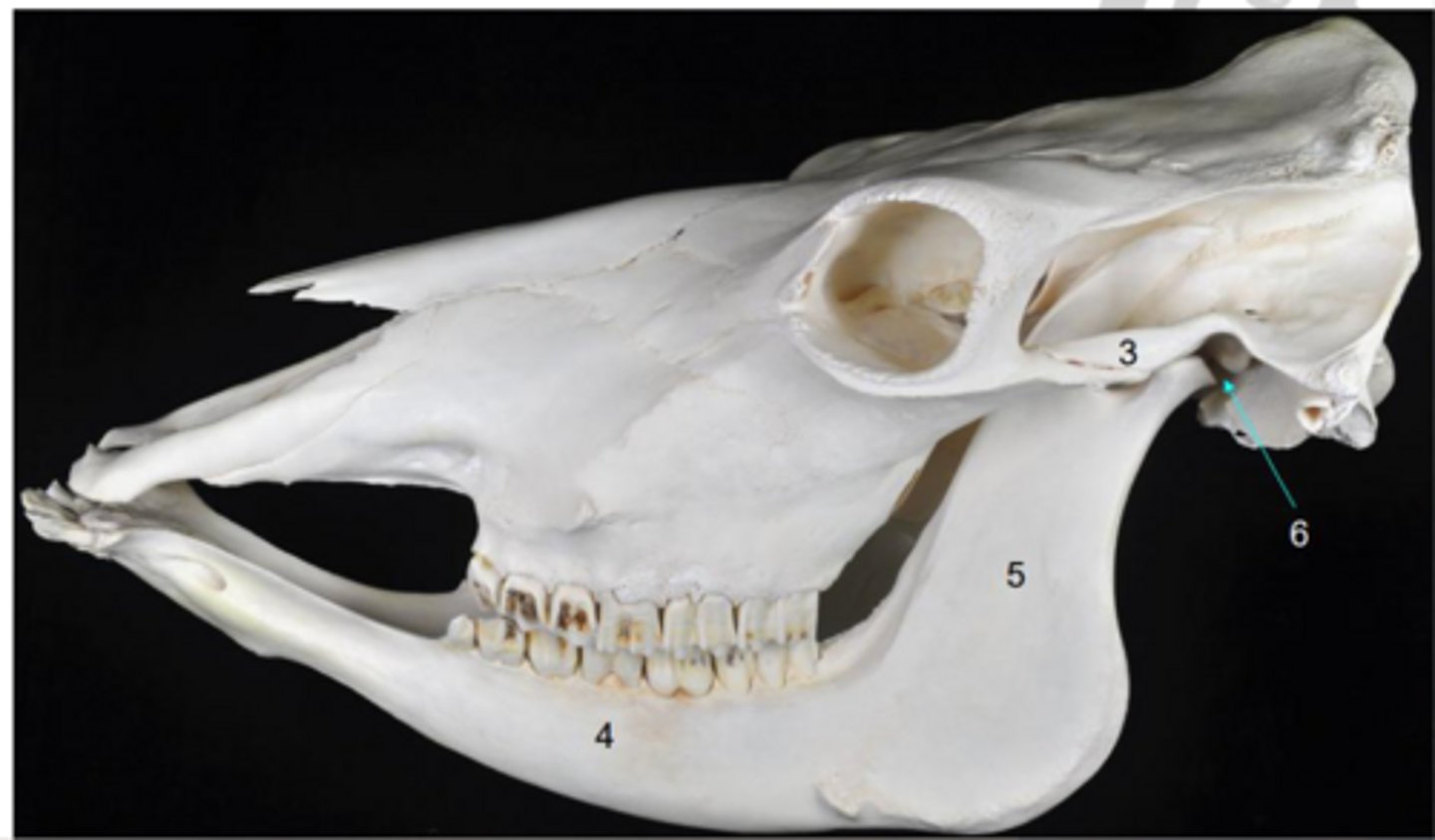
2.5yrs
when does the third incisor become permanent in ruminants
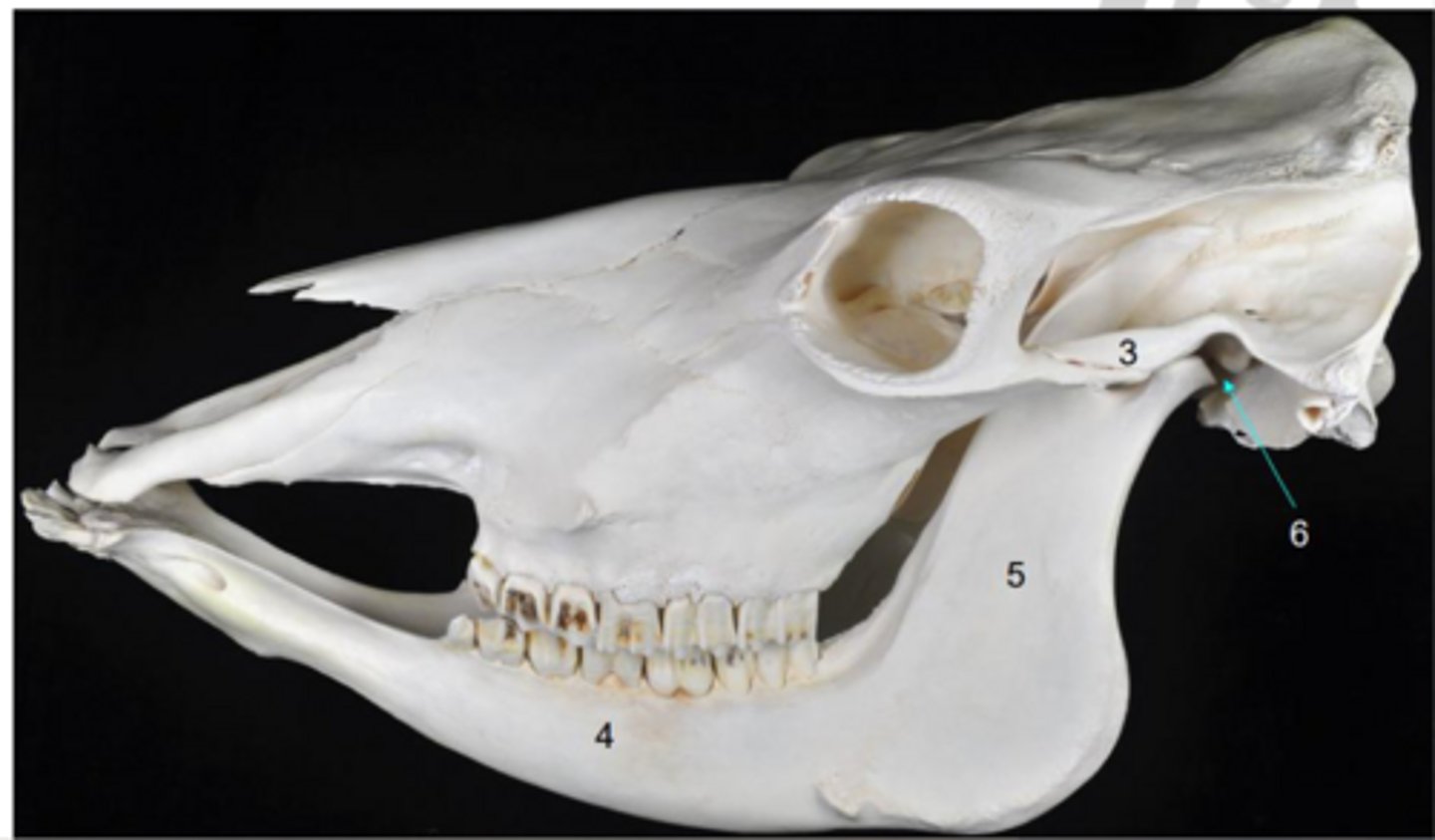
42-48 months
when does the fourth incisor/"migrating canine" erupt in ruminants
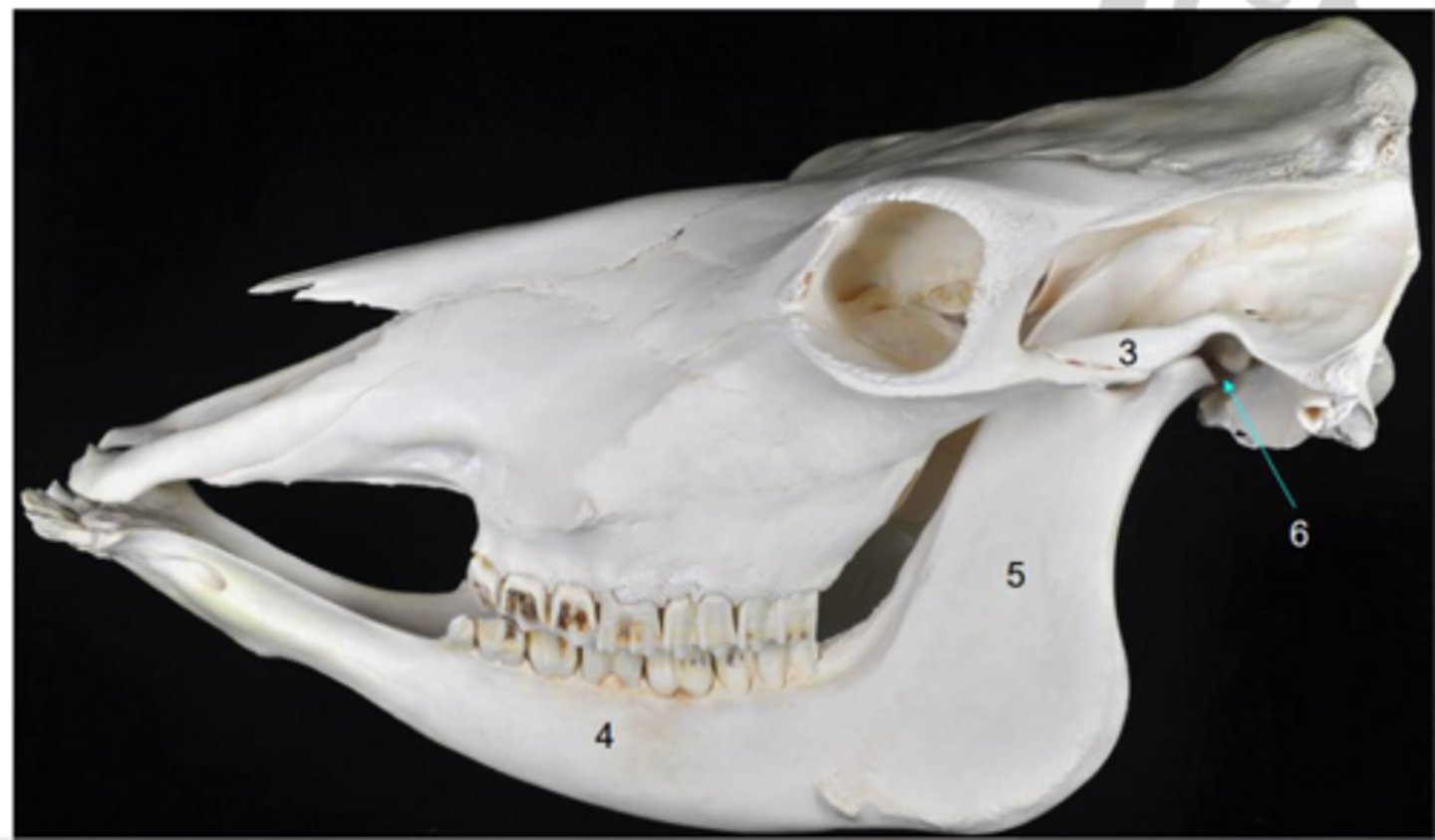
3 yrs
when does the fourth incisor/"migrating canine" become permanent in ruminants
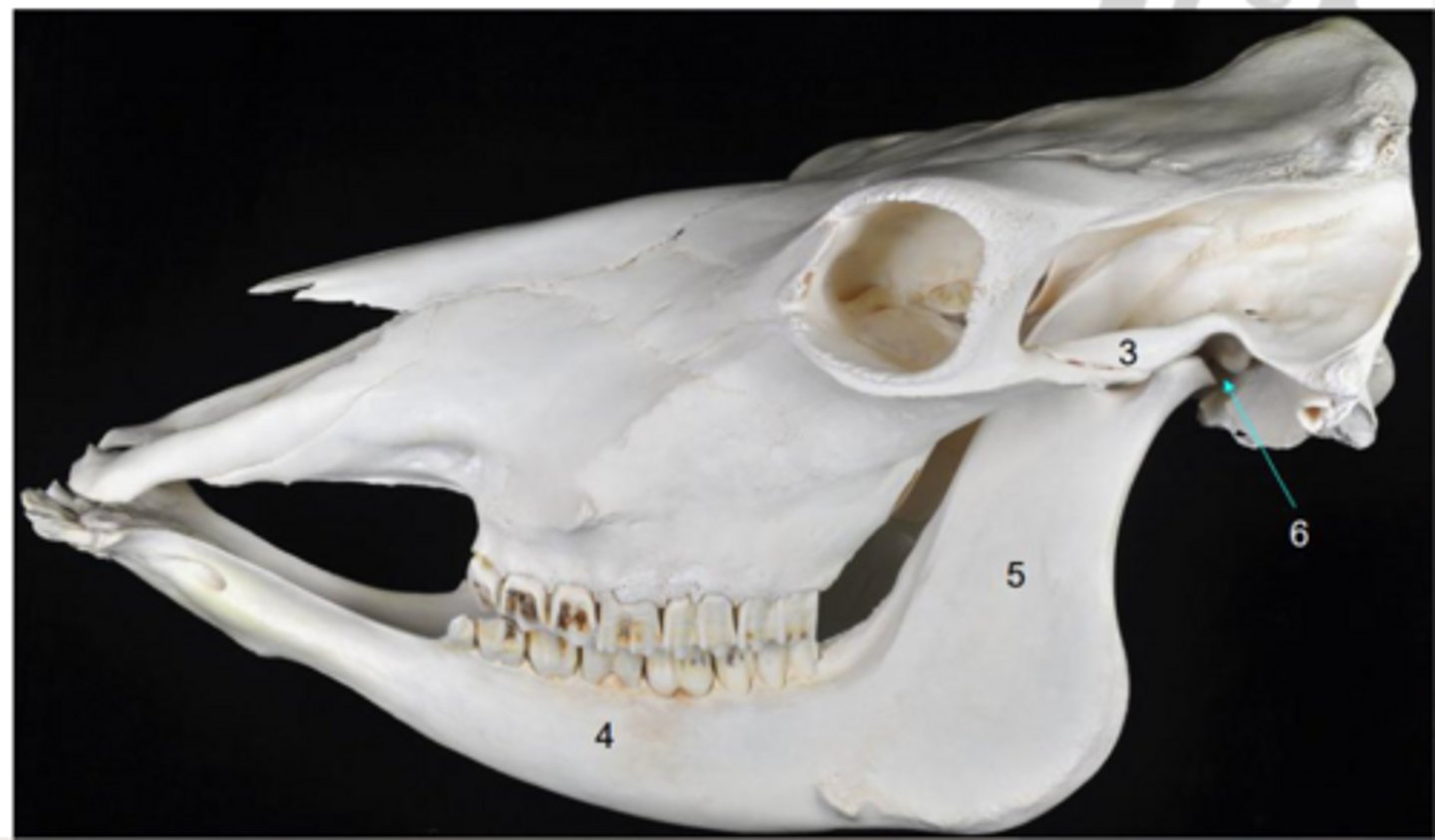
they typically erupt at an angle and straighten as they grow
when permanent incisors erupt....
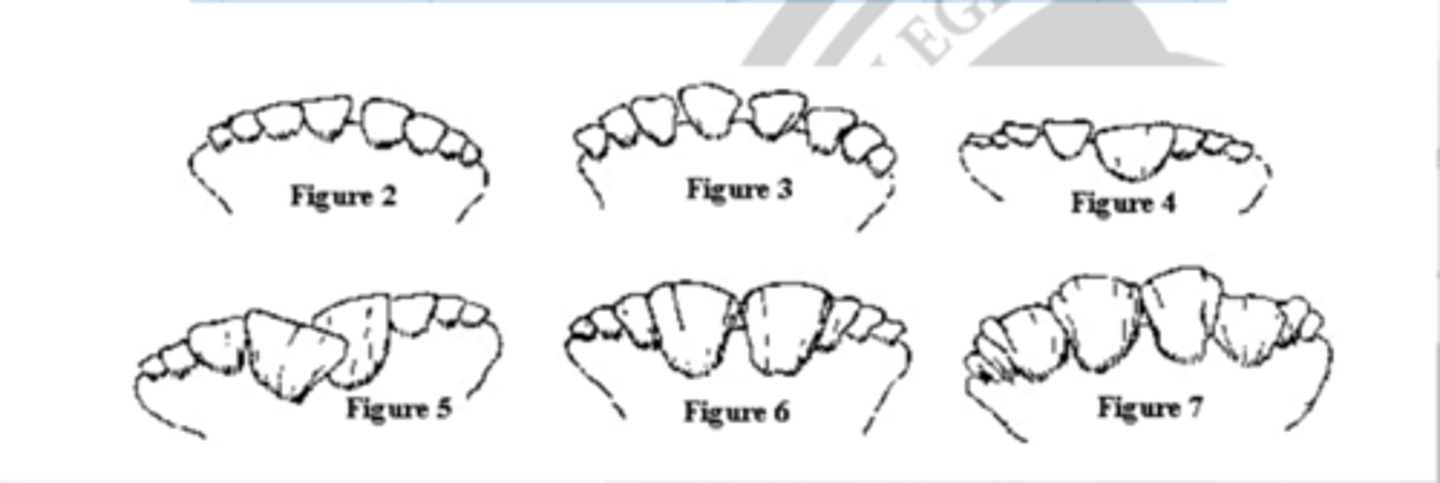
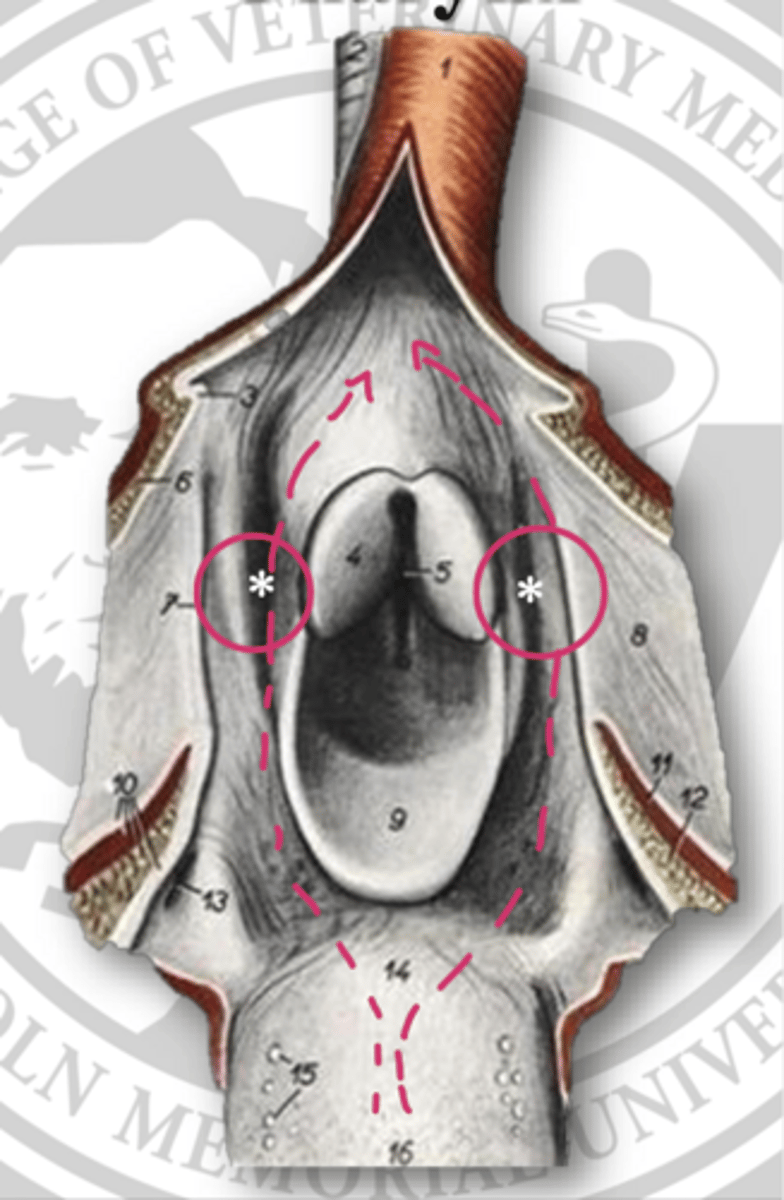
continuation of oral cavity into laryngopharynx found ventral to the soft palate
what is the oropharynx
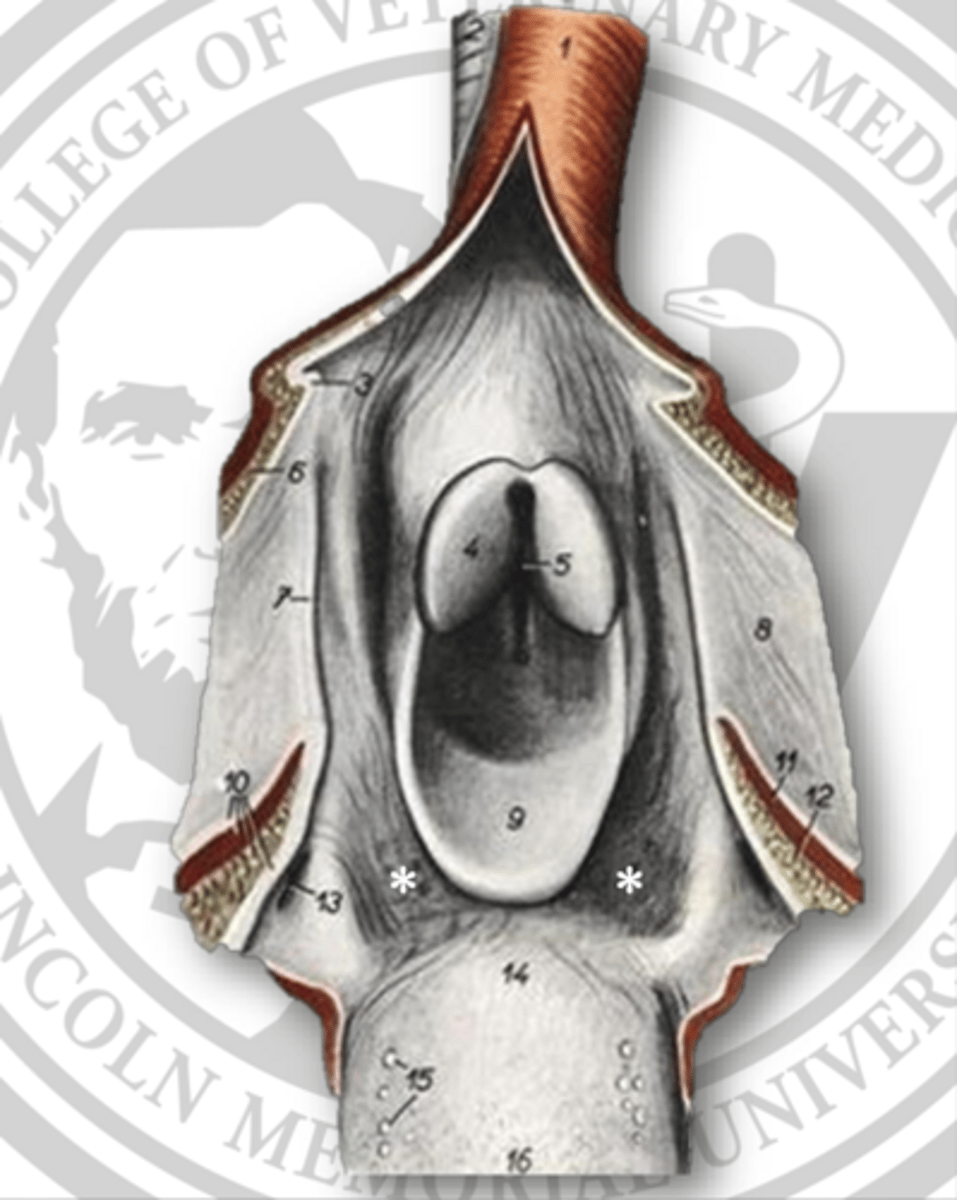
glossoepiglottic fold btwn epiglottis and tongue
what is indicated by 9
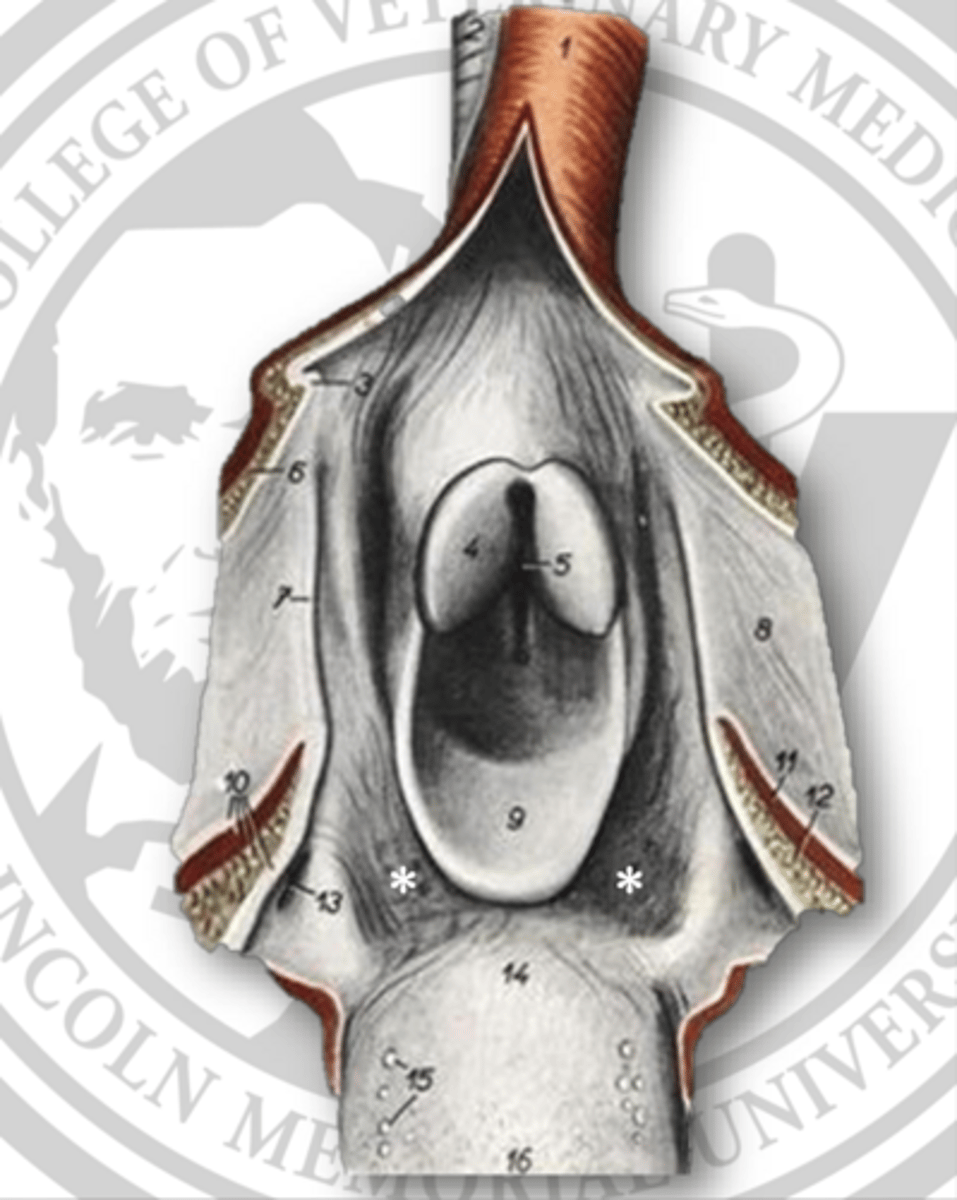
epiglottic vallecula
what is indicated by the *
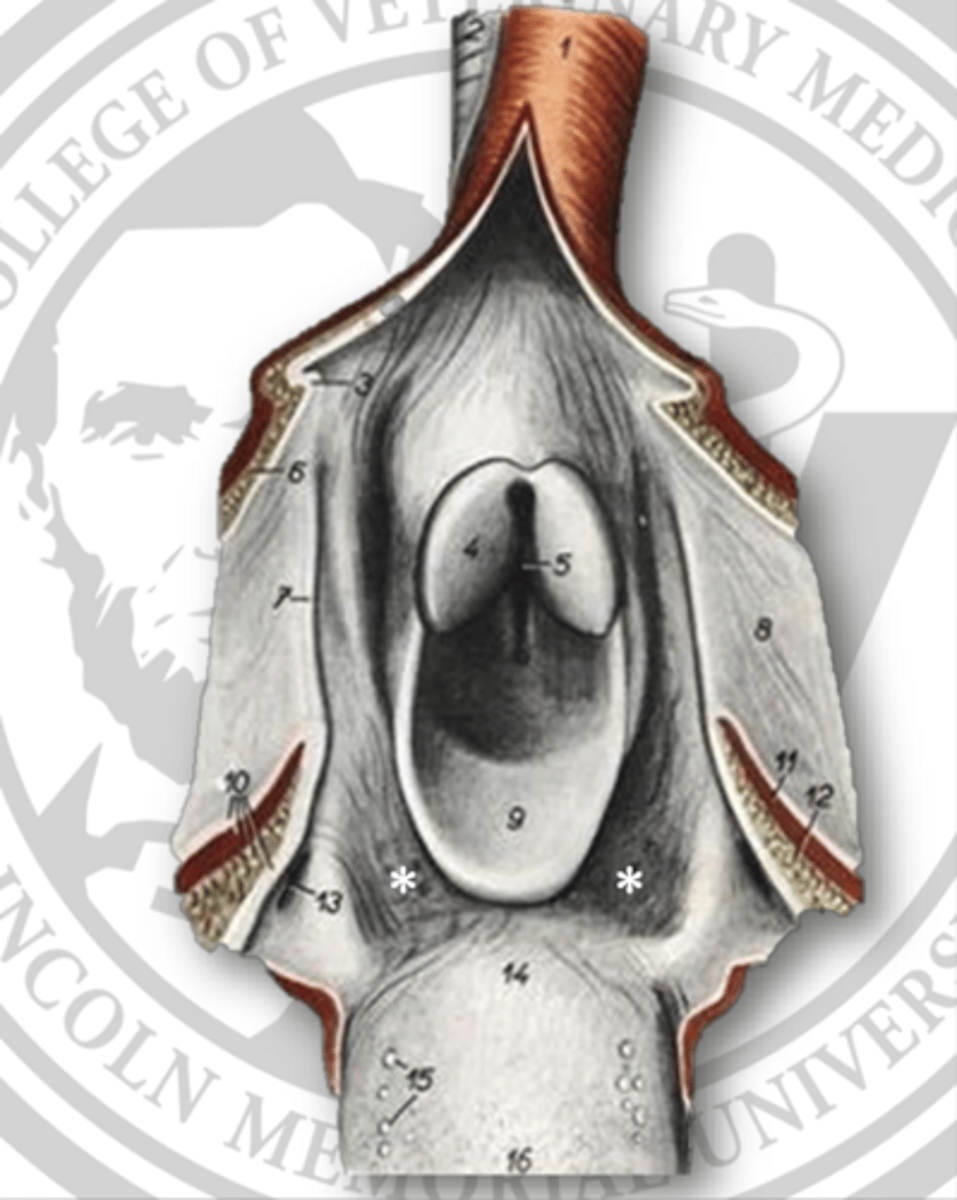
tonsillar fossa....hides the
13
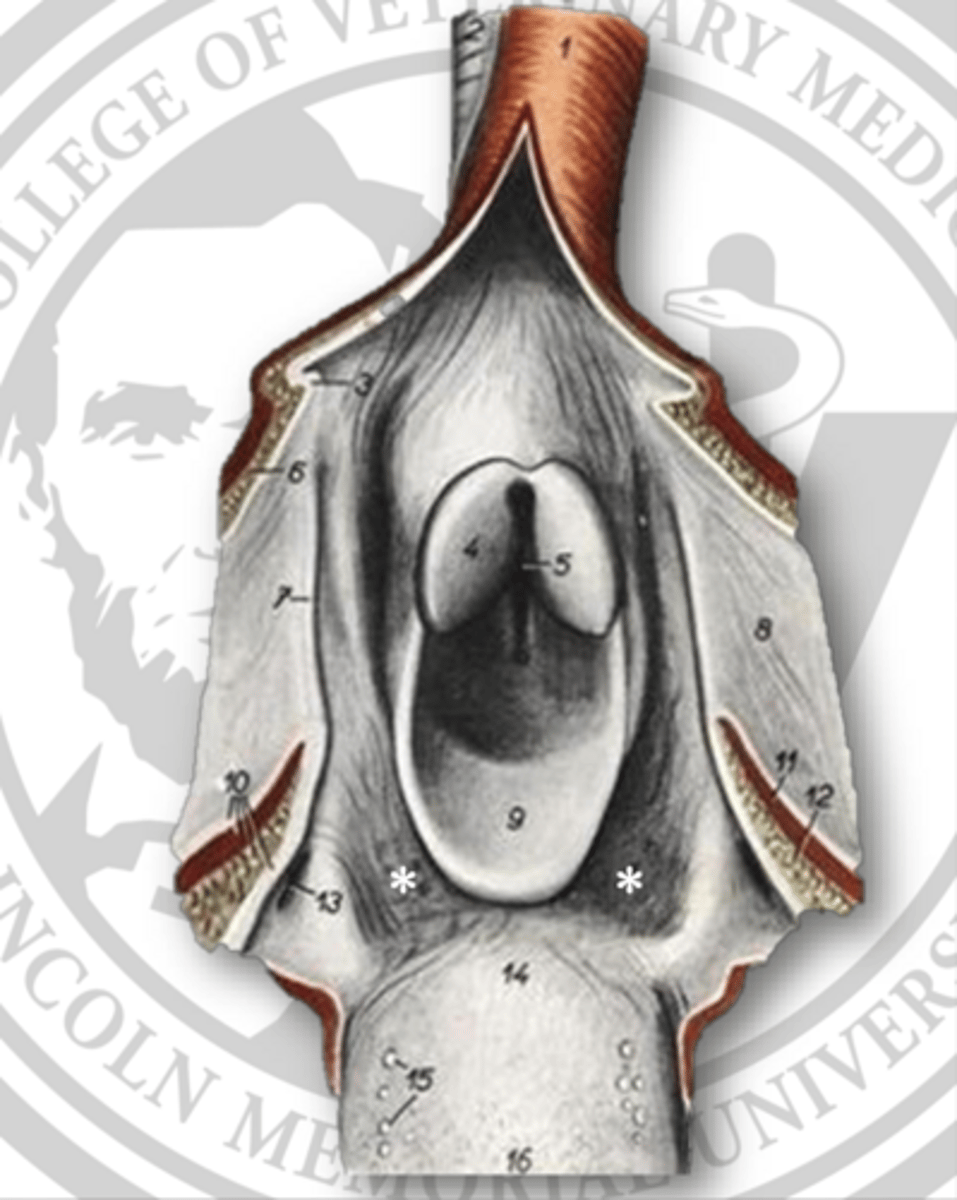
piriform recesses...continuation of epiglottic vallecula
what is represented by the *
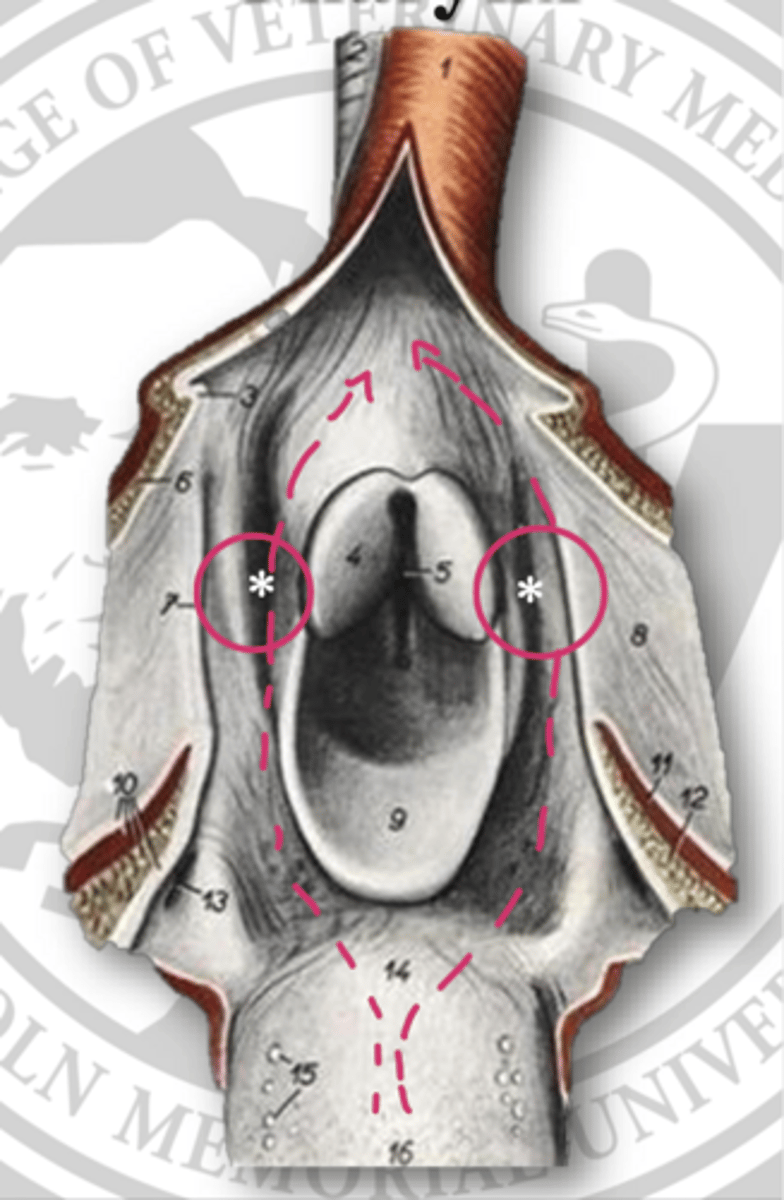
pharyngoesophageal limen/fold
within the ruminant larngopharynx, there is no ____
150L/30-40gal
cattle produce ____ liters of saliva per day
1. parotid
2. mandibular
3. monosomic and polystomatic sublingual
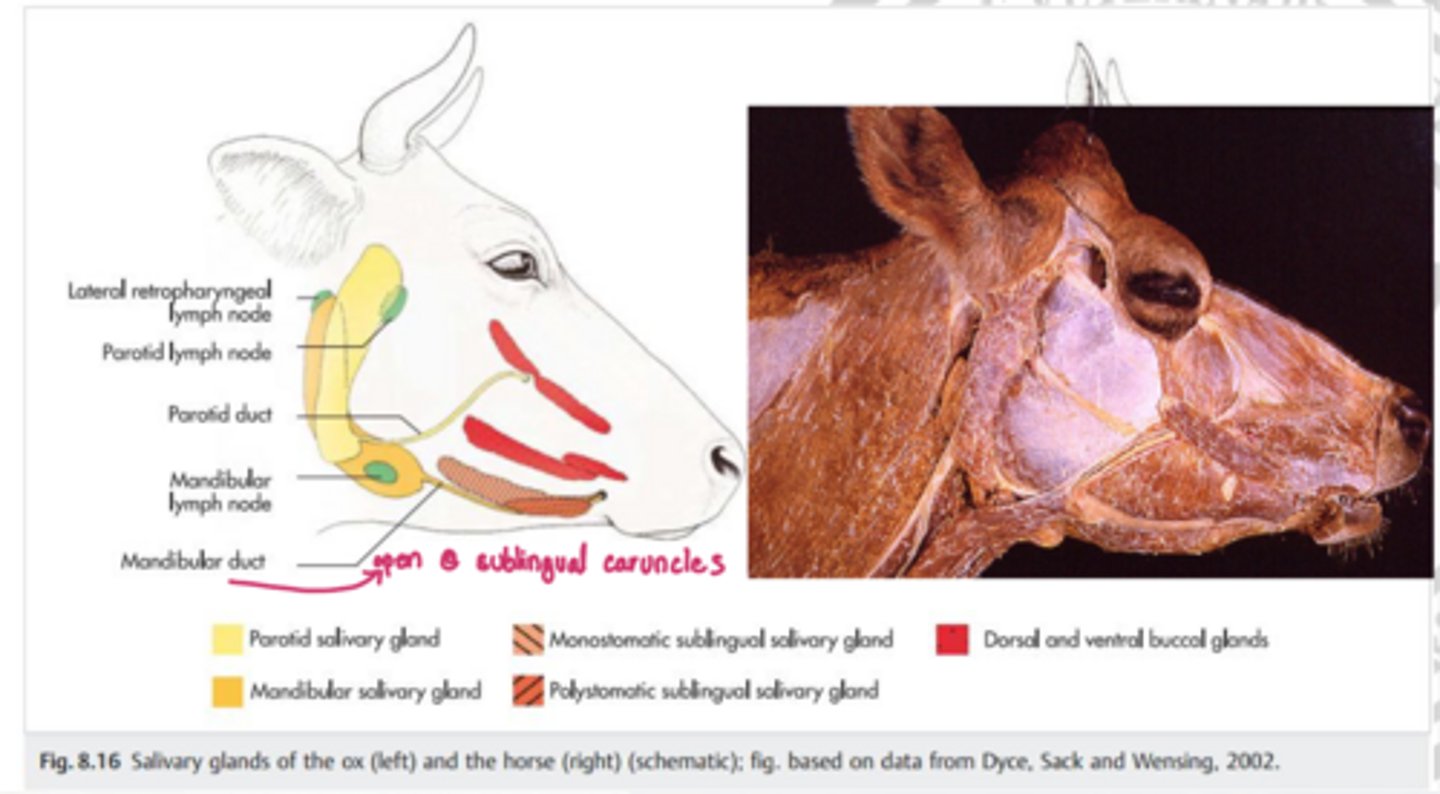
what are the major salivary glands in cattle
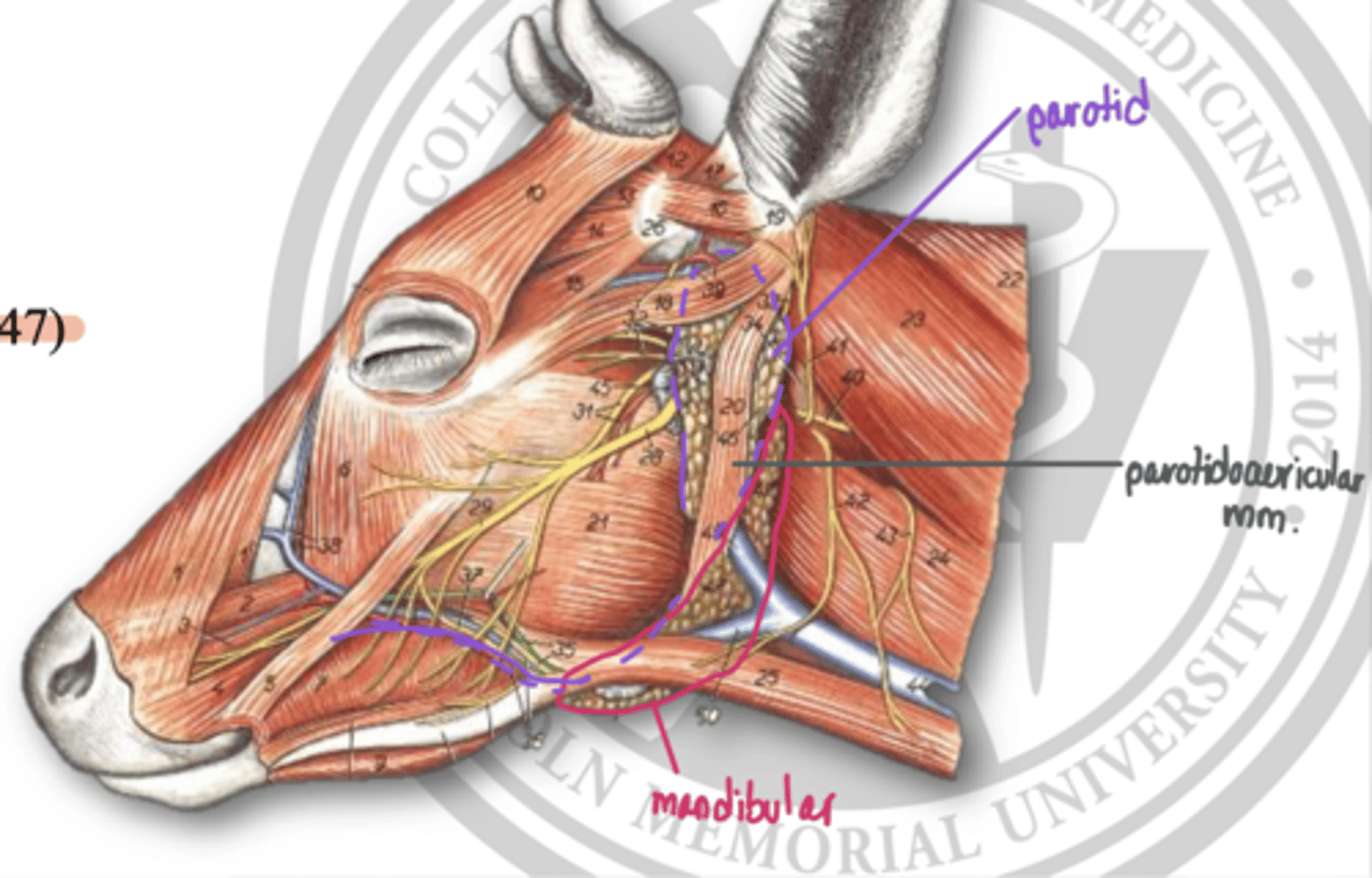
mandibular salivary gland
what is the largest salivary gland in ruminants
1. labial
2. palatine
3. bucal---->dorsal, intermediate***, and ventral
what are the minor salivary glands in ruminants
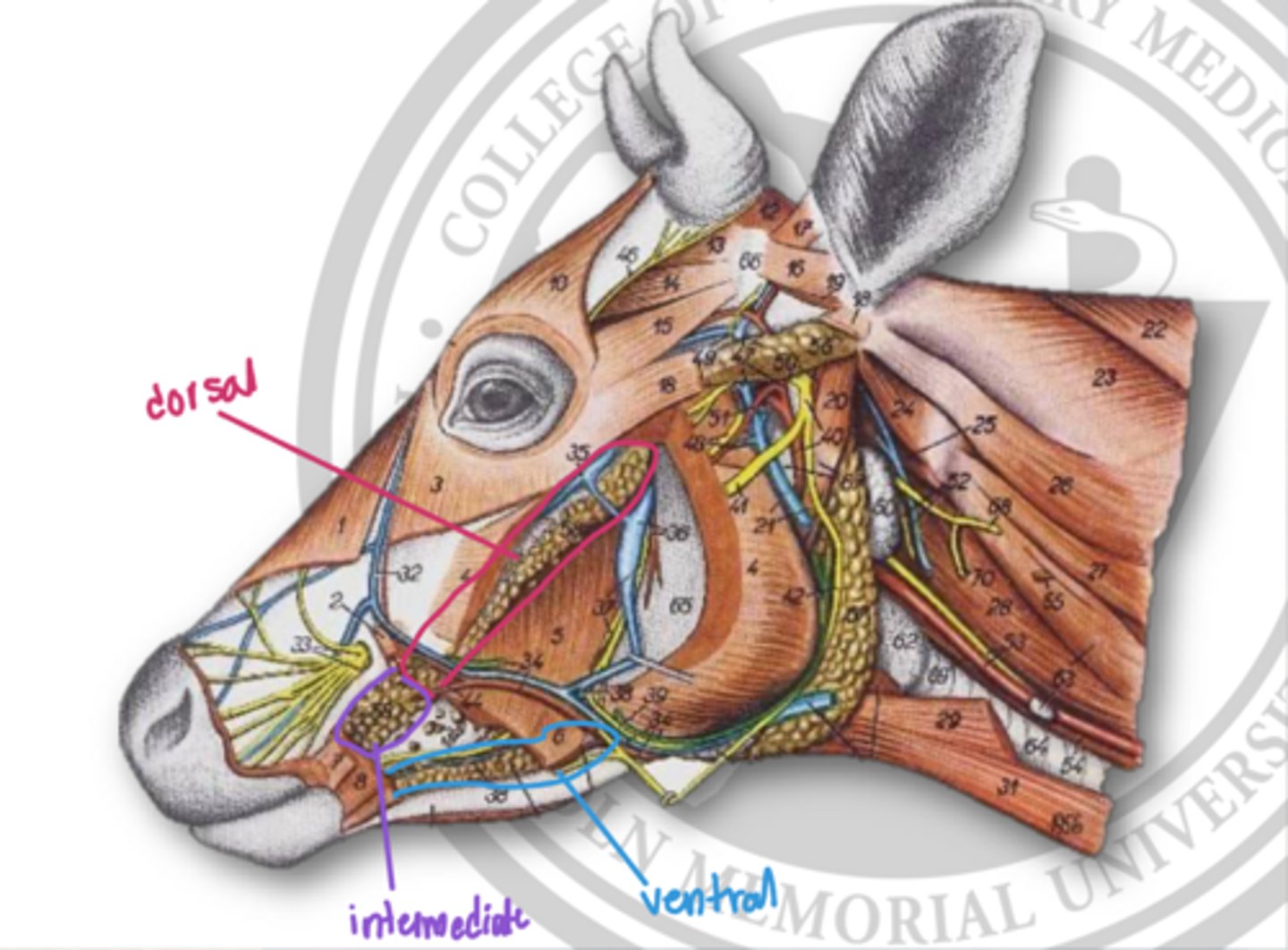
reviewed
review this diagram of the salivary glands of the ruminant