3.2 - financial accounts and structure, depreciation
 Call Kai
 Learn
Learn Practice Test
 Spaced Repetition
 Match
Match Flashcards
 Knowt Play
1/17

There's no tags or description
Looks like no tags are added yet.
Name | Mastery | Learn | Test | Matching | Spaced | Call with Kai |
|---|
No analytics yet
Send a link to your students to track their progress
18 Terms
formula total costs
variable + fixed
formula sales revenue
price x quantity
final accounts
Financial statements prepared at the end of an accounting period
balance sheet
profit or loss statement.
internal shareholder interest in final accounts
shareholders
to see where their money was spent
to see how well their investments have performed
employees
to asses the likelihood of pay increase and job security
managers
to judge operations efficiency
to set targets and plan
external shareholder interest in final accounts
competitors
to compare financial performance
government
to examine for tax purposes
financiers
to assess credibility of debt repayment
suppliers
to decide whether trade credit should be approved
types of intangible assets
brands
patents
copyrights
reputation
trademarks
statement of profit or loss
A financial statement that summarizes revenues, costs, and expenses during a specific period, showing the company's profitability.
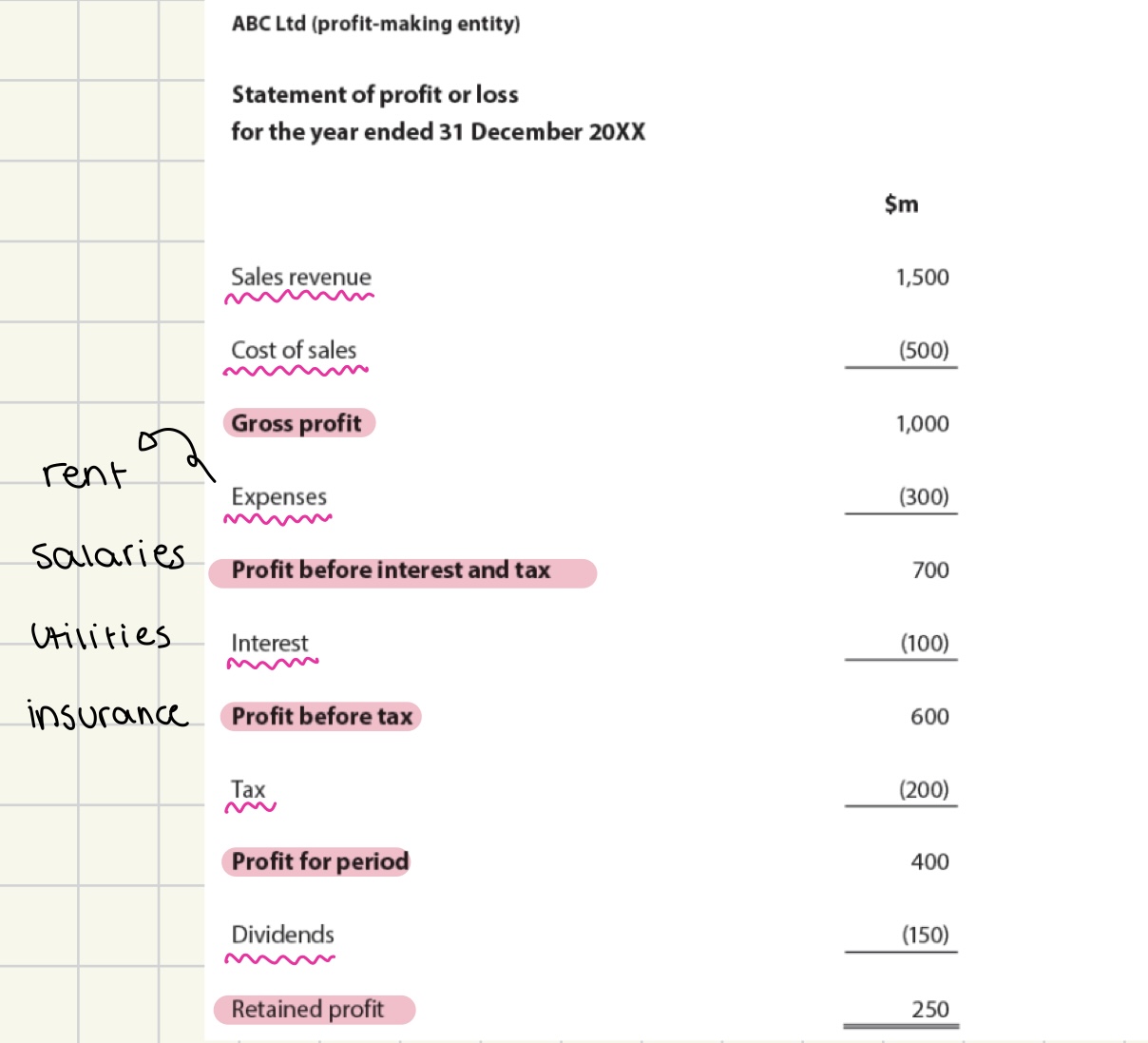
improving gross profit
increasing sales revenue
increasing selling price
selling greater quantities
reducing cost od sales
cheaper suppliers
buying in bulk
improving profit before interest and tax
reduce expenses
move to cheaper location
install energy efficient equipment
find cost-effective suppliers
improving gross surplus
increase funding
sponsors and fundraising
increase sales revenue
increase selling price
sell greater quantities
reduce cost of sales
cheaper suppliers
buy in bulk
improving surplus before interest and tax
reduce expenses
seek volunteers to reduce staffing costs
move to cheaper location
install energy efficient equipment
find cost-effective suppliers
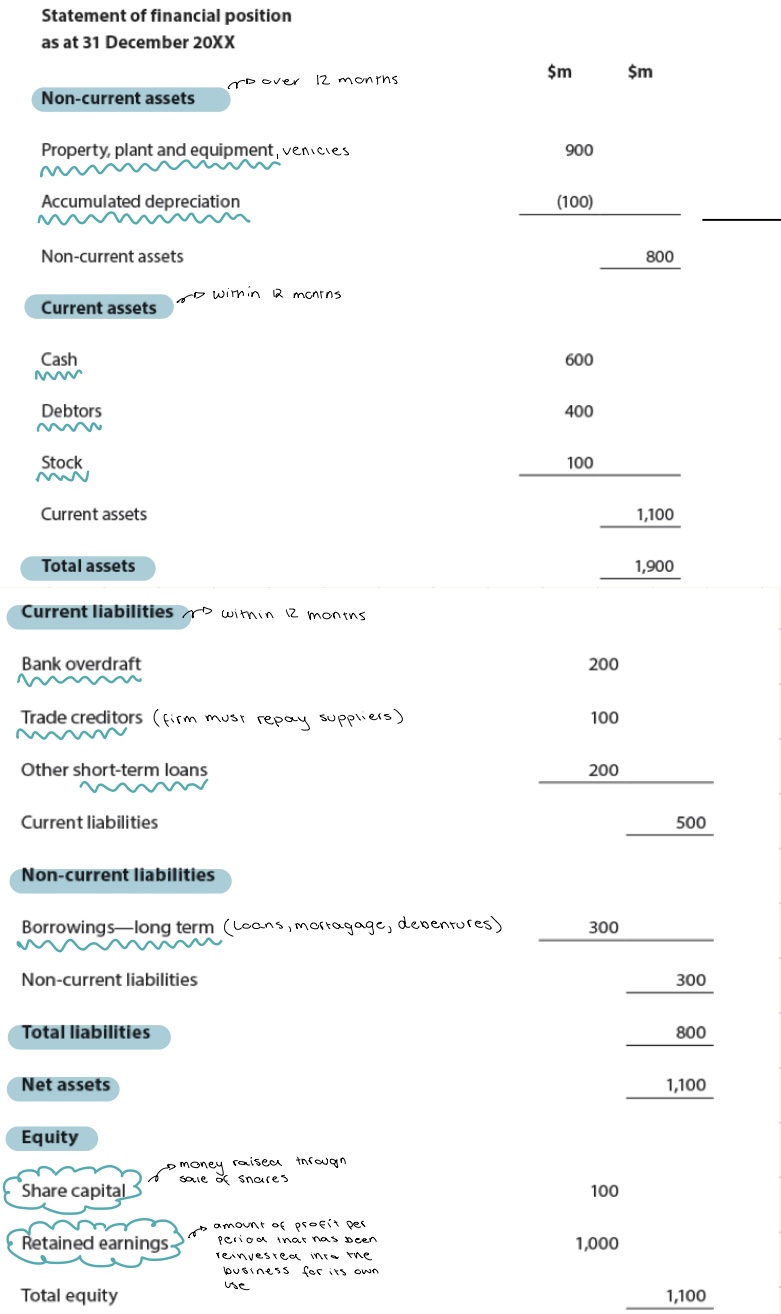
balance sheet/ statement of financial position
A financial statement that summarizes a company's assets, liabilities, and shareholders' equity at a specific point in time, providing a snapshot of its financial condition.
depreciation
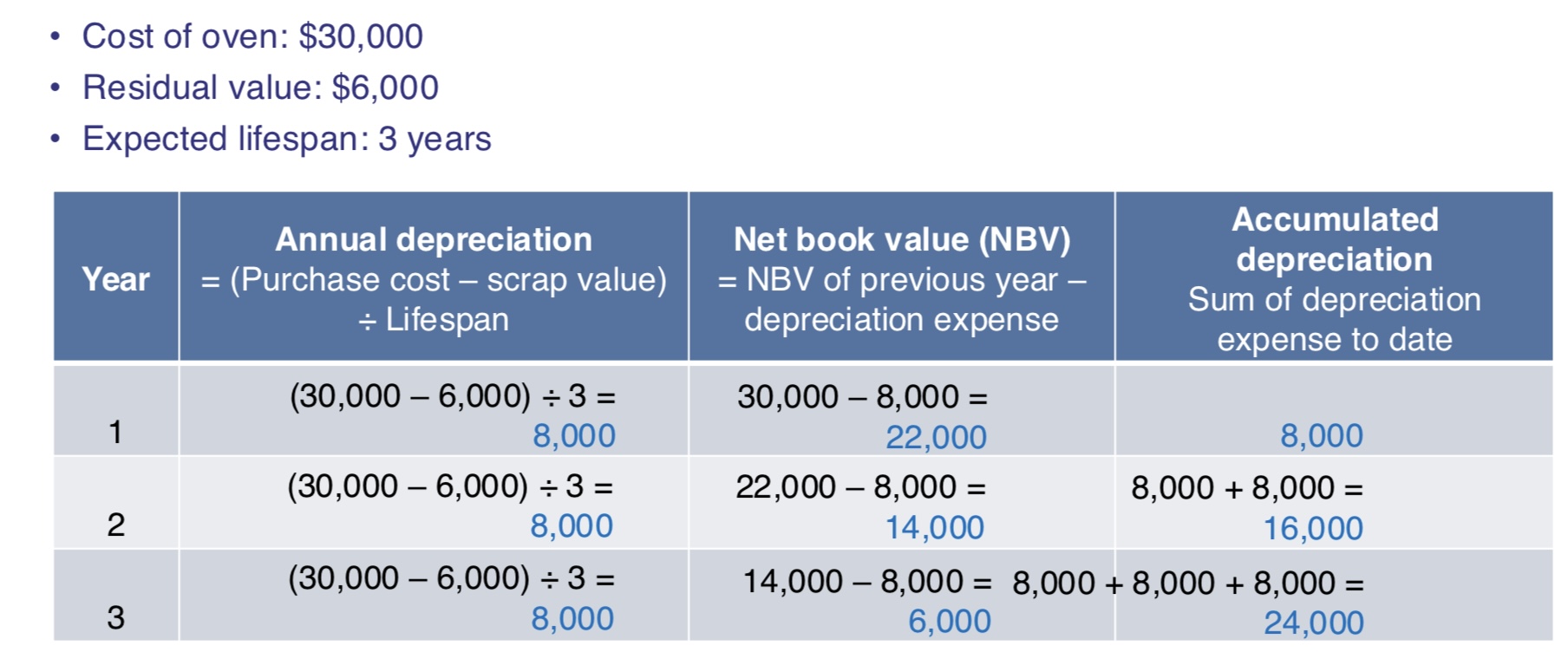
The reduction in the value of a non-current asset over time, usually due to wear and tear.
straight line method for calculating depreciation
annual depreciation = (purchase cost- resale value) / lifespan in years
+simple to calculate and understand
-not realistic as some assets loose a much larger % of their value at the beginning of life span
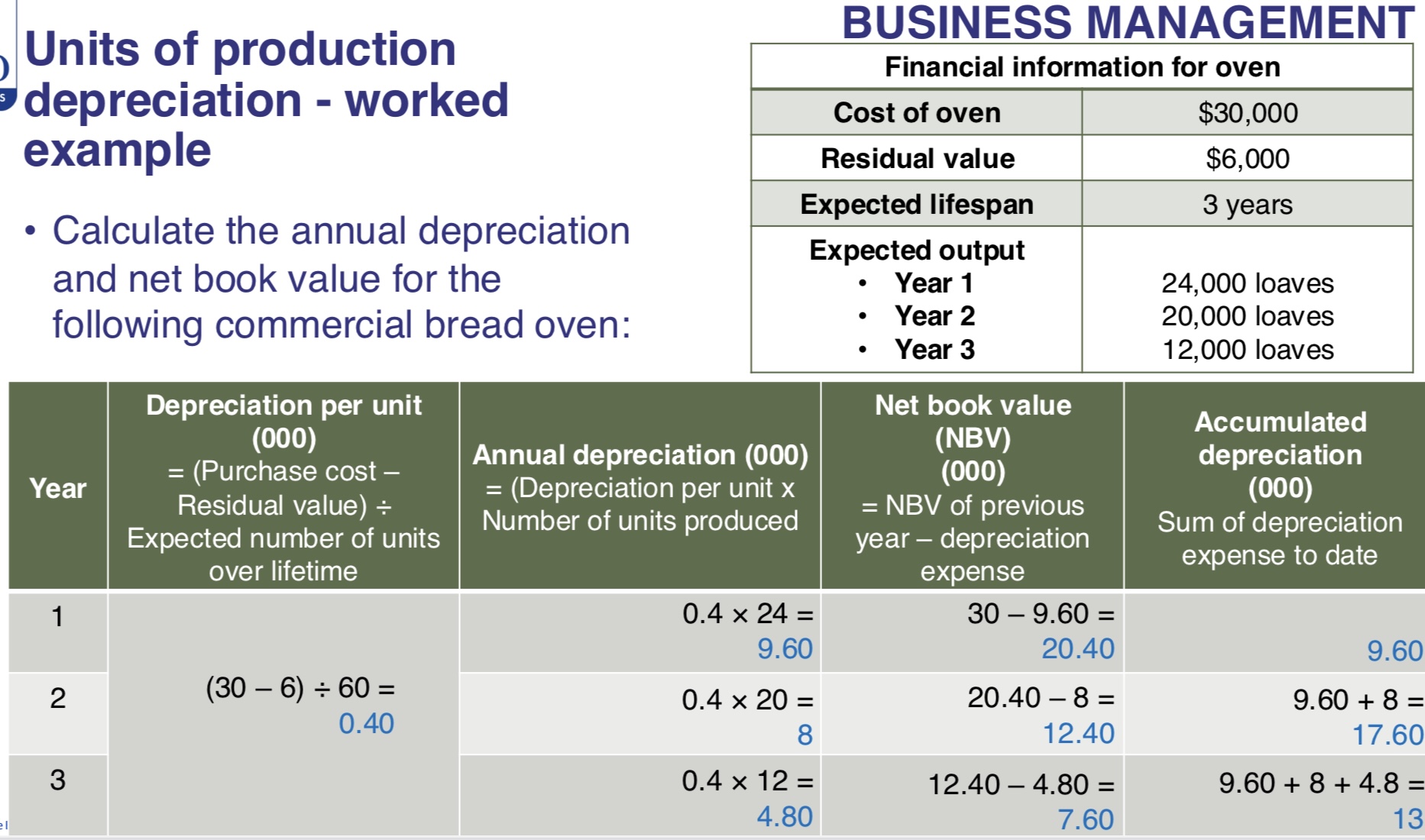
units of production depreciation method
depreciation/unit/time = ((cost of asset - resale value) / total estimated units of production) x actual units produced
+gives better insight into true running costs of non-current assets
-harder to calculate
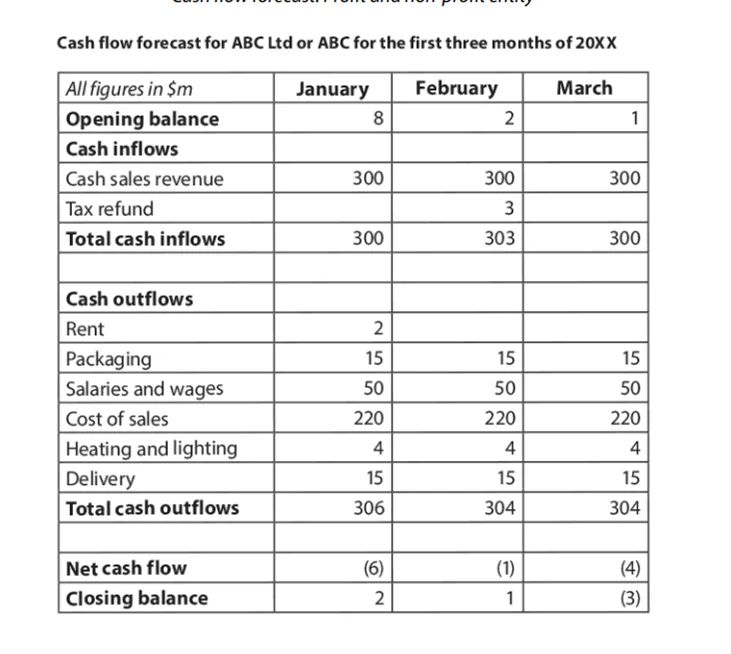
cash flow
cash/liquid assets available for the daily running of a business with the day-to-day expenditures
cash flow forecast
financial document which shows the expected movement of cash in and out of the business over a period of time to help manage liquidity and plan for future cash needs.
working capital cycle
the period of time it takes for a business to convert its current assets and liabilities into cash. This cycle reflects how efficiently a company manages its working capital.

