human phys 14.1
 Call Kai
 Learn
Learn Practice Test
 Spaced Repetition
 Match
Match Flashcards
 Knowt Play
1/41

There's no tags or description
Looks like no tags are added yet.
Name | Mastery | Learn | Test | Matching | Spaced | Call with Kai |
|---|
No analytics yet
Send a link to your students to track their progress
42 Terms
pulmonary circulation
flow of blood from the heart to the lungs and back to the heart
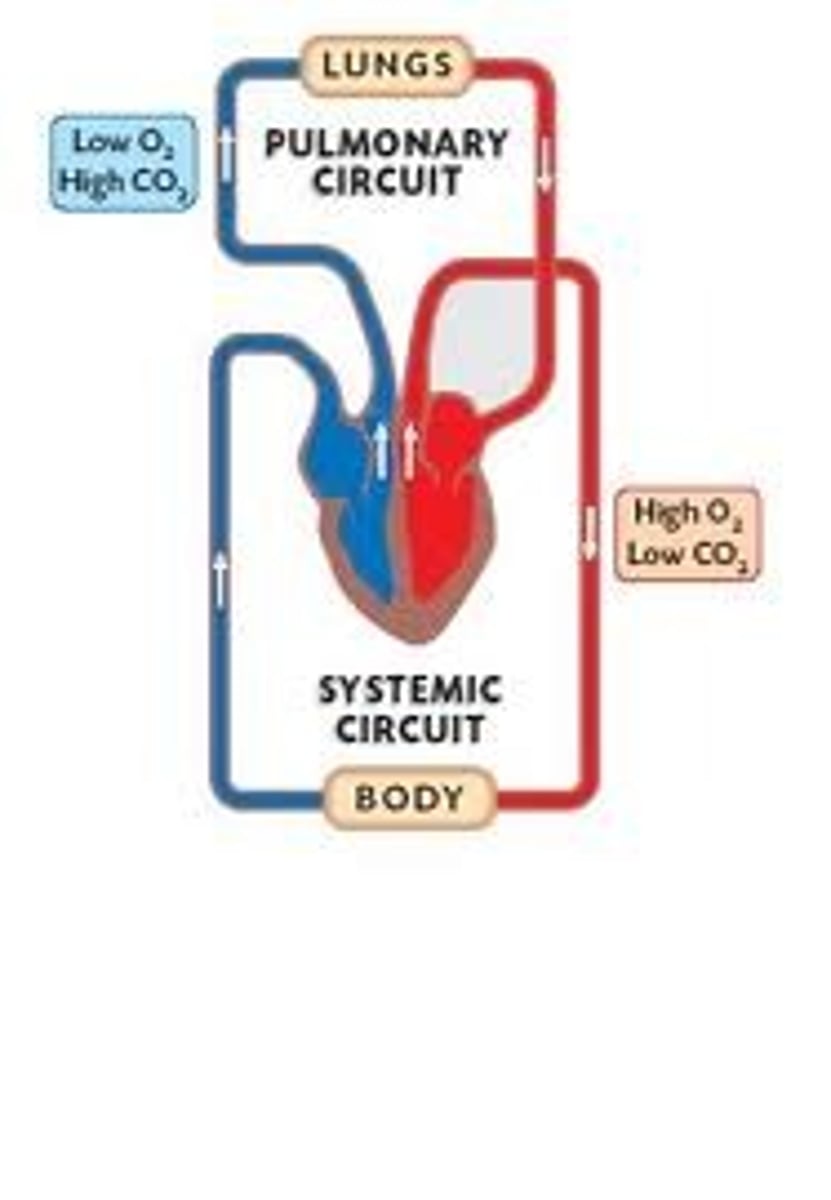
systemic circulation
flow of blood from body tissue to the heart and then from the heart back to body tissues
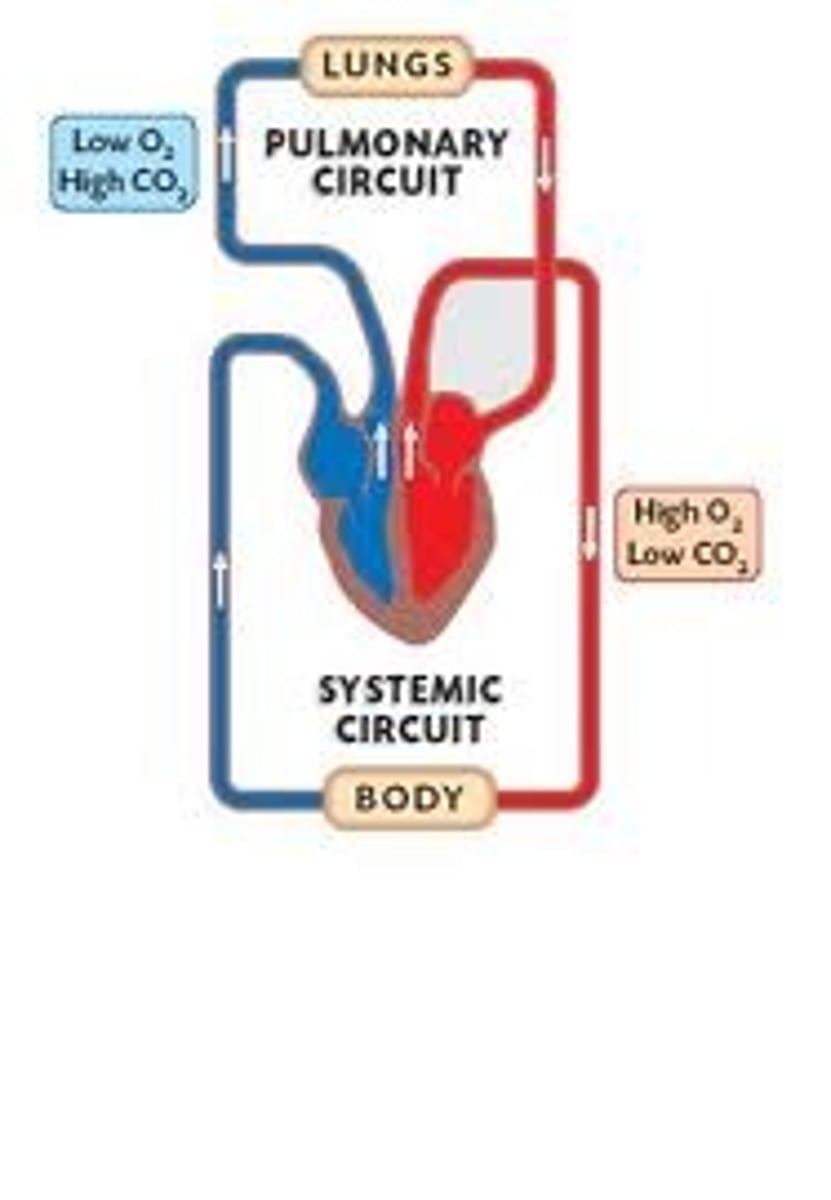
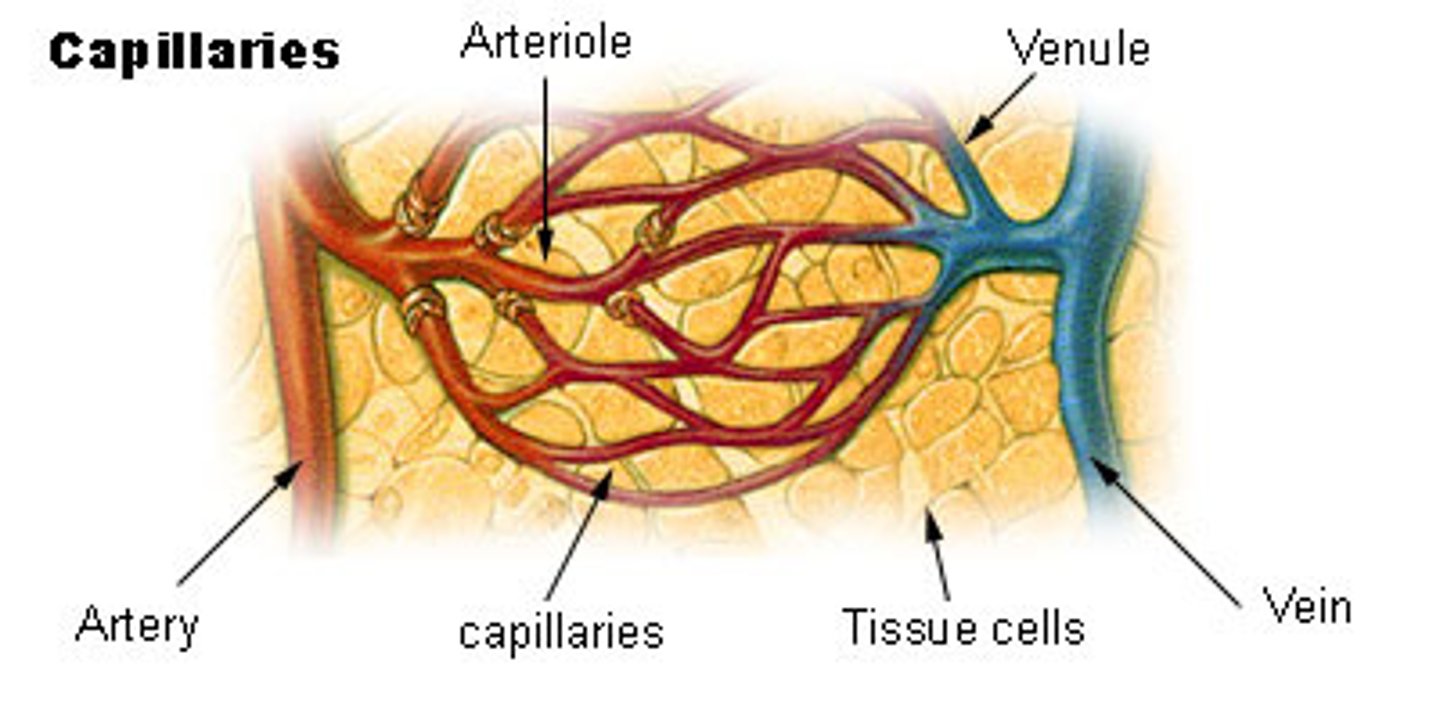
arteries carry blood away from heart, branch to form arterioles, capillaries form, blood enters venules, veins carry blood back to heart
both circuits, blood is carried :
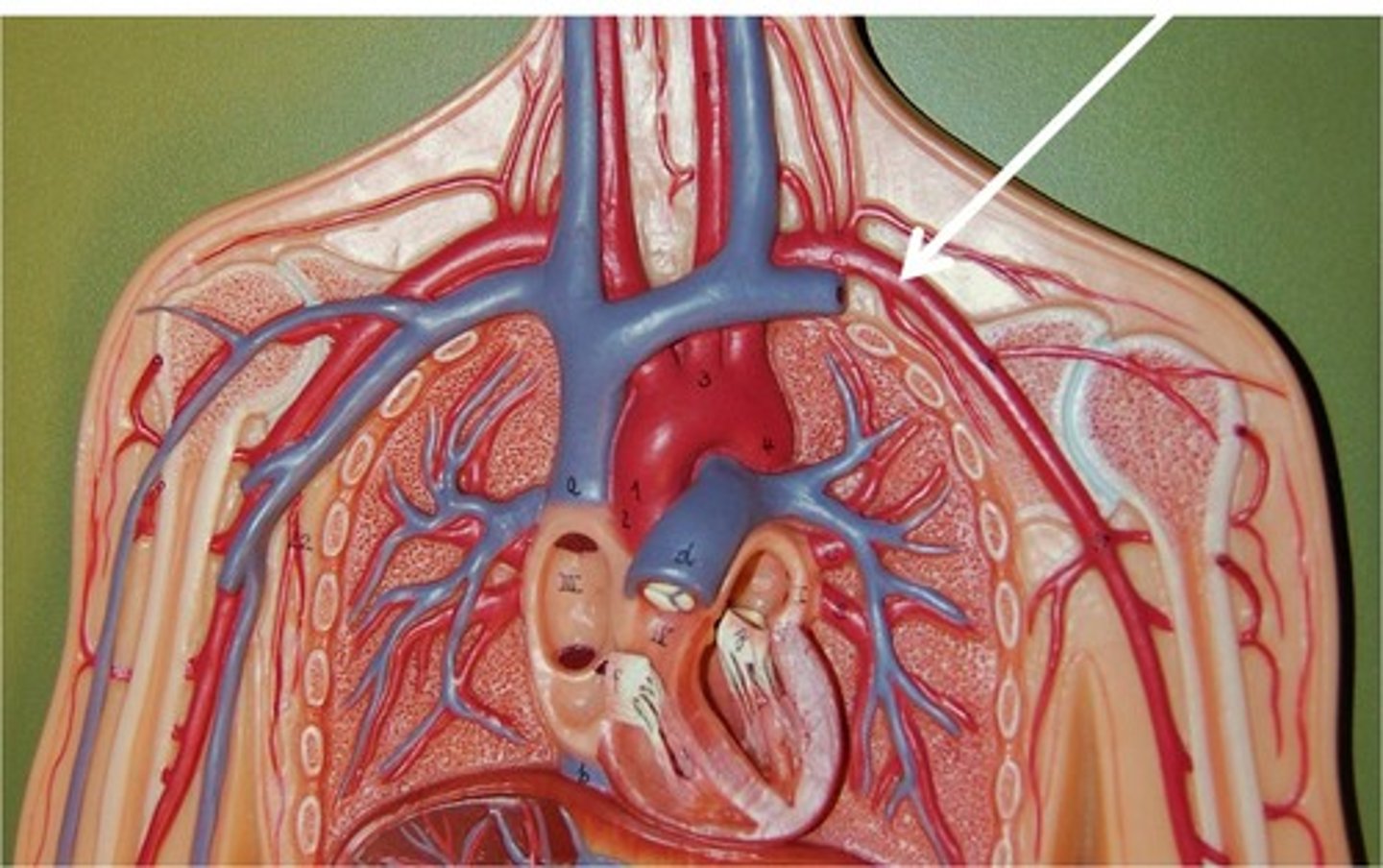
arteries
carry blood away from the heart
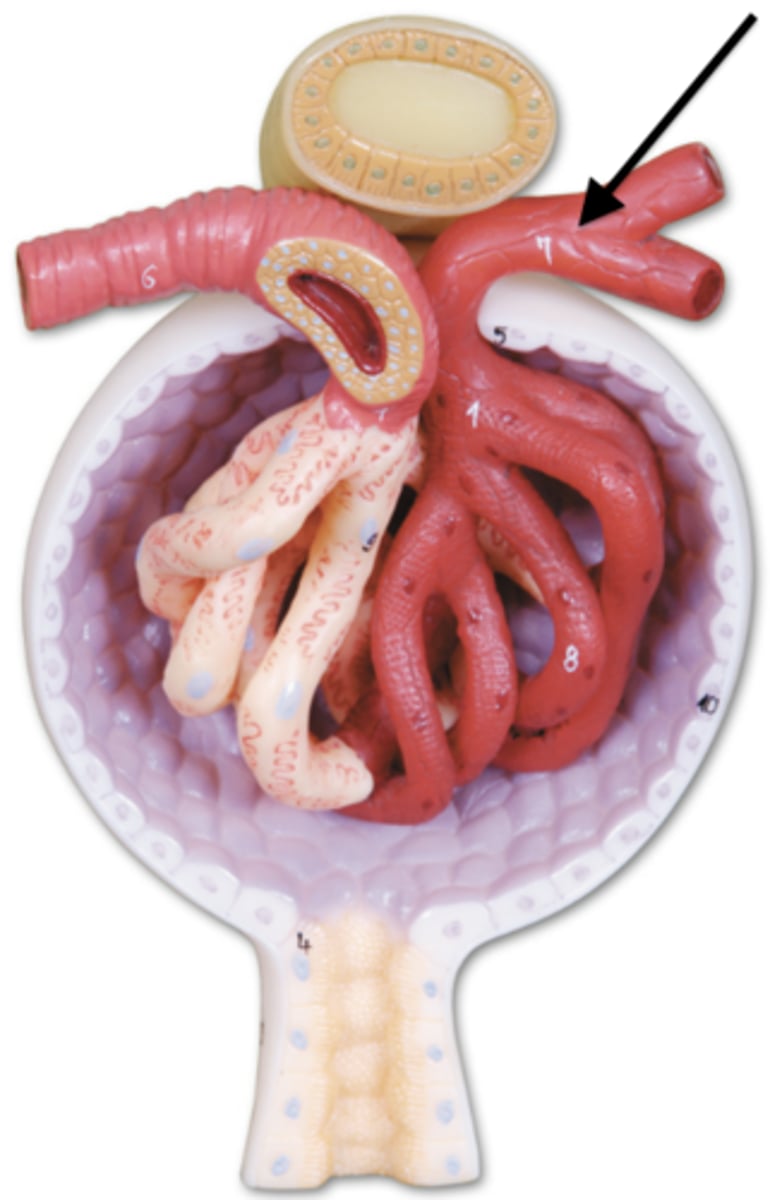
arterioles
smallest arteries
capillaries
Smallest blood vessels
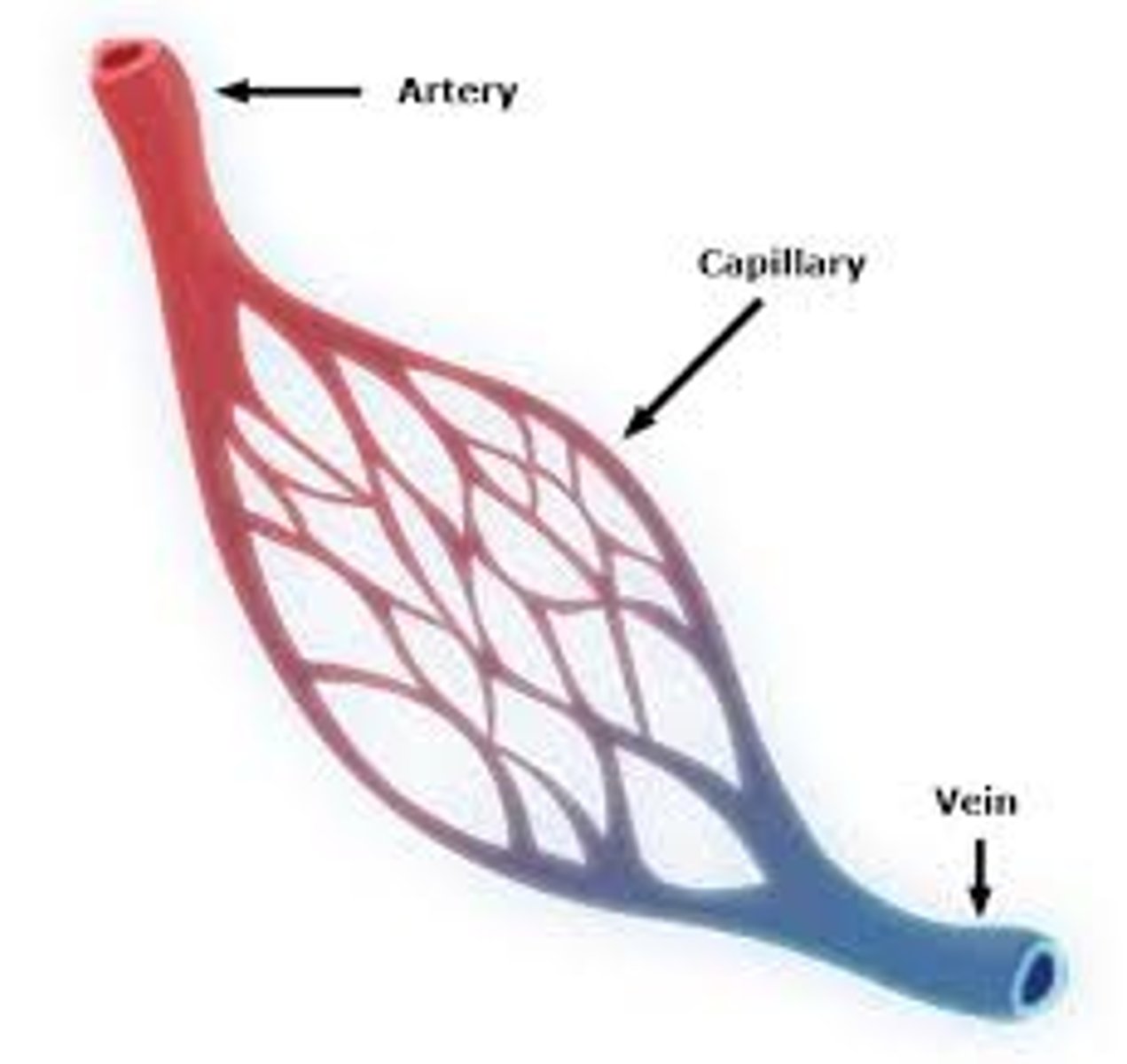
venules
smallest veins
blood becomes oxygenated and drops carbon as body inhales o2 and exhales co2
in pulmonary capillaries
blood becomes deoxygenated and picks up co2
in systemic capillaries
parallel flow
Blood and water flow in the same direction at the gill lamellae, maintaining the concentration gradient for oxygen to diffuse into the blood only up to the point where its concentration in the blood and water is equal
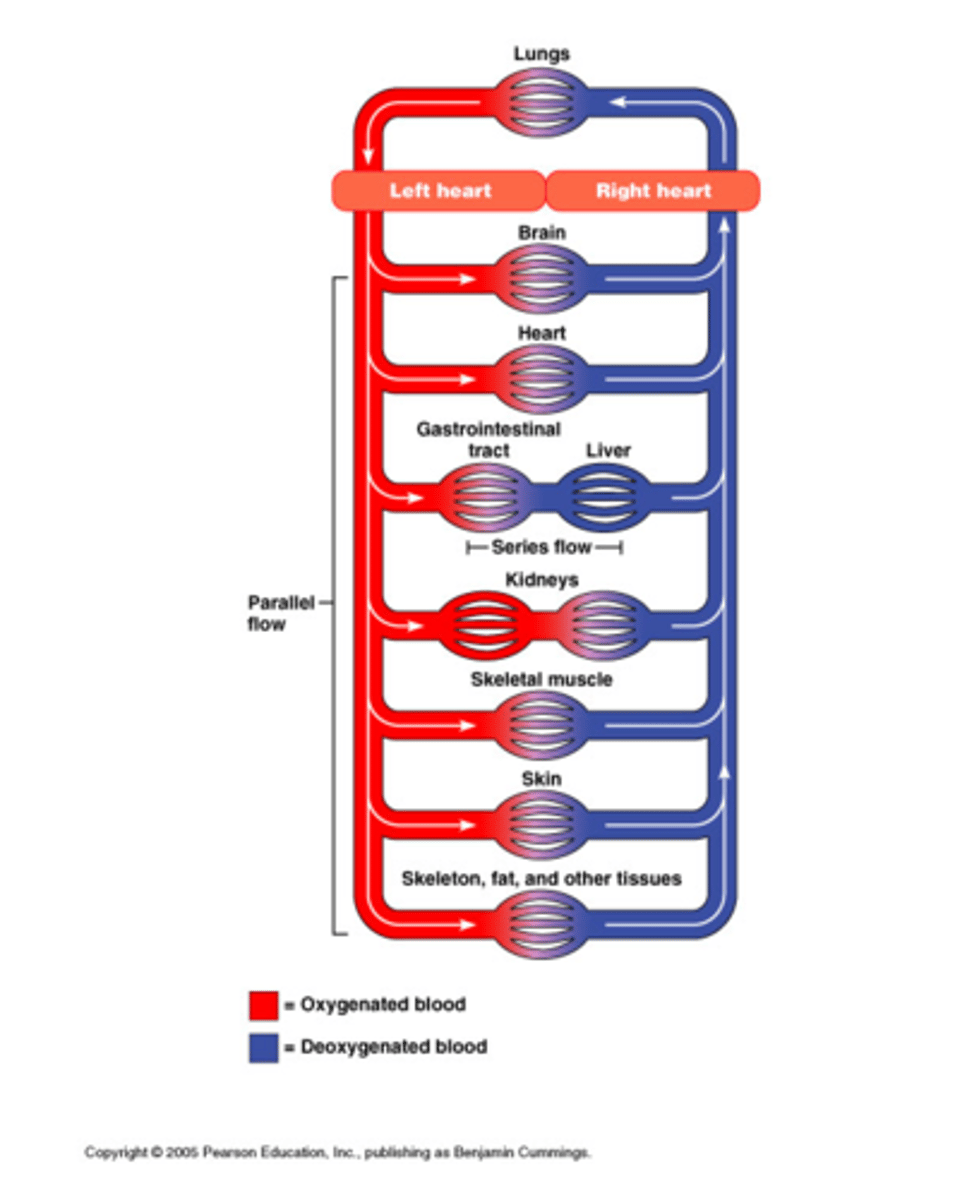
allows each organ to receive own supply of oxygenated blood, flow to different organs for regulation
purpose of parallel blood flow
located in thoracic cavity, lies to left
heart
pericardium
Membrane surrounding the heart
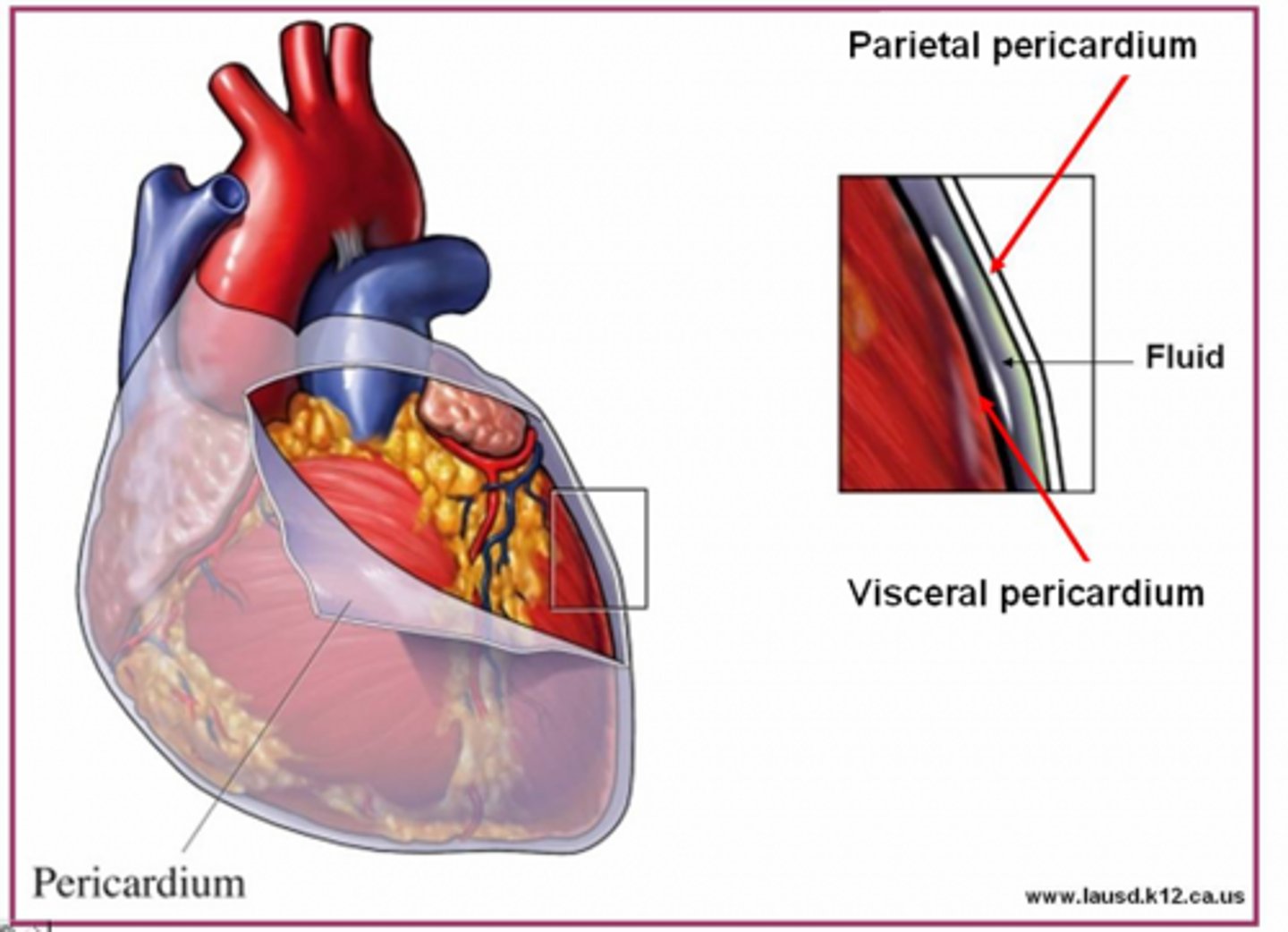
protects heart, consists of parietal and visceral layers
pericardium
Epicardium
outermost layer of the heart
Endocardium
Inner layer of the heart
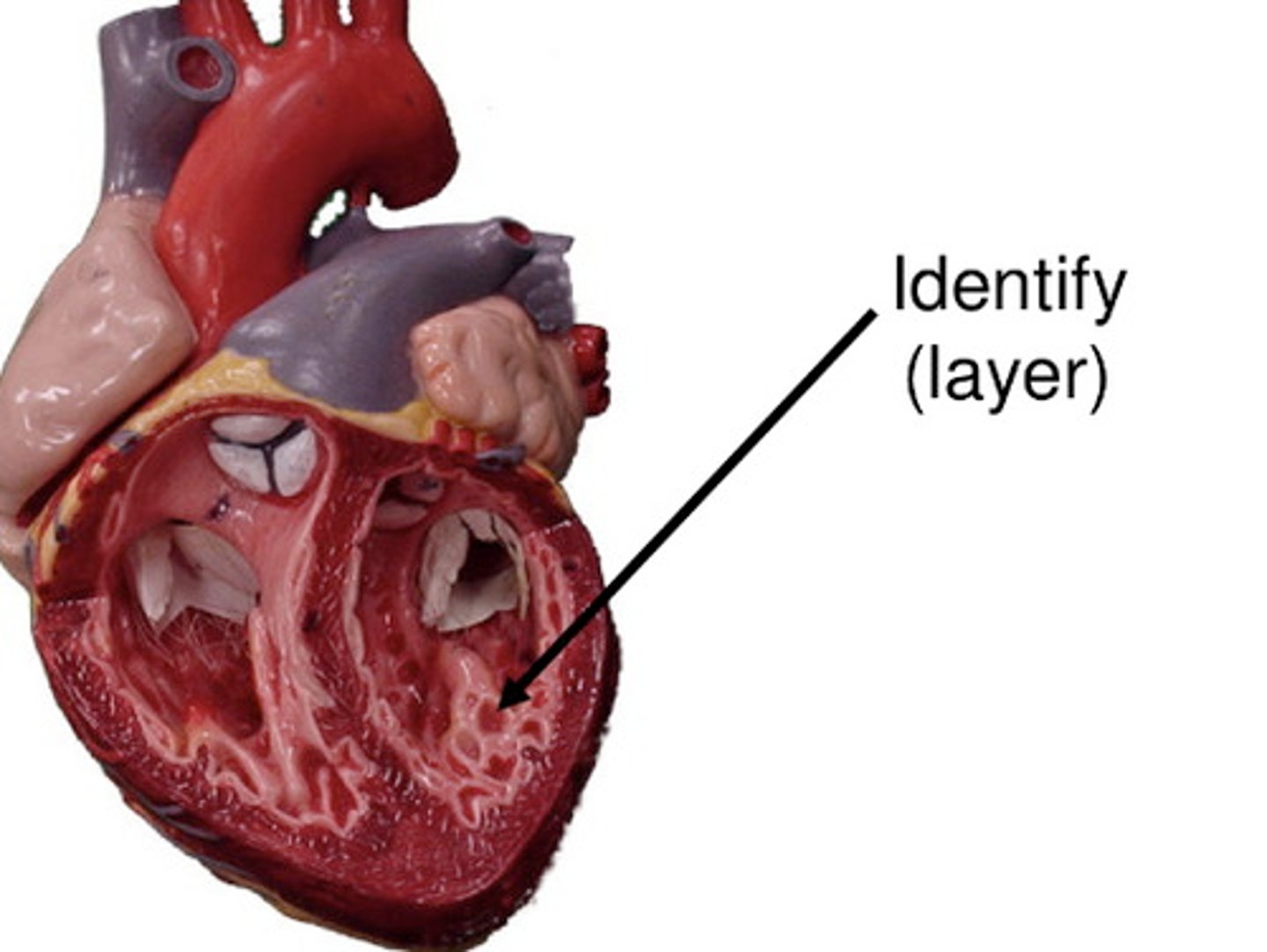
parietal anchors heart in place and attaches to nearby structures, visceral adheres to surface of heart
parietal vs visceral (epicardium) layers
4 total, 2 atria and 2 ventricles
chambers of heart
right is pump for pulmonary circulation, left is pump for systemic circulation
right vs left side of heart
thin walls, deliver blood under less pressure into ventricles, small workload
atria and wall thickness, workload
thicker walls, pump blood out of heart under higher pressure and greater distances, larger workload
ventricles and wall thickness
superior vena cava
receives blood from the head and arms and chest and empties into the right atrium of the heart
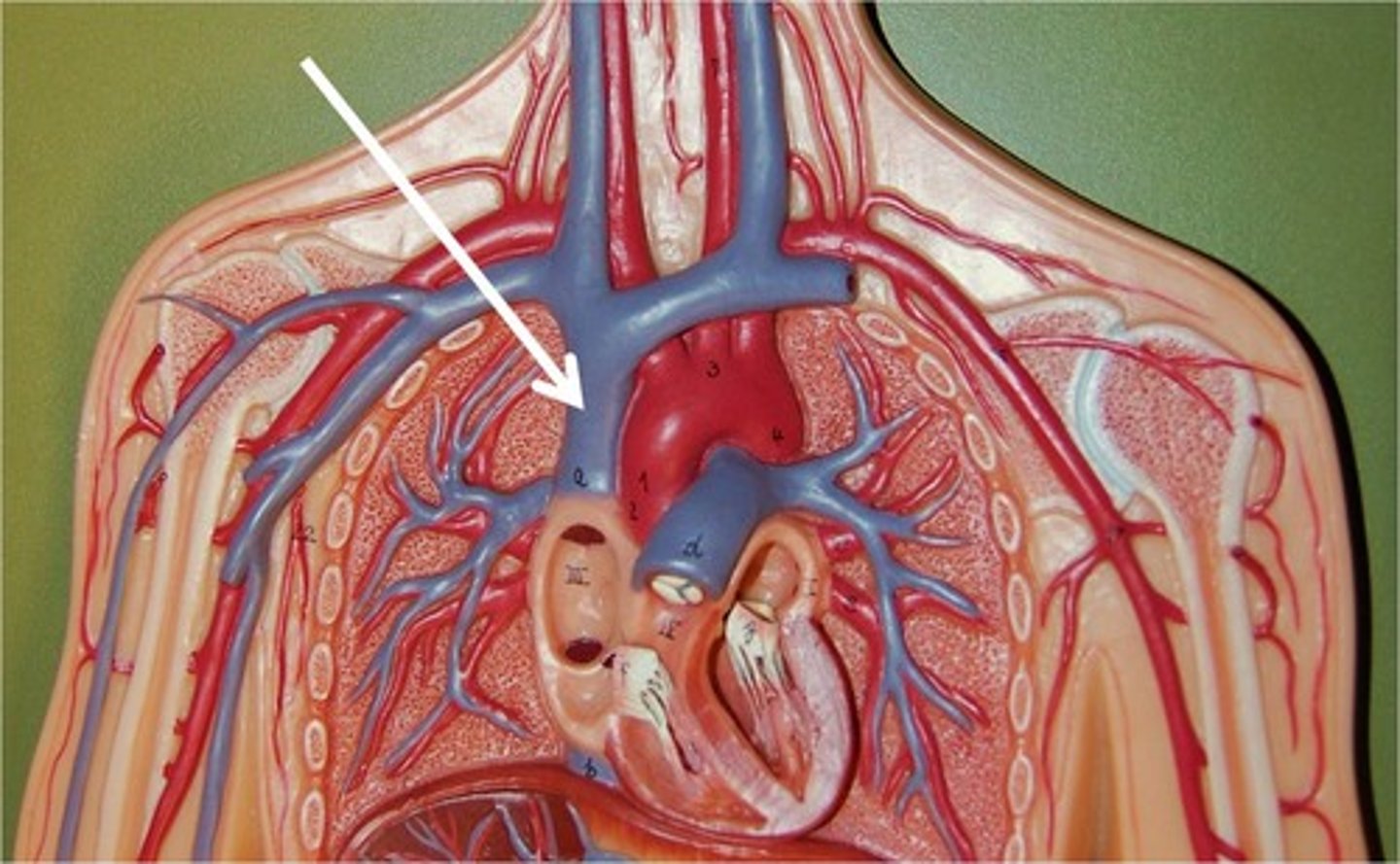
inferior vena cava
carries blood from lower regions of the body to right atrium
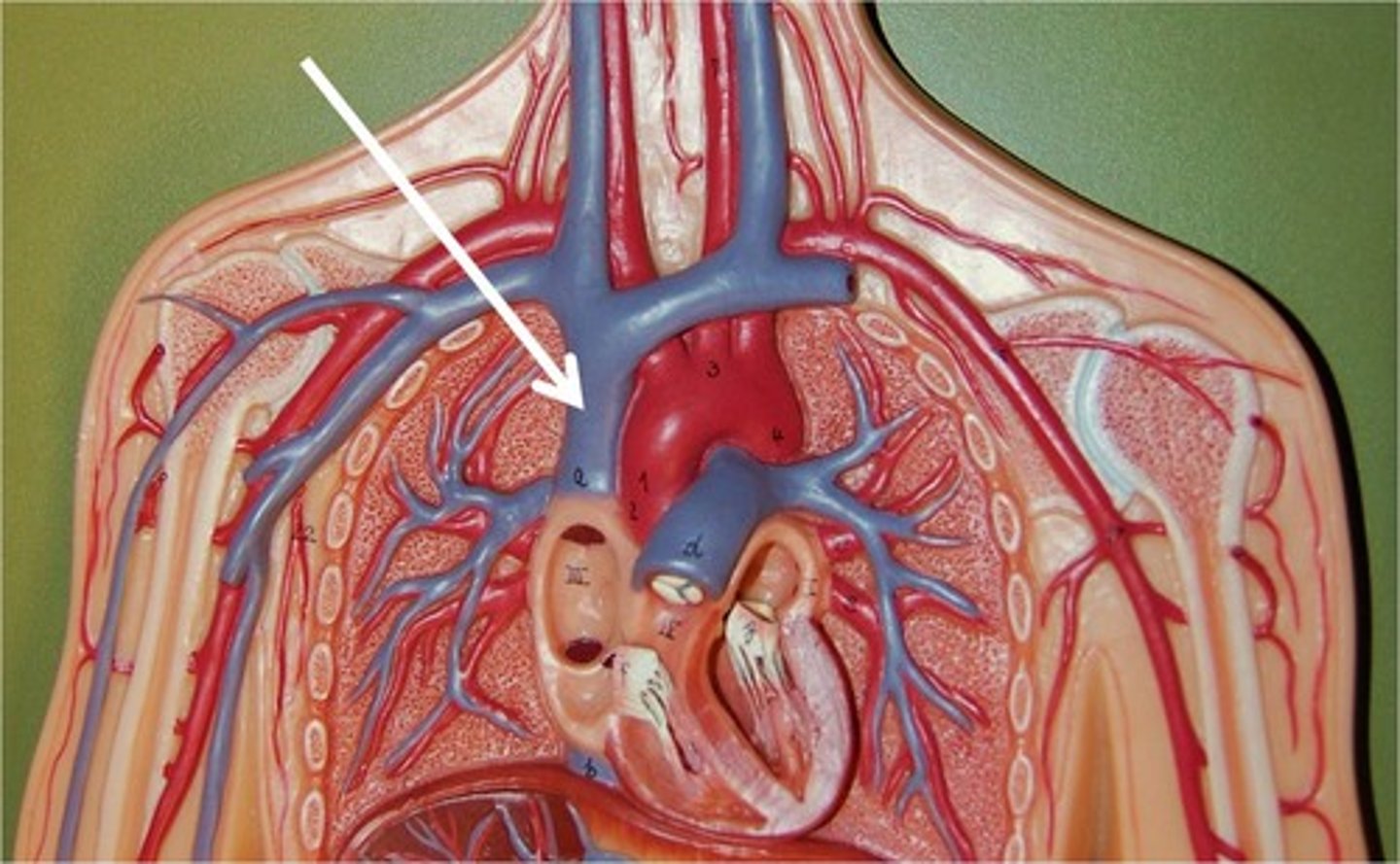
superior brings blood from parts above heart, inferior is parts below heart
superior vs inferior vena cava
pulmonary trunk
carries blood from right ventricle to pulmonary arteries
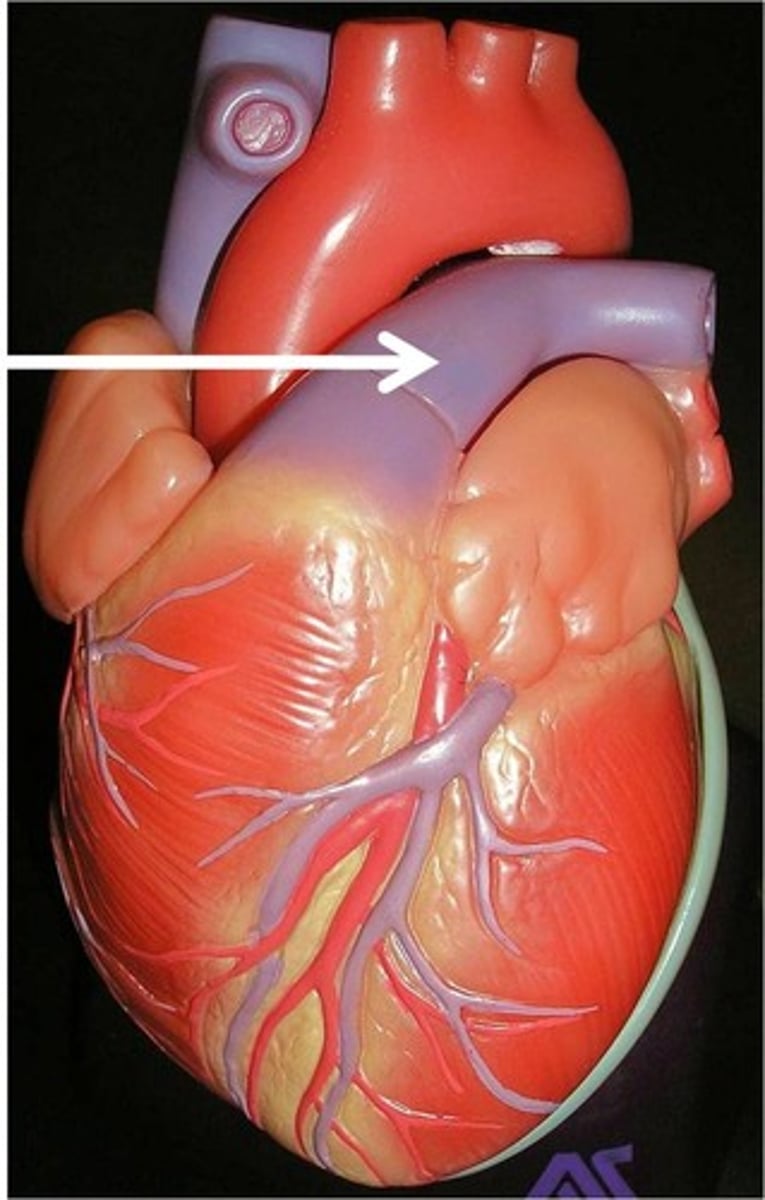
pulmonary arteries
carry deoxygenated blood out of the right ventricle and into the lungs
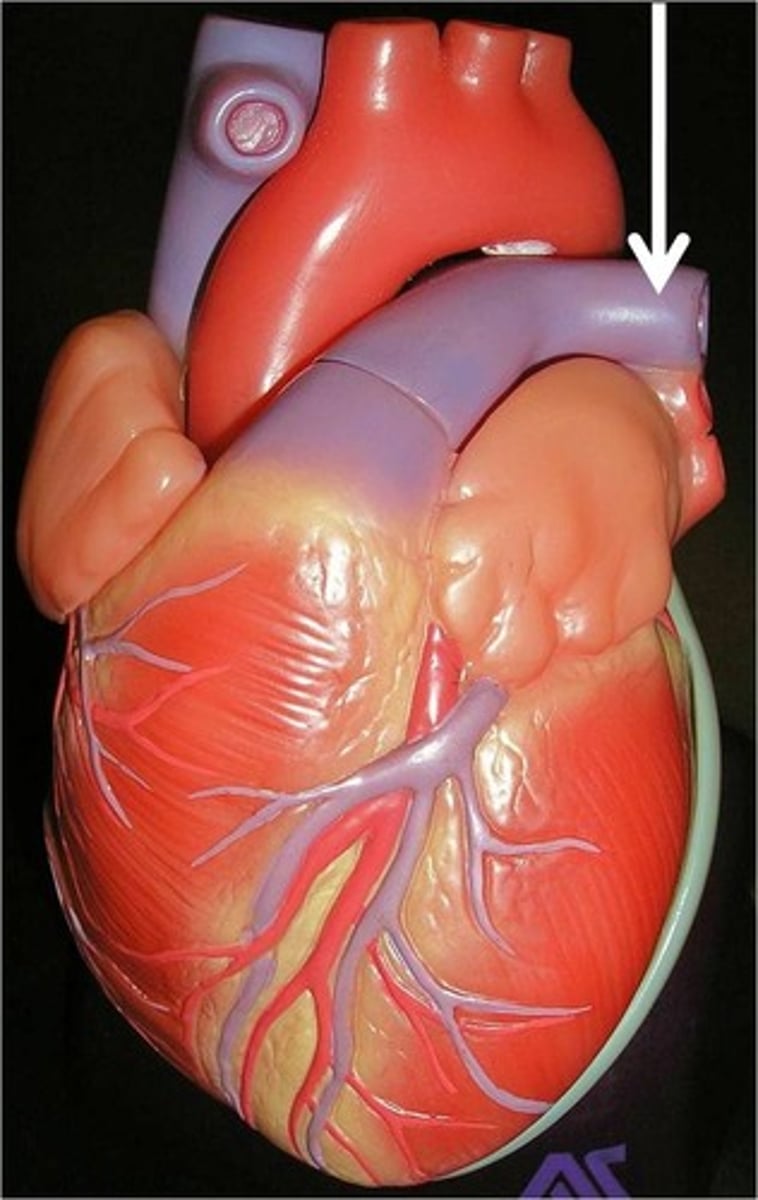
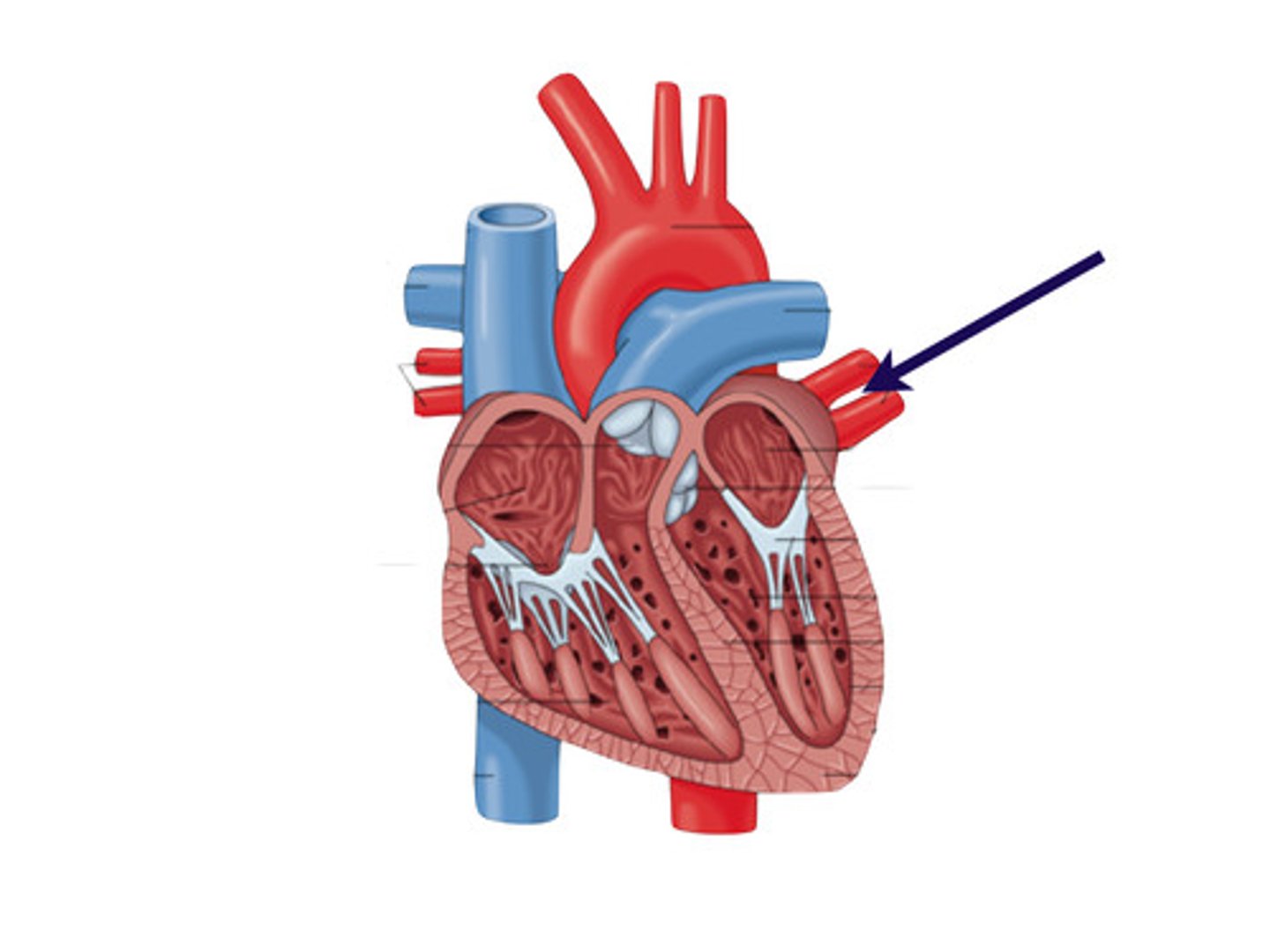
pulmonary veins
carry the oxygenated blood from the lungs into the left atrium of the heart
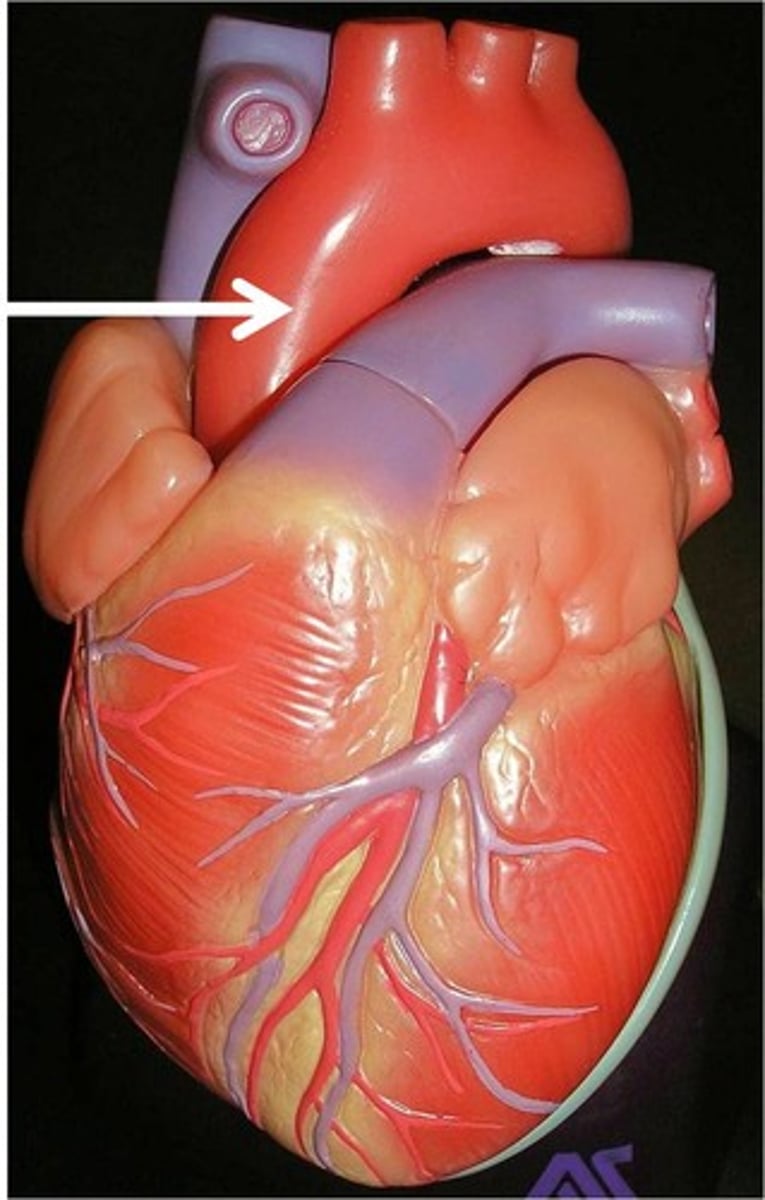
Aorta
The large arterial trunk that carries blood from the heart to be distributed by branch arteries through the body.
right atrium receives deoxygenated blood through superior and inferior, delivers it to pulmonary trunk in right ventricle, arteries carry to lungs
blood actiivty in the right side
blood becomes oxygenated, drops CO2, carried into left atrium
what happens in he lungs
blood enters left atrium via pulmonary veins, passes through ventricle into aorta
blood activity in the left side
left ventricle is thicker than right
left vs right ventricle in wall thickness
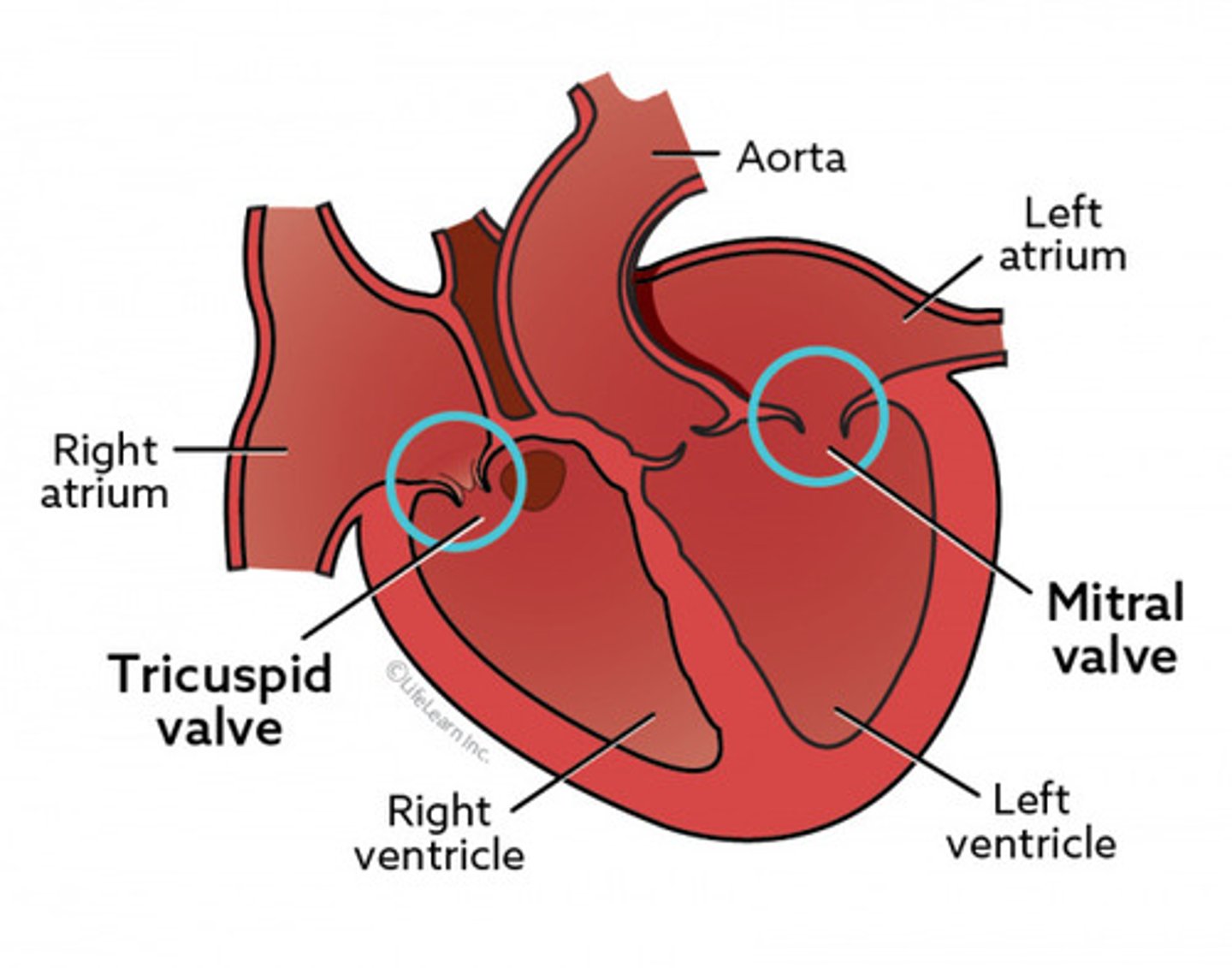
atrioventricular valves
Valves located between the atrial and ventricular chambers on each side of the heart, prevent backflow into the atria when the ventricles are contracting.
semilunar valves
pulmonary and aortic valves located between the right ventricle and the pulmonary artery and between the left ventricle and the aorta
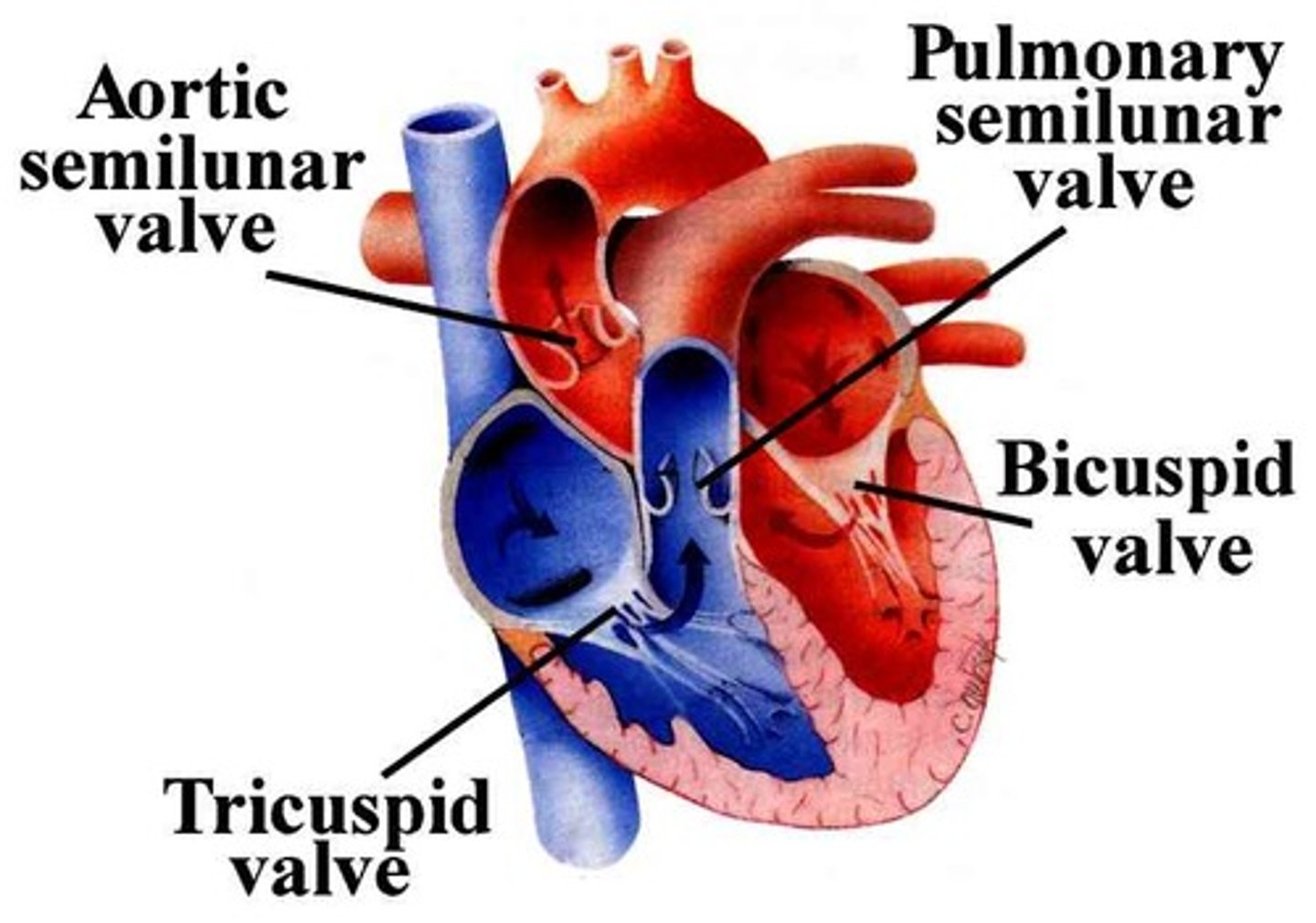
right AV, pulmonary semilunar valve
right side and heart valves
left AV, aortic semilunar valve
left side and heart valves
ensure one way flood of blood
function of heart valves
fibrous skeleton, prevent valves from stretching
what else do valves have
coronary arteries
blood vessels that branch from the aorta and carry oxygen-rich blood to the heart muscle
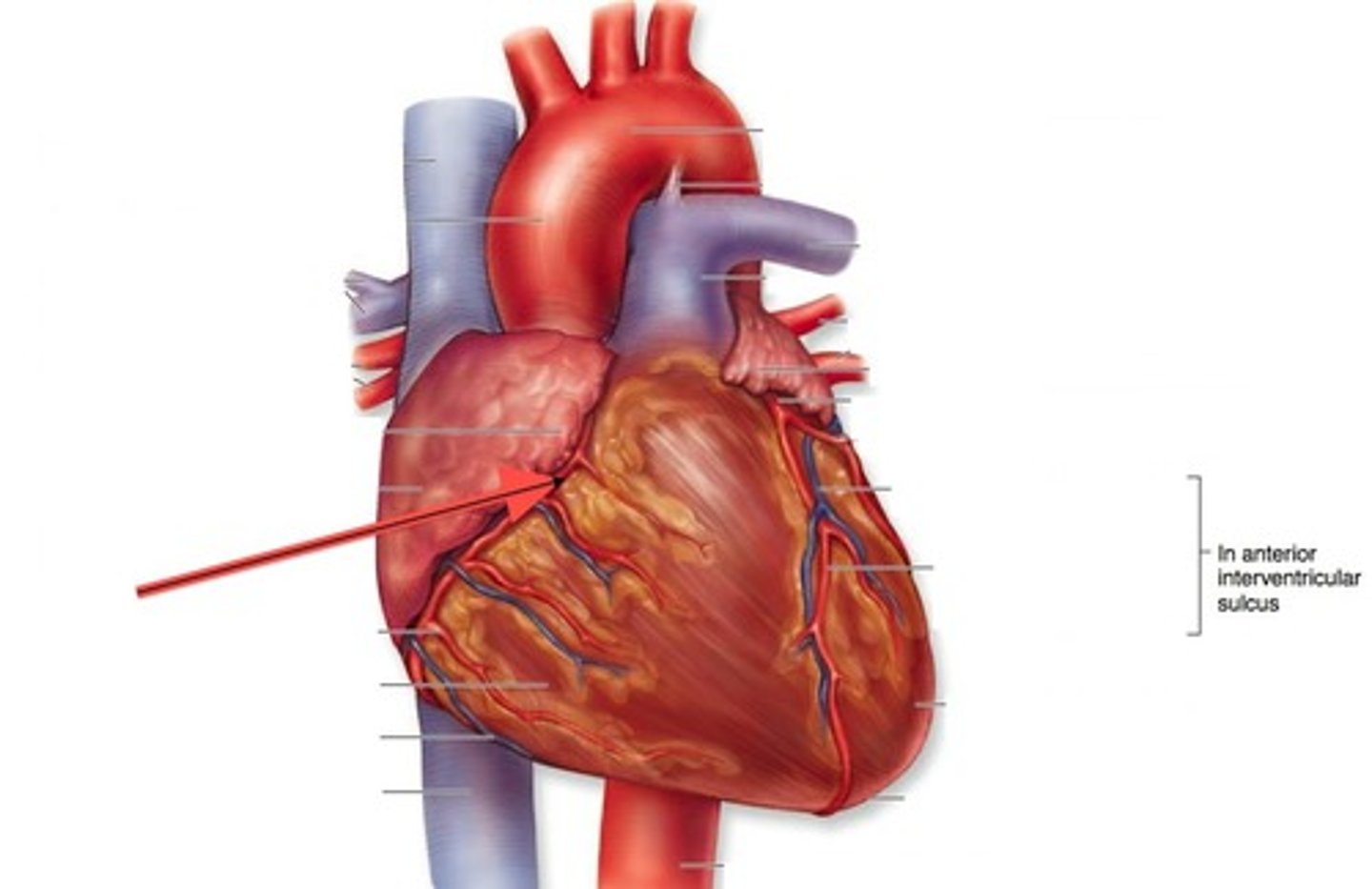
coronary veins
Blood vessels that transport deoxygenated blood from the heart toward the right atrium.
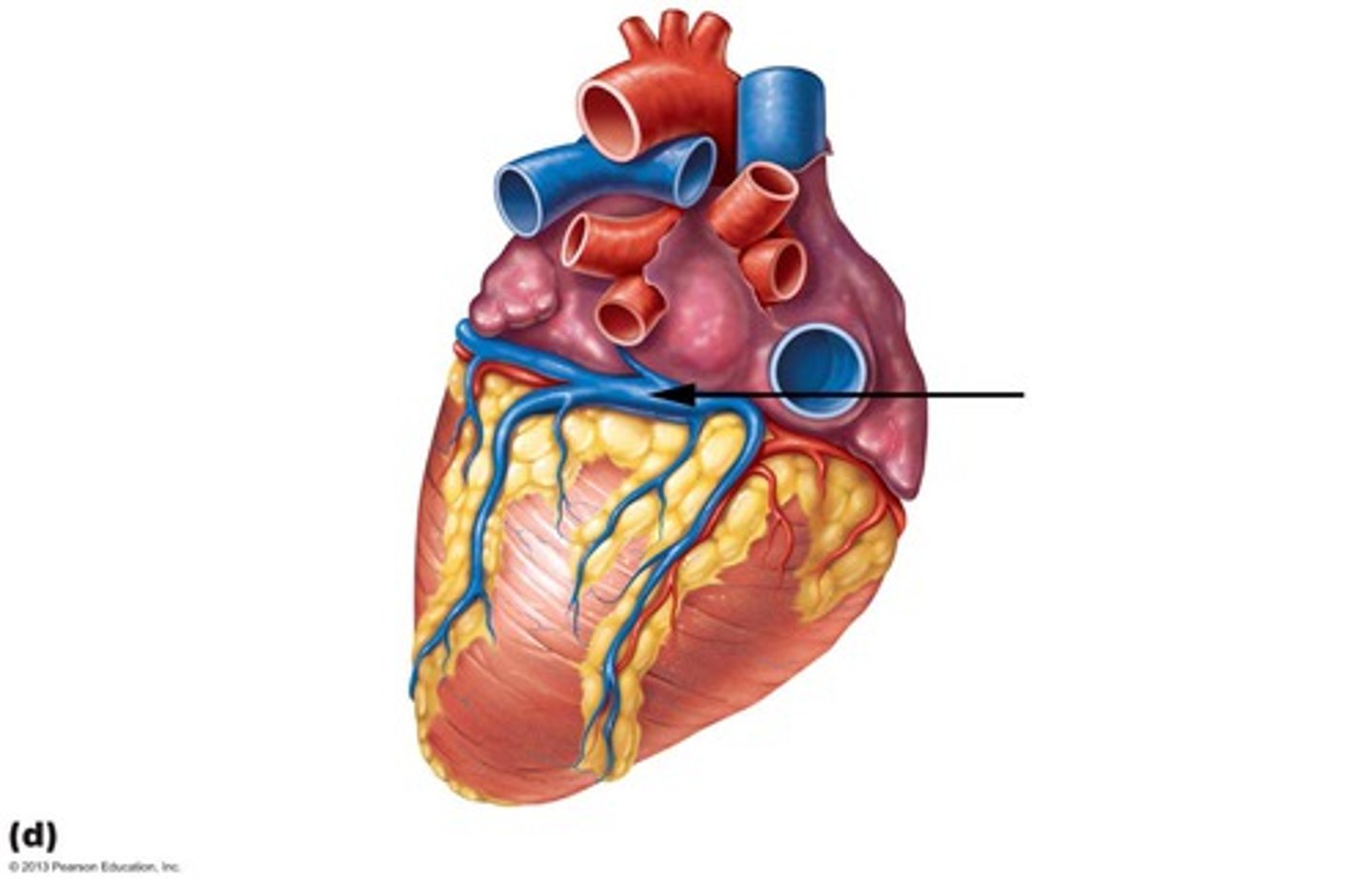
coronary sinus
enlarged vessel on the posterior aspect of the heart that empties blood into the right atrium
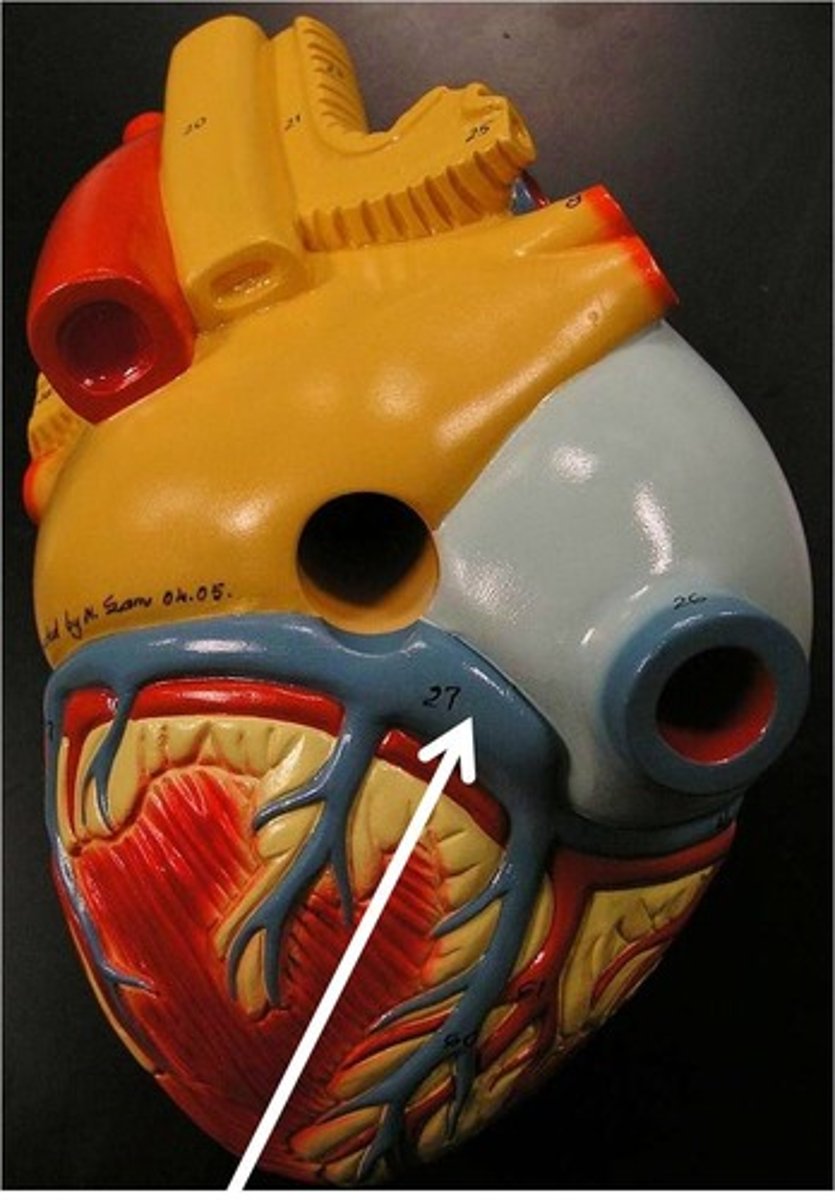
arteries deliver blood to heart wall, veins drain blood from heart wall
coronary arteries vs veins

