Week 9 Study Guide
 Call Kai
 Learn
Learn Practice Test
 Spaced Repetition
 Match
Match Flashcards
 Knowt Play
1/65

There's no tags or description
Looks like no tags are added yet.
Name | Mastery | Learn | Test | Matching | Spaced | Call with Kai |
|---|
No analytics yet
Send a link to your students to track their progress
66 Terms
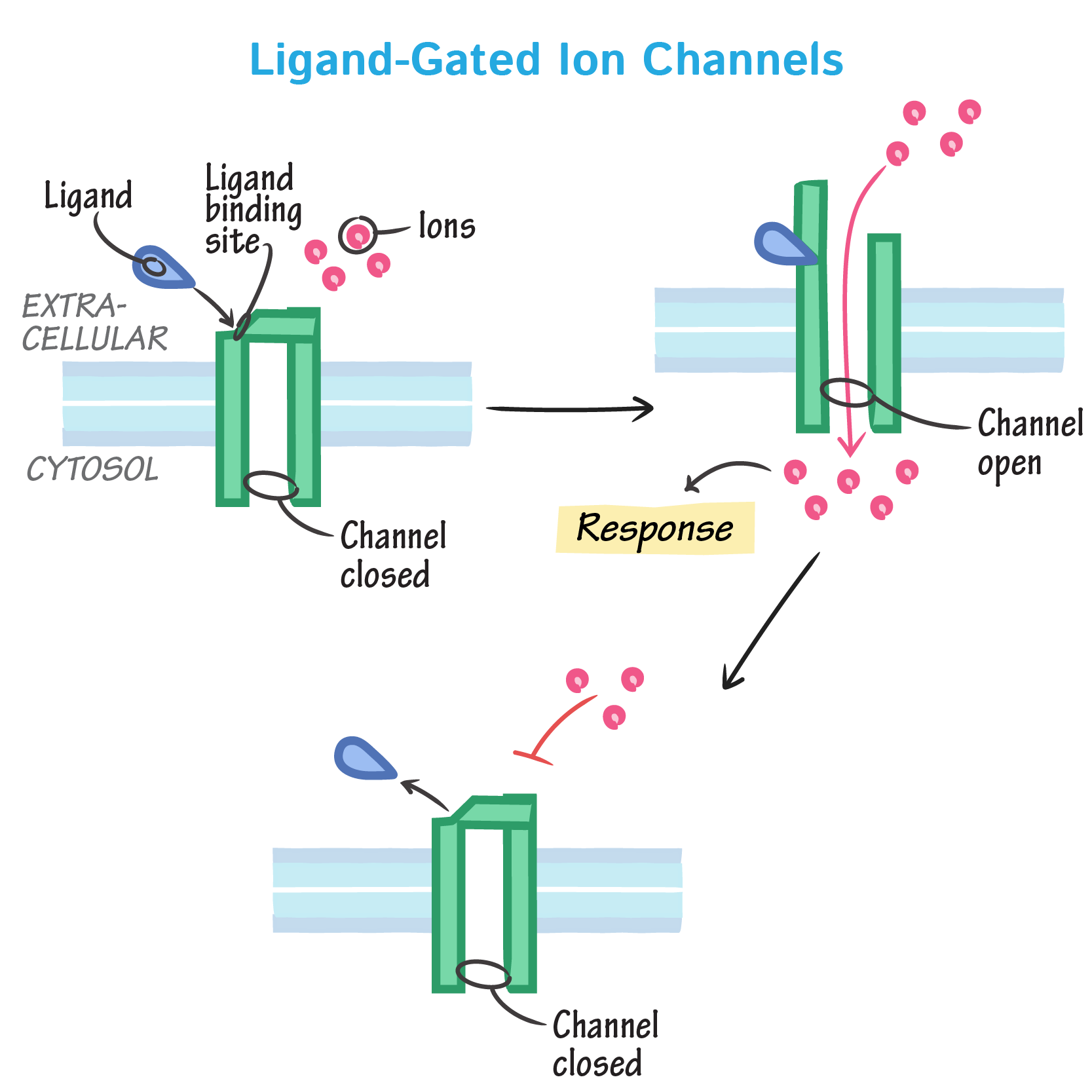
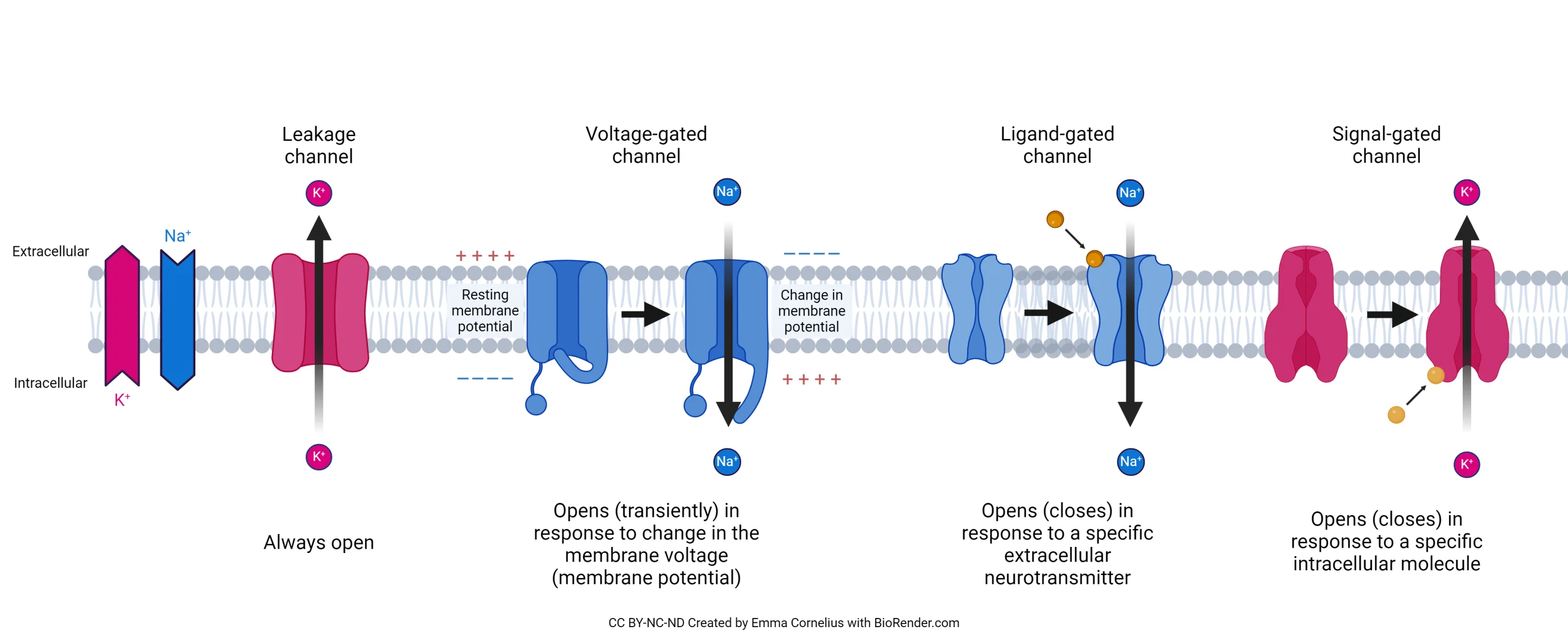
What opens a ligand-gated ion channel?
Binding of a chemical messenger (ligand) to the channel protein
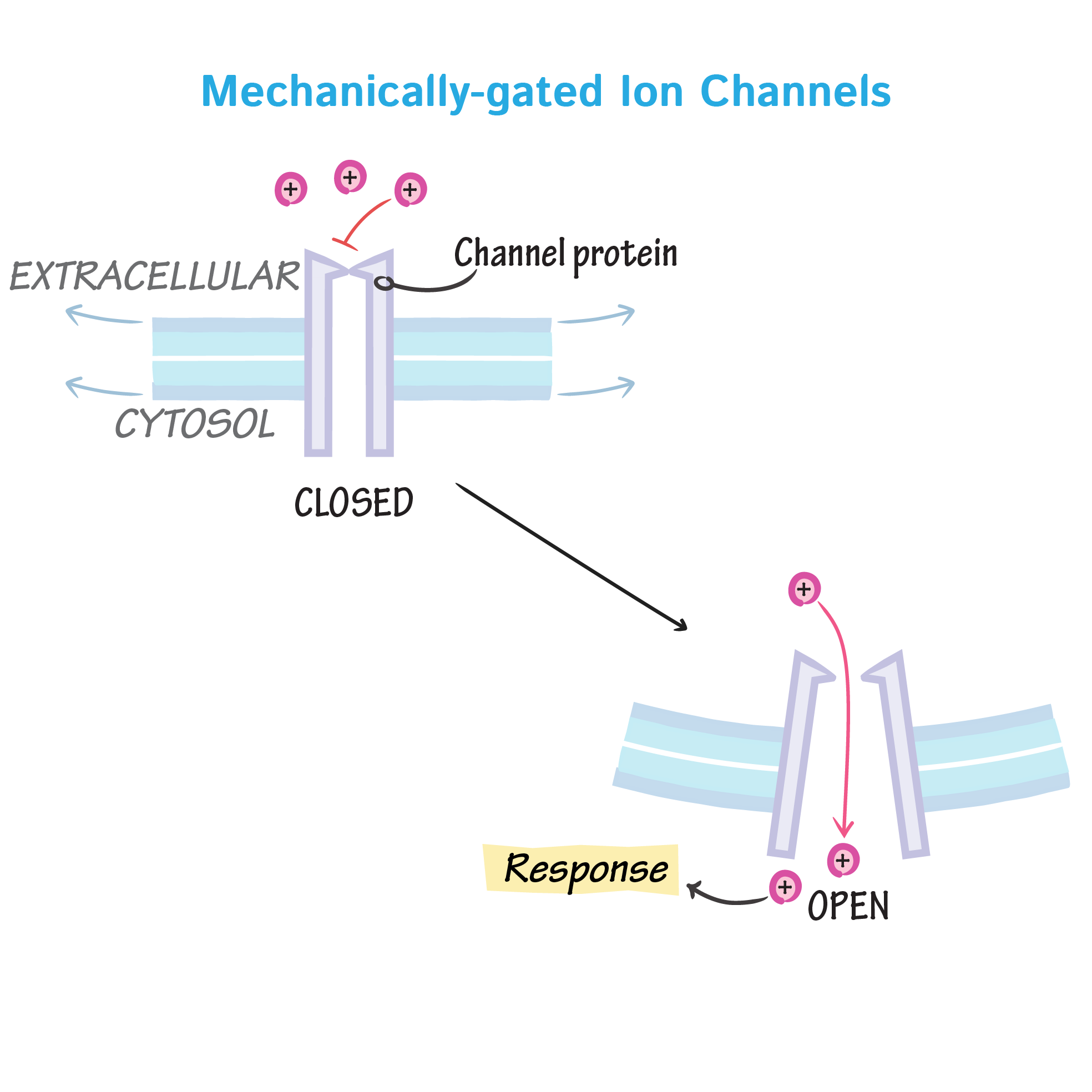
What opens a mechanically gated ion channel?
Mechanical deformation of the membrane, such as stretch, pressure, vibration, or touch
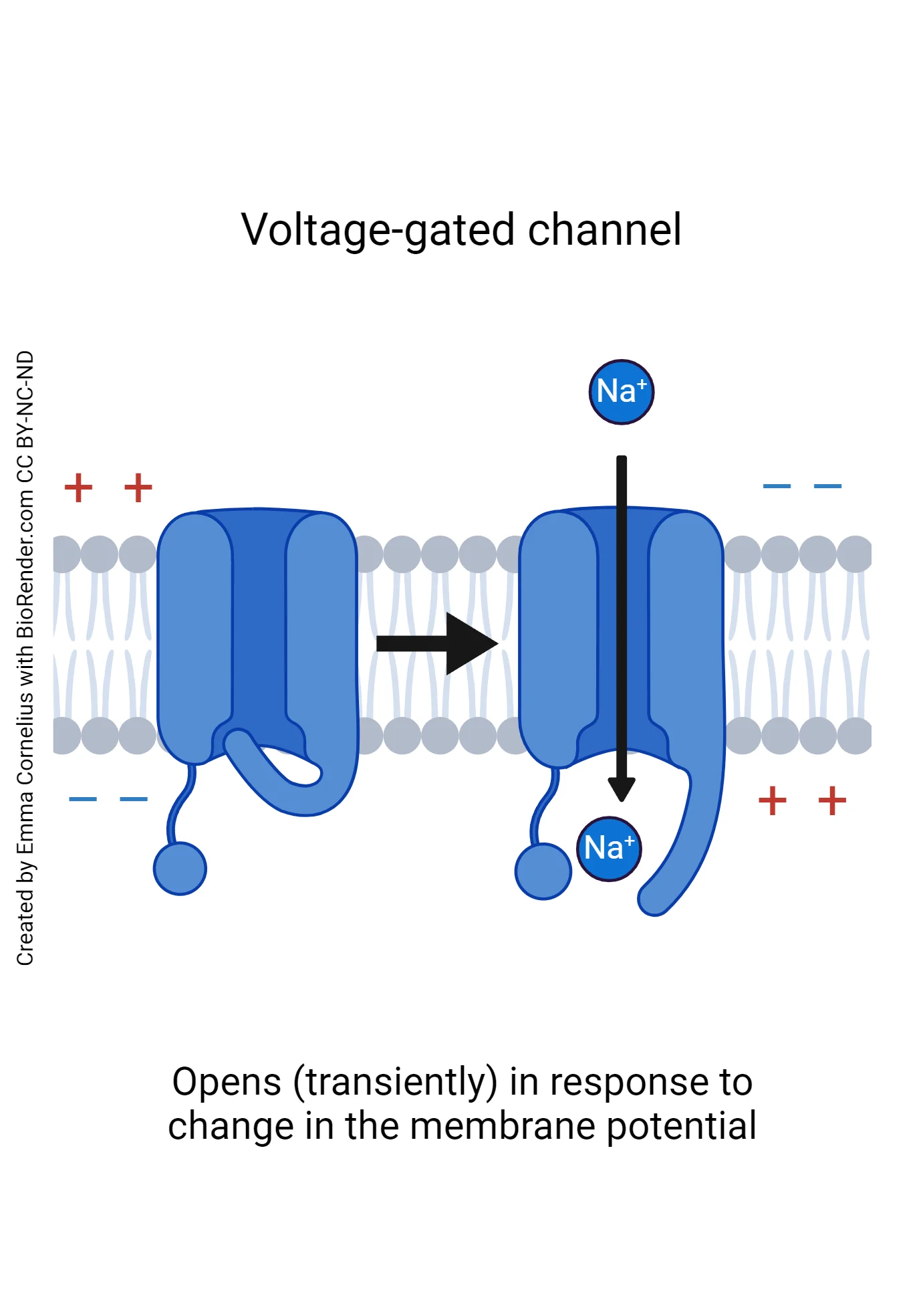
What opens a voltage-gated ion channel?
A change in membrane potential
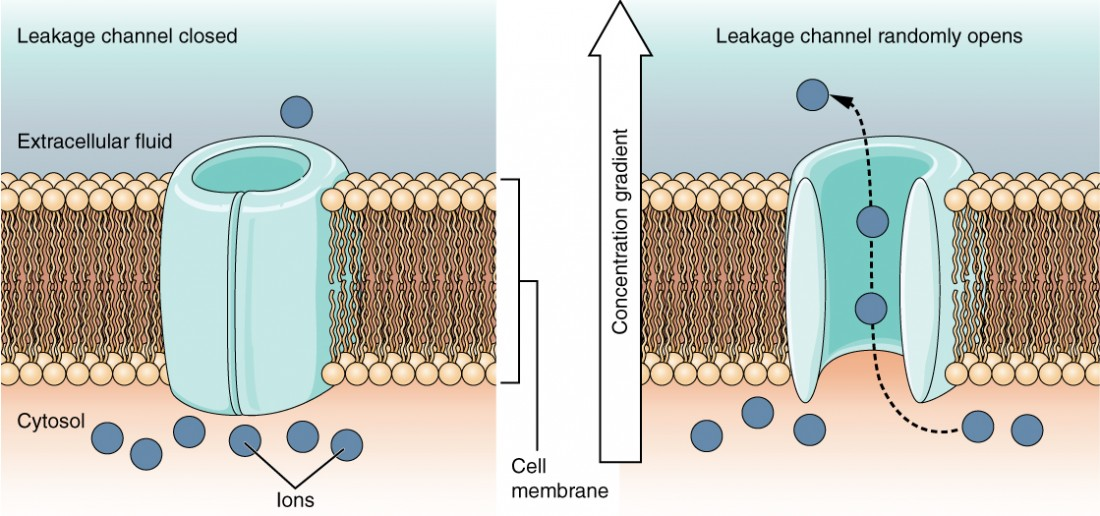
What opens a leak channel?
Nothing specific; leak channels are usually open all the time
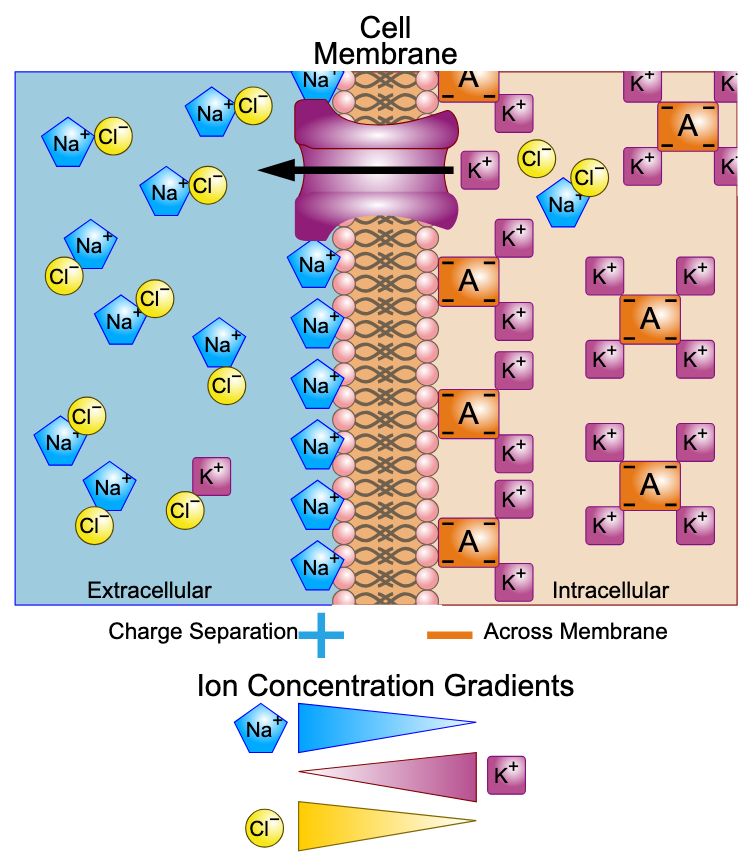
What is membrane potential?
The electrical potential difference across the plasma membrane
Compares inside charge to outside charge
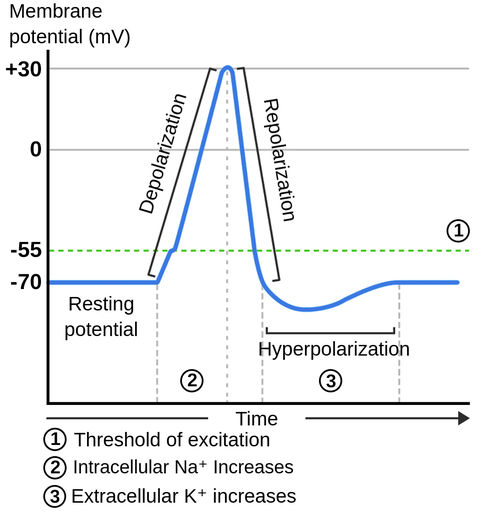
What is a typical resting membrane potential (RMP)?
About -70 mV, with the inside of the cell more negative than the outside
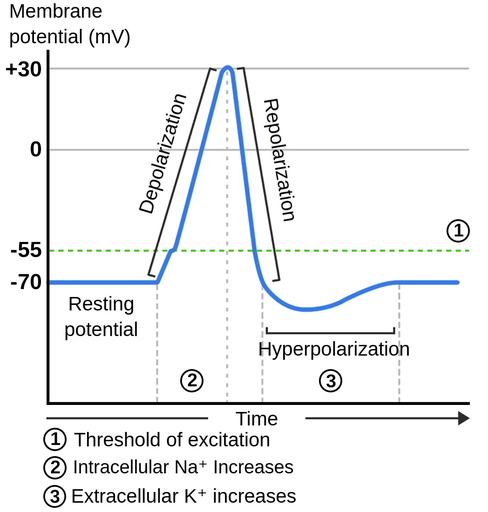
What does polarized mean?
There is a charge difference across the membrane
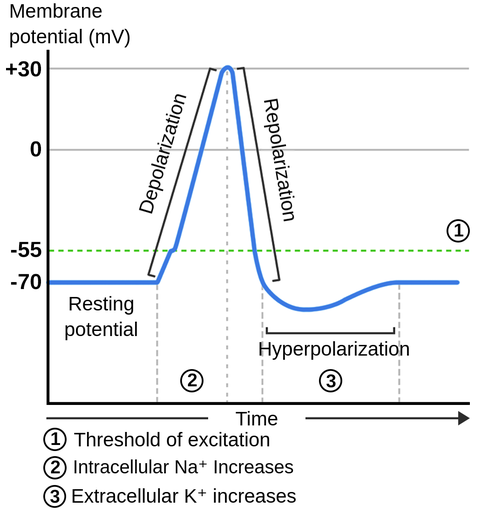
What is depolarization?
The membrane potential becomes less negative, moving toward 0 or positive values
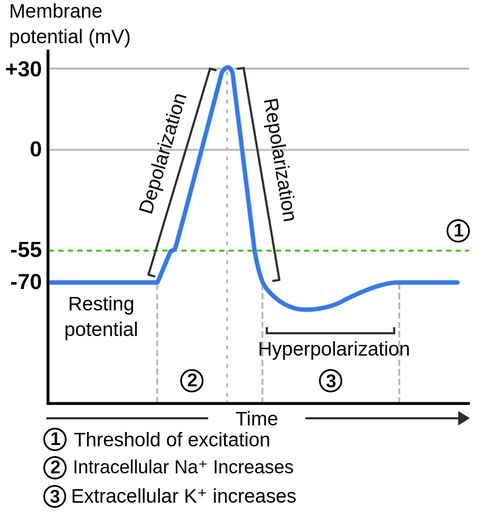
What is hyperpolarization?
The membrane potential becomes more negative than resting
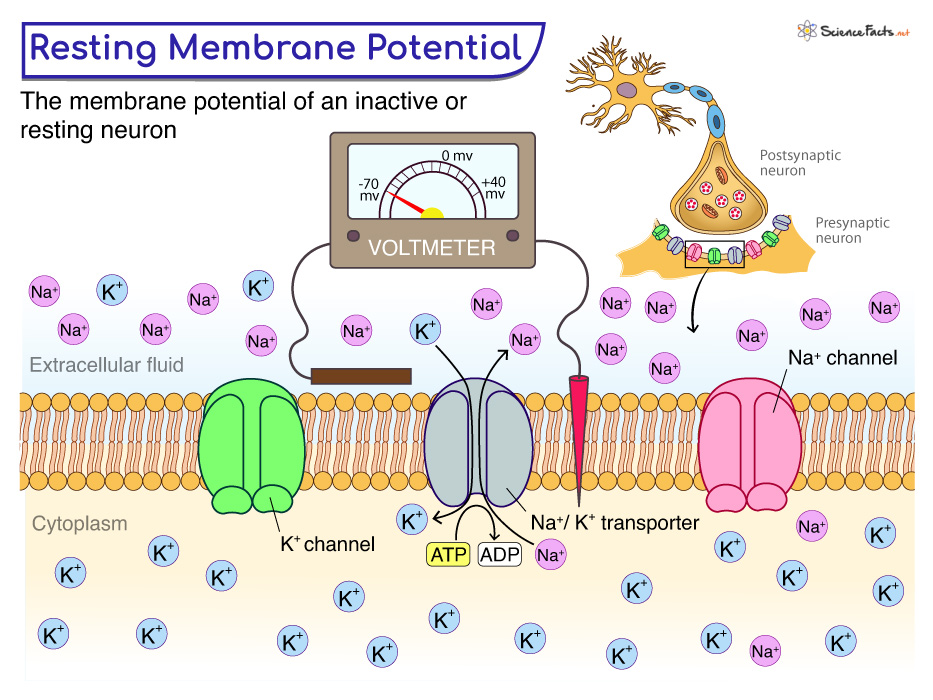
What 4 things are most important in establishing resting membrane potential?
Unequal ion distribution
Selective permeability
Na+/K+ pump activity
Leak channels (especially K+ leak channels)
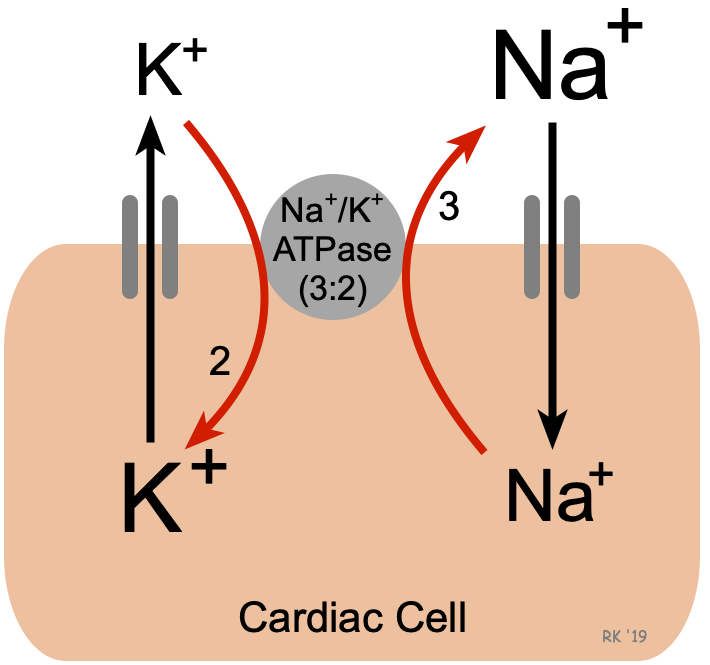
What does the Na+/K+ pump do?
It pumps 3 Na+ out and 2 K+ in, helping maintain concentration gradients and electrical disequilibrium
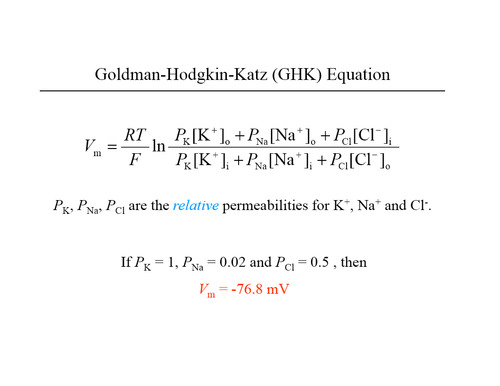
What is the GHK equation used for?
To calculate membrane potential when multiple ions and their relative permeabilities contribute
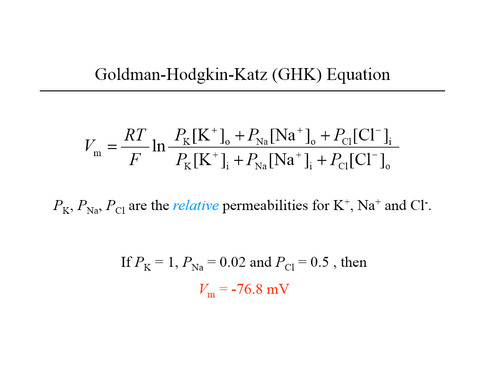
What variables matter most in GHK reasoning for the exam?
Temperature
Ion concentrations inside/outside
Membrane permeability to each ion
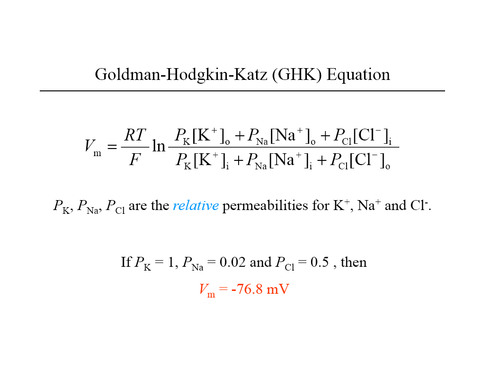
General GHK rule: what kinds of changes depolarize vs hyperpolarize?
Changes that make the inside less negative depolarize
Changes that make the inside more negative hyperpolarize
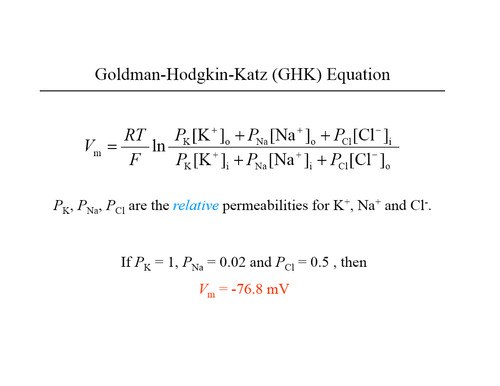
What happens to membrane potential if temperature increases?
The membrane potential becomes larger in magnitude
For a negative Vm, it usually becomes more negative (hyperpolarizes)
What happens if external K+ increases a lot?
The membrane depolarizes because the K+ gradient is reduced and Vm moves away from EK
What happens if Na+ permeability increases a lot?
The membrane depolarizes because Na+ has more influence and drives Vm in the positive direction
What is alpha (α) in membrane potential problems?
Alpha is the ratio PNa/PK, the membrane permeability to sodium relative to potassium
If PNa equals PK, what is alpha?
1
If sodium leak channels are removed from a resting cell, what happens to Vm?
It hyperpolarizes because Na+ contributes less to the resting membrane potential
If a resting cell becomes more permeable to K+, what happens to Vm?
It hyperpolarizes because Vm moves closer to EK
If the Na+/K+ ATPase is inhibited, what happens to Vm over time?
It depolarizes over time as Na+ builds up inside and K+ builds up outside
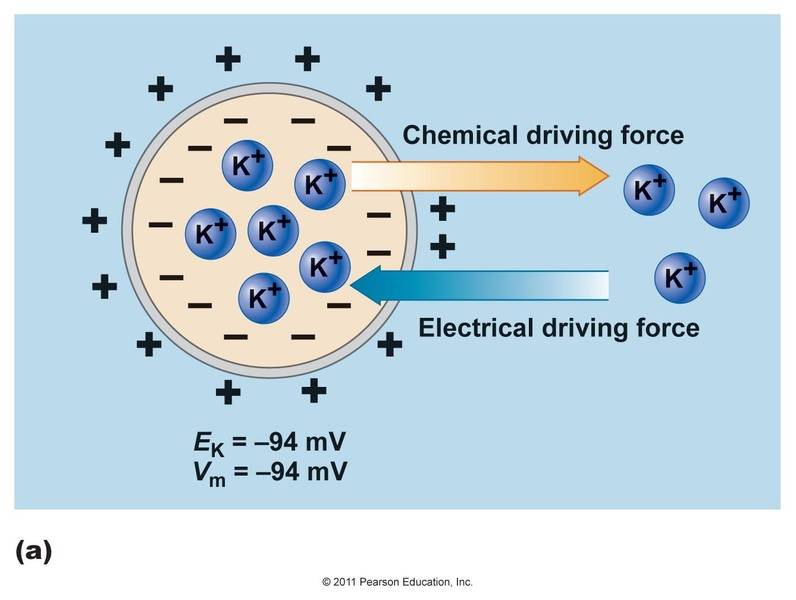
What generates chemical driving force?
An ion's concentration gradient
Ions move from high concentration to low concentration
What generates electrical driving force?
The membrane potential; cations are attracted to negative areas and anions to positive areas
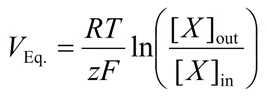
What does the Nernst equation calculate?
The equilibrium potential (Eion) for one specific ion
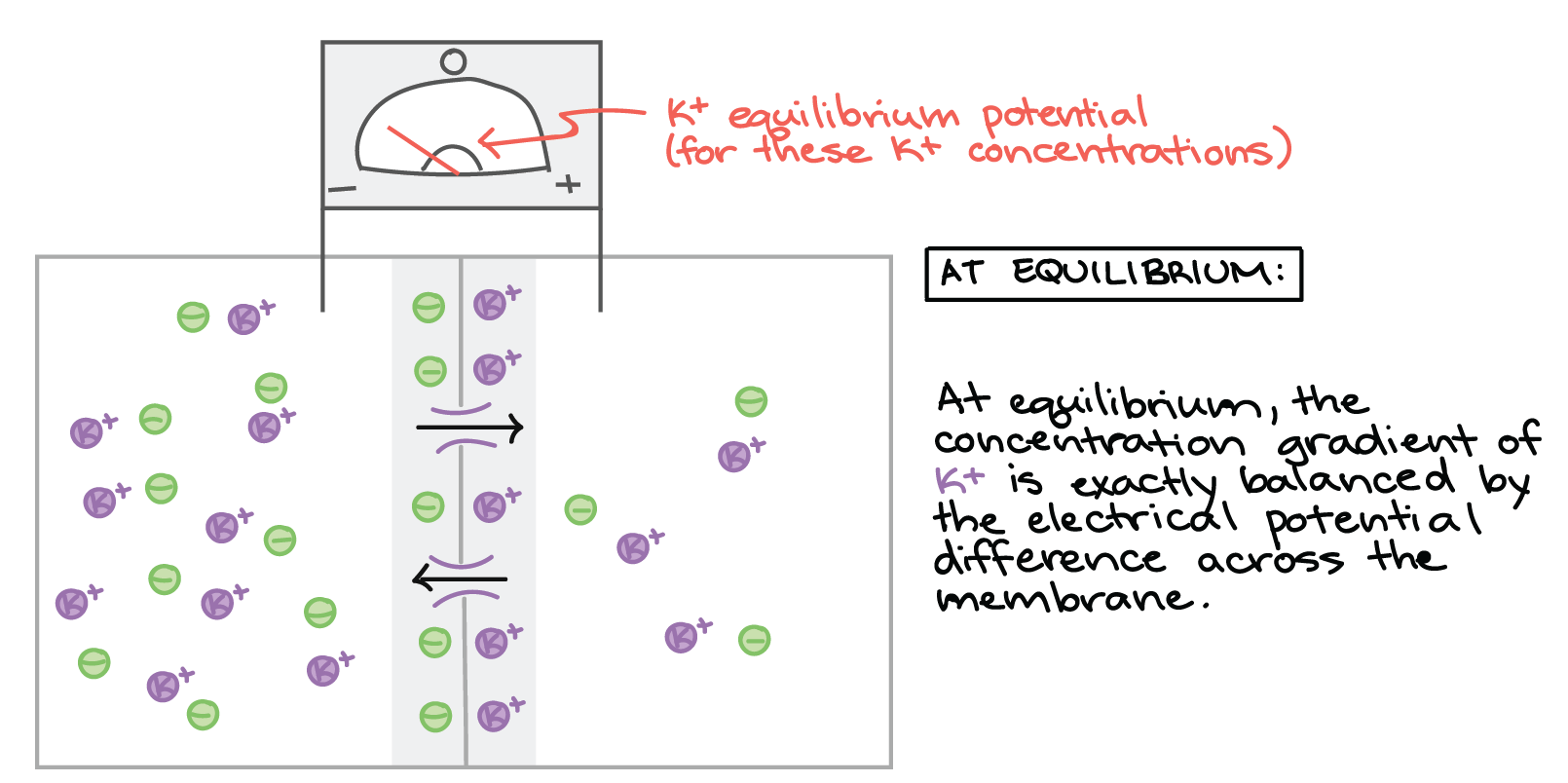
What does equilibrium potential mean?
The membrane potential at which chemical and electrical driving forces for that ion balance, so there is no net movement
Nernst vs GHK
Nernst = one ion equilibrium potential
GHK = whole-cell membrane potential with multiple ions
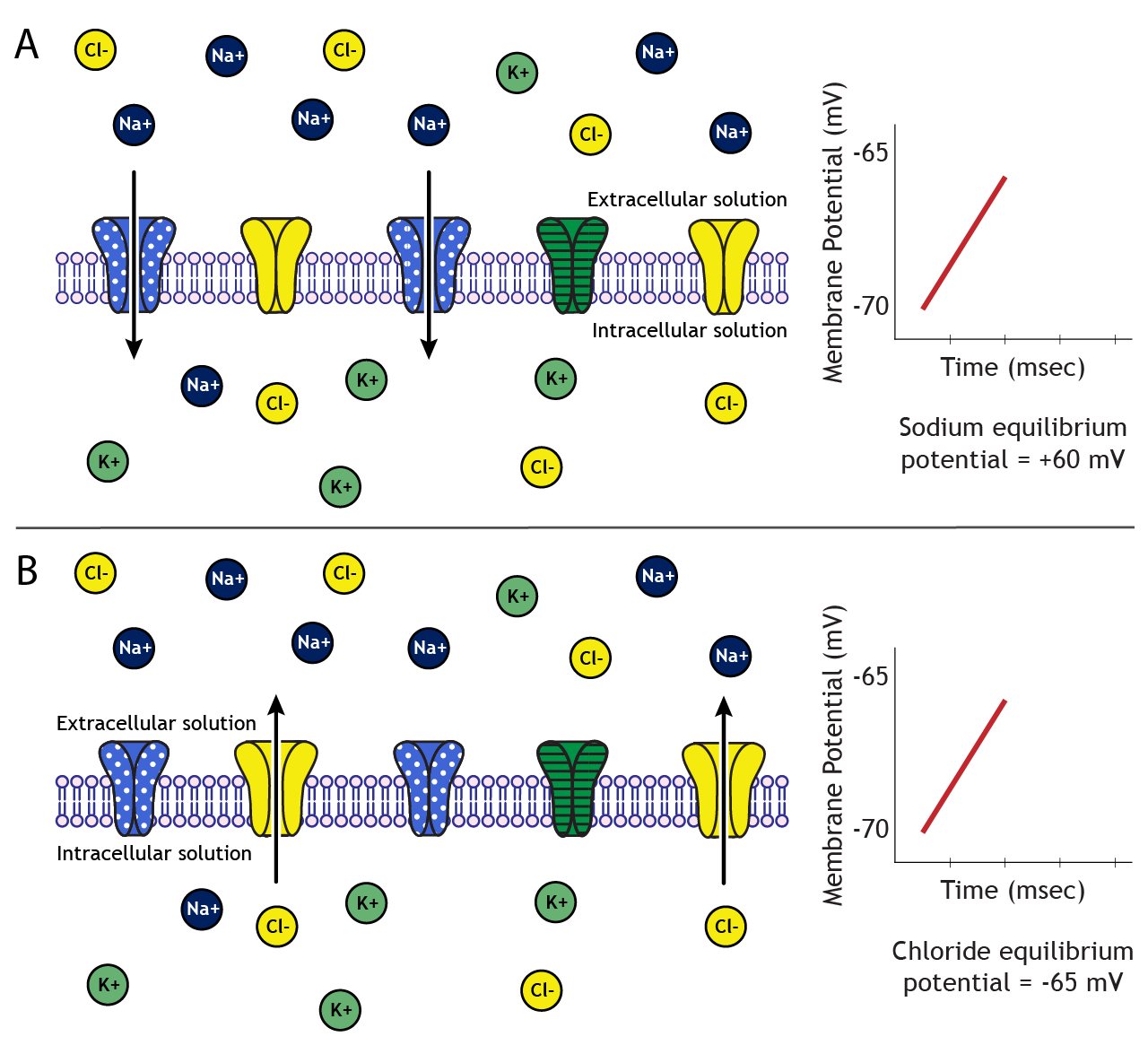
Big rule for predicting ion movement from Vm and Eion
The ion moves in the direction that drives Vm toward its own equilibrium potential
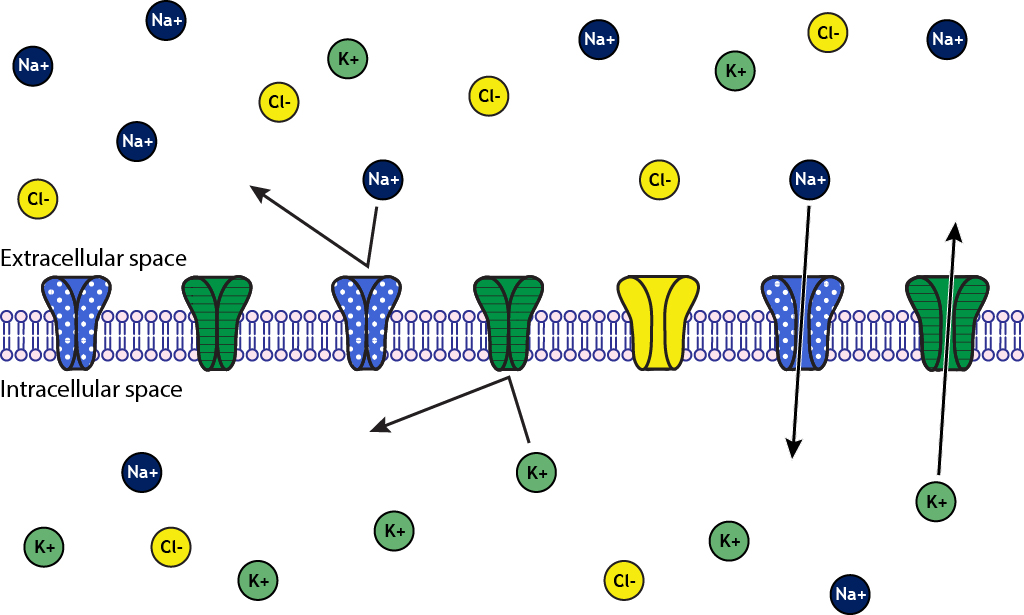
If Vm is different from Eion, what does that mean?
There will be net movement of that ion if channels for it are open
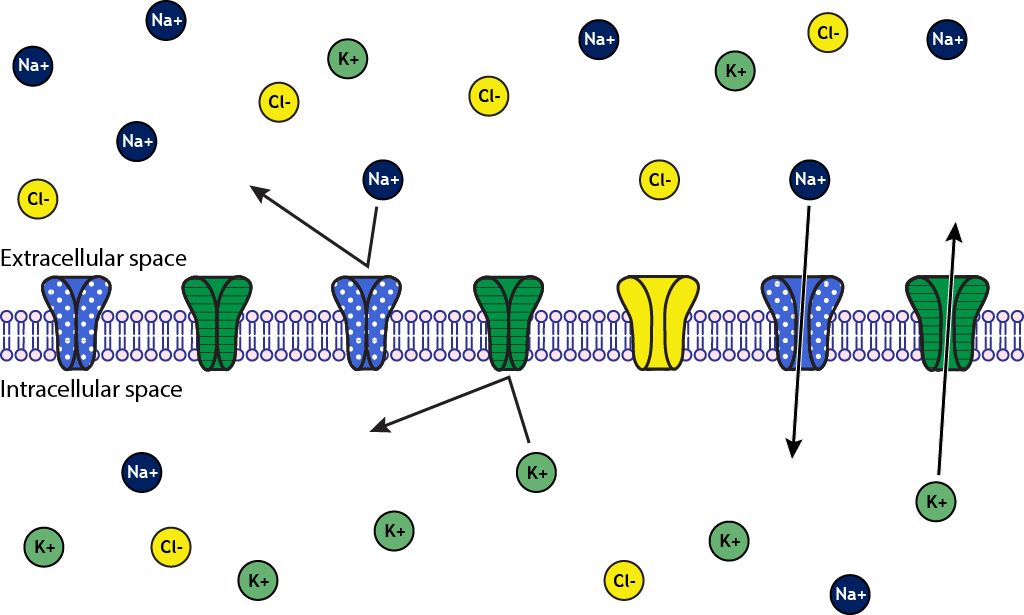
In a typical resting cell, which way do Na+, K+, and often Cl- tend to move?
Na+ tends to move in
K+ tends to move out
Cl- often tends to move out depending on Vm vs ECl
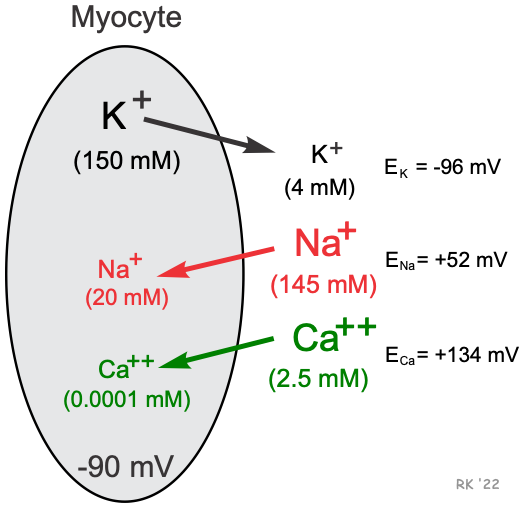
For Ca2+ with high outside concentration and negative Vm, which way does it move if a channel opens?
Into the cell
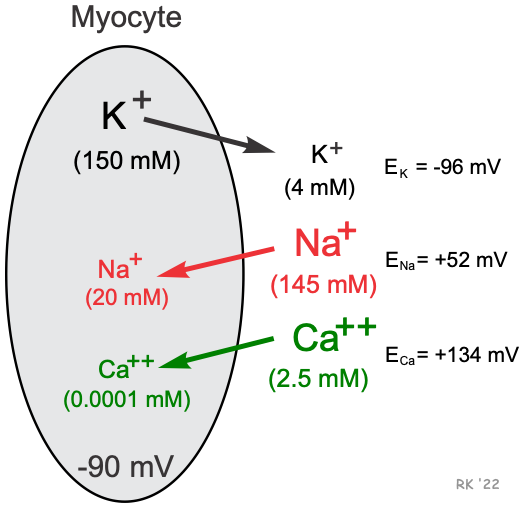
For Ca2+ entering a resting cell, which forces promote movement?
Both chemical and electrical driving forces promote inward movement
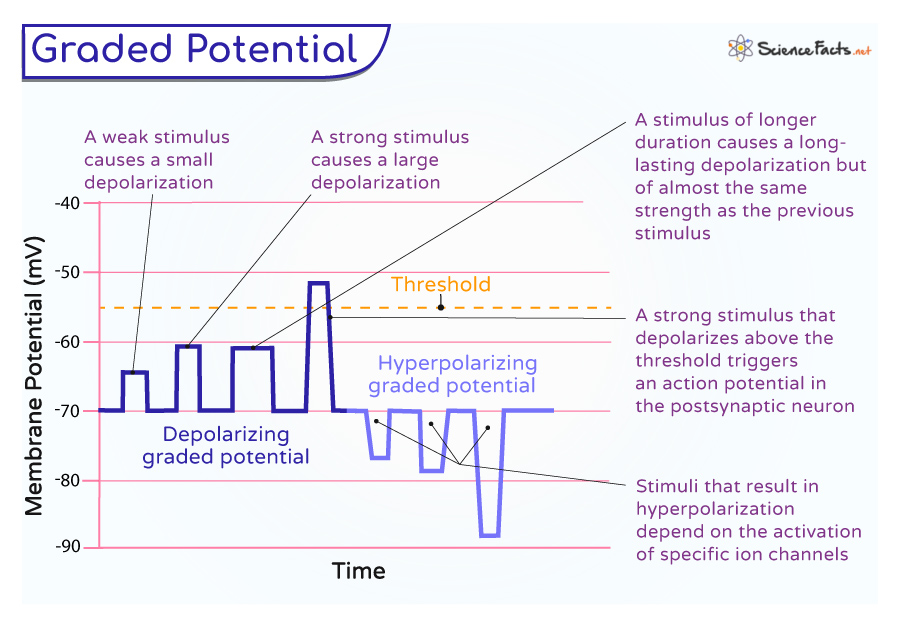
What is a graded potential?
A small, local change in membrane potential whose size varies with stimulus strength
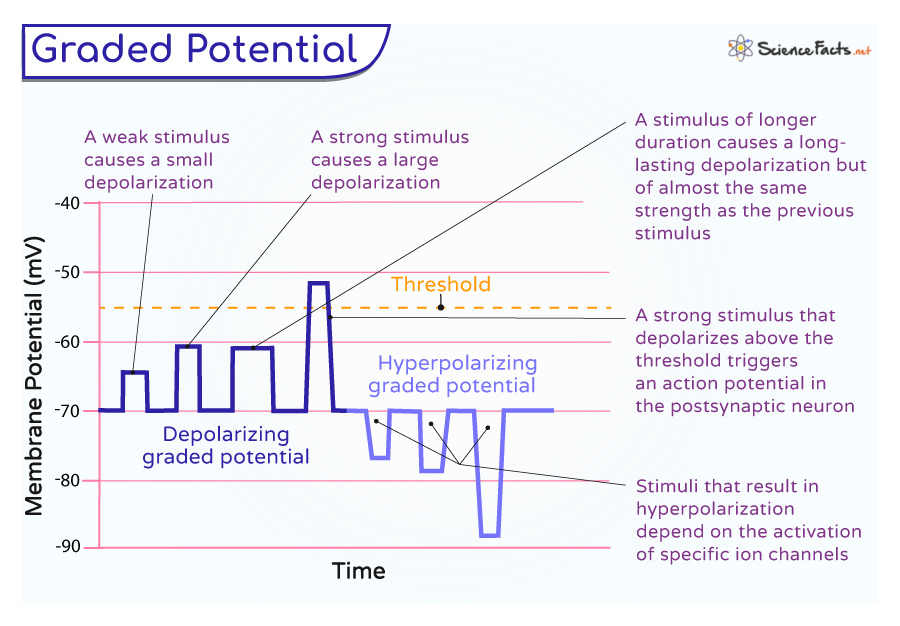
Depolarizing graded potential
Makes the membrane less negative, often from Na+ entering or reduced K+ leaving, and brings the cell closer to threshold
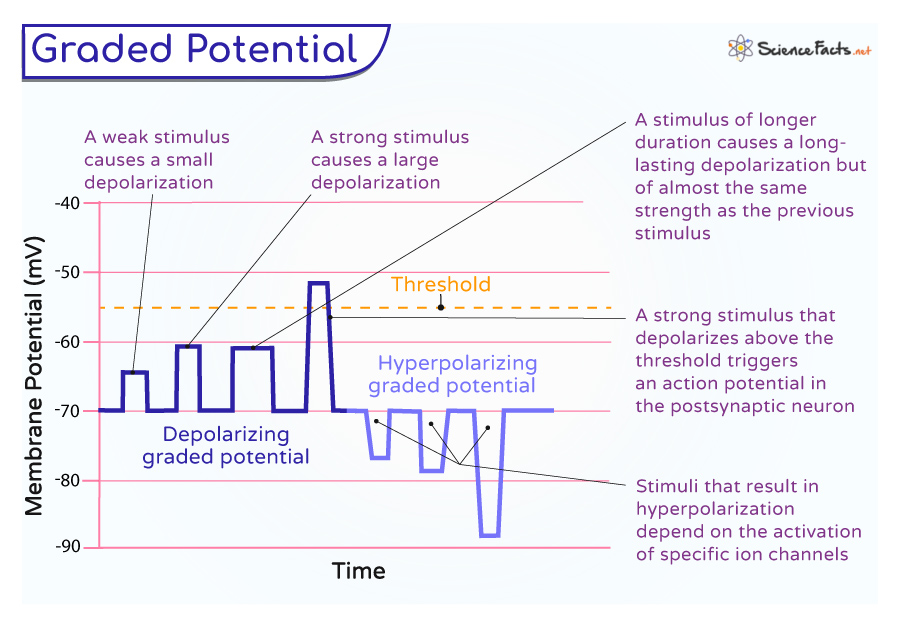
Hyperpolarizing graded potential
Makes the membrane more negative, often from K+ leaving or Cl- entering, and moves the cell farther from threshold
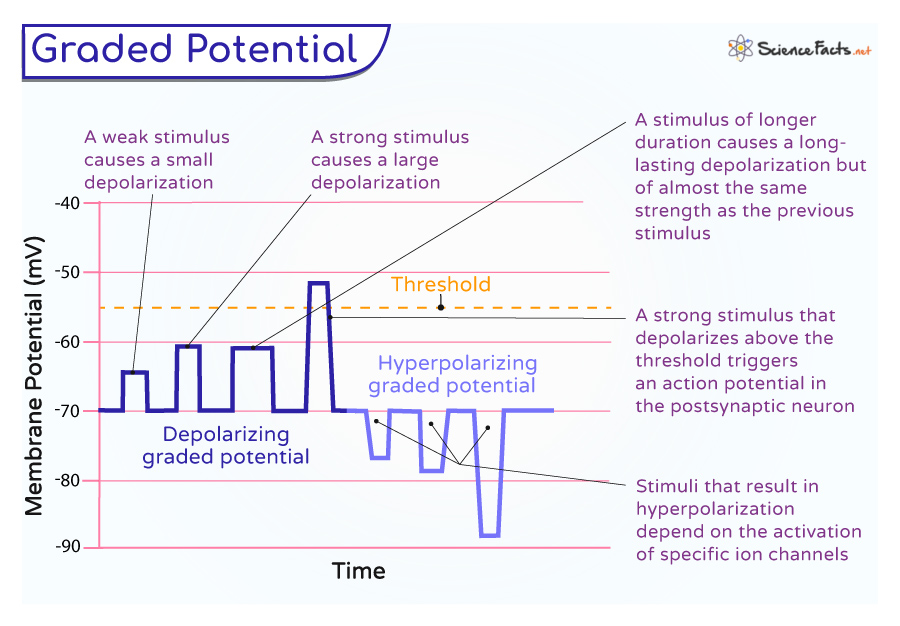
How can a graded potential lead to an action potential?
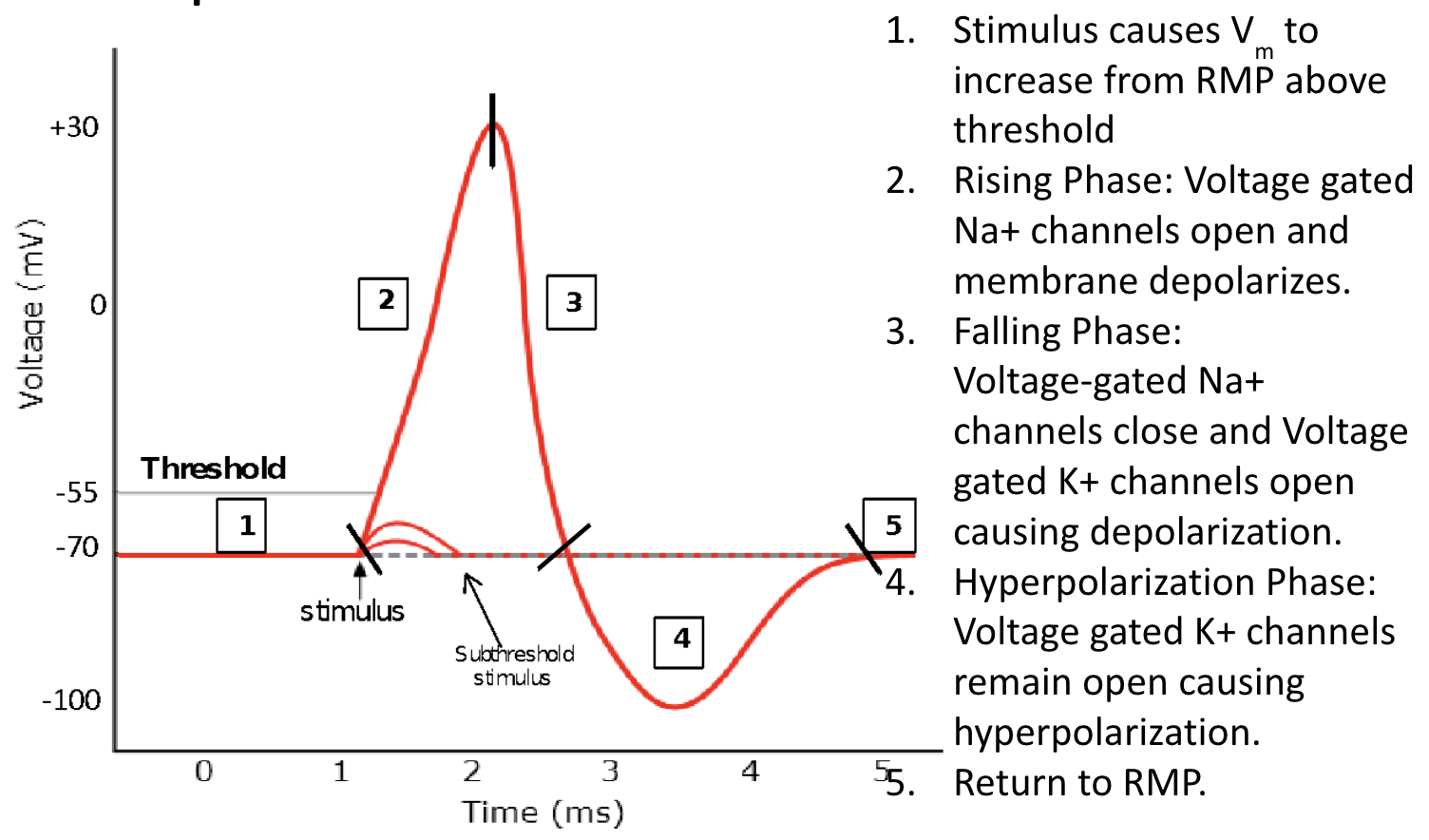
If depolarization reaching the axon hillock reaches threshold, voltage-gated Na+ channels open and an action potential begins
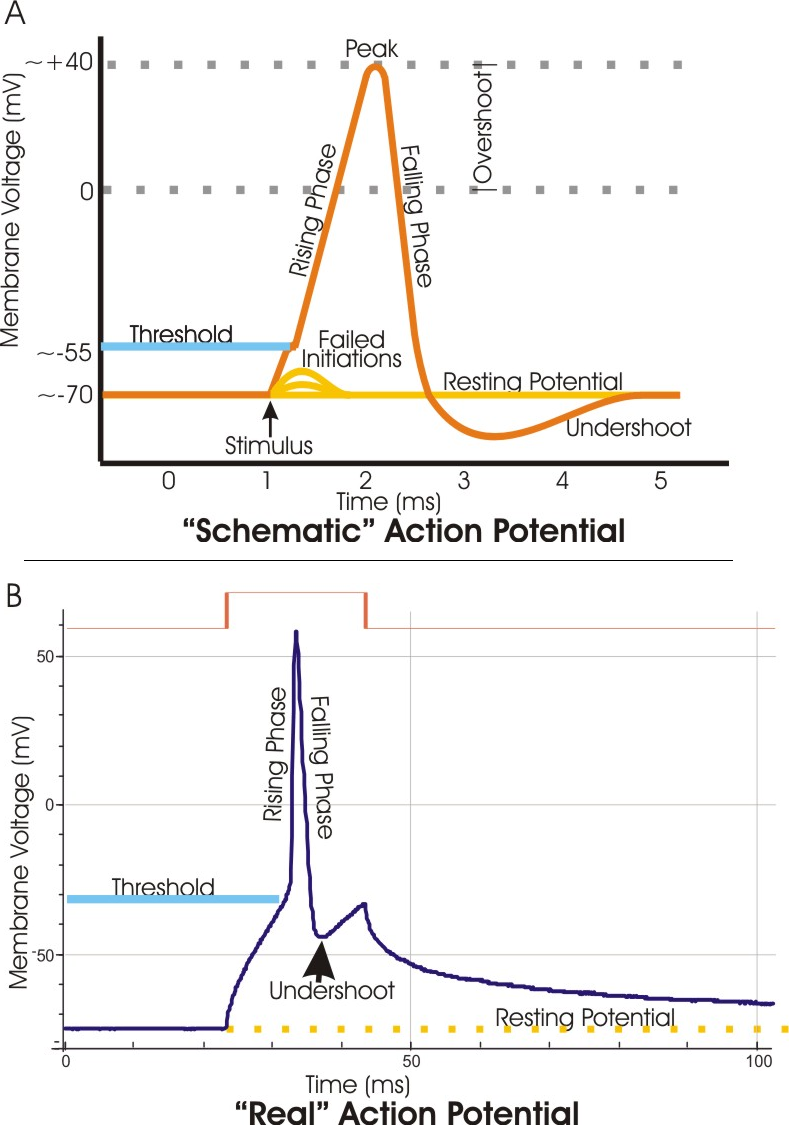
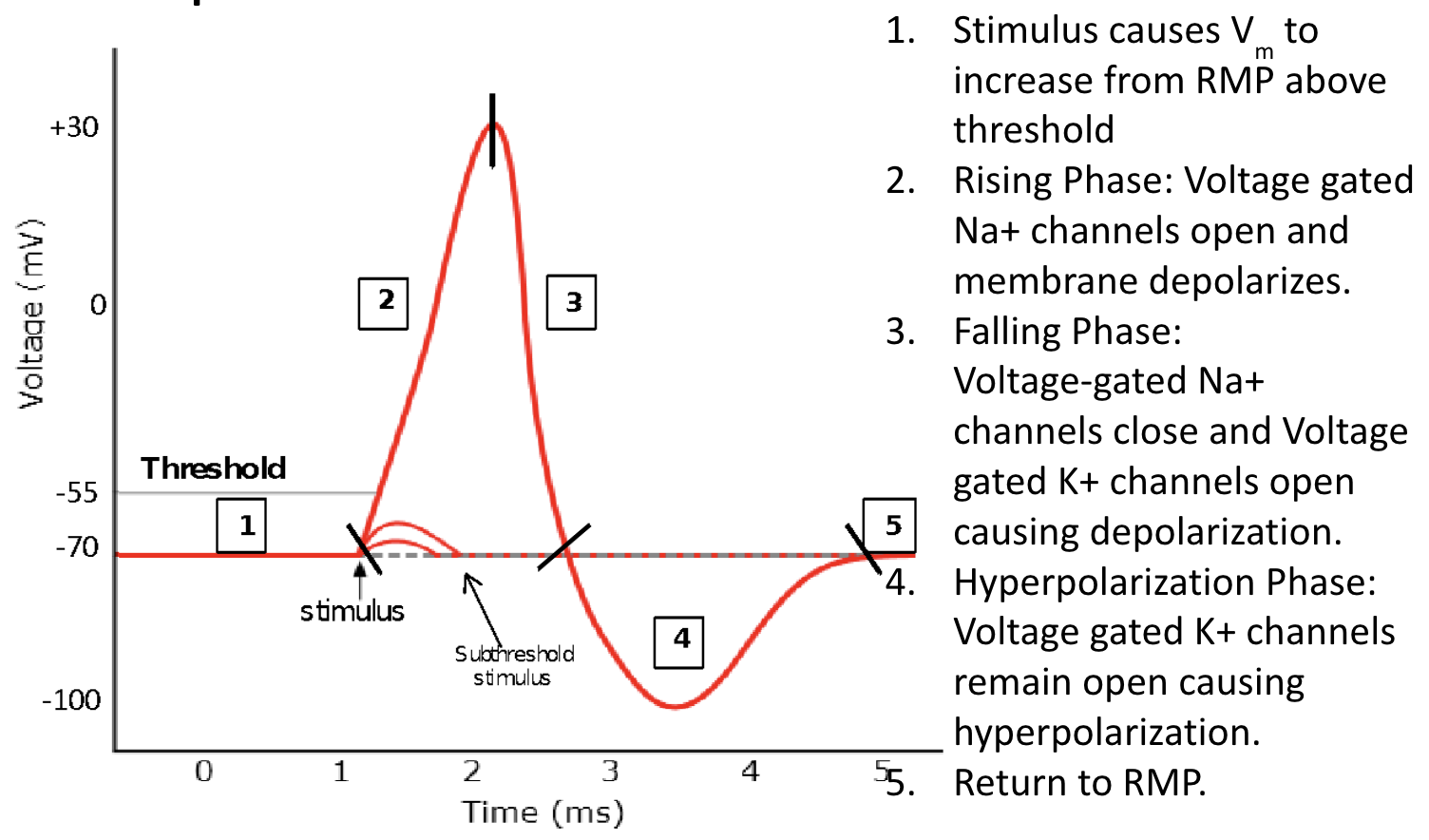
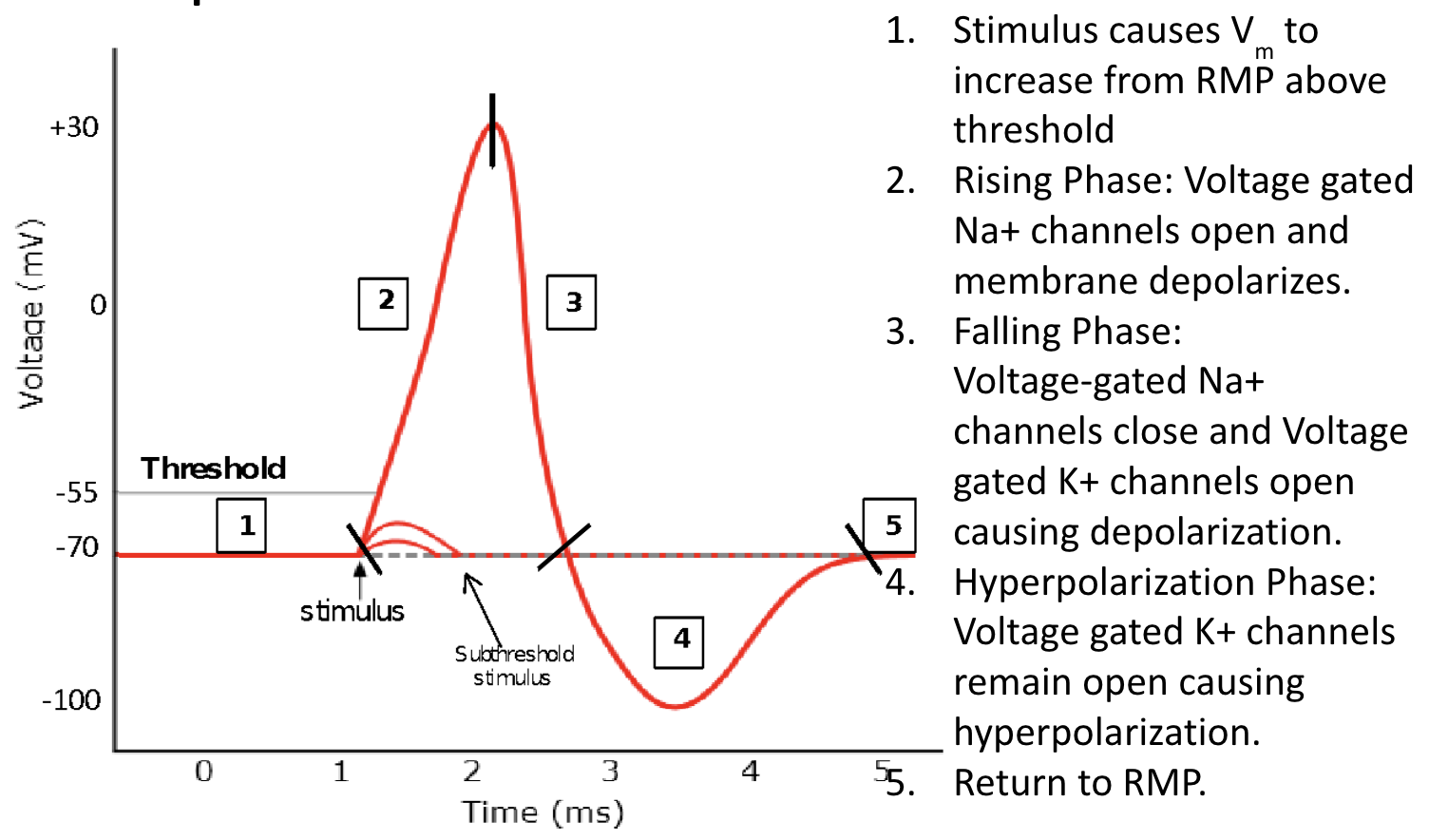
What is threshold in a mammalian neuron?
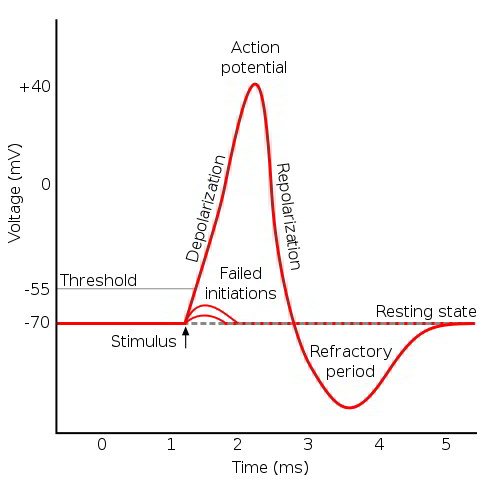
About -55 mV
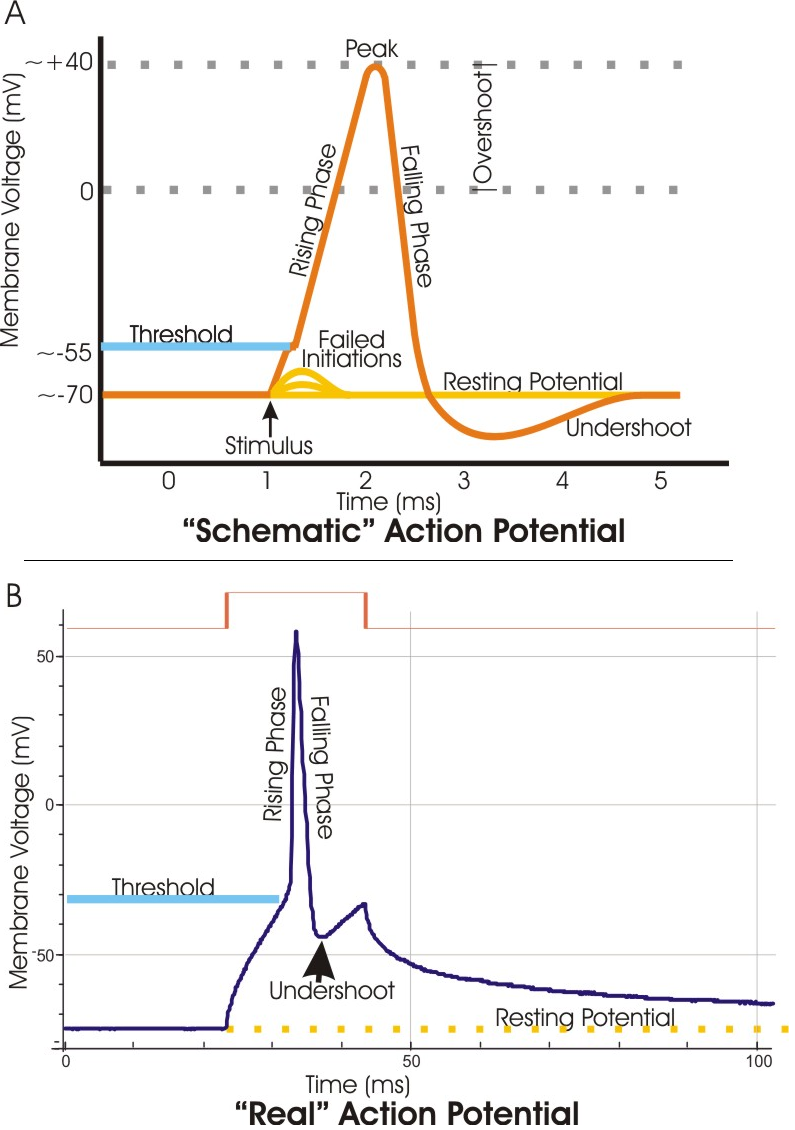
What is the peak of a typical mammalian neuron action potential?
About +30 to +40 mV
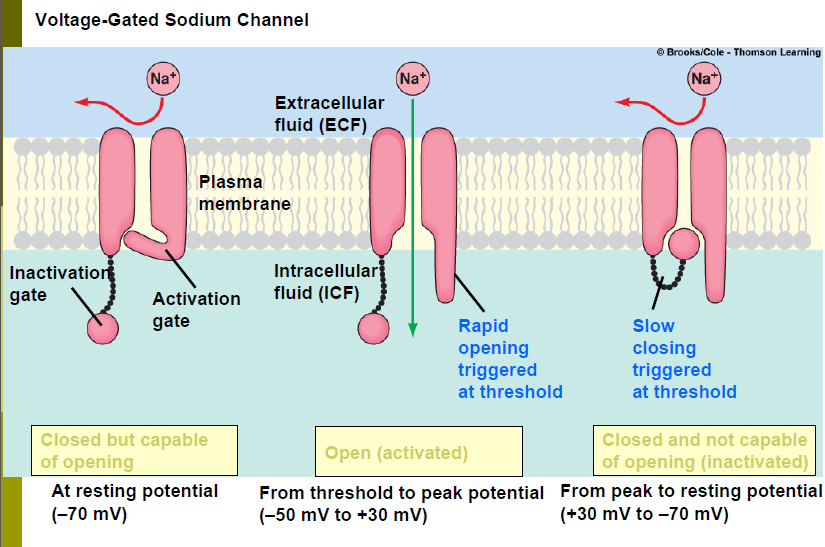
Resting state of voltage-gated Na+ channels
Closed
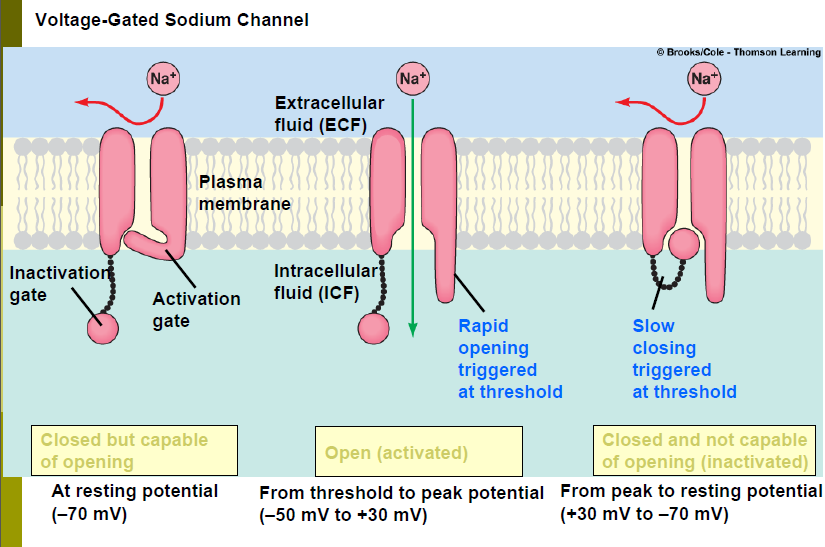
States of a voltage-gated Na+ channel
Closed, open, inactivated
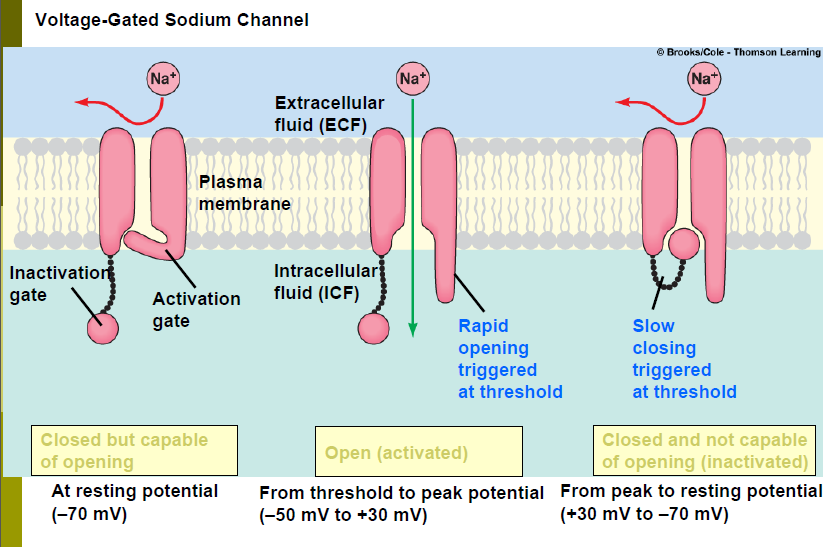
Gates on a voltage-gated Na+ channel
An activation gate and an inactivation gate
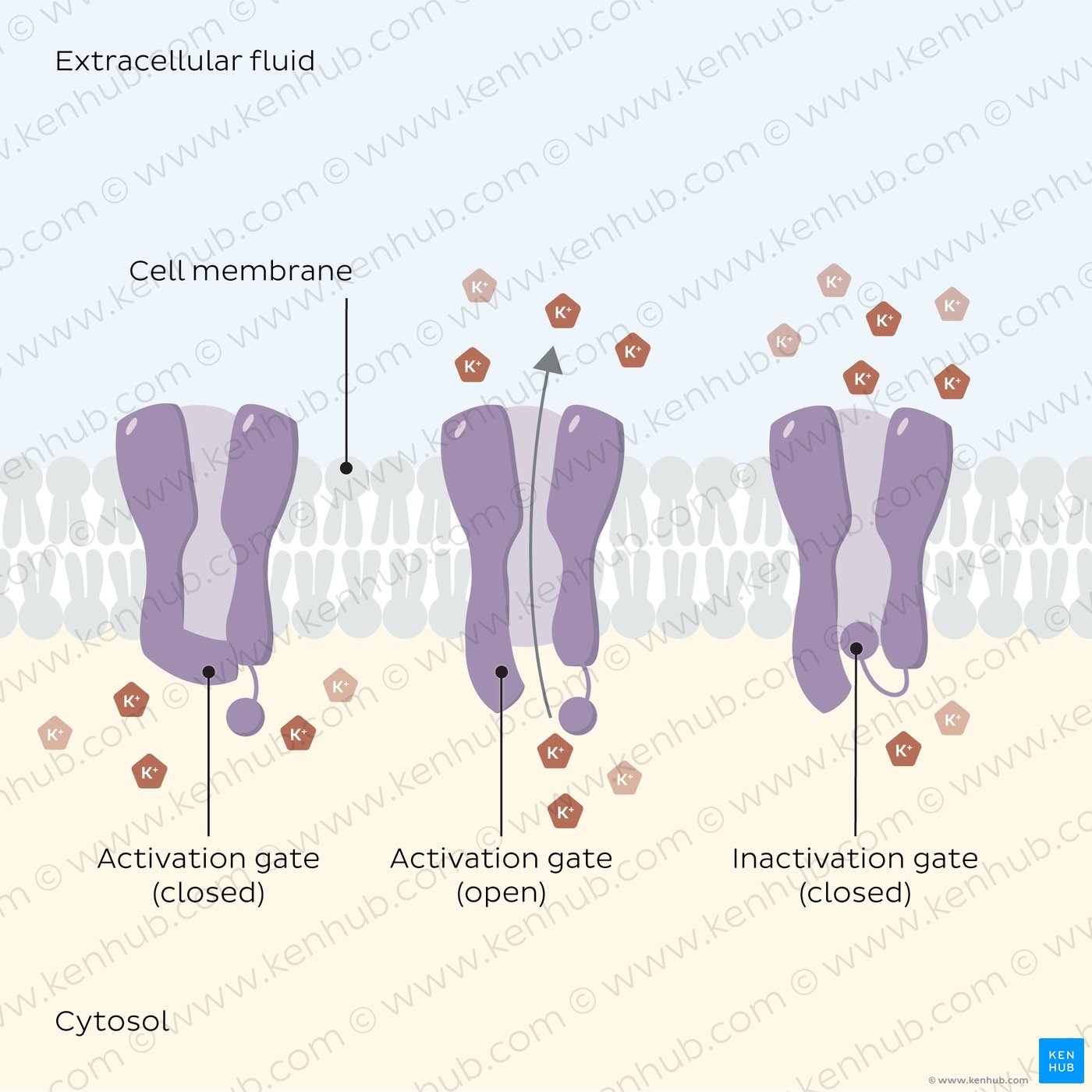
Gate on a voltage-gated K+ channel
An activation gate
How do voltage-gated Na+ and K+ channels differ in timing?
Na+ channels open quickly and inactivate quickly; K+ channels open slowly and close slowly
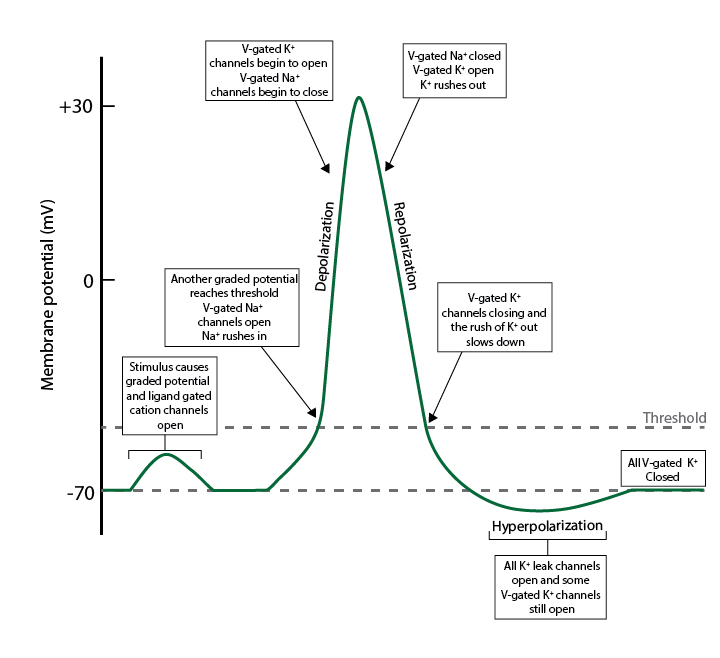
What happens at threshold?
Voltage-gated Na+ activation gates open quickly and Na+ permeability increases sharply
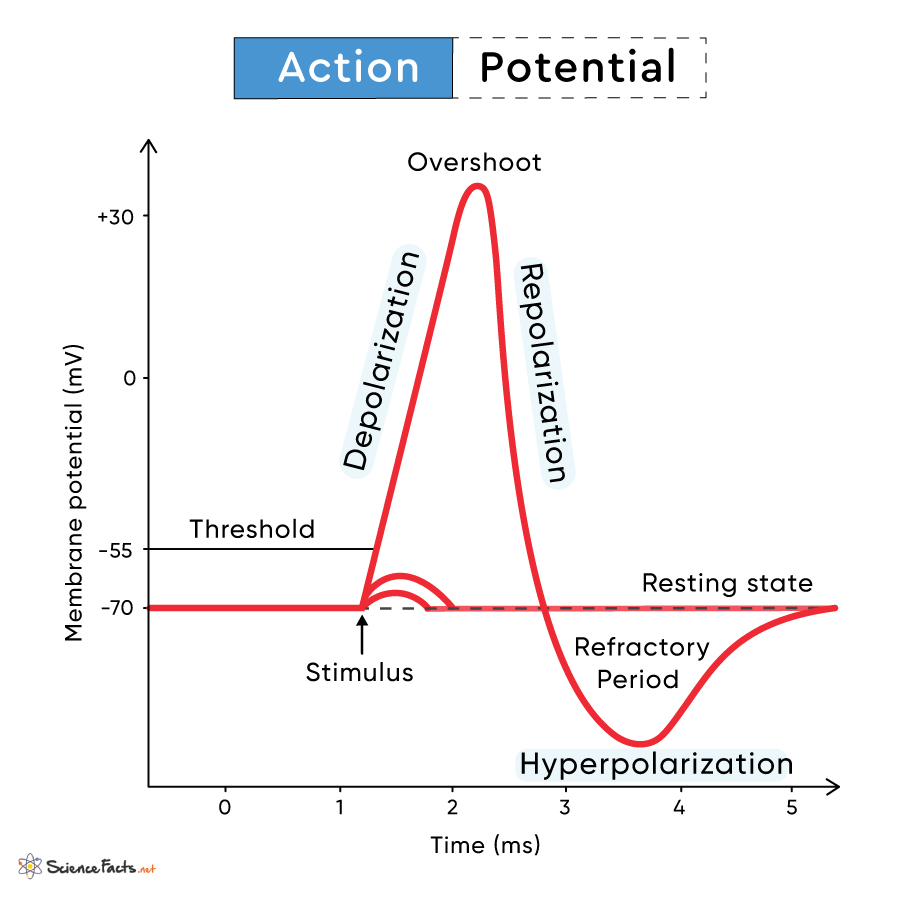
What happens during the rising phase of the action potential?
Na+ channels are open, Na+ rushes in, and the membrane rapidly depolarizes
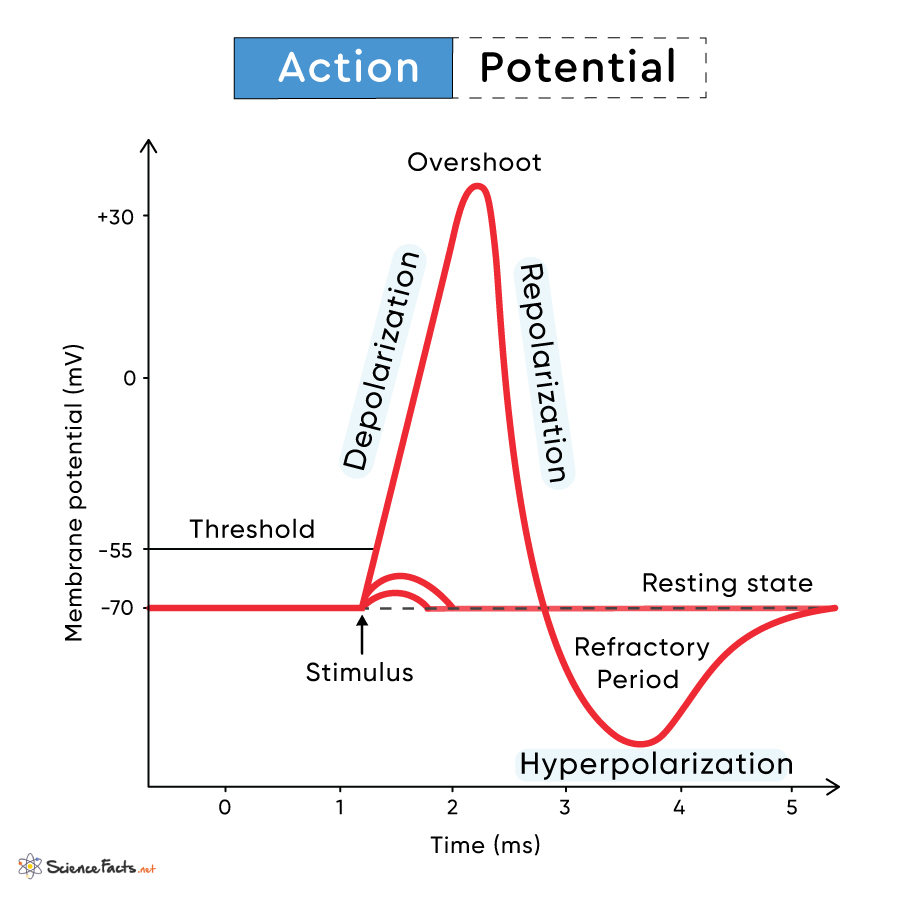
What happens at the peak of the action potential?
Na+ channels inactivate, Na+ influx stops, and K+ channels are open
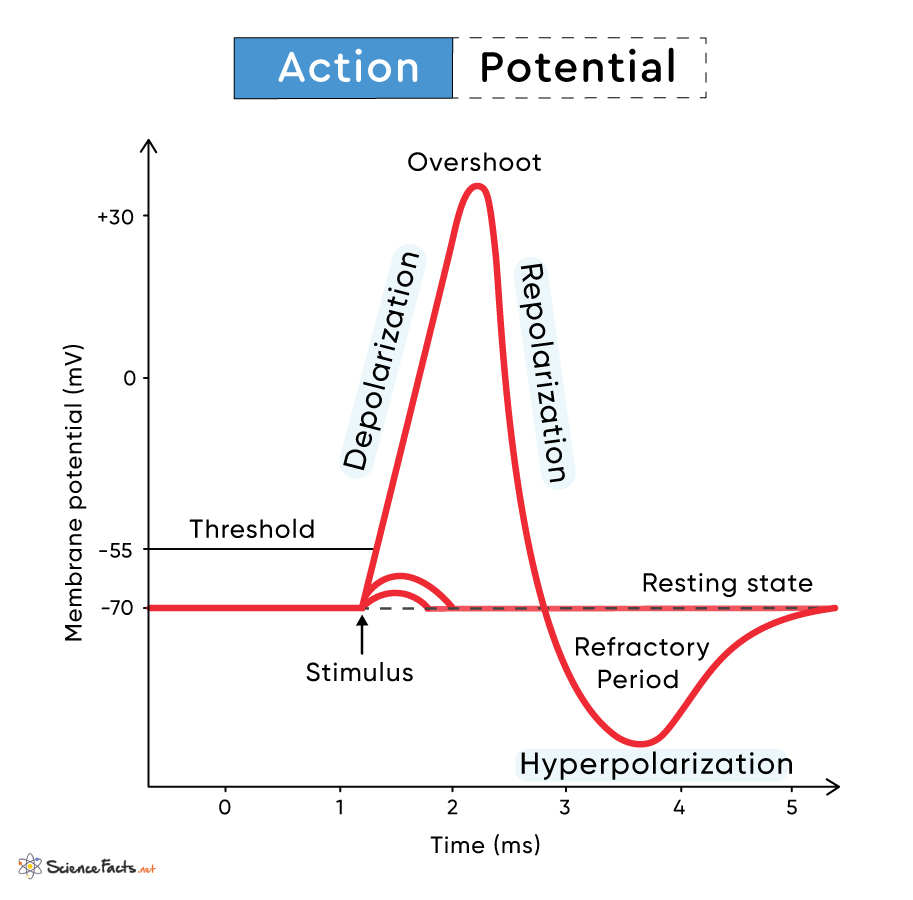
What happens during the falling phase?
Na+ channels are inactivated, K+ channels are open, and K+ leaves the cell rapidly
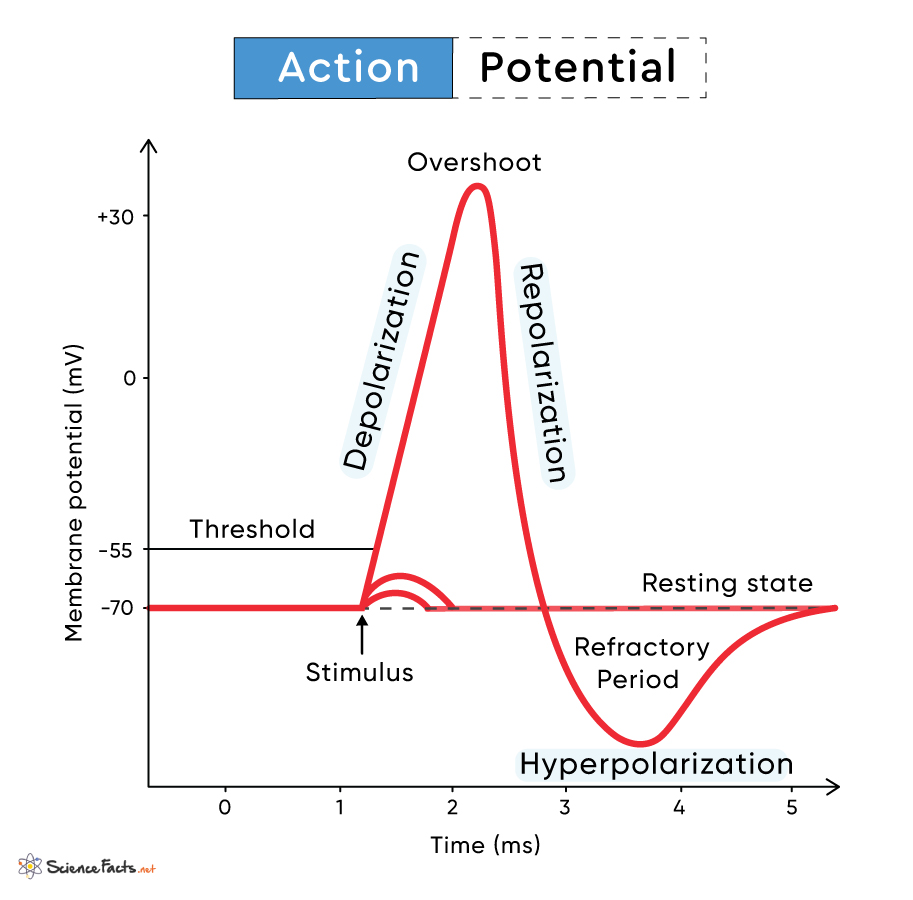
What happens during hyperpolarization?
K+ channels stay open a little longer, so Vm becomes more negative than resting before returning to RMP
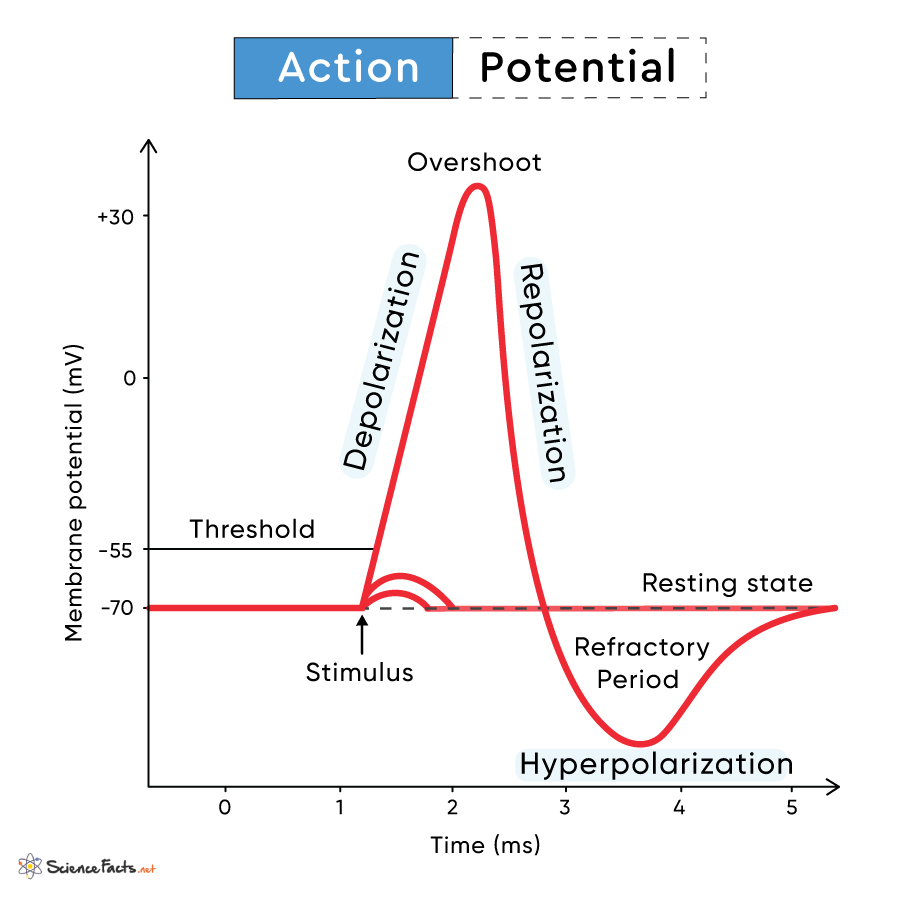
What is the main ion movement during the rising phase?
Na+ moves rapidly into the cell
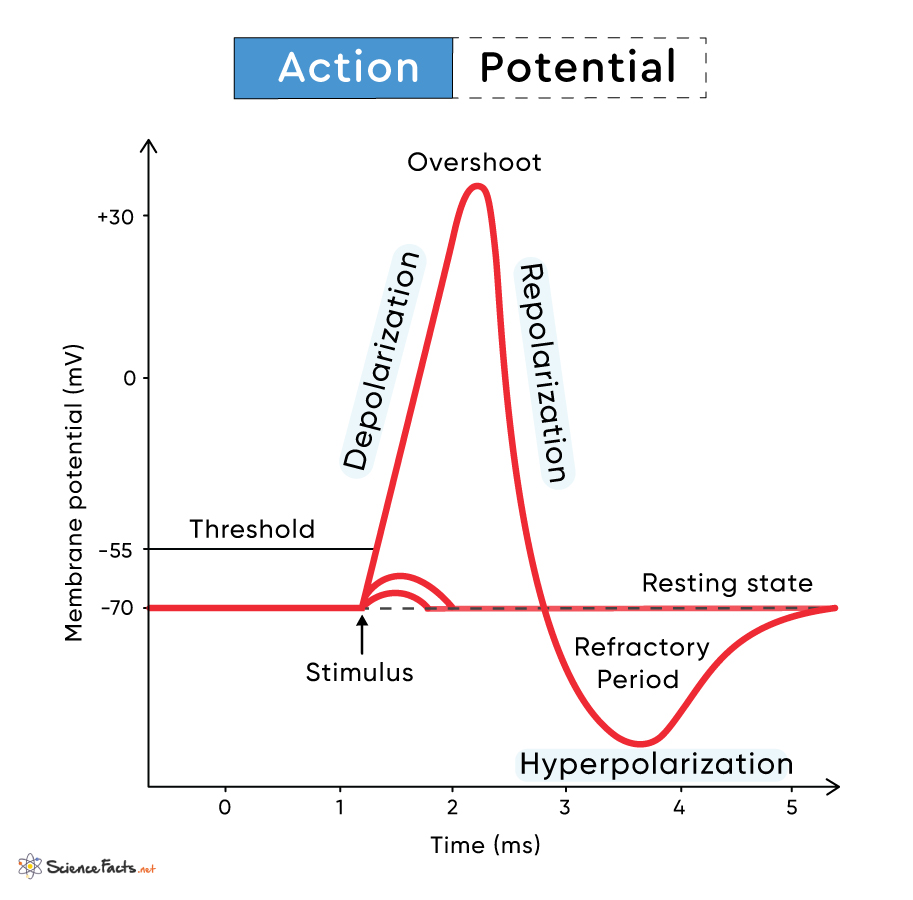
What is the main ion movement during the falling and hyperpolarization phases?
K+ moves out of the cell
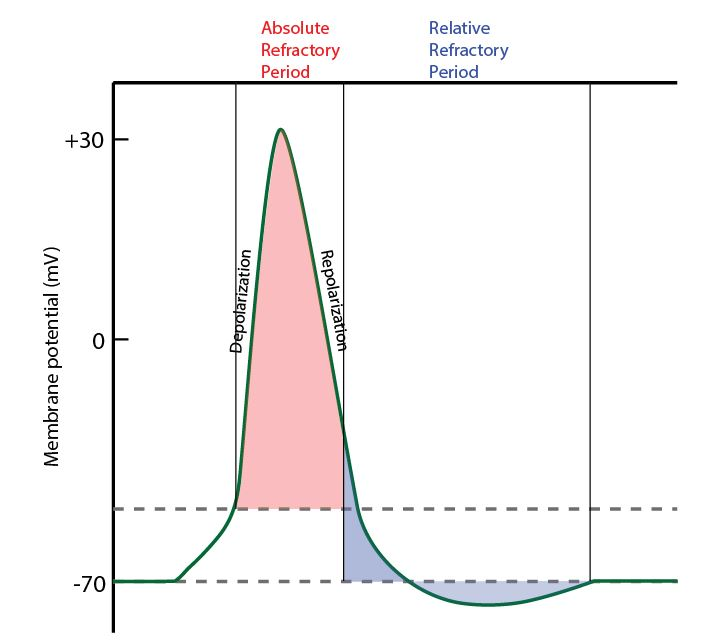
What is the absolute refractory period?
The period when no second action potential can occur, no matter how strong the stimulus
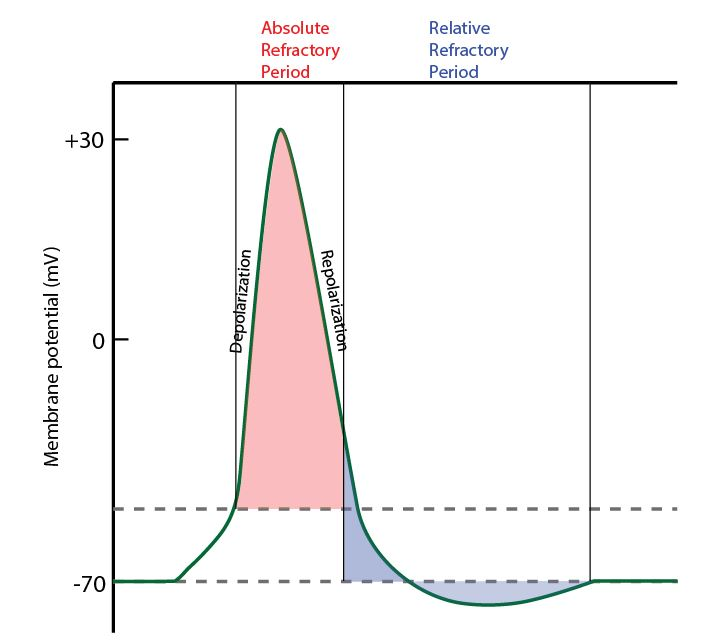
What causes the absolute refractory period?
Voltage-gated Na+ channels are open or inactivated, and inactivated channels cannot reopen immediately
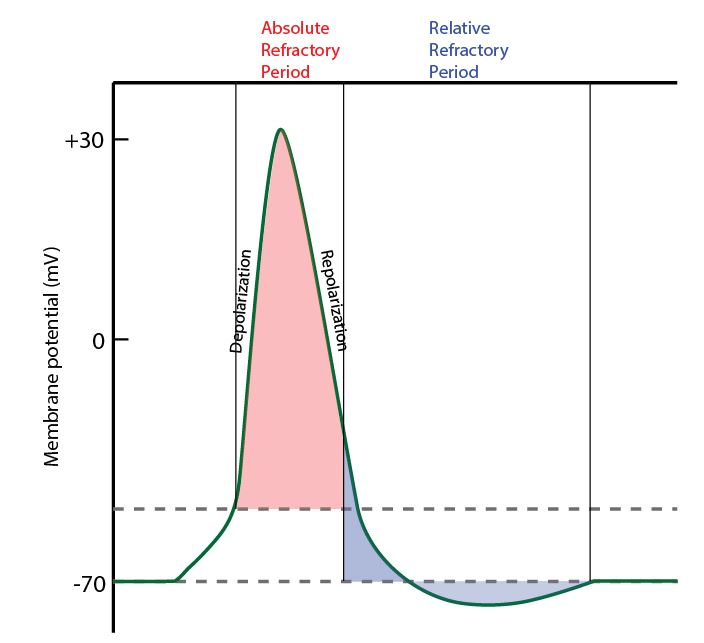
What is the relative refractory period?
The period when a second action potential is possible, but only with a stronger-than-normal stimulus
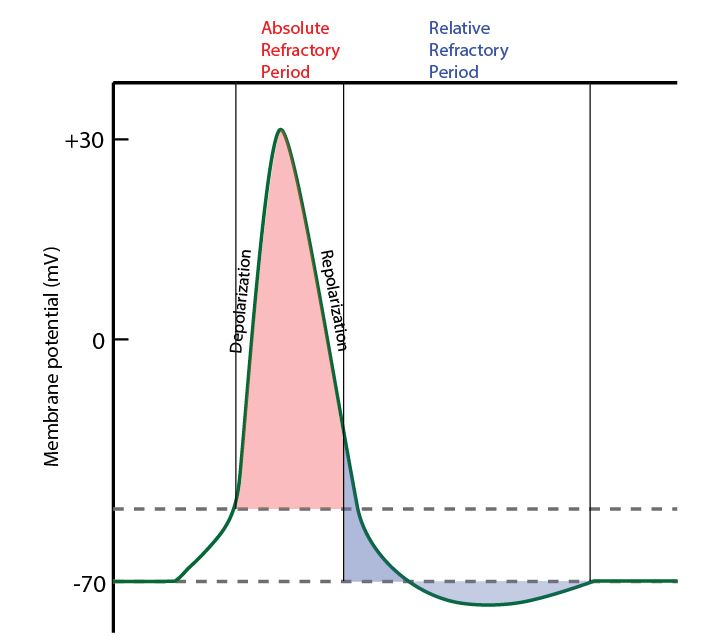
What causes the relative refractory period?
Many Na+ channels have reset, but K+ channels are still open and the membrane is hyperpolarized
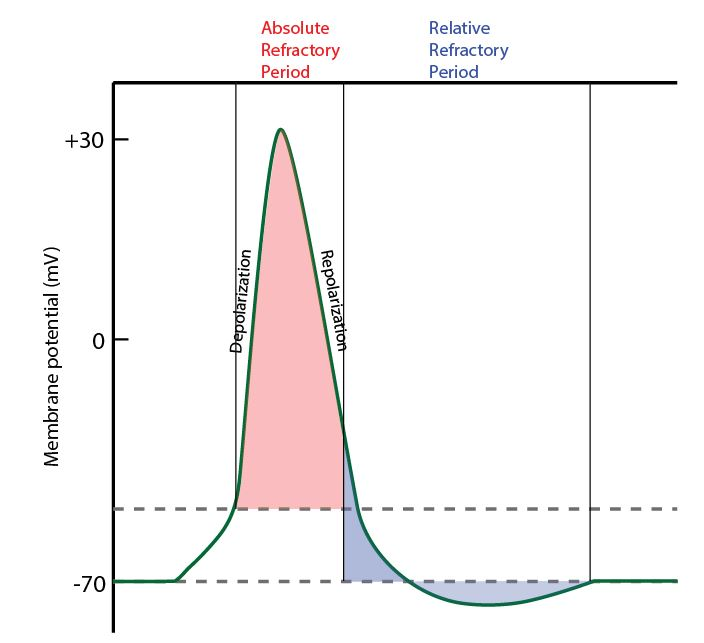
Channel states during absolute refractory period
Na+ channels are open then inactivated; K+ channels are opening/open
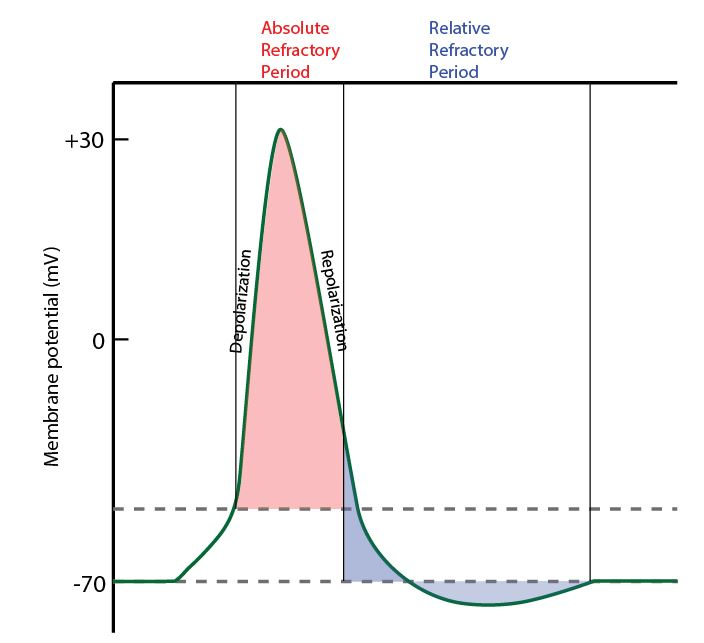
Channel states during relative refractory period
Na+ channels have reset to closed; K+ channels are still open and slowly closing
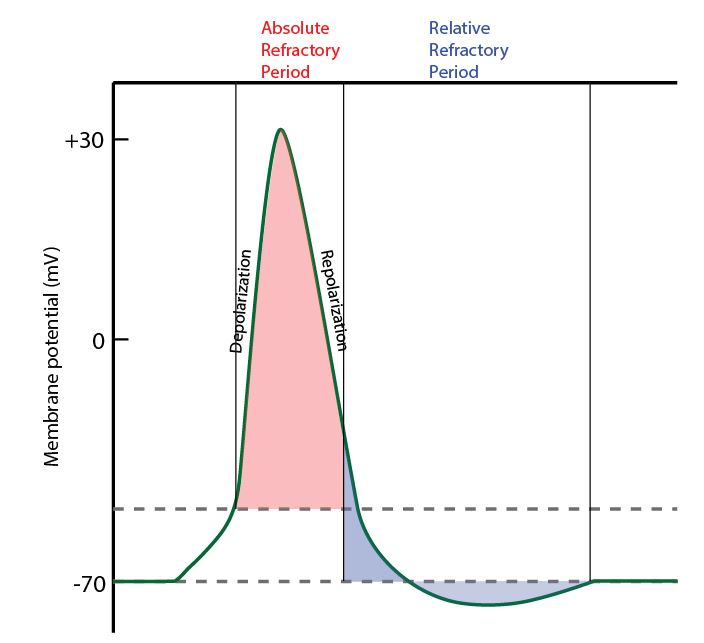
Why do refractory periods make action potentials move in one direction?
The membrane region behind the AP is refractory, so it cannot immediately fire again
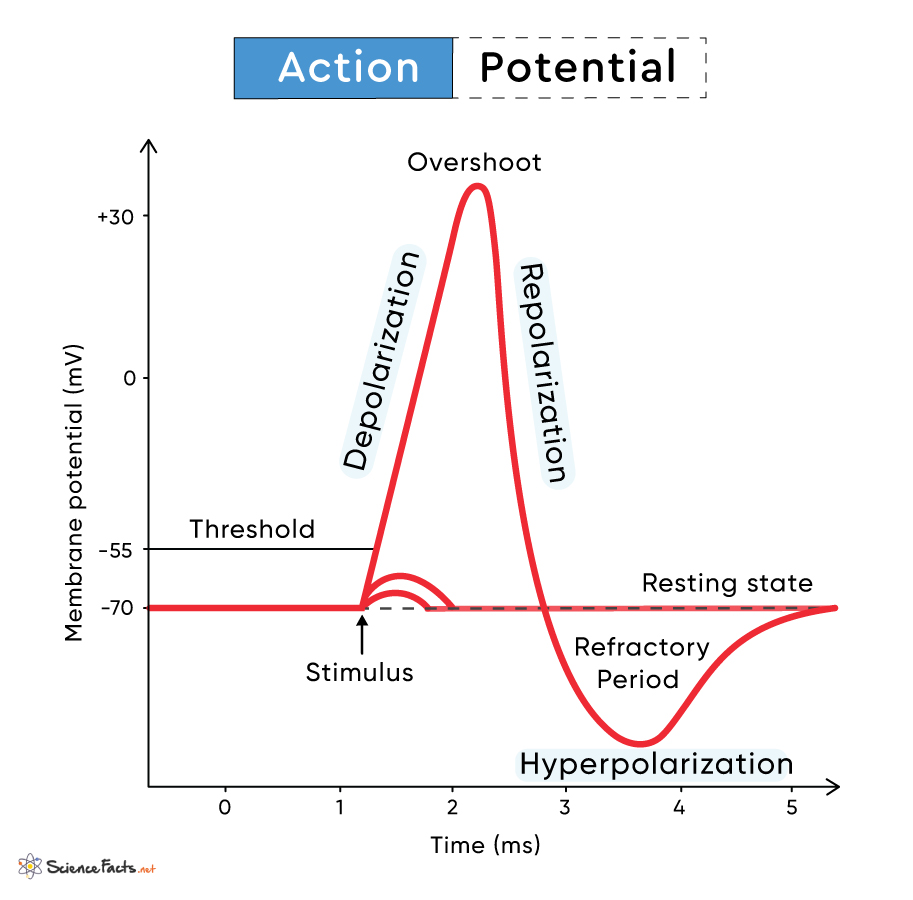
Are action potentials all-or-none?
Yes
If threshold is reached, the action potential has its full amplitude
If threshold is not reached, no action potential occurs
Difference between graded potentials and action potentials
Graded potentials vary in size and can depolarize or hyperpolarize
Action potentials are stereotyped, all-or-none, and use voltage-gated Na+ and K+ channels
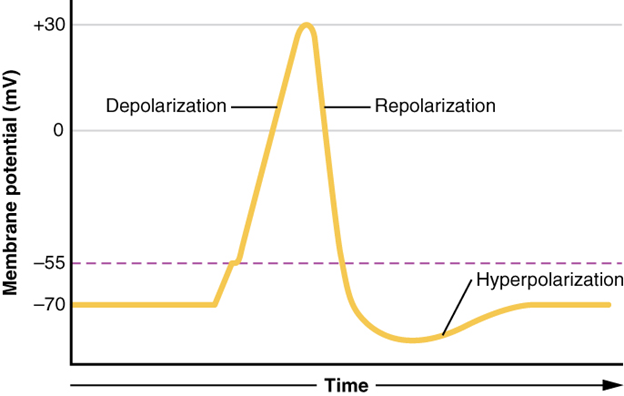
How does increasing alpha relate to an action potential?
A higher alpha means sodium permeability is higher relative to potassium, which happens when many voltage-gated Na+ channels are open
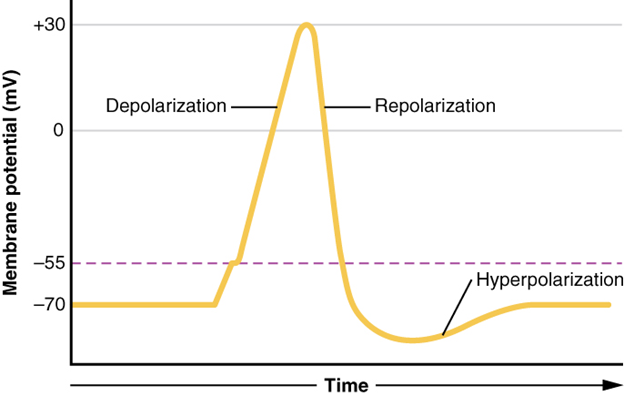
Why is alpha high at the peak of an action potential?
Because many voltage-gated Na+ channels are open, so sodium permeability is very high
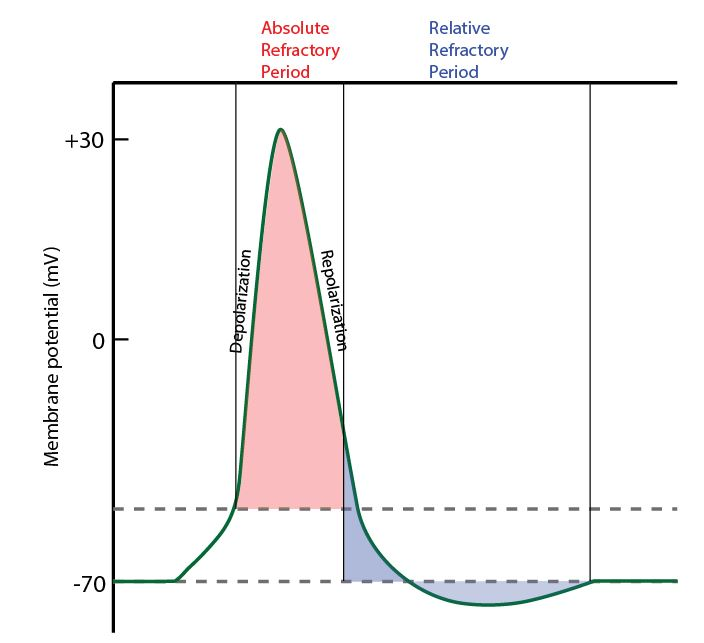
What is alpha like during the absolute refractory period, even with a strong stimulus?
Near zero, because Na+ channels are inactivated and cannot reopen
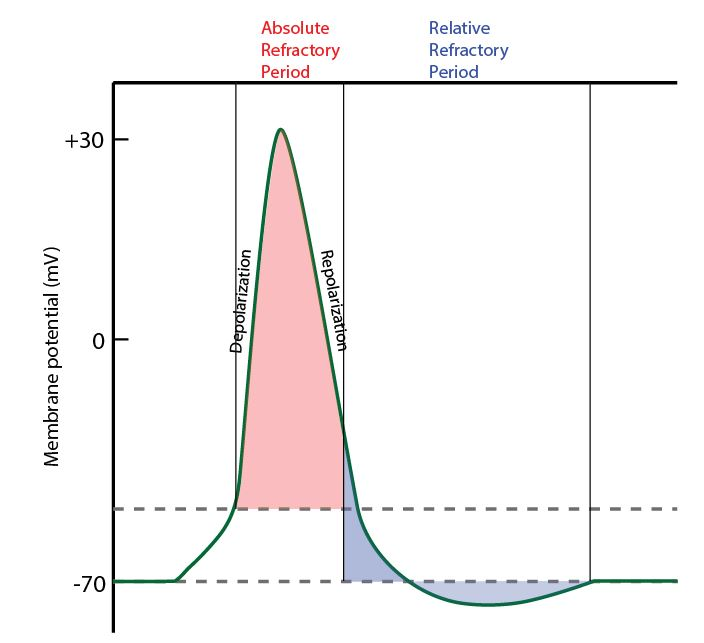
What is alpha like during the relative refractory period with a strong stimulus?
Intermediate: greater than zero but less than at peak, because some Na+ channels have recovered but not all
If a voltage-gated K+ channel blocker is applied, what happens to the action potential?
Repolarization takes longer and the action potential lasts longer
If Ouabain blocks the Na+/K+ pump, what happens short term vs long term?
Short term: little immediate effect on one AP
Long term: resting membrane potential drifts less negative and excitability is disrupted
Quick exam rule for membrane/equilibrium potential and temperature
If a potential is already negative, increasing temperature makes it more negative
If already positive, increasing temperature makes it more positive

