LymFATTY system + relatives ~E3
 Call Kai
 Learn
Learn Practice Test
 Spaced Repetition
 Match
Match Flashcards
 Knowt Play
1/599

There's no tags or description
Looks like no tags are added yet.
Name | Mastery | Learn | Test | Matching | Spaced | Call with Kai |
|---|
No analytics yet
Send a link to your students to track their progress
600 Terms
1. A lymphatic capillary that picks up dietary lipids in the small intestine is called a(n)
a. Trabeculum.
b. Lacteal.
c. Afferent lymphatic vessel.
d. Efferent lymphatic vessel.
e. Cisterna chyli.
b. Lacteal.
2. Which area does not contain MALT?
a. Gastrointestinal tract.
b. No exceptions; all choices contain MALT.
c. Genital tract.
d. Respiratory tract.
e. Urinary tract.
b. No exceptions; all choices contain MALT.
3. Within the red pulp of the spleen are enlarged capillaries called _________, which have a discontinuous basement membrane that allows blood cells to enter and exit easily.
a. Splenic sinusoids.
b. Splenic vessels.
c. Trabecular cords.
d. Trabecular vessels.
e. Splenic cords.
a. Splenic sinusoids.
4. Which of the lymphatic trunks drain into the cisterna chyli?
a. Bronchomediastinal trunks and intestinal trunks.
b. Lumbar trunks.
c. Subclavian trunks and jugular trunks.
d. Intestinal trunks and lumbar trunks.
e. Intestinal trunks.
d. Intestinal trunks and lumbar trunks.
5. Tonsils have multiple invaginated outer edges called __________ that help trap material.
a. Sinuses.
b. Fissures.
c. Clefts.
d. Crypts.
e. Trabeculae.
d. Crypts.
6. Lymphoid nodules consist of
a. Afferent vessels, efferent vessels, a cortex, and medulla.
b. Crypts, trabeculae, and Reed-Sternberg cells.
c. Lymphoid cells, extracellular matrix, and an incomplete connective tissue capsule.
d. A hilum that is located intermediate to two lobules.
e. Central arteries and monocytes.
c. Lymphoid cells, extracellular matrix, and an incomplete connective tissue capsule.
7. Lymph nodes
a. Filter lymph.
b. Contain a dense network of collagen fibers.
c. Serve as auxiliary exchange surfaces for respiratory gases.
d. Produce red blood cells.
e. Serve as the main recycling centers for red blood cells and their parts.
a. Filter lymph.
8. Lymphatic capillaries
a. Originate as closed-ended tubes associated with blood capillary networks.
b. Include layers of smooth muscle for peristalsis.
c. Cannot be discerned structurally from
d. Concentrate lymph prior to passing it to larger lymphatic vessels.
e. Filter lymph.
a. Originate as closed-ended tubes associated with blood capillary networks.
9. Typically, a hilum of a lymph node contains
a. One efferent lymphatic vessel.
b. Numerous afferent vessels.
c. Numerous efferent vessels.
d. One afferent lymphatic vessel.
a. One efferent lymphatic vessel.
10. In which abdominal quadrant is the spleen located?
a. Left upper quadrant.
b. Right upper quadrant.
c. Left lower quadrant.
d. Right lower quadrant.
a. Left upper quadrant.
11. The path that fluid takes as it enters a lymphatic capillary is through
a. Cell membrane leakage channels that allow diffusion.
b. Active transport protein pumps on endothelial cell membranes.
c. Pores (fenestrations) in the cells of the capillary wall.
d. Spaces between capillary endothelial cells that are arranged as one-way flaps.
e. Vesicles that move the fluid across the cell (transcytosis).
d. Spaces between capillary endothelial cells that are arranged as one-way flaps.
12. With respect to the lymphatic system, what do the letters in the acronym MALT stand for?
a. Membrane-adhering lymphoid T-cells.
b. Mucosa-associated lymphoid tissue.
c. Multiple-antigen lymphocyte target.
d. Multiple-antibody lymphocyte test.
b. Mucosa-associated lymphoid tissue.
13. Which is not correct regarding the white pulp of the spleen?
a. Its cells include lymphocytes and macrophages.
b. It serves as a blood reservoir.
c. Its cells are arranged in clusters that are circular in shape.
d. It contains a central artery.
b. It serves as a blood reservoir.
14. When an individual with breast cancer undergoes surgery to remove the tumor or the entire breast, the axillary lymph nodes are often removed as well. Why?
a. With the removal of the breast, there is no further need for lymph drainage and filtering in that part of the body.
b. In removing the breast, the blood supply to the nodes is removed and they will inevitable cease to function.
c. The nerves that supply the axillary lymph are often cut during the breast surgery.
d. The axillary lymph nodes receive lymph from the breast and may contain cancer cells.
e. It is impossible to remove the breast without physically damaging the lymph nodes.
d. The axillary lymph nodes receive lymph from the breast and may contain cancer cells.
15. Match the lymphatic trunks with the major body region that it drains.
Bank: Intestinal trunks, Lumbar trunks, Jugular trunks, Bronchomediastinal trunks, Subclavian trunks.
1. Drain deep thoracic structures.
2. Drain head and neck.
3. Drain lower limbs and pelvic organs.
4. Drain most abdominal structures.
5. Drain upper limbs, breasts, and thoracic wall.
Bronchomediastinal trunks 1. Drain deep thoracic structures.
Jugular trunks 2. Drain head and neck.
Lumbar trunks 3. Drain lower limbs and pelvic organs.
Intestinal trunks 4. Drain most abdominal structures.
Subclavian trunks 5. Drain upper limbs, breasts, and thoracic wall.
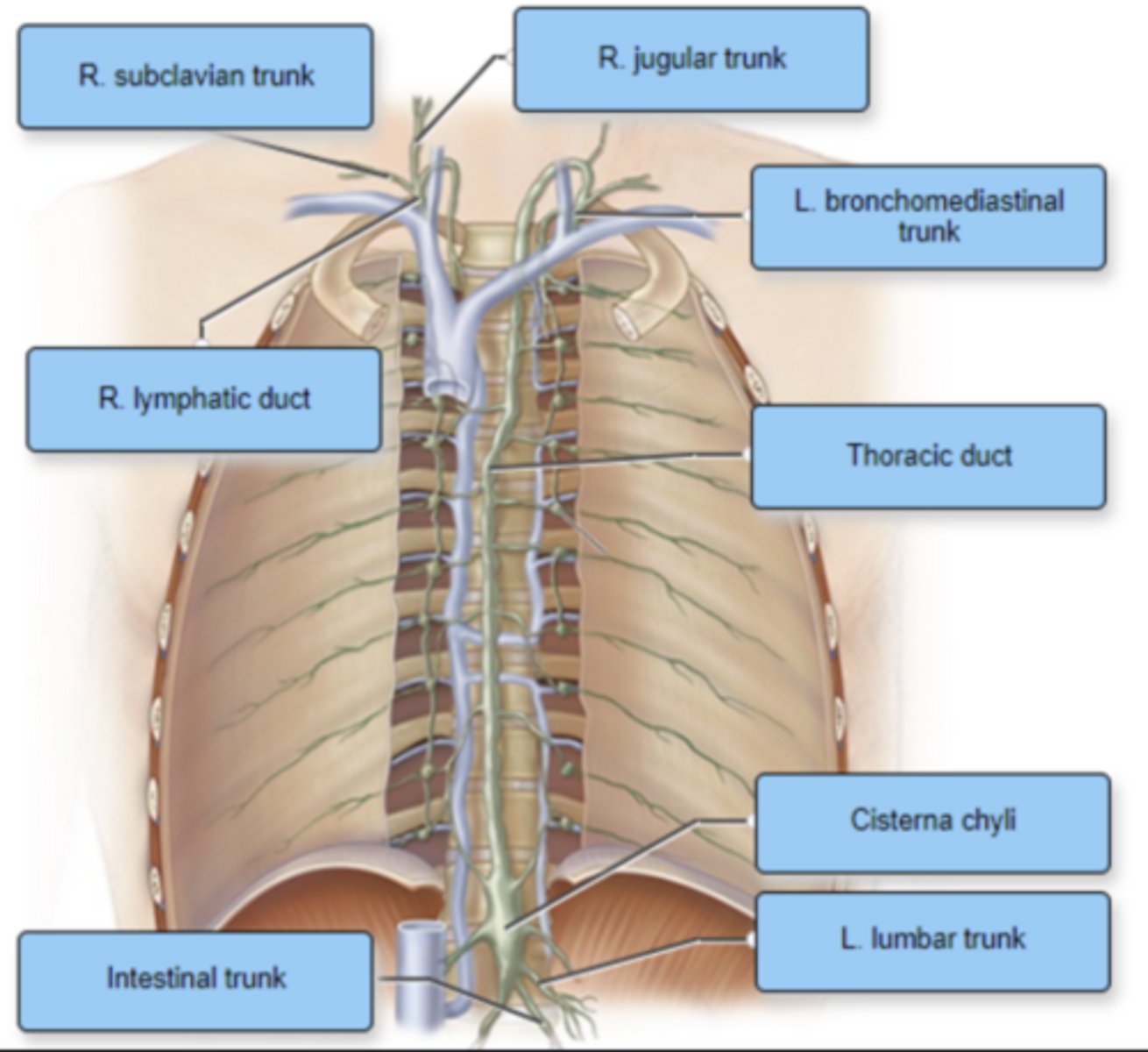
16. Lymphatics of the Abdominal and Thoracic Regions. Label the lymphatic structures in the abdominal and thoracic regions.
17. Match the lymphoid organ with its description.
Bank: Thymus, Lymph node, Spleen.
1. Filters blood; storage of platelets and erythrocytes.
2. Filters lymph.
3. Site of T-lymphocyte maturation.
Spleen 1. Filters blood; storage of platelets and erythrocytes.
Lymph node 2. Filters lymph.
Thymus 3. Site of T-lymphocyte maturation.
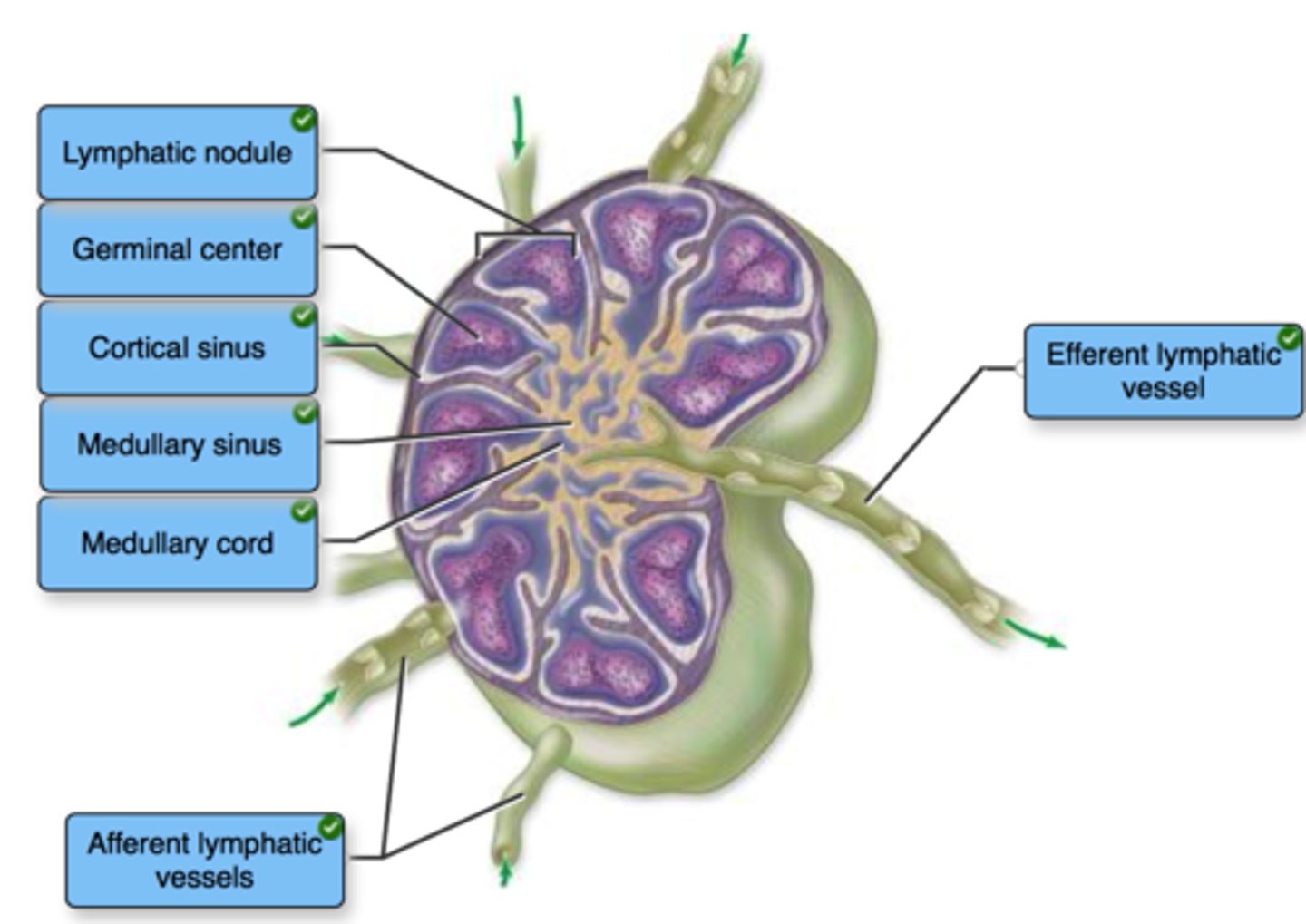
18. Anatomy of a Lymph Node. Correctly label the following anatomical features of the lymph node.
19. Most activated B-lymphocytes differentiate into
a. Plasma cells.
b. Macrophages.
c. Antigen-presenting cells.
d. Memory helper T-lymphocytes.
a. Plasma cells.
20. Which cells resemble basophils and are found in connective tissue, close to small blood vessels?
a. Dendritic cells.
b. NK cells.
c. Alveolar macrophages.
d. Cytokines.
e. Mast cells.
e. Mast cells.
21. Chemotaxis is the process by which
a. Chemical messengers are secreted that stimulate the sensation of pain that accompanies inflammation.
b. CAMs on leukocytes adhere to CAMs on endothelial cells of capillaries within injured tissues.
c. Cells migrate along chemical gradients.
d. Cells exit the blood by squeezing out between cells in the blood vessel wall.
c. Cells migrate along chemical gradients.
22. Antigen-presenting cells are _____________, and they display antigens to both ___________ and ___________.
a. Any blood cell; helper B-lymphocytes; cytotoxic B-lymphocytes.
b. Immune cells; helper T-lymphocytes; cytotoxic T-lymphocytes.
c. Any nucleate cell; helper T-lymphocytes; cytotoxic T-lymphocytes.
d. Immune cells; B-lymphocytes; T-lymphocytes.
e. Any nucleated cell; B-lymphocytes; T-lymphocytes.
b. Immune cells; helper T-lymphocytes; cytotoxic T-lymphocytes.
23. Inflammation is a(n)
a. Nonspecific process that occurs in avascular tissue.
b. Antigen-specific process that occurs in vascularized tissue.
c. Nonspecific process that occurs in vascularized tissue.
d. Antigen-specific process that occurs in avascular tissue.
c. Nonspecific process that occurs in vascularized tissue.
24. In positive selection of T-lymphocytes, those cells that
a. Bind to MHC class II are eliminated.
b. Bind to self antigens survive.
c. Can bind MHC survive.
d. Bind self antigens are eliminated.
c. Can bind MHC survive.
25. Passive immunity lasts
a. From days to week, and involves development of memory cells.
b. From years to a lifetime, and does not involve development of memory cells.
c. From years to a lifetime, and involves development of memory cells.
d. From days to weeks, and does not involve development of memory cells.
d. From days to weeks, and does not involve development of memory cells.
26. Nonspecific immunity is another name for
a. Cell-mediated immunity.
b. Innate immunity.
c. Acquired immunity.
d. Adaptive immunity.
b. Innate immunity.
27. Which type of cell attacks a variety of unwanted cells and causes those cells to undergo apoptosis?
a. Natural killer cells.
b. Eosinophils.
c. Macrophages.
d. Basophils.
e. Neutrophils.
a. Natural killer cells.
28. In terms of their chemical structure, cytokines are _________; their function is to serve as _________.
a. Steroids; chemical messengers.
b. Steroids; receptors.
c. Proteins; receptors.
d. Proteins; chemical messengers.
d. Proteins; chemical messengers.
29. Upon activation, a T-lymphocyte
a. Proliferates to form clones and memory cells.
b. Proliferates to form B cells and plasma cells.
c. Ceases dividing and becomes a memory cytotoxic helper cell.
d. Ceases dividing and becomes a plasma cell.
a. Proliferates to form clones and memory cells.
30. When compared to a primary response, the antibody levels in a secondary response
a. Rise more rapidly and with a greater proportion of IgG antibodies.
b. Rise more gradually and with a smaller proportion of IgG antibodies.
c. Rise more gradually and with a greater proportion of IgG antibodies.
d. Rise more rapidly and with a smaller proportion of IgG antibodies.
a. Rise more rapidly and with a greater proportion of IgG antibodies.
31. Which type of antibody is formed in response to parasitic infections and allergies, and has the effect of activating mast cells and basophils?
a. IgA.
b. IgG.
c. IgE.
d. IgD.
e. IgB.
c. IgE.
32. Immunity can be transferred from mother to child. When the child's immunity is acquired
a. Through the placenta or through breastmilk, it is passive immunity.
b. Through the placenta, it is active immunity, but through the breastmilk it is passive immunity.
c. Through the placenta, it is passive immunity, but through breastmilk it is active immunity.
d. Through the placenta or through breastmilk, it is active immunity.
a. Through the placenta or through breastmilk, it is passive immunity.
33. Malaria is a disease caused by a
a. Parasitic worm.
b. Fungus.
c. Protozoan.
d. Bacterium.
e. Virus.
c. Protozoan.
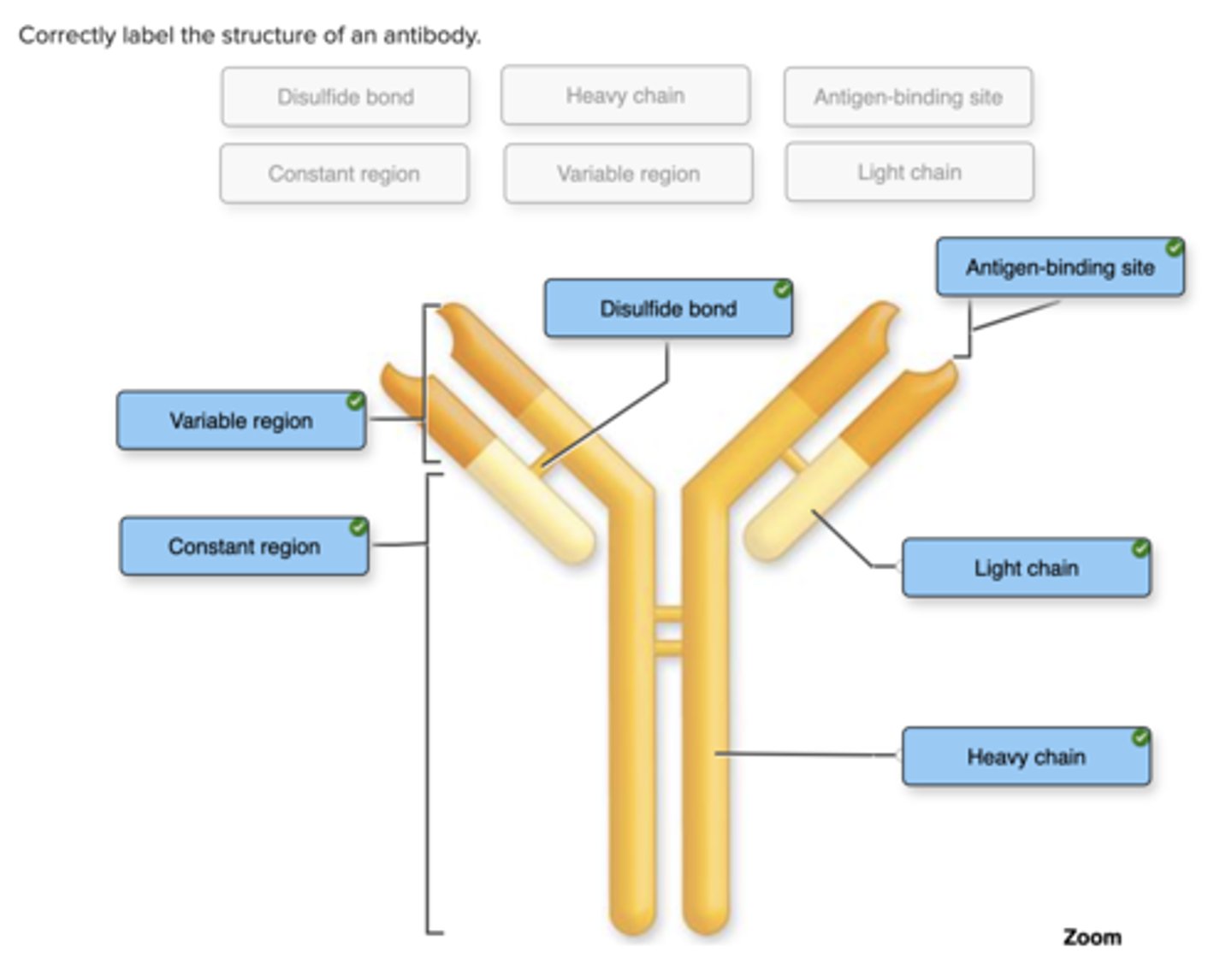
34. Antibody Structure. Correctly label the structure of an antibody.
35. Antigen Types With Description. Match the component of innate immunity with its function.
Bank: Physical barrier, or Chemical mediator.
1. Kill microorganisms, promote inflammation.
2. Prevent microorganisms from entering the body.
Chemical mediator 1. Kill microorganisms, promote inflammation.
Physical barrier 2. Prevent microorganisms from entering the body.
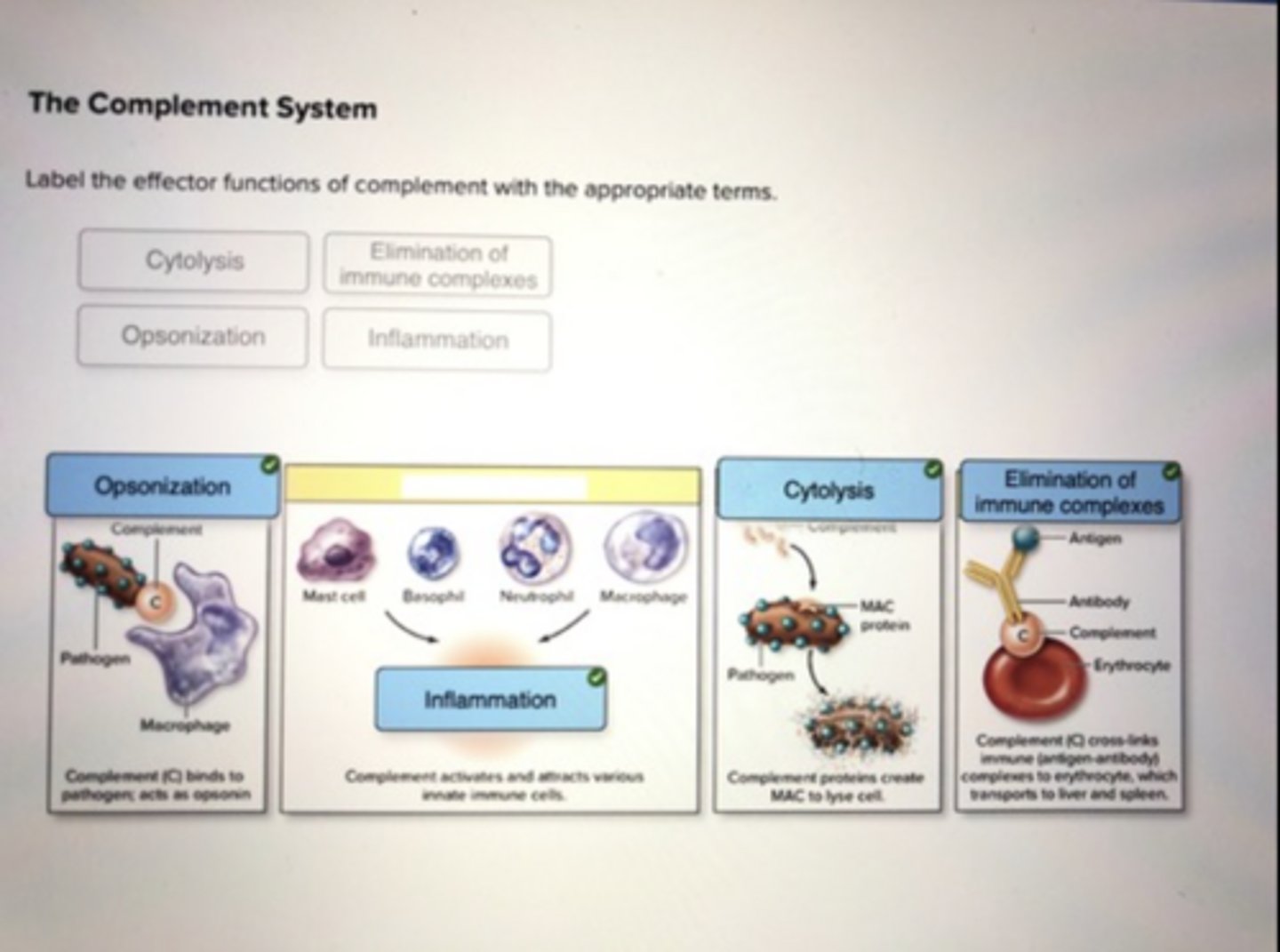
36. Complement System. List the effector functions of complement with the appropriate terms.
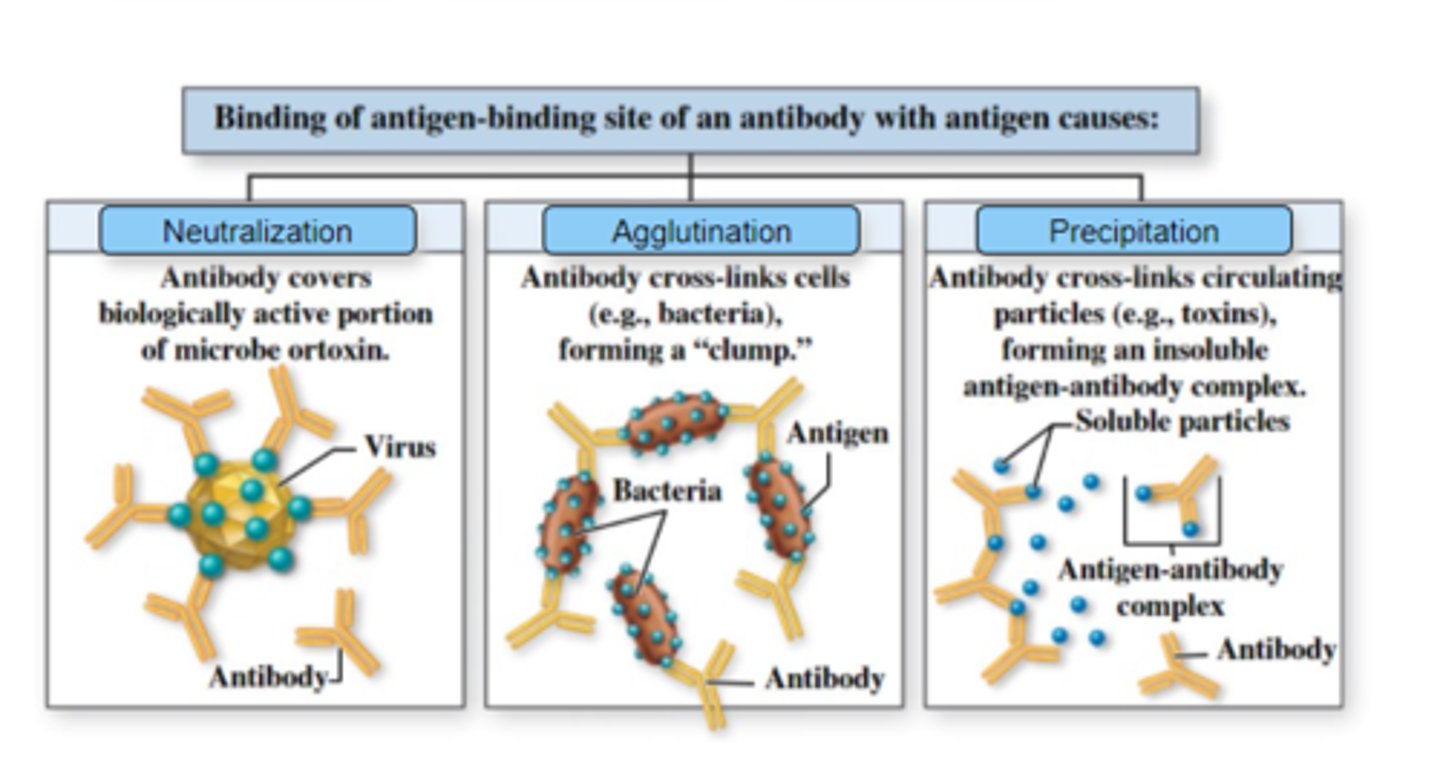
37. Actions of Antibodies. Label the effector functions of antibodies with the appropriate terms.
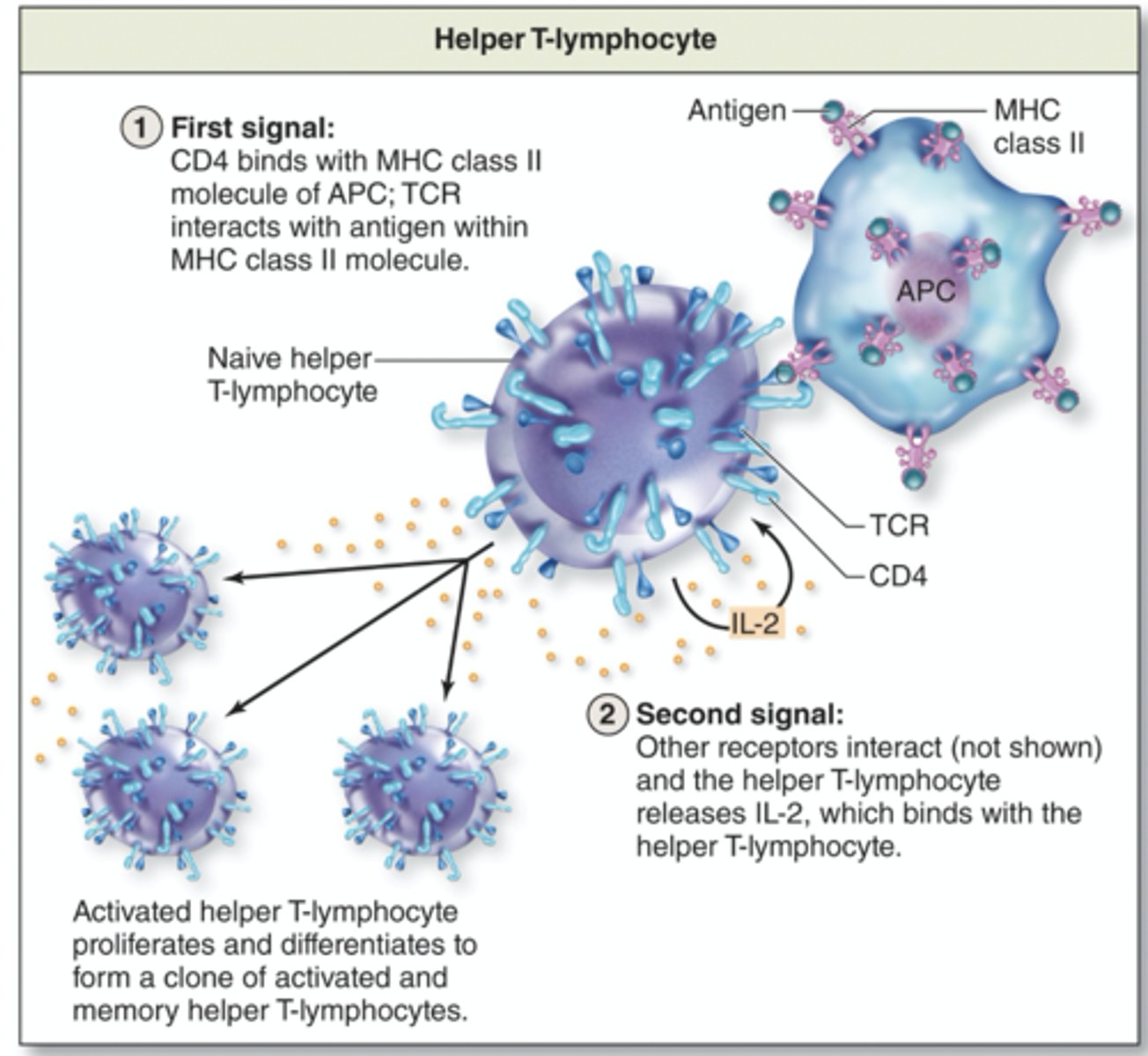
38. Activation of Helper T-Lymphocytes. Label the figure with the items provided.
39. An increase in dead space results in
a. An increase in alveolar ventilation but no change in minute ventilation.
b. A decrease in alveolar ventilation but an increase in minute ventilation.
c. An increase in alveolar ventilation but a decrease in minute ventilation.
d. A decrease in alveolar ventilation but no change in minute ventilation.
e. Increases in both alveolar and minute ventilation.
f. Decreases in both alveolar and minute ventilation.
d. A decrease in alveolar ventilation but no change in minute ventilation.
40. When somebody exercises vigorously, their breathing is described as demonstrating
a. Hypopnea, involving shallower but faster breathing.
b. Bradypnea, involving deeper and slower breathing.
c. Hyperpnea, involving deeper but not faster breathing.
d. Hyperventilation, involving both deeper and faster breathing.
c. Hyperpnea, involving deeper but not faster breathing.
41. Airway obstruction can lead to hypoventilation, which can cause
a. Hypoxia and respiratory acidosis.
b. Hypoxia and respiratory alkalosis.
c. Hypocapnia and hyperpnea.
d. Hypocapnia and respiratory alkalosis.
a. Hypoxia and respiratory acidosis.
42. If someone at sea level is given pure oxygen to breathe, it would cause the oxygen saturation of their hemoglobin
a. To decrease due to uncooperative binding.
b. To increase by only a tiny amount.
c. To increase by more than double.
b. To increase by only a tiny amount.
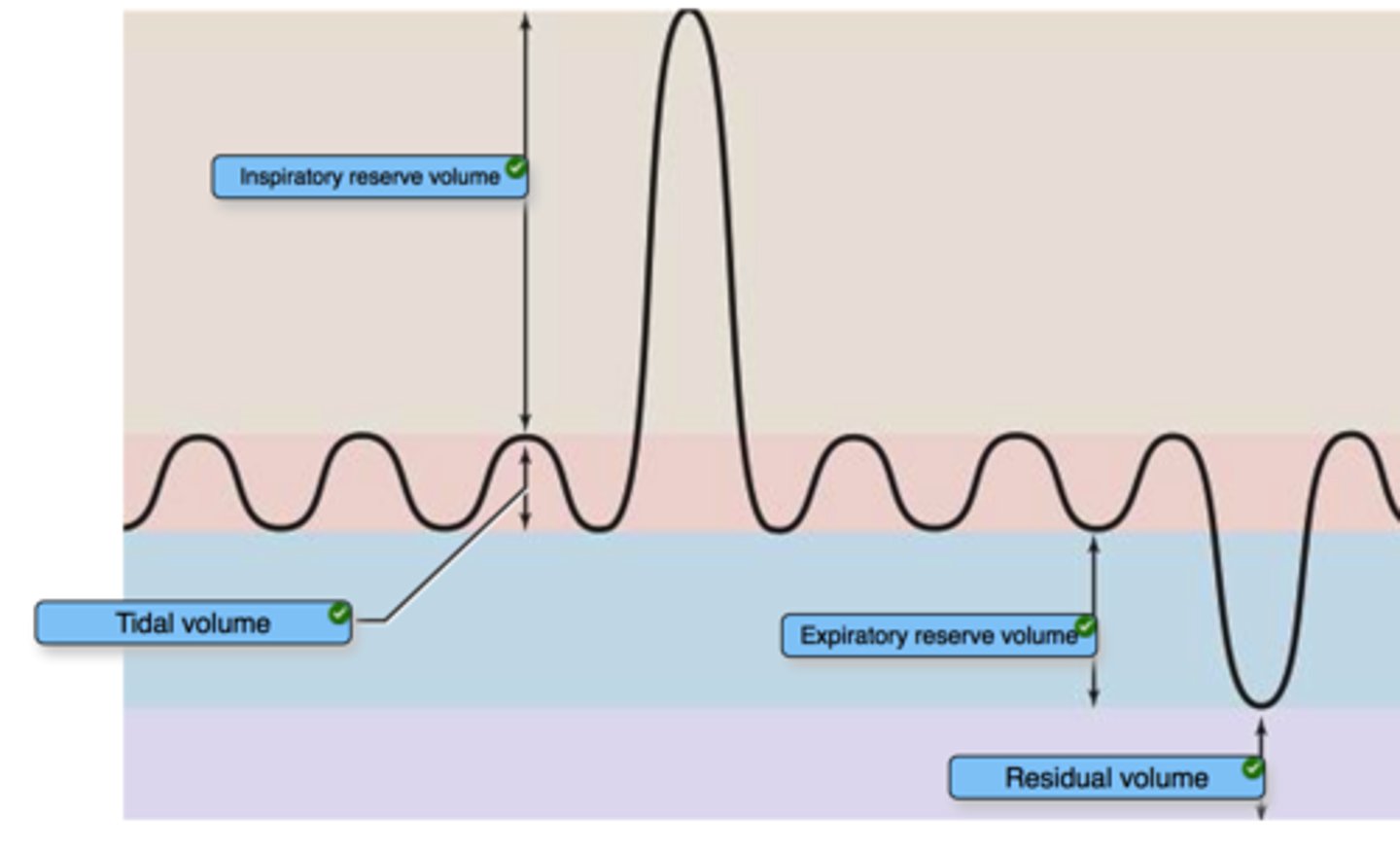
43. The amount of air that can be forcibly inhaled after a normal inspiration is the
a. Residual volume.
b. Inspiratory reserve volume.
c. Functional residual capacity.
d. Inspiratory capacity.
b. Inspiratory reserve volume.
44. The anatomical features of the respiratory membrane that make pulmonary gas exchange so efficient are
a. Its thinness, high water content, and scarcity of capillaries.
b. Its hearty thickness and the presence of oxygen transport pumps.
c. The high degree of moisture and the large ratio of volume to surface area.
d. Its large surface area and minimal thickness.
d. Its large surface area and minimal thickness.
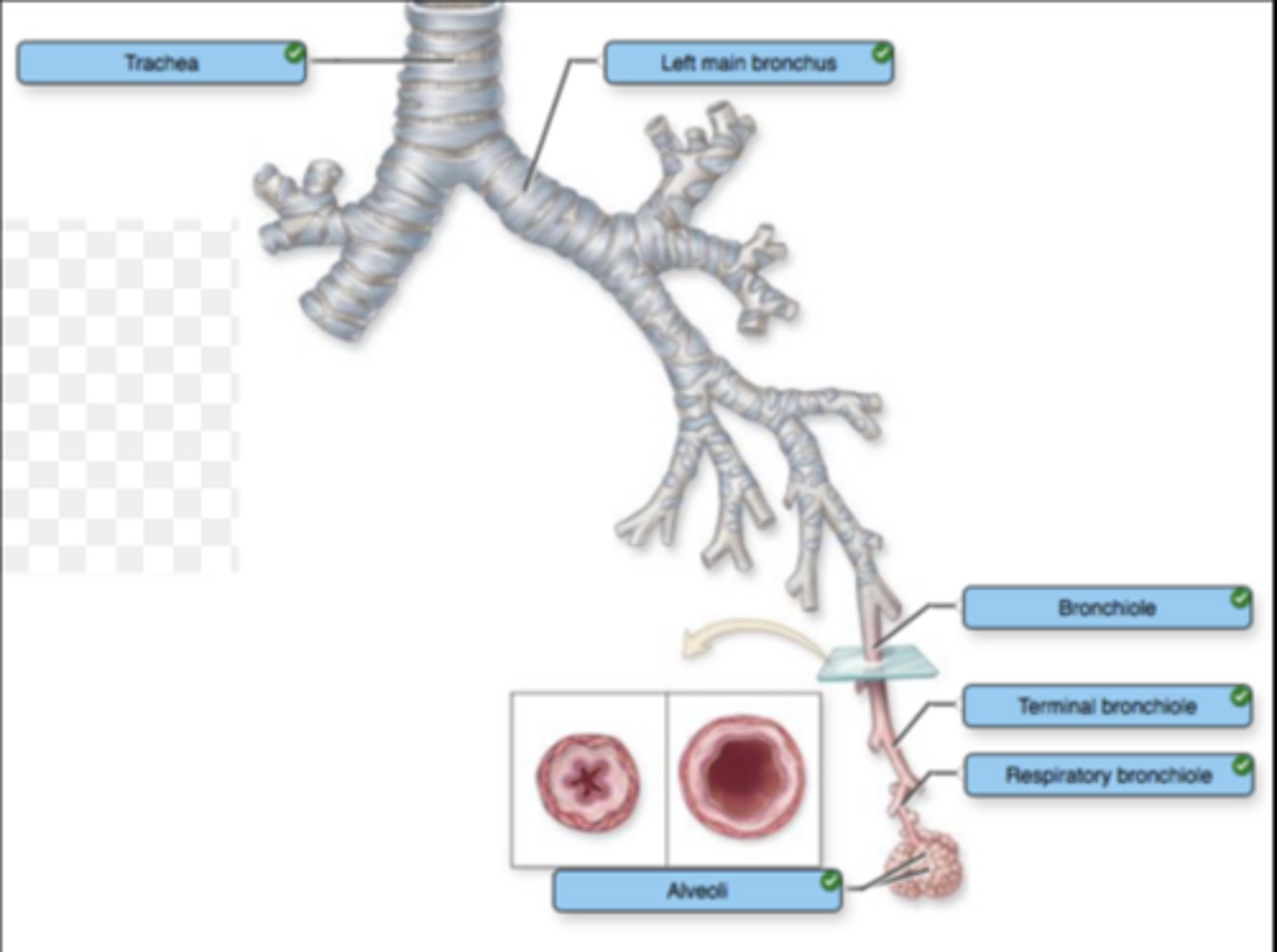
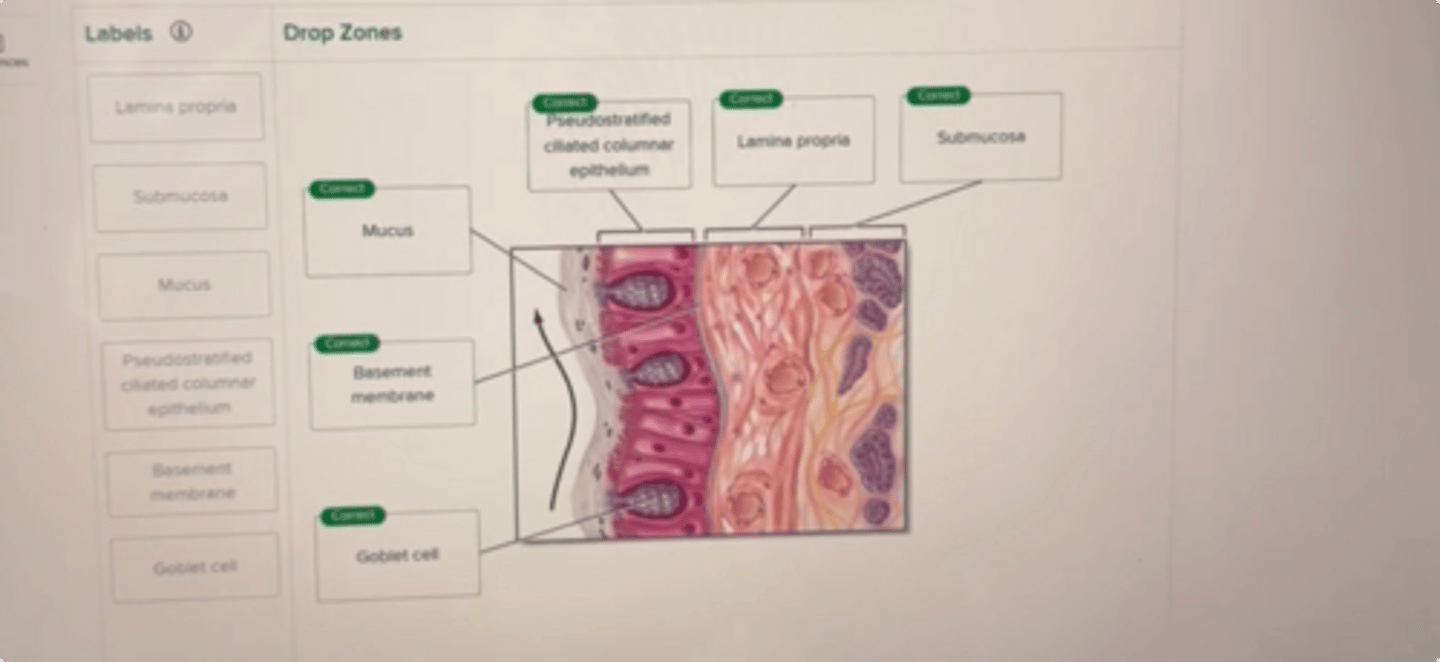
45. Terminal bronchioles of the lower respiratory tract are lined with
a. Pseudostratified ciliated columnar epithelium.
b. Nonkeratinized stratified squamous.
c. Stratified columnar epithelium.
d. Simple cuboidal epithelium.
e. Keratinized stratified squamous epithelium.
d. Simple cuboidal epithelium.
46. Food is normally prevented from entering the nasopharynx by the
a. Depression of the hard palate.
b. Constriction of the esophagus.
c. Closure of the nasal conchae.
d. Elevation of the soft palate.
e. Elevation of the epiglottis.
d. Elevation of the soft palate.
47. Which statement accurately describes pulmonary gas exchange of oxygen?
a. Oxygen diffuses from the blood to the alveolus because the alveolus has a higher partial pressure of oxygen.
b. Oxygen diffuses from the blood to the alveolus because the alveolus has a lower partial pressure of oxygen.
c. Oxygen diffuses from the alveolus to the blood because the alveolus has a higher partial pressure of oxygen.
d.Oxygen diffuses from the alveolus to the blood because the alveolus has a lower partial pressure of oxygen.
c. Oxygen diffuses from the alveolus to the blood because the alveolus has a higher partial pressure of oxygen.
48. The main function of serous fluid is to
a. Improve adhesion of the lungs to the thoracic wall.
b. Lubricate and reduce friction between pleural membranes around the lung.
c. Facilitate the diffusion of oxygen across the respiratory membrane.
b. Lubricate and reduce friction between pleural membranes around the lung.
49. Pitch refers to the __________ of sound waves; pitch is determined by the tension produced by __________ laryngeal muscles.
a. Frequency; intrinsic.
b. Loudness; intrinsic.
c. Loudness; extrinsic.
d. Frequency; extrinsic.
a. Frequency; intrinsic.
50. Which region(s) of the pharynx is lined by pseudostratified ciliated columnar epithelium?
a. Oropharynx, nasopharynx, and laryngopharynx.
b. Oropharynx.
c. Oropharynx and nasopharynx.
d. Nasopharynx.
e. Laryngopharynx.
d. Nasopharynx.
51. The lungs remained inflated because
a. Intrapleural pressure is exactly equal to atmospheric pressure.
b. Intrapleural pressure is exactly equal to intrapulmonary pressure.
c. Intrapleural pressure is less than intrapulmonary pressure.
d. Intrapulmonary pressure is less than intrapleural pressure.
c. Intrapleural pressure is less than intrapulmonary pressure.
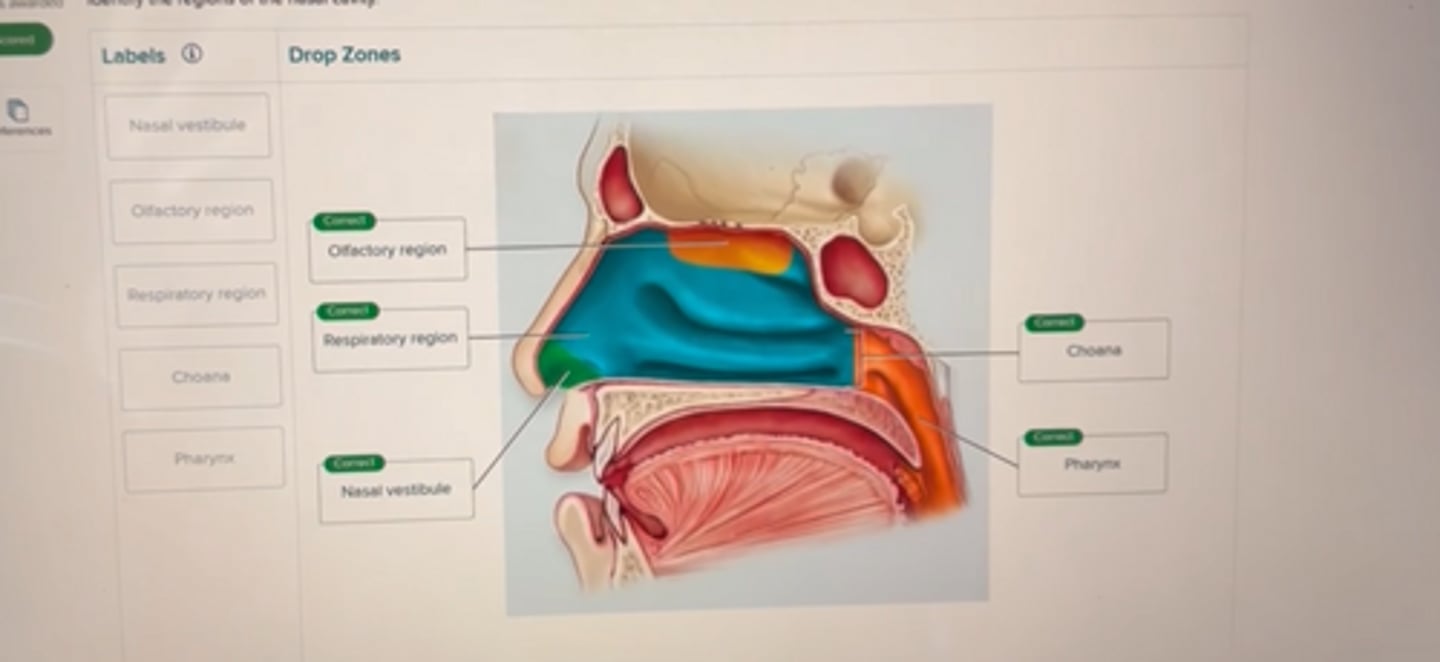
52. The region of the nasal cavity immediately internal to the nostrils is the _________: it contains coarse guard hairs.
a. Olfactory region.
b. Nasopharynx.
c. Choanae.
d. Vestibule.
e. Respiratory region.
d. Vestibule.
53. During tissue gas exchange, what happens to carbon dioxide after it enters a red blood cell?
a. It reacts with water to form carbonic acid.
b. It reacts with bicarbonate to become carbonic acid.
c. It attaches to the heme portion of hemoglobin, forming carbaminohemoglobin.
d. It reacts with carbonic acid to become bicarbonate.
a. It reacts with water to form carbonic acid.
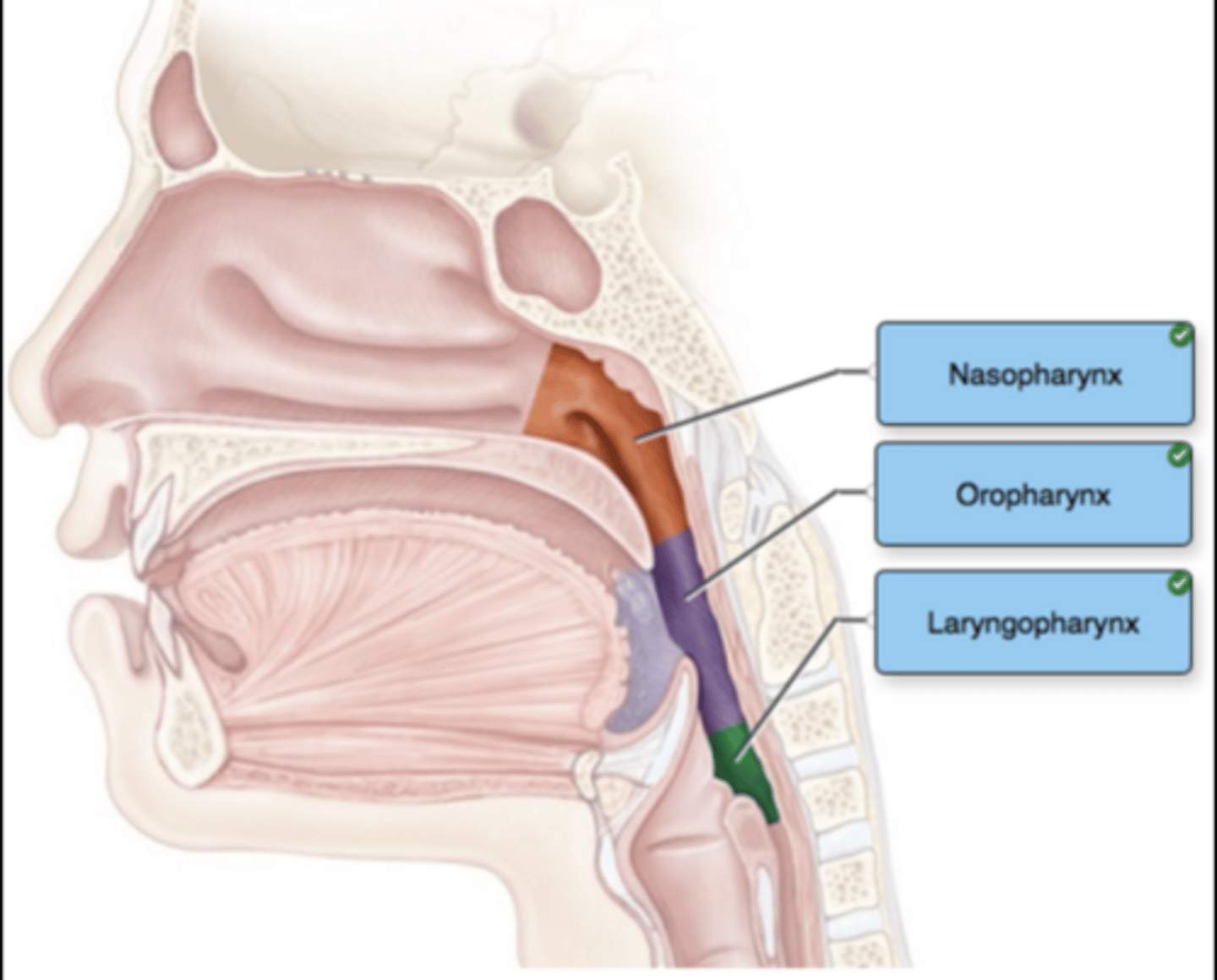
54. Regions of the Pharynx. Label the regions of the pharynx.
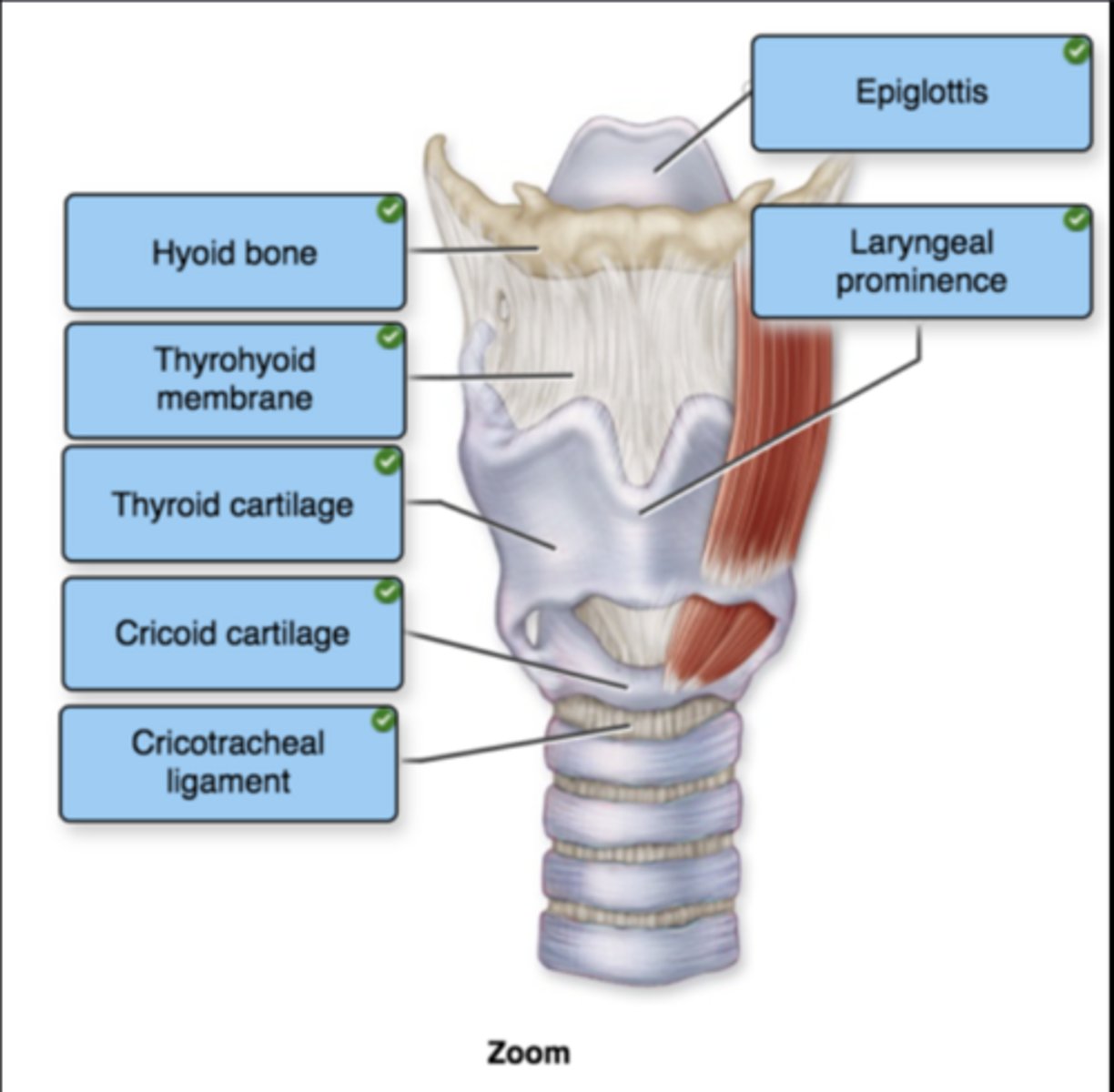
55. Anterior Larynx. Label the structures in an anterior view of the larynx and trachea.
56. Respiratory Volumes. Label the respiratory volumes on the diagram using the terms provided.
57. Bronchial Tree. Label the structures of the bronchial tree.
58. General Structure of Mucosa. Label the structures that comprise the respiratory tract mucosa (mucous membrane).
59. Regions of the Nasal Cavity. Identify the regions of the nasal cavity.
Which fluid does lymph most closely resemble?
Interstitial fluid
True/False: Lymph contains protein.
True
True/False: Lymph contains red blood cells.
False
True/False: The central nervous system contains a dense network of lymphatic capillaries.
False
Lymphatic capillaries
a: cannot be discerned structurally from cardiovascular system capillaries.
b: originate as closed-ended tubes associated with blood capillary networks.
c: filter lymph.
d: concentrate lymph prior to passing it to larger lymphatic vessels.
e: include layers of smooth muscle for peristalsis.
b
Lymphatic capillaries originate in the
a: peripheral nervous system ganglia.
b: red bone marrow.
c: yellow bone marrow.
d: tissue spaces between cells.
e: cisterna chyli.
d
The force that drives fluid into lymphatic capillaries is
- ?
hydrostatic pressure
The path that fluid takes as it enters a lymphatic capillary is through
a: pores (fenestrations) in the cells of the capillary wall.
b: cell membrane leakage channels that allow diffusion.
c: vesicles that move the fluid across the cell (transcytosis).
d: spaces between capillary endothelial cells that are arranged as one-way flaps.
e: active transport protein pumps on endothelial cell membranes.
d
The lymphatic system's two main functions are to assist in
a: immunity and fluid balance.
b: blood cell production and endocrine function.
c: endocrine function and neural support.
d: neural support and blood sugar control.
e: removal of fats from the blood and inflammatory responses.
a
Lymph is transported through a network of increasingly larger lymphatic passageways. What is the correct order of these, from smallest diameter to largest diameter?
Capillaries, vessels, trunks, ducts
Lymphatic capillaries
a: are open at both ends.
b: are smaller in diameter than blood capillaries.
c: are like continuous capillaries in that they have many tight junctions.
d: lack a basement membrane.
e: are abundant in epithelial tissues.
d
Because lymphatic vessels have three tunics (intima, media, and externa) and valves, they structurally resemble - ?
veins
True/False: Like veins, lymphatic vessels rely on skeletal muscle and respiratory pumps to help propel fluid through them.
True
Fluid collected in lacteals will be carried in __________ trunks.
intestinal
True/False: The walls of the smallest lymphatic vessels contain muscle tissue that rhythmically propels lymph through the system.
False
True/False: The pulsing of arteries that are adjacent to lymphatic vessels provides a pressure on the vessels that helps them propel the lymph.
True
Of the lymphatic trunks, which ones drain lymph from deep thoracic structures?
Bronchomediastinal trunks
Subclavian trunks drain lymph from the
a: deep thoracic structures.
b: head and neck.
c: upper limbs, breasts, and superficial thorax.
d: abdominopelvic wall.
c
Which of the lymphatic trunks drain into the cisterna chyli?
a: Intestinal trunks
b: Lumbar trunks
c: Intestinal trunks and lumbar trunks
d: Subclavian trunks and jugular trunks
e: Bronchomediastinal trunks and intestinal trunks
c
Which is not drained by the right lymphatic duct?
a: Right side of abdomen
b: Right side of thorax
c: Right side of head and neck
d: Right shoulder
e: Right arm
a
The thoracic duct collects lymph from all of the following except the
a: abdomen.
b: left leg.
c: right arm.
d: right foot.
e: left shoulder.
c
The thoracic duct and the right lymphatic duct empty lymph into the
a: superior vena cava.
b: subclavian veins.
c: inferior vena cava.
d: azygos vein.
e: brachiocephalic veins.
b
Which would be the route taken by lymph traveling from lymphatic vessels in the right leg to the bloodstream?
a: Right lumbar trunk - cisterna chyli - thoracic duct - right subclavian vein
b: Right lumbar trunk - cisterna chyli - thoracic duct - left subclavian vein
c: Right lumbar trunk - right intestinal trunk - right lymphatic duct - right subclavian vein
d: Right femoral trunk - right lumbar trunk - right lymphatic duct - superior vena cava
e: Right femoral trunk - cisterna chyli - thoracic duct - left subclavian vein
b: Right lumbar trunk - cisterna chyli - thoracic duct - left subclavian vein
True/False: The spleen is considered a primary lymphatic structure.
False (secondary). (only primaries are Thymus & Red bone marrow).
Although they are not a site of lymphocyte formation, _________ lymphatic structures provide sites where immune responses are initiated.
secondary
The term "primary lymphatic structure" applies
a: only to red bone marrow.
b: to the spleen and lymph nodes.
c: to the red bone marrow and thymus.
d: only to lymph nodes.
e: to lymph nodes and MALT.
c
True/False: Tonsils are secondary lymphatic structures.
True
Red marrow is found within
a: the large cavities contained within the shafts of long bone.
b: compact bone canals.
c: spaces within spongy bone.
d: all osseous tissue of the appendicular skeleton.
c
True/False: The ossa coxae contain red marrow.
True
Which of the following does not contain red marrow?
a: Ribs
b: Sternum
c: Flat bones of the skull
d: Vertebrae
e: Long bones of digits
e
Where do T-lymphocytes mature?
thymus gland
B-lymphocytes are
a: antibody-producing red blood cells.
b: platelets that are generated in the thymus.
c: white blood cells that are generated in red bone marrow.
d: immune system cells that are generated in the tonsils.
e: blood cells found only in people with type B blood.
c
Which part of a thymic lobule contains mature lymphocytes?
medulla
The thymus contains ______ lobes and is located _______.
a: 2; anterior to the laryngeal prominence (Adam's apple)
b: 2; in the mediastinum
c: 4; anterior to the laryngeal prominence (Adam's apple)
d: 4; in the mediastinum
b
The thymus is at its maximum size
a: at birth.
b: at puberty.
c: between 30 and 50 years of age.
d: in old age.
b
The thymus contains lymphatic cells as well as secretory _________ tissue.
epithelial
Lymphatic organs
a: contain a complete capsule of dense irregular connective tissue.
b: contain an incomplete capsule of dense irregular connective tissue.
c: lack a connective tissue capsule.
a
MALT is found in which layer of the wall of a hollow organ?
a: Epithelial
b: Lamina propria
c: Muscularis externa
d: Submucosa
b
With respect to the lymphatic system, what do the letters in the acronym MALT stand for?
a: Membrane-adhering lymphatic T-cells
b: Mucosa-associated lymphatic tissue
c: Multiple-antigen lymphocyte target
d: Multiple-antibody lymphocyte test
b
Regions of MALT called Peyer patches are found in the
small intestine
Another name for a lymphatic follicle is a
lymphatic nodule.

