envr 1000 - unit 7, aquatic resources, pt 2
 Call Kai
 Learn
Learn Practice Test
 Spaced Repetition
 Match
Match Flashcards
 Knowt Play
1/55

There's no tags or description
Looks like no tags are added yet.
Name | Mastery | Learn | Test | Matching | Spaced | Call with Kai |
|---|
No analytics yet
Send a link to your students to track their progress
56 Terms
groundwater
the supply of fresh water that is stored in underground aquifers (underground reservoirs)
Water in aquifers originates as _____ or ______ ____
rain or melting snow
This process of water movement to aquifers is called
groundwater recharge
Groundwater is considered a
non-renewable resource
____________ seeps into the soil and works its way down through cracks
and spaces in sand, gravel, or rock until it reaches an impenetrable layer,
where it then accumulates
Precipitation
wetlands
Systems that combine elements of freshwater and dry land
Wellhead protection area
the area surrounding the wellhead through which contaminants can move into the
drinking water well
Wetlands provide many important ecosystem services like
- Water filtration
- Biodiversity hotspot
- High ecosystem productivity (carbon sink)
- Flood prevention through absorbing runoff / high river flows
- Maintaining surface river flows during dry periods / droughts
- Groundwater aquifer recharge
- Streambank stabilization, erosion control
- Recreational opportunities: sightseeing, fishing, birdwatching, hunting, etc.
winnipeg’s wetlands
• Part of the Red River Basin
• Tributaries to the Red and Assiniboine Rivers
- 16 major streams and 20 small creeks once drained excess water from floodplain
• Winnipeg’s wetlands were drained and creeks altered to promote settlements
- Fewer wetlands to soak up and retain water during snowmelt and heavy rainfall events = more flooding along the Red
flooding (too much water)
- Occurs when a river’s discharge cannot be contained within its normal channel
- Humans remove water-absorbing plant cover and construct buildings on floodplains
- Floodplains are areas bordering river channels that have the potential to flood
- Construction replaces flood-protecting plant cover with paved areas that do not
absorb water
water resource issues categories
too much water
too little water
poor quality water
Arid lands
low precipitation, high evaporation areas (example: deserts)
Semi-arid lands
Receive more precipitation than deserts, but have long periods of drought
- Plant growth is limited by lack of precipitation
Salinization
the increase of salt concentrations in soil through evaporative processes
Farmers use irrigation to increase agricultural productivity of arid and semi-arid lands
- Amount of irrigated land has tripled globally since 1955
- Population growth in arid and semiarid areas intensifies water shortage
Salinization can be caused by
gradual accumulation of salt in soil due to use of this irrigation water
- Normally, precipitation runoff would carry salts away
- In arid and semi-arid areas there is little precipitation, so the salts remain in the soil
- Salt accumulation becomes poisonous for plants, and over time this salinization may render soil unfit for crop production
Aquifer depletion
removal of groundwater faster than it can be recharged by precipitation or melting snow (groundwater mining)
- Lowers the water table
- The upper surface of the saturated zone of groundwater
- Causes subsidence (sinking of the land)
- Saltwater intrusion can occur in coastal areas
- Movement of seawater into depleted freshwater aquifers
ogallala aquifer
• Groundwater aquifer that supplies the US Central Plains
• Largest groundwater deposit in the world
• Farmers are drawing water 40 times faster than it can be replaced by nature
- Region’s agriculture grows 1/4 of United States crops
- Irrigation counts for 90% of withdrawals
• Water table has been lowered by 4.7 – 76 m
• Depletion is surpassing natural rates of replenishment from snowmelt and rainfall
• Over 30% of aquifer’s wells have now run dry
over-withdrawal of surface waters
• Growing human populations place demands on water sources that are not sustainable
- Wetlands dry up
- Estuaries (important ecosystems) become saltier
• Water shortages have great economic and ecological ramifications
- Water supply and water quality problems
what are some global water issues?
• Water resources and human populations are often not located in the same areas
• Severe climate events can disrupt nations’ abilities to provide stable water supplies
• Increased population pressure and land development reduces natural replenishment of freshwater sources
• Pollution from increasing industrial and agricultural activities contaminate surface and groundwater, further reducing water availability for drinking and irrigation
Three-fourths of the world’s 200 or so major watersheds are
shared between at least two nations
- International cooperation between countries that share common watersheds is essential to ensure clean water availability for all
Sustainable water use
The wise use of water resources, without harming the essential functioning of the hydrologic cycle or the ecosystems on which present and future humans depend
Conservation
- Includes reusing and recycling water, improving water use efficiency
- Important part of sustainable use
Economic policies
- Allotments
- Quotas
The Colorado River Basin has one of the most serious water supply problems in North America
- Colorado River system provides water for more than 30 million people
- It irrigates 1.4 million acres of farmland
- Has 49 dams, 11 of which produce electricity
1922 Colorado River Compact stipulates annual water allotments to areas of the region
- Important recognition of this finite natural resource
- But it overestimated average annual flow
Growing competition for water resources among water users with different needs like
- Agriculture
- Industry
- Municipal/domestic
Water conservation is necessary to meet the demands of all users
Water conservation is necessary to meet the demands of all users
- Reducing agricultural water waste
- Reducing water waste in industry
- Reducing municipal water waste
Irrigation
the supply of water to land or crops
review: irrigation
• Irrigation: the supply of water to land or crops
• Agriculture is behind most extraction and use of fresh water worldwide
• Traditional irrigation techniques waste a lot of water
- Evaporation, runoff, or seepage into ground wastes about 60% of the water used in traditional irrigation
Microirrigation
Pipes with tiny holes bored in them convey water directly to individual plants
- Reduces water usage by 40-60%
- Reduces soil salinization
Drip irrigation
One type of microirrigation that places water directly in root zone where it’s needed by the slow drip of water either from above soil surface or beneath surface (from Unit 6)
- Minimizes evaporation
- Saves water
- Prevents waterlogging
In the U.S., five major industries account for almost 90% of industrial water use
- Chemical products
- Paper and pulp
- Oil and gas
- Primary metals
- Food processing
industrial water usage in canada
In 2021, over 34, 410 million cubic meters of water was withdrawn from
Canada’s surface water and groundwater stocks
• 78% of the withdrawal came from 2 sectors:
- Thermal power generation (use of steam power produced from burning fossil fuels to spin turbines and produce electricity)
- Manufacturing
Between 2005 and 2021, total water withdrawal in Canada declined by ___
~16%
Between 2005 and 2021, total water withdrawal in Canada declined by ___ because
~16%, Due in part to improvements in water conservation practices in residential and industrial sectors (e.g., widespread implementation of household water meters)
how can municipal water waste be reduced?
- Addressing infrastructure problems (leaky water supply pipes) can significantly reduce municipal water waste
- Requiring water-saving household fixtures and educating consumers about water waste is also effective at reducing water consumption
- Some buildings can be modified to use grey water for secondary uses (flushing toilets, for example) before it enters the wastewater treatment system
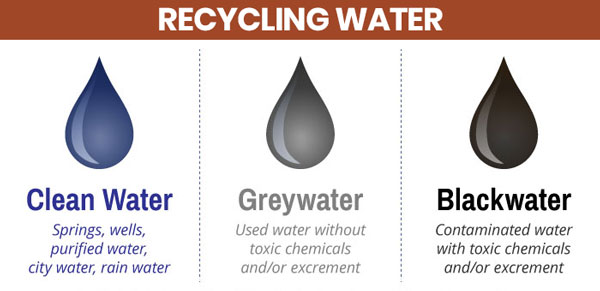
grey water
Water that has been used in sinks, showers, washing machines, or dishwashers
Water pollution
a physical or chemical change in water that adversely affects the health of humans and other organisms
- Water pollution is a global problem that varies in magnitude and types of pollutants from one region to another
- In many locations, particularly in developing countries, the main water pollution
issue is providing individuals with disease-free drinking water
Water pollution and water quality in LDCs is a major problem
- 2.4 billion people globally don’t have access to adequate sanitation systems
- 1.5 billion people affected by water-related illness each year
- Nearly 1 million of those illnesses result in death
sources of water pollution
1. Point source pollution: Water pollution that can be traced to a specific point of
entry into a waterway (e.g. pipes, sewers, ditches)
2. Nonpoint source pollution: Pollution that enter a body of water over large areas
rather than a specific, single point of entry
ex of water pollution
- Precipitation washes pollutants out of soil
- Causes polluted runoff to enter local rivers over a wide area as the runoff drains
from land to the waterway
Half of the people in the U.S. and one-third of Canadians obtain their
drinking water from _______ ______
groundwater sources
Water quality is a concern, how so?
- Pesticides, fertilizers, organic compounds, can seep into groundwater from landfills, storage tanks, backyards, golf courses, agricultural lands, etc.
- Recent increases in hydraulic fracturing processes, which use tremendous amounts of water, have raised significant water pollution concerns in many areas
Agriculture is the leading source of surface water quality impairment in much of North America
- Responsible for 72% of river water pollution
- Fertilizer runoff
- Animal wastes and plant residues
- Chemical pesticides can leach into soil and then waterways
- Soil erosion causes sediment pollution in waterways
types of water pollution
sewage
disease-causing agents
sediment pollution
inorganic plant and algal nutrients
organic compounds
inorganic compounds
radioactive substances
thermal pollution
Urban runoff
water that has traveled off of buildings and across roadways, and carries a variety of wastes as a result
- Salt, construction debris, animal wastes, garbage, oil and other hydrocarbons,
chemicals, and other pollutants all end up dissolved in rainwater
- Then drains to waterways, causing significant pollution over a wide area
In many urban areas, storm sewers carry runoff to sewage treatment plants for processing (combined sewer systems)
- Unfortunately, in many older cities, heavy rains can overwhelm the treatment plants with storm water
- Causes both street runoff and untreated sewage to overflow into waterways
- Regulations exist which require older system to be modified to prevent combined
sewer overflow (retrofitting)
- Prohibitively expensive to accomplish, especially in large, older urban areas
Sewage
Wastewater from drains or sewers; includes human wastes, soaps, and detergents
- May carry disease-causing agents
- Water contaminated with sewage poses a threat to public health
Sewage causes _______ of bodies of water
enrichment
Enrichment
fertilization of a body of water due to high levels of nutrient
Over-enrichment of a body of water can cause high ____
BOD
Biochemical oxygen demand (BOD)
The amount of oxygen that microorganisms
need to decompose biological wastes into carbon dioxide, water, and minerals
what happens to aquatic organisms (BOD)?
Too much enrichment, and the BOD will spike, and the oxygen levels in the water
will drop, causing aquatic organisms to die
BOD is a critical factor in the health of a waterway
Large amounts of organic material (sewage)
deposited in water enables the growth of
large numbers of microorganisms
- These microorganisms deplete dissolved oxygen, causing fish and the microbes
themselves to then die
- Anaerobic microorganisms then flourish, producing toxins and other chemicals that further reduce water quality

