ARCH 412 Final Exam (Monuments and Vocab)
 Studied by 0 people
 Call Kai
 Learn
Learn Practice Test
 Spaced Repetition
 Match
Match Flashcards
 Knowt Play
1/85

There's no tags or description
Looks like no tags are added yet.
Name | Mastery | Learn | Test | Matching | Spaced | Call with Kai |
|---|
No analytics yet
Send a link to your students to track their progress
86 Terms
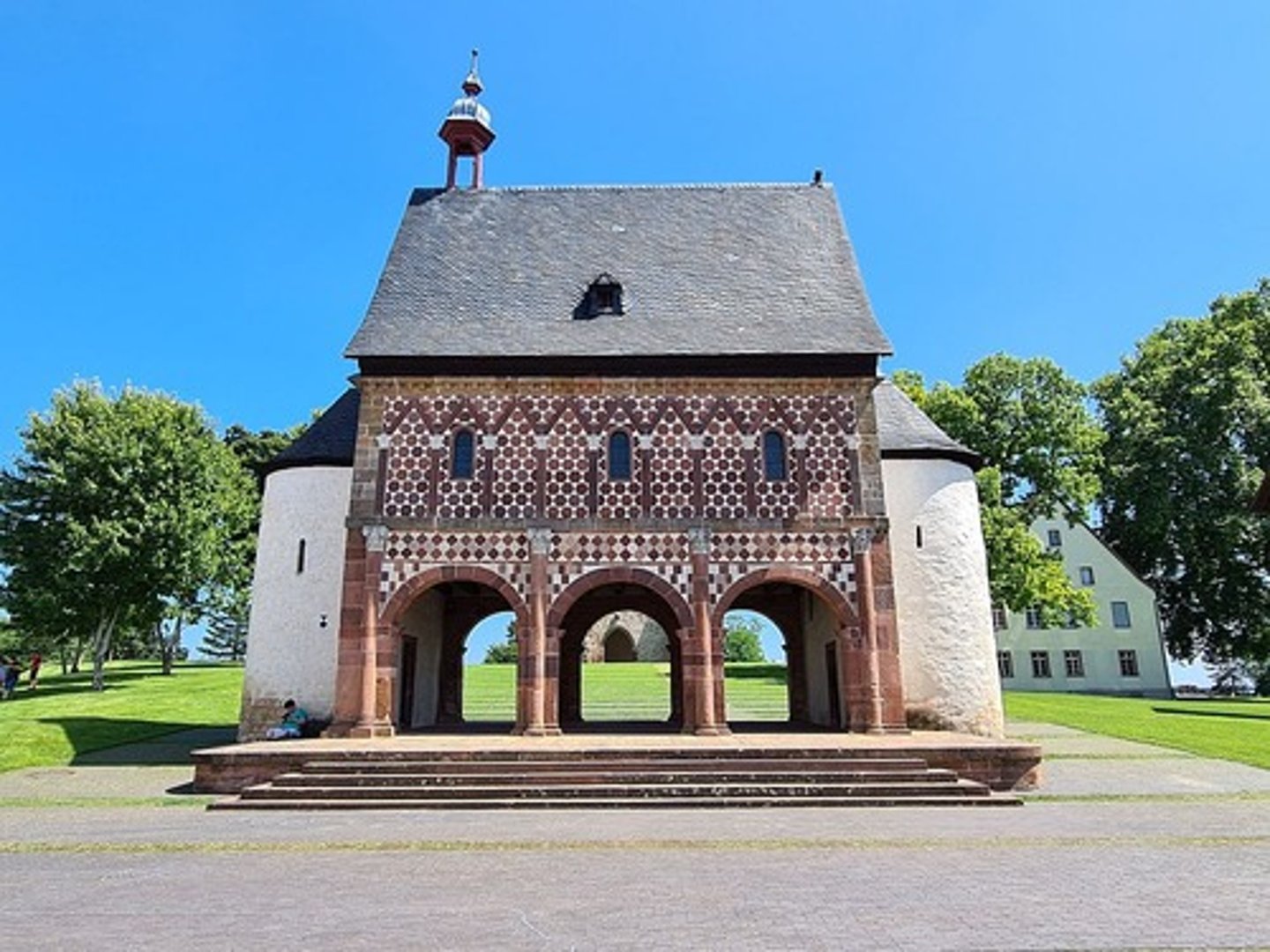
Torhalle: Carolingian
Built at gatehouse of imperial monastery, foundation of Lorsch Abbey
Charlemagne visited and elevated it to an imperial monastery
He tied it into his program of church reform and education
The torhalle constructed as monumental entrance to Lorsch Abbey, symbolizing imperial authority
The design inspired by romanesque architecture (arches, pilasters, friezes)
An example of the Carolingian synthesis of Roman heritage and Christian imperial ideology
Resembles a Triumphal Arch(like Arch of Constantine)
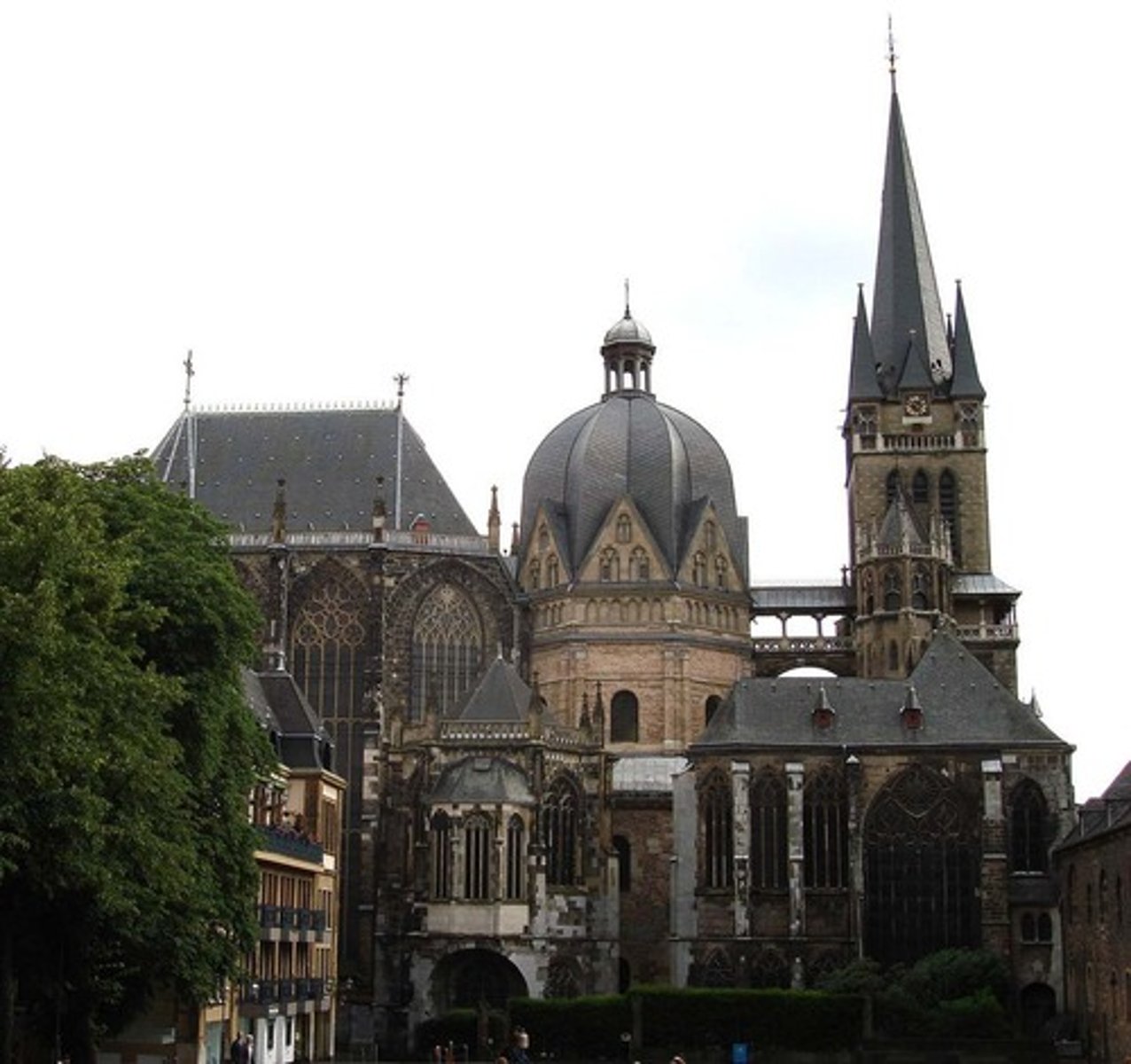
Palatine Chapel at Aachen: Carolingian
Centerpiece of Charlemagne palace complex
Combination of Roman and Byzantine styles
Served as Charlemagne’s palace chapel, a private place of worship.
Charlemagne’s throne was placed in the upper gallery, opposite the altar, visually linking imperial power with divine authority
Also became Charlemagne burial site, making it a site of pilgrimage and memory
Central space is octagonal surrounded by a sixteen sided ambulatory (draws inspiration from San Vitale)
Use of westwork (monumental western façade) and integration of imperial throne gallery pioneering features of medieval architecture
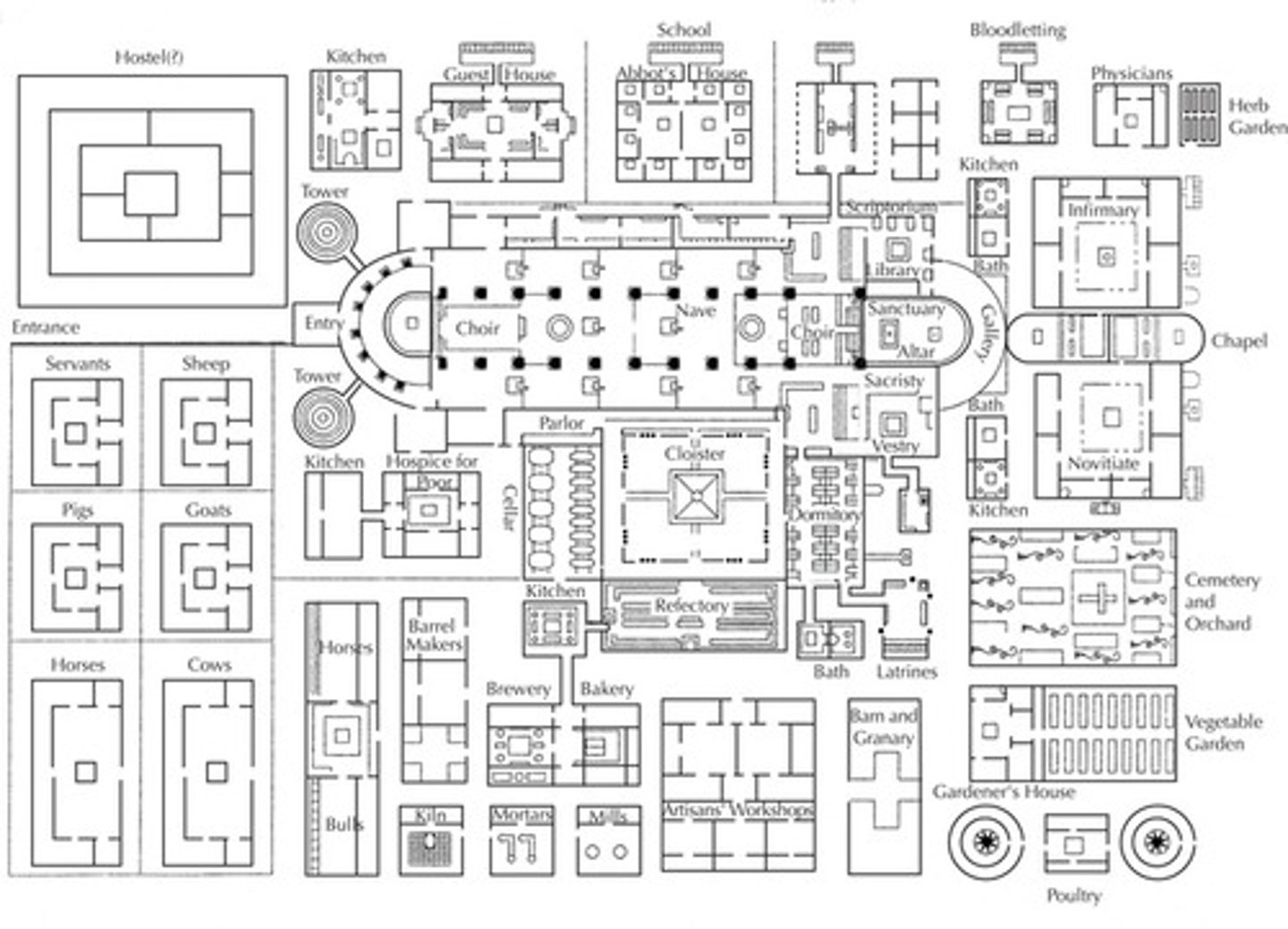
Plan of an Ideal Monastery, St. Gall: Carolingian
Detailed vision of an “ideal” Benedictine monastery, not an actual blueprint for a physical construction
Organization of the plan according to the Rule of Saint Benedict
The plan depicts a self sufficient monastic city, with key features being:
Central Church and Cloister
Dormitory Spaces
Economic and Productive Areas
Healthcare and Charity
Gardens and Cemetery
The gridlike organization reflects Carolingian ideals of rationality and divine order
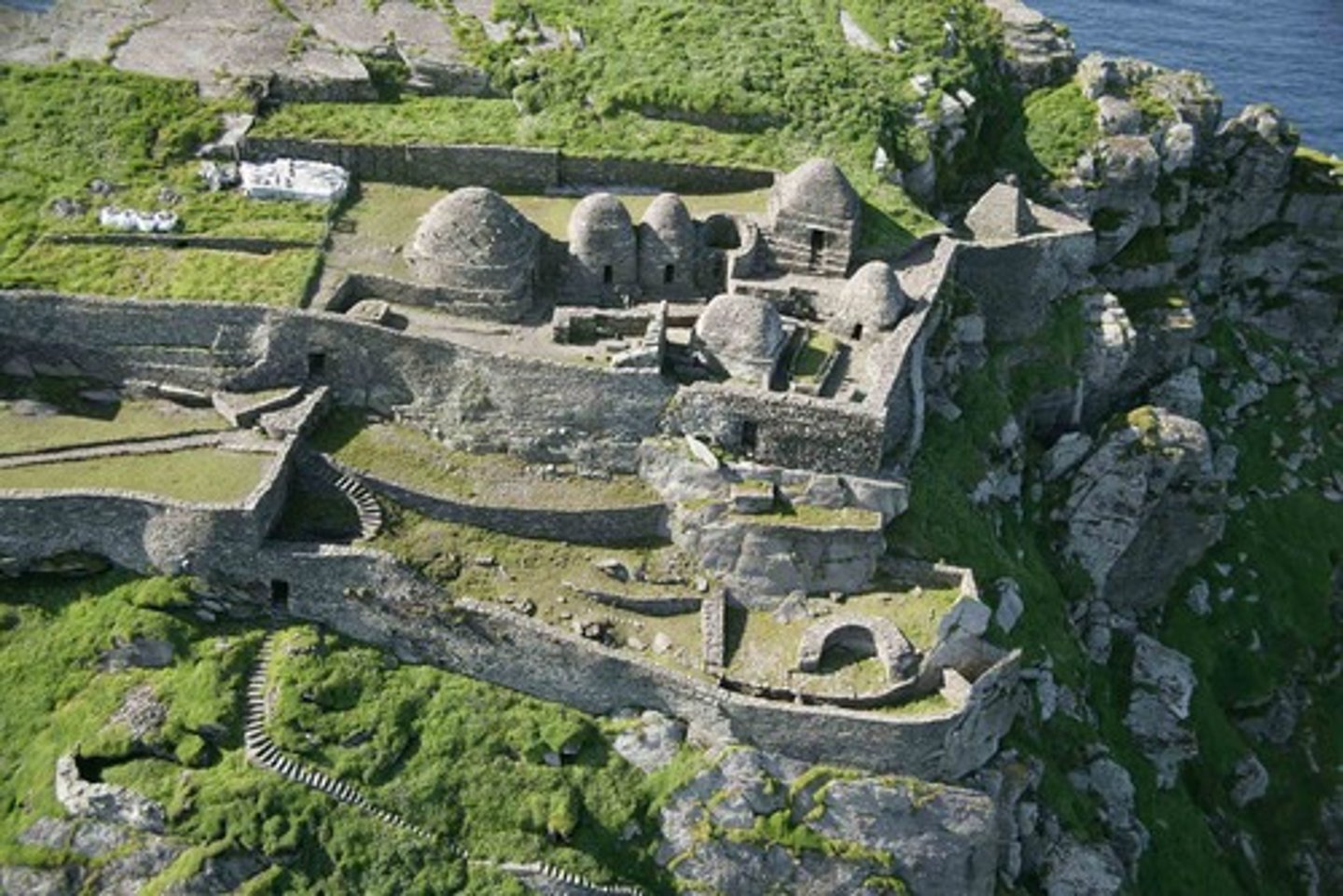
Skellig Michael: Carolingian
The site is a remote rocky island off County Kerry, Ireland
Monks lived in extreme isolation, practiced asceticism
The island later became a pilgrimage site
The Clochan huts on the island built of dry stone corbelling without use of mortar.
Oratories were small stone chapels for prayer
The extreme remoteness of the site embodied early Irish Christian pursuit of solitude and closeness to god
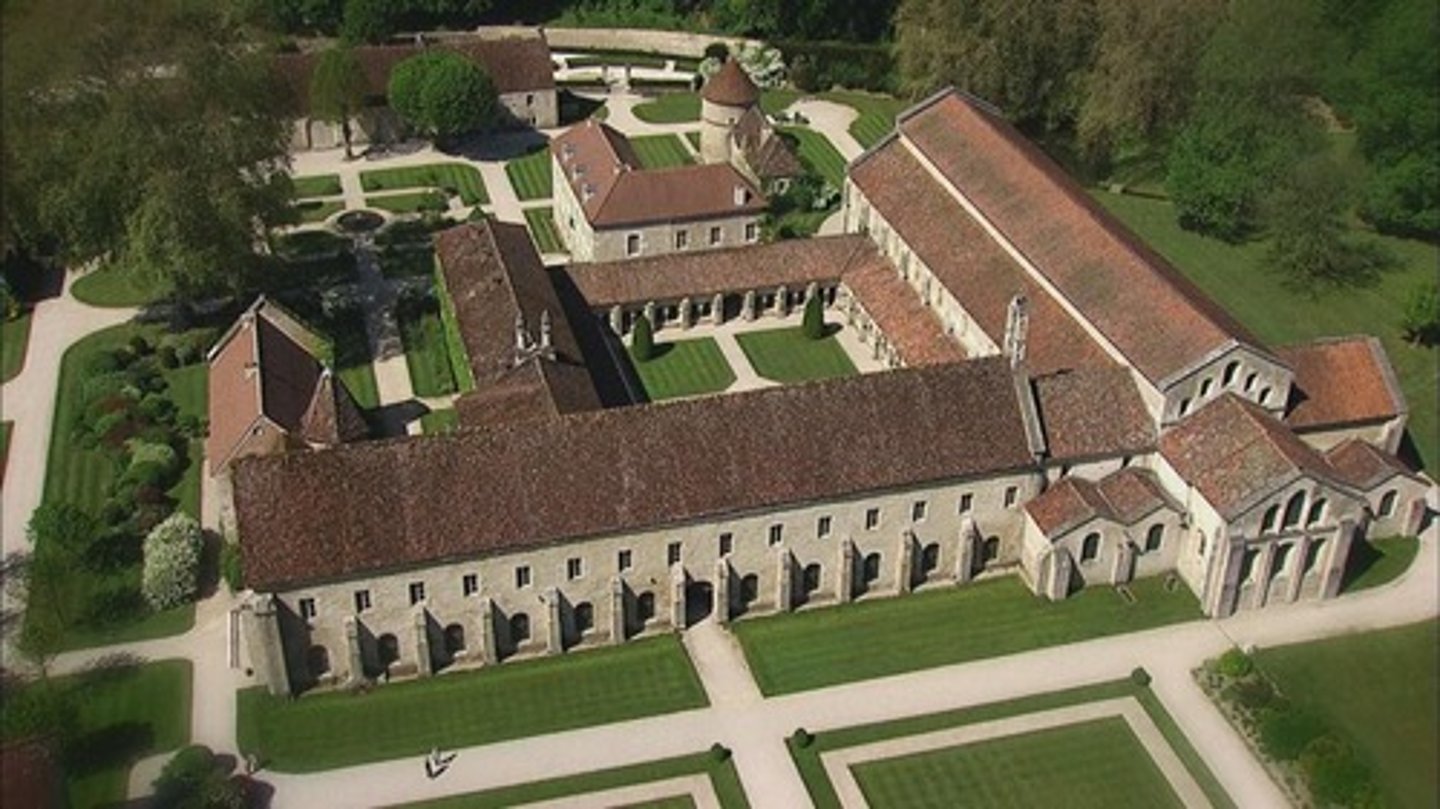
Fontenay Abbey: Cistercian Romanesque
Established by Saint Bernard of Clairvaux, leading figure of the Cistercian reform movement, sought to return to strict observance of Rule of St Benedict
The abbey reflects cistercian rejection of ornate Cluniac tradition, emphasizing poverty, manual labor, and simplicity
Fontenay was self-sufficient, had facilities for agriculture, metalworking, and crafts
The abbey church is a three aisle basilica, with its simplicity reflecting Cistercian ideals
The abbey itself is within a secluded valley, reflecting Cistercian preference for remote sites with a natural setting for contemplation
Fontenay included a medieval ironworks, revealing Cistercian technological skill and economic independence
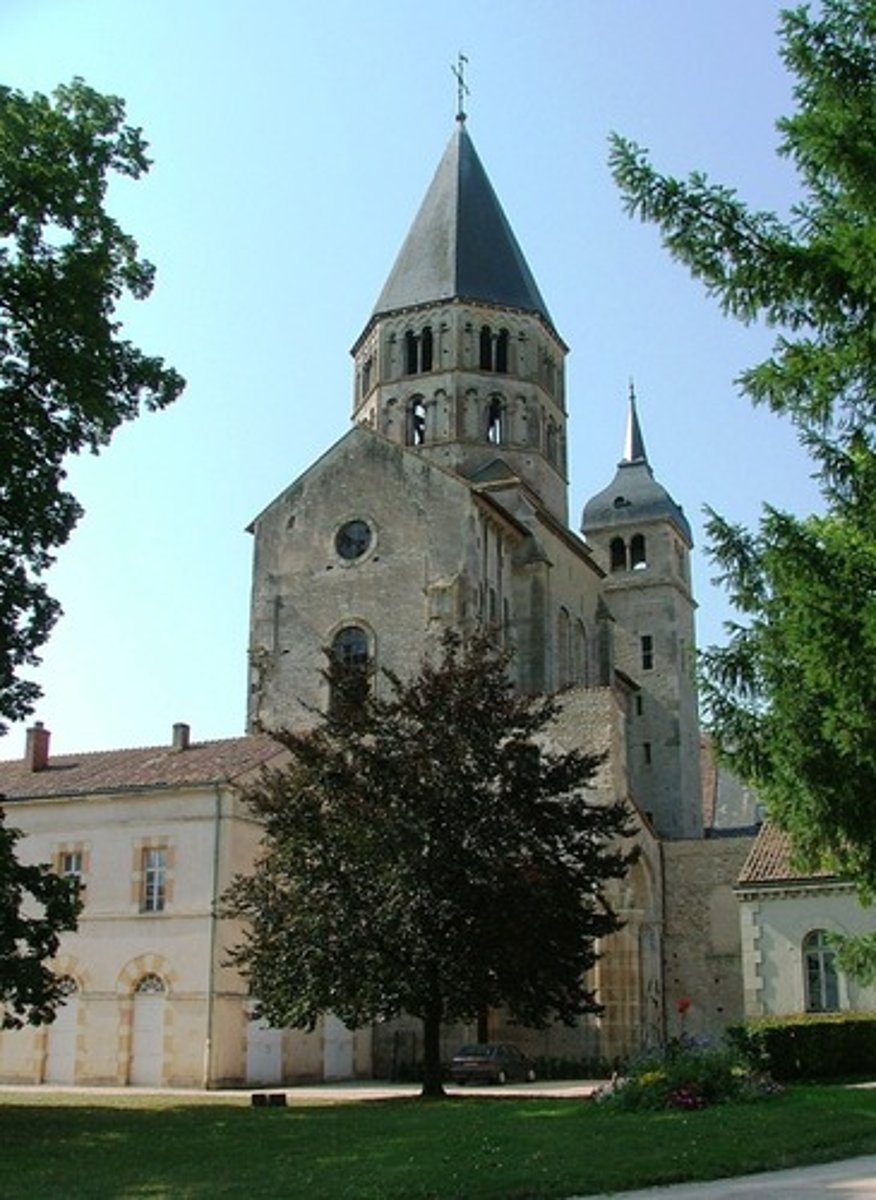
Cluny Monastery Phase III: Cluniac Romanesque
Largest church in Christendom at its time
Established as a benedictine monastery directly subject to the pope
The first church, Cluny I, was modelst, Cluny II expanded it, later the order’s wealth and prestige demanded construction of monumental new church (Cluny III)
Cluny III reflected the orders’ ambitions to reform liturgy and promote elaborate worship
Cluny III over 187 meters long, with five aisles, double transepts, and multiple towers
The double transepts created a cruciform plan
Use of barrel vaults reflected romanesque architecture
The space had sculpture, capitals, and liturgical furnishing which reflected Cluny’s embrace of grandeur in worship
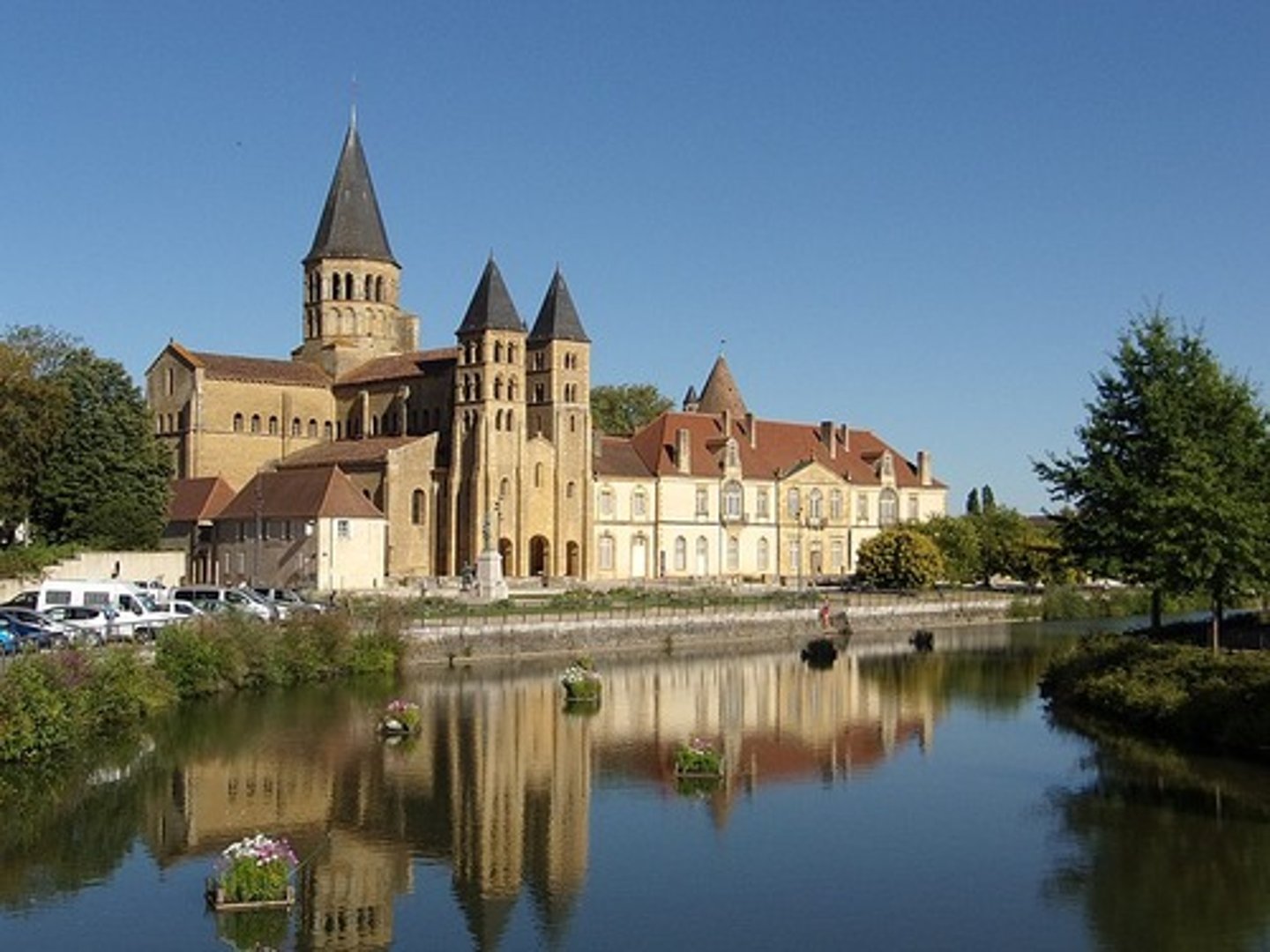
Notre Dame (Paray-le-Monial): Cluniac Romanesque
Current church built at the height of the Cluniac reform movement
Embodied the liturgical and architectural ideals of the Cluniac order, use of Romanesque design
Built in the Burgundian Romanesque tradition, rounded arches, massive walls, and harmonious proportions
Church has a basilica plan with three aisles, a transepts, and a choir with an ambulatory and radiating chapels (closely modeled on Cluny III)
Barrel vaults in nave and groin vaults in aisles, advanced romanesque engineering
Nave emphasizes verticality and rhythm, alternating piers and columns. The choir’s ambulatory allowed for liturgical processions and veneration of relics
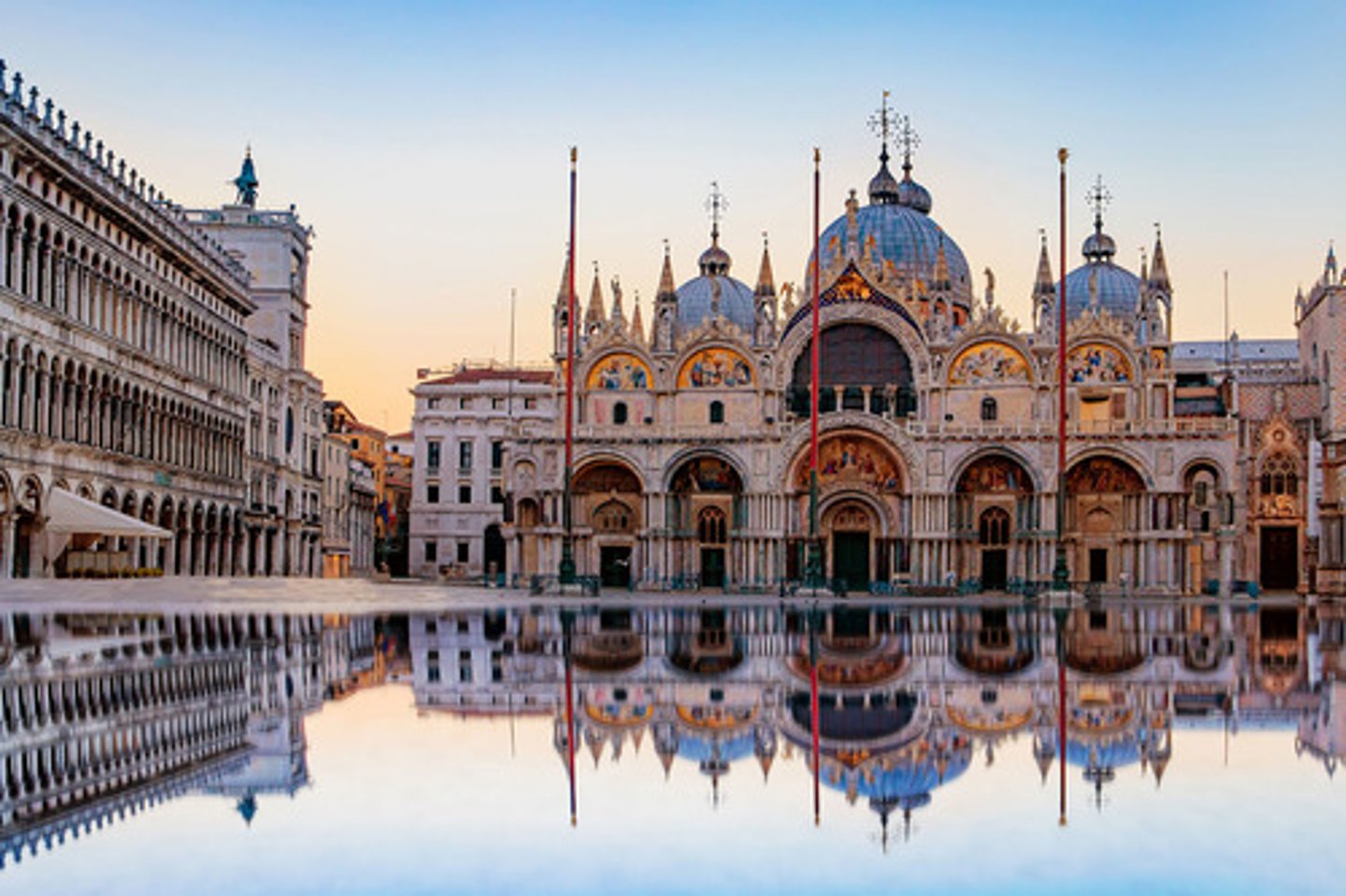
San Marco: Venetian Romanesque
Built to house the relics of Saint Mark the Evangelist, stolen from Alexandria.
modeled on the Church of the Holy Apostles in Constantinople
Byzantine-inspired architecture
Served as both the Doge’s private chapel and the city’s most important religious monument
Renowned for its golden mosaics, domed structure, and fusion of Eastern and Western styles
Used a Cross plan with five domes, each supported by pendentives, reflecting Byzantine influence
Over 8,000 square meters of mosaics, many in glittering gold tesserae, narrating biblical stories and Venetian triumphs
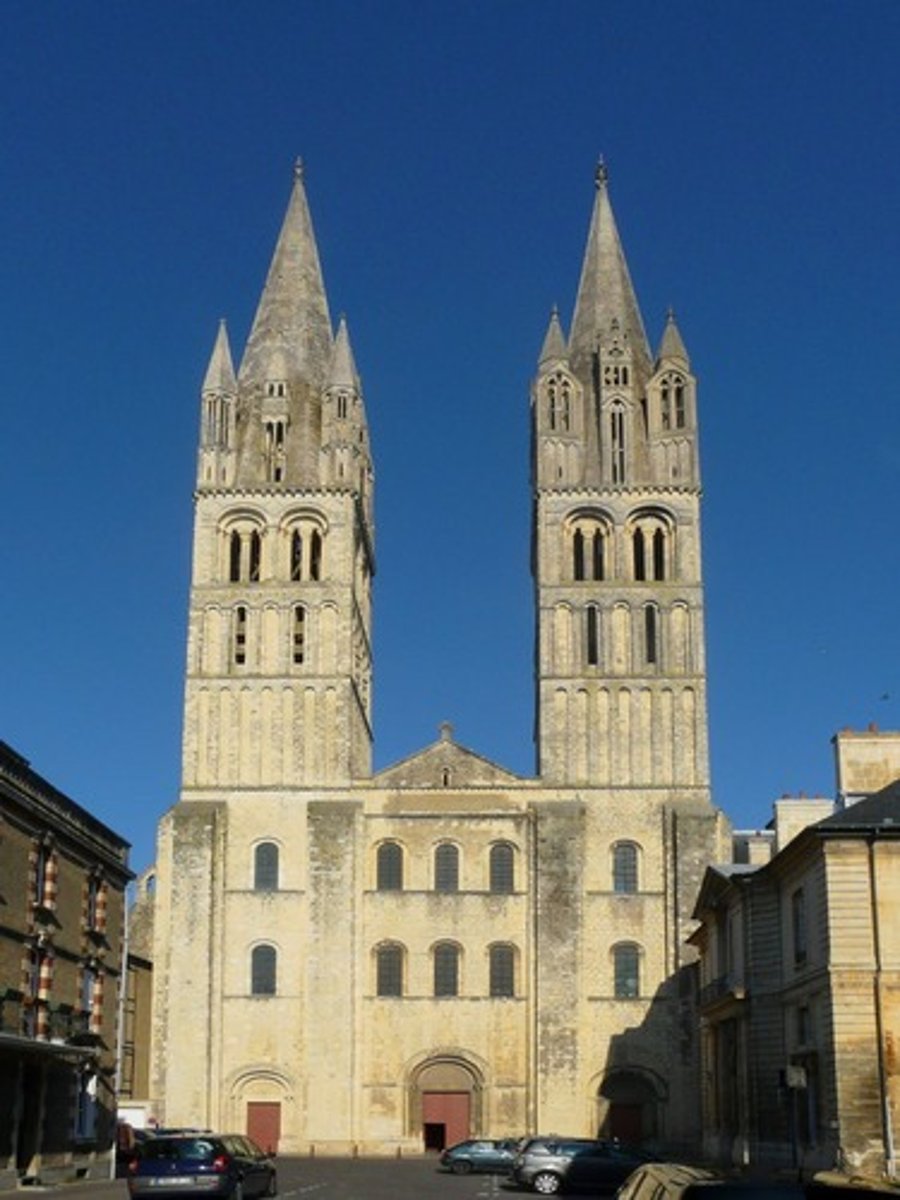
St. Etienne (Abbaye-aux-Hommes): Norman Romanesque
Founded by William the Conqueror
Served both as a Benedictine monastery and William’s burial place
Architecture marks a turning point between Romanesque and Gothic styles
original design featured a three-aisled basilica with a long nave, massive piers, and rounded arches
Later, ribbed vaults were introduced, making Saint-Etienne a forerunner of Gothic architecture
The Romanesque apse was replaced with a Gothic chevet, complete with flying buttresses and rosette windows
The abbey embodied Norman ducal power, linking William’s conquest of England with his spiritual legacy
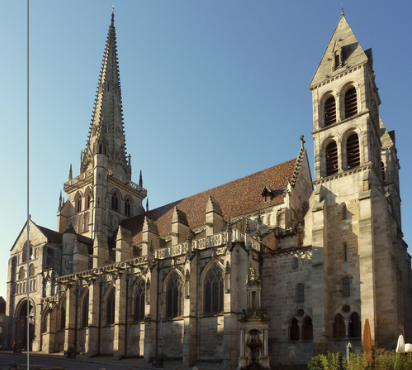
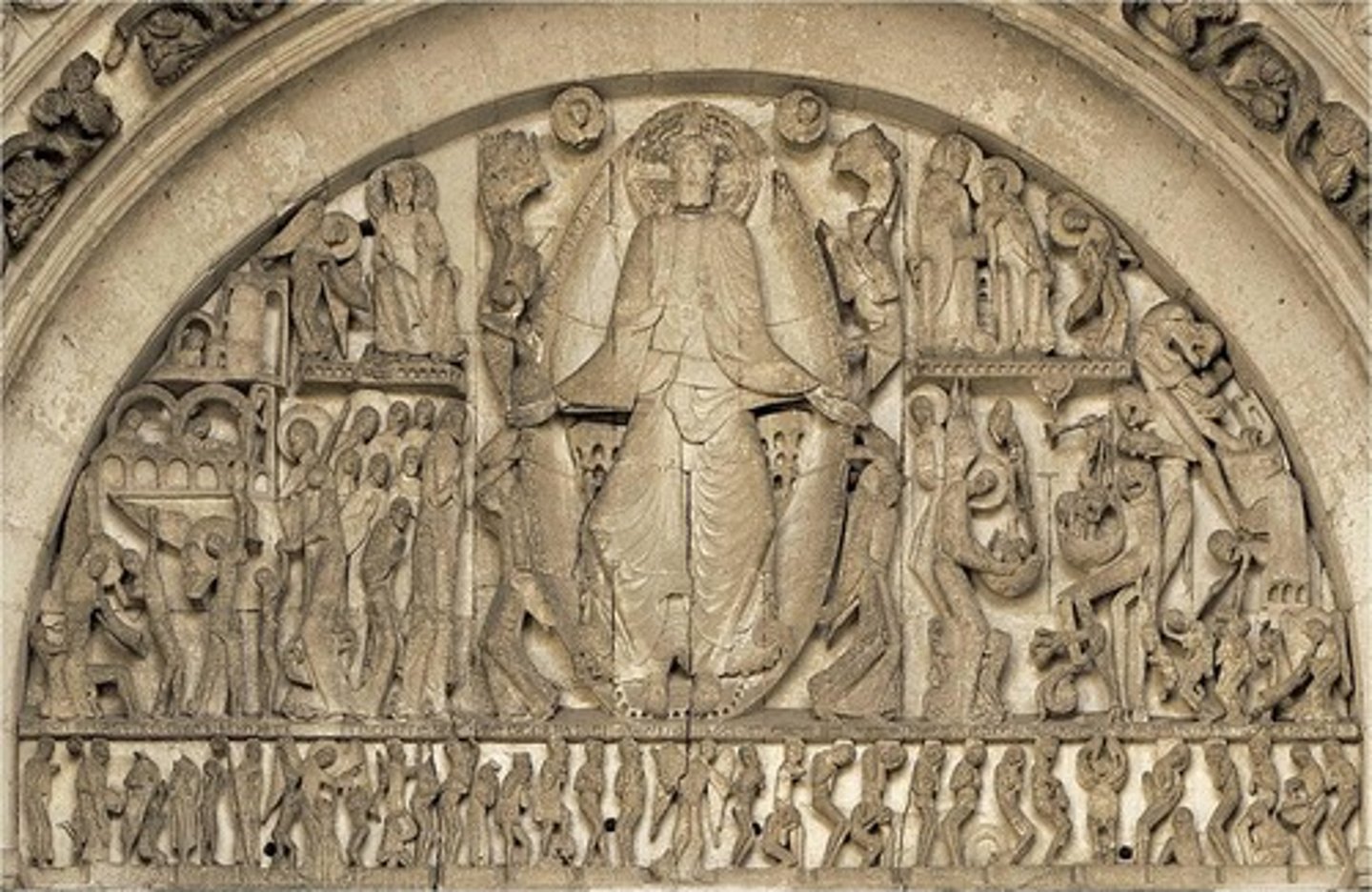
Cathedral of St. Lazare: Cluniac Romanesque and its *Tympanum showing the LastJudgment
Constructed to house the relics of Saint Lazarus
A major stop on the pilgrimage route to Santiago de Compostela
Church consecrated during height of the Cluniac reform movement
Cathedral drew pilgrims from across Europe, boosting Autun's prestige and economy
cathedral is a classic Romanesque basilica
nave is covered by barrel vaults, while aisles use groin vaults, advanced Romanesque engineering
Tympanum of the Last Judgment: Carved by Gislebertus, depicts Christ enthroned, angels, demons, and souls weighed in judgment
Narrative capitals throughout the nave and choir illustrate biblical stories
Sculptures taught biblical lessons to largely illiterate pilgrims
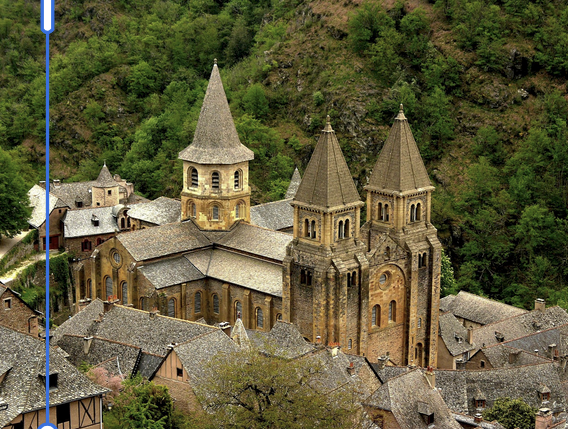
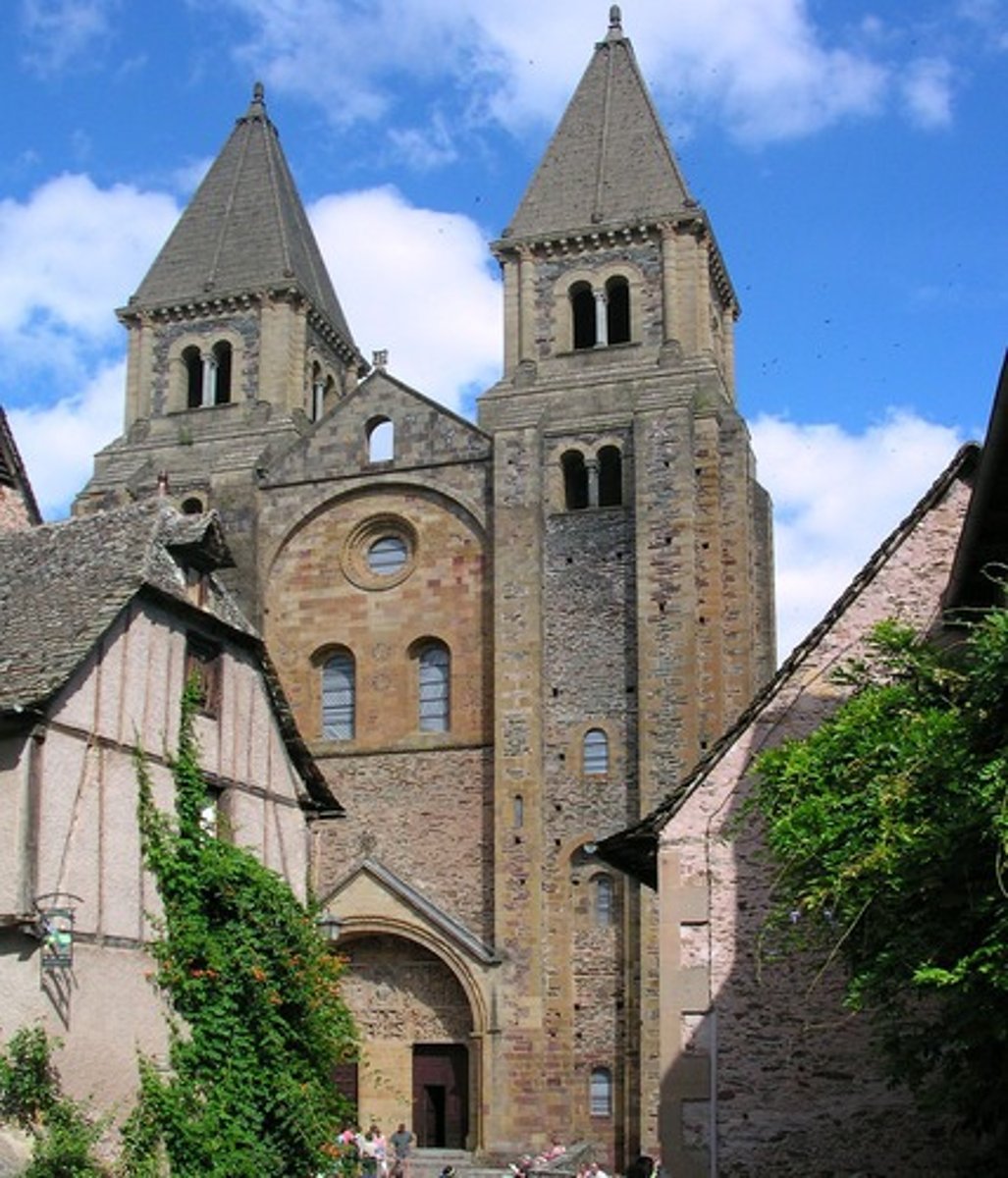
Sainte Foy: Cluniac Romanesque
abbey became famous after acquiring relics of Sainte Foy (Saint Faith), a young Christian martyr executed under Roman persecution
Sainte-Foy major stop on the Way of St. James (Camino de Santiago), the pilgrimage route to Santiago de Compostela in Spain.
cult of Sainte Foy was associated with miraculous healings and the liberation of captives
example of Romanesque architecture, massive stone walls, rounded arches, barrel vaults
cross layout with a long nave, transept, and radiating chapels
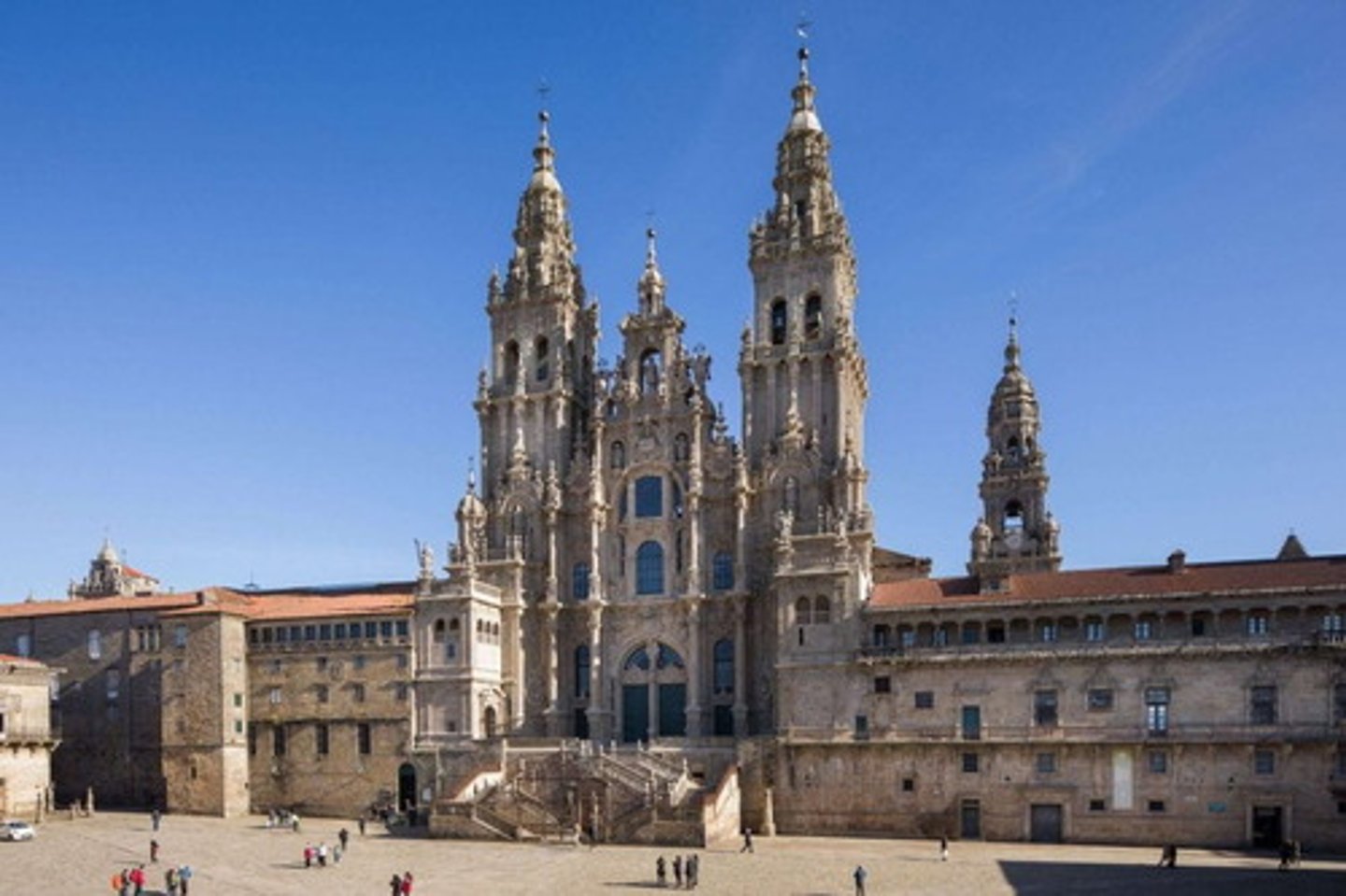
Santiago (Saint James) de Compostela: Romanesque & Pilgrimage
rose to prominence when the tomb of Saint James was believed to be discovered.
became the end of the Camino de Santiago, attracting pilgrims from across Europe
city was destroyed by Muslim forces, rebuilt later, symbolizing Christian resilience during the Reconquista
Architectural Evolution:
Romanesque Core with thick granite walls, round arches, and a barrel-vaulted nave
Gothic Additions: Chapels and structural refinements introduced pointed arches and ribbed vaults.
Romanesque foundations meet Gothic, Baroque, and later Neoclassical layers
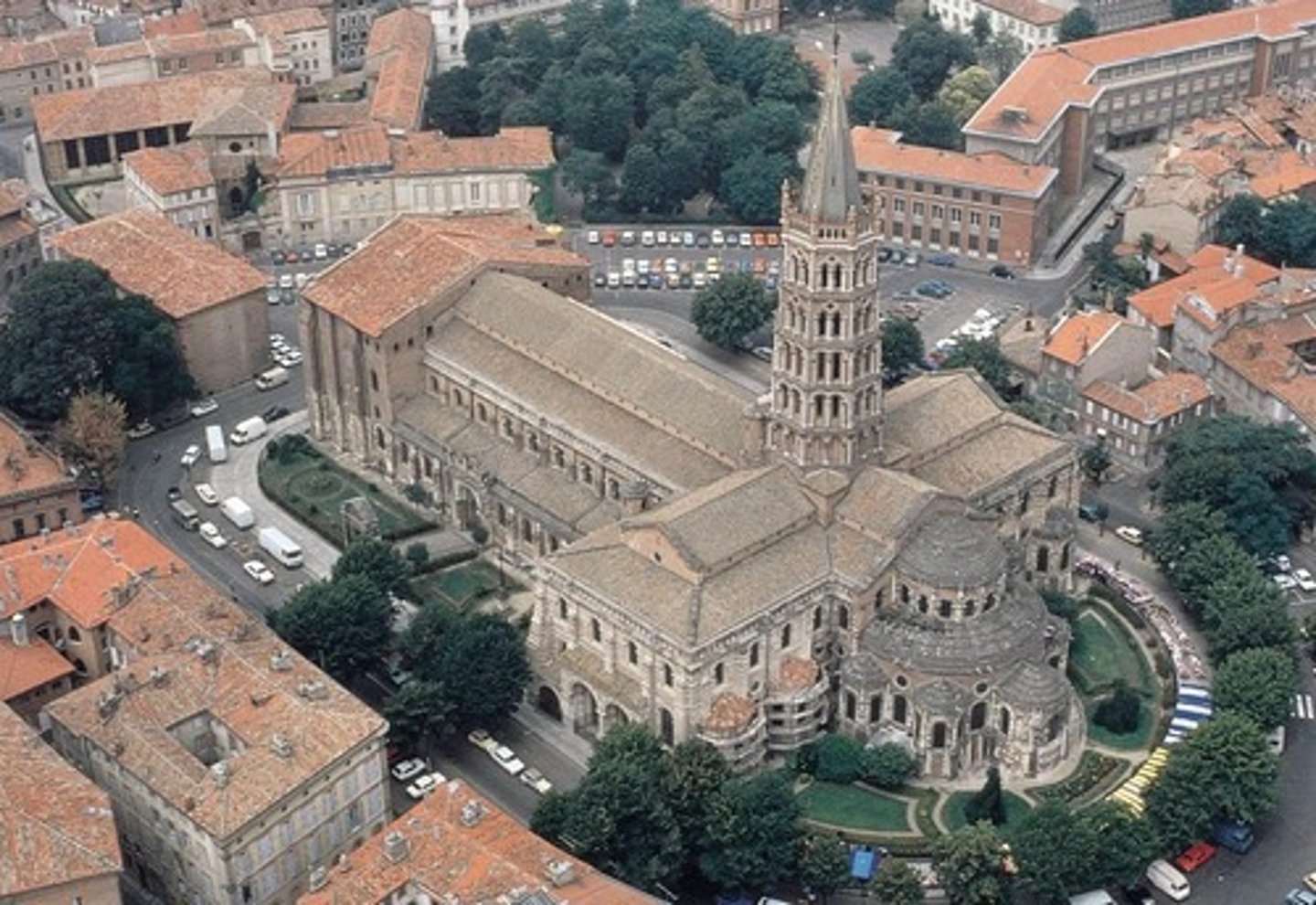
St. Sernin: Romanesque & Pilgrimage
honors Saint Saturninus (Sernin), the city’s first bishop and martyr
small shrine existed first, but the monumental basilica was begun later to accommodate growing pilgrim traffic
Saint-Sernin was a major stop for pilgrims en route to Santiago de Compostela
Romanesque Features: Built primarily of brick and stone, cross plan with a long nave, wide transept, and radiating chapels around the apse
octagonal bell tower
Barrel-vaulted nave with transverse arches
considered the largest Romanesque basilica in Europe
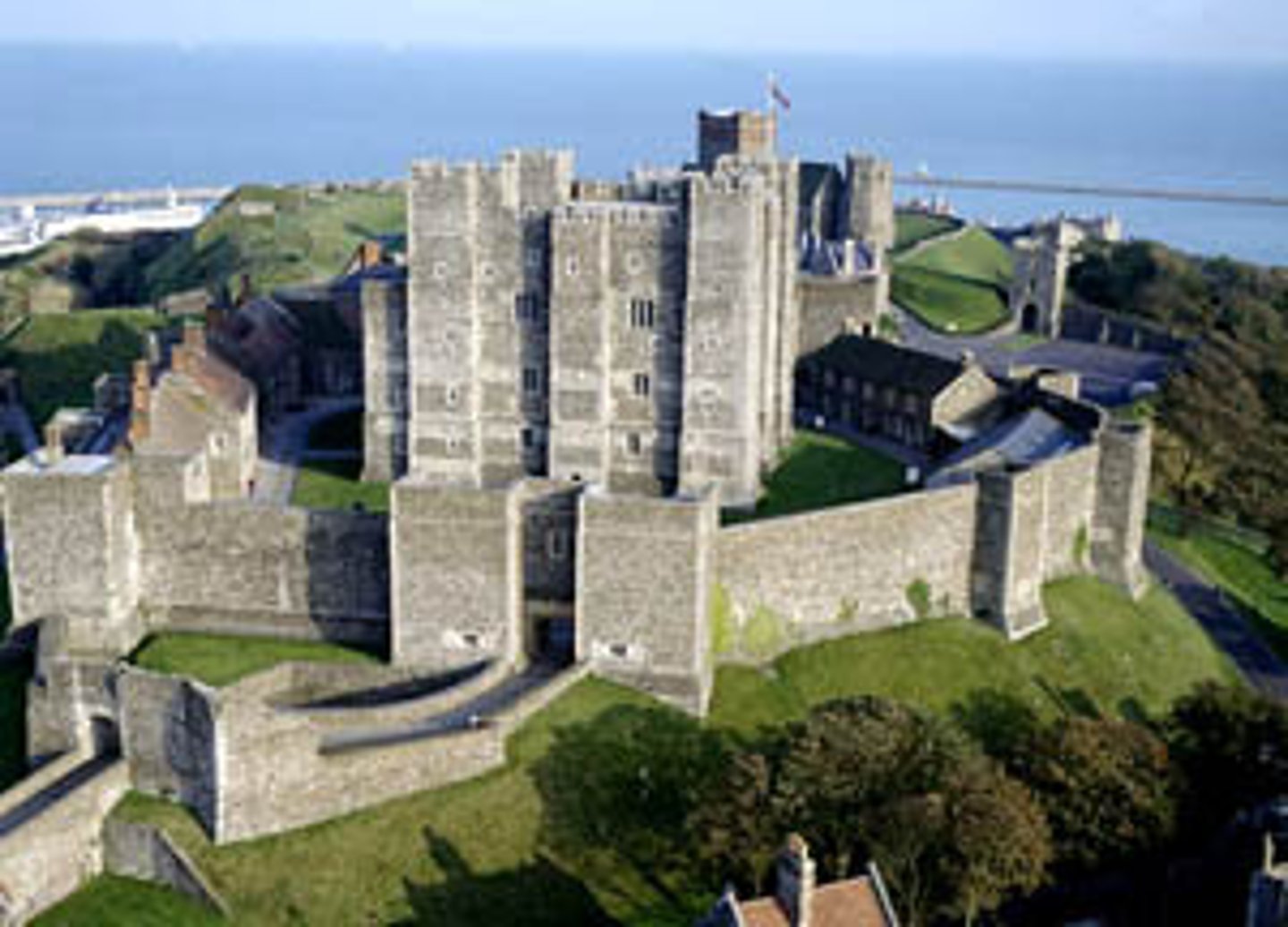
Dover Castle: Anglo-Norman Romanesque
William the Conqueror fortified Dover after his invasion to secure the Channel crossing
The massive stone keep and concentric defenses were built under Henry II, establishing Dover as a model of medieval military architecture
Keep Built by Henry II, rising four stories, with massive walls and ceremonial apartments
Served both defensive and symbolic purposes, emphasized royal authority
Early example of concentric castle design in Europe
Position on the White Cliffs of Dover, overlooking the narrowest point of the English Channel, made it the first line of defense against invaders
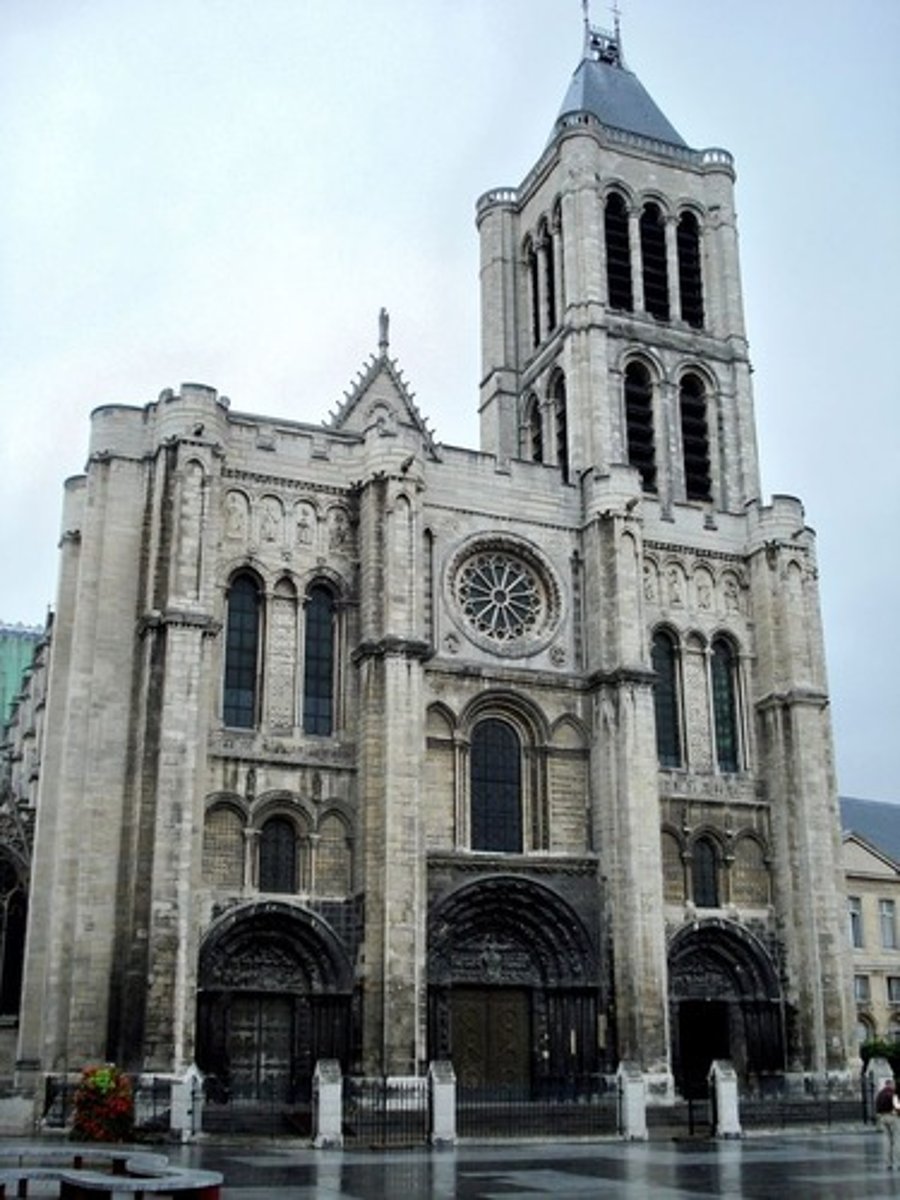
Saint Denis: Early Gothic
Built on the tomb of Saint Denis, the first bishop of Paris who was Martyred
Became the favored burial site of French kings, crucial role as a symbol of monarchy
Suger rebuilt the choir and facade, introducing innovations that transformed medieval architecture
Nave and transept were completed later, further developing Gothic style
Widely considered the first fully Gothic building
Features: Pointed arches, Ribbed vaults, Stained glass windows
emphasized light as a manifestation of God through the stained glass windows
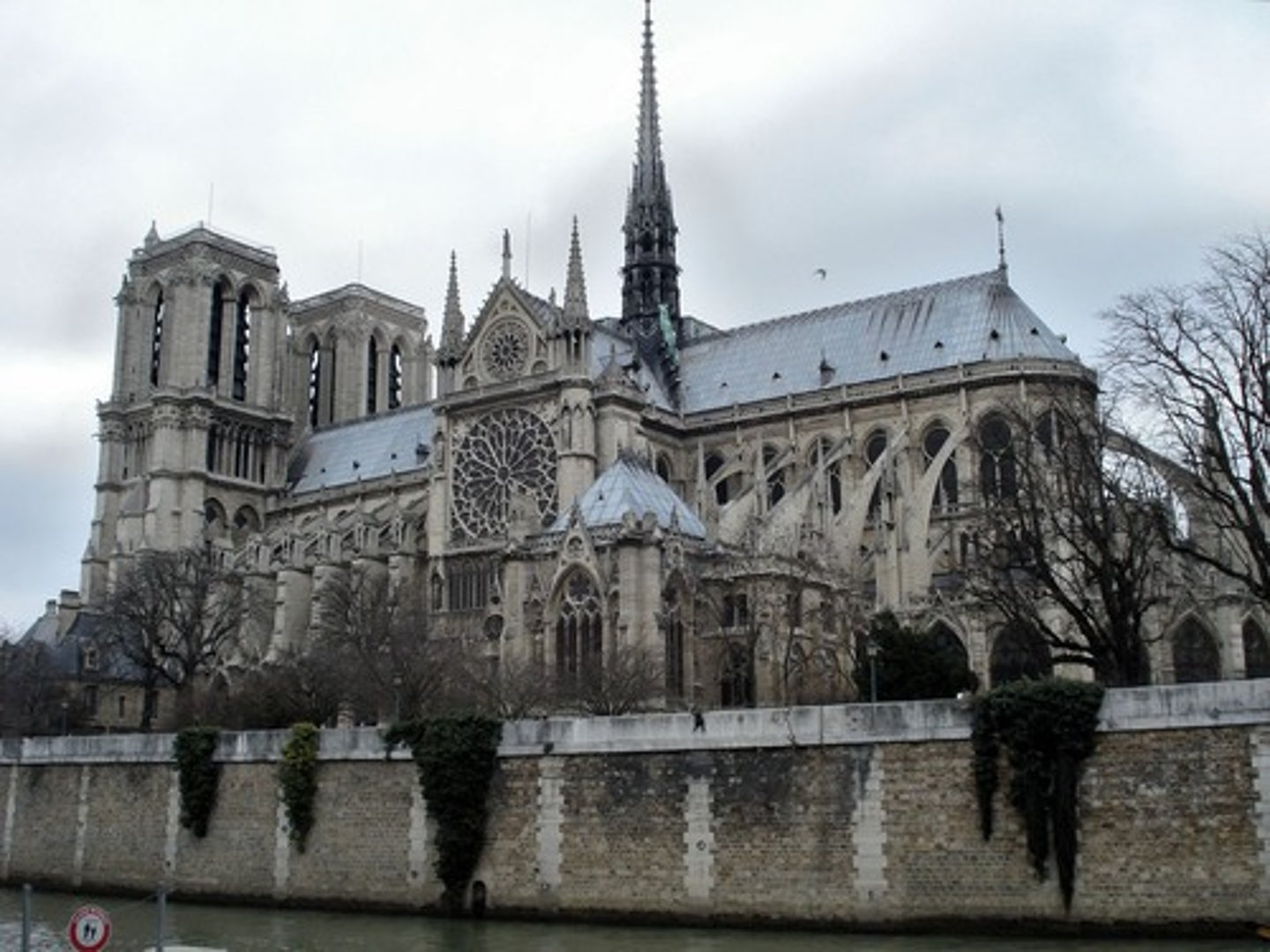
Notre Dame: Early-High Gothic
commissioned by Bishop Maurice de Sully
begun in mid 1100s and completed in mid 1300s
Combines Pointed arches, ribbed vaults, flying buttresses, and stained glass
Built on the ruins of earlier churches and a Roman temple to Jupiter
Rose windows
Portals depict biblical narratives. Gargoyles and chimeras serve both symbolic and practical (rainwater drainage) functions
extensive use of flying buttresses stabilize walls and enable large stained glass opening
Dedicated to the Virgin Mary
Extra Fun Fact: After the 2019 fire, reconstruction efforts allowed for reopening on December 2024
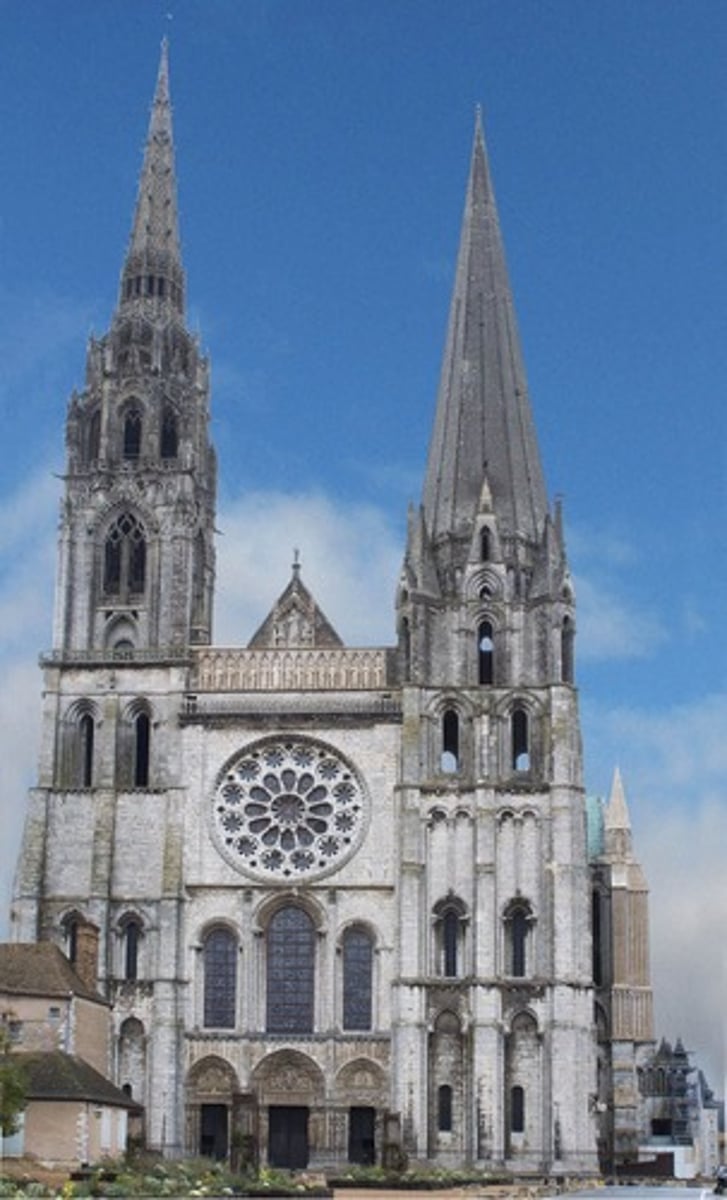
Chartres Cathedral: High Gothic
church dedicated to the Virgin Mary existed at Chartres by the 4th century
Romanesque cathedral was built in the 11th century but later destroyed by a fire
current Gothic cathedral rose rapidly after the fire, funded by donations from across France due to importance as a Marian shrine
housed the Sancta Camisia, a relic believed to be tunic worn by the Virgin Mary at Christ’s birth, making it a major pilgrimage destination
cross plan, with a long nave, wide transept, and deep choir
Flying buttresses support high walls, allowing vast stained glass windows
Sculptures of kings, queens, prophets, and Christ in Majesty, links Old Testament and New Testament
Famous Blue of Chartres color in Marian windows
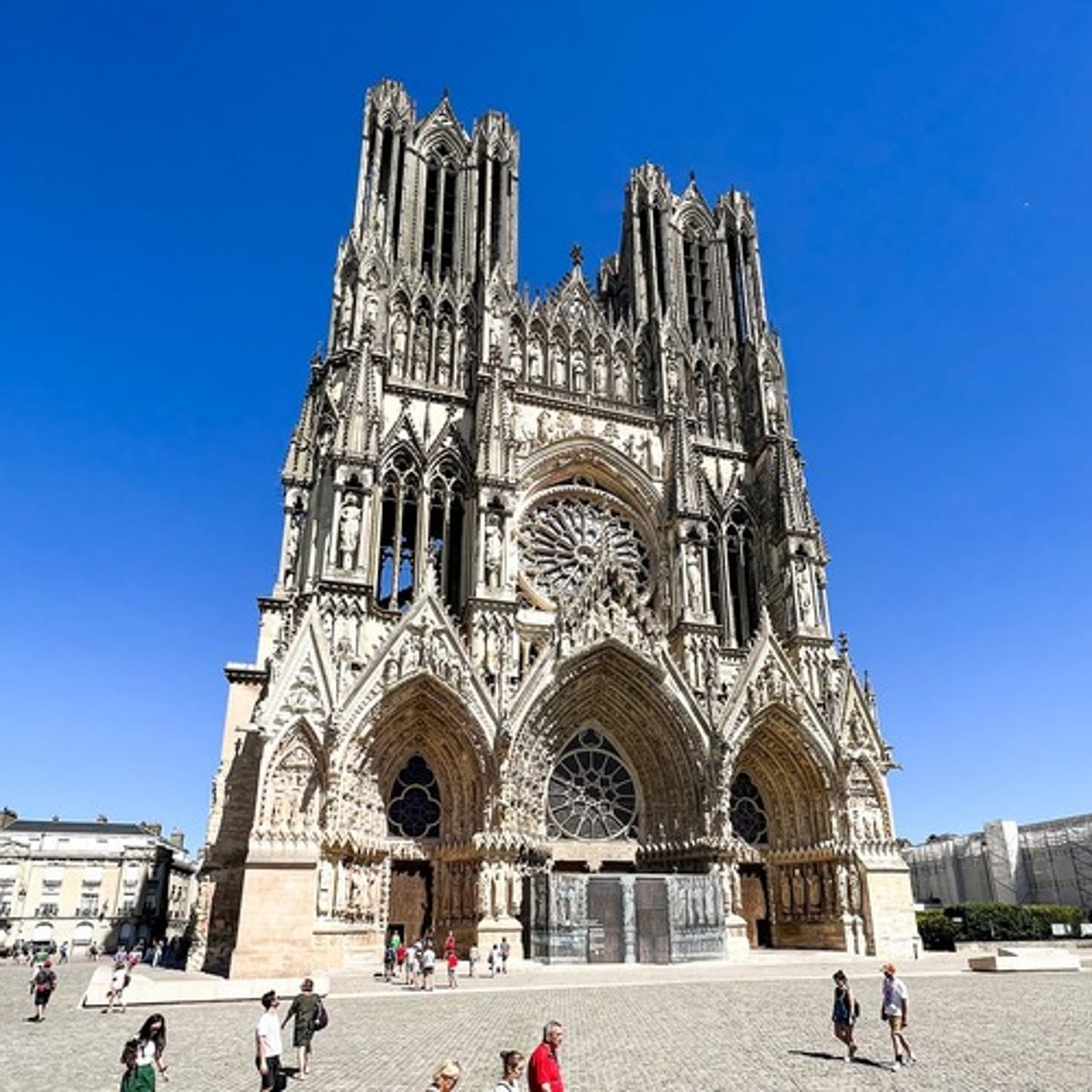
Reims Cathedral: High Gothic
A church existed at Reims first, where Clovis, the first king of the Franks, was baptized
After a fire destroyed the earlier Romanesque church, Archbishop Aubry de Humbert initiated the new Gothic cathedral
Reims became the traditional site of French royal coronations
Cross plan with a long nave, wide transept, and deep choir
Vaults emphasize verticality and light
Use of flying buttresses to support tall walls and large stained glass windows
Over 2,300 statues, making it one of most sculpturally rich cathedrals in Europe
Portals depict biblical narratives, saints, and coronation imagery
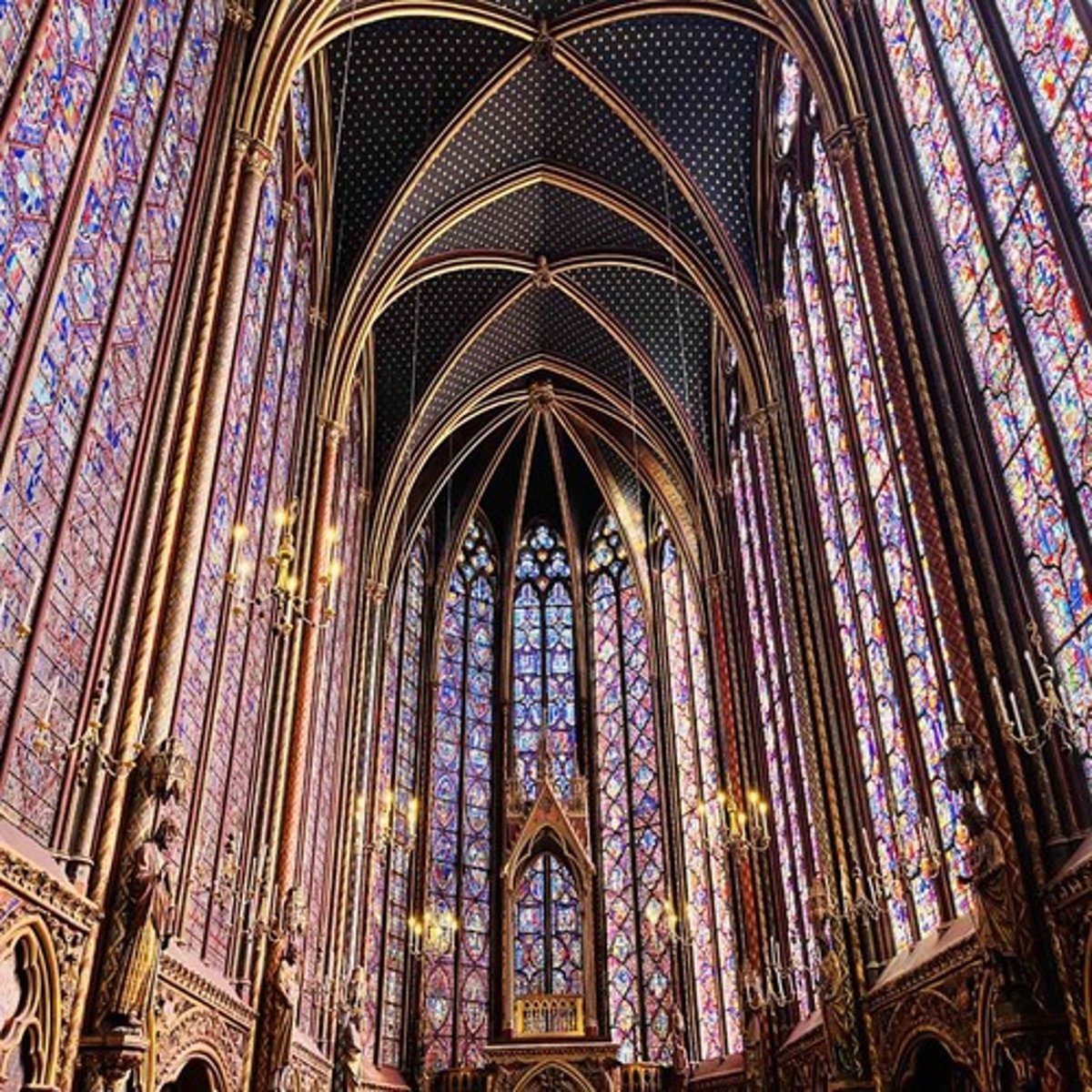
The Sainte-Chapelle: Late Gothic (aka Rayonnant style)
Commissioned by Louis IX as part of the royal palace
Built to house Crown of Thorns, fragments of the True Cross, and other relics acquired from Constantinople
Served as both reliquary and a symbol of Capetian monarchy divine legitimacy
Characterized by extreme emphasis on light and verticality
Two Levels:
Lower Chapel: For palace staff, decorated with painted vaults and polychrome columns
Upper Chapel: Reserved for king and relics, dominated by immense stained glass walls
Stained glass windows depicting biblical history from Genesis to Christ’s Passion
Delicate stonework frame creates a “cage of light.”
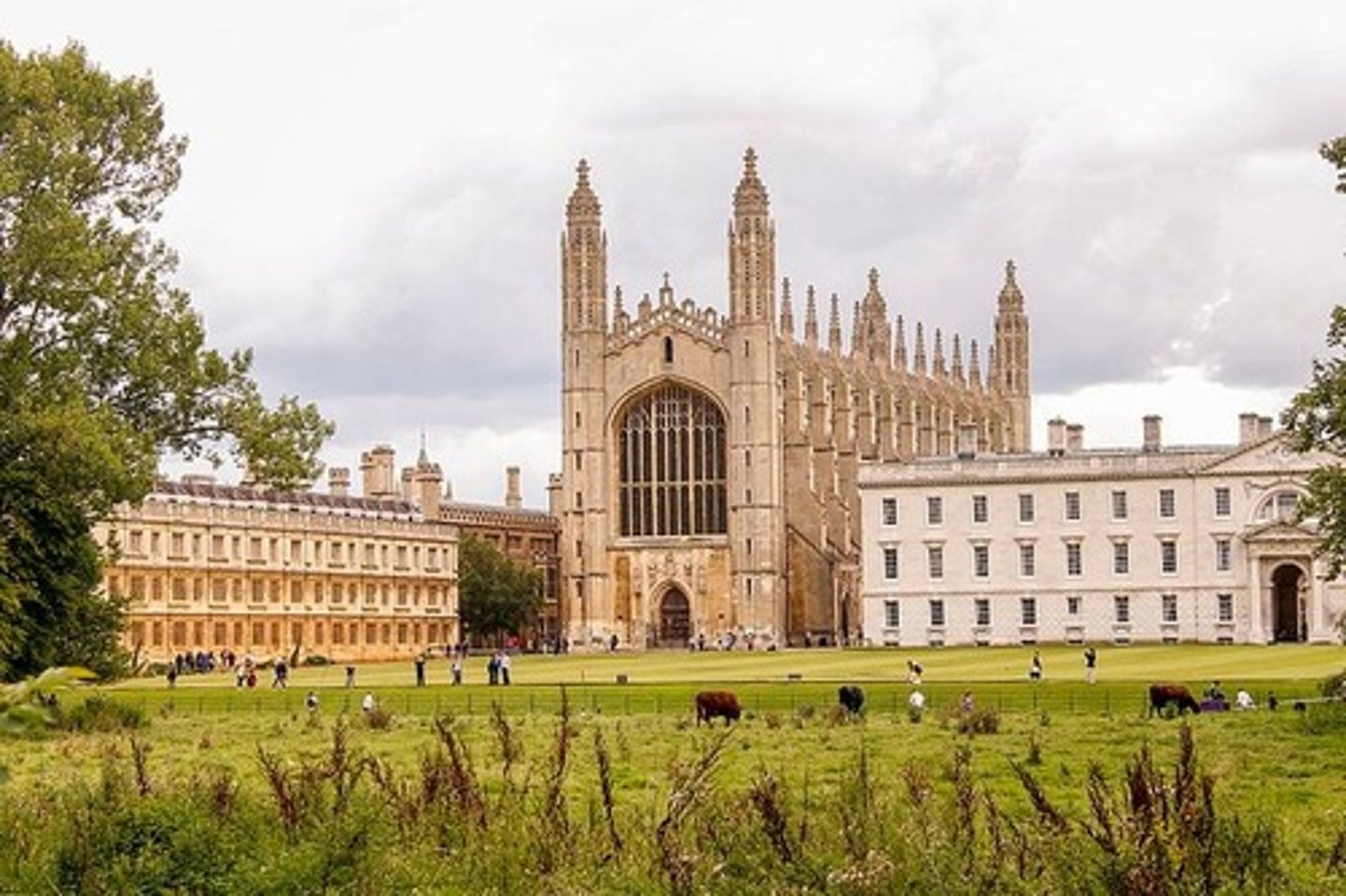
King's College Chapel: Perpendicular Gothic
Founded by King Henry VI, who envisioned a chapel of cathedral-like scale for the new college
Each Tudor monarch contributed, making the chapel a project reflecting the power and prestige of the crown
Perpendicular Gothic Style: vertical lines, large windows, and elaborate vaulting
fan-vaulted ceiling
Large windows depict biblical narratives from Creation to the Resurrection
Chapel embodied Henry VI’s vision of a college dedicated to religion and learning, later monarchs used it to project Tudor authority
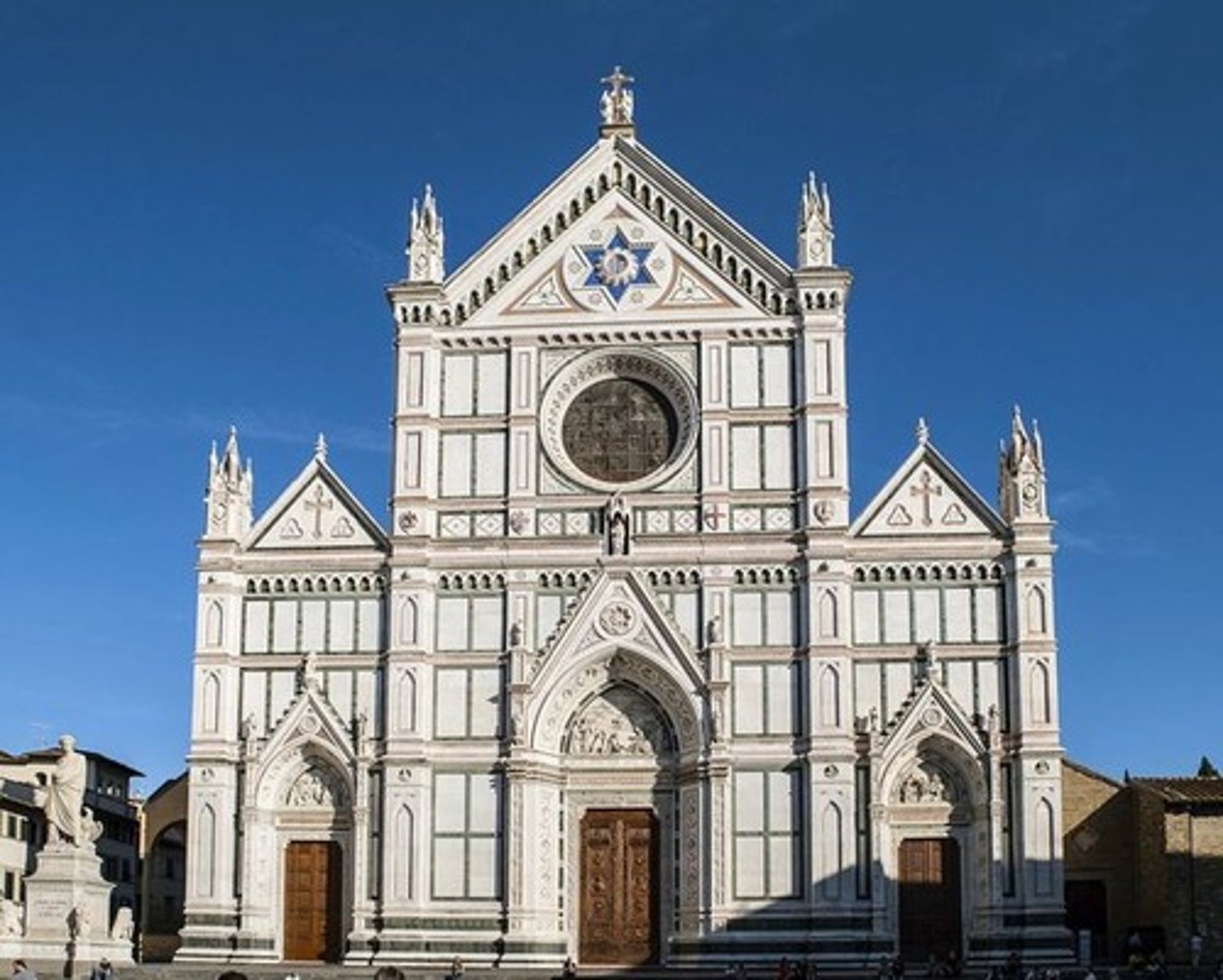
Santa Croce: Tuscan Gothic
Franciscan friars arrived in Florence, settling in a marshy area outside the city walls
basilica was begun late 1200s, possibly designed by Arnolfo di Cambio, and consecrated in mid 1400s
Santa Croce was financed by Florentine citizens, reflecting its role as the “people’s church”
Wide nave with side aisles
Giotto’s frescoes narrate the lives of St. Francis and St. John the Evangelist
Church’s simplicity and spaciousness reflect Franciscan values of poverty and preaching
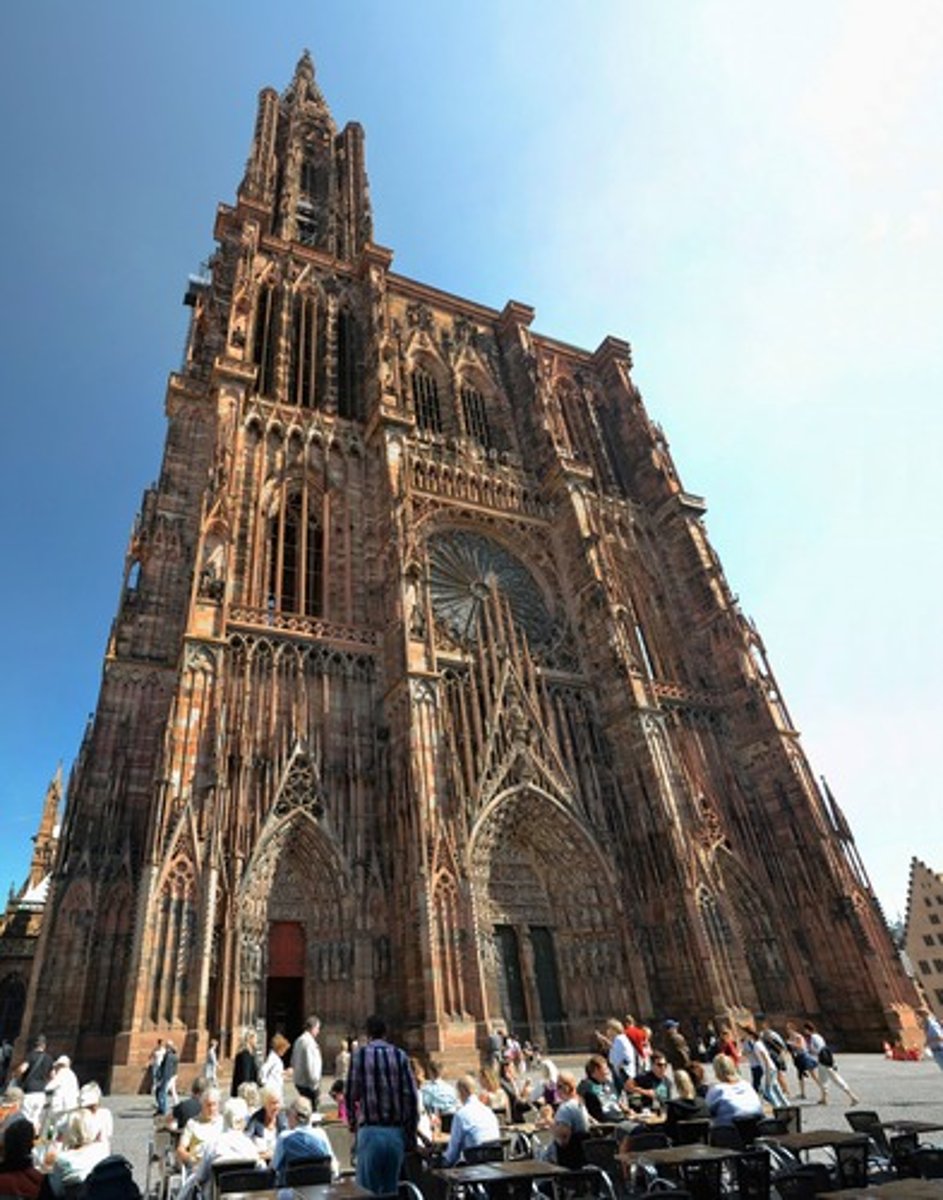
Strasbourg Cathedral: Late Gothic
A Romanesque cathedral existed previously at the site
After a fire, the cathedral was rebuilt in Gothic style
Served as the seat of the Bishop of Strasbourg
Later became a Protestant church during the Reformation
Returned to Catholicism when Louis XIV annexed Strasbourg
The west front contains thousands of figures illustrating biblical narratives
Rose Windows
Spire was tallest structure in the world for over two centuries
Cathedral symbolized Strasbourg’s prosperity as a free imperial city
Sculptures and stained glass emphasize salvation, cosmic order, and civic pride
trompe l'oeil
a painting or design intended to create the illusion of a three-dimensional object
Westwerk
monumental western entry block with two towers at either side of a center portion
Cloister
a quadrilateral, portico-lined courtyard at the center of a monastery
Bay
a repeated unit of structure (comprised of four vertical supports and their vault/roof)
Eremitic monasticism
solitary monasticism, as a hermit (or anchoress)
Cenobitic monasticism
monasticism in which monks live together as a community, often at adistance from other, secular communities
Order
a monastic practice that follows a particular set of rules and regulations. All orders were part of the western European, Latin church and owed allegiance to the Pope, but each orders' particular regulations might differ somewhat
Benedictine monasticism
follows the Regula, or Rule, of St. Benedict, of the 5th century: guide, in 73 short chapters, for communal monastic life based on an equal balance of the "active life" and the "contemplative life": equal parts work and prayer/meditation. Most common order of medieval monasticism; it is still practiced today
Mother house/daughter house
relationship between a founding monastic church and its newer off-shoot
Abbot/Abbess
leader of a male/female communal monastic community
Opus Dei
communal worship (for all of the members of the monastery); divided into seven hours ('offices') of prayer throughout the day and night
Claustrum or Cloister
Enclosed four-sided space at the center of a monastery, composed of a subdivided garden or courtyard and surrounding porticoes; can also mean the monastery as a whole, as a separated and closed space of religious life
Chapter House or Capitulum
place of meeting of the whole monastic community; usually a rectangular or square vaulted space with benches around the perimeter of the room for seating
Cluniac
the order affiliated with Cluny Monastery; a reform branch of the Benedictine Order; believes in prayer as labor (they hired lay brothers - workers - to do manual labor)
Cistercian
a later reform order founded in 1098 at Cïteaux (Latin medieval name: Cistercium).They followed a strict interpretation of the Benedictine Rule, reintroducing manual labor andmaking asceticism a key aspect of their monastic practice. Bernard of Clairvaux was one of their main intellectual leaders, under whose guidance the order grew exponentially in numbers and power
Translation
the ritual movement/rehousing of the relics of a saint from one church location to another
Compound pier
vertical supports made of a core pier or column with attached colonnettes around it
Crossing (tower)
the area where the nave and the transept meet and its vaulting
Springing
the point at which an arch begins (where it begins to curve away from its vertical support)
Groin vault
a masonry vault of two intersecting, perpendicular barrel vaults; this creates joints (or "groins" at the points of intersection
Ribbed barrel vault
a barrel vault with a supplementary support band at each bay
Radiating chapel (aka 'apsidiol')
small apse-like projection off an ambulatory or transept
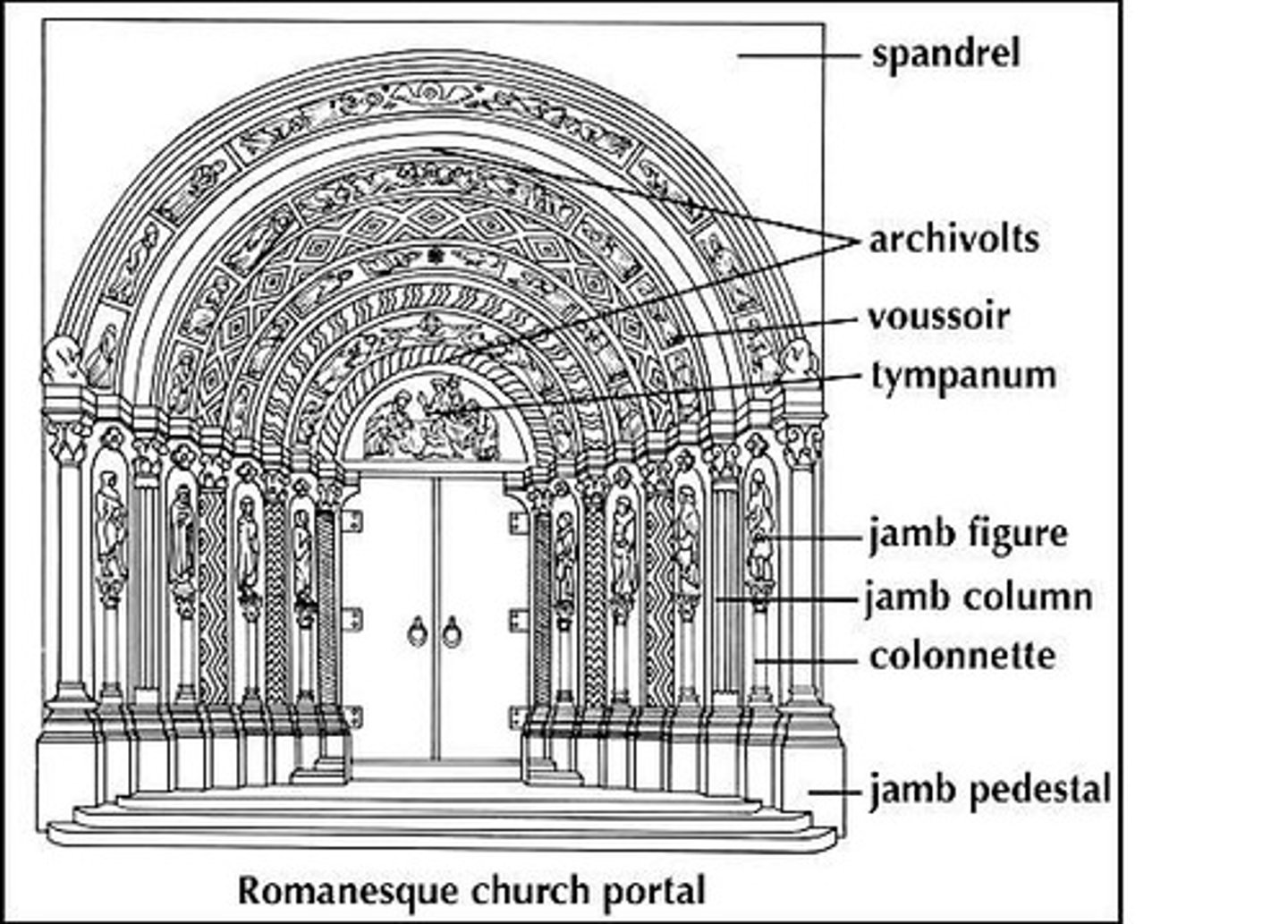
Tympanum
the space enclosed by a lintel and an arch over a doorway
Maestas Domini
Latin, "Christ in Majesty". Iconography of Christ seated on a throne, usually centered in the architectural frame and larger than other figures (hierarchical scale)
Last Judgment
the judgment of souls at the end of the world, part of Christian/New Testament belief
Camino de Santiago
"the Way of St. James," is a network of pilgrims' routes leading to the shrine of the apostle Saint James the Great in the cathedral of Santiago de Compostela in northwestern Spain
Relic
a body part of a saint or holy object (usually a tiny fragment of such); secondary relics are those that were in contact with a holy body (such as the Shroud of Turin)
Reliquary
the container for a holy relic, often very highly decorated with gold and gemstones;can take a human form (often related to the body part the relic came from) or a more functionalobject, like a casket/box or a cross form
Motte-and-bailey
A defensive system comprising the motte, a mound of earth, with a wooden tower on top, placed within the bailey, a walled courtyard (also called the ward)
Keep
A freestanding defense tower in a castle complex (after the twelfth century, often enclosed by fortifications/walls, becoming the strongest element within the castle; later yet, keeps are mostly residential and could be fairly luxurious).
Enceinte
French term for inner protective line, consisting of towers/bastions and curtain walls, surrounding a keep (often there are two lines of defensive fortifications in twelfth century and later castles)
Rib vault
structural bands of masonry that form the "skeleton"/frame of the building
Pointed arch
transfers force and thrust more efficiently through the center of the arch's voussoirs (individual stones), creating a stronger arch
Flying buttress
transfers lateral thrust (sideways) from the clerestory springing point to the external buttress pier of a Gothic cathedral
Gothic Architecture Development over Time
1) Overall, the cathedrals get taller over time
2) the interior nave wall switches from earlier four-part elevation to a later three-part elevation (the gallery is excised); this streamlines the wall, emphasizing its verticality
3) the proportions of the interior nave wall become more equalized between the ground arcade and the upper-level clerestory
Chevet
rounded, hemispherical east end of a Gothic church (includes the ambulatory (with any radiating chapels, apse and choir)
Pseudo-Dionysius
an ancient Greek philosopher who believed that radiant light was a physical manifestation of God. Through centuries, this Pseudo-Dionysius Dionysius is the Greek version of 'Denis') became conflated with the martyrial saint of the monastery of St. Denis, and thus Suger believed that he was adapting the patron saint's idea of divine luminosity in the building of his new church.
Anagogy
interpretation of a word, passage, or text (as of Scripture or poetry) that leads beyond the literal, allegorical, and moral senses to a spiritual or mystical sense
Triforium
small zone above the gallery (or sometimes replacing it) in a Gothic elevation. Often has blind arcades, or an open arcade screening a small passageway.
Webbing
the "skin" of a ribbed vault; the solid covering of the vault above the structural ribs
Six-part/Four-part vault
vaults broken into six or four compartments by the transverse anddiagonal supporting ribs. Six-part vaults are earlier, four-part vault were the result of greater experimentation and confidence in the Gothic vaulting structural system.
Jamb statues/figures
statues that are carved into the columns of the door jambs (verticals connected to the facets of the archivolt)
Rose window
circular window with mullions or tracery radiating in a form suggestive of aflower/rose
Mullion
individual, vertical dividers between glass plates in a window (still used today); canbe stone, wood, aluminum, etc.
Lancet
tall, narrow window with an acutely pointed head
Tracery
stone dividers (as a whole) in windows, often in elaborate patterns
Plate tracery
window forms are punched into the stone wall, retaining the majority thickness of the wall
Bar tracery
thinner bar mullions between the stained-glass pieces allowing for greater areas of glass within the rose window
English Perpendicular
perpendicular Gothic period (or simply Perpendicular) characterized by an emphasis on rectilinear lines with strong points of crossing; begins c. 1350 (and goes until the mid-sixteenth century) and grows out of the English Decorated style
Ridge Rib
long, longitudinal rib running the length of several bays (if not the whole church) along the apex of the vault line
Tierceron
rib projections that extend from the side arches to some point along the ridge rib, not necessarily joining the rib from the side arch opposite
Lierne
small ribs connecting tiercerons or ridge ribs (these make up the bulk of the net-like patterns of English Gothic vaulting
Fan Vaulting
type of vault consisting of a set of concave ribs spreading out from a central point like the ribs of an opened umbrella, used especially in the English Perpendicular style
Hammer-beam roof
Short, horizontal beams projecting inward into the top of interior walls, attached to the foot of principal rafters in a roof and generally supporting arched roof braces
Mendicant Orders
monastic orders that engaged with teaching and outreach to the secular population; usually located within town centers for this outreach. Franciscans and Dominicans are part of the Mendicant Orders.
Three Combined Structural elements creating "Gothic" architecture
Rib vault
Pointed arch
Flying buttress
Historiated capital
Capital with narrative carved on its faces (they tell a story)
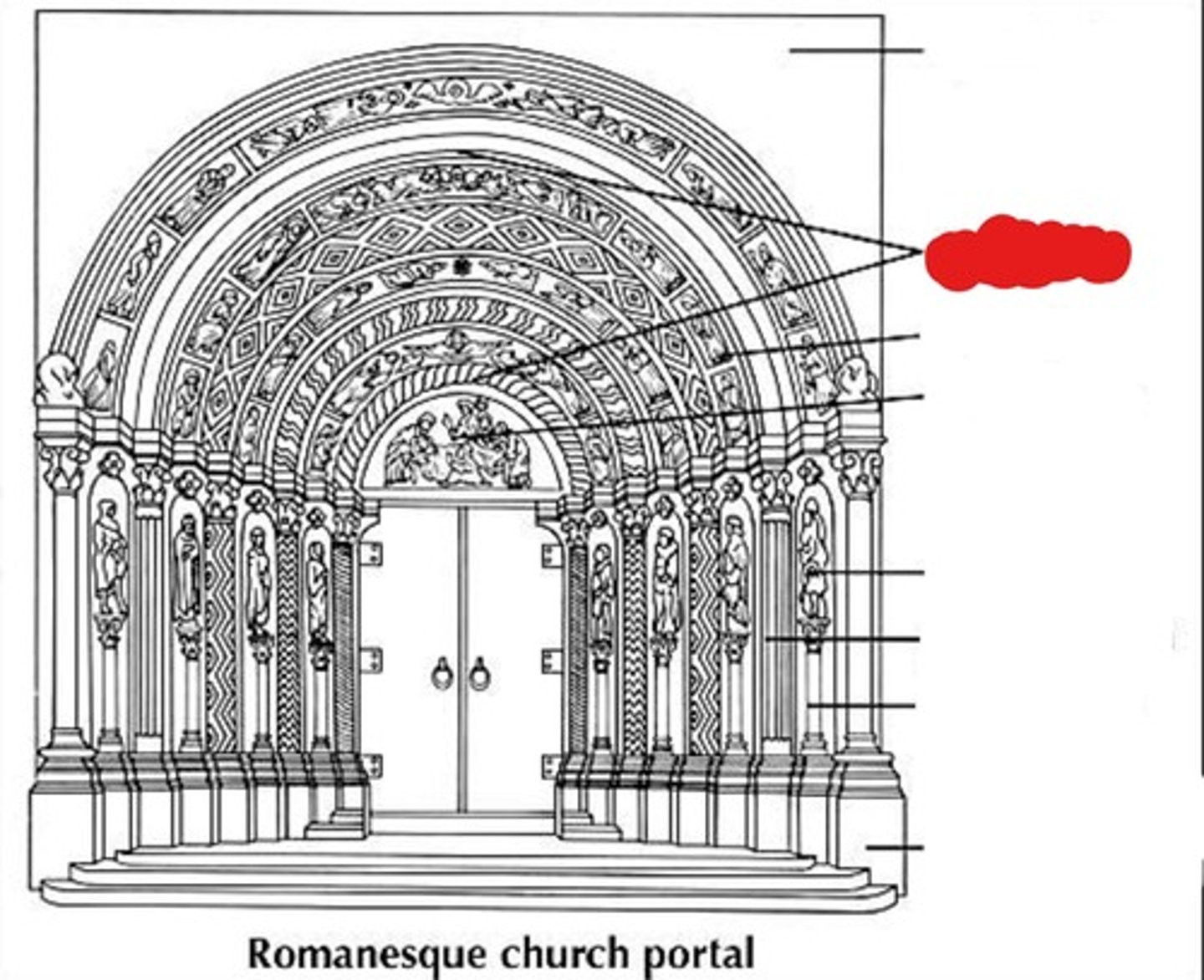
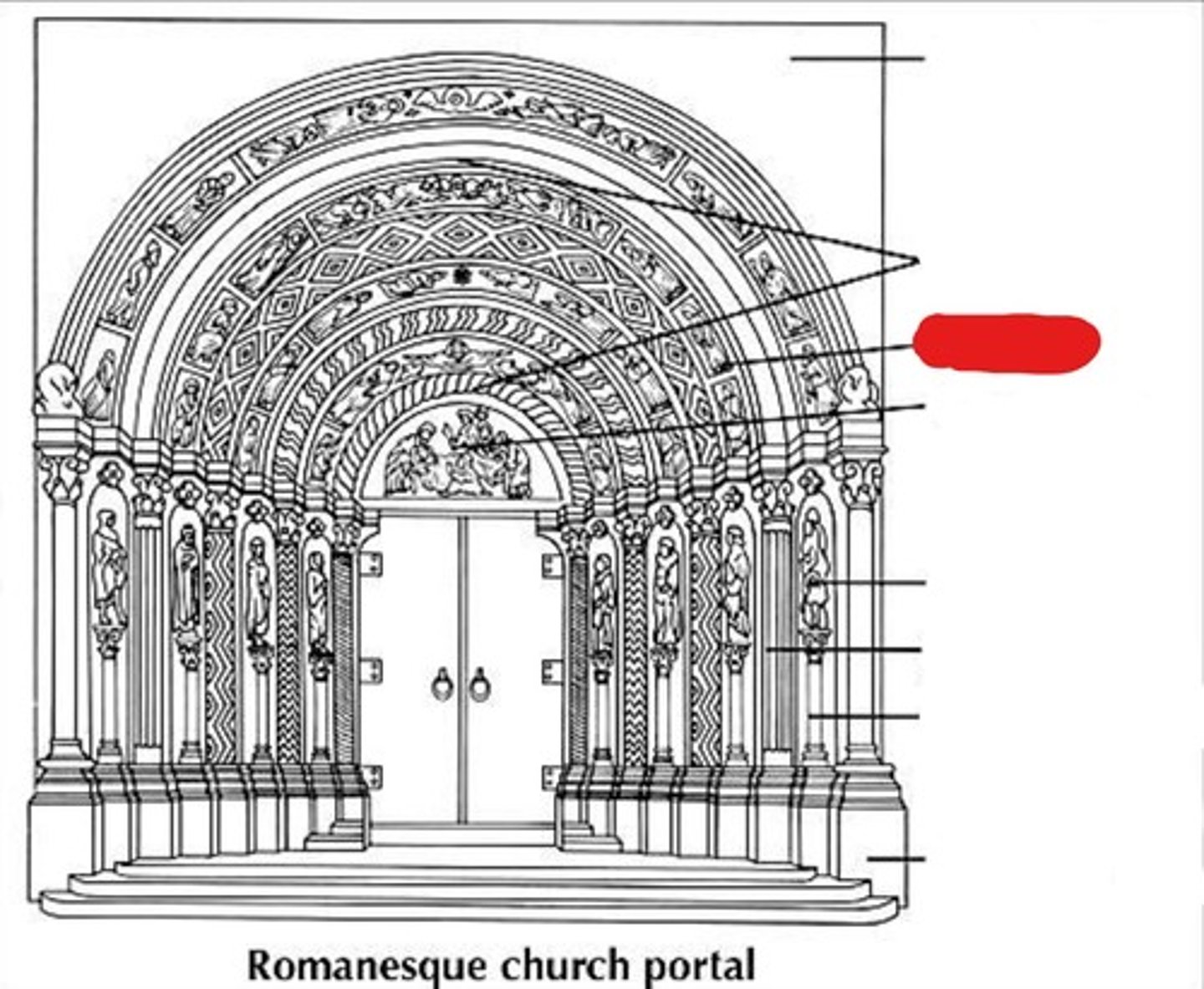
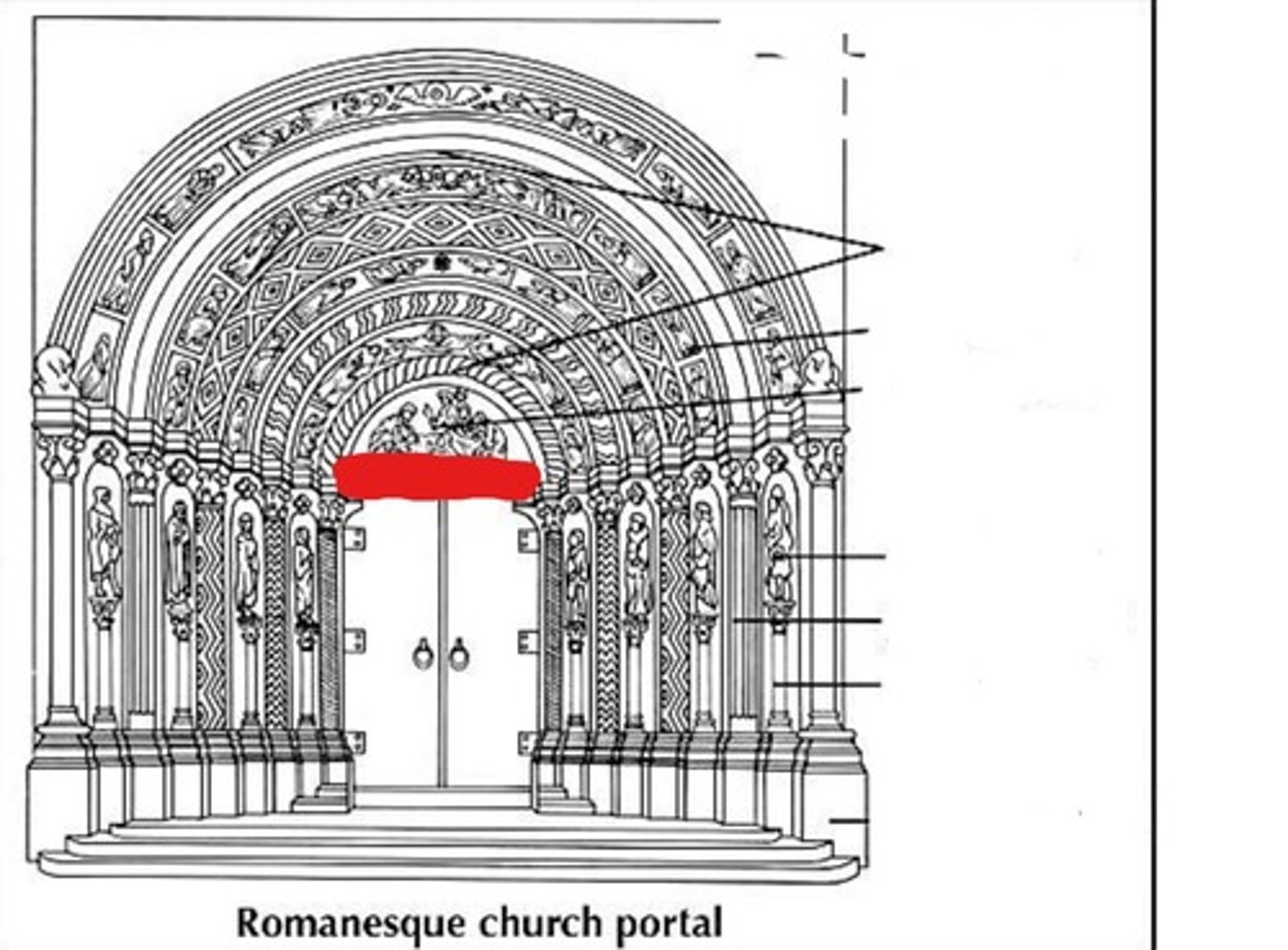
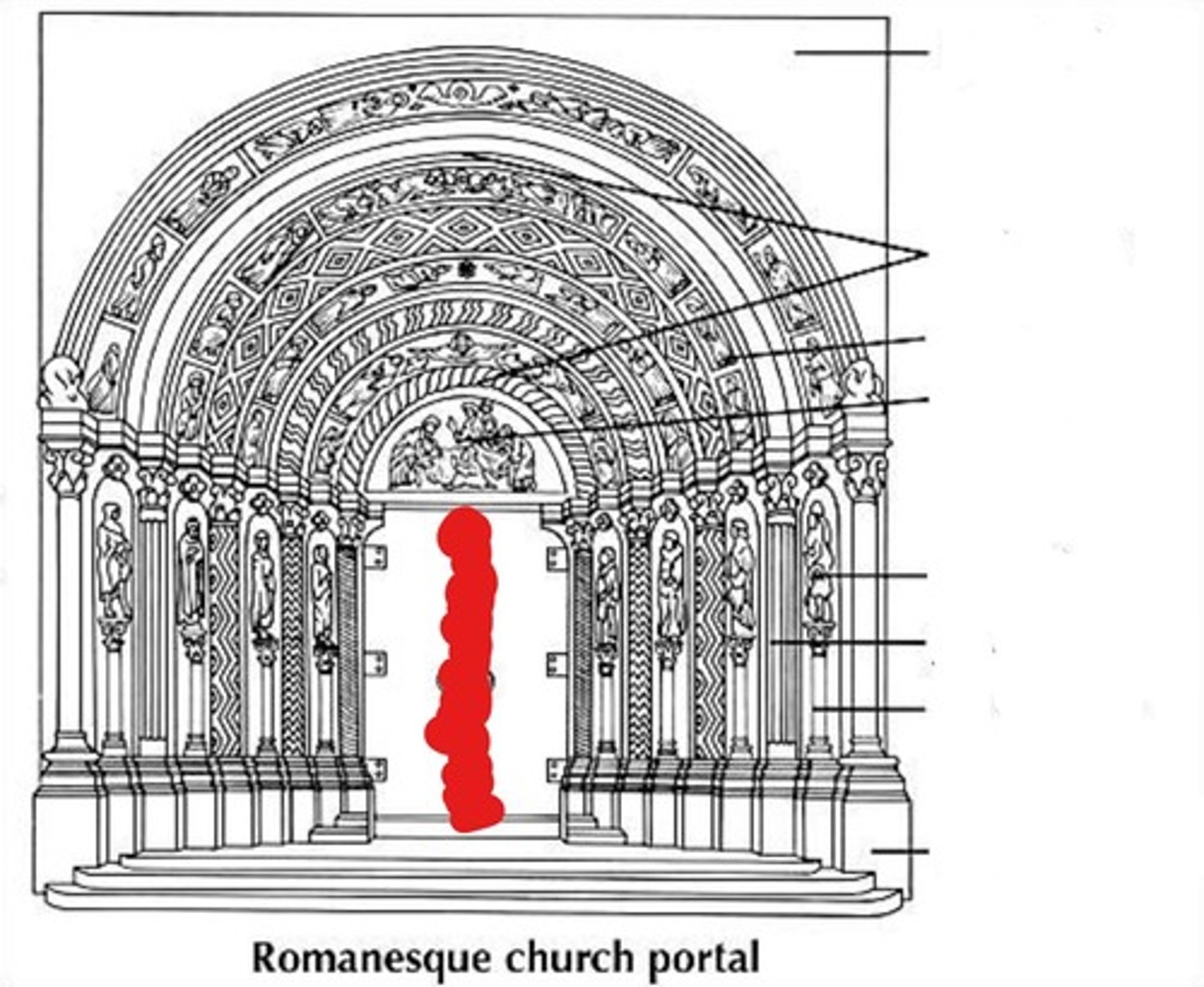
Diagram of the Romanesque portal: Archivolt, Voussoir, Lintel, Jamb, Trumeau
Archivolt
Voussoir
Lintel
Jamb
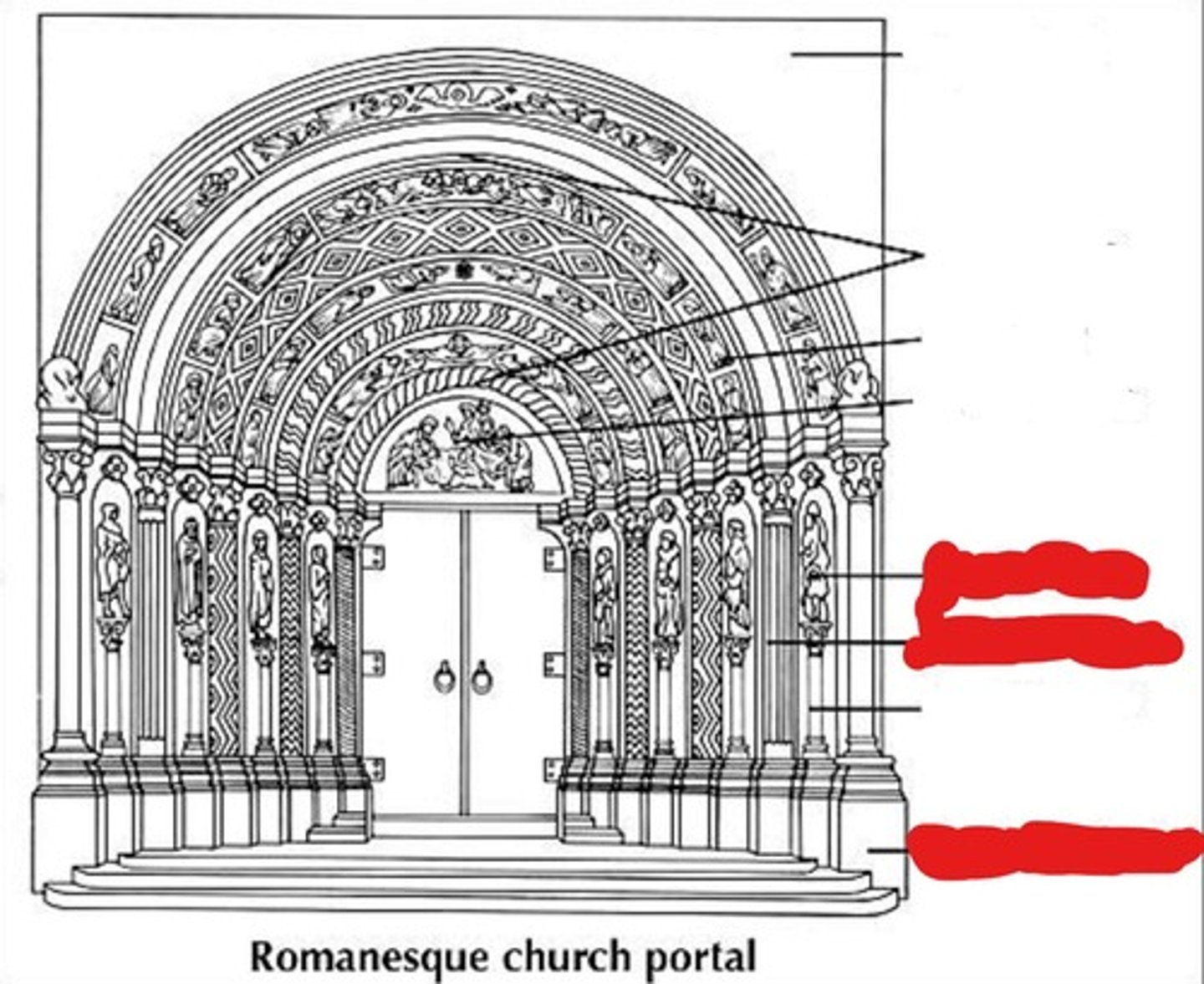
Trumeau
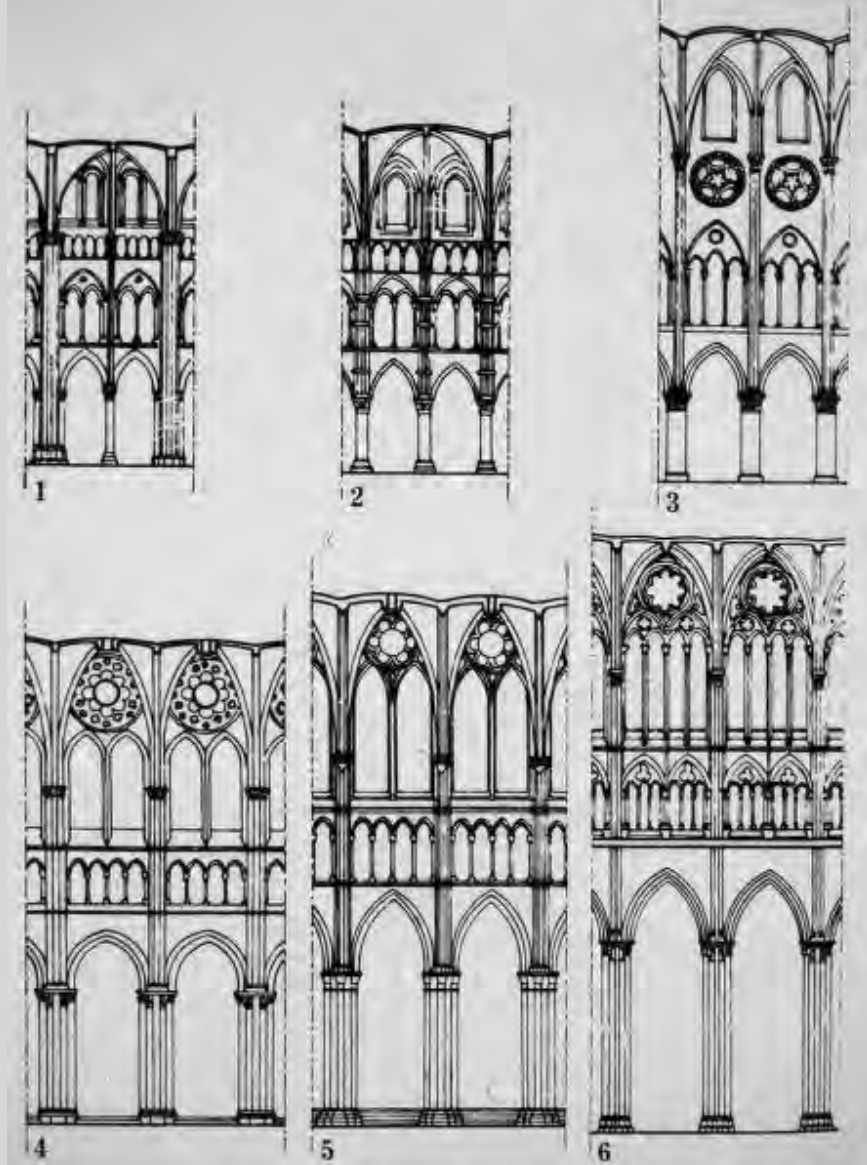
Noyon (Romanesque-Early Gothic)
Laon (Early Gothic)
Notre Dame (Early-High Gothic)
Chartres (High Gothic)
Reims (High Gothic)
Amiens (Rayonnant High Gothic)
Gothic cathedrals…
1. Get taller over time
Go from four to three part elevation
More equalized proportions between ground arcade and upper clerestory
 Note
Note  Flashcards (161)