biology midterm
 Studied by 0 people
 Call with Kai
 Learn
Learn Practice Test
 Spaced Repetition
 Match
Match Flashcards
 Knowt Play
1/165

There's no tags or description
Looks like no tags are added yet.
Name | Mastery | Learn | Test | Matching | Spaced | Call with Kai |
|---|
No study sessions yet.
166 Terms
DNA is a
nucleic acid
Proteins cannot be made without
Instructions from DNA
Which molecule listed can be burned for quick energy?
Glucose

Best pH for lipase to work
8

Best pH for pepsin to work
1.5,2

Pepsin becomes denatured at what pH
5

Lipase becomes denatured at what pH
12
The bonds that hold it have the most energy, thus being used long-term
lipid
Molecule that makes up our cells membranes
phospholipid
Which macromolecule is made of the most elements
nucleic acid
In the yeast lab, hydrogen peroxide was a substrate, which is also known as a _ in a reaction
reactant
Another name for macromolecule
polymer
Monosaccharides put together build a
Polysaccharide
Another name for an enzyme
catalyst
When an enzyme stops working because of a change in environment, it is called
denaturation
An enzyme is this macromolecule
protein
Enzymes lower this to make reactions happen easier and faster
activation energy
What part of a reaction speeds it up?
enzyme
Polar molecules such as sugars dissolve in water and are said to be
hydrophilic
Nonpolar molecules like oils do not dissolve in water and are said to be
hydrophobic
What word part gives away that a molecule is a sugar
saccharide / -ose
The polysaccharide built from putting glucose molecules together
glycogen
Reaction that builds things; bonds are made
dehydration synthesis
Reaction where things are split and bonds are broken
hydrolysis
Write a dehydration reaction using the words monomer and polymer
monomer + monomer -> polymer
Example of a hydrolysis reaction
lipids -> glycerol + fatty acids
Hibernating animals like polar bears rely on this polymer to stay warm (insulation).
lipids
Enzymes usually end with this suffix
-ase
Another name for protein
polypeptide
In a dehydration synthesis reaction, water
Leaves (as a product)
Monomer of a carbohydrate
monosaccharide
Monomer of a lipid
glycerol + 3 fatty acids
Monomer of proteins
amino acids
Made of elements C, H, O, N, P
nucleic acids
Glucose, fructose, lactose are examples of
carbs
lactase, amylase, lipase are examples of
enzymes/proteins (end in ase or -en, -in
keratin, collagen, hemoglobin
protein (end in -en and -in)
A macromolecule
carbohydrate

Muscle molecule glycogen is a _ based on the image.
carbohydrate

Cortisol is the body's stress hormone. It's a type of _ based on the image.
lipid

Human sex hormones testosterone and estrogen are _ based on the image.
lipids

Tryptophan, the 'sleepy' hormone, is involved with _ based on the image (hint: the N's!!).
proteins

ATP, the cell's energy molecule, is an example of a _ based on the image (hint: look at letters)
nucleic acid

Monomer of ATP
nucleotide
In a dehydration synthesis reaction, water should be on the _ side of the arrow
right
In a hydrolysis reaction, water should be on the _ side of the equation
left

Starch & cellulose, both important molecules in plants, are built with these monomers.
glucose
What does it mean to be denatured
Enzyme loses shape because of a change in pH or temperature and can't make products, thus slowing down or stopping the reaction
Which 2 macromolecules are made of C,H,O only
lipids and carbs
Choose the lipids from the list below
[waxes/triglycerides/oils/cholesterol]
All are examples of fats/lipids
DNA is stranded while RNA is stranded
double, single
Why is an enzyme called a catalyst
It lowers and energy for and speeds up chemical reactions, which is what catalyze means
Burned for energy (short or long term respectively)
carbs and lipids
Organic (made of Carbon)
protein, carbs, lipids, nucleic acids
Made of element C,H,O (> 1 answer)
protein, carbs, lipids, nucleic acids
Made of monomers
protein, nucleic acids, carbs, lipids
Polymers found in living things
carbs, lipids, proteins, nucleic acids
Choose the macromolecule from the list below:
carbohydrate
Choose the polysaccharides from the list below
starch, glycogen
Which macromolecules rely on dehydration synthesis to build it
all 4
Hydrolysis can break these macromolecules into its monomers
all 4 of them

Starch & cellulose, both important molecules in plants, are built with these monomers
glucose
Parts of a nucleotide monomer
phosphate, 5-carbon sugar, nitrogen base
Since it's made of all the elements we discussed (CHONP), it should also be the heaviest
nucleic acids
Our cells have a plasma membrane to watch what enters and exits. The inside of the plasma
membrane is nonpolar. What macromolecule can easily pass through?
lipid
Observation
Data collected based on using your 5 senses (see, smell, touch, hear, taste)
Inference
A conclusion/explanation made from observations
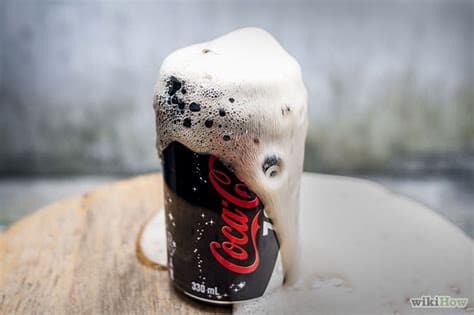
Give a few observations from the following photo
A Coca-cola can is sitting on a table fizzing. Whatever is coming out of the can is light brown in color
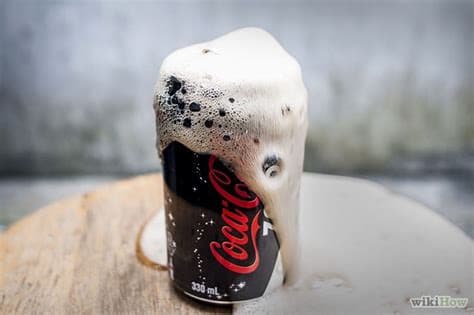
Give an inference from the following picture
A reaction took place in the Cola can, and Someone shook up the can before opening it. The can also made a mess on the table
"Ice floats on water because solid water is lighter than liquid water" is an example of an
Inference
In capillary action, a liquid moves [with/against] gravity without any help
against

This station in your recent properties of water experiment symbolized which property of water
Capillary action (water moves upward against gravity without help)

Beaker A is showing which properties of water
Adhesion (water sticking to glass), cohesion (water moving with itself), capillary action (water moving up the tube without help)
Besides water rising in a tube, what are other examples of capillary action we see everyday
1) Plants taking in water from their roots
2) Paper towels cleaning up spills
3) Athletic shirts pulling sweat from your body
T/F: "All living things are made of cells" is a characteristic of life
True
T/F: Bacteria are not considered living because they're not made of cells
False: because they are a single cell, they're considered living
How are we humans organized as multicellular organisms
Cells -> tissues -> organs -> organ systems
Why does it take a while for water to boil
Heat has to break the many hydrogen bonds between the water molecules for them to turn into a gas

Hydrogen bonds are represented by the letter
C

Covalent bonds are represented by the letter
D

Oxygen is represented by the letter
A

Hydrogen is represented by the letter
B

Which bonds break when water is boiled
C (hydrogen bonds)
Which element in water has a partial (-) charge and why
Oxygen has a partial (-) charge because the electrons in the covalent bond are held closer to it. Electrons are negative
Which element in water has a partial positive charge and why

Both hydrogens have a partial positive charge because negative electrons are held closer to oxygen in the covalent bond (letter D)
Choose the option below that is NOT a characteristic of life:
1) Has DNA
2) Needs oxygen
3) Responds to something
2) Needs oxygen
Key word when discussing the characteristic of life 'regulation'
homeostasis (balance)
What does our body try to keep balanced at all times (regulation)
blood pressure, pH, blood sugar, body temperature
If ice is LESS dense than water, then
It weighs less and will float because it isn't heavy enough to break the hydrogen bonds holding water molecules together
If a block of steel is MORE dense than water, then
It weighs more than the water, can break the hydrogen bonds between water molecules, and will sink
What were some polar substances you worked with in recent properties of water lab, and how did you know they are polar
Salt, food coloring, glass. They are polar because they either dissolved in water or formed a tight bond with water (glass)
Key term meaning 'likes/attracted to water'
hydrophilic
How is water a polar molecule
It has a positive (hydrogen) and negative (oxygen) end
Who is mainly responsible for water being a polar molecule
Oxygen because it pulls negative electrons closer to it, giving itself a (-) while both hydrogens get a (+)
What property of water relies on hydrogen bonds to form a tight 'barrier' at it's surface
surface tension
Water has a high surface tension thanks to its molecules connecting with each other through
cohesion

What properties of water are being shown in the image
1) Cohesion (water molecules bonding with each other)
2) Adhesion (water molecules interacting with the leaf surface)
3) Surface tension (water molecules held tight together at the surface of the leaf)

Why was the paper clip able to float on water in your lab even though it's heavier than water
When you lay it carefully, you don't break the hydrogen bonds between water molecules at the surface, keeping water's surface tension
Key term meaning 'fears water'
hydrophobic
Key word for the characteristic of life 'requires energy' and its meaning
Metabolism- Using energy to break down & build up materials
 Note
Note  Flashcards (39)