LA1803, Landscape Architecture Appreciation - EXAM 2
 Call Kai
 Learn
Learn Practice Test
 Spaced Repetition
 Match
Match Flashcards
 Knowt Play
1/70

There's no tags or description
Looks like no tags are added yet.
Name | Mastery | Learn | Test | Matching | Spaced | Call with Kai |
|---|
No analytics yet
Send a link to your students to track their progress
71 Terms
What are the three major roles of plants in landscape architecture?
Aesthetic (visual beauty and design qualities)
Functional (serving a purpose in the landscape)
Other uses (such as recreation, education, and food sources)
Functional uses of plants can be broken down into three broad categories - what are they?
Architectural (defining and creating space)
Engineering (solving environmental problems)
Climate Control (modifying temperature, wind, and sun exposure)
What type of plant use are the functions below?
Aesthetic → beauty, focal point, Unifying Divergent Elements, Softening Architecture
Engineering → Reducing Glare, Erosion Control, Reducing Stormwater Runoff
Architectural → Controlling Movement, Emphasizing a Good View, Defining Space
Climate Control → Slowing down wind, Reducing Heating/Cooling Loads on Buildings, Providing Shade Over a Deck
Other → Tree climbing, education, pollinator habitat
What is the function of a rain garden or bioswale?
A rain garden or bioswale:
Reduces stormwater entering drainage systems
Filters and cleans runoff water (biofiltration)
What are sources of color in plants?
Sources of color include:
Foliage
Stems/bark
Flowers
Which source of color do we start designing with because it is the longest lasting?
Foliage, because it lasts much longer than flowers, which are often short-lived
Why do we consider plant form AND flower form in planting design?
Because:
Form (overall shape/structure) contributes to the long-term structure of the design
Flower form adds visual interest and variation
Both are necessary for a balanced and visually engaging composition
Why is plant fragrance tricky to work with?
Plant fragrance is tricky because:
Some plants smell pleasant, while others smell unpleasant
It is subjective and varies by person
What are different ways to work in seasonality in a landscape project?
Seasonality can be incorporated by:
Using plants with different bloom times
Including evergreens for year-round structure
Designing for interest in all seasons (flowers, bark, seed heads, etc.)
Know the difference between shade trees, ornamental trees, fruiting trees, and evergreen trees
Shade Trees → Large, usually deciduous, planted for shade (not flowers)
Ornamental Trees → Smaller, often have showy flowers
Fruiting Trees → Grown for edible fruit
Evergreen Trees → Keep their leaves year-round
Deciduous plants
Lose leaves in winter
Evergreens
Keep leaves year-round
Perennials
Come back every year, non-woody, often for enhancement
Annuals
Complete life cycle in one year, must be replanted
Bulbs
Grow from underground structures, short seasonal display
Are all dwarf shrubs actually small?
No — "dwarf" just means smaller than the original species, not necessarily small
Explain the general concept of the "backwards" design process
Start with design qualities (form, texture, color, composition)
Then select plants that match those qualities
More planting layers support more wildlife and are more visually engaging—why?
Because:
They create habitat diversity
Increase ecosystem function
Add visual depth and interest
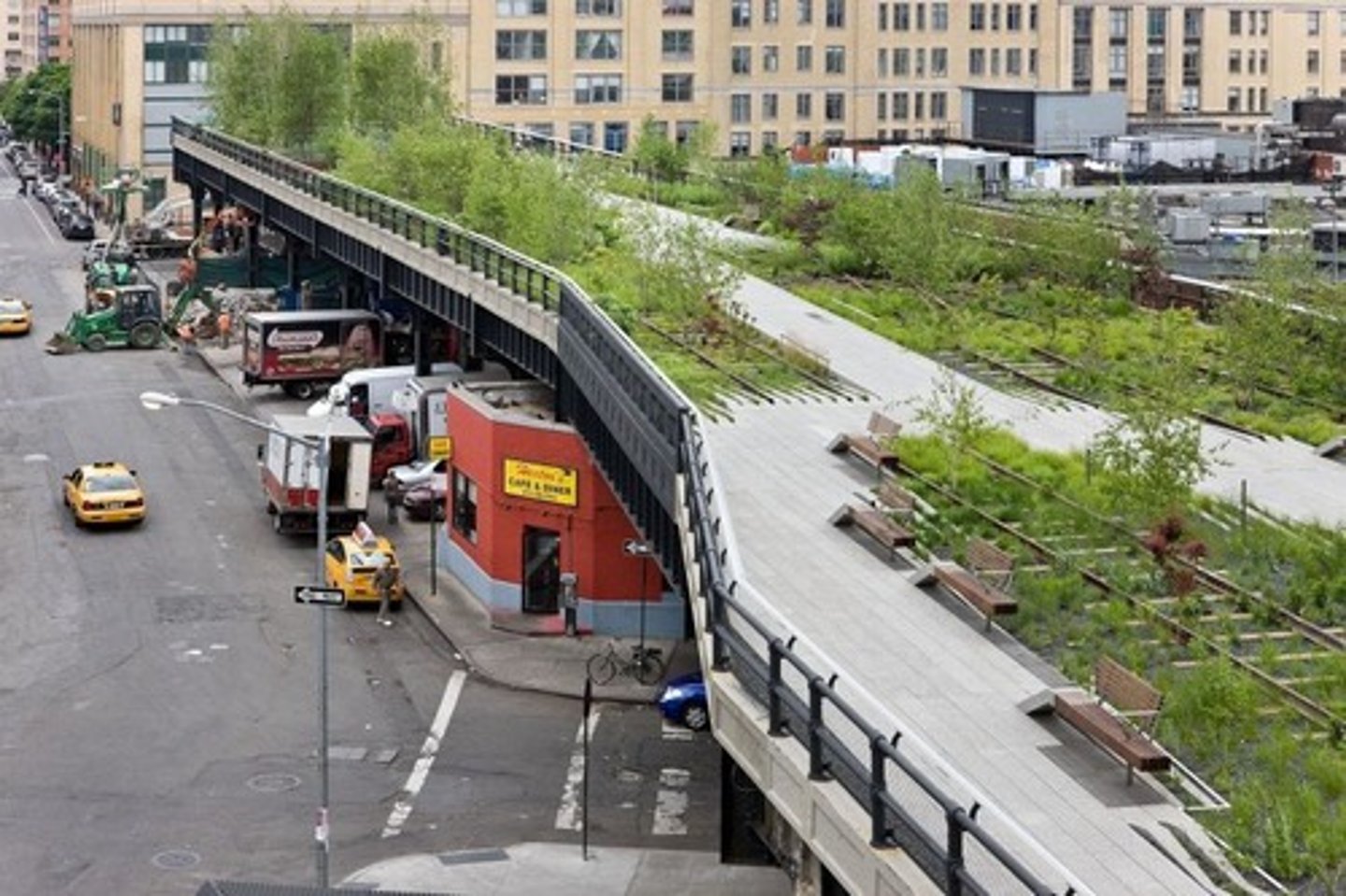
The High Line (NYC)
(important project; must identify based on image and be able to make comments; reference PowerPoint for further study)
Elevated park on old rail line
Strong planting design and layering
Encourages walking and urban nature experience
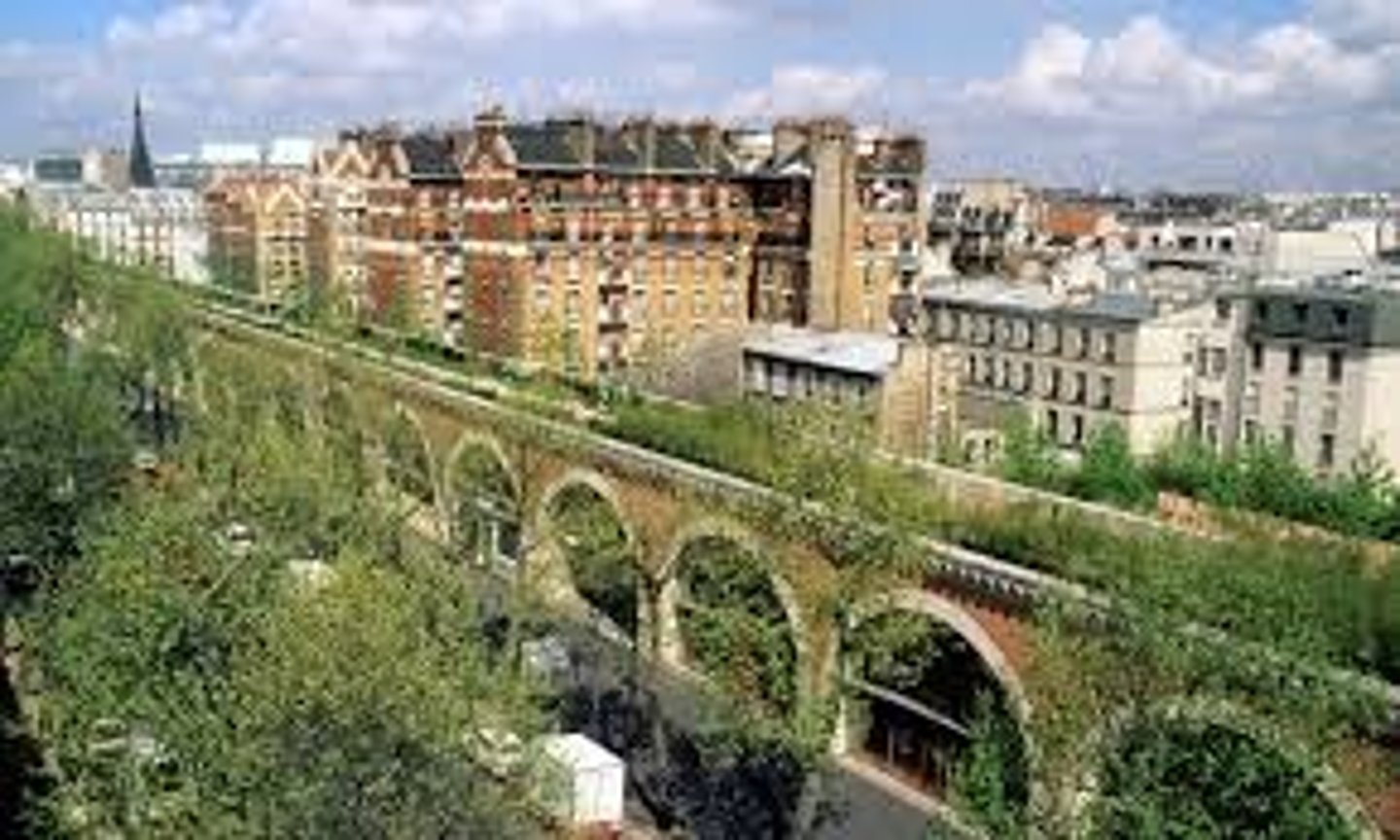
Promenade Plantée (Paris)
(important project; must identify based on image and be able to make comments; reference PowerPoint for further study)
Early version of elevated greenway
Inspired projects like the High Line
Little Island (NYC)
(important project; must identify based on image and be able to make comments; reference PowerPoint for further study)
Unique sculptural park
Built over water with distinct structural forms
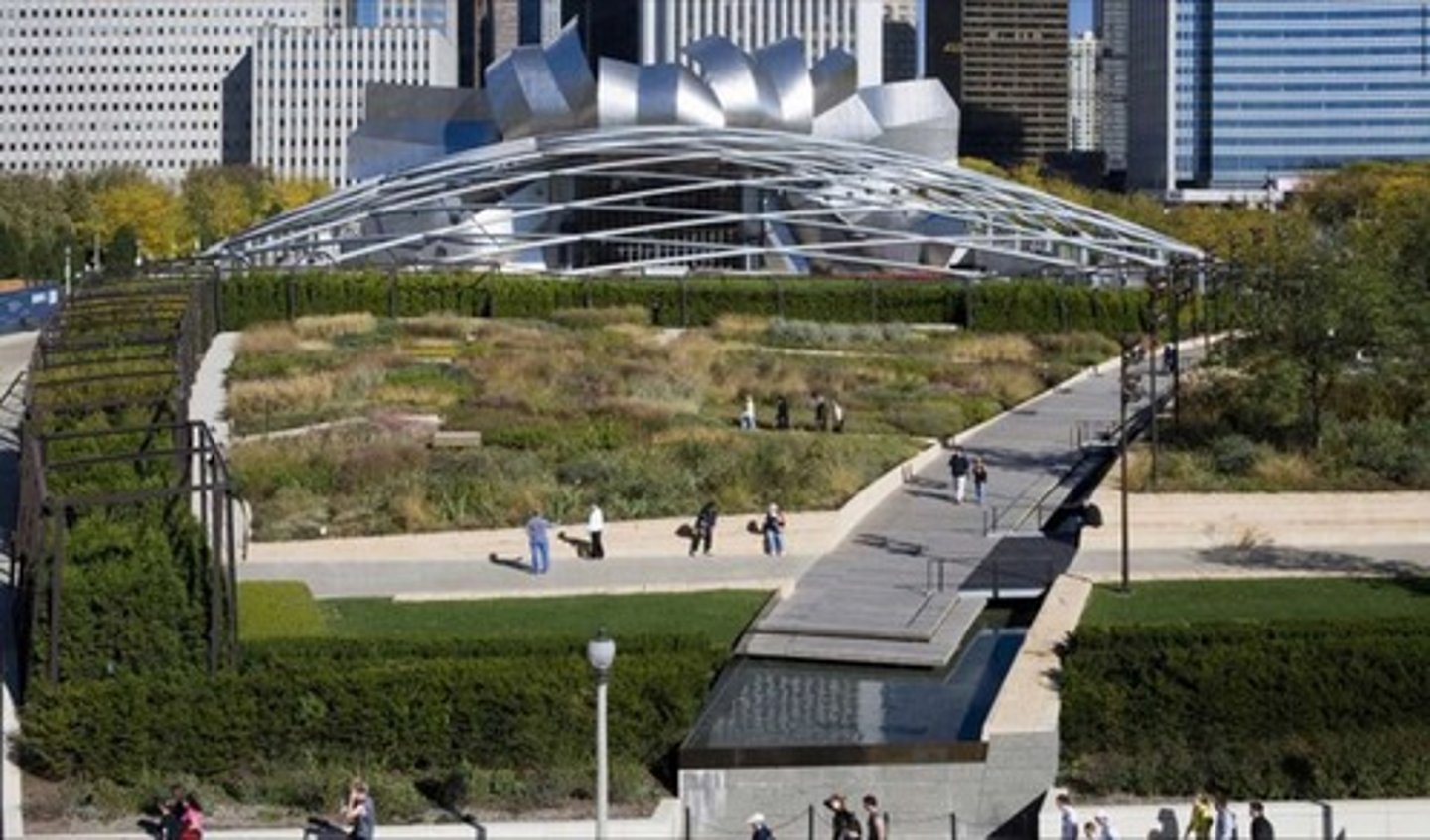
The Lurie Garden (Chicago)
(important project; must identify based on image and be able to make comments; reference PowerPoint for further study)
Designed with strong plant composition
Emphasis on seasonal change and structure
André Citroën Park (Paris)
(important project; must identify based on image and be able to make comments; reference PowerPoint for further study)
Modern park with formal and themed gardens
Hunter's Point South Waterfront Park (NYC)
(important project; must identify based on image and be able to make comments; reference PowerPoint for further study)
Focus on resilience and layered design
Combines infrastructure, landscape, and recreation
Taiyuan Botanical Garden (China)
(important project; must identify based on image and be able to make comments; reference PowerPoint for further study)
Features large timber dome structures
Combines architecture and landscape design
What are the factors to consider in material selection?
Function (use of space and number of users)
Form (shape, mood, installation logistics)
Style and character
Compatibility with architecture and surroundings
Environmental impact
Material availability
Regional appropriateness
Client preference
Maintenance
Budget
What is the difference between a flexible paving system and a rigid paving system?
Flexible paving system → allows water to pass through (permeable)
Rigid paving system → does not allow water through (impermeable)
What are the 3 broad categories of construction materials?
Loose materials (gravel, crushed stone)
Unit materials (brick, stone, pavers, wood)
Adhesive/fluid materials (concrete, asphalt)
Know pros and cons of Loose materials
✅ Inexpensive, permeable, good texture
❌ Need containment, higher maintenance
Know pros and cons of Unit materials
✅ Durable, versatile, structured
❌ More expensive
Know pros and cons of Adhesive/fluid materials
✅ Durable, flexible forms, smooth
❌ Can crack, impermeable, heavy
Fieldstone
natural, irregular, weathered stones found on or near the soil surface; typically cleared from fields for agriculture
Flagstone
flat stones used for paving
Cut/dimensioned stone
precisely cut to uniform sizes
Riverstone
smooth stones shaped by water
Cobblestone
small, rounded stones used for paving
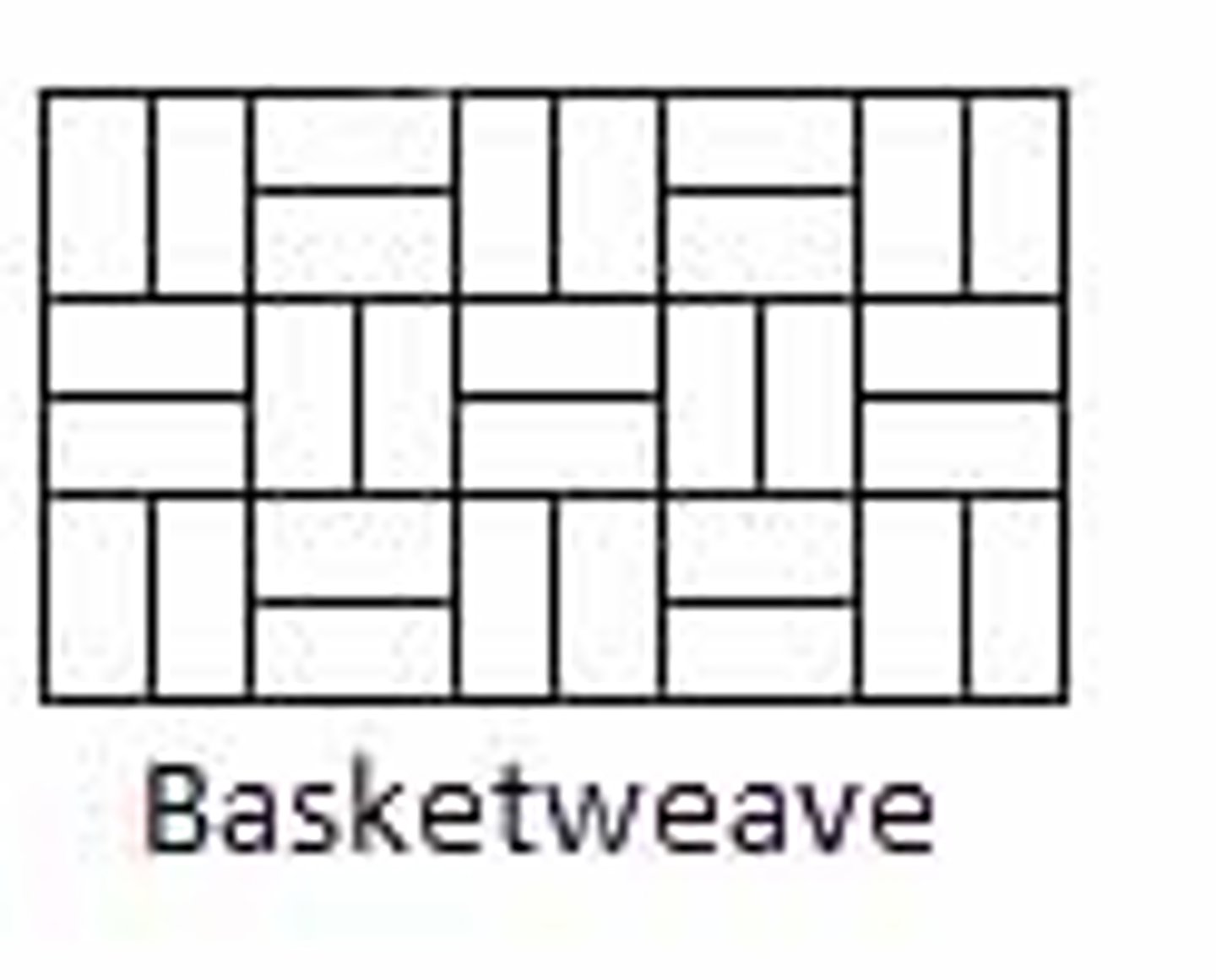
What is a bond? (as it pertains to bricks/pavers)
A bond is the pattern in which bricks or pavers are arranged
Basketweave
alternating pairs forming a woven look
Running bond
offset linear pattern

Herringbone
interlocking zig-zag pattern
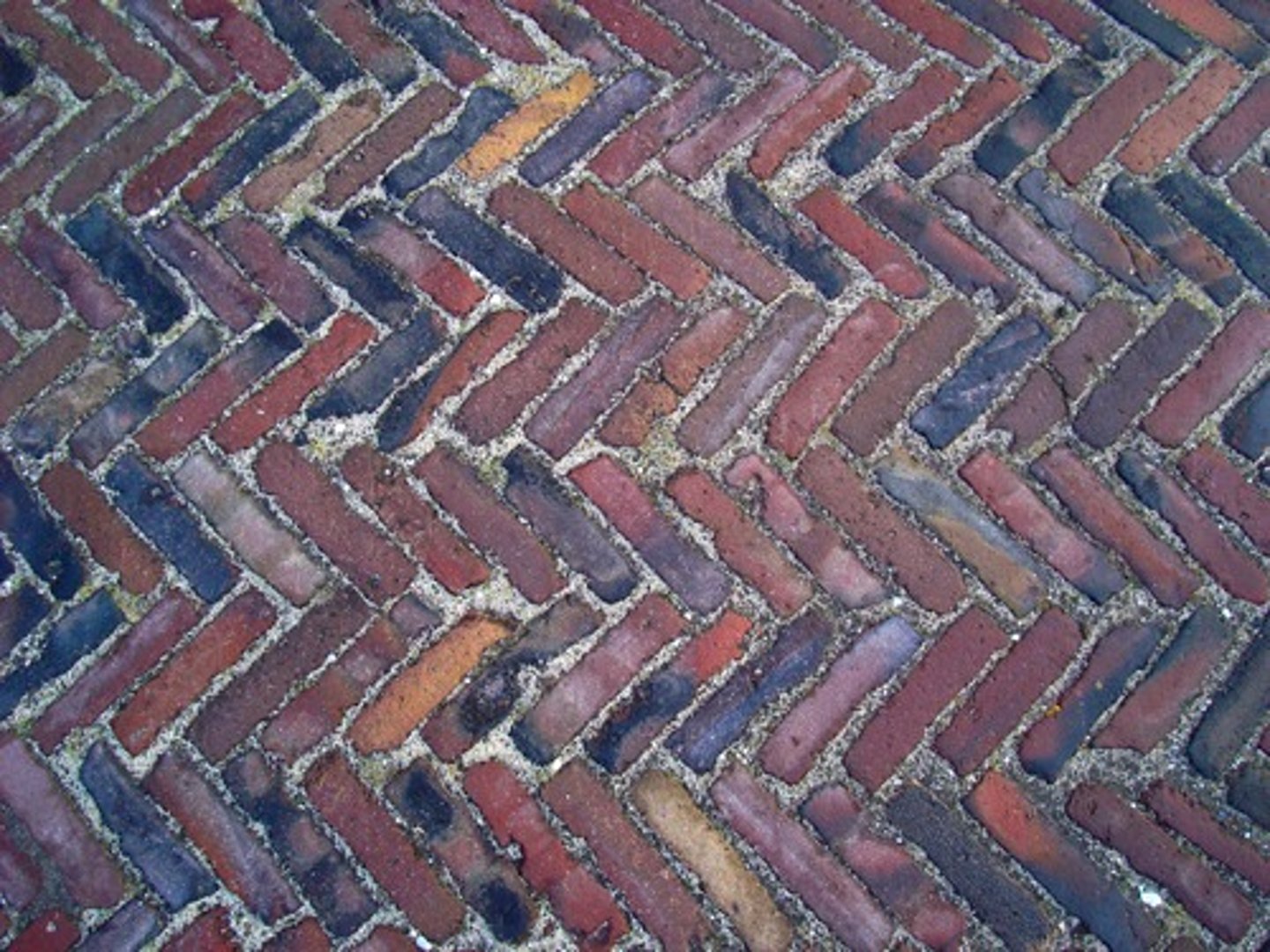
Movement implications of running bond (perpendicular vs parallel)?
Parallel to movement → smoother, easier walking
Perpendicular → can feel more interrupted or less smooth
Which is the strongest pattern and why?
Herringbone bond
Strongest because of interlocking joints that resist movement
Difference between a break joint and an expansion joint?
Expansion joint → allows for expansion/contraction in concrete
Break joint → controls where cracks occur
Why are experiencing awe and joy important in landscapes?
They:
Improve well-being and mental health
Increase creativity, kindness, and resilience
Reduce stress and improve mood
What is small-scale awe?
Brief, powerful, often unexpected moments of wonder created through design
What does it mean to provide neurological richness in a design? Give an example.
Creating visual and sensory complexity that stimulates the brain
Example: layered planting with varied textures and colors
What role does contrast play in creating small-scale awe?
Contrast creates visual interest and surprise, making elements stand out
What are some ways of creating joyful elements in a landscape?
Use unexpected features
Incorporate playful or whimsical elements
Add bright or meaningful colors
Create variety and abundance
Which is more effective: squares or curves/spirals/circles?
Curves, spirals, and circles are more effective for creating awe and joy
If you incorporate a 6' bench, how many strangers will sit?
1, maybe 2. People don't like to sit next to people they don't know
People tend to prefer seating which they can move around (say into sun or shade, depending on the season) (T/F)
True — people prefer movable seating
Optimal seat height is 18" (T/F)
True
The fewer people using a pathway, the narrower it needs to be (T/F)
True
What is the prospect/refuge theory?
People prefer spaces where they can:
See (prospect)
Feel protected (refuge)
Minimum sidewalk width for two people?
4 ft. 6 in. → 4'-6"
Do people move slower or faster on wider pathways?
Faster
Our sense of well-being diminishes as our stress increases and our connection with nature decreases
True
Landscape Architects design parks and streetscapes to help people enjoy time outdoors and increase physical activity to help them stay/get healthy. (T/F)
True
Landscapes can improve physical, mental, social, and emotional health. Give an example of each.
Physical → improved fitness
Mental → reduced anxiety
Social → meeting others
Emotional → increased happiness
Three ways of obtaining benefits of nature? Give an example of each.
Passive (viewing nature)
Quasi-active (light interaction, walking)
Active (gardening, physical engagement)
Restorative Landscapes need to embody a sense of escape, fascination, mystery, and extent. (T/F)
True
Restorative Landscapes can help address mental fatigue, (T/F)
True
What special population group would NOT want mystery in a restorative landscape?
Veterans (PTSD populations)
What is Forest Therapy? What are some benefits?
Walking in forests to reduce stress
Benefits:
Lower cortisol
Lower blood pressure
Improved mood
Generally, restorative gardens should stimulate all five senses. Can you give an example of a landscape element that would stimulate each sense?
Sight → plants/colors
Sound → water features
Smell → fragrant plants
Touch → textured materials
Taste → edible plants
Which population group is the exception, and would NOT benefit from sensory stimulation?
Autistic individuals
How do pollinator and human needs overlap?
Both prefer:
Visually appealing plants
Diverse plantings
Healthy ecosystems
Elements required for pollinator habitat:
Food (nectar/pollen)
Water
Shelter
Diverse plant species
Hardest time for pollinators to find food?
Early spring, winter, or late fall when fewer plants are blooming
Only native plants support pollinators. (T/F)
False
Research has shown that landscapes designed by humans are more diverse than in nature, thereby better at supporting pollinators. (T/F)
True

