Substance Use Disorders
 Call Kai
 Learn
Learn Practice Test
 Spaced Repetition
 Match
Match Flashcards
 Knowt Play
1/29

There's no tags or description
Looks like no tags are added yet.
Name | Mastery | Learn | Test | Matching | Spaced | Call with Kai |
|---|
No analytics yet
Send a link to your students to track their progress
30 Terms
The US is ___ % of the world’s presentation, but it consumes ___% of the world’s drugs.
4%; 60%
What drug is most consumed by Americans?
alcohol
What are the immediate direct consequences and indirect consequences of drug use?
Immediate Direct Consequences: increased HR, body temp. regulation, psychosis, overdose/death
Indirect Consequences: impaired judgment/driving, risky sex, disease transmission
What are the long-term health effects?
Hypertension, liver disease, cancer, heart disease, fetal effects, SUD
What are the long-term social and economic impacts
Long-Term Social Impacts: reduced productivity, higher cost of healthcare, interpersonal
Economic Impact:~$249 billion for alcohol and ~$193 billion for other drugs annually
True/False: There are more drug-involved overdose deaths for men than women
True
True/False: Alcohol has the most drug involved overdose deaths
False, it’s fentanyl.
What does the DSM 5 say about Substance Use Disorder?
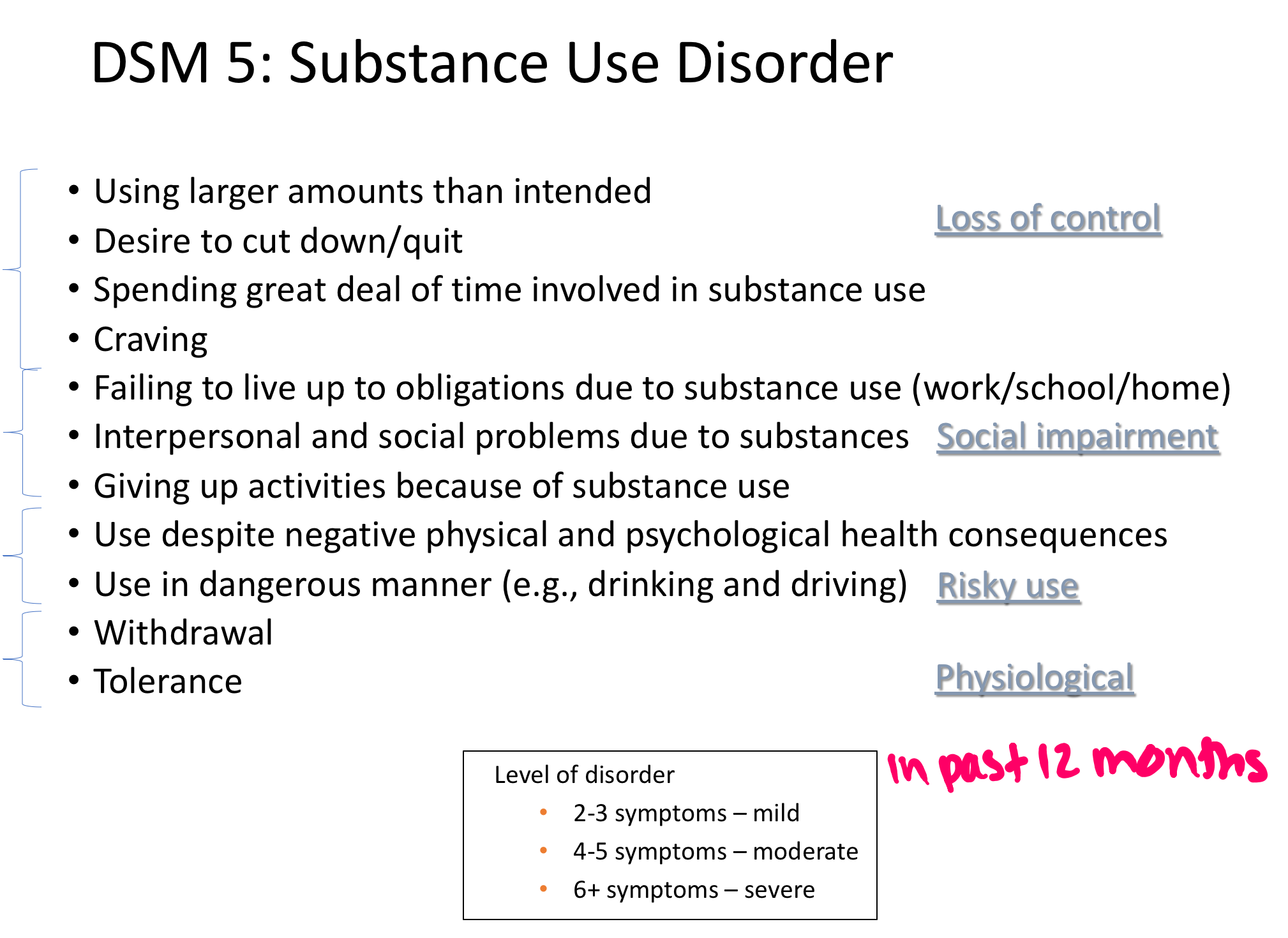
What are the two main categories that make up substance use disorder?
Behaviors and consequences
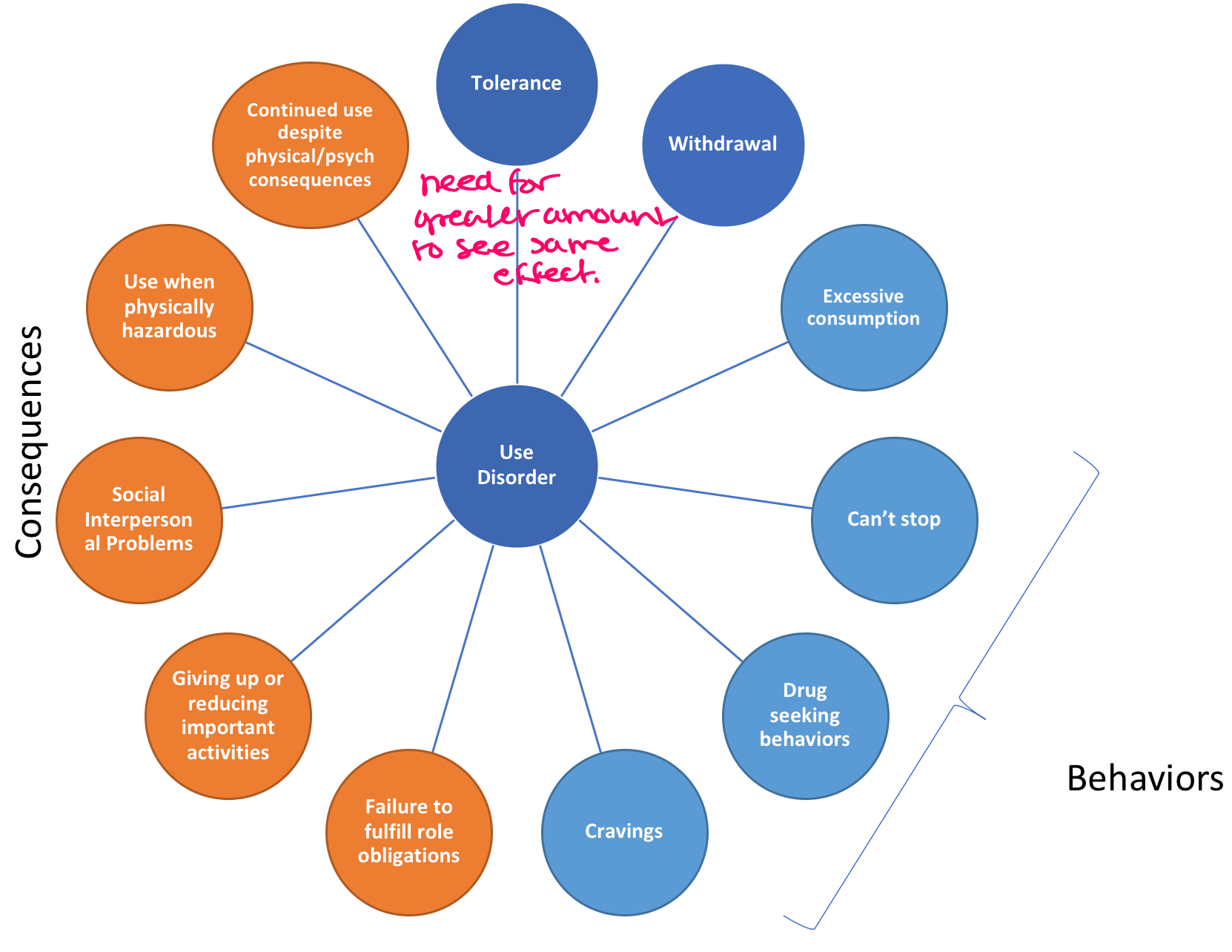
What is tolerance?
Our systems adapt so that more quantities are necessary to achieve the same effect
What is withdrawal?
Severe psychological and physiological symptoms that occur after stopping or reducing the drug use
ex. getting the shakes, hallucinations, seizures; hangover is a short-term withdrawl
True/False: You can have an addiction without tolerance or withdrawl
True
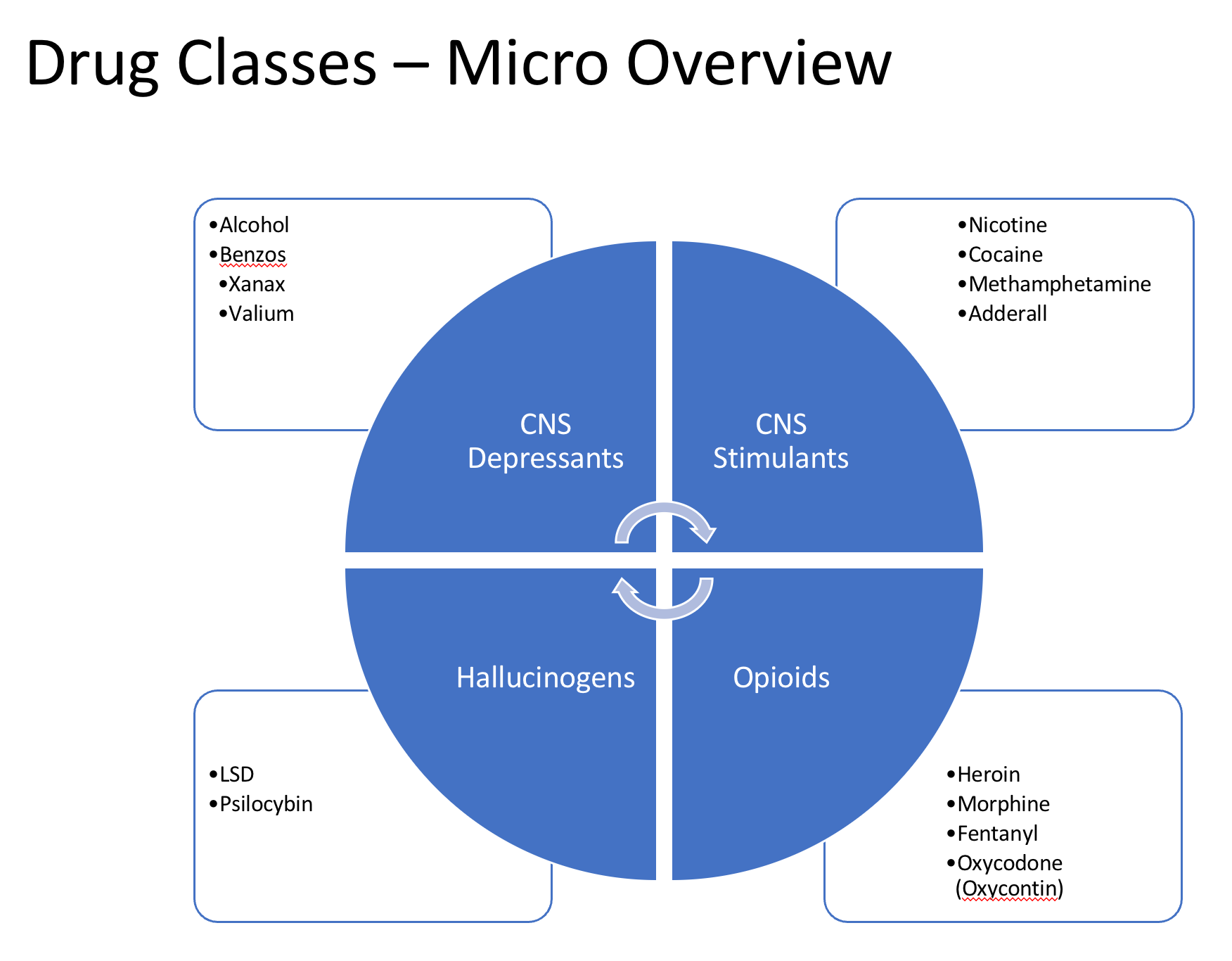
What are the classes of drugs?
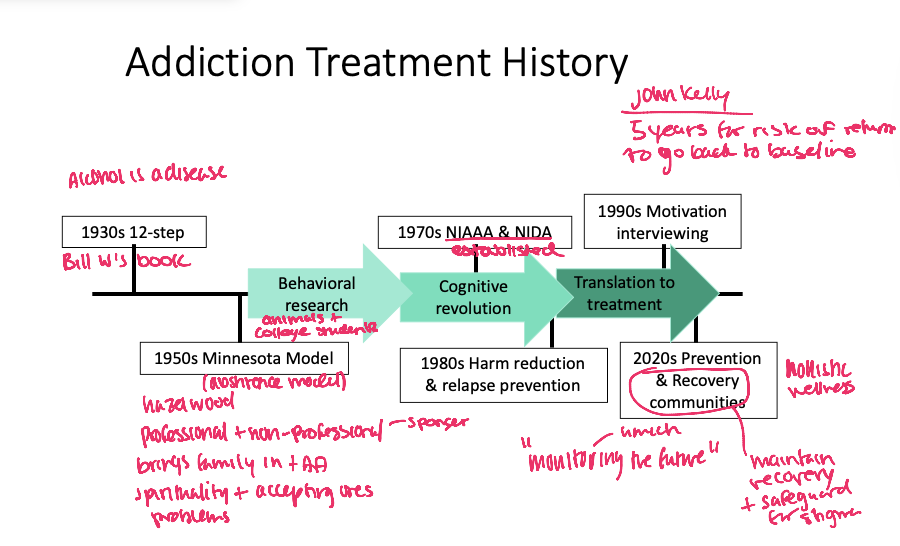
What is the history of addiction treatment?
What are the pharmacological treatments?
Substitution; replace the drug wigth something else
Prevention/Antagonistic: drug receptor blockers
Aversive Therapy: pairs the drug with making them feel sick; negative reinforcement— doesnt work long-term
What are the psychosocial treatments?
Mutual help groups: ex. AA
CBT: Thoughts, emotions, and behavior— starts with understanding what triggers drug use.
CM (contingency management): incentives for engaging in a behavioral change; get a reward for not using a substance
Motivational (Motivational Interviewing (MI)):
Helping clients break through the ambivalence about changing behavior
What does recovery look like?
Early remission
3 to 12 months without symptoms (except craving)
Sustained remission
>12 months without symptoms (except craving)
What doesn’t work as treatment?
shame
stigma
blaming
Why do people develop an addiction?
genetics account for 40-60% of heredity
adverse childhood experience (environment)
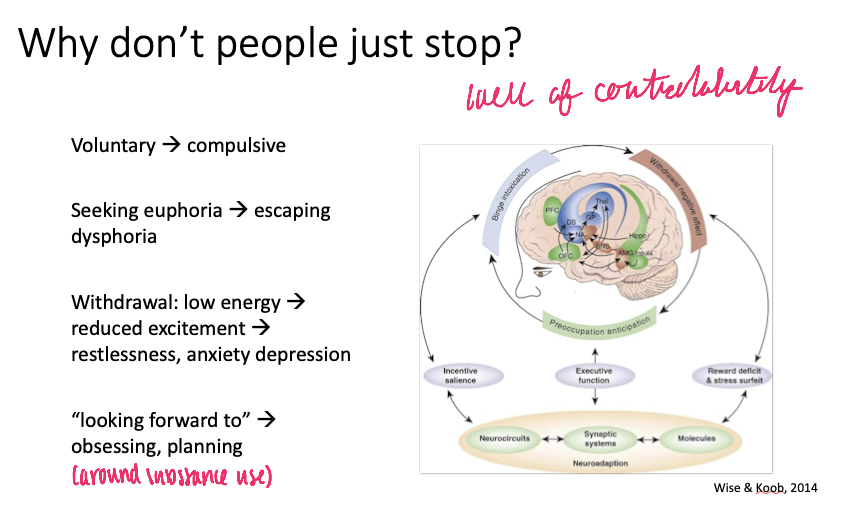
Why don’t people stop?
Do drugs have a deep history in the US?
“Public Enemy number 1” – Nixon ‘71
“The War on Drugs” – Reagan ‘82
- Anti Drug Abuse Act – “minimum mandatory sentences for drug offenses”
SAMHSA: Substance Abuse Mental Health Services Administration
NIDA: National Institute on Drug Abuse
NIAAA: National Institute on Alcoholism and Alcohol Abuse
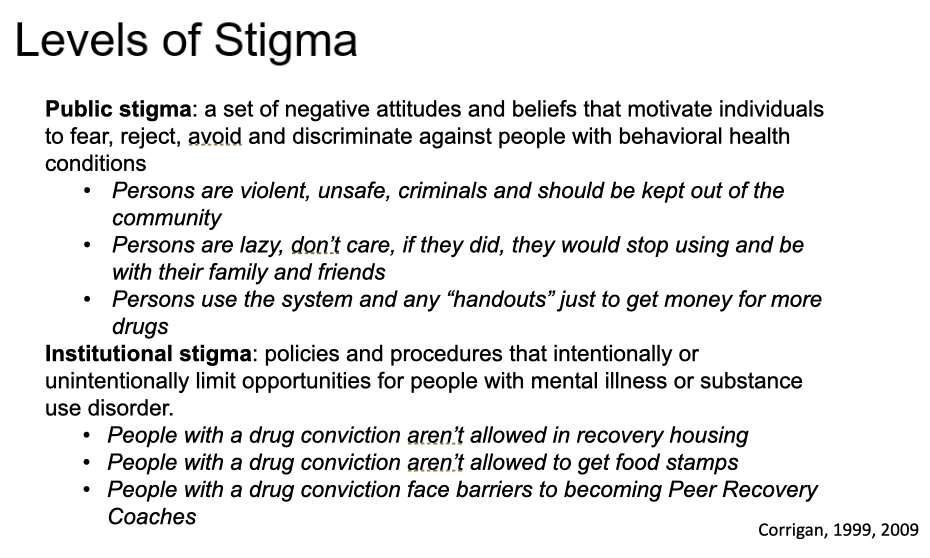
What are the three levels of stigma?
Public, Institutional, and Internalized/self stigma
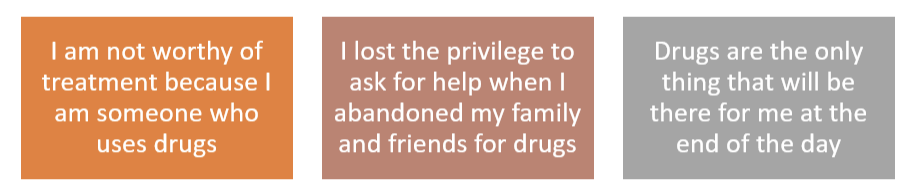
What does self stigma look like?
True/False: people with minoritized identities experience less SUD stigma
False, they experience more stigma
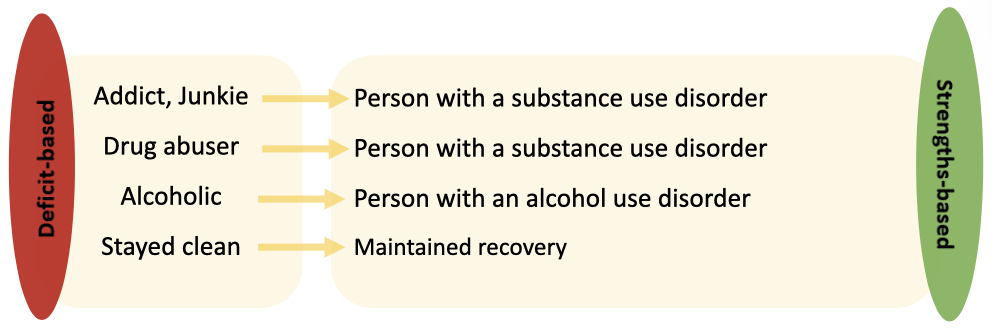
What are some ways to combat SUD stigma?
Change the language surrounding it
What are the forms of stigma?
Stereotypical beliefs
Someone with an addiction is… (unmotivated, dangerous, etc.)
Attributional beliefs
Someone with an addiction is in control
Someone with an addiction is responsible for this
Expectations for recovery
Someone with an addiction will be able to… (find a job, maintain a relationships, etc.)
Social distance
I would be willing to have someone with an addiction… (live next door, sit next to me on a train, be in a relationship with my kid)
How does stigma impact someone with an SUD?
An estimated 28% of those who do not seek treatment (but recognize the need), report reasons related to stigma for not accessing or engaging in care.
Less treatment seeking
Poorer Prognosis, non-completion of treatment
Lower self-esteem
Less perceived empowerment to make change
Social alienation – employment, housing, connectedness
10% of people with SUD don’t seek treatment because it will impact community’s opinion of them
8% don’t seek treatment due to concerns about impact on job
How does stigma impact clinicians?
Lower individual regard
Decreased motivation
Feelings of dissatisfaction, resentment, powerlessness
Perceptions that people with SUDs are amotivated, manipulative, etc.
Decreased likelihood of offering some care (e.g., pain management)
How can we bust the stigmas?
Increase compassion
increase contact between people with substance use disorders and the larger population
Communication standards that eliminate stigmatizing language
Widespread access to treatment – no wrong door
Understanding and balancing the disease model, heritability, contextual models and that people do get better
Recovery-oriented care – what is the goal of our treatment?
Get feedback from people with SUDs about their experiences

