bio 1040: plant diversity
 Call Kai
 Learn
Learn Practice Test
 Spaced Repetition
 Match
Match Flashcards
 Knowt Play
1/53

There's no tags or description
Looks like no tags are added yet.
Name | Mastery | Learn | Test | Matching | Spaced | Call with Kai |
|---|
No analytics yet
Send a link to your students to track their progress
54 Terms
Plant
Multicellular eukaryotic autotroph that performs photosynthesis and has an embryo protected by the parent
Plants evolved from
Aquatic algae
Water (for swimming sperm)
Key requirement early plants needed for reproduction
Four main plant groups
Bryophytes, ferns, gymnosperms, angiosperms
Bryophytes
Nonvascular plants (mosses, liverworts, hornworts)
Ferns
Seedless vascular plants
Gymnosperms
Seed plants without flowers (cones)
Angiosperms
Flowering plants
Cuticle
Waxy coating that prevents water loss
Stomata
Pores that regulate gas exchange
Vascular tissue
Transport system (xylem & phloem)
Xylem
Transports water and minerals upward
Phloem
Transports sugars (both directions)
Lignin
Strengthens plant cell walls for support
Seeds
Protect embryos and allow dormancy
Flowers & fruits
Aid in reproduction and dispersal
Alternation of generations
Life cycle with both haploid and diploid multicellular stages
Gametophyte (n)
Produces gametes via mitosis
Sporophyte (2n)
Produces spores via meiosis
Examples of bryophytes
Mosses, liverworts, hornworts
Key features of bryophytes
No vascular tissue, no true roots/stems/leaves
Habitat of bryophytes
Moist environments
Dominant generation in bryophytes
Gametophyte
Advantage of vascular tissue
Allows plants to grow taller and transport materials
Xylem flow direction
One-way (upward)
Phloem flow direction
Two-way
Dominant generation in ferns
Sporophyte
Gametophyte in ferns
Small and short-lived
Fern reproduction requires
Water (sperm swims to egg)
Limitations of spores
No protection, low survival, need water, no stored nutrients
Advantages of seeds
Protection, stored food, dormancy
Seed contains
Embryo, food supply, protective coat
Pollen
Male gametophyte in a protective casing
Function of pollen
Allows fertilization without water
Gymnosperms produce
Seeds (no flowers or fruits)
Example of gymnosperms
Conifers
Gymnosperm reproduction
Pollen fertilizes ovules in cones
Pollination method
Wind
Why angiosperms are successful
Fast reproduction, animal pollination, rapid seed development
Stamen
Male reproductive structure
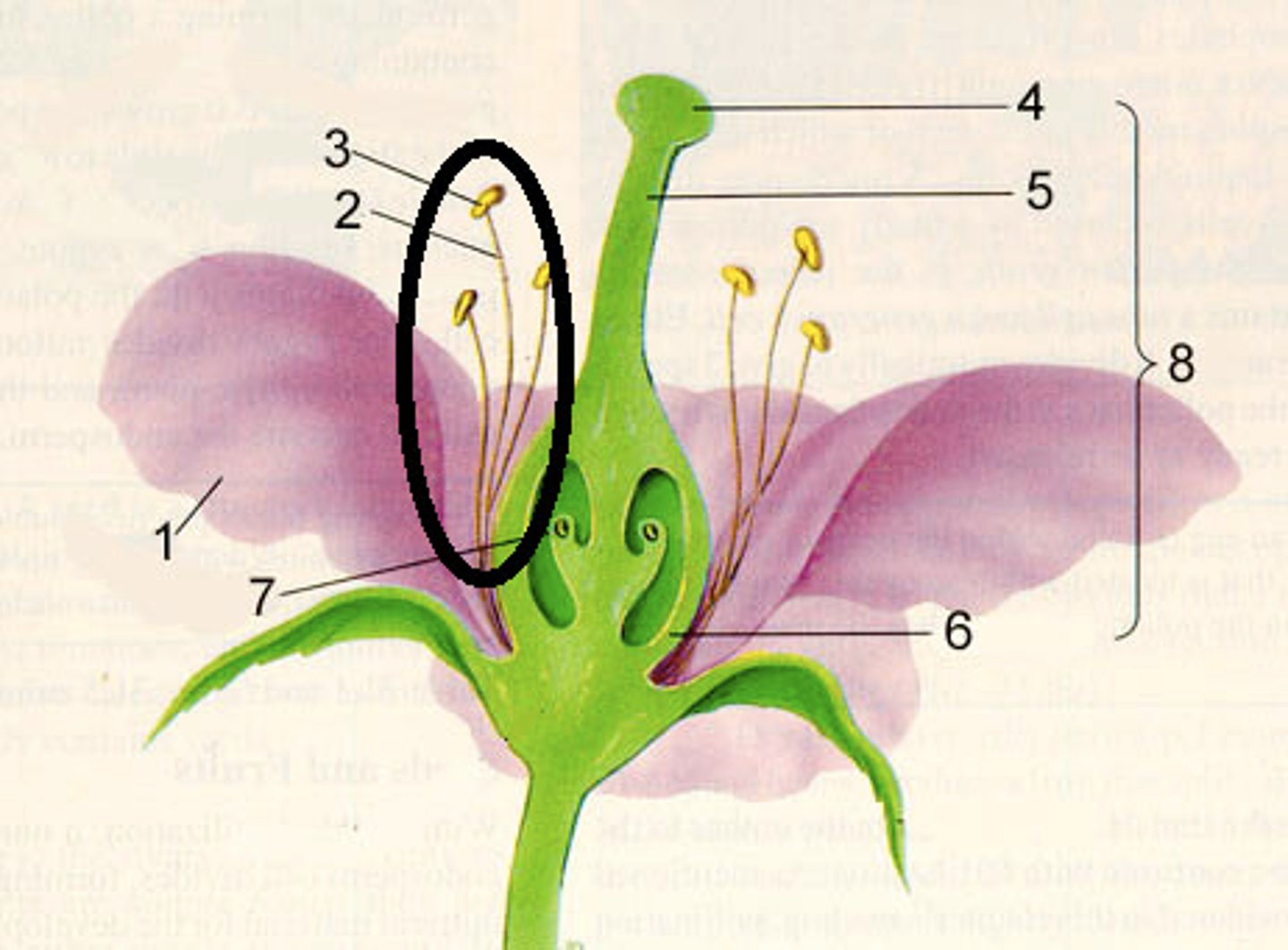
Anther
Produces pollen
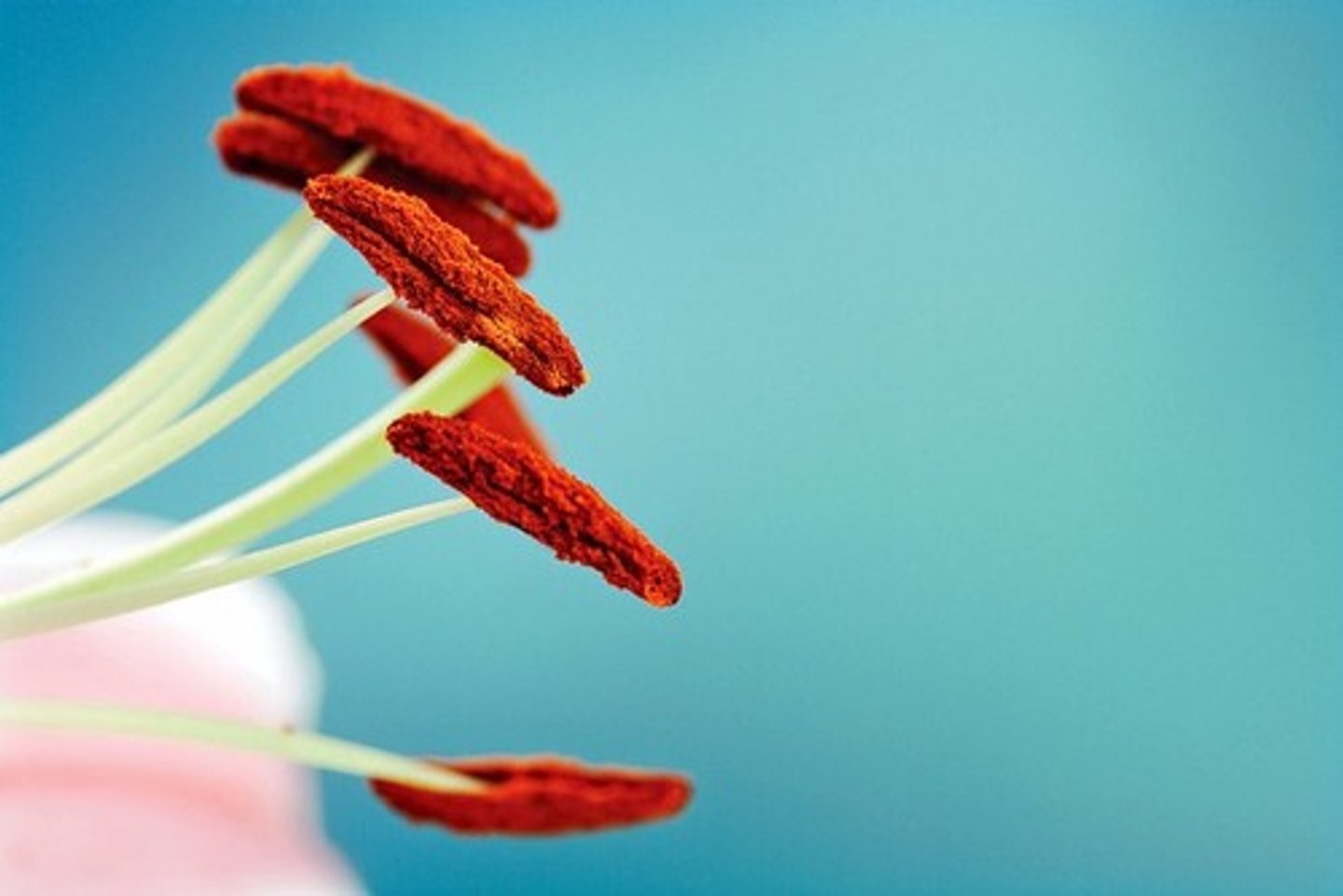
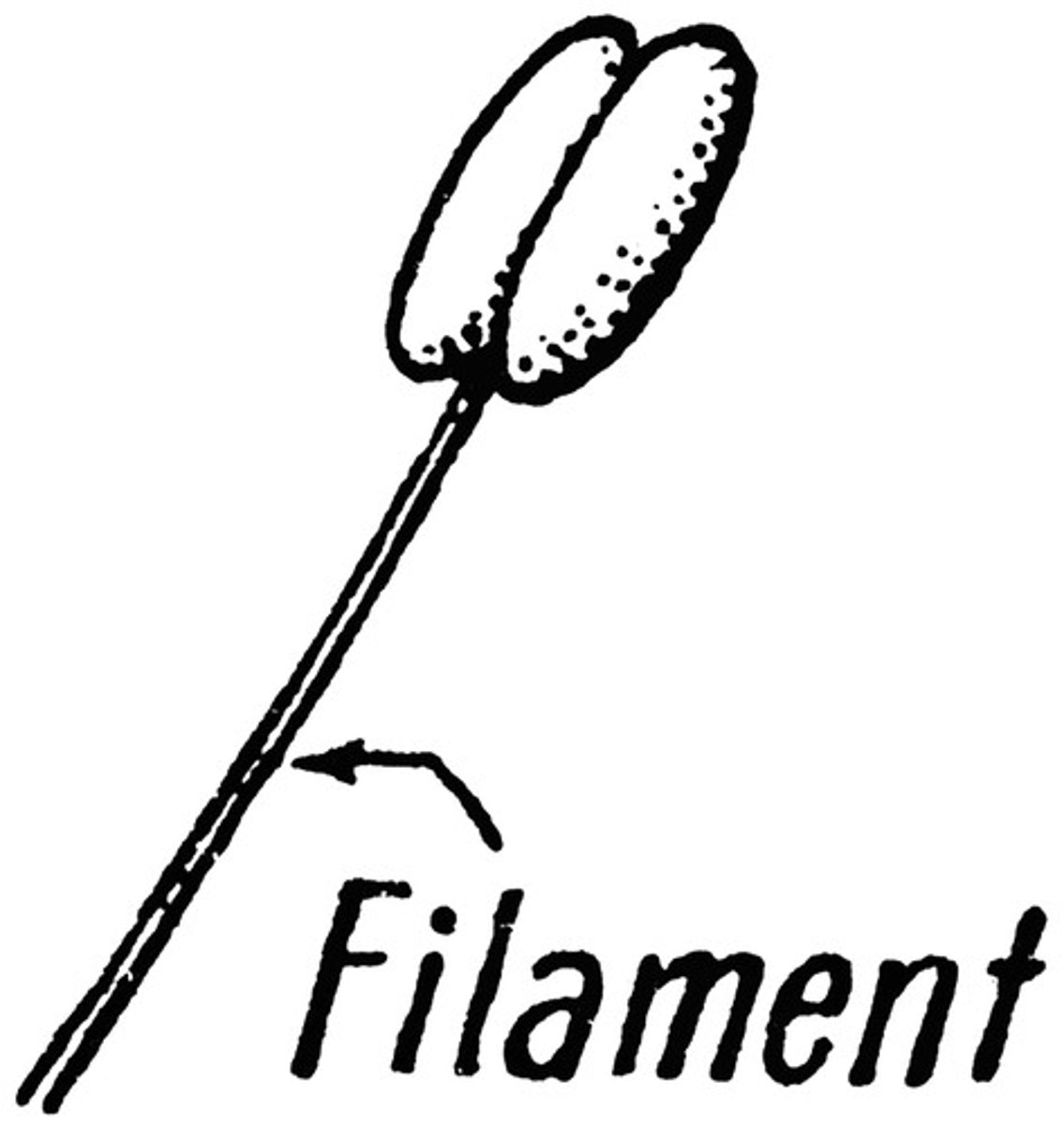
Filament
Supports anther
Carpel (pistil)
Female reproductive structure
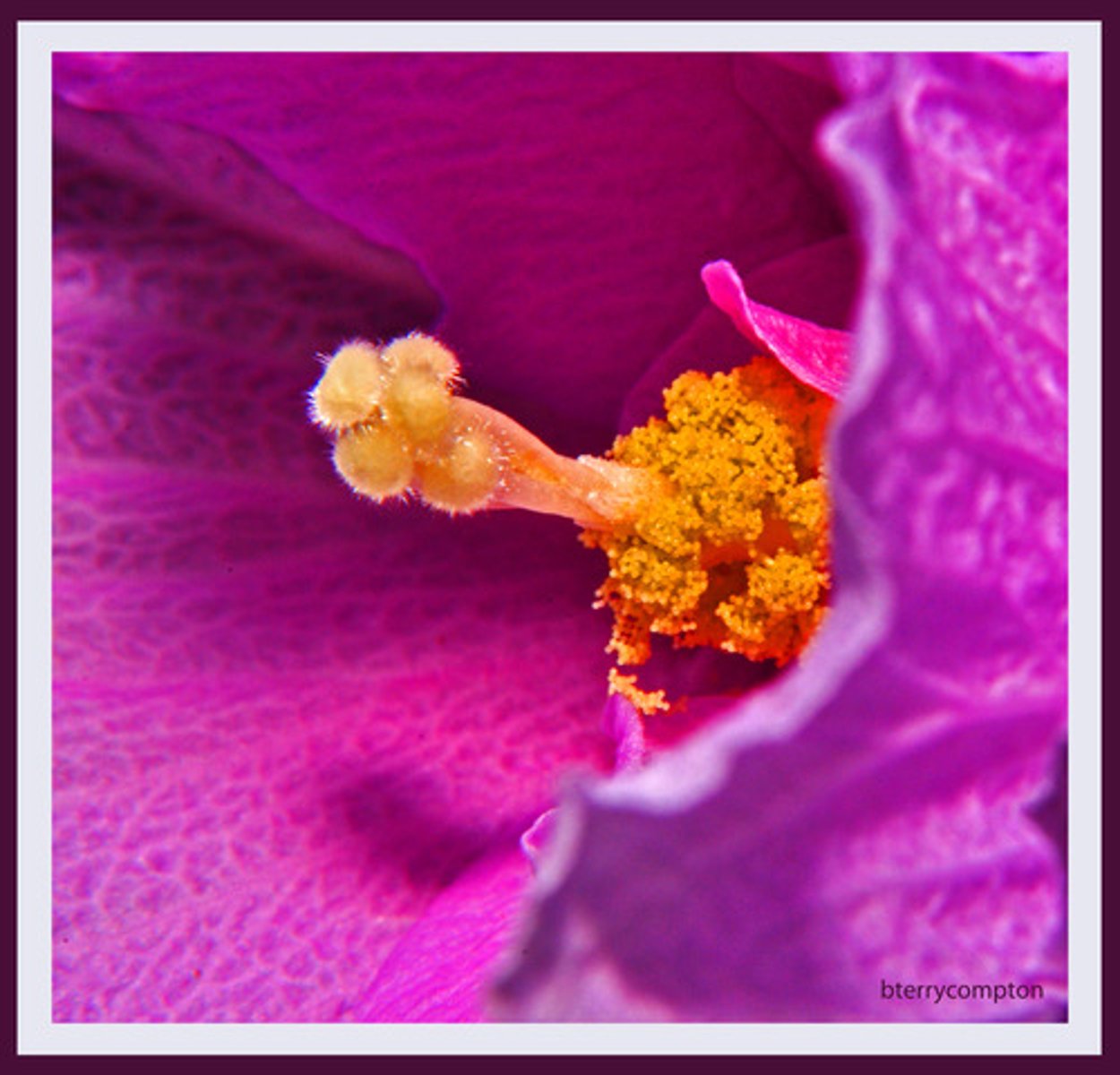
Stigma
Sticky surface that catches pollen
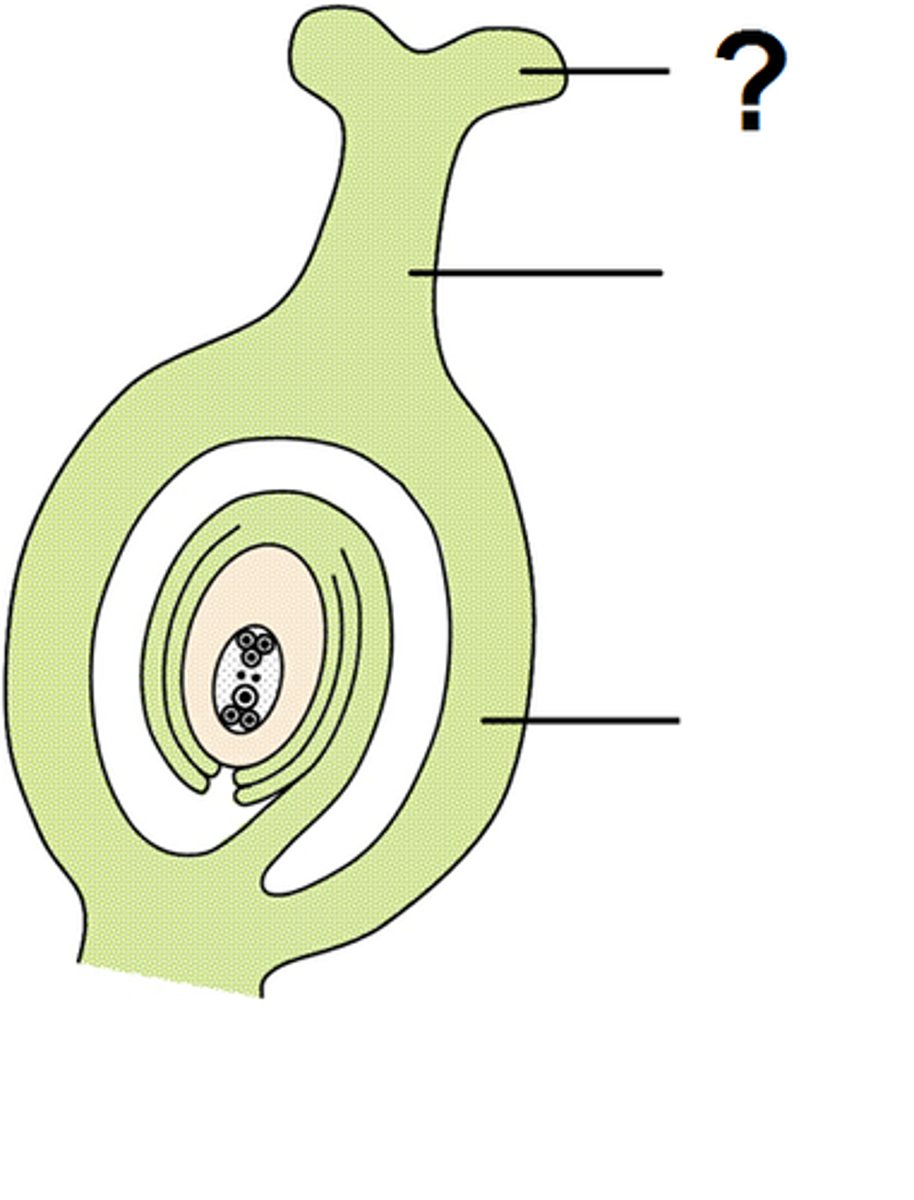
Style
Tube connecting stigma to ovary
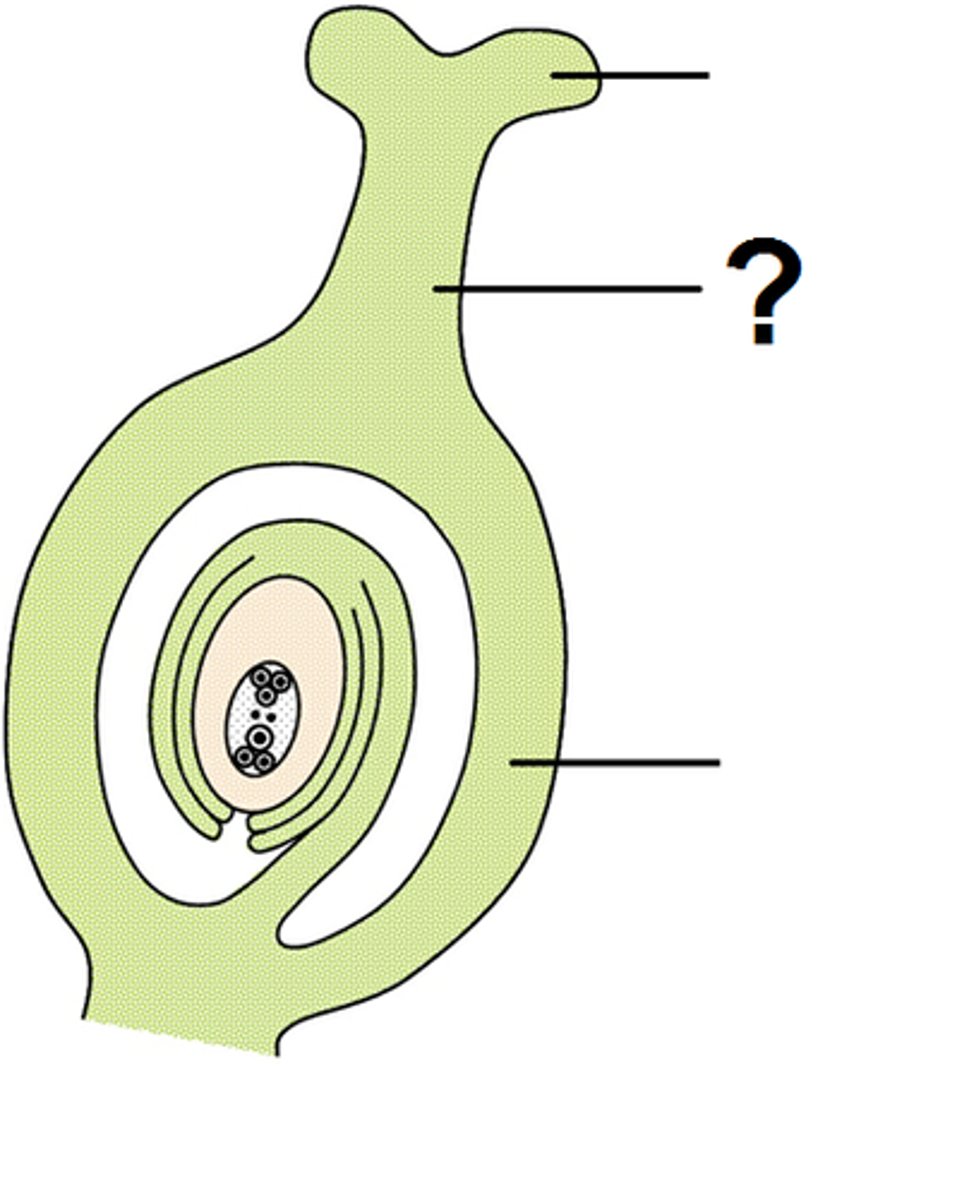
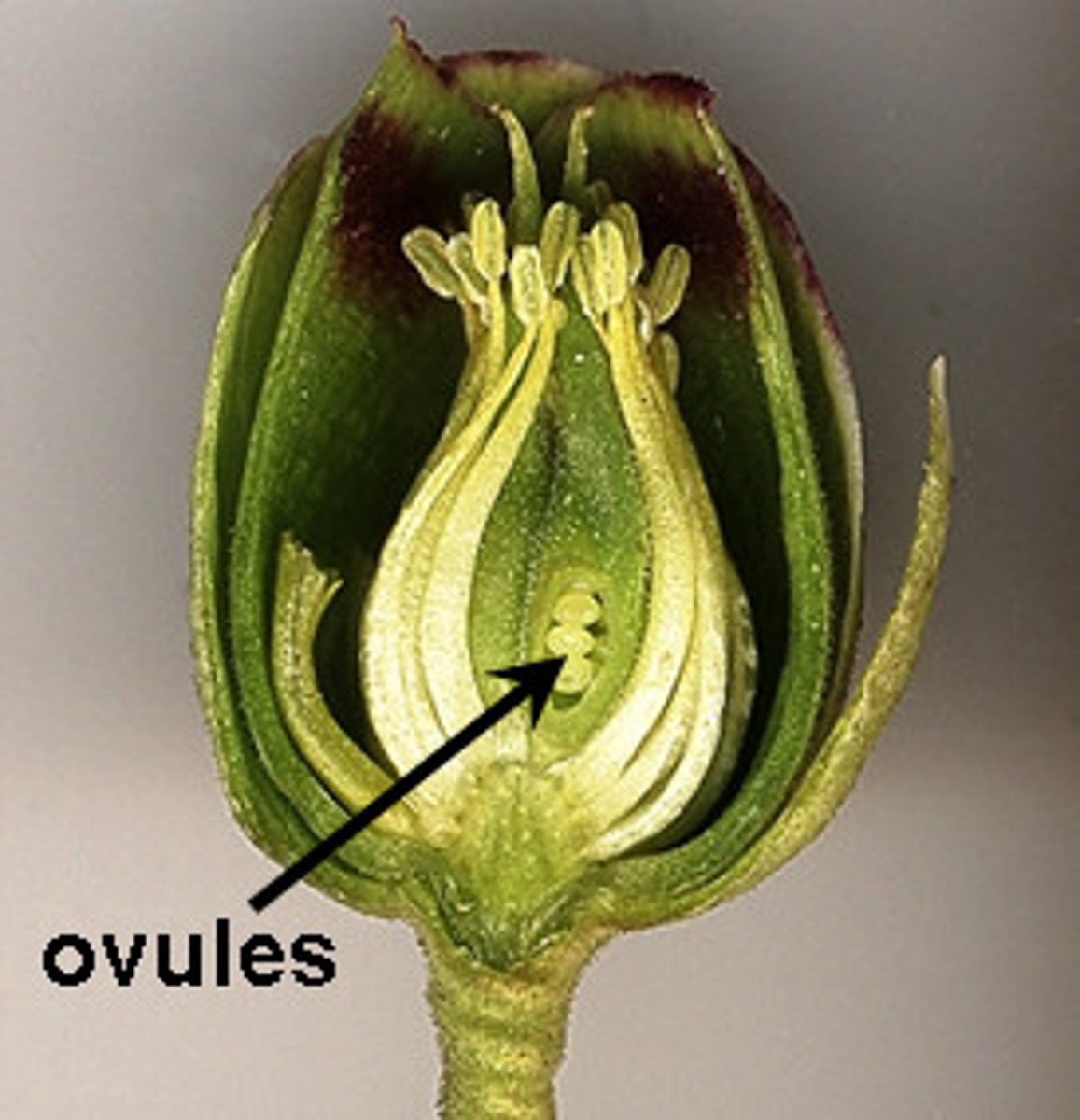
Ovary
Contains ovules (eggs)
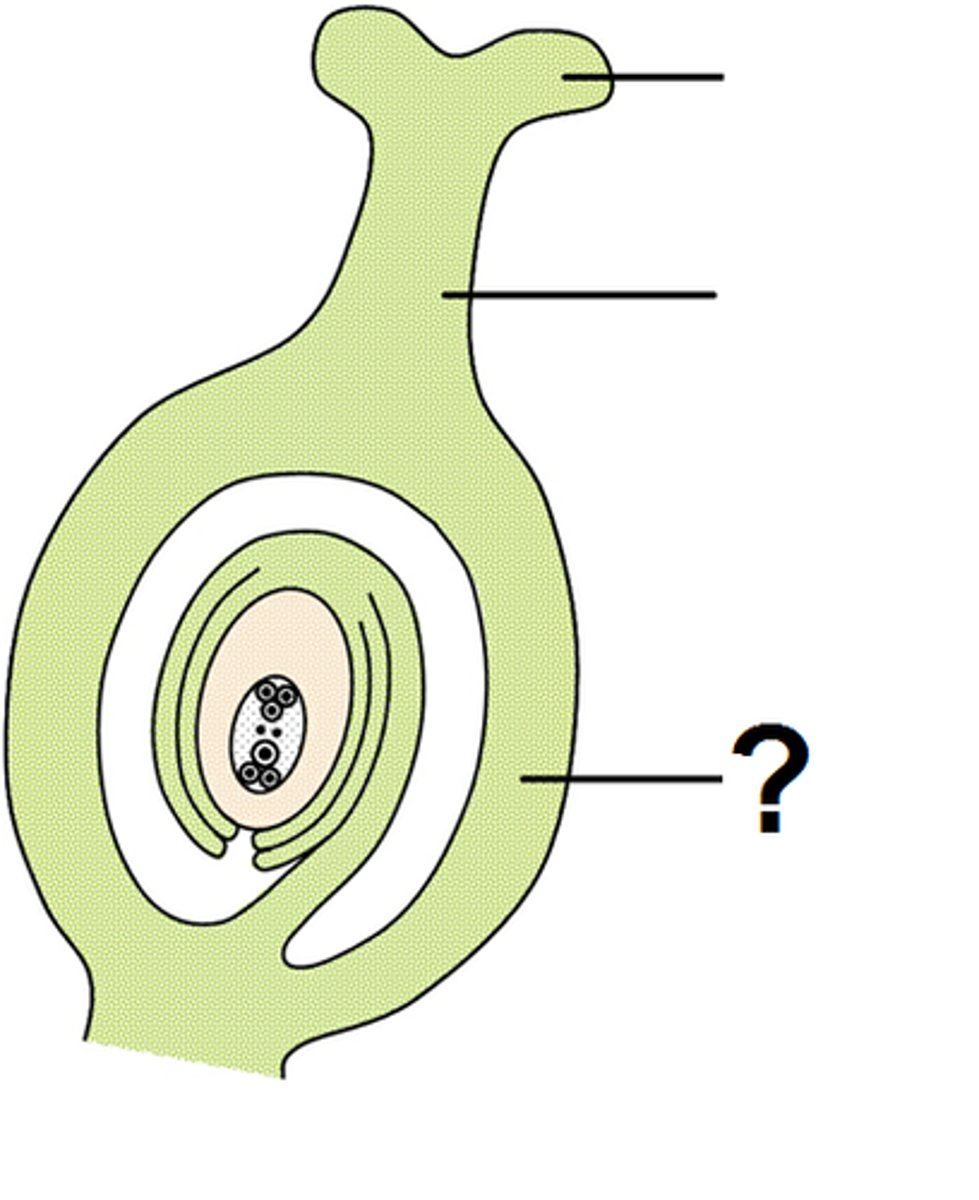
Ovule
Becomes seed after fertilization
Petals
Attract pollinators
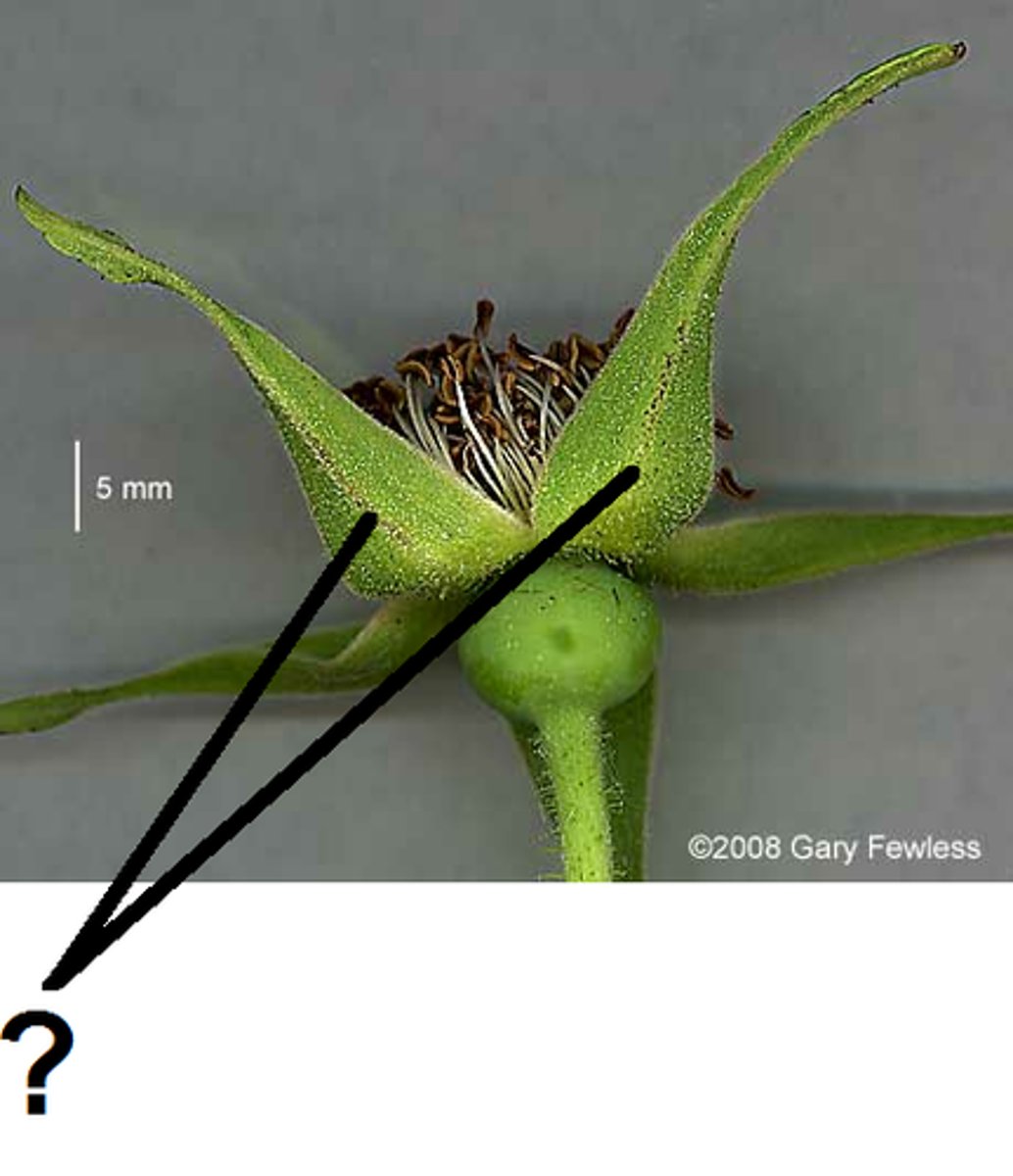
Sepals
Protect flower bud
Pollination
Transfer of pollen to stigma
Double fertilization
One sperm → zygote, one sperm → endosperm
Endosperm
Provides nutrients to embryo
Fruit
Mature ovary that protects seeds
Seed dispersal methods
Animals, wind, water

