Anatomy and Physiology 2 Exam 1
 Studied by 0 people
 Call Kai
 Learn
Learn Practice Test
 Spaced Repetition
 Match
Match Flashcards
 Knowt Play
1/63

Earn XP
Description and Tags
Special senses, endocrine system, blood, endocrine pathology
Name | Mastery | Learn | Test | Matching | Spaced | Call with Kai |
|---|
No analytics yet
Send a link to your students to track their progress
64 Terms
Define sensory receptors
Structures that are specialized to detect and respond to changes in the external or internal environment, generate electrochemical messages
If a stimulus is strong enough, then action potentials are conducted to the brain
Sensation is
awareness of a stimulus, How a sensation is experienced (e.g., as sight or sound) depends on which part of the brain receives the impulses
Perception is
the conscious awareness of sensations, Understanding the stimulus occurs when the cerebral cortex integrates sensory input
explain a sensation from sensory receptor to the brain
1.sensory receptor detects stimulus in internal/external environment,
2.Sensory neurons conduct a nerve impulse to the spinal cord and then brain, or directly to brain
3.brain interprets the info from the sensory receptor
4.The brain’s interpretation of the information is a perception or understanding of the stimulus.
what is Sensory adaptation
Sensory receptors stop responding when continuously stimulated, leading to a decrease in the awareness of the stimulus
Pressure and touch receptors adapt quickly
Receptors in muscles and joints that report on body position never adapt
what are the Classes of Receptors
Mechanoreceptors • Thermoreceptors • Photoreceptors • Chemoreceptors • Pain receptors
General receptors what are they and what do they do
located in skin, muscles, bones, joints, and internal organs
General senses: touch, pressure, vibration, temperature, body and limb position, pain
We are not usually aware of the general senses, but they are still important to Provide information about body position, Help keep internal body conditions within optimal limits
Special receptors what are they and what do they do
-located in the head, often within specific structures
-Special senses Vision, Hearing, Equilibrium, Smell, Taste
-We rely on the special senses to perceive the world
Sharp vision requires
light be focused on the retina
Light is bent (refracted) at four points when it enters the eye
Cornea • Aqueous humor • Lens • Vitreous humor
explain accommodation of vision
Changing the shape of the lens (which is elastic) to change the bending of light
whats a cataract
A lens that has become cloudy, usually due to aging
Two types of photoreceptors
rods -vision in dim light More numerous than cones Responsible for black-and-white vision Contain the pigment rhodopsin, which is broken down in bright light
cones-responsible for color vision red, blue, and green, produce sharp images, A reduced number or lack of one type of cone results in color blindness
Focusing problems • Farsightedness • Nearsightedness • Astigmatism caused by can they be repaired
discrepancies in the thickness or curvature of the lens or the shape of the eyeball, Normal vision can be restored with corrective lenses or laser-assisted surgeries (LASIK)
Olfactory receptors
Sensory neurons with long hairs covered by mucus located in the roof of each nasal cavity
One of the few types of neurons known to be replaced during life
purpose of nasal conchae
to increase surface area of the nasal cavity
describe how we smell
odor molecules dissolve into the mucus layer in the nasal cavity and bind to the receptor cells, stimulating them. if a threshold is reached, message is carried to olfactory bulbs in the brain
what do tastebuds are made of and what do they do
Composed of taste supporting cells that are replaced every ten days, sense five basic tastes: Bitter, Umami (meat/broth taste), Sweet, Salty, Sour
describe how we taste
Taste hairs have receptors for chemicals found in food, When food molecules are dissolved in saliva, they enter the pore and stimulate the taste hairs that generate electrical signals that are sent to sensory neurons wrapped around taste cells
outer ear function
Functions as a receiver
Includes the pinna and external auditory canal
pinna
of the outer ear and Gathers sound and channels it to the external auditory canal, Helps determine sound direction
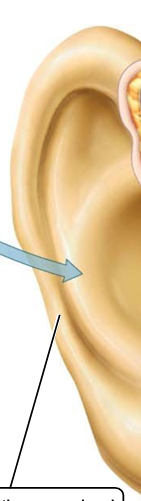
External auditory canal is of what and leads to
of the outer ear and leads to the tympanic membrane (eardrum)
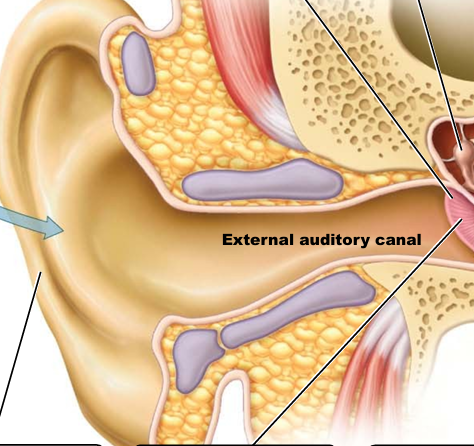
Tympanic membrane (eardrum) of what and does what
of middle ear and Vibrates at the same frequency as the sound waves and transfers these vibrations to the middle ear
Auditory tube (Eustachian tube) of what and does what
of middle ear and Connects middle ear cavity with the throat; alleviates pressure differences
middle ear function and consists of
Functions as an amplifier
Consists of an air-filled cavity within the temporal bone of the skull and the three auditory bones
Malleus (hammer)
Incus (anvil)
Stapes (stirrup)
inner ear function and consists of
Functions as a transmitter, generates neural messages in response to pressure waves caused by sound waves, Sends these messages to the brain for interpretation
consists of: cochlea (hearing) and vestibular apparatus (body position and movement)
cochlea contains two openings
oval window-stapes fits into
round window-relieves pressure
explain basilar membrane function
supports the spiral organ of corti
vestibular canal vs tympanic canal
The vestibular system includes the semicircular canals and the otolith organs, which detect head movements and balance, respectively. The tympanic canal, on the other hand, is part of the cochlea, which is involved in converting sound vibrations into electrical nerve impulses for hearing.
Spiral organ of corti function and consists of
Most directly responsible for hearing
• Consists of hair cells and overhanging tectorial membrane
Summary of How We Hear
Acoustic energy, in the form of sound waves, is channeled into the ear canal by the pinna. Sound waves hit the tympanic membrane and cause it to vibrate, like a drum, changing it into mechanical energy. The malleus, which is attached to the tympanic membrane, starts the ossicles into motion. The stapes moves in and out of the oval window of the cochlea creating a fluid motion, or hydraulic energy. The fluid movement causes membranes in the Organ of Corti to shear against the hair cells. This creates an electrical signal which is sent up the Auditory Nerve to the brain. The brain interprets it as sound!
Vestibular apparatus what is it and consists of what
A fluid-filled maze of chambers and canals within the inner ear
• Consists of Semicircular canals (Help with balance when we are moving)
Vestibule (Helps with balance when we are not moving)
Our sense of dynamic equilibrium—attributed to
equilibrium when the body or head is moving—is due to the semicircular canals, and cupula at the base of those canals which report rotational movements of the head, including those caused by acceleration or deceleration based on if the fluid in the ears pushes the cupula which stimulates the hair cells
Our sense of static equilibrium—attributed to
—position of the head with respect to gravity—is due to the receptors in the vestibule, utricle and the saccule, two fluid-filled cavities that contain hair cells with overlaying gelatinous material. Embedded in the gelatinous material are granules of calcium carbonate called otoliths, When the head is tilted, otoliths in the gelatinous material slide “downhill” over the hair cells, stimulating them. The hair cells send signals to the brain and those are interpreted to know position of the head
nervous system know
initiates responses rapidly
short-duration responses
acts via potentials and neurotransmitters
act @ specific locations determined by axon pathways
neurotransmitters act over very short distances
endocrine system know
initiates responses slowly
long-duration responses
acts via hormones released into the blood
act @ diffuse locations, anywhere blood reaches
hormones act over very long distances
Exocrine glands..what do they do?
Produce nonhormonal substances (examples: sweat, saliva)
– Have ducts to carry secretion to membrane surface
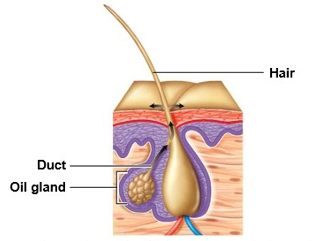
Endocrine system controls and integrates
-Reproduction
– Growth and development
– Maintenance of electrolyte, water, and nutrient balance of blood
– Regulation of cellular metabolism and energy balance
– Mobilization of body defense
Endocrine glands what are they and what do they do
thyroid, adrenal, pituitary, parathyroid, and pineal glands
Produce and secrete chemical compounds called hormones into the blood system, Lack ducts
neuroendocrine organ
hypothalamus
Hormones
proteins (or steroids) that are secreted from a secretory cell in a gland and act on a target cell at another part of the body
Target cells
must have receptors for the specific hormone.
how does Cyclic AMP (cAMP) Second-Messenger System function
1. Hormone (first messenger) binds to receptor
2. Receptor activates a G protein
3. G protein activates or inhibits the effector enzyme adenylate cyclase
4. Adenylate cyclase then converts ATP to cAMP (second messenger)
5. cAMP activates protein kinases that phosphorylate (add a phosphate) other proteins
cAMP is rapidly degraded by enzyme___ which does what
phosphodiesterase, stopping cascade (Cascades have huge amplification effect, ‘cascade of events’)
types of endocrine gland stimuli: Humoral stimuli
altered blood levels of ions and nutrients directly stimulate secretion of hormones (ex, too little ca²+ in blood concentration stimulates parathyroid glands to secrete PTH (parathyroid hormone)—> PTH causes Ca2+ concentrations to rise, and stimulus is removed)
types of endocrine gland stimuli: Neural Stimulus
Nerve fibers stimulate hormone release (ex, Sympathetic nervous system fibers stimulate adrenal medulla to secrete catecholamines)
types of endocrine gland stimuli: Hormonal Stimulus
Hormones stimulate other endocrine organs to release their hormones
 Note
Note  Flashcards (84)