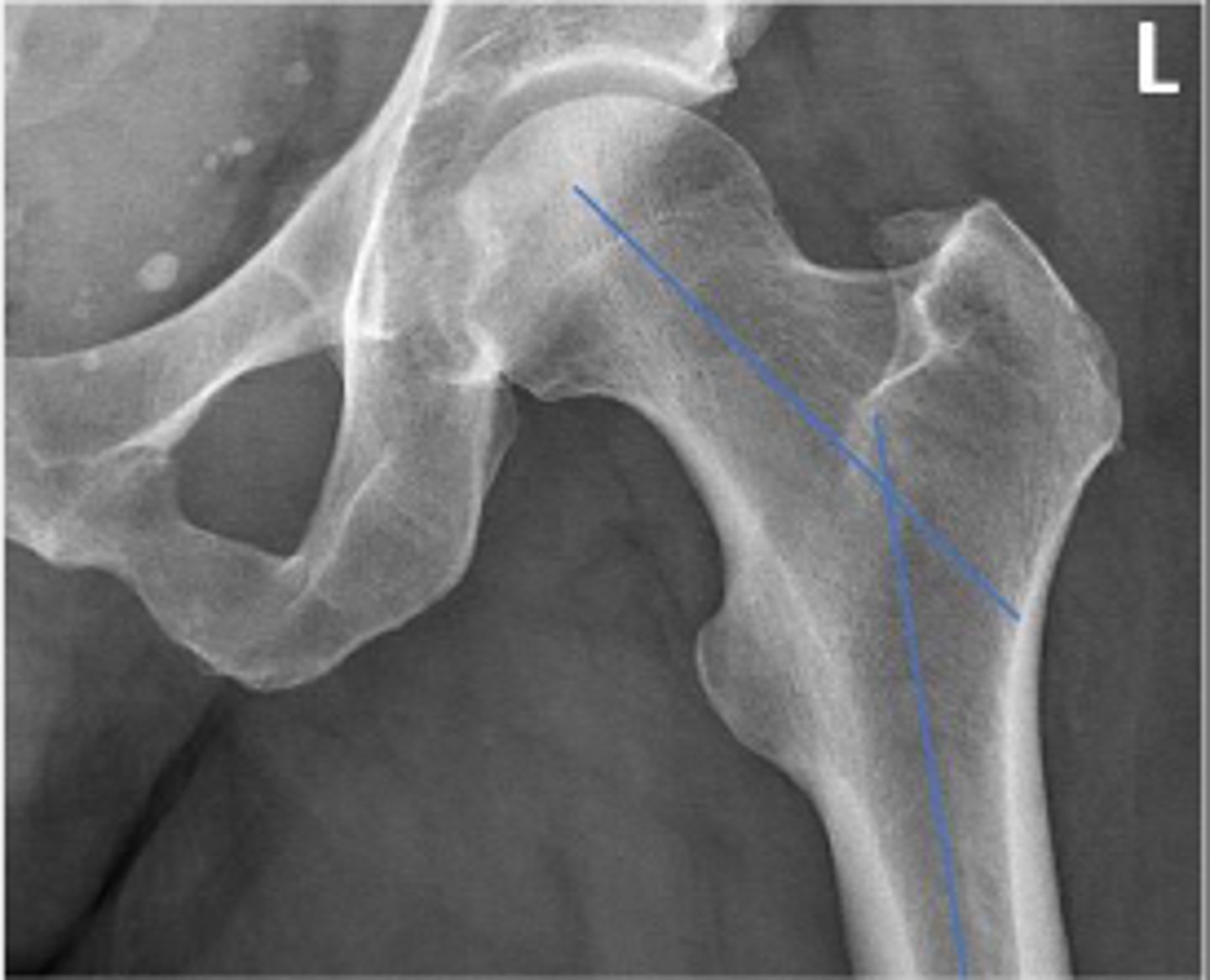
RAD 6210 Pelvis and Hip
 Call Kai
 Learn
Learn Practice Test
 Spaced Repetition
 Match
Match Flashcards
 Knowt Play
1/81

There's no tags or description
Looks like no tags are added yet.
Name | Mastery | Learn | Test | Matching | Spaced | Call with Kai |
|---|
No analytics yet
Send a link to your students to track their progress
82 Terms
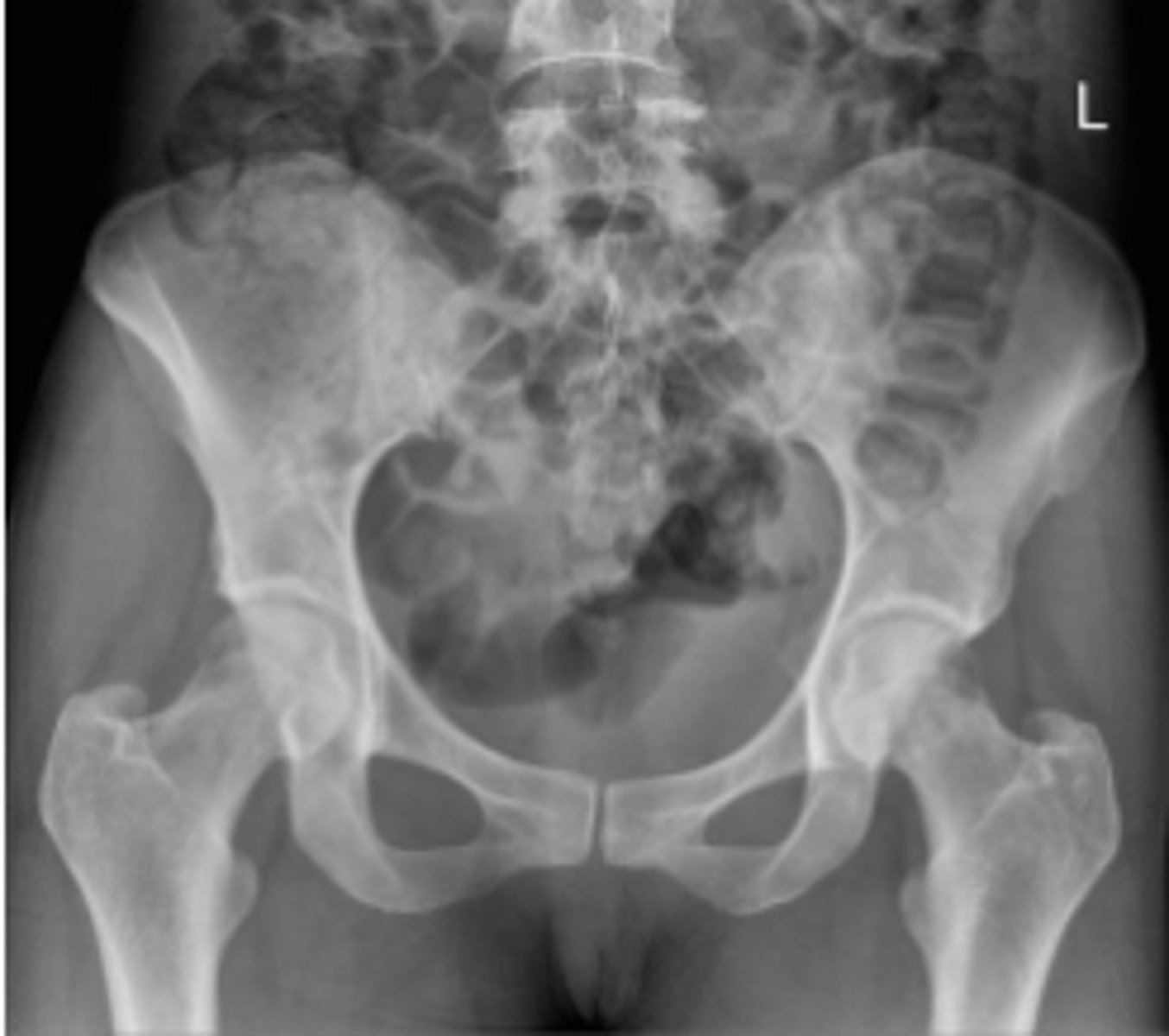
AP pelvis or bilateral hips
What is the name of the radiographic view?
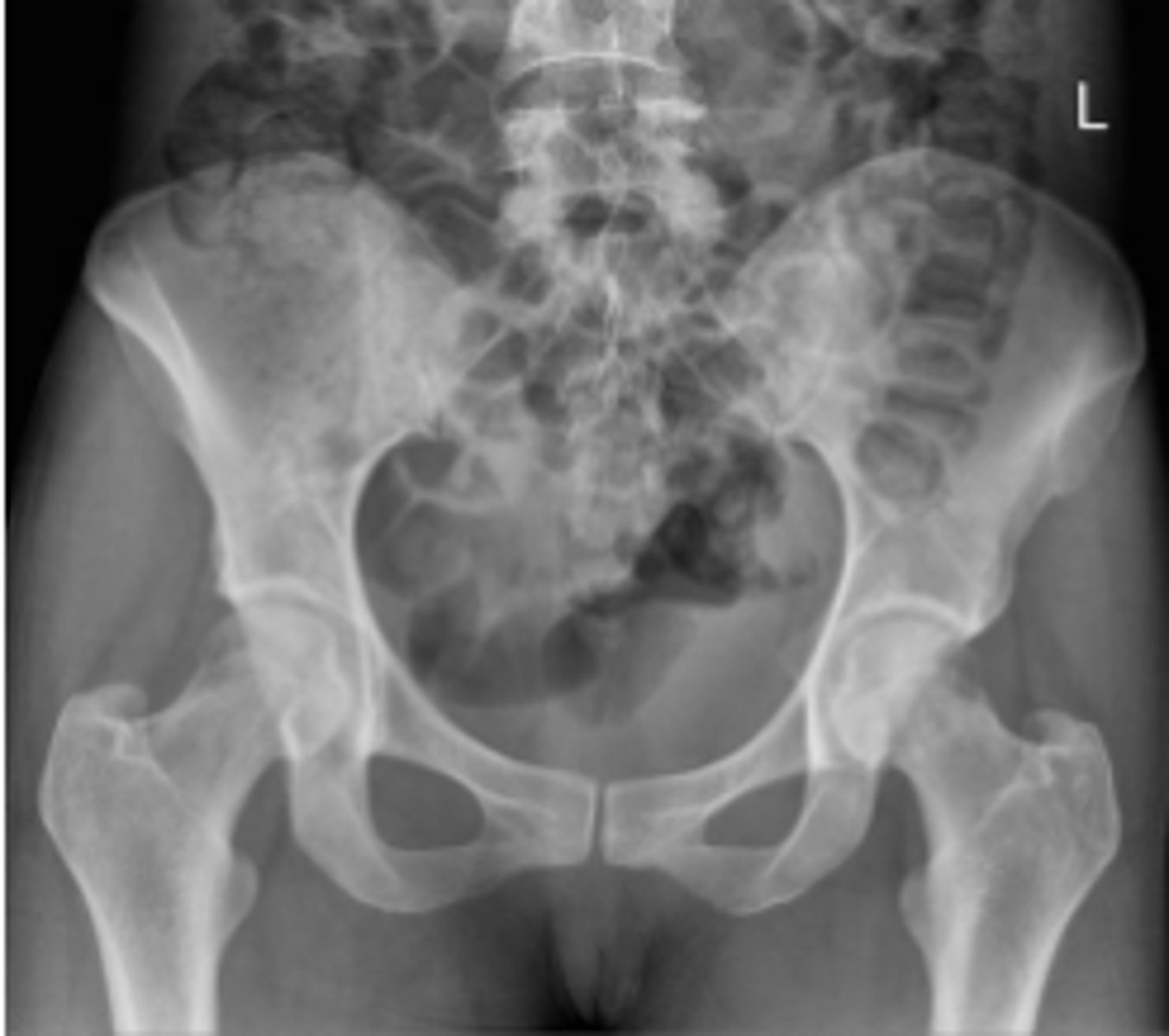
10-15 degrees
How many degrees of internal rotation of the lower extremities is required for this view?
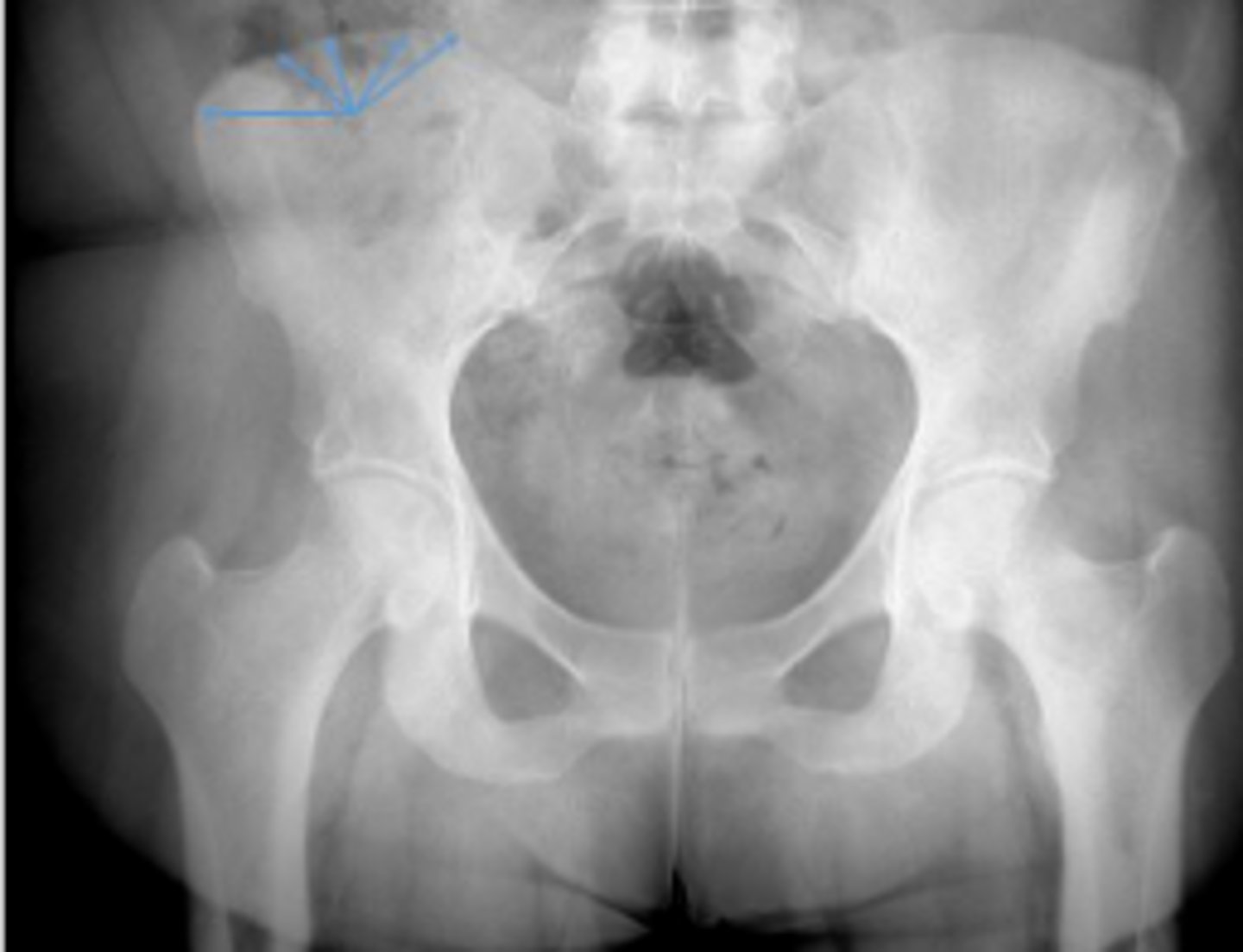
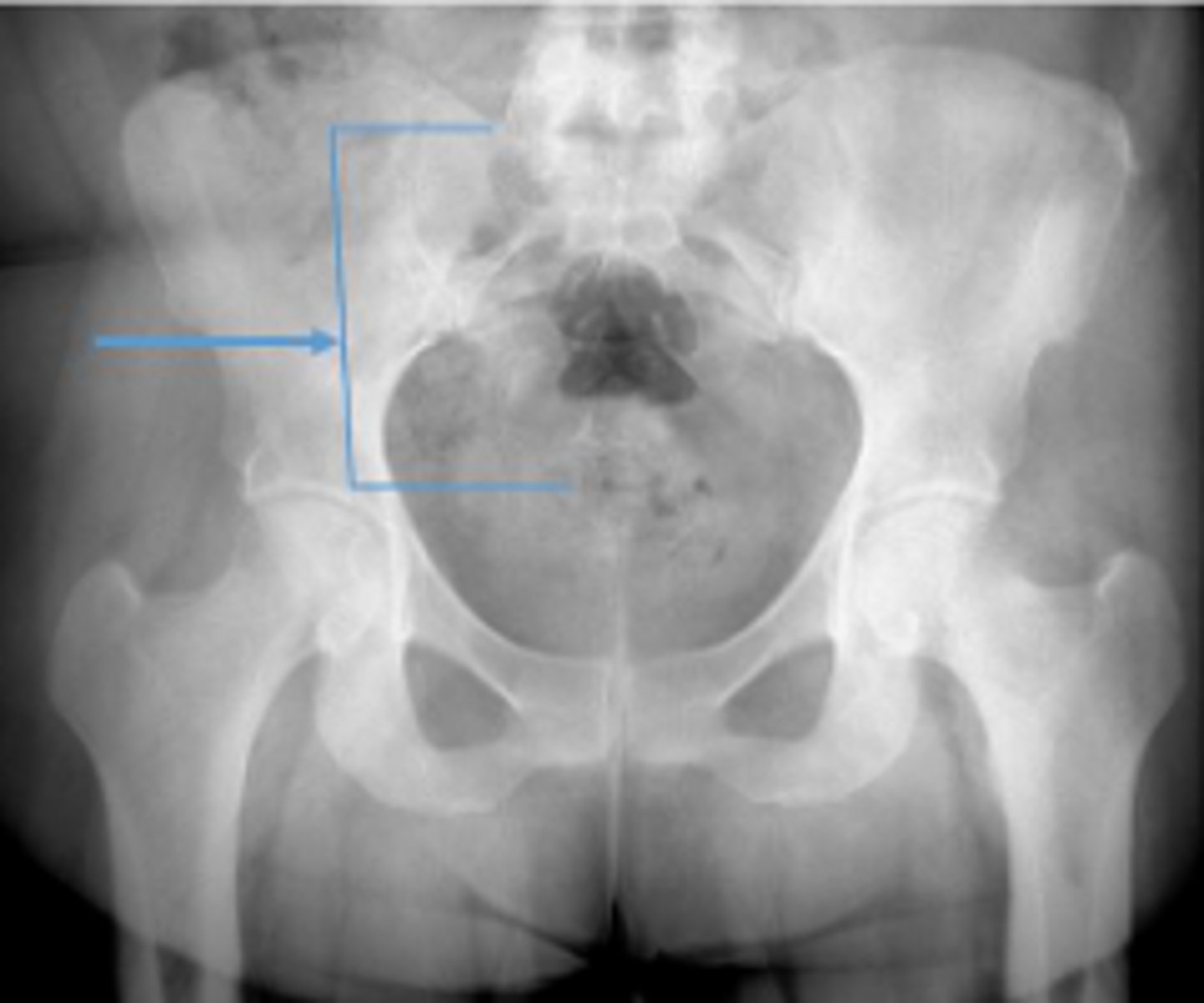
Iliac crest
What are the arrows pointing to?
Sacrum
What is the anatomical structure in between the lines?
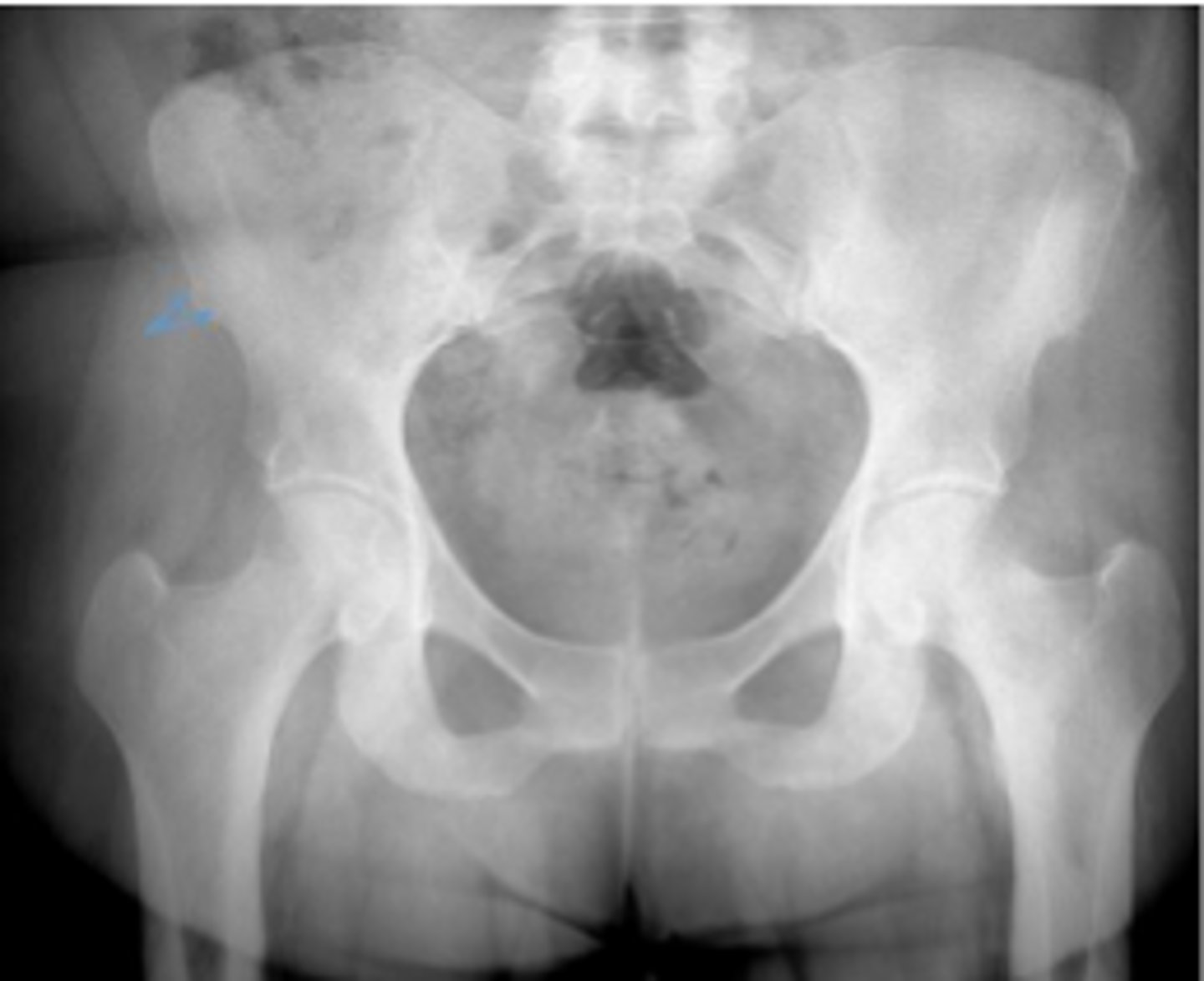
ASIS
What are the arrows pointing to?
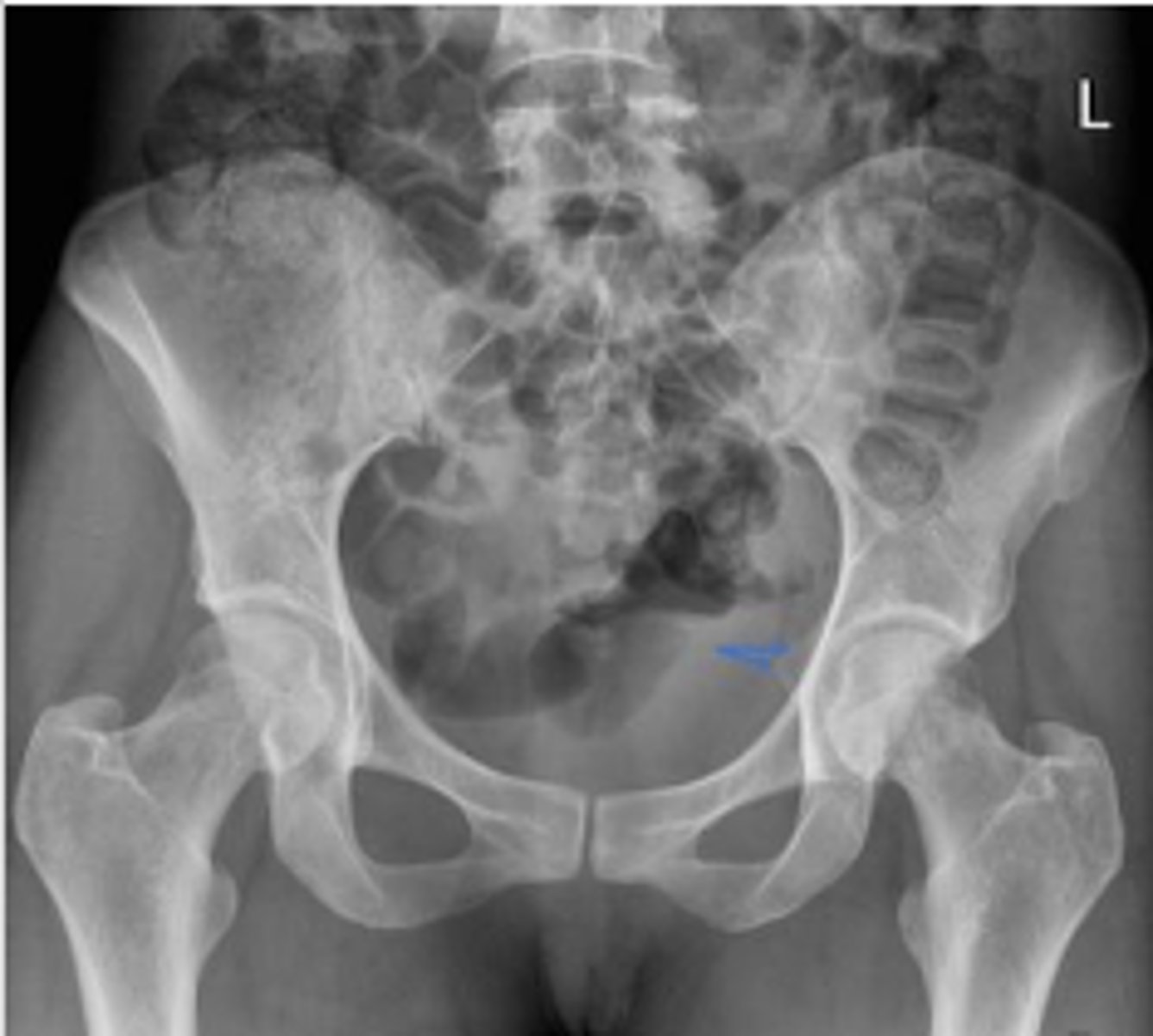
Left ischial spine
What are the arrows pointing to?
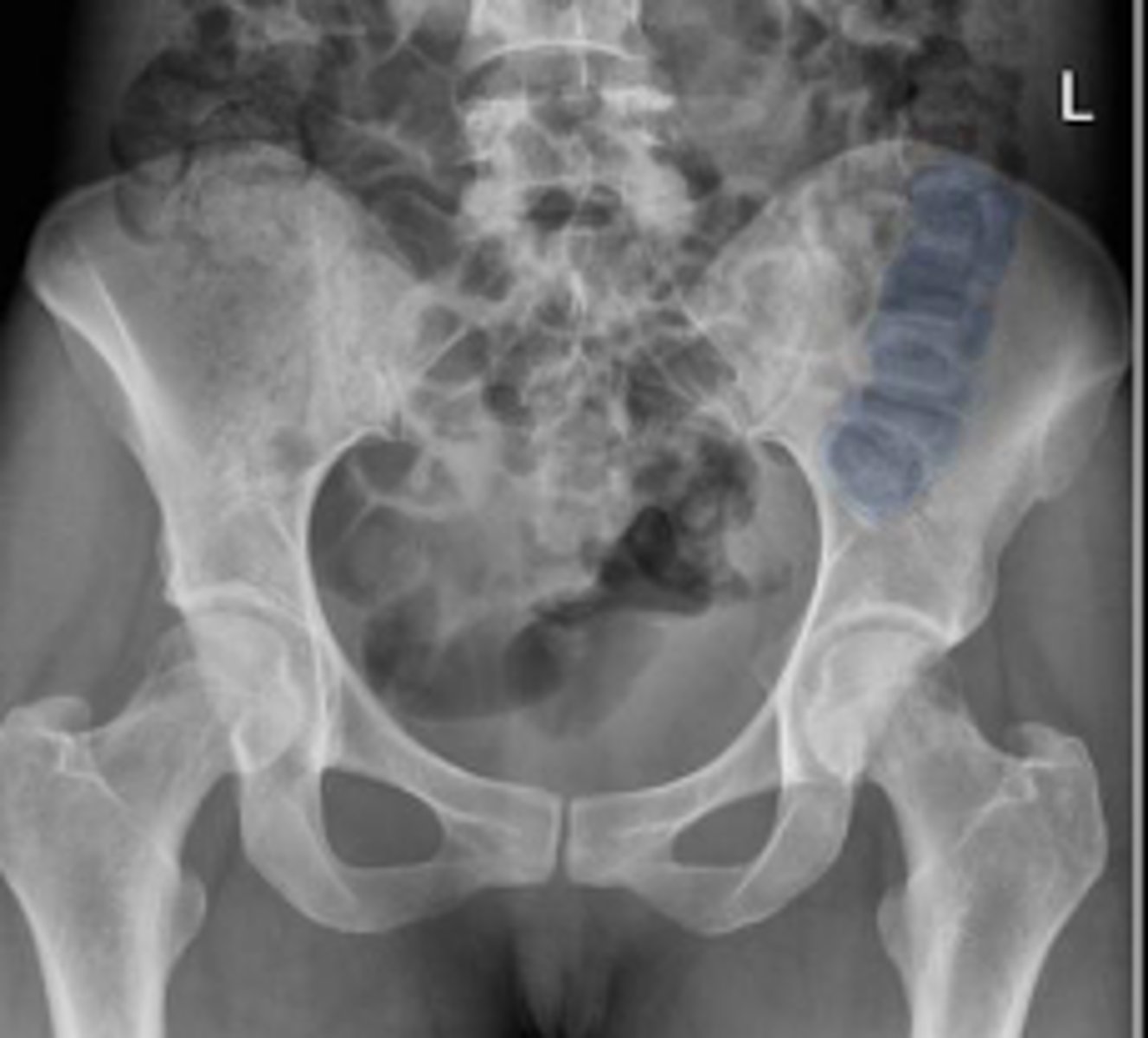
Sigmoid colon
What is outlined?
Right sacroiliac joint
What joint space are the arrows pointing to?
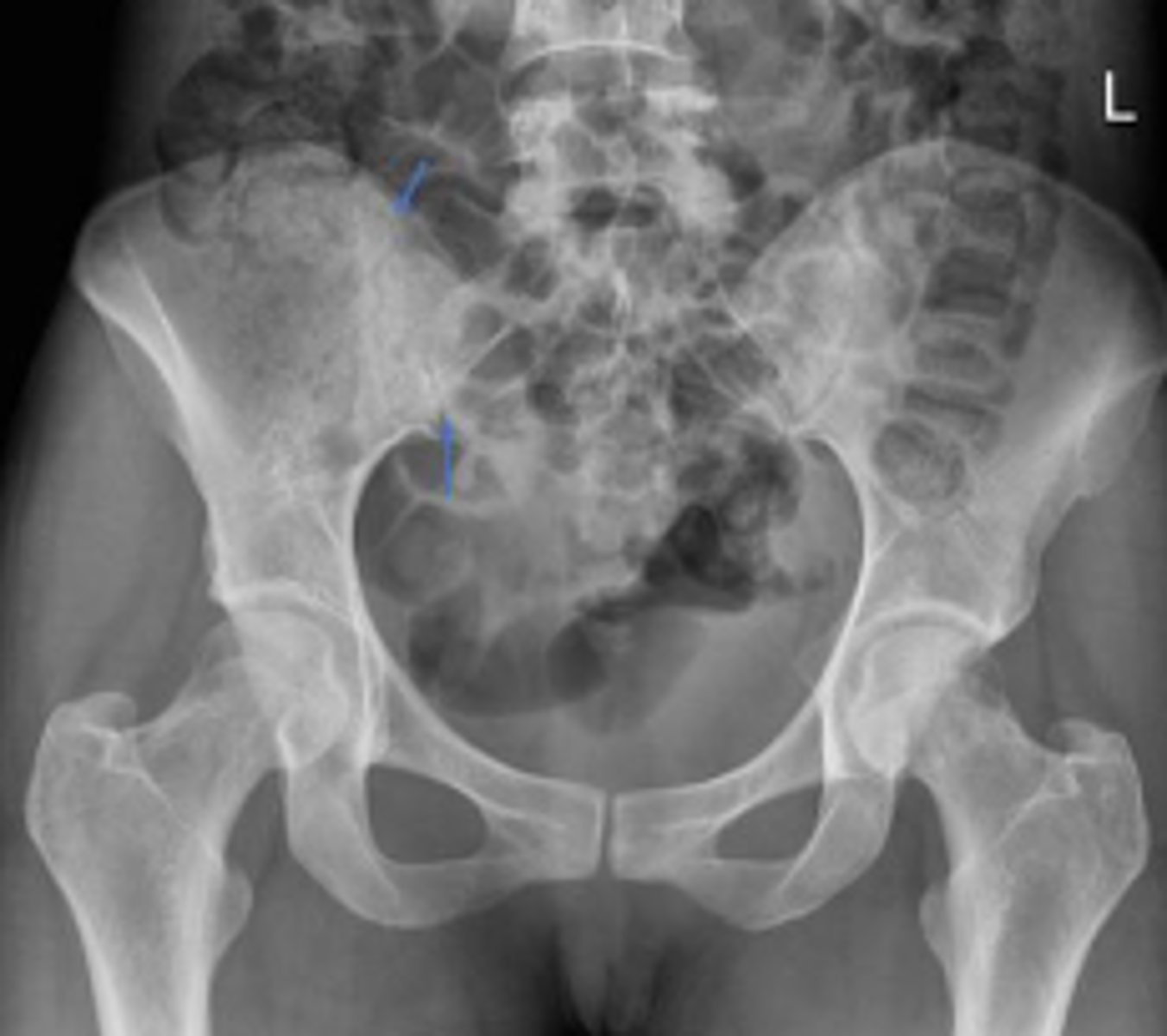
Pubic symphysis
What joint space is the arrow pointing to?
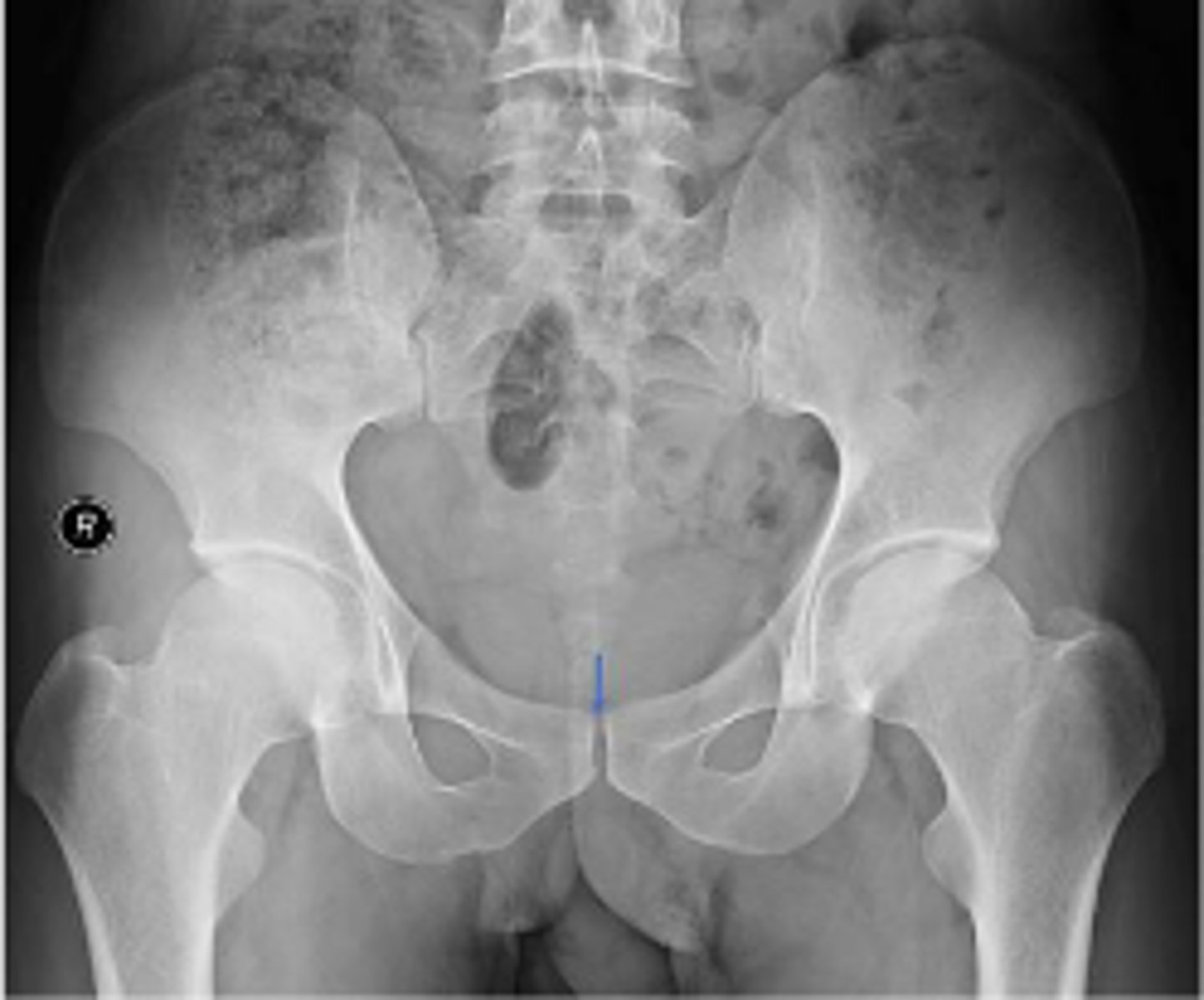
L4/L5 IVD space
Which IVD space is indicated by the arrows?
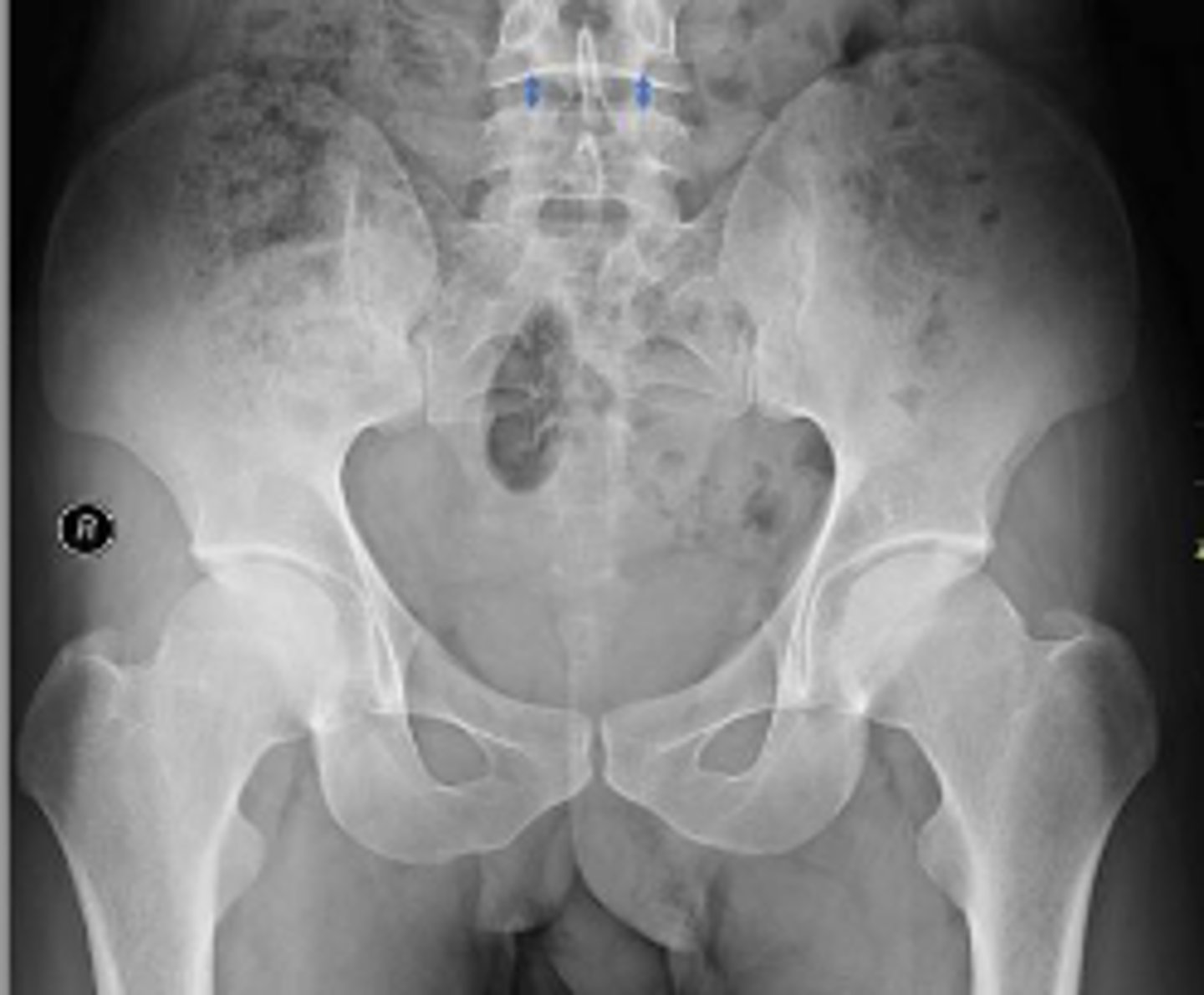
L4/L5 IVD space
Which IVD space is indicated by the arrows?
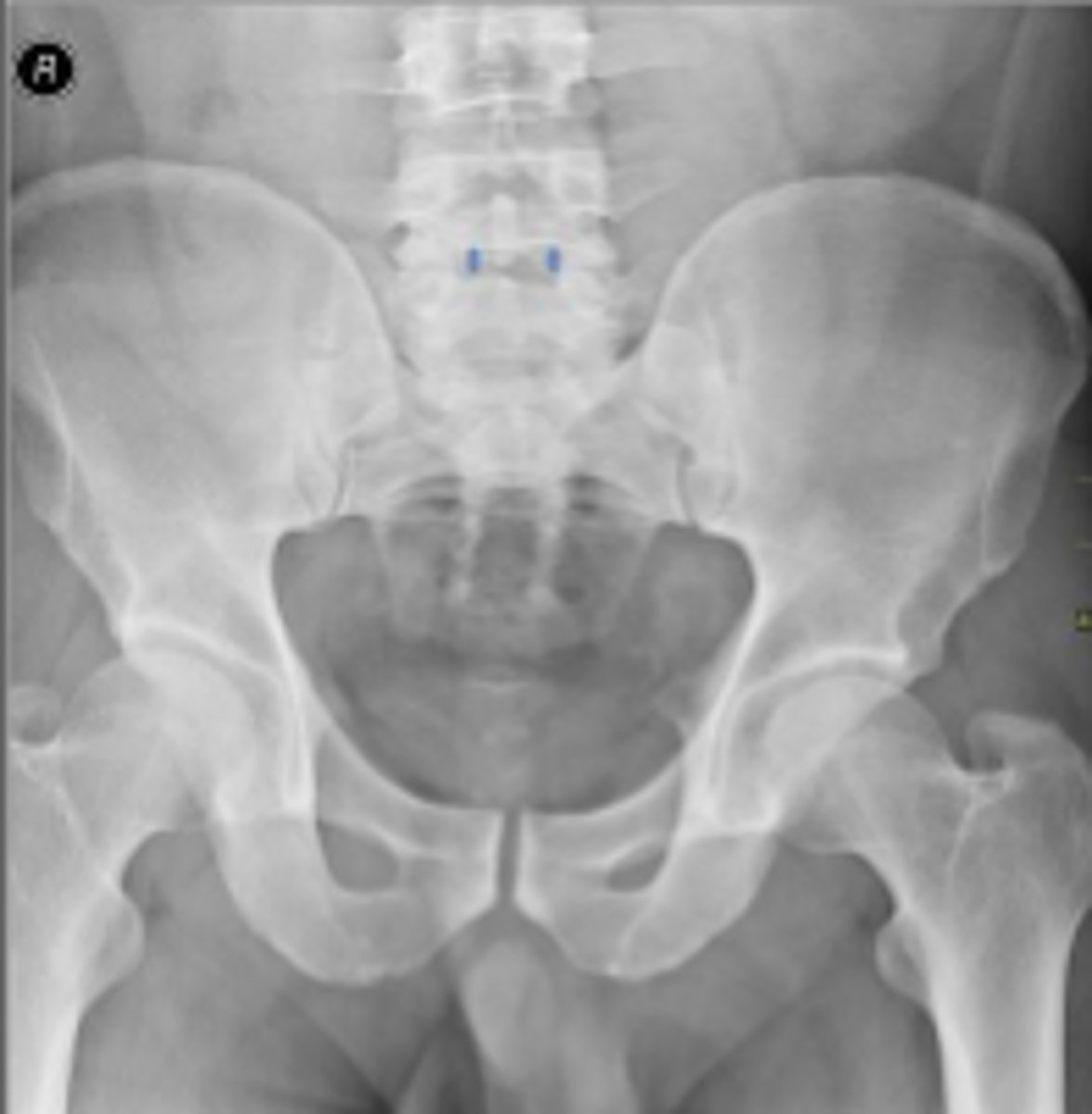
PSIS
What are the arrows pointing to?
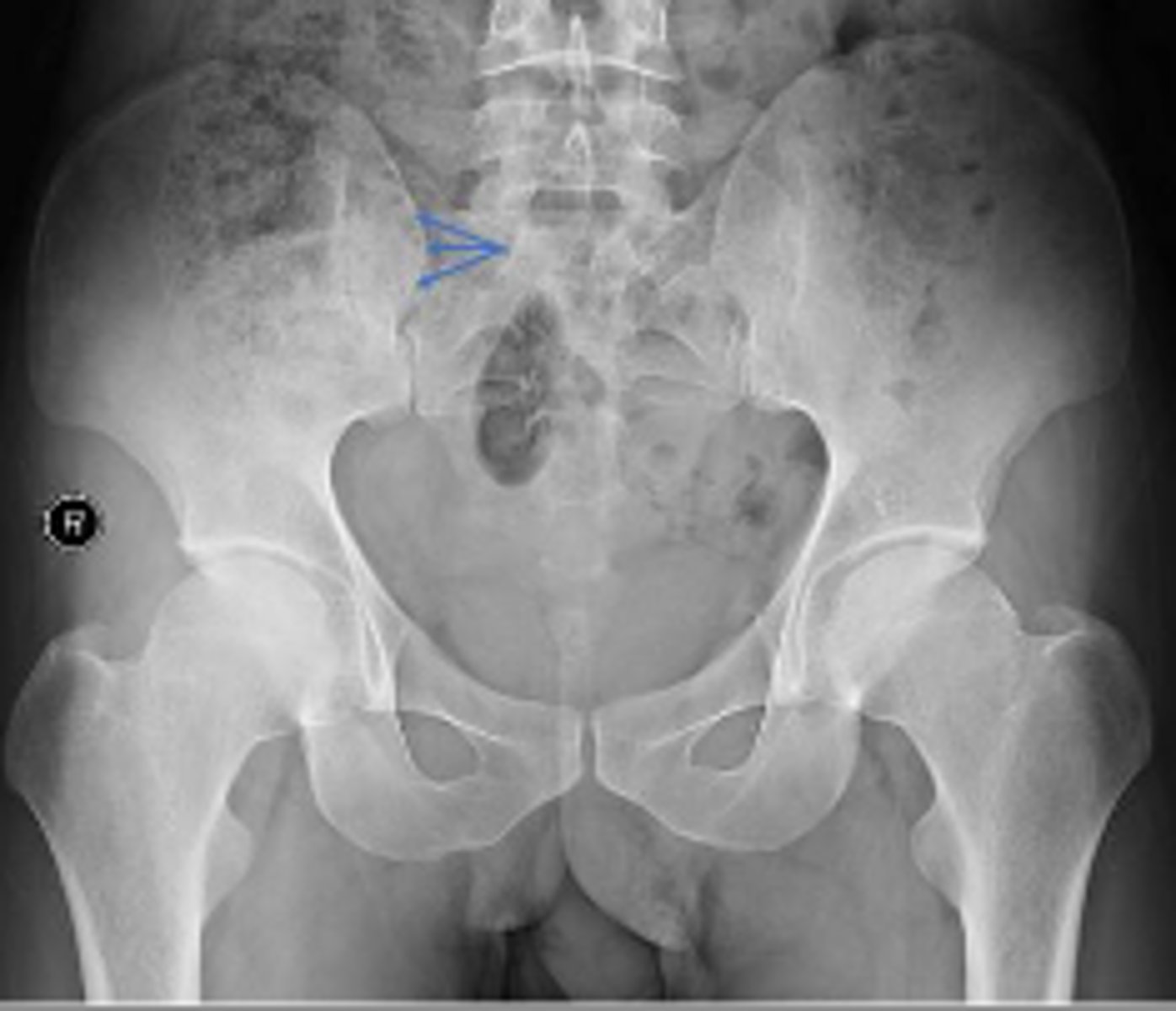
Lesser trochanter of the left femur
What are the arrows pointing to?
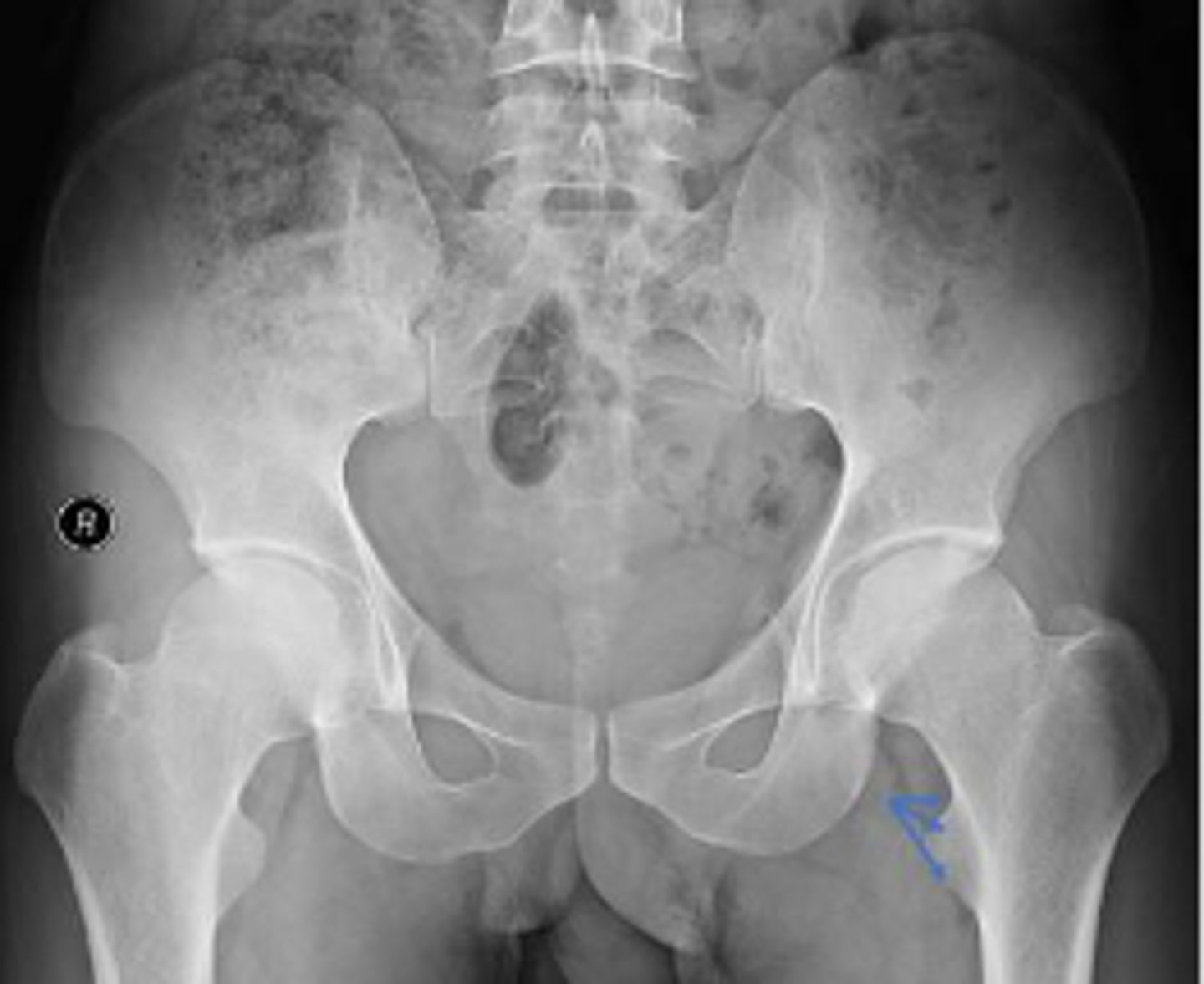
Iliopsoas muscle tendon (psoas m. + iliacus m.)
Name 2 structures that are attached to this area?
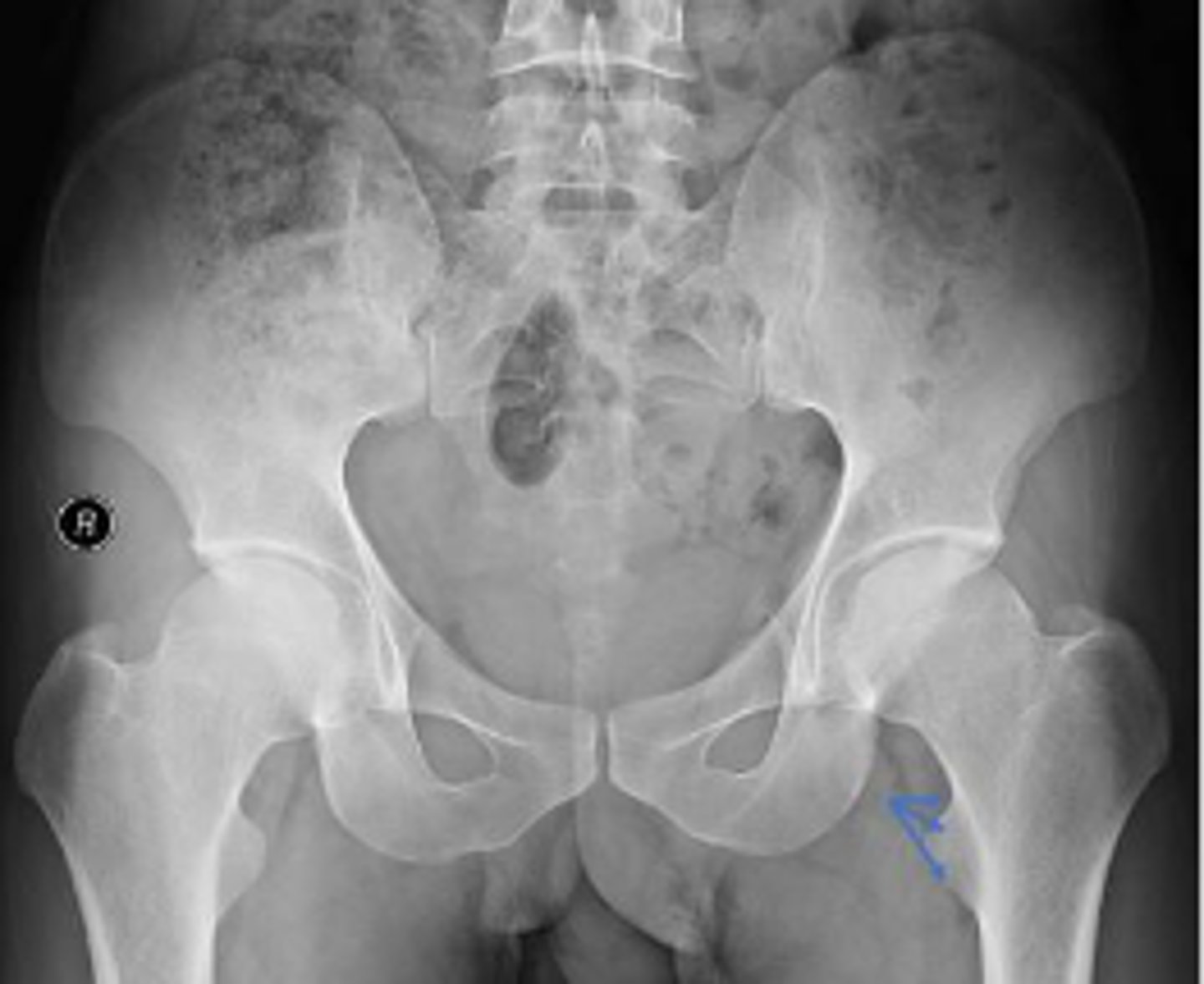
Right L5 transverse process
What is outlined?
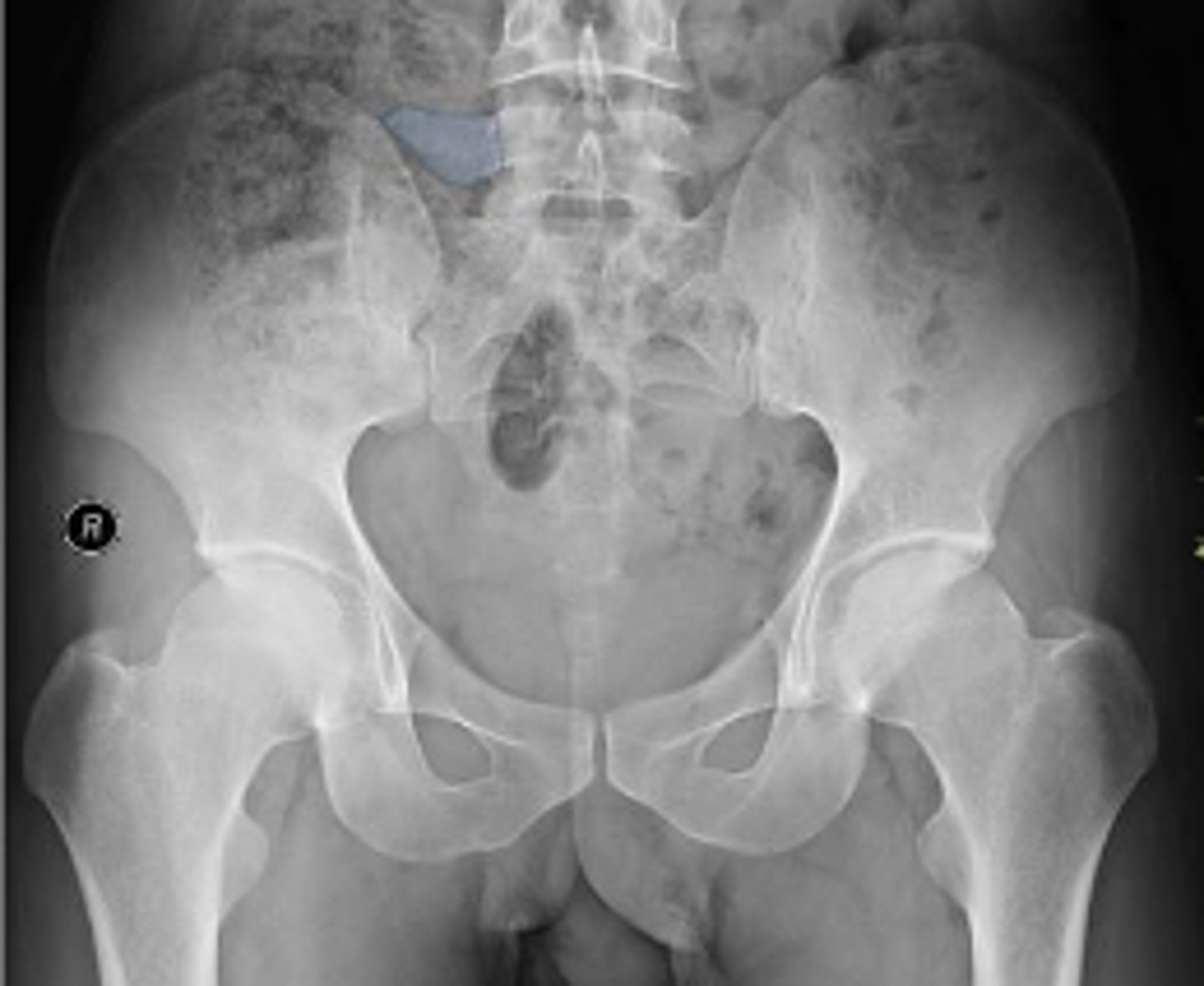
Coccyx
What is outlined?
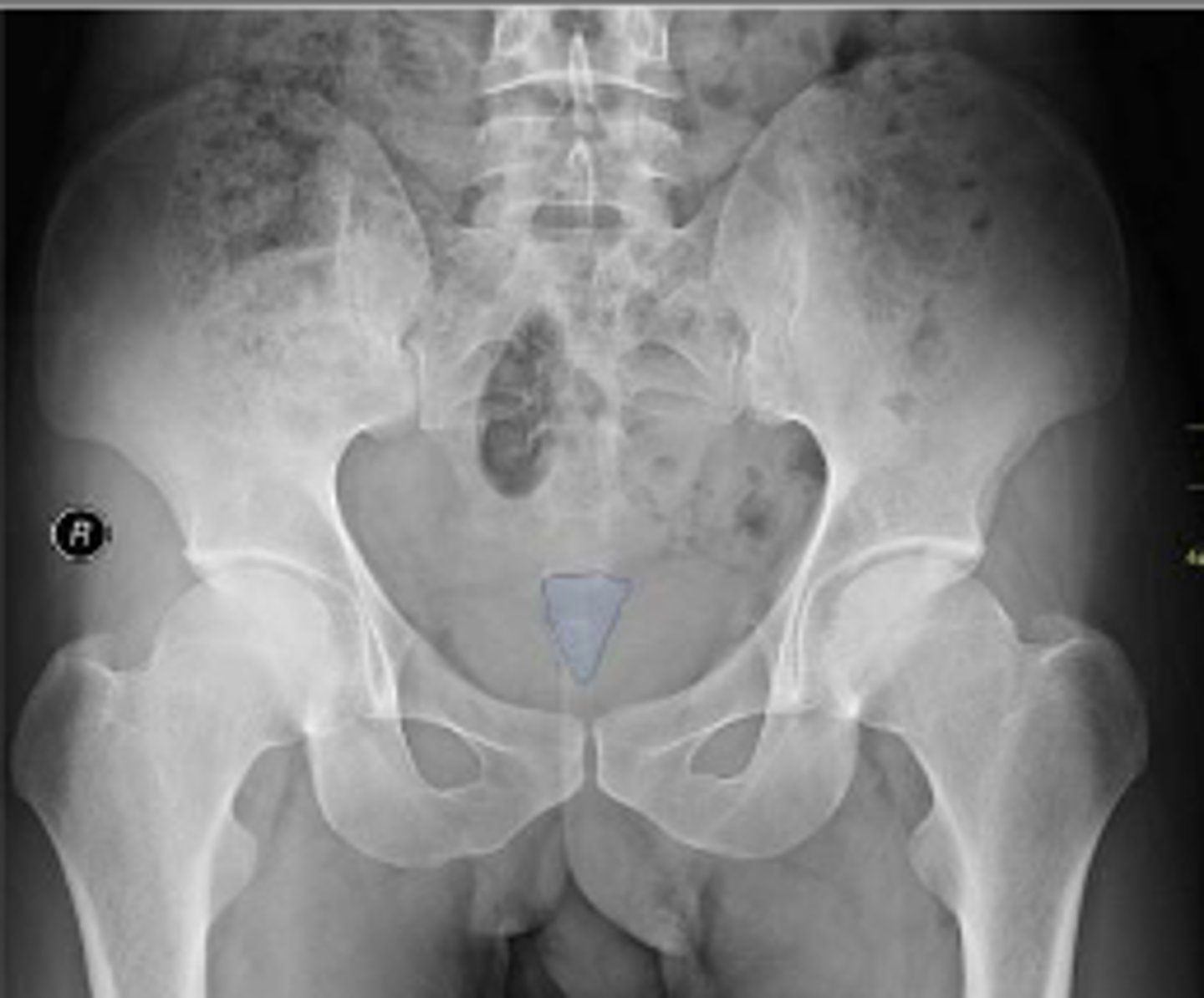
Left obturator foramen
What are the arrows pointing to?
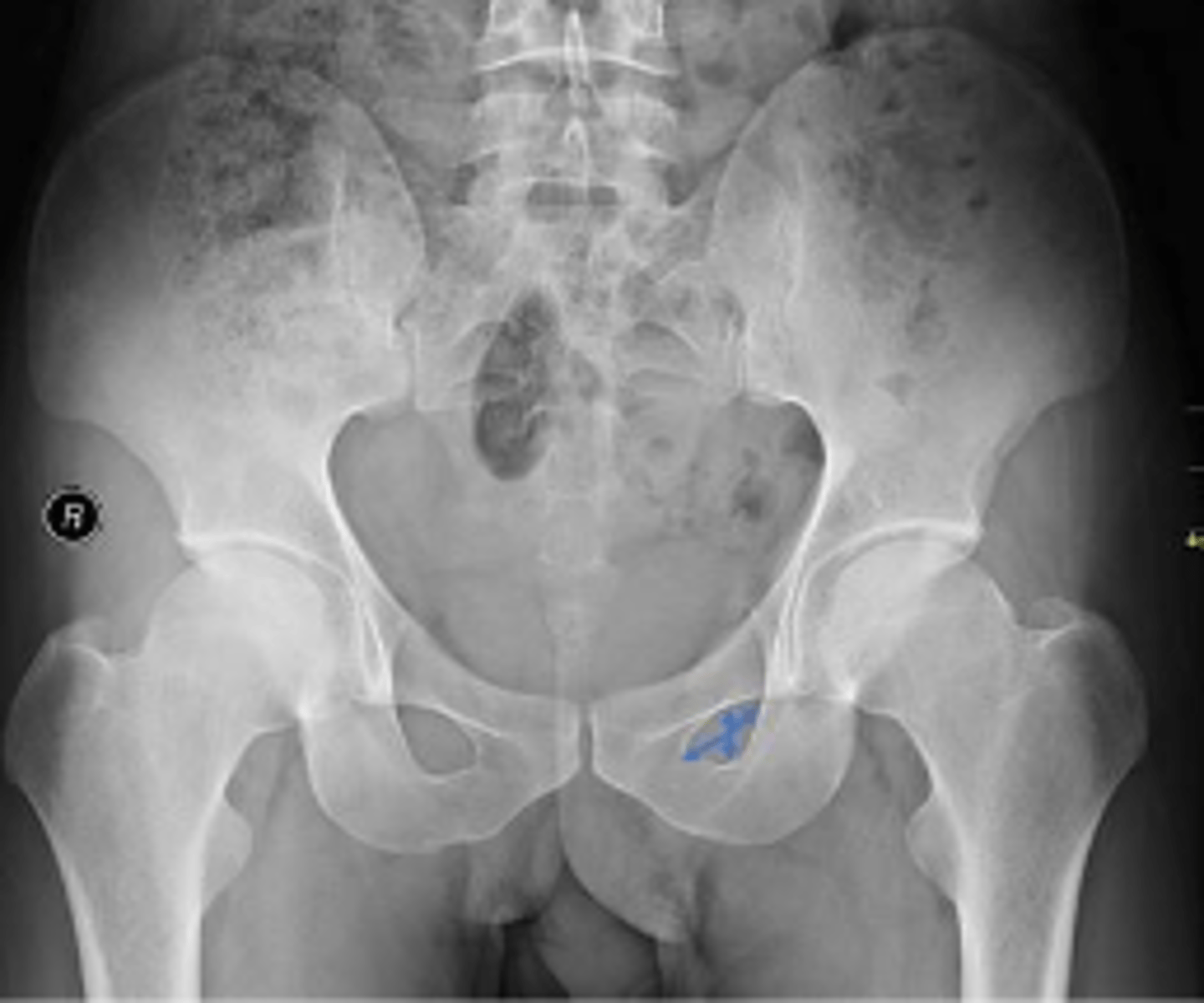
10-15 degrees
How many degrees of internal rotation of the lower extremities is required for this view?
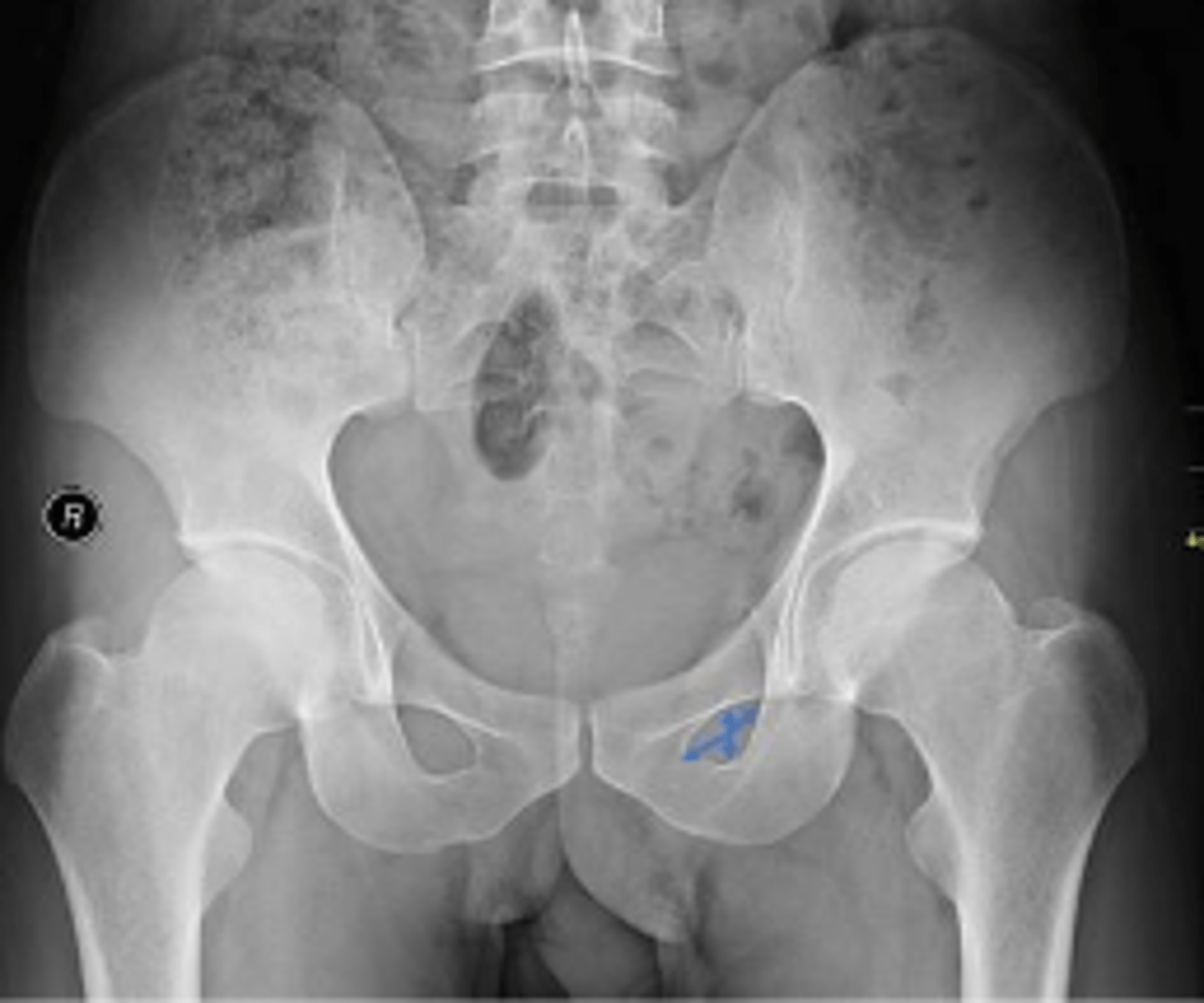
Left superior pubic ramus
What are the arrows pointing to?
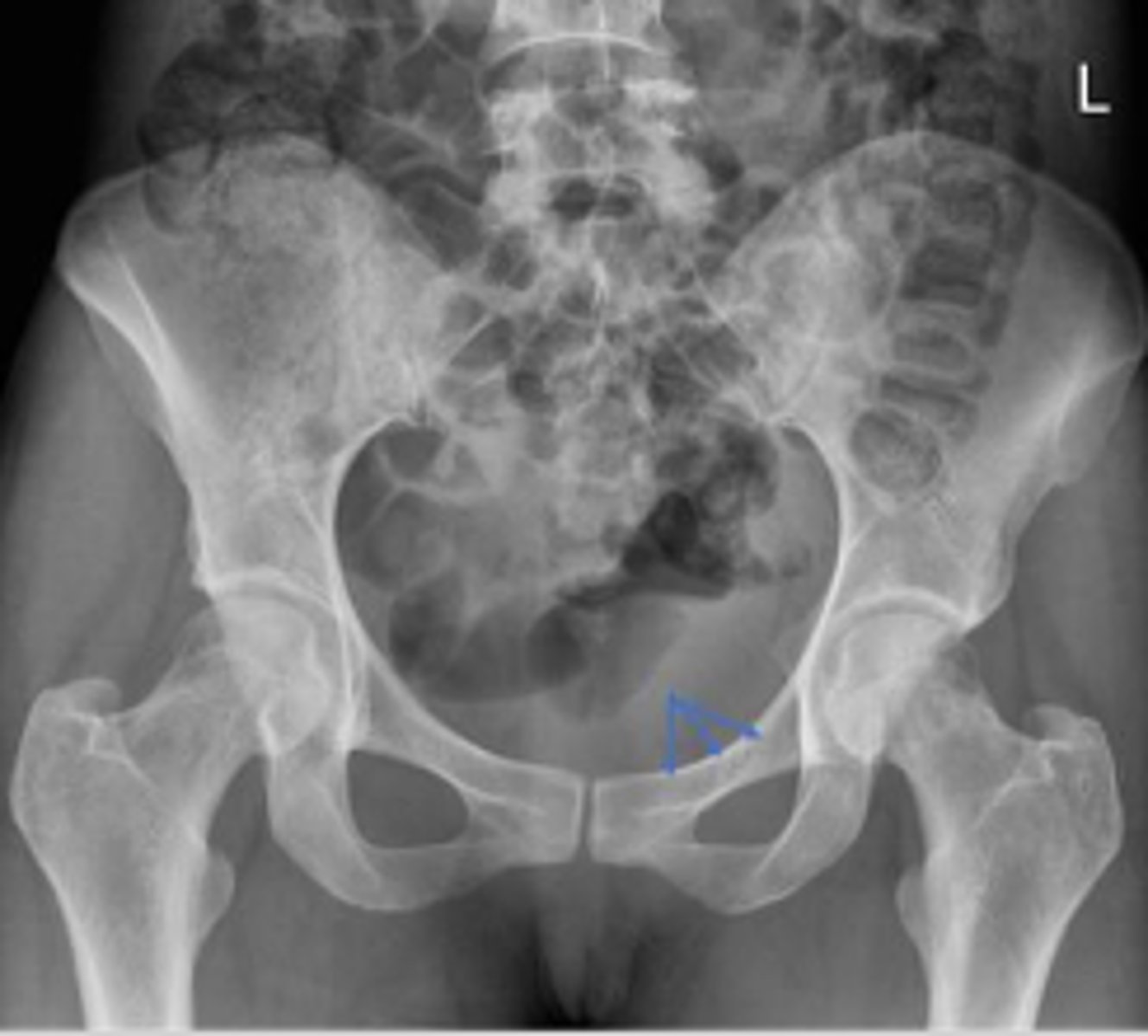
Left inferior pubic ramus
What are the arrows pointing to?
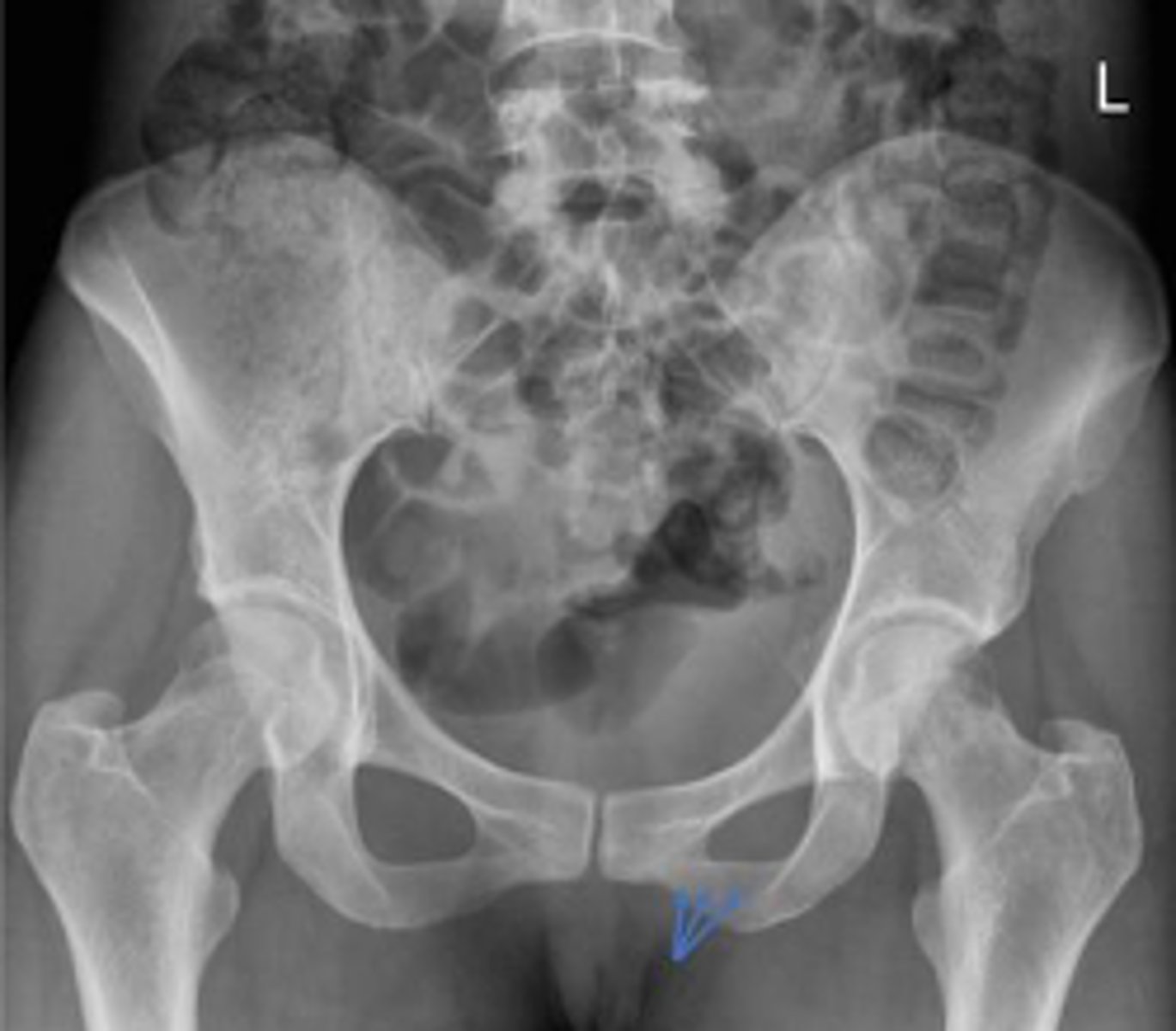
AIIS
What are the arrows pointing to?
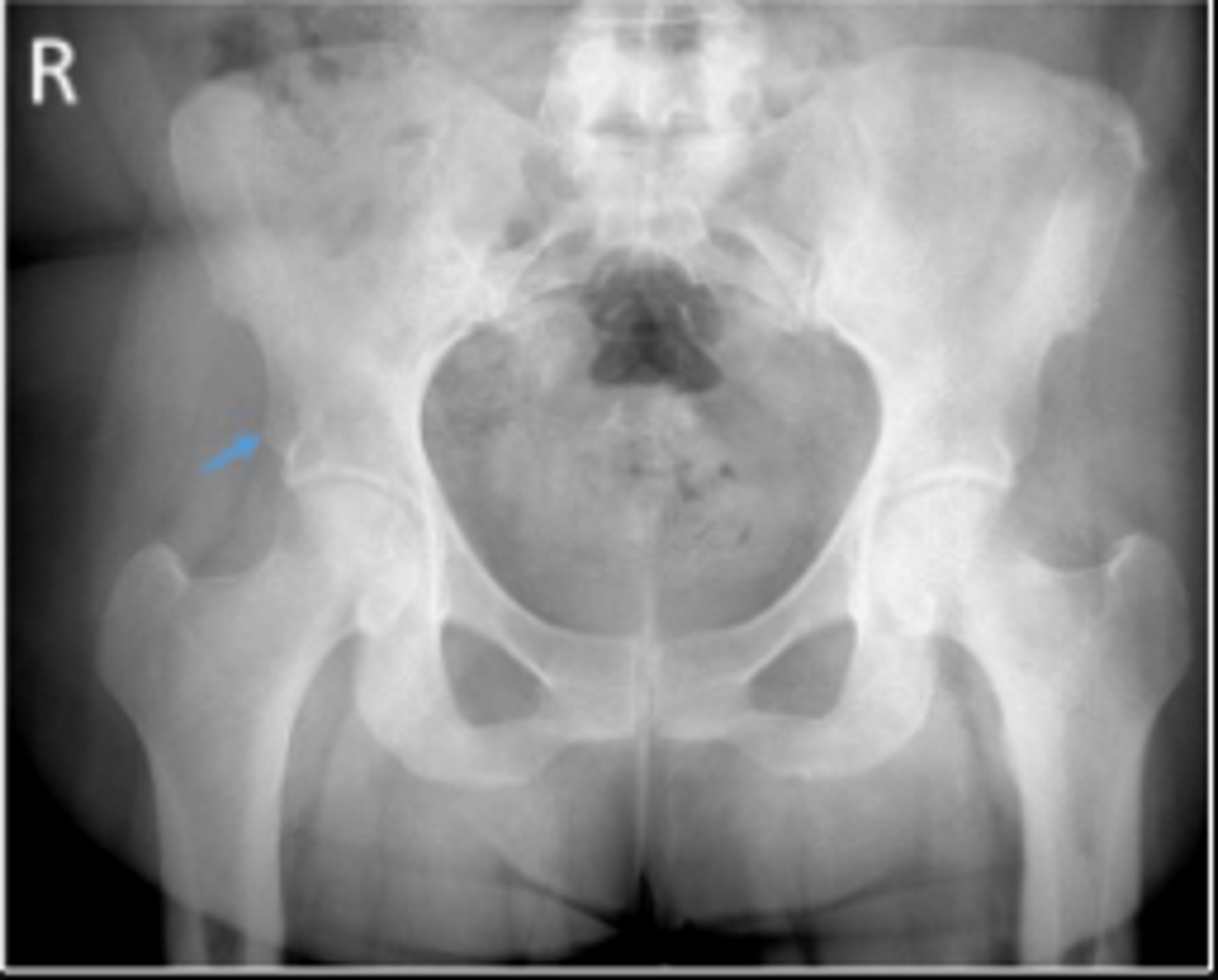
Soft tissue outline
What are the arrows pointing to?
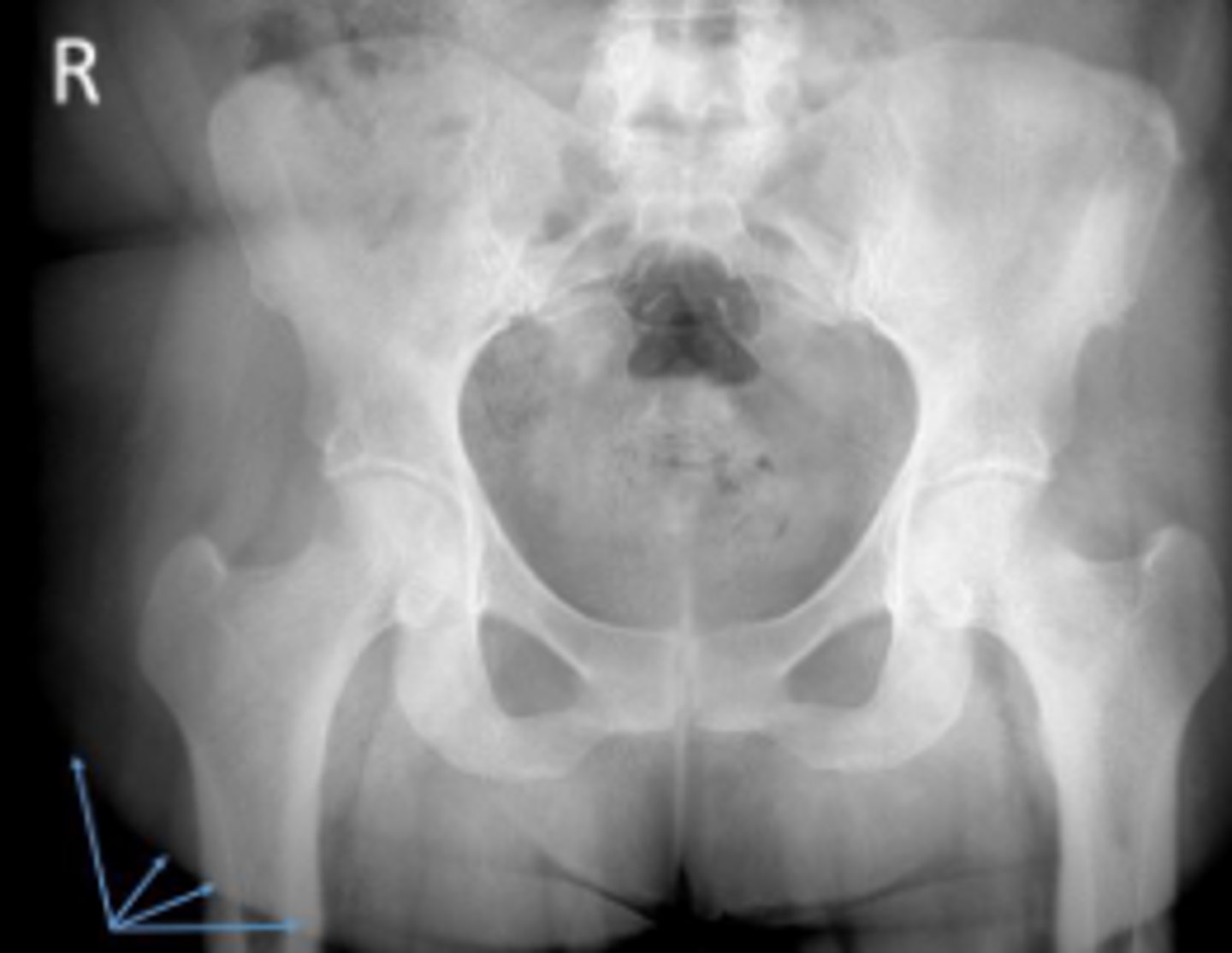
Right ischial tuberosity
What are the arrows pointing to?
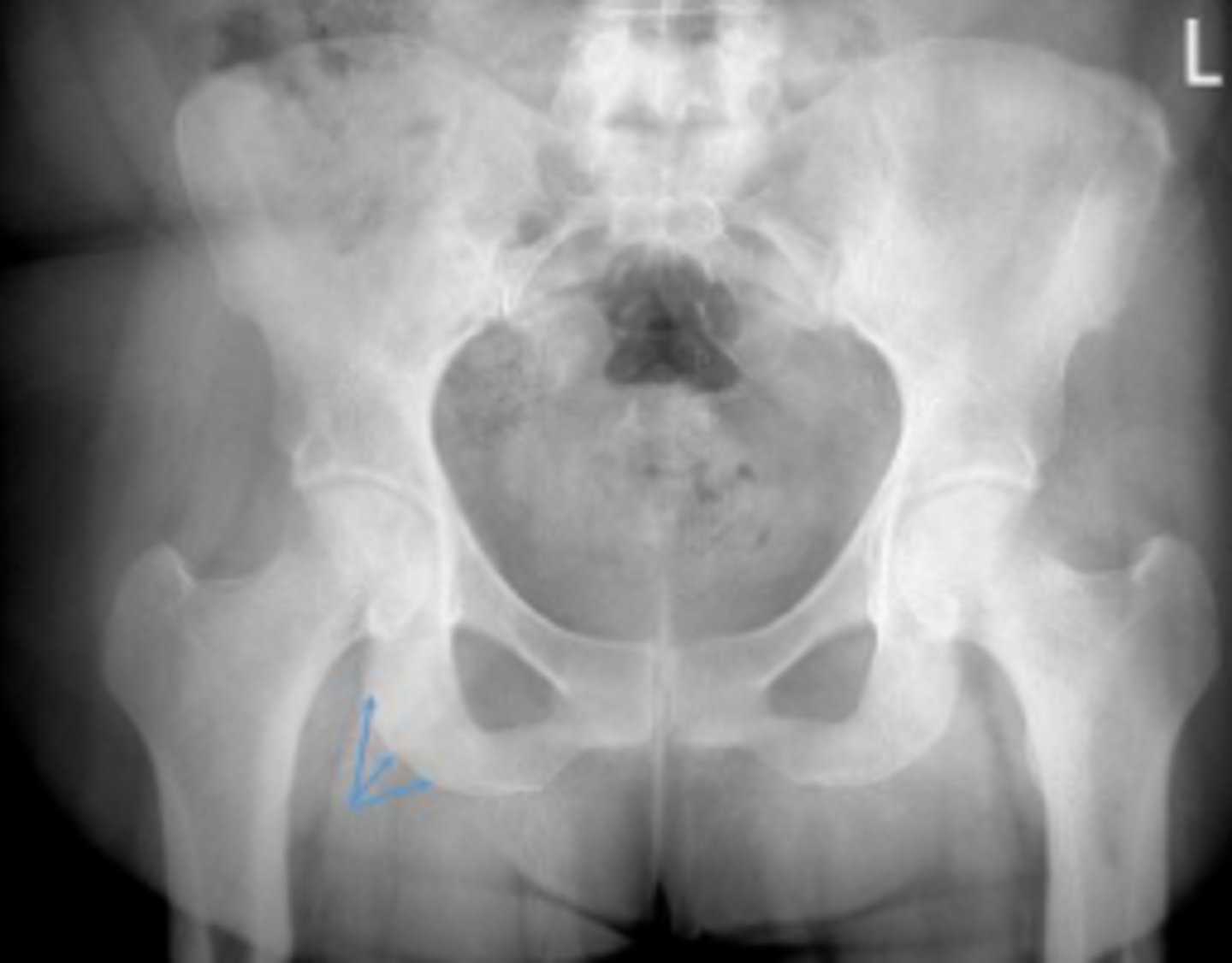
Proximal lateral cortical outline of the diaphysis of the right femur
What are the arrows pointing to?
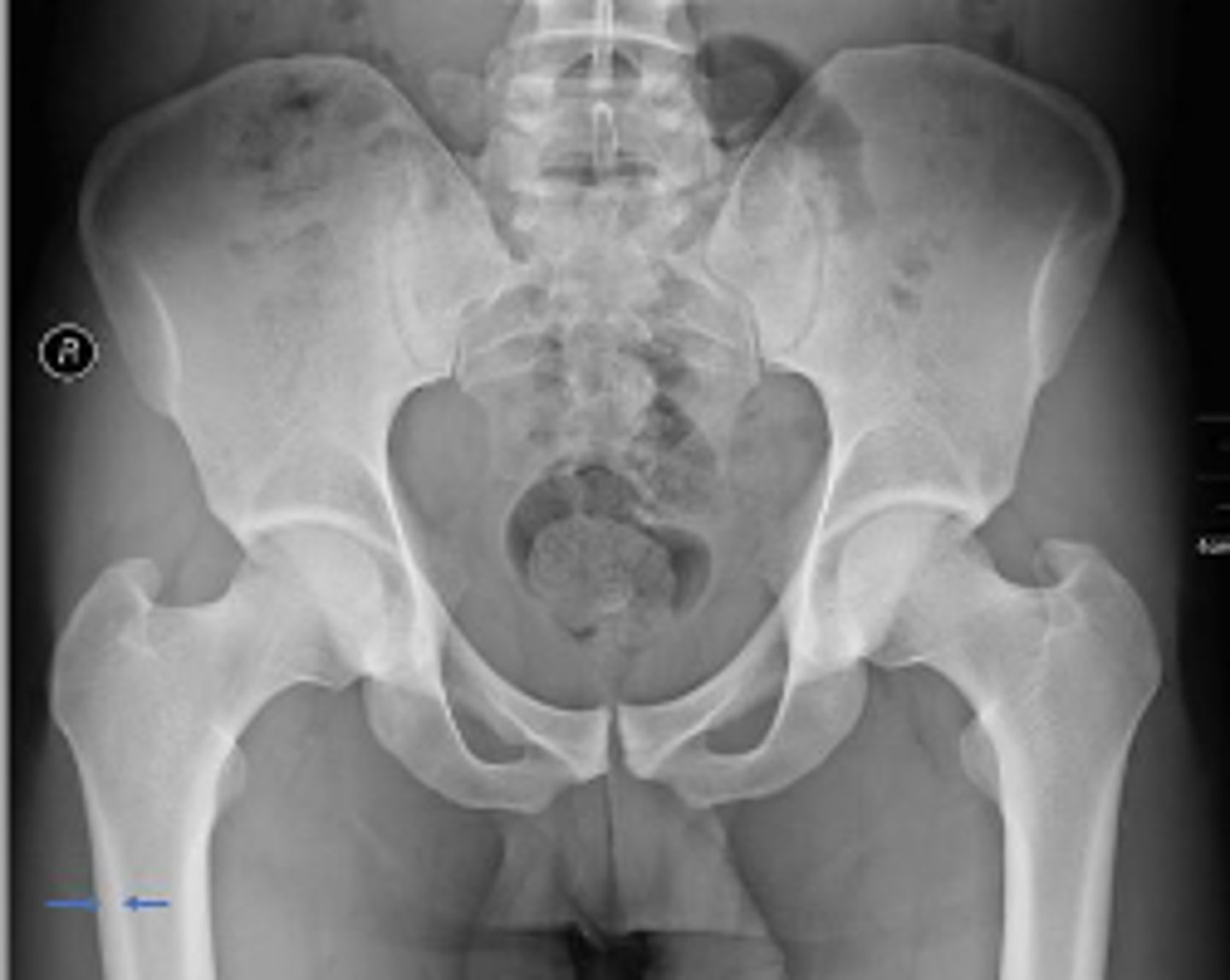
Right pelvic teardrop
What is outlined?
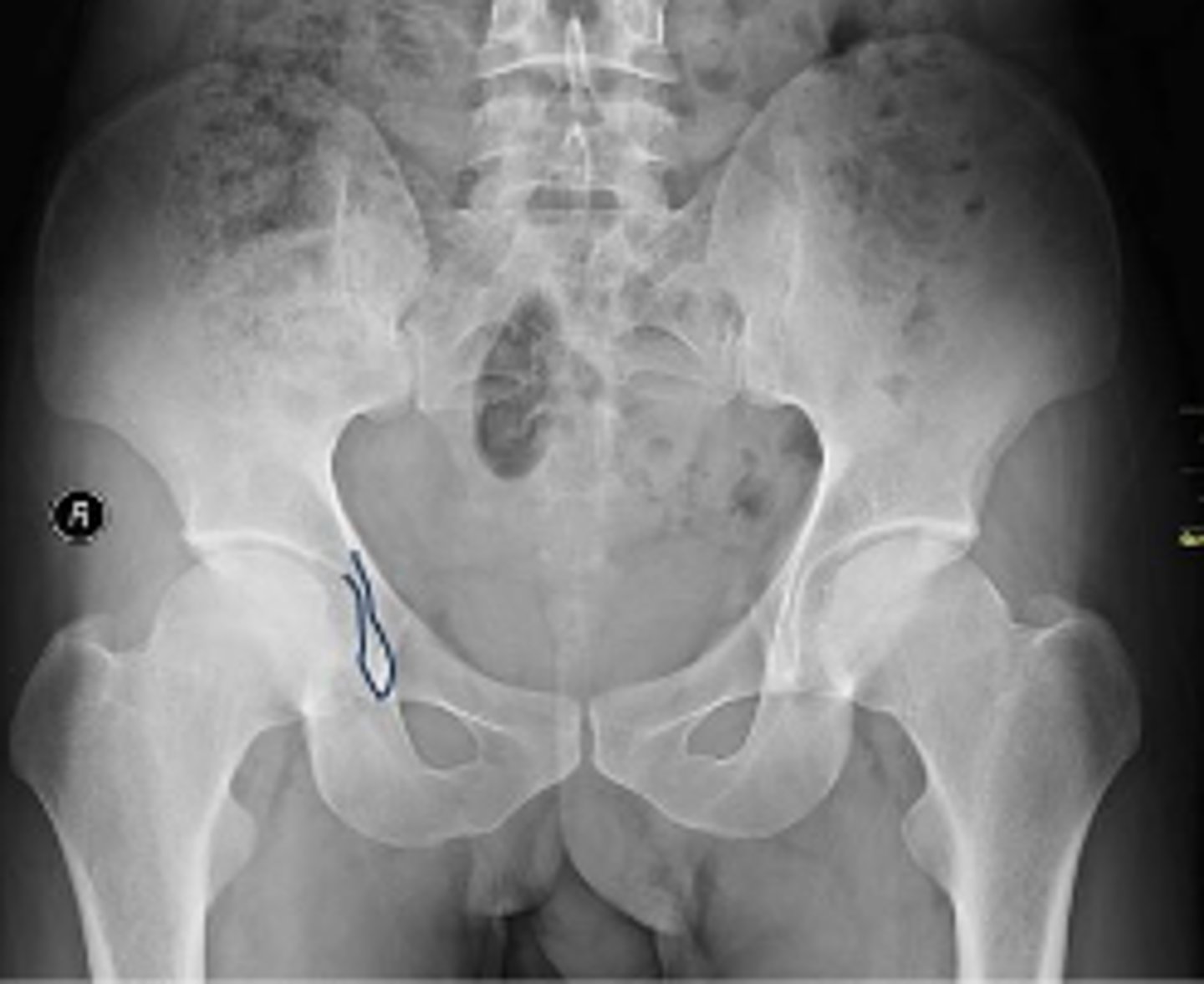
Phleboliths
What are the arrows pointing to?
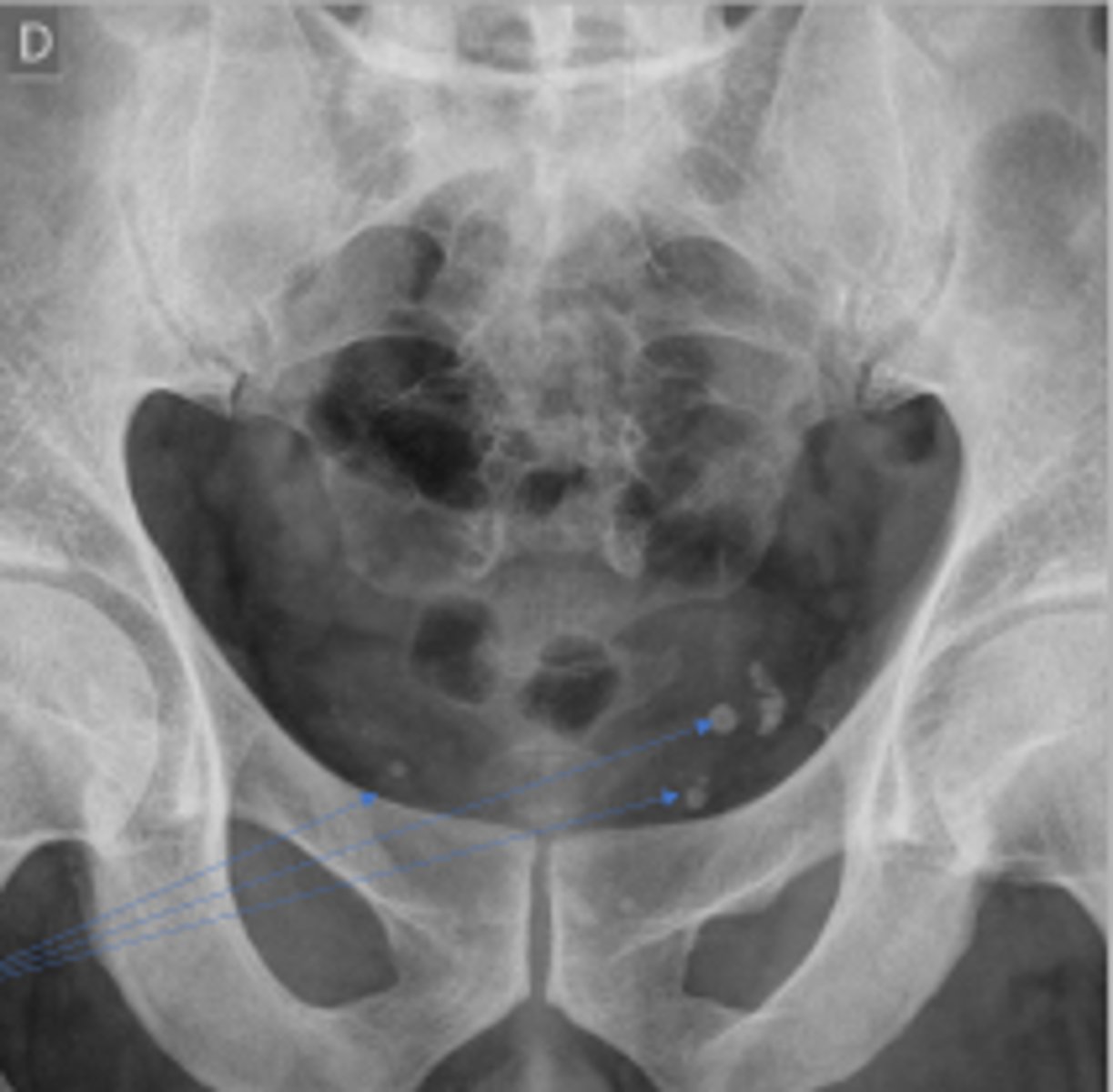
Greater trochanter of the right femur
What are the arrows pointing to?
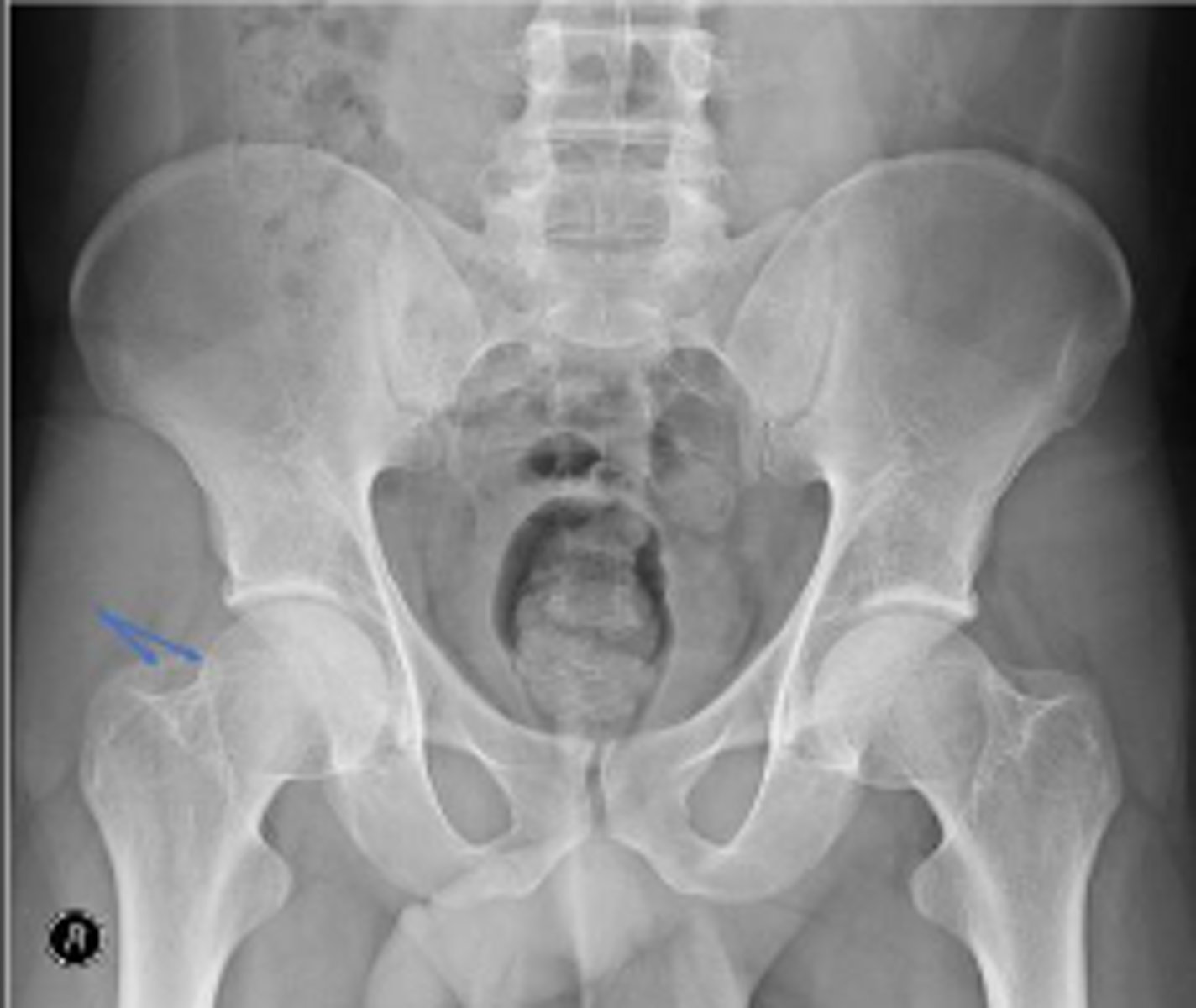
Right S3 superior border of the sacral foramen
What are the arrows pointing to?
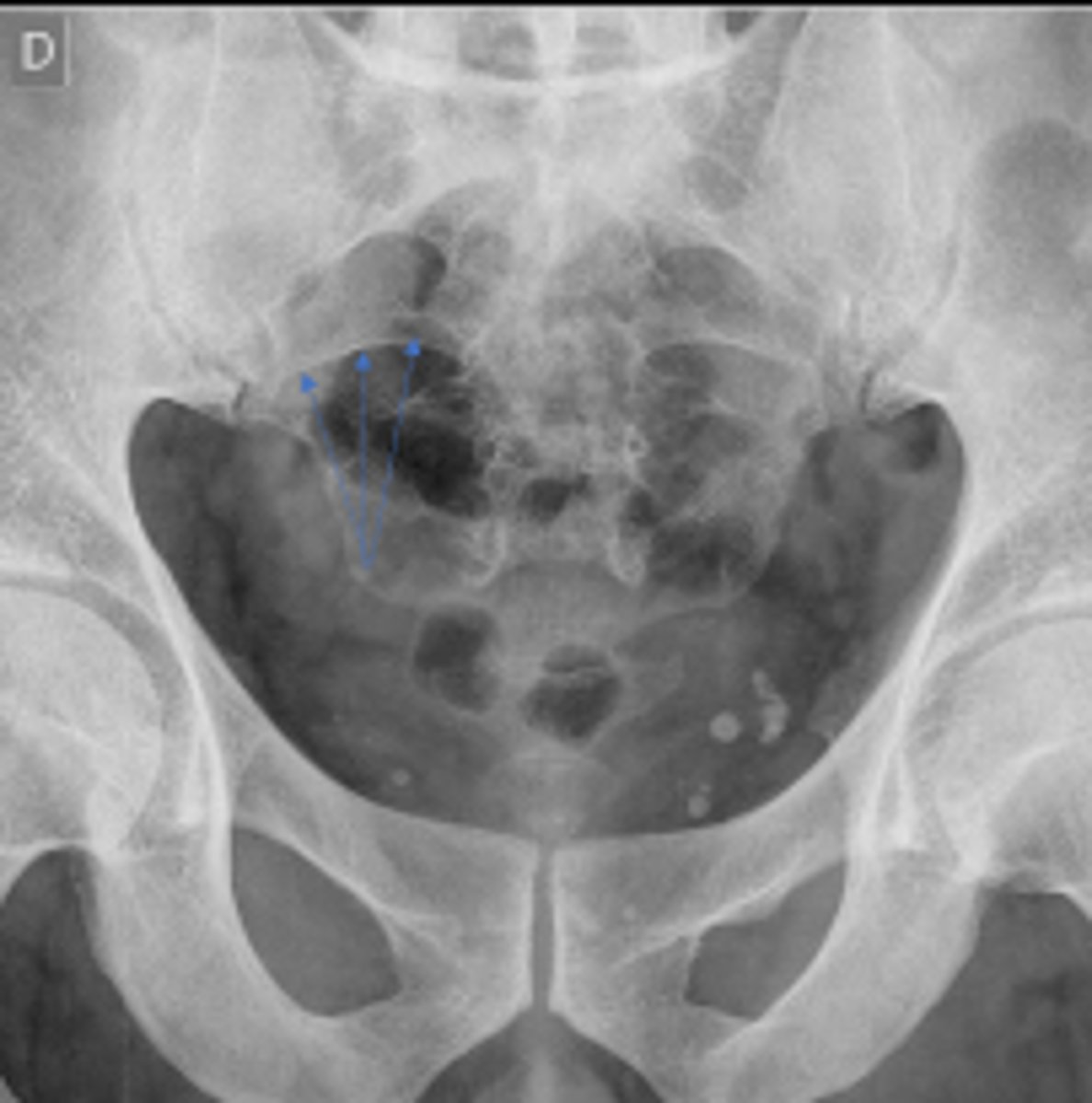
Greater trochanter of the left femur
What are the arrows pointing to?
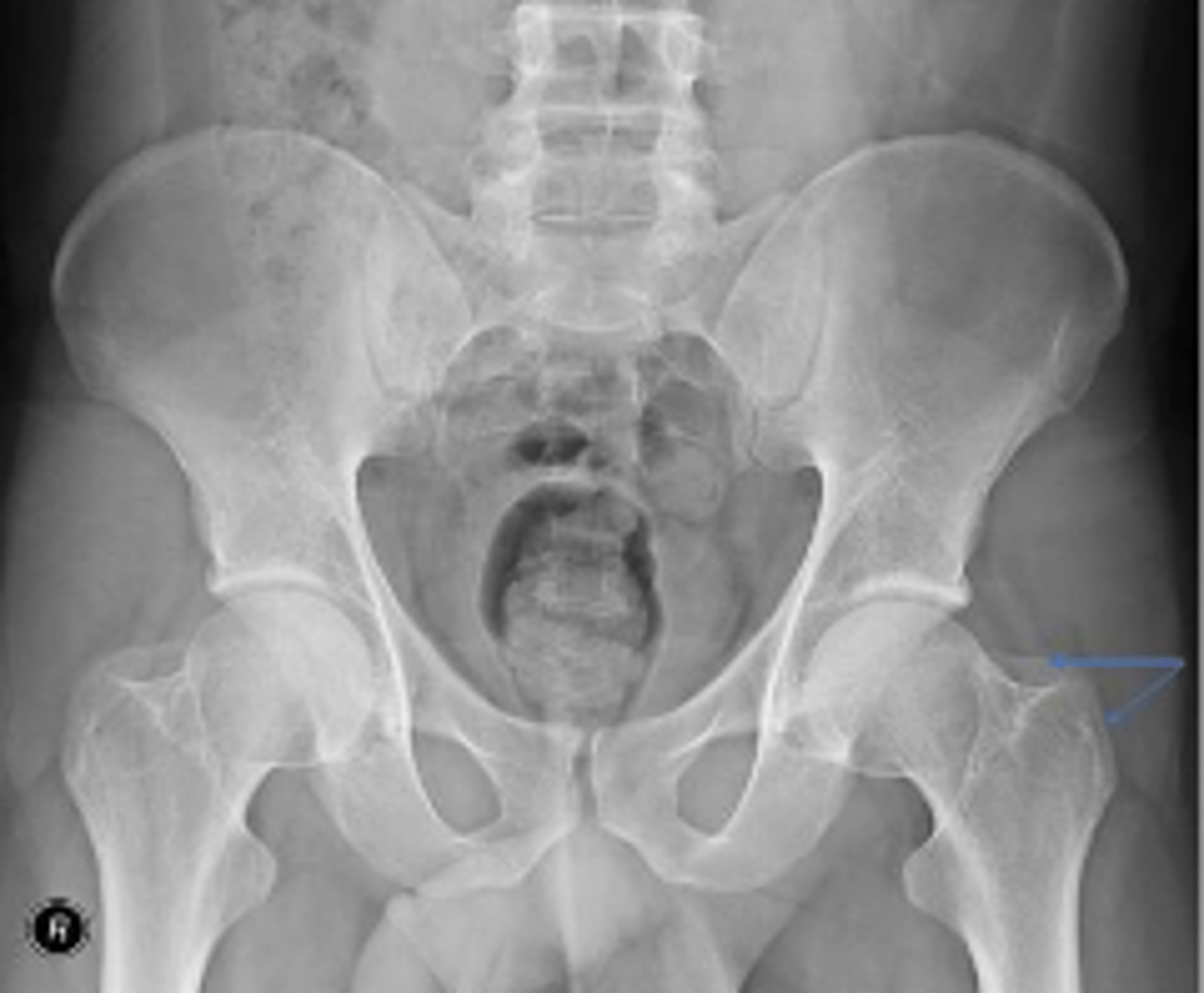
L3/L4 IVD space
What IVD space is indicated by the arrows?
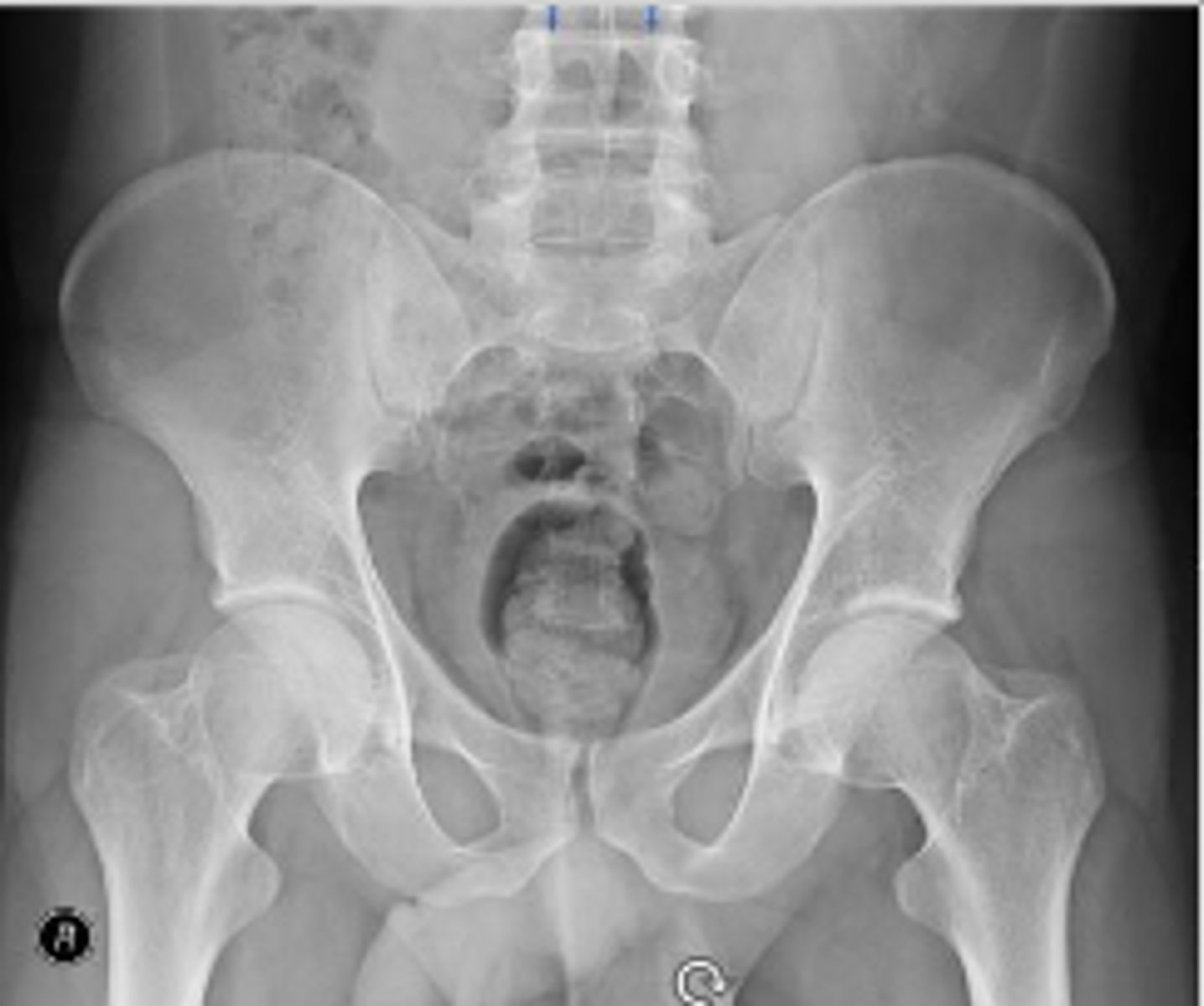
Right AP hip
What is the name of the radiographic view?
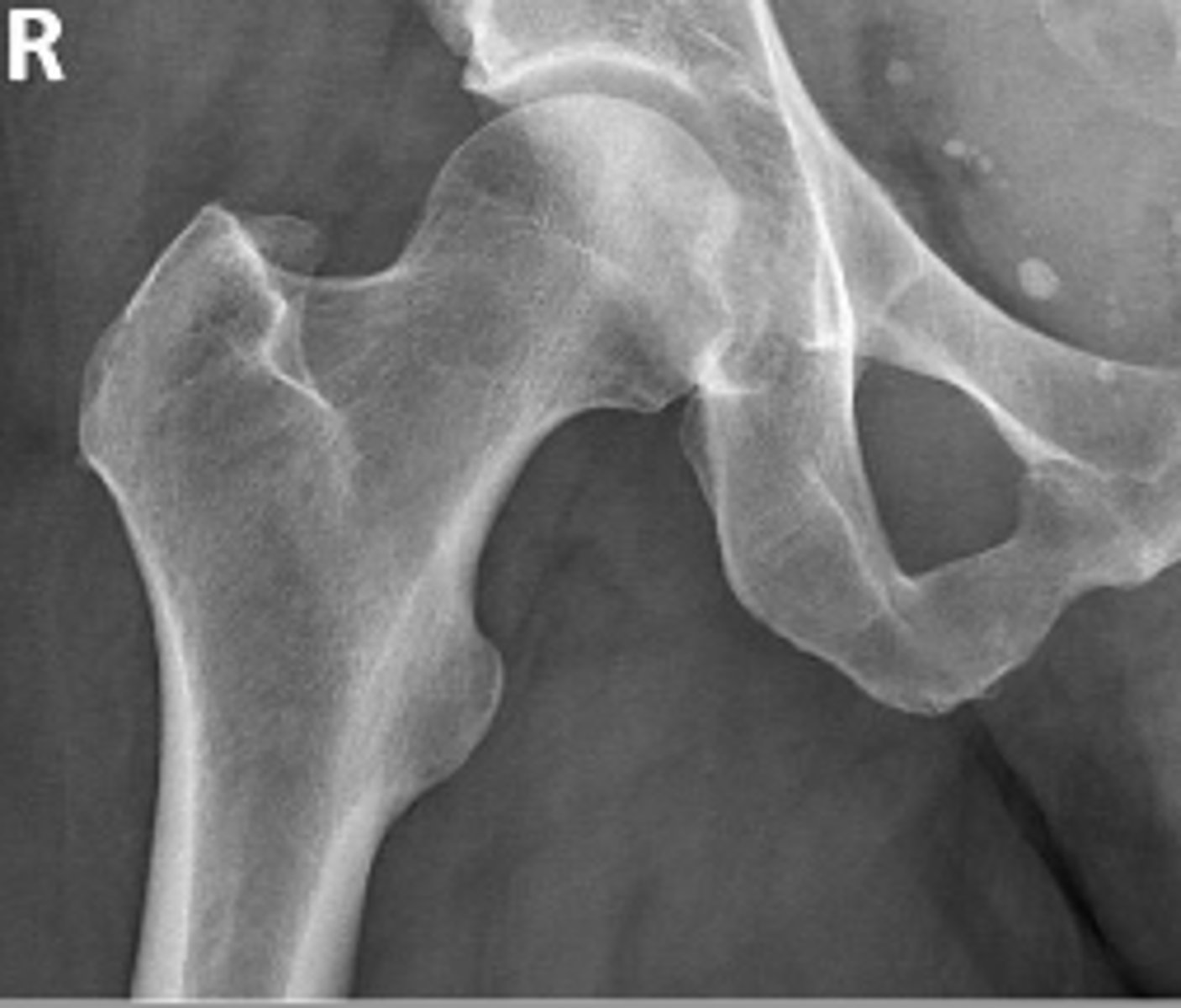
Right frog-leg hip
What is the name of the radiographic view?
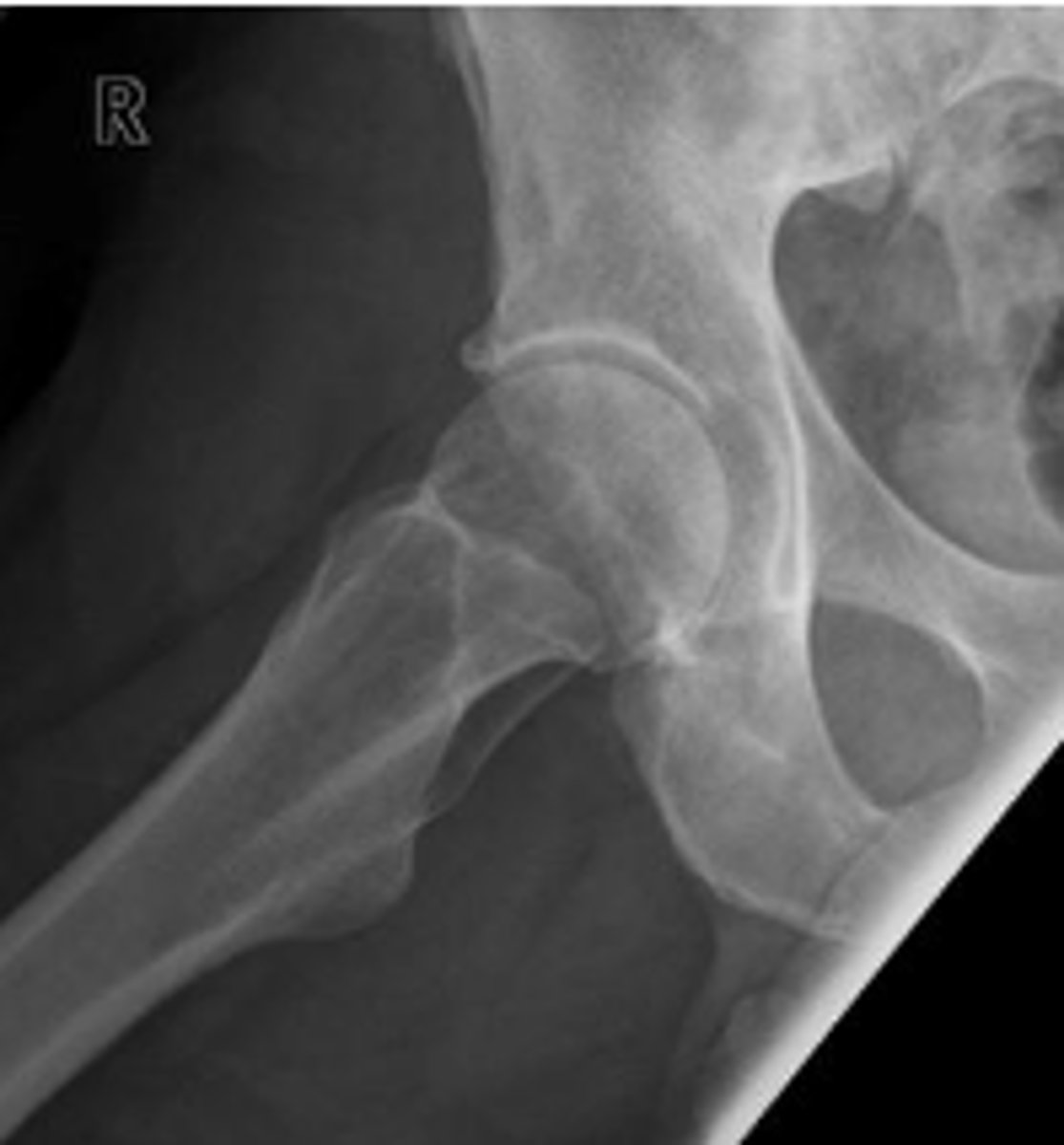
Left and right posterior inferior iliac spine
What are the arrows pointing to?
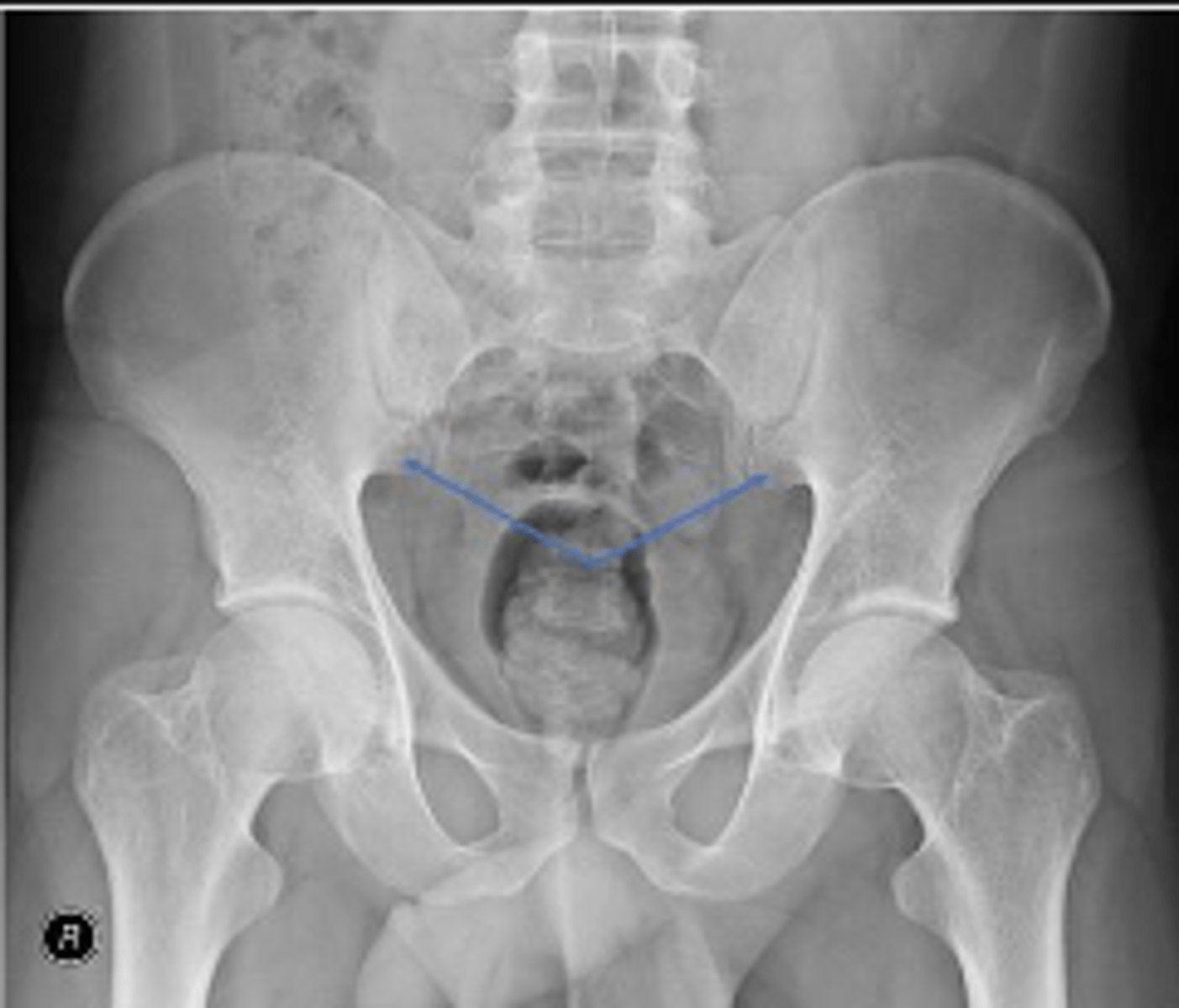
Posterior rim of the left acetabulum
What are the arrows pointing to?
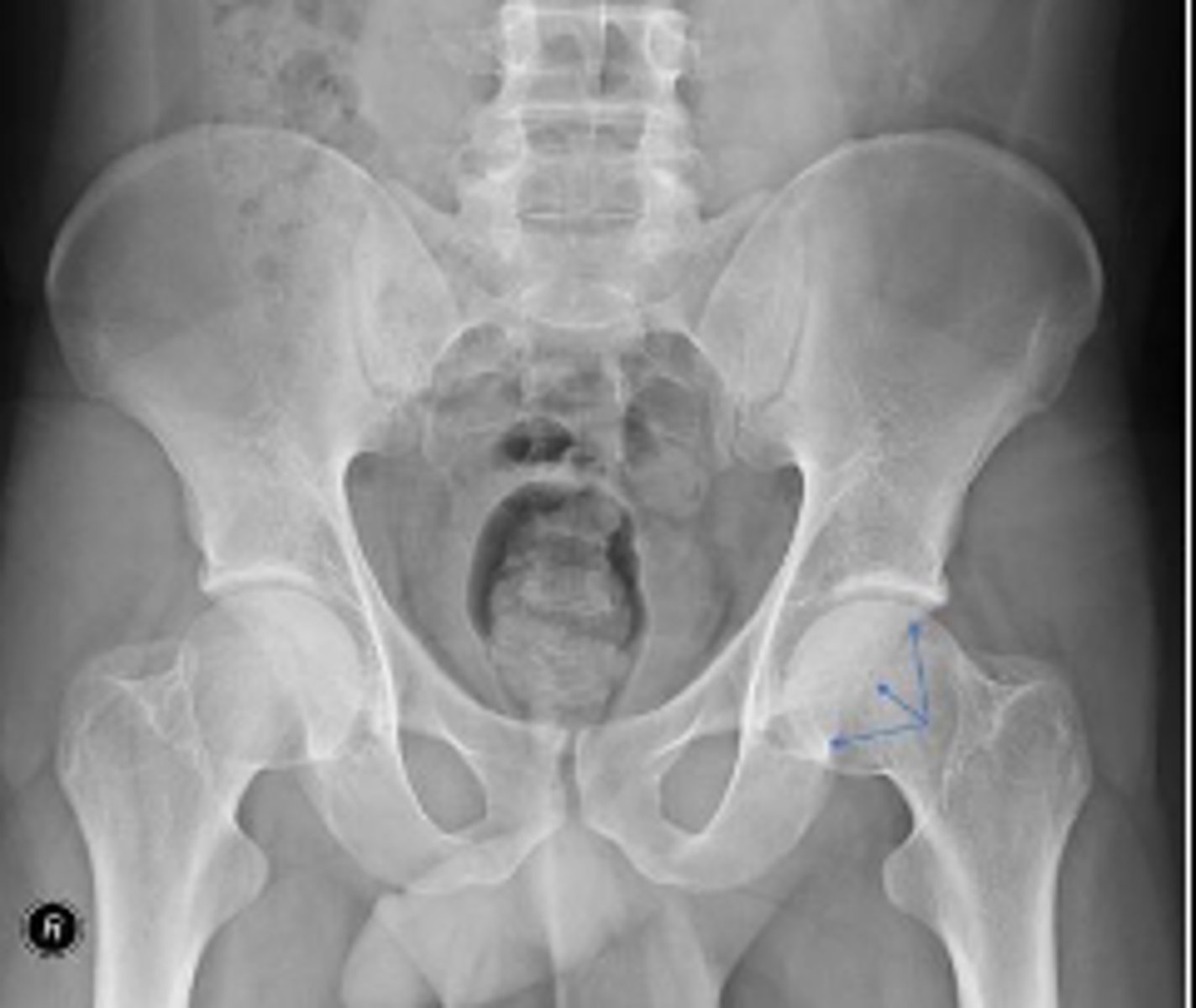
AP pelvis or bilateral hips
What is the name of the radiographic view?
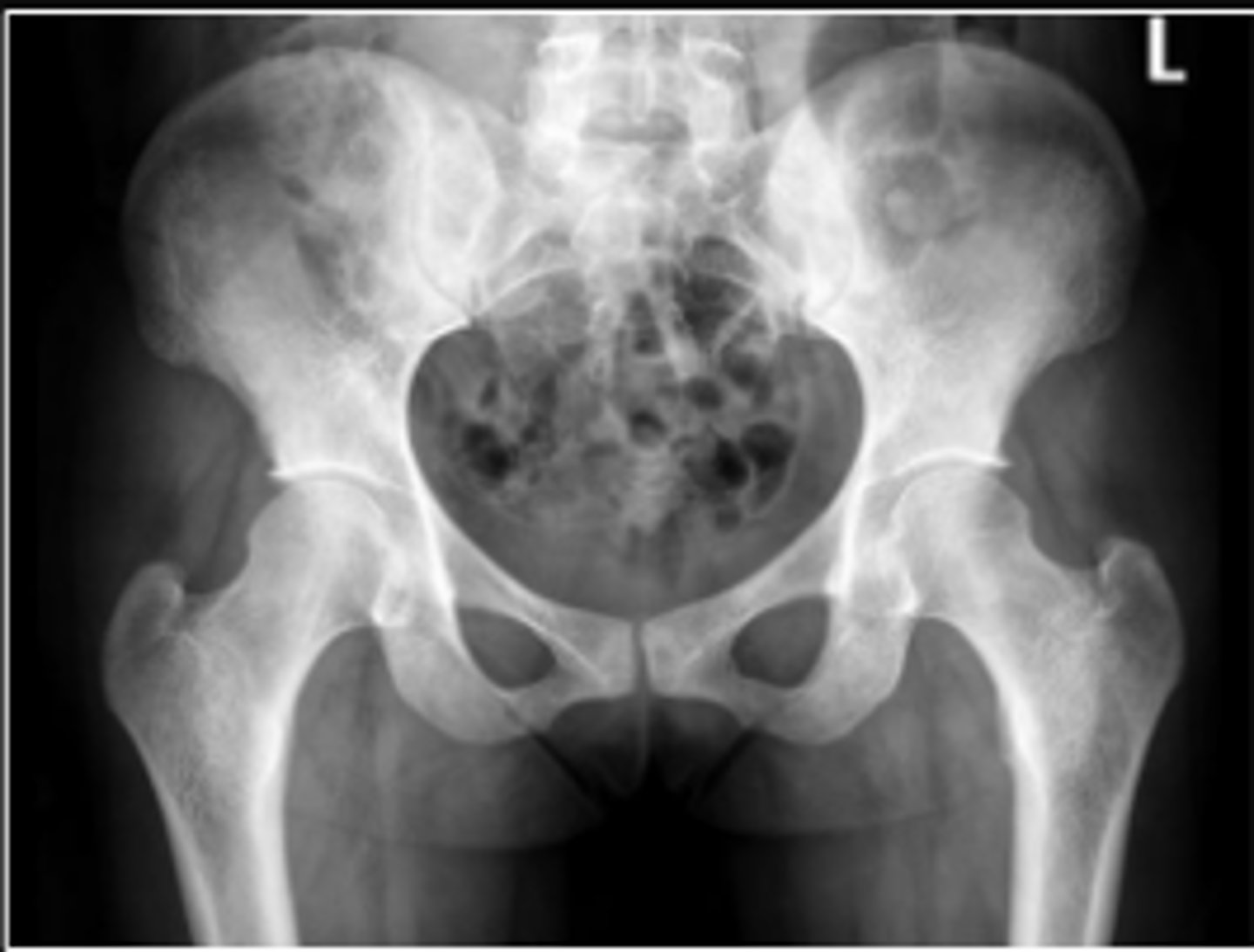
Bilateral frog leg view
What is the name of the radiographic view?
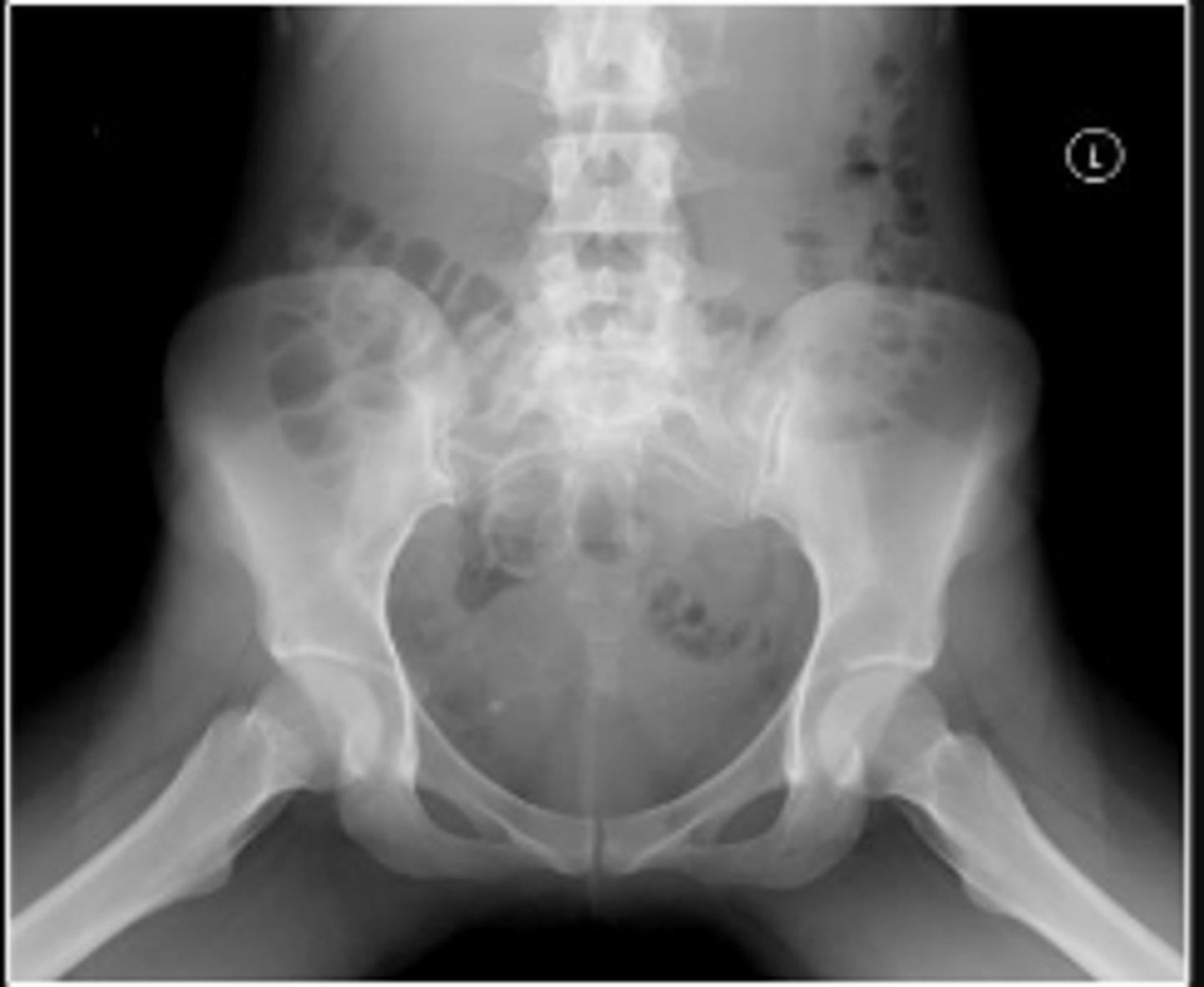
Phleboliths
What are the arrows pointing to?
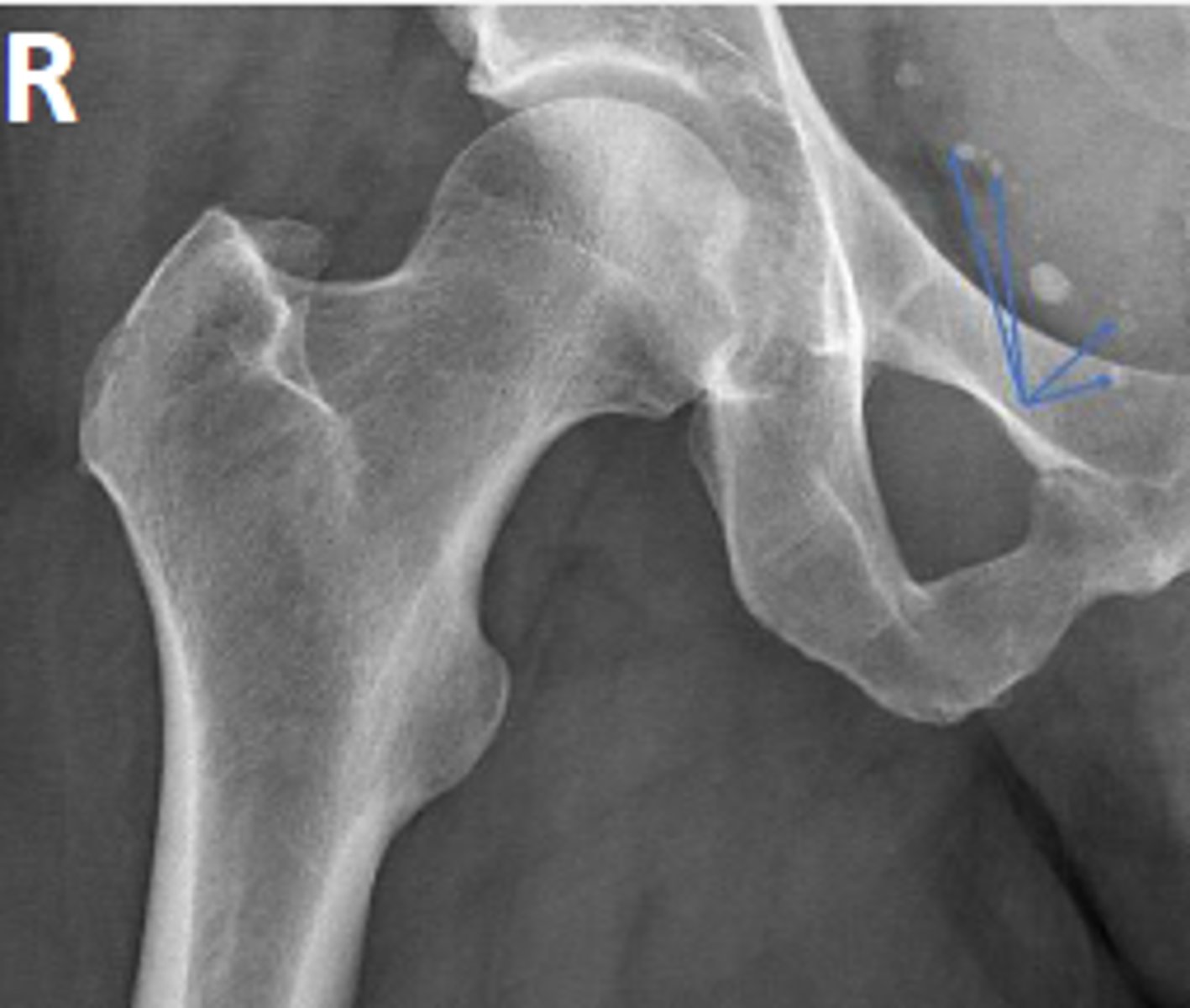
Right ischial spine
What are the arrows pointing to?
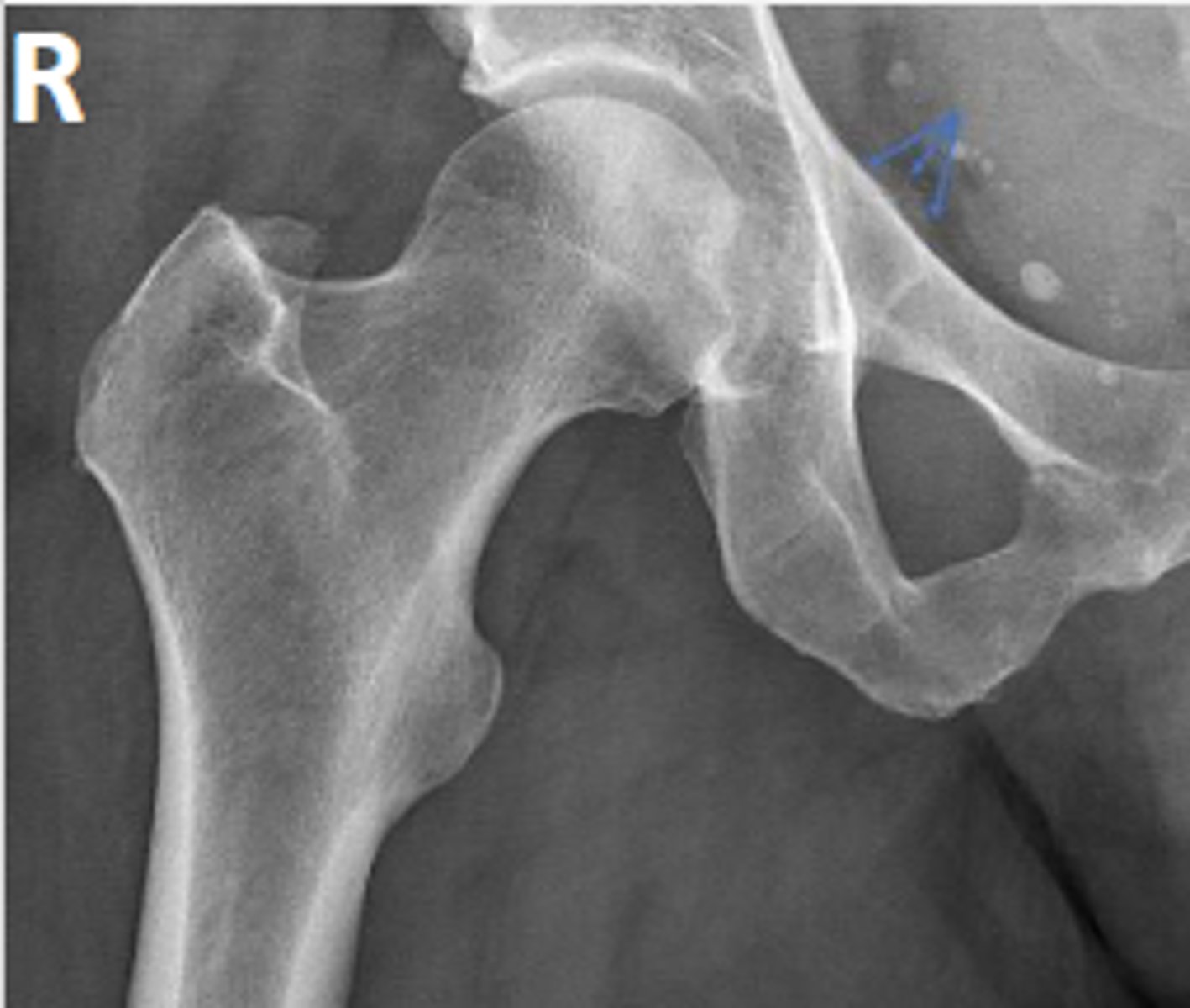
Posterior rim of the right acetabulum
What are the arrows pointing to?
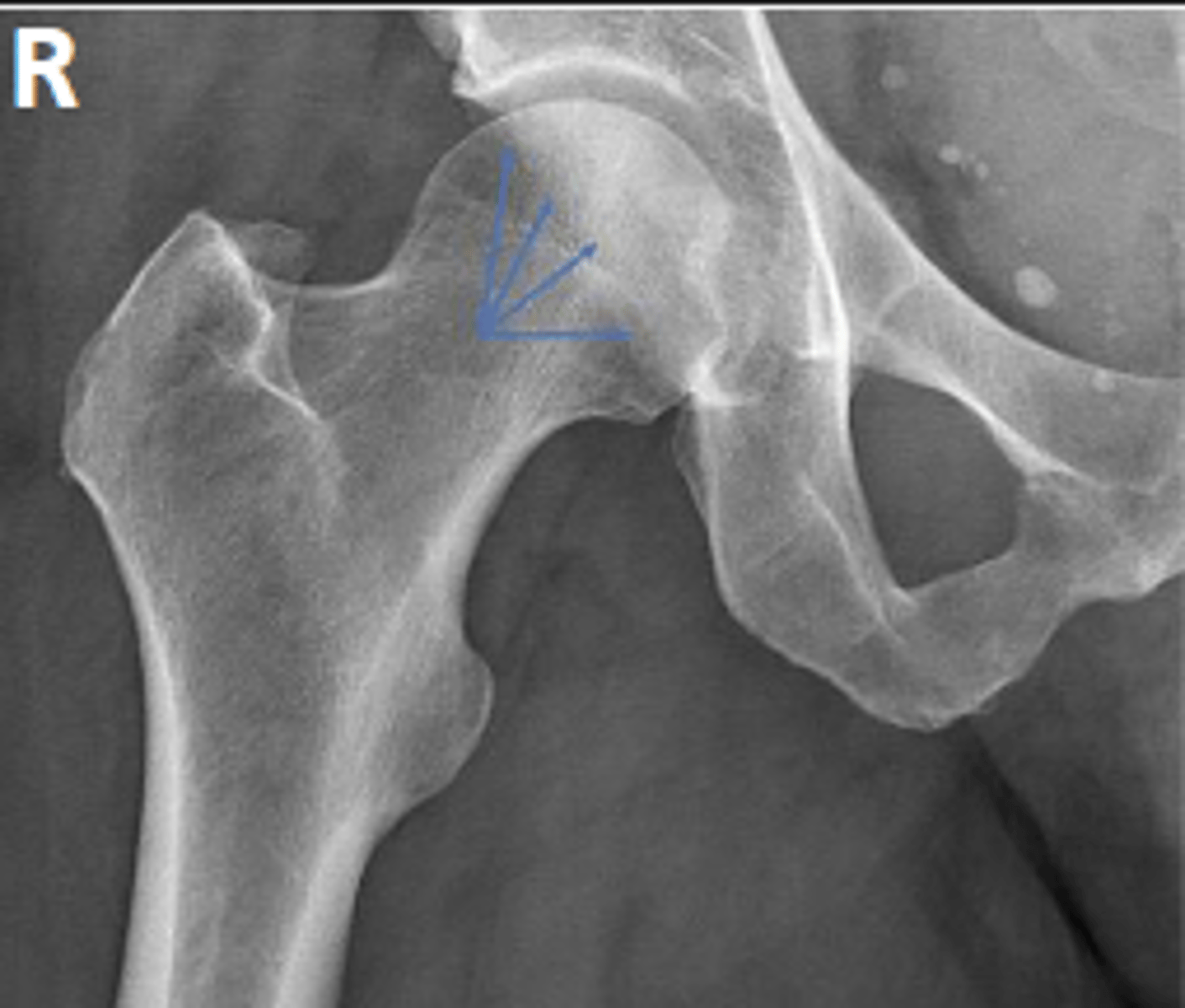
Anterior rim of the right acetabulum
What are the arrows pointing to?
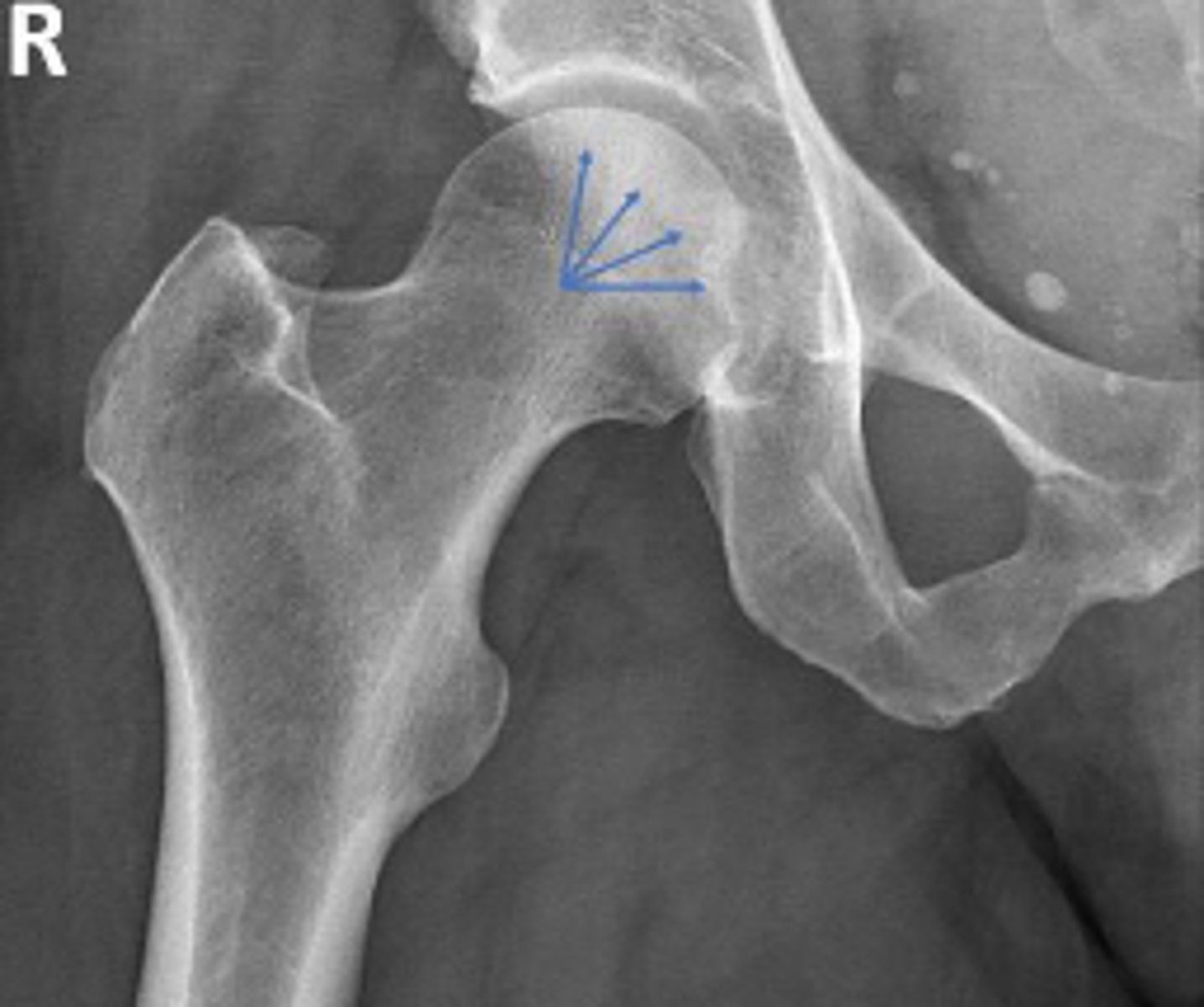
Right sacroiliac joint space
What joint space is the arrow pointing to?
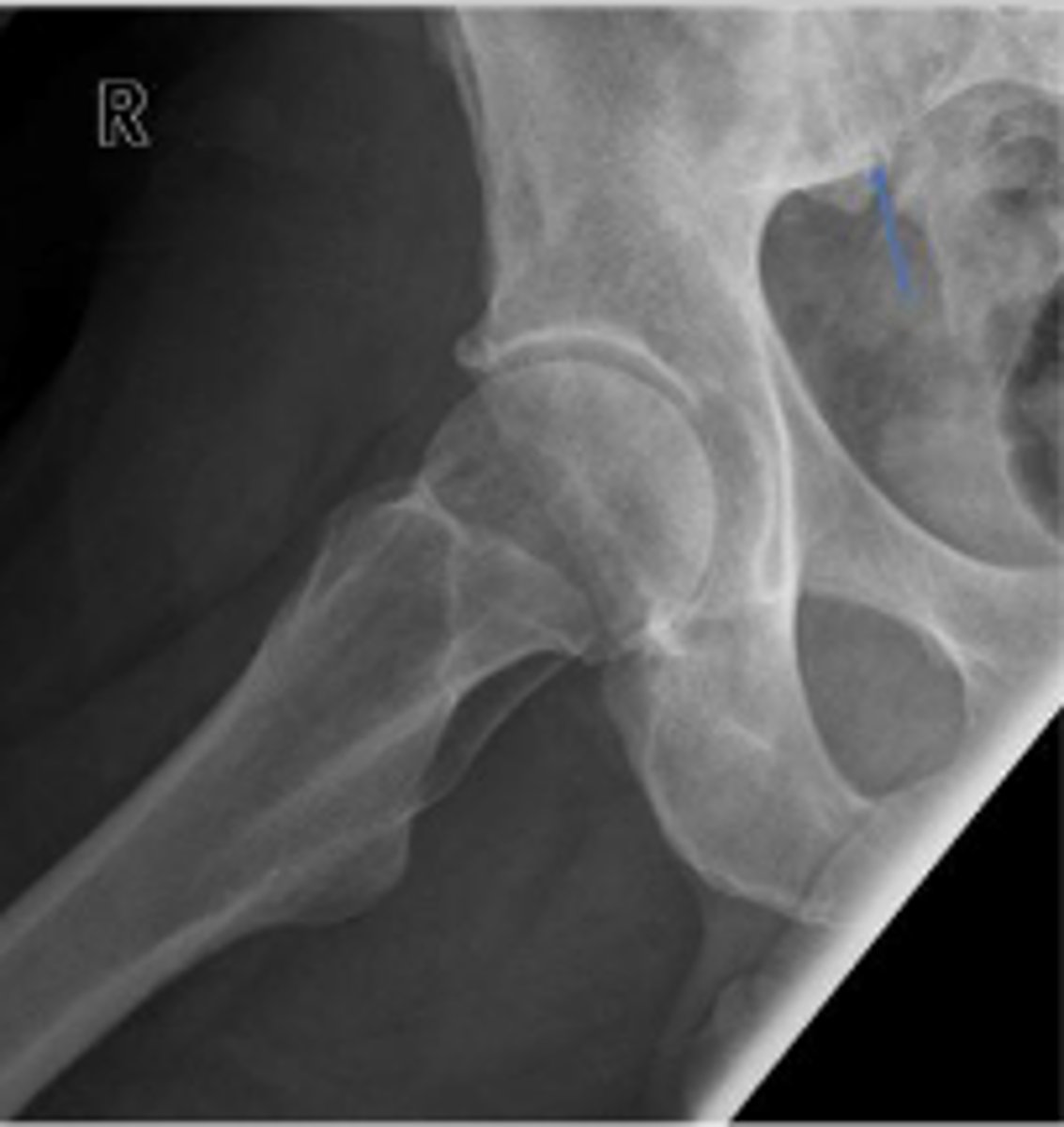
Lesser trochanter of the right femur
What are the arrows pointing to?
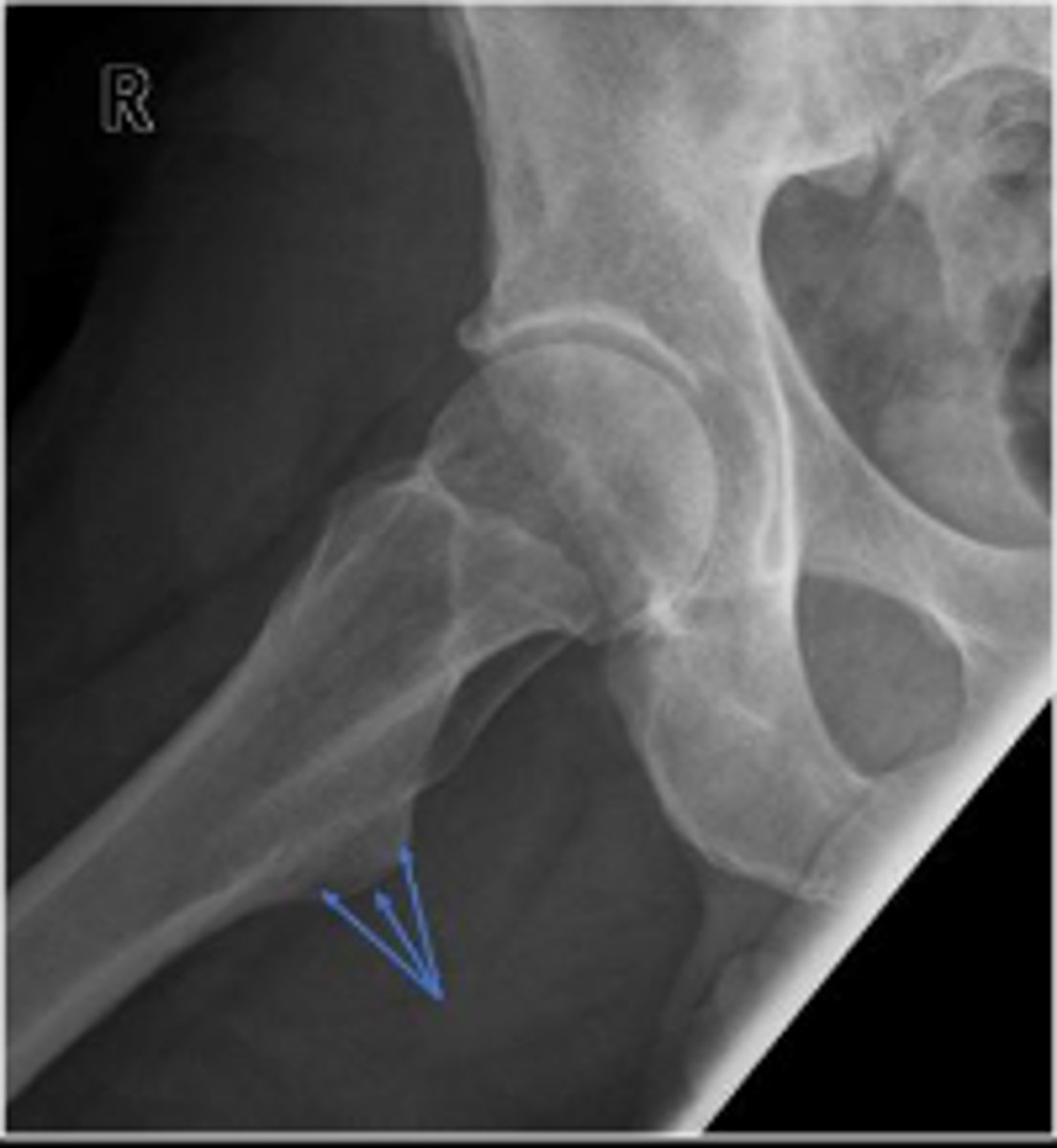
Greater trochanter of the right femur
What are the arrows pointing to?
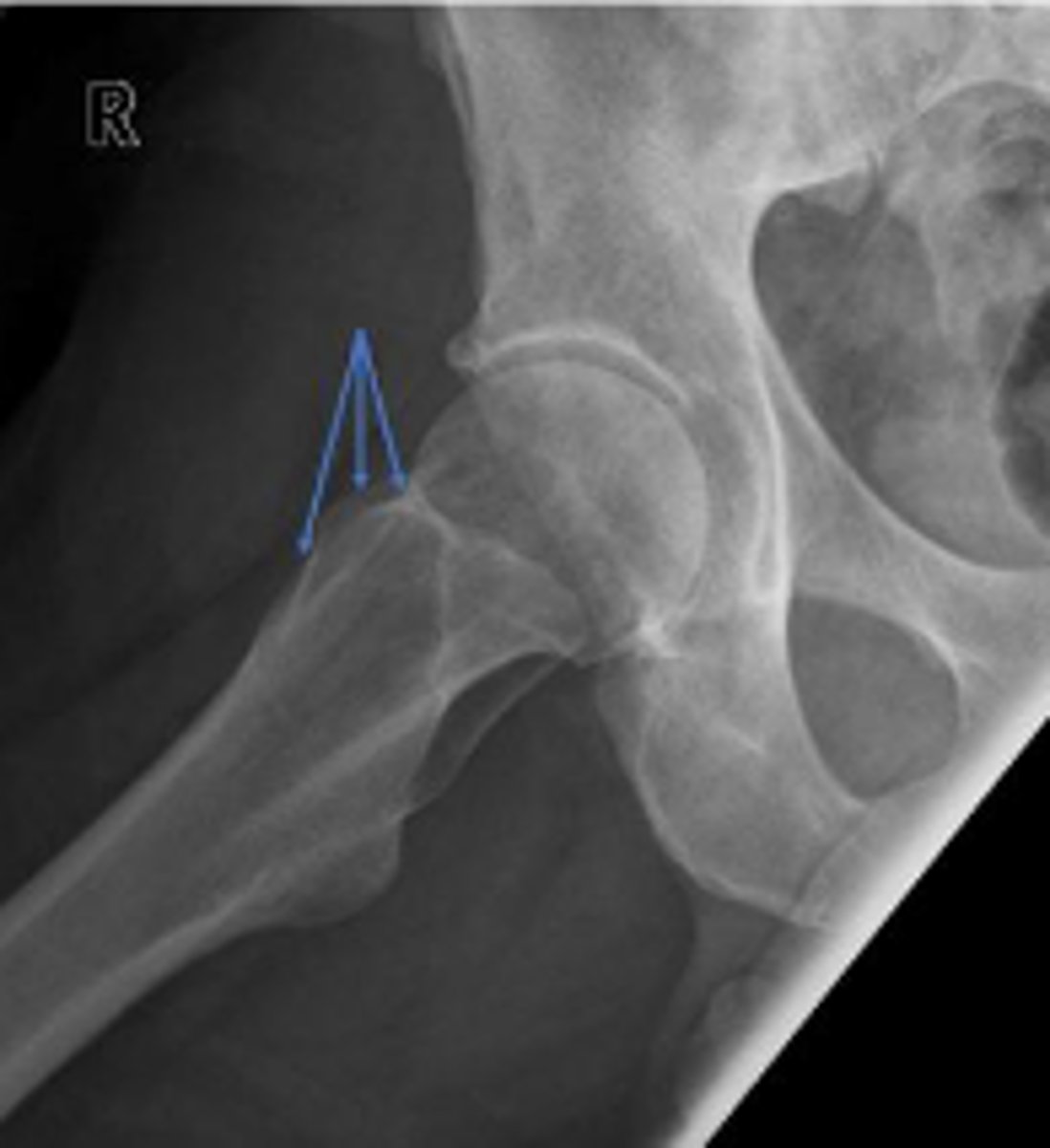
Right posterior inferior iliac spine
What are the arrows pointing to?
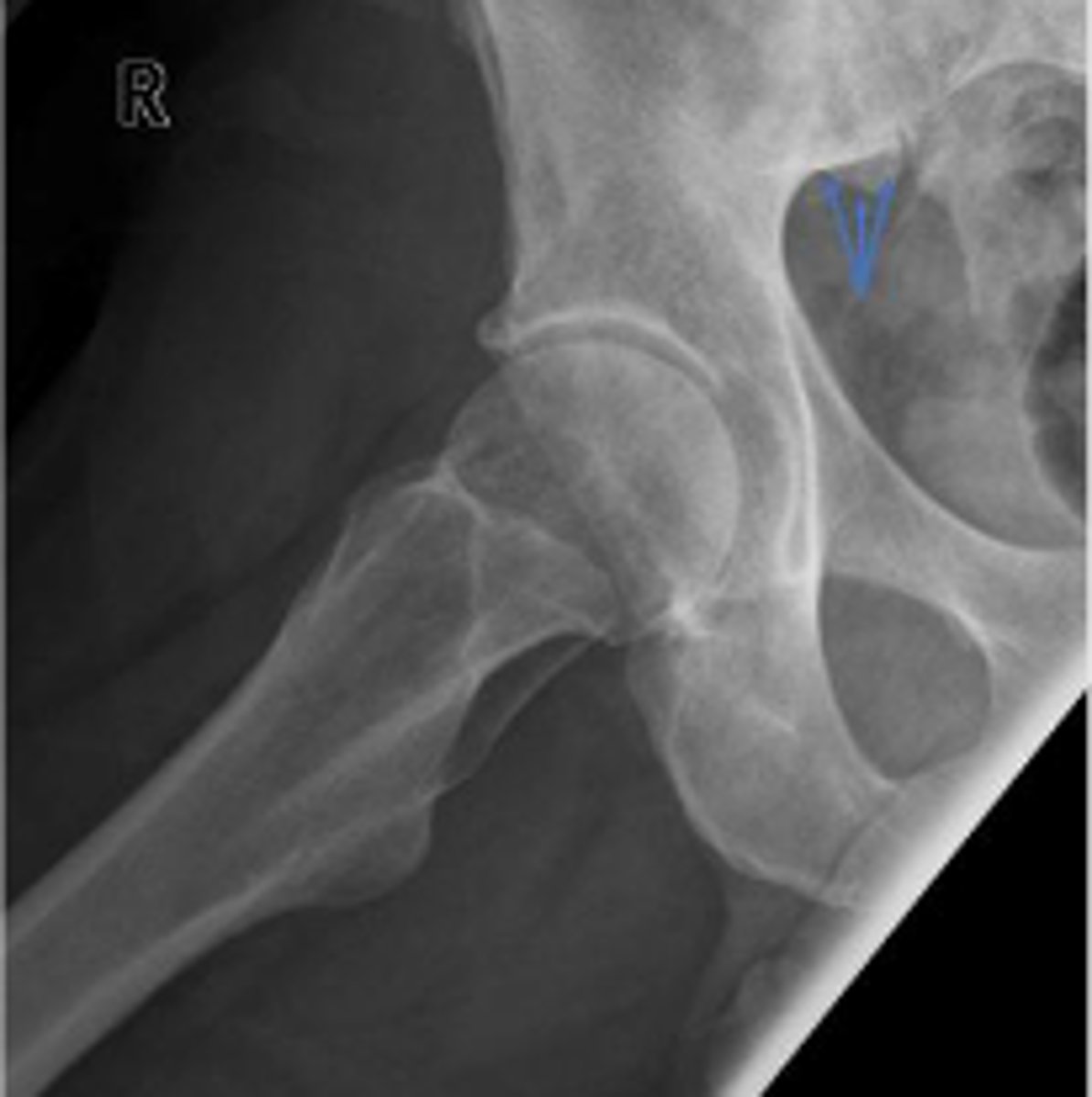
Intertrochanteric line of the right femur
What are the arrows pointing to?
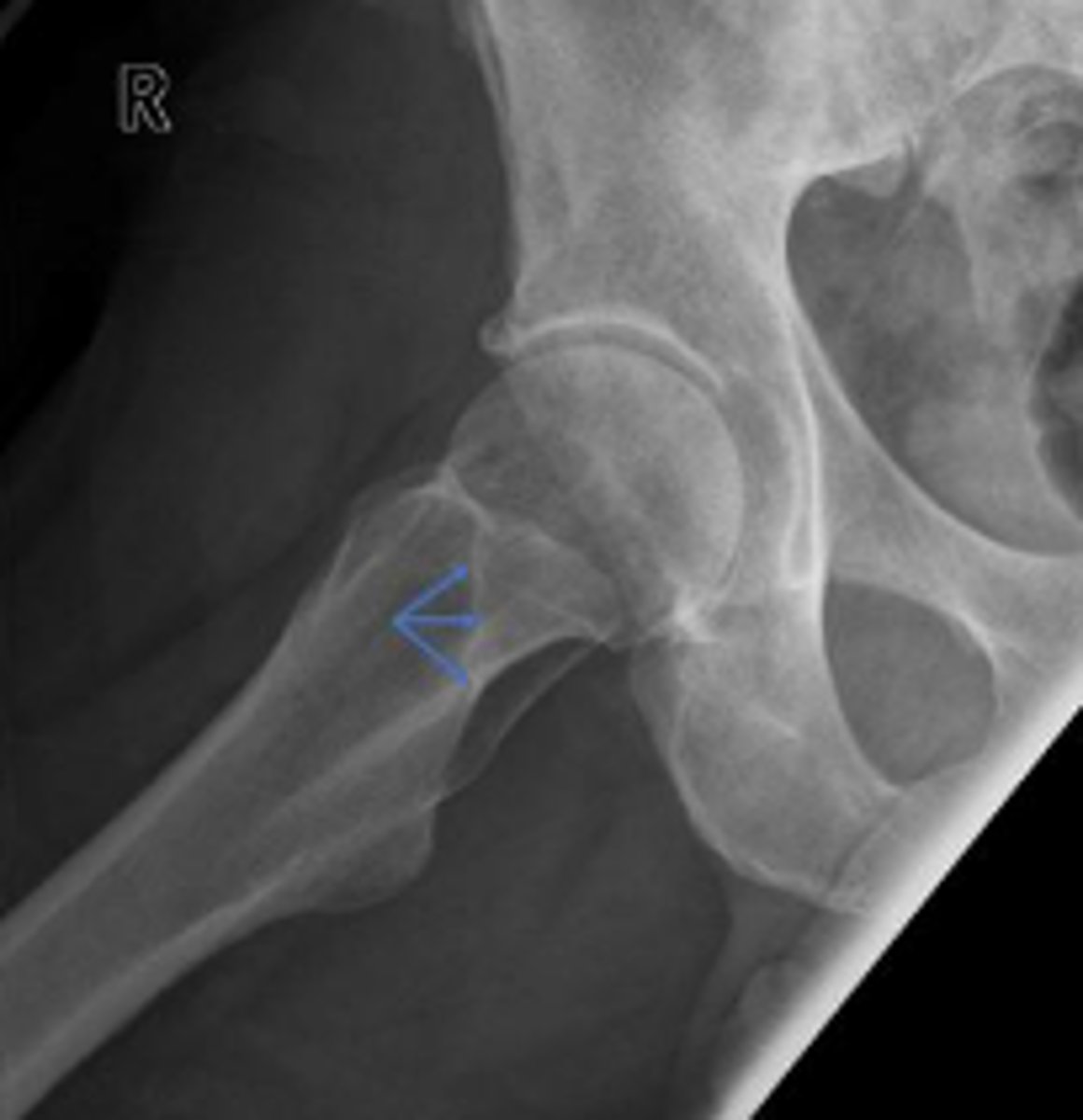
Right ischial tuberosity
What are the arrows pointing to?
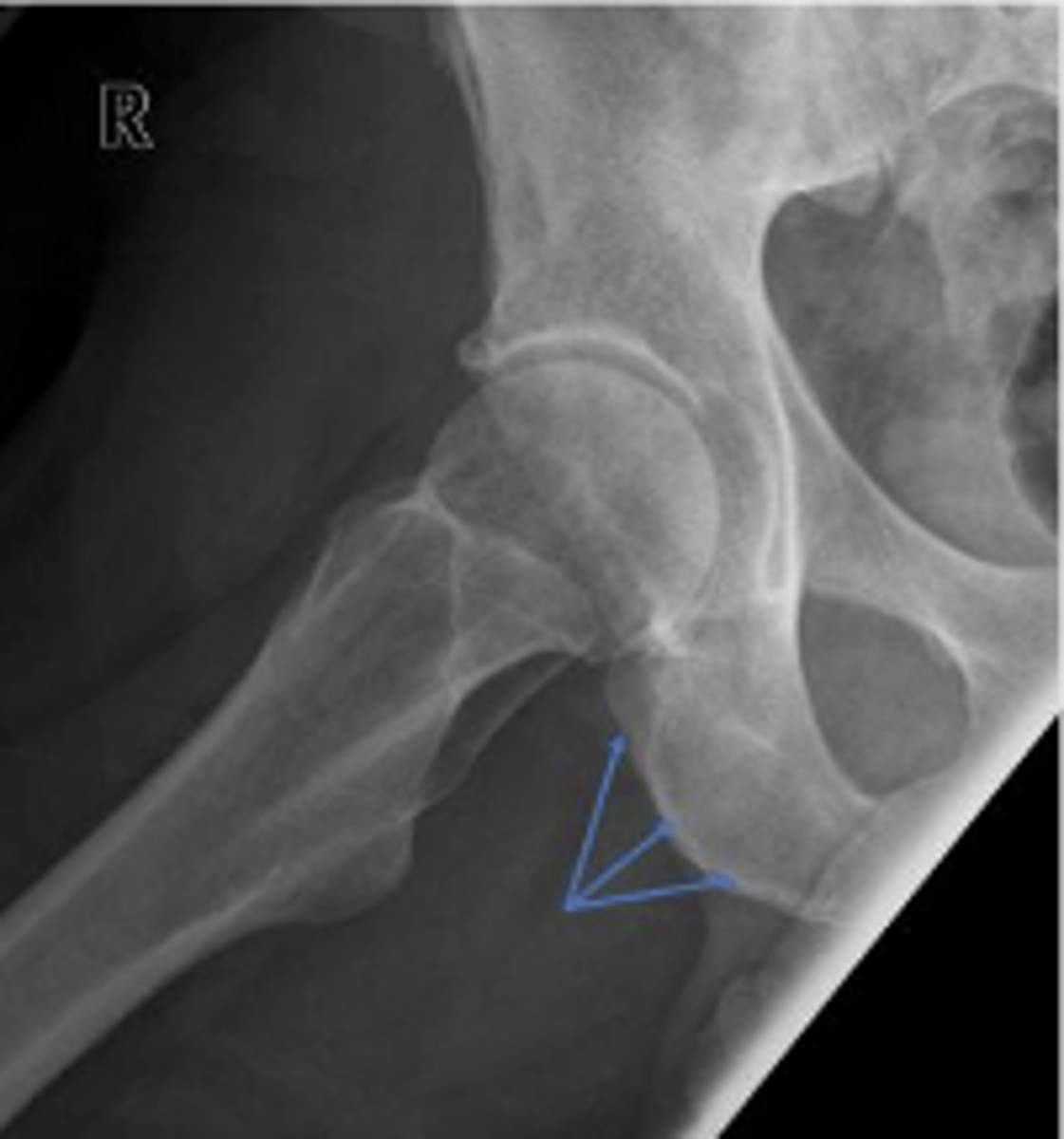
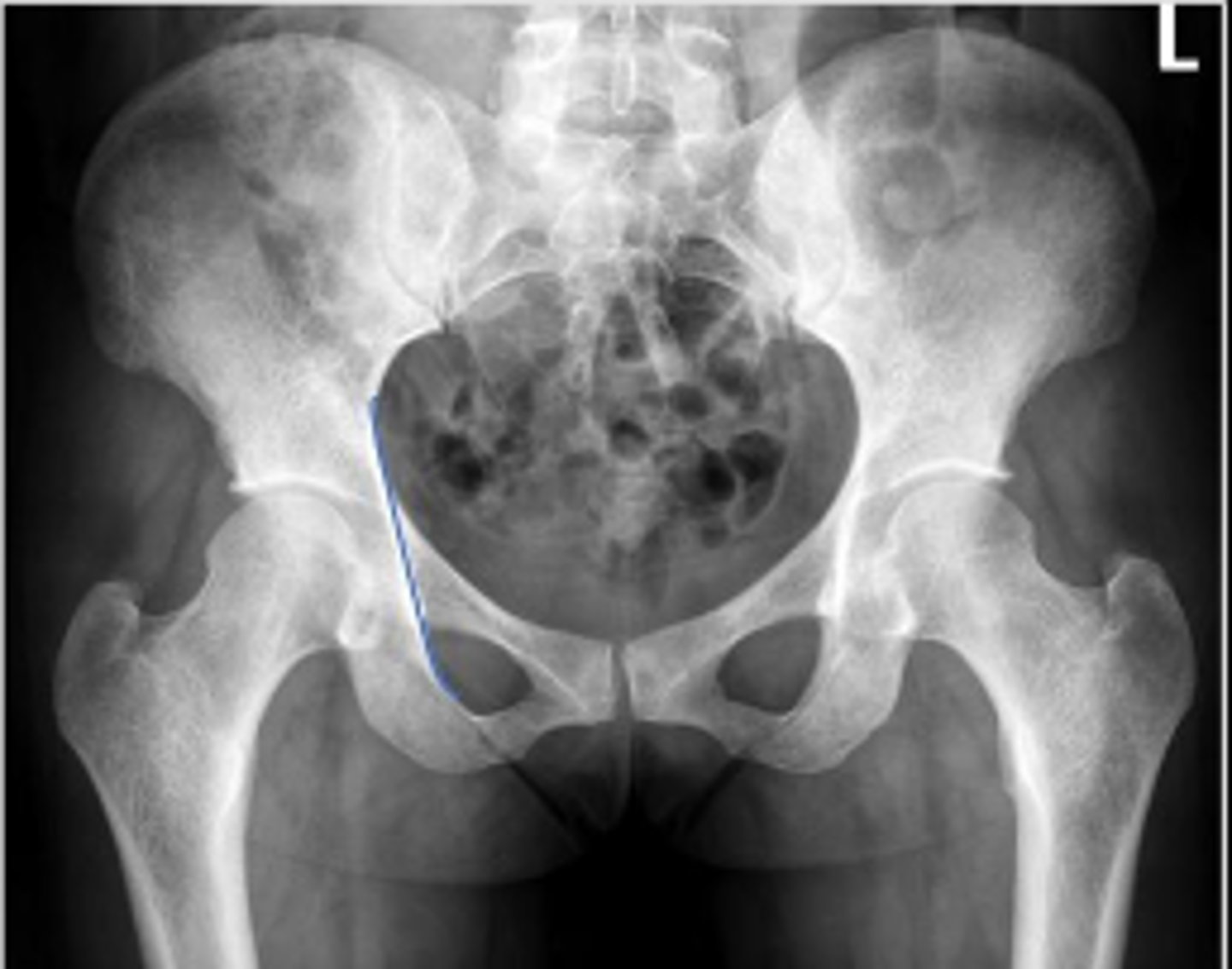
Right iliopectineal line
What is the name of the assessment?
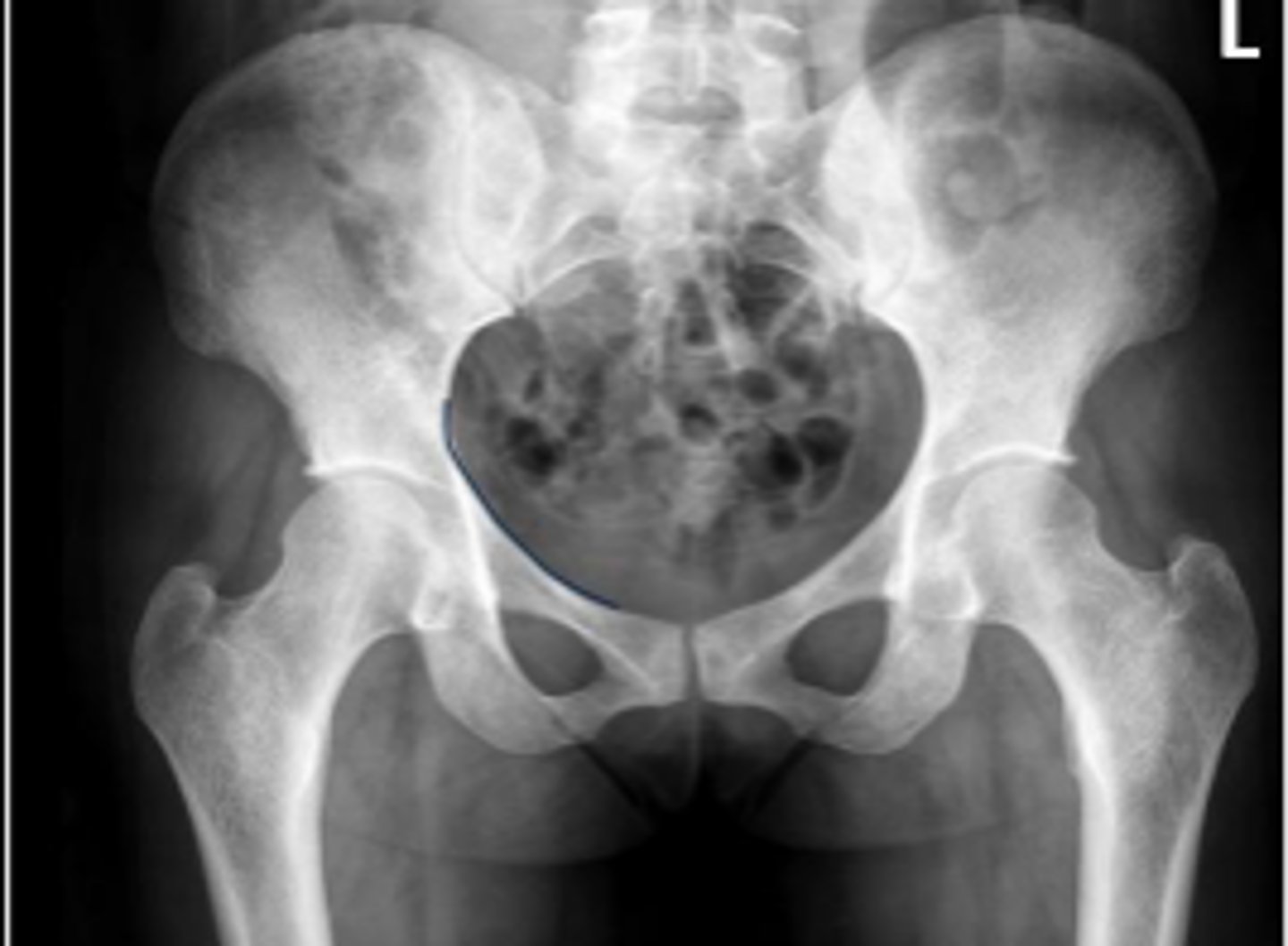
Right ilioischial line
What is the name of the assessment?
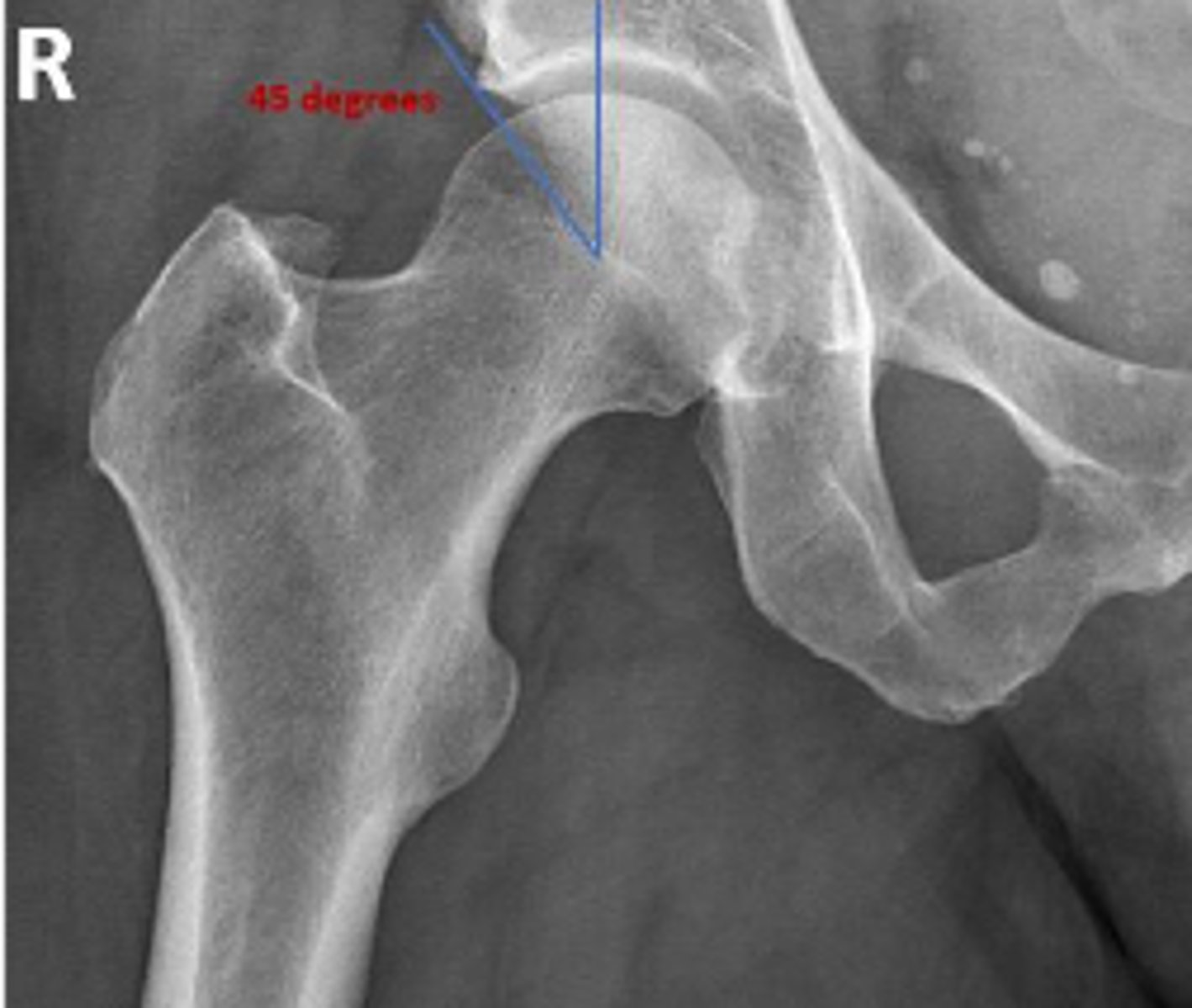
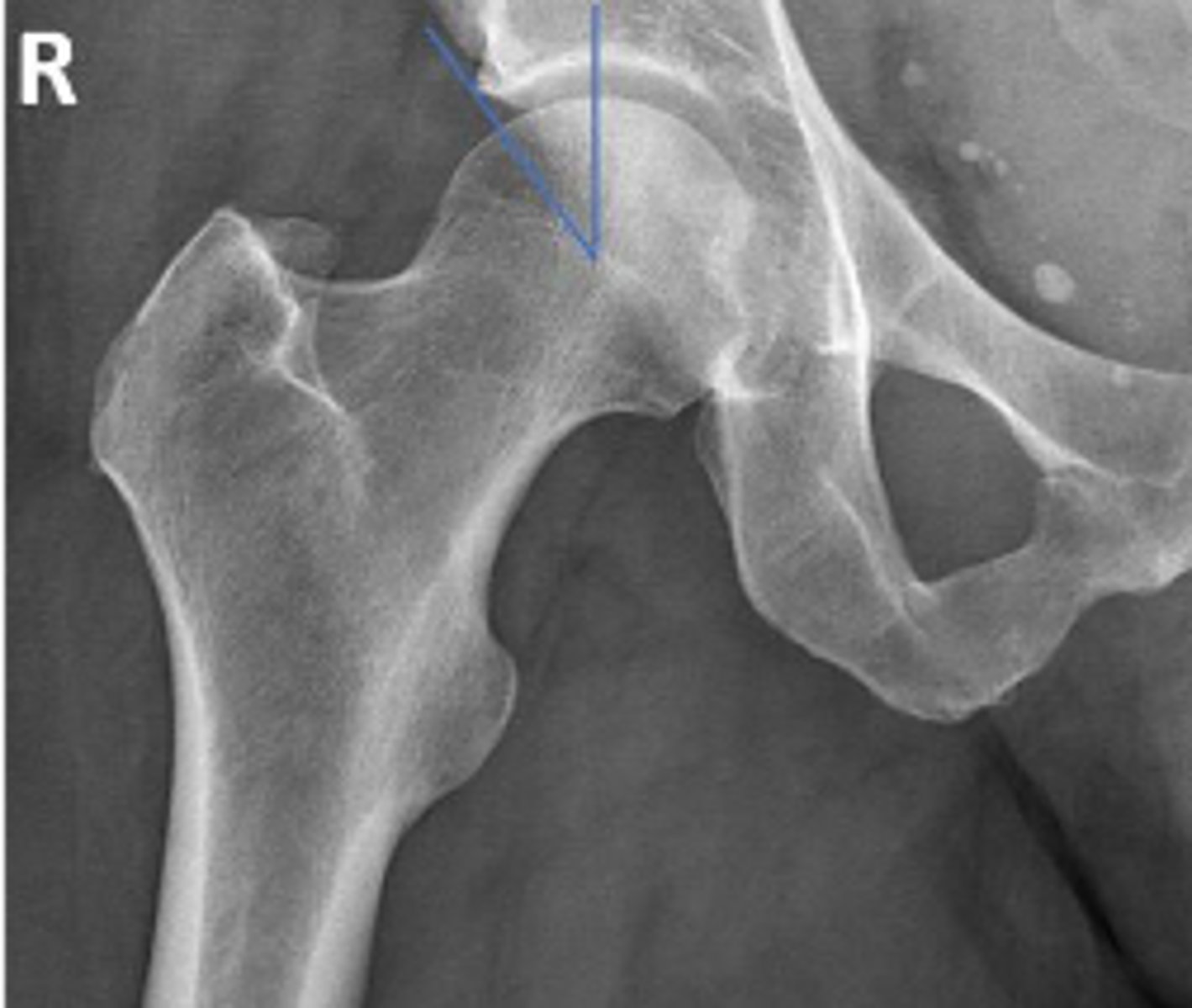
Center edge angle
What is the name of the assessment?
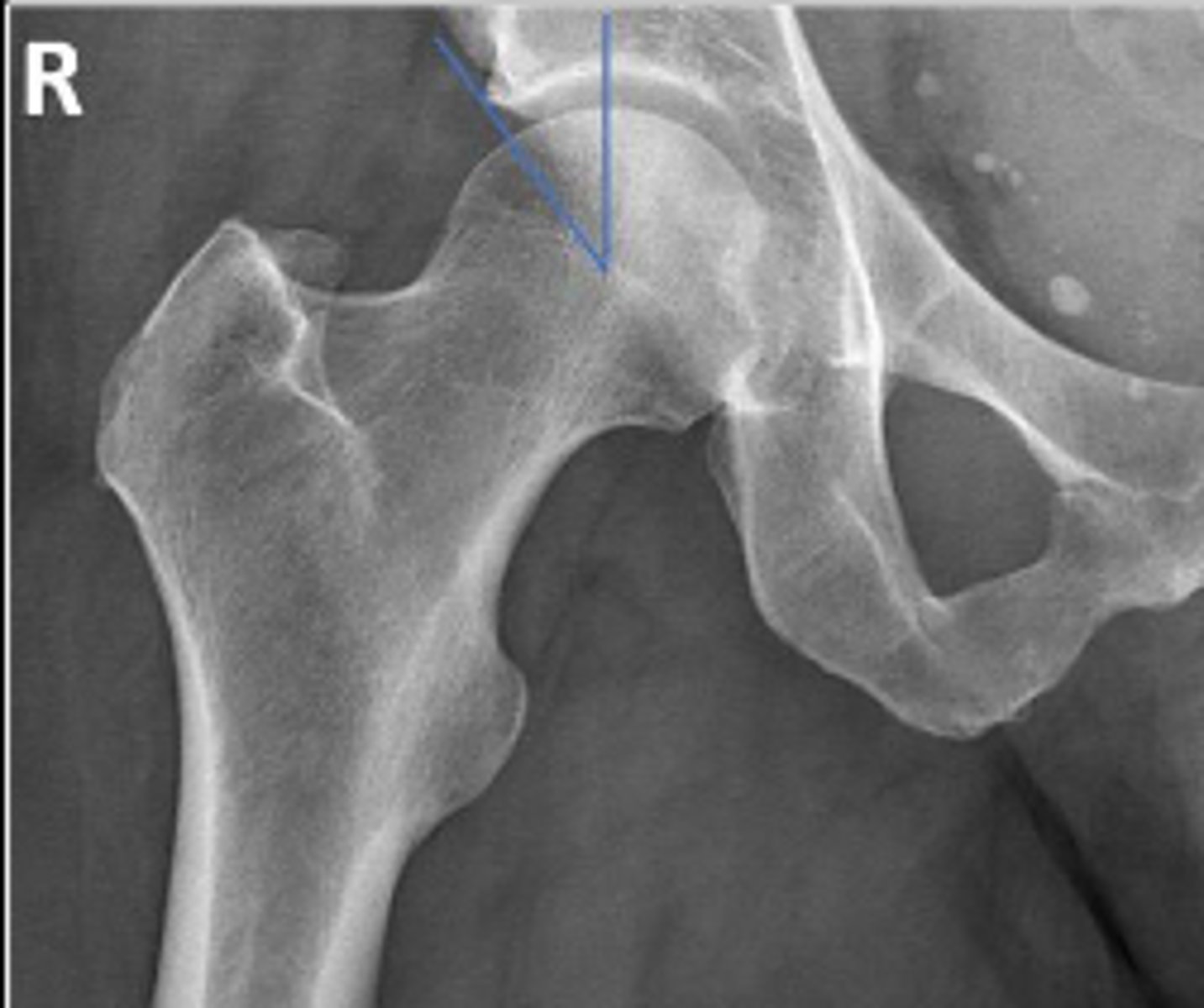
20-40 degrees
What is the normal range for this assessment?
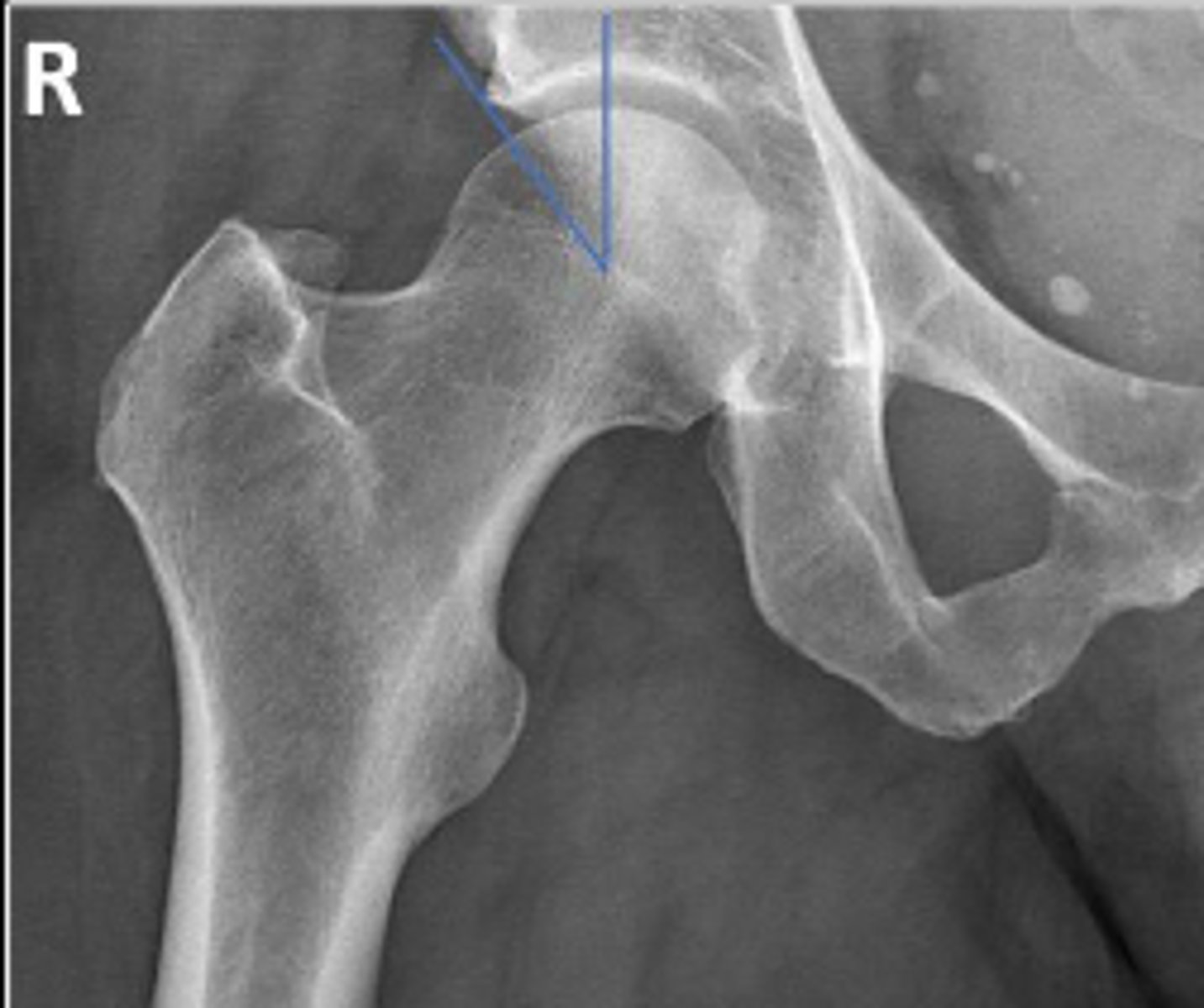
A vertical line is drawn upwards from the center
of the head of the femur.
The second line is drawn from the center of the femur head to the outer superior-lateral aspect of the acetabulum
What are the osseous landmarks for this assessment
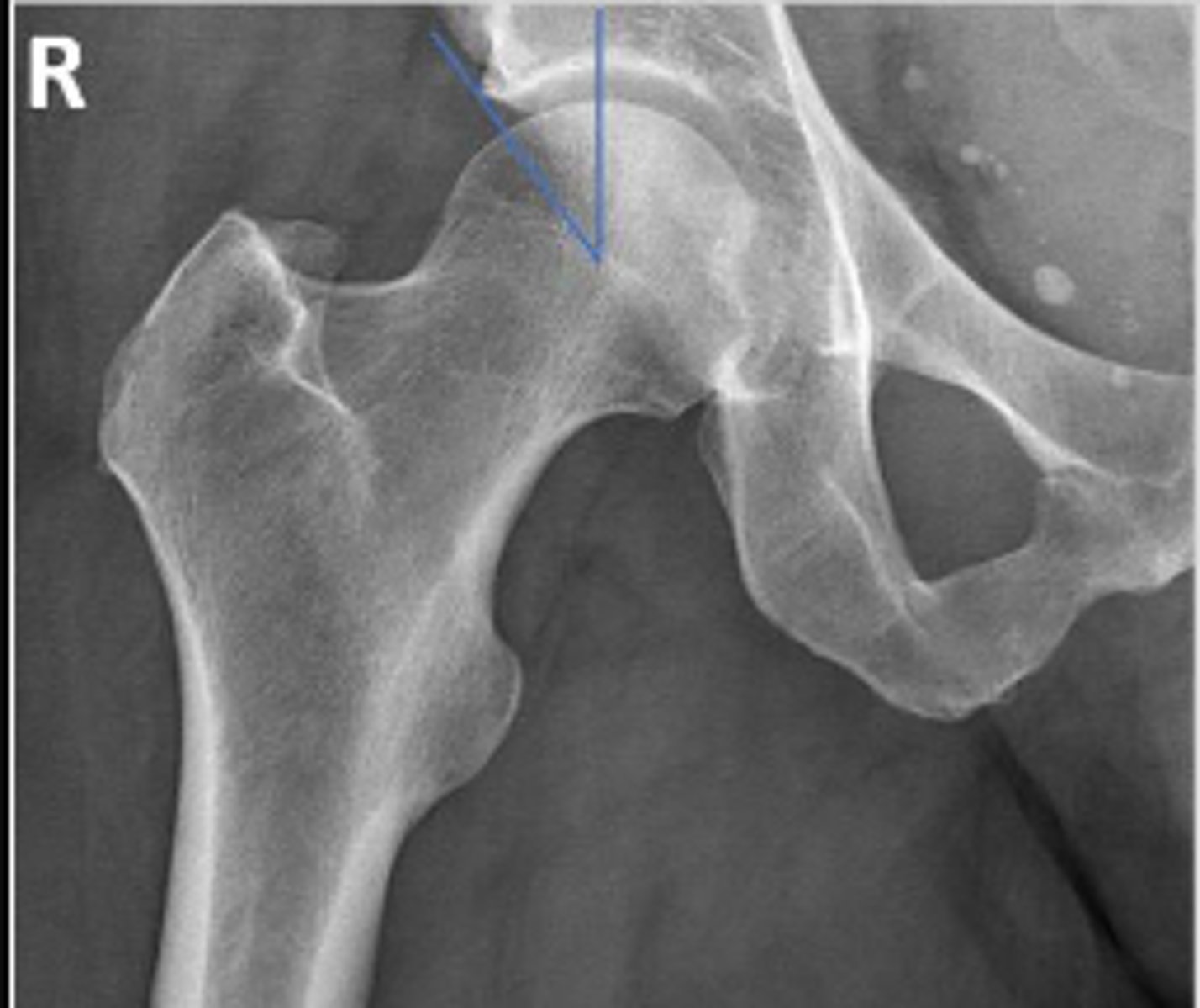
No (normal measurement is 20-40 degrees)
Is the measurement within normal limits?
Acetabular dysplasia
Developmental dysplasia of the hip
Name 1 condition that may result in a measurement <20 degrees?
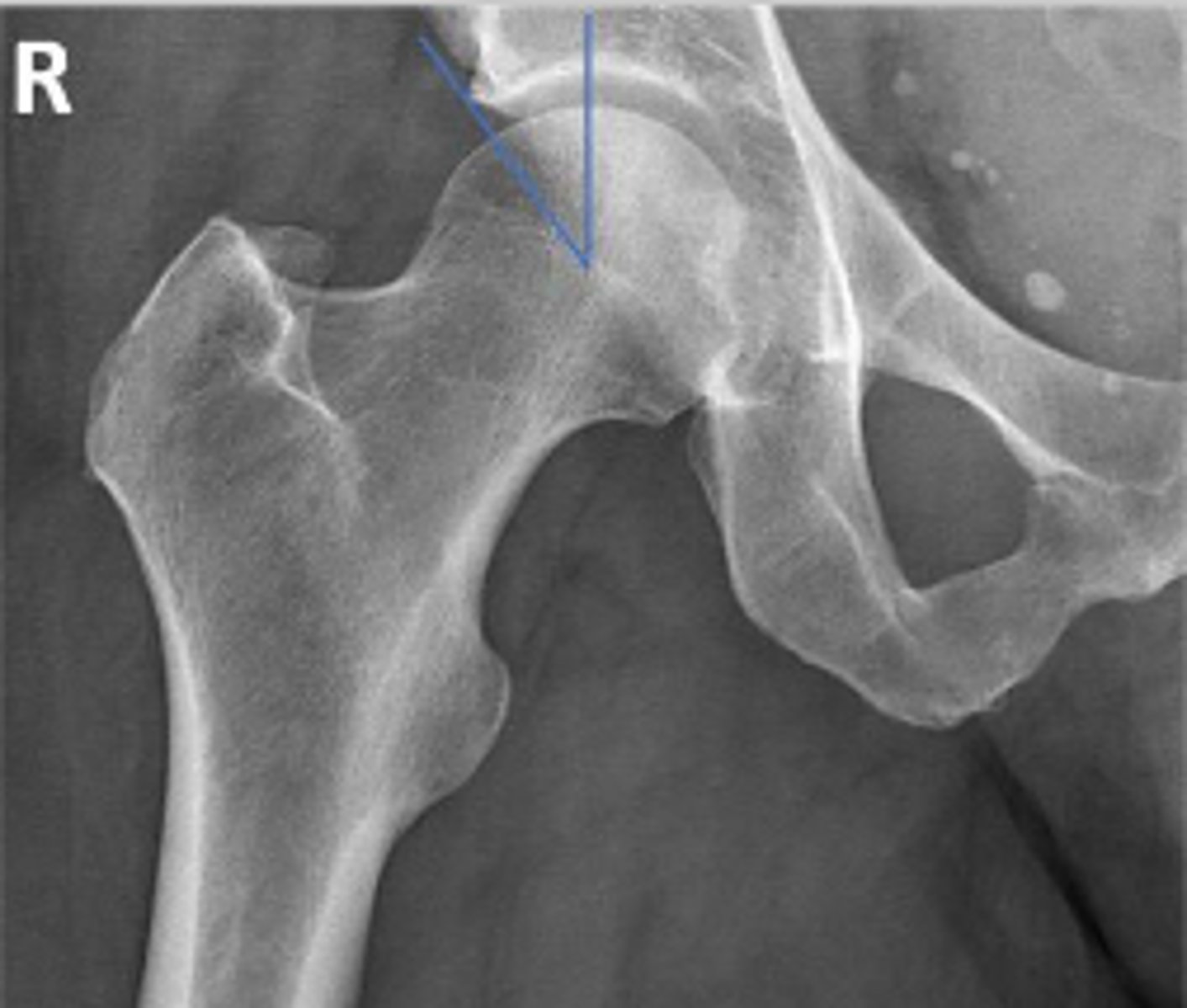
AP pelvis and AP hip views
Name 2 radiographic views for this assessment?
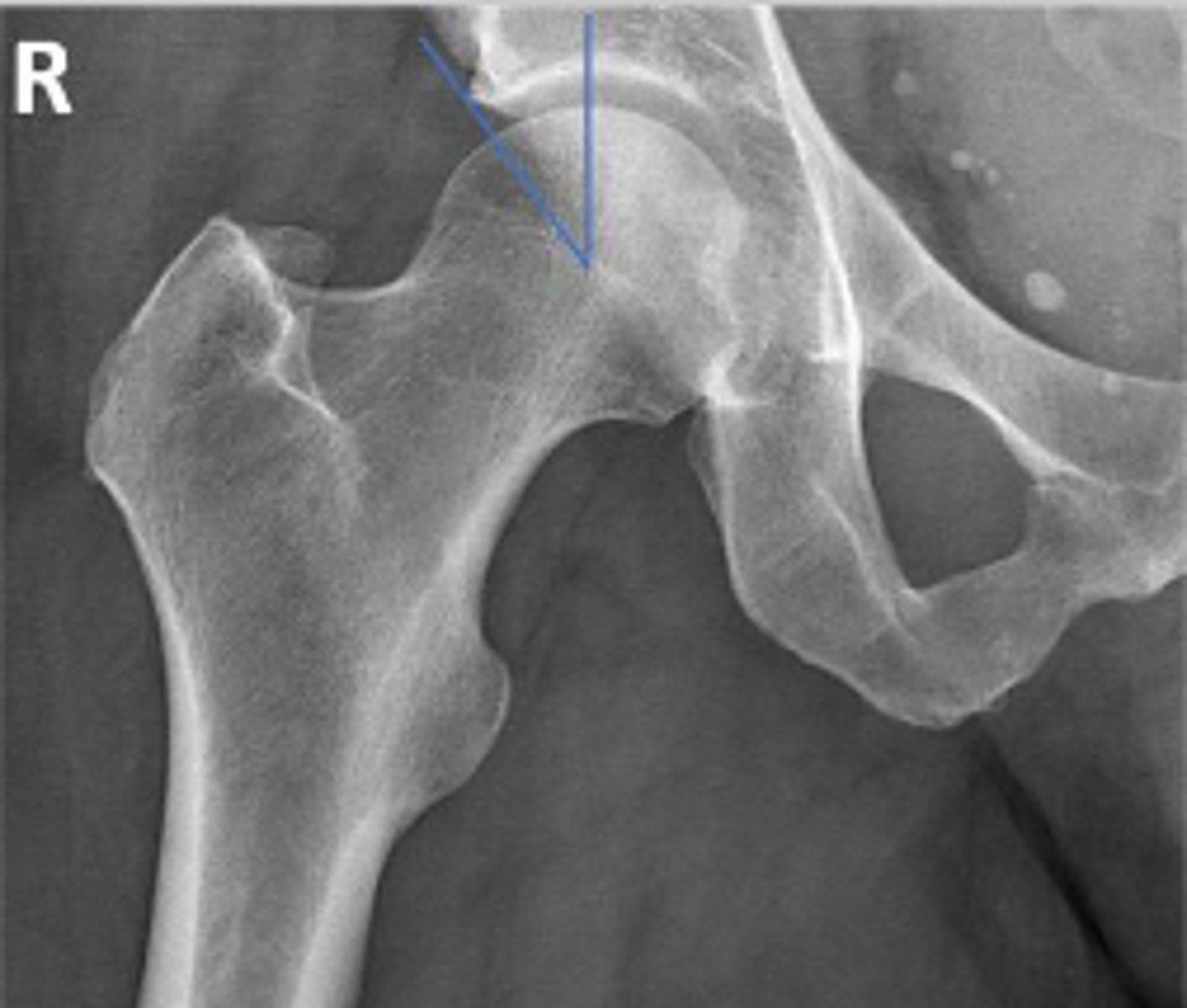
A mechanical instability of the femoroacetabular
joint characterized by a shallow acetabulum
providing insufficient covering of the femoral
head
What is developmental hip dysplasia?
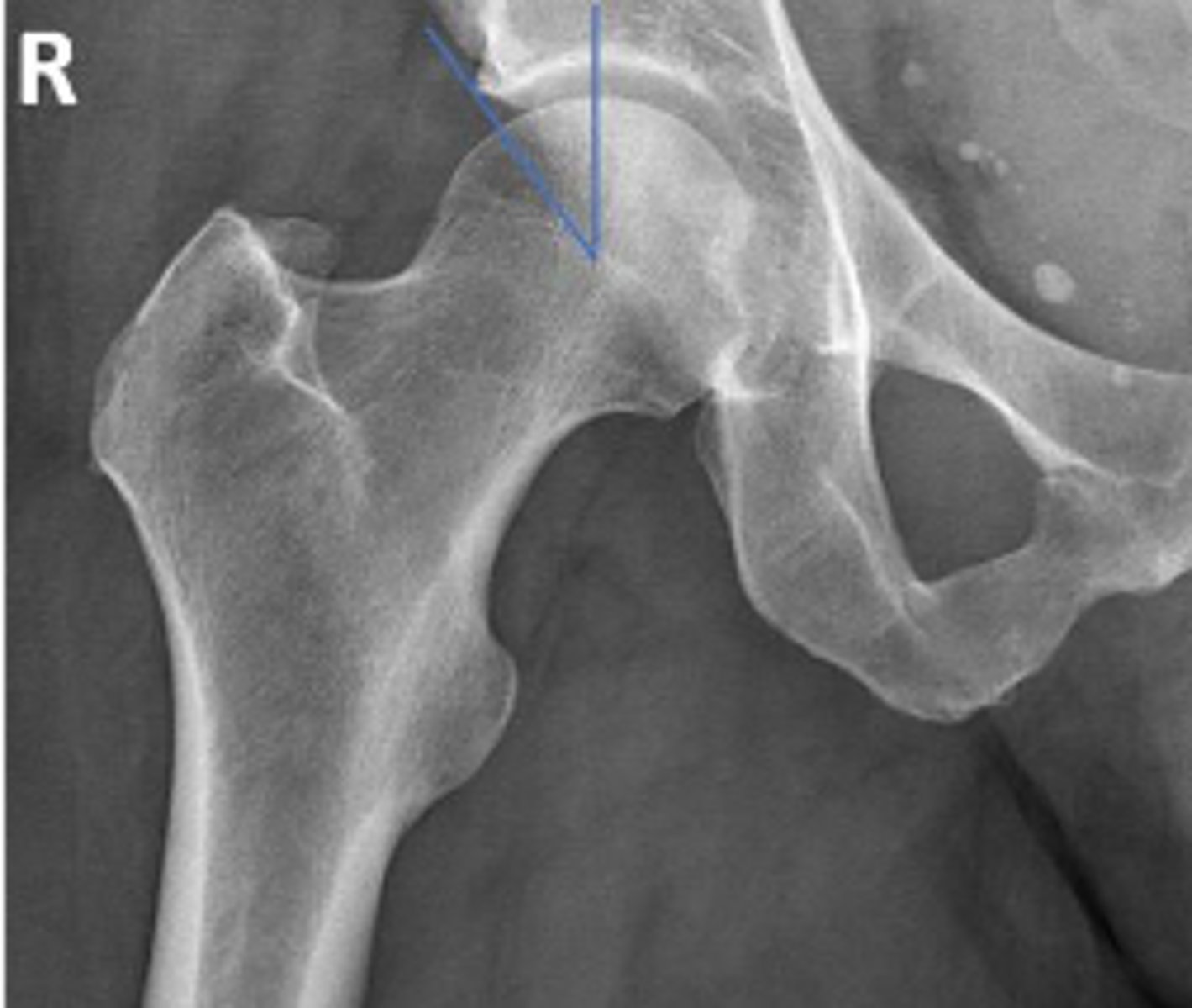
AP right hip
What is the radiographic view?
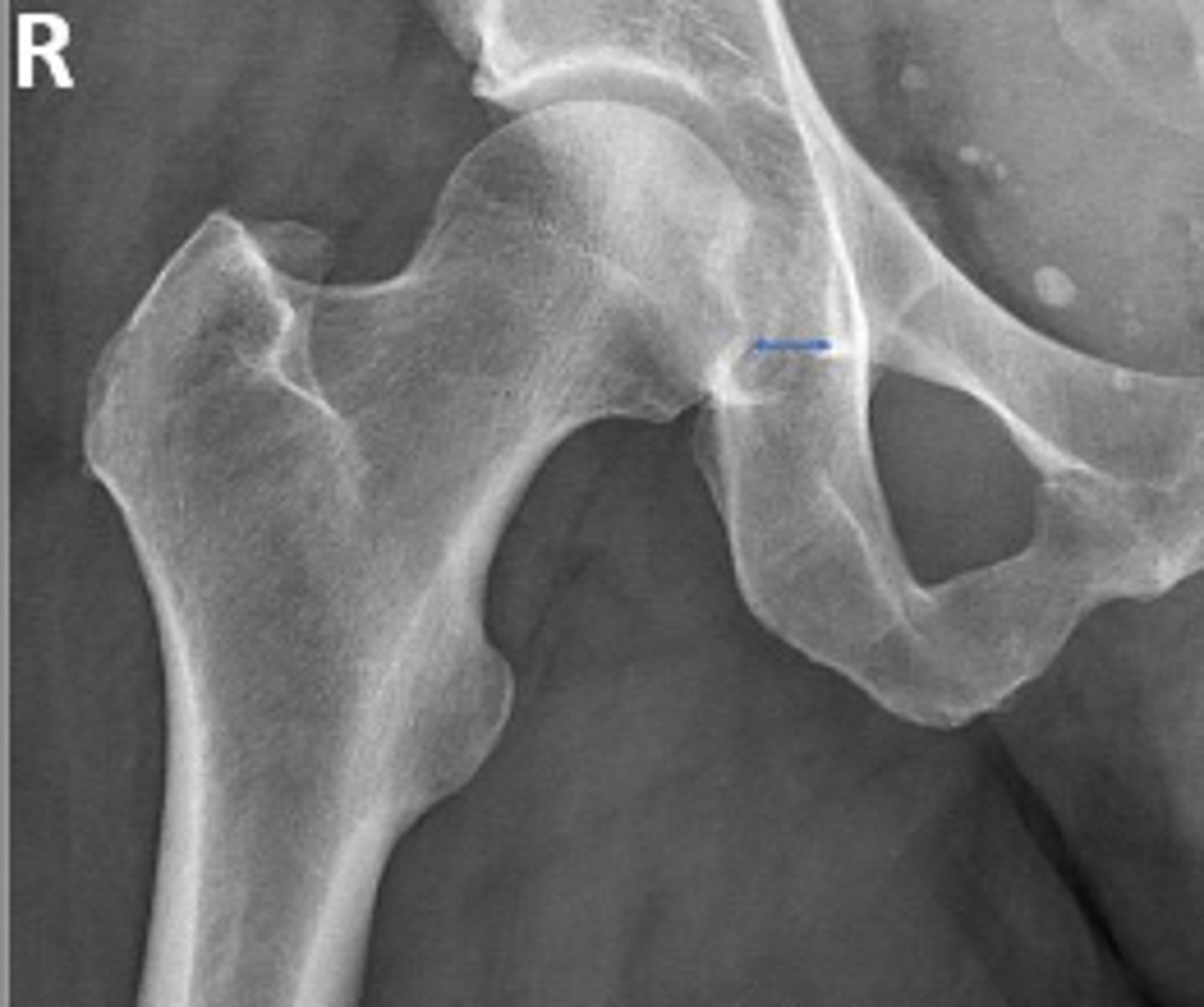
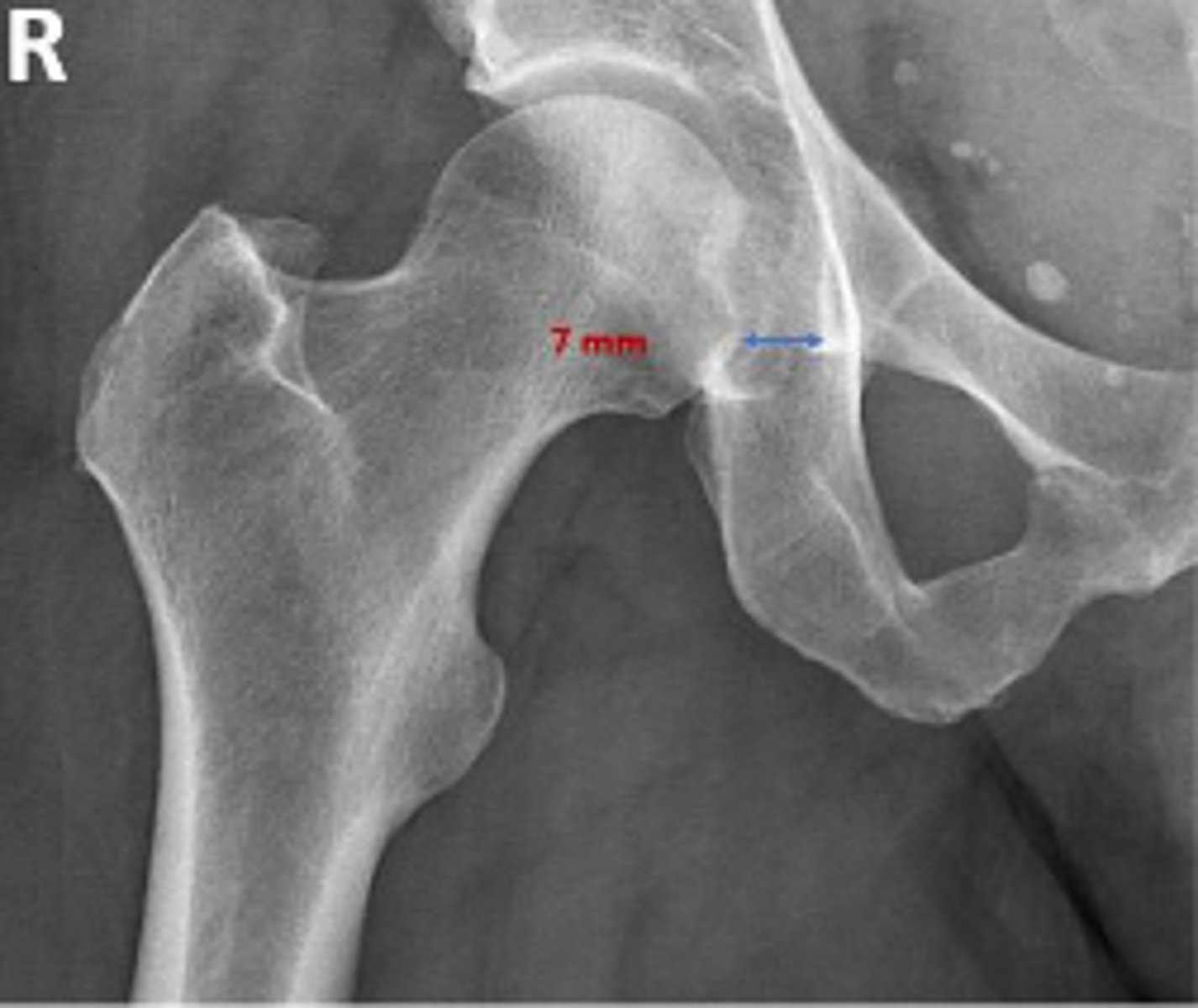
Teardrop distance
What is the name of the assessment?
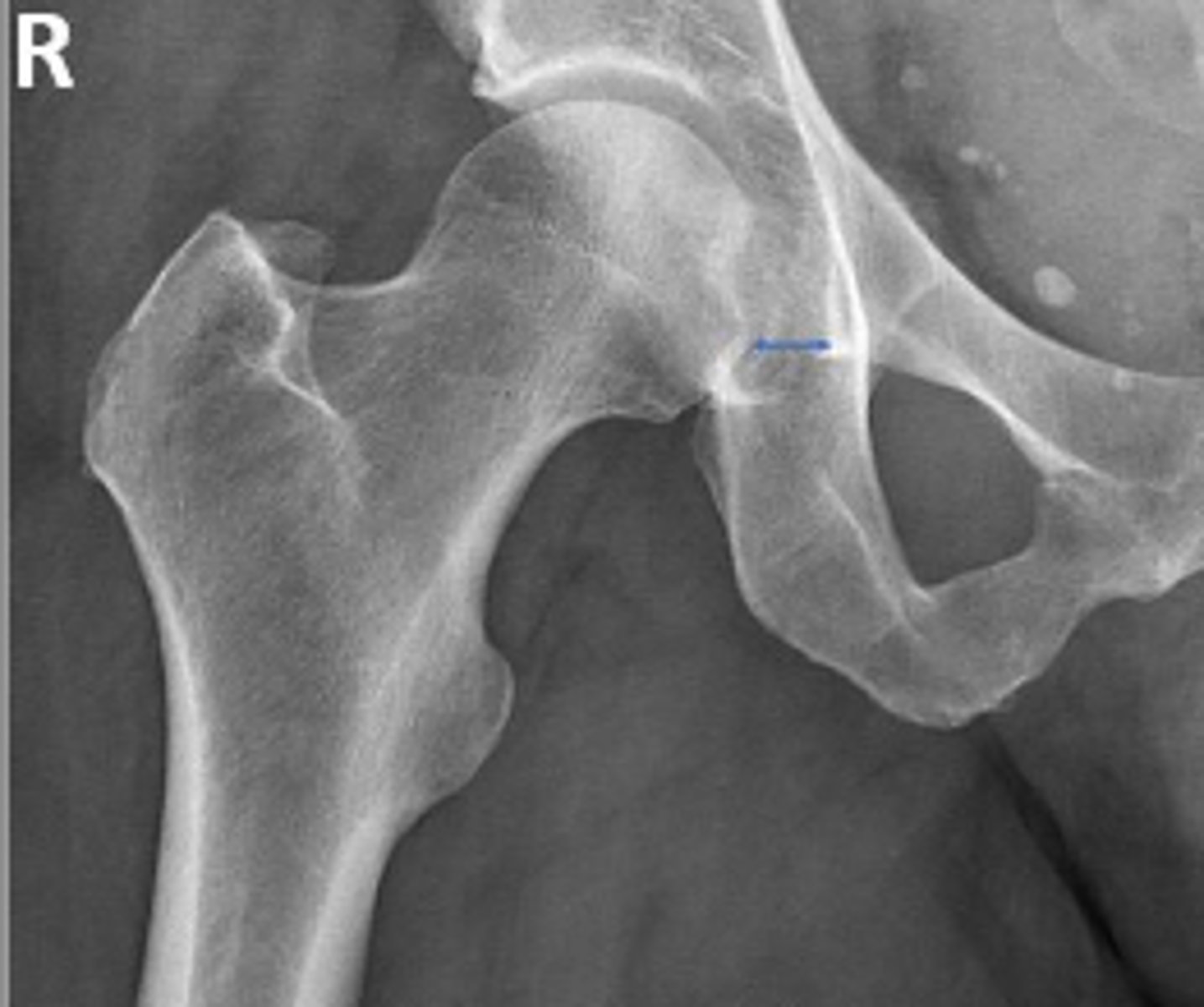
6-11mm
What is the normal range for this assessment?
The distance between the most medial margin of
the femoral head and the adjacent pelvic
teardrop
What are the osseous landmarks for this assessment?
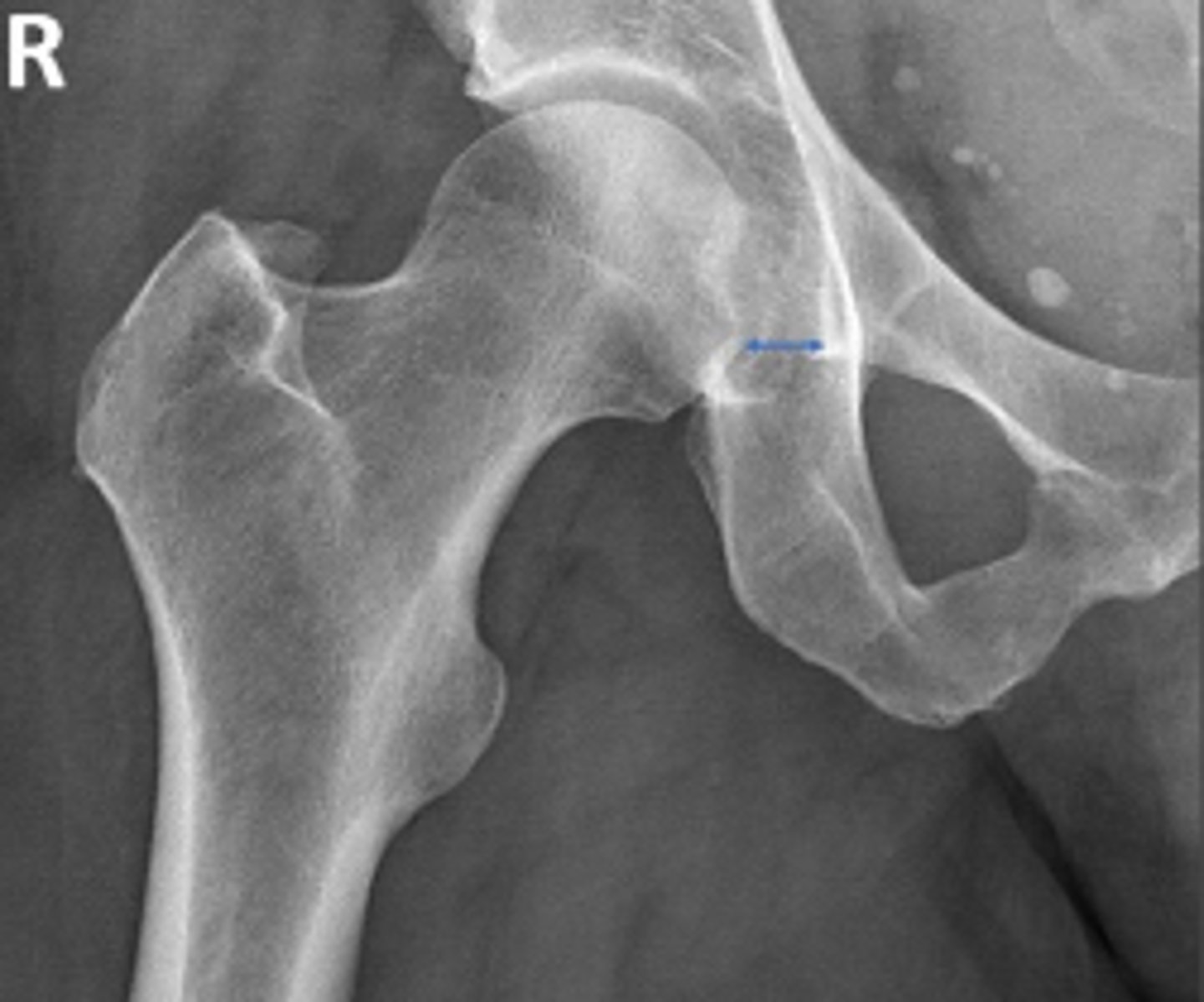
Yes (normal is 6-11mm)
Is the measurement within normal limits?
Femoroacetabular joint inflammation
Name 1 condition that may result in a measurement of 15mm?
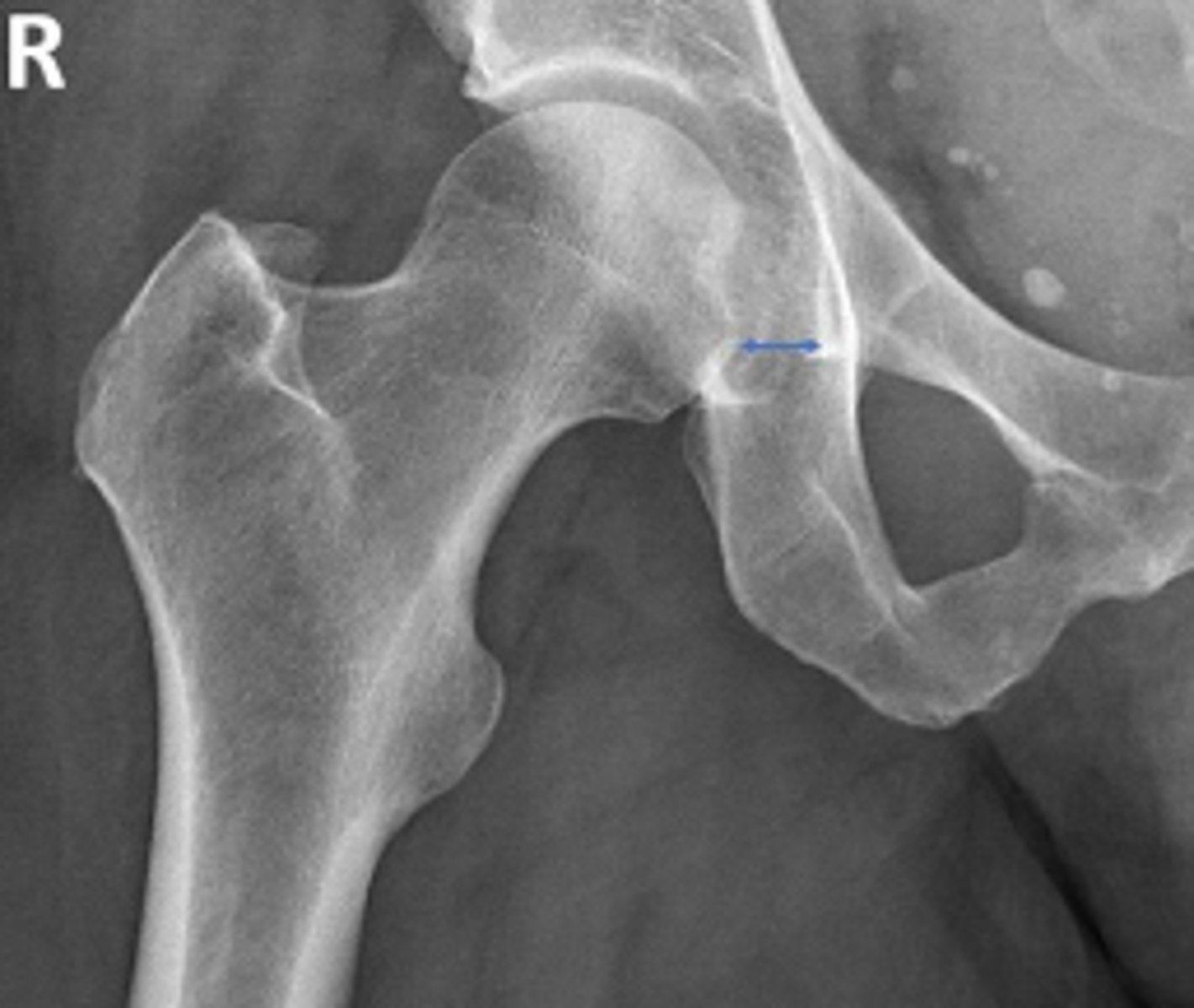
AP pelvis and AP hip views
Name 2 radiographic views for this assessment?
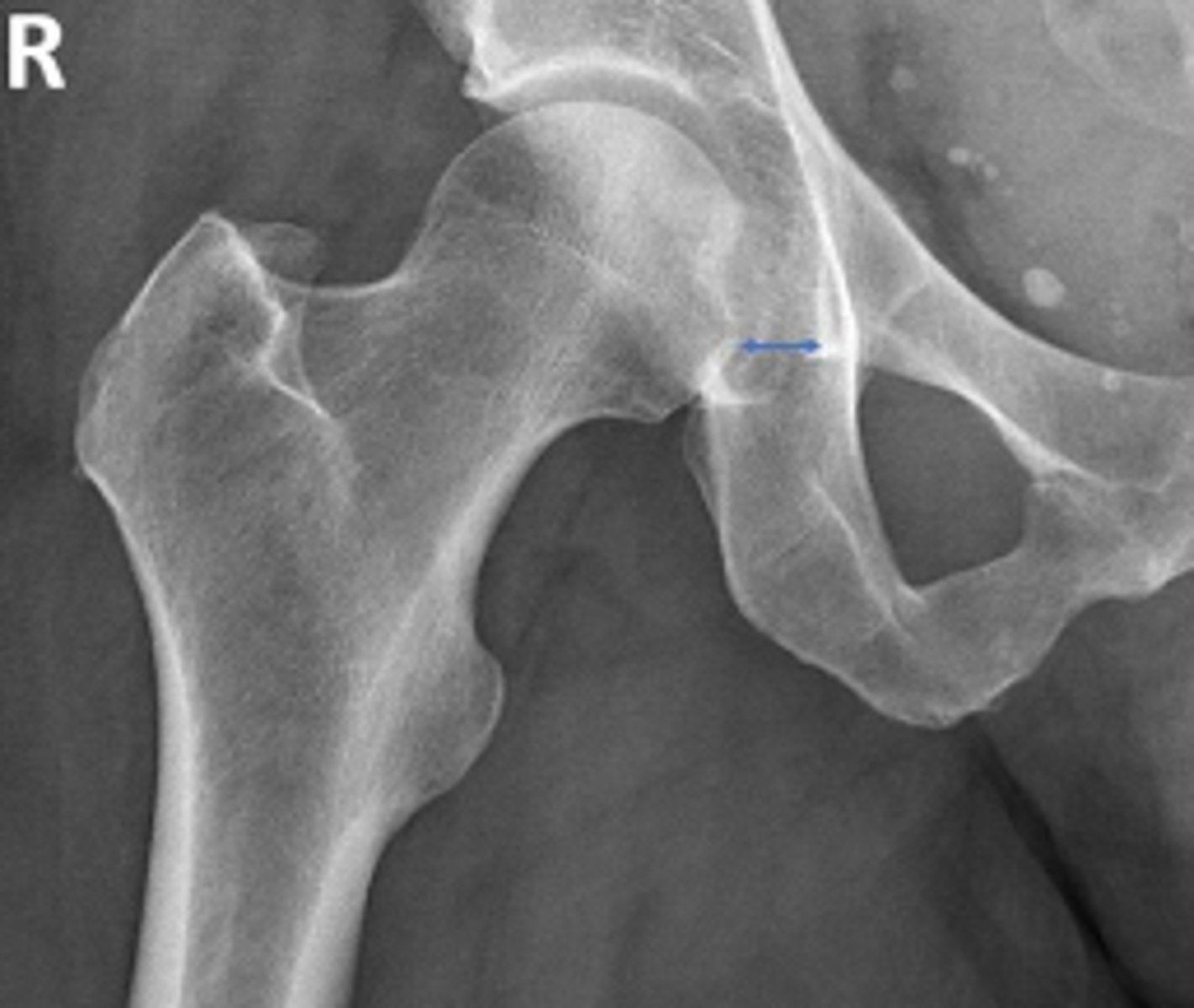
Late stage degenerative joint disease
Protrusio acetabuli
Name 2 conditions that may result in a measurement of 3mm?
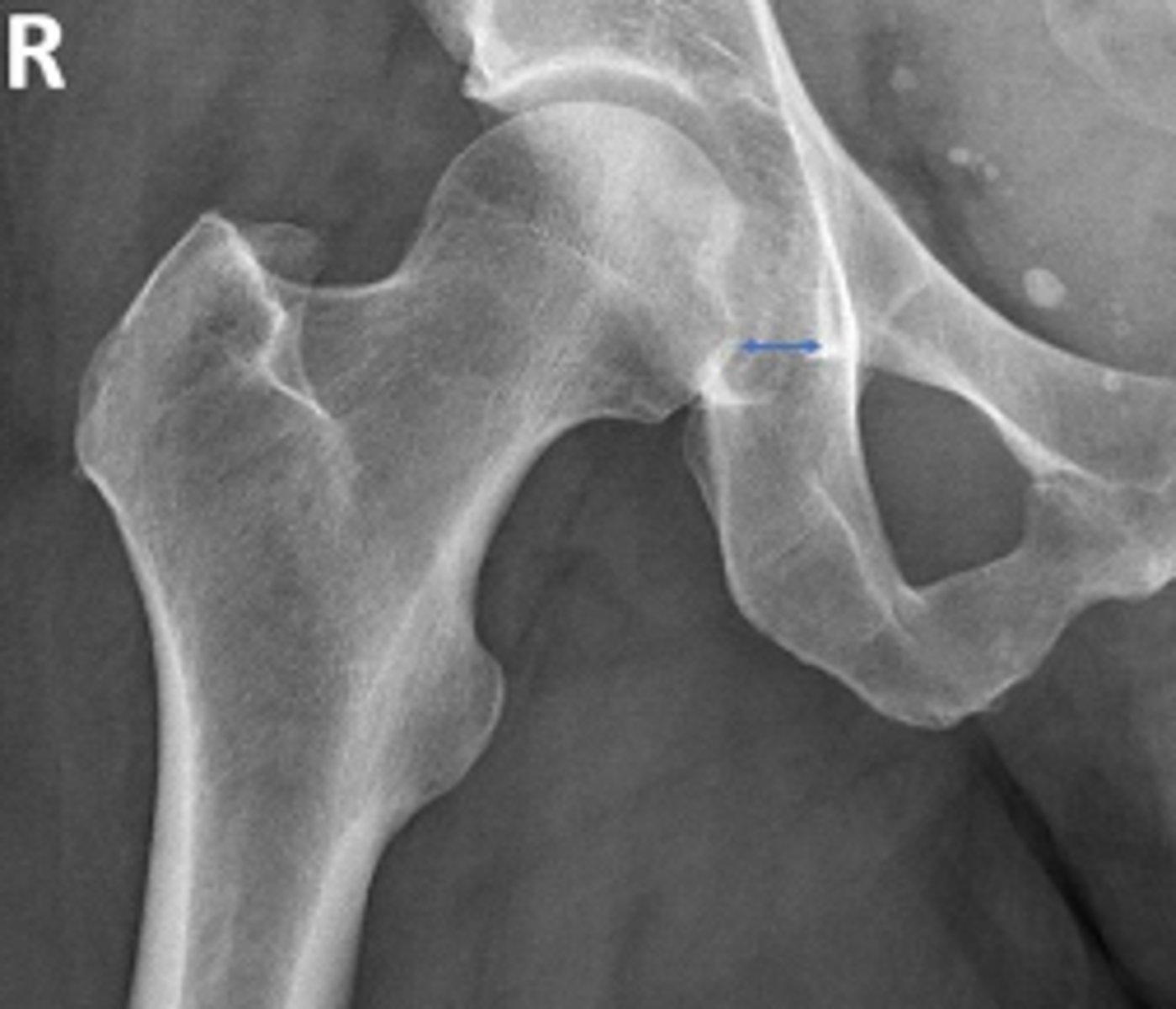
Waldenstrom's sign
What is the named sign if this assessment has a value > 2mm difference
between the left and right side?
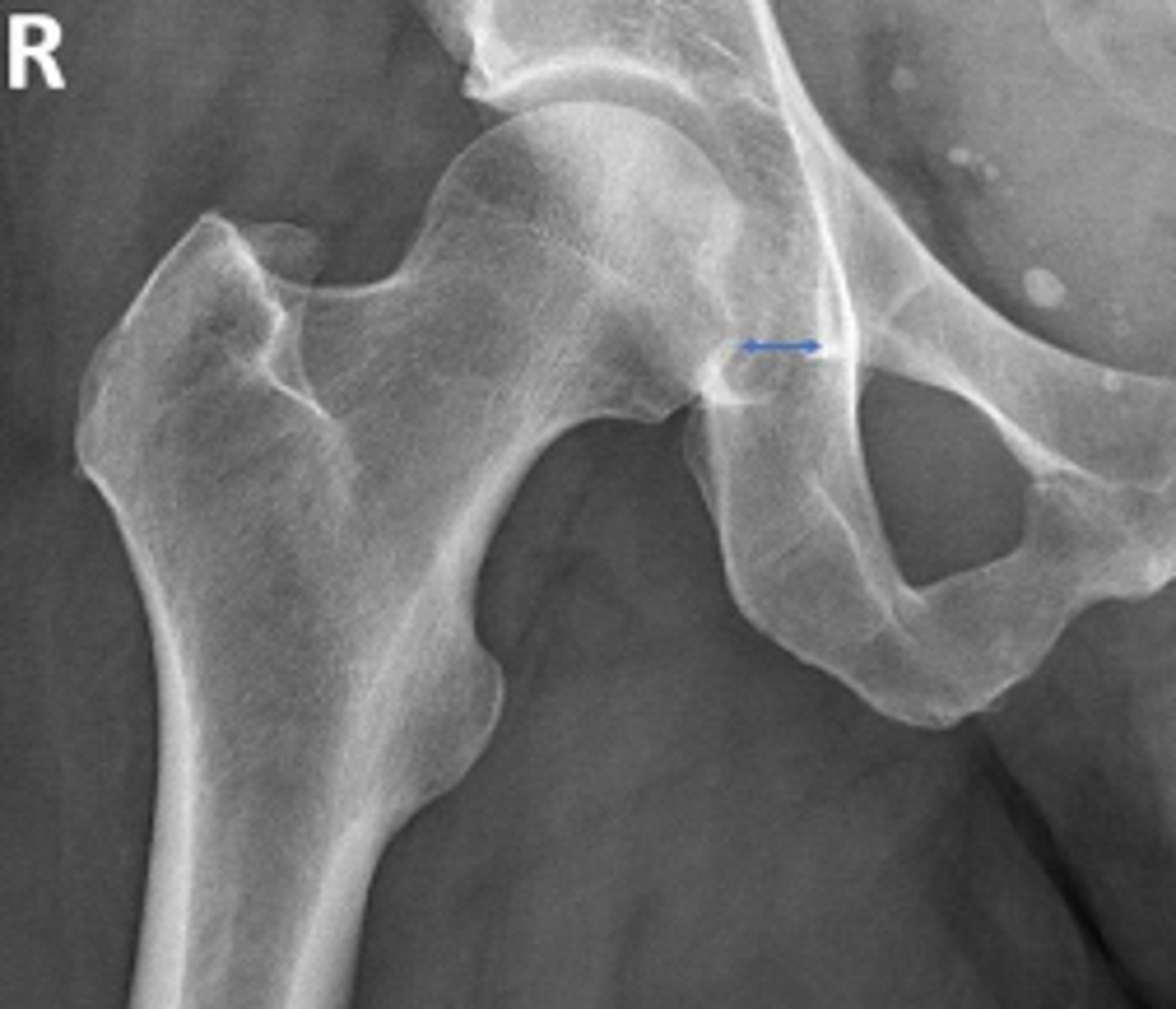
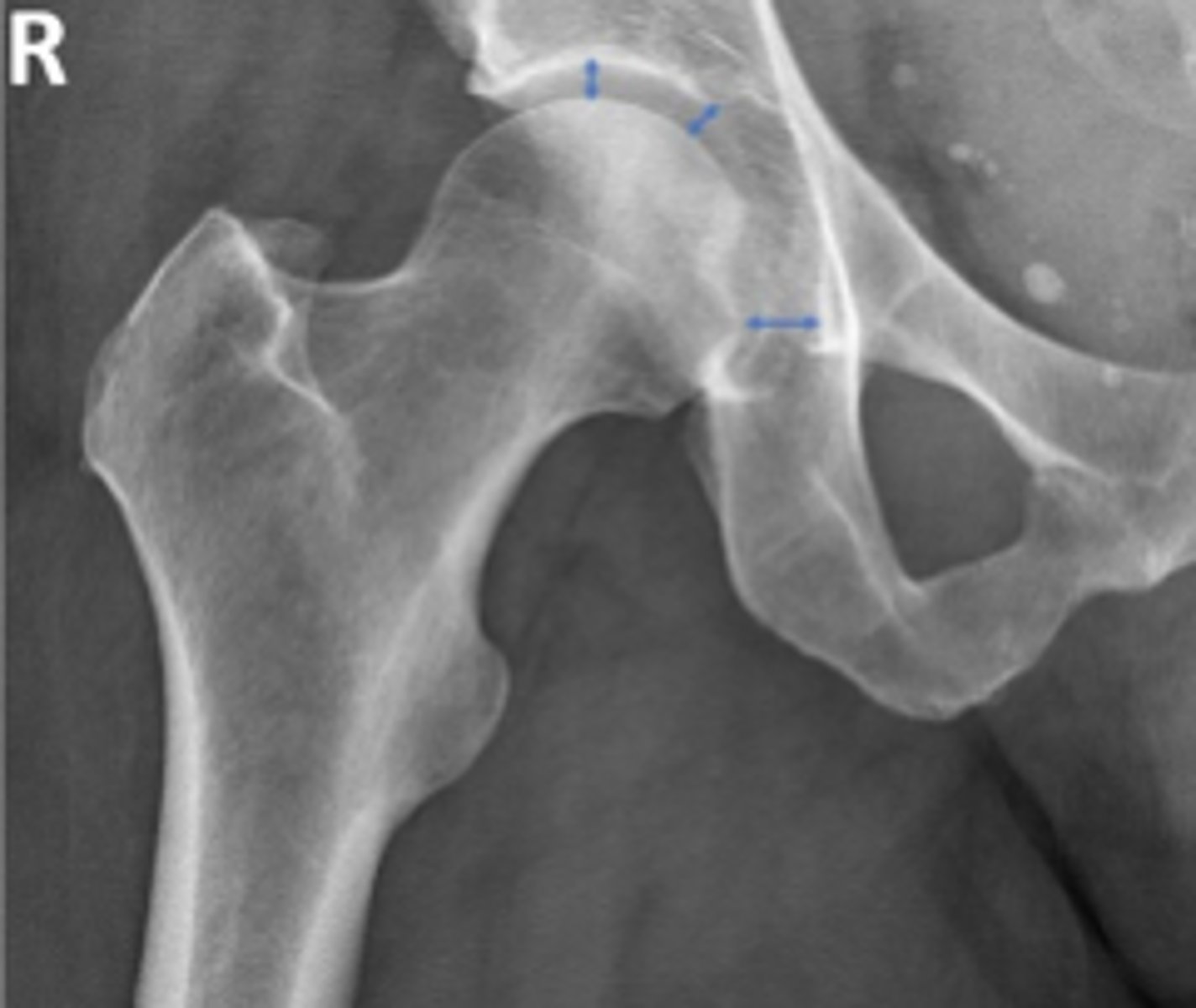
Hip joint space width
What is the name of the assessment?
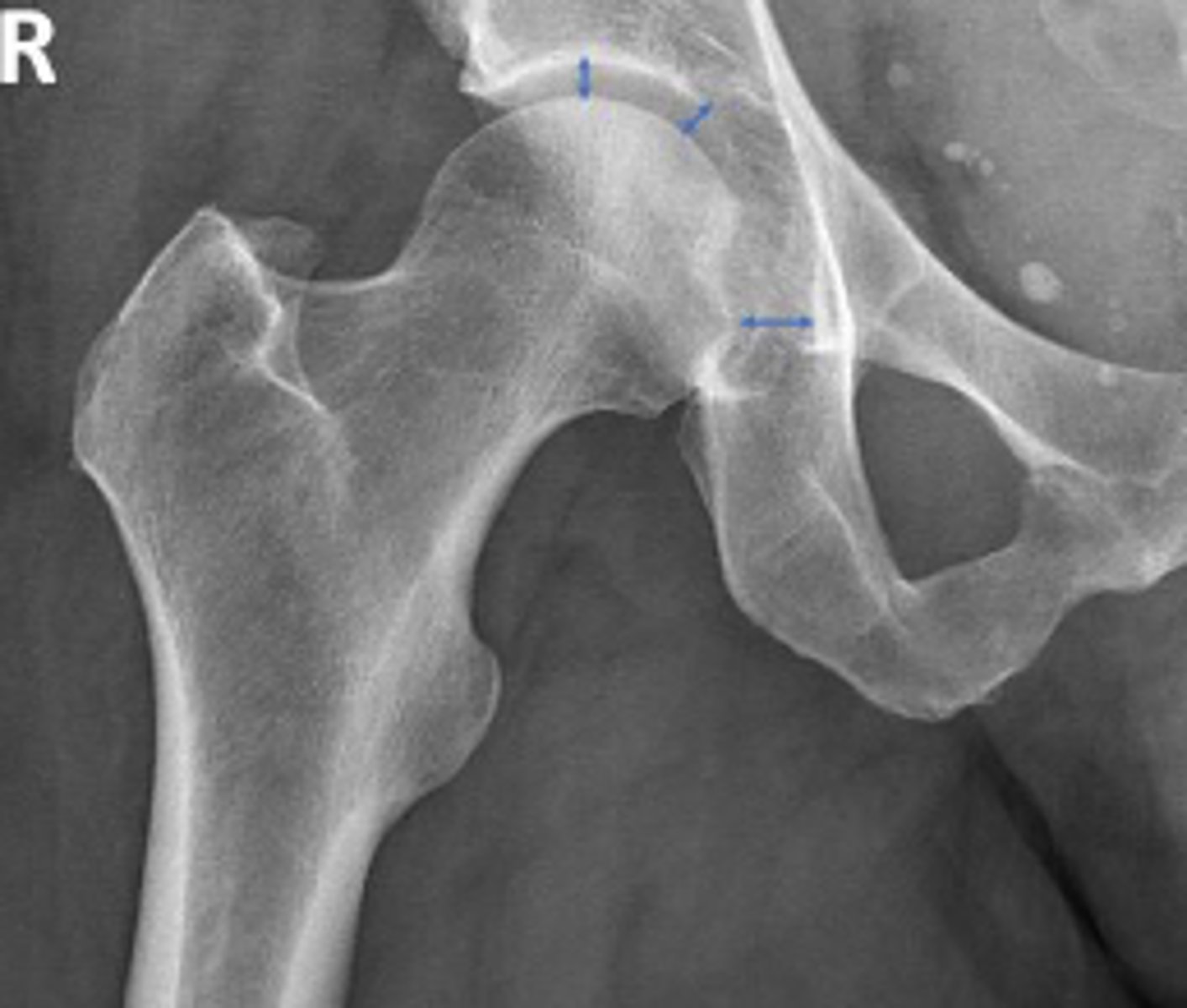
Superior joint space is 3-6mm
Axial joint space is 3-7mm
Medial joint space is 4-13mm
What is the normal range for this assessment?
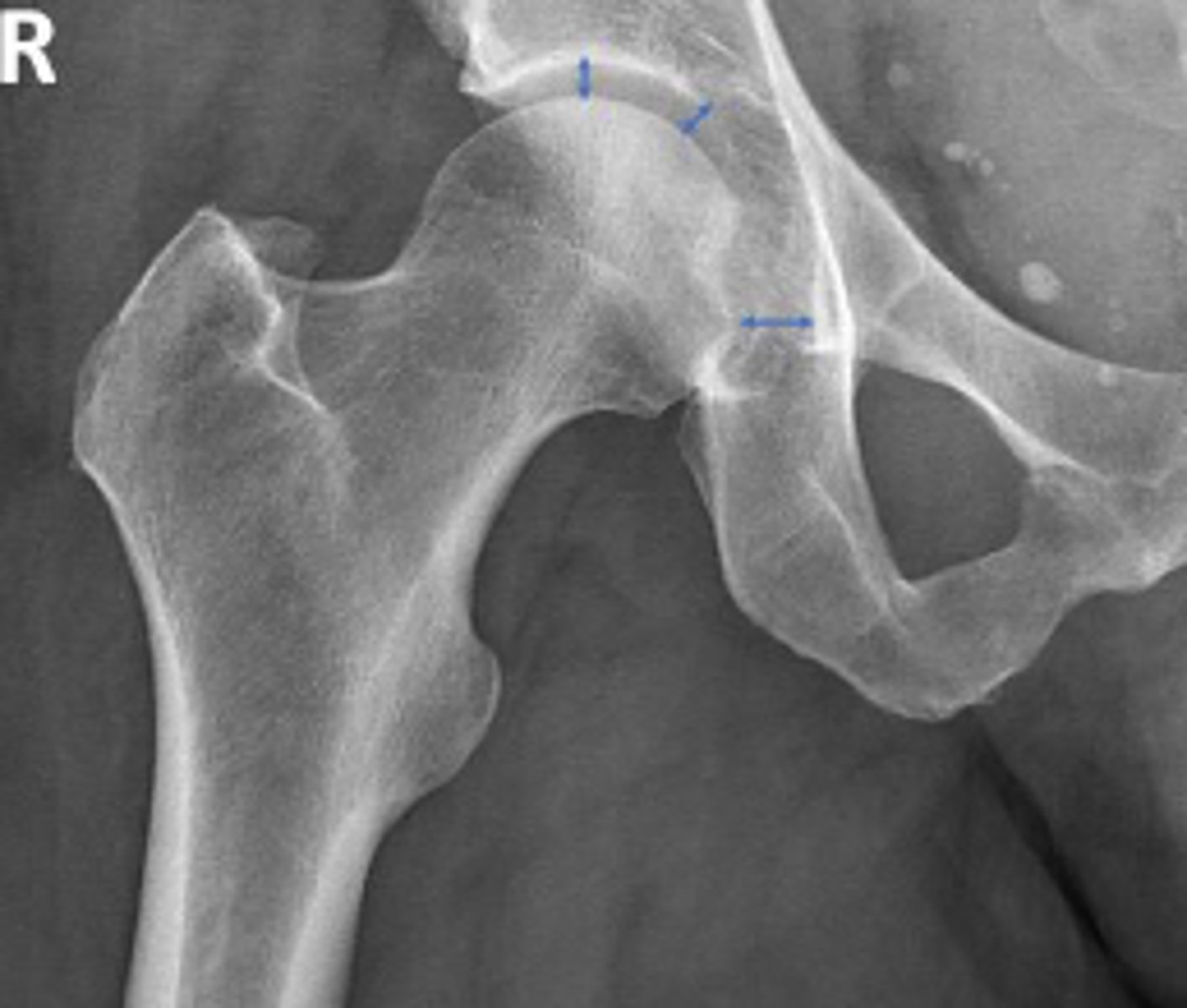
Superior joint space-> The measurement between the most convex superior aspect of the femoral head and the adjacent acetabulum
Axial joint space -> The measurement between the
femoral head and the acetabulum lateral to the
acetabular notch
Medial Joint space -> The measurement between the most medial margin of the femoral head and the adjacent pelvic teardrop
What are the osseous landmarks for this assessment?
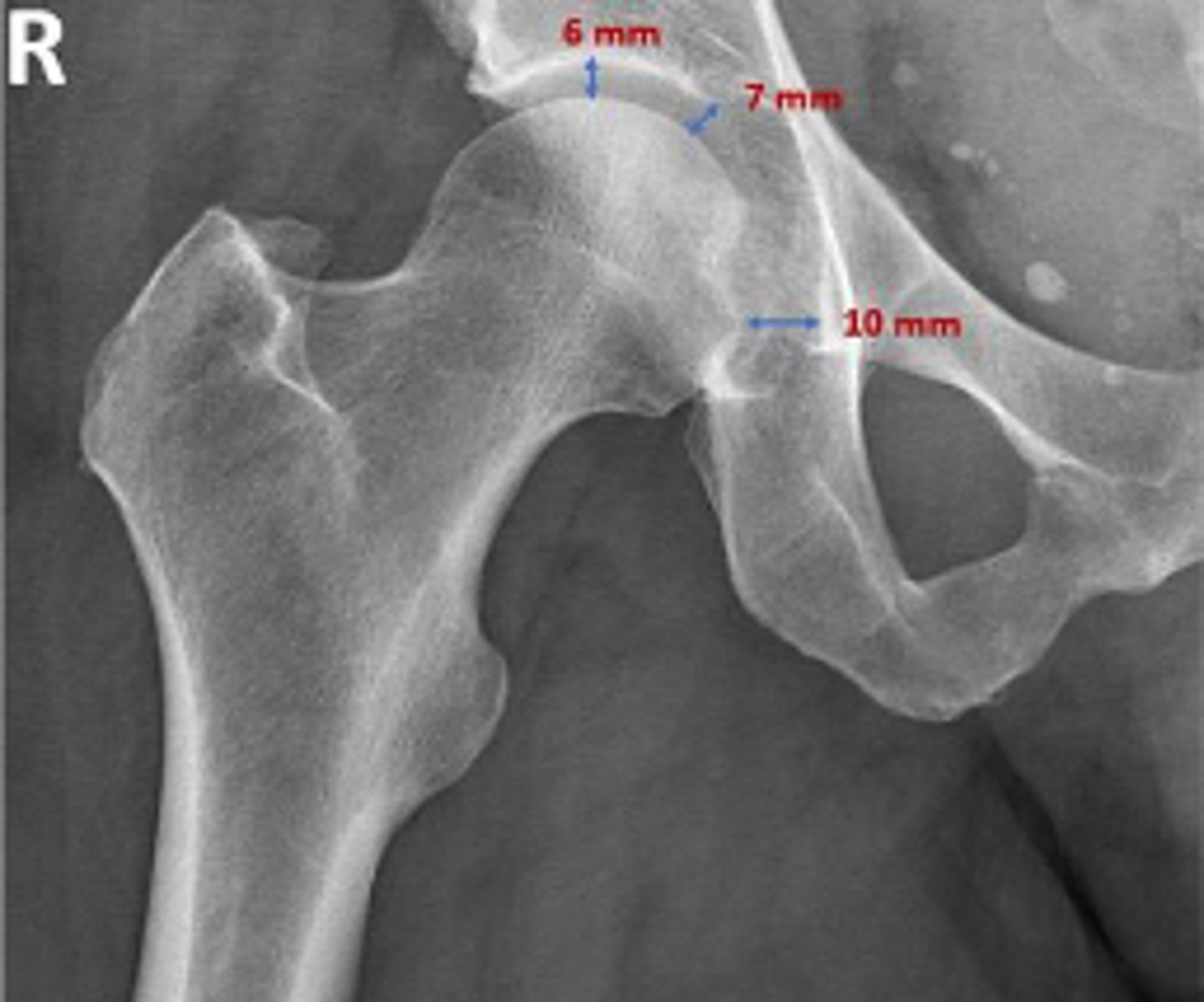
Yes
Are the measurements within normal limits?
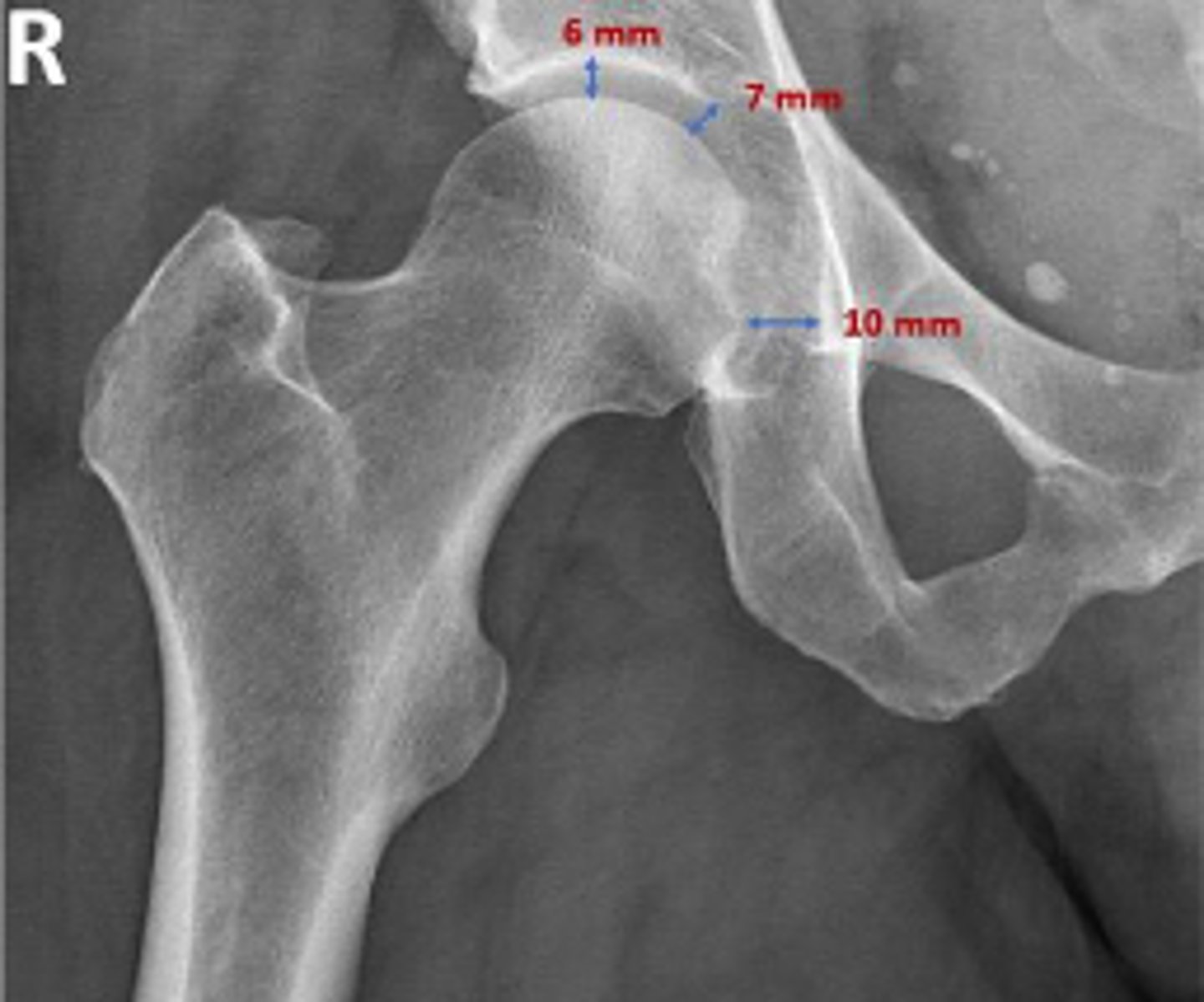
Degenerative joint disease
Name 1 condition that may result in a measurement of <3mm for the superior joint space?
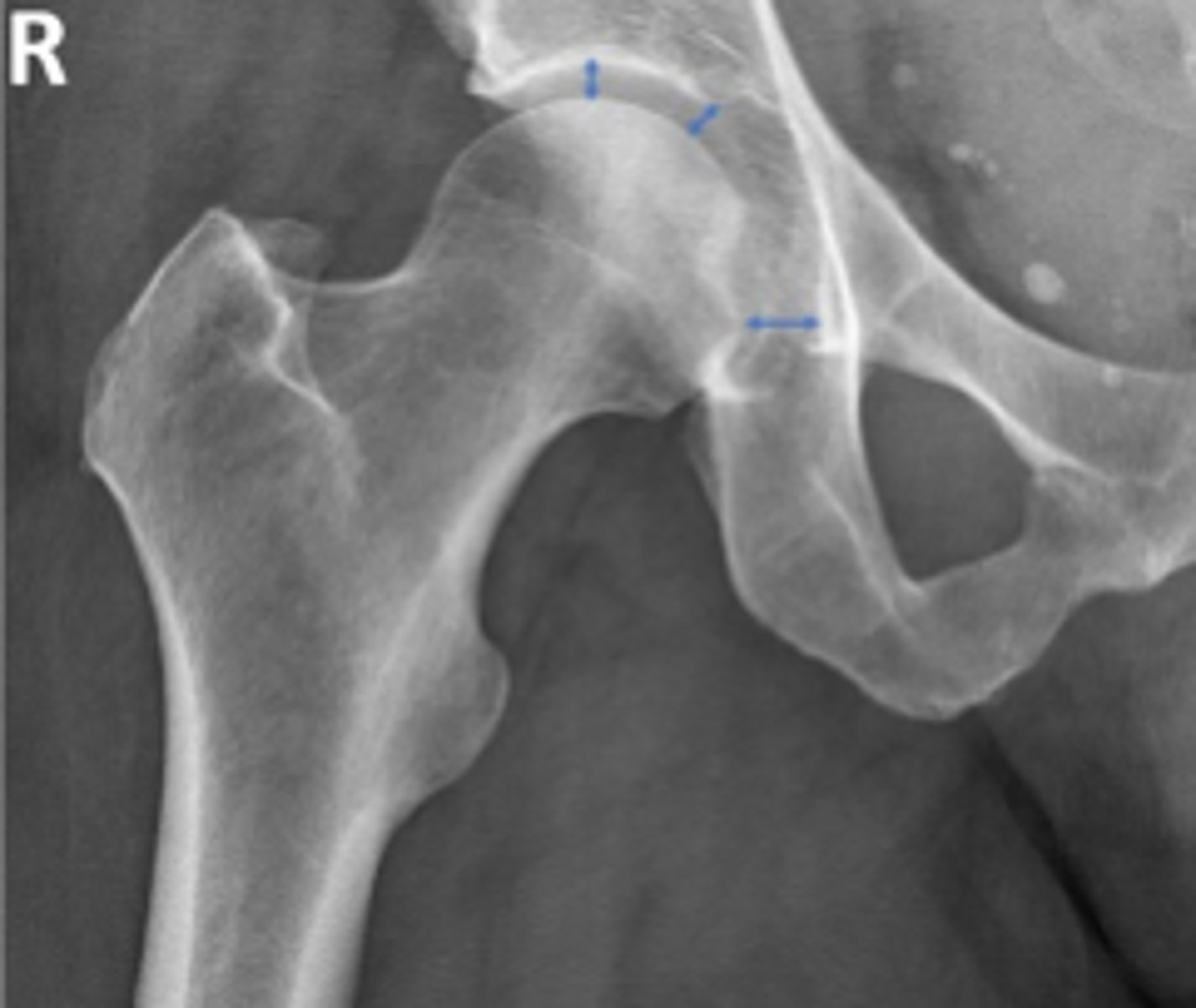
AP pelvis and AP hip views
Name 2 radiographic views for this assessment?
Pubic symphysis width
What is the name of the assessment?
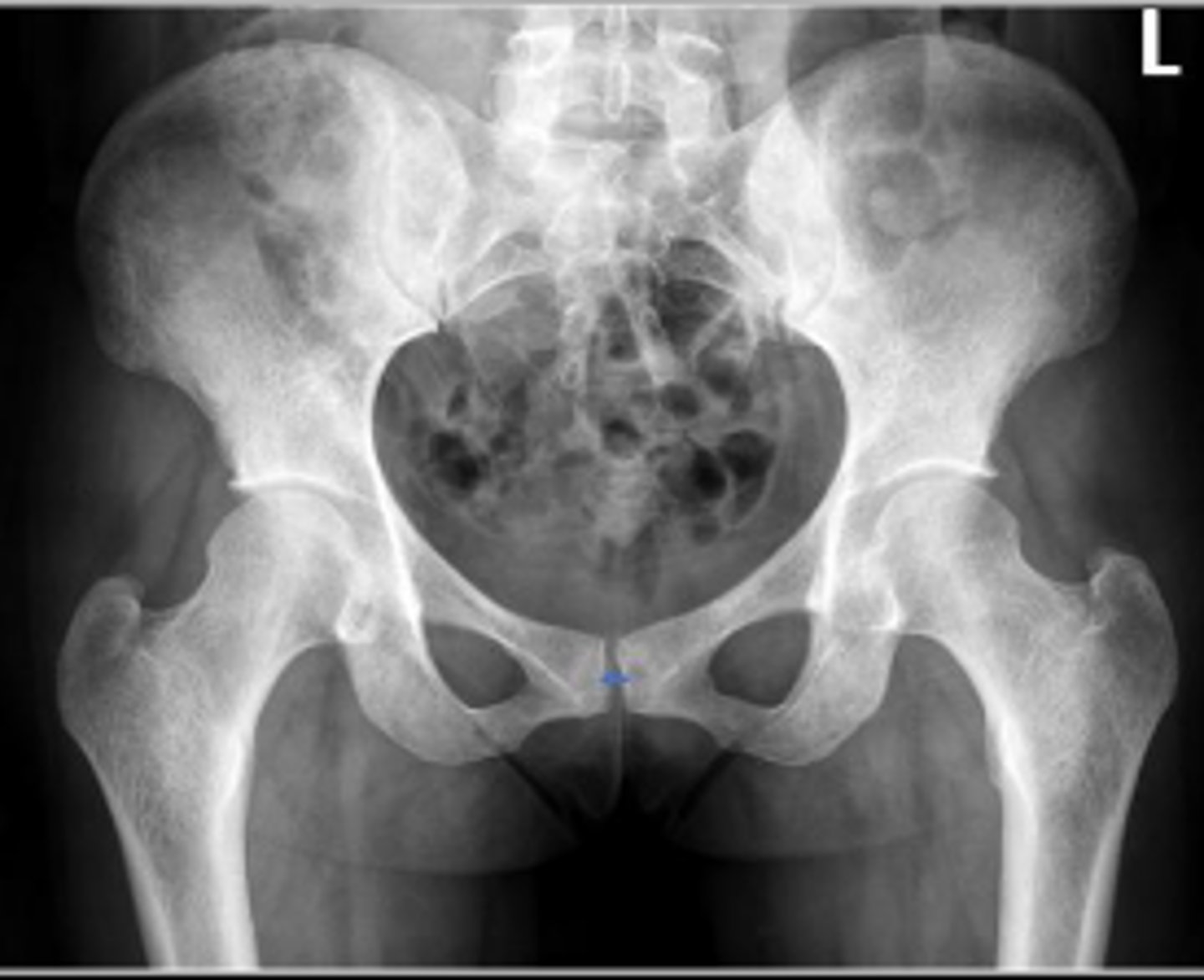
3.8-6mm (average of 5mm)
What is the normal range for this assessment in women?
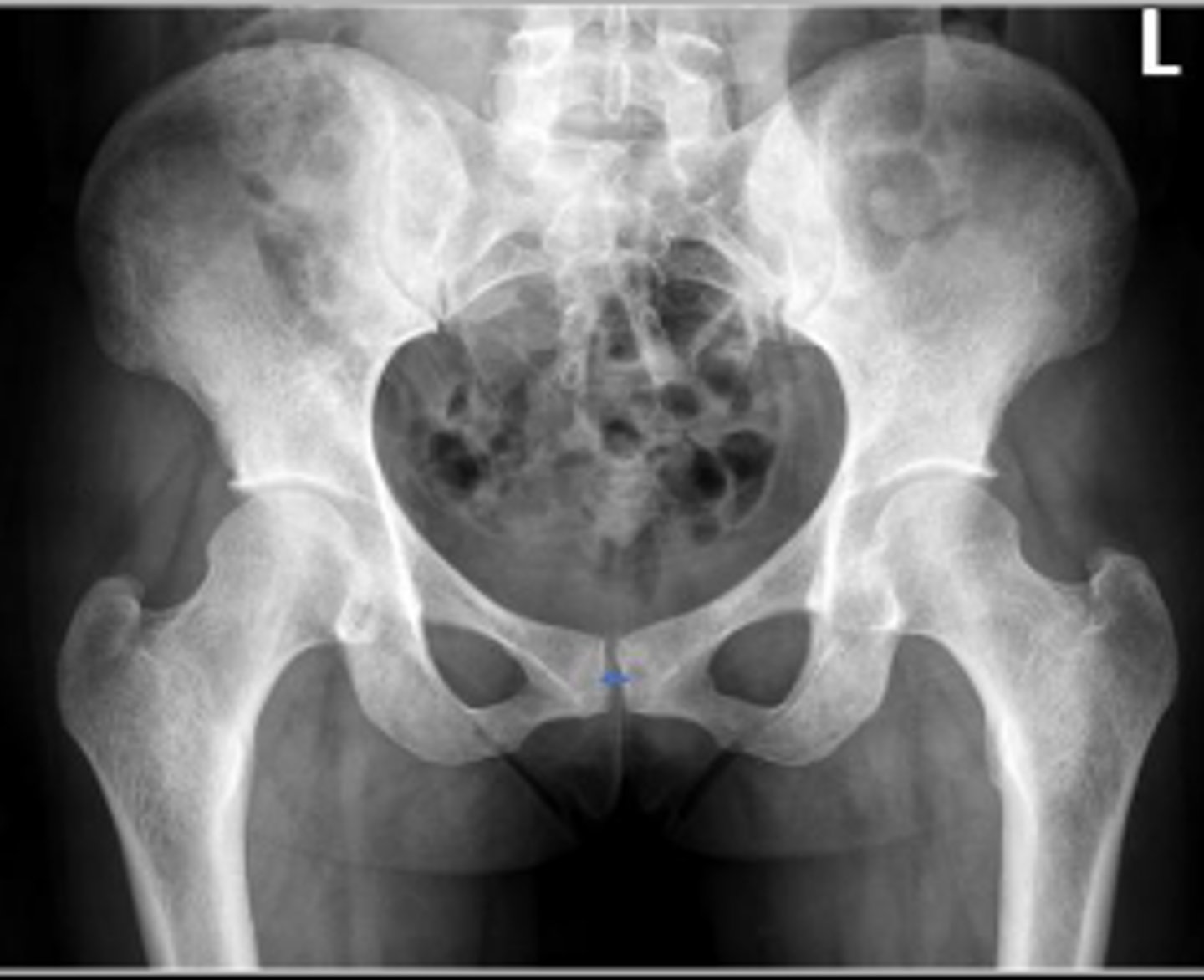
The distance between the articular surfaces of
the middle of the pubic symphysis
What are the osseous landmarks for this assessment?
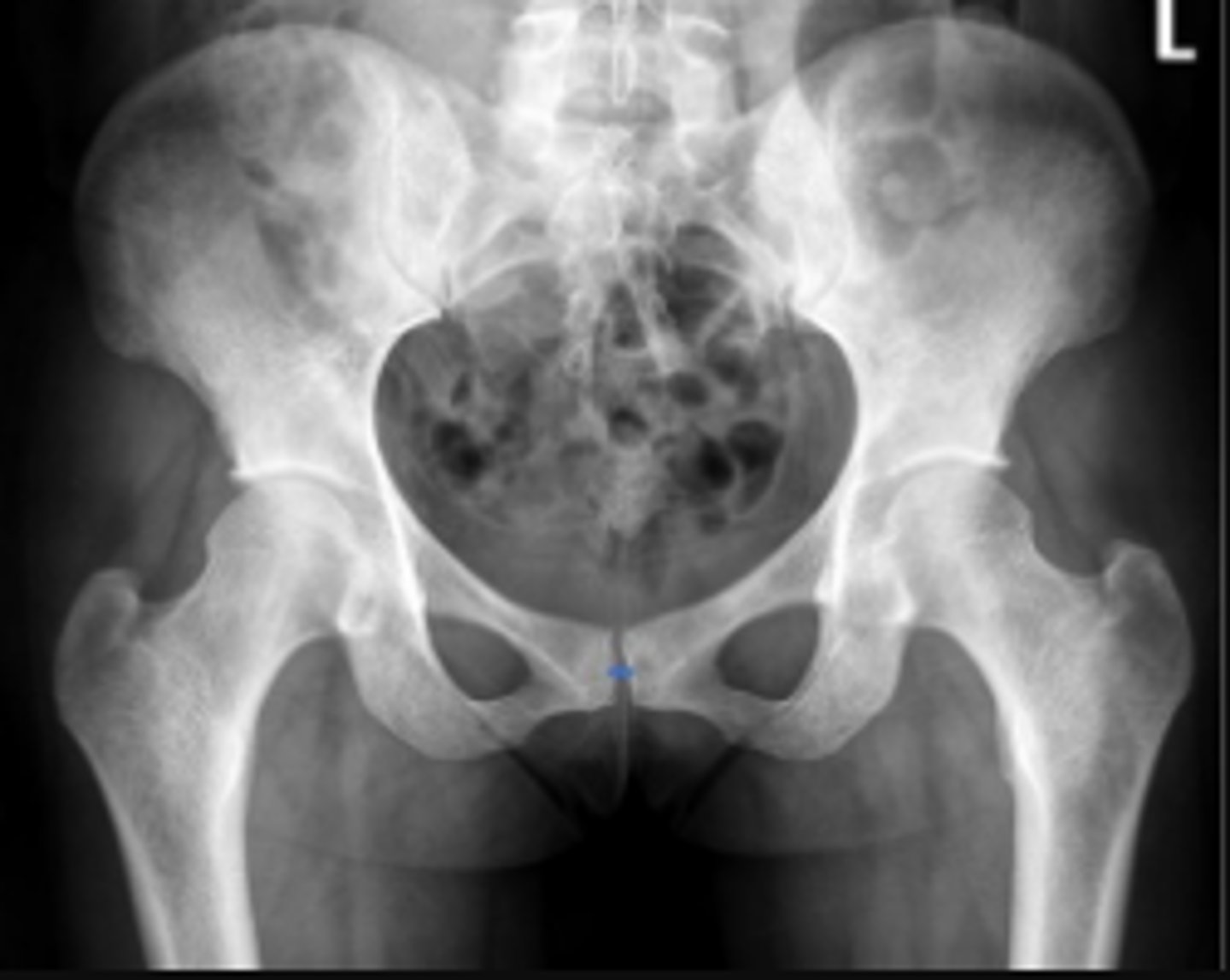
No
Is the measurement within normal limits?
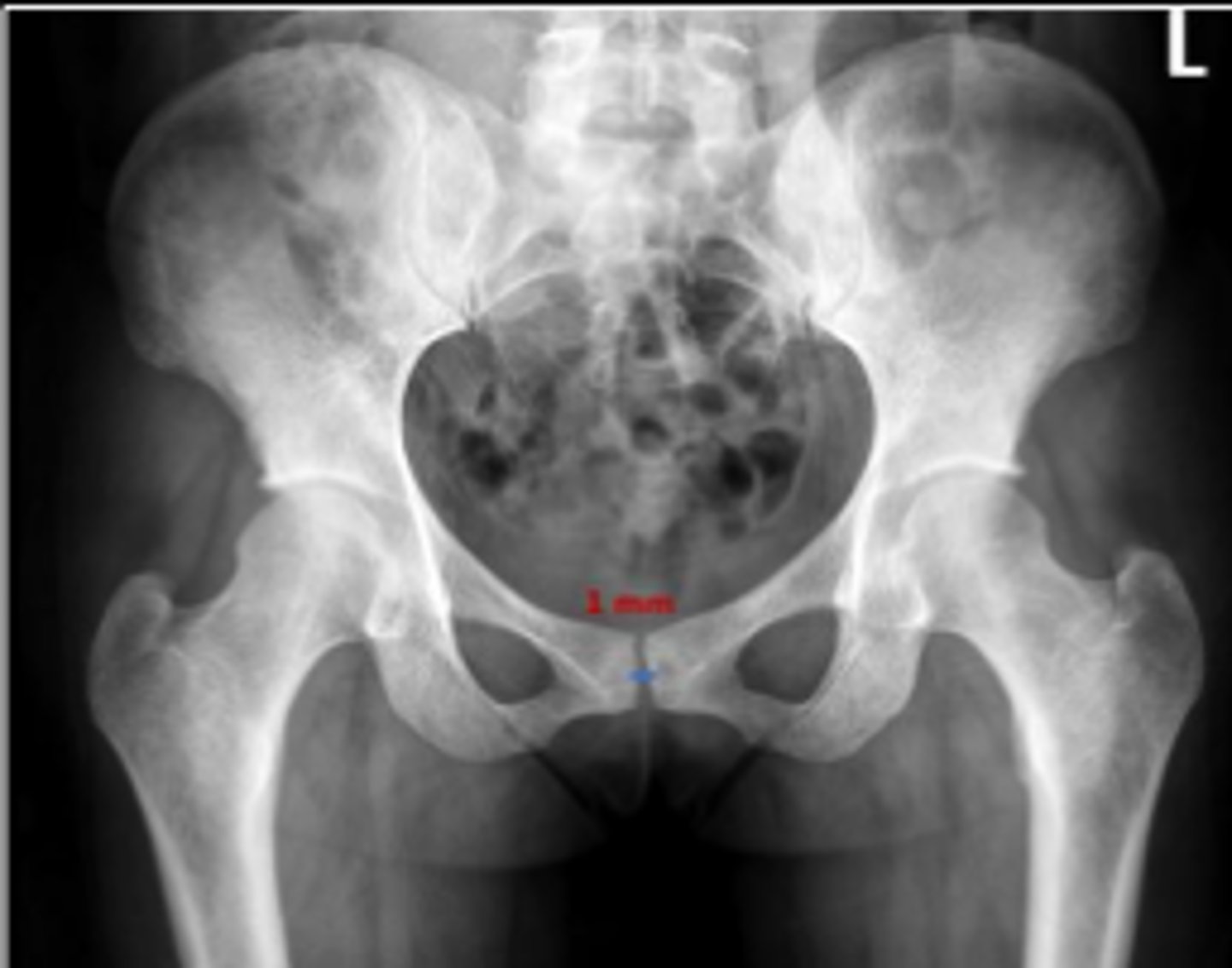
Post-traumatic diastasis, inflammatory resorption
Name 2 conditions that may result in a measurement of 12 mm?
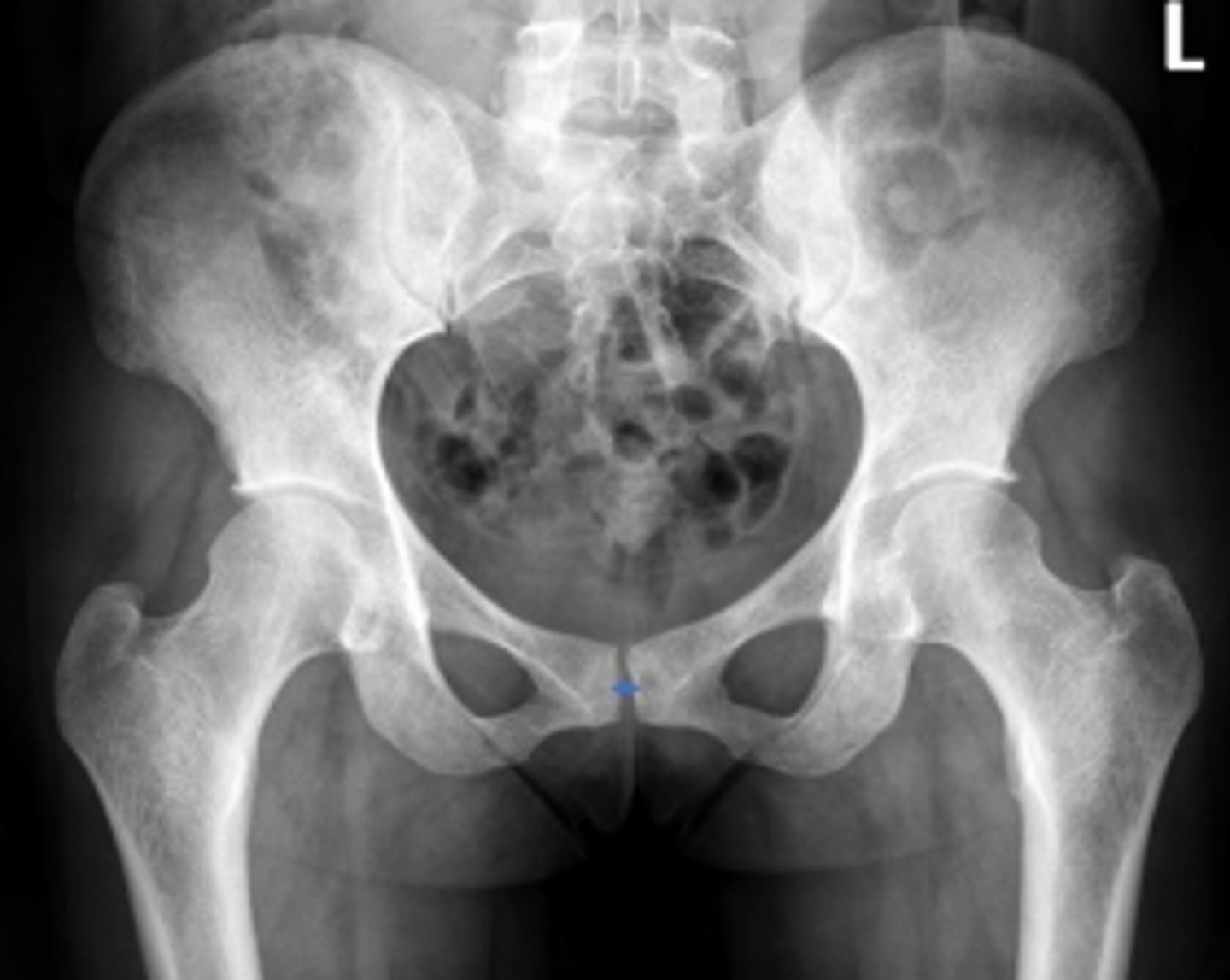
AP pelvis or bilateral hips
Name the radiographic view
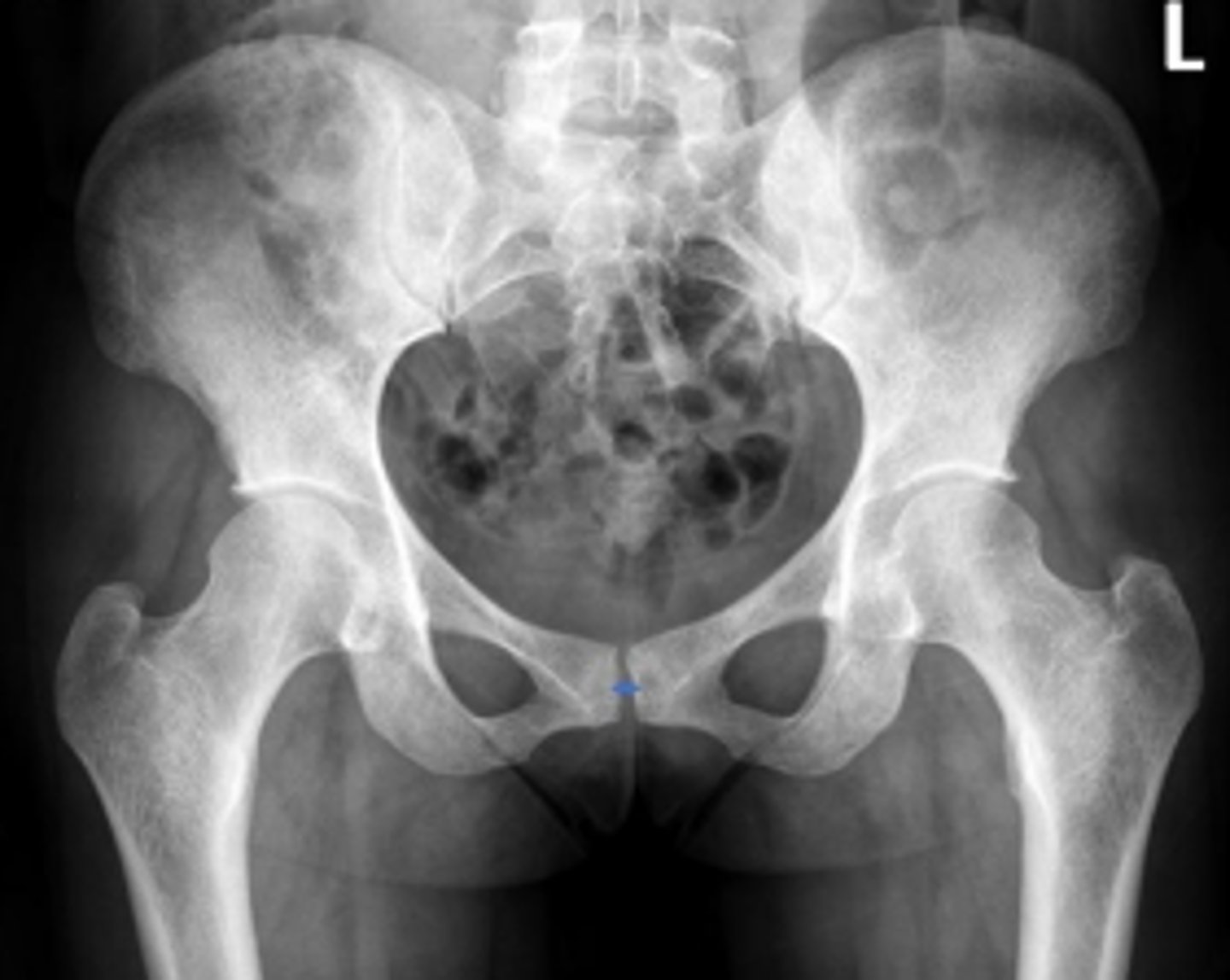
Shenton's line
What is the name of the assessment?
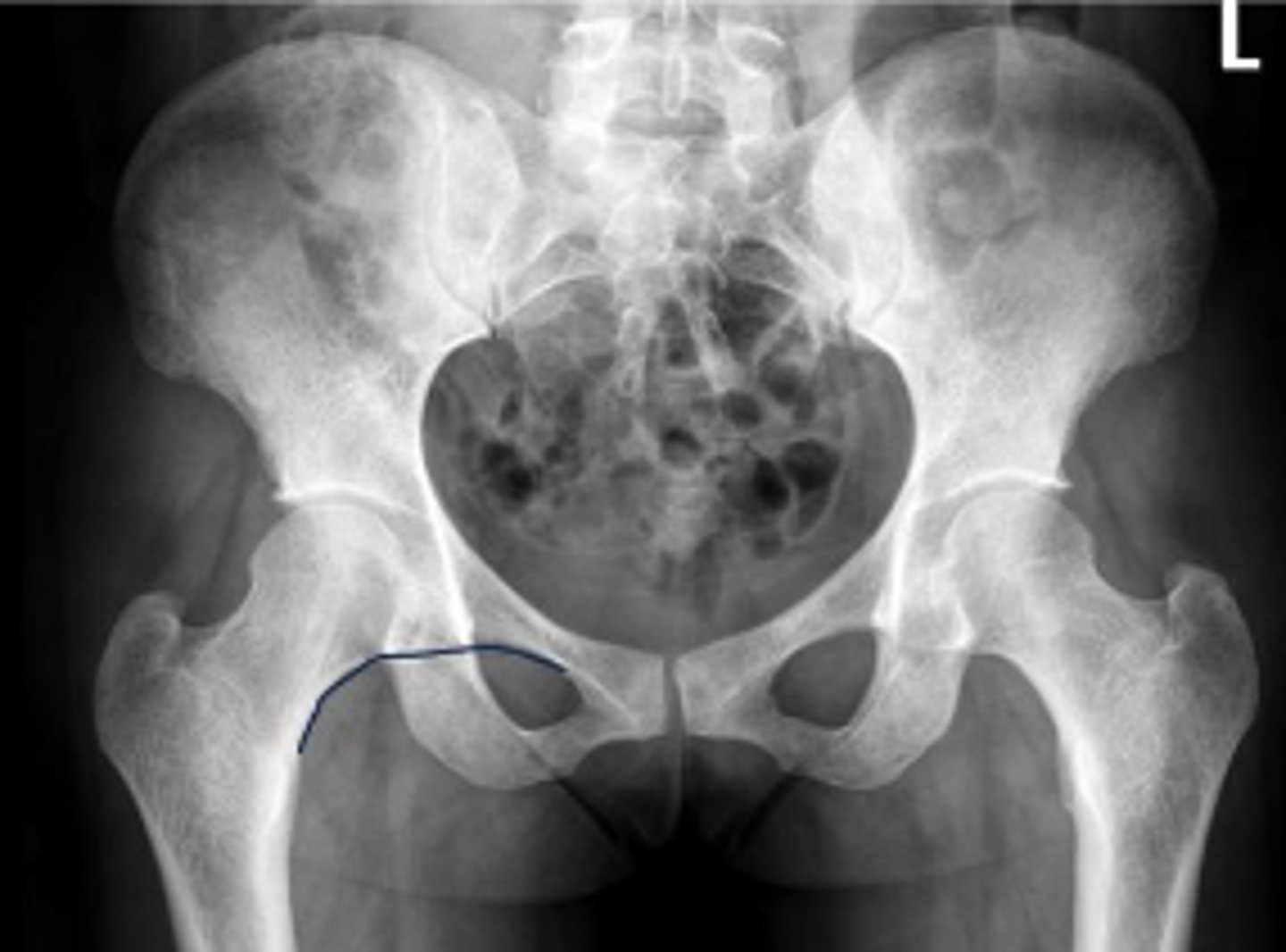
From the undersurface of the femoral neck
continued to the inferior aspect of the superior
pubic ramus
What are the osseous land marks for this assessment?
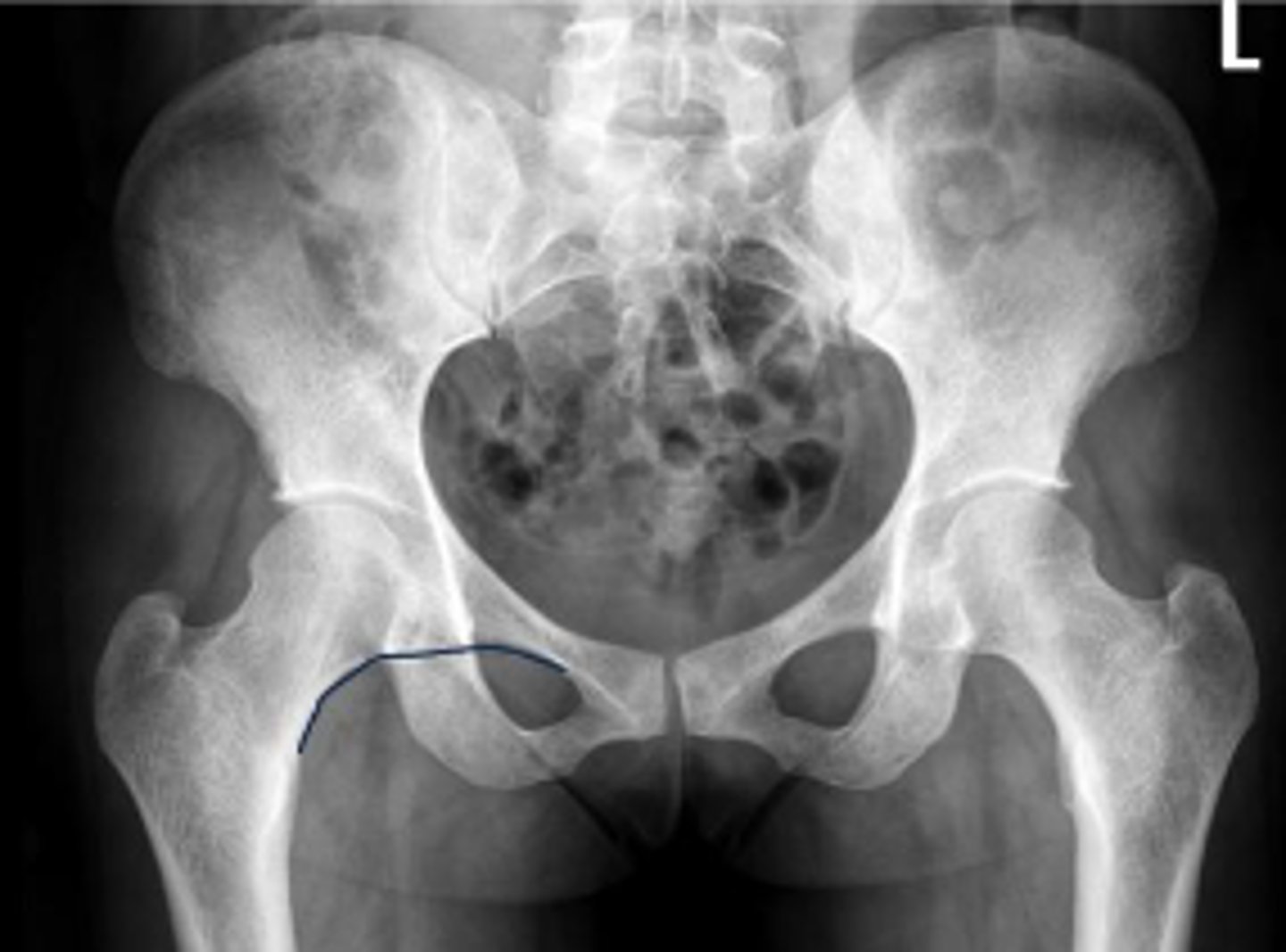
Hip dislocation, fracture
Name 2 conditions that may result in an abnormal assessment?
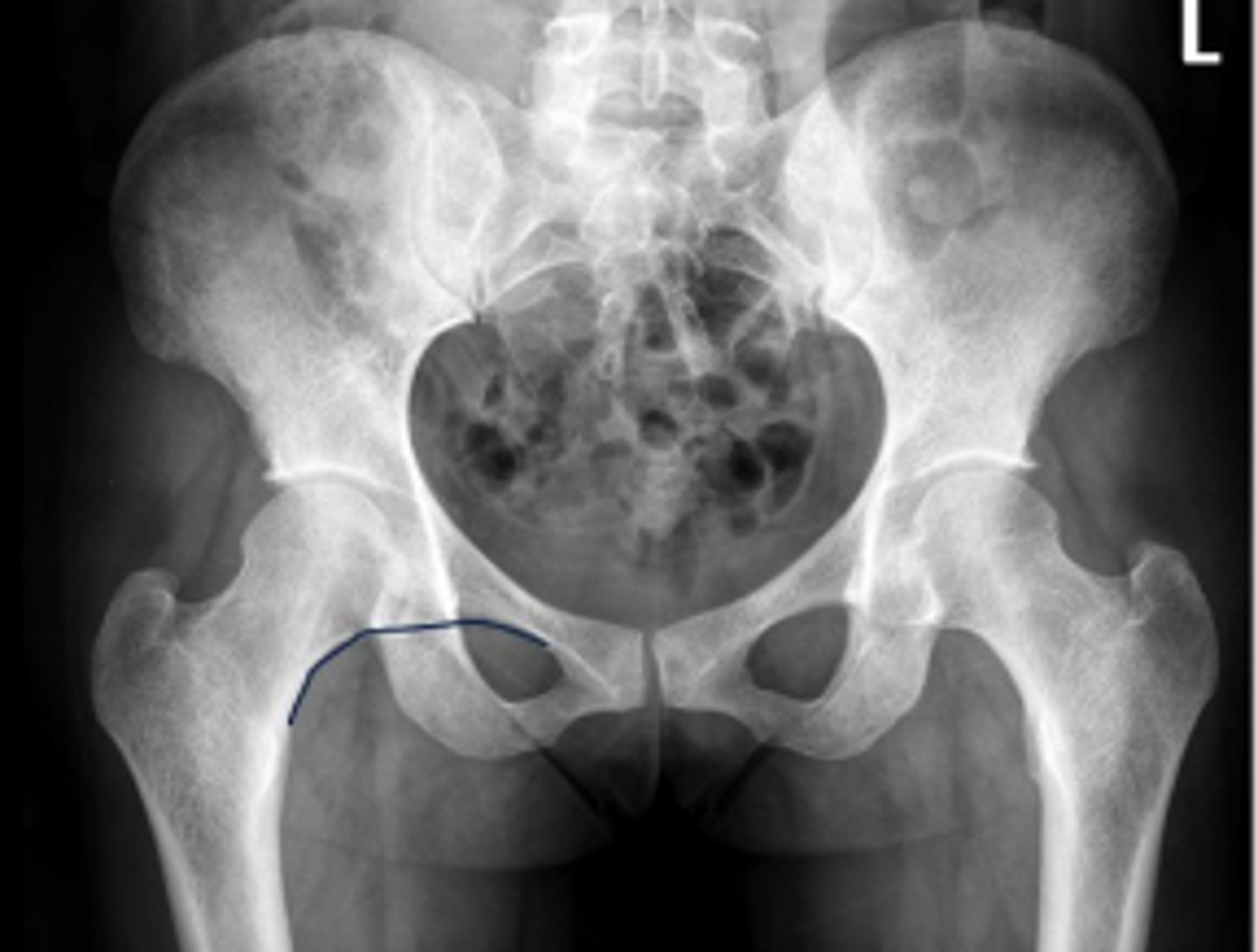
Posterior hip dislocation
What is most significant radiographic finding?
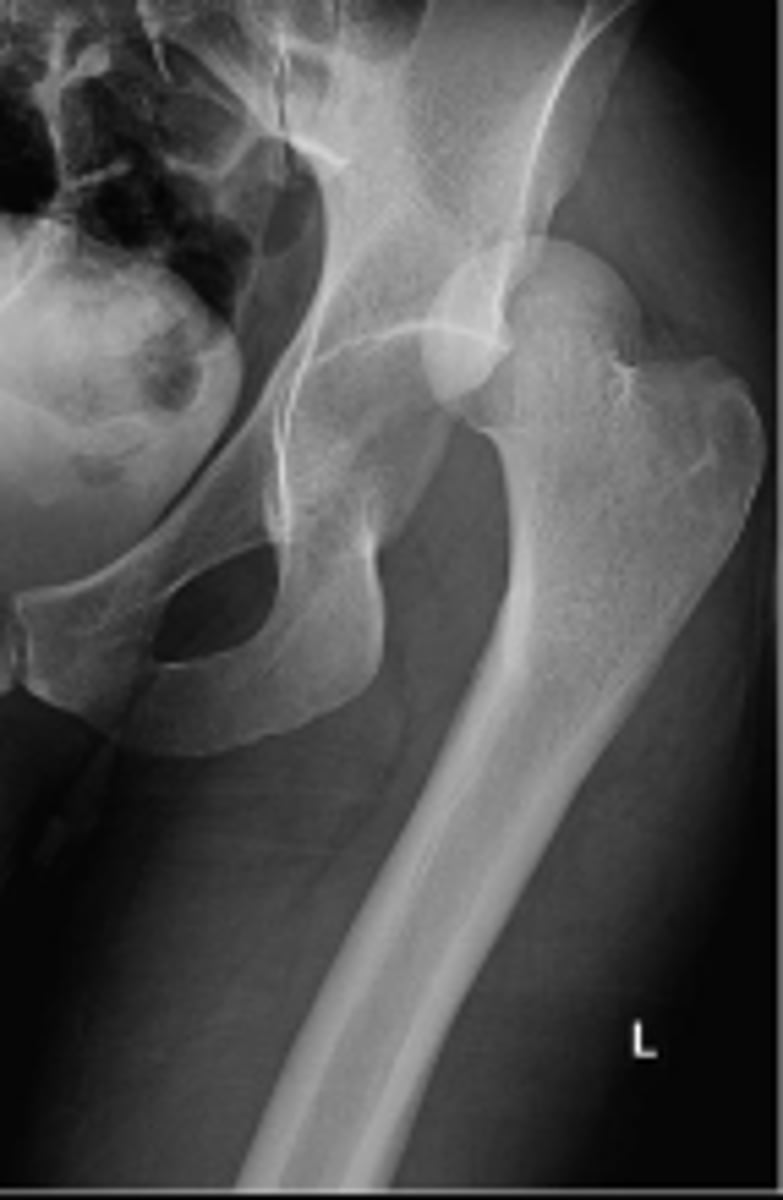
Femoral angle
What is the name of the assessment?
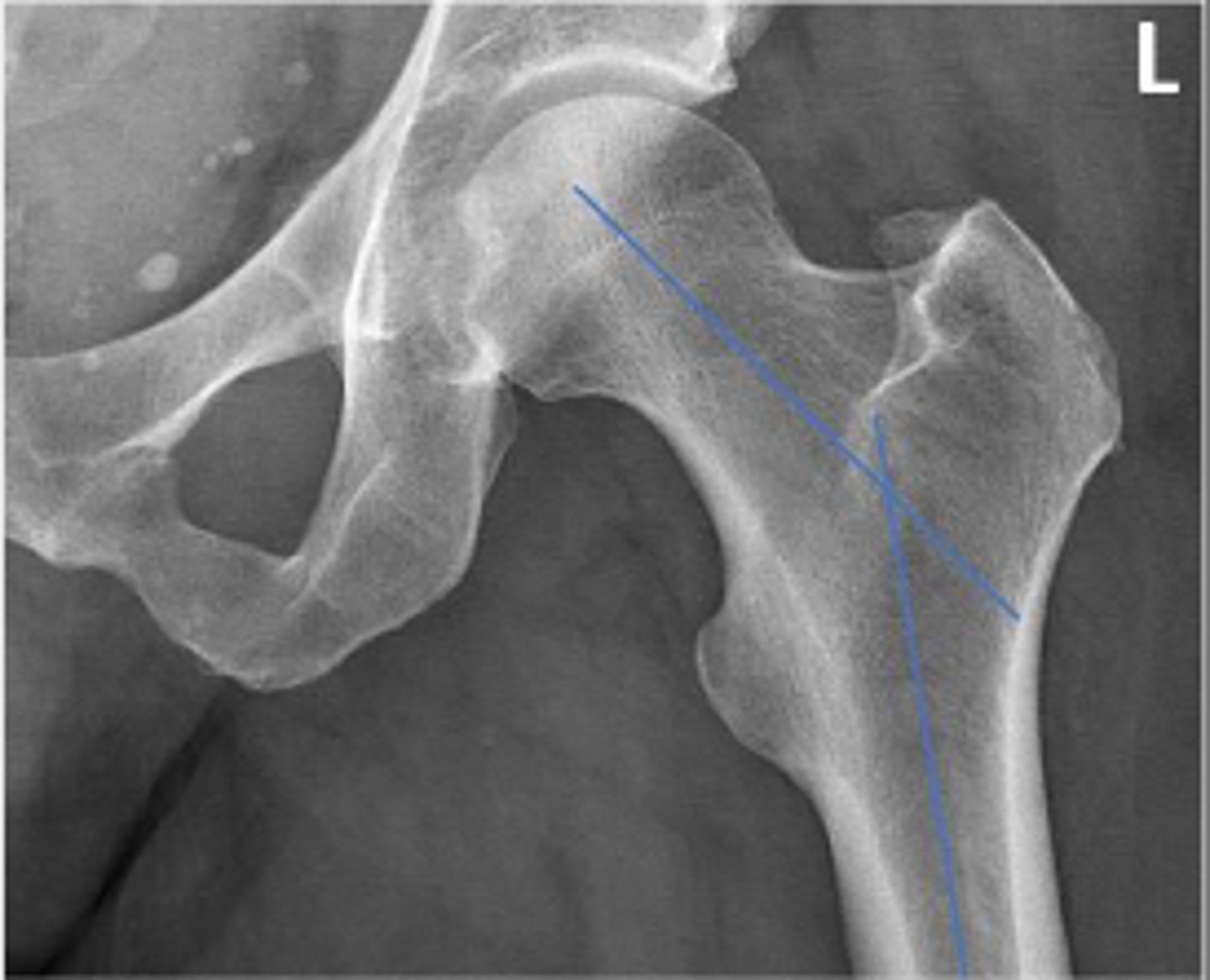
120-130 degrees
What is the normal range for this assessment?