Unit 5 Magnetism
 Call Kai
 Learn
Learn Practice Test
 Spaced Repetition
 Match
Match Flashcards
 Knowt Play
1/137

There's no tags or description
Looks like no tags are added yet.
Name | Mastery | Learn | Test | Matching | Spaced | Call with Kai |
|---|
No analytics yet
Send a link to your students to track their progress
138 Terms
A magnet is an object that:
Attracts or repels another object
Magnets are usually ______ solids
Metal
A magnet has:
Two poles
The two poles of a magnet are called:
Dipoles
The two poles of a magnet are called:
North and South pole
A dynamo is a type of:
Generate
A dynamo produces a:
Direct current
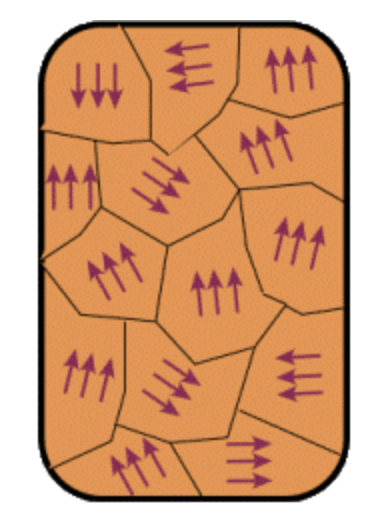
What is each fragment called?
Domain
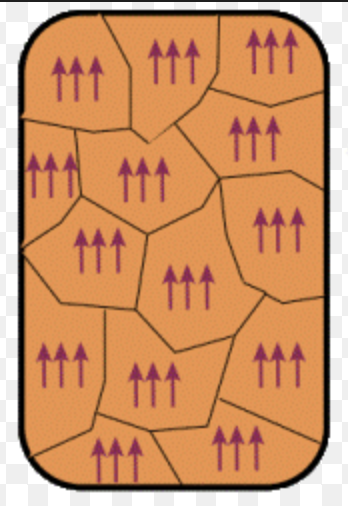
What are domains?
Pockets of dipoles
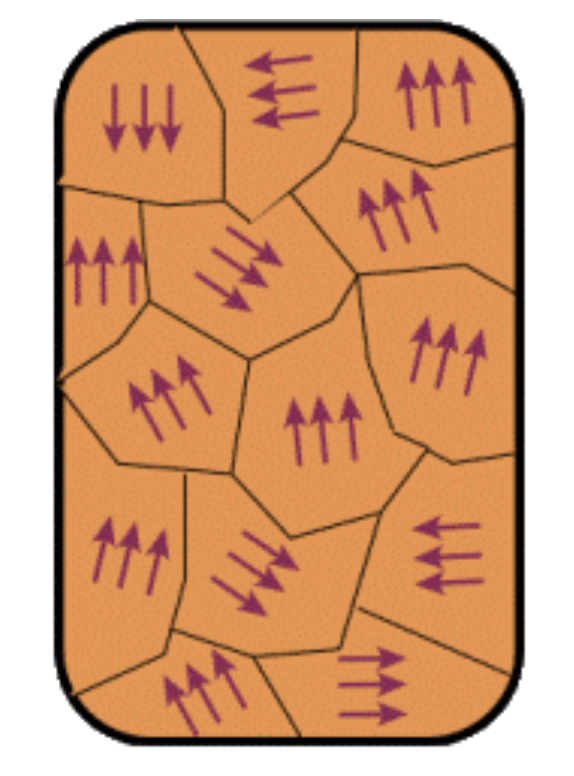
Draw the domains of a non-magnetic object
A transformer is a:
Device
A transformer is used to:
Change the size of an alternating voltage or current
Ways to cause a metal to become a magnet:
Through electricity and stroking it
Diagram of using current to turn a metal into a magnet:
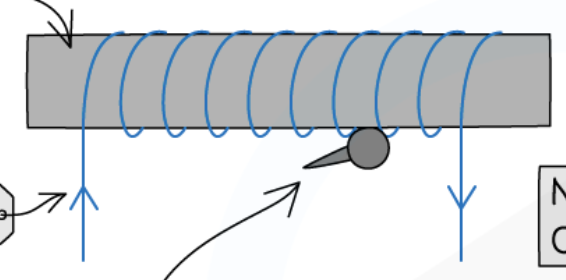
What happens to the dipoles of a metal when it becomes a magnet?
Aligned in one direction
Materials whose dipoles can be rearranged to align in the same direction are callled:
Ferromagnetic materials
Example of ferromagnetic material:
Iron
Types of magnets:
Permanent and temporary
Example of permanent magnet:
Steel
Example of temporary magnet:
Iron
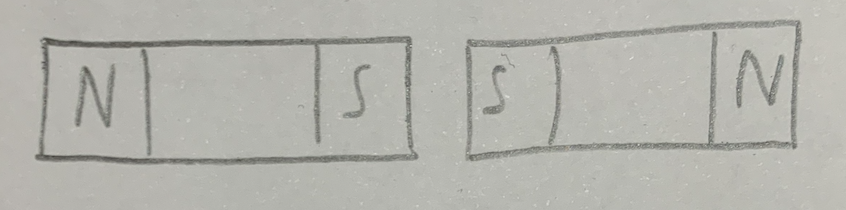
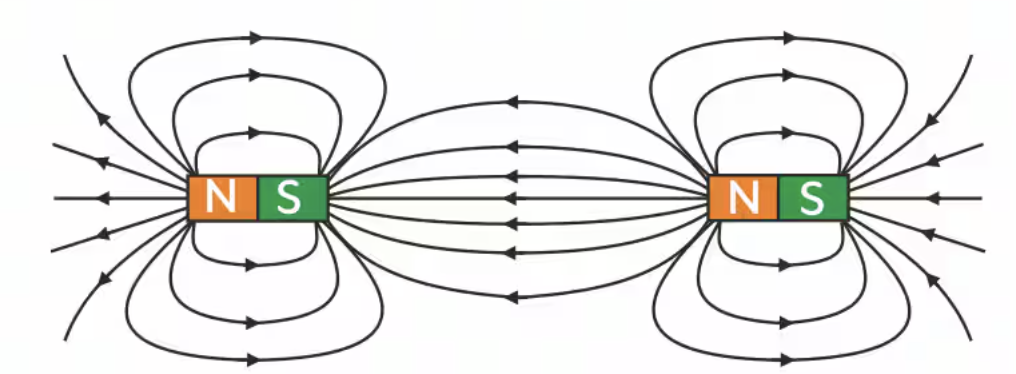
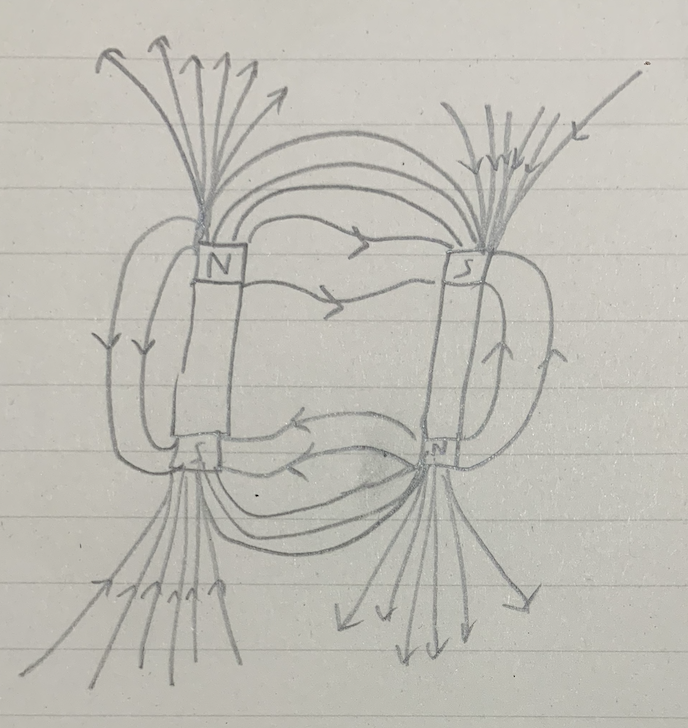
Draw magnetic field lines around the magnets
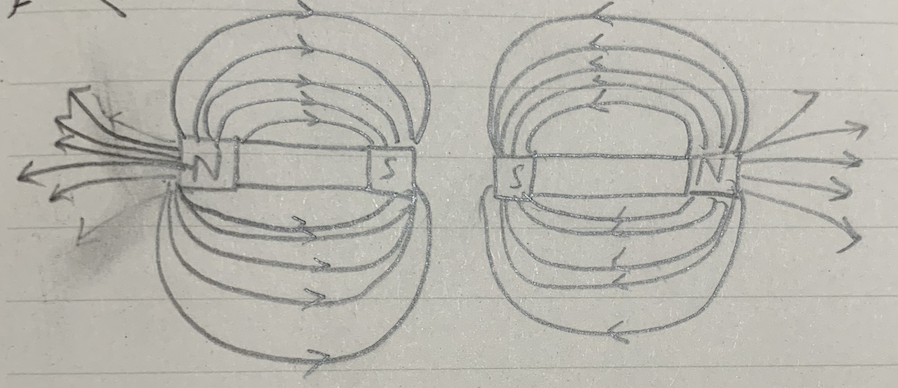

Draw magnetic field lines around the magnets
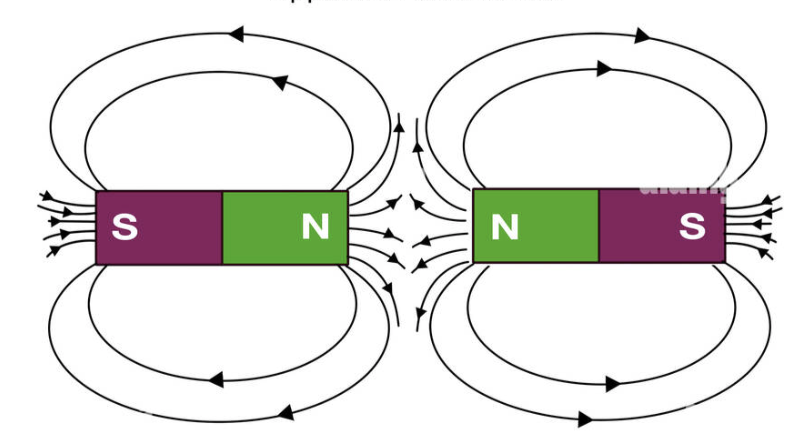
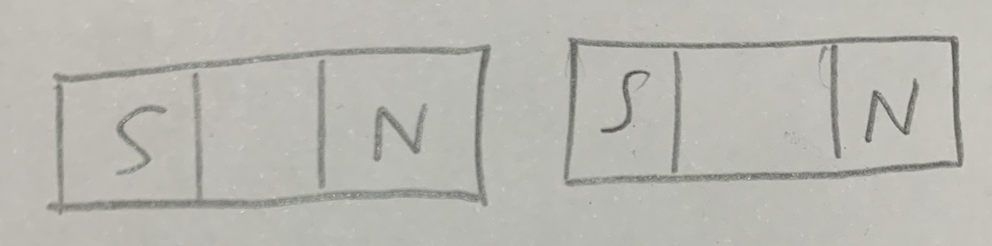
Draw magnetic field lines around the magnets
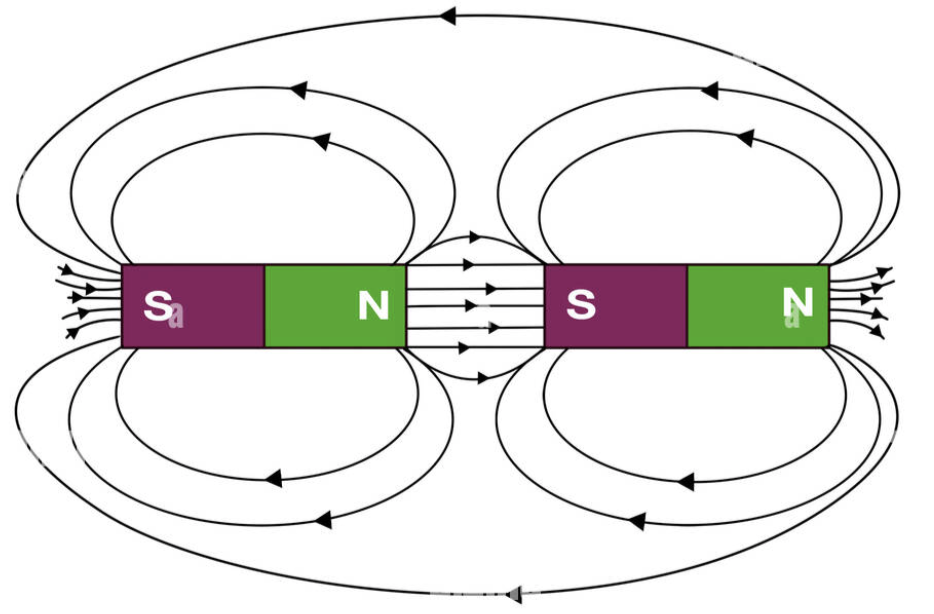
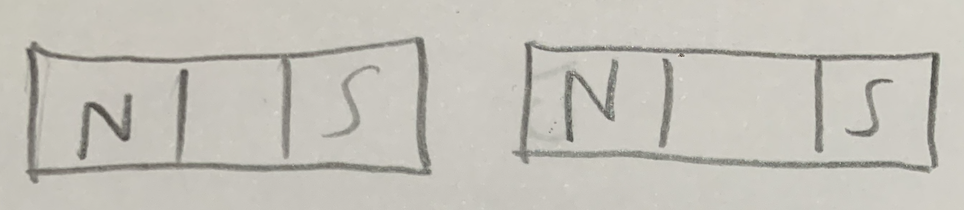
Draw magnetic field lines around the magnets
Draw the domains of a magnetic object
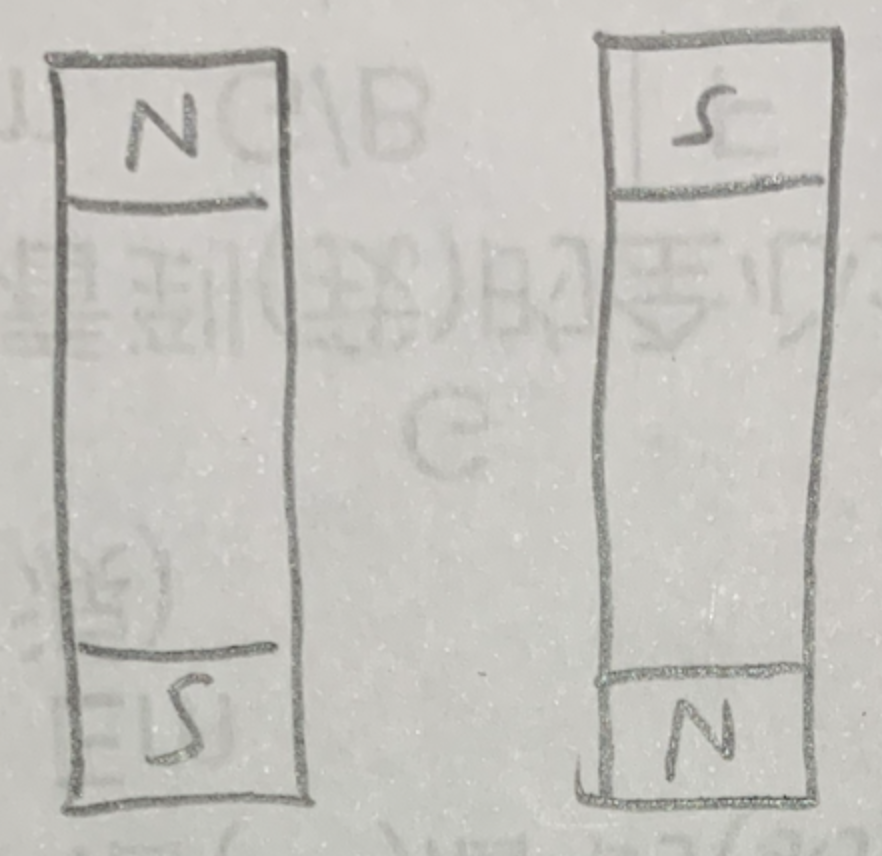
Draw magnetic field lines around the magnets
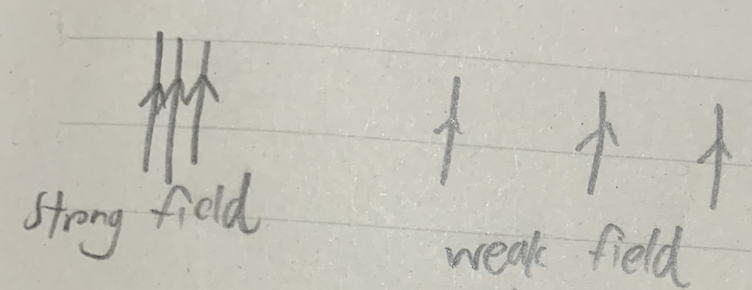
Draw diagram of strong and weak magnetic field
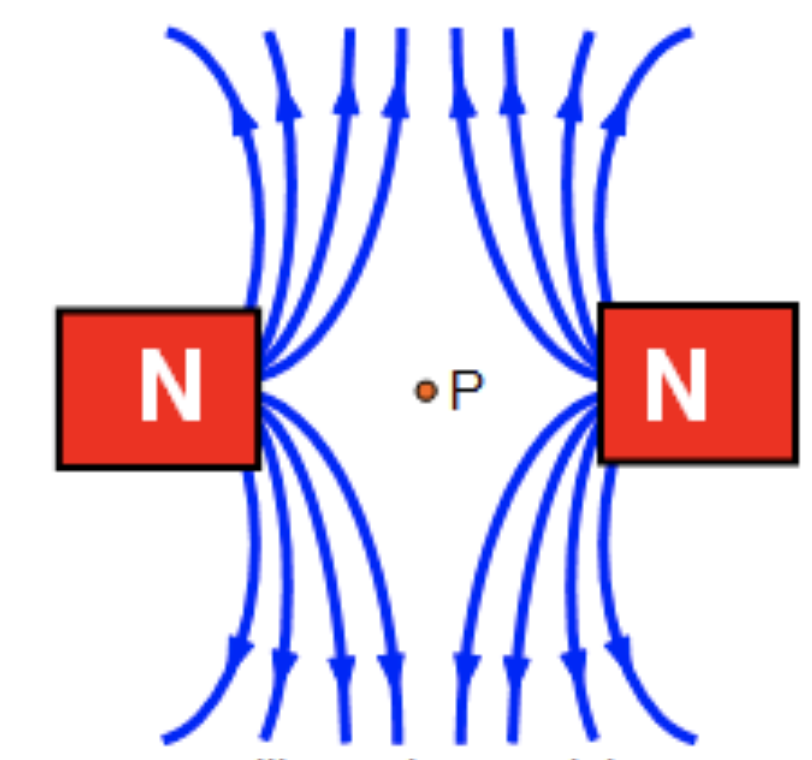
What is the point labelled P called?
Neutral point
A neutral point has a ______ magnetic force
Zero
Unit for magnetic field strength:
Tesla
Symbol for Tesla:
T
Like poles ______
Repel
Unlike poles ______
Attract
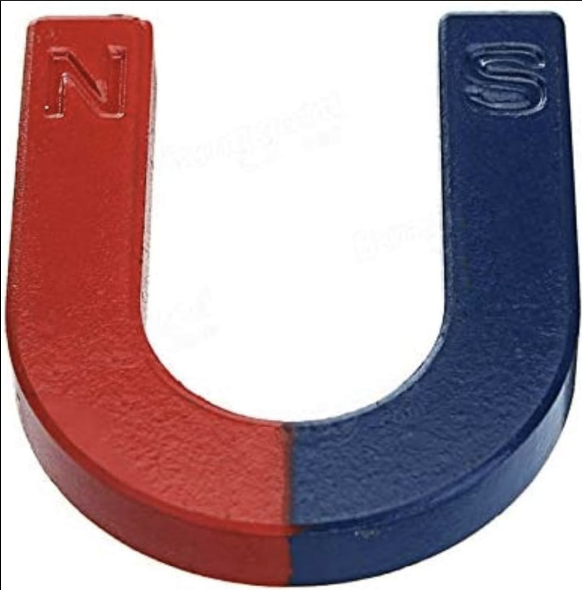
What is this called?
U-shaped magnet
Draw electric field lines around a U-shaped magnet
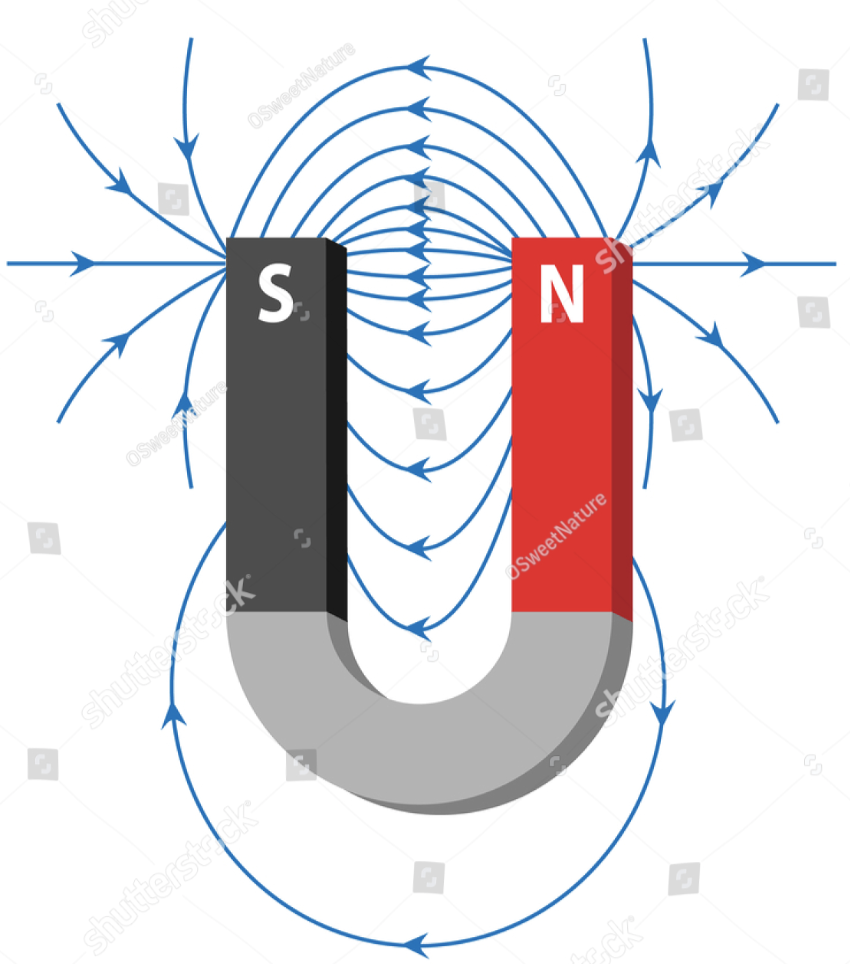
Cutting a magnet in half will not:
Isolate a single north / south pole
When a magnet is cut in half, it becomes:
Two magnets
We can use the term magnetic dipole moment to describe the:
Internal direction of a magnet
We use the term ______ to describe the internal direction of a magnet
Magnetic dipole moment
The magnetic dipole moment is also called:
Magnetic moment or magnetic dipole
The magnetic dipole moment can be represented by an:
Arrow that connects magnetic field lines
An arrow that represents the magnetic dipole moment enters the:
South end
An arrow that represents the magnetic dipole moment leaves the:
North end
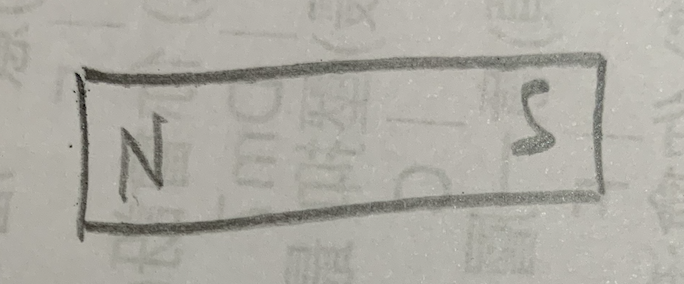
Draw the magnetic dipole moment
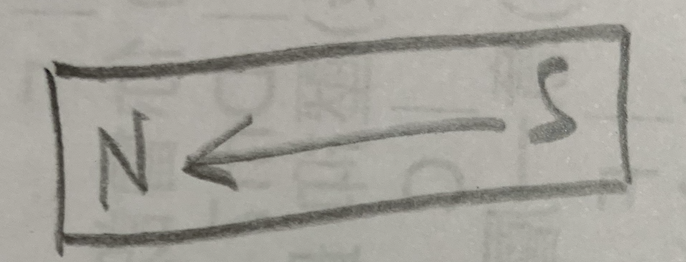
A current-carrying wire produces a:
Magnetic field
If current goes up, does magnetic field go clockwise or counterclockwise?
Counterclockwise
If current goes down, does magnetic field go clockwise or counterclockwise?
Clockwise
THe shape of the magnetic field lines depends on the:
Shape of the wire
More coils of a wire lead to a ______ magnetic field
Stronger
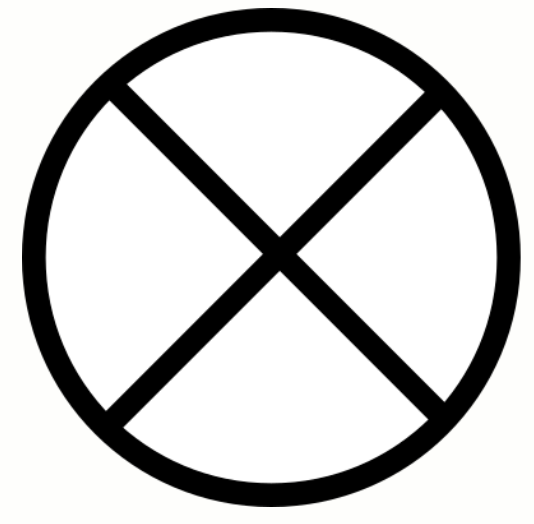
This symbol denotes the:
Movement of charges or vector force into page
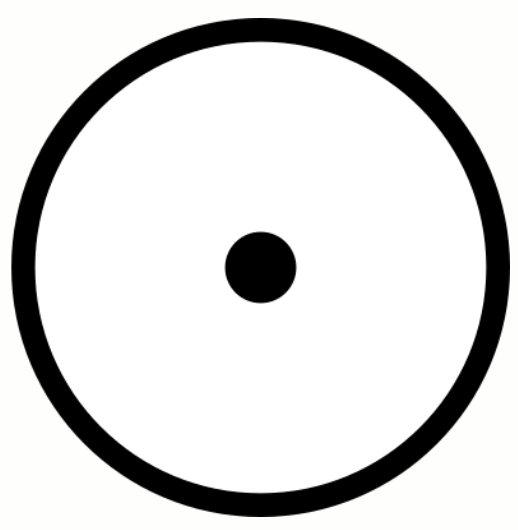
This symbol denotes the:
Movement of charges or vector force out of page
Diagram that shows why dot represents vector out of page and x represents vector into page:
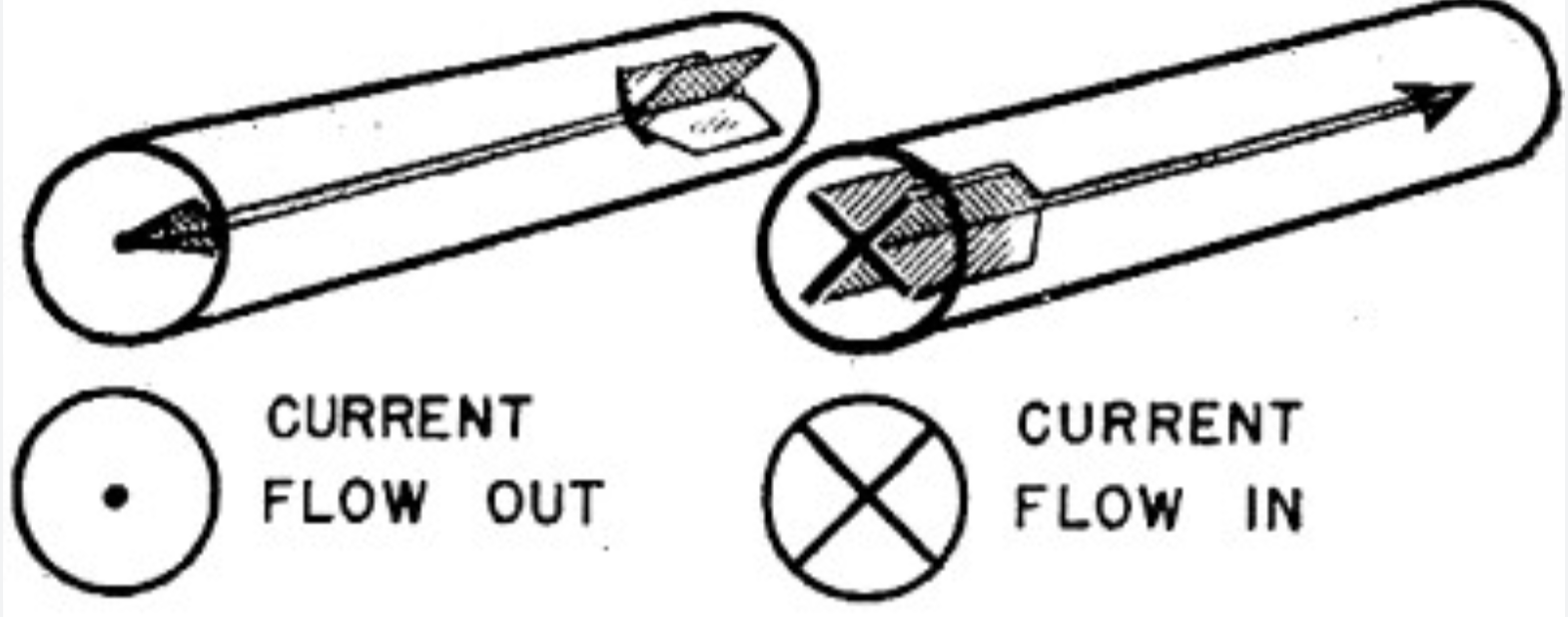
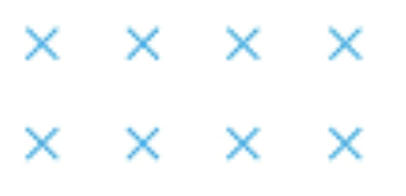
What does this diagram represent?
Vectors into page

What does this diagram represent?
Vectors out of page
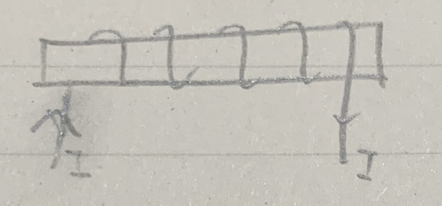
A solenoid is a:
Coil of current carrying wire
The more loops a wire has, the ______ the magnetic field
Stronger
Magnetic fields exert forces on ______
Moving charges
When a charged particle is moving through a magnetic field, a ______ acts on it
Magnetic field
Diagram of a solenoid:
The magnetic force acting on a charged particle moving through a magnetic field has a ______ when the charge moves perpendicularly to magnetic field lines
Maximum value
The magnetic force acting on a charged particle moving through a magnetic field has a ______ when the charge moves along the magnetic field lines
Zero value
In the right hand rule, what does the thumb represent?
Current
In the right hand rule, what do the fingers represent?
Magnetic field
In the right hand rule, what does the palm represent?
Force
The right hand palm rule is only true for:
Positive charges
If the charge is negative and we use the right hand palm rule, we have to:
Change direction of force
Equation for calculating magnetic force in terms of charge:
F = qBvsin(theta), where q = charge in C, B = magnetic field strength in T, v = velocity in m/s, and theta is the angle between velocity of the charge and the direction of the field
Diagram representing theta in F = qBvsin(theta) is theta is a slanted angle:
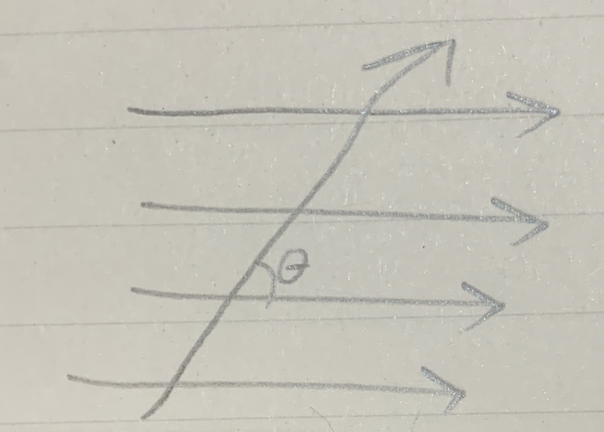
Equation for calculating magnetic force in terms of current:
F = ILBsin(theta)
How to derive this equation: F = ILBsin(theta)?
F = qBvsin(theta), and v=L/t so F = qB(L/t)sin(theta) and q/t = I so F = ILBsin(theta)
What must we know to use right hand grip rule?
Direction of current / charge and direction of magnetic field
What do fingers represent for straight conductor?
Direction of magnetic field
What does thumb represent for straight conductor?
Direction of current / charge
What do fingers represent for coil / solenoid?
Direction of current / charge
What does thumb represent for coil / solenoid?
North pole
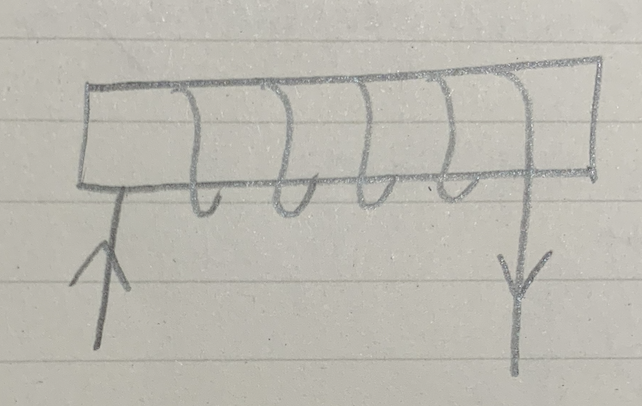
Which side is the north pole?
Right
What do you have to know to use right hand rule?
Direction of current / charge, direction of magnetic field, force
What does palm represent?
Force
Right hand rule only applies to what?
Positive charges
What must you do when using right hand rule for negative charge?
Flip direction of force
If the angle is slanted, does the direction of force change? (F=qBvsin(theta))
No
If the angle is slanted, what changes? (F=qBvsin(theta))
Magnitude of force
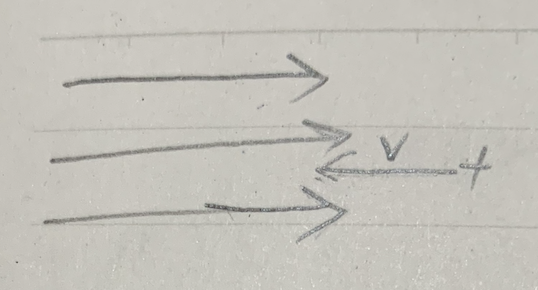
What is the direction of force?
No force
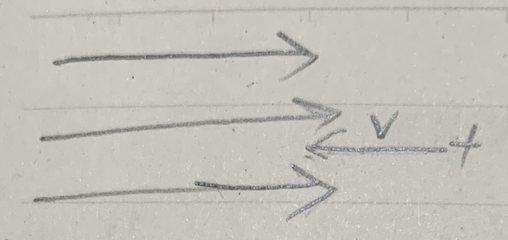
Why is there no force?
Because velocity of charge is anti-parallel to field
Why is there no force when velocity of charge is parallel or anti-parallel to field?
Because F=Bqvsin(theta) and sin(0) and sin(180) are both equal to 0, causing F = 0
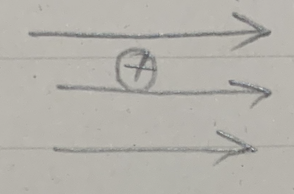
What is the direction of force?
No force
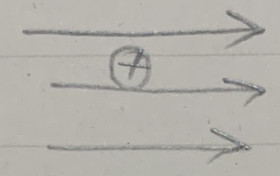
Why is there no force?
Because no velocity of charge
Why is there no force when charge is not moving? (explaining mathematically)
F=Bqvsin(theta) so when v = 0, F = 0
What field does unmoving charged particle have?
Electric field
Why is there no force when charge is not moving? (explaining in words)
An unmoving charged particle does not have a created magnetic field, so it doesn’t interact with another magnetic field to create force
What field does an unmoving charged particle lack?
Magnetic field
If a charged particle moves right to go into a magnetic field pointing into the page, how does it move afterwards?
In circular motion
Why does a charged particle move in circular motion after moving right to go into a magnetic field pointing into the page?
Because force is up, then left, then down, then right, and so on
How must charge go into a field to move in circular motion once enters field?
Perpendicular to field direction
What happens to a charged particle after entering magnetic field perpendicularly?
Leaves it while in circular motion
What angle is made between force and direction of path of circular motion of charge?
90 degrees
Draw diagram of circular motion of charged particle in magnetic field:
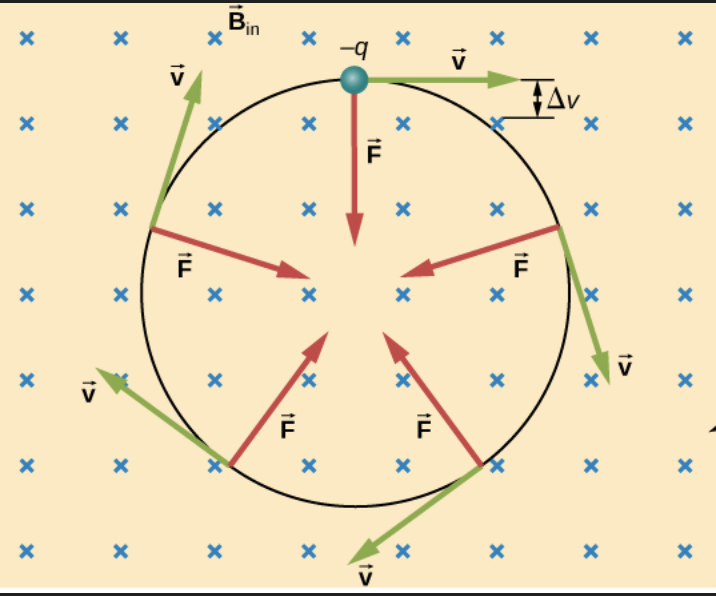
Does kinetic energy of charge in circular motion change?
No
Why does kinetic energy of charge in circular motion not change?
Because speed remains constant
Why does speed of charge in circular motion remain constant over time?
Magnetic force is not doing work on it
Explore top notes

