Soc Gen 105B Readings
 Call Kai
 Learn
Learn Practice Test
 Spaced Repetition
 Match
Match Flashcards
 Knowt Play
1/154

There's no tags or description
Looks like no tags are added yet.
Name | Mastery | Learn | Test | Matching | Spaced | Call with Kai |
|---|
No analytics yet
Send a link to your students to track their progress
155 Terms
David Reich (2018)
1) race is a social construct but there are genetic differences that map to "races"
2) ignoring that leaves a vacuum for pseudoscience
David Reich (prostate cancer example) (2018)
West Africans susceptible to prostate cancer but was later disproved because others outside this "race" also have this gene
David Reich on SNPs (2018)
pioneered an algorithm that synthesizes genetic algorithm to try and show that there were distinct populations of people, but later proved wrong because humans were always mixing
Khan and Nelson and Graves (2018-Buzzfeed) (who were these people)
Group of 67 scientists that was a rebuttal to Reich
Khan and Nelson and Graves (2018-Buzzfeed) (arguments)
1) scientists are cherrypicking what genetic difference are meaningful for certain populations
2) there are no races with "distinct" genetic traits rather its a pattern of geography and distance
3) Geneticists, By saying there are genetic differences between groups are ignoring how society impacts biology
Guardian... (Bones of Black Children 2020)
Professors use bones of black children killed in protests for their anthro classes without permission from the families
Broader: Black bodies have been objectified and exploited in science as objects
New York Times (Genetic Traits in Black People)
Police using excessive violence and use the "Sickle Celled Trait" as an argument for "natural death" which shields accountability
Smedley (Race in America 1993) (What are the 5 components of the racial worldview)
1) humans are classified into biologically discrete groups
2) There are hierarchical rankings of groups
3) manifestations of physical traits are linked to different capacities for intellectual, moral, and behavioral achievements and developments
4) racial traits inherited naturally
5) races has permanent essences that are fixed even when difficult to detect
Smedley (Race in America 1993) (Main 3 arguments)
1) there is no genetic basis to race
2) used to justify exploitation, hierarchies, and prejudices (slavery, colonialism, Native America exploitation)
3) "No race" society threatened the foundation/structure of American society
Primordiamism (Smedley (Race in America 1993)
(Shils + Gergen) Racism is natural because everyone fears the "other" (you fear those who are different from you) (Freuidian view of self-love)
Race and Ethnicity (Smedley (Race in America 1993)
These are distinctly different from one another
Culture is learned, physical characteristics don't indicate culture
Roberts Main Argument (2011)
(Fatal Invention, How Science, Politics, and Big Business Re-Create Race in the 21st Century)
Race is interpreted according to invented rules (politics, business) and disguised as biological
Roberts How does he propose we end harmful impacts (2011)
(Fatal Invention, How Science, Politics, and Big Business Re-Create Race in the 21st Century)
must address them politically:
Structural causes: race has consequences for health, wealth, Socioeconomic status etc..
Roberts Origins of Race (Fatal Invention, How Science, Politics, and Big Business Re-Create Race in the 21st Century) (Europe and America) (2011)
1) European imperialism: Roman Catholic Church: said Africans are enemies of christ therefore slavery is OK
2) America: "negro and slave" become synonymous because now free and enslaved people are grouped together
Roberts: Classification of Who is White (Fatal Invention, How Science, Politics, and Big Business Re-Create Race in the 21st Century) (Europe and America) (2011)
1) Oriental exclusion act: No asian immigration into the US
2) Irish/Italian are NOT white (example of race as political)
3) Race is instable because US census changes frequently
4) Belief that Africans have a permanent inescapable status = reason race revolves around biology
Roberts: Key Quotes
(Fatal Invention, How Science, Politics, and Big Business Re-Create Race in the 21st Century) (Europe and America) (2011)
1) Racial categories are not natural, but institutional; yet seeing the effects of instituiotnal racial categorizing on “races” today enforces the belief that race is part of nature
2) Race: belief in intrinsic racial difference is a delusion; genuis of poltical system->unequal conditions it produces becomes excuse for racial insutice
Ex. African sickness, illiteracy=evidence of inferioirty, rather than white inhuamnity
3) Race is the product of racism; racism is not the product of race
Davis (Who is Black?) What is the One drop Rule? (1991)
a single “drop” of black blood, makes someone black forever
Applies to black people only, in the US
Davis (Who is Black?) Examples of One Drop Rule (1991)
Overall concept: "PASSING"
- Although your outward appearance may be "passing" AKA white that doesn't mean that you will be treated as white under Jim Crow segregation
1) Plessy v Ferguson: Plessy was 7/8 white and 1/8 black but classified as Black --> this lead to Supreme court decision to uphold separate but equal doctrine
2) Susie Phillips: had a distant Black ancestor and wanted to change her racial classification to white (she said she doesn't mix with Black people= social) and court said No
3) Lena Hornes: was light skinned and came from a black upper-middle class family, did typically "White" roles but wasn't viewed as socially "Correct" so agents tried to make her pass as spanish or Egyptian
4) Paradox with Black Panthers and others: WEB Du Bois, Booker T Washington, and Fredrick Douglas (all had euro ancestry but took their "one drop of blackness" as a point of empowerment against JCS (also Harlem Renaissance = pride and implicit acceptance of one drop rule)
Davis (Census, Miscegenation, Expansion of Slavery) Examples of One Drop Rule (1991)
1) Census: initially had many categories (eg. mulatto, quadroon, etc....) but then changed to one drop rule --> this was ONLY in US (rigid racial boundaries in US compared to other societies)
2) Miscegenation: "pure" race should not mix
-Racial mixing= degerate low intellect society
- Rise of psudoscience: like shape of skulls, facial features etc... to prove this point
3) expansion of slavery:
- initially there were not distinct differences between white lower class servants but with concept of Miscegenation
(NO MIXING) because black meant permanent servitude
Miscegenation (David reading)
"pure" race should not mix
- Note: Strict prohibition of inter-racial relationship (White women sexuality was heavily policed but white man + black women ok)
Davis (Census, Miscegenation, Expansion of Slavery) Racial classifications in other cultures (1991)
1) Latin America: Casta System: social status influences racial classification (think about painting/what they symbolize)
ex. Mestizos: Spanish + Native American, highest political status
2) South Africa Apartheid: mixed groups had an intermediate status rather than black label (different from ODR)
3) Canada (Metis): Mixed indigenous -European population developed separate ethnic identities
(Metis= distinct people with shared cultural language and identity) ---> considered the lowest class (no political place)
4) Korean and Vietnam Mixed Children: mixed children seen as a threat to national identity
5) Britain and Anglo Indians: has an elevated status during british occupation and lower status after independance
6) Haiti: Mulattos had higher status and then post revolution status decreased
Across all: mixed status destabilized hierarchy, race is political, US tried to eliminate ambiguity via one drop rule
Keel (Divine Variations) (2018) (Overall)
1) Early racial science attempts to be secular but still retains Christian assumptions unintentionally
Keel(-Divine Variations) Johanna Blumenbach (On the Natural Variety of Mankind)
1) First person credited with secular scientific study of race
- Keel still says he is shaped by christain methord, said science changes methords but not religious underlying worldview (christian worldview)
2) Said that there was this concept of Bildunstrieb which translted to "Formative Drive" which is a natural force guiding development etc.. and thats what explains how human variation was created
---> Keel says NO because it just is "nature" replacing the concept of "god" so basically saying the same thing and coins the term "secular creationism" as a divide creative logic that is transfer to anything that replaces "GOD as a creator)
Keel(-Divine Variations) Bildunstrieb & Secular Creationism & Mongrel Epistemology
Bildunstrieb: (Blumenbach) Formative Drive, natural force that guides development
Keel to Bildunstrieb: (secular creationism) divine creative logic transferred onto nature
mongrel epistemology: knowledge is part science, part religion
Keel's argument: science reoccupied religious explanations (race appears objectively scientifically neutral, hidden religious origins)
Keel Divine Variations-Monogenism
Monogenism: all humans share a single origin, believed by Blumenbach
(Adam was white, races are deviations from og Adam, establishes racial hierarchy within supposedly neutral racial science)
Keel: monogenism derives from the bible, theological assumed as biological)
Keel(-Divine Variations) and Bluenbach (What is Polygenism)
Polygenism was concept created by Nott and Morton which waid that there were seperate "Adam" creation events that explain the racial diversity and these seperate events create inherent differences
Keel(-Divine Variations) and Bluembach on Polygenism
Concept created by Nott and Morton saying there were separate creation events from different "Adams" that create inherent differences
Blackburn MAIN ARGUMENT
(The Making of New World Slavery: From the Baroque to the Modern, 1492-1800) (1997)
1) said that slavery was essential for the European economy and that plantations and cash crops needed a huge labor force
2) however, it was not inevitable because there could have been other methords like indentured laborers in African and Asia instead of slavery
3) Reason why we have slavery: elites and institutions choose to maximize profits and overtime africans, because considered "outside moral community" created justification for slavery
Gerbner: MAIN ARGUMENT
Christian Slaves in the Atlantic World
(2018)
1) Black people have "heathen bodies" so control and permanent servitude is OK
2) Baptism becomes a problem because if Black people are now christian this creates a challenge to Christianity
3) slave owners first resisted conversion because of fear of freedom but Law/Theology adapts to say that even if Blacks are baptized/converted they are still of slave status bc of skin color
4) because there no longer can be a clear distinction (race and religion intertwined) between race and religion, they choose to focus on race as a way of categorizing/classifying people
Gerbner: Protestant Supremacy
Christian Slaves in the Atlantic World
(2018)
1) Religion creates racial categories (eg. christian vs. heathen)
2) protestant christianity and english authority combine to justify domination over Blacks/non-protestants
3) implementation of laws to justify racial distinctions
4) religious shift to racial differences after conversion of Africans
5) institutions reinforce racial ideology
Keel: Morton and Nott (Morton = beginning of 1800s and Nott mid 1800s)
(Divine Variations (2018) )
Who are they: polygnists (believe in multiple creation events)
a) NOTT: says that race needs to overcome the trap of christian theology, heritage etc... and that a secular account of origin is needed
- bible and modern science disagree with one another abt creation of race
- was anti-religious and faced oppression because a) his interpretation of length of time needed for humans to develop into different races proves christian interpretation to be implausible because only 100 years separated sons of Noah and Moses
- measured physical differences and became certain that races were fixed and not malleable to environmental influences
- Although did not want to use Christian worldview, this is what facilitated his progressive views
b) Morton: intellectual and moral abilites of race are different based on skull angles
Both: Nott = sucessor or Morton
- Disagreed with Bachman's defense of common human ancestry
Keel: (Common human ancestry, TO maps, La Peyere, and moving away frojm christianity)
(Divine Variations (2018) )
1) Common human ancestry posed a challenge to those who believed that humans had been created recently and were fundamentally distinct from animals, a position that Blumenbach held and Nott didn't.
2) T-O maps: African/Asian people were descendant of Europeans (noah and his ark) actually incorrect bc humans originate from Africa
3) La Peryere: (BEFORE MORTON AND NOTT) non-white humans existed before Adam, Adam’s descendants were European, theory later renounced (because it goes agains the bible)
4) Claims about the scientific truth of human origins gained authority by displacing religious accounts, and American polygenists served as a bridge between early modern Christian supersessionism, which denied non-Christian histories of humanity, and later scientific theories of race that no longer relied on Christian prehistory.
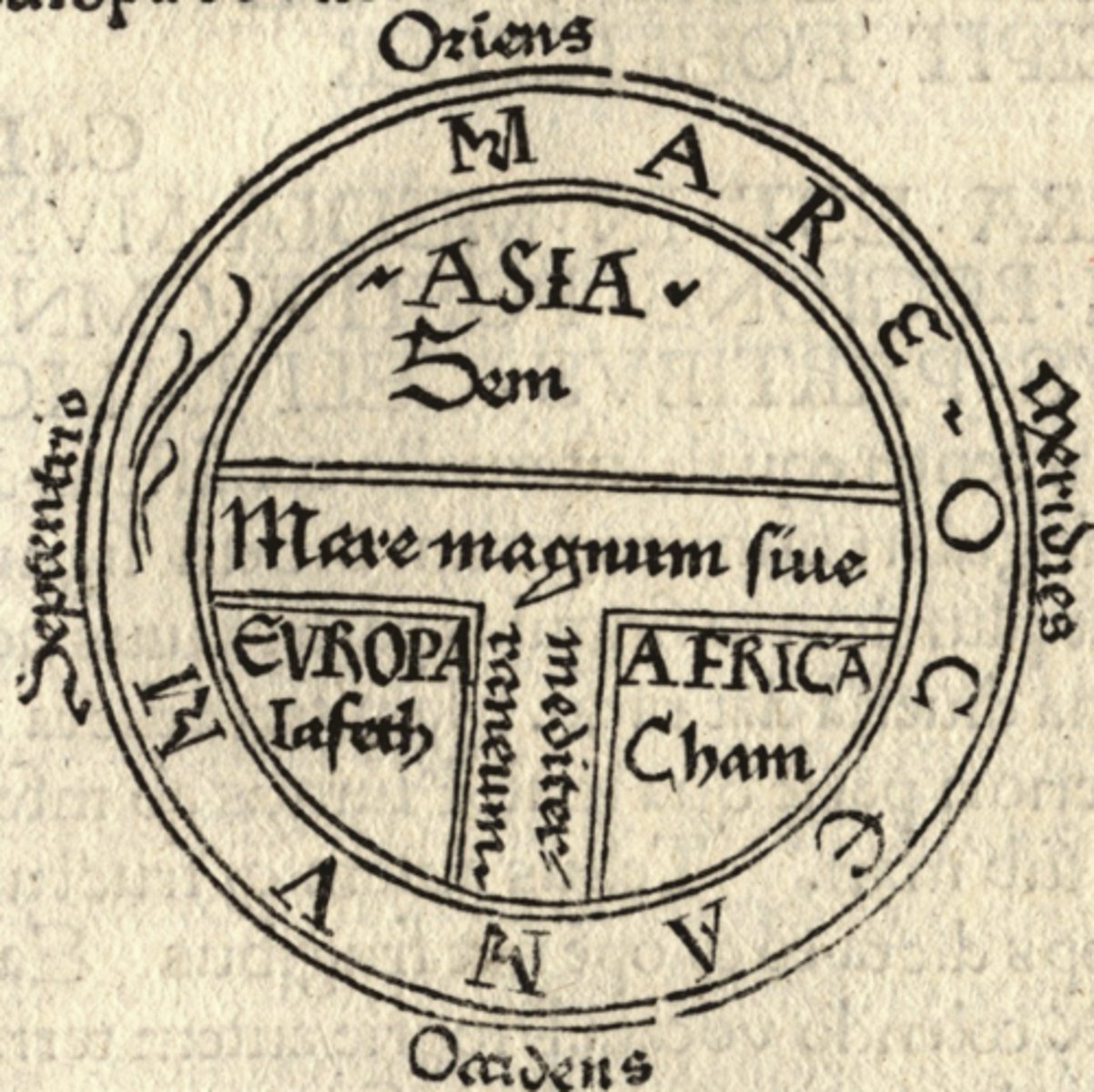
Keel Divine Variations Flood Concept
Flood argument (polygenists) → Non-Caucasian races must have originated separately because there was not enough time after Noah’s Flood for racial differences to develop.
Local Flood theory → If the Flood was local, only Caucasians were affected, meaning other races were not descendants of Adam or Noah.
Keel Divine Variations: Noah & Sons
Josiah C. Nott – rejection of universal Adam → Nott rejected the idea of one common human ancestor and argued Noah’s sons explained only the origins of Caucasians.
Ham as ancestor of Africans (polygenist critique) → If Ham’s descendants were white and repopulated Egypt, it was implausible that Africans developed within ~100 years after the Flood.
Noah narrative (polygenist interpretation) → Story of Noah and his three sons explained the migration and descent of Caucasians, while other races developed separately outside Adam’s lineage.
Martin Luther’s Bible illustrations → Depictions of the Great Flood show Noah and his sons with European features, reflecting a European view of Biblical humanity.
Keel Divine Variations-Nott
Nott: from depictions of slavery; black people are naturally predisposed for servitude
Attempted to gather data that miscengenation offspring=less health and inferior->mulatto appears on US census (race driven by politics)
Keel Divine Variations-Bachman
linguistic and anthropological evidence that shared human ancestry described in Gensis is compatible with science, biblical proof + science=white superiority, and biological inferiority of blacks and others
disagreed with polygenists that species are inherently fixed, concept of race should be abandoned given shared ancestry
believed in common human ancestry + monogenism
popular: black inferiority, while upholding Scripture
Keel Divine Variations-Curtis
Useful species can easily transfer and acclimate in regions, far from their og habitat
(malelable human form, not an exception to natural law, human descent from common ancestor is plausible)
plausible: a white man can be "changed into a Negro"
racially mixed people are thriving
Roberts: (which scientists created race)
(Fatal Invention, How Science, Politics, and Big Business Re-Create Race in the 21st Century ) (2011)
1) Linnaeus (early 1700s) : a Swedish botanist, zoologist, and biologist who catalogued living things based on physical characteristic were associated with certain personalities
2) Bluenbach (early to mid 1800s) (father of physical anthropology): believed that caucasians = ideal and other races were degenerated white people
3) Darwin: believed in single origin and that mixed people were not sterile but capable of thriving, concept that human species have changeable variants and are impossible to demarcate,
- Heredity came to be understood as a matter of measurable likelihood and statistical inheritance, rather than as some fixed inner human essence.
4) Sir Francis Galton: created Eugenics: genetic distinctions among races and individuals
- popular in America because people obsessed with preserving racial purity and preventing degenerate mongrel races (eg. killing, lynching etc.. ) --> in America, race=biological with distinct groups and social characteristics being heritable and social structure being biologically determined
5) Jim Crow: violently enforces these classification (like forced sterilization, mutilizing of reproductive bodies etc..)
Gould: The Mismeasure of Man (1981)
Overall argument:
In The Mismeasure of Man, Gould argues that science has often been used to justify existing social hierarchies.
The “appeal to nature” made inequality seem proper, natural, and inevitable.
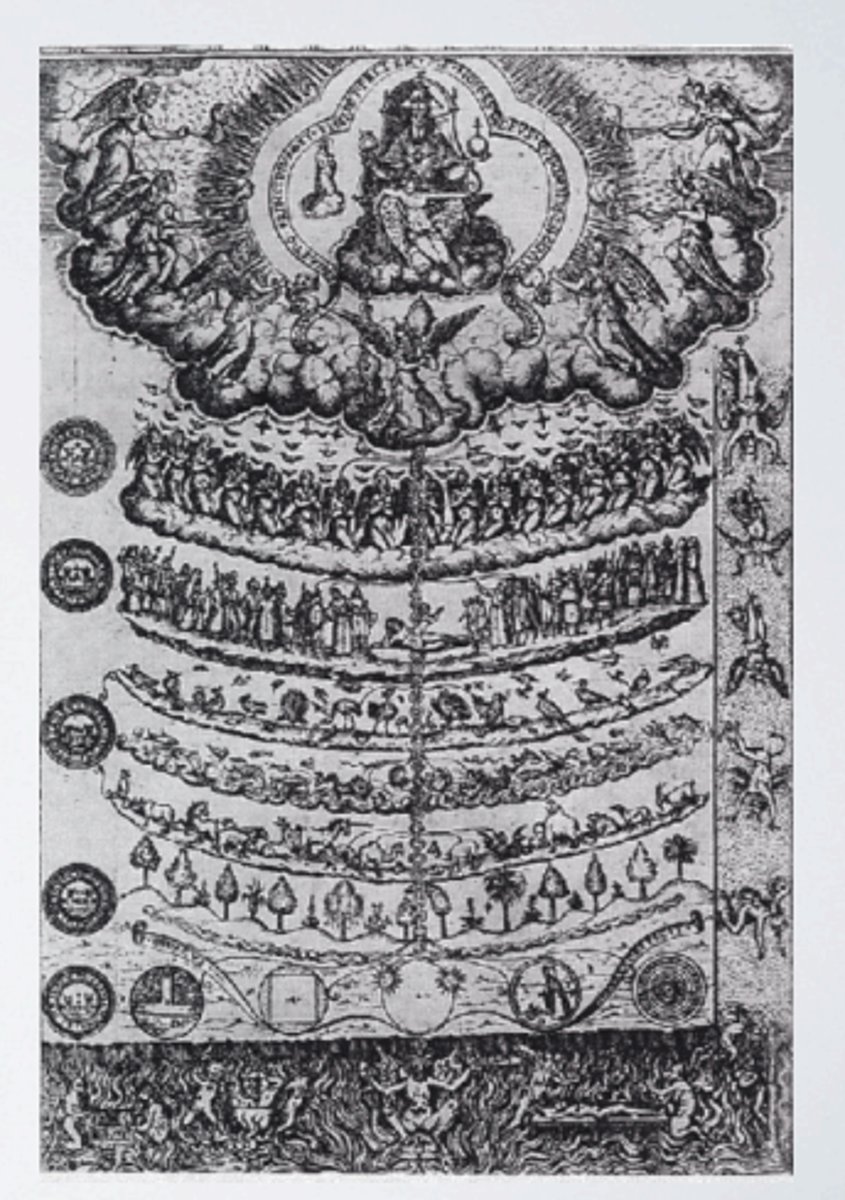
The “Great Chain of Being” ranked life in a hierarchy, with whites at the top and Black people often placed at the bottom.
(promoted idea that Black people were inferior, justified slavery, permanent ineptitude)
(softer but still showed: education can "raise" black levels to white)
Thinkers like Jefferson, Franklin, Cuvier, Wallace and others repeated claims of Black inferiority. --> contrary: humboldt argues against ranking on mental/aesthetic groups and was against slavery and subjugation
Gould’s point is that these ideas were not neutral science; they reflected social and political bias.
Gould: (specifically on Agassiz)
( The Mismeasure of Man (1981))
Louis Agassiz became a major American polygenist, arguing that races came from separate ancestors and belonged in different places and ranks.
These theories helped justify slavery, segregation, and the denial of equality to Black people.
Gould: (specifically Morton, data bias, and “scientific” racism)
( The Mismeasure of Man (1981))
Samuel George Morton used skull measurements to argue that racial hierarchy could be proven scientifically.
He claimed cranial size showed intelligence, ranking whites above Indians and Black people.
Gould argues Morton's methods were biased: he used flawed samples, selective data, and improper procedures.
Brain size does not equal intelligence, so craniometry was not objective proof of racial difference.
Other figures like Cartwright invented fake "diseases" such as drapetomania to pathologize enslaved people.
Gould's broader message: science can be shaped by prejudice and used to legitimize racism, slavery, colonialism, and other inequalities. People in power and those who maintain social hierarchy are those who create the social construction of race
Bamshad & Olsen SPECIFICALLY ON: do physical features tell us about genetic makeup? (Does Race Exist (2003))
Physical features do not reliably reveal a person’s full genetic makeup.
Race is socially defined and can vary by place; for example, someone considered Black in the U.S. might be classified differently in Brazil.
People from different populations are, on average, only slightly more genetically different from one another than people within the same population.
Humans migrated out of Africa relatively recently and have mixed too much for clear, fixed biological races to exist.
Because of this, visible traits like skin color can be misleading indicators of deeper genetic relatedness.
Bamshad & Olsen SPECIFICALLY ON: Polymorphism (Does Race Exist (2003))
1) Genetisits rely on poly morphism to determine degree of relatedness among groups.
- these distributions of polymorphism reflects history and natural selection --> basically shows its not possible for such differences to eist (aka one polymorphism present in all groups) because humans have seperated too recently from one another and mixed too much to show this defined difference
Bamshad & Olsen SPECIFICALLY ON: Alus (Does Race Exist (2003))
1) are a type of polymorphism that can persist for very long periods and help geneticists trace shared ancestry and relatedness among populations.
2) In the Bamshad study, researchers grouped people using only Alu markers, without knowing their regions beforehand, and later found distinct clusters such as sub-Saharan Africans, Mbuti Pygmies, Europeans, and East Asians.
3) About 60 Alus allowed roughly 90% accuracy, while around 100 Alus gave nearly 100% accuracy in assigning people to broad groups.
Rosenberg and Pritchard found similar results, showing that many polymorphisms can distinguish broad geographic ancestry.
Overall, these studies suggest that genetics can reveal broad patterns of relatedness by geographic origin, but only by examining many markers—not a single trait.
Bamshad & Olsen SPECIFICALLY ON: Race in Medicine (Does Race Exist (2003))
Some genetic variants linked to disease are more common in certain ancestral populations, such as sickle cell in African/Mediterranean populations, cystic fibrosis in Europeans, and CCR5-related AIDS resistance in northern Europeans.
Because of this, ancestry can sometimes matter in medicine.
But race itself is an imperfect proxy for genetics, since self-identified race and physical appearance may not match actual ancestry.
Physicians and researchers debate whether race should be used in treatment decisions or clinical trials.
Overall conclusion: geographically or culturally defined group membership can sometimes correlate with medically relevant genetics, but race is not a precise biological category and must be used cautiously.
Roberts: Fatal Invention, How Science, Politics, and Big Business Re-Create Race in the 21st Century (2011)
Eugenics & Immigration
Harry H. Laughlin – immigration survey → Laughlin’s Analysis of America’s Melting Pot claimed recent immigrants had higher rates of “socially inadequate” traits, helping justify U.S. immigration restrictions.
Limiting reproduction + eugenics: Carrie Buck forced sterilization (poor, abused, and raped)
Mass sterilization of "unfit"
Roberts: Fatal Invention, How Science, Politics, and Big Business Re-Create Race in the 21st Century (2011)
Eugenics & Post WW2
Nazi racial science→ The extreme racial policies of Nazi Germany revealed the horrific consequences of eugenics, leading many scientists to reject biological theories of racial hierarchy.
Eugenics decline→ After World War II, support for eugenics collapsed and Harry Laughlin resigned from the Eugenics Record Office.
Jeong and DiRienzo, Adaptations to local enviornments, Key Concepts
Cultural innovations + diverse environments post African migration=new selective pressures
1) Lactase Persistence: (positive selection) pastoralism and dairy consumption, Europe, Middle East, South/Central Asia
2) Human Skin Color
adaptive phenotypic convergence
3) high-altitude
low O2, high UV
some populations develop increased hemoglobin, others (Tibetans and Amhara) show unelevated hemoglobin (additional selection after admixture with low-altitude populations) ...adaptive evolution can produce dif genetic solutions to same enviornment)
Roberts: Fatal Invention, How Science, Politics, and Big Business Re-Create Race in the 21st Century (2011)
UNESCO Statements on Race
Declared that similarities among humans are far greater than their differences, rejecting the idea that some races are biologically superior.
Scientific response to UNESCO statement→ Some scientists protested the first statement, arguing it ignored possible biological differences between populations.
Later statement clarified that:
No race is inherently superior
But scientists could still study differences in intellectual or emotional capacities between populations
Jablonski Skin Color (All)
-Skin color follows a pattern of UV ray distribution
-CLINE (gradient): Darker skin toward the equator, lighter towards the poles
-Human ancestors (Africa): hairy, pale->lost hair, developed dark skin for sun protection
-Melanin protects again folate damage (essential for reproduction) + DNA damage
-However, having too much melanin can inhibit vit D absorption from sun (ex. take supplements if black and in Scandinavia )
-Usually, lighter skin in females->sexual selection, or protection from violence (lighter skin reflects infant skin tones)
-Skin=adaptive evolution as humans migrated out of Africa
Roberts: Fatal Invention, How Science, Politics, and Big Business Re-Create Race in the 21st Century (2011)
Genetics and the Human Genome
The greatest genetic diversity exists in Sub-Saharan Africa, supporting the idea that Homo sapiens originated in Africa.
Genes controlling phenotypes (visible traits like skin color) represent only a tiny fraction of total genetic variation.
ex. A person from Congo, South Africa, and Ethiopia can be more genetically different from each other than from someone in France.
Tiskoff et. al The Genetic Structure and History of Africans and African Americans Admixture, Migration
-Used PCA...Lots of admixture in Africa, humans NOT genetically isolated
-Africa before out of Africa migration, extremely diverse genetically + structured
-Migration (Niger Kordofanian/Bantu/Sahel/East African Migrations) affects African genetics
-African Americans, European ancestry, reflects history of slavery
-Extreme admixture in South Africa
Concludes African populations extremely high diversity, must be included in genome wide studies to identify disease variants without misinterpretation
Tiskoff et. al The Genetic Structure and History of Africans and African Americans
-Genetic diversity is huge in Africa (large population and long time living)
-Genetic diversity DECREASES with distance from Africa (Out of Migration model)
-Africa: many ethnolinguistic groups, genetic variation corresponds to language
-Genetic variation corresponds to geography, language, culture
Roberts: Fatal Invention, How Science, Politics, and Big Business Re-Create Race in the 21st Century (2011)
Clinal Variation
genetic differences that exist among populations: gradual changes across geographic regions, not sharp categorial distinctions
clinal: gradually changing nature of geographical genetic differences, complicated further by migration/mixing, which has happened since prehistoric times
Handley (Geography and Cline)
(2007 “Going the distance: human population genetics in a clinical world” )
1) Cline is gradual change in genetic trait across geographic space and genetic differences between populations increases gradually with geographic distance
2) Uses the concept of “Fixative Index”:(FST) a measure of population differentiation due to genetic structure
Calculated with range of autosomal markers including SNPs and microsatellites
3) Isolation by distance means populations that live farther apart tend to be more genetically different, while nearby populations are more similar.
4) Geography explains much of human genetic variation, and geographic distance predicts genetic difference better than ethnic or racial categories.
5) Human genetic diversity decreases with distance from Africa because of serial founder effects during migration, with genes spreading through neighboring populations in a stepping-stone pattern. (continuous gene flow between populations
Overall, human genetic variation is best explained by gradual migration, gene flow, and local adaptation, not by fixed biological races.
Bryc (Genetic Ancestry of various groups across the US and Appendices Am J Hum Gen 2014 ) WHAT IS ADMIXTURE
Individuals inherit DNA from multiple ancestral population,
he used genetic data from 160,000 people
- Found that the highest African ancestry was in southern states and it decreased as you went north
- also looked at native and latino ancestry in the same ways
(1)Saw that some AA have small amounts of Native American ancestry and there interactions with the "five civilized tribes" (ADOPTED ANGLO AMERICAN CUSTOMS, EVENTUALLY PUSHED OUT AND CITIZENSHIP TAKEN)
(2) also saw that Latinos had the widest range of ancestry
OVERALL: saw that pattern reflect colonization history and migration patterns in Latin America
Bryc (Genetic Ancestry of various groups across the US and Appendices Am J Hum Gen 2014 )
Admixture and Sex Bias
Saw that there was a strong sex bias with unequal female and male ancestry contributions (eg. more anestry of X chromosome of Africans and less of Europeans = indicated white men reproducing with black women more than vice versa)
In latinos there was a male european bias with euro colonizers being mostly male and indigenous African women contributing more ancestry
The study also found that self-identified race does not map neatly onto genetic ancestry.
Overall conclusion: migration, colonization, slavery, and intermarriage shaped U.S. ancestry, and genetic ancestry does not line up cleanly with socially defined racial categories.
Klitz (2014 - WhiteyCrumbles) OVERALL POINTS
- Human DNA sequences are 99.9% identical and leave only 0.1% variation between individuals (80-85% of genetic variation occurs within a population while only a small proportion distinguishes a continental group)
- Good example is the ABO blood type that occurs nearly worldwide showing genetic variation across multiple populations
Modern population genetics shows that there multiple ancestries of major human groups is the norm contradicting the simple racial divide concept
Klitz (2014 - WhiteyCrumbles) Examples
1) Jewish Diaspora Populations:
- genetic diversity shows among groups due to admixture with host populations despite a shared "Levant ancestry)
- Ex. Ashkenazi Jews Admixed with Polish Populations during expansion and CCR5 mutation originating in Europeans also present in this population
2) African Slave Trade:
- produced lasting social hierarchy based on skin color but slavery also historically existed between multiple populations
3) lactase persistence example evolves independently in Northern Europe and Africa
4) Brazilian population: little correlation between genomic ancestry and perceived ace (skin tone and facial features dont match genetic ancestry
5) UV and Skin example similar to Jablonski (olive brown skin in North Africa and Southern Europe north-south melanization gradients)
6) ANE ancestry contributed to both Europeans and Native Americans Example: ethnic Russians may have higher ANE ancestry due to geographic proximity
7) Modern Europeans also carry ~2% Neanderthal DNA, present in small genomic segments shaped by natural selection
Conclusion: human populations show genetic mixing, clinal variation, and shared ancestry, meaning race is not a biologically discrete genetic category
"The Sentence", episode of Uncivil Podcast (2017)
In an early Virginia case, two European servants received extended indentured service, while John Punch, an African servant, was sentenced to servitude for life.
This is one of the earliest legal moments linking African ancestry to permanent slavery in the colonies.
Early labor systems were not originally fully racialized, since both Europeans and Africans could be indentured servants under temporary contracts.
Over time, colonial laws increasingly separated Africans from Europeans, turning temporary labor systems into hereditary racial slavery.
The key point is that race was socially and legally constructed through economic interests, court rulings, and laws, not created as a fixed system from the start.
Duster, Ancestry Testing and DNA (Race and the Genetic Revolution)
Genetic ancestry testing feels powerful and meaningful, especially for African Americans seeking ties erased by slavery, but the results are often inconsistent across companies.
These tests are most reliable for tracing close biological
relationships, like parents, grandparents, or maternal/paternal lineages (mtDNA), not for pinpointing exact ethnic groups from centuries ago.
Their deeper ancestry claims are shaky because they rely on small modern "reference populations" as stand-ins for historical groups, even though populations have always migrated, mixed, and changed.
The categories behind the results—like race, ethnicity, or "percent African"—are not fixed biological truths but statistical constructions shaped by researchers' (THERE IS NO TRUE 100% OF A RACE) choices about populations and markers and are shaped by social and political factors.
Main takeaway: ancestry DNA testing can be useful, but its claims about race, identity, and distant origins are tentative, easily overstated, and should be approached with caution.
Science podcast on Mapping Genetic Diversity in Mexico
Mexico: extremely high genetic diversity and population structure
Carlos Bustamante research: distinct Native American pops that cluster genetically, according to ethnicity + geographic region
Modern genetics: reflects pre-Colombian structure...even after colonialism, migration, admixture...genetic structure still mirrors ancient cultural divisions
Mestizo: regional admixture, not random mixing (Native American ancestry varies by location...different Indigenous groups)
Kaplan Race What Biology can Tell Us
Human populations differ in allele frequencies, mostly within groups->racial categories are poor predictors of genetics
Human genetic variation is largely clinal: gene frequencies change across geography...not discrete racial boundaries
Genetic clustering: results of clusters depends on sampling
Biological POPULATION differences exist, but folk racial categories are arbitrary ways of group humans
Science podcast on Mapping Genetic Diversity in Mexico
Medical Implications
Medical implications: used FST to measure genetic differentiation between regions, strong genetic differentiation found...lung function prediction models
improved accuracy)
Must sample across regions to avoid inaccurate disease predictions
Human populations genetically diverse and structured
Keel_Human Neanderthal Hybrids 2017
Key Takeaways
Explores how Neanderthal DNA in modern humans proves mixed is the default--challenges racial purity narratives
Genetic evidence that Neanderthals and modern humans mated, after out of Africa migration
Oase 1 Fossil (40,000 Romania): 4-6 generations, so very recent hybridization
ADMIXTURE: Evolution NOT a simple tree, but continuous gene flow between pops and species
Nelson, Bio Science: Genetic Genealogy Testing and the Pursuit of African Ancestry
Binary Trap
Binary Trap: Both naturalism and pragmatism: oversimplify race, fail to explain how genetic testing reshapes understandings of race/ethnicity
Motherland: A Genetic Journey
African/African Americans wish to find their root/heritage before slavery
Mark: devastated to find out his Y chromosome was from European origin
Bits of DNA from history that show population differences, exploited in study
Jacqueline and her family in Jamaica, found they were 60% English
Buer: finding materal roots using mtDNA
Nelson, Bio Science: Genetic Genealogy Testing and the Pursuit of African Ancestry
Objective/Affiliative Self-Fashioning
Genetic Kinship
Consumers choose tests based on desired narratives, not scientific accuracy
Objective self-fashioning: using scientific facts as authoritative resources for identity construction
Affiliative self-fashioning: selective interpretation of genetic results shaped by desires for belonging/community (Pat builds relationship with Ghanians based on result)
Genetic Kinship :
relationships formed through shared genetic ancestry, rather than documented family ties
Key Concept: genetic genealogy=>not simple genetic science, but leads to complex negotiations of identity
Nelson, Bio Science: Genetic Genealogy Testing and the Pursuit of African Ancestry
Pragmatism & Naturalism
Decoding human genome: shift in paradigm..common humanity to molecular level differences
Pragmatism: race is a social invention, 99.9% alike (Concern: genetic research can revive historical scientific justifications for inequality)
Naturalism: nature produces biological differences (Argument: racial categories useful for med research)
Nelson, Bio Science: Genetic Genealogy Testing and the Pursuit of African Ancestry
Genealogical Aspirations,
Genealogical Aspirations: motivations driving ancestry research to recover African origins and complete family history)
3 methods:
-ethnic lineage (Y and mtDNA)
-spatio-temporal (haplogroups for geographic origins/migration)
-racio-ethnic: (nuclear DNA to estimate ancestry %)
Keel_Human Neanderthal Hybrids 2017
Neanderthal Genetics
Some Neanderthal genes beneficial: immune, skin/hair, keratin->help adapt to non-African environments
Still affects modern biology (ex. allergies, type 2 diabetes, nicotine addiction)
Different pops have dif Neanderthal DNA levels: East Asians have more than Europeans
Johnston, Resisting a Genetic Identity
The reading argues that genetic testing cannot fully determine identity or group membership because identity is often shaped by shared history, political relationships, and cultural belonging, not just biological ancestry. Using the Seminole Freedmen as a case study, it shows how genetic definitions of identity can clash with historically recognized forms of membership.
The Seminole Freedmen are descendants of formerly enslaved Africans who lived among the Seminoles and had been officially recognized as members of the Seminole Nation since 1866, but the tribe’s 2000 rule requiring one-eighth Seminole “Indian blood” threatened to exclude many of them. This conflict shows how a community once defined through alliance, descent, and shared history became redefined through blood quantum and biological ancestry.
A: The reading argues that genetic testing is too limited to resolve the conflict because tests like mtDNA and Y-chromosome analysis trace only a small fraction of a person’s ancestry and may miss Native ancestors entirely.
Gravlee (How Race Becomes Biology) Main Argument / Health outcome via Race/Racism
A: Gravlee argues that race is not a valid biological division of humanity, but racism has real biological effects because inequality, discrimination, and structural racism shape bodies and health over time. In this sense, race becomes biology not through genetics, but through the embodiment of social inequality.
A: He argues that although racial groups show major differences in rates of disease, death, infant mortality, and life expectancy, these disparities are often wrongly treated as evidence of innate genetic racial differences. Population genetics shows that race does not map onto human genetic diversity in any clear biological way, and the stronger explanation is that social inequality and racism produce these health differences across the life course.
A: He shows that racism works not only in the present but across the life course and even across generations, because chronic stress and inequality affect disease risk, prenatal environments, and fetal development. His example of birth weight among African-born Black women versus later U.S.-born generations shows that worsening outcomes are tied to social conditions in the United States, not fixed racial genetics.
Gravlee (How Race Becomes Biology) “race is a cultural construct” is not enough ....WHY? also What is Embodiment?
A: Gravlee says that simply calling race a cultural construct can sound like race is unreal, when in fact it has very real consequences. Race is a historically produced worldview that organizes people into supposedly natural groups, and because racism is built into institutions and everyday life, those social classifications shape access to resources, exposure to stress, and ultimately health outcomes.
A: Drawing on Nancy Krieger’s concept of embodiment, Gravlee argues that people literally incorporate the social world into their bodies, so historical and social conditions such as discrimination, segregation, and poverty become expressed biologically in outcomes like high blood pressure, obesity, low birth weight, depression, and chronic disease.
Gravlee (How Race Becomes Biology) SOLUTION
A: Gravlee calls for a biocultural framework that rejects race as a genetic essence while still taking seriously its biological consequences. Instead of reducing biology to genes, researchers should examine how social, environmental, developmental, and genetic factors interact to explain racial health inequalities and the embodied effects of racism.
Jasienka Low birth weight and effect of slavery (2009)
A: Jasienska argues that the lower average birth weight of African American infants may partly reflect the intergenerational biological effects of slavery, since the extreme deprivation experienced by enslaved women shaped maternal bodies and fetal development in ways that could persist across generations.
A: The disparity persists even after controlling for socioeconomic factors, and infants born to African-born Black women in the U.S. have birth weights much closer to those of white women than to U.S.-born African Americans, suggesting the gap is better explained by historical and environmental conditions than by race-based genetics.
A: Because birth weight is strongly shaped by maternal physiology, childhood nutrition, and conditions passed through the maternal line (Female-line intergenerational transmission) , the undernutrition, hard labor, early pregnancy, and disease of slavery likely created long-term patterns that continued through fetal programming, epigenetic inheritance, and phenotypic inertia.
- examples to think about :how slave mothers had to reproduce a lot = less breastfeeding time= lower protein intake, additionally people start hard labor before the age of 11 andddd early motherhood --> creates energy tradeoff
A: Jasienska shows that slavery was not only a social and historical system but also a biological force whose effects may still shape present-day racial health disparities, even as contemporary racism and stress may continue to reinforce them.
Epstein, "Main Argument
To Profile or not to Profile: What Difference does Race Make? (2009)
A: Epstein argues that the growing use of race in biomedical research did not arise simply from new scientific discoveries, but from political struggles over inclusion in research. (race becomes institutionalized within biomedical research) Efforts to include women and minorities in clinical trials created an “inclusion-and-difference paradigm” that made group identity central to studying disease and treatment, but this also risked turning social categories like race into biological ones.
A: It is the research framework that emerged in the 1980s and 1990s in response to activism against the old “standard human” model, where white men were treated as the default research subject. This new paradigm emphasized including diverse populations and measuring differences among them, especially by race, ethnicity, and sex.
Brooks, A Silent Curriculum
-“silent curriculum” in which students learn racial bias and unequal treatment of patients through everyday clinical practices and institutional culture, not through formal instruction
-med education: explains racial disparities, but NOT why they exist->racism causes discomfort in schools, so is avoided
-textbooks: clinical images on white skin, certain diseases on black skin...association of race with disease
-cultural competence: students are taught that Latino patients may say “yes” to many symptoms, leading clinicians to minimize patient concerns
example: white teenager->opioids for a headache...Latino gunshot victim mocked for expressing pain (stereotypes shape judgments about suffering and treatment)
-white patients more likely to receive pain medication, while Black patients are more likely to be labeled as “narcotic-seeking”
communication barriers and treatment failures blamed on patient behavior/non-compliance, rather than structural problems (language barriers, inadequate interpretation)
ex. delivering serious diagnoses in broken Spanish, using children as translators
-students encouraged to practice on patients with less power to refuse
-Brooks reflects on her white privilege
-Call to action: doctors see social positions affecting health, need to actively confront racism and implicit bias in clinical training
Hardeman (WHAT IS STRUCTURAL RACISM)
et al Health Professionals Supporting Black Lives (2016)
Structural racism: confluence of institutions, culture, history, ideology, and codified practices that generate and perpetuate racial inequity; produces premature death and worse health outcomes for communities of color
- EXAMPLES: how violence against black communities worsens health outcomes for those of color /life chances
Racism barely named in medical literature even though there is so much evidence showing health outcomes via racism
Hardeman (RACISM IN MEDICINE)
et al Health Professionals Supporting Black Lives (2016)
- root is white supremacy and slavery (economic and political exploitation)
- false biological belief about race persists with 50% of white medical students holding belief that Black people have thicker skin or diff blood coagulation ---> leads to differences in pain assessments and treatments
- differential diabetes outcomes:
Clinicians must practice critical self-consciousness—reflecting on how history, social structures, and bias shape diagnosis, research, and patient care
Core conclusion → antiracist clinical practice and research are necessary to dismantle structural racism and reduce health inequities
Keel Race on Both sides of the Razor (response to Kalfou)
Keel argues that the biggest problem in racial science is epistemology, meaning the underlying way science explains human difference.
He says modern science still tends to treat nature, genes, and ancestry as the main causes of human variation, while minimizing social history, racism, colonialism, and inequality.
Working from social constructionism, Keel argues that race is not a natural biological grouping but a product of interactions between biology, institutions, and historically produced racial categories.
His core point is that science often hides the social causes of biological variation by making differences seem natural or genetic.
Franz Boas (early 1900s)
argued that human biological traits are not fixed racial essences, but are shaped by environment, history, and social conditions. He challenged the idea that races are stable, natural types by showing that factors like geography, nutrition, and living conditions can change bodily characteristics. More broadly, Boas argued that differences between human groups should not be explained as innate racial hierarchies, because culture and environment play a major role in shaping human variation.
Ashley Montagu
(1945) argued behavioral and character differences between ethnic groups reflect unequal social and economic opportunities rather than hereditary racial differences.
Hartigan Kalfou
Limits of the Social Constructionist Strategy
Anthropologists critique race by emphasizing social causes of racial differences rather than genetics.
Hartigan: this approach puts scholars constantly reacting to new genetic claims about race rather than addressing how race actually operates.
2. Race as a Cultural Classification System
Race: cultural system for categorizing human variation, not a precise biological description.
Ex. examining skin tone variation among classmates shows that categories like “black” and “white” fail to capture the real spectrum of human diversity.
3. Genetics, Evolution, and Population Variation
Hartigan acknowledges that some genetic variation corresponds to population ancestry (e.g., Lewontin’s ~6%).
ExSLC16A11 diabetes risk allele in Latin American populations, partly linked to Neanderthal admixture, reflects evolutionary history rather than modern racial categories.
4. Neanderthals and the Plasticity of Species
Early scientists depicted Neanderthals as primitive “Others,” reflecting racialized thinking.
New evidence shows Neanderthals used tools, buried their dead, and interbred with modern humans, leaving ~20% of their genome distributed among modern humans.
This challenges rigid boundaries between species and highlights the shared evolutionary history of humans.
Kolfou part 2
5. Racial Thinking as a Cultural Way of Interpreting Human Variation
Racialization historically framed groups (Neanderthals, Irish, Germans, Africans) as brutish or less human.
Hartigan traces racial thinking partly to breeding practices in domesticated animals, where humans classified variation within species.
Overall Gist: Race should be understood primarily through cultural frameworks that interpret human variation, while also acknowledging evolutionary history and population genetics. Anthropologists should shift focus from endlessly disputing genetic claims to explaining how culture shapes racial categories and perceptions of human difference.
Keel: How does Keel use the SIGMA study, and what solution does he propose?
Race on Both sides of the Razor (response to Kalfou)
Keel critiques the SIGMA Type 2 Diabetes Consortium study, which linked the SLC16A11 variant to diabetes risk in Latin American populations and connected it to Neanderthal admixture.
He argues that this kind of genomic explanation may be technically valid but still misleading because it emphasizes ancient ancestry while obscuring colonialism, poverty, racism, food systems, and other present-day conditions shaping disease.
For Keel, genes should not be treated as the deepest explanation, because they are shaped by social and historical life.
His solution is biocritical inquiry, a framework that treats biology and society as co-constitutive or co-arising, and asks how violence, discrimination, and political institutions become embodied in unequal health outcomes. (BIOLOGY EMERGES WITH SOCIETY!)
The goal is to study race in ways that expose, rather than suppress, the structural causes of biological difference.
Keel: How does Keel use social constructionism, and what debates does he engage?
Race on Both sides of the Razor (response to Kalfou)
Social constructionism is the view that human differences are shaped primarily by social conventions, institutions, and history rather than fixed biological races.
Keel draws on figures like Frederick Douglass, Franz Boas, and Ashley Montagu, who argued that slavery, poverty, geography, and unequal opportunity shape bodies and behavior more than innate racial biology.
He also discusses debates among constructionists: some want race removed from science entirely, while others think race can still have political utility, as in genetic ancestry testing, diasporic identity, or documenting inequality.
Keel’s concern is that even when race is used for progressive reasons, science can still re-naturalize race by treating social categories as if they reflect underlying biology.
Keel: Why does Keel think modern genomics repeats older racial thinking?
Race on Both sides of the Razor (response to Kalfou)
Keel argues that genomic science inherits an older intellectual tradition from thinkers like Blumenbach and Kant, who explained human difference through natural predispositions, internal forces, or environmental effects acting on passive bodies.
This tradition assumes that Nature creates difference, rather than recognizing that human actions, institutions, and power relations also shape biology.
Keel says this legacy survives in modern explanations based on genetic drift, founder effects, mutation, and continental ancestry, which often ignore migration, labor, dispossession, and structural inequality.
His phrase “God in Nature” means that science still treats biology as if it unfolds outside politics and history, making genes seem like causes instead of records of lived experience.
Keel: Biocritical inquiry
proposed framework that reverses the orthodox assumption that genes are the foundational cause of human health and racial difference. Instead, it denaturalizes genetic differences and reveals the social inequalities, violence, discrimination, and historical legacies embedded in biological diversity.
Keel: social constructionism
requires recognizing that human social practices, institutions, inequality, and historical conditions fundamentally shape biological outcomes. Debates about race in science should move beyond asking whether race is real and instead examine how scientific reasoning often erases the social causes of human biological variation.
UnNatural Causes Documentary
Social Gradient in Health (Wealth Ladder Effect)
Health follows a social gradient: down=worse
Whitehall Studies of British civil servants → lower job grade = higher risk of death from nearly every major disease.
Pattern holds even after controlling for behaviors like smoking or diet.
U.S.: affluent Americans report excellent health, while low-income Americans have ~2× higher rates of diabetes, stroke, and heart disease.
2. Social Conditions “Get Under the Skin”
Neighborhood, income, and education strongly predict life expectancy.
Ex.
Affluent neighborhoods → higher life expectancy.
Poor neighborhoods (e.g., areas with mainly fast food and liquor stores) → hypertension and lower life expectancy.
Even identical twins who end up in different social classes develop different health outcomes later in life.
3. Stress from Lack of Control Damages Health
Control over life circumstances (“control of destiny”) is a major determinant of health.
Low status or job insecurity → chronic stress → high cortisol, impaired immune system, and cardiovascular disease.
Evidence:
Low-ranking macaques show higher cortisol and more arterial plaque than dominant monkeys.
High demand + low control jobs produce the worst health outcomes.
UnNatural Causes continued
4. Early Life Conditions Shape Long-Term Health
Childhood poverty and stress have lifelong biological effects, affecting brain development and disease risk.
Early environments influence adult health even if circumstances improve later.
5. Racism and Structural Inequality Affect Health
African Americans experience worse health outcomes across SES levels.
Even affluent Black individuals face chronic stress from racism and discrimination, producing biological consequences.
6. Social Policy Is Health Policy
Major health improvements historically came from social reforms, not medical care (sanitation, universal education, labor protections).
Effective interventions: reducing economic inequality, improving housing, education, and public health infrastructure.
UCLA BCS Lab Report: Los Angeles County Jail Deaths 2009
Even among “natural” deaths, average age at death ≈49 years, far below U.S. life expectancy
similar circumstances of trauma, unclear causes of death, and deaths occurring before trial
John Horton, Lewis Nyarecha, Jorge Rosales, Markese Braxton: death ruled as "suicide", despite excessive physical trauma
deaths in LA County jails reflect systemic issues in jail conditions, medical care, and custodial oversight, with racial disparities and high pre-trial mortality indicating broader structural problems in the carceral system
Dorothy Roberts Ted Talk: “The Problem with Race-based Medicine”
Race ≠ Genetic Ancestry
Racial identity is social. Genetic ancestry is biological and mixed.
Ex. Roberts is Black socially but has both African and European ancestry
Medicine Uses Race as Biological Proxy
-shortcut for biological traits, is inaccurate
ex. kidney function calculations adjust for black, spirometry lung tests assume lower lung capacity in black patients
Questionable Treatments
-Black/Latino: likely to receive no pain medication
-BiDil: race specific despite unclear genetic basis
Racism has biological effects on health.
Examples of structural causes: unequal healthcare access, food deserts, environmental toxins, incarceration, chronic stress from discrimination
Race is a social category incorrectly used as a biological tool in medicine, which can produce bias and obscure real causes of health disparities
Paul-Emile, Dealing with Racist Patients
Minority healthcare workers: patient racial prefrences are painful and degreading, cumulatively contribute to moral distress and burnout
1. Ethical & Legal Tension
Patients can refuse care from specific physicians, but hospitals must also follow antidiscrimination laws (Title VII) and EMTALA, which requires emergency treatment regardless of discriminatory preferences.
2. Clinical Priority & Decision Capacity
In emergencies, physicians must treat and stabilize first regardless of racist requests.
Clinicians should assess decision-making capacity, since discriminatory statements may stem from delirium, dementia, or mental illness.
3. Institutional Responsibility & Equity
Requests based on language, culture, or trauma may sometimes be accommodated, but bigotry-based requests should not automatically be honored.
Hospitals must protect clinicians, address racist behavior, and develop policies that balance patient autonomy with physician rights and equitable care.
Epstein, why shouldn't we use race as a factor in medicinal decision makng
To Profile or not to Profile: What Difference does Race Make? (2009)
A: He argues that focusing on racial differences in disease, drug response, and health outcomes can make race seem biologically real, even though it is a socially defined category. This can obscure structural causes of inequality—such as poverty, discrimination, environmental exposure, and unequal healthcare access—by shifting attention toward supposed innate group differences.
by doing this you ignore SES things like poverty, environmental exposure, unequal health access etc.. = REBIOLOGIZE RACE
Satel, I am a Racially Profiling Doctor
Race-based pattern recognition can be clinically useful, even if race is an imperfect category
Controversy in medicine → critics argue race-based medicine is scientifically and morally wrong
Satel's examples:
-certain heart failure drug (enapril) less effective for black patients
-Black patients metabolize anti-depressants more slowly, prescribe less
-Hep C: black patients have lower reduction elvels, requires dif prognosis
-Black patients salivate more during intubation
-Asians are more sensitive to narcotics, lower doses
-Jerome Kaiser: asian man, race helped identify hypokalemic periodic paralysis
-Sickle cell African, cystic fibrosis white
race is an imperfect but sometimes useful clinical clue in diagnosis and treatment until medicine can rely on individual genetic profiling instead of group categories
2005 Kuzawa Fetal Programming AJHB
Developmental plasticity + intergenerational signals mean fetal growth reflects current environment AND ancestral conditions
Phenotypic Inertia: resistance to change (low birth weight), despite new environment
Intergenerational Affects: Maternal birth weight predicts offspring weight (famine affects multiple generations)
Maternal Buffering: Mother stabilizes fetal nutrition despite environmental variation (fat mobilization, metabolic shifts...birth weight varies less than maternal diet/energy intake)
Thrifty Phenotype Hypothesis (Hales & Barker)
Fetus adjusts growth and metabolism to prenatal nutrition.
Mismatch: small birth size + abundant nutrition later → ↑ type II diabetes, hypertension, cardiovascular disease.
Fetal Programming (Fetal Origins Hypothesis)
Prenatal environment “programs” long-term physiology (metabolism, blood pressure, immunity, growth).
Early development shapes risk of diabetes, cardiovascular disease, hypertension, etc.
Kiskta Race and Pre Term Birth
Previous preterm birth = strongest risk factor for future preterm birth.
Preterm births cluster at similar gestational ages across pregnancies, suggesting underlying physiological or genetic factors influencing timing of labor.
Black mothers have higher rates of preterm and recurrent preterm birth
Disparity persists after controlling for socioeconomic, behavioral, and medical factors, raising possibility of genetic variation (e.g., inflammatory gene polymorphisms) linked to ancestry.
Overall: Persistent racial disparities in preterm birth and recurrence patterns may involve biological mechanisms affecting timing of labor, beyond socioeconomic factors.
Morning, Ann. 2017. “Race and Rachel Dolezal: An Interview.” Contexts.
Rachel: rejects "passing" (implies deception), claims she had a gradual process of Black affiliation
Formation of Identity: black adopted siblings, Howard, Black activism involvement
Whiteness feels foreign to her
Rachel: race functions through perception/social labeling
Tensions between individual identity claims and collective historical meanings of race tied to ancestry, power, and inequality

