Lecture 23: single-subect designs
 Studied by 0 people
 Call Kai
 Learn
Learn Practice Test
 Spaced Repetition
 Match
Match Flashcards
 Knowt Play
1/42

There's no tags or description
Looks like no tags are added yet.
Name | Mastery | Learn | Test | Matching | Spaced |
|---|
No study sessions yet.
43 Terms
when do you use single-subject designs? (4)
rare cases/difficult to recruit (ex: HM)
when each individual has different baseline (ex: someone who smoked for 10 years VS someone who smoked for 5 months)
when different treatment or conditions must be compared within an individual (ex: medical treatments)
when internal validity is important so the participant need to be their own control condition (ex: personal preferences)
define “single-subject designs” AKA “single-case designs”
designs that use the results from only one participant to establish a cause-and-effect relationship between the conditions
what do single-case designs need in order to be qualified as experiments? (2)
manipulation of an IV
control of extraneous variables to prevent other explanations
how can you control for extraneous variables in single-case designs? (3)
baseline
repeated observations
replication
*in other experimental designs, it’s usually manipulation and control
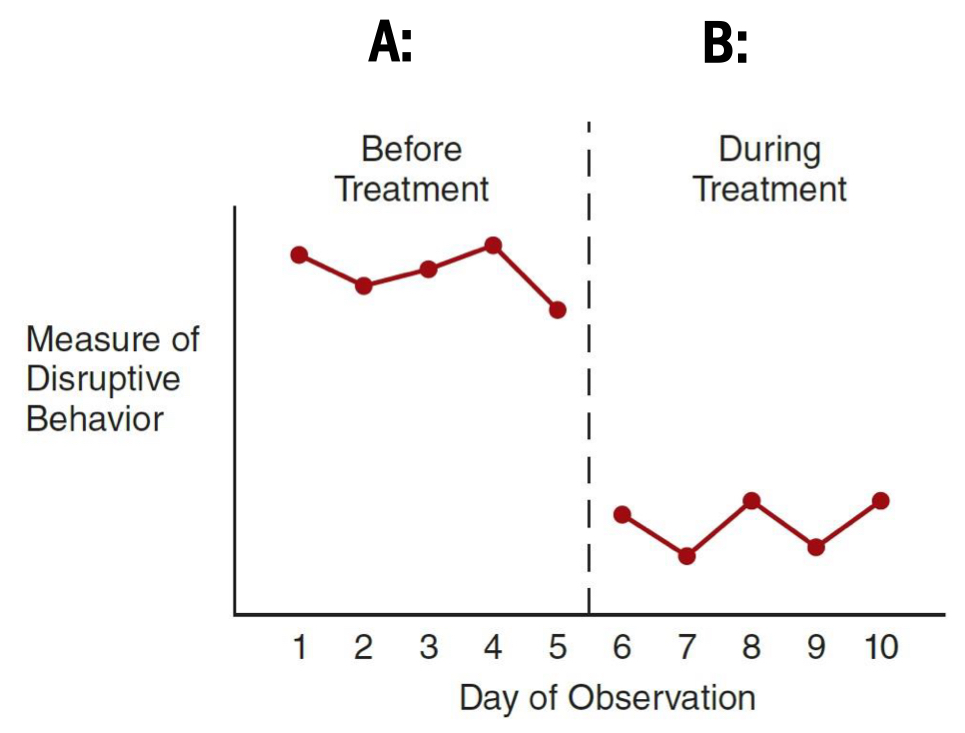
how do you observe statistical significance in a graph?
you should compare them level (value of Y) and the trend (slope) between A (before the treatment) and B (during the treatment)
why can’t we only use a graph to see if a treatment caused a change in behaviour? (2)
no control over extraneous variables that change across time
differences could be caused by chance
what are the possible single-case experimental design? (4)
AB (simplest)
ABA (reversal design)
ABAB (reversal design)
multiple baseline (ABAC): two baselines at the same time, one starts the treatment earlier
define “phase”
series of observations of the same person under the same condition (A and B are different phases)
define “baseline phase”
series of baseline observation/observations before the treatment
*identified with A
define “treatment phase”
series of treatment observations
*identified with B
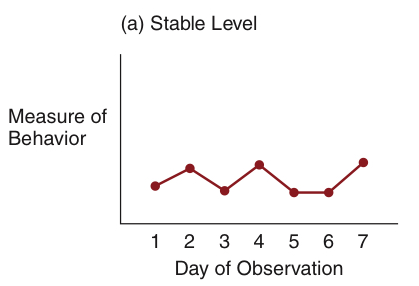
define “consistent level” and how we can observe it in a graph
series of measurement that are approximately the same magnitude
graph: the points cluster around a horizontal line
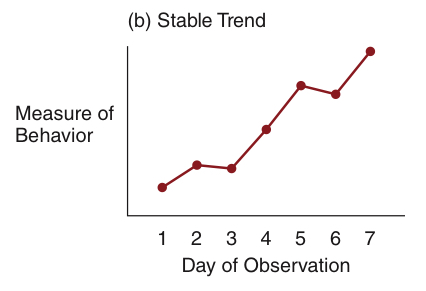
define “consistent trend” and how we can observe it in a graph
differences from one measurement and the next are in the same direction and nearly the same magnitude
graph: the series of data points are clustered around the slope
define “stability”
degree to which observations show a consistent pattern
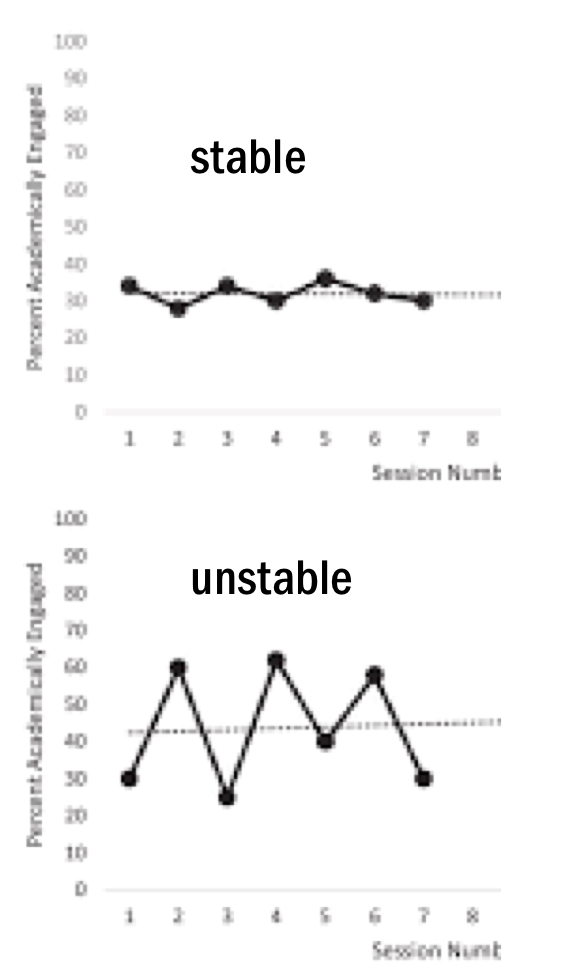
true or false: level and trend can only be stable
false: they can be stable or unstable which creates overall stability
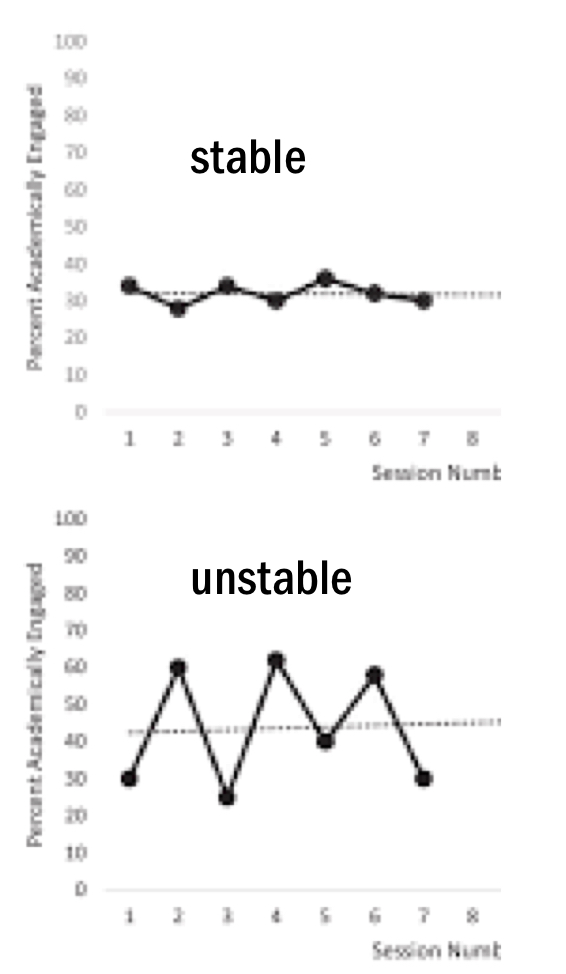
what’s the difference between consistent level, consistent trend and stability?
consistent level: series of measurement with the same magnitude
consistent trend: differences from one measurement to the next with the same direction and nearly the same magnitude
stability: degree to which observations show a consistent pattern (overall level and trend)

what should you do if your data is unstable? (3)
wait until the data stabilizes before continuing measuring
average a set of two or more observations
look for patterns in the inconsistency (maybe there’s something you can control)
explain how looking for patterns with inconsistency can help with unstable data
maybe there’s something you can control (ex: time of day causes inconsistency)
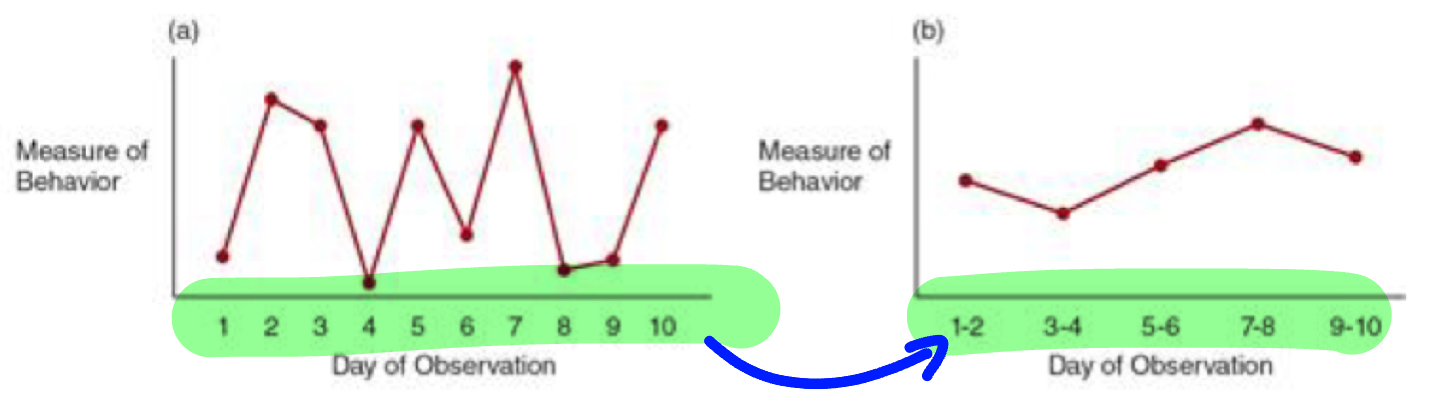
explain how averaging your data could help with unstable data
left: original unstable data
right: average over 2 days which makes the data more stable
define “phase change” and how you can do it (3)
changing the conditions/manipulating the IV by
administering a new treatment
stopping a treatment
changing a treatment
*”phase change” because this initiates a new phase (ex: go from A to B)
when should you change phases? (3)
→ consider the participant’s response
participant is improvement without the treatment, don’t implement the treatment
participant is deteriorating quickly without the treatment, implement treatment right away
participant produces deterioration, stop treatment immediately
true or false: in a single-case design, you run the experiment and then observe the results to determine if they should receive a treatment
false: you observe as the experiment is running to adjust the treatment
how many observations should you have within a phase to determine a pattern (level, trend, stability)?
at least 3, usually we need 5-6 (depending on the participant)
what are the visual characteristics that help us determine whether there is a meaningful change between phases? (4)
change in average level
immediate change in level
change in trend
latency of change (how long it takes to generate a pattern)
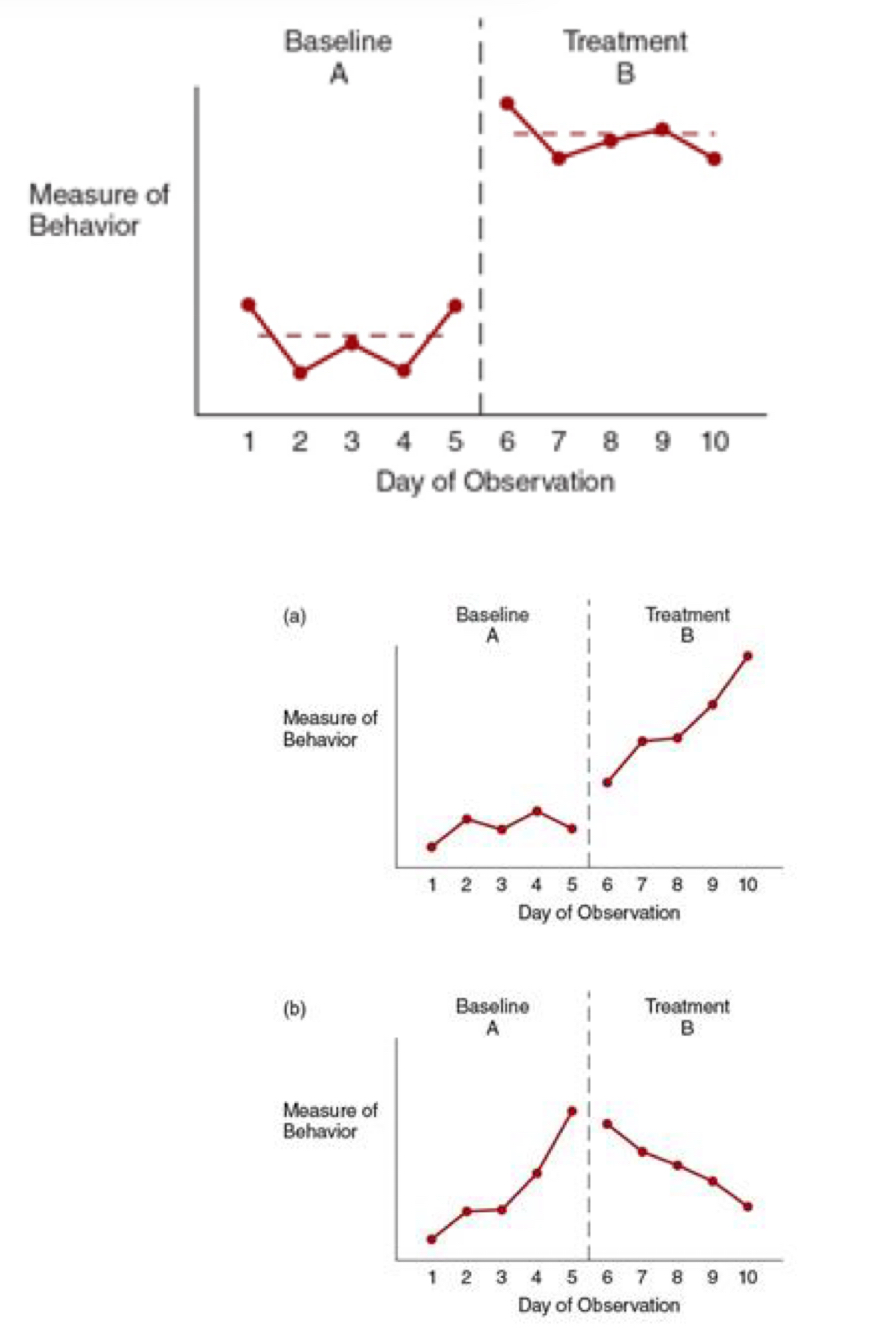
explain what we can see in these graphs (individually)
first: clear difference between phases, difference between last point in A and first point in B → behaviour changed when treatment was introduced
middle: A = no trend/consistent level → B = increasing trend
bottom: A = increasing trend → B = decreasing trend (reversal)
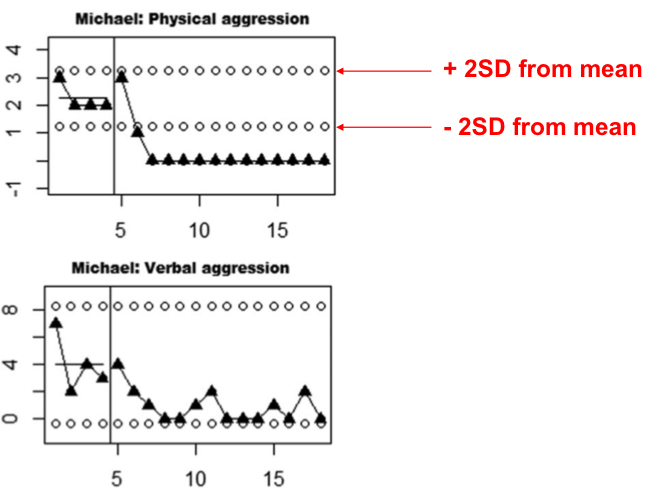
what’s the difference between these two graphs? what does the dotted line mean?
dotted line represents variability: instability of the data
top graph: treatment works because it goes outside of the variance
bottom graph: larger variance, but treatment doesn’t seem to have an effect
what’s the advantage of an ABA design?
it allows the scientist to infer that B was the cause of change in A
without the second A, there are other explanations that could explain the AB change
graph: baseline, treatment, baseline → did the B really have an effect on A? let’s go back to A to see
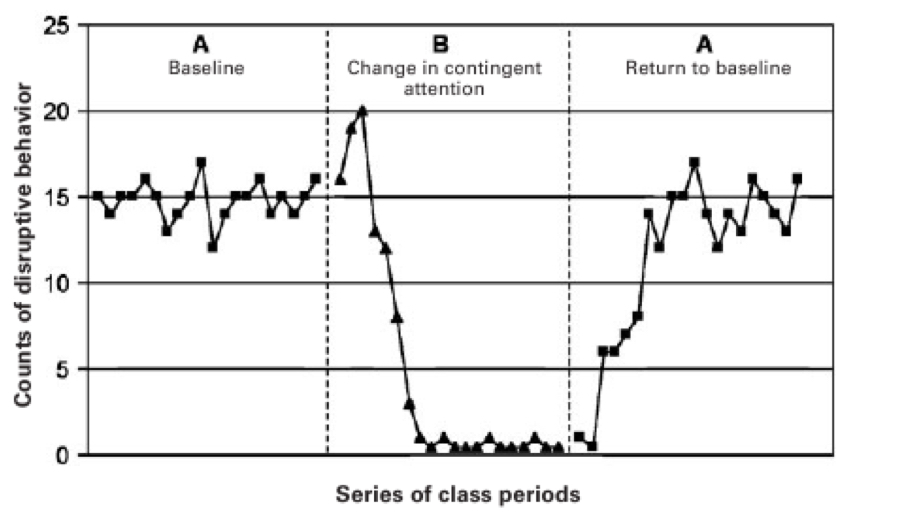
what are the limits of the ABA reversal design? (2)
you don’t know whether future treatments (B) would generate the same outcome
if the two baselines (A) aren’t the same, you don’t know if B would have the same effect with A1 than with A2
what’s the goal of an ABAB design?
to demonstrate that the treatment consistently causes changes in the participants behaviour (which is a weakness in an ABA design)
true or false: in an ABAB design, the changes from each baseline to treatment should be the same
true
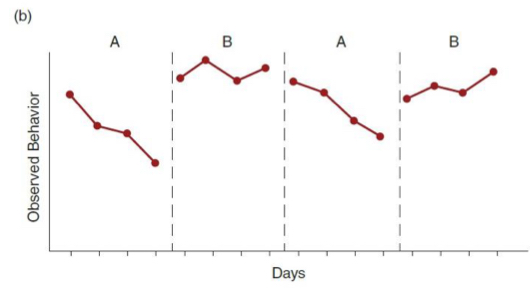
what’s the advantage of an ABAB reversal design?
because you return to baseline after the first treatment, this can confirm a causal relationship
what are the limitations of the ABAB design? (3)
can’t always fully test the treatment condition
can’t always return to baseline (ex: if the participant is cured)
ethical problem if the treatment if effective (not ethical to take away)
true or false: with an ABAB design, you can create some complex variations
true: you can add a treatment or modify the sequence (ex: ABBACCA, ABCABC)
define “multiple-baseline design”
two multiple baselines phase: one treatment phase is imitated for one baseline while the other baseline continues to be observed
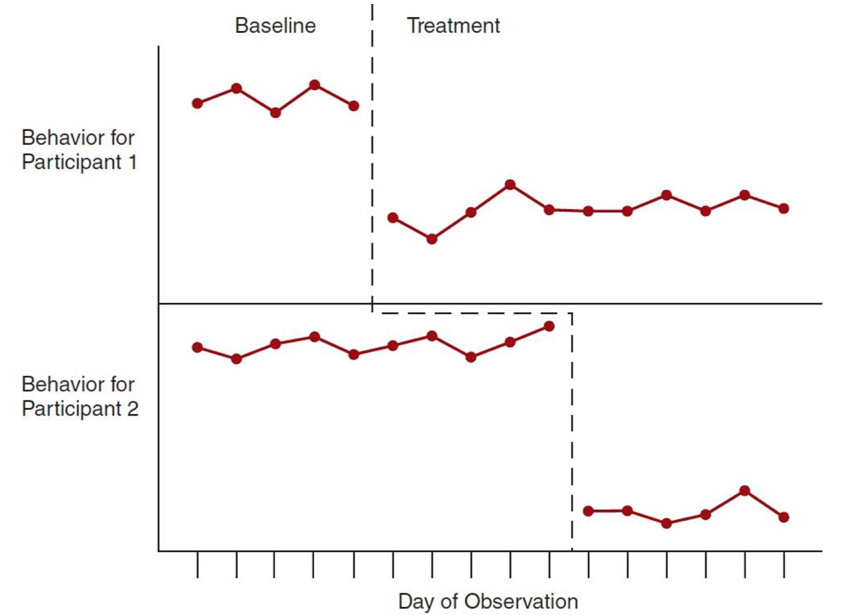
what are the possible multiple-baseline designs? (3)
across subjects: initial baseline phases are the same behaviour for two participants
across behaviours: initial baseline phases are two separate behaviours for the same participant
across situation: initial baseline phases are the same behaviour in two different situations
define “component-analysis design”
series of phases in which each phase adds or subtracts one component of a complex treatment to determine how each component contributes to the overall treatment
*it’s considered as a multiple baseline design
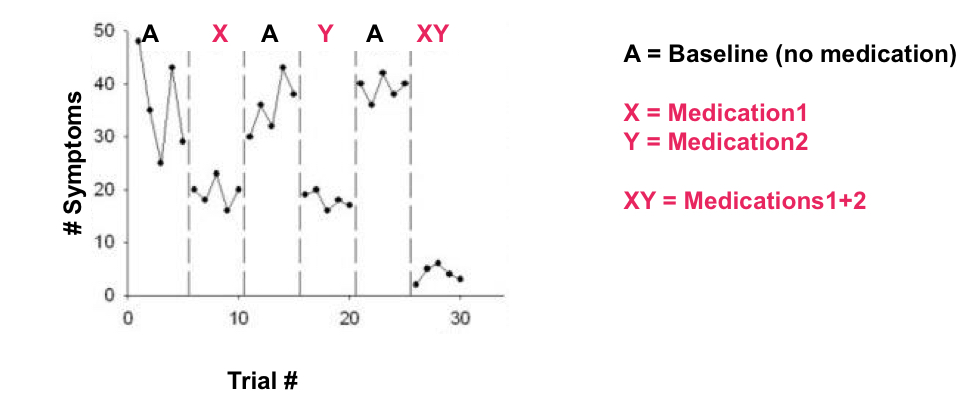
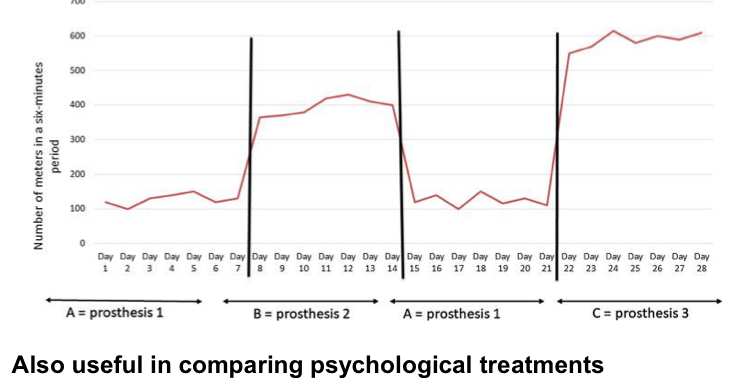
explain this graph
ABAC/multiple baseline design
both A baseline conditions have similar level
we see that C is more efficient than B
what’s the logic between multiple-baseline design?
it’s the same as for a ABAB reversal design: you want to show that there is a clear and immediate change when you go from baseline to treatment
the difference is that you have two different treatments
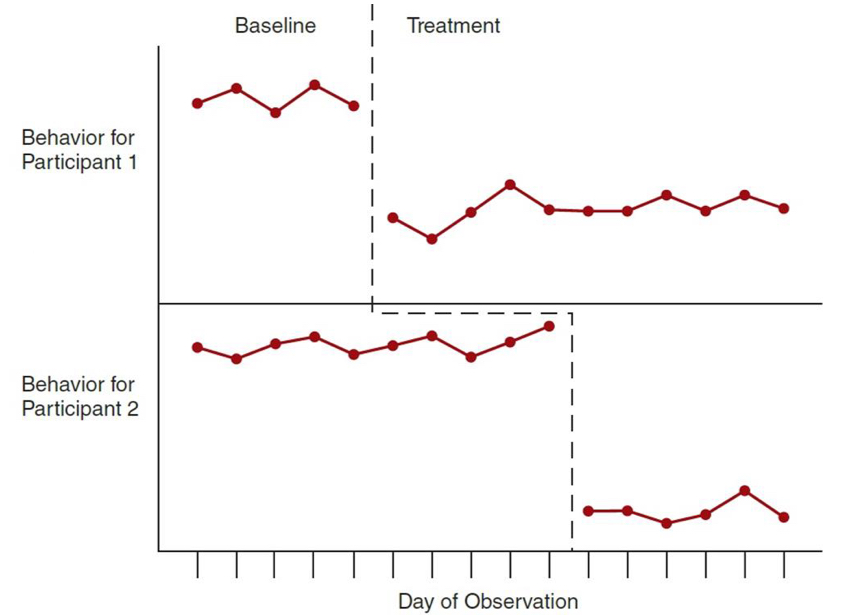
what are the characteristics of a single-case design? (6)
one participant
DV is measured repeatedly, at least 3 times
IV is actively manipulated
baseline must have a predictable pattern (level, trend, stability) to demonstrate if treatment worked
experimental control is achieved through change in phase (experimenter decides phase change and order)
visual analysis confirms level, tend and stability
what are the advantages of single-case designs? (3)
allows researcher to establish cause-and-effect relationship with one participant
flexibility: researcher is free to modify the treatment if participant doesn’t respond
no need to standardize treatment across groups, there’s only one participant
what are the disadvantages of single-subject designs? (3)
threat to external validity: relationship among variables is only for one person
multiple and continuous observations are required:
no statistical controls
reliance on graphs to display data
AB, ABA, ABAB or multiple design: evaluate whether using a nicotine patch reduces smoking
AB of ABA: there’s only one type of nicotine patch tested
AB, ABA, ABAB or multiple design: evaluate whether meditation classes reduce social anxiety
ABAB: see if it’s really meditation that causes reduction
AB, ABA, ABAB or multiple design: evaluate whether an omnivore or plant-based diet leads to the same level of muscle mass
multiple baseline (ABAC): normal, omnivore, normal, plant-based
 Note
Note  Flashcards (124)