Cell cycle and Cancer
 Call Kai
 Learn
Learn Practice Test
 Spaced Repetition
 Match
Match Flashcards
 Knowt Play
1/56

There's no tags or description
Looks like no tags are added yet.
Name | Mastery | Learn | Test | Matching | Spaced | Call with Kai |
|---|
No analytics yet
Send a link to your students to track their progress
57 Terms
Zygote
fertilized egg
Stem cells
undifferentiated cells that become differentiated into one or more types of cells
Embryonic Stem cells
Stem cells that have never been differentiated before
Adult Stem cells
They are found in adult bone marrow and can become multiple different things
examples: bone, cartilage, blood, fat, and connective tissue
Gastrula
Embryo with 3 differentiated germ layers
Organogenesis
The process of body organ and organ system formation that follows gastrulation
Cell
Most basic unit of life that has all the characteristics of life
Tissue
Group of cells working together for a common function
Organ
Set of tissues working together for a common function
Organ system
Set of organs working together for a common function
Organism
One individual member of a species
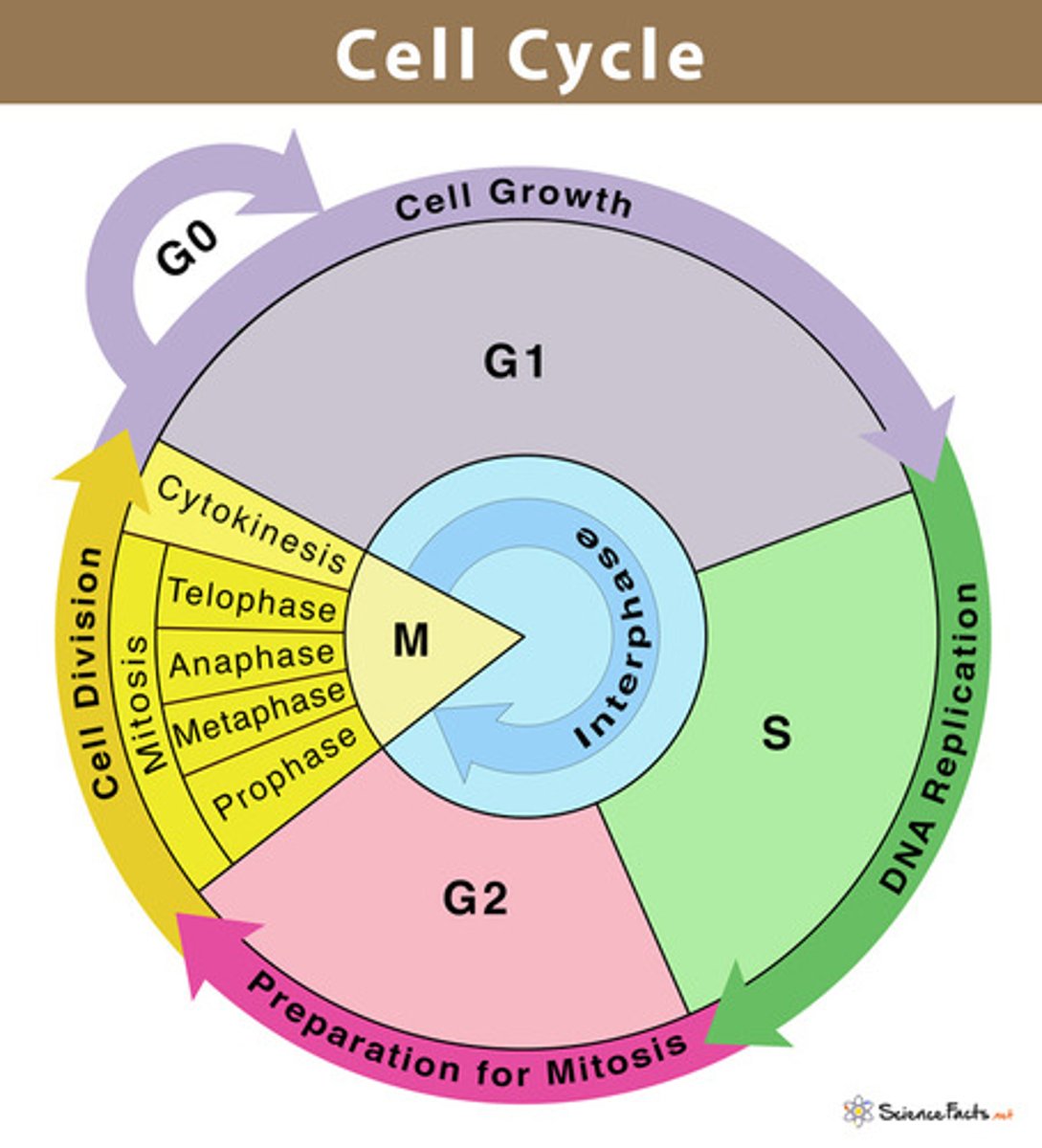
Cell Cycle
A repeated pattern of growth, DNA duplication and cell division that occurs in eukaryotic cells
- 2 purposes = growth and repair
Chromosomes
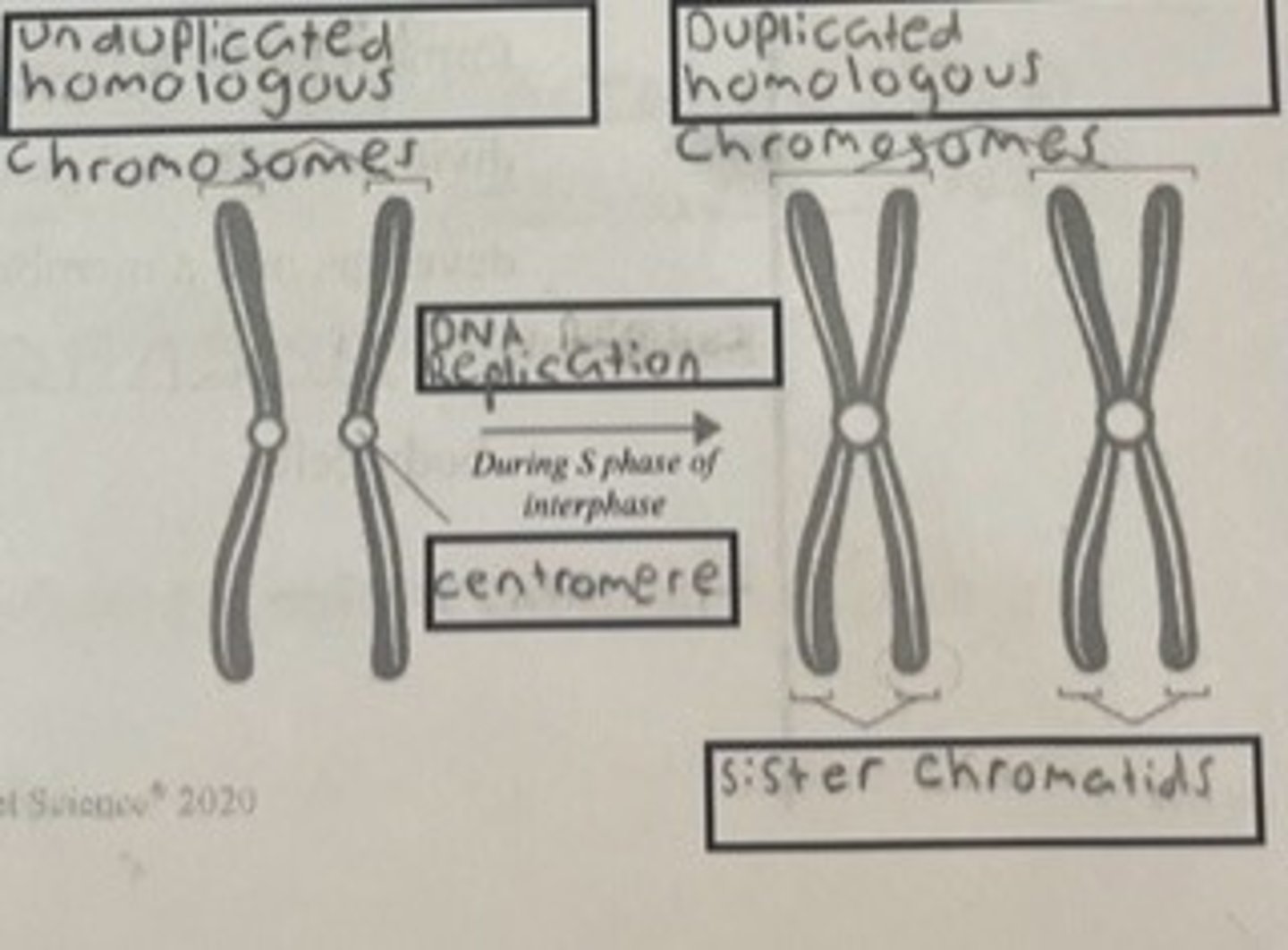
One long continuous thread of DNA that consists of thousands of genes and regulatory information
Gene
A section of DNA that contains the instructions for making a protein
Humans have how many chromosomes?
46
In normal body cells chromosomes always occur as what?
Homologous chromosomes
Chromatid
One half of a duplicated chromosome
Sister chromatids
Two identical chromatids
Centromere
Region of the condensed chromosomes that look pinched
Telomere
Ends of the DNA molecule
Interphase
The growth phase of the cell cycle
G1 phase/Gap 1 phase
Cell grows and makes protein
S/Synthesis phase
DNA replication occurs, doubling the number of chromosomes
G2/Gap 2 phase
More cell growth and protein synthesis
Mitosis
The division phase of the cell cycle
- 1 cell becomes 2 identical daughter cells
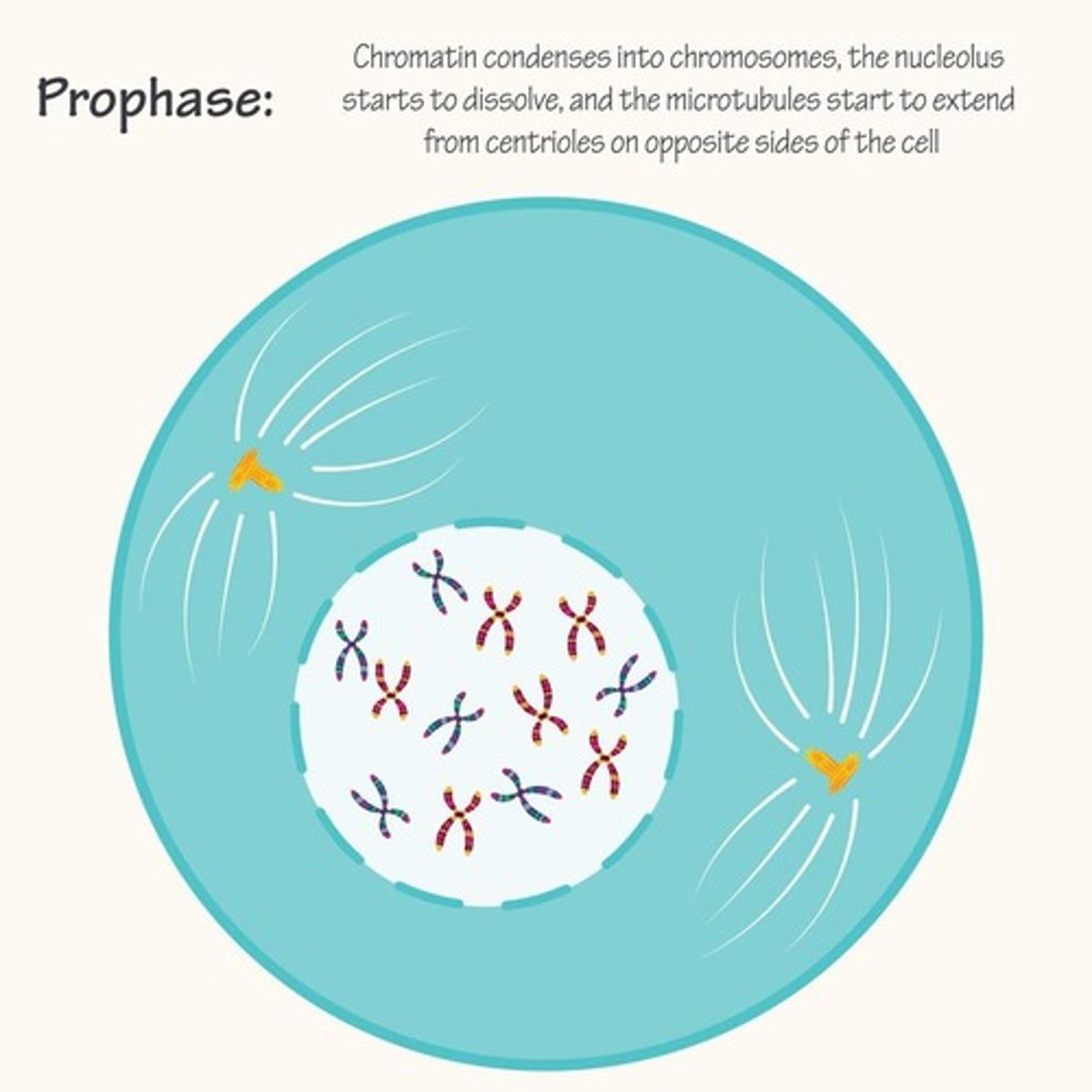
Prophase
Cromosomes condense & are visible as sister chromatids (in X's)
Nuclear membrane dissapears
Spindle fibers form out of contrioles
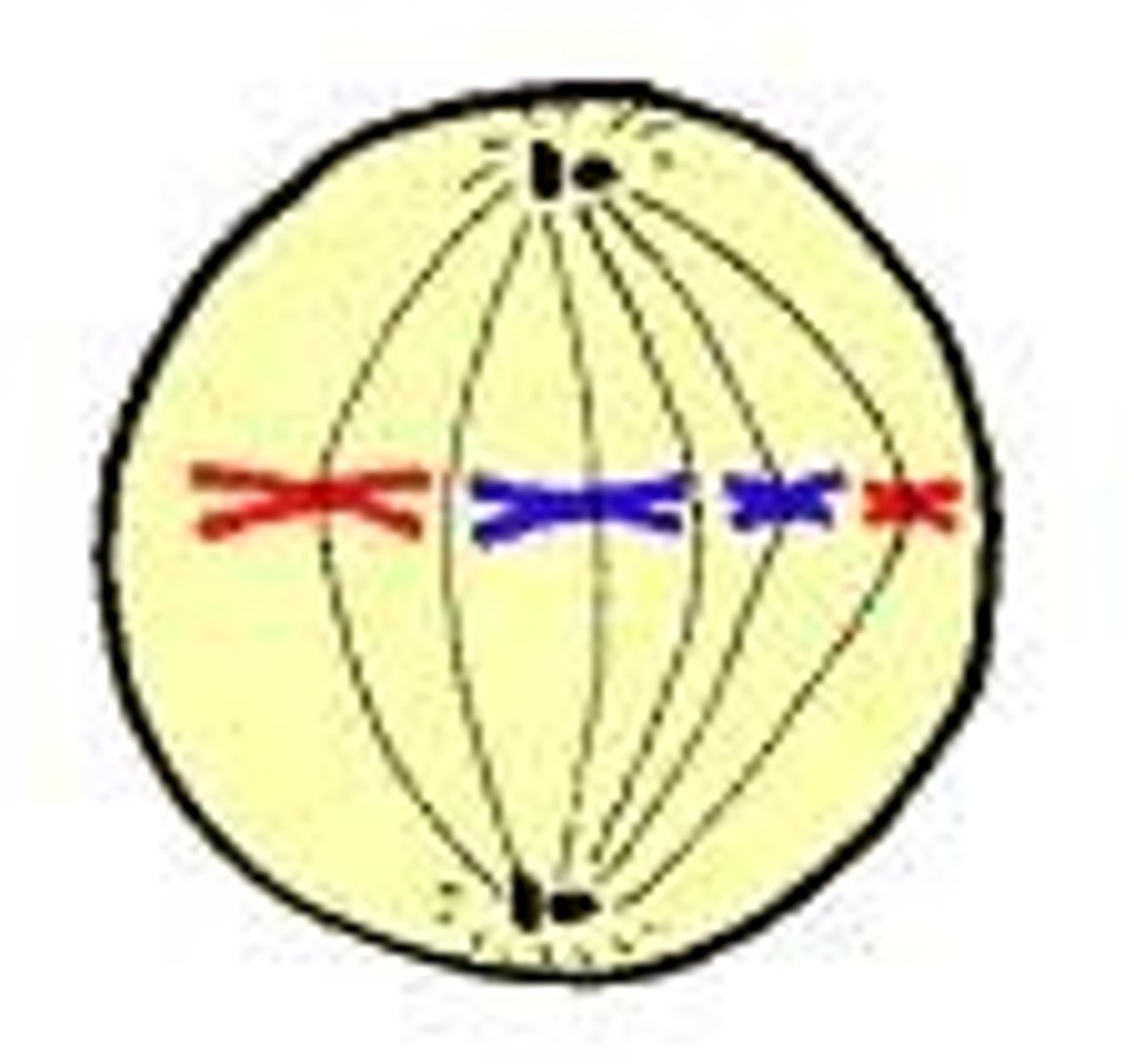
Metaphase
Spindle fibers connect to the centromere of each sister chromatid
Chromosomes line up in the middle of the cell
Anaphase
Sister chromatids seperate, pulling away from each other and becoming individual chromosomes
Chromatids move to opposite ends of the cell
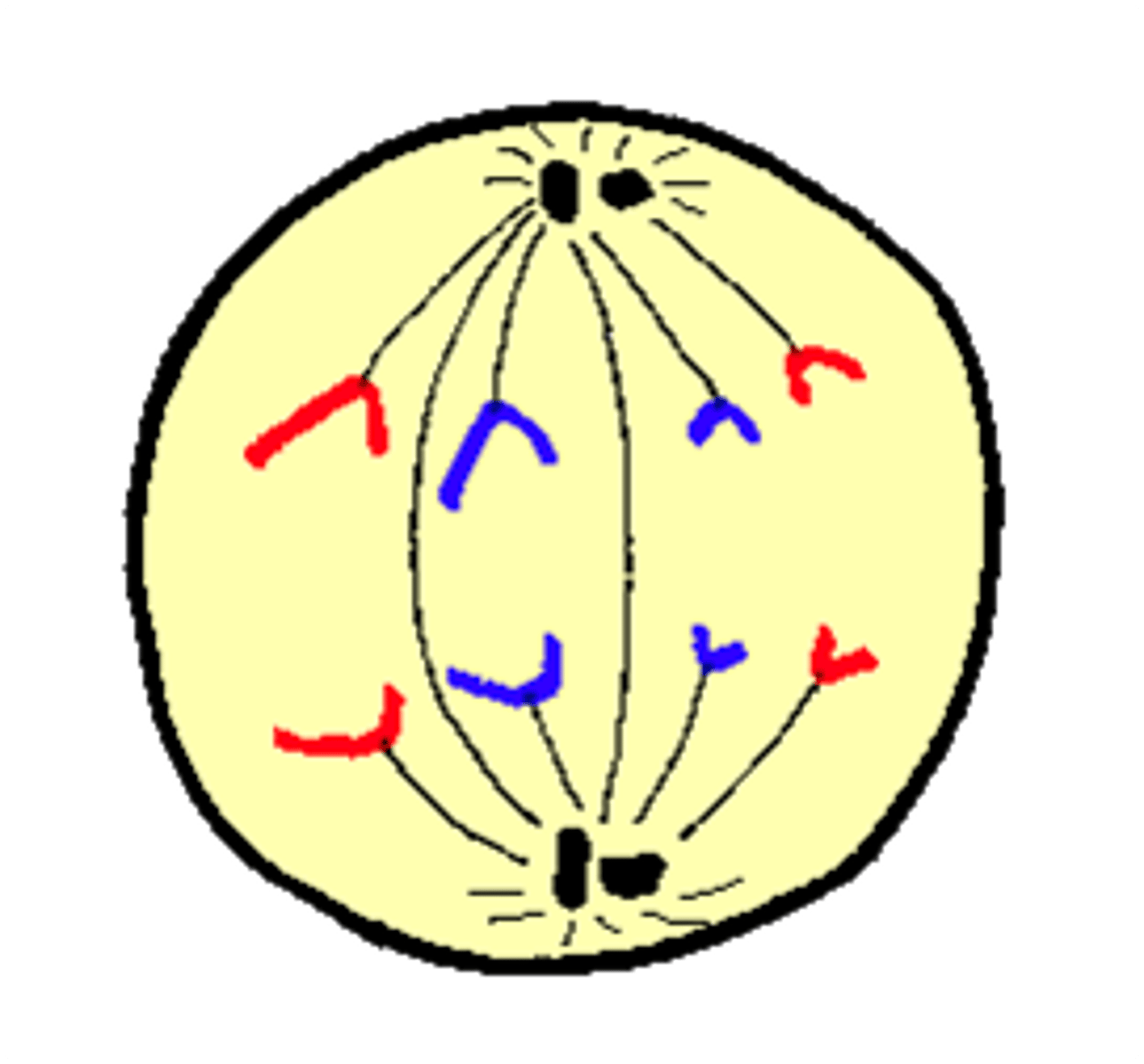
Telophase
Chromosomes decondense and start to look like chromatin again (threadlike instead of rod like fibers)
Nuclear membrane re-forms around chromosomes at each pole
Spindle fibers break down
Cytokinesis begins
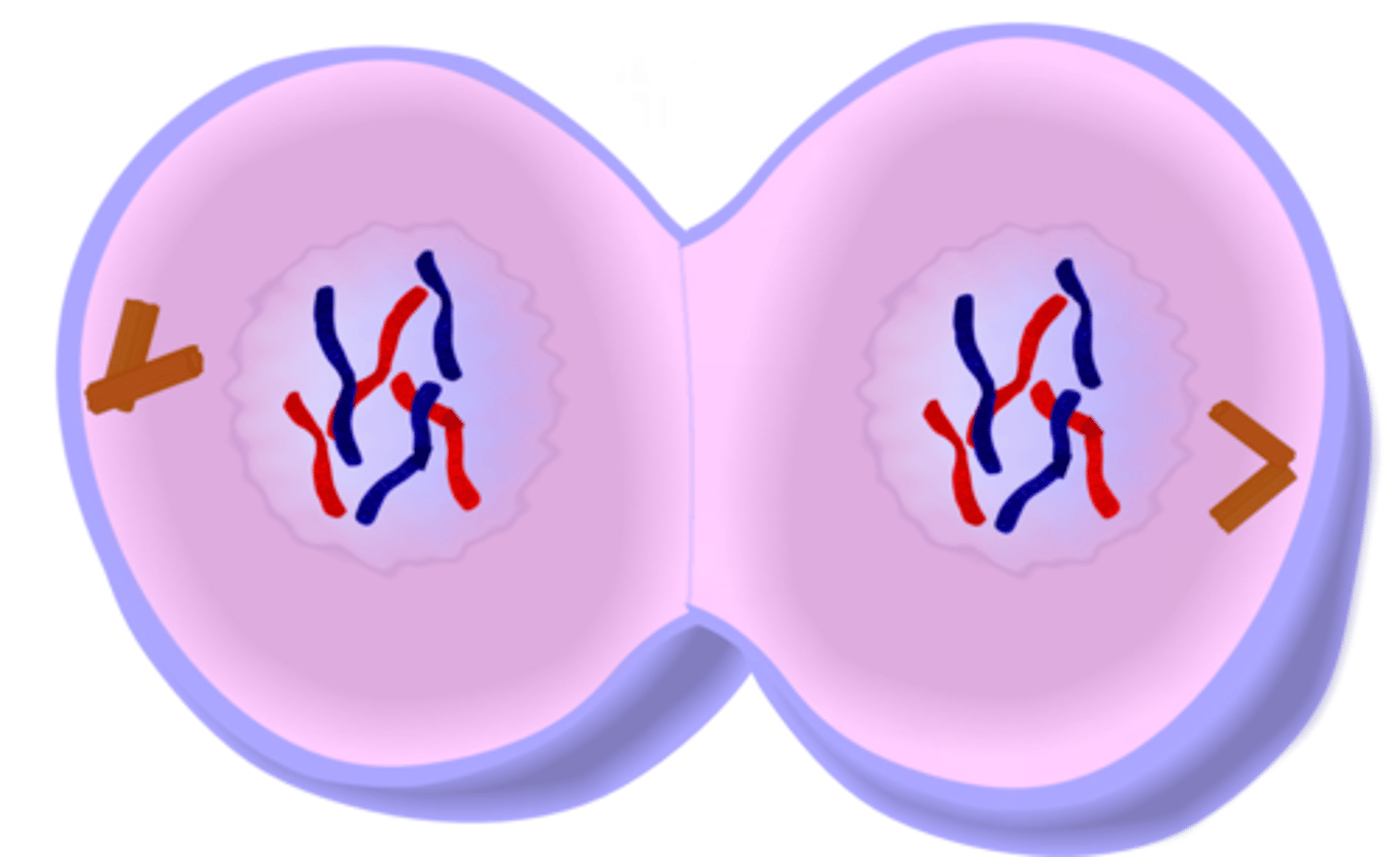
Cytokinesis
The division of the cytoplasm into 2 individual cells
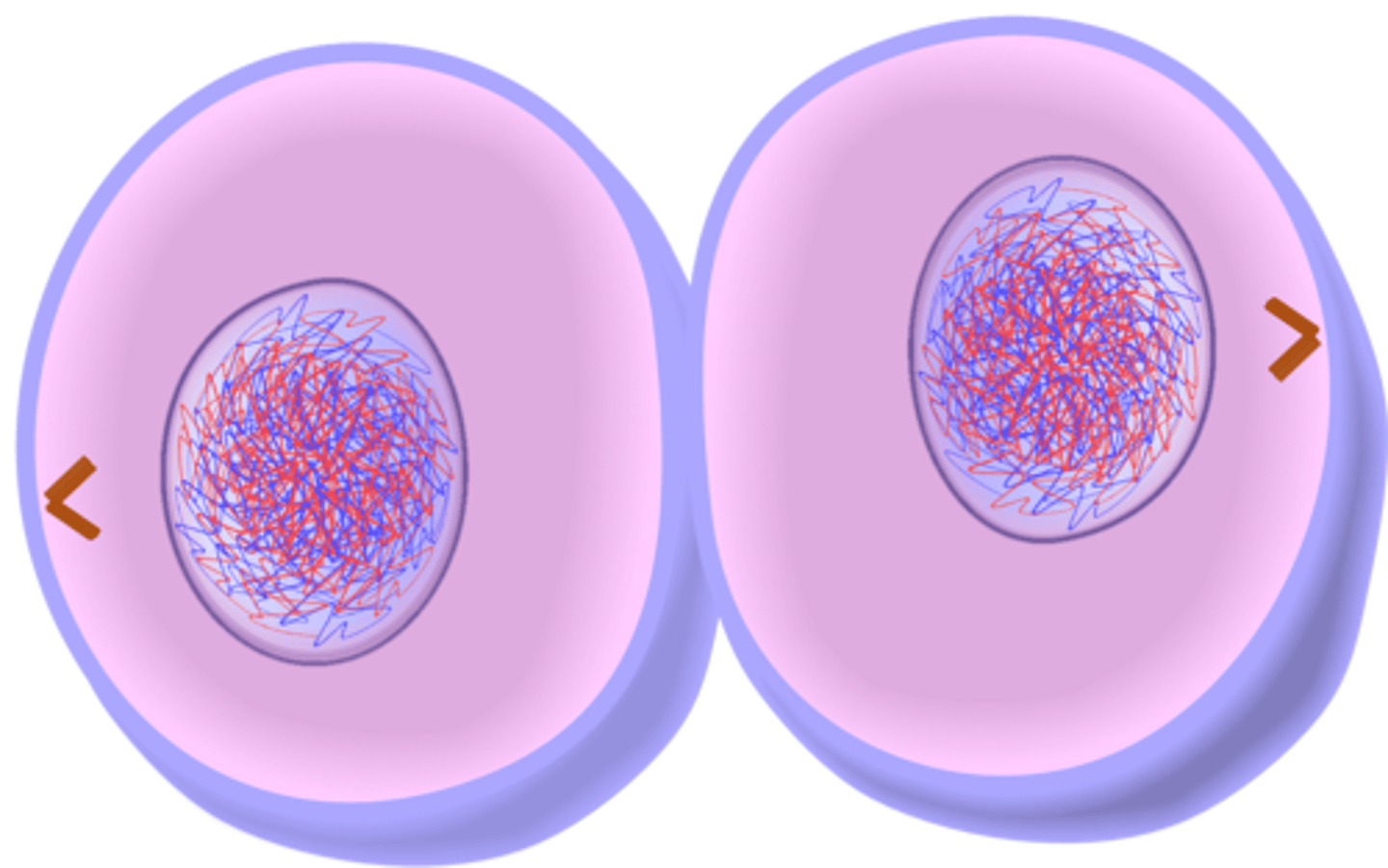
Cytokinesis (in plant cells)
Cell plate forms midway between divided nuclei and gradually develops into a membrane
End result = 2 identical body cells
Cytokinesis (in animal cells)
Forms a cleavage furrow that pinches the cell into 2 equal parts
How often do cells divide?
Every cell divides at a diffrent rate based on its need
Examples: Skin cells = every 2 weeks
Red blood cells = 4 months
Why do body cells divide?
Growth and repair
Why don't body cells get bigger?
High surface area to voume ratio. This is the most effcient energy-wise and allows substances to move in and out of the cell more easily.
How is the cell cycle controlled?
A chemical control system that starts and stops the cell cycle
- proteins play a key role in this
What are the two types of cell cycle regulation?
Internal and external
External regulation + examples
Signals that come from outside of the cell
examples: Hormone, nutrients, etc.
Internal regulation + examples
Signals that come from the cell's own nucleus
examples: DNA inside of the cell
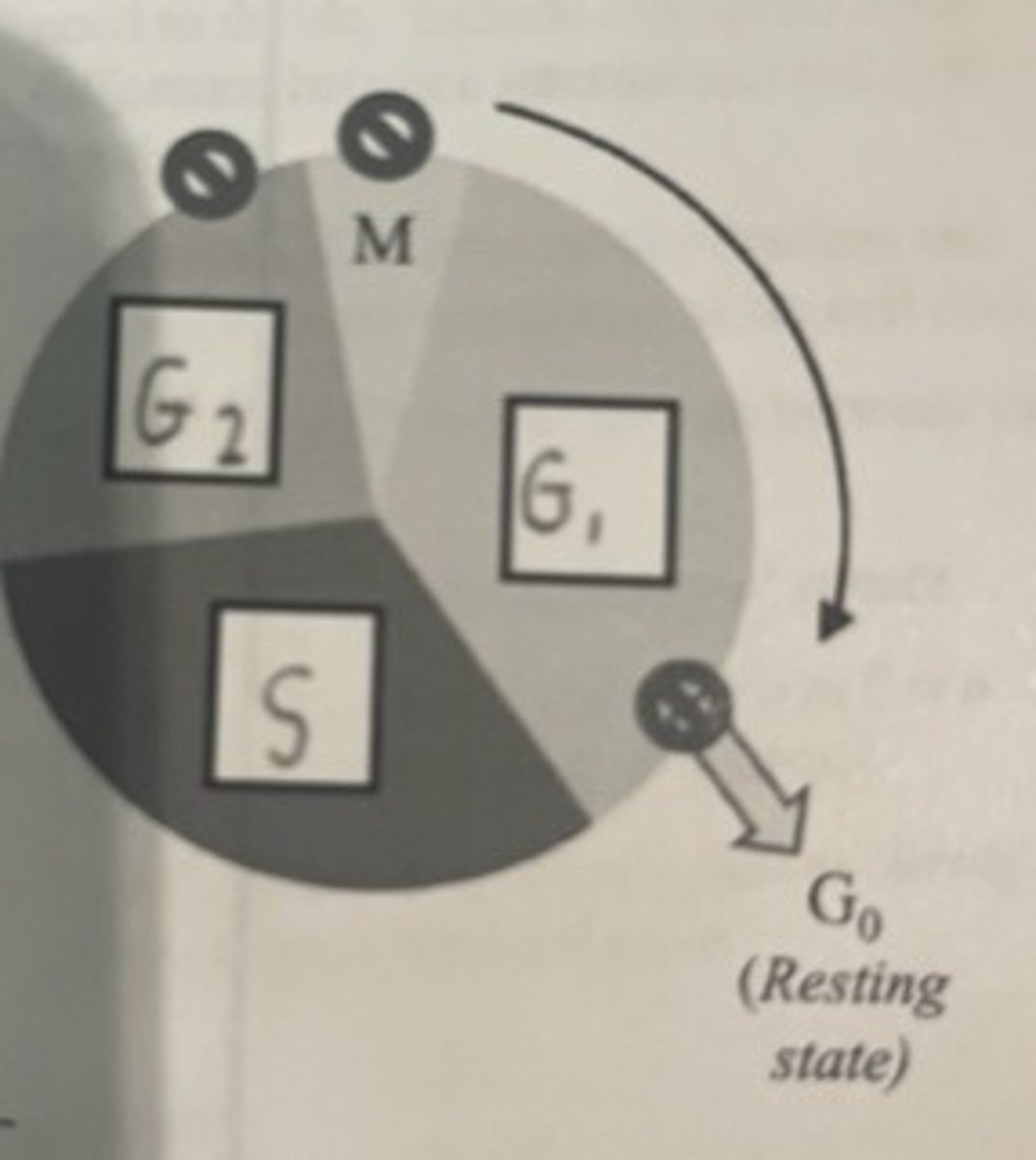
Checkpoints
Critical point where "stop" & "go" signals can regulate the cycle
Apoptosis
Programmed cell death
How is apoptosis signald? + examples
Internal and external signals that activate genes that produce self-destructive enzymes
examples: web fingers & toes during development
Cancer
Uncontrolled cell division
When does cancer occur?
When cell cycle regulation breaks down
diffrentiat between how ofter cancer cells and healthy cells divide.
Cancer cells divides more and can lead to tumors.
Tumors
Clumps of cells that divide uncontrollably
What are the two types of tumors?
Benign and malignant
Benign
Abnormal cells that typically remain clustered together
- It may be harmless & easily removed
Malignant
Cancer cells that break away from the tumor and move to other parts of the body -> more tumors
Metastasize
Spreading of disease from one organ to others
Carcinogens
Cancer causing agents
What occurs when you are exposed to carcinogens?
The chemicals cause the DNA mutation which leads to cancer
Examples of biological factors that can cause cancer.
Age, inherited genetic mutations, skin type, etc.
Examples of lifestyle choices that can cause cancer.
Diet, physical activity, exposure to UV radiation, etc.
Examples of viruses and other infection that can cause cancer.
HPV can cause cervical cancer
Other things that can cause cancer.
Tobacco smoke, abestos, etc.
Sketch a homologous chromosome pair before and after S phase?