ECO CH14 Oligopoly
 Call Kai
 Learn
Learn Practice Test
 Spaced Repetition
 Match
Match Flashcards
 Knowt Play
1/23

There's no tags or description
Looks like no tags are added yet.
Name | Mastery | Learn | Test | Matching | Spaced | Call with Kai |
|---|
No analytics yet
Send a link to your students to track their progress
24 Terms
oligopoly
an industry with
- only a few firms that compete
- low ease of entry
- sell either identical or different products
ex. streaming services
concentration ratio
measure of the extent of competition in an industry
barriers to entry
anything that keeps new firms from entering an industry in which firms are earning economic profit
what are the main barriers to entry?
1. economies of scale
2. ownership of a key input
3. govt imposed barriers
economies of scale
the situation in which a firm's long-run average cost falls as it increases the quantity of output it produces
- most important barriers to entry
describe the significance of economies of scale
- If economies are scale are NOT significant, there will be low barriers to entry, allowing for a large number of firms and it will be competitive
- If it is significant, there will be high barriers to entry
ownership of a key input
If production of a good requires a particular input, then control of that input can be a barrier to entry
what are the 3 important types of govt imposed barriers?
1. patent
2. imposing tariffs and quotas
3. occupational licensing
patent
the exclusive legal right to produce a product for a period of 20 years from the date the patent application is filed with the government
- allows firms to charge higher prices and make a profit
how do tariffs and quotas create barriers to entry?
allow US companies to charge prices that are much higher than prices that companies outside the united states charge
what is the effect of occupational licensing?
it raises the prices of services
game theory
the study of the decisions firms in industries where the profits of a firm depend on its interactions with other firms
what 3 characteristics do games share?
1. rules
2. strategies that players employ to attain their objectives
3. payoffs (results of the interactions among the player's strategies)
business strategy
a set of actions that a firm takes to achieve a goal, such as maximizing profits
duopoly
an oligopoly with two firms
payoff matrix
a table that shows the payoffs that each firm earns from every combination of strategies by firms
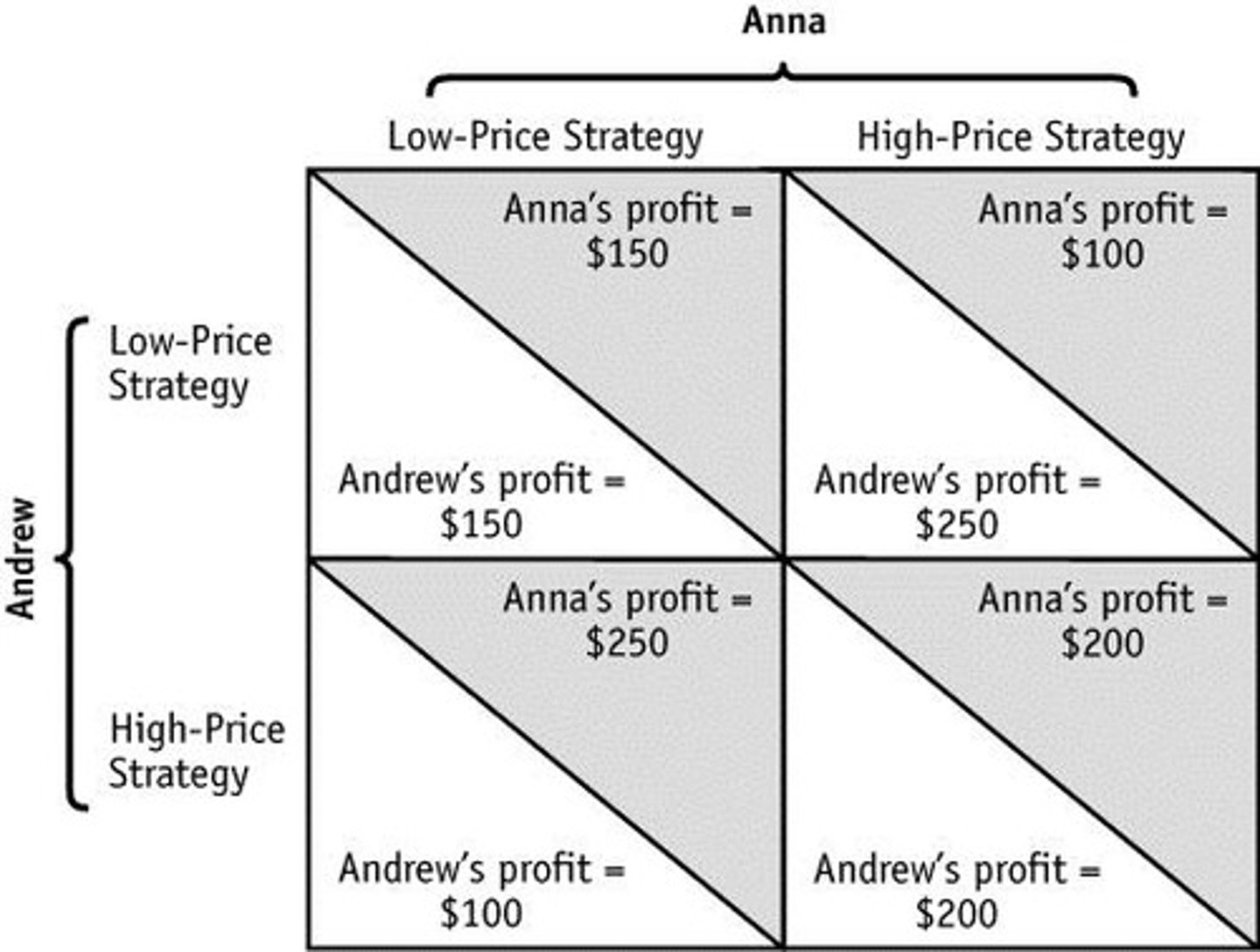
collusion
an agreement among firms to charge the same price or otherwise not to complete
- illegal!
dominant strategy
the best strategy for a firm, no matter what other strategies use
- occurs at equilibrium where each firm is maximizing its profit given the price chosen by the other firm
nash equilibrium
a situation in which each firm chooses the best decision, given the strategies chosen by other firms
cooperative equilibrium
an equilibrium in a game in which players cooperate to increase their mutual payoff
noncooperative equilibrium
an equilibrium in a game in which players do not cooperate but pursue their own self-interest; common outcome
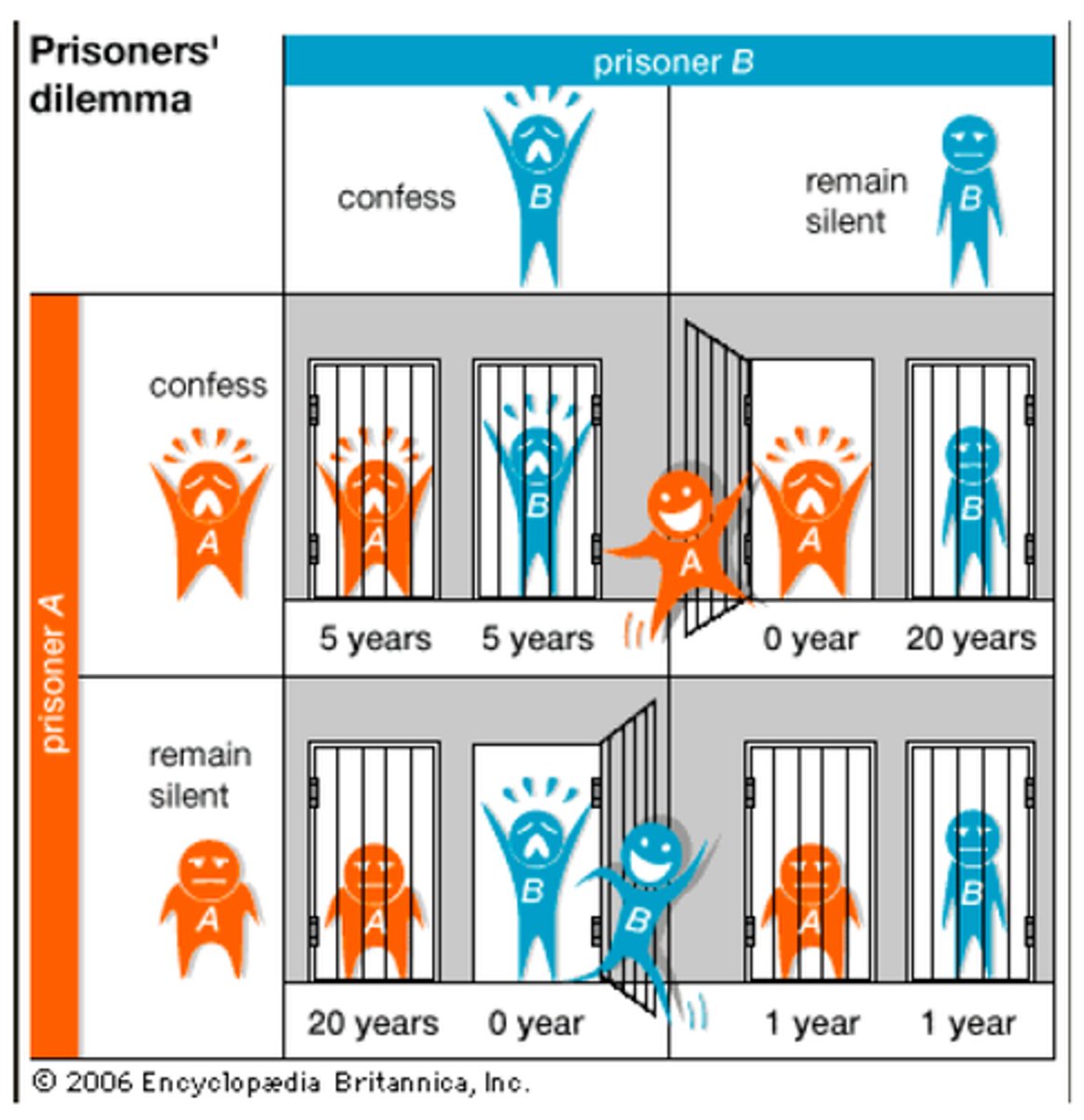
Prisoner's dilemma
a game in which pursuing dominant strategies results in noncooperation that leaves everyone worse off
cartel
a group of firms that collude by agreeing to restrict output to increase prices and profits
what are the 5 competitive forces?
1. competition from existing firms
2. the threat of potential entrants
3. competition from substitute goods or services
4. the bargaining power of buyers
5. bargaining power of suppliers

