lecture 10: cranial review
 Call Kai
 Learn
Learn Practice Test
 Spaced Repetition
 Match
Match Flashcards
 Knowt Play
1/34

There's no tags or description
Looks like no tags are added yet.
Name | Mastery | Learn | Test | Matching | Spaced | Call with Kai |
|---|
No analytics yet
Send a link to your students to track their progress
35 Terms
•Motility of CNS
•Fluctuation of CSF
•Mobility of intracranial / intraspinal membranes (reciprocal tension)
•Articular mobility of cranial bones
•Involuntary motion of sacrum between ilia
what are the 5 components of the primary respiratory mechanism model?
flexess
-extends during contraction phase
during the expansion phse the SBS
•All Midline individual bones are said to either Flex or Extend around a transverse axis
•All Paired bones are said to either internally rotate or externally rotate
motion of midline vs paired cranial bones
flexion head
•Bi-parietal diameter increases
•AP diameter decreases
extension head
•Bi-parietal diameter
decreases
•AP diameter increases
temporal, sphenoid, parietal, frontal
the overlapping bones of the pterion (superficial to deep)
sphenosquamal pivot dysfunction
cranial restriction associated with migraines in post MVA head trauma
-thoughth to be associated with middlle meningeal artery
flexion, extension, torsion (right and left), side bending rotation
physiologic strain patterns of the cranium
•Increased transverse diameter
•Forehead wide and sloping(brow prominent with forehead receding)
•AP diameter equal on both sides
•Sagittal suture flattened or depressed
findings associated with flexion dysfunction
1 AP axis
axis of torsion dysfunction
torsion
•Sphenoid and Occiput rotate in opposite directions
•Named for superior great wing of sphenoid
AP axis and bilateral vertcial axes
axes associated with sidebending rotation
sidebending rotation
•Occiput and Sphenoid rotate same direction on AP axis; side-bend away from each other on parallel vertical axes.
sidebending rotation
physiologic SD named for convexity
lateral strain
vertical strain
compression
name the non-physiologic strain patterns of SBS
bilateral parallel vertical axes
axes of lateral strain
lateral strain
•Shearing force at SBS causing Sphenoid and Occiput to rotate same direction on axes
•Named for position of basisphenoid
lateral strain
strain of the parallelogram head
-common in infants with positional plagiocephaly
parallel horizontal axes
axes of vertical strains
vertical strains
•Sphenoid and Occiput rotate same direction on parallel horizontal axes
•Named for position (superior/inferior) of base of Sphenoid
superior vertical strain
index fingers feel more inferior than 5th fingers
-flexion of the sphenoid and extension of occiput
inferior vertical strain
-index fingers feel more superior than 5th fingers
-extension of the sphenonid, flexion of occiput (cone head baby)
SBS compression
aka bowling ball head
frontal impact trauma, difficult births, and circumferential loads to the skull, but can also be seen in severe psychiatric & emotional states
most common causes of sBS compression
sphenoid
face most affected by this cranial bone
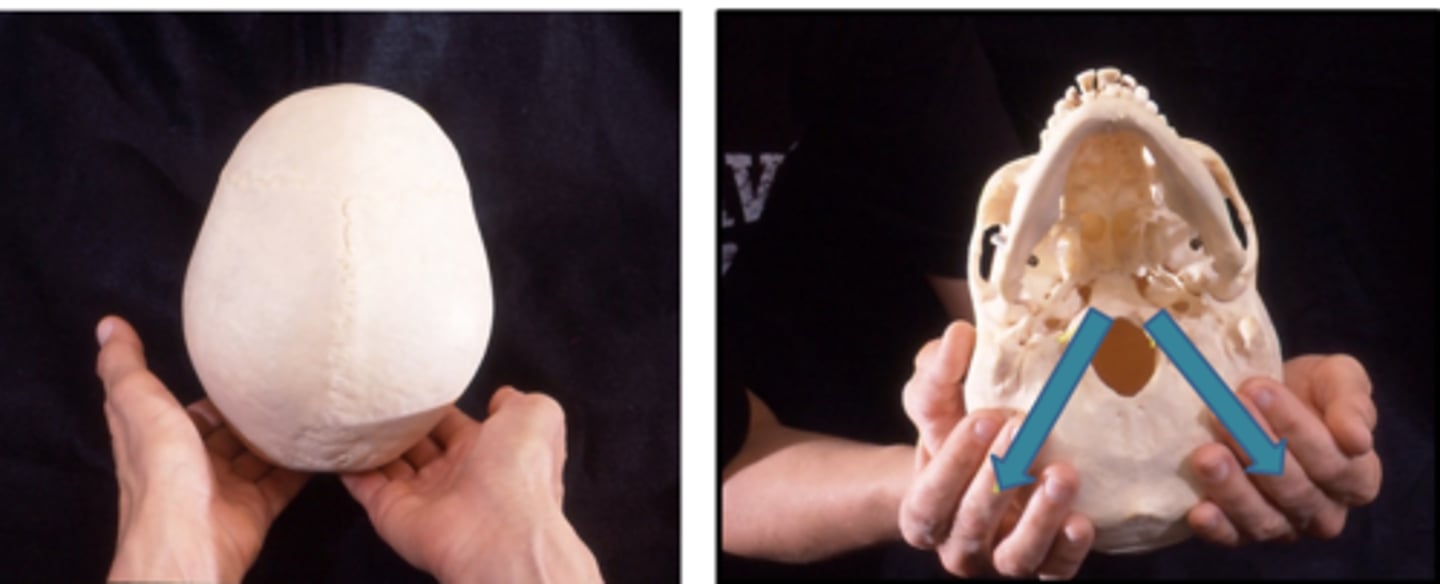
fronto-occipital hold
-Fingers contact greater wings of the sphenoid and frontals
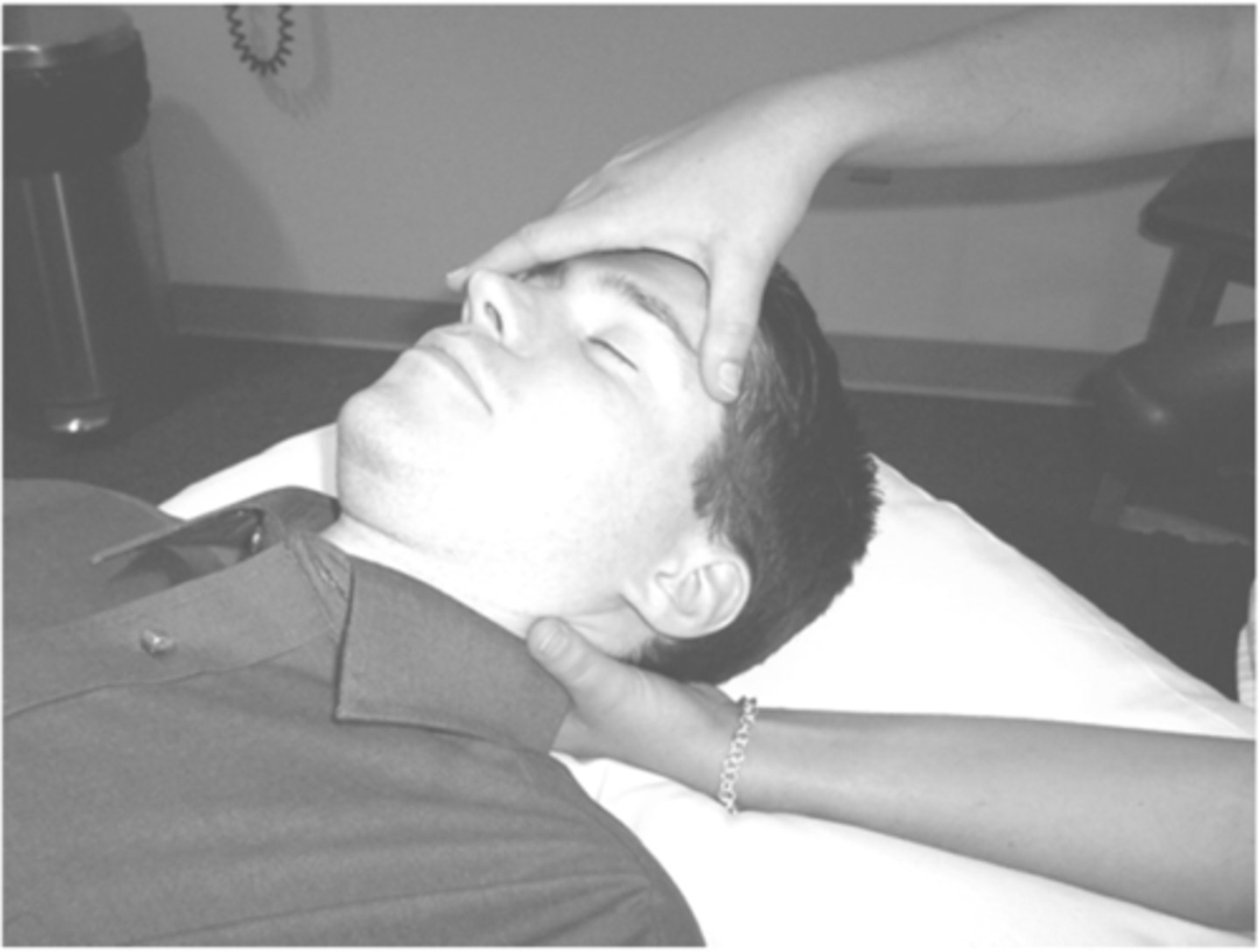
flexion=shortening of the AP axis
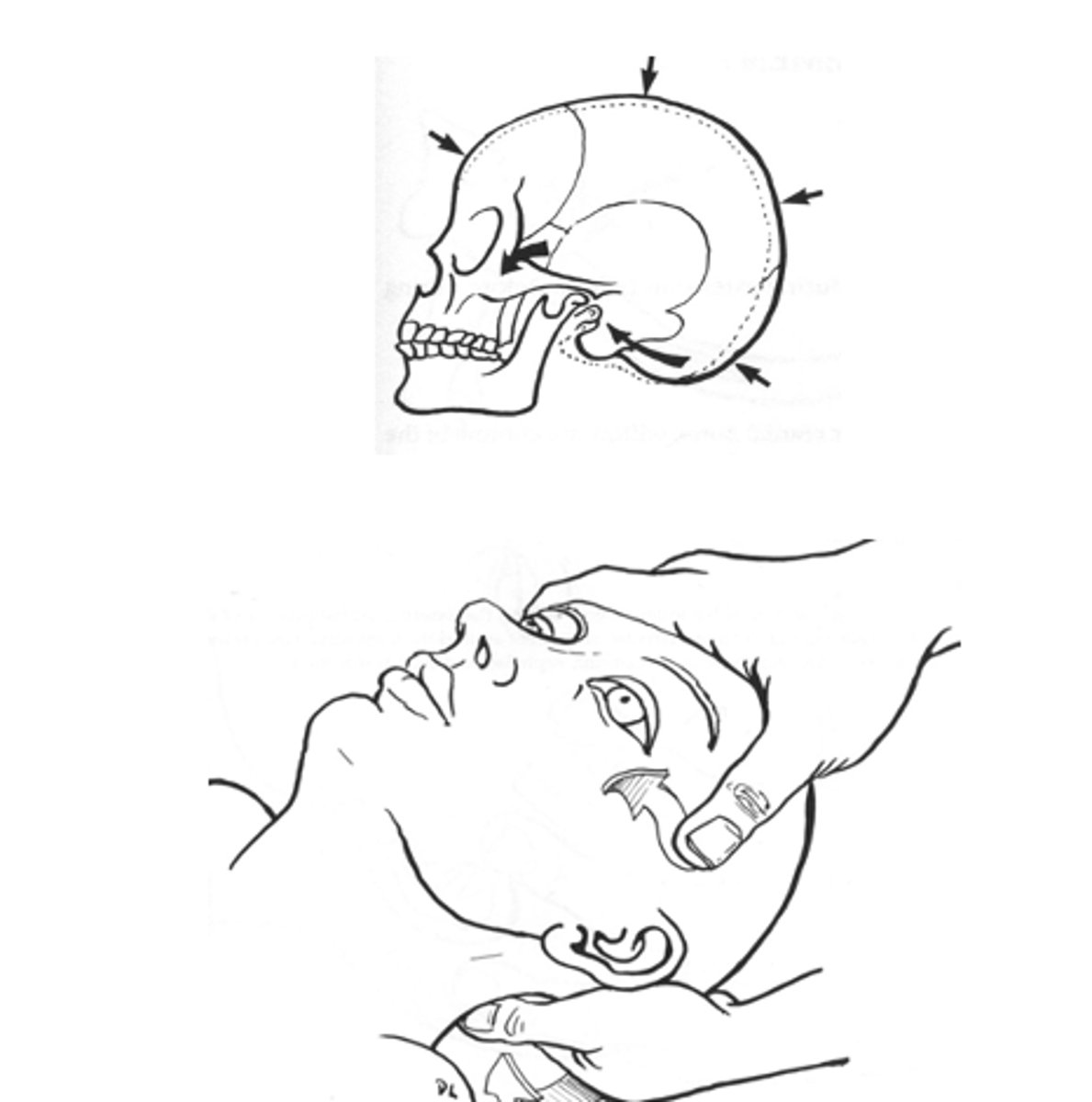
temporal bone
trouble maker bone! can place pressure on trigeminal ganglion and tighten cave
•Frontal lift – Ethmoid pump OMT
cranium treatment indicated with damage to CNI
Open sinuses, decrease sinus headache, decrease dural HA (post-lumbar puncture), balance RTM
indications for frontal lift
frontal spread frontal lift
vagus nerve
•Motor to striated muscle; Parasympathetic to smooth muscle and glands; Sensory from viscera
-newborn infant: irritability, failure to thrive
-anxiety
-base of skull tension
-recurrent OA somatic dysfuntion
indications for condylar/basilar decompression
Poor CRI motion on one half cranium
symptoms associated with CN III-XI dysfunction
Congestive phenomena (cranium)
Dizziness
Posterior Headache
indications for occipitomastoid suture release
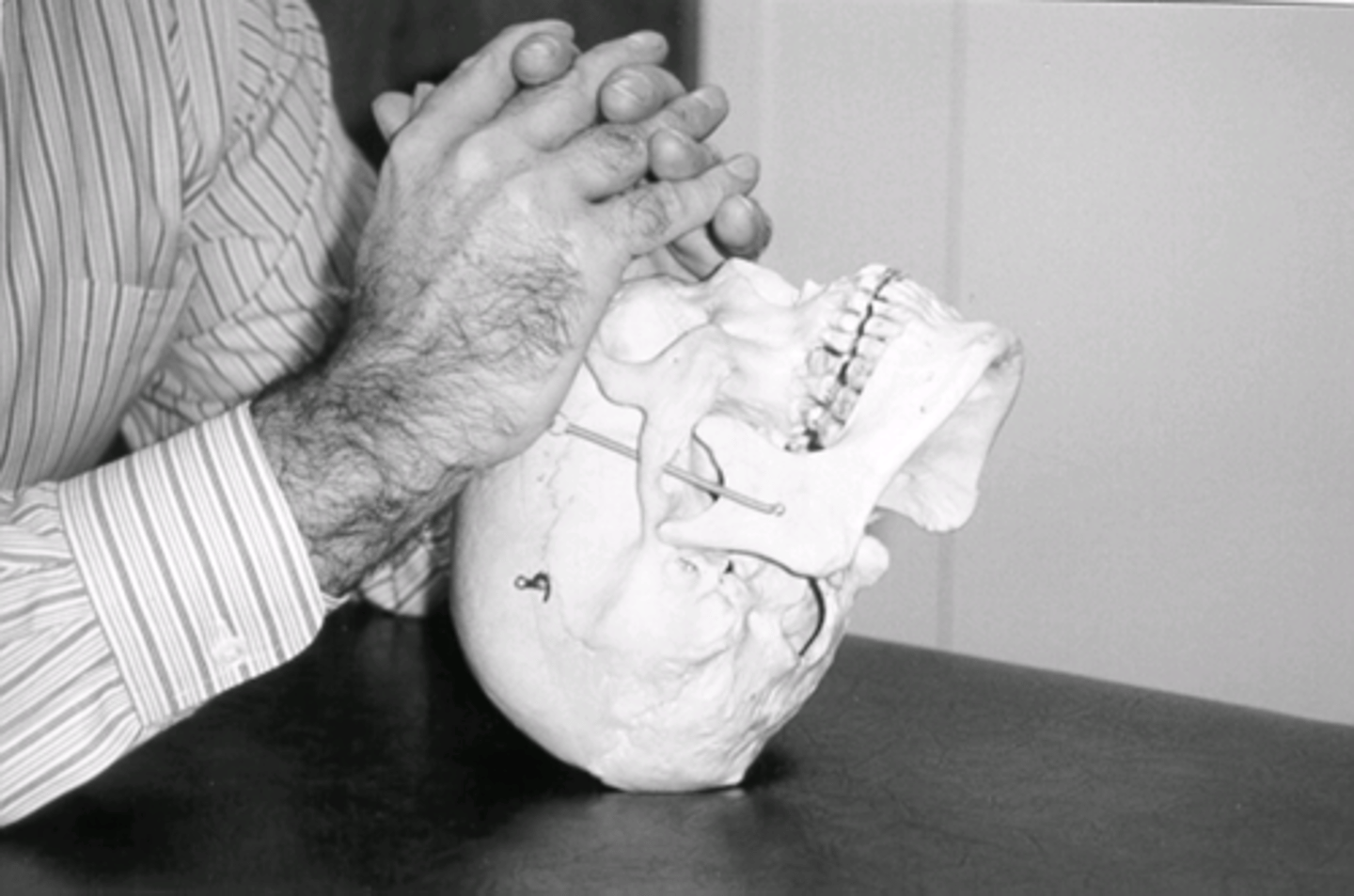
condylar decompression
soft tissue technique
cradling occiput with both hands and extending the fingers from inino as far towards the foramen magnum as possible
with slight flexion os the distal interphalangeal joints, the distracting force is held until a release or softening is felt and both sides of the occiput feel simlar