Evolution/natural selection
 Call Kai
 Learn
Learn Practice Test
 Spaced Repetition
 Match
Match Flashcards
 Knowt Play
1/64

There's no tags or description
Looks like no tags are added yet.
Name | Mastery | Learn | Test | Matching | Spaced | Call with Kai |
|---|
No analytics yet
Send a link to your students to track their progress
65 Terms
Evolution
change in genetic composition of a population overtime
-descent with modification
-Genetic composition→ allele frequency
Heritable
traits are passed to offspring via sexual reproduction
population
group of organisims of the same species living in the same geographical area at the same time
Species
individuals that can interbreed and reproduce but they dont interbreed with other species
Time
evolution is observed over many generations, but it is happening continuously
Darwin natural selection
evolution is a change in allele frequencies within a population
occurs by mutation, genetic drift, migration and natural selection
Mutation
alteration of a base pair in the drift of an individuals gamete producing cells that changes an alleles frequency
Genetic drift
a random change in allele frequencies, unrelated to any alleles influence on reproductive success
migration
individuals move to a new population
natural selection
change occurs when individuals with one version of a heritable trait have greater reproductive success than individuals with a different version of trait
root
the common ancestor of all species in the tree
tips
represent the descendant taxa
nodes
represent the common ancestor of these descendants that branch from it
Phylogenic tree
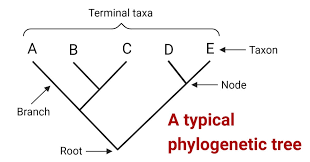
evidence darwin used for natural selection
comparative anatomy, embryo development, biogeography, fossils and genetic sequencing
Homologus structures
similarity due to common ancestry even if function is different
Vestigal structures
inherited structures that no longer serve a purpose
embryo development
no outside pressure, any features are inheirited
Biogeography
geographic distribution of species
species that are closer in distance are closely related
continental drift and plate tectonics
Transition Fossils
links that demonstrate common ancestry
reconstruct what ancient species looked like
Molecular data
DNA comparisons: similar DNA and protein sequences are inherited from common ancestor
Gene pool
the sum of all the individuals genes in a given population
Allele frequency
the frequency of an allele is the number of occurrences of that allele in that population
Population bottleneck
population is drastically reduced(natural,catastrophe)
Founder effect
if a subgroub starts a new colony that population will have different allele frequencies than the starting population
Survival of the fittest
those who are better adapted for intermediate, local enviornment allowing them to stay alive and reproduce
Variation
individuals in the same species are different from each other
Morphiological differences
size, shape,color
physiological differences
occurance and metabolic rate
Behavioral differences
predator avoidance behaviors and courtship displays
Fitness
individuals whose traits are better adapted to the enviornment produce more offspring
is survival and reproductive success
Adaptations
are heritable features that improve an organisms ability to survive and/or reproduce
Evolution
better adapted traits increase in frequency within a population over generations
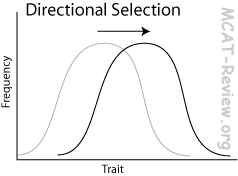
Directional selection
trait moves in one direction or another
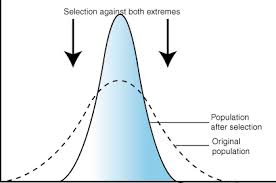
Stabilizing selection
selective pressure which puses the population to fit within an average
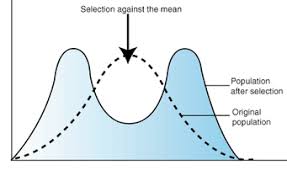
Disruptive selection
extreme on both sides
How did darwi discover natural selection
found finches on the galapagos island had slightly different features adjusted to their enviornment
Species
groups of actual or potential interbreeding populations which are reproductively isolated from other such groups
Prezygotic Barriers
prevents mating between popualtions due to physical complications
Postzygotic barriers
prevent fertile offspring after mating
Allopatric speciation
physically split
Sympatric speciation
species split in same location
Homology
same trait as ancestor
Homopalsy
similar trait as species but not inherited
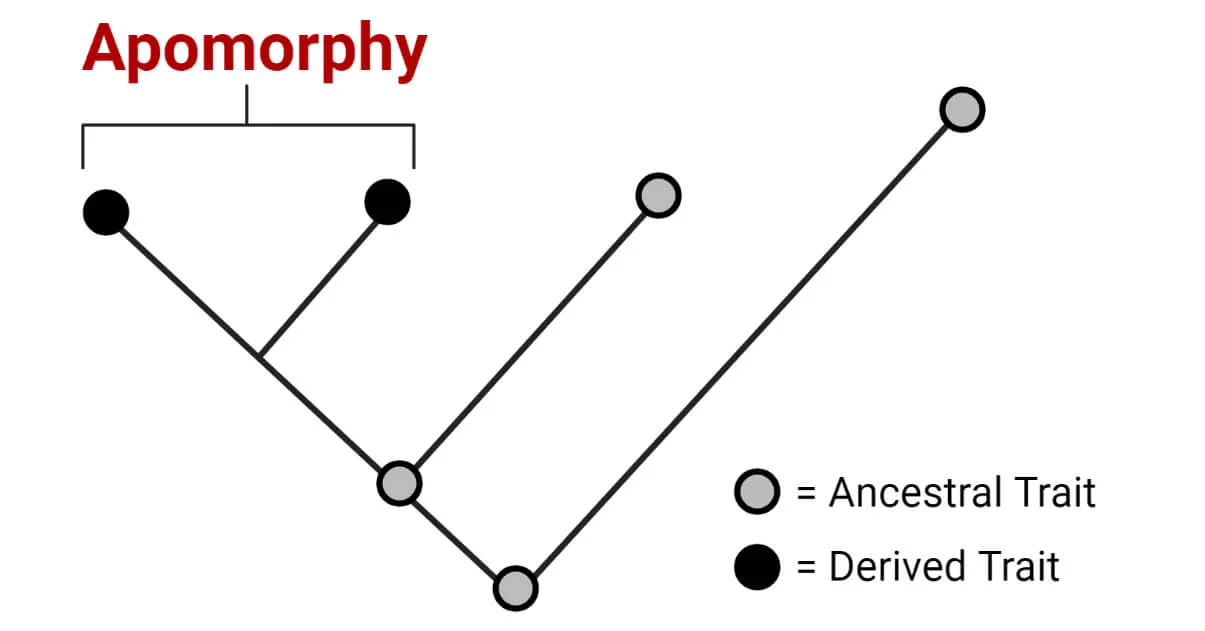
Apopmorphy
opposed to common ancestor
Symplesiomorphy
same/inheirited from common ancestor
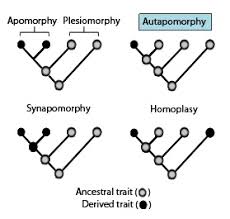
autapomorphy
unique trait only one person has
Microevolution
change in allele frequencies over one or a few generations
Macroevolution
accumulated effect of microevolution over time
Adaptive Radiation
the diversification of a small number of species into a much larger number of species
population of one species invade a variety of new habitats
Mass extinction
if competition is suddenly eliminated, the remaining species can rapidly diversify
Colonization events
moving to a new location and essentially colonizing
Evolutionary innovation
with the evolution of an innovative feature that increases fitness, a species can diversify
Organization of species
Domain → Kingdom→ phylum→ class→ order→ family→ genus→ species
Domains
Eukaroytes, Bacteria, Archea
Kingdoms
Protisa, fungi, plantae, Animalia
Phylum, class, order, family, genus
narrow down description of critters to be more specific
Species
most specific description of critter
Bacteria
benefical, harmful or neutral
oldest, prokaryotic
single celled
Broader diversity
Archea
extermophiles(thrive in extreme environments)
middle
prokarytic
Eukaryotic
contains organelles
youngest
includes humans and living organisims
Protists
very diverse
Fungi
heterotrophs(consumes for nutrients, mostly multicellular)
Plants
mostly multicellular
autotrophs
cell walls
Animals
heterotrophs
mostly multicellular

