ITPM - Chapter 7 Project Cost Management
 Call Kai
 Learn
Learn Practice Test
 Spaced Repetition
 Match
Match Flashcards
 Knowt Play
1/49

There's no tags or description
Looks like no tags are added yet.
Name | Mastery | Learn | Test | Matching | Spaced | Call with Kai |
|---|
No analytics yet
Send a link to your students to track their progress
50 Terms
CATEGORIES OF PROJECT COST
Cost is a resource sacrificed or foregone to achieve a specific objective or something given up in exchange . Usually measured in monetary units like dollars that must be paid to acquire goods and services
Labor - Cost of resources working on the project - Depends on the quantity and the unit rate
Software – Subscription or one-time cost - Depends on the units consumed such as # of users, transactions
Hardware – Subscription or one-time cost - Depends on the capacity or # of transactions
Expenses – Actual cost for travel, team events etc
Cost
a resource sacrificed or foregone to achieve a specific objective or something given up in exchange . Usually measured in monetary units like dollars that must be paid to acquire goods and services
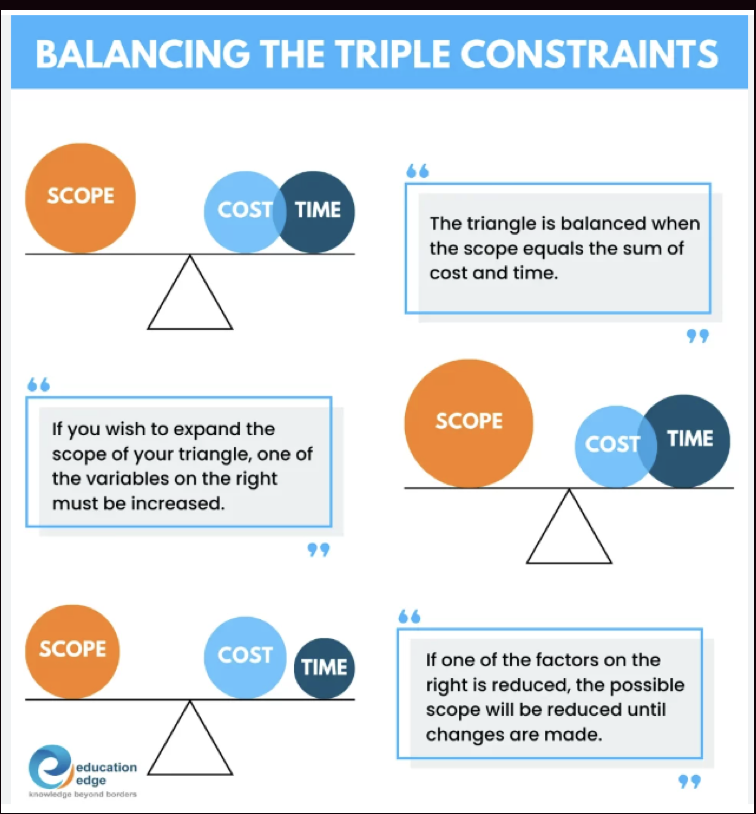
RELATIONSHIP WITH SCOPE AND SCHEDULE
Scope drives cost
Schedule compressions increase cost
Delays also increase cosT
TYPICAL PROBLEMS WITH IT COST ESTIMATES
Estimates are done too quickly
People lack estimating experience
Human beings are biased toward
underestimation
Management desires accuracy
Optimism bias + pressure from leadership = bad estimates
KEY FINANCIAL TERMS FOR IT PROJECTS
Life cycle costing
Cash flow analysis
Life cycle costing
Considers total cost of ownership, or development plus support costs for a project
Cash flow analysis
Determines estimated annual costs and benefits for a project and resulting annual cash flow
TYPES OF COST AND BENEFITS
Tangible Costs or Benefits
Intangible Costs or Benefits
Direct Costs
Indirect Costs
Tangible Costs or Benefits
Costs or benefits that an organization can easily measure in dollars ie. Cost Savings due to the project
Intangible Costs or Benefits
Costs or benefits that are difficult to measure in monetary terms ie. Better employee engagement
Direct Costs
Costs that can be directly related to producing the products and services of the project ie. Labor cost
Indirect Costs
Costs that are not directly related to the products or services of the project, but are indirectly related to performing the project ie. Rent of the office space used by the project teaM
SUNK COST
Scenario
Imagine your IT company has been working on developing a new software
application. So far, you’ve invested $500,000 into the project, which includes costs
for software development, testing, and licensing fees. During the testing phase, you
discover that the software has significant flaws that will require another $300,000
to fix.
Dilemma
You realize that competitors have launched better software products at a lower
price. Continuing the project as planned will require even more investment and may not succeed in the market.
Decision
At this point, the $500,000 already spent is a sunk cost. It’s money that has already
been invested, and regardless of what you do next, you cannot recover it
RESERVES
Reserves are dollars included in a cost estimate to mitigate cost risk by allowing for future situations that are difficult to predict
Contingency reserves
Management reserves
Contingency reserves
allow for future situations that may be partially planned for (sometimes called known unknowns) and are included in the project cost baseline
Management reserves
allow for future situations that are unpredictable (sometimes called unknown unknowns)
WHAT IS PROJECT COST MANAGEMENT?
Project cost management includes the processes required to ensure that the project is completed within an approved budget.
Planning cost management
Estimating costs
Determining the budget
Controlling costs
Planning cost management
determining the policies, procedures, and documentation that will be used for planning, executing, and controlling project cost
Estimating costs
developing an approximation or estimate of the costs of the resources needed to complete a project
Determining the budget
allocating the overall cost estimate to individual work items to establish a baseline for measuring performance
Controlling costs
controlling changes to the project budget
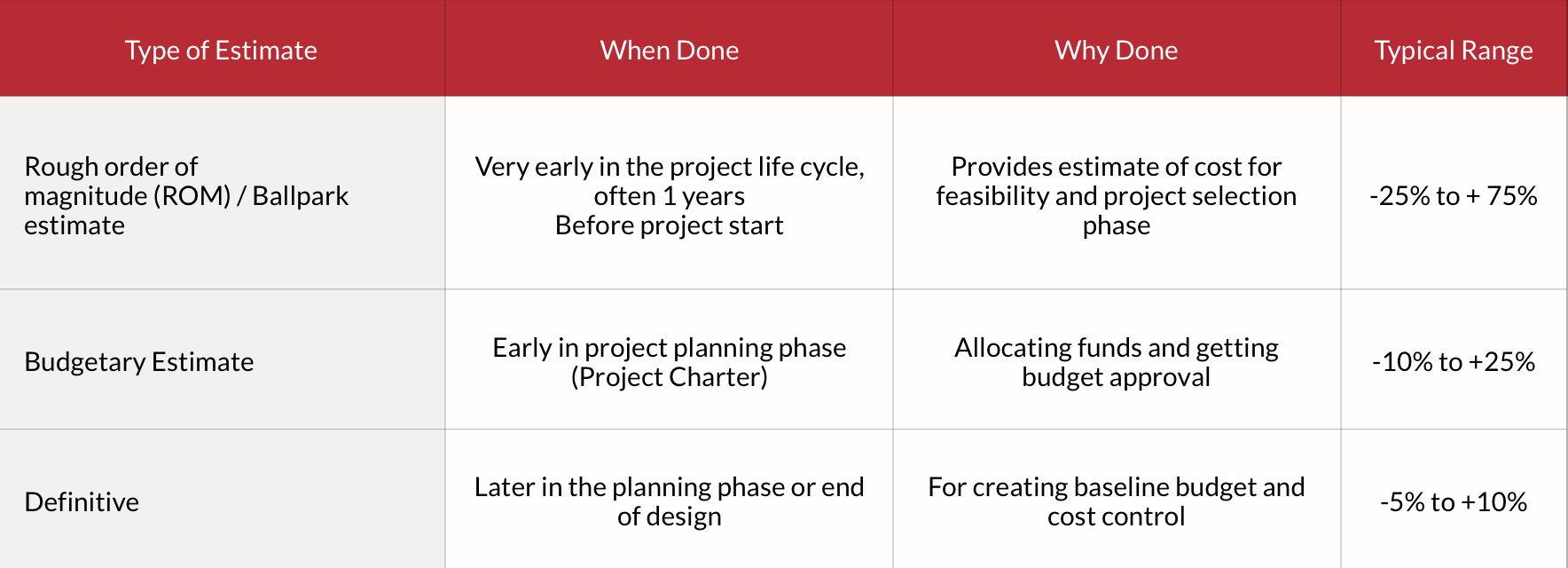
ESTIMATES: TYPES OF ESTIMATES
COST ESTIMATION TOOLS & TECHNIQUES
Analogous or top-down estimates
Bottom-up estimates
Three-point estimates
Parametric estimating
Analogous or top-down estimates
Use the actual cost of a previous, similar project as the basis for estimating the cost of the current project
Bottom-up estimates
Involve estimating individual work items or activities and summing them to get a project total
Three-point estimates
Involve estimating the most likely, optimistic, and pessimistic costs for items
Parametric estimating
Uses project characteristics (parameters) in a mathematical model to estimate project costs
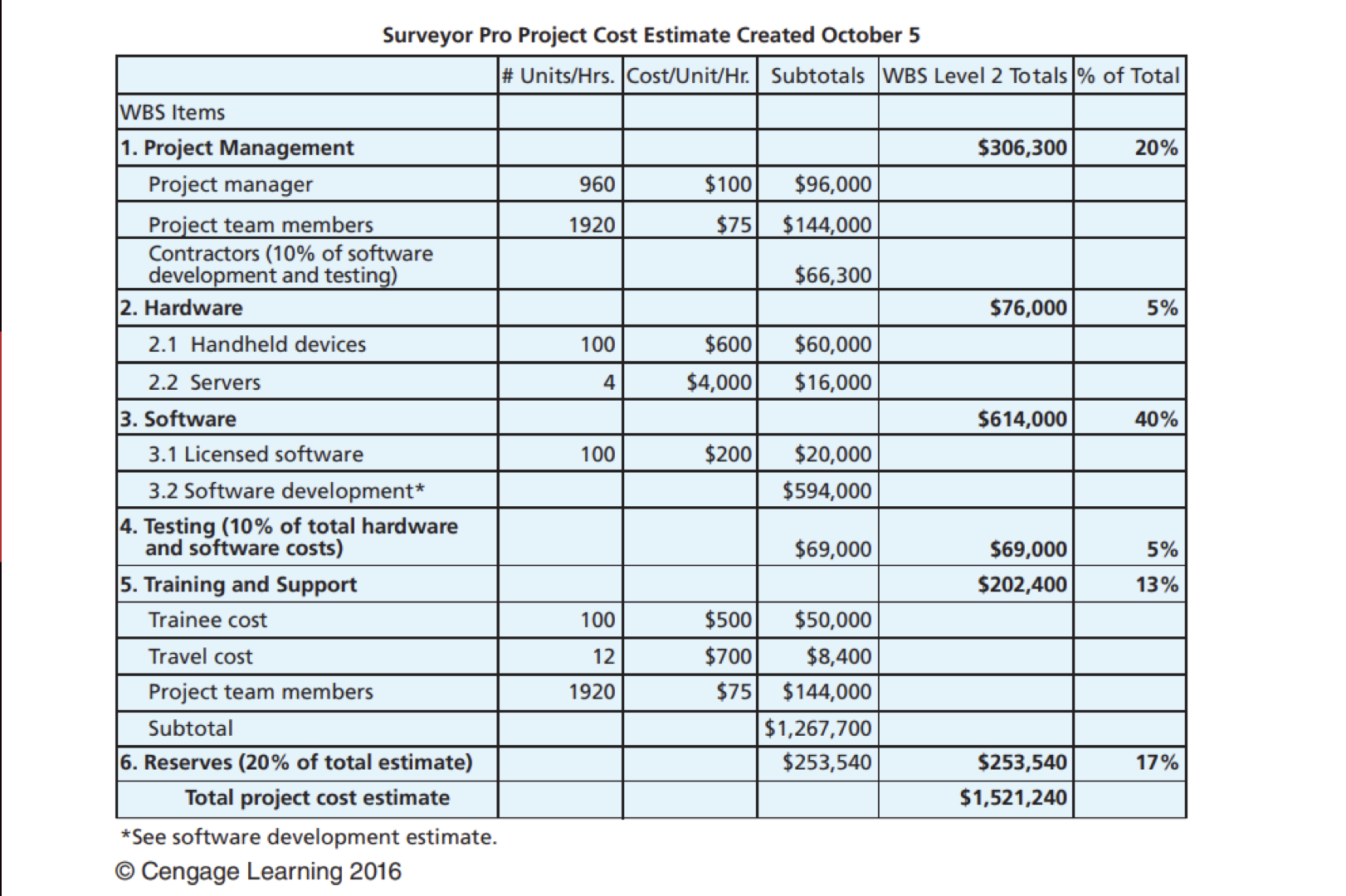
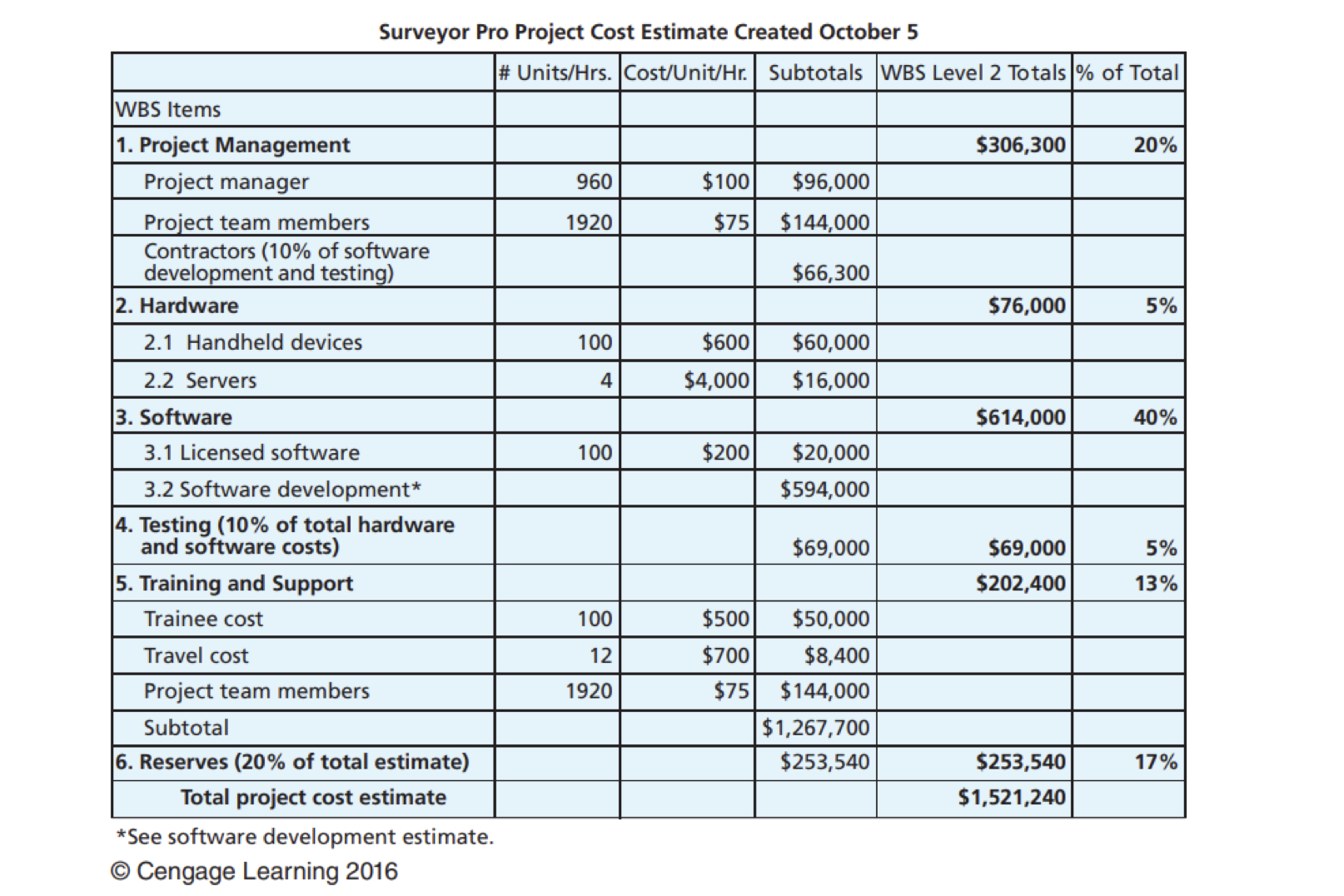
EXAMPLE OF A COST ESTIMATE
ESTIMATING LABOR COSTS - TOP DOWN ESTIMATE
Calculate the total cost of a project cost based on a project for four months on full-time basis.
Role
Efforts
Cost Rate
Role
Resource role working on the project
Efforts
Measured in terms of Hrs. or FTEs (Full-time Equivalent)
Top-Down Estimate: Derived based on a full- time or part-time resource for duration of time
1 PM for four months with an assumption of 160 Hrs per month = 640 Hrs
Cost Rate
What it costs for 1 hr of a role
Cost includes salary + burden (other costs such as retirement benefit, health insurance, etc.)
Cost per role is standardized across the organization
You can have different cost rates for junior vs. senior PM
ESTIMATING LABOR COST - BOTTOMS UP ESTIMATE
Calculate the total cost for a developer working on a project.
Hourly Rate: The developer's hourly rate is $50
Activities: Coding and Defect Resolution
Work Schedule: 40 hours per week
Duration
Coding - 100% for 3 weeks
Defect Resolution - 50% for 1 week
Calculation:
The formula to calculate the total cost C = {hourly rate} {hours per week {number of weeks}
By plugging in the values: C = (50 40 3) + (50*20*1) = $7,000
You got this tennn <3!
GROUP ACTIVITY: ESTIMATING PROJECT LABOR COST
Scenario - You are estimating labor cost for a 4-month software implementation project. The following team members will work on the project. Assume 160 hours per month for a full-time resource.
The project team includes:
Project Manager — $100/hour, working 50% allocation,
Developer 1 — $50/hour, working 100% allocation
Developer 2 — $50/hour, working 75% allocation
QA Tester — $40/hour, working 50% allocation
Task - Estimate the total labor cost for the project. Calculate the total hours each role will work over 4 months Multiply hours by the hourly rate
(Add the costs to determine the total project labor cost)
ESTIMATING SOFTWARE COSTS
License cost (Subscription)
Based on number of users or transactions (pay for usage)
0 to 50 users - $300 per month per user.
0 to 100,000 transactions per months - $10,000 per month
Implementation Cost
Either ‘time and material’ or ‘firmed fixed’ cost
$500,000 for firmed fixed cost for a defined scope
$400,00 for time and material contract based on defined scope
Cost rate of $100/Hr for PM
Cost rate of $50/Hr for Develop
ESTIMATING HARDWARE COSTS
Hardware Cost
Based on the services that you use (cloud based)
Based on the hardware procured (Installation based)
ESTIMATING EXPENSES
Travel Expenses
Food and Meal Expenses
Rentals
Travel Expenses
Costs associated with transportation, accommodation, and incidental expenses for project-related travel
Food and Meal Expenses
Expenditures for meals and catering for team members during travel or extended work sessions
Rentals
Fees for leasing equipment, facilities, or vehicles necessary for project execution
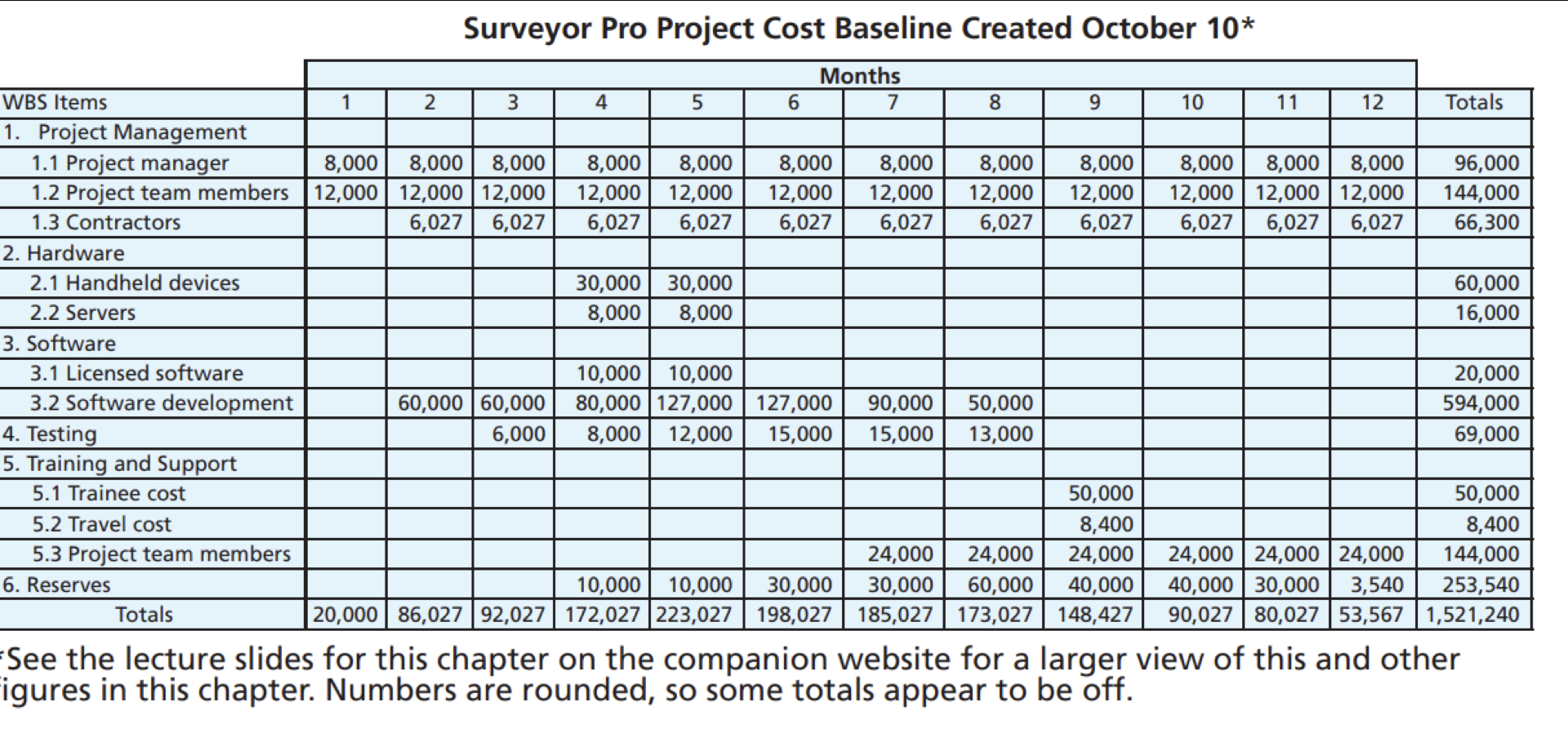
DETERMINING THE BUDGET
Budgeting involves allocating the project cost estimate to individual work items over time
Material resources or work items are based on the activities in the WBS
for the project
Important goal is to produce a cost baseline
Time-phased budget that project managers use to measure and monitor cost performance
EXAMPLE OF A COST ESTIMATE
BUDGET ESTIMATE
CONTROLLING COSTS
What are the ways to control cost?
Activities involved in controlling project costs
Periodic monitoring cost performance
Ensuring that only appropriate project changes are included
Informing project stakeholders of authorized changes to the project that will affect cost
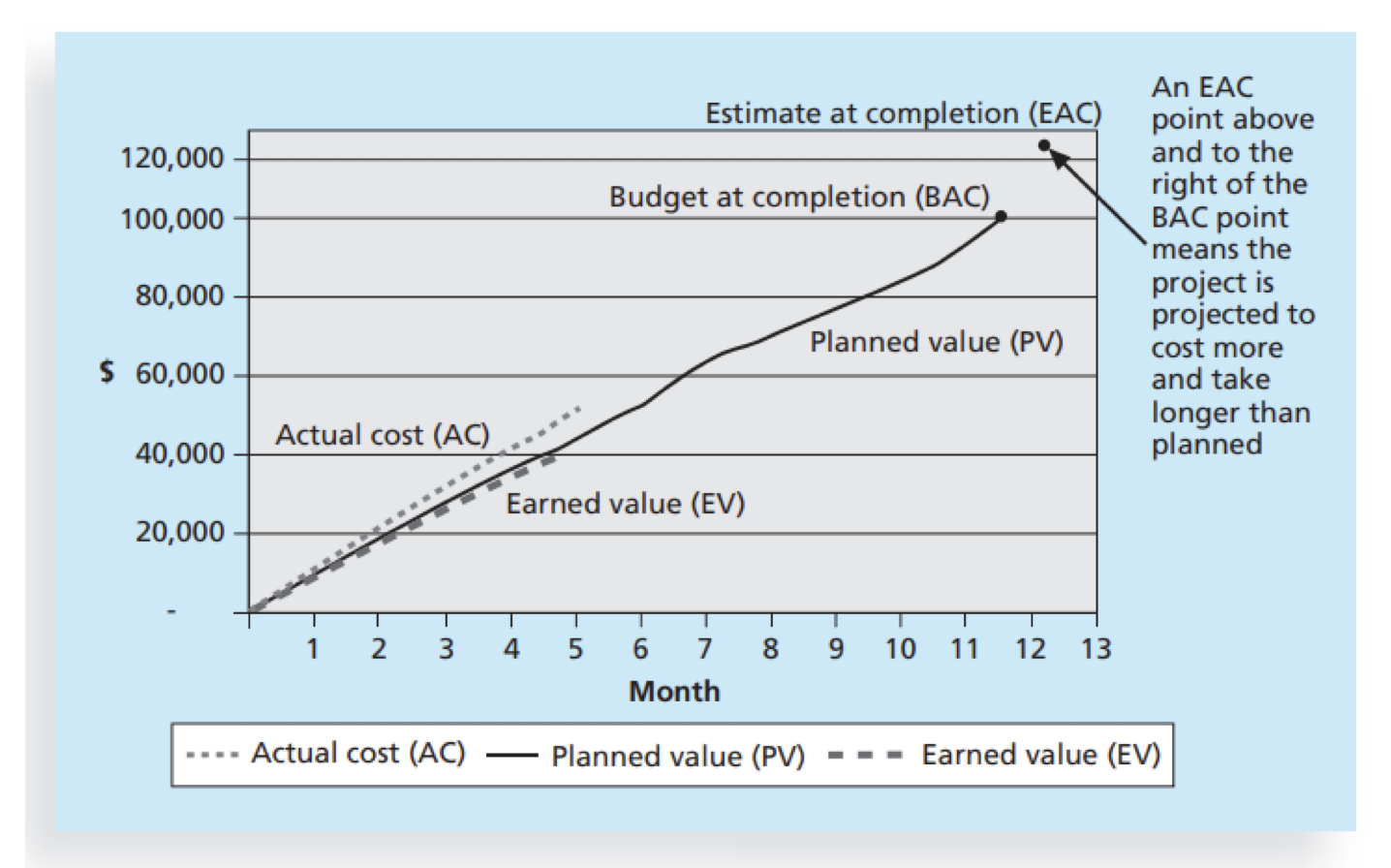
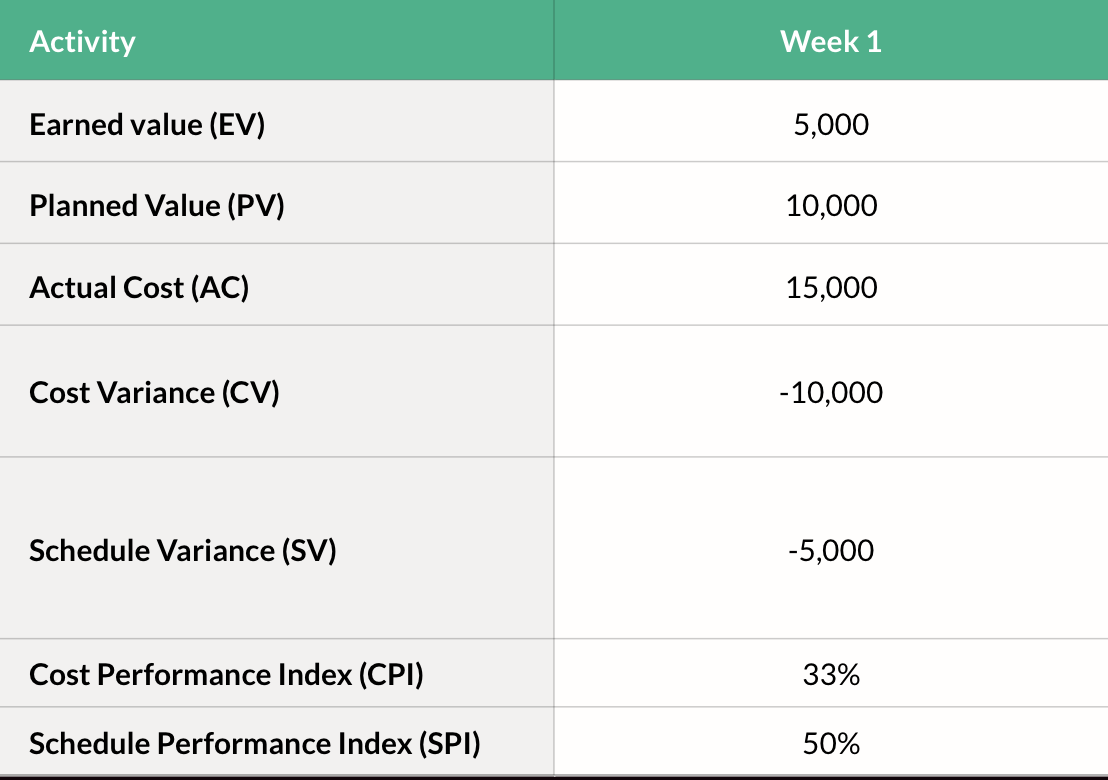
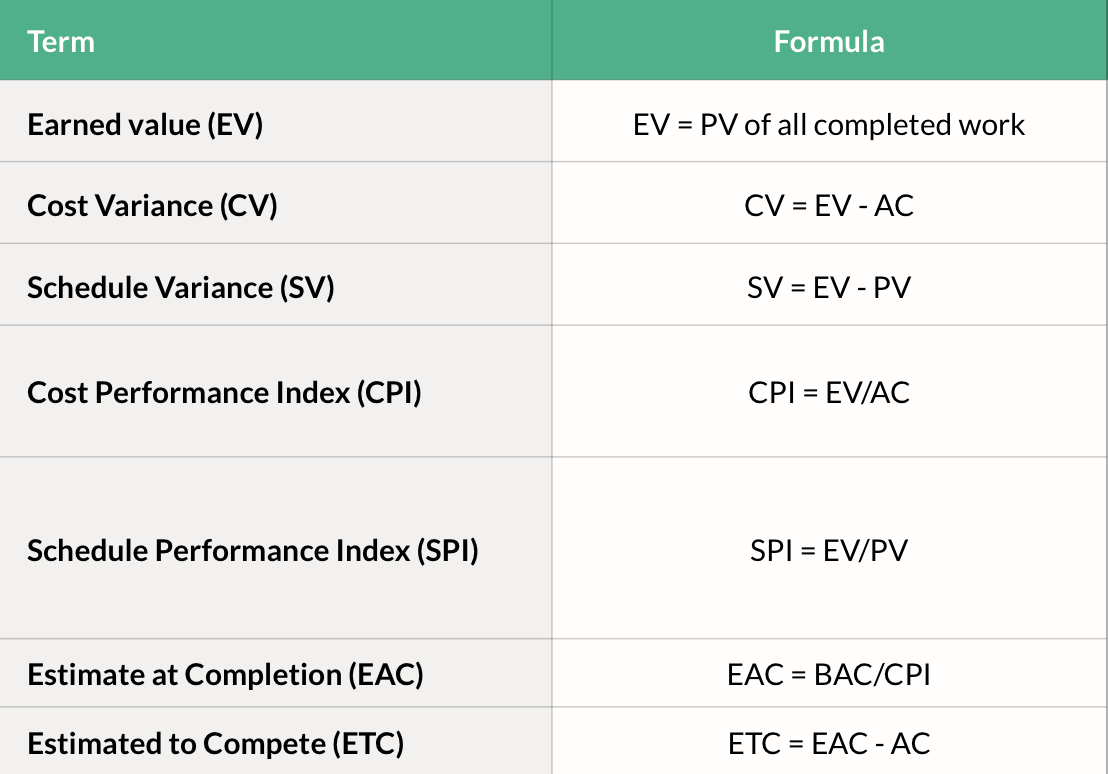
EARNED VALUE MANAGEMENT (EVM)
Project performance measurement technique that integrates scope, time, and cost data
Given a baseline (original plan plus approved changes), you can determine how well the project is meeting scope, time, and cost goals
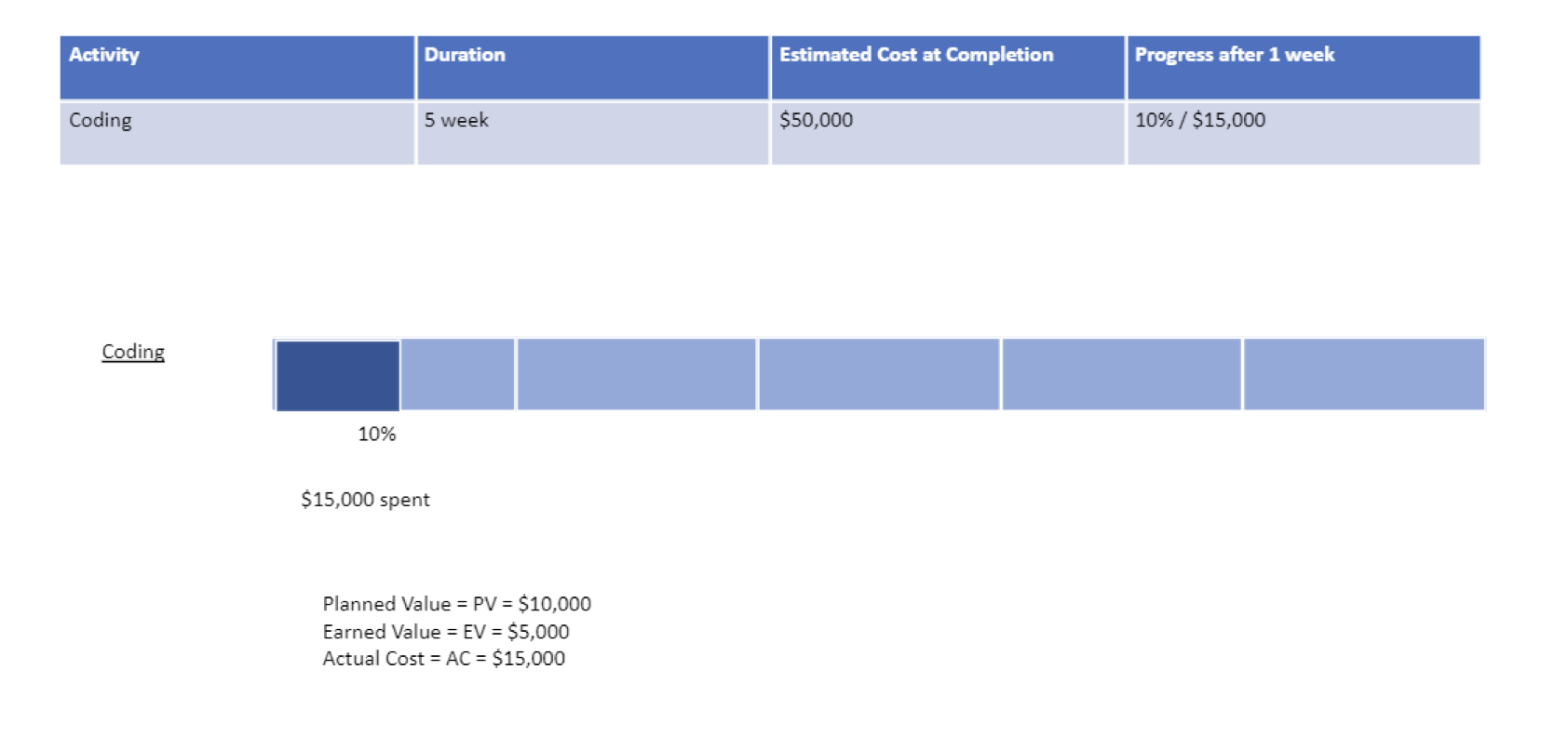
Earned value management involves calculating three values for each activity or summary activity from a project’s WBS
Planned value
Actual cost
Earned value
EARNED VALUE EXAMPLE
EVM DEFINITIONS
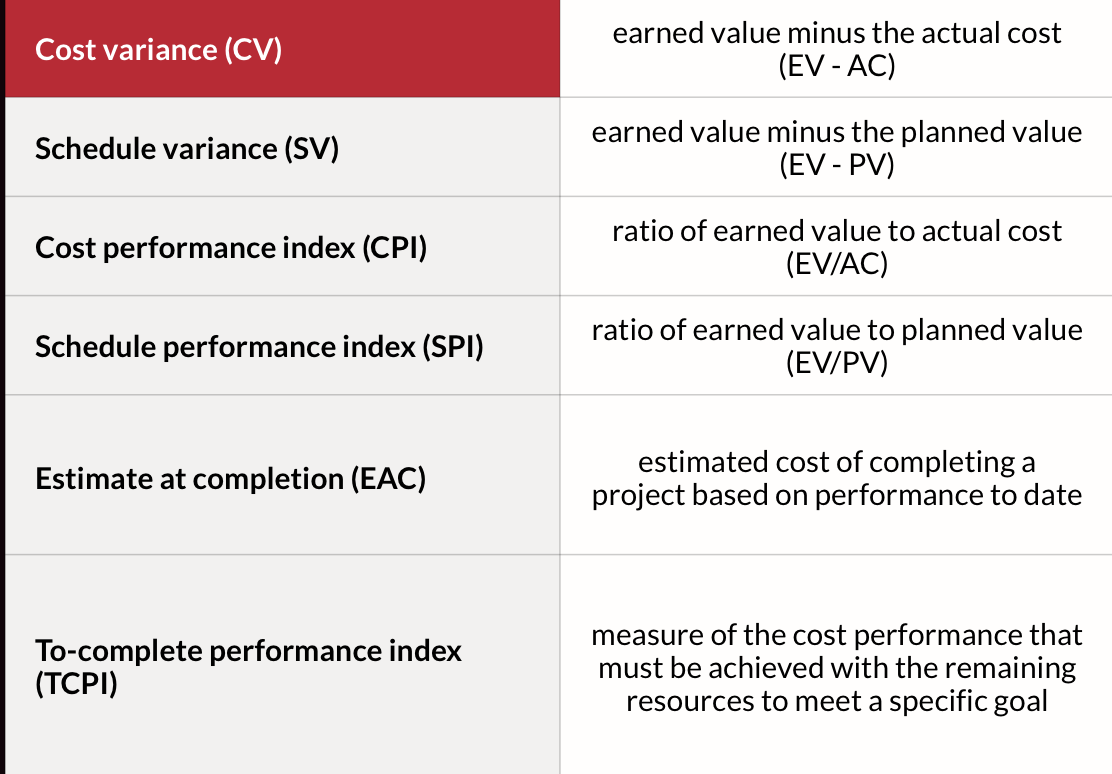
VARIANCE ANAL YSIS
COST AND SCHEDULE INDEX
EARNED VALUE: GRAPHICAL ANALYSIS