cleft notes
 Studied by 0 people
 Call with Kai
 Learn
Learn Practice Test
 Spaced Repetition
 Match
Match Flashcards
 Knowt Play
1/20

There's no tags or description
Looks like no tags are added yet.
Name | Mastery | Learn | Test | Matching | Spaced | Call with Kai |
|---|
No analytics yet
Send a link to your students to track their progress
21 Terms
Development of the primitive mouth and nose.
Stomodeum
Develops into the nose, the central part of the upper lip, and the primary palate.
Frontonasal Process
Forms most of the face, mouth, cheeks, and the sides of the upper lip: most of the hard palate; the alveolar ridge; and the soft palate.
Maxillary Process
Gives rise to the lower jaw (mandible), lower lip, and chin— all formed and fused by the end of the 4th or 5th week.
Mandibular Process
Facial structures begin forming, including the nasal and maxillary processes. Cleft lip can occur here, but the palate hasn't developed yet. Face starts forming, but the palate hasn't developed yet.
Week 4-6
Week 6-8
Weeks 7-10
Weeks 10-12
Week 4-6
Palatal shelves form but remain vertical on either side of the tongue. The lip is fusing, but the palate isn't in position yet. Palatal shelves form but stay vertical; lip fuses during this time.
Week 4-6
Week 6-8
Weeks 7-10
Weeks 10-12
Weeks 6-8
The palatal shelves rotate, move toward the midline, and fuse with each other and the nasal septum. Disruptions here lead to cleft palate. Palatal shelves flip op, move to midline, and tuse with the nasa septim.
Week 4-6
Week 6-8
Weeks 7-10
Weeks 10-12
Weeks 7-10
Fusion is complete, and the hard palate starts ossifying. If clefting occurs now, it's usually a submucous cleft. Fusion is done, and the hard palate starts turning into bone.
Week 4-6
Week 6-8
Weeks 7-10
Weeks 10-12
Weeks 10-12
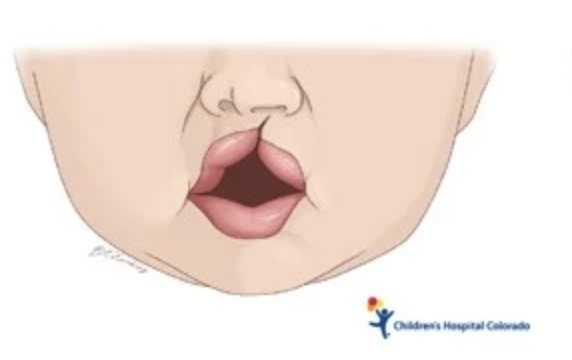
unilateral incomplete
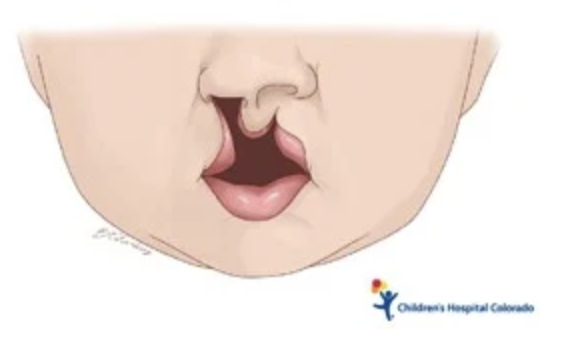
bilateral complete and incomplete
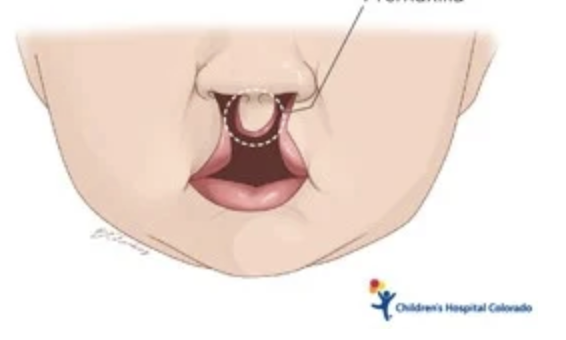
bilateral complete
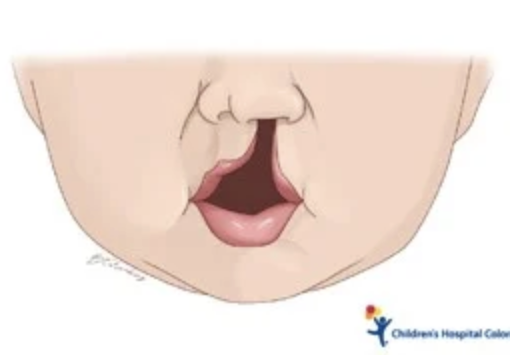
unilateral complete
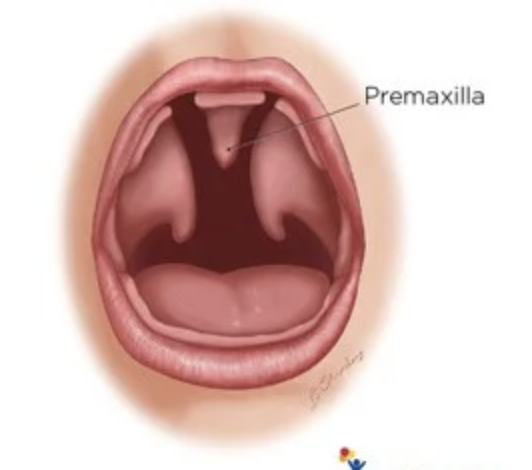
complete bilateral
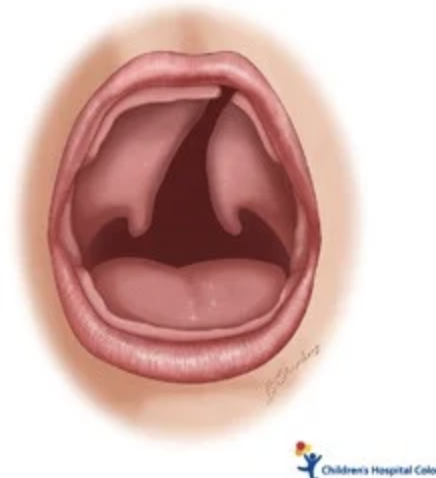
complete unilateral
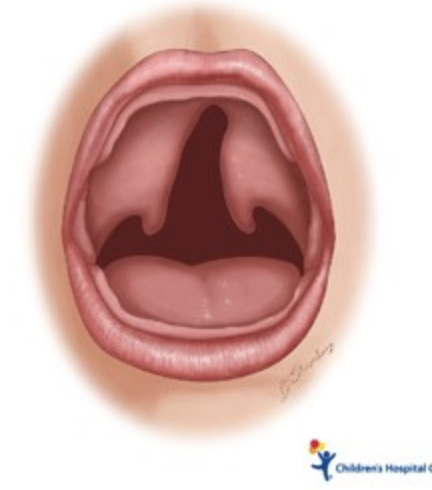
incomplete hard and soft palate
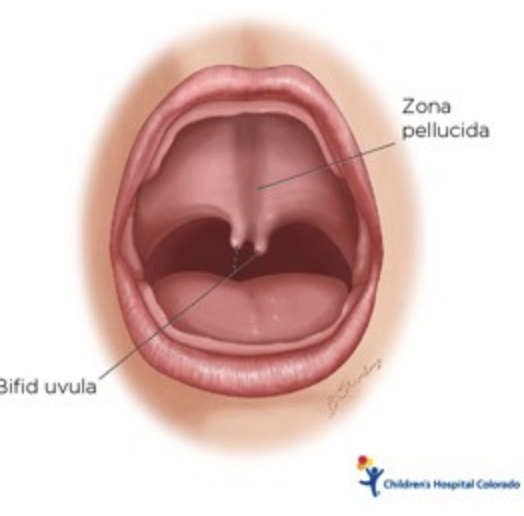
submucosal cleft
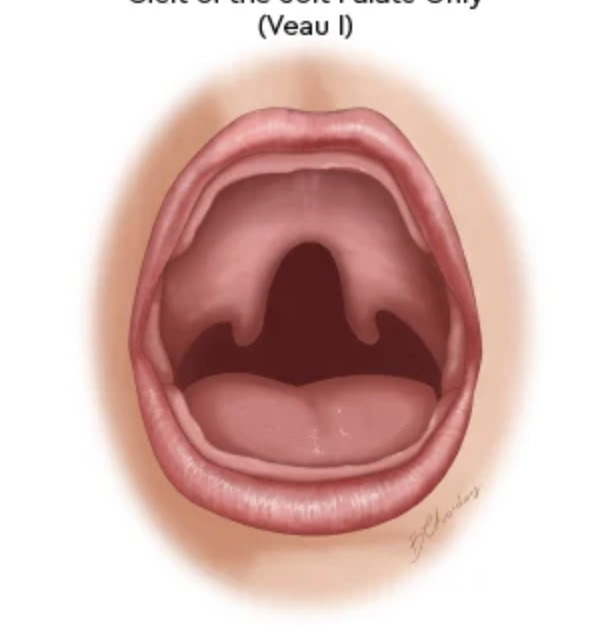
incomplete of soft palate only
The most common syndrome linked to cleft palate, causing hypernasal speech and difficulty building oral pressure for sounds.
Velocardiofacial Syndrome
Characterized by a small jaw (micrognathia), tongue falling back (glossoptosis), airway obstruction, and a U-shaped cleft palate, making feeding and breathing harder.
Pierre Robin Sequence
Affects facial bone development, leading to a small lower jaw (mandibular hypoplasia) and often a cleft or high-arched palate, which impacts feeding and speech.
Treacher Collins Syndrome
Often linked to Pierre Robin Sequence, featuring cleft palate, joint laxity, vision issues, and midface hypoplasia, all contributing to feeding and articulation challenges
Stickler Syndrome
 Note
Note  Flashcards (24)