English Language SAQ 1 2026
 Call Kai
 Learn
Learn Practice Test
 Spaced Repetition
 Match
Match Flashcards
 Knowt Play
1/49

Earn XP
Description and Tags
Name | Mastery | Learn | Test | Matching | Spaced | Call with Kai | Chat |
|---|
No analytics yet
Send a link to your students to track their progress
50 Terms
Morpheme
The smallest unit of meaning within a word. These units of meaning are spelled consistently even though their pronunciation may change within words
Root word
Contains primary meaning
Prefix
Attach at the start of a root word
Suffix
Attach at the end of a root word
MR PEPC
Metalinguistic (talks about the language itself)
Referential (conveys information to people)
Poetic (brings an aesthetic)
Emotive (interprets feeling)
Phatic (establishes a social connection)
Conative (directions and commands)
The six factors to consider when exploring a function
Context, message, addresser, addressee, form of contact, way of talking
Lexicology
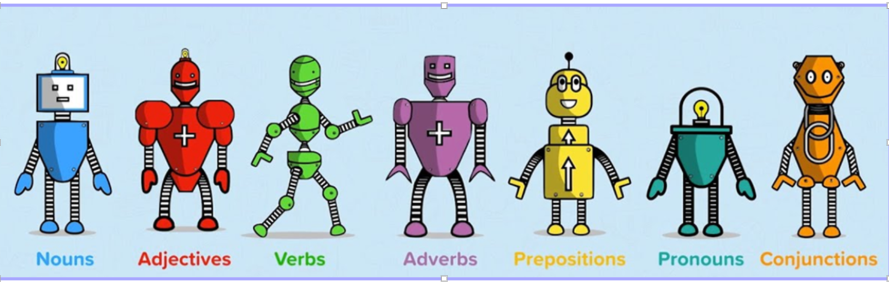
Lexicology relates to the study of the words themselves and these words fall into various categories known as word classes (or more traditionally, parts of speech).
Nouns
They name people, places, animals, things, ideas, feelings and qualities.
Pronouns
Replace nouns

Verbs
Verbs are sometimes referred to as “doing” as they communicate what a subject (i.e. person or thing) is doing.
They also include “being” and “having” words. Being verbs can also tell us how something “is”.
Auxilary Verbs
Often known as the helper verbs, used to construct grammatical tenses.
eg. I am going, you have gone
Modal Verbs
Express possibility, intent, ability and obligation.
eg. I might eat, I could eat, I would eat
Adverbs
Adverbs help to describe, modify or qualify verbs, adjectives, other adverbs and whole phrases and sentences. Often has a -ly
Adjectives
Adjectives are describing words that modify nouns and pronouns.
Infixes
Rarely used suffix. Appear in the middle of words.
eg. Mothers-in-laws
Determiners
A determiner is a word that’s placed in front of a noun and helps to clarify the noun, specify quantity or indicate possession, include articles, quantifiers, demonstratives, possessives.
Demonstratives
Indicates specific nouns in a sentence. Helps provide information about the proximity of a noun in relation to the speaker and listener.
eg. this. that. these. those
Quantifiers
Helps to specific the quantity of a noun within a phrase. Quantifiers tend to help to answer questions such as ‘How many?’ or ‘How much?’
eg. All, a lot, many, most, much, some, several, few, a couple, one, none
Conjunctions
Conjunctions link words, phrases, clauses and sentences together.
Coordinating conjunctions
FANBOYS – for, and, nor, but, or , yet and so
Subordinating Conjuctions
Subordinating conjunctions: can only join clauses and sentences to each other in a way that demonstrates a parent-child relationship. The parent sentence is referred to as the independent clause, and the ‘child’ sentence as the dependent clause. Most famous is because.
Prepositions
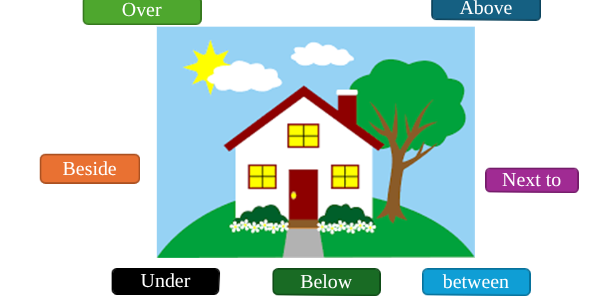
A preposition expresses a relationship between a noun and another word, phrase or element in a sentence.
Purpose
Refers to the reason the text exists
Answers the question: What is this text trying to do?
Intent
Refers to the specific motivation or goal of the author or speaker when creating the text.
Answers the question: What does the author or speaker want the audience to think, feel, or do?
Purpose vs Intent
Purpose is about the text’s role, while (authorial) intent focuses on the creator's goals. Purpose tends to be more objective, whereas (authorial) intent can involve subtle persuasive or emotional aims depending on the context.
Writing an analysis of a function
PMQC
Point: respond to the question
Metalanguage: provide a language feature to support your claim
Quote: quote an example of it from the passage (include line number)
Comment: analyse/explain how it supports your point.
Syntax
Syntax refers to the ways in which words are put together in sentences to make meaning.
Sentences are created by combining phrases (groups of words with a grammatical relationship) into clauses and then joining clauses to create sentences.
Subject
The subject is the person or thing they will act out the verb. Subjects are typically noun phrases
Object
The object is what the subject and verb are acting upon. While a sentence will always have a subject and a verb, they will not always have an object.
Predicates
All sentences have a predicate and they are very easy to spot – the predicate is what is left of the sentence after you have removed the subject. The predicate must also contain a verb.
Interjection
Expresses a sudden feeling or emotion. eg. hey! oh my!
Sentence Structures
Include sentence fragments, simple sentences, compound sentences, complex sentences, compound-complex sentences.
Simple sentences
A sentence consisting of a subject (noun) and a verb. It stands alone as an independent clause and complete sentence.
e.g. "The cat sleeps."
Compound sentences
Two or more independent clauses joined together by coordinating conjunctions (FANBOYS) like 'and', 'but', 'or'. Each part can stand alone.
e.g. "The cat sleeps and the dog barks."
Complex Sentences
Contains one independent clause and one or more dependent clauses. They are often joined using a subordinating conjunction, but not always.
e.g. "When the cat sleeps, the dog barks."
Compound-Complex Sentences
Combines elements of both compound and complex sentences. It has two or more independent clauses joined with a coordinating conjunction and at least one dependent clause.
e.g. "While the cat sleeps, the dog barks and the birds chirp."
Sentence Types
There are four main sentence types: declarative, interrogative, imperative and exclamative.
Interrogative
Used when framing questions. Designed to elicit responses and always end with a question mark.
Declarative
To provide information, observations or statements. They are the most common sentence type in English.
Imperative
Give a direct order or instruction. This sentence type will often omit the subject of the sentence.
Exclamative
Make exclamations! They indicate high levels of feeling or emotion and emphasise what is being said. Written forms end with an exclamation mark, while spoken term may end with a rising intonation, stress or volume.
Semantics
Semantics is the study of meaning in language at a morpheme, word, phrase and sentence level.
Oxymoron
An oxymoron is a type of phrase that combines two apparently contradictory words for special effect.
For example, in the opening scene of Shakespeare’s Romeo and Juliet, Romeo cries out: ‘O brawling love, o loving hate’.
Irony
Irony occurs when a speaker or writer states one thing but actually intends the audience to understand an opposing or contradictory meaning. For example, in stormy weather, a person who said ‘Nice day for a picnic’ would expect their listeners to understand that the statement was ironic and that it was, in fact, a terrible day for a picnic.
Personification
Personification is a specific type of metaphor that gives non-humans(animals, ideas, objects, places) human qualities or abilities such as emotions, desires, expressions or language.
How are SAQs marked
Marks are tight. We don’t give half-marks, so you either hit the point or you don’t.
Here’s the rough guide:
1 mark → identify a feature (not common in Year 12)
2 marks → feature + effect.
3–4 marks → feature + effect + explanation linked to context.
5 marks → usually a comparison or extended explanation.
What assessors want
Clear and concise answers (1–3 sentences).
Correct metalanguage.
Direct quotes with line numbers.
No waffle — accuracy beats length.
D.I.I.E.
Declaritive.Interrogative.Imperitive.Exclamative.
PALMOFSHIP Semantics
Pun, Animation, Lexical Ambiguity, Metaphor, Oxymoron, Figurative Language, Simile, Hyperbole, Irony, Personfication
Lexical Ambiguity
Lexical ambiguity occurs when a single word or phrase has multiple, distinct meanings, causing confusion or different interpretations of a sentence. This phenomenon often happens when the surrounding context is insufficient to clarify which meaning is intended.