Food Technology 1
 Call Kai
 Learn
Learn Practice Test
 Spaced Repetition
 Match
Match Flashcards
 Knowt Play
1/80

There's no tags or description
Looks like no tags are added yet.
Name | Mastery | Learn | Test | Matching | Spaced | Call with Kai |
|---|
No analytics yet
Send a link to your students to track their progress
81 Terms
What is food technology?
The study of how different foods can be used and made into food products from production to consumption (application of food science)
What is food science?
The discipline in which biology, physical sciences, and engineering are used to study the nature of foods, the causes of their deterioration, and the principles underlying food:
production, processing, preservation, packaging, safety, quality, distribution/ logistics, preparation, health.
What is health in food science?
Our optimum physical and mental function - quality of our nutrition, safety, balance
Food is functional for our health!
developed countries have the ability to chose what they eat -> in order to be healthy and it relies on the quality and safety of what we eat
What 5 things does food have to be?
Safe to eat
Good taste
Easy to use
Well-packaged
A good price
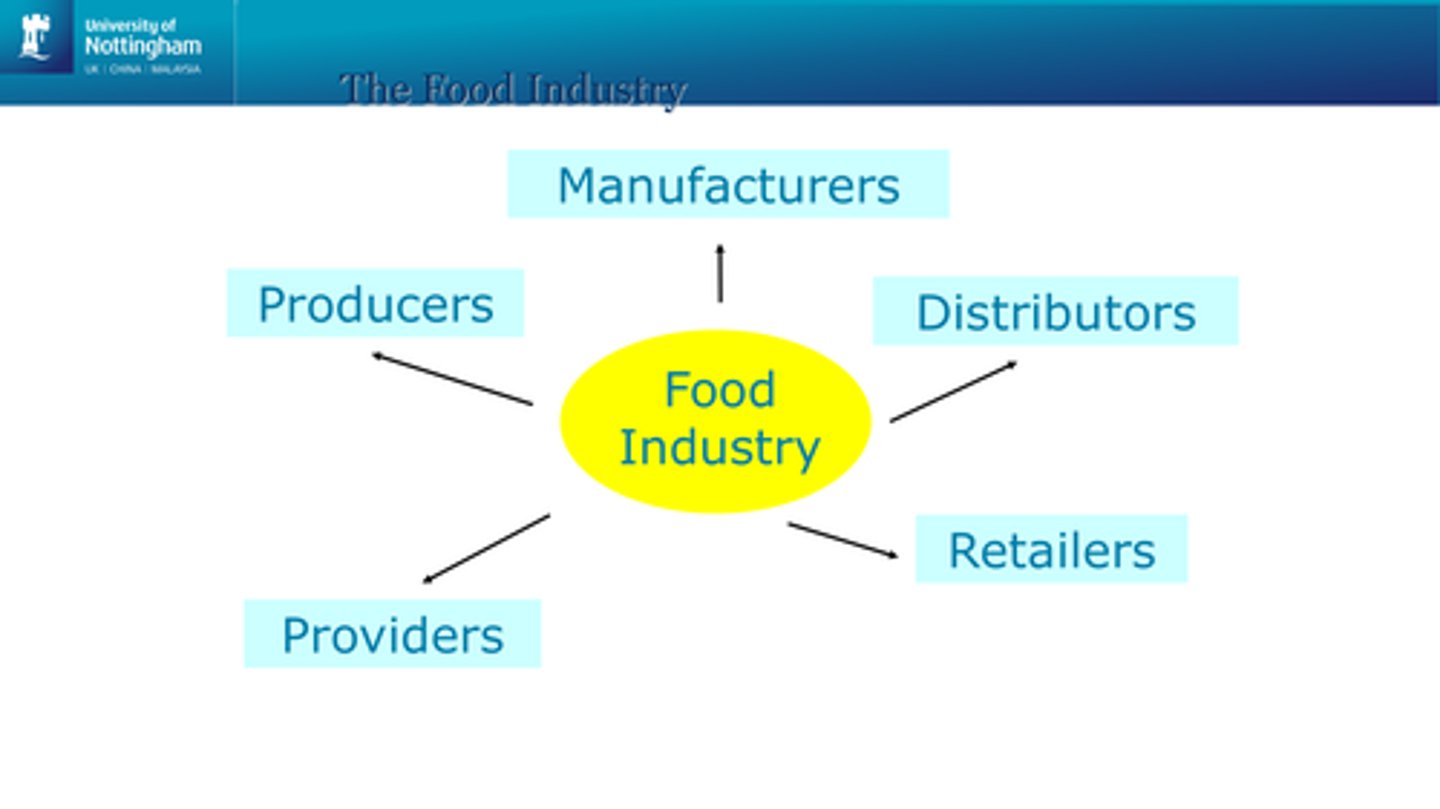
Who makes up the food industry?
producers, manufacturers, distributors, retailers and providers.
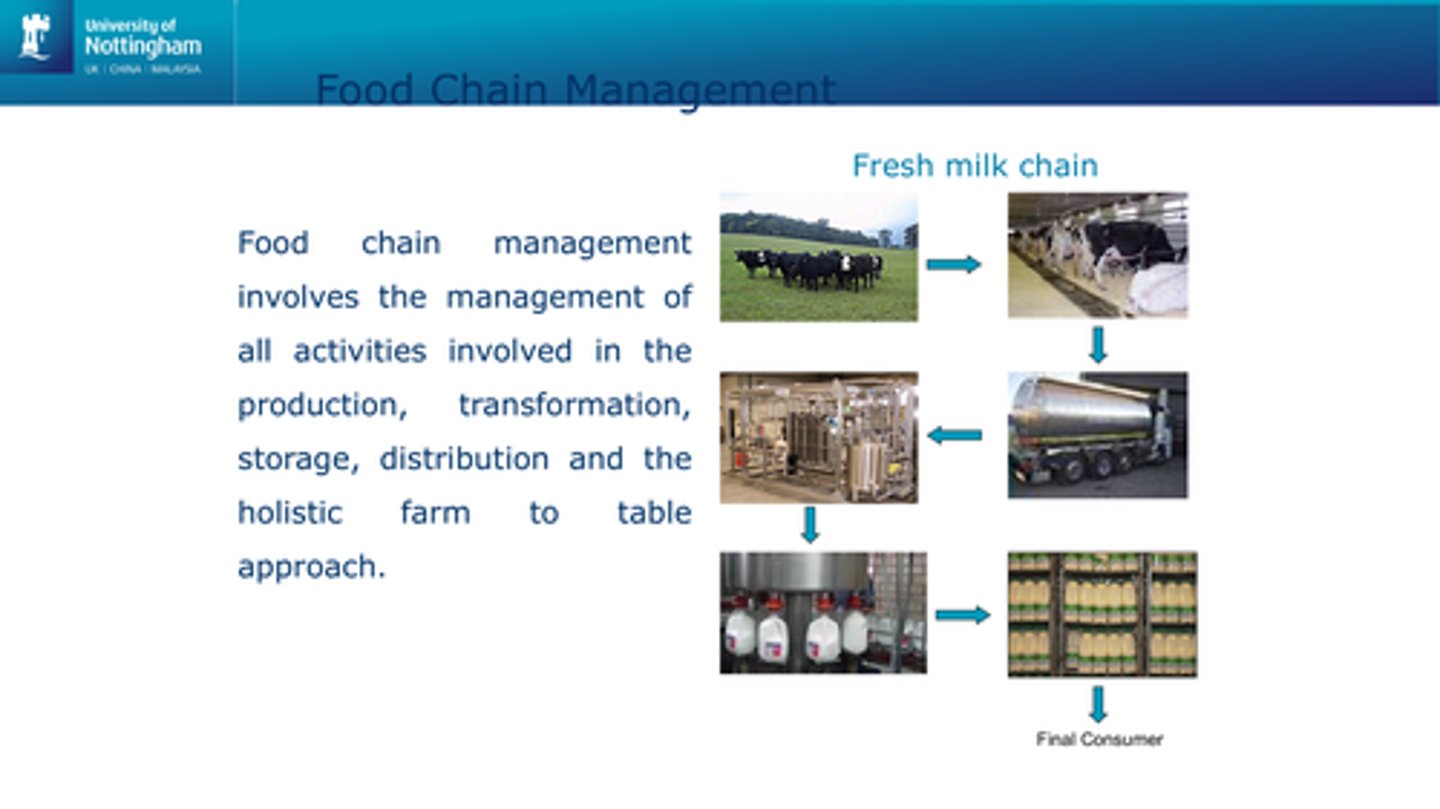
What does food chain management involve?
Involves the management of all activities involved in the production, transformation, storage, distribution and the holistic farm to table approach
What is the role of the vet in food chain management (3 points)?
Inspection of animal origin food establishments
Microbiological testing
Legislation
What is the main aim of food preservation and processing?
To minimise the growth of microorganisms during the storage period, thus promoting longer shelf life and reduced hazard from eating the food
What is food processing?
The set of methods/ techniques used to transform raw material into food
What happens if preservation and/ or processing fails?
Foodbourne illness
give some examples of common food bourne illness/ pathogens
Microorganism | Usual incubation period | Common Symptoms | Usual duration of symptoms | Typical Food and Food related sources |
Bacillus cereus (emetic toxin) | 1-5 hours | Nausea, vomitic, diarrhoea, abdominal pain | 24 hours | Fried and cooked rice, pasta, pastry products |
Bacillus cereus (diarrhoeal toxin) | 8-16 hours | Diarrhoea, nausea, vomiting, abdominal pain | 24 hours | Meat, soups, sauces, puttings |
Campylobacter spp | 2-5 days | Diarrhoea, abdominal pain, fever, blood in stools | 2-7 days | Raw milk, poultry products, untreated products |
Clostridium perfrigens | 12-18 hours | Diarrhoea, abdominal pain | 24 hours | Cooked meats, meat gravies / sauses |
Vero-cytotoxin producing E. coli | 1-6 days | Diarrhoea , blood in stools, Haemolitic Uraemic Syndrome (HUS) | 4-6 days (not HUS) | Underkooked meat products, raw milk, cheese, fruit juces, salad vegetables, faecal-oral transmission |
Salmonella (non enteric fever / typhoid) | 12-72 hours | Vomiting, diarrhoea, fever | < 3 weeks | Meat products, poultry products, eggs and egg products, raw milk and milk products, some high fat foods |
Staphylococcus aureus | 2-4 hours | Vomiting, abdominal pain, fever | <12-48 hours | Any food handled directly by a carrier, followed by temperature abuse of the food e.g. sliced cooked meats, salads, dairy products |
Vibrio spp. (not V. cholerae O1 or O139) | 12-18 hours | Diarrhoea | < 7 days | Raw fish and seafood from warm water areas |
Shigella spp. | 1-7 days | Diarrhoea , blood in stools | < 2 weeks | Food contaminated by food handler, faecal-oral, water supplies |
Cryptosporidium parvum | 2-5 days | Diarrhoea | < 3 weeks | Raw milk, water supplies, food contaminated by the food handler, faecal oral transmission |
Giardia intestinalis | 5-25 days | Diarrhoea, abdominal pain | variable | Water supplies, food contaminated by the food handler, faecal oral transmission |
Cyclospora cayetanensis | 2-5 days | Diarrhoea, abdominal pain | variable | Fruit, salad produce, water supplies |
Norovirus (Norwalk-like viruses (NLV)) | 1-3 days | Vomiting, diarrhoea, fever | 1-3 days | Shellfish, water supplies, raw fruit, salad vegetables, food contaminated by the food handler, faecal oral transmission |
Rotavirus | 1-2 days | Diarrhoea, vomiting | 4-6 days | faecal oral transmission |
Hepatitis A virus | 2-6 weeks | Jaundice, abdominal pain, intermittent nausea, diarrhoea | Up to several weeks | Shellfish, raw fruit salads and salad vegetables, food contaminated by the food handler, faecal-oral |
What are intrinsic factors of food?
Characteristics of a food that are internal to the food itself that affect the microbial behaviour of food.
What are the 6 intrinsic factors affecting microbial behaviour in food?
- Nutrient content of food
- Presence of antimicrobial substances
- pH change and buffering ability (resist pH change)
- Oxidation reduction potential (Eh) and ability to resist redox change (poising capacity)
-Water activity of food (alpha-w)
-Mechanical barriers to microbial invasion
What 5 things do microorganisms require to grow and function from the nutrient content of food?
Water
Source of energy
Source of nitrogen
Vitamins and related growth factors
Minerals
What is the importance of water to microorganisms (2 points)?
Essential for life
Higher requirement for moulds, then Gram negative, yeasts and Gram positive
What is the source of energy used by microorganisms (2 points)?
Sugars, alcohols and amino acids
Starch, cellulose and also fat by a small number
What is the source of nitrogen used by microorganisms (2 points)?
Primary nitrogen source = amino acids
Other nitrogenous compounds
What are 3 examples of natural antimicrobial substances that help microorganisms?
- Essential oils in some plant species - e.g. eugenol (cloves), allicin (garlic)
- Cow's milk contains several antimicrobial substances (lactoferrin, conglutinin, lactoperoxidase system, rotavirus inhibitor)
- Lysozyme in eggs and milk
How does acidity (pH) affect microbial behaviour in foods (3 points)?
most microorganisms grow best at neutral pH values (6.6-7.5) whereas few grow below 4.0 (from inherent acidity, or biological acidity e.g. when in the process of fermentation of milks and pickles)
Some foods are able to resist changes in pH better than others (buffered foods), (meats are more highly buffered than vegetables due to their various proteins)
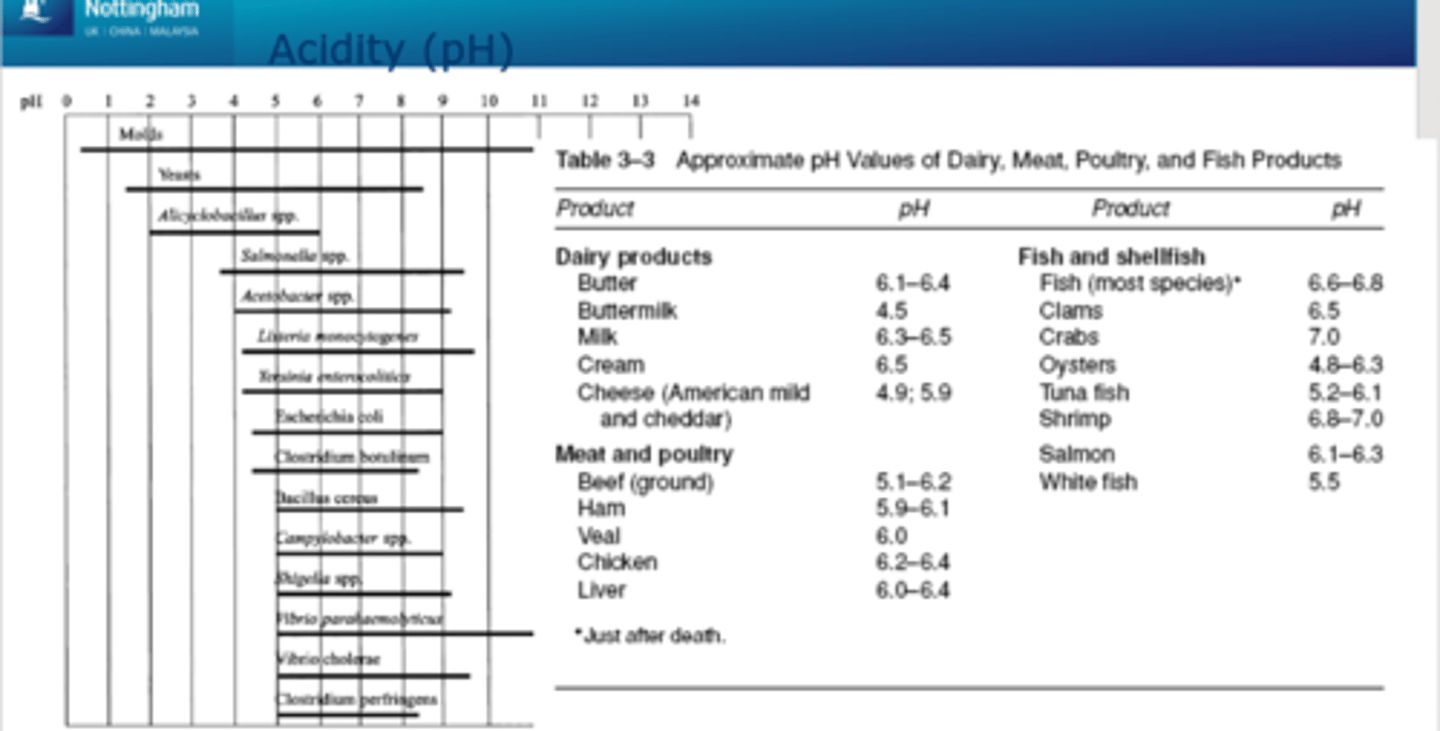
can organisms grow when they are in the wrong pH, what can this be used for
Have different growth ranges
If not in the right ph range they will not grow
So can use this when assessing the risks of diff bact for food
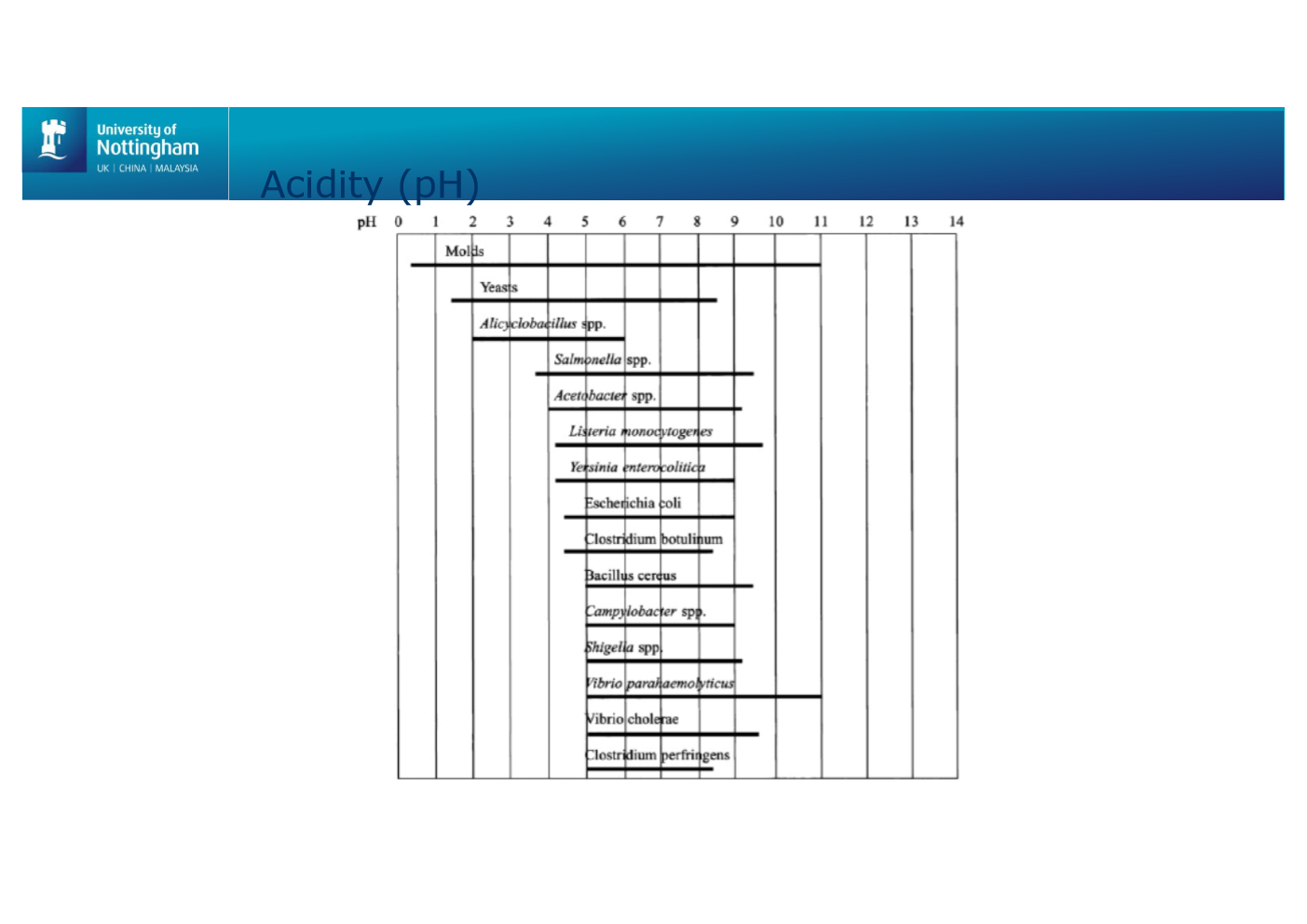
what do buffered foods do with pH
Buffered foods tend to resist changes in pH (meats are more highly buffered than vegetables due to their various proteins).
How does the oxidation reduction potential and ability to resist redox change affect microbial behaviour in foods? How is it measured?
The oxidation/ reduction potential of a substrate = the ease of which a substrate loses or gains electrons
Loses electrons = oxidised
Gains electrons = reduced
Eh = pH 7
Potential difference can be measured and expressed as mV
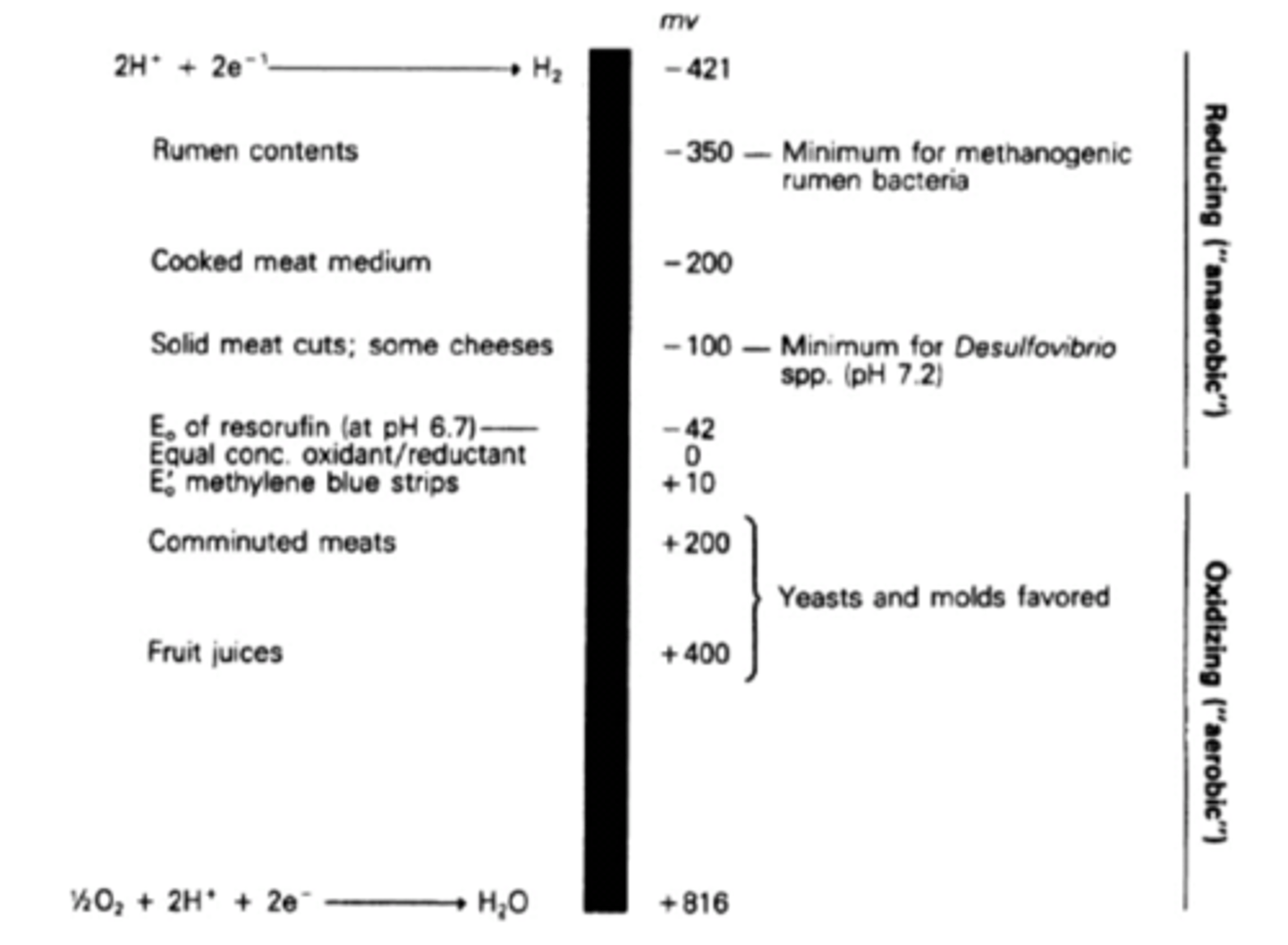
what do aerobic microorganisms require
Aerobic microorganisms require positive Eh values (oxidised, gaining H+ so less free so less acidic environment) for growth, whereas anaerobes require negative Eh values (reduced, e.g. more free H+ so more acidic environment)
What determines oxidation/ reduction (5 points)?
The characteristic O/R potential of the original food
The poising capacity - the resistance to change in potential of the food
The oxygen tension of the atmosphere around the food
The access that the atmosphere has to the food
Microorganisms affect the Eh of their environments during growth just as they do pH (like how they make the environment more acidic by fermenting sugars)
What is redox dependent on (Eh)?
Eh is dependent on the pH of the substrate and the direct relationship between these two factors = the rH value
More oxidation = more free H+ = more acidic environment.
Eh = pH 7
how does bacteria affect sugar
Bact will convert the sugar (lactose -> lactic acid) H+ conc increases and so pH drops
What is the role of measuring the water activity of food (alpha-w) in affecting the microbial behaviour of foods (2 points)? NOT MOISTURE CONTENT
Measure of how efficiently the water present can take part in a chemical (physical) reaction
Reducing the amount of water available for microbial growth is an extremely important and very ancient way of preserving foods - minimising spoilage/ growth of pathogenic microorganisms
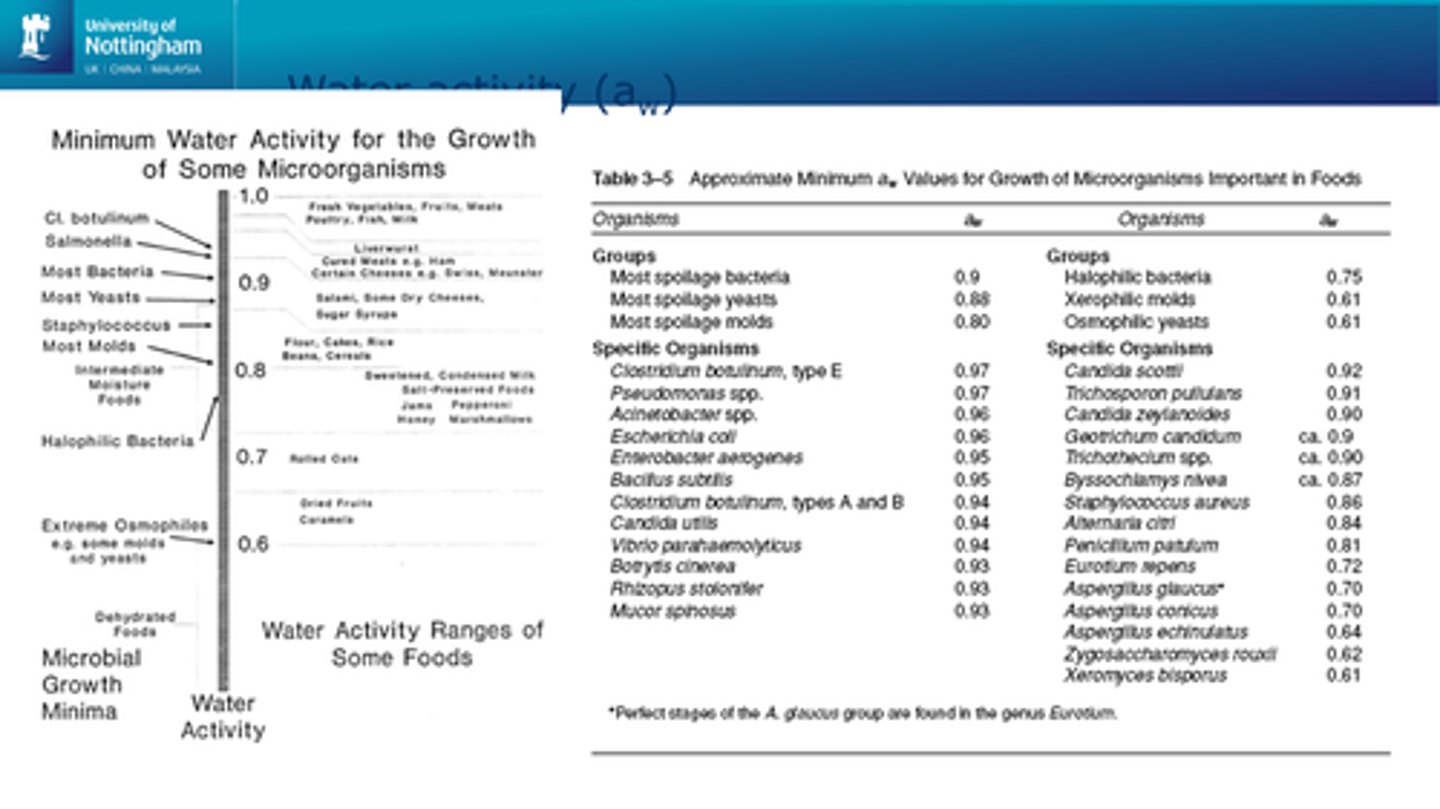
what happens to bact when water activity decreases
As less water there is less likely bact to grow
There may still be some
- Halophalic and extreme osmophiles
How does the skin/peel act as a mechanical barrier to microbial invasion (2 points)?
Forms a mechanical barrier to microbial invasion
Fermented meat products and fruit
What are extrinsic factors of food?
Characteristics of a food that are external to the food itself that affect the microbial behaviour of food.
What are 4 extrinsic factors that affect microbial behaviours in food?
Temperature
Gaseous atmosphere surrounding the food
Relative humidity of the atmosphere surrounding the food
Time
What are the types of microbes in terms of temperature?
- Psychrotrophs
- Psychrophiles
- Mesophiles
- Thermophiles
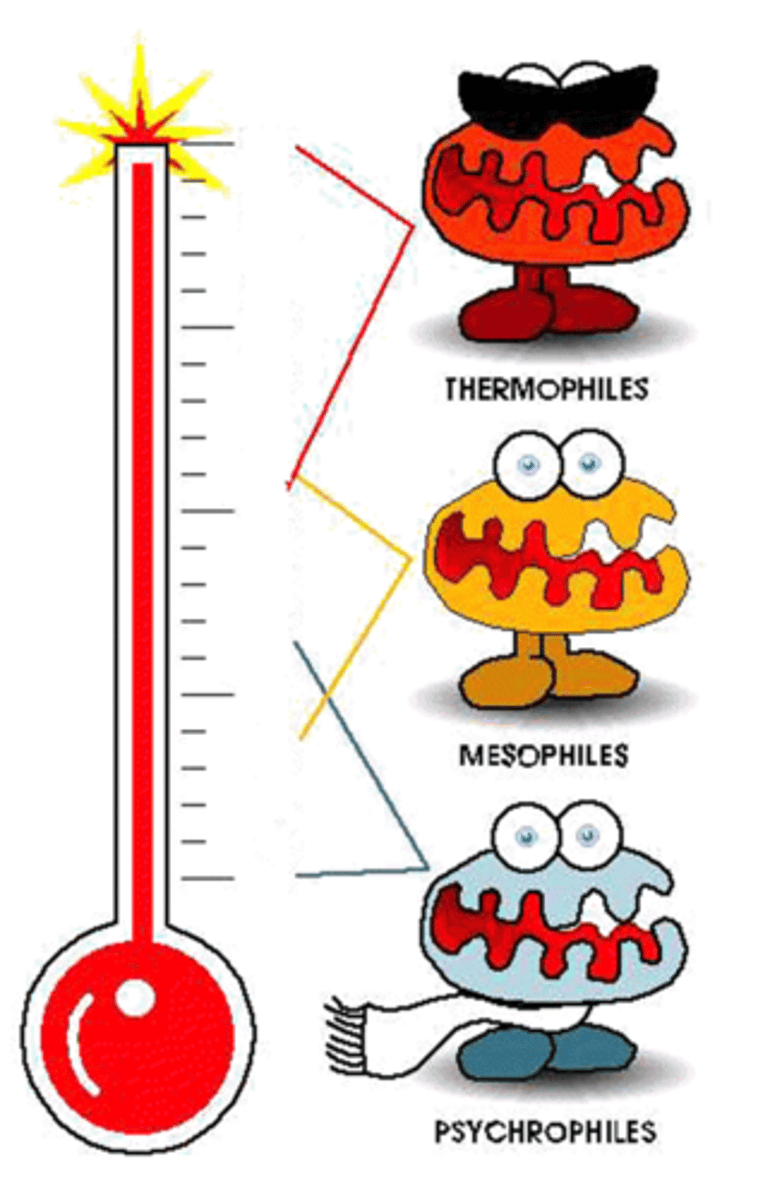
What are psychrotrophs?
Psychrotrophs grow well at or below 7 degrees C, with an optimum temperature between 20-30 degrees C.
What are psychrophiles?
Psychrophiles have an optimum growth temperature of 15 degrees C or lower.
What are mesophiles?
Mesophiles grow well between 20-45 degrees C, with an optimum temperature between 30-40 degrees C.
What are thermophiles?
Thermophiles grow well at temperatures above 45 degrees C, with an optimum between 55-65 degrees C.
What is one of the most important parameters affecting the storage of thermophiles?
Storage temperature is one of the most important parameters affecting storage.
What do D value and Z value refer to in the context of bacteria?
D value and Z value refer to the thermal destruction of bacteria.
What is the key feature of thermal destruction of bacteria?
It is linear:
- How many organisms in the food.
- Time you spent to destroy them thermally.
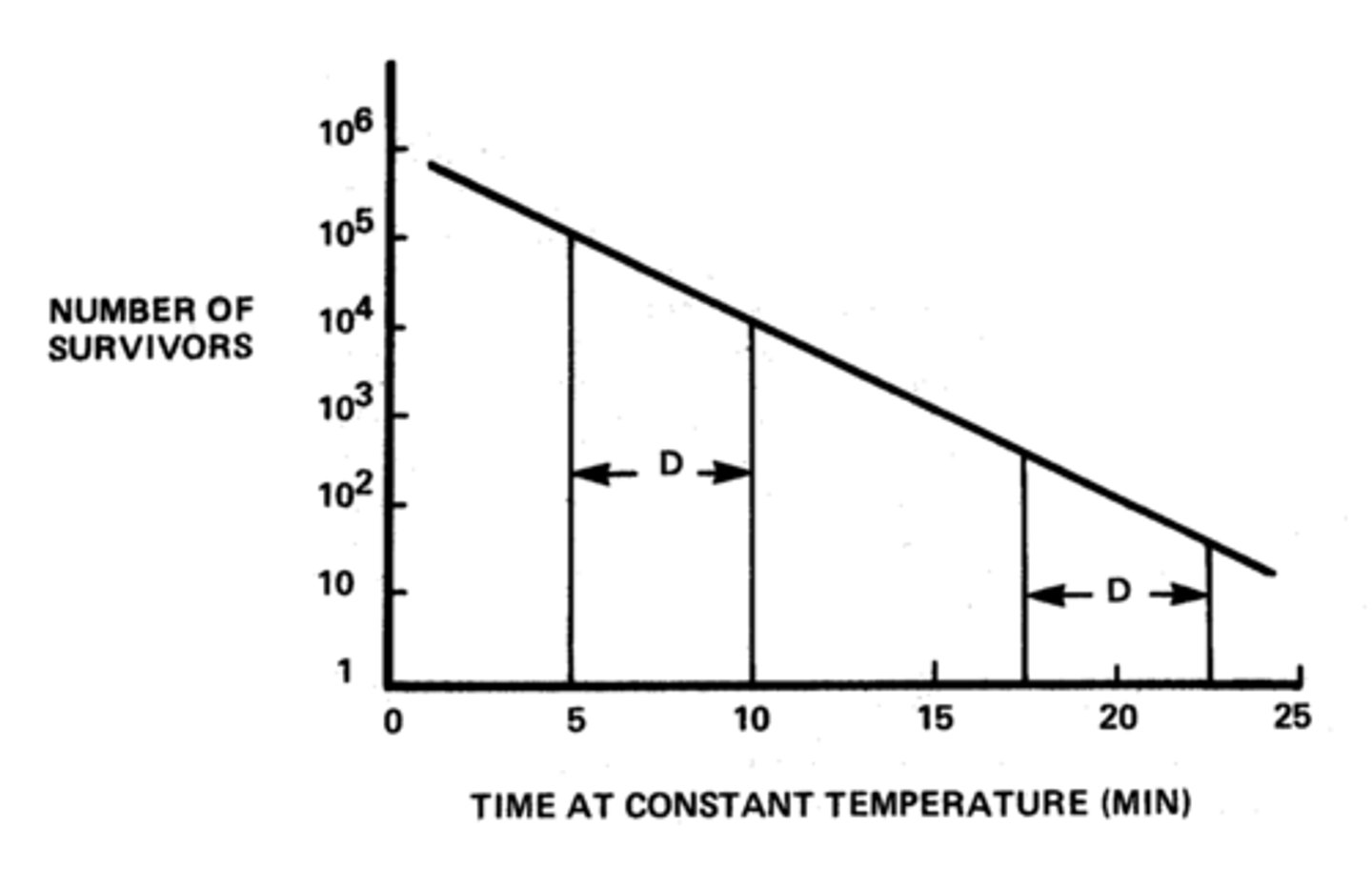
What is the D-value, give an example (D121)?
Decimal reduction time = time take for the population to pass through a log cycle (90% of the population is killed) at a stable temperature
D121 = the time required to kill microorganisms at 121 degrees C
Example - Listeria monocytogenes D71.7 = 3.3 seconds
So every 3.3s at this temp it will have 90% of pop reduced
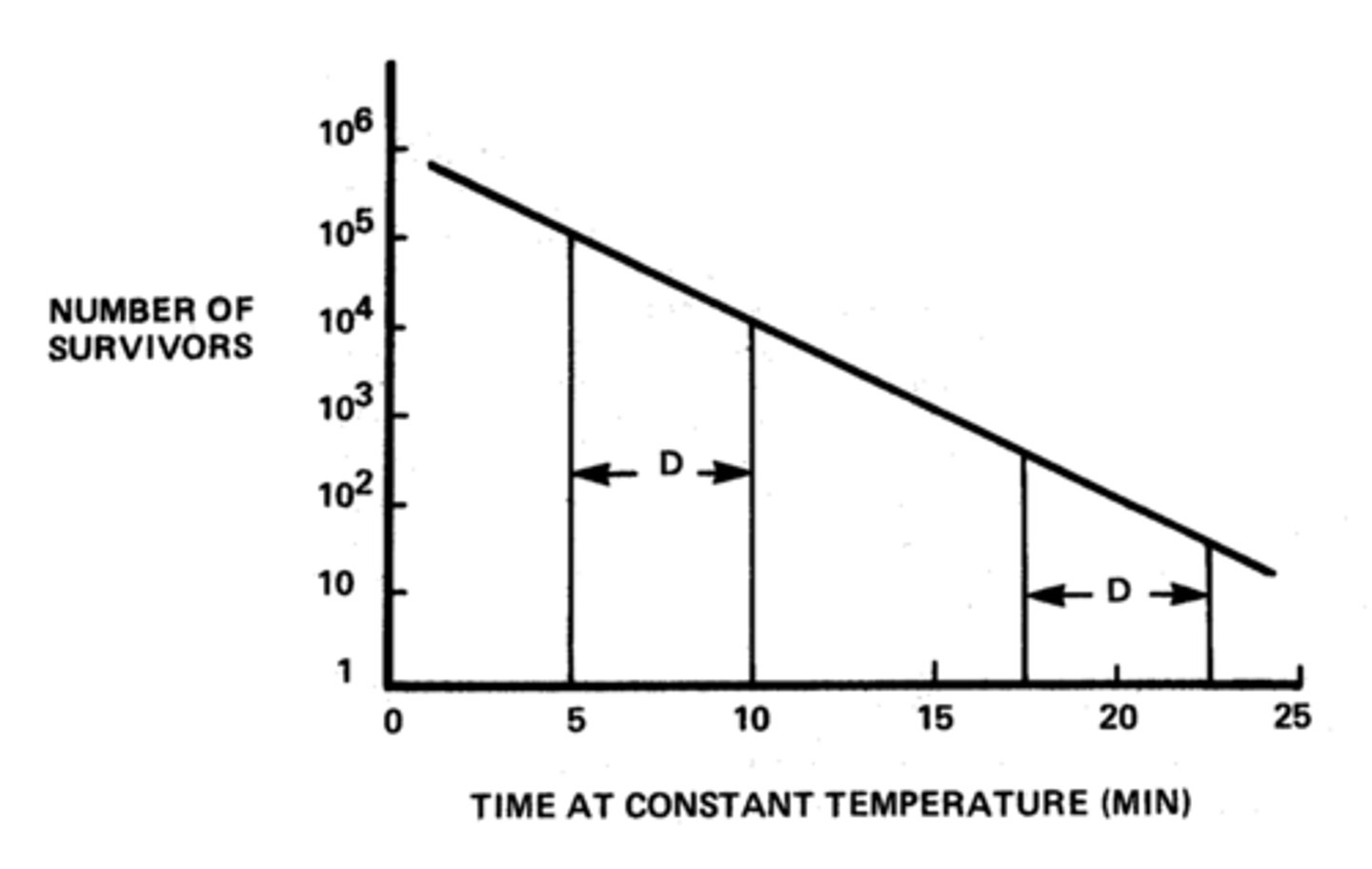
What are the four D values?
1) Thermal processing of 1D causes a 90% reduction of the original population
Thermal processing of 2) 2D causes a 99% reduction of the original population
Is the remainin 10% of the population
3) Thermal processing of 3D causes a 99.9% reduction of the original population
4) Thermal processing of 4D causes a 99.99% reduction of the original population
A sporeforming bacterium has a D value (120 oC) = 7 min
How many spores will survive after a heat treatment of 49 min at 120 oC, if the initial population is 10^8 cfu/g of product
49/7 = 7 log cycles → 10^8-7 = 10^1 = 10 spores
-so If you want to elimate all the spored tou have to go another 2 Ds up
What is the z-value?
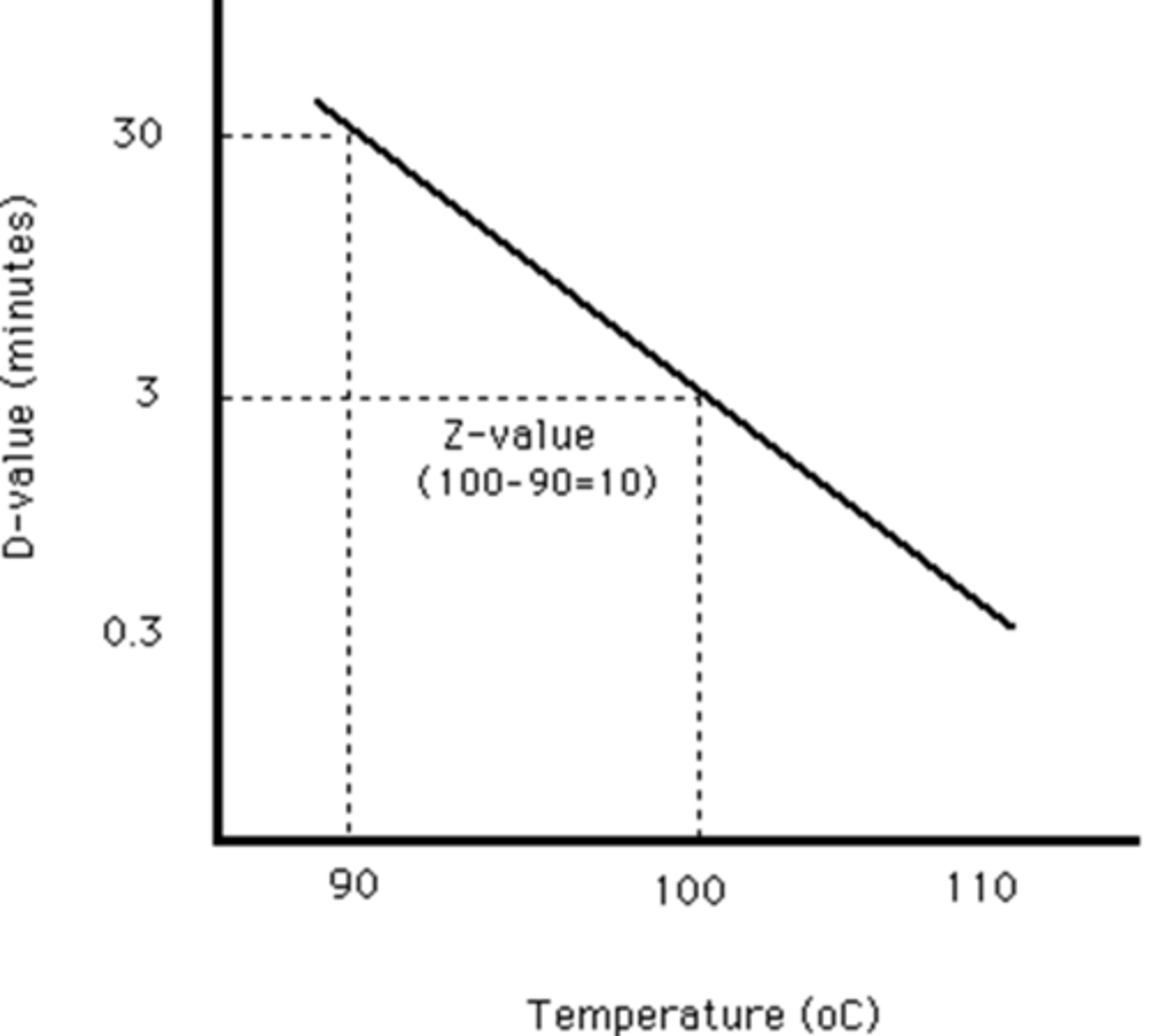
The temperature change that is required to change the D value by a factor of 10.
So from 1D100 to 1D90 (time taken to kill 90% of the original population at 100 degrees C which would take 3 minutes to 90 degrees C which would take 10 minutes).
(The temperature is the factor you alter because number after D is the temp).
How does the gaseous atmosphere surrounding the food affect the microbial activity in foods (3 points)?
1) Carbon dioxide = the single most important atmospheric gas that is used to control microorganisms in foods - MAP (modified atmospheric packaging)
2) Ozone = the other atmospheric gas with antimicrobial properties - strong oxidising agent, shouldn't be used on high lipid content foods as it would cause an increase in rancidity
3) Vacuum-packing - high barrier plastic pouches
What is the relationship between relative humidity (RH) of an environment and its temperature?
high temperature = low RH and vice versa
How does the relative humidity (RH) of the atmosphere surrounding the food affect the microbial activity in foods (3 points)?
1) Moisture Availability: High RH increases water on food surfaces, promoting microbial growth, while low RH reduces moisture, limiting growth.
2) Water Activity (aw): High RH raises the food's water activity, encouraging microbes, while low RH lowers water activity, inhibiting growth.
3) Mould Growth: High RH supports mould growth, while low RH can prevent mould by drying out food.
At what RH should foods that undergo surface spoilage from moulds, yeasts and certain bacteria be stored at?
Low RH conditions.
How can we low surface spoilage?
By altering the gaseous atmosphere, it is possible to retard surface spoilage without lowering the RH
what timing is important in food processing environments
Time of storage of ingredients.
Time for preparation and handling.
Intermediate product storage.
Final product storage.
How does the time of storage of ingredients affect microbial activity?
Longer storage increases the risk of microbial growth and spoilage, especially in perishable items, if not stored properly.
What is the impact of time for preparation and handling on microbial activity?
Extended exposure to the environment or improper handling increases the risk of contamination and bacterial growth, especially if foods are left at room temperature.
How does intermediate product storage time affect microbial activity?
Storing partially prepared foods for too long can lead to spoilage or over-fermentation, depending on the conditions.
What is the effect of final product storage time on microbial activity?
Longer storage of final products, especially in poor conditions, increases the risk of spoilage and pathogen growth, reducing shelf life.
What is spoiled food?
A food that is unacceptable to a consumer for reasons of smell, taste, appearance, texture or the presence of foreign bodies
What are 8 reasons food is rejected as spoiled?
Organoleptic changes
Chemical changes
Physical damage
Freezer burn
Staling
Ripening
Presence of foreign bodies
Contamination with chemical agents
How does food spoilage occur?
interactions
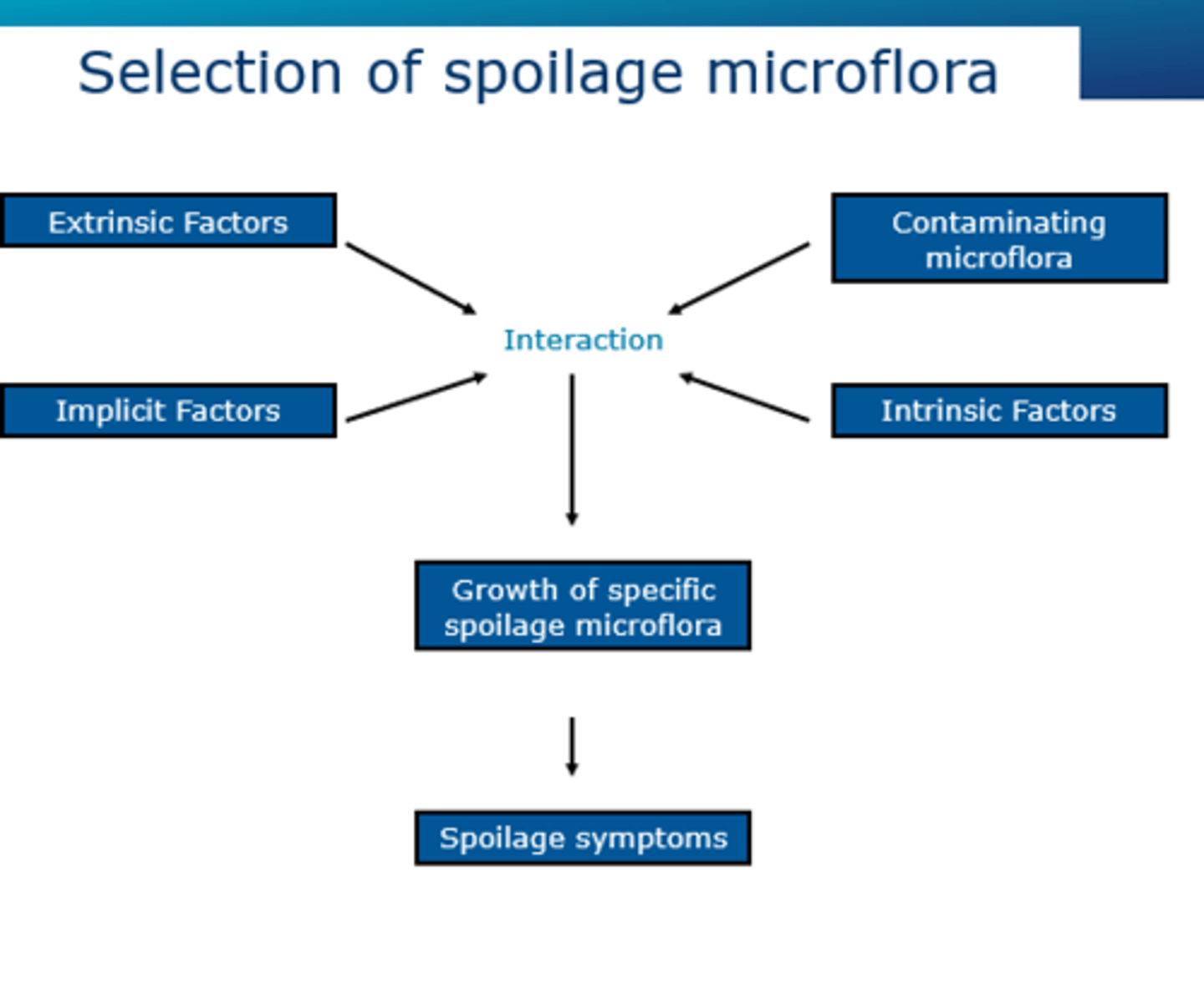
How do organoleptic changes occur?
Brought about by the growth of microorganisms = by far the most important and common source of food spoilage
What do organoleptic changes lead to (5 points)?
Unacceptable changes in:
Taste
Odour
Appearance
Texture Combination of the four
What is an example of a spoiled food safe to eat?
Yoghurt containing yeasts
What are examples of food spoilage caused by chemical changes?
Chemical oxidation of fats producing rancidity (oxidative rancidity)
Browning of fruits and vegetables in contact with air
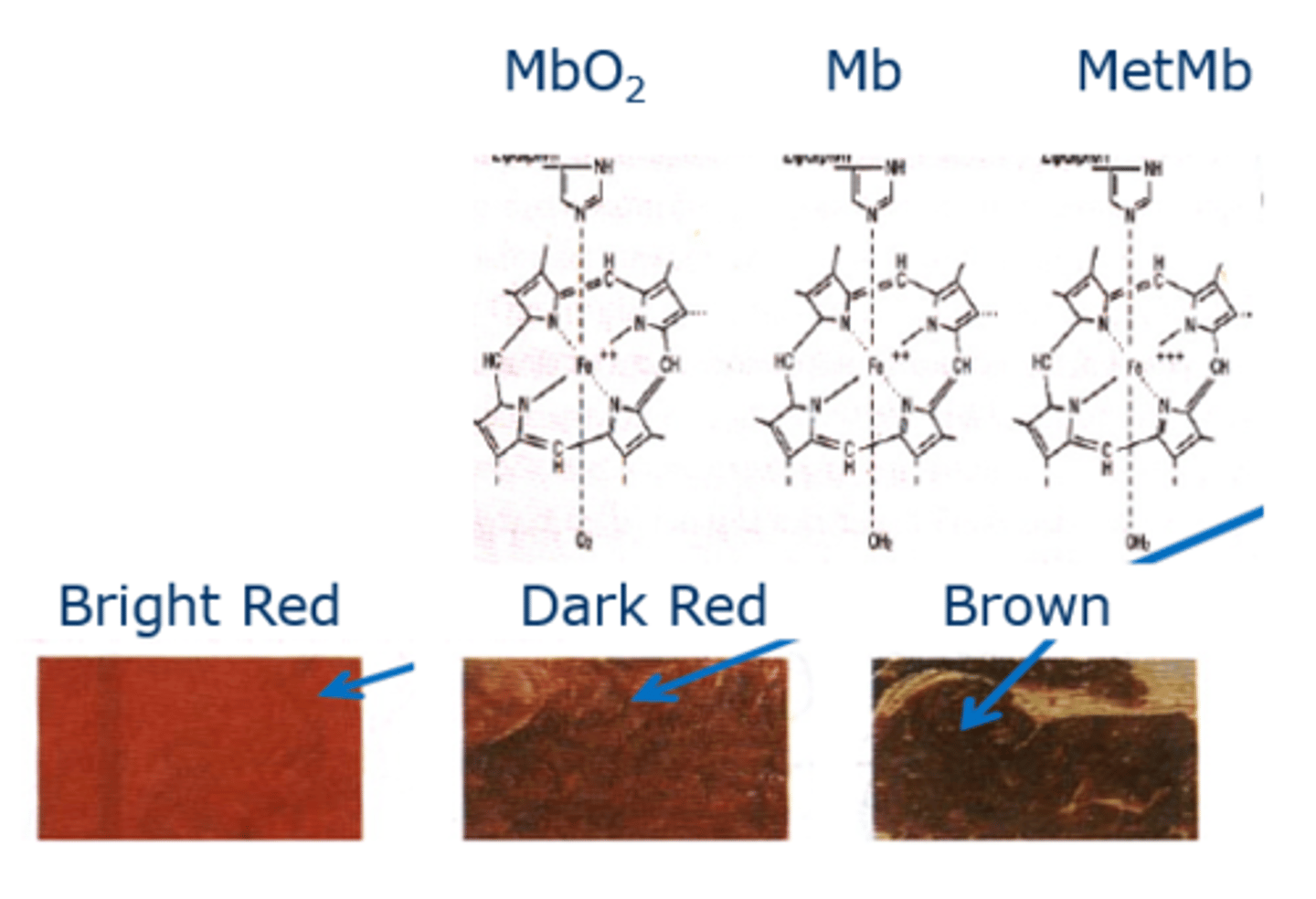
Meat = rejected as spoiled due to colour change - oxygenation of myoglobin (Mb) and formation of oxymyoglobin (MbO2) before slaugther making the meet bloom/redden after slaughter, but if left out exposed to air, oxidation of myoglobin and formation of MetMb (metmyoglobin) occurs, browning the meat.
What are examples of food spoilage caused by physical damage?
Improper handling of foods - if a food Is handled improperly during packaging, transporting, drying, preserving etc...
Could be related to biological risks
entry of microorganisms or insects into food
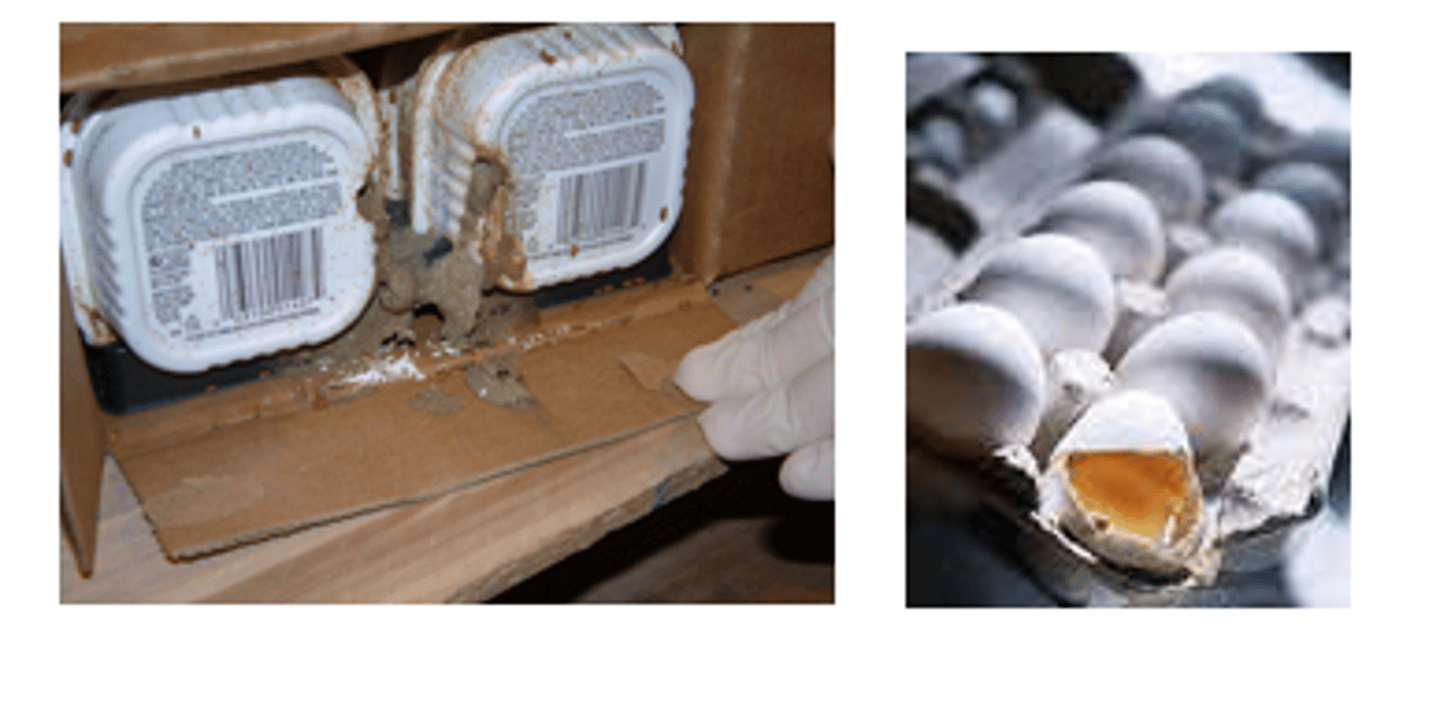
How does freezer burn work (2 points)?
A frozen food is losing moisture due to poor packaging/ wrapping
The molecules migrate from the food to the coldest place they can find, which is often the side of the freezer - the loss of these water molecules causes the food (e.g. steak) to become dehydrated
How does staling work (6 points)?
A chemical and physical process in bread and other foods that reduces their: palatability
Loss of water
Check recipe
Increase water level
Reduce resting time
Increase baking temperatures
Reduce baking time
How can ripening lead to spoilage?
Spoilage can occur as a result of over-ripening - e.g. fruits and vegetables, cheeses, fermented meats
How can presence of foreign bodies lead to spoiled food (3 points)?
Food is rejected as spoiled if it contains foreign matter - e.g. hair, soil, metal, nails
Hard or sharp foreign objects in food may cause consumer injury
Foreign bodies in food may introduce harmful bacteria into the food
How can contamination with chemical agents occur and lead to food spoilage (3 points)?
May occur through environmental pollution of the air, water or soil
In the food industry, this often occurs via contamination with cleaning chemicals
Have to used approved chemicals to clean
Bacillus cereus (emetic taxin)
1-5 hours incubation; Nausea, vomiting, diarrhoea, abdominal pain; Symptoms last 24 hours; Sources include fried and cooked rice, pasta, pastry products.
Bacillus cereus (diarrhoeal toxin)
8-16 hours incubation; Diarrhoea, nausea, vomiting, abdominal pain; Symptoms last 24 hours; Sources include meat, soups, sauces, puddings.
Campylobacter spp
2-5 days incubation; Diarrhoea, abdominal pain, fever, blood in stools; Symptoms last 2-7 days; Sources include raw milk, poultry products, untreated products.
Clostridium perfringens
12-18 hours incubation; Diarrhoea, abdominal pain; Symptoms last 24 hours; Sources include cooked meats, meat gravies/sauces.
Vero-cytotoxin producing E. coli
1-6 days incubation; Diarrhoea, blood in stools; Symptoms last 4-6 days; Associated with Haemolytic Uraemic Syndrome (HUS). sources undercooked meat products, raw milk, cheese, fruit etc
Salmonella (non enteric fever/typhoid)
12-72 hours incubation; Vomiting, diarrhoea, fever; Symptoms last <3 weeks. sources meat, poultry, egg products
Staphylococcus aureus
2-4 hours incubation; Vomiting, abdominal pain, fever; Symptoms last <12-48 hours. sources - incorrect storage of food, contamination
Vibrio spp. (not V. cholerae 01 or 0139)
12-18 hours incubation; Diarrhoea; Symptoms last <7 days. sources - fish , warm water
Shigella spp.
1-7 days incubation; Diarrhoea, blood in stools; Symptoms last <2 weeks. sources - contaminated food, faecal oral
Cryptosporidium parvum
2-5 days incubation; Diarrhoea; Symptoms last <3 weeks. sources raw milk, conaminated food
Giardia intestinalis
5-25 days incubation; Diarrhoea, abdominal pain; Symptoms duration variable. sources water, contaminated food, faecal oral
Cyclospora cayetanensis
2-5 days incubation; Symptoms diarrhoae, abdominal pain duration variable. sources fruit, salad, water
Norovirus (Norwalk-like viruses (NLV))
1-3 days incubation; Diarrhoea, abdominal pain, vomiting, fever; Symptoms duration variable. sources shell fish, water, raw fruit or veg, contaminated food or faecal oral
Rotavirus
1-2 days incubation; Diarrhoea, vomiting. duration 4-6 days source - faecal oral
Hepatitis A virus
2-6 weeks incubation; Jaundice, abdominal pain, intermittent nausea, diarrhoea; Symptoms last up to several weeks sources - shell fish, raw fruit and veg, contaminated food, faecal oral

