IB Paper 3: The Great Depression & the Americas
 Studied by 0 people
 Call Kai
 Learn
Learn Practice Test
 Spaced Repetition
 Match
Match Flashcards
 Knowt Play
1/70

There's no tags or description
Looks like no tags are added yet.
Name | Mastery | Learn | Test | Matching | Spaced | Call with Kai |
|---|
No analytics yet
Send a link to your students to track their progress
71 Terms
1929
When did the stock market crash?
Fordney-McCumber Tariff & the Hawley-Smoot Tariff
Name the 2 tariffs from the postwar years that contributed to a dramatic decline in world trade.
speculation & buying on margin
These are considered the "seeds of trouble" for the speculative boom on the stock market during the Roaring Twenties.
Warren Harding, Calvin Coolidge & Herbert Hoover
Collectively, they are known as the postwar presidents. Each stood for isolationism and minimal government involvement in the economy.
10%
How much money did you need to put down if you were buying a stock on margin?
(1) tariffs and war debts, (2) crisis in the farm sector, (3) easy availability of credit, and (4) unequal distribution of wealth
What were the 4 causes of the Great Depression?
1929-1940
When did the Great Depression take place?
Herbert Hoover
He was president at the outset of the Great Depression.
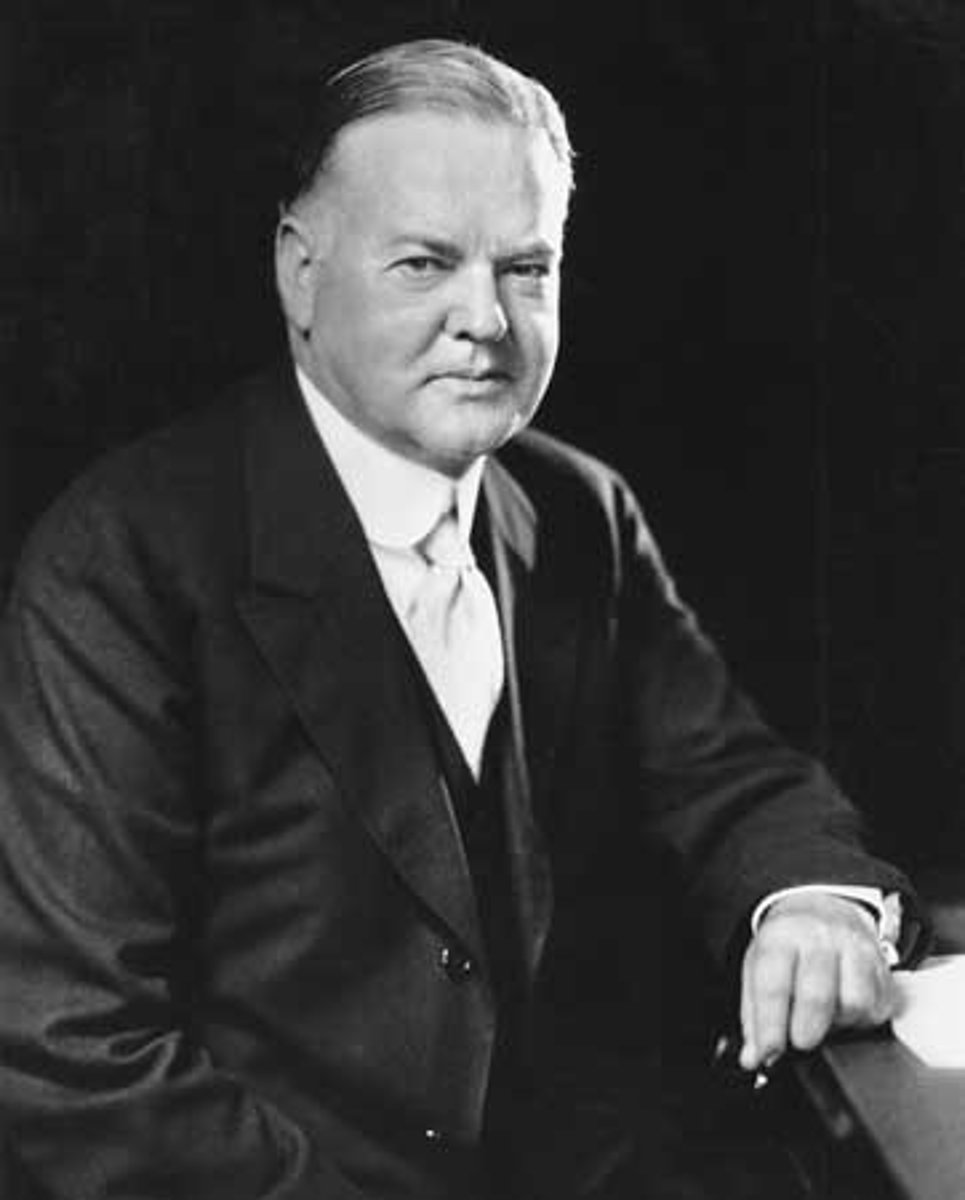
"rugged individualism"
Hoover subscribed to this American ideology and it shaped the way he responded to the onset of the economic crisis.
Superficial prosperity
Describe the nature of the prosperity of the Roaring Twenties.
Conspicuous consumption
This type of consumption led to the accumulation of $6 billion of consumer debt.
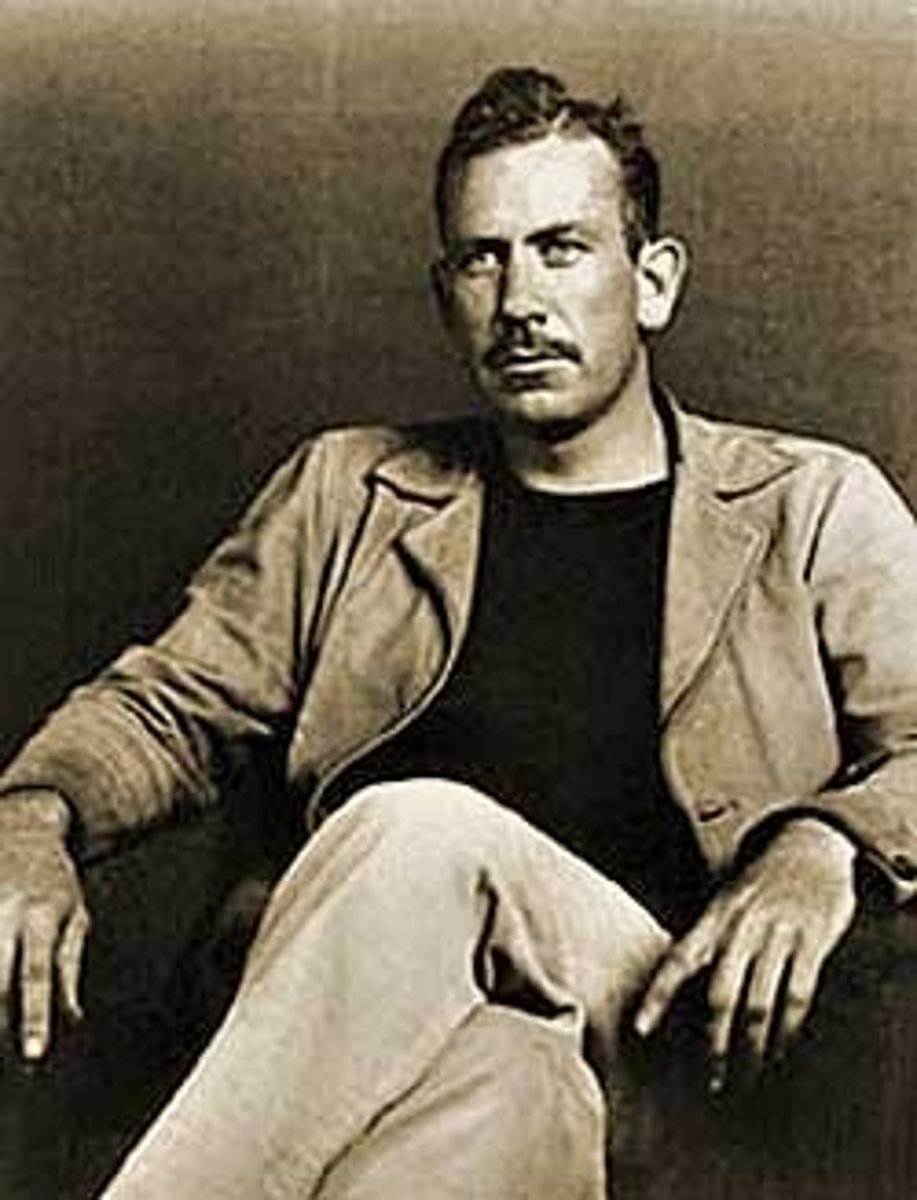
John Steinbeck
He wrote the novel The Grapes of Wrath.
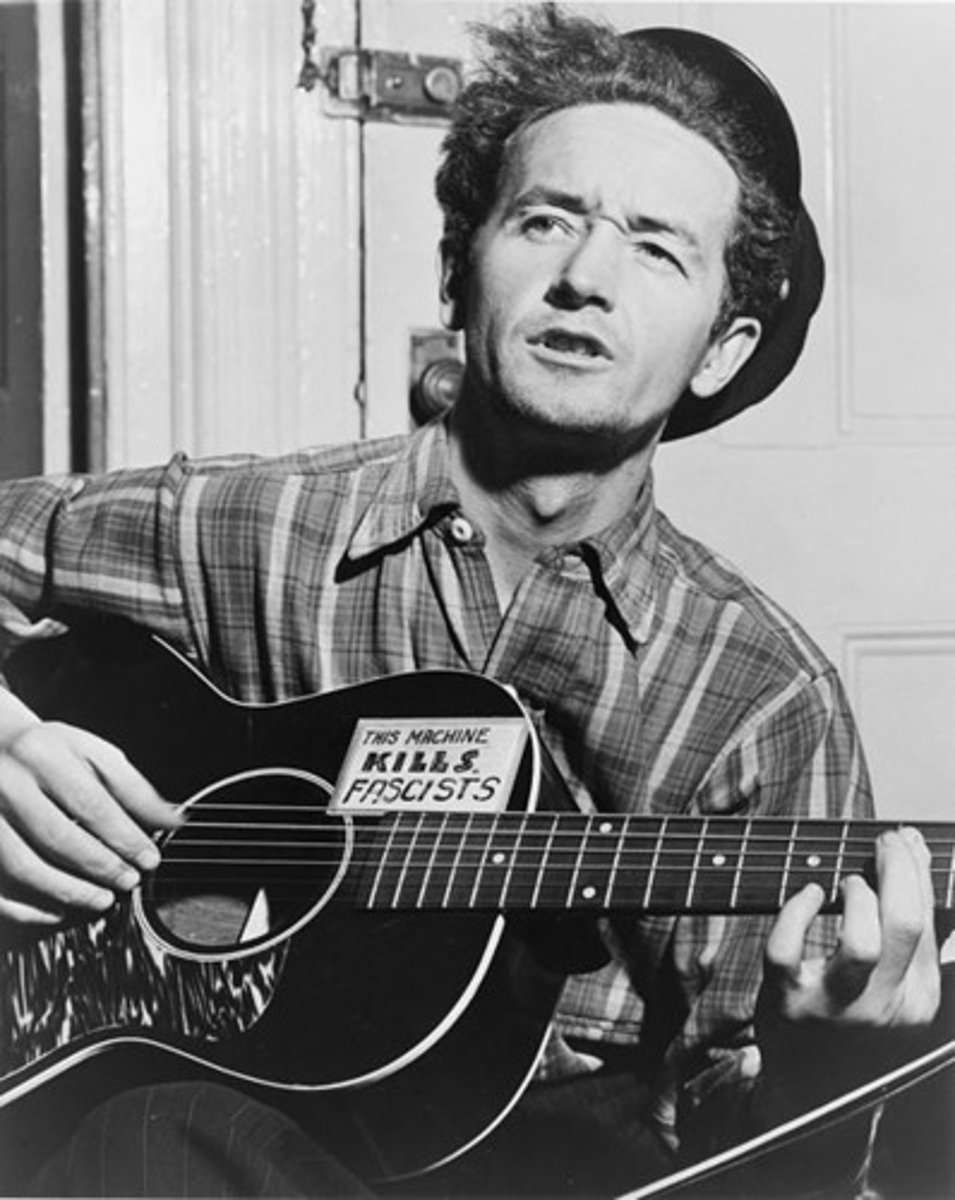
Woody Guthrie
He is considered the musical voice of the Depression Era. His songs documented the struggles of those forced to live life on the road.
Hoovervilles
Nickname Americans used for shantytowns during the Great Depression.
Breadlines & soup kitchens
More and more Americans were forced to rely upon these for their daily
"Riding the Rails"
In class we watched this documentary film to learn about the impact of the Great Depression of American teenagers.
"Dust Bowl Refugees"
Woody Guthrie's song that describe the impact of the Dust Bowl on American farmers from that region.
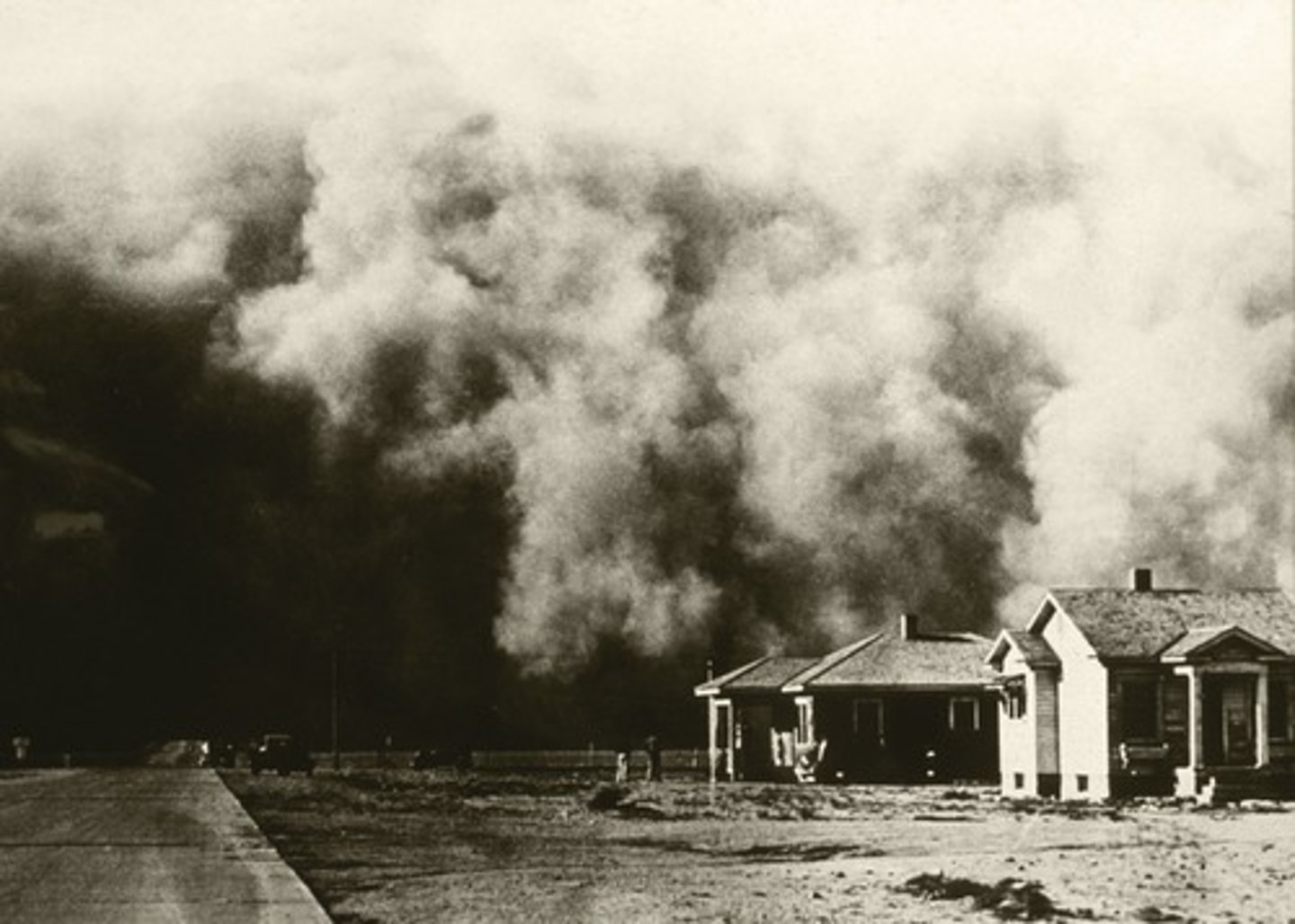
25%
What was the unemployment rate by 1932?
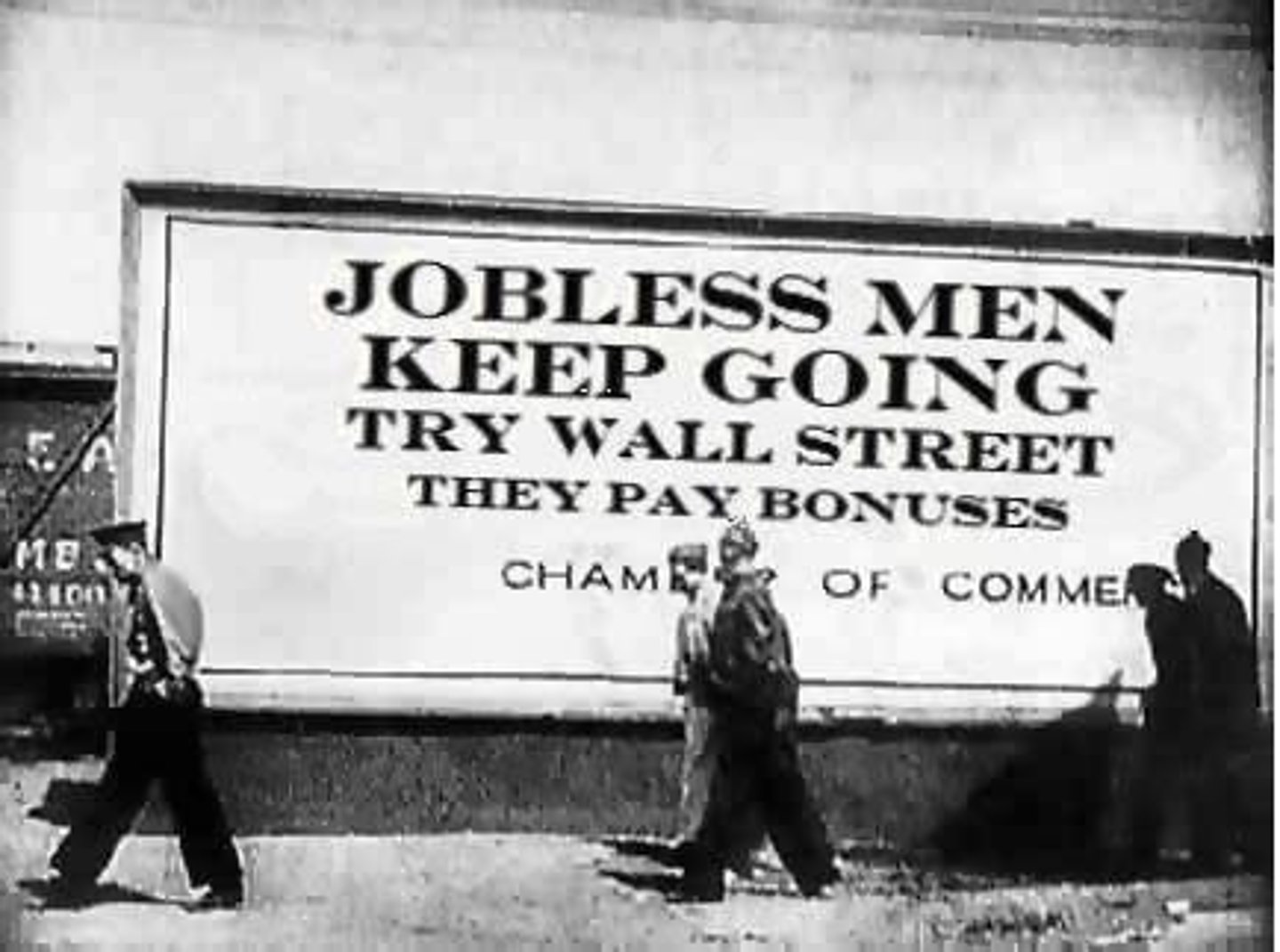
"The Great Plow Up"
This phrase refers to the rush of farmers (new & experienced) into the Great Plains during WWI. In total they plowed over 5 million acres of land for grain production.
Bonus Army March
WWI Veterans that demanded Congress pay them the "bonus" promised to them for their service in World War I. Ultimately, President Hoover called out the army to disburse them. It proved to be a political calamity for the already unpopular president.
Reconstruction Finance Corp. (RFC)
Hoover attempted to deal with the economic crisis by passing this law. It provided emergency funding to help large corporations stay in business. It was based on the belief in "trickle-down" economics.
Bank runs
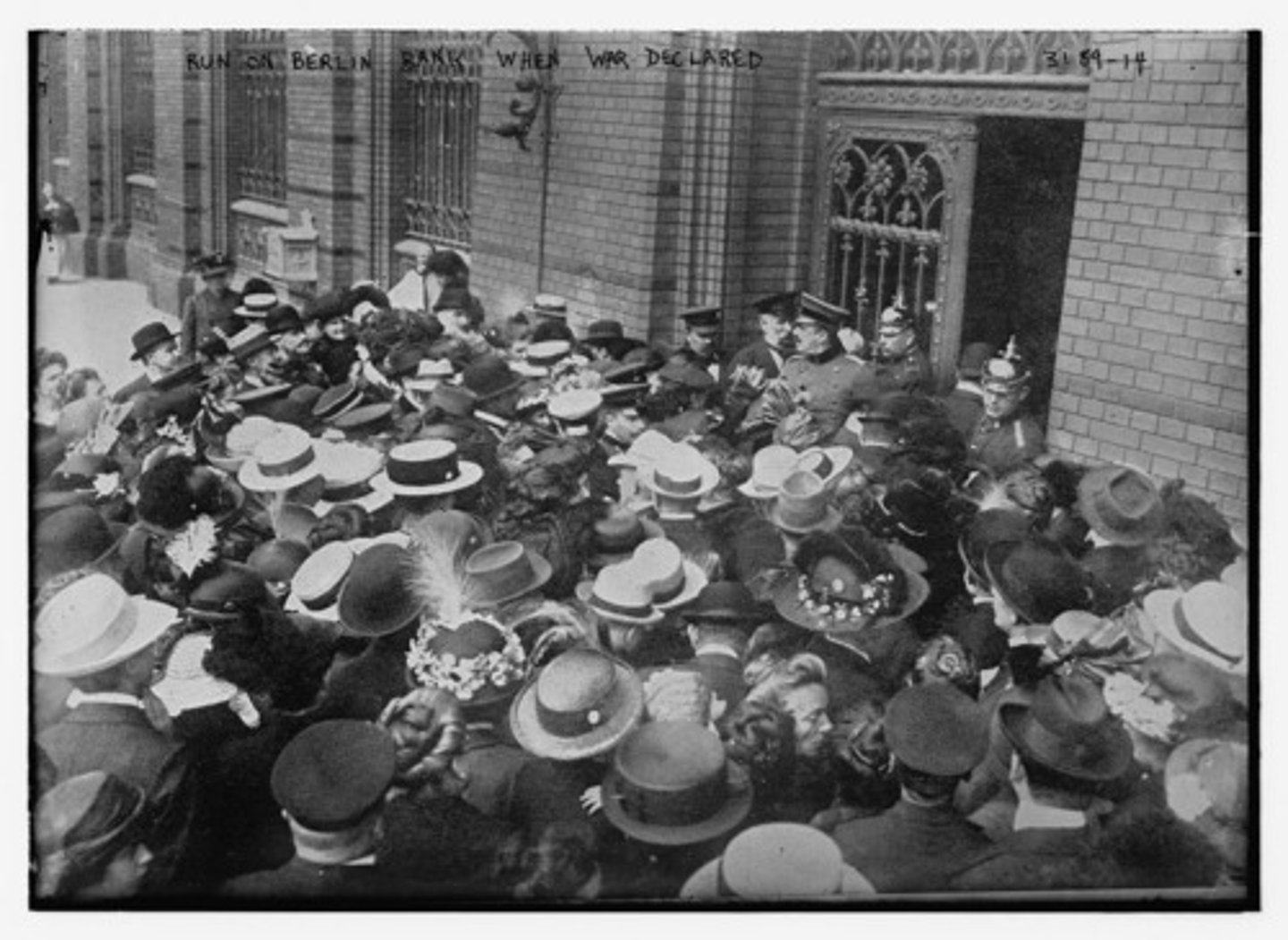
After the stock market crashed in October 1929, thousands of Americans feared for their money and rushed to get it out of their banks. This phrase described the phenomenon that ultimately led to widespread bank closures. By the end of the year 641 banks had failed.
6 billion dollars
By the end of the Jazz Age Americans had accumulated this much consumer debt. It was largely driven by conspicuous consumption.
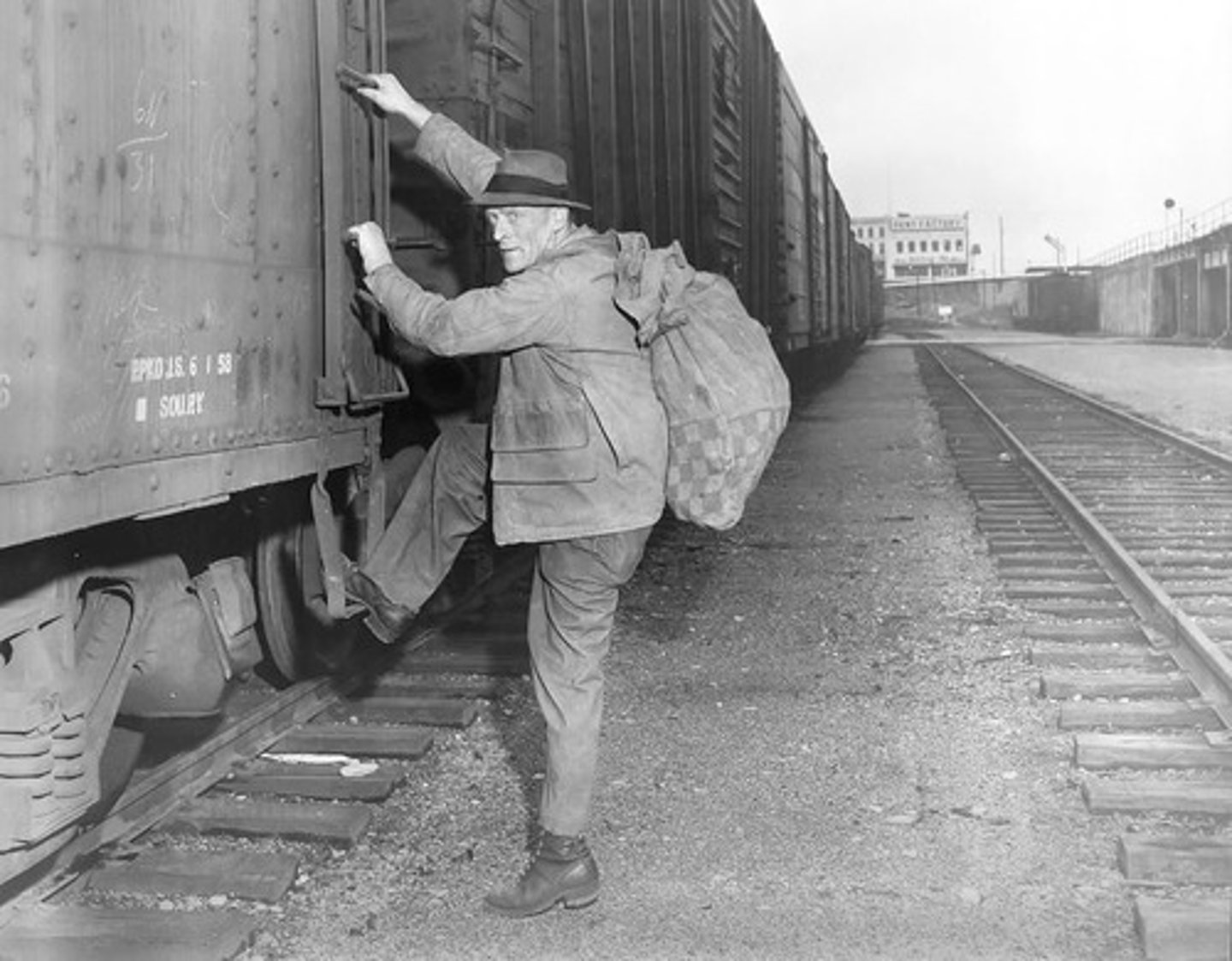
Hoboes
Slang term for homeless transients during the Great Depression. It is estimated that 250,000 were teenagers.
Federal Home Loan Bank Act
Passed in 1932 during Hoover's administration, this helped homeowners refinance their mortgages.
9 million
By the time FDR was inaugurated in 1933, how many personal savings accounts had been lost?
The New Deal
FDR's 1932 campaign slogan & pledge that became the term to define his domestic programs and policies that were designed to tackle the problems created by the Great Depression.
the "First Hundred Days"
Phrase that refers to the time it took Congress and FDR to begin taking legislative action to combat the Great Depression. 15 pieces of legislation were passed during this period.
deficit spending
Economic policy promoted by John Maynard Keynes as the solution to the Great Depression.
National Industrial Recovery Act (NIRA)
FDR believed this was the single most important legislation passed by Congress. However, in 1935 the Supreme Court ruled it to be unconstitutional on the grounds that it gave legislative power (reserved for Congress alone) to the president - FDR.
Agricultural Adjustment Act (AAA)
This New Deal Act was created for the purpose of raising prices of farm products. In 1936, the Supreme Court ruled this New Deal act unconstitutional because it allowed the federal government to regulate intrastate trade.
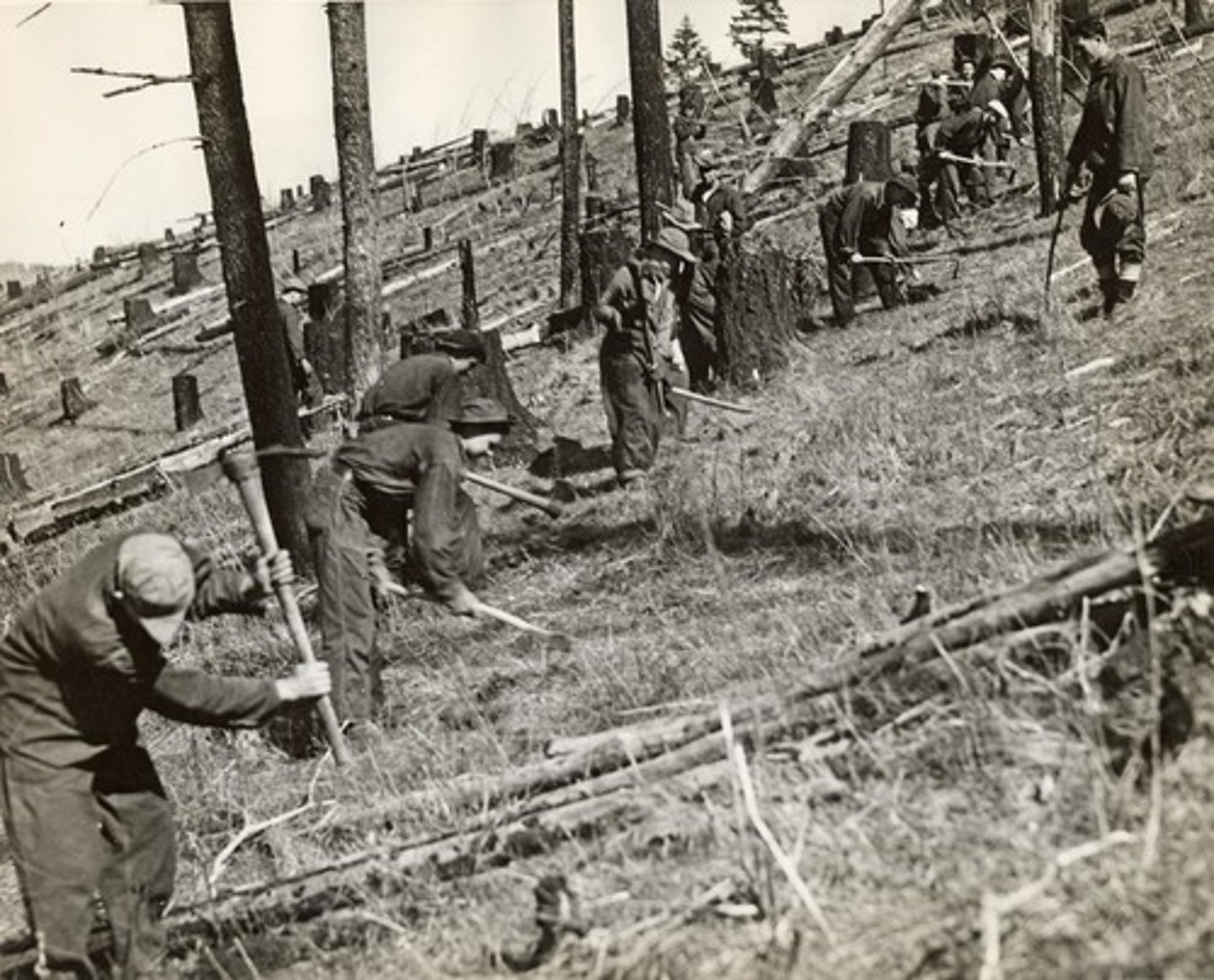
Civilian Conservation Corps (CCC)
This hired 18-25 year old men to work on major construction projects.
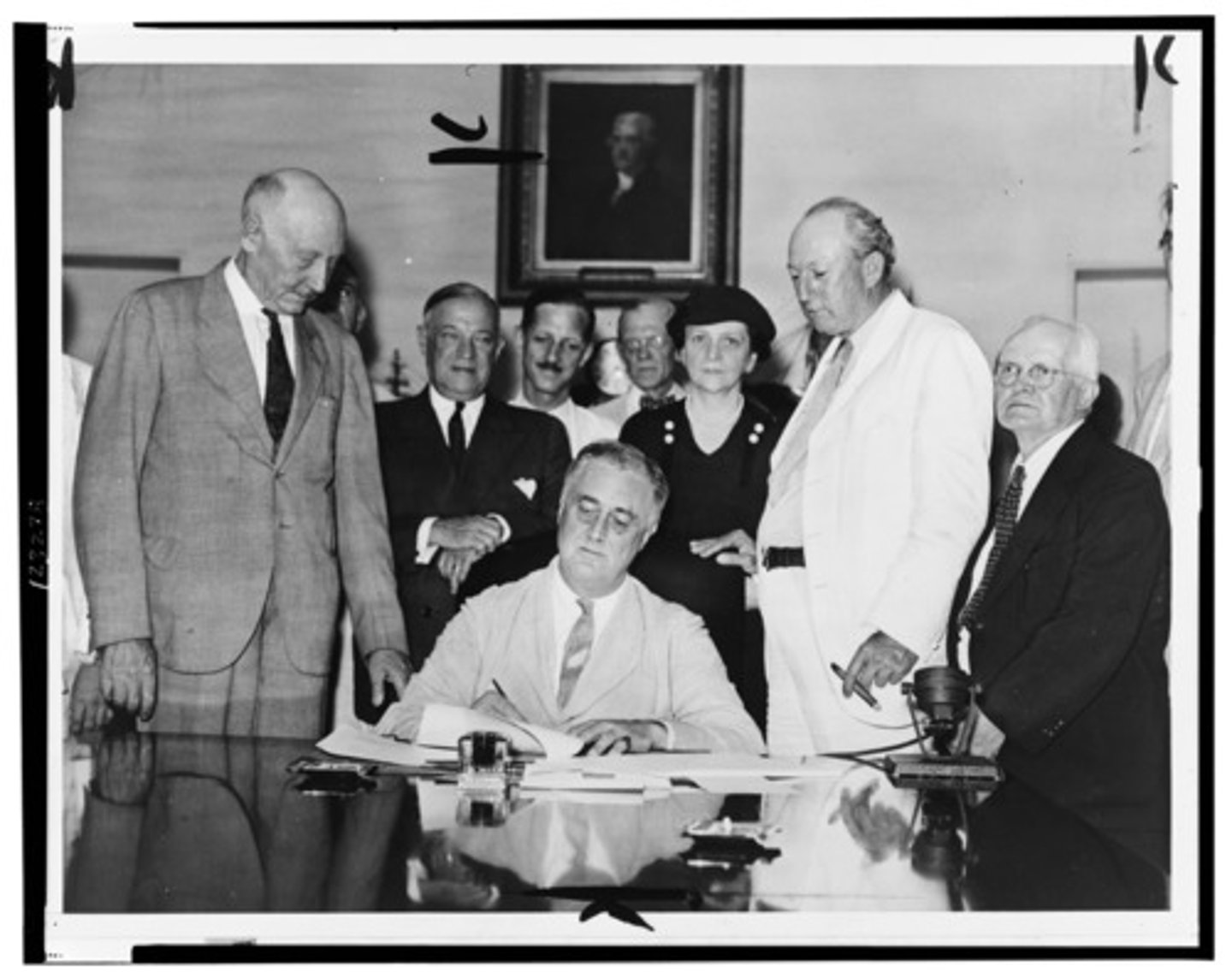
Social Security Act (1935)
Historians agree that this is the most important and long-lasting act of the New Deal.
Glass-Steagall Act
This act led to the creation of the Federal Deposit Insurance Corporation (FDIC).
Securities and Exchange Commission (SEC)
The Federal Securities Act was passed in 1934 and led to the creation of this important regulatory agency.
Tennessee Valley Authority (TVA)
This New Deal program rebuilt dams to prevent flooding & provide electricity to an impoverished region. It proved controversial because the federal government was running a business.
Works Progress Administration (WPA)
This New Deal program was passed during the second wave of legislation. It was massive - it spent $11 billion and created 8 million jobs.
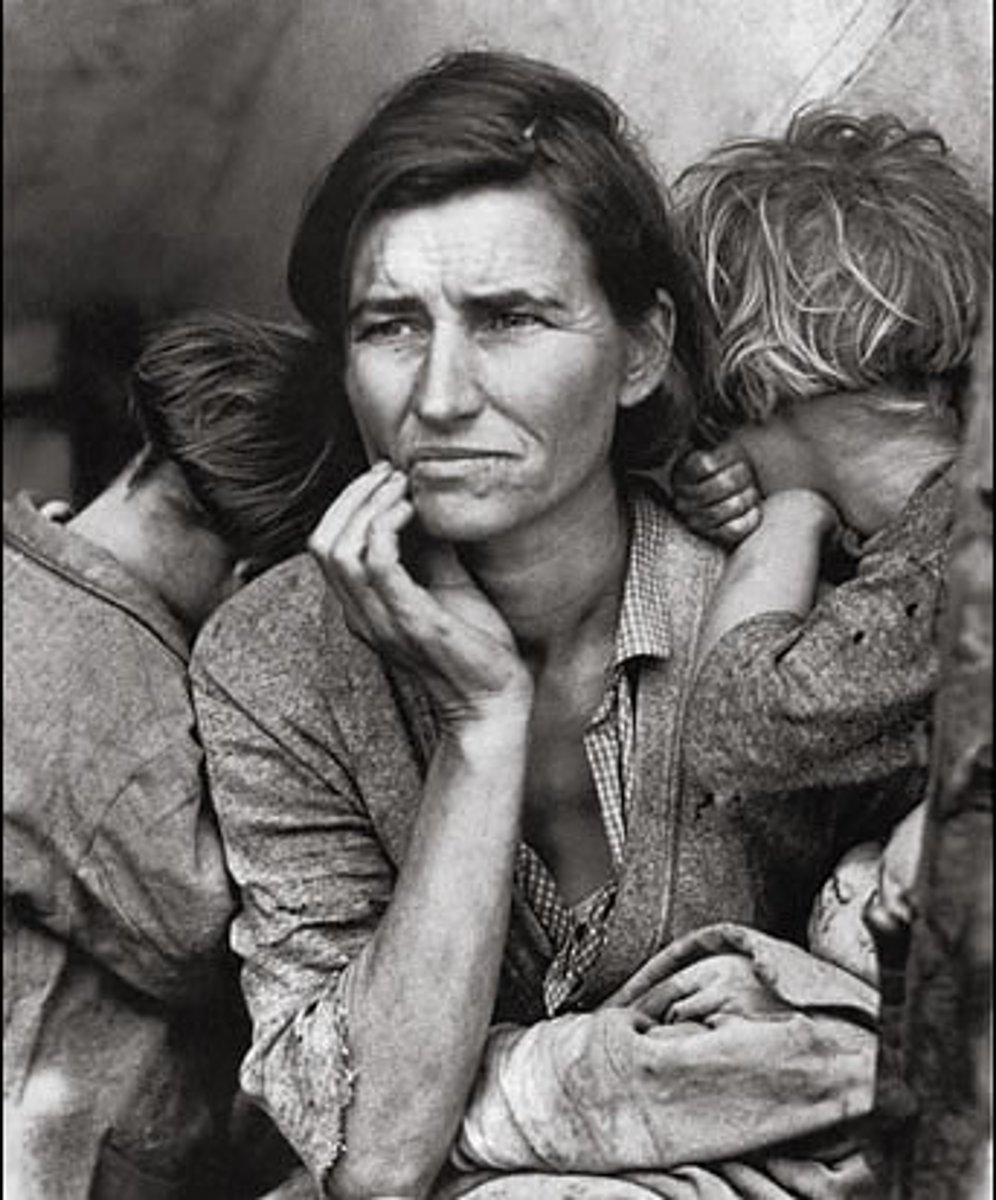
Dorothea Lange
She took the famous photograph "Migrant Mother."
Social Security Act (1935)
FDR's liberal critics ultimately influenced him to create this act in 1935.
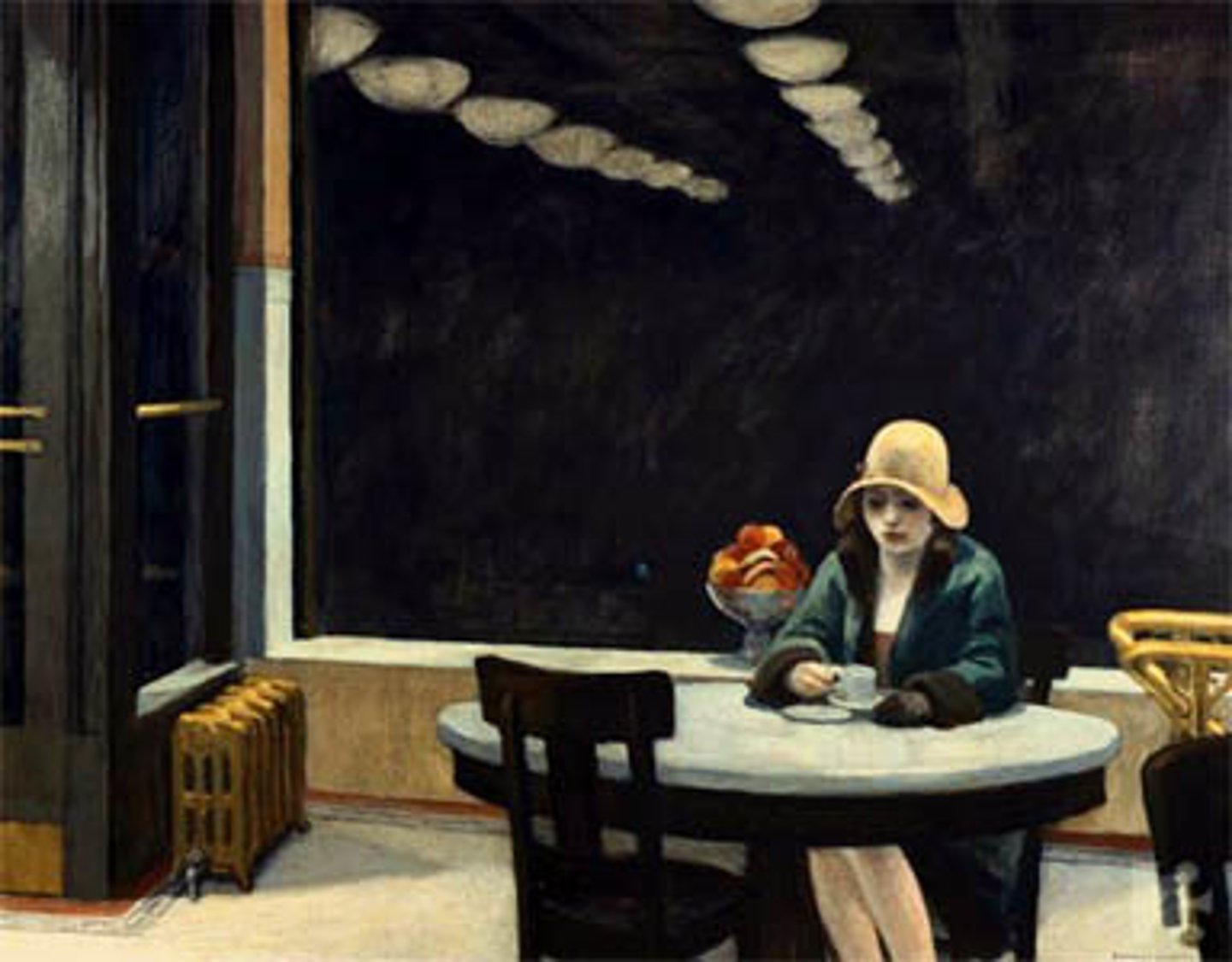
Loneliness
Edward Hopper's cityscapes captured this mood.
CCC
Despite advances with New Deal programs addressing the needs of minorities, this New Deal work program still segregated its members.
NRA
This New Deal administration protected American workers, but fell short by not explicitly protecting African American workers from discrimination.
Frances Perkins
She was the first women to serve in the cabinet of a president.
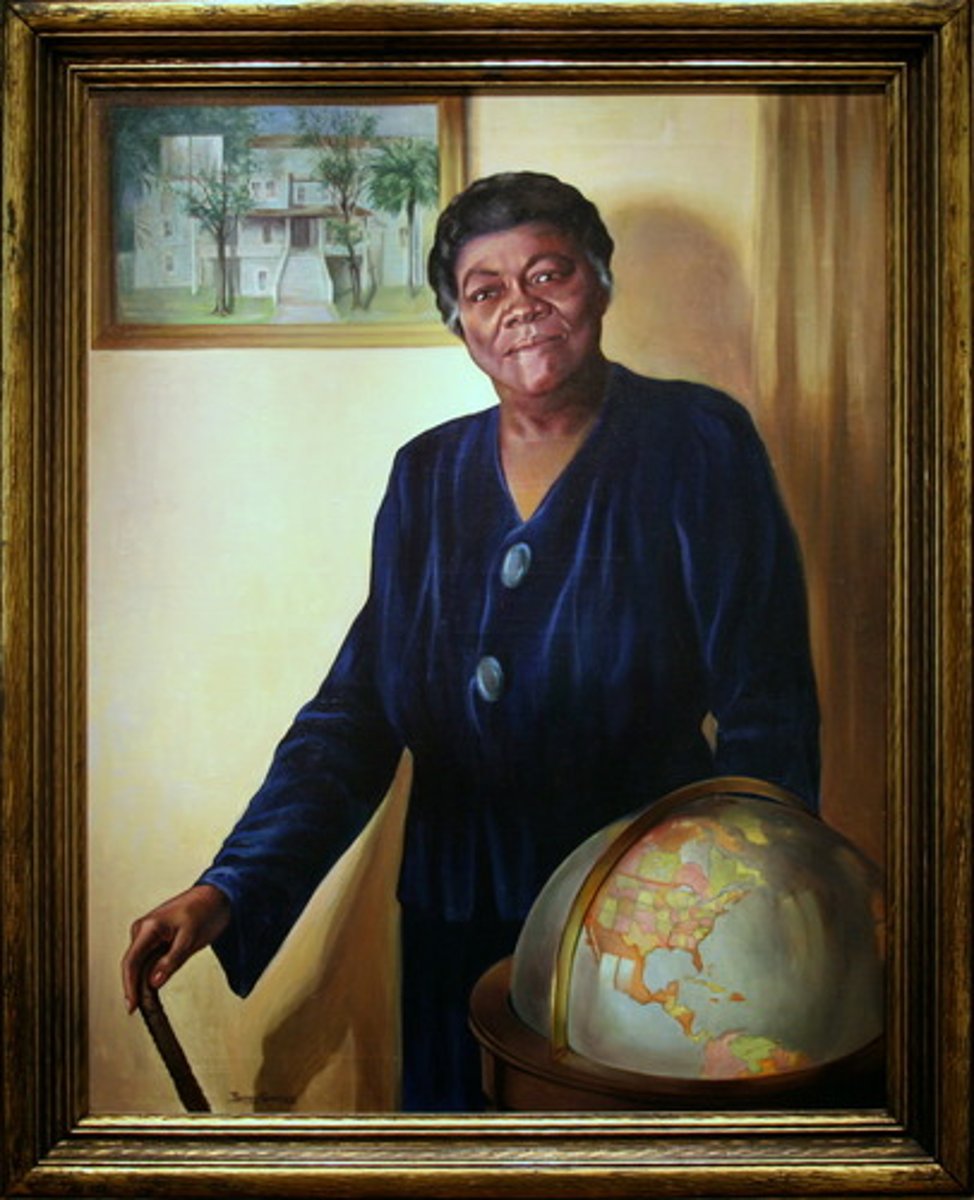
Mary McLeod Bethune
She was an important adviser to FDR on issues related to African Americans. She helped for FDR's "Black Cabinet."
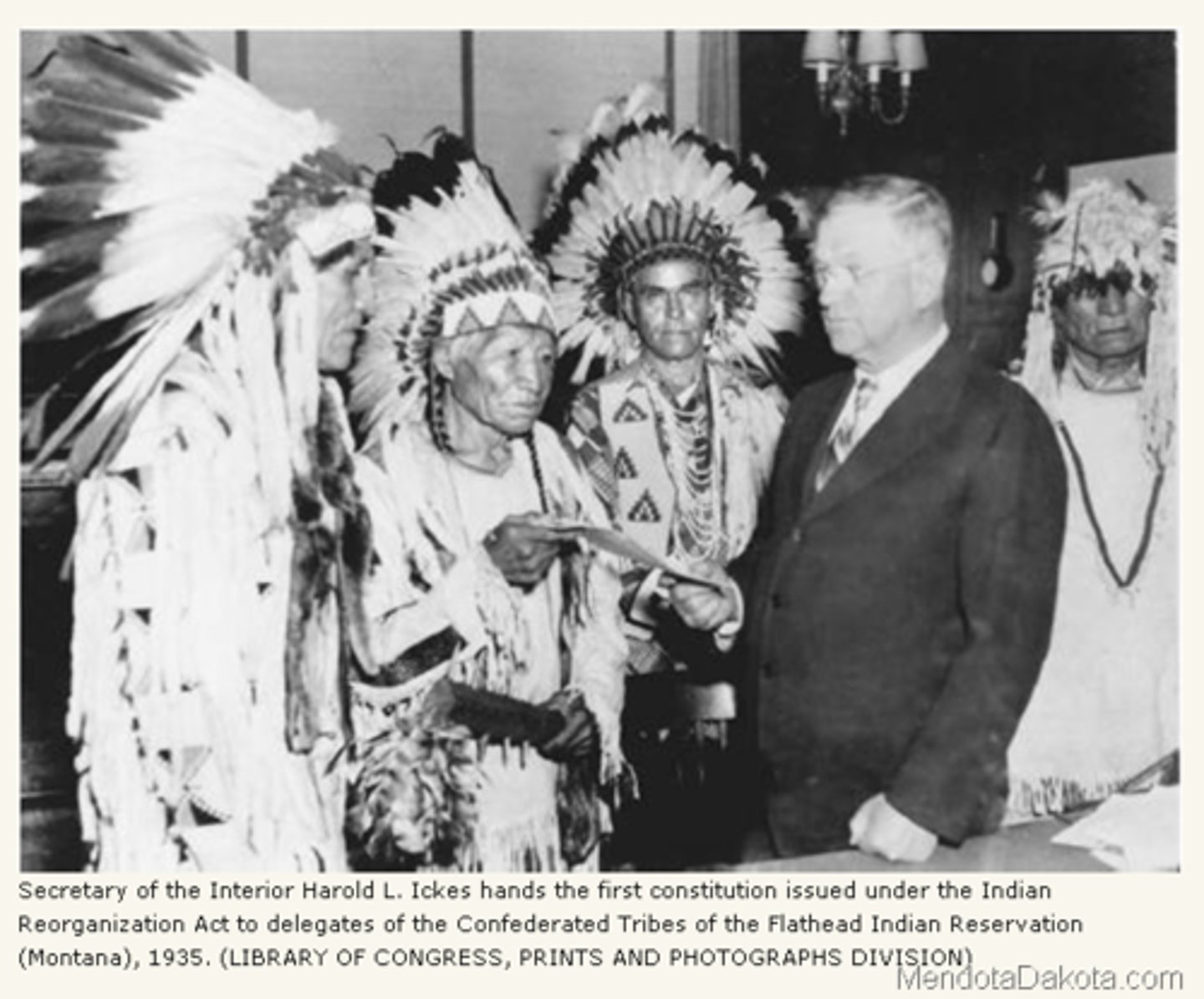
Indian Reorganization Act
This New Deal law was designed to reverse the forced assimilation of Native Americans into white society.
Deportation
During the Depression both Hoover and FDR supported this policy towards Mexican citizens.
Farm Security Administration
This New Deal program actively protected the rights of black tenant farmers.
Liberal and Conservative
Canada's two major political parties during the Depression Era.
William Lyon Mackenzie King
Liberal Party Prime Minister of Canada
R.B. Bennett
Conservative Party Canadian Prime Minister
Hoover's "rugged individualism"
With which American President did PM King share a similar ideological response to the onset of the Great Depression?
boondoggle
Slang for Canadian provincial gov't work programs that hired "relief men" to dig holes only to fill them up the next day simply to keep them busy
Unemployment Relief Act of 1930
Passed by Bennett's gov't to provide assistance to the poor
Royal Twenty Centers
Controversial work camps in Canada created by the national gov't
Bennett
Which Canadian PM said in 1934 that assistance to the provinces was "wasteful and extravagant"?
Bennett
Which Canadian PM attempted to introduce their own version of the New Deal?
Ontario & Quebec
These wealthier provinces put up fierce opposition to King's attempted national unemployment insurance reform
Export-led crisis
What was the primary crisis in Latin American economies during the Depression era?
Tariffs & large-scale cash crop based economies
What two factors significantly contributed to economic collapse in Latin America during the Depression era?
ISI
What was the primary regional solution to the Depression in Latin America?
Import substitution industrialization
What does ISI stand for?
Lacked diversification
Why were Latin American cash-crop economies uniquely vulnerable to the onset of the worldwide economic collapse?
to promote domestic manufacturing and industrialization so that nations could achieve greater independence
What was the intended outcome in adopting ISI?
led to greater state (gov't) investment and involvement in the economy and consequentially more state power
How did ISI alter the role of gov't in Latin American economies?
"Depression Dictators"
This was the political trend in Latin America as a result economic crisis.
Yes, but it didn't end the Depression. Review Reader notes for more detail :)
Was ISI successful?
Getulio Vargas
President of Brazil during the Depression
Coffee
Brazil's cash crop
72%
How much of Brazil's foreign exchange in 1929 was based on coffee?
Valorization
Strategy adopted by Brazil that included hoarding the supply of coffee in order to control prices.
Estado Novo
Vargas introduced this state program based on corporatist ideology to address economic crisis
 Note
Note  Flashcards (77)