BIOL 3090 - CELL BIO EXAM 1 (Dr. Craig Hart)
 Studied by 0 people
 Call with Kai
 Learn
Learn Practice Test
 Spaced Repetition
 Match
Match Flashcards
 Knowt Play
1/451

There's no tags or description
Looks like no tags are added yet.
Name | Mastery | Learn | Test | Matching | Spaced | Call with Kai |
|---|
No study sessions yet.
452 Terms
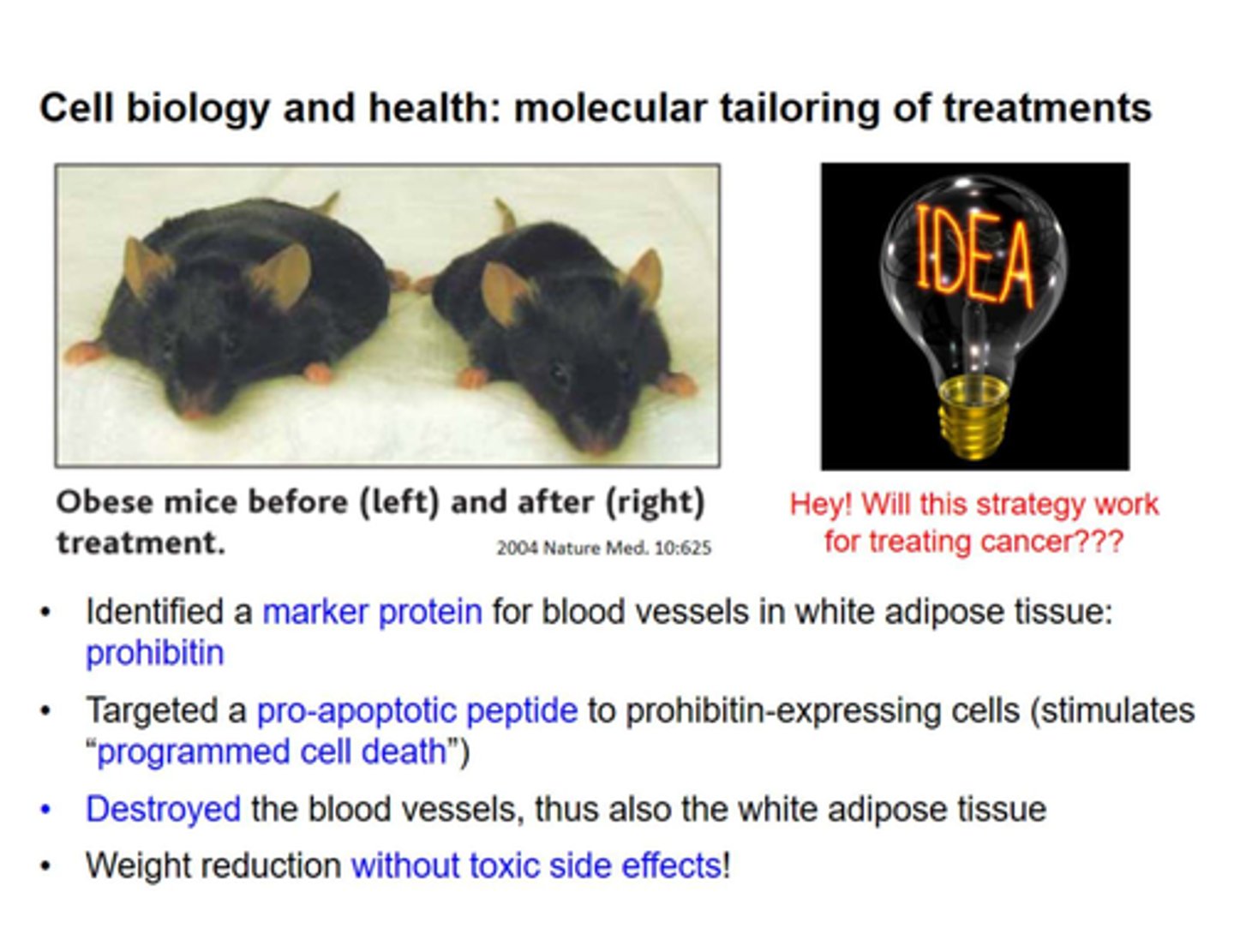
molecular tailoring prohibitin protein:
- prohibitin: marker protein in blood vessels of white adipose tissue
- a pro-apoptotic peptide targets cells expressing prohibitin and causes apoptosis
- this causes blood vessels in white adipose to die which caused the white adipose tissue to die too
- weight reduction without toxic side effects
- application: the idea of targeting tumor blood vessels to inhibit growth
molecular tailoring EGFR
- EGFR: epidermal growth factor receptor that leads to cell proliferation when the ligand binds
- mutant receptor: sometimes these receptors get mutations that cause them to be active in the absence of ligand/growth factor
- Gefitinib (Iressa) inhibits these mutant EGFRs found in some types of lung cancer
- use molecular diagnostic testing to determine if someone with lung cancer has this mutation because this drug could be helpful but if not then it will be ineffective
cell theory
1. All living things are composed of cells - Schleiden and Schwann
2. all cells come from cells (no spontaneous generation) - Virchow
3. cells are essentially alike in chemical constitution
4. the activity of an organism as a whole is the sum of the activities and interactions of independent cell units
- like the cells that make up the liver perform liver functions (independent cell unit)
nothing in biology makes sense except in the light of ...
evolution
- Theodosius Dobzhansky
- LUCA (last universal common ancestor) that we share many aspects with at the molecular level (cell level)
- all living organisms are descended from a common ancestral cell
Theodosuis Dobzhansky
"Nothing in biology makes sense except in the light of evolution"
- modern evolutionary synthesis
- all living organisms are descended from a common ancestral cell
Eukarya and archaea diverged from ______ before they diverged from each other
bacteria
- this is why Archaea and eukaryotes share many similarities
progress in cell biology
- facilitated by evolutionary relatedness and study of model organisms
- study non-human organisms allows us to study humans at the molecular level because of the similarities from LUCA
mitochondria and chloroplasts originated from
- bacterial ancestors via endosymbiosis
- integrated into early eukaryotic cells
endosymbiotic theory
theory that eukaryotic cells formed from a symbiotic relationship among several different prokaryotic cells
cell biology began with
- invention and improvement of microscopes
- allowed for the observation of cells
- Anton van Leeuwenhoek and Robert Hooke
- mid 1600s --> single lens compound microscope
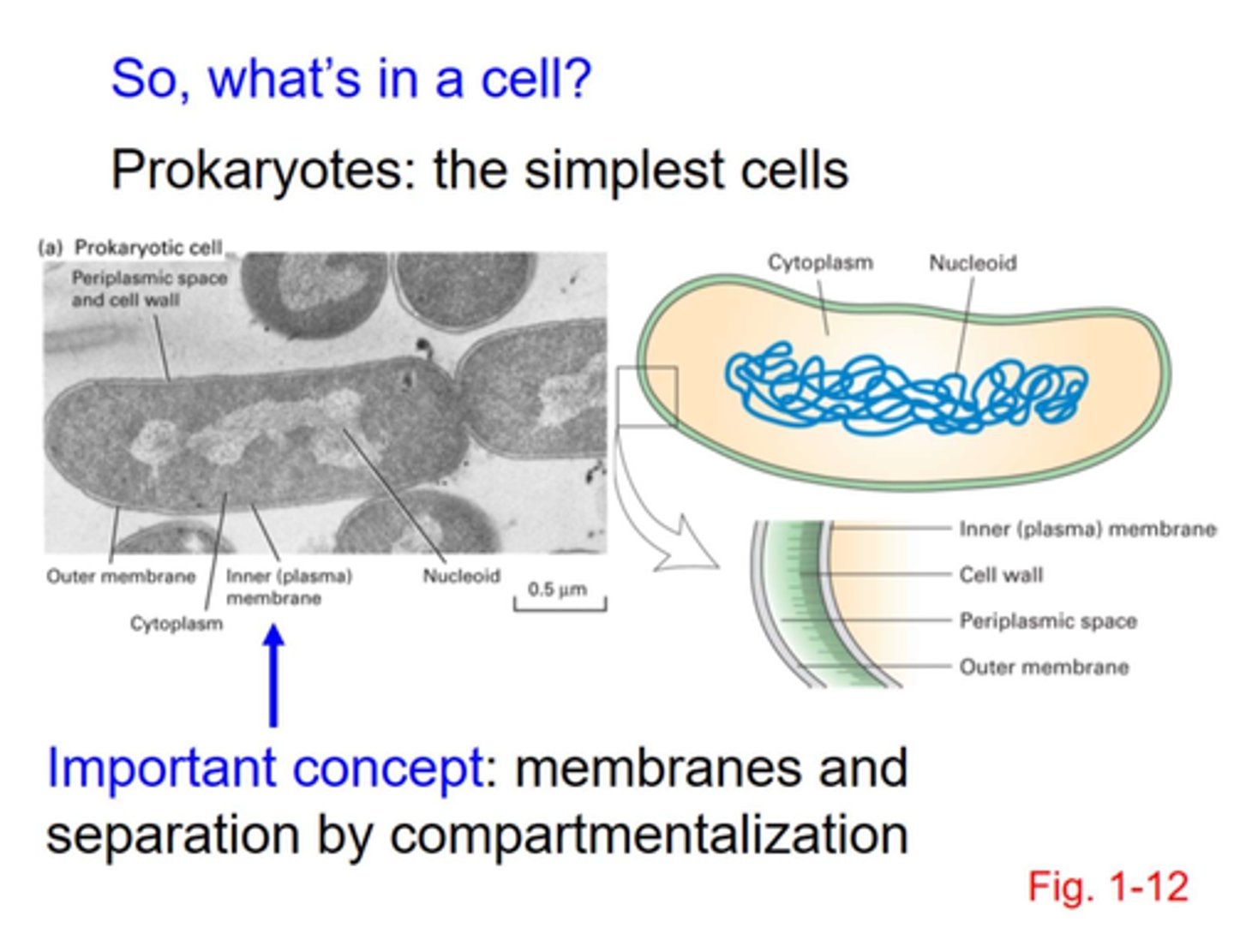
prokaryotes characteristics:
- simplest cells
- single celled
- lack a true nucleus and instead have a nucleoid region
- have inner plasma membrane surrounded by outer membrane with a periplasmic space in-between
- membranes and separation by compartmentalization
- biological membranes: compartment barriers
- phospholipids: amphipathic (form bilayers)
- cholesterol: for rigidity
- membrane proteins: receptors, channels, pumps
- includes: Eubacteria (true bacteria) and archaea
1. Eubacteria
- E Coli
- blue green algae (cyanobacteria)
2. Archaea
- many are extremophiles: halophiles (salt), thermophiles, methanophiles
protists
single celled organisms with a nucleus
amphipathic
having both a hydrophilic region and a hydrophobic region
methanophiles
- killed by oxygen
- reduce CO2 to make CH4
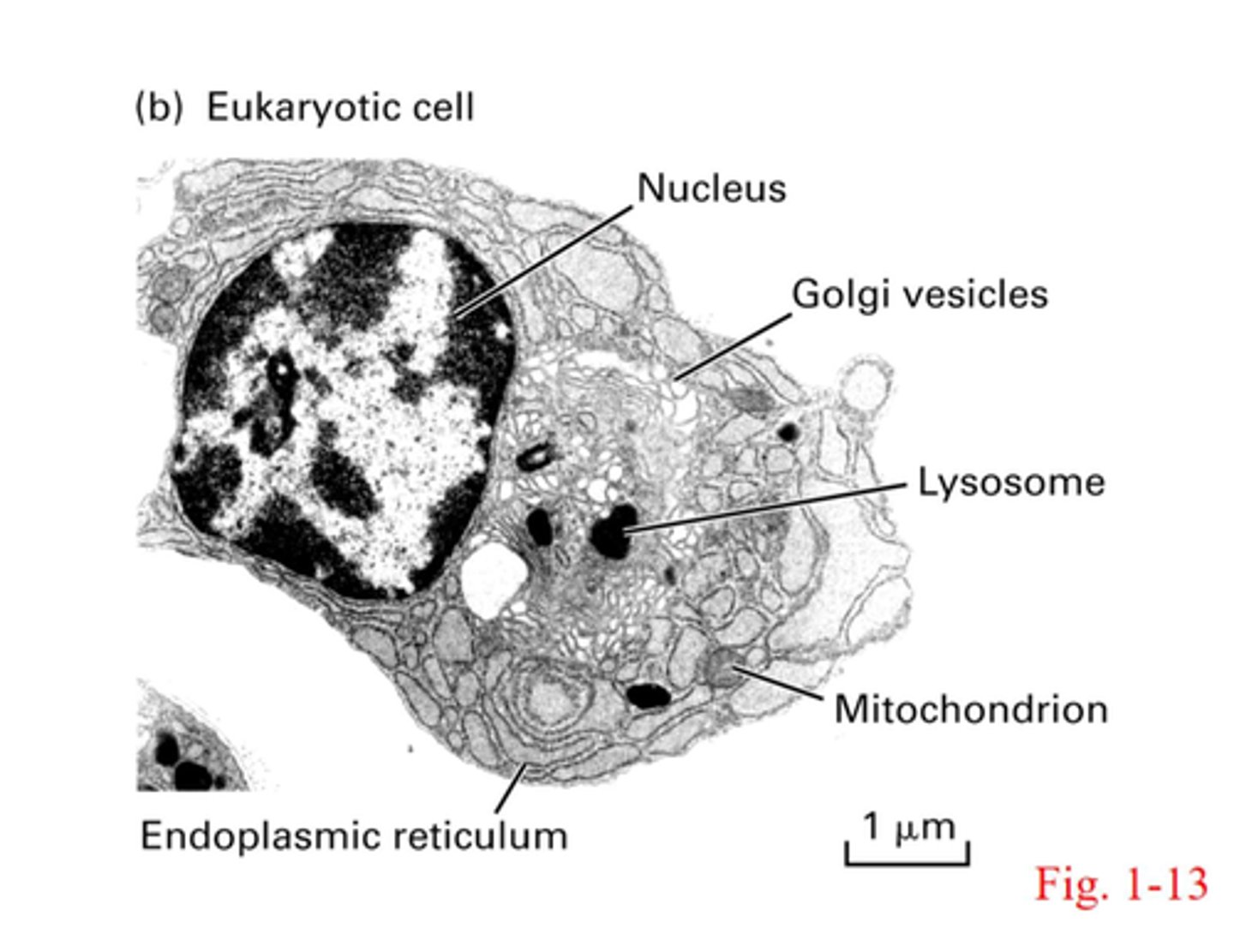
eukaryotes
- outer plasma membrane
- have a nucleus
- extensive internal membranes
- sub compartments called organelles
- includes: plants, animals, fungi, protozoans
- lysosomes, mitochondria, nuclear envelope, nucleolus, SER, RER, Golgi complex, peroxisomes, cytoskeleton, microvilli, plasmodesmata
lysosomes
- acidic lumen
- eukaryotes
- degrade old organelles and foreign material
- similar to vacuoles in plants
- autophagy, phagocytosis
mitochondria
- surrounded by protein rich double membrane (inner and outer)
- generates ATP by oxidation of glucose and FAs
- Kreb's cycle, ETC, proton gradient
- mitochondrial matrix: DNA, RNA, ribosomes
- inner mitochondrial membrane: 80% protein
- outer mitochondria membrane: 50%
plasma membrane
- controls movement of molecules into and out of cell
- cell to cell signaling
- cell adhesion
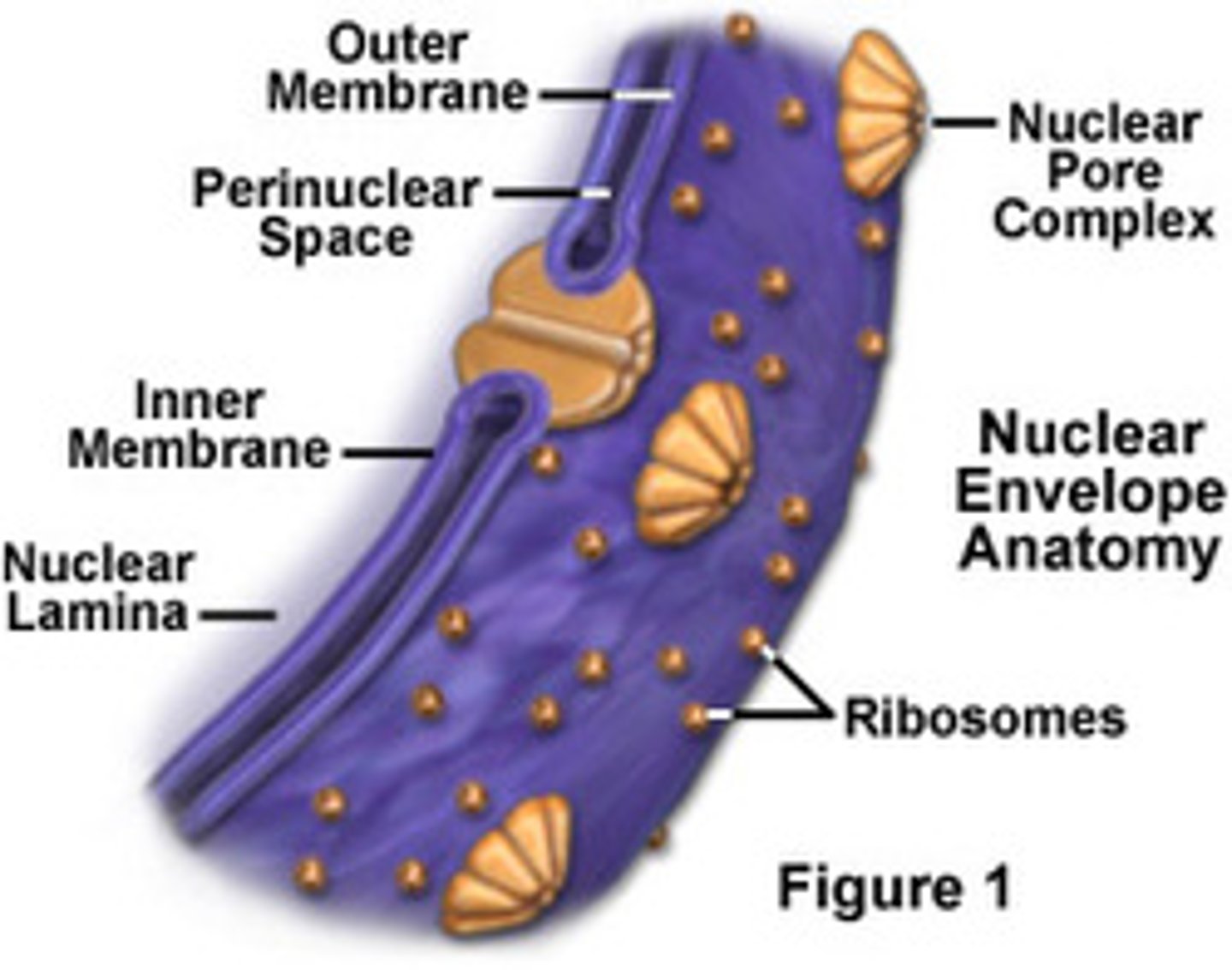
nuclear envelope
- eukaryotes
- double membrane
- encloses the nucleus
- outer nuclear membrane is continuous with the RER
- inner membrane: coated with nuclear lamina in animals only
- nuclear pores span both membranes --> allows exchange between cytoplasm and nucleoplasm
nucleolus
- eukaryotes
- nuclear sub compartment
- most rRNA synthesized here
- site of ribosome biosynthesis
- not membrane bound organelle like structure
nucleus
- eukaryotes
- mRNA and tRNA synthesis
- chromatin (DNA)
Smooth Endoplasmic Reticulum (SER)
- eukaryotes
- enzymes that synthesize fatty acids and phospholipids - detoxify certain hydrophobic molecules
- steroid synthesis (lipid synthesis)
Rough Endoplasmic Reticulum (RER)
-synthesis of proteins for use outside the cell using mRNA
- contains ribosomes
- synthesis of membrane and secretory proteins
Golgi complex
- transports and modifies membrane and secretory proteins
- cis, medial, and trans sub-compartments
- proteins go from RER to Golgi
secretory vesicles
- store secreted proteins
- fuse w plasma membrane to release contents
vacuoles
- plant cell
- large fluid filled organelles
- stores water, ions, nutrients, waste
- degrades macromolecules and old organelles
- functions in cell elongation during growth
- also contain acid hydrolases like lysosomes --> which allows for the degradation aspect
plasmodesmata
- plant cells
- tubelike cell junction spans the cell wall connects the cytoplasm of adjacent plant cells
T/F: both mitochondria and chloroplasts have inner and outer membranes
true
chloroplasts
- inner and outer membrane
- thylakoid membranes: photosynthesis (light and dark reactions)
- converts kinetic energy (sunlight) into potential energy (chemical bonds)
- Calvin cycle, ETC, proton gradient, hexose synthesis, ATP synthesis
- stroma (equivalent to Mito matrix) contains DNA, ribosomes, RNA
transport vesicles
Vesicles in transit from one part of the cell to another
endosomes
- eukaryotic organelle
- intermediate between the plasma membrane, trans-Golgi and lysosomes
- brings proteins and particles from outside of the cell to inside using endocytosis
- forms from the plasma membrane
peroxisomes
- eukaryotic organelle
- degradation of organic molecules
- oxidation reactions: H2O2 --peroxidase enzyme--> H2O + O2
cytoskeleton
- eukaryotic organelle
- not a membrane defined organelle
- functions: cell shape, strength, movement
- microtubules: tubulin protein
- microfilaments: actin protein
- intermediate filaments: IF proteins --> animal cells only
instructors point of view versus others point of view on organelles
- the instructor believes organelles are membrane defined which is why the cytoskeleton is not a membrane defined organelle
- others believe that organelles do not require membranes so the cytoskeleton would be considered an organelle even though it is not membrane bound
many eukaryotic organelle liked structures are UNBOUND by a membrane --> list the examples
1. nuclear examples:
- nucleolus
- nuclear speckles
2. cytosolic examples:
- P bodies
- stress granules
nuclear speckles
- area where mRNA splicing factors are concentrated
- pre-mRNA processing
- "hn-RNA"
P bodies
- eukaryotic "organelle like" structure because it is not membrane bound
- function: mRNA degradation
- location: cytoplasm
stress granules
- eukaryotic "organelle like" structure
- non membrane bound
- function: when stress they function in mRNA storage until a signal initiates translation because the stress factor is removed
- location: cytoplasm
molecules -->
molecules --> cells --> tissues --> organs --> organism
75% to 80% of a cell's weight consits of:
- water
- monomers: salts, sugars, amino acids, nucleotides, fatty acids
__________________
- the rest of the cell's weight consists of macromolecules: polysaccharides, proteins, nucleic acids (DNA/RNA), lipids
T/F: life requires energy
true
ATP functions
- most common molecule used by cells to capture, store, transfer energy
- used to synthesize macromolecules: DNA, RNA, proteins, polysaccharides
- cellular movements: muscle contractions
- synthesis of membranes and phospholipids
- generation of electric potential across a membrane
- heat
proteins:
- most dynamic of the macromolecules in cells because of structure and function
- STRUCTURE DETERMINES FUNCTION
- some proteins associate with each other to form quaternary structures
- made using 20 different AAs
- average size: 53 kDa (400 AAs)
- about 10,000 different type of proteins in a cell
___________________________
- some are rare (20,000 copies) --> receptors for signal transduction
- some are abundant (5e8 copies) --> cytoskeleton proteins
T/F: we use all the different possibilities of AA combinations for protein synthesis
false
proteins are a ____ chain of AAs linked by peptide bonds
linear
If a protein is 400 AAs long how many different possible sequences can it make?
- there are 20 AAs
- 400 AAs in the protein
- solution: 20^400 different possible sequences
What are the different types of proteins and their function
different proteins serve different functions
- enzymes: catalysts
- tubulin and actin: cell shape
- actin and myosin: movement
- extracellular matrix: cell to cell adhesion
- membrane: signal receptors, pumps, channels
- hormones: insulin, epidermal growth factor
- transcription factors: gene regulation
- antibodies: IGs
- carriers: hemoglobin and myoglobin
ETC
DNA
- the fiber of life
- double stranded helix
- makes up our genes and chromosomes
- made using four nucleotides
- Watson and Crick
Watson and Crick
- developed the double helix model of DNA
- 1953
- made predictions on how DNA might replicate
Meselson and Stahl
- proved the Semi-conservative model for DNA replication
- confirming Watson and Crick's hypothesis.
karyotype
A display of the chromosome pairs of a cell arranged by size and shape
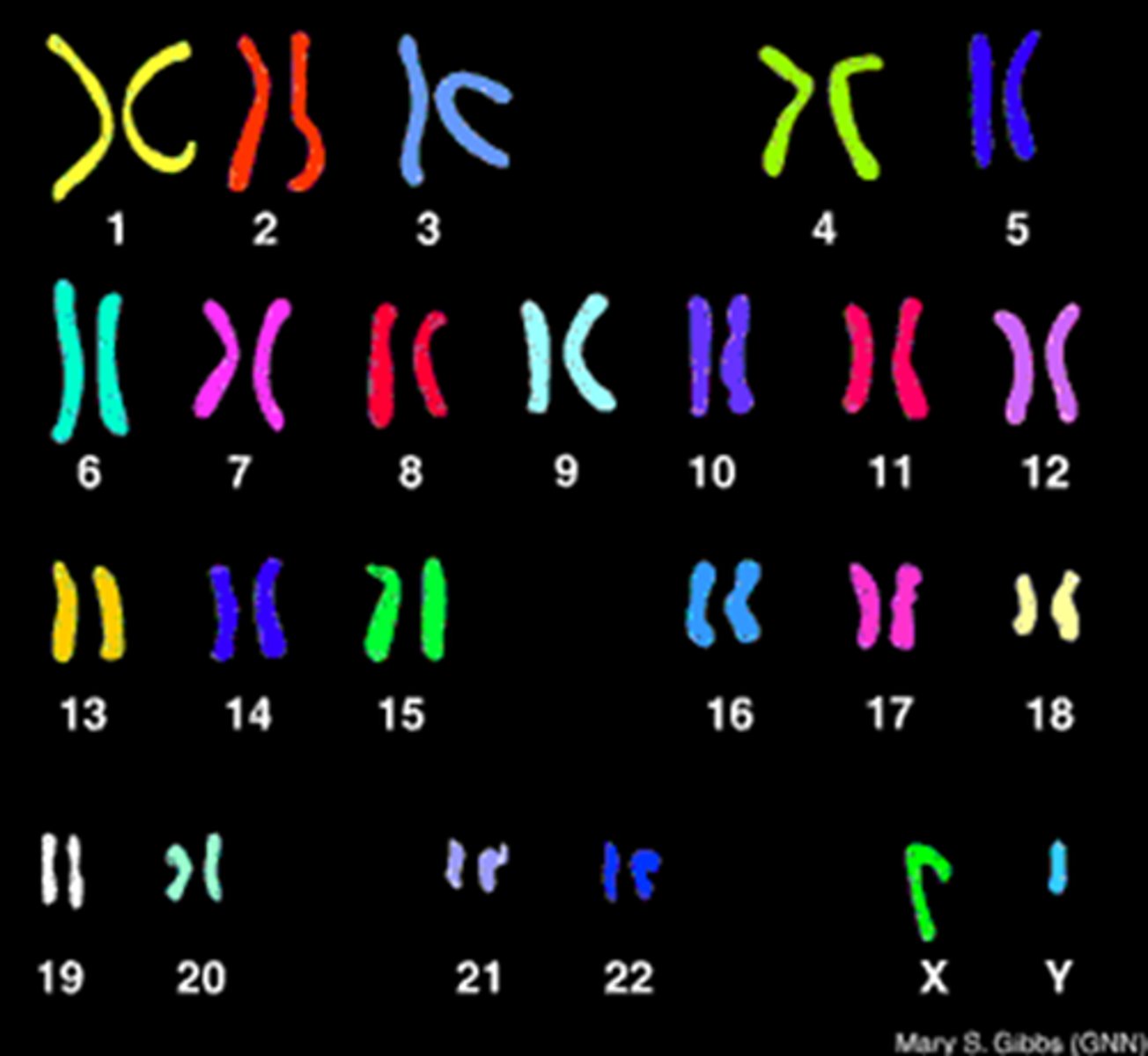
in eukaryotes chromosomes are...
linear
in mitochondria and chloroplasts chromosomes are...
circular and singular
in prokaryotes chromosomes are
single circular
Central Dogma
DNA -transcription-> RNA -translation-> Protein
- nucleic acids carry coded information for making proteins at the right time adn place
DNA _______ regulates the synthesis of cell's macromolecules
indirectly
How does a cell know when to turn a gene on or off?
gene regulation using transcription factors

different organisms have different genome sizes
- different amounts of repetitive DNA
- different numbers of genes and chromosomes
- circular or linear chromosomes
cell division is
- programmed by genes
- executed by proteins
Why can studying yeast aid in developing treatments for human diseases?
- yeasts are a single celled type of eukaryotic cell and have a similar cycle to regulate their division
- cancer is a disease that occurs when the cell cycle is out of control
- single celled eukaryotes
- can be grown as haploid or diploid cells for genetic analysis --> if haploid the organism either has or does not have the mutation and cannot be hetero or homozygous for the allele
- study of mutations in yeast led to the identification of key cell cycle proteins
Eukaryotic yeast model organisms types and what they are used to study:
1. budding yeast: Saccharomyces cerevisiae
2. fission yeast: Schizosaccharomyces pombe
- used to study:
- control of cell cycle and division
- functions of cytoskeleton
- cell differentiation
- protein secretion
- membrane biogenesis
- aging
- gene regulation
- chromosome structure
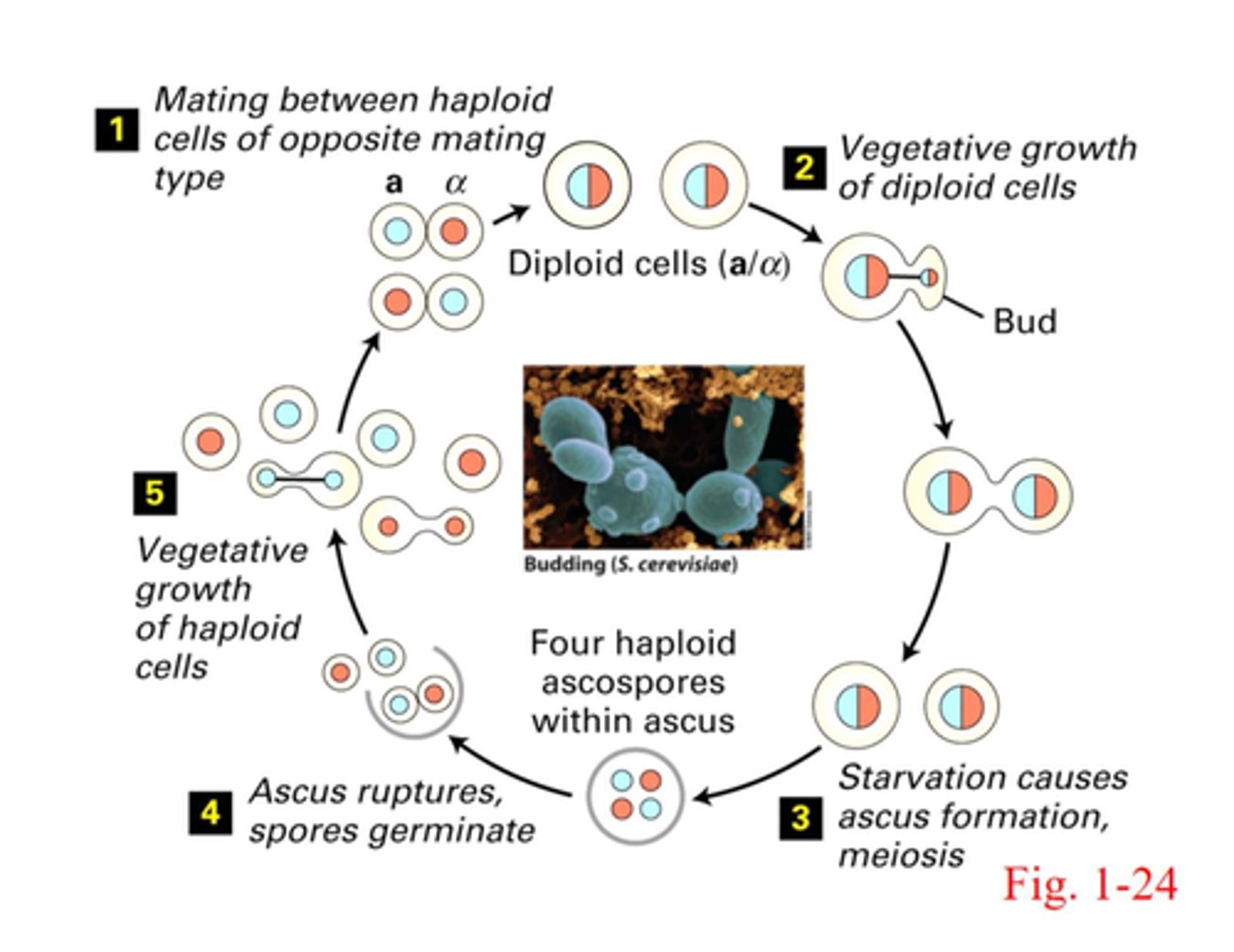
Describe budding S. cerevisiae and how this can be used to make the cells either haploid or diploid:
- haploid: either A or alpha
- diploid: AA, A and alpha, alpha and alpha
- mating between two haploid cells off opposite mating type (A x alpha) creates vegetative growth of diploid cells
- starvation causes these diploid cells to undergo meiosis and form four haploid ascospores within an ascus
- these haploid cells from meiosis can then undergo mating to produce diploid cells again
transgenic
- term used to refer to an organism that contains genes from other organisms
- genes transferred from one organism to another
Chlamydomonas reinhardtii
- single celled eukaryotic algae
- used to study: structure and function of flagella, chloroplasts and photosynthesis, organelle movement, phototaxis
optogenetic study of brain function:
- transgene from Chlamydomonas put into mice
- gene encodes light activated calcium channels in neurons --> leads to light activated neuron firing
- allows us to determine function of specific neurons in mammals
single celled eukaryotic model organisms
1. Plasmodium falciparum --> malaria
2. Entamoeba histolytica --> dysentery
3. Trichomonas vaginalis --> vaginitis
4. Trypanosoma brucei --> sleeping sickness
___________________________
- many of them cause disease and have unusual life cycles and novel organelles
- we can treat these diseases by targeting differences in their life cycles and organelles
- BASICALLY: studying disease causing single celled eukaryotes is important for developing treatments
How many people does Plasmodium falciparum kills annually?
1.5 to 3 million
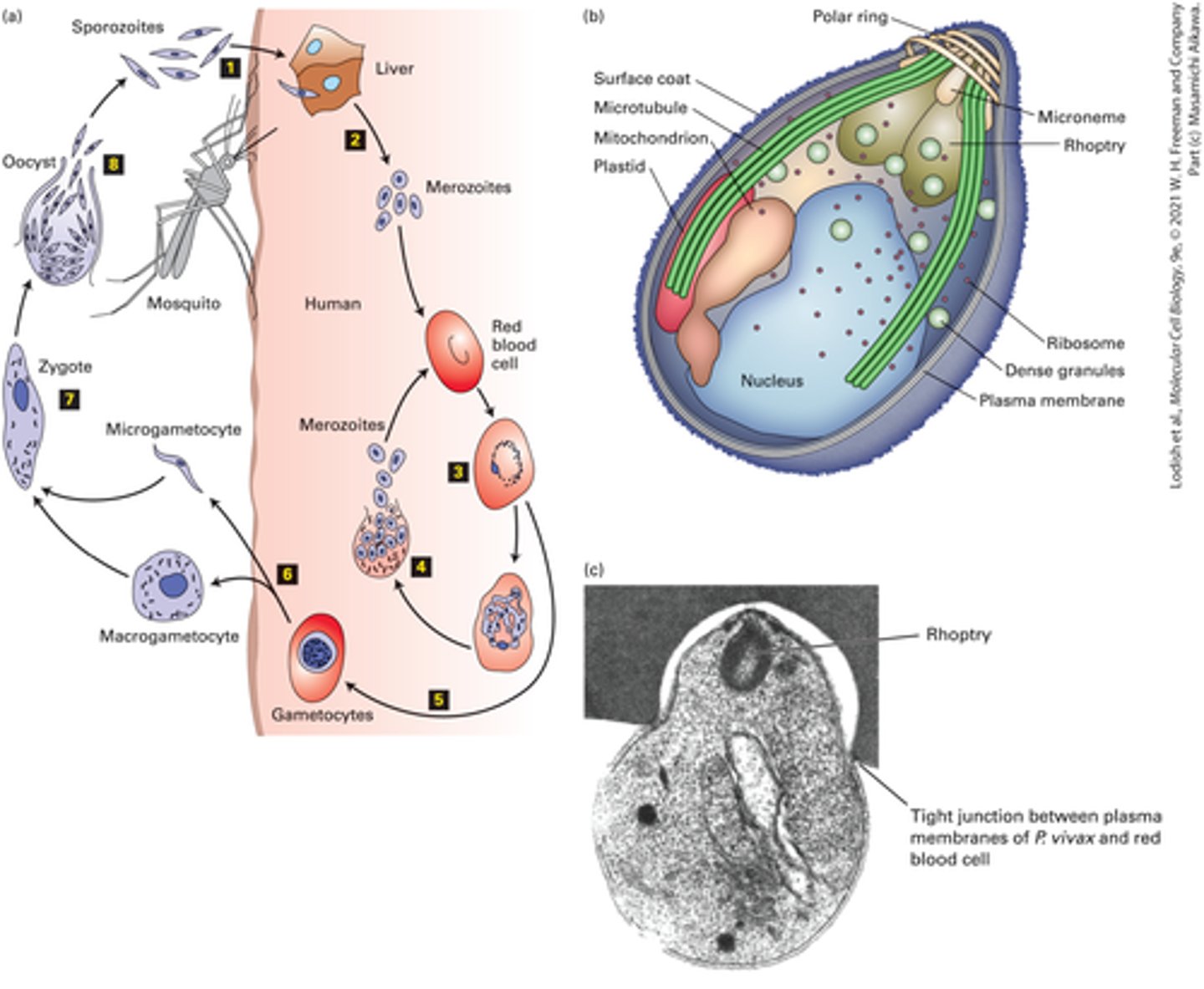
Plasmodium species life cycle
- causes malaria
1. Anopheles infected mosquito bites human
2. haploid sporozoites enter a human host
3. sporozoites migrate to the liver
4. sporozoites develop into merozoites at the liver
5. merozoites are released back into the blood (circulatory)
6. circulating merozoites invade RBCs and reproduce within them
7. RBCs adhere to the blood vessel wall which prevents them from going to the spleen where WBCs would destroy infected cells
8. some merozoites develop into M and F gametocytes (haploid)
9. mosquito bites human again and gametocytes and transferred to mosquito's stomach
10. in the mosquito's stomach the gametocytes are transformed into micro and macro gametocytes (sperm or eggs)
11. fusion of these sperm and eggs (micro and macrogametocytes)
12. implant into stomach lining and grow into oocysts that undergo meiosis to form haploid sporozoites
CYCLE STARTS OVER
- Plasmodium life cycles show how a single cell can adapt to multiple environments
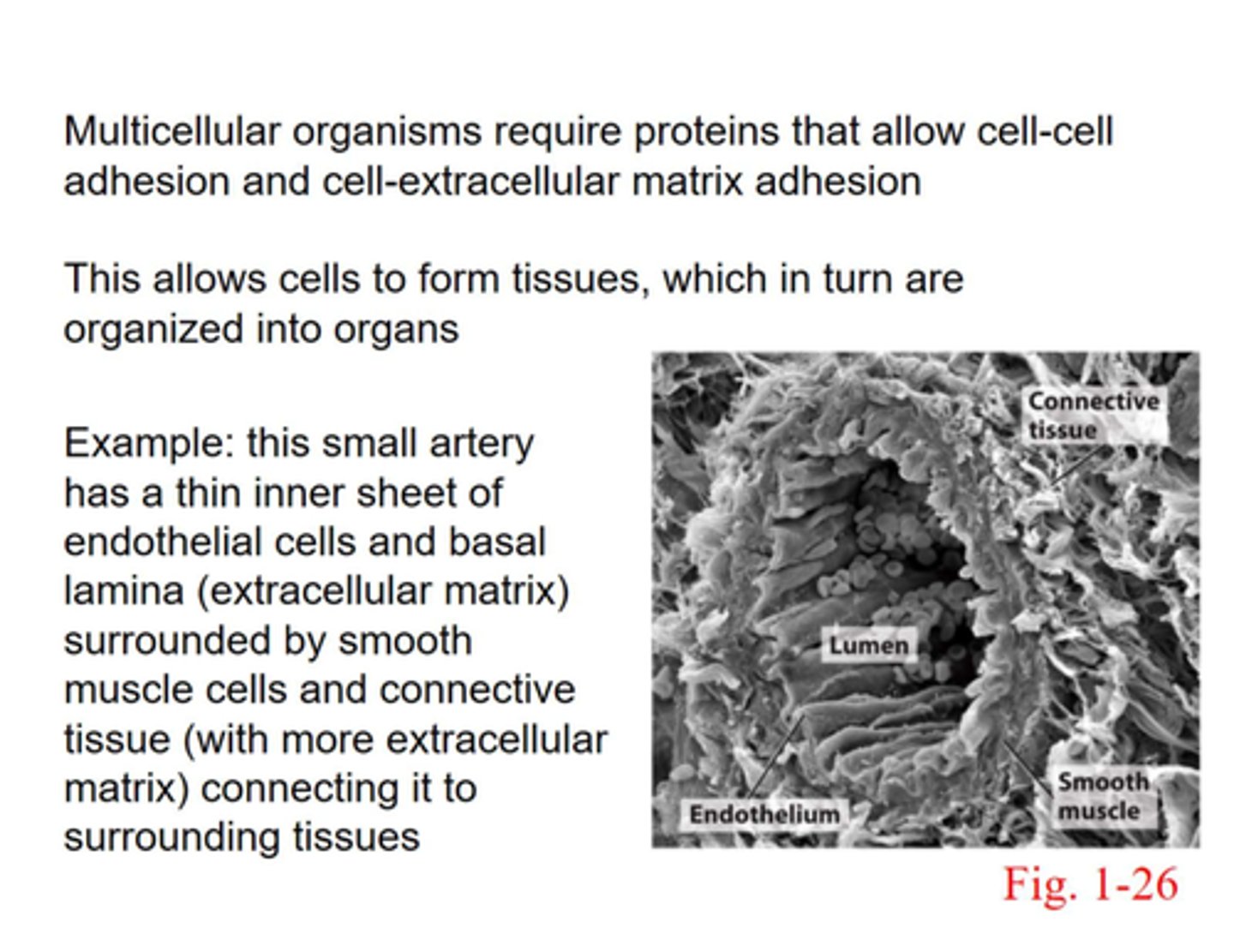
multicellular organisms require...
- proteins that allow cell to cell adhesion and cell-extracellular matrix adhesion
- this allows cells to form tissues that can then turn into organs
example:
- artery layers: thin layer of endothelial cells and basal lamina (extracellular matrix) surrounded by muscle cells and connective tissue that connect it to surrounding tissues
the evolution of multicellular organisms began with...
- eukaryotic metazoans
- became differentiated and organized into groups/tissues with specialized functions
extracellular matrix function
adhesion so that cells can form tissues
metazoans
- multicellular animals
- many genes are conserved among metazoans that are essential for formation of specific tissues and organs
- synteny between human and moues chromosomes help us understand evolution between mammals
genomics
- the study of the entire DNA sequences of organisms
- shows us how close we are to our nearest relatives in evolution
synteny
DNA segments that have the same unique order of DNA sequences and genes along a segment of a chromosome
multicellular eukaryotic model organisms
- each model organism has advantages depending on the study
- INVERTEBRATES:
1. Roundworm:
- development of body plan
- cell lineage
formation and function of nervous system
- programmed cell death control
cell proliferation and cancer genes
aging
- behavior
- gene regulation and chromosome structure
2. Fruit Flies:
- development of body plan
- differentiation of cell lines
- nervous system, heart, muscle formation
- programmed cell death
- genetic control of behavior
- cancer gene and cell proliferation control
- cell polarization regulation
- effects of drugs, alcohol, pesticides
3. Planarian
- stem cells
- turnover of adult tissues
- wound healing
- tissue regeneration
- structure-function relationships
Fruit flies - Drosophila melanogaster embryo
- different regions of a fruit fly embryo turn on different genes to form body parts
- master transcription factors control which genes are turned on --> basically determines which type of cell it will become and are conserved among many species
- these processes of regions turning on different genes is the same in many animals (including humans)

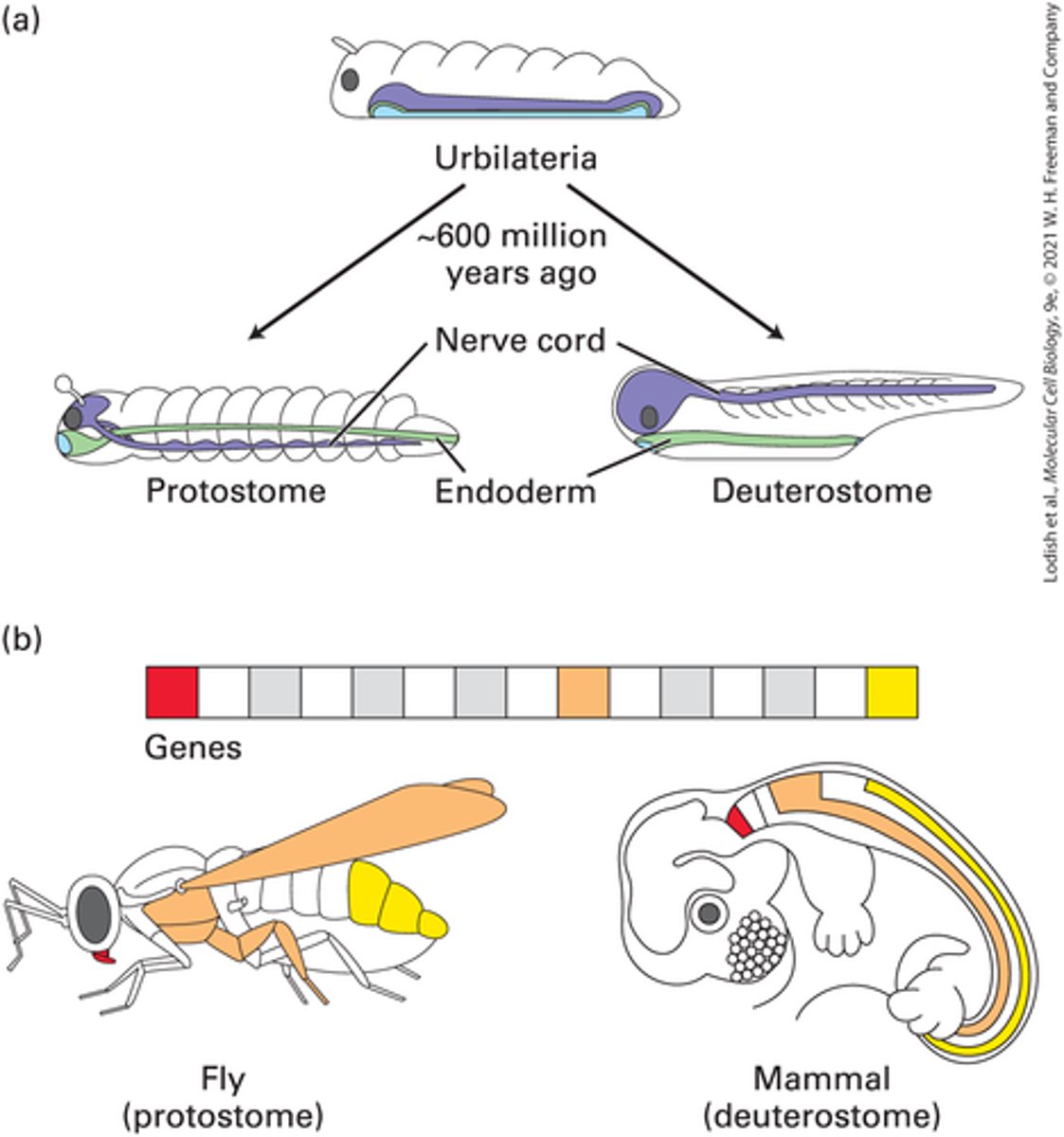
fly and mammalian lineages
- diverged 600 million years ago
- still many conserved genes between flies and mammals from LUCA
- "master transcription factors" for development are highly conserved in both lineages (HOX genes)
- eyeless in flies and Pax6 in humans
- mutant Pax6 lacks irises
how many cells in the human body
- about 100 trillion
- we develop from a single cell
fertilized mammalian egg
- totipotent stem cell
- divides to give rise to Embryonic stem cells (totipotent)
protostomes
blastopore becomes mouth and have a ventral nerve cord
deuterosomes
blastopore becomes anus and have a dorsal CNS
- echinoderms and vertebrates
induced pluripotent stem cells (iPS)
- scientifically developed
- reprogrammed adult cells back into a stem cell like stage
- used for basic and medical research
Why do species look and function so differently if they share so many genes with other primates, mice, flies, worms, plants, yeasts?
- differences in gene regulation (transcription factors)
- functions of the encoded proteins
- these differences contribute to evolutionary divergence (arise of different life forms)
vertebrate model organisms
1. Zebrafish (Danio rerio)
- development of vertebrate body tissues
- formation and function of brain and nervous system
- birth defects
- cancer
(DEVELOPMENT and DISEASE)
2. mice: including cultured cells
- development of body tissues
- function of mammalian immune system
- formation and function of brain and nervous system
- models of cancers and other human diseases
- gene regulation and inheritance of infectious disease
(Development and Disease)
plant model organism
- understanding other life strategies
- Arabidopsis thaliana
- development and patterning of tissues
- genetics of cell bio
- agriculture applications
- physiology
- gene regulation
- immunity
- infectious disease
study of genetic disease in model organisms helps us to understand
normal protein functions compared to mutated
- ex) Dystrophin mutations (protein for muscle cell structure) cause Duchenne muscular dystrophy that weakens muscles over time
- the dystrophin complex connects it to the extracellular matrix
single cell mRNA sequencing
- allows researchers to identify previously unknown cells in tissues/organs
- mRNA from the isolated cell and determine which is actually expressed in that cell
universal cell components
organelles (eukaryotes), genetic code, metabolic proteins
human medicine is informed by research on other organisms because of...
evolutionary relationships
the life of a cell depends on thousands of chemical interactions and reactions exquisitely coordinated with one another in time and space influenced by the cell's genetic instructions and environment.
- life depends on chemistry
- understanding chemical foundations is important for understanding life at the molecular level
What do we find in a cell?
- mostly water (70%)
- small molecules (6%)
- inorganic ions (salts) (1%) Na, Cl, K, H2PO4
- fatty acids
- nucleotides (DNA/RNA)
- together water, ions, and small molecules make up 77%
monomers are the building blocks for
macromolecules
nucleotides (monomers) are linked by _____ to make DNA (macromolecules)
covalent bonds
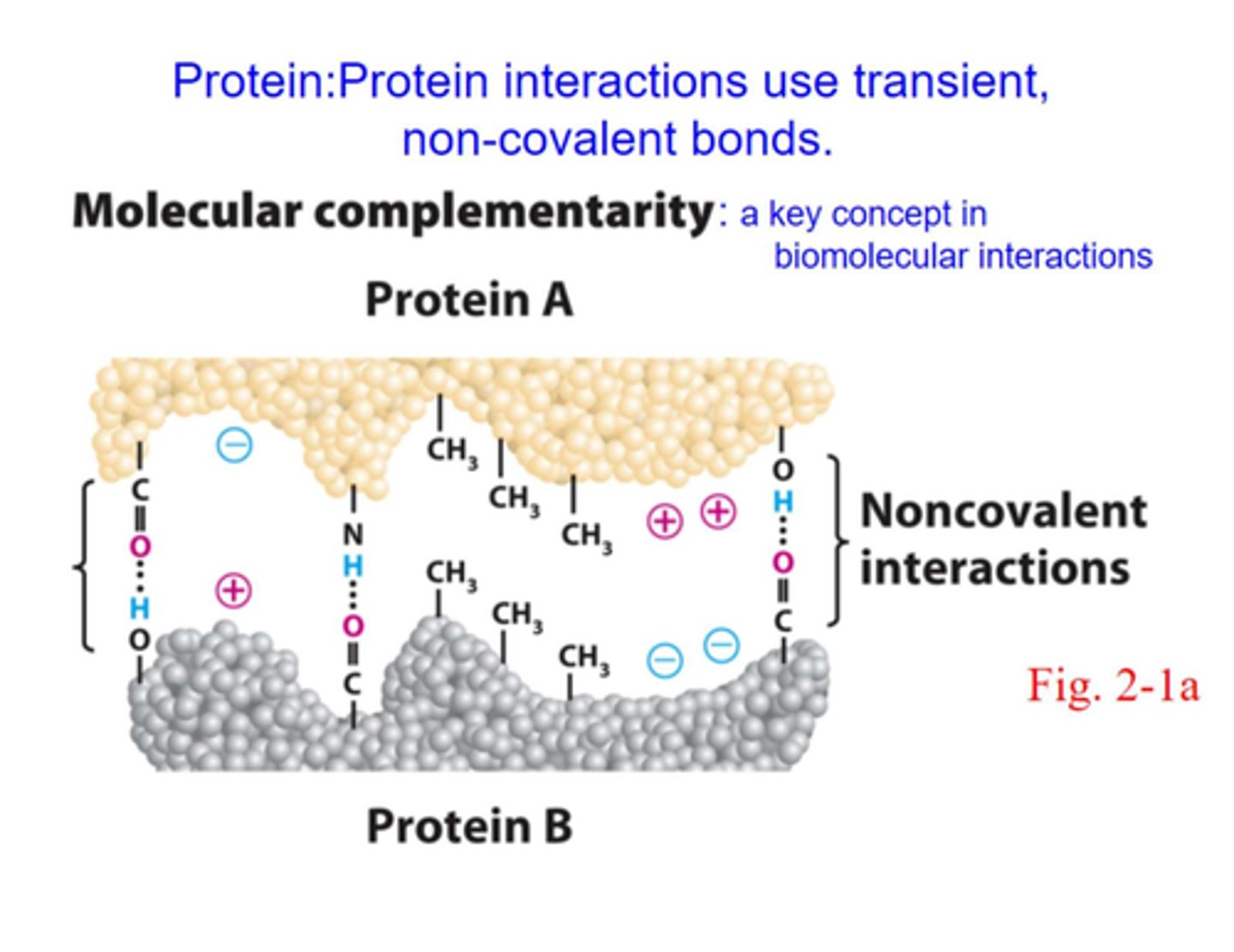
molecular complementarity
- molecules (like proteins) interact with each other through noncovalent interactions
- hydrogen bonds, ionic bonds, VDW
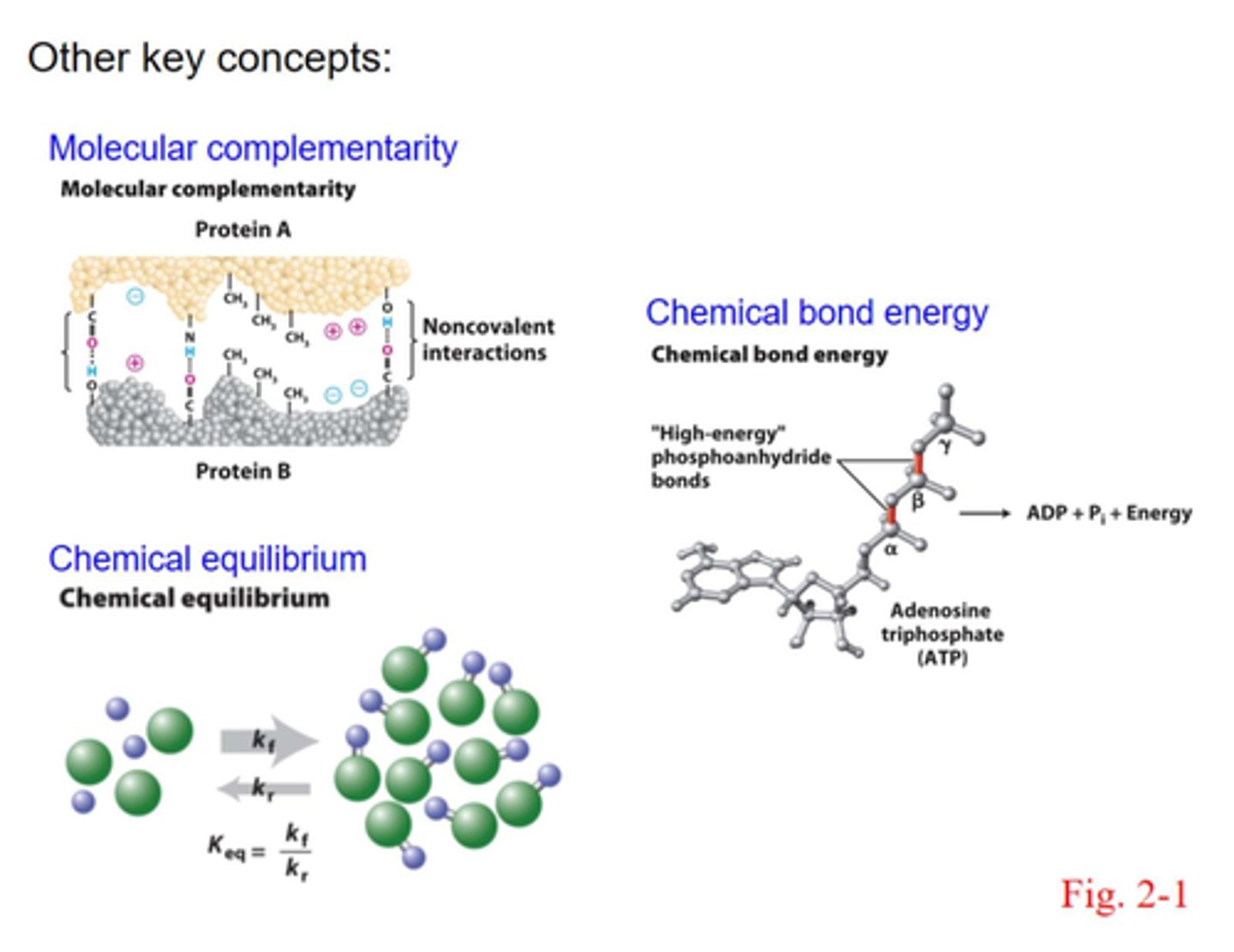
chemical equilibrium
- chemical reactions go in the direction towards equilibrium
- Keq = kf/kr
(rate forward/rate reversed)
chemical bond energy
- ATP molecule: high energy phospho-anhydride bonds
- ATP releases ADP + Pi + energy
- most common source of energy is breaking phospho-anhydride bonds in ATP
covalent bonds
- electrons in the outermost atomic orbitals of the bonded atoms are shared
- strongest of the bonds (83 Kcal/mol)
- bond angles determined by mutual repulsion of outer electron orbital of central atom
- two types: polar and nonpolar covalent
noncovalent bonds
- "interactions"
- weaker and more transient than covalent bonds
- used for transient interactions between macromolecules --> example of protein interactions (molecular complementarity)
- used for protein interactions between DNA, RNA and DNA and RNA
- membrane formation
- Four types:
1. ionic bonds
2. hydrogen bonds
3. VDW
4. hydrophobic interactions
Oxygen atom
- 6 outer electrons
- 2 usual covalent bonds
- bent geometry
Sulfur atom
- 6 outer electrons
- 2,4,6 covalent bonds
- bent geometry
Nitrogen atom
- 5 outer electrons
- 3 or 4 covalent bonds
- pyramidal geometry
 Note
Note  Flashcards (62)