Year 10 GCSE Music - Rhythm and Metre
 Call Kai
 Learn
Learn Practice Test
 Spaced Repetition
 Match
Match Flashcards
 Knowt Play
1/44

There's no tags or description
Looks like no tags are added yet.
Name | Mastery | Learn | Test | Matching | Spaced | Call with Kai |
|---|
No analytics yet
Send a link to your students to track their progress
45 Terms
Grave
Heavy or serious, 40 - 60 BPM
Largo
Slow and broad, 50 - 66 BPM
Lento
Slow, 60 - 66 BPM
Andante
Walking pace, 66 - 72 BPM
Moderato
Moderate speed, 72 - 84 BPM
Allegretto
Quite lively and light-hearted, 76 - 96 BPM
Allegro
Lively or cheerful, 96 - 120 BPM
Vivace
Full of life, 110 - 140 BPM
Presto
Fast, 140 - 180 BPM
Prestissimo
Very fast, 180 - 210 BPM
'C' symbol as a time signature
'Common time' aka 4 / 4 time sig.
Draw a crotchet rest please
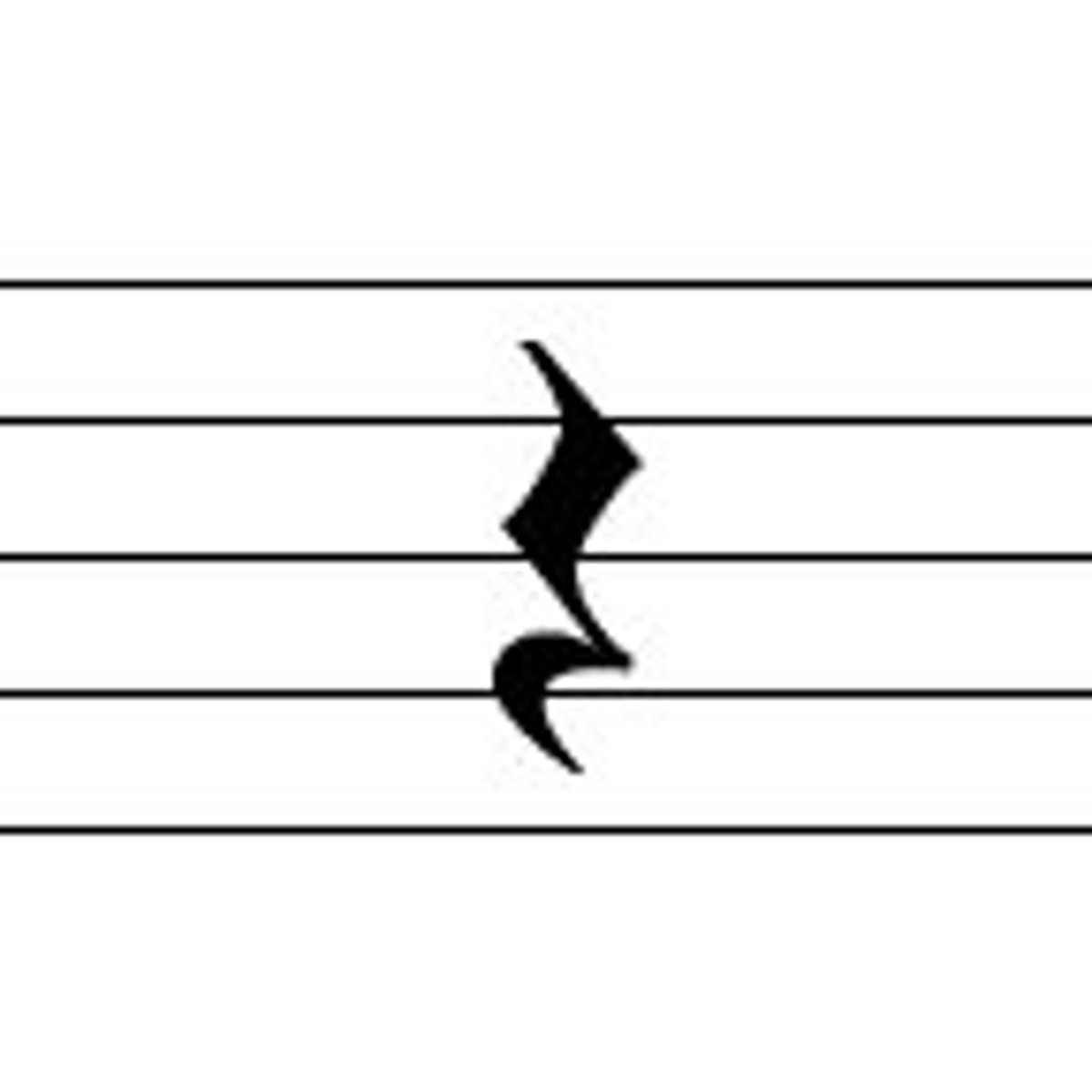
Simple time
Time sig. where beat is divisible by two
Compound time
Time sig. where beat is divisible by three
Pulse
Series of uniformally-spaced beats setting the tempo of a piece
Regular rhythm
Pattern repeated for the entire length of a composition
Irregular rhythm
Involves dividing the beat differently than what is allowed by the time signature - # beats changes
Free rhythm
Without metre - lacks a regular pattern of strong and weak beats
Augmentation
Note lengths doubled
Diminution
Note lengths halved
Hemiola
Where there are two even notes in the space of 3
Cross rhythm
Two rhythms working against each other, often with different metre
Triplet
Group of three notes played in the time of 2
Syncopation
Where notes stretch across the beat
Rubato
'Robbed time', slowing down and then speeding up again in a piece of music, for expression
Polyrhythm
Multiple layered rhythms
Bi rhythm
Two independent rhythms played simultaneously
Where a bi rhythm may be found
African music
Drum fill
Short musical passage by drums deviating from the main rhythm to connect different sections of a song
Anacrusis
Where tune begins before first beat of a full bar
Scotch snap
Semi-quaver followed by a dotted quaver
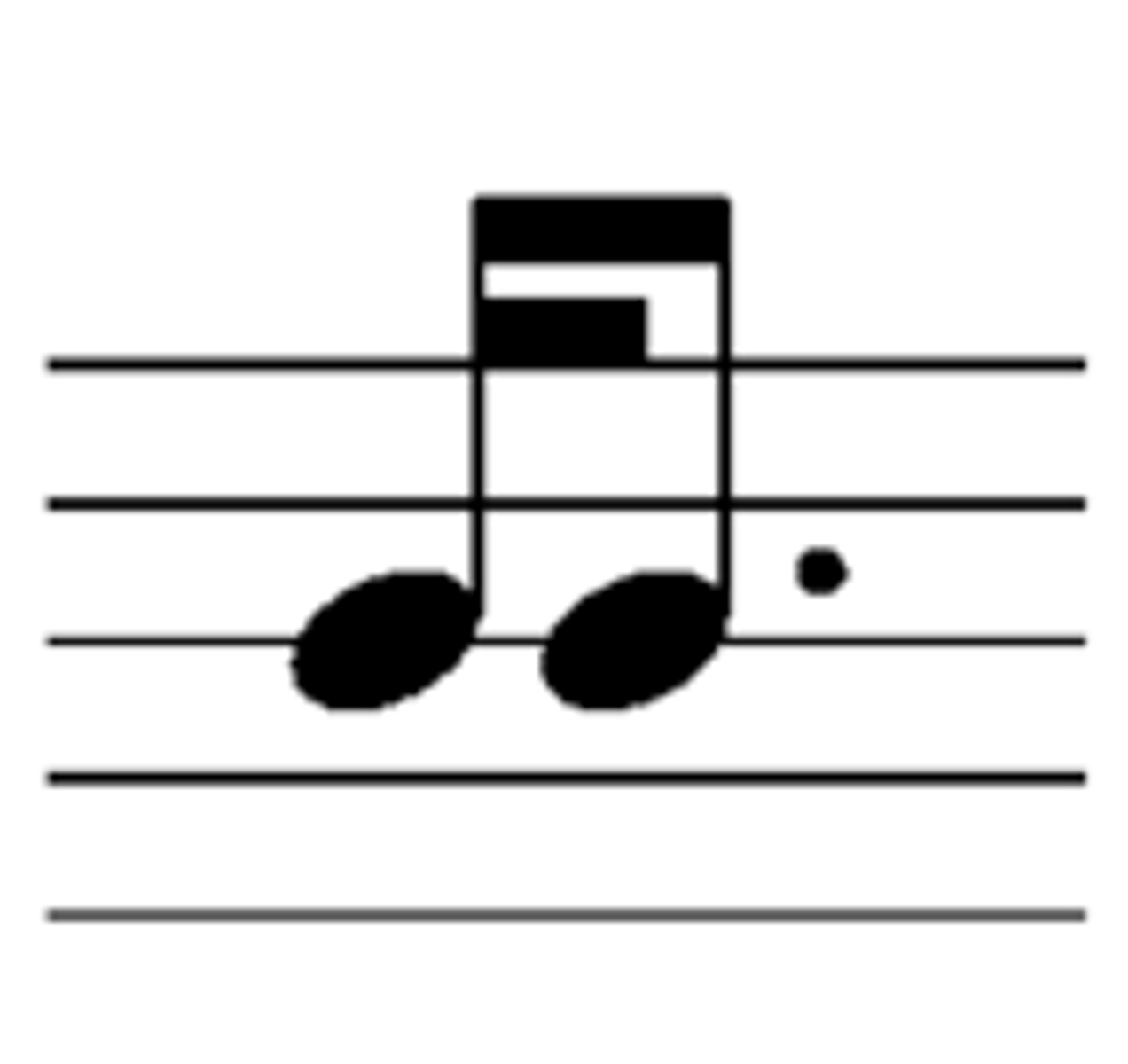
Where hemiolas are often found
Dance musing during Renaissance and Baroque periods, giving the regular 3 / 4 pulse a rhythmic 'kick'
Renaissance
Music composed between about 1450 - 1600
Baroque
Music composed between about 1600 - 1750
Result of dotted rhythms
Clipped, quite formal effect becoming angry at a brisk tempo, illustrated by Handel's Messiah, Part 17 vs. 24
A Crusader by Maxwell Davies
Orchestral piece whose time signature changes every bar, although the music always keeps a steady crotchet pulse - no shorter rhythms used
Imperfect cadence
I-V, II-V, IV-V
Interrupted cadence
V-VI
Perfect cadence
V-I sounds finished
Plagal cadence
IV-I
Tempo
Underlying beat of music
Metre
Organisation of rhythms into certain regular patterns
Rhythm
Organisation of particular sounds by their length
Two things music would be without tempo, metre and rhythm
Still learning (40)
You've begun learning these terms. Keep up the good work!

