7 biological approach to exp OCD
 Call Kai
 Learn
Learn Practice Test
 Spaced Repetition
 Match
Match Flashcards
 Knowt Play
1/14

There's no tags or description
Looks like no tags are added yet.
Name | Mastery | Learn | Test | Matching | Spaced | Call with Kai |
|---|
No analytics yet
Send a link to your students to track their progress
15 Terms
what does OCD involve, and what is its bio exp?
obsessions and compulsions
genetic and neural
what does the genetic explanation suggest?
suggests that individuals may inherit a genetic vulnerability to developing OCD. it is supported hy family and twin studies, and candidate genes
what research support the genetic explanation?
nestadt et al (family)
genetic vulnerability - gottesman and carey
candidate genes
OCD is polygenic
how does nestadt et al 2000 support the genetic explanation
show OCD runs in families
OCD prevelance was 11.7% in ppl with 1st degree relative with OCD, compared 2.7% w/o.
shows that individuals inherit a biological vulnerability
high prevelance of 1st degree relatives (50% shared genetics) indicate that OCD may run in families due to shared genetic factors
how does the twins study + gottesman and carey (genetic vulnerability) support the genetic explanation
compared monozygotic (identical) and dizygotic (non identical) twins
MZ share 100% genes while 50% DZ
G+C found an 87% concordance rate for OCD in MZ twins compared to 47% in DZ, supporting the genetic explanation
how does candidate genes support the genetic explanation?
explains that specific genes are thought to be involved in OCD. these genes may influence biological processes that contribute to symptoms of OCD
COMT GENE
- involved in the breakdown of dopamine in brain
- variation of these genes leads to a lower enzyme activity, so dopamine doesn’t break efficiently, so results in high dopamine
high dopamine levels overstimulate brain areas involved in reward and habit formation, reinforcing compulsive behaviours in OCD
SERT GENE
- responsible for transporting serotonin across synapses
- mutuation gene has been linked to reduced serotonin activity leading to faster reuptake of serotonin in brain
lower serotonin levels, more vulnerable to obtrusive thoughts and increased anxiety → cog symp of OCD
describe ‘OCD is polygenic’ and how it supports the genetic explanation
not causes by one gene, but many orhers
taylor (2003): up to 230 genes may be involved, and combinations may lead to different forms of OCD
what does the neural explanation of OCD describe?
focusing on neurotransmitters and structure of the brain
explain neurotransmitters and its role of OCD
OCD has been linked to abnormality level of the NT’s serotonin and dopamine
serotonin: NT rspomsible for regulating mood and emotional response. low levels lead to obsessive thoughts and increased anxiety
dopamine: key role in reward-seeking behaviour, motivation amd movement. increased levels lead to compulsive behaviours in OCD (repetitive cleaning)
describe the brain structure (worry circuit)
suggests the disorder is caused by abnormalities in specific ends in the brain.
key regions like orbito frontal cortex (OFC), caudate nucleus, and thalamus.
describe the OFC, caudate nucleus and thalamus
OFC: processes sensory info, evaluating and turns into thoughts and behavioural impulses
CN: receives ofc thought, filters minor worries but remains with major thoughts
TM: receives these unchecked signals and becomes overactive, amplifies the worry, sending signal back to OFC → creates a repetitive loop of repetitive thoughts and actions
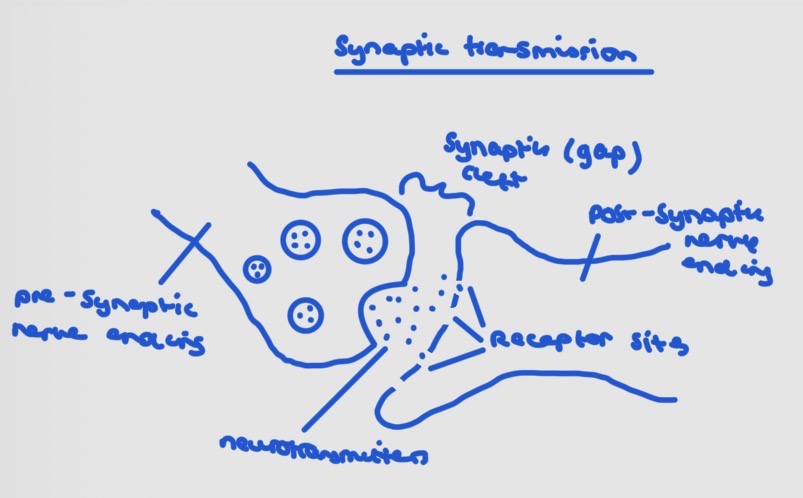
describe the synaptic transmission
vesicles!
as the action potential reaches the end of the nerve axon, the electrical impulse causes calcium to be released, triggering vesicles to release neurotransmitters (eg. serotonin)
vesicles bonds with nerve membrane and NT are released into synaptic cleft
the NT bind to and activate receptor sites. activation results in excitatory or inhibitory effect
the transmission stops when the NTer is taken up again by the pre-SN (or broken enzymes) the enzymes are therefore determined by how quickly re-uptake occurs
strength: supportive research
e: nestadt et al, 68% concordance rate for OCD in MZ twins, where 31% to DZ, suggesting a genetic influence
e: additionaly, hu (2006) found lower serotonin levels in OCD sufferers compared to non-sufferers, supporting the role of NT imbalance
l: this evidence support both genetic and neural exp, increasing creditability of a biological basis for OCD
limitation: bio exp, doesnt explain why some individualists develop OCD while others dont
e: cromer et al (2007) found that over 50% of OCD sufferers had experienced traumatic life event, suggesting env and psy factors play a role
e: futhermore, neural evidence is correlational and cannot prove that brain abnormalities cause OCD, as they result from the disorder rather than cause it
l: wuggesting that bio. vulnerabilities interacts with env stressors, meaning the diathesis-stress model provides a. more complete explanation
counter: biologically reductionist
p: g + n exp can be criticised for being biologically reductionist.
e: they focus mainly on genes and NT, overlooking psychological and social influence on OCD
e: however, this biological understanding has led to effective treatments such as SSRIs, which increase serotonin levels and reduce OCD symptoms (soomro)
l: therefore, although reductionist, these explanations have significant practical value in improving treatment outcomes

