Obstructive Lung Disease - Clin Med 5
 Call Kai
 Learn
Learn Practice Test
 Spaced Repetition
 Match
Match Flashcards
 Knowt Play
1/59

There's no tags or description
Looks like no tags are added yet.
Name | Mastery | Learn | Test | Matching | Spaced | Call with Kai |
|---|
No analytics yet
Send a link to your students to track their progress
60 Terms
What does this refer to
A 5-year-old is brought to his pediatrician’s office by his parents because he cannot keep up with his friends while playing outside because he is short of breath.
His parents report that they notice him occasionally coughing at night but he is otherwise healthy.
On physical exam, respiratory rate is within normal limits and slight end expiratory wheezing is appreciated diffusely.
Asthma
What does this refer to
Chronic respiratory condition marked by spasms in the bronchi of the lungs
Reversible, intermittent and obstructive disease of the small airways
Usually results from an allergic reaction or other forms of hypersensitivity
Asthma
What does this refer to
Affects 5-10% of the population
75% dx before age 7
MC chronic pediatric disease
MC males in childhood
Males more likely to have decrease in sx by late adolescence
Higher prevalence in females after puberty
Epidemiology of Asthma
What does this refer to
Atopy is greatest risk factor → genetic etiology
Strongest identifiable factor
Atopic dermatitis (eczema)
Food allergies
Allergic rhinitis
Eosinophilia
Factors that contribute to airway hypersensitivity asthma
Exposure to allergens/triggers
Exercise
GERD
Aspirin
Emotional factors or stress
Beta blockers
Obesity
Etiology Asthma
What does this refer to
Airway hyperreactivity + bronchoconstriction + inflammation
Elevated level of IgE binds to mast cells (Eosinophilic asthma)
Asthma Pathophysiology
What does this refer to
Atopy
Strongest identifiable factor
Atopic dermatitis
Food allergies
Allergic rhinitis
Samter’s Triad
Asthma + Chronic rhinosinusitis with nasal polyps + ASA sensitivity
Atopic Triad
Asthma + Atopic Dermatitis + Allergic Rhinitis
Risk factors for asthma
If your patient has asthma what medication do you NOT give (as it can exacerbate asthma)
Beta blockers
What kind of asthma has an aspirin sensitivity
Samster’s Triad (AERD?)
What does this refer to
Non-allergic (Intrinsic)
Allergic (Extrinsic) → IgE ↑
Medications
Triggers Asthma
What does this refer to
(Intermittent) dyspnea +
Cough (typically NOT productive) +
Wheezing
Expiratory usually more pronounced
Chest tightness
Clinical history Asthma
What does this refer to
Acute Exacerbation
Pulmonary exam/auscultation
High pitched, musical wheezes
Pitch may be variable in different stages of the respiratory cycle
Accessory muscle use
Prolonged expiratory phase
Tachypnea
Hyperresonance
Extrapulmonary findings
Pale, swollen membranes of the nasal cavities
Cobblestone appearance to the posterior pharyngeal wall
Nasal polyps
Atopic dermatitis
Physical exam asthma
What does this refer to
Characteristically come and go
Time course of hours to days,
Typically spontaneous resolution
Removal from the triggering stimulus or medications
Characteristic triggers
Exercise
Cold air
Exposure to inhaled allergens (aeroallergens)
Episodic presentation of asthma
What does this refer to
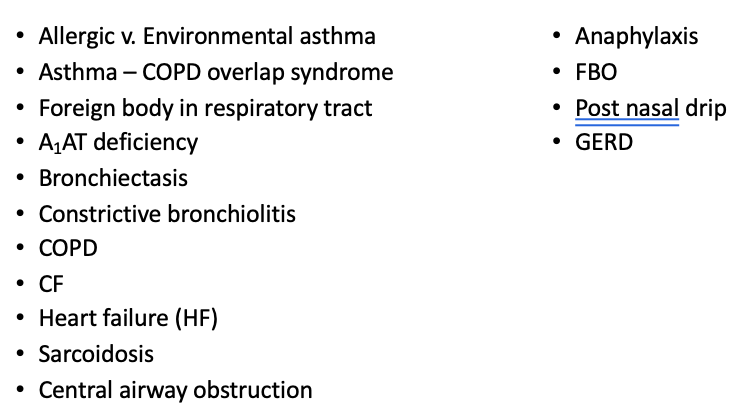
Differential Diagnosis for Asthma
What does this refer to
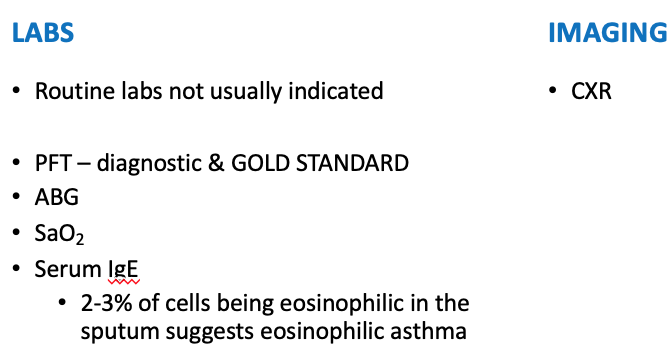
Workup for Asthma
What does this refer to
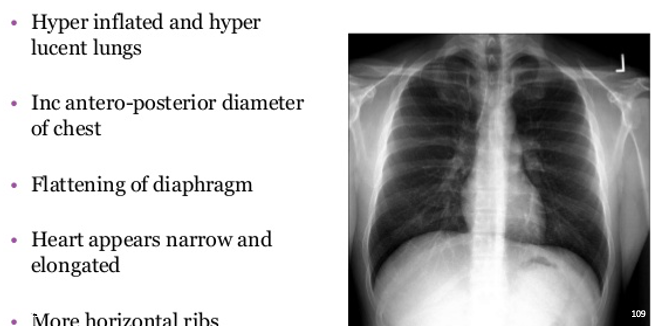
CXR in Asthma
When do asthma symptoms commonly occur
At night or early hours of morning
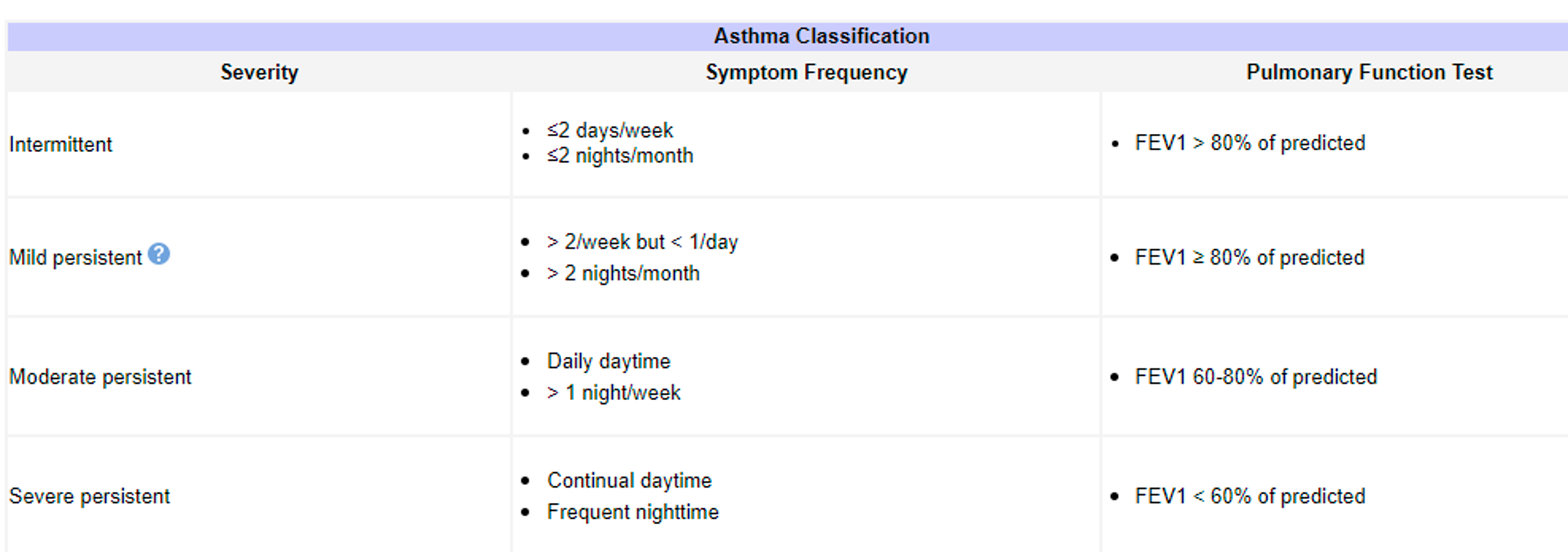
What does this refer to
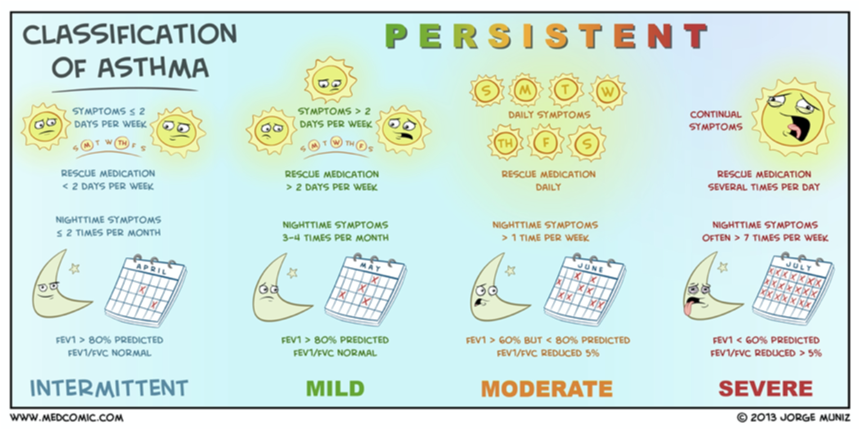
Asthma classification
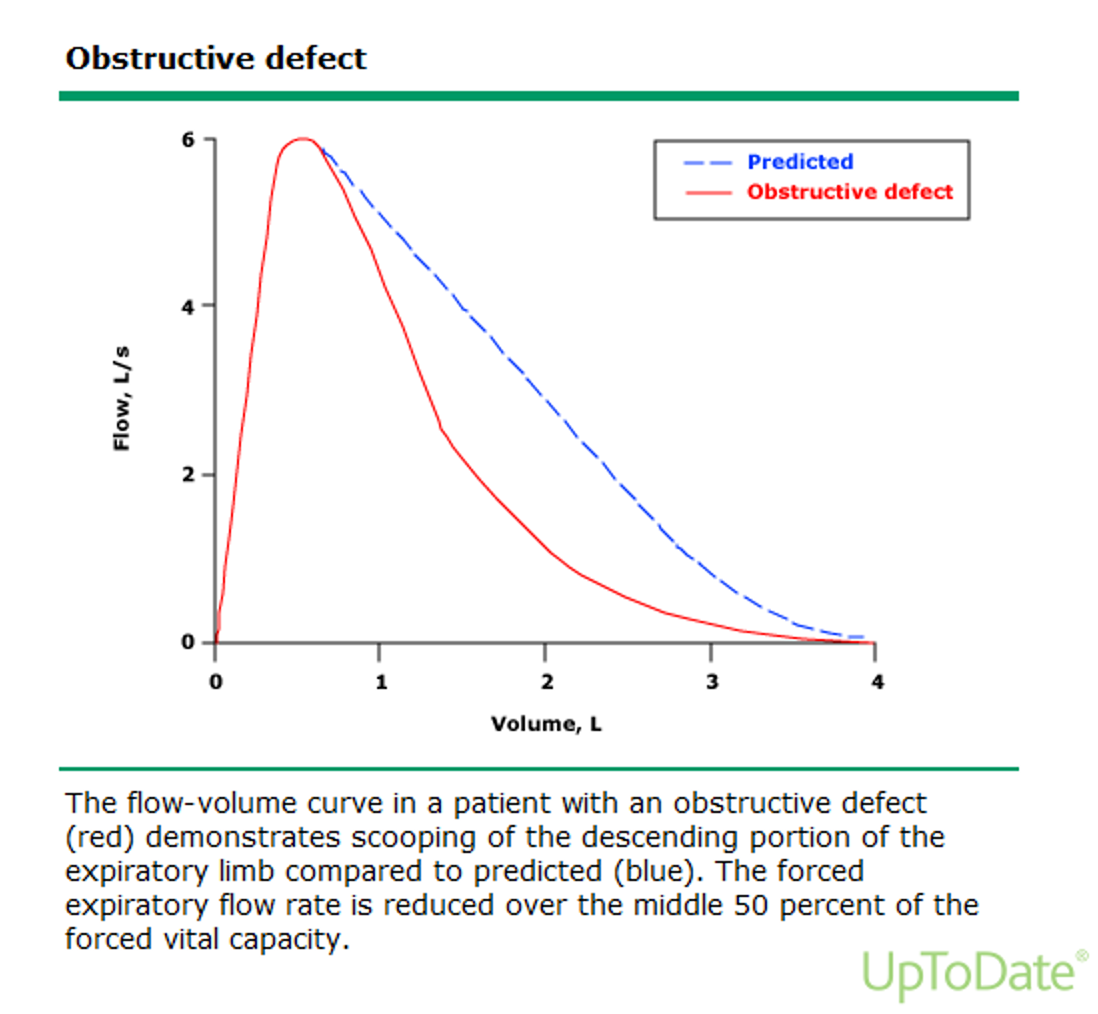
What does this refer to
What Asthma Looks Like on PFT
Your patient has pale nasal membranes what is the dx?
Asthma
What does this refer to
________ is measured using a simple and inexpensive device (approximately $20)
Not a diagnostic tool
Great for monitoring in a patient diagnosed with asthma
Assess the role of a particular occupational exposure or trigger, rather than as a tool for the primary diagnosis of asthma
Peak Expiratory Flow Meters
What does this refer to
Vaccinations
Avoid triggers
Medication compliance
Clinical Interventions of Asthma
What does this refer to
Cromolyn (Mast cell stabilizer)
Exercise prophylaxis
Montelukast (Singulair)
Exercise prophylaxis or aspirin-induced asthma
Prior to exposure to triggers
Lifestyle modifications & allergy avoidance
Other management strategies Asthma
What does this refer to
_________ who do not reach optimal control following standard guidelines
Mepolizumab (Nucala) SC injection (monthly)
Add-on
Adults and pediatric patients > or equal to 6 yo —> severe eosinophilic asthma
Clinical Pharmacotherapeutics Eosinophilic Asthma
What does this refer to
Freedom from frequent or troublesome symptoms of asthma
Few night-time awakenings (≤2 nights per month) due to asthma
Minimal need (≤2 days per week) for medication for acute relief of asthma symptoms
Optimized lung function
Maintenance of normal daily activities, including work or school attendance and participation in athletics and exercise
Satisfaction with asthma care on the part of patients and families
Optimizing control of sx Asthma
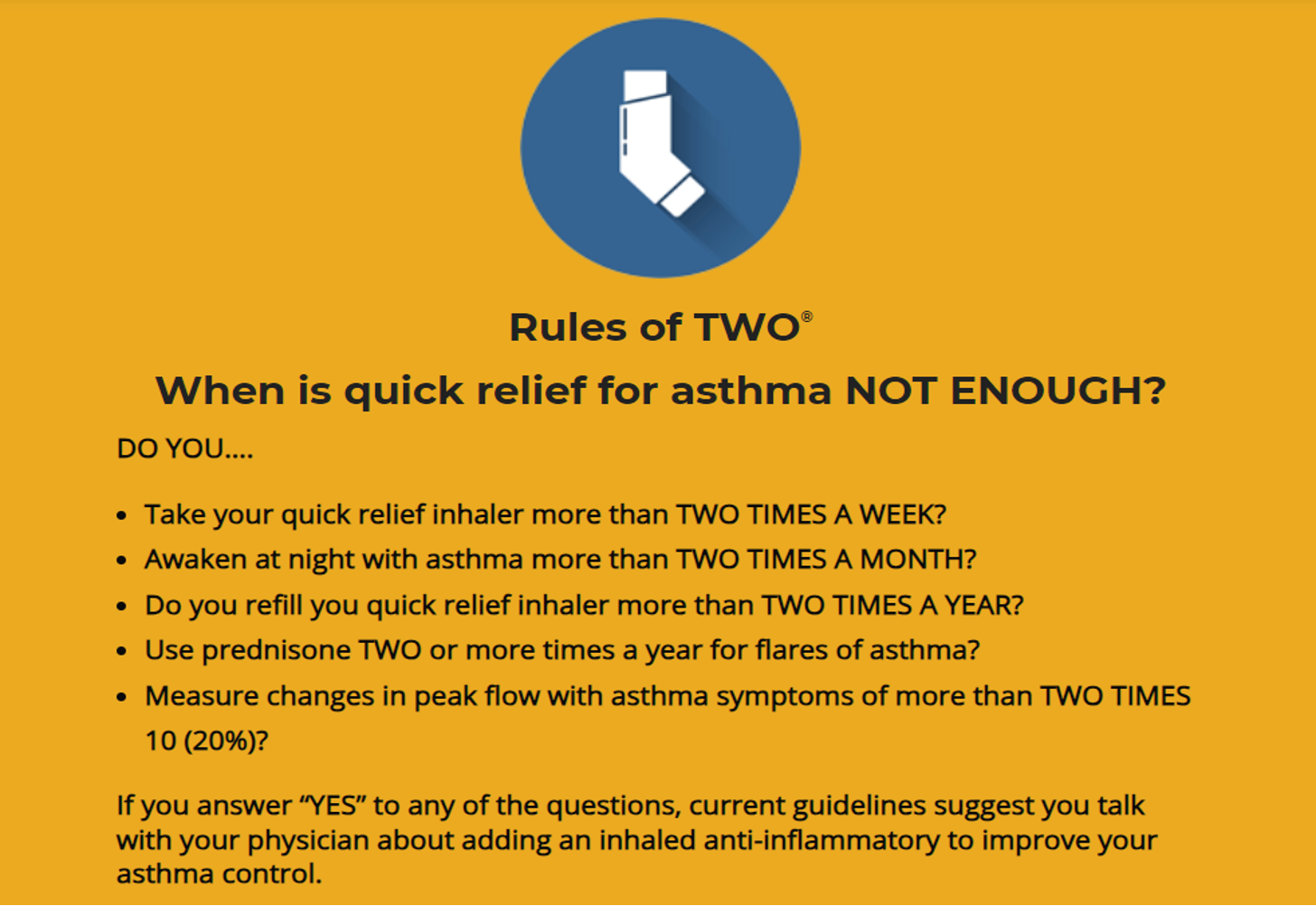
What does this refer to
Rule of Two
What does this refer to
Acute reversibility of airflow obstruction
Tested by administering 2 to 4 puffs of a quick-acting bronchodilator
Repeat spirometry 10 to 15 minutes later
Measurements can also be made before and after administration of nebulized bronchodilator
Increase in FEV1 of > or equal to 12% + absolute increase in FEV1 of at least 200 mL, can be attributed to bronchodilator responsiveness with 95% certainty
Bronchodilator Response Asthma
What does this refer to
Presence of a LARGE bronchodilator response
Minimal bronchodilator responsiveness may also be seen with
COPD
Cystic fibrosis
Non-cystic fibrosis bronchiectasis
Bronchiolitis
Bronchodilator Response Asthma
What does this refer to
Pulmonology and allergists/immunologists
Difficulty confirming dx
Hx life-threatening asthma exacerbation(s)
Need for step 5 care or higher
Poor control after 3-6 months of active (and compliant) asthma care
Complicating co-morbidities
Referral Asthma
What does this refer to
Patients with poorly controlled asthma may develop long term changes in airway
Sx are chronic and become less likely to be irreversible due to the airway remodeling
Onset of disease at older age = greater likelihood to have chronic sx
Higher mortality rate in patients > 40 yo who smoke
Peak Expiratory Flow Rate to monitor at home
Prognosis Asthma
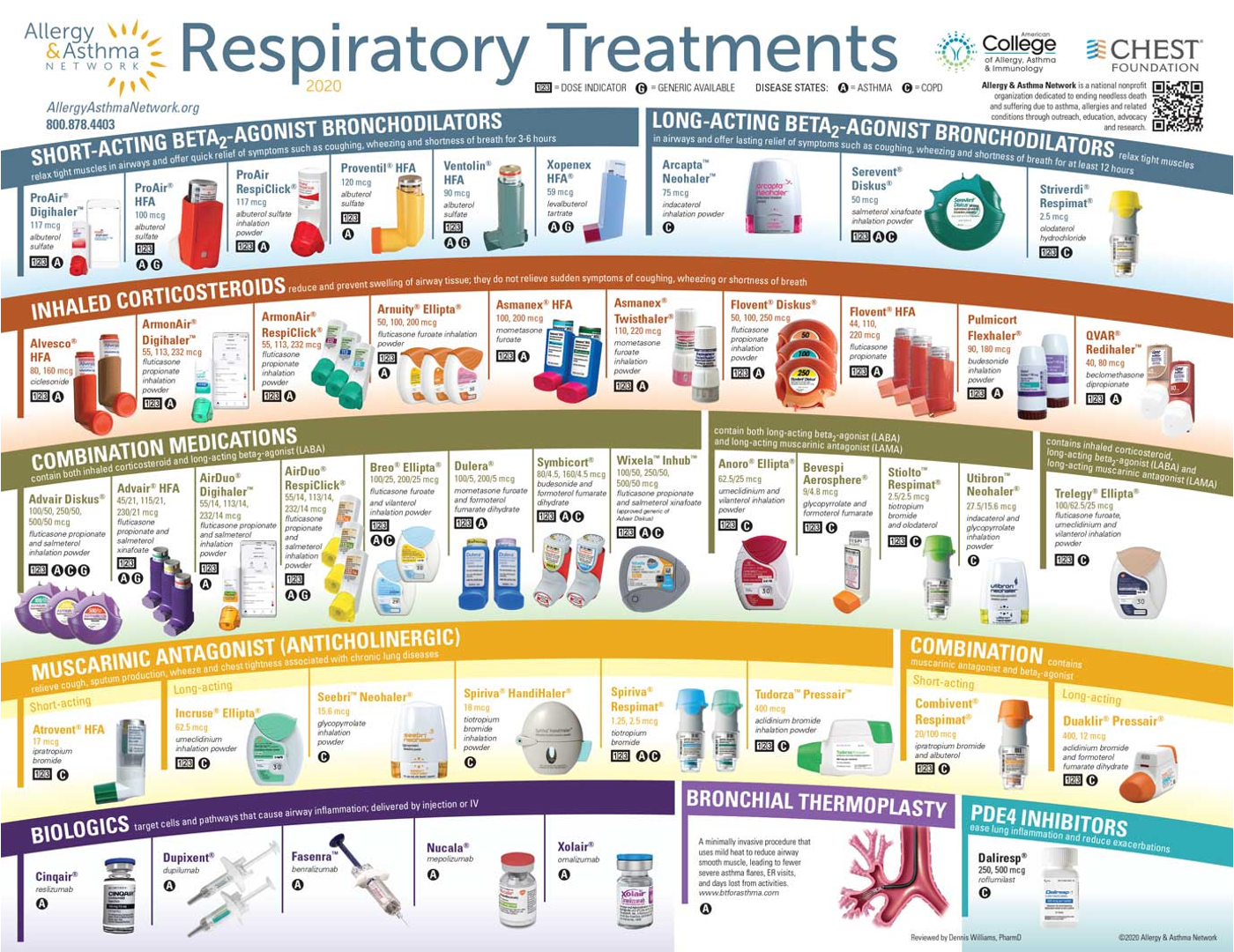
What does this refer to
yikes (just know it i guess)
What does this refer to
Spirometry, in which a maximal inhalation is followed by a rapid and forceful complete exhalation into a spirometer, includes measurement of forced expiratory volume in one second (FEV1) and forced vital capacity (FVC).
The results of spirometry can be used to determine the following:
Determine whether baseline airflow limitation (obstruction) is present (reduced FEV1/FVC ratio)
Assess the reversibility of the obstructive abnormality by repeating spirometry after administration of a bronchodilator
Characterize the severity of airflow limitation (based on the FEV1 as a percentage of the normal predicted value)
For patients with normal airflow (normal FEV1/FVC ratio), identify a restrictive pattern as an alternate explanation for dyspnea (eg, FVC <80% predicted)
Pulmonary Function Tests
What does this refer to
Classification of Asthma
According to GINA, what is the 1st line of tx for asthma for intermittent treatment
One product with inhaled Corticosteroid (ISC) + SABA (air supra aka budesomide + albuterol)
What does this refer to
A 68-year-old man presents to his primary care physician for a cough.
He has been coughing for the past 2 months and is associated with mucopurulent and tenacious sputum production, which has progressively worsened.
Medical history is significant for chronic obstructive pulmonary disease.
He smokes 1 pack of cigarettes daily for the past 45 years.
On physical exam, the patient has wheezes and crackles bilaterally to auscultation.
A radiograph of the chest is unremarkable; however, a CT scan of the chest demonstrates stigmata of bronchial dilatation.
Bronchiectasis
Your patient has been prescribed Airsupra but symptoms persist, what is the next time of treatment
Formoterol + budesonide (symbicort)/ICS
What does this refer to
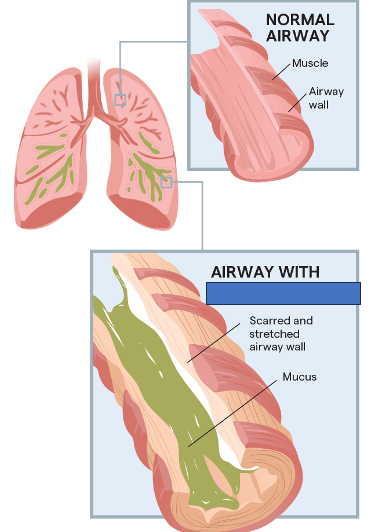
Bronchiectasis
What does this refer to
Suppurative lung disease
Permanent and irreversible dilation of the bronchial airways
Bronchiectasis
What does this refer to
MC in patients with cystic fibrosis
Increased risk of infections
Pseudomonas
Mycobacterium avium complex
Aspergillus
Epidemiology Bronchiectasis
What does this refer to
MC cause is cystic fibrosis (CF)Recurrent lung infections
Pseudomonas aeruginosa in CF pt
H. flu
A1AT deficiency
Collagen vascular diseases
Etiology Bronchiectasis
What does this refer to
Persistent productive cough
Clinical History of Bronchiectasis
What does this refer to
Lung auscultation
Wheezes
Crackles
Clinical presentation Bronchiectasis
What does this refer to
Pneumonia
Pneumonitis
COPD
Differential diagnosis Bronchiectasis
What does this refer to
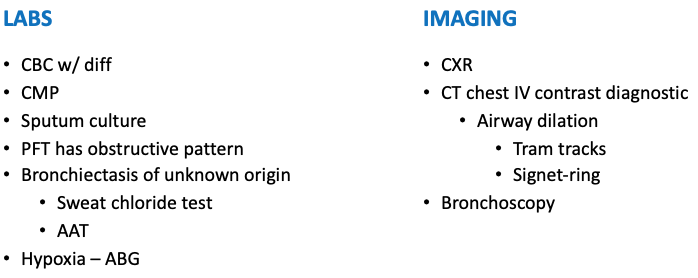
Workup for bronchiectasis
What does this refer to
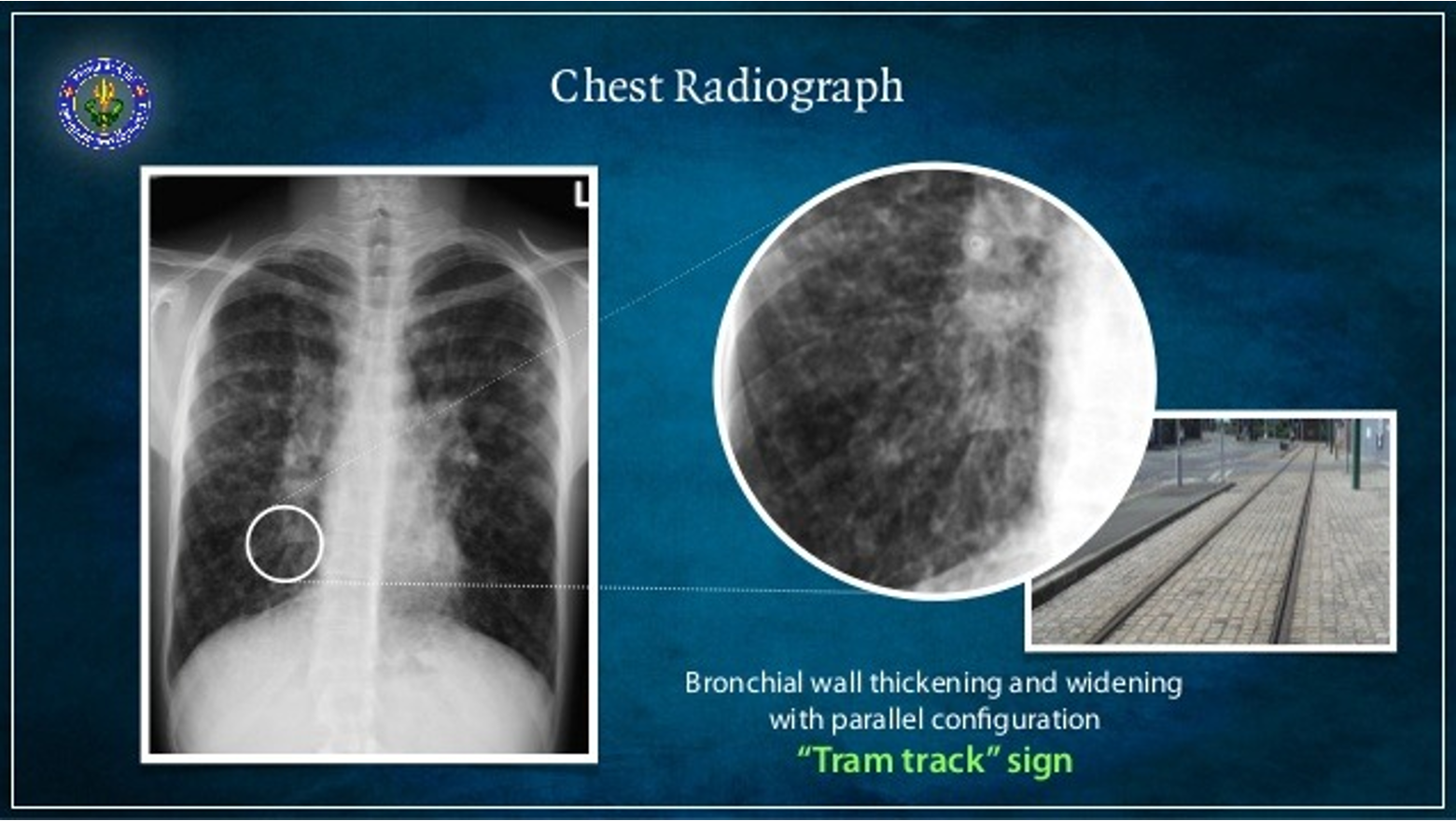
Bronchiectasis
What used to diagnose bronchiectasis?
CT Chest IV Contrast
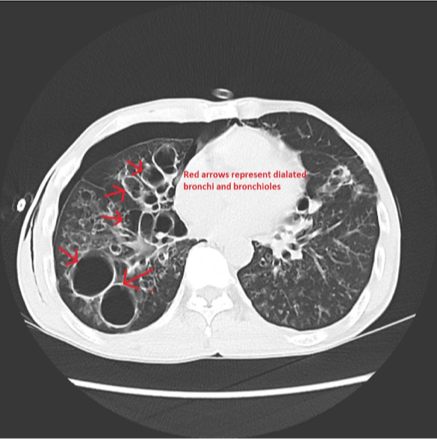
What does this refer to
Airway clearance techniques
Improve secretion clearance/bronchial hygiene
Mucolytics
Guafenesin (Mucinex)
Carbocisteine
Dornase alfa (Pulmozyme)
Bronchodilators
Beta-2 agonists
Anticholinergics
Theophylline
Chest physiotherapy (postural drainage)
Clinical management Bronchiectasis
What does this refer to
Morbidity
Antibiotic resistance
Mortality
Recurrent lung infections
Prognosis Bronchiectasis
What does this refer to
A 24-year-old woman with a past medical history of atopic dermatitis presents to an urgent care center for dyspnea on exertion.
She reports that for the past few months, she has become increasingly short of breath with exertion, particularly during exercise.
She denies any other symptoms and denies having ever smoked or been exposed chronically to second-hand smoke.
Close examination into her pediatric records shows a documented history of hepatomegaly but no workup.
Labs reveal significantly decreased alpha-1 antitrypsin and increased transaminitis.
She is given nebulized ipratropium and albuterol, a course of steroids, and referred for regular treatments with alpha-1 antitrypsin.
Alpha-1 antitrypsin deficiency
What does this refer to
___________ is characterized early onset emphysema and cirrhosis
Alpha-1 Antitrypsin Deficiency
What does this refer to
MC in young adults (often without a history of smoking)
+ smoking hx exacerbates illness
Family hx
Autosomal dominant
Occurs as a result of decreased or dysfunctional alpha-1 antitrypsin
Etiology Alpha-1 Antitrypsin Deficiency
What does this refer to
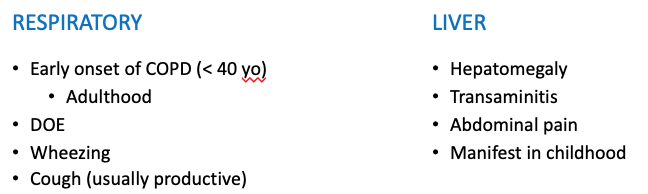
Clinical history of Alpha-1 Antitrypsin Deficiency
What does this refer to
Asthma
Typically no associated liver disease
Autoimmune hepatitis
Not associated with COPD or decreased A1A
Differential diagnosis Alpha-1 Antitrypsin Deficiency
What does this refer to
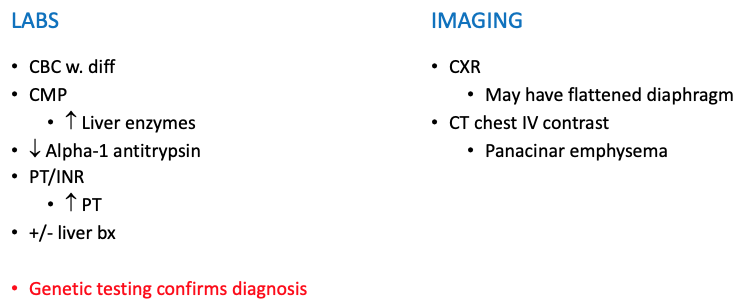
Workup for Alpha-1 Antitrypsin Deficiency
What confirms the diagnosis for Alpha-1 Antitrypsin Deficiency
Genetic testing
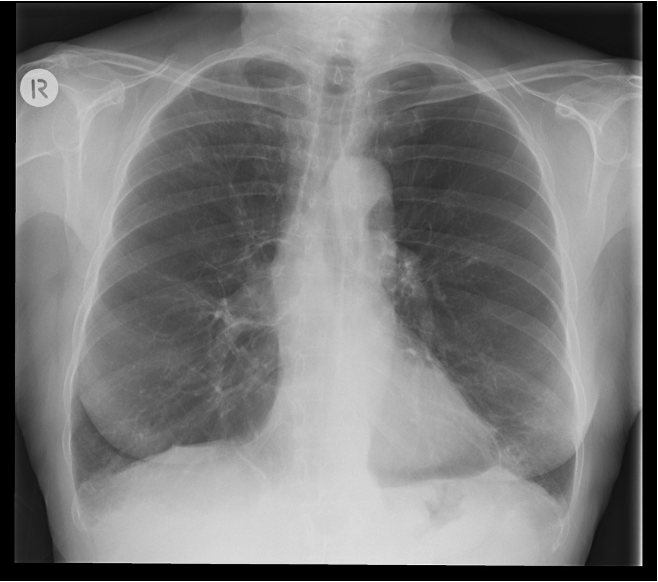
What does this refer to
Alpha-1 Antitrypsin Deficiency
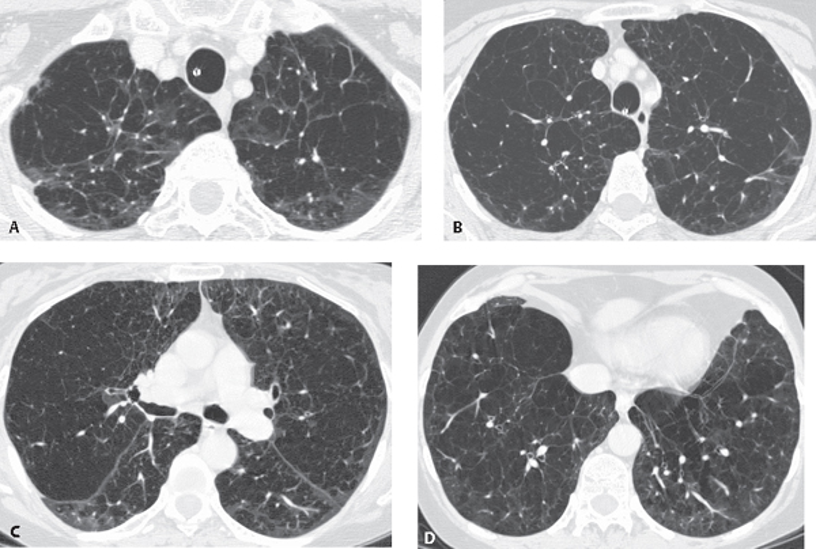
What does this refer to
Alpha-1 Antitrypsin Deficiency CT w/ Contrast
What does this refer to
Alpha-1 antitrypsin infusion
Standard treatment of COPD
Liver transplant
Decompensated cirrhosis
Hepatocellular CA
Vaccinations
Influenza
Pneumonia
COVID
Minimize EtOH
Clinical Management of Alpha-1 Antitrypsin Deficiency
What does this refer to
A 69-year-old male presents with concerns about his declining health.
His brother recently died of renal cell carcinoma and he is now concerned about his own health.
The patient has a history of type II diabetes mellitus, HTN and a 50 pack-year smoking history.
He asks you what he can do to improve his health.
Smoking cessation
What does this refer to
Smoking is considered the most important modifiable risk factor in the US for cancer and cardiovascular and pulmonary disease
Screen all adults regularly for tobacco use
Discuss smoking cessation at EVERY clinical contact with those who smoke/vape
Smoking Cessation
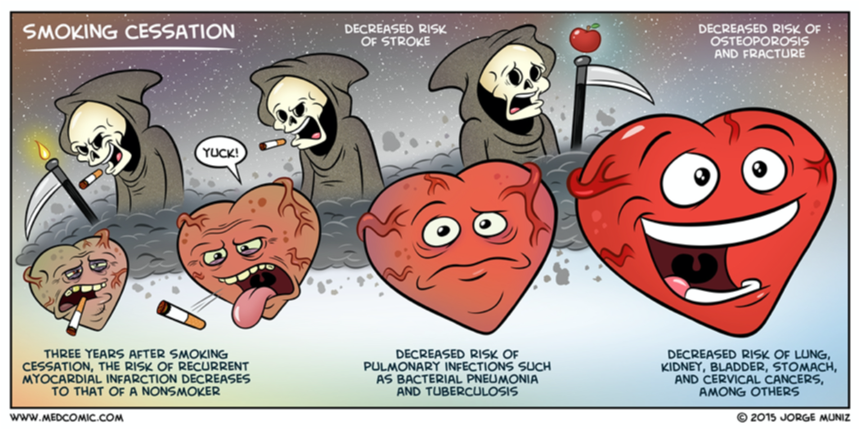
What does this refer to
Nicotine replacement
OTC
Forms include gum, lozenge, patches and sprays
Bupropion (Zyban)
Rx
Varenicline (Chantix)
Rx
Initiate 1 week prior to quit date (pt can continue to smoke in this time) THEN
No smoking
Continue tx x 4 months
Cognitive behavioral therapy (CBT)
Combination therapy (multiple treatments from above) are the most effective
Clinical pharmacotherapeutics Smoking Cessation