Intro to Plate Tectonics
 Call Kai
 Learn
Learn Practice Test
 Spaced Repetition
 Match
Match Flashcards
 Knowt Play
1/19

There's no tags or description
Looks like no tags are added yet.
Name | Mastery | Learn | Test | Matching | Spaced | Call with Kai |
|---|
No analytics yet
Send a link to your students to track their progress
20 Terms
names of layers of the planet
lithosphere, asthenosphere, mantle, core
names of all lithospheric plates
african, arabian, eurasian, indian, indian-australian, phillipines, antarctic, pacific, nasca, cocos, caribbean, south american, juan de fuca, north american
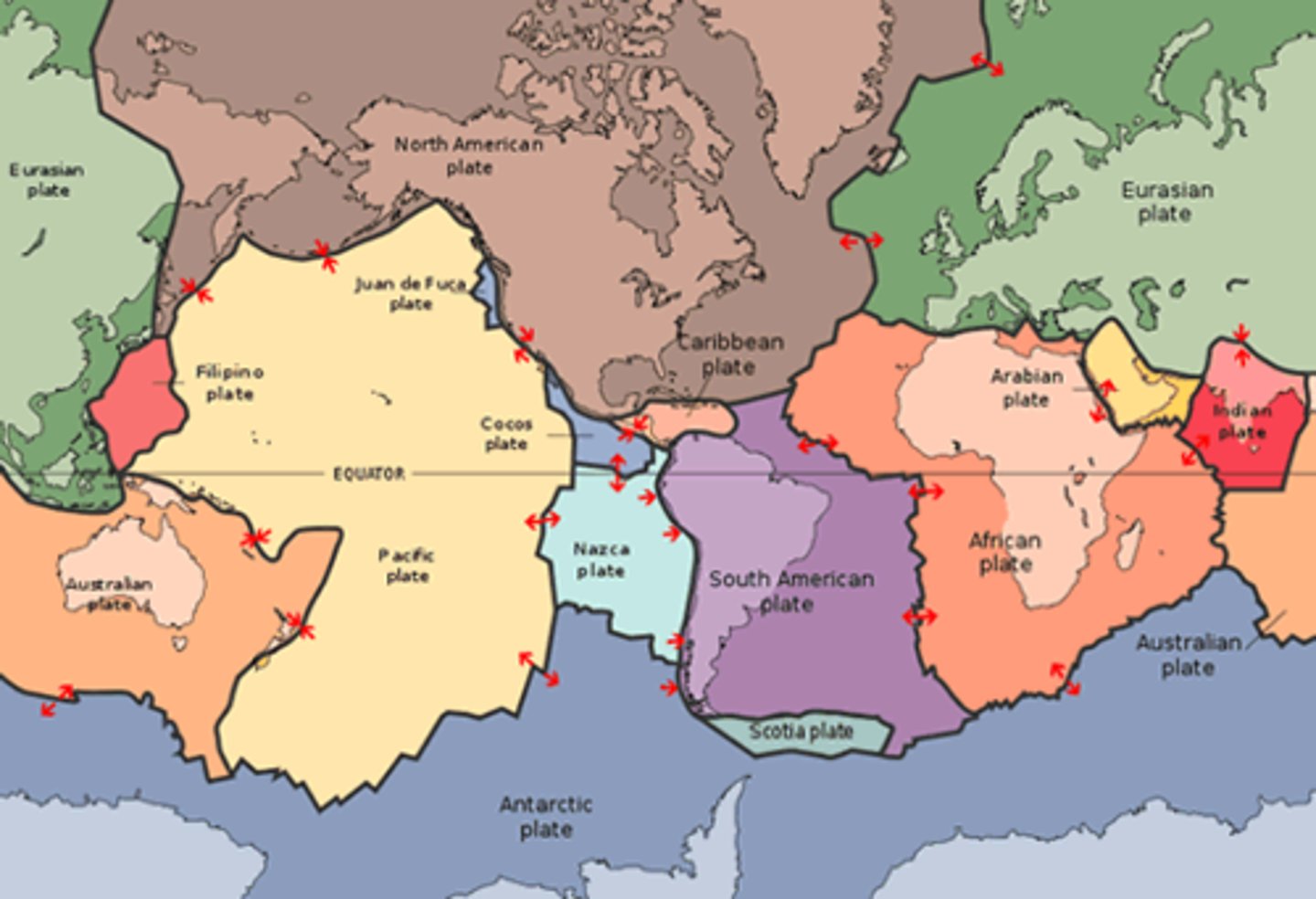
types of boundaries between plates
divergent, convergent, transform
types of faults
normal, reverse, strike-slip
evidence for plate tectonics
rocks, fossils, climate, puzzle fit, glaciers, sea floor spreading, ocean island chains, volcanoes over subduction zones, magnetic striping
Lithosphere
the outher rigid shell of the earth, continental and oceanic crust
continental crust elements
Al, Si, K
oceanic crust elements
Fe, Mg, Ca
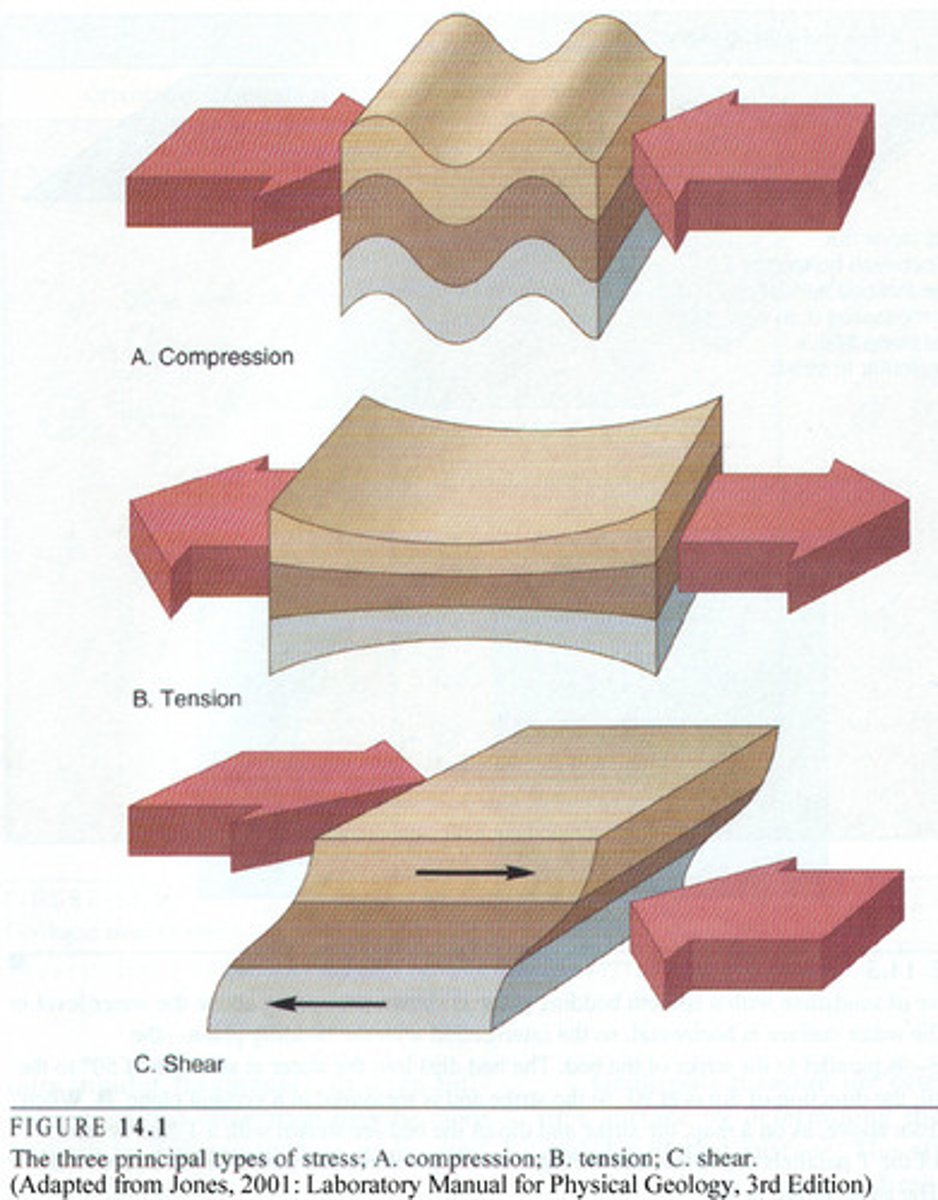
types of stress
shearing, tension, compression
fault
a fracture zone of fractures where the two sides move past each other
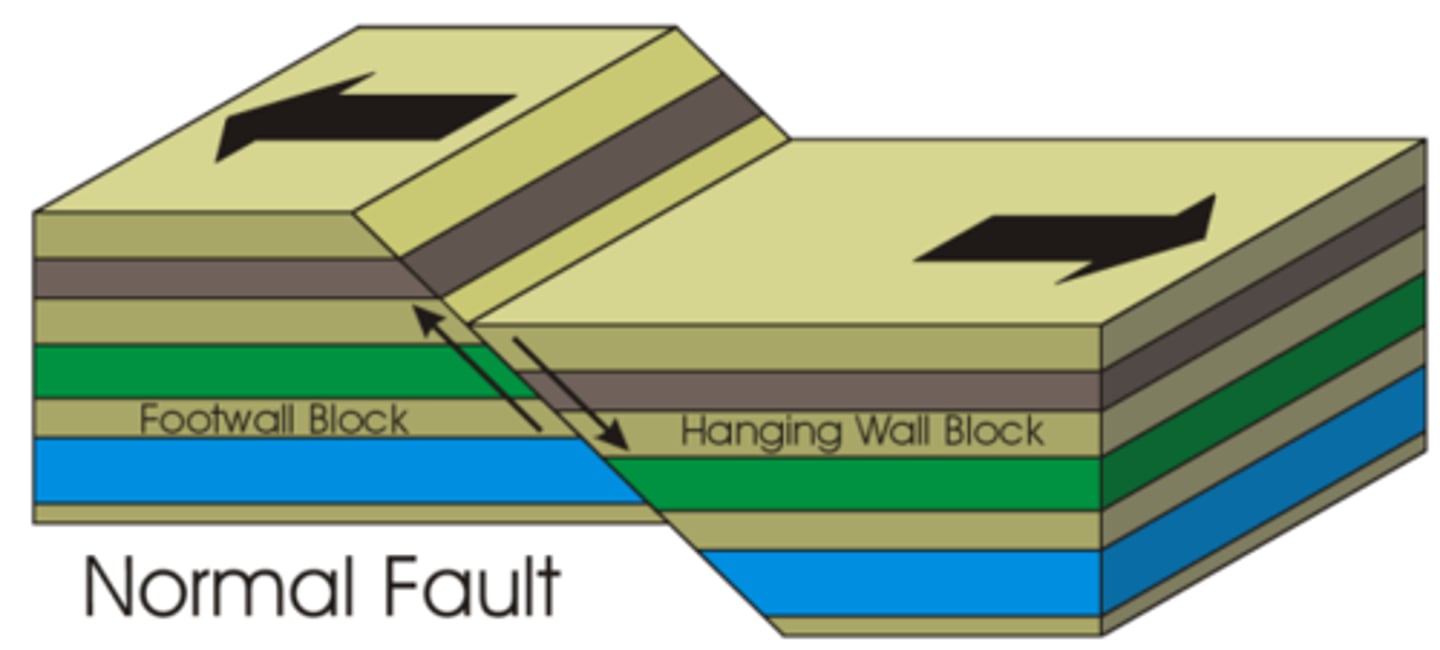
normal fault
the block above the fault (hanging wall) moves down relative to the block below the fault (foot wall)
caused by tensional forces
results in extension
reverse fault
the hanging wall moves up relative to the foot wall
caused by compressional forces
results in shortening
thrust fault if the dip of fault plane is small
strike-slip fault
most movement is horizontal
caused by shearing forces
transform fault
a type of strike-slip found on mid-ocean ridges or in regions of significant stretching from tension
divergent plate boundary
an area beneath the ocean where tectonic plates move away from each other
convergent plate boundary
A tectonic plate boundary where two plates collide, come together, or crash into each other.
transform plate boundary
Boundary between two plates that are sliding past each other.
how do we know earth's layers?
P and S wave shadow-zones
p wave
primary, compressional, 6km/s in crust, travels through solid, liquid, gas
s wave
secondary, shear, 2km/s, only travels through solid

