Ch. 34 & 45 Quiz
0.0(0)
 Studied by 0 people
 Call Kai
 Learn
Learn Practice Test
 Spaced Repetition
 Match
Match Flashcards
 Knowt Play
Card Sorting
1/106

Earn XP
Description and Tags
Last updated 12:13 AM on 2/27/23
Name | Mastery | Learn | Test | Matching | Spaced | Call with Kai |
|---|
No analytics yet
Send a link to your students to track their progress
107 Terms
1
New cards
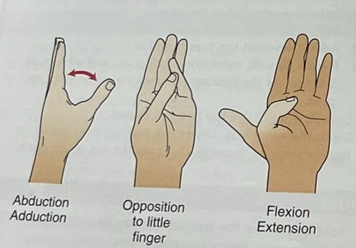
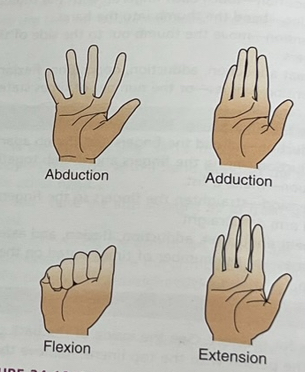
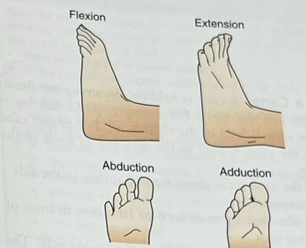
moving a body part away from the mid-line of the body
abduction
2
New cards
moving a body part towards the mid-line of the body
adduction
3
New cards
the act of walking
ambulation
4
New cards
the decrease in size or wasting away of tissue
atrophy
5
New cards
restricting a person to bed and limiting activity for health reasons
bed rest
6
New cards
decreased motion and stiffness of a joint caused by shortening of a muscle
contracture
7
New cards
the loss of muscle strength from inactivity
deconditioning
8
New cards
bending the toes and foot up at the ankle
dorsiflexion
9
New cards
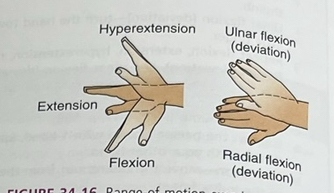
straightening a body part
extension
10
New cards
turning the joint outward
external rotation
11
New cards
bending a body part
flexion
12
New cards
the foot falls down at the ankle; also known as permanent plantar flexion
footdrop
13
New cards
excessive straightening of a body part
hyperextension
14
New cards
turning the joint inward
internal rotation
15
New cards
touching an opposite finger with the thumb
opposition
16
New cards
postural hypotension
orthostatic hypotension
17
New cards
a device used to support a muscle, promote a certain motion, or correct a deformity
orthotic
18
New cards
the food is bent; bending the foot **down** at the ankle
plantar flexion
19
New cards
abnormally low BP when the person suddenly stands up
postural hypotension
20
New cards
turning the joint downward
pronation
21
New cards
the movement of a joint to the extent possible without causing pain
range of motion (ROM)
22
New cards
turning the joint
rotation
23
New cards
turning the joint upwards
supination
24
New cards
a brief loss of consciousness; **fainting**
syncope
25
New cards
the activities usually done during a normal day in a person’s life
activities of daily living (ADLs)
26
New cards
any lost, absent, or impaired physical or mental function
disability
27
New cards
an artificial replacement for a missing body part
prosthesis
28
New cards
the process of restoring the person to their highest possible level of physical, psychological, social, and economic function
rehabilitation
29
New cards
a NA with special training in restorative nursing and rehabilitation skills
restorative aide
30
New cards
care that helps persons regain health and strength for safe and independent living
restorative nursing care
31
New cards
all
exercise and activity are important for which body systems?
32
New cards
care plan and assignment sheet
includes the person’s activity level and needed exercises
33
New cards
promoting exercise and activity in all persons to the extent possible
your role in assisting the nurse and health team is to…
34
New cards
improve independence, attain highest level of function possible, prevent loss of function
the goal of rehabilitation activities and exercise may include (3):
35
New cards
do not force them to exercise or take part in activities. stay calm and ask nurse for help. follow the care plan
persons with dementia may resist exercise and activity and bcuz they don’t understand what’s happening, they may fear harm. if they become agitated and combative or cry out for help, what do you do?
36
New cards
reduce oxygen needs, reduce pain, reduce swelling, promote healing
4 common reasons to order bed rest are to:
37
New cards
strict or complete bed rest
in this type of bedrest, everything is done for the pt…all ADLs are done in bed
38
New cards
bed rest
in this type of bedrest, the pt. performs some ADLs like self-feeding, oral hygiene, bathing, shaving, hair care
39
New cards
bed rest with commode privileges
in this type of bedrest, the commode is used at bedside for elimination
40
New cards
bed rest BRP
in this type of bedrest, bathroom is used for definitions
41
New cards
pressure injuries, constipation, fecal impaction, urinary tract infections, kidney stones, blood clots, pneumonia
7 possible complications from bed rest and lack of exercise
42
New cards
contracture, atrophy, postural/orthostatic hypotension
3 musculo-skeletal problems that may occur from bed rest and lack of exercise and activity:
43
New cards
fingers, wrists, elbows, toes, ankles, knees, hips, neck, spine
common sites of contracture:
44
New cards
deformed and stiff
if a pt. has a contracture, the site is…
45
New cards
dizzy, weak, spots before the eyes, syncope
possible signs/symptoms of postural hypotension
46
New cards
good alignment, ROM exercises, frequent position changes
good nursing care prevents complications from bed rest…these 3 things are important prevention measures and are part of the care plan
47
New cards
bed boards, foot-boards, trochanter rolls, hip abduction wedge, hand roll/grip, splints, bed cradle
7 supportive devices that are often used to support and maintain a certain position include…
48
New cards
bed boards
* placed under mattress to prevent sagging
* many are hinged in the middle for use with hospital beds to all the head of the bed to be raised
* may be used in home care by pt. with back problems
* many are hinged in the middle for use with hospital beds to all the head of the bed to be raised
* may be used in home care by pt. with back problems
49
New cards
foot-board
* prevents plantar flexion that can lead to foot drob
* placed so the soles of feet are flush against it
* can also serve as bed cradles by keeping top linens off the feet and toes
* placed so the soles of feet are flush against it
* can also serve as bed cradles by keeping top linens off the feet and toes
50
New cards
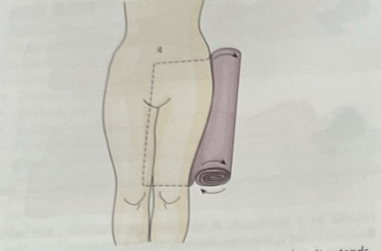
trochanter roll
* prevents hips and legs from turning outwards (external rotation)
* bath blanket or towel is folded to the desired length and rolled up tightly
* flat end is placed under pt. from hip to knee and the role is tucked along side the body
* bath blanket or towel is folded to the desired length and rolled up tightly
* flat end is placed under pt. from hip to knee and the role is tucked along side the body
51
New cards
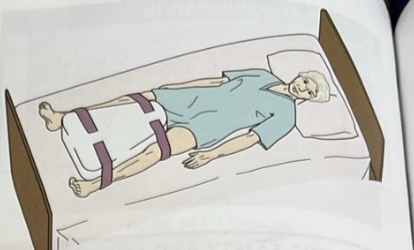
hip abduction wedge
keeps the hips abducted (apart)
* placed between pt. legs and is common after hip replacement surgery
* placed between pt. legs and is common after hip replacement surgery
52
New cards
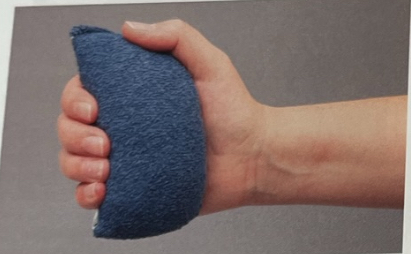
hand roll/grip
prevents contracture of the thumb, fingers, and wrist
* foam rubber sponges, rubber balls, and finger cushions are also used
* foam rubber sponges, rubber balls, and finger cushions are also used
53
New cards
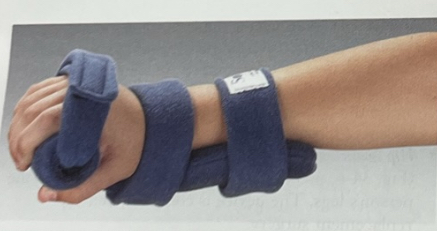
splints
* keeps elbows, wrists, fingers, ankles, or knees in normal position
* usually secured in place with Velcro
* usually secured in place with Velcro
54
New cards
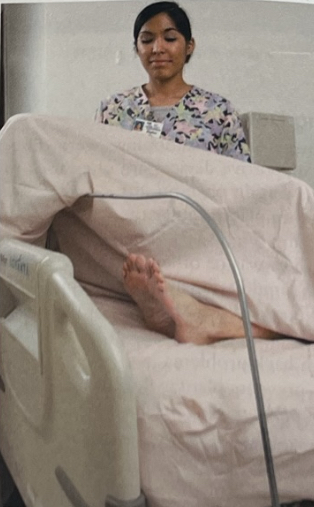
bed cradle
keeps the weight of top linens off the feet and toes
* heavy top linens can cause foot drop and pressure injuries
* heavy top linens can cause foot drop and pressure injuries
55
New cards
trochanter roll
\
56
New cards
hip abduction wedge
57
New cards
hand grip/roll
58
New cards
splint
59
New cards
bed cradle
60
New cards
complications from bed rest
exercise helps prevent…
61
New cards
trapeze
used for exercises to strengthen arm muscles
* hangs from an over-bed fram
* person grasps the bar with both hands to lift trunk off the bed
* also used to move up and turn in bed
* hangs from an over-bed fram
* person grasps the bar with both hands to lift trunk off the bed
* also used to move up and turn in bed
62
New cards
2x day
ROM exercises are usually done…
63
New cards
done by the person
Active ROM are…
64
New cards
moving the joints through their range of motion
PROM involves you…
65
New cards
person does exercises with some help
AAROM exercises means the…
66
New cards
frequent
pt. on bed rest and those who cannot walk, turn, or transfer themselves because of illness or injury need more __________ ROM exercises
67
New cards
5x
how many times are ROM repeated for each joint?
68
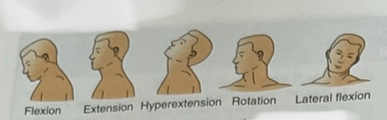
New cards
neck
69
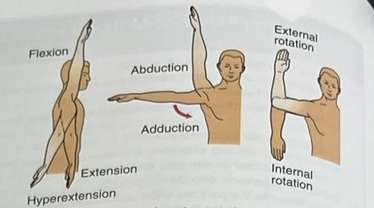
New cards
shoulder
70
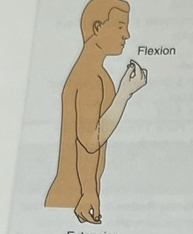
New cards
elbow
71
New cards
forearm
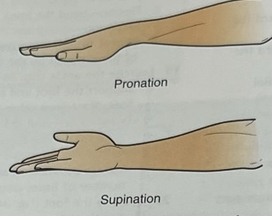
72
New cards
wrist
73
New cards
thumb
74
New cards
fingers
75
New cards
hip
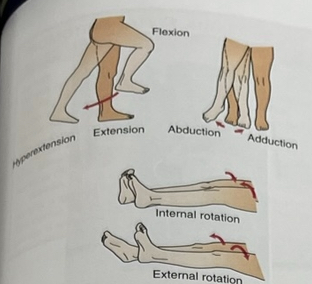
76
New cards
knee
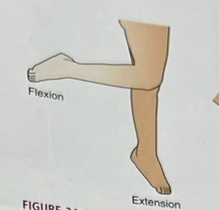
77
New cards
ankle
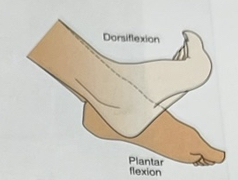
78
New cards
foot
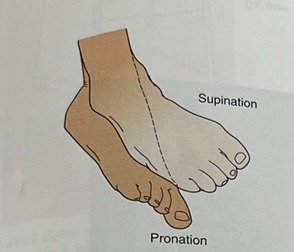
79
New cards
toes
80
New cards
bedrest, illness, surgery, injury
4 reasons a person may be weak and unsteady and need assistance ambulating
81
New cards
P.T.
who teaches the pt. how to use the device
82
New cards
weakness on 1 side for the body
canes are used for…
* provide balance and support
* single-tip and 4-point are common
* 4-point gives more support but is harder to move
* provide balance and support
* single-tip and 4-point are common
* 4-point gives more support but is harder to move
83
New cards
strong
which side of the body is the cane held?
84
New cards
6-10 inches
a cane should be held ___________ to the side of and in front of the strong foot
85
New cards
more
a walker gives __________ support than a cane
86
New cards
independence
baskets, pouches, and trays attach to the walker for needed items to free up the hands to grip the walker. this allows for more __________
87
New cards
injury, surgery, deformity, contractures
4 reasons for crutches or orthotic devices (may be temporary or permanent)
88
New cards
1 leg or when 1 or both legs need to regain strength
crutches are used when the pt. cannot use…
89
New cards
get caught between crutches and underarms…can hang forward + block the pt.’s view of the feet and crutch tips
it is important for persons using crutches to where clothes that fit well because…
90
New cards
braces, AFOs
other orthotic devices:
91
New cards
braces
* support weak body parts
* prevent or correct deformities
* prevent joint movement
* applied over ankle, knee, or back
* prevent or correct deformities
* prevent joint movement
* applied over ankle, knee, or back
92
New cards
AFOs
* worn with a shoes
* secured with a velcro strap
* secured with a velcro strap
93
New cards
foot, after a stroke
AFOs are common for…
94
New cards
skin breakdown
you should keep skin and bony points under orthotics clean and dry to prevent…
95
New cards
redness or signs of skin break down and complaints of pain/discomfort
when taking off a brace or AFO, you should report these things immediately
96
New cards
acute disabilities
* short course with complete recovery
* ex: fractures
* ex: fractures
97
New cards
chronic problem
* has a long course
* problem is controlled, not cured, with treatment
* ex: arthritis and paralysis
* problem is controlled, not cured, with treatment
* ex: arthritis and paralysis
98
New cards
P.T., O.T., S.T.
these people are part of the rehabilitation department:
99
New cards
prevent/reduce degree of disability, improve abilities to highest level of independence possible, help the pt. adjust to the disability
goals of rehabilitation include:
100
New cards
when the pt. first seeks out healthcare
when in the pt.’s healthcare experience does rehabilitation start?
 Note
Note  Flashcards (37)