Unit 8 Data Management
 Call Kai
 Learn
Learn Practice Test
 Spaced Repetition
 Match
Match Flashcards
 Knowt Play
1/178

There's no tags or description
Looks like no tags are added yet.
Name | Mastery | Learn | Test | Matching | Spaced | Call with Kai |
|---|
No analytics yet
Send a link to your students to track their progress
179 Terms
Enterprise Imaging
“A set of strategies, initiatives, and workflows implemented across a healthcare enterprise to consistently and optimally capture, index, manage, store, distribute, view, exchange, and analyze all clinical imaging and multimedia content to enhance the electronic health record.”
Enterprise Imaging
X-rays, MRI and CT images, photographs, images from arthroscopes etc
Enterprise Imaging
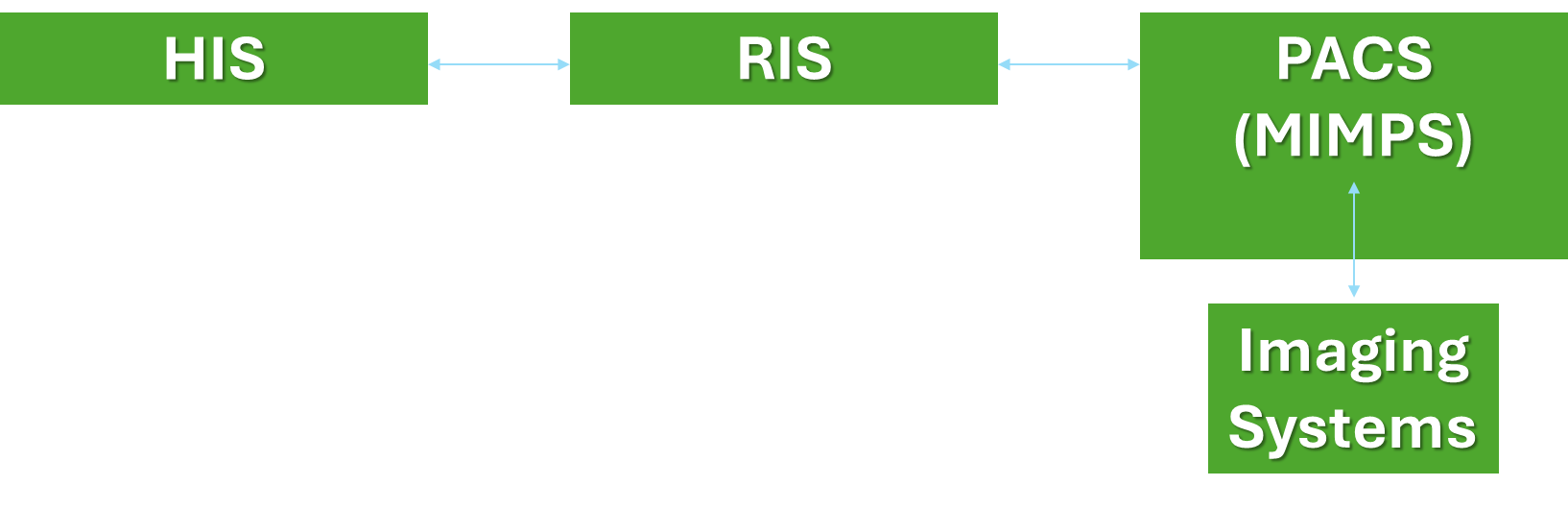
Led to healthcare facilities to pivot away from PACS (MIMPS) by using Vendor Neutral Archive (VNA)
Enterprise imaging allows healthcare members to log on ……account and have access to ……. image not just radiology
one, any
Advantages of Enterprise Imaging
•Incorporation of all medical images into a single archive
•Increase in efficiency help improve patient outcomes
•Reduce storage costs
Vendor neutral
can receive anything from any system
Enterprise imaging
allows us to see any images, one log on resource, can access all images, can look at all images
CD and DVD have been used since the early……
90s
CD and DVD cost
$8-$15 per CD
•Online remote access to PACS (MIMPS) systems and VPN (Virtual Private Networks)
•Provides a login and password, external users can access and review images.
Cloud base exchange
concern with data privacy issues
Integrating the healthcare enterprise (IHE)
An initiative by healthcare professionals and industry to improve the way computer systems in healthcare share information.
Integrating the healthcare enterprise (IHE)
Will help physicians, medical specialists, nurses, administrators and other care providers envision a day when vital information can be passed seamlessly from system to system within and across departments and made readily available at the point of care
BASIC DEFINITION OF IHE
Trying to make a standard how can we make everything work the best, looking at things, how can we best interoperate it together without it having issues or is the best outcome
Health Level Seven standard (HL7)
Accredited standards developing organization dedicated to providing a comprehensive framework and related standards for the exchange, integration, sharing and retrieval of electronic health information that supports clinical practice and the management, delivery and evaluation of health services.
Health Level Seven standard (HL7) manages…………… and provides protocols for exchange, management, and integration of clinical and administrative electronic health data.
non-imaging data
HL7 allows……………. between different systems including patient administration, laboratory information systems, billing systems, electronic medical record and health record systems, and more
interoperability
HEALTH LEVEL SEVEN STANDARD HL7
Allows all the different systems that control patient information to communicate to the software
Billing information is HL7, which allows the computer to communicate with th hospital systems
Keep medical information and record keeping
DICON information to talk to each other-imaging
Allows the communication to communicate with the x-ray equipment that is how we get the worklist
DICON
information to talk to each other imaging
HL7 is the standard communication between……. and ……
HIS and RIS
Cloud based Computing
•Reduces operational and maintenance costs for data storage
•Combines data from different resources
•Flexibility of archive size
•De-identify personal and healthcare information contained in DICOM metadata and pixels
•Cloud computing avoids the need for a company to purchase and invest in new IT equipment
Database health monitoring
The process of tracking and managing the condition, performance, and integrity of databases to prevent downtime, data loss, or workflow delays.
Radiology uses databases:
•Patient demographics
•Imaging orders
•Modality worklists
•Images and reports
Billing information
Example
•RIS database monitoring à Making sure orders, schedules, and reports are synced and available.
Advantages of database health monitoring
•Reduce costs
•Shift from reactive to proactive monitoring
•Improve the overall performance of your database and application
•Analyzes logs and uses this knowledge to improve performance
database health monitoring helps catch issues ……——before they affect technologists, radiologists, or patient throughput
early
easy definition
Watches the system and is saying how can I make this better or catch something before it happens
cyber attacks can …. spread … and compromise…… operations
quickly, malware, vital
A centralized network is more…… to attacks than …….networks
vulnerable, individual
Cybersecurity incidents
•computer virus, ransomware, theft and publication of patient data.
Cybersecurity requires a unified effort. To prevent attacks:
•Close monitoring
•Staff education
•Operational and strategic plans
•Firewalls
•Whitelisting-good thing, cybersecurity strategy that allows only pre-approved users, applications, or entities to access a system, enhancing security by blocking everything else by default
•User authentication and access rights
System Architecture- summery
Integrates enterprise imaging across the healthcare system
-Uses IHE standards for interoperability and workflow consistency
-Exchanges clinical data through HL7 messaging
-Leverages cloud-based computing for scalable image storage and access
-Maintains performance through database health monitoring
-Ensures protection of all imaging data with cybersecurity controls
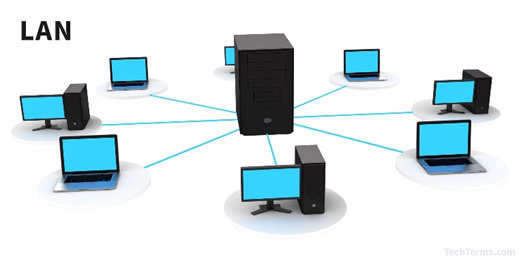
LAN
Local Area Network
LAN- local area Network covers a ……geographic area, usually ….and privately managed
small, faster
LAN example
•Computers, printers, and Wi-Fi devices inside a company office connected through a router.
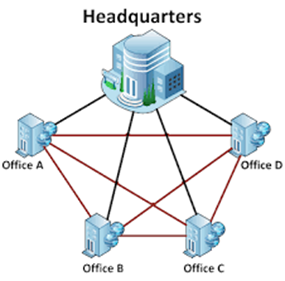
WAN- Wide Area Network covers a very ……. geographic area, often across cities, countrys and continents, connects multiple….. together
large, LANS
WAN example
•The Internet is the largest WAN.
•Takes a little longer to get too, slower
Network Architecture
how devices are organized/communicate
peer to peer
•All computers are equal (no central server).
•Each device can share resources directly with others.
•Simple and inexpensive but harder to manage.
•Example: Two computers sharing files directly over a small home network.
•Inexpensive
Client/Server
•A central server provides services.
•Other computers (clients) request resources from the server.
•Common in businesses and large networks.
•Example: Employees access files from a central file server in an office.
Radiology Information System (RIS)
•Data system for patient-related functions in the department, such as scheduling of x-ray appointments, tracking of patients, storage and distribution of reports
•Makes info accessible from different locations within the radiology department
•Assigns the accession number
Hospital/Health Information System (HIS)
•Performs same functions for the entire institution (patient's general medical file)
•Assigns a unique identifying number for each patient (MRN)
RIS HIS are …. area networks!!!
Local
Accession number helps to ……everything
track
HIS assigns the …….record number
medical
Information Management
shared information over networks
Information management
Electronic medical record (EMR) or
Electronic health record (EHR
Electronic version of a patient's medical history:
Includes:
demographics, progress notes, problems, medications, vital signs, past medical history, immunizations, laboratory data and radiology reports
Benefits of information management
•Streamlines clinician’s workflow
•Support other care-related activities
•Strengthen the relationship between patients and clinicians
Information management is the patients chart in electronic form, accessible though the comupter
Network Connectivity in Radiology
Network Protocols
These protocols help transport medical images, patient demographics, reports, and workflow messages across the enterprise.
Network Protocols
•Network languages computers use to communicate
•Set of established rules that dictate how to format, transmit and receive data so that computer network devices can communicate, regardless of the differences in their underlying infrastructures, designs or standards.
Why Network Protocols Are Important in Imaging Informatics
•Ensure secure and accurate transmission of medical images
•Allow different imaging devices and systems to communicate
•Support fast access to patient imaging records
•Maintain data integrity and standardization
Transmission Protocol
Main communication protocol used on networks to send and receive medical imaging data between devices.
Transmission Control Protocol
TCP
•Can be combined with IP =
Internet Protocol
•Can be combined with IP = Internet protocol Transmission Protocol
•Gives every device on a network a unique address so they can communicate (Ex. 172.811.3.1)
•Think of IP addresses as the street addresses of radiology devices
Communication Standard
- used to move data across networks- including radiology networks
Areas it is used
•DICOM
•Transmitting HL7 messages between RIS & HIS
•Accessing cloud MIMPS/VNA
Without ……….. none of the workflow could occur in Radiology
TCP/IP
internet protocol is the ……… to the radiology department
address
Transmission Protocol is how the
data is moved/delievered
NIC (Network interface Card)
•Hardware component used to connect to a hospital network and communicate using TCP/IP and DICOM
Switch consists of HUB and bridges
Connects devices inside the same network (LAN).
•A switch is like the hallway of a radiology department—everyone inside can walk directly to each other.
Router
•Decides how to move data between different networks, buildings, or remote sites. (LAN àWAN)
•Uses IP addresses to determine the path
•Identifies the sender and the receiver
•Ex: Connects the Hospital to the Teleradiologists
Cable
•Transmission media used for transmitting a signal (Ethernet, fiber optics)
Network Configuration
How you set up devices on a network so they can talk to each other.
making sure
•CT
•MRI
•Ultrasound
•MIMPS
All have the correct settings so they can send and receive images and information.
if its set up wrong
•Images won’t reach MIMPS
•Worklists won’t show up
•Radiologists can’t load studies
•Reports won’t return to the EHR
Radiology depends on these connections working smoothly.
network configuration
Raw data file (acquisition data)
•Data that has not been processed yet
•Collected directly by the imaging equipment before any reconstruction
Image data file (reconstructed images)
•Data that is processed created from RAW data via reconstruction algorithms
•What the radiologist sees, image contains:
•Pixel or voxel values representing anatomy or function
•DICOM metadata
metadata
is all the information that belongs to a picture
LAN and WAN support internal and wide area connectivity across the enterprise
Network protocols govern how data is formatted and exchanged (communication)
Transmission protocols ensure reliable delivery, routing, and error checking (movement of data)
Peer-to-peer versus client/server models define how devices share resources and services
RIS AND HIS
lOCAL area
The internet is the largest ……..network
WAN
EHR stands for?
Electronic Health record
Network…..are the languages used by computers to communicate
channels
Which network component connects devices inside the same network (LAN)?
HUB/Bridge
Medical Image Management and Processing System
(MIMPS)
another name for pacs
Medical image managment and processing system
MIMPS
MIMPS
•Comprehensive computer network that is responsible for the electronic storage and distribution of medical images.
•Makes radiographs, CT and MRI scans, US and Nuclear Med images for a particular patient available within the network.
•Allows Radiologists and Technologist to access images from various locations, improving the efficiency of communication
MIMPS ACTS as a
Database
Components of MIMPS
Image acquisition
Display Workstations
Archive servers
Image acquisition
Images are acquired in a digital format
Image acquisition
• Technologists/QA Station are able look at the patient’s images on the preview monitor
•Image quality?
•Patient demographics correct?
•First point of entry into MIMPS
•Information acquired is sent to the archive server
Image aquisition looking at the equipment and if the images are pulled up right!
Display workstations
Any computer used to view, interpret, and manipulate digital images
Display Workstations
Any computer used to view, interpret, and manipulate digital images
Radiologists
Clinical review workstations (ED, ICU)
Technologists QC stations
Most interactive part of MIMPS
Used inside and out of Radiology
Has MIMPS application software that allows minor image-manipulation
Display workstations are the most interactive and manipulation can occur in the workstation; the radiologists can edit the e-images. Radiologists might have more ability to manipulate the images
Common workstation fucntion
•Navigation Functions
•Hanging Protocol
•Study Navigation
•Image Manipulation & Enhancement
Navigation Functions
Customizable worklists dependent on technologists’ selections during a procedure
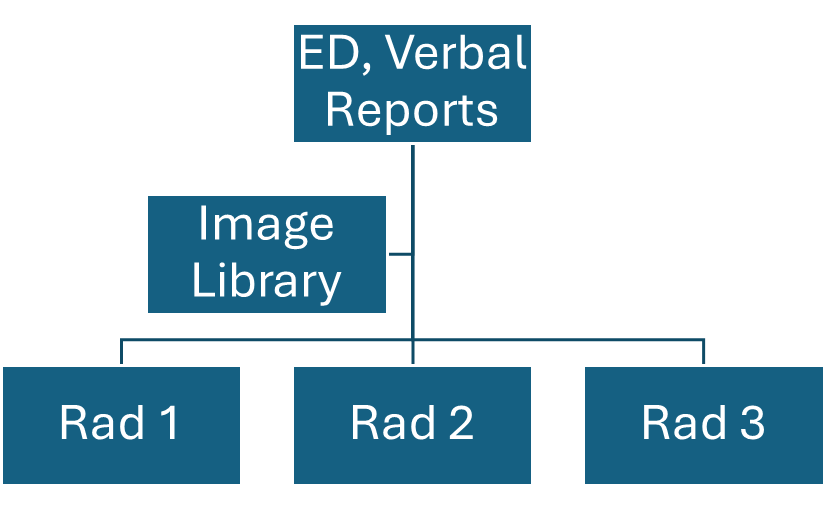
Hanging Protocol
A set of rules that tells a PACS or viewing workstation how to automatically display images. It eliminates manual windowing, resizing, and rearranging images every time a study is opened.
How do you want to see the images come up when looking at them?
Study Navigation
Allows images to be viewed individually or in a cine run.
Image Manipulation and Enhancement
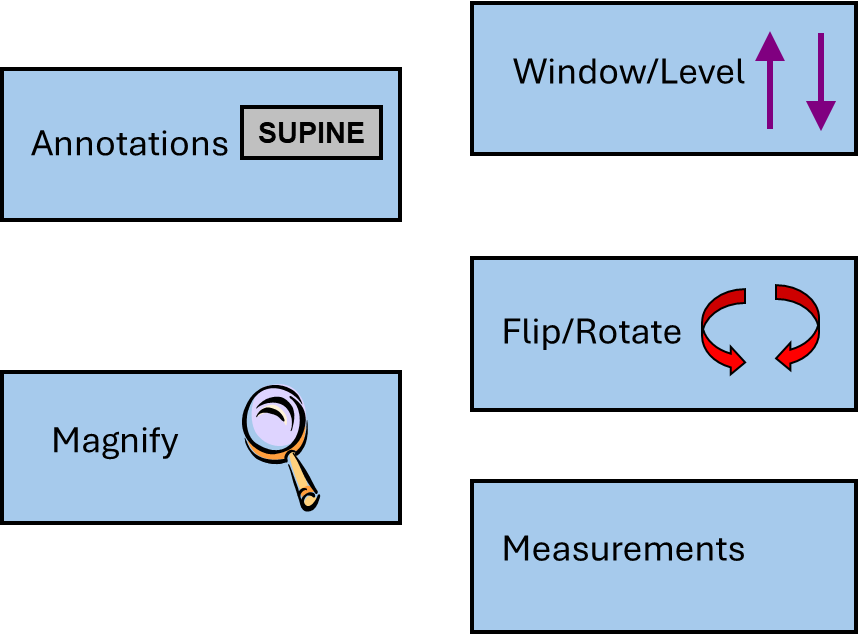
adding additional things int he PACS SYSTEM or the radiologists doing thingss
Zoom effects the whole image
increases size on the area of an image

