#15 ASTR 1000 Smartwork Homework
 Call Kai
 Learn
Learn Practice Test
 Spaced Repetition
 Match
Match Flashcards
 Knowt Play
1/10

There's no tags or description
Looks like no tags are added yet.
Name | Mastery | Learn | Test | Matching | Spaced | Call with Kai |
|---|
No analytics yet
Send a link to your students to track their progress
11 Terms
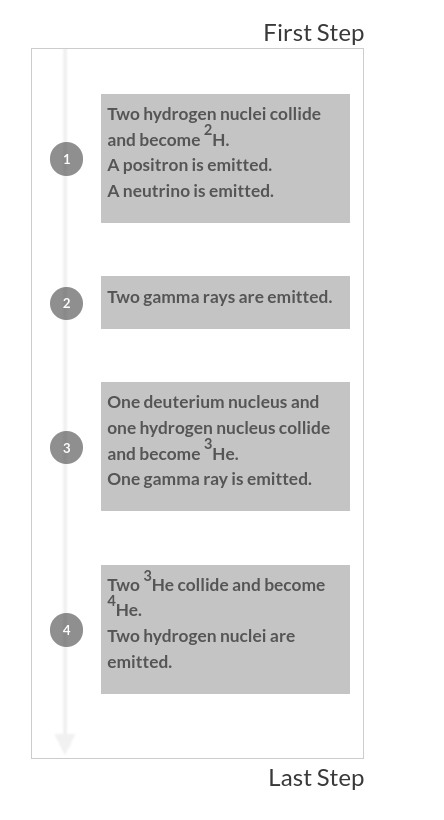
The following diagram shows the details of the proton-proton nuclear reaction chain that occurs in the core of the Sun.
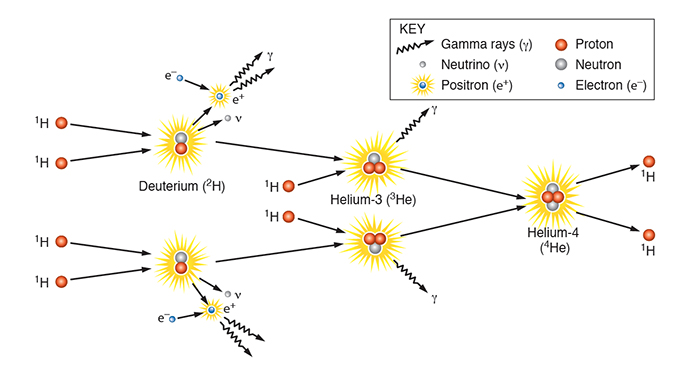
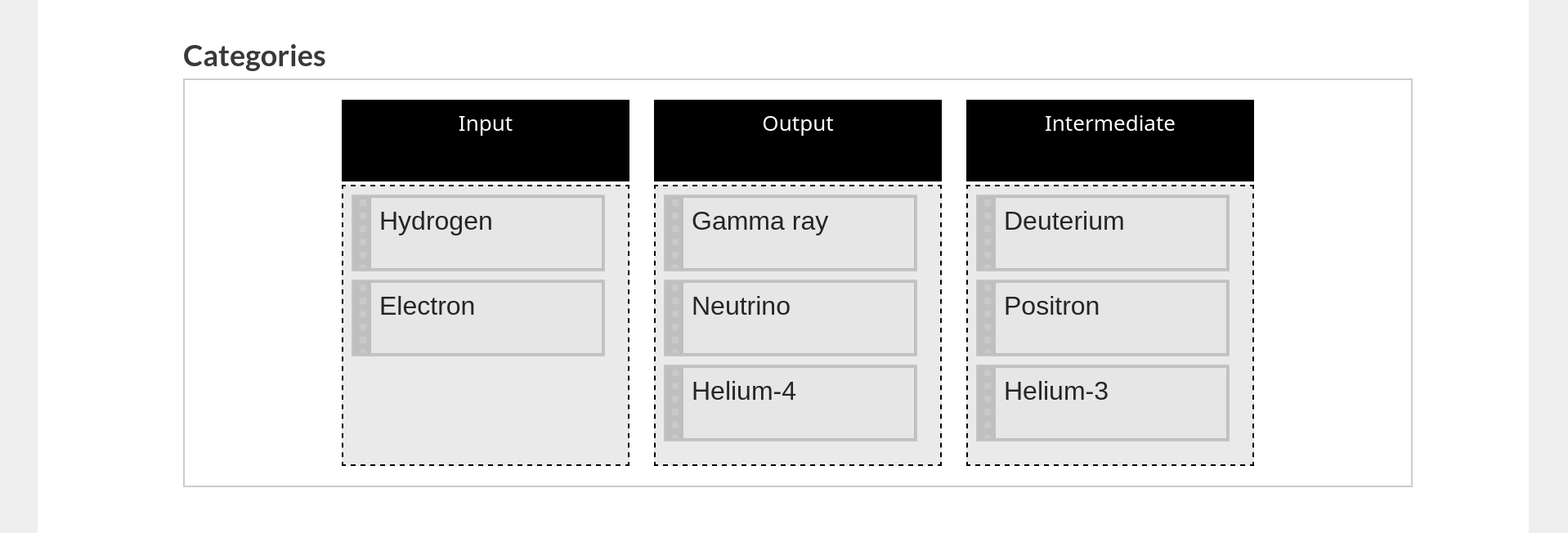
Sort the particles into the categories describing whether they are input particles that get used up in the reaction, new output particles persisting after the reaction, or intermediate particles that exist only temporarily during the reaction.
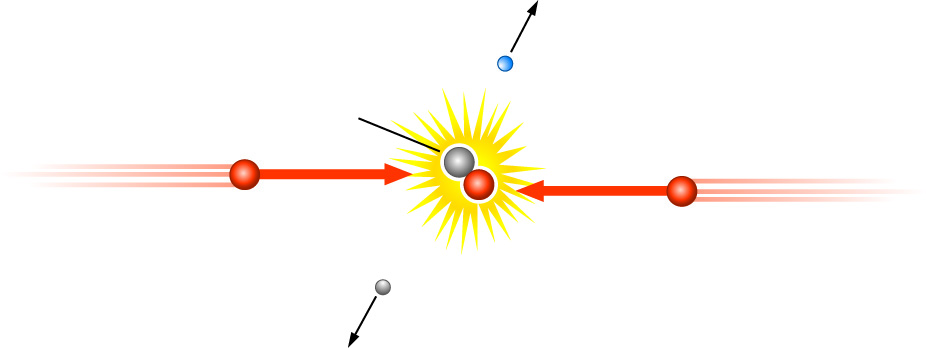
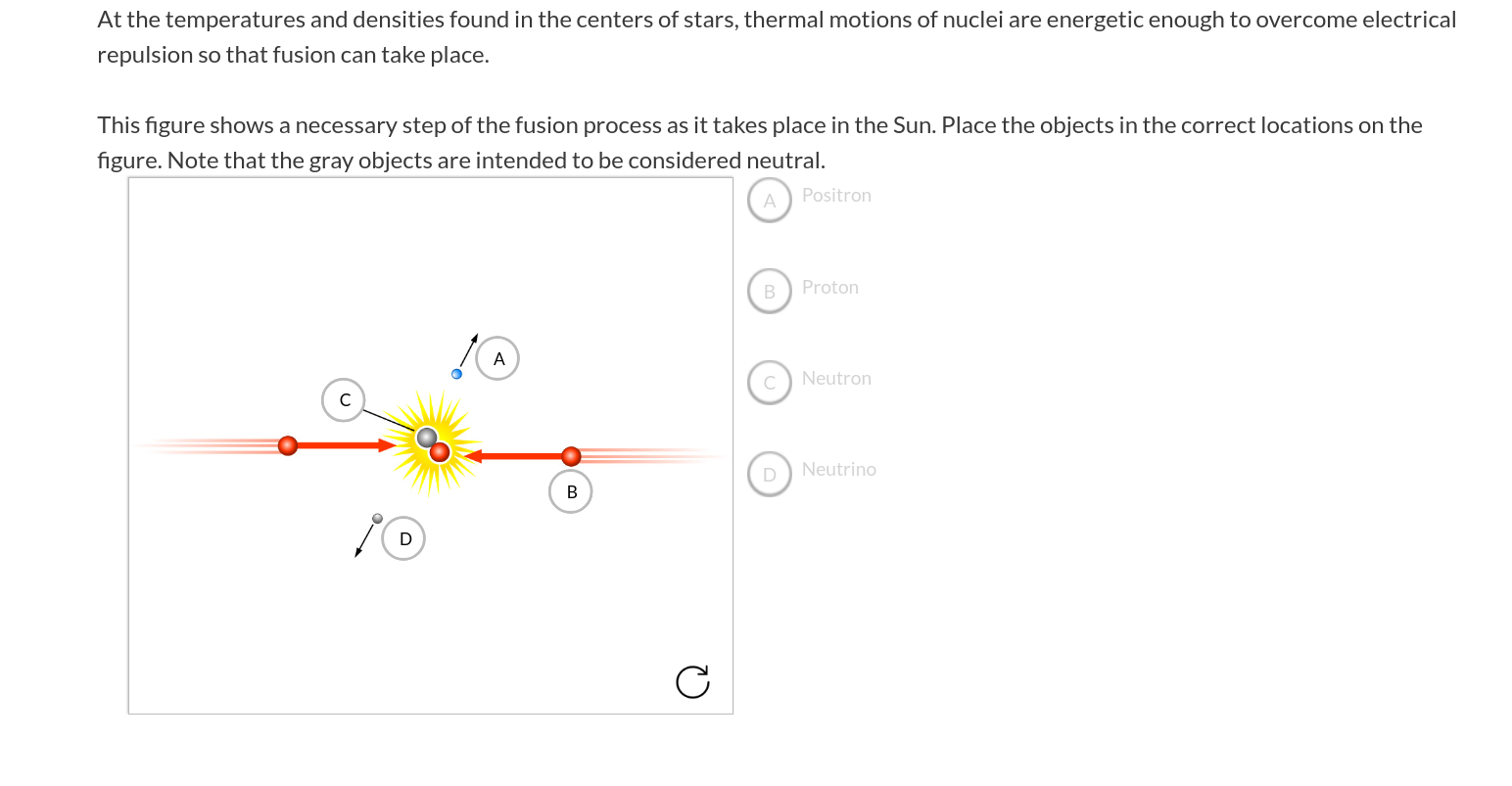
At the temperatures and densities found in the centers of stars, thermal motions of nuclei are energetic enough to overcome electrical repulsion so that fusion can take place.
This figure shows a necessary step of the fusion process as it takes place in the Sun. Place the objects in the correct locations on the figure. Note that the gray objects are intended to be considered neutral.
Place in order the following steps in the fusion of hydrogen into helium.
The proton-proton chain powers the Sun by fusing hydrogen into helium. As a by-product, several different particles are produced, which eventually produce energy. The process has multiple steps, and this Exploration is designed to explore these steps in detail, hopefully to help you keep them straight.
Press play, and watch the animation all the way through once.
Press play again, and pause the animation after the first collision. Two hydrogen nuclei (both positively charged) have collided to produce a new nucleus with only one positive charge.
1.) What is a neutrino?
2.) Did the neutrino enter the reaction, or was the neutrino produced in the reaction?
1.) It is an almost massless, neutral particle that is produced in nuclear processes.
2.) The neutrino was produced in the reaction.
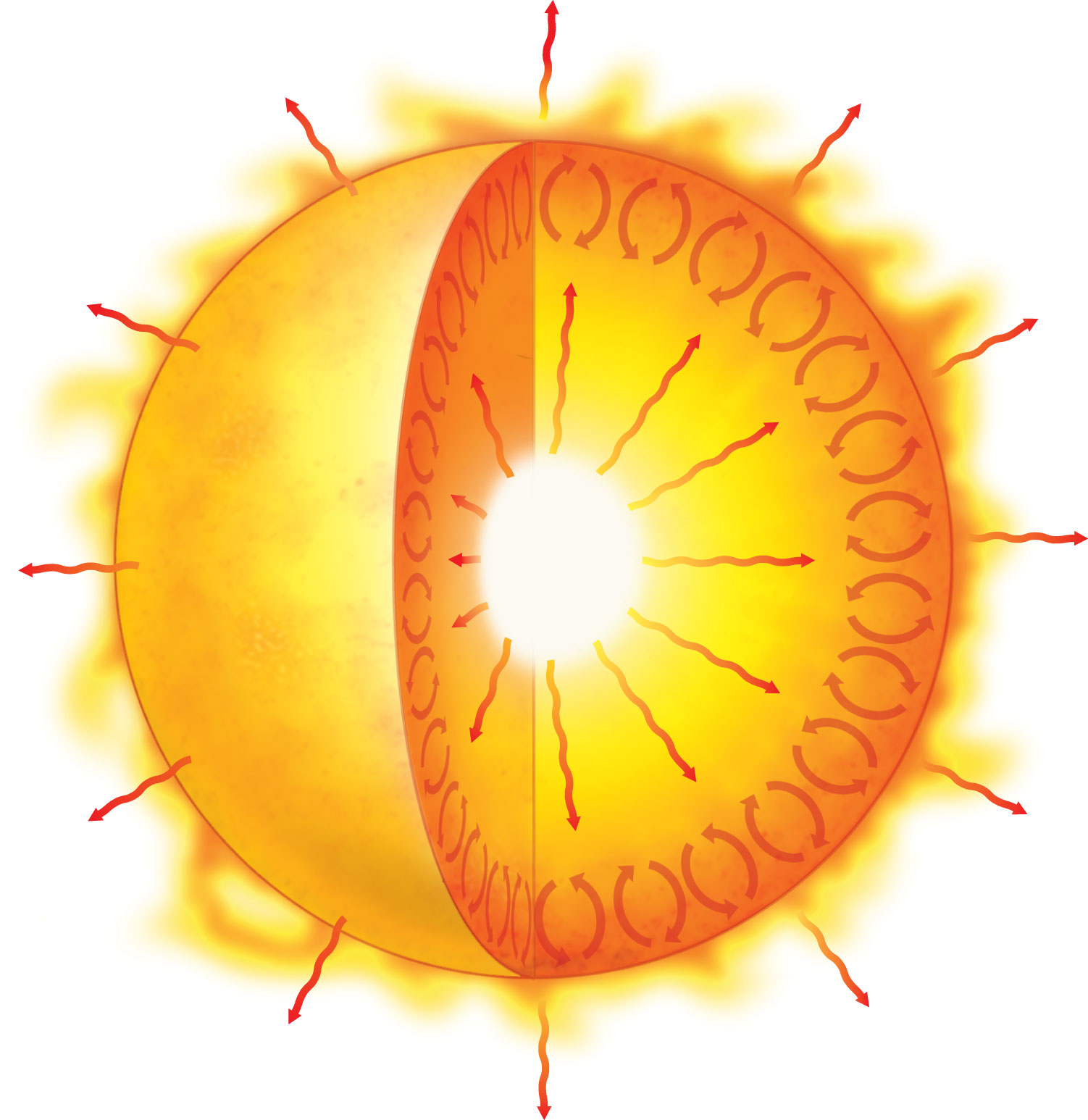
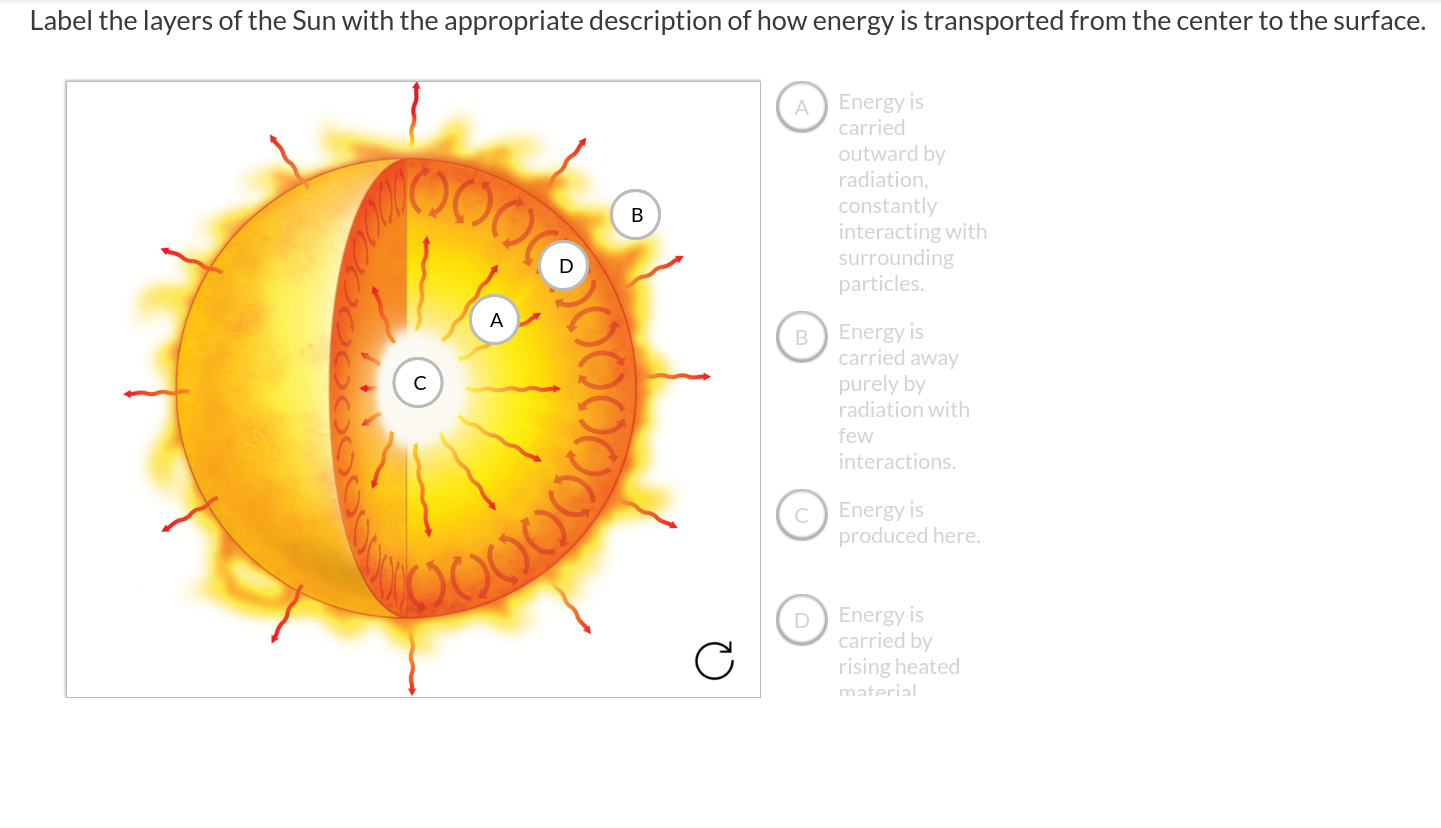
The physical model of the Sun’s interior has been confirmed by observations of
neutrinos and seismic vibrations.
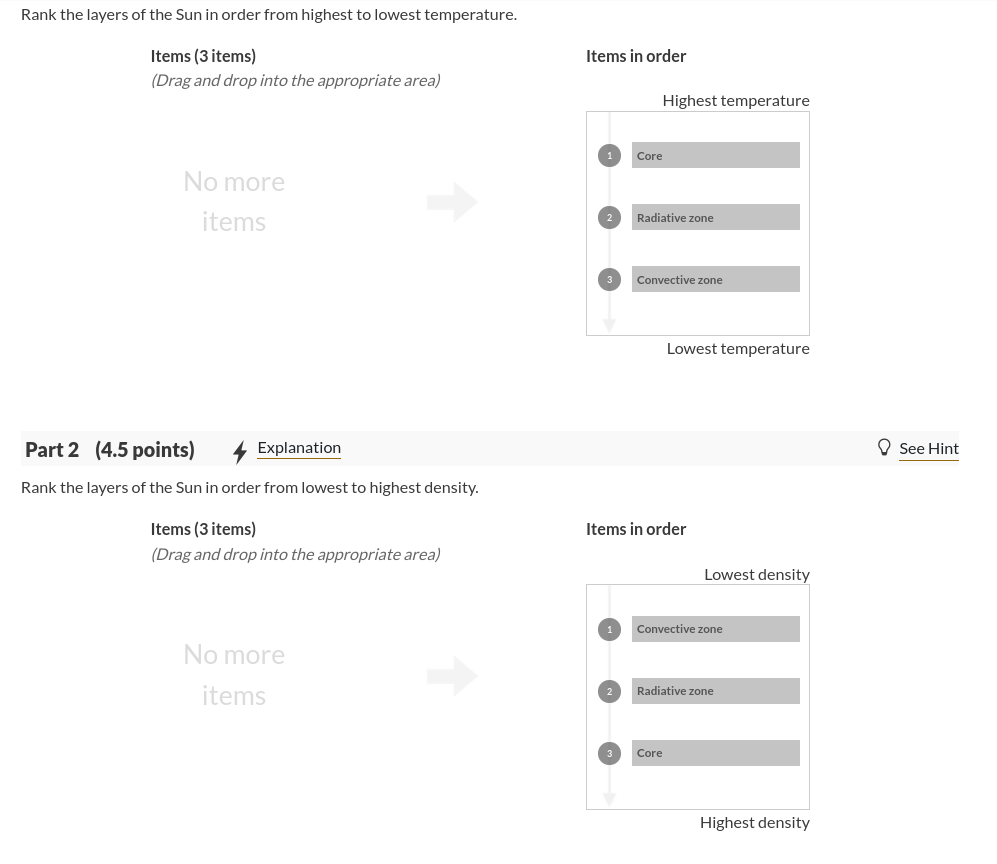
Hydrostatic equilibrium in the Sun means that
pressure balances the weight of overlying layers.
Suppose an abnormally large amount of hydrogen suddenly burned in the core of the Sun. Which of the following would be observed first?
The Sun would emit more neutrinos.
The first neutrino detector (Homestake, shown in this image) consisted of a 100,000 gallon tank of a chlorine-containing liquid, built 1,500 meters underground to block out particles other than neutrinos that might affect the results.
Calculations from the model of the nuclear reactions expected to occur in the Sun predicted that it would detect about 1 neutrino every day as it turned a chlorine atom into argon. In actuality, only 1 neutrino was detected about every 3 days. This was referred to as the solar neutrino problem. What might this problem imply?
The detector may have been missing some neutrinos for some reason.
There were fewer neutrinos detected than expected, so something might be wrong with our models.
It was discovered that there are three different types of neutrinos, called flavors, and that neutrinos can spontaneously change from one type to another. Electron neutrinos are produced in the Sun’s core, but they can change into a muon or tau neutrino during their trip to Earth. The first detectors were built only to detect electron neutrinos.
Can this new information solve the neutrino problem and confirm that our models of nuclear reactions in the Sun are correct?
Yes. The existence of three different types of neutrinos would account for the missing neutrinos observed over the number that were predicted.
Explore top notes

