The Official DVSA Theory Test for Car Drivers
 Studied by 2 people
 Call Kai
 Learn
Learn Practice Test
 Spaced Repetition
 Match
Match Flashcards
 Knowt Play
1/141

There's no tags or description
Looks like no tags are added yet.
Name | Mastery | Learn | Test | Matching | Spaced | Call with Kai |
|---|
No analytics yet
Send a link to your students to track their progress
142 Terms
1.1) What should you do before making a U-turn?
Look over your shoulder for a final check.
1.2) What should you do as you approach this bridge?
Slow down
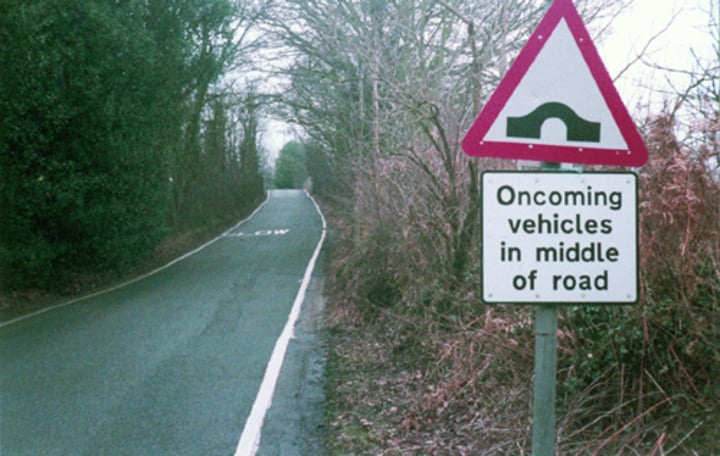
1.3) Where shoud you avoid overtaking?
Approaching a dip in the road
1.4) What does this curved arrow road marking mean?
Overtaking traffic should move back to the left.
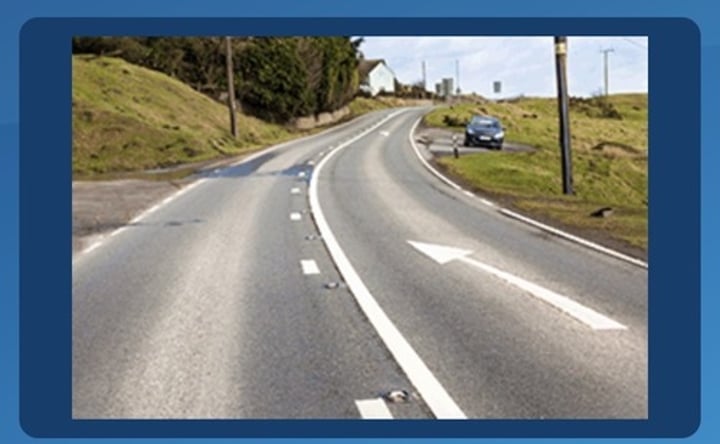
1.5) What should you do if your mobile phone rings while you're driving or riding?
Leave it until you have stopped in a safe place.
1.6) Why are these yellow lines painted across the road?
To make you aware of your speed.
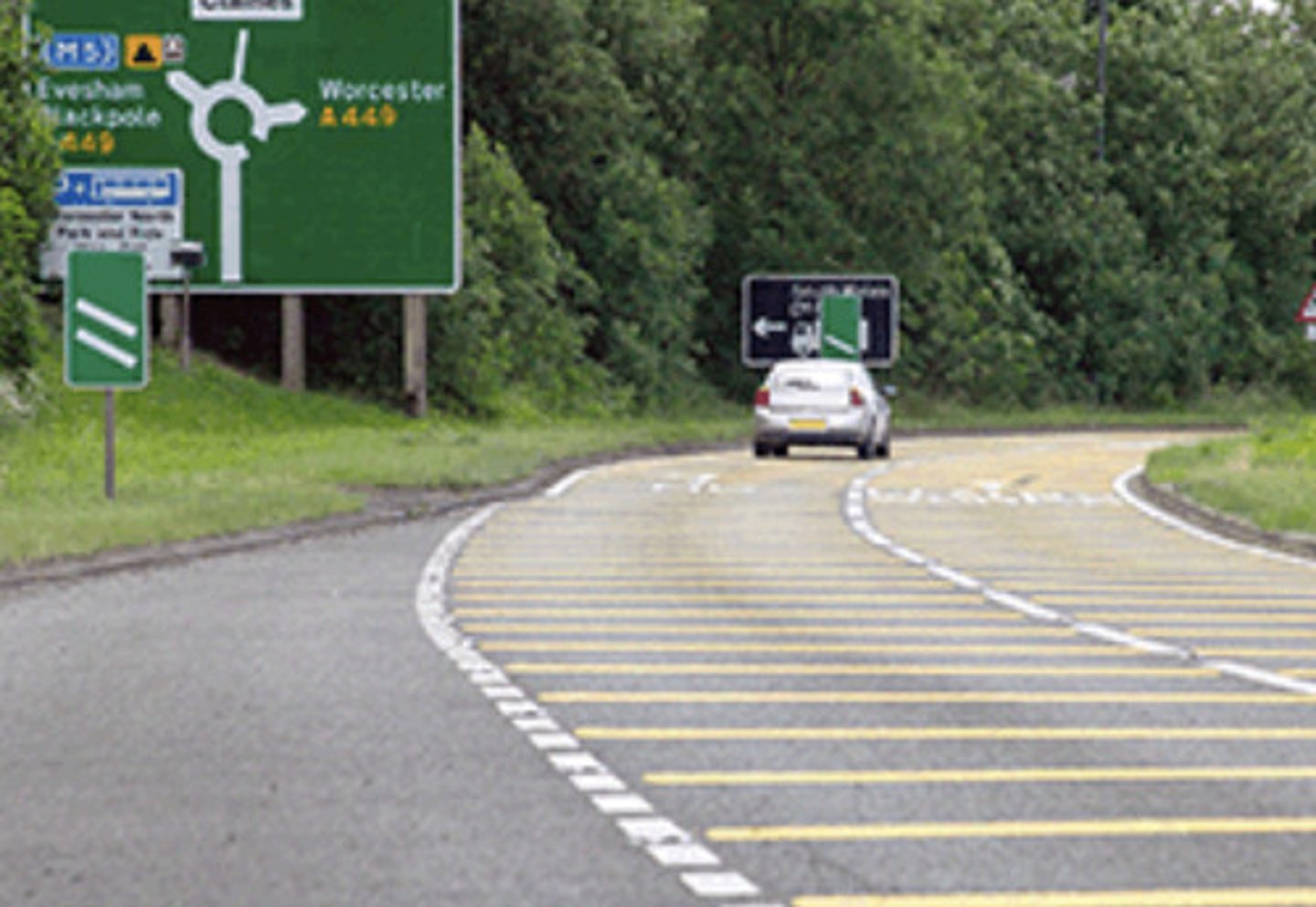
1.7) What should you do when you're approaching traffic lights that have been green for some time?
Be ready to stop.
1.8) What should you do before slowing down or stopping your vehicle?
Use the mirrors.
1.9) You're following a large vehicle. Why should you stay a safe distance behind it?
You'll give the driver a chance to see you in their mirrors.
1.10) Why should you use your mirrors when you see a hazard ahead?
To assess how your actions will affect the traffic behind.
1.11) You're waiting to turn right at the end of a road. What should you do if your view is obstructed by parked vehicles?
Stop and then move forward slowly and carefully for a clear view.
1.12) There are objects hanging from your interior mirror. Why could this be a hazard?
Your view could be obstructed.
1.13) You're on a long motorway journey. What should you do if you start to feel sleepy.
Leave the mototrway and stop in a safe place.
1.14) Why should you switch your headlights on when it first starts to get dark?
So others can see you more easily.
1.15) What's most likely to distract you while you're driving?
Using a mobile phone.
1.16) When you're driving your car. When may you use a hand-held mobile phone?
When you've parked safely.
1.17) You're driving on a wet road. What should you do if you have to stop your vehicle in an emergency?
Keep both hands on the steering wheel.
1.18) What should you do when you move off from behind a parked car?
Look around before moving off.
1.19) You're travelling along this road. How should you pass a cyclist?
Leave them plenty of room as you pass.
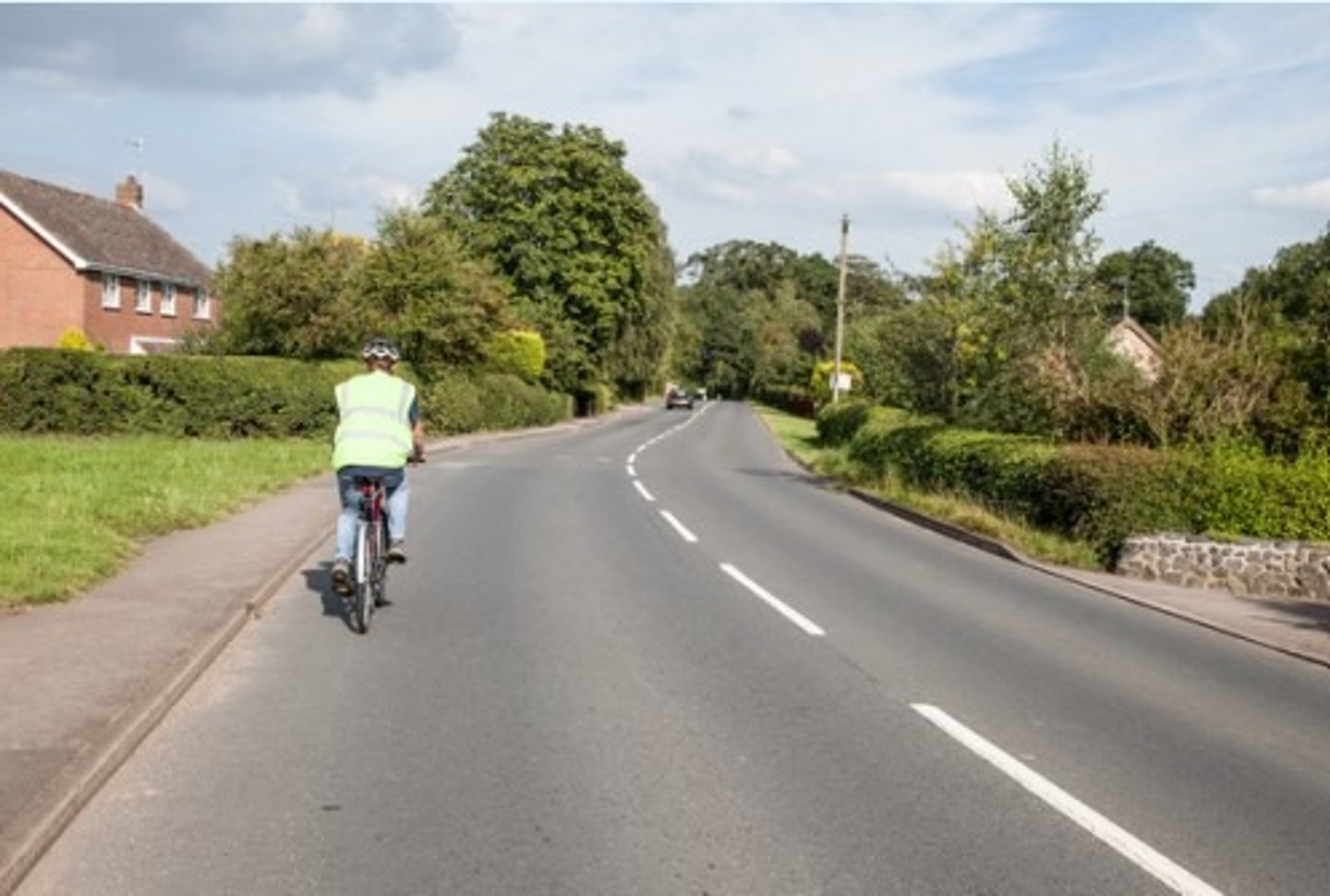
1.20) When do windscreen pillars cause a serious obstruction to your view?
When you're approaching bends and junctions.
1.21) What should you do if you can't see clearly behind when you're reversing?
Ask someone to guide you.
1.22) What does the term 'blind spot' mean?
An area not visible to the driver.
1.23) What's likely to happen if you use a hands-free phone while you're driving?
It will divert your attention.
1.24) You're turning right onto a dual carriageway. What should you do before emerging?
Check that the central reservation is wide enough for your vehicle.
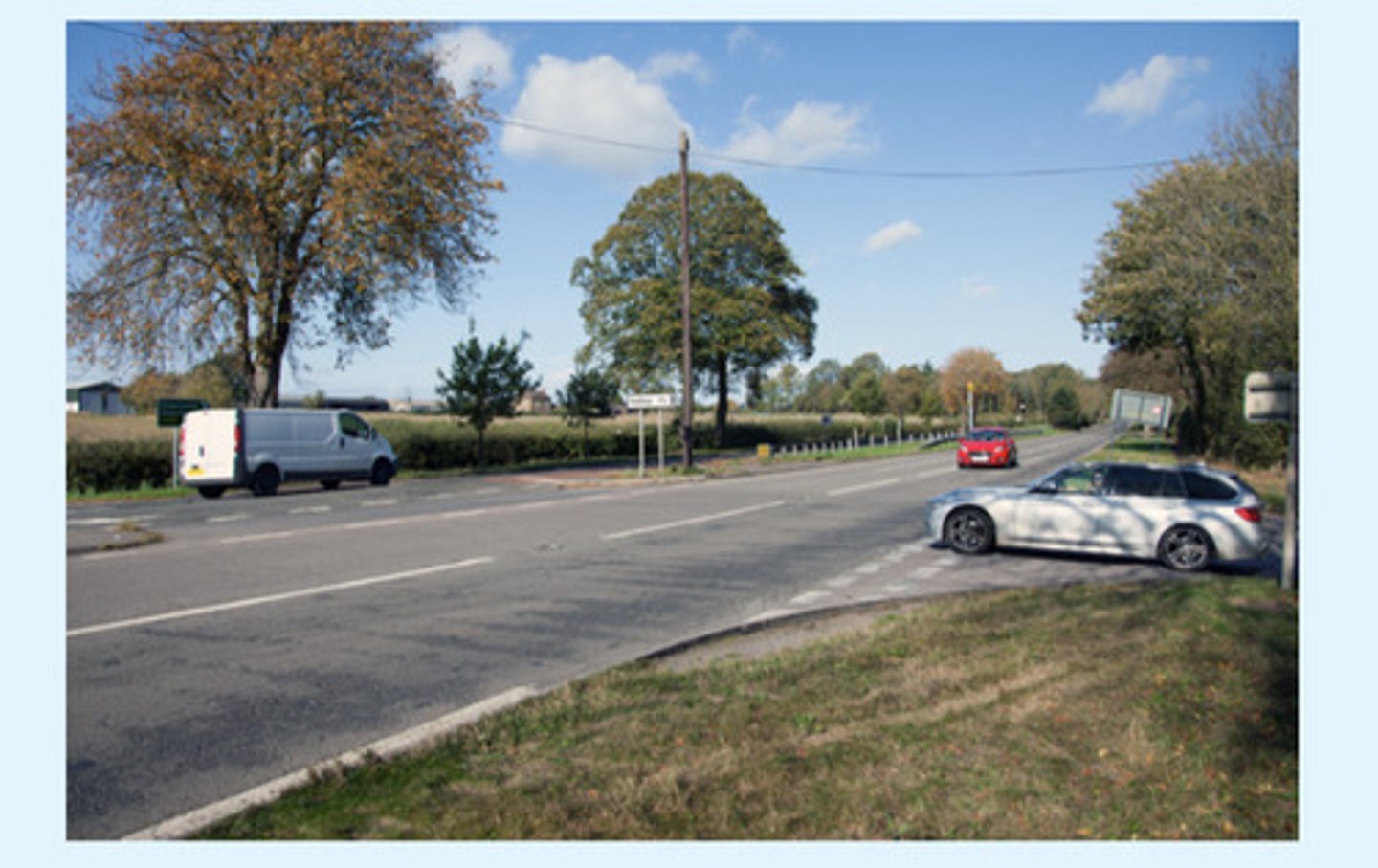
1.25) You're waiting to emerge from a junction. The windscreen pillar is restricting your view. What should you be particularly aware of?
Motorcyclists.
1.26) How can you make sure that a satellite navigation (satnav) system doesn't distract you when you're driving?
Set it before starting your journey.
2.1) What must you do when the amber light is flashing at a pelican crossing?
Give way to pedestrians already on the crossing.
2.2) Why should you never wave people across at pedestrian crossings?
Another vehicle may be coming.
2.3) Why is it dangerous to travel too close to the vehicle ahead?
Your view of the road ahead will be restricted.
2.4) What will happen if you follow this vehicle too closely?
Your view ahead will be reduced.
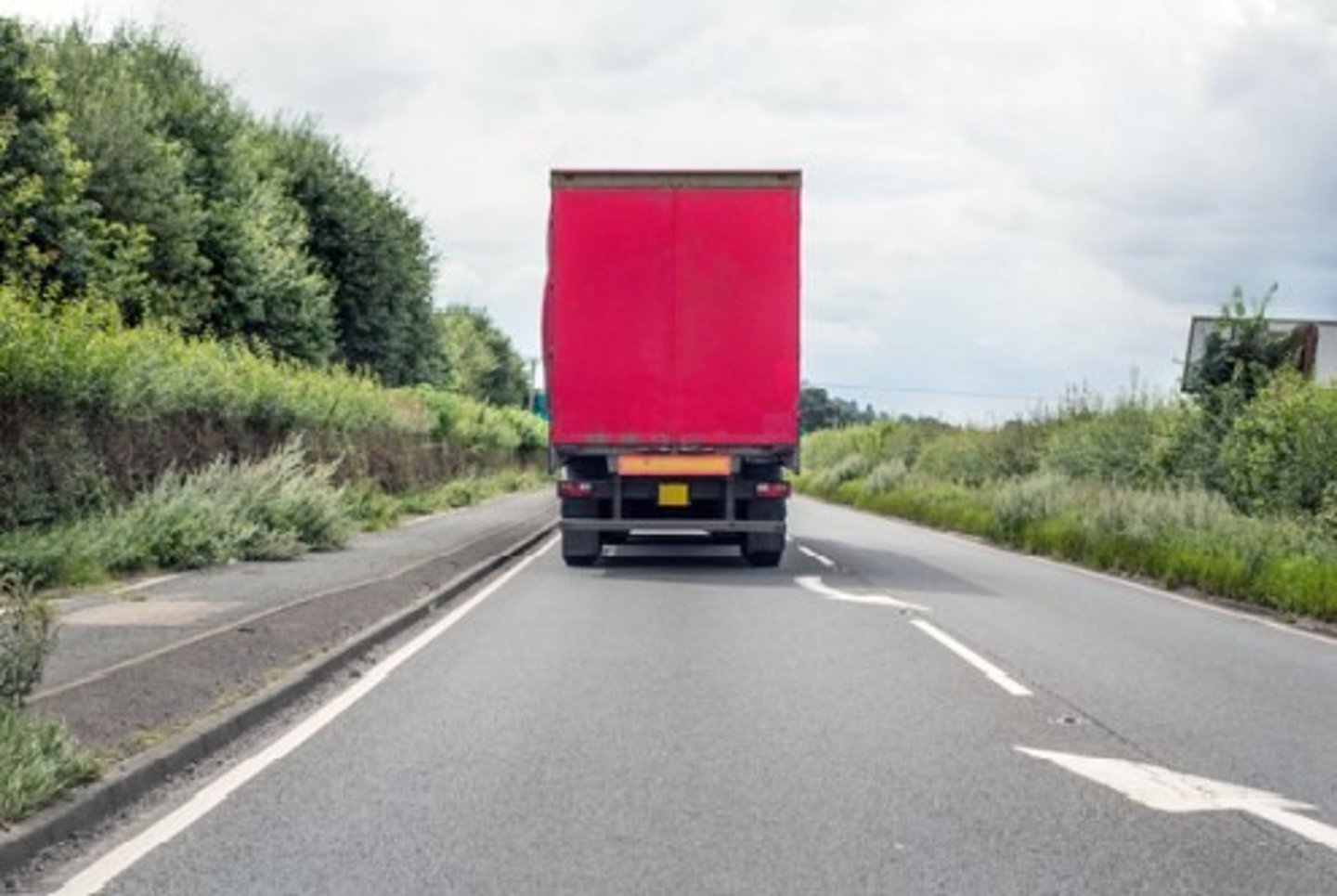
2.5) What's the minimum time gap you should leave when following a vehicle on a wet road?
Four seconds.
2.6) You're being overtaken by a long, heavily laden lorry. What should you do if it's taking a long time for it to overtake?
Slow down.
2.7) Which vehicle will use a blue flashing beacon
Bomb disposal.
2.8) What should you do if you're being followed by an ambulance showing flashing blue lights?
Pull over as soon as it's safe to do so.
2.9) What type of emergency vehicle is fitted with a green flashing beacon?
Doctor's car.
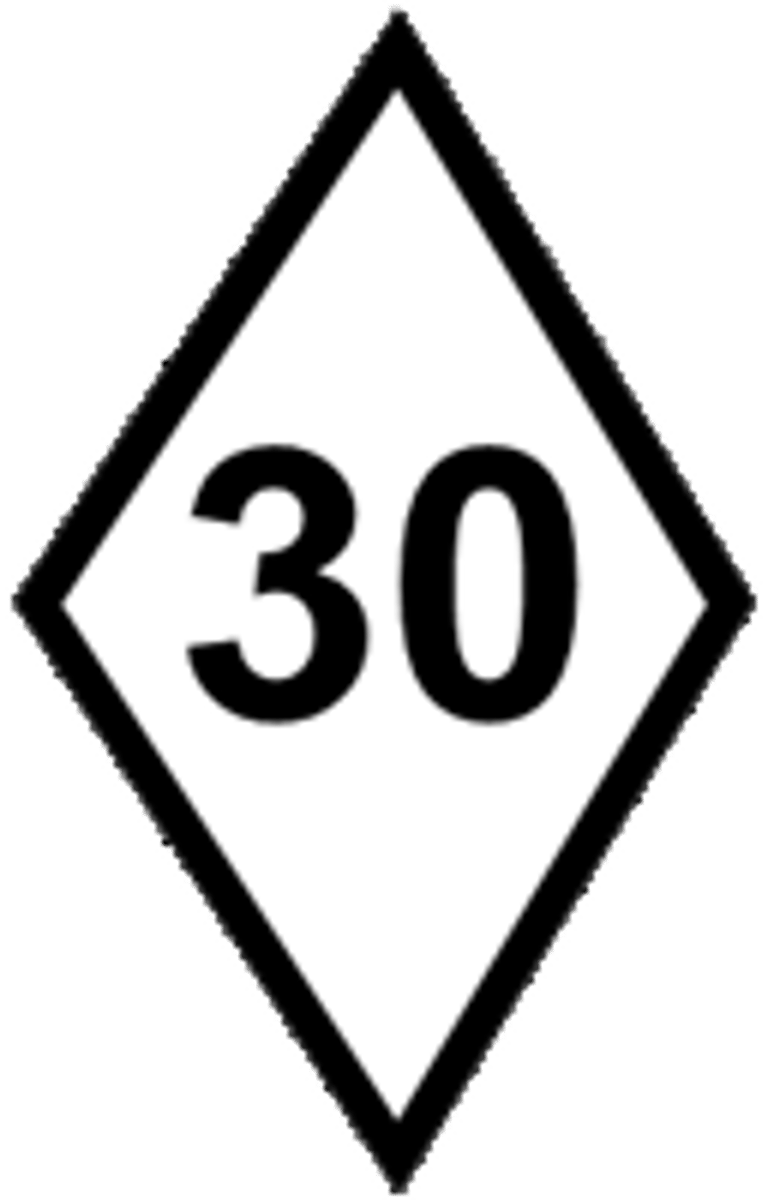
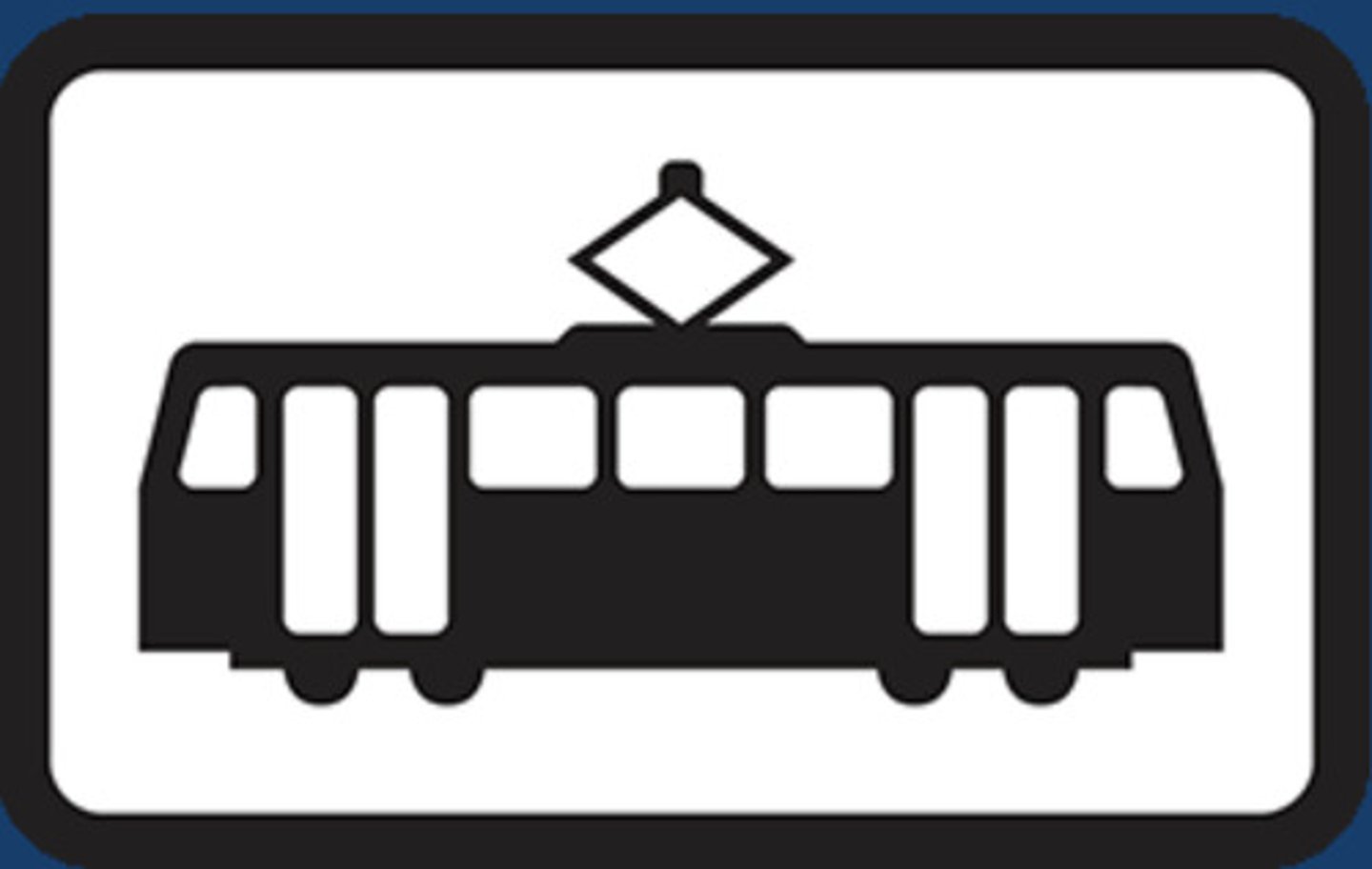
2.10) Who should obey diamond-shaped traffic signs?
Tram drivers
2.11) On a road where trams operate, which vehicles will be most at risk from the tram rails?
Cycles.
2.12) When should you use your vehicle's horn?
To alert other's to your presence.
2.13) You're in a one-way street and want to turn right. Where should you position your vehicle when there are two lanes?
In the right-hand lane.
2.14) You wish to turn right ahead. Why should you take up the correct position in good time?
To help other road users know what you intend to do.
2.15) Which type of crossing allows cyclist to ride across while pedestrians are also crossing?
Toucan.
2.16) You're travelling at the legal speed limit. What should you do if the vehicle behind approaches quickly, flashing its headlights?
Allow the vehicle to overtake.
2.17) When should you flash your headlights at other road users?
When letting them know that you're there.
2.18) You're approaching an unmarked crossroads. How should you deal with the junction?
Slow down and look both ways.
2.19) The conditions are good and dry. When should you use the 'two-second' rule?
When checking your gap from the vehicle in front.
2.20) Which colour follows the green signal at a puffin crossing?
Steady amber.
2.21) You're in a line of traffic. What action should you take if the driver behind is following very closely
Slow down, gradually increasing the gap between you and the vehicle in front.
2.22) You're driving on a clear night. Which lights should you use if the national speed limit applies and there's a steady stream of oncoming traffic?
Dipped headlights.
2.23) You're driving behind a large goods vehicle. What should you try to do if it signals left but steers to the right?
Slow down and let the vehicle turn.
2.24) You're driving along this road. What should you do if the red car cuts in close in front of you?
Drop back to leave the correct separation distance.
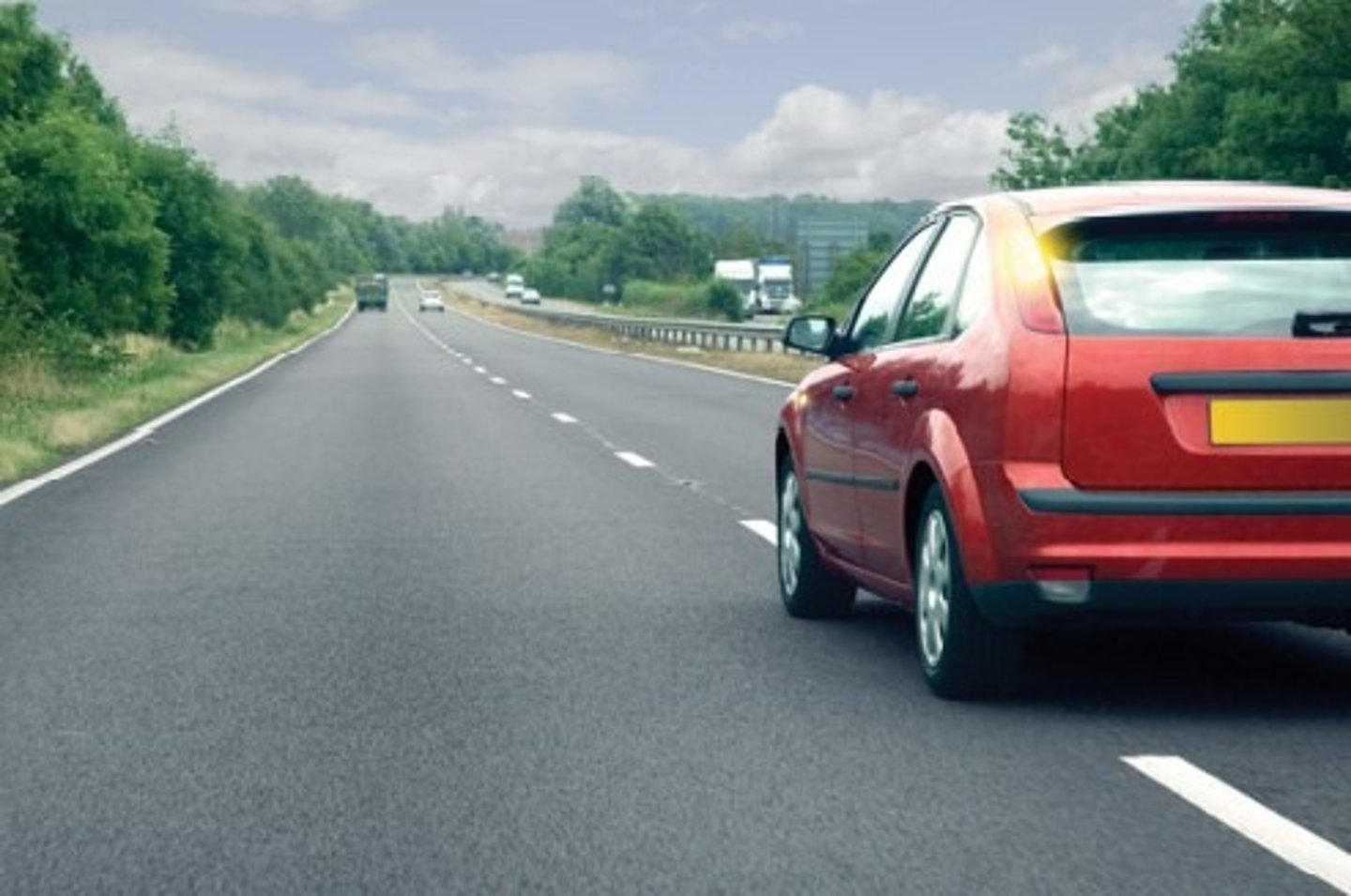
2.25) You're waiting in a traffic queue at night. How can you avoid dazzling drivers behind you?
Use the parking brake and release the footbrake.
2.26) You're driving in traffic at the speed limit for the road. What should you do if the driver behind is trying to overtake?
Keep a steady course and allow the driver behind to overtake.
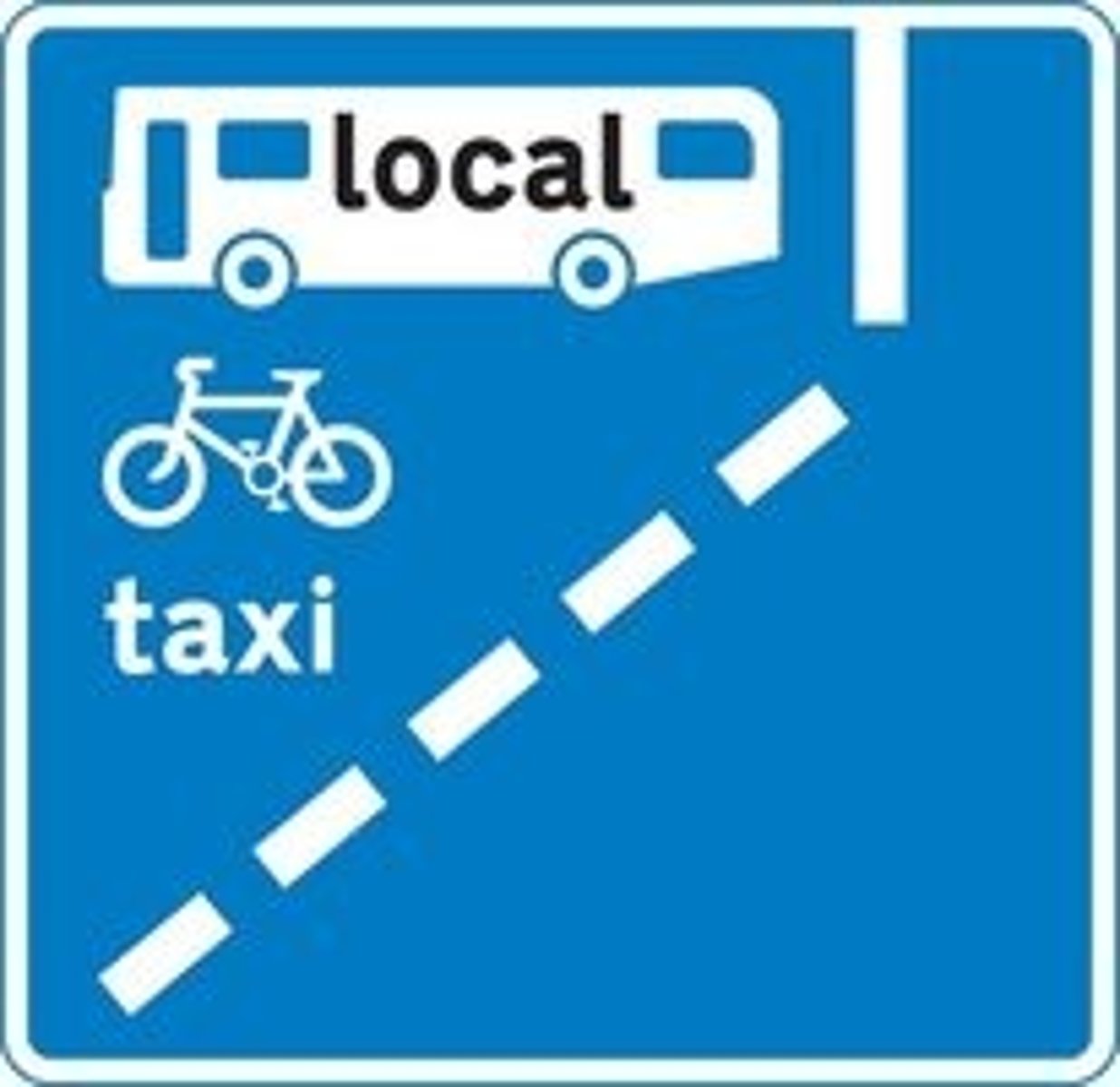
2.27) What does it mean if the signs at a bus lane show no times of operation?
The lane is in operation 24 hours a day.
2.28) What should you do when a person herding sheep asks you to stop?
Stop and switch off your engine.
2.29) What should you do when you're overtaking a horse and rider?
Go past slowly and carefully
2.30) You're approaching a zebra crossing. What should you do if pedestrians are waiting to cross?
Slow down and prepare to stop.
2.31) What should you do if a vehicle pulls out in front of you at a junction?
Slow down and be ready to stop.
2.32) You're approaching a red light at a puffin crossing. Pedestrians are on the crossing. When will the red light change?
When the pedestrians have cleared the crossing.
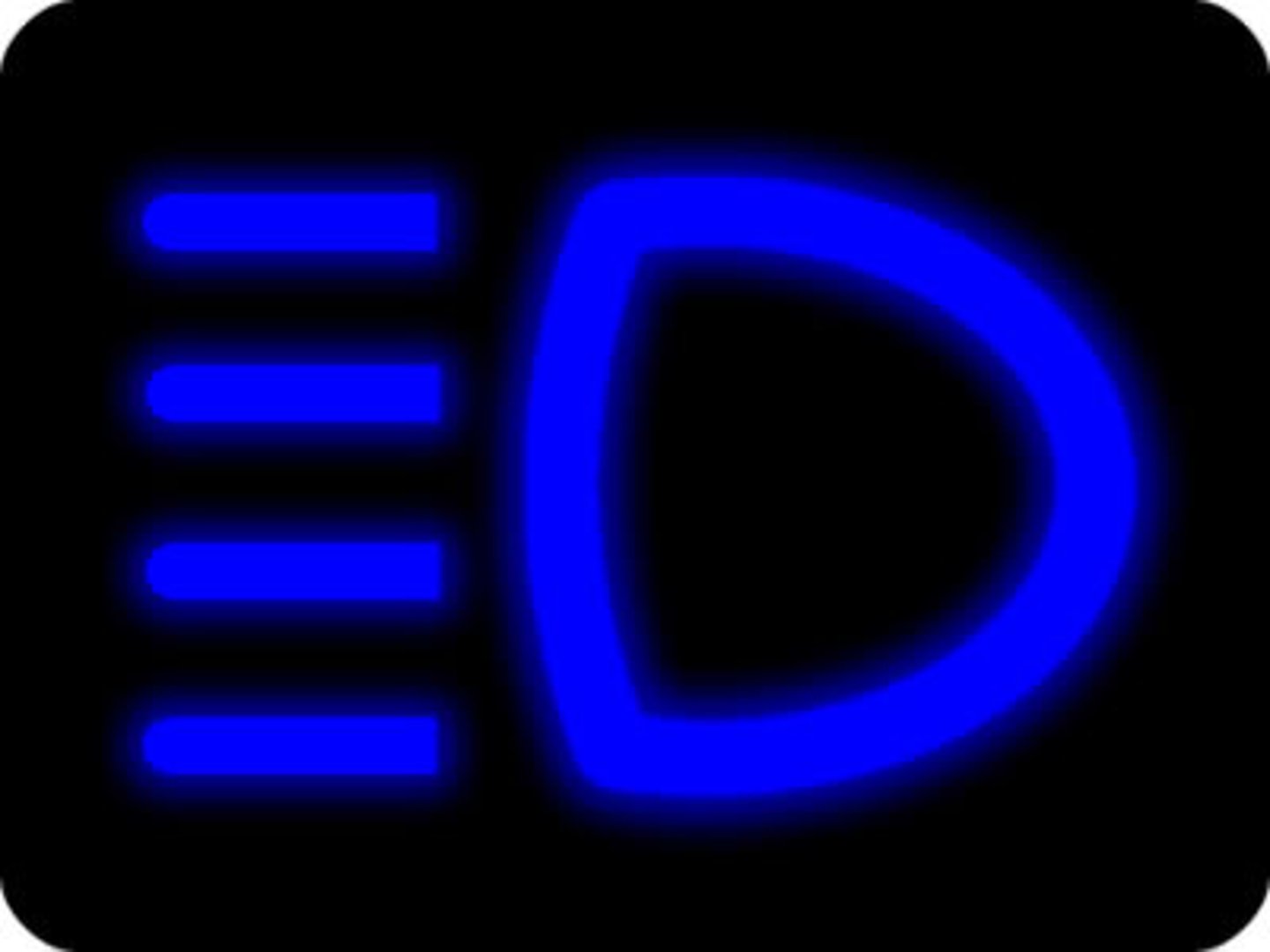
2.33) Which instrument-pannel warning light would show that headlights are on the main beam?
The blue one
2.34) When should you leave a two-second gap between your vehicle and the one if front?
When it's dry
2.35) You're driving at night on an unlit road. What should you do if you're following another vehicle?
Use dipped headlights.
2.36) What should you do if you're driving a slow-moving vehicle on a narrow winding road?
Pull in when you can, to let the vehicles behind overtake.
2.37) You're driving a car that has a diesel engine. What can a loose filler cap on your fuel tank cause?
It can make the roads slippery for other road users.
2.38) What should you do to avoid fuel spillage?
Check that your filler cap is securely fastened.
2.39) What style of driving causes increased risk for everyone?
Competetive
3.1) How would under-inflated tyres affect your vehicle?
The vehicle's stopping distance would increase.
3.2) When are you not allowed to sound your vehicle's horn?
Between 11.30pm and 7.00am in a built-up area.
3.3) What makes the vehicle in this picture 'environmentally friendly'?
It's powered by electricity.
3.4) Why have 'red routes' been introduced in major cities?
to help the traffic flow.
3.5) What's the purpose of road humps, chicanes and narrowings?
To reduce traffic speed.
3.6) What's the purpose of a catalytic converter?
To reduce harmful exhaust gases.
3.7) When should tyre pressures be checked?
When tyres are cold
3.8) When will your vehicle use more fuel?
When its tyres are under-inflated.
3.9) How should you dispose of a used vehicle battery?
Take it to a local-auhority disposal site.
3.10) What's the most likely to increase fuel consumption?
Harsh braking and accelerating.
3.11) The fluid level in your battery is low. What fluid should you use to top it up?
Distilled water.
3.12) You're parked on the road at night. When must you use parking lights?
When the speed limit exceeds 30 mph.
3.13) How can you reduce the environmental harm caused by your motor vehicle?
Keep engine revs low.
3.14) What can cause excessive or uneven tyre wear?
A faulty braking system
3.15) You need to top up your battery with distilled water. What level should you fill it to?
Just above the celll plates.
3.16) Why is it a good idea to plan your journey to avoid busy times?
You'll have an easier journey.
3.17) How will your journey be affected by travelling outside the busy times of day?
Your journey will have fewer delays.
3.18) You plan your route before starting a journey. Why should you also plan an alternative route?
Your original route may be blocked.
3.19) You have to arrive on time for an appointment. How should you plan for the journey?
Allow plenty of time for the trip.
3.20) What can you expect if you drive using rapid acceleration and heavy braking?
Increased fuel consumption
3.21) What could cause you to crash if the level is allowed to get too low?
Brake-fluid level.
3.22) What should you do if your anti-lock brakes (ABS) warning light stays on?
Have the brakes checked immediately
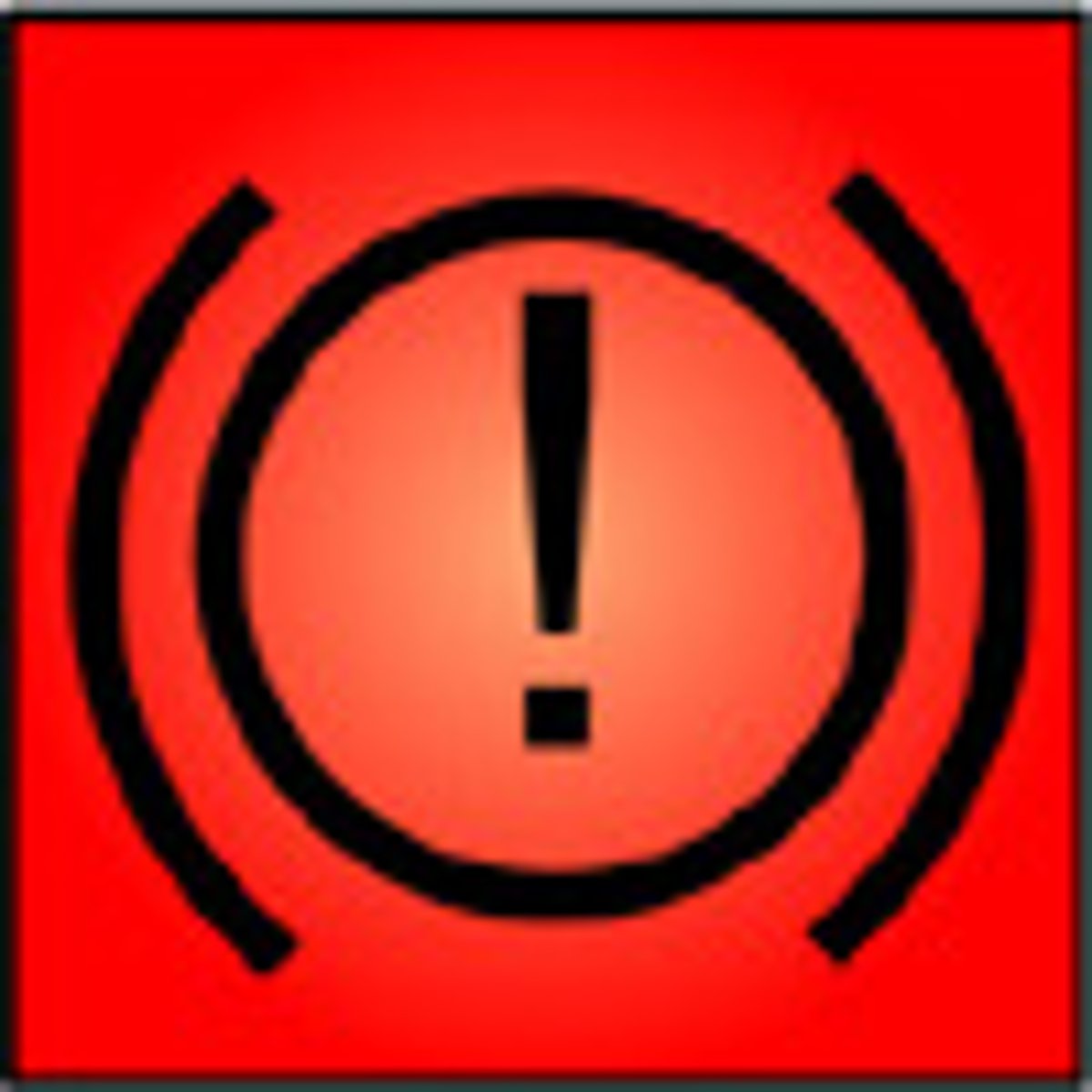
3.23) What does it mean if this light comes on while you're driving?
A fault in the braking system.
3.24) Why is it important to wear suitable shoes when you're driving?
To maintain control of the pedals.
3.25) If you're involved in a collision, what will reduce the risk of neck injury?
A properly adjusted head restraint.
3.26) What does it mean if your vehicle keeps bouncing after you sharply press down and release on the bodywork over a wheel?
The shock absorbers are worn
3.27) How will a roof rack affect your car?
Fuel consumption will increase.
3.28) What makes your tyres illegal?
If they have any large, deep cuts in the side walls.
3.29) What's the legal minimum depth of tread for car tyres?
1.6mm
3.30) You're carrying two 13-year-old children and their parents in your car. Who's responsible for seeing that the children wear seatbelts?
You, the driver.
3.31) How can drivers help the environment?
By accelerating gently.
3.32) How can you avoid wasting fuel?
By having your vehicle serviced regularly.
3.33) What could you do to reduce the volume of traffic on the roads?
Walk or cycle on short journeys.
3.34) What's most likely to waste fuel?
Under-inflated tyres.
3.35) What part of the car does the law require you to keep in good condition?
The seat belts
 Note
Note  Flashcards (161)