architecture quiz 2 - renaissance and gothic
 Call Kai
 Learn
Learn Practice Test
 Spaced Repetition
 Match
Match Flashcards
 Knowt Play
1/21

There's no tags or description
Looks like no tags are added yet.
Name | Mastery | Learn | Test | Matching | Spaced | Call with Kai |
|---|
No analytics yet
Send a link to your students to track their progress
22 Terms
What are basic characteristic features of baroque art and architecture?
Decorativeness, dramatic/theatrical effects, curves (but not consistent) and organic shapes, twisted columns, broken/open pediments, double and cluster columns, openings above portals, ovals and oval domes, leaf gold, emphasization of grandeur and movement
How did the style of baroque art and architecture differ from the Renaissance?
Baroque palaces are bigger and grander than Renaissance — monumental! The Renaissance was built to the scale of the human eye; the Baroque has a sense of monumentality. The Renaissance valued order, symmetry, straight lines, and “the golden ratio,” while Baroque values more adventurous curving lines, ornate and detailed design, high contrast artistic style, and more advanced architectural planning
what were the stages of baroque?
early baroque (1600-1625), high baroque (1625-1675), late/radical baroque (1675-1750)
What is typical for radical baroque architecture?
Extreme dynamism, unusual forms, bold ornamentation, movement (facade like a membrane), fluidity, segment pediments (broken base), plasticity of form. buildings were made to combine art and architecture as a "comprehensive work of art that demonstrated the majestic wealth of aristocratic society. 3 types of churchw designs: elongated central plan, the greek cross, and single-aisle churches
what are the characteristic features of Rococo?
Rococo features elaborate ornamentation, lightness, elegance, and an exuberant use of curves. It often includes playful themes, asymmetry, and pastel colors, reflecting a more intimate and decorative style compared to the grandeur of Baroque. The style is less ovular and highly assymetrical, and works elegantly and fluidly with the other art features such as frescos
when was the baroque era in the czech lands?
1600-1780
who desifned the matthias gate in prague and where is it located?
giovanni maria filippi, located at the entrance to the Prague Castle
Which monastic order did the architect Carlo Lurago work for? What is his best-known building in Prague?
the jesuits when they were designing their complex/residence in prague to express the power/influence of the church, he built church of st. ignatius in new town
what was special abour the italian architect that was the main source of inspiration for Caratti’s Czernin Palace in Prague
Franceso Caratti was inspired by Italian architect Andrea Palladio to blend classical roman style with contemporary baroque style, wanting to compete with the size and splendor of Italian classical palaces. also wrote four bopks of architecture, which was the first of its kind to be written by the architect himself
name your 3 fav churches designed by the Dientzenhofers
st. nicholas church, church of st. john of nemopuk on a rock, loreta church
Who built the Troja chateau and the church of St. Francis of Assisi in Prague?
Jean-Baptiste Mathey (1630-1695), a native of Burgundy who was strictly Roman in his architectural profile.
He lived in Rome for two decades, where he acquired his architectural skills (despite being a painter originally). There, he entered the service of the Bishop. When Johann Friedreich of Wallenstein was appointed Archbishop of Prague, Mathey moved there with him. There, he built the church of St. Francis of Assisi. Mathey also built the chateau — or “suburban villa” — for Count Wenzel Sternberg in Trója outside Prague. He planned the whole complex, including the gardens which exhibit a range of features characteristic of projects in Rome and its environs in the 16th and 17th centuries. The Trója chateau is a full-blooded expression of the High Baroque and had a fundamental influence on the subsequent development of chateau architecture.
What is original about Santini’s architecture?
defined clarity of aesthetic ideas and imaginative potency of architectural forms, which integrated Gothic and Italian (Renaissance) inspirations — the Gothic for its forms, spatial conceptions and compositional groups that defied classical tectonics, and the Italian for the imaginatively rich art of artists like Francesco Borromini. he transcended stylistic definition, used “ideally dematerialized” structures, mind-bending forms that challenged people’s understanding of what they were looking at, use of light to add to the effect of indoor architecture
What were the main changes that occurred in architecture, urban and landscape planning in the baroque period?
In the Baroque era, architects began focusing on curves instead of horizontal lines — oval plans, undulating walls (concave and convex), and complex geometries to complete a sense of motion. Dramatic lighting effects were created using hidden windows, high contrast light and shadow, and gilded, reflective surfaces. Facades became highly ornate, featuring broken pediments, twisted columns, and heavy cornices. Sculptures, frescoes, and paintings were integrated into the architecture to dissolve boundaries between the arts.
Landscape planning evolved to vast, symmetrical garden designs featuring elaborate decorative elements like statues, trimmed hedges, flower beds, and fountains. The gardens were seen as extensions of the home or palace’s architecture and were often equally grand. They often featured a salla terrena, which was a formal room on the ground floor of the palace that connected the garden to the building (often featuring a loggia).
a formal ground-floor room connecting gardens to a palace, often featuring a loggia.
salla terrena
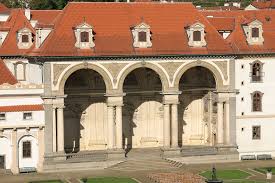
What are the main characteristic features of the Renaissance style in Czech architecture?
The style was characterized by a strong “tectonic sense” in which it was possible to perfectly balance horizontal and vertical forces which are optically presented and expressed by cornices and pilasters. For example, the horizontality of the design would be counteracted by the ascending lightness of the vertical structure, which moved from the Doric, to Ionic, to Corinthian order to become more airy and decorative at the top of the building. Features include loggias, acrades, stepped pediments, parapets, archivolts, sgraffito, etc
when was the renaissance era in the czech lands?
late 15th to 17th century
name some examples of baroque architecture in prague
czernin palace, st. nicholas church, st. john on a rock, troja chateau
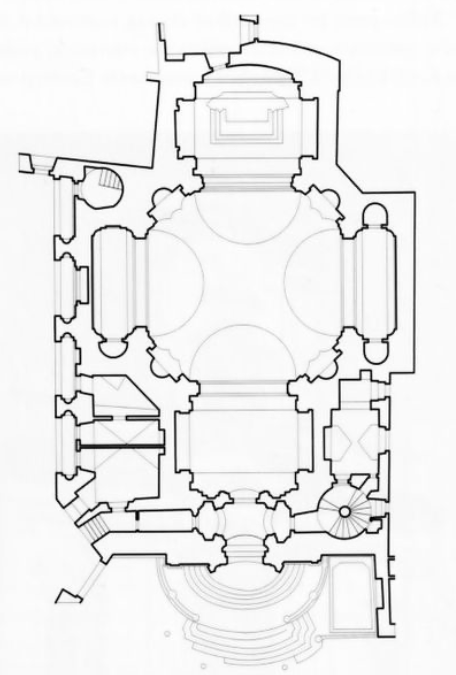
Characterized by four equal arms (a "+" shape) forming a square, central focus, often topped with a dome. It emphasizes symmetry, balance, and centralized, heavenly focus. (i.e. st. john of nepomuk)
greek cross plan
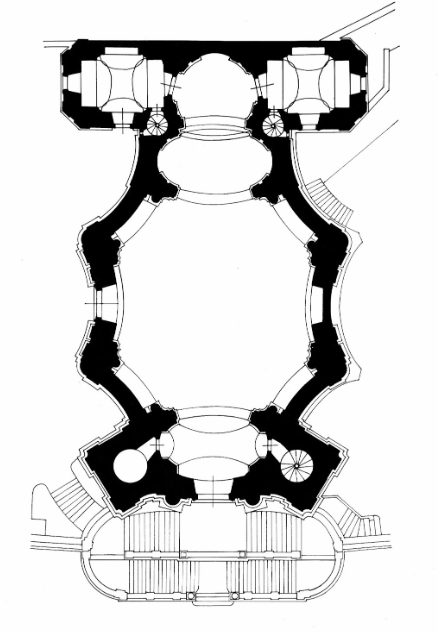
Characterized by a long, rectangular nave leading towards a specific, usually eastern, apse (such as the Latin Cross). It emphasizes procession, hierarchy, and a journey toward the altar. (i.e. st. john on a rock)
elongated central plan
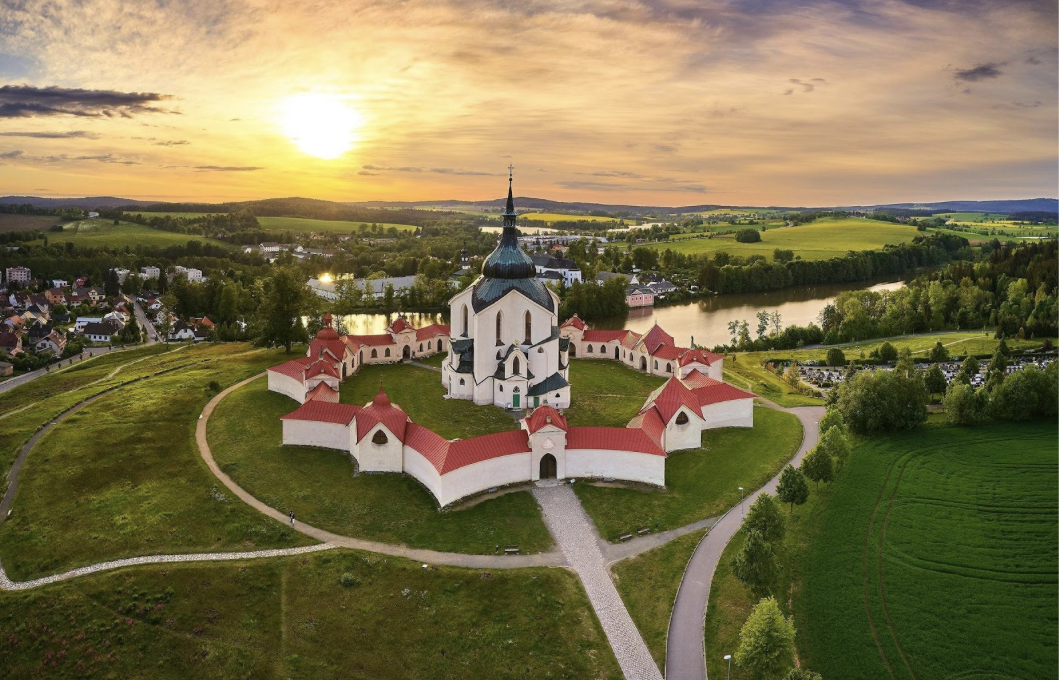
who built st. john of nepomuk church in zelena hora with a unique stellar plan?
santini
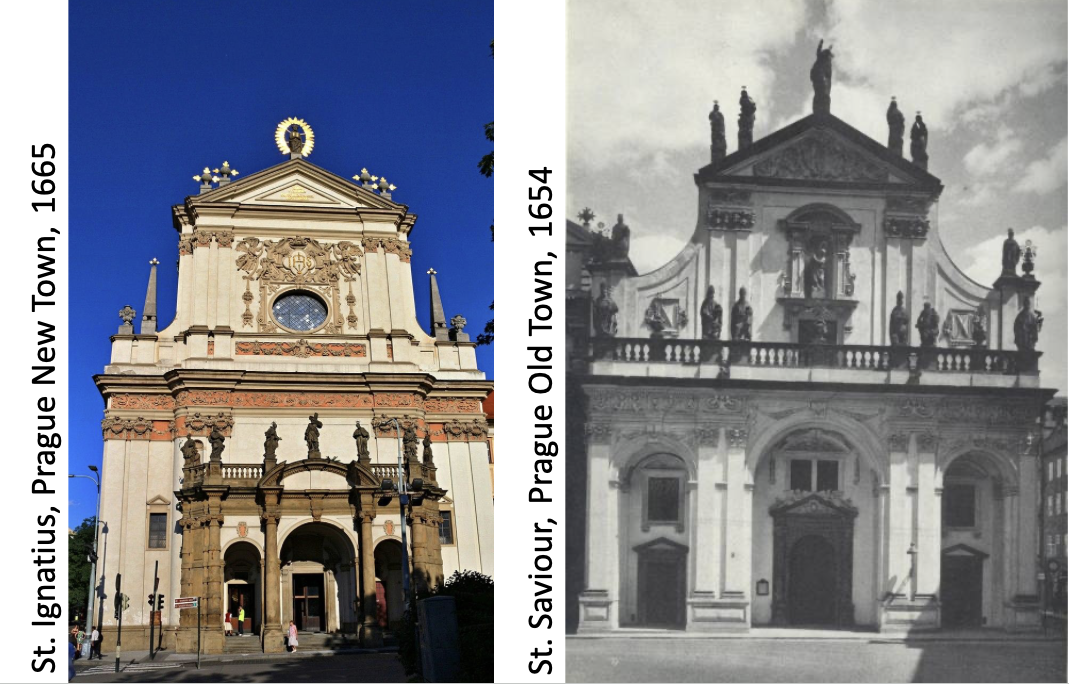
a triumphant arch or a large, impressive covered entrance or porch supported by regularly spaced columns, often featuring a pediment
monumnetal portico
name some projects of jean baptiste mathey
troja chateau, archbishop’s palace, church of st. francis of Assisi

