Graphics: Preliminary
 Studied by 0 people
 Call Kai
 Learn
Learn Practice Test
 Spaced Repetition
 Match
Match Flashcards
 Knowt Play
1/103

There's no tags or description
Looks like no tags are added yet.
Name | Mastery | Learn | Test | Matching | Spaced | Call with Kai |
|---|
No analytics yet
Send a link to your students to track their progress
104 Terms
Graphic Design
is the art and practice of visual communication. (The art or skill of combining text
and pictures)
Graphic Designer
is a professional within the graphic design and graphic arts industry who assembles together images, typography or motion graphics to create a piece of design.
Graphic Design Elements
are the building blocks of graphics.
Contrast
is created when you place two different or opposite elements together.
You can create it with font style, size, or
color.
Repetition
is the recurring of the same object.
Brings unity to the image
Leads the eye to an important message, logo, image of idea
May make things look more professional and organized
If used in the background, it ties the foreground together.
you can use in your fonts, bullets, colors,
alignments or any graphic style.
Alignment
is the placement of text and graphics so
they line up on the page.
TRUE/ALIGNMENT
Create order.
Organize things on a page.
Group items.
Create visual connections.
Good alignment is invisible. When things are out of
alignment, it is noticeable.
Proximity / Closeness
is the grouping together of different objects. (Grouping objects can enhance a specific
image)
it can achieve it by:
▪Larger and Smaller objects
▪Color Differences (the emphasized object has a
different color)
▪Repeated groupings (emphasizes differences between
the various groups)
TRUE/PROXIMITY
▪Objects that are grouped together can be
associated with each other.
▪Grouping objects can enhance a specific
image.
▪Gives the elements greater impact as the eye
gazes from one object to the next.
▪ Misinterprets the grouping, thus causing
the viewer to be confused.
▪ Too many groupings may simply become
repetitive and boring.
White Space
a space between elements in a composition
Creates a balanced and harmonious layout
Brings out a central focus
Looks organized and clean
Micro whitespace
space between smaller objects
Macro whitespace
space between larger objects
TRUE/PROXIMITY or CLOSENESS
In design, proximity (or closeness) creates a
connection between grouped elements on a page.
Visually group elements (text and/or images) that are
connected.
Items or group of information that are not related to
each other should not be in close proximity to each
other.
Organize Your Ideas.
the state of one object being near
another.
Proportion
determining the right division of space of the layout.
TRUE/PROPORTION
It makes the design look more natural and appealing
Aids in deciding where the focus point should be
located; or where the main subjects should be placed
Guides the viewers eye through the picture
If you don't find the right focus point, and still apply this
rule, then the result might end up awkward
Golden Spiral
a spiral through vertices of nested golden rectangles
Rule of Thirds
also called golden ratio
Lines
can be straight or curved.
Hue
is another word for color.
Chroma
is the intensity or purity of color.
Tint
is a color mixed with white.
Tone
is a color mixed with gray.
Shade
is a color mixed with black.
Color Wheel
help determine which colors are
in greatest contrast.
Color Harmony
is a specific set of color rules that an artist follows (or doesn't) to achieve a certain mood in the viewer.
Analogous colors
are adjacent to each other on the color wheel. (occupy very close position adjacent to each other)
Complementary colors
are opposite each other on the color wheel.
Analogous Harmony
are great for conveying intense moods and emotions.
Split-Complements
contrast two analogous colors with a complementary color
Double-Split Complements
contrast two complementary analogous ranges
Triads
are comprised of 3 equally spaced hues.
Tetrads
are comprised of 4 equally spaced hues.
Triads and Tetrads
are great at showing color but they don't allow for nearly as much as color
TRUE/COLOR
▪ Use color to label or show hierarchy.
▪ Use color to represent or imitate reality.
▪ Use color to unify, separate, or emphasize.
▪ Use color to decorate.
▪ Use color consistently.
Shape
are enclosed objects that can be created by line or created by color and value changes that define their edges.
have two dimensions, length and width, and
can be geometric or free-form (organic).
Design in painting is basically the planned
arrangement of it in a work of art.
Texture
is the surface look of an object created by varying dark and light areas.
▪ Roughness
▪ Smoothness
▪ Depth
TRUE/TEXTURE
The texture of a surface is the look or feel. This
can add depth and richness to a piece of
graphic design by creating the illusion of a
texture on a printed page or computer screen.
Texture can be created with patterns that are
printed on a page. For example, wrapping
paper has visual texture. Tactile texture can
actually be felt and is frequently employed by
printing on textured paper readers can feel.
Graphic Design Principles
are ways in which elements are used together
Movement
is the use of lines, color, and repetition to create the illusion of
motion.
▪ Curved forms or lines
▪ Repetition of geometric forms
▪ Fuzzy lines or outlines
Balance
is the act of comparing or estimating two things, one against the other and the contrast between:
▪ Empty space (white space) and filled space
▪ Text and images
▪ Color and no colors and different colors
▪ Textures against flat colors
TRUE/BALANCE
There are three different types of balance
when using color, shape, and position:
▪ Symmetry
▪ Asymmetry
▪ Radial symmetry
▪You can usually identify at least one of three lines of symmetry.
▪ Horizontal
▪ Vertical
▪ Diagonal
Unity
The correct balance of composition or color that produces
a harmonious effect.
Emphasis
To express with particular stress or force.
Disk Operating System (DOS)
an operating system that gives you a command line
House of Building
Bauhaus
TRUE/BAUHAUS
its curriculum includes typography like serifonts
One of the example of Bauhaus arts is the Red
Balloon
Caves of Lascaux
Located in France, these cave paintings
are some of the earliest examples of
human visual communication.
The images, depicting animals, human
figures, and symbols, were likely used for
storytelling, religious rituals, or hunting
guides.
This marks the beginning of visual design
as a means of communication.
Cuneiform
Developed by the Sumerians in
Mesopotamia, this is one of
the earliest writing systems.
It consisted of wedge-shaped
marks on clay tablets, used for
record-keeping and
communication.
This system introduced the
concept of typography and
structured writing, key elements
of graphic design.
Blau Monument
Considered one of the earliest
known examples of combining
text with imagery.
it consists of
carved stone tablets with
cuneiform inscriptions and
pictorial elements.
This integration of text and image
laid the groundwork for modern
graphic design principles.
Ts'ai Lun / Cai Lun
A Chinese court official credited with inventing paper, a revolutionary material for writing and design.
Paper allowed for more refined and widespread visual communication, paving the way for calligraphy, illustrations, and printed materials.
This invention played a crucial role in the development of graphic design, particularly in book design anditypography.
Ts'ai Lun / Cai Lun
Invented the paper
PI SHENG/BI SHENG
was a Chinese artisan and engineer during the Song dynasty (960-1279), who invented the world's first movable type. Bi's system used fired clay tiles, one for each Chinese character, and was invented between 1039 and 1048.
THE FIRST MOVABLE TYPE PRINTING SYSTEM
invented by pi sheng and a printer made of clay
Johannes Gutenberg
was a German inventor and craftsman who
invented the movable-type printing press.
True/Johannes Gutenberg
Famous Works
The Gutenberg's Bible also known as the 42-line Bible, this was the first major book printed using movable type.
Letters of Indulgence a printed documents used by the Catholic Church to grant remission of sins.
Albrecht Pfister
is one of the first European printers to employ
moveable type after Johannes Gutenberg's innovation.
while he was employed in Bamberg, Germany which were: printing books in German and incorporating woodcuts into printed books.
True/Albrecht Pfister
Famous Works
DER ACKERMANN AUS BÖHMEN (The Ploughman from Bohemia) is one of the first books printed in German using movable type.
EDELSTEIN (Precious Stone) is a collection of fables and moral tales originally written by Ulrich Boner, a Swiss Dominican monk, in the early 14th century.
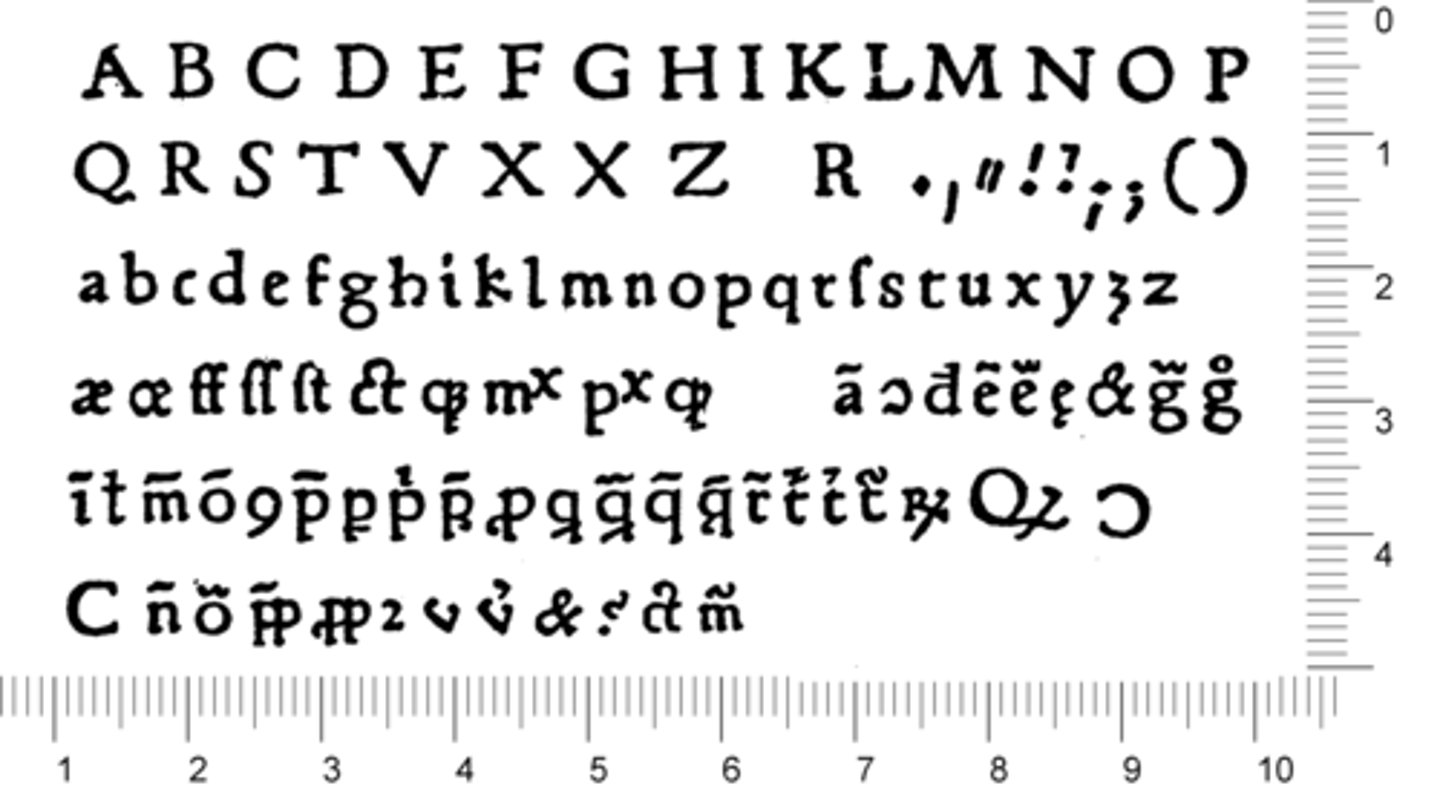
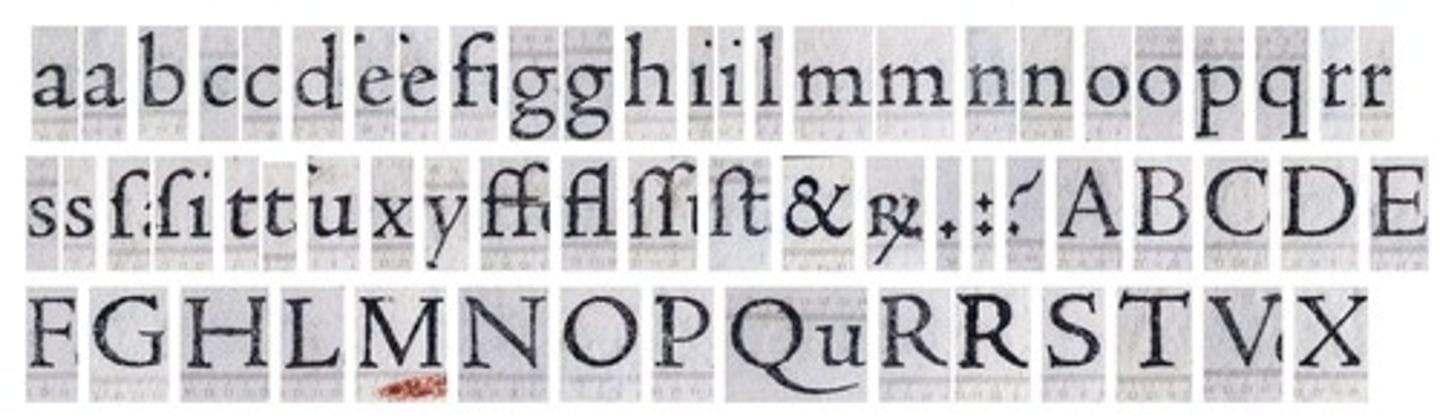
Nicholas Jenson
was a French engraver, pioneer, printer and type designer who carried out most of his work in Venice, Italy.
True / Nicholas Jenson
FAMOUS WORK:
ROMAN TYPEFACE was modelled from a European scribal manuscript style of the 15th century
Eusebius' Preparation for the Gospel (1470) The first book printed with Jenson's roman typeface,
Julius Caesar's Works (1471) Is one of the earliest and most beautiful printed editions of Caesar's writings.
Claude Garamond
was a French type designer, punch-cutter, and publisher. He is best known for designing the Garamond typeface, which remains one of the most widely used and influential serif typefaces in typography and graphic design.
William Caslon
Born in 1692 in England, trained as an engraver
and letter cutter, Designed the first Caslon typeface in 1722,
inspired by Dutch typefaces
True / William Caslon
Started as an engraver of gunlocks and
barrels before opening his own engraving
shop in London (1716).
Gained attention from printer John Watts,
leading to work in typography.
Designed the "English Arabic" typeface
(1720) for religious texts. Created Roman,
Italic, and Hebrew typefaces (1722)—his
Roman type later became known as Caslon.
Established a successful typefoundry due to
rising demand.
Alois Senefelder
Born in 1771 in Prague, Holy Roman Empire. Initially trained as an actor and playwright. Inventor of Lithography (1796)
True / Alois Senefelder
1. Invention of Lithography (1796) Discovered a chemical printing process using limestone and oil-based ink. Allowed high-quality text and image reproduction.
2. Refinement of Printing Techniques Experimented with different materials and chemicals to enhance printing
accuracy.
3. Published "A Complete Course of Lithography" (1818) Detailed the lithographic process for widespread use.
4. Foundation of Chromolithography His work paved the way for color lithography, essential for posters and advertising.
Lord Charles Stanhope
was a British statesman, scientist, and inventor. He was known for his progressive political views, support for the French Revolution, and innovations in various scientific fields, particularly in printing technology. Inventor of Stanhope Press
Stanhope Press
the first all-metal printing press made of cast iron.
The Arts and Crafts Movement
was an artistic and social movement that originated in Britain and later spread to Europe and North America. It emerged as a reaction against the Industrial Revolution, which had led to mass production, poor-quality goods, and the decline of craftsmanship.
Gustav Stickley
was a prominent American furniture maker and designer, best known for his role in the Arts and Crafts movement, particularly in the development of what is often called "Mission style" furniture
True / Gustave Stickley
Stickley's "Morris chair" is famous for its adjustable reclining feature, sturdy craftsmanship, and iconic design. It combines comfort with simplicity, using solid oak and leather.
Stickley designed bookcases and cabinets that were simple yet highly functional, often with large storage capacities and exposed shelves to showcase books or decorative items.
William Morris
born in the United Kingdom, was a poet, novelist, translator, publisher, socialist activist, preservationist, and craftsman who fundamentally challenged the industrial ethos of Victorian Britain.
True / William Morris
Morris' rejected the concept of mass production and the dehumanizing aspects of industrialization. He believed that both workers and society suffered when people lost their connection to traditional craftsmanship and artistic creation.
John Ruskin
was an influential English writer, art critic, and social thinker known for his contributions to art, architecture, and social reform.
True / John Ruskin
His book "Modern Painters " (1843) defended J.M.W. Turner and emphasized nature ' s truthful depiction, influencing the Pre-Raphaelite movement. He championed Gothic architecture in works like "The Seven Lamps of Architecture " (1849) and "The Stones of Venice " (1851-1853). Concerned with social issues, he critiqued industrialization ' s inequalities and advocated for workers ' rights in "Unto This Last" (1860), influencing figures like Mahatma Gandhi. Despite personal struggles, his writings and advocacy left a lasting legacy that continues to inspire today.
Art Nouveau
an artistic movement that emerged in the late 19th century and lasted until the early 20th century, roughly from the 1890s to World War I. It was characterized by its organic, flowing lines, intricate decorative elements, and inspiration from nature. The movement sought to break away from historical styles and create a new, modern aesthetic that blended fine arts with applied arts, including architecture, interior design, jewelry, and graphic design.
Frank Lloyd Wright
was a pioneering American architect known for organic architecture, which emphasized harmony between buildings and nature.
Dada Movement
was an artistic and anti-establishment movement that began in Zürich, Switzerland in 1916. It was founded by a German writer
Hugo Ball and German artist Richard Huelsenbeck in context to the World War I and the nationalism that many thought had
led to the war.
Originating in Zürich, Switzerland, this movement rejected traditional art, emphasizing randomness, irony, and assemblage. Influenced by Cubism, Futurism, and Expressionism, it led to Surrealism and Conceptual Art.
True / Dada Movement
The name "Dada"
was allegedly chosen at random from a dictionary, meaning "hobby horse" in French—fitting for a movement rooted in whimsy and unpredictability.
Many artists involved in Dada were exiles who fled their war-torn countries, seeking refuge in neutral Switzerland.
Influenced by other avant-garde movements - Cubism, Futurism, Constructivism, and Expressionism - its output was wildly diverse, ranging from performance art to poetry, photography, sculpture, painting, and collage.
Dada's aesthetic, marked by its mockery of materialistic and nationalistic attitudes, proved a powerful influence on artists in many cities, including Berlin, Hanover, Paris, New York, and Cologne, all of which generated their own groups.
Dada was not just anti-war; it was anti-establishment, anti- tradition, and anti-art, embracing absurdity as a means of
protest.
The movement dissipated with the establishment of Surrealism, but the ideas it gave rise to have become the cornerstones of various categories of modern and contemporary art.
De Stijl
A Dutch art movement seeking order and harmony through geometric abstraction. Artists like Piet Mondrian used straight lines, primary colors, and balanced compositions to create a universal visual
Mondrian's Neo-plasticism
Doesburg's Elementratism
The Bauhaus
A German design school that integrated art, craft, and technology. Founded by Walter Gropius, it promoted minimalism, functionality, and mass production in architecture, typography, and design.
Constructivsm Movement
was a Russian avant-garde art movement that used geometric shapes and industrial materials.
A Russian movement led by Vladimir Tatlin and El Lissitzky, which emphasized industrial materials, propaganda, and dynamic composition. Art was seen as a tool for social change.
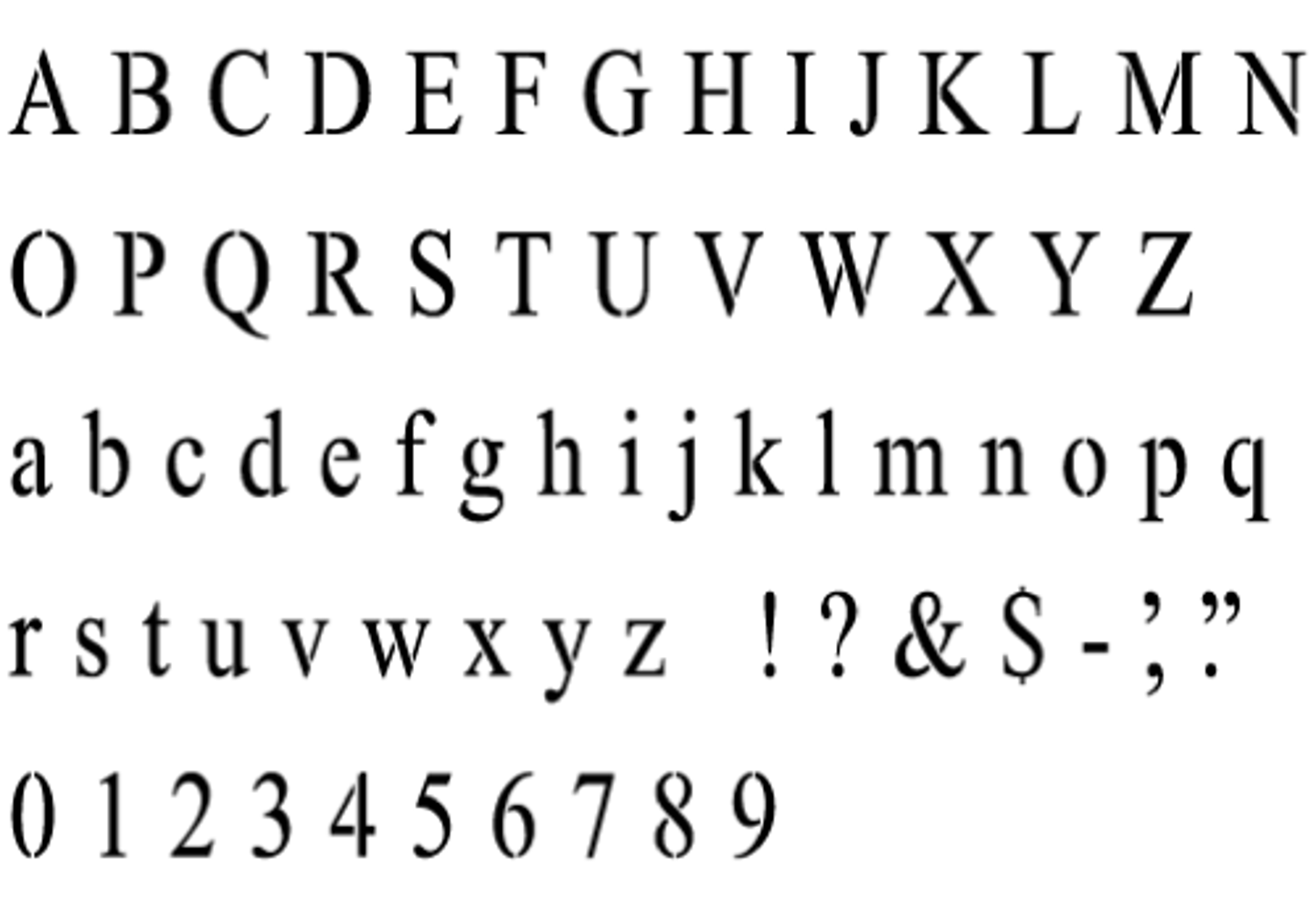
Stanley Morison
A British typographer who designed Times New Roman, one of the most widely used typefaces, prioritizing readability and elegance in publishing.
Armin Hofmann
born in 1920 in Winterthur, Switzerland, is a significant figure in Swiss graphic design history. He developed the International Typographic Style, revolutionizing modern design with clarity, functionality, and visual harmony.
POSTER DESIGN
GLOBAL RECOGNITION
INNOVATIVE TECHNIQUES
GRAPHIC DESIGN MANUAL
TEACHING AND MENTORSHIP
Emil Ruder
born in Zurich in 1914, was a key figure in the International Typographic Style movement, focusing on conveying information in writing.
GRID SYSTEM
ASYMMETRY AND NEGATIVE SPACE
TEACHING AND INFLUENCE
PUBLICATIONS
TYPOGRAPHIE
Paul Rand
born Peretz Rosenbaum in 1914, was
a renowned graphic designer who transformed
America's visual communication perception
over his 60-year career. He introduced avant-
garde European concepts to the US through
editorial designs, advertisements, and
corporate identities, blending visual arts with
commercial design. His vibrant color palettes
and typography continue to influence
contemporary design.
MODERNIST STYLE
CORPORATE IDENTITY
DESIGN PHILOSOPHY
ARTISTIC INFLUENCE
NEXT AND COLLABORATION WITH STEVE JOBS
Max Miedinger
a Swiss type designer, is known
for creating the Helvetica typeface, which has
significantly influenced typography and visual
communication.
HELVETICA TYPEFACE
DESIGN PHILOSOPHY
LEGACY OF HELVETICA
EVOLUTION OF TYPEFACE
INFLUENCE ON DESIGN
Colin Forbes
born in 1928 in London, was a
renowned graphic designer who made
significant contributions to the field. He
studied at the Central School of Arts and
Crafts and worked as an assistant to
Herbert Spencer and an art director at a
small advertising agency.
PENTAGRAM CO-FOUNDER
DESIGN PHILOSOPHY
ICONIC WORKS
MENTORSHIP AND INFLUENCE
RECOGNITION AND AWARDS
Theo Crosby
was an architect, editor, writer and
sculptor, engaged with major developments in
design across four decades. He was also an early vocal critic of modern urbanism.
Alvar Aalto
was a Finnish architect, city
planner, and furniture designer whose
international reputation rests on a
distinctive blend of modernist refinement,
indigenous materials, and personal
expression in form and detail.
Post Modernism
is a broad intellectual and cultural
movement that emerged in the mid-20th century, particularly in reaction to the ideals and values of modernism. It is characterized by skepticism toward grand narratives, ideologies, and universal truths, challenging the idea that there is one objective reality.
Ettore Sottsass
was an Italian architect and designer, best known for founding the Memphis Group in the 1980s. His work spanned architecture, industrial design, furniture, and ceramics,
often characterized by bold colors, geometric shapes, and playful, unconventional forms. His work sought to blend art and functionality, making everyday objects more visually and
emotionally engaging.
Memphis Group
Sottsass led this design collective,
which challenged modernist minimalism with vibrant,
exaggerated, and whimsical designs. Their furniture and decor
used laminates, plastics, and striking color combinations.
Olivetti Collaboration
He designed iconic office equipment for
Olivetti, including the Valentine typewriter (1969), a bright
red, portable typewriter that became a design icon.
Carlton Bookcase (1981)
A striking, asymmetrical bookshelf
designed for the Memphis Group. It features bold colors,
geometric forms, and a playful, totem-like structure,
challenging traditional furniture design by blending function
with artistic expression.
Tahiti Lamp
A whimsical, sculptural table lamp with a
colorful, geometric design. Its angled form and bright hues
resemble a stylized bird, reflecting Sottsass's love for playful,
unconventional aesthetics.
Valentine Typewriter
Designed for Olivetti, this bright
red, portable typewriter was both a functional tool and a
fashion statement. Its sleek, minimalist design and pop-art
sensibility made it an icon of 1960s industrial design.
The Macintosh
Invented by Applein 1984
SteveJobs led the project
Designed for creativity and ease
Featured a graphical user interface
Changed computing history forever
Introduced the mouse for navigation
First mass-market personal computer
Apple's vision for user-friendly computers
Inspired by XeroxPARC innovations
Steve Jobs pushed for GUI design
Jef Raskin started the Macintosh project
Competition with IBM personal computers
Launched on January 24, 1984
128 KB memory, compact design
9-inch monochrome display screen
Motorola 68000 processor inside
Included MacPaintand MacWrite software
Easy-to-Use Graphical UI
Icons instead of text commands
Mouse-controlled pointer system
Drop-down menus for navigation
Windows for multitasking applications
Drag-and-drop file management
Revolutionary compared to command-line interfaces
Inspired modern operating systems today
Roman Type Face
Times New Roman - Stanley Morison
Roman Typeface - Jenson
 Note
Note  Flashcards (84)